

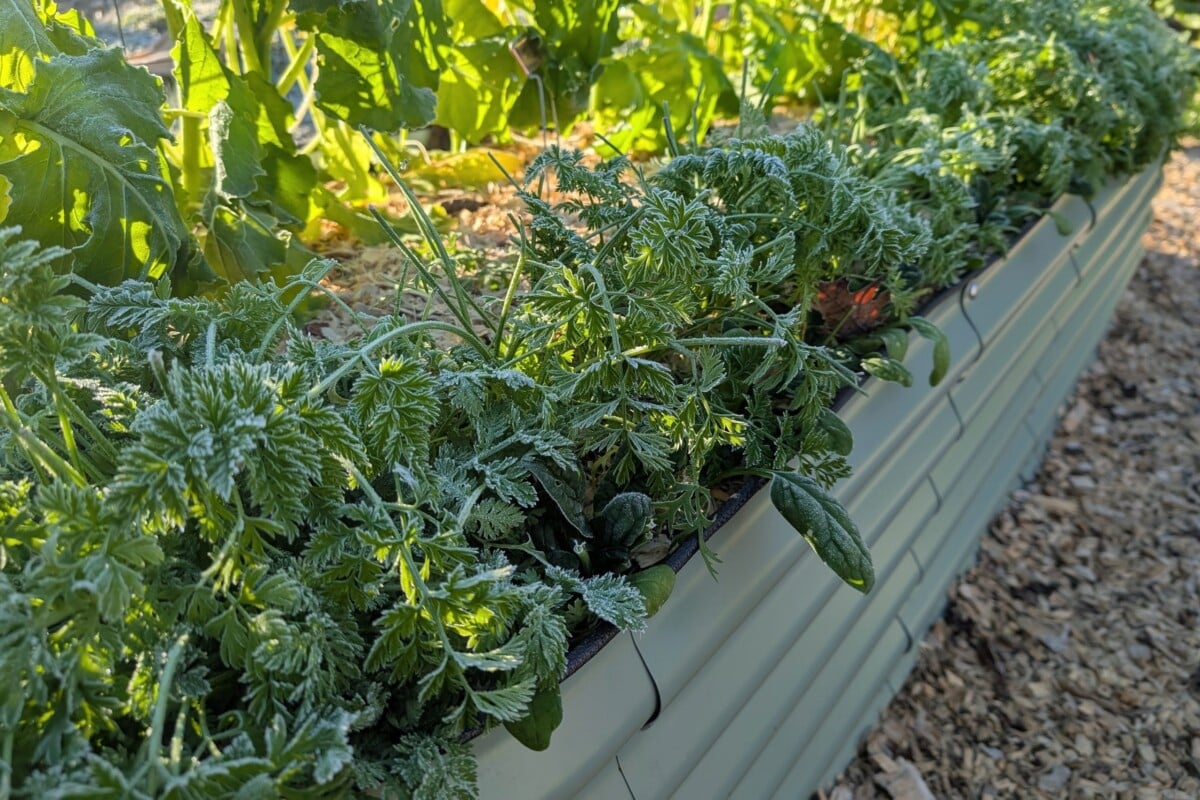
It’s officially fall, and that first frost will be here before you know it. Don’t be one of the many gardeners caught unaware when it happens. For much of your garden, that first frost brings things to a complete stop, even if some hardier crops will keep on going. No matter what your fall gardening plans, there are a few jobs that need to be done before that first frost arrives.
Know What’s Coming – a frost or a freeze
Before we jump in, it’s important to know the difference between a frost and a freeze.
A frost happens when the temperature at ground level drops to 32°F; everything on the ground is covered with a thin (beautiful!) layer of frost. I’m sure we’ve all admired a frost or two in our lifetime. You can have a frost and still have the air temperature above the ground be above 32°F. It damages plant tissue, but not always to the degree that a hard freeze will.
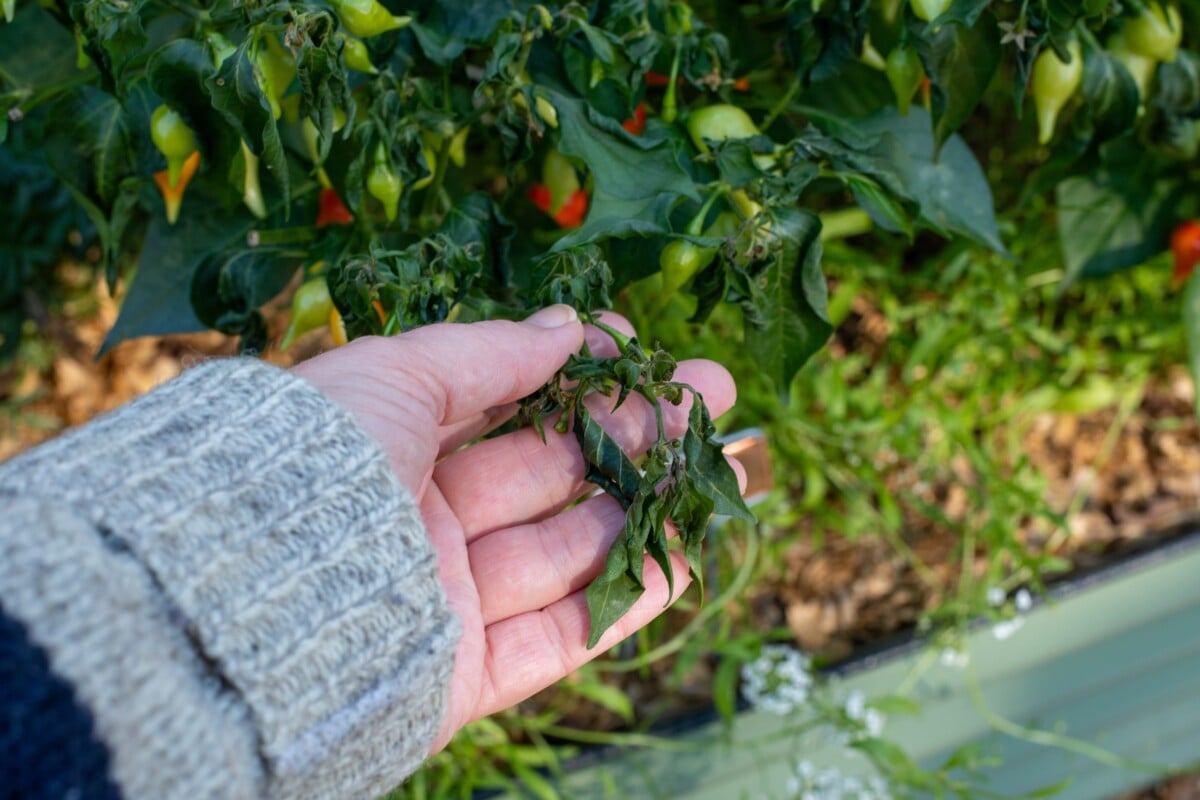
A freeze occurs when the air temperature itself falls below 32°F. This is when Ma Nature gets serious and, without significant protection, your garden and everything in it is done for the season.
By the time the first frost rolls around, a freeze isn’t far behind. So, let’s take a look at the gardening tasks you need to get done before that first frost arrives.
1. Cover or Harvest Your Tender Vegetable Crops

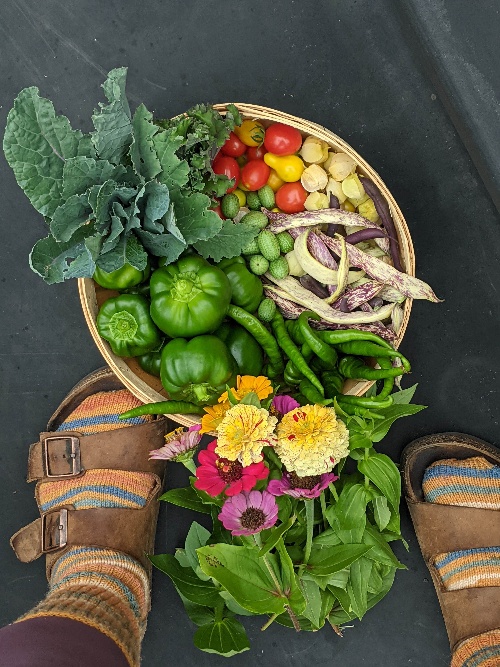
If you plan ahead and keep an eye on the weather, you can cover your tender, warm-season crops when you get a frost warning and give them a little extra time. It’s best to use cloth to cover your garden, rather than plastic. You can purchase heavyweight frost cloth to cover rows and raised beds. Or, in a pinch, you can use bed sheets and towels. The fabric traps heat rising from the ground overnight and keeps your plants protected.
You’ll want to cover plants before the dew falls for the evening, and then remove the covers in the morning once the sun is up.
If you’re ready to be done gardening for the year, then it’s time to bring in that final harvest, rather than protecting it.
- Tomatoes
- Peppers
- Eggplant
- Cucumbers
- Summer Squash
- Melons
- Beans
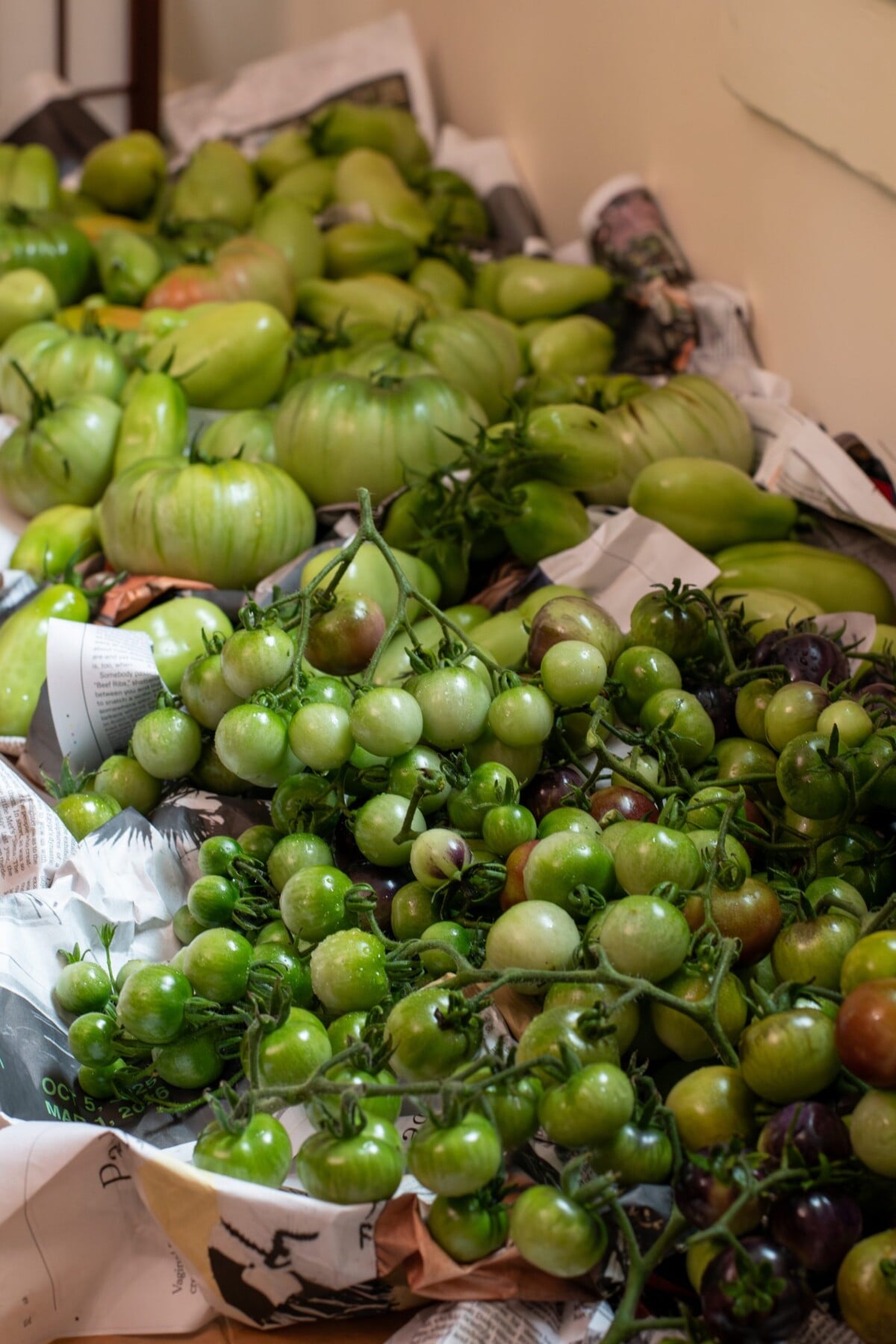
All of these vegetables will need to be picked before that first frost. If you have green tomatoes, you can easily ripen them indoors. Yup, it works! And yes, they taste good. You can learn how to do it here.
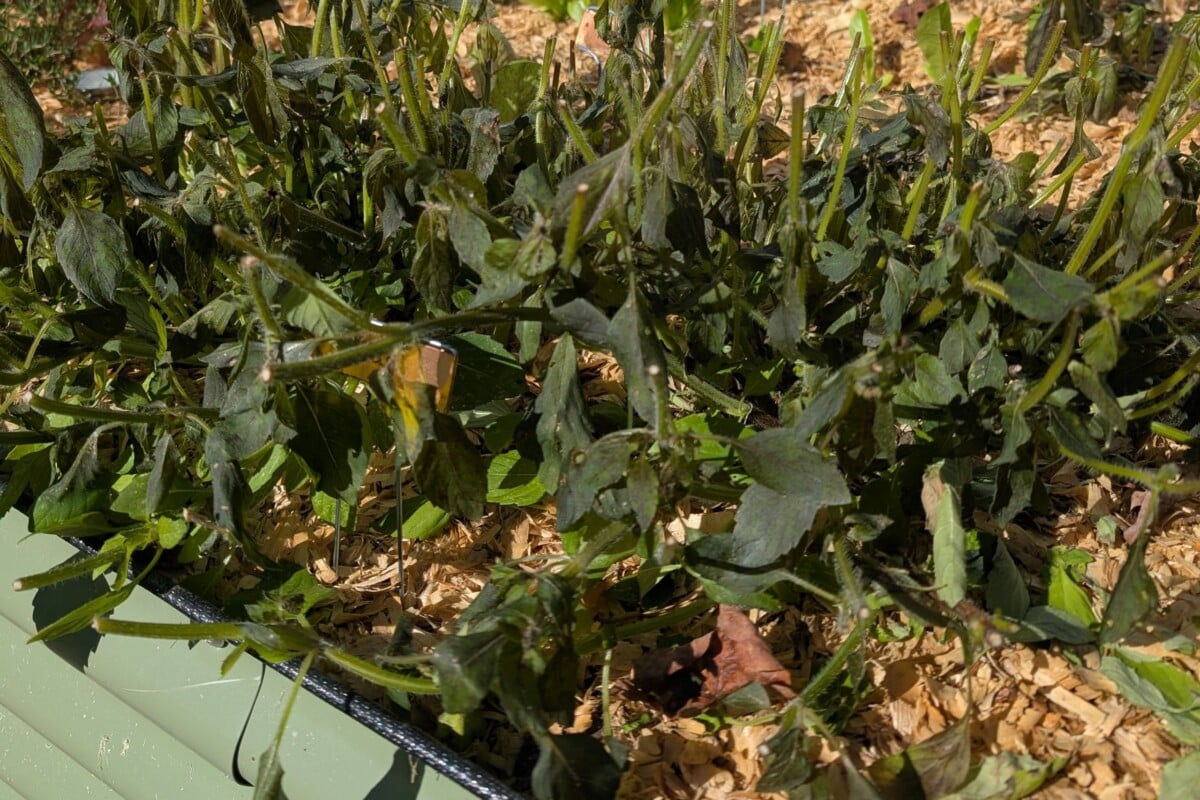
If you started tender cold-hardy crops in the fall, such as lettuce, spinach, kale or mâche (corn salad), these will handle light frosts, but for a hard freeze, they will definitely need to be covered or harvested beforehand. Even hardier cold-weather crops like Brussels sprouts and broccoli will need to be covered or harvested before a hard freeze.
Although I’ve often had kale keep growing well into the middle of winter. (I think it does it out of spite, knowing it’s my kids’ least favorite vegetable.)
The same goes for winter squash and pumpkins. They will need to be picked and allowed to cure indoors.
Don’t worry about cleaning up the plants themselves; all of that can wait until spring or be dealt with later in the month. For now, we’re just focusing on bringing in that last harvest of vegetables.
2. Protect or Harvest Tender Herbs
Probably the number one herb you need to be thinking about when a frost is in the forecast is basil. Basil is incredibly tender, and the leaves will blacken even at temperatures just below 40°F. So yes, we need to cash in that final crop of basil before the first frost if you want pesto this winter. (Here’s a cool way to freeze your basil or pesto.)
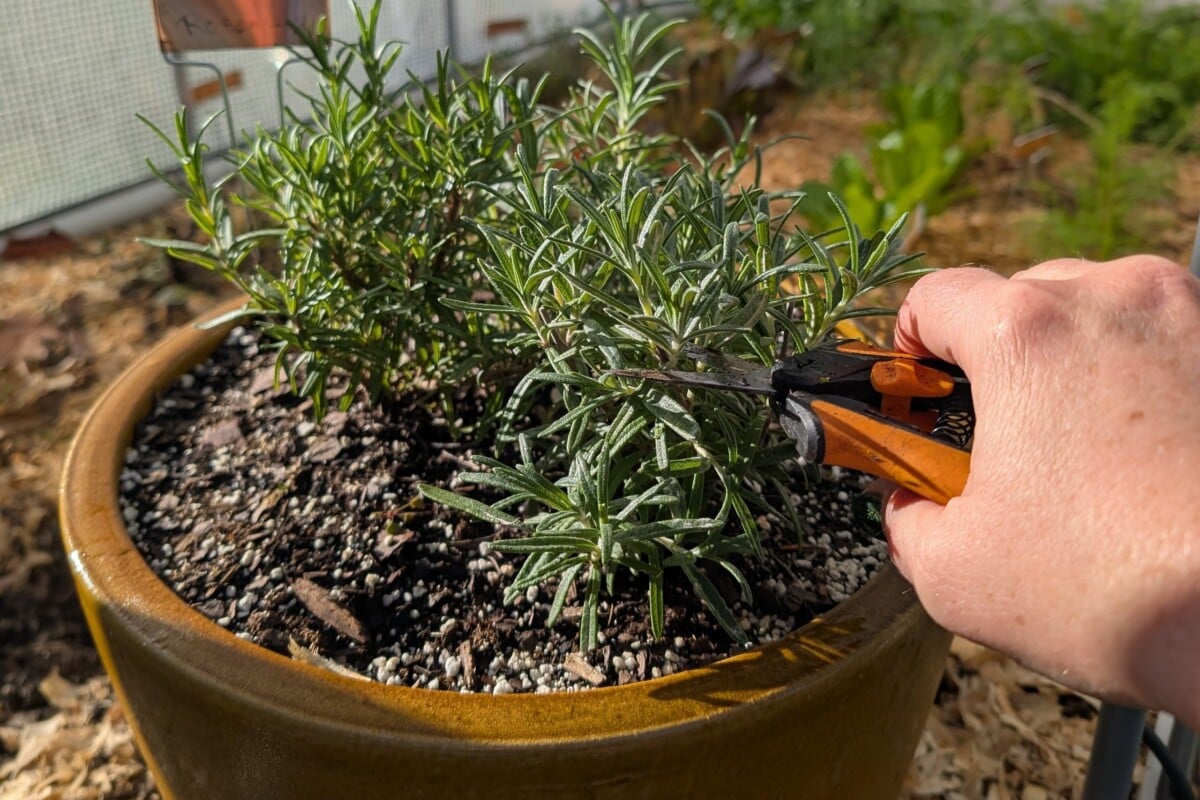
Rosemary, lemongrass and potted bay plants should come inside for the winter in colder regions. This is why I always grow my rosemary in pots. I give it a trim in the fall and bring it indoors to hang out in a sunny location until the spring after the final frost.
Cilantro and dill can handle a light frost, but will need to be replanted next spring.
In the meantime, harvest and dry what you want before they finally succumb to a freeze.
A good rule of thumb to follow is that if the herb grows as a perennial where you live, it can handle a light frost, and some may even continue growing after a hard freeze. But if it’s an annual herb, harvest it before that first frost.
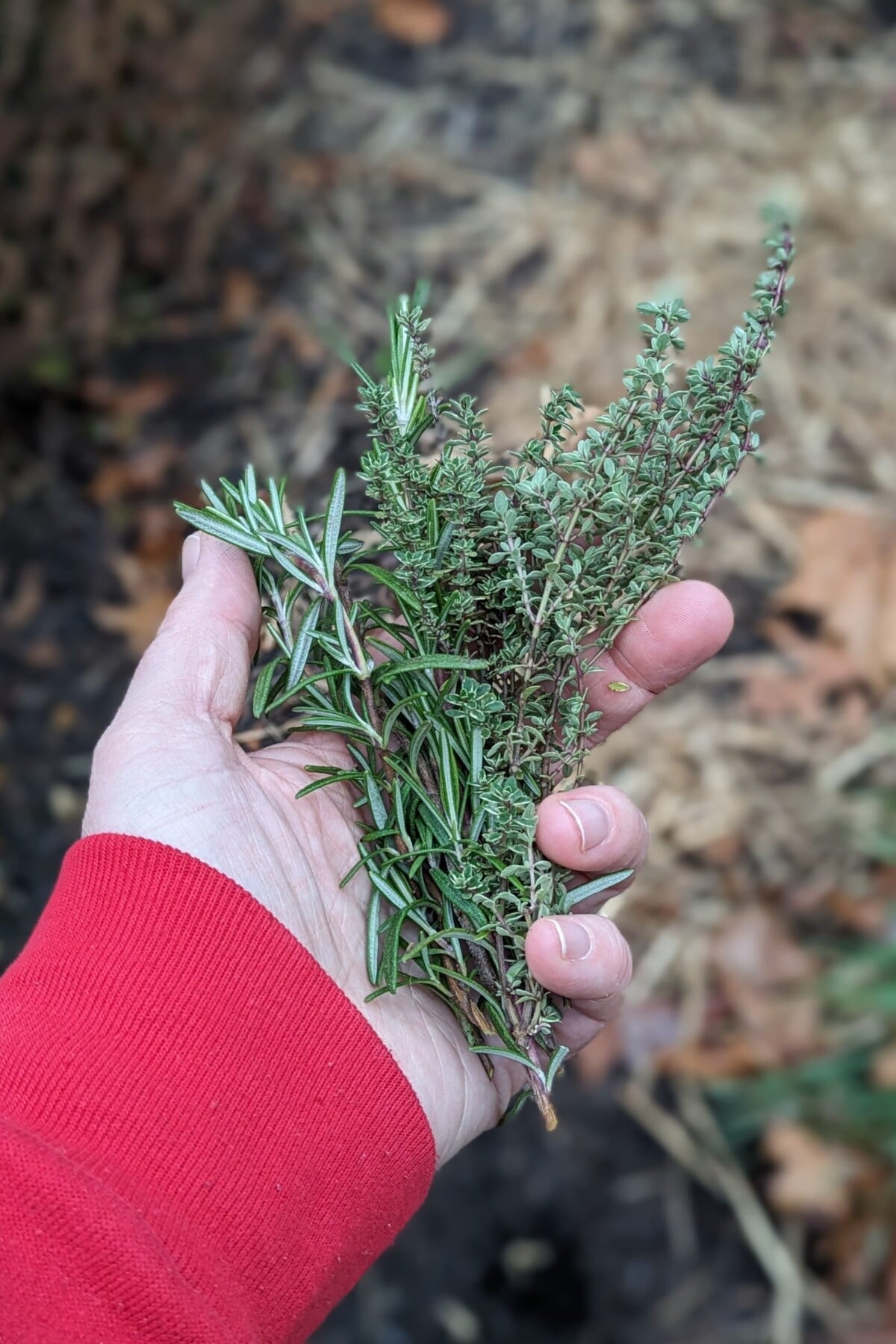
A thought for next year – If you want fresh herbs for cooking throughout the winter, I suggest starting a small bed of herbs close to a back door or the door nearest your kitchen. In the fall, you can use bendable garden stakes (these are the ones I have and they’ve lasted three winters in zone 6b so far) to make a little hoop house over your herbs and cover it with heavyweight frost cloth. Then you can harvest fresh thyme or sage for all of your cooking, including holiday meals. It’s always nice to have something fresh and green in the middle of the winter.
3. Bring in Tender Houseplants
If you’ve decided to let some of your houseplants spend the summer outside, you need to bring them indoors well before that first frost arrives. I bring my houseplants indoors when nighttime temperatures consistently fall below 55°F, so after about a solid week of these temps.
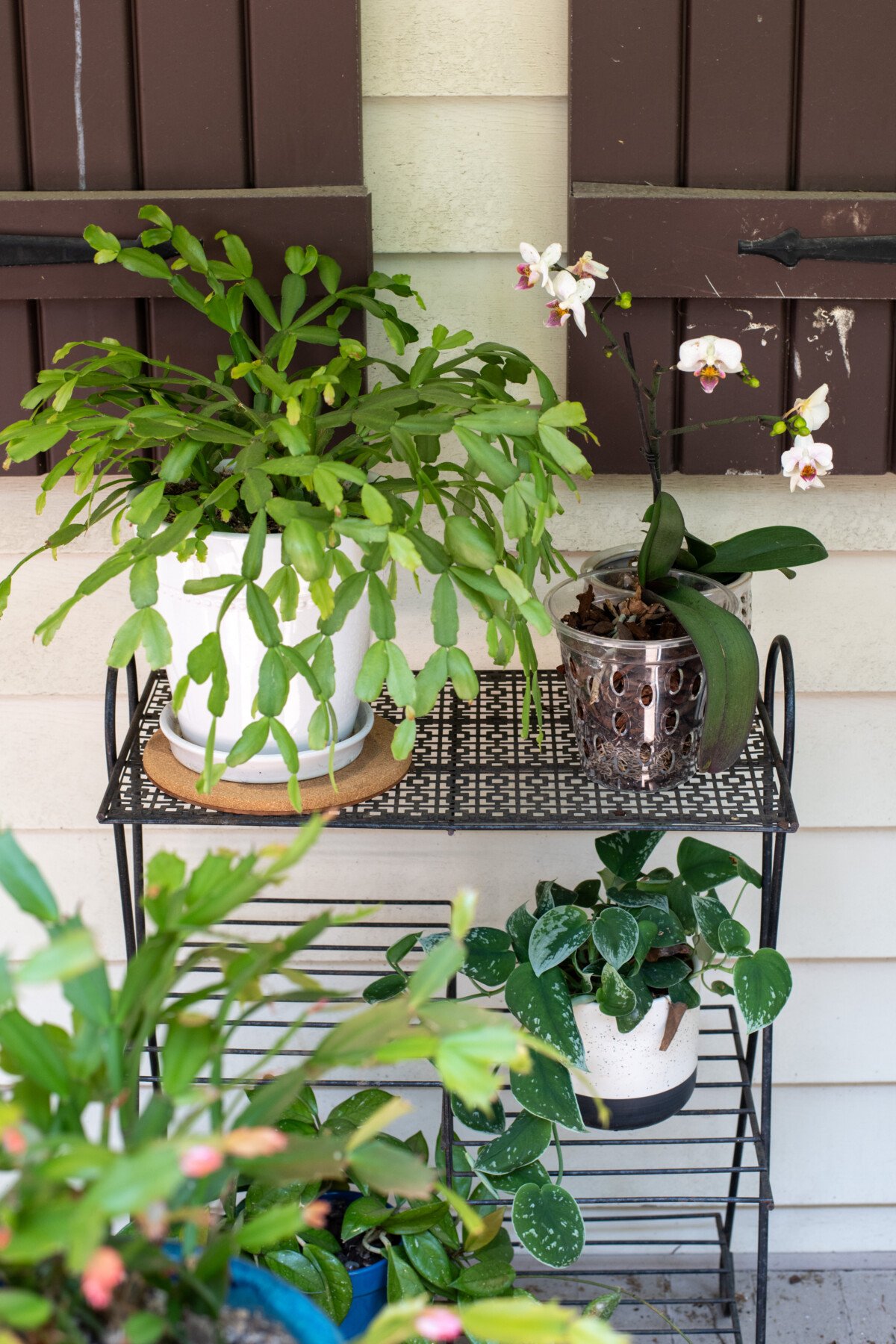
This is especially important for flowering plants, such as orchids and Christmas cactus.
Before you bring them indoors, check them over for signs of pests. It’s always a good idea to give them a quick rinse in the shower and quarantine them from your other plants for a couple of weeks before putting them back in their usual spot.
4. Plant Fall-Planted Alliums and other Overwintering Vegetables
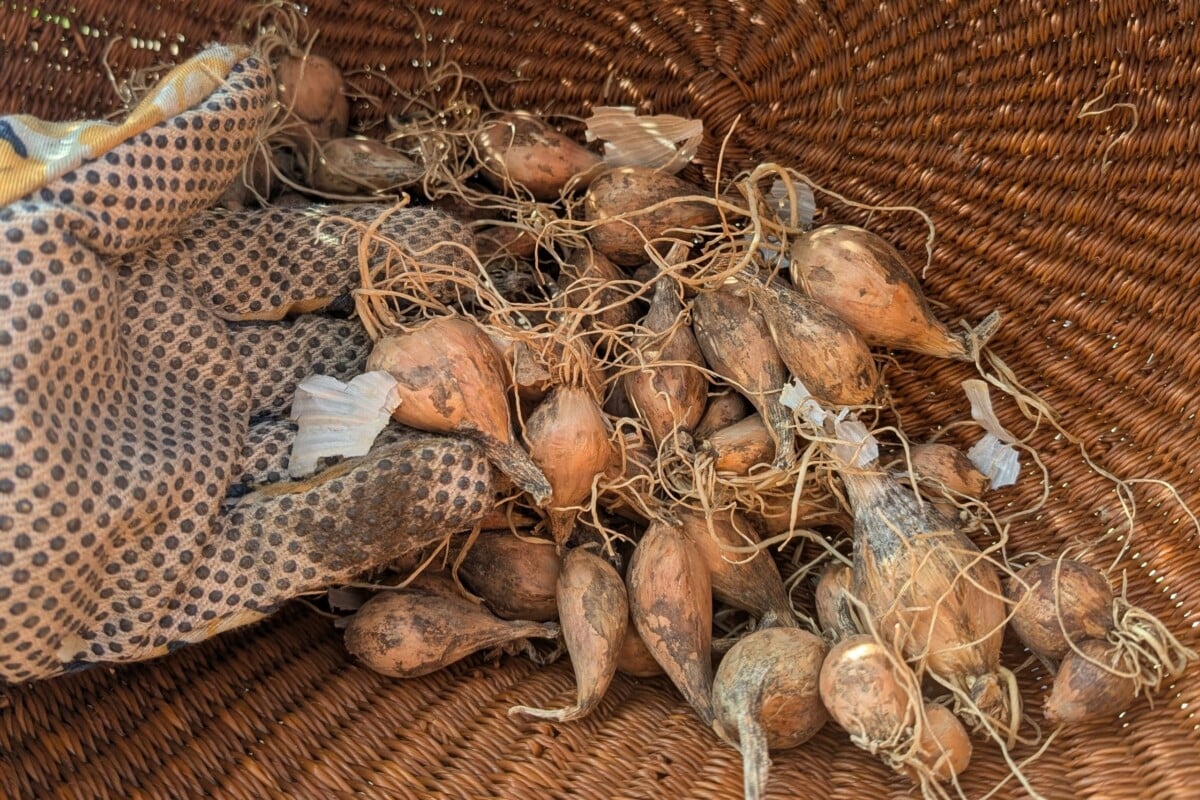
Garlic, shallots and fall-planted onion sets are all planted in the fall; granted, they don’t need to be planted before the first frost per say. But they do need to be planted well before the ground freezes so that they have time to start growing roots; otherwise, they will rot in the ground, so plan to plant these tasty alliums right before your growing zone’s predicted first frost date.
Spinach is a great vegetable to overwinter. Choose a hardy winter variety and get it started well before the first frost. The established plants will go dormant in the winter and then jump into action next spring when the ground thaws and the weather warms. You’ll have fresh spinach to pick around the time you start poking seeds for other spring vegetables in the ground.
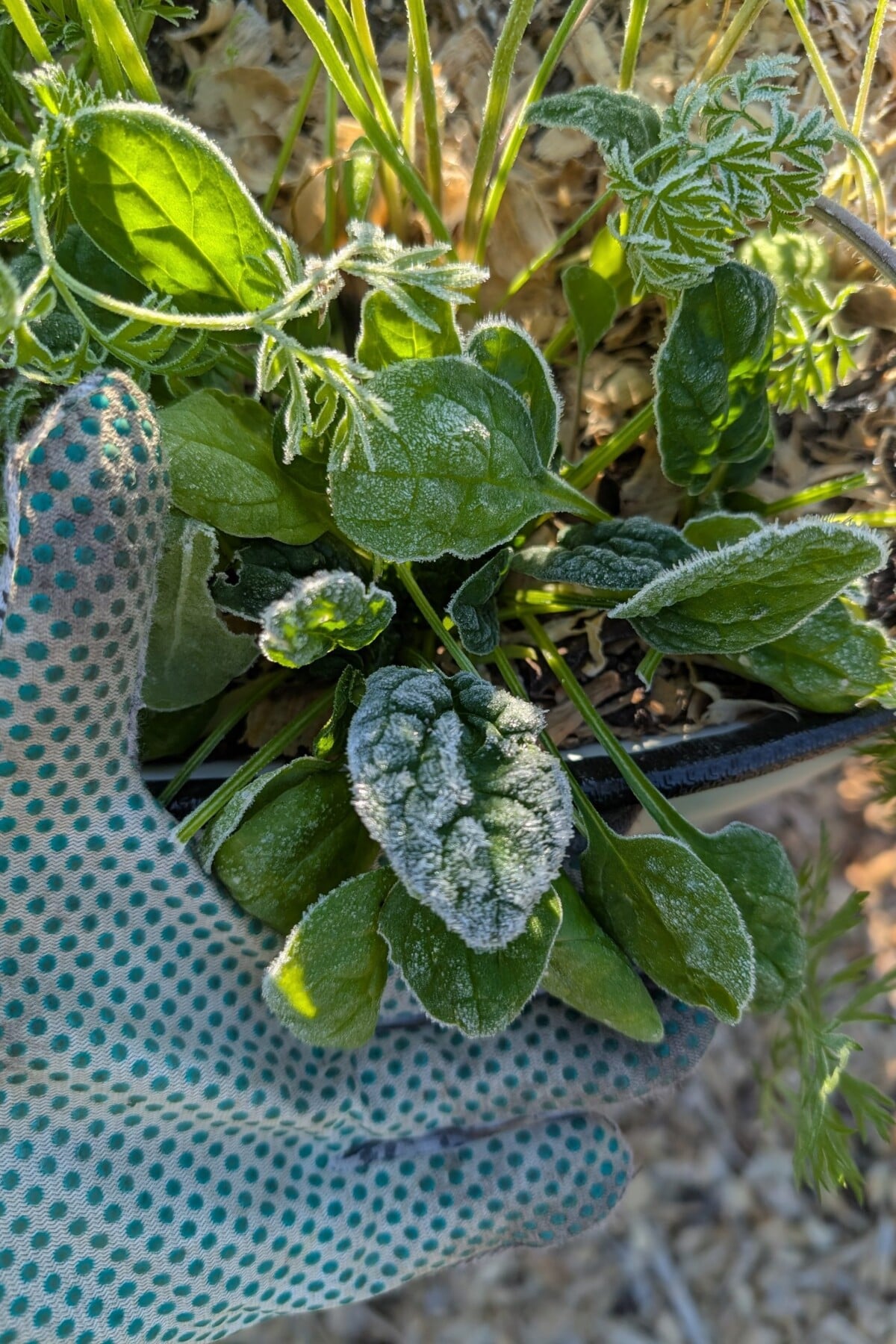
If you get started early enough, you can even plant perennial vegetables, such as rhubarb, in the fall. It’s best to get them in the ground several weeks before that first frost, though, so the plants can get established and put down roots.
5. Drain and Store Hoses and Protect Outdoor Spigots
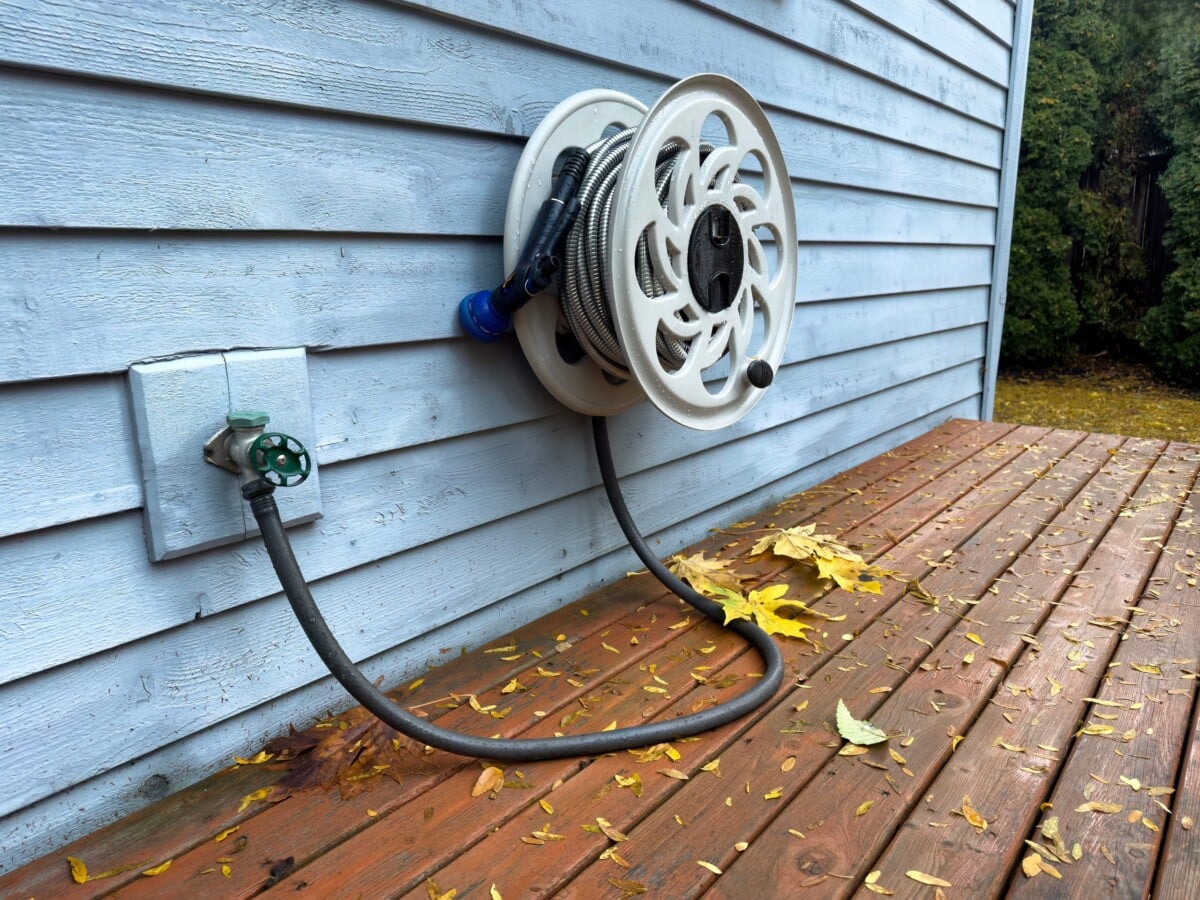
Your hoses will last longer if they spend the harsh winter months drained, rolled up and kept indoors. But more importantly, leaving hoses connected to spigots, even those with a frost bib, can lead to frozen and burst pipes.
A frost bib spigot is designed so that when the water shuts off, it does so deep inside the wall of the home where it’s warmer, and the pipes won’t freeze. In that way, you don’t have water at the outside of the house that could freeze and burst the pipe. However, when you leave your hoses attached, the frost bib can’t function correctly because there may be water in the hose. That water can freeze and burst the pipe just inside the wall. (Often unnoticed until next spring!)
Always disconnect every hose, drain it, coil it and store it indoors for the winter.
If you have older spigots that aren’t frost-free (like me), you’ll need to close off the shutoff valve inside the house, then open the outdoor tap to drain it.
If you have dripline installed in your garden or hose timers, now is also the time to bring those inside for the winter. It’s also a good time to inspect your dripline and assess whether it needs repairs or replacement parts.
6. Protect Terracotta and Other Clay Pots
Water expands by about 9% when it freezes, and your porous terracotta and clay pots have spent all summer absorbing water. As the winter progresses, the pots will undergo repeated freeze-thaw cycles. If you’re lucky, only the glaze may crack. This is known as crazing. But what’s more likely to happen is that the pots will crack and break. Bring all your clay pots indoors, whether that’s a garden shed, garage or basement.
I had this happen with a large clay pot I had bought to turn into a garden fountain. I left it outside that winter, and the next spring, when I picked it up, the bottom fell right out of it, so I had a very expensive clay ring. I decided to sink it into the ground in one of my flower beds and plant coral bells in it.
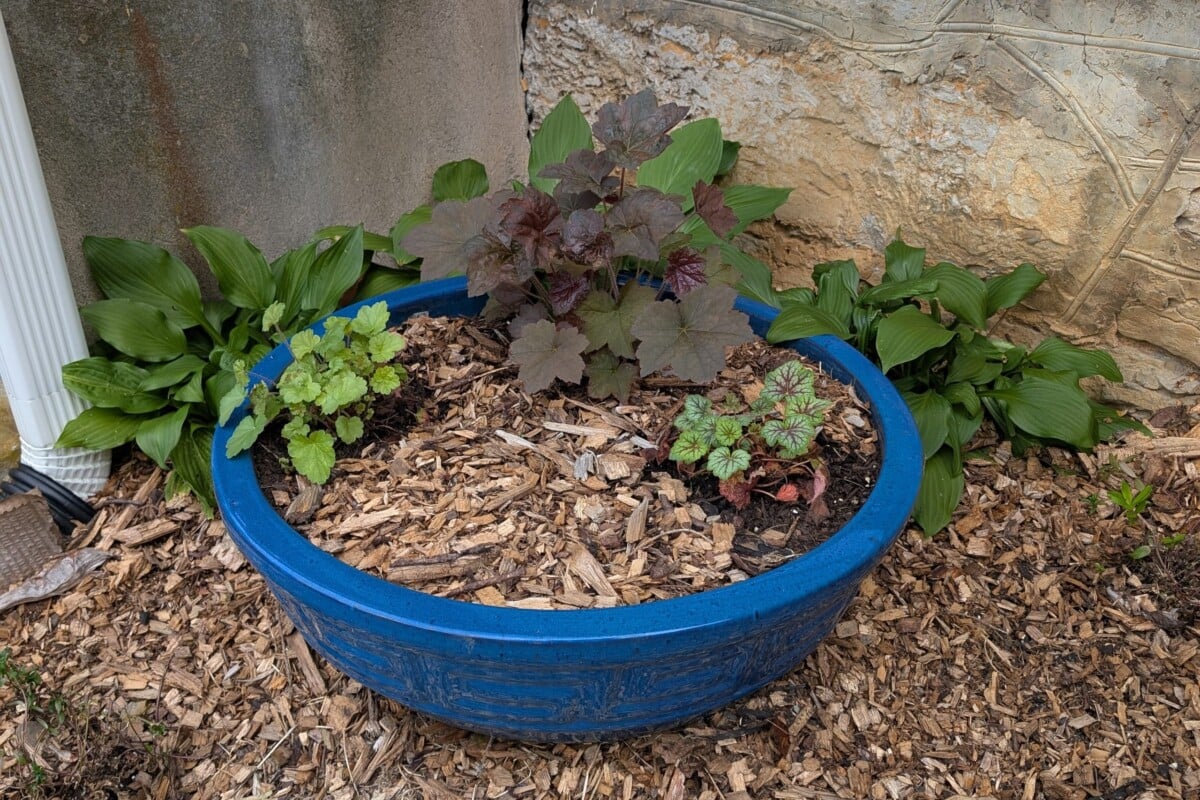
If you have potted plants that need to stay outdoors, it’s best to move them to a side of the house that gets southern exposure. Place them as close to the house as you can so they can absorb residual warmth from your home.
7. Manage Fallen Leaves
I’m a big fan of lazy gardening, so I’m not big on raking up leaves. I also like lightning bugs quite a bit, so I’m all for leaving the leaves to winter over in place on my lawn.
However, wet leaves on sidewalks and paths become very slippery when wet, and I’ve nearly gone down on my butt several times walking on leaf-covered sidewalks. Be sure to keep paths and sidewalks clear of leaves for safety’s sake.
Likewise, while some leaves on your lawn are a good thing, a very thick layer of leaves can become heavy under rain and snow and will kill your turf grass. In this case, mowing over them will chop them into finer pieces so they break down faster, while still leaving some shelter for overwintering insects.
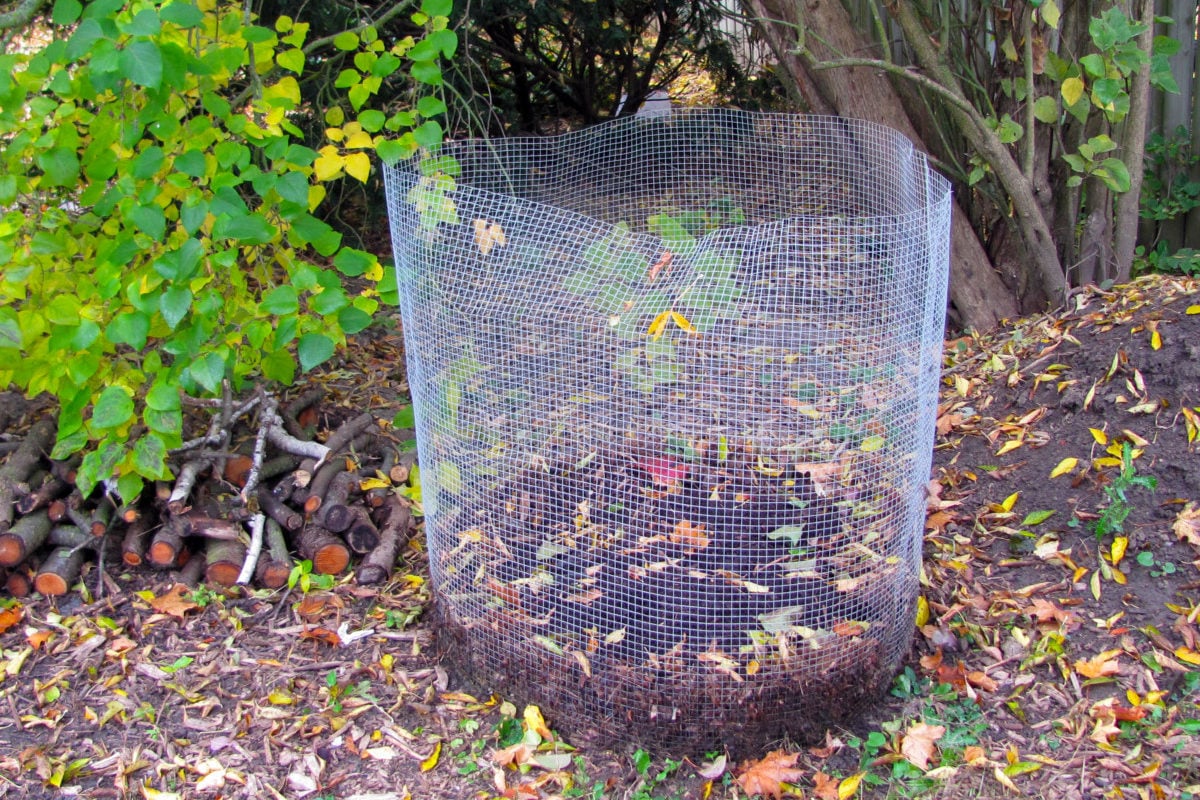
One of the best things you can do with leaves is to turn them into leaf mold.
Leaf mold is amazing stuff to add to your garden. Here’s how to do it.
Once you check off this list, you’re free and clear for this gardening season. You can take it easy. At least, that is, until that first seed catalog shows up in the mail.
Get Garden Notes From Tracey, Right to Your Inbox
Pull up a chair on the front porch. Join 54,000+ gardeners who get Tracey\'s friendly notes, seasonal to-dos, and hands-on tutorials three times a week.