

We rarely stop to think about the modern conveniences we rely on daily until we’re without them. Unfortunately, by the time a genuine emergency rolls around, it’s too late to run out and get what you need.
With the rise of AI and weather events becoming more severe, now more than ever, it makes sense to prepare for an emergency that could leave you without power or the ability to run to the grocery store.
But you don’t need to build a bunker or start storing food in mylar, vacuum-sealed bags.
A little common sense planning ahead will help you weather a minor emergency until the power comes back on or until local or federal agencies can supply aid.
Now More Than Ever
I have a friend in England who was telling me about his government’s new ‘Be Ready’ campaign. The idea is to have enough emergency supplies to be self-reliant for roughly three days. The concern stems from a couple of factors:
- The growing severity of storms and damaging weather events due to climate change.
- The threat of power outages or worse due to cyberattacks by AI or hackers.
Shortly after our discussion, Europe was hit with a cyberattack that compromised freezers at grocery stores, causing tons of food to spoil. It was a sobering reminder of the many ways we can so easily be cut off from food and other resources these days.
It made me think of the week I spent without power two years ago, when a violent storm cell ripped through my backyard.
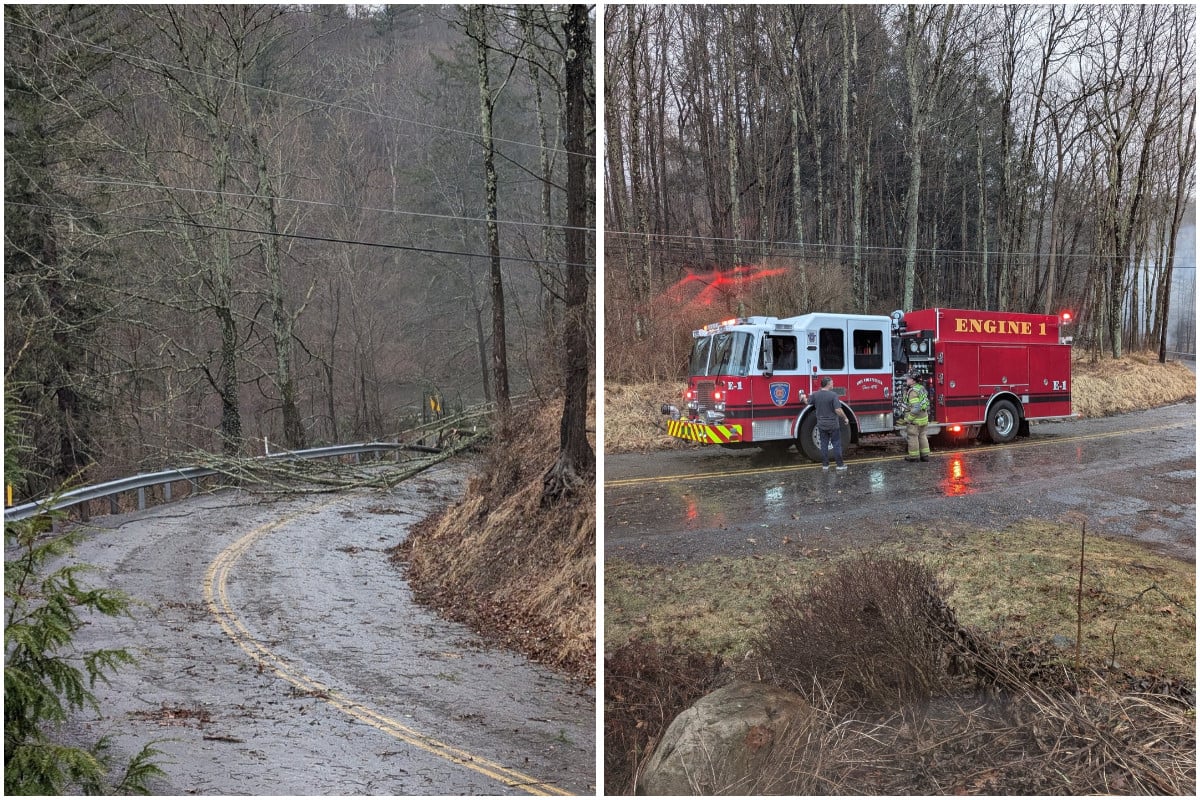
The whole thing was over in seconds, but the devastation it left in its wake was breathtaking. It took crews an entire week to clear roads and restore power to everyone, and another month beyond that to clean up all the downed trees from the storm.
I remember seeing the live power lines lying across the road in front of my house, calling 911 and getting a busy signal.
A busy signal.
I called back over and over again, and it took me fifteen minutes to get through to report live wires across the road. That’s how many calls were coming in to report downed power lines and other emergencies immediately after the storm.
It was another two hours of me standing in the road, directing cars to turn around before an emergency crew could reach me and close the road.
And then, my world went silent for a week: no cars, no power, no running water.
Other than needing water, I did alright. By day two, the trees had been cleared from the rest of the road, and I could drive to the store in a neighboring community to get bottled water.
It was surreal going from the fluorescent glow of a store to a deserted road and a house with no power.
Growing up with a dad who lived off-grid in a log cabin he built himself certainly schooled me in living without electricity.
Had I not been able to find a cleared road and go get water, my circumstances would have been a lot worse. (Water was the first thing I stocked up on once my power was restored.)
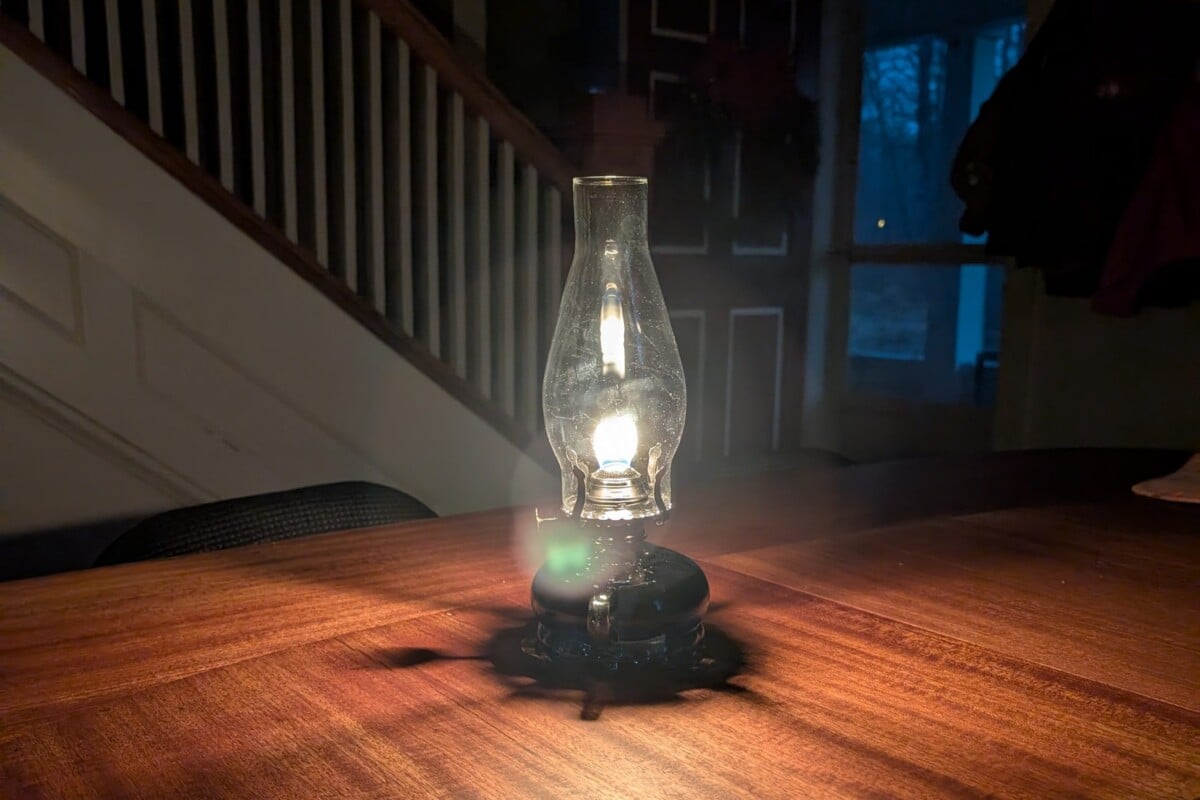
While I waited for my power to be restored, I cooked out on my back patio with my trusty Coleman camp stove, and at night, I lit my house with several old-fashioned kerosene lamps. It was annoying; I was uncomfortable. I lost nearly everything in my fridge and deep freeze.
In the end, it wasn’t the end of the world, and when my power finally came back on, I sort of missed the slower, quiet pace I had adopted. But a lot of that came down to my having prepared ahead of time.
What Are We Preparing For?
The idea behind this article isn’t to survive a zombie apocalypse or some species-ending plague, but rather to allow you and your family to sit tight during a non-life-threatening, short-term emergency.
When you can take care of yourself, it allows those responding to the situation to use their resources where they are needed most, such as for people with medical emergencies or the elderly.
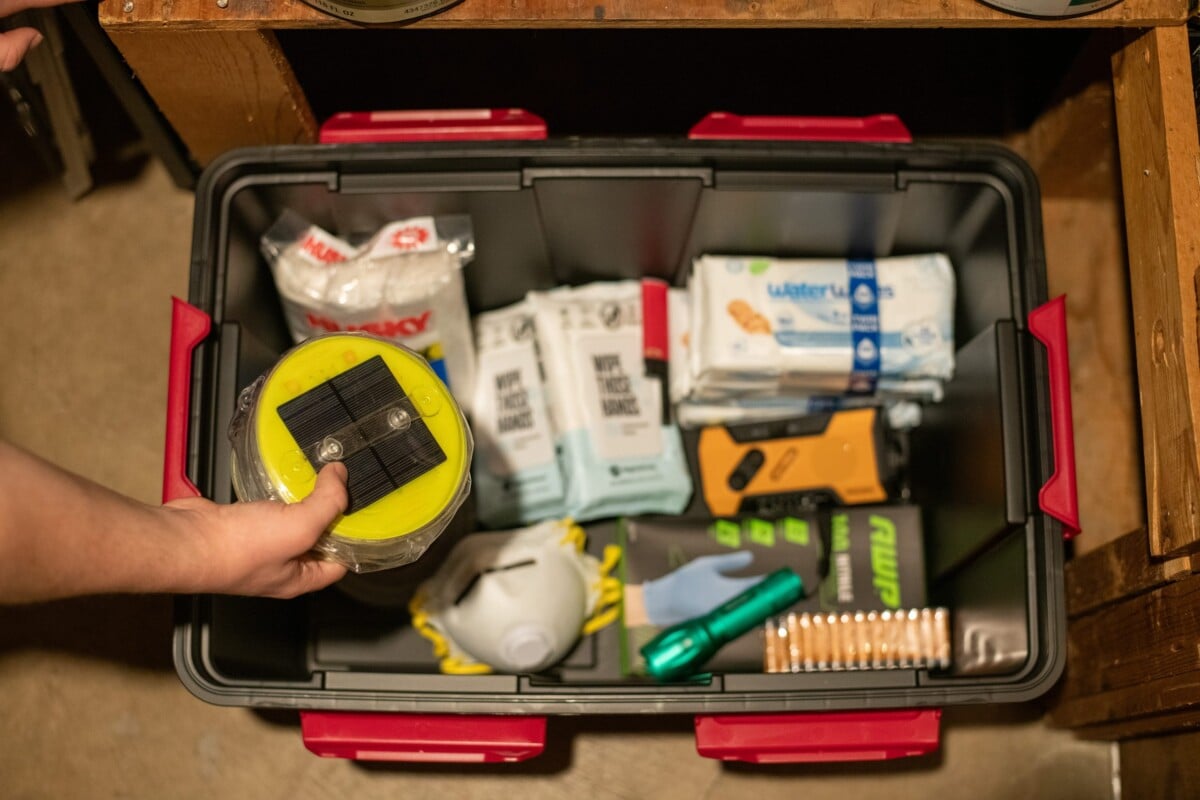
You should have enough emergency supplies set aside for each member of your household for a minimum of three days, up to a week, whatever you have the space and finances to achieve. Obviously, more is better in this scenario. And don’t feel like you have to do it all at once. Start with a dedicated storage tote, and then use this piece to add what you need to it a little at a time.
The Right Mindset
Before I break out the list of what you will need, I want to discuss something that I wrestled with during my week of enforced off-the-grid living, and that’s mindset.
When the lights go out, and you’re left standing in an eerily silent home that’s lacking the usual hum of electric devices, it’s easy to fall into the trap of panicking. In the middle of winter or summer, this is especially true, when temperatures become a concern.
But it’s important to stay calm and be patient.
It’s very easy in these situations to mistake discomfort for an emergency. While I know temperature extremes, either hot or cold, can become an emergency, in most cases, losing power for a few days is more a matter of dealing with living in a way we’re not accustomed to, rather than a true life-threatening emergency.
It’s important to keep this in mind while you wait.
Far too often, emergency phone lines are clogged with the calls of people who are inconvenienced or uncomfortable, and that makes responding to the true life-threatening emergencies more difficult.
While I was without power, there were several times when I was quite upset.
This is ridiculous! It’s been two/three/four days! Why haven’t they restored my power yet? Don’t they know this is an emergency?
Except it was not.
I had a roof over my head, food in my pantry, plenty of bottled water, and light at night. Medically, I was fine. I was just unaccustomed to being cut off from all the glorious convenience of modern-day living.
If you find yourself getting upset or starting to panic, take a moment to assess your situation. Is this an emergency or am I just uncomfortable? In a non-life-threatening emergency, you’re probably going to experience some discomfort.
Storing Your Kit
It’s a good idea to have a dedicated storage tote for the more important items in your emergency kit. That way, you aren’t searching all over your home for your supplies when an emergency occurs.
We keep ours in the utility closet in the basement. Everyone in the house knows where it is.
With water and food, you can take a different approach.
Storing gallons of water can take up a lot of room, so if you need to store it in a few different spots around your home, do it if it means you’ll have it when you need it.
While it’s tempting to put food in among your emergency supplies, I’ve found that it’s easiest to make sure I always have enough basic pantry staples on hand to feed us for several days. That way, nothing is forgotten, sitting in a closet somewhere, only to find it’s expired when you need it.
Canned goods and other shelf-stable products get used and eaten and replaced normally, with enough extra in the pantry in case of an emergency.
Check your kit once a year and replace expired batteries, medications, etc. Also, if you do end up using your emergency stash, be sure to restock it as soon as the crisis is over.
Water
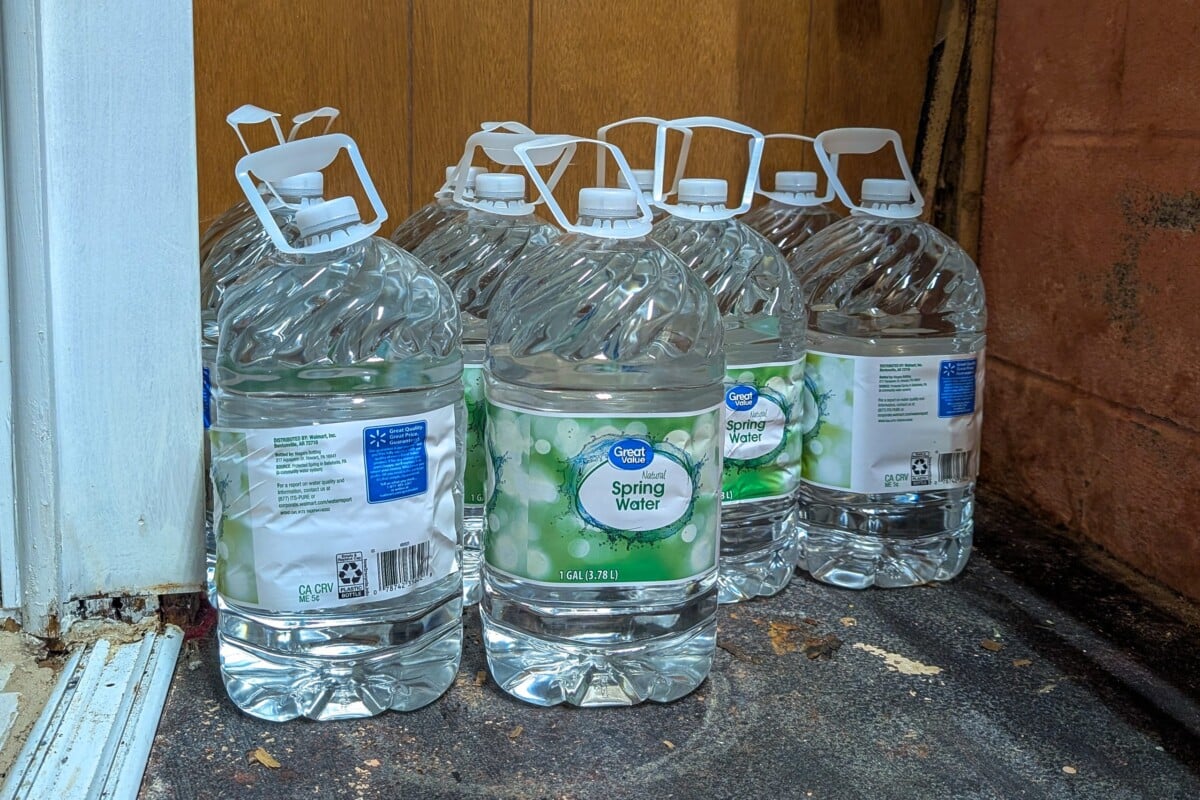
Water is the most important, but can also be the toughest to store. The bigger your family is, the more you need to have on hand. The American Red Cross suggests one gallon per day, per person. Those gallon water jugs take up a lot of room, yes, but trust me, you’ll be thankful you have them when you need them.
I found it easiest to pick up a gallon every time I went grocery shopping, until I had enough set aside.
During my week without power or running water, I realized quickly how wasteful of water it was to keep washing my hands. As soon as my power was restored, I stocked up on water-based wipes and hand-sanitizing wipes to make washing up much easier and more practical.
Food
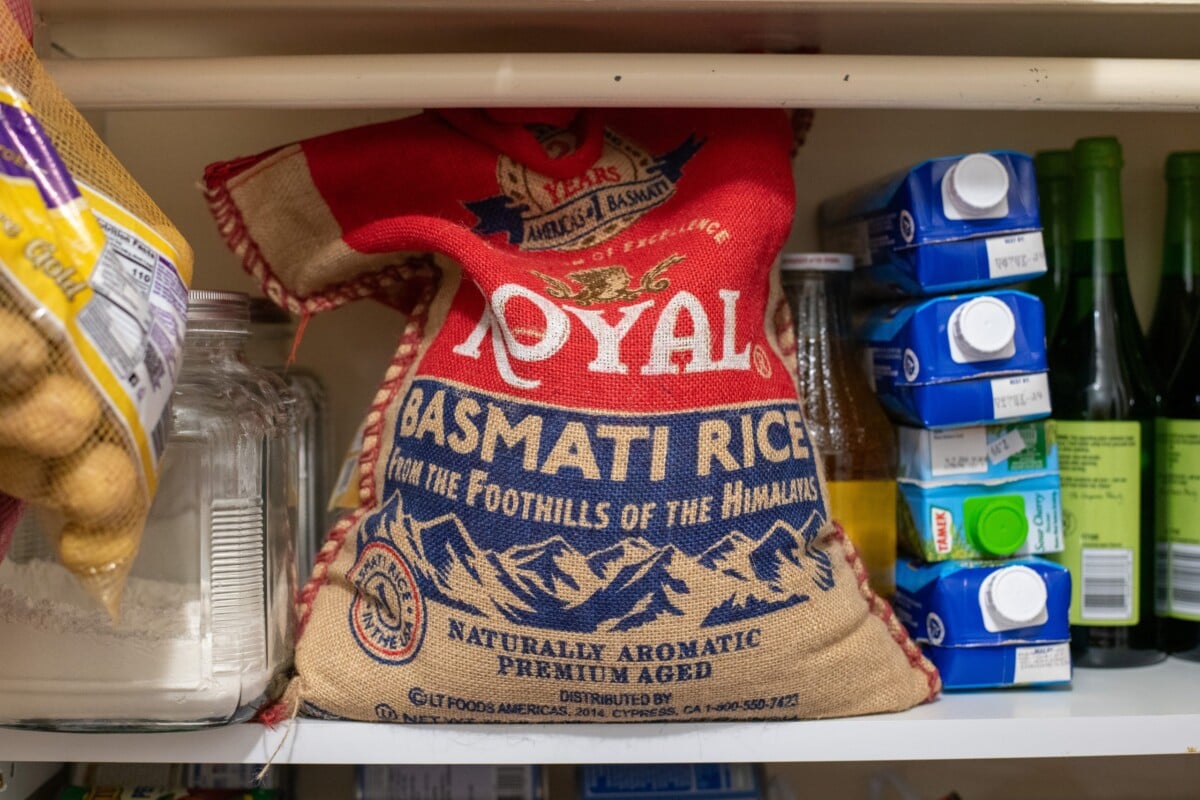
Food always seems to trip people up. When the power is out in the kitchen, it’s easy to fall into the mentality that there’s “nothing to eat.” Heck, my teenager can stand in front of a full fridge of food and declare that there’s “nothing to eat.”
Somewhere along the line we got it into our heads that we need special prepackaged meals that last for ten years or so to be prepared for even a temporary emergency.
But as long as you have a can opener, you’re fine. Think of your pantry first when putting food aside for an emergency. What can you eat without cooking? Canned fruit, granola bars, nuts, dried fruit, canned tuna or tuna packets, shelf-stable protein drinks, etc.
And if you have a means of cooking, such as a small camping stove, then you’re in business. I have one of these and one of the classic Coleman camp stoves. I have fuel for both in my emergency kit.
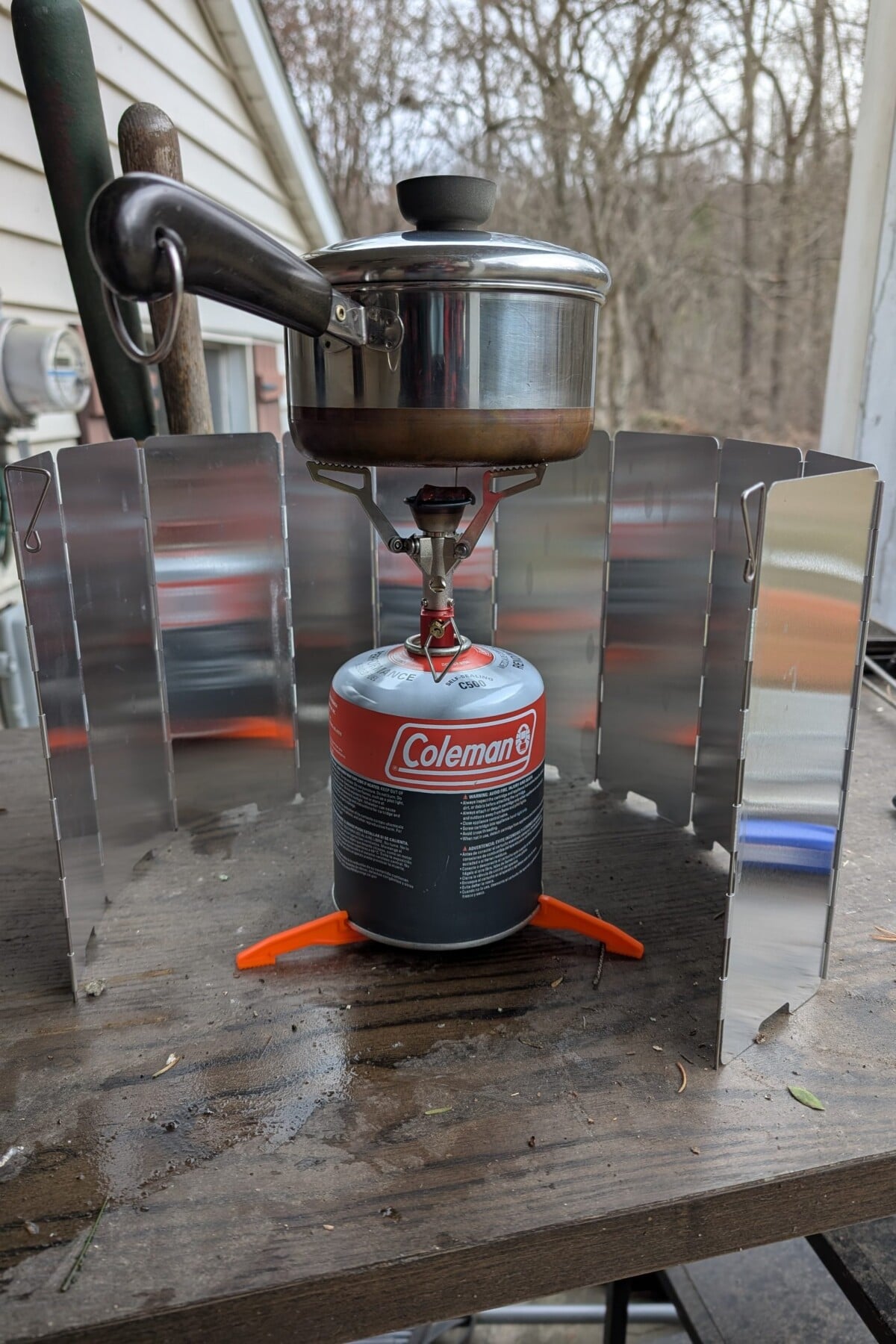
Be mindful of carbon monoxide and cook outside if you’re able, or open windows while cooking if you can’t.
Think instant mashed potatoes, instant oatmeal packets, instant ramen noodles, rice and canned beans, canned pastas and soups, canned chicken, etc.
Unless you have a medically necessary diet regimen you need to follow, the goal is to be fed, not enjoy fine dining. Anything that’s shelf-stable for a year or more and doesn’t need elaborate preparation is fair game.
If you have an infant in your family, don’t forget formula and baby food.
Since this is a common-sense guide to prepping and not a tutorial on preparing for the end of the world, keep in mind that depending on your grocery shopping habits, you may already have a week’s worth of non-perishables on hand. I shop in such a way that I could feed my family from my pantry alone for almost a month. I’m a firm believer in always having rice and canned beans on hand at the least.
Lighting
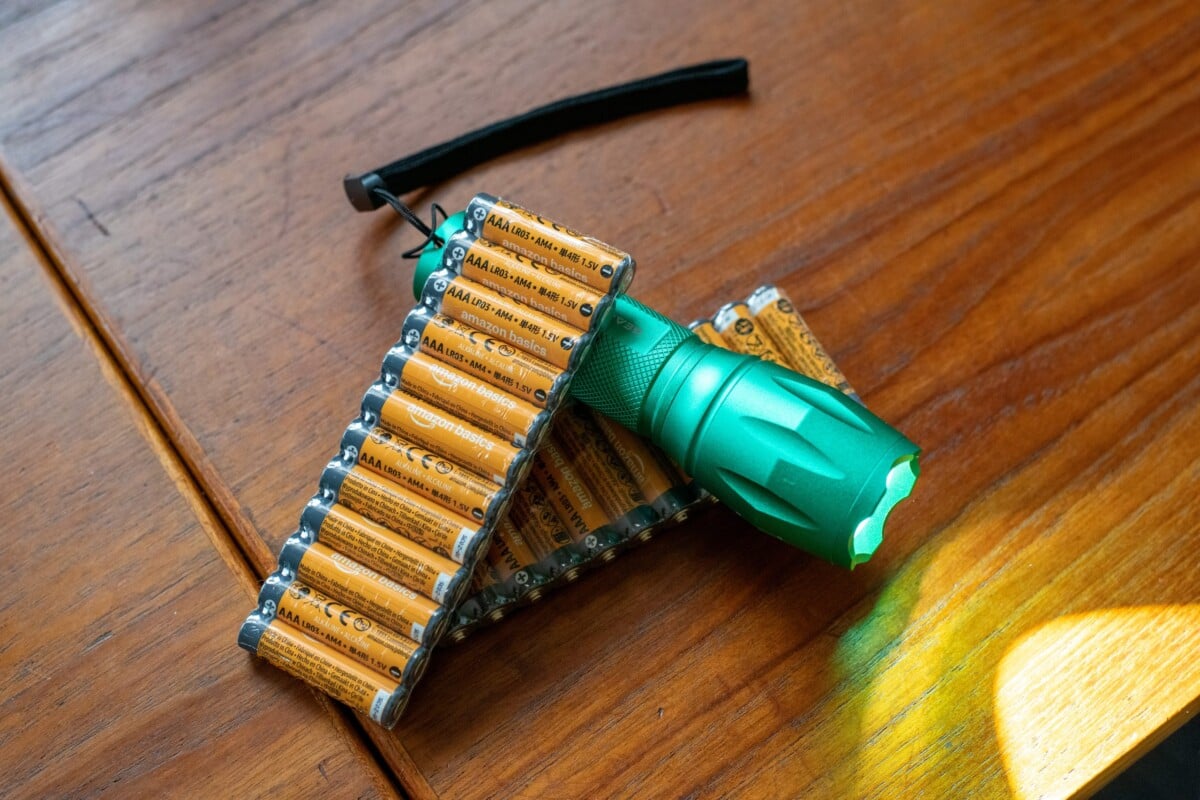
It’s a smart idea to have some emergency lighting on hand.
In my emergency preparedness kit, I have two types of lighting: a battery-powered flashlight and solar-powered LED lanterns. Between the two of these, I have the light I need to navigate my home or outside in the dark.
Grab yourself a small, battery-powered flashlight and put it with your emergency supplies. Don’t walk off with it or rely on another household flashlight. This one lives in your emergency supply kit. (This is the one I have. I really like GearLight flashlights. I purposely picked a bright color, so it would be easy to spot.) Put some extra batteries in the kit with it. (I am a HUGE fan of Amazon Basics alkaline batteries; they last as long as the big name batteries, but for a fraction of the price. They are all I use. I always buy the largest pack available for each size.)
I don’t store my emergency flashlight with the batteries in it. I don’t want to find a corroded battery and a flashlight that doesn’t work when I actually need it.
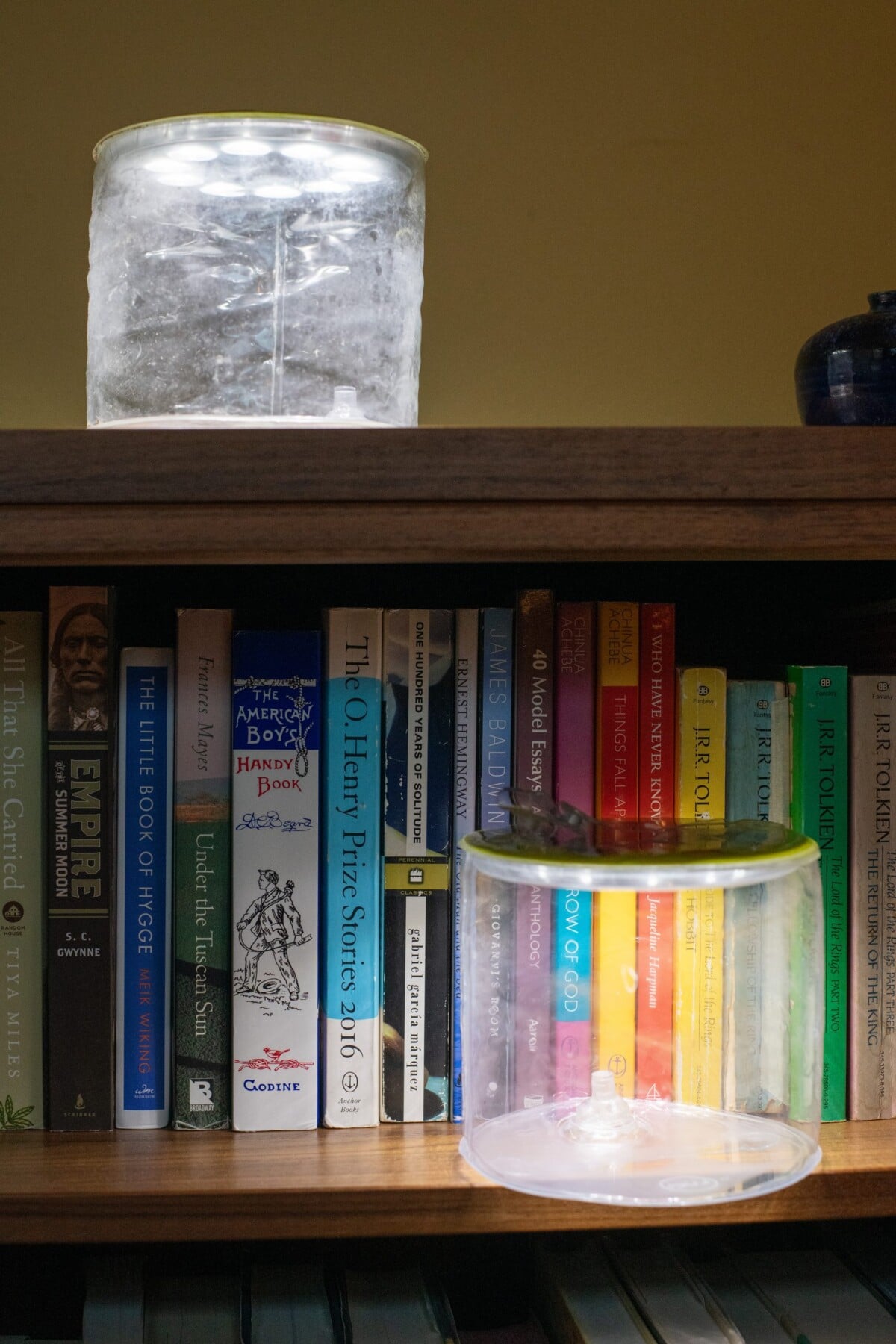
I also love these inflatable solar-powered LED lanterns. They pack flat when you don’t need them, and they’re super bright. They really do a great job of lighting a dark room, and you don’t need to worry about keeping batteries on hand. I’ve had mine for about six years now, and they’re quite sturdy. They’re great for camping, too.
An Emergency Radio
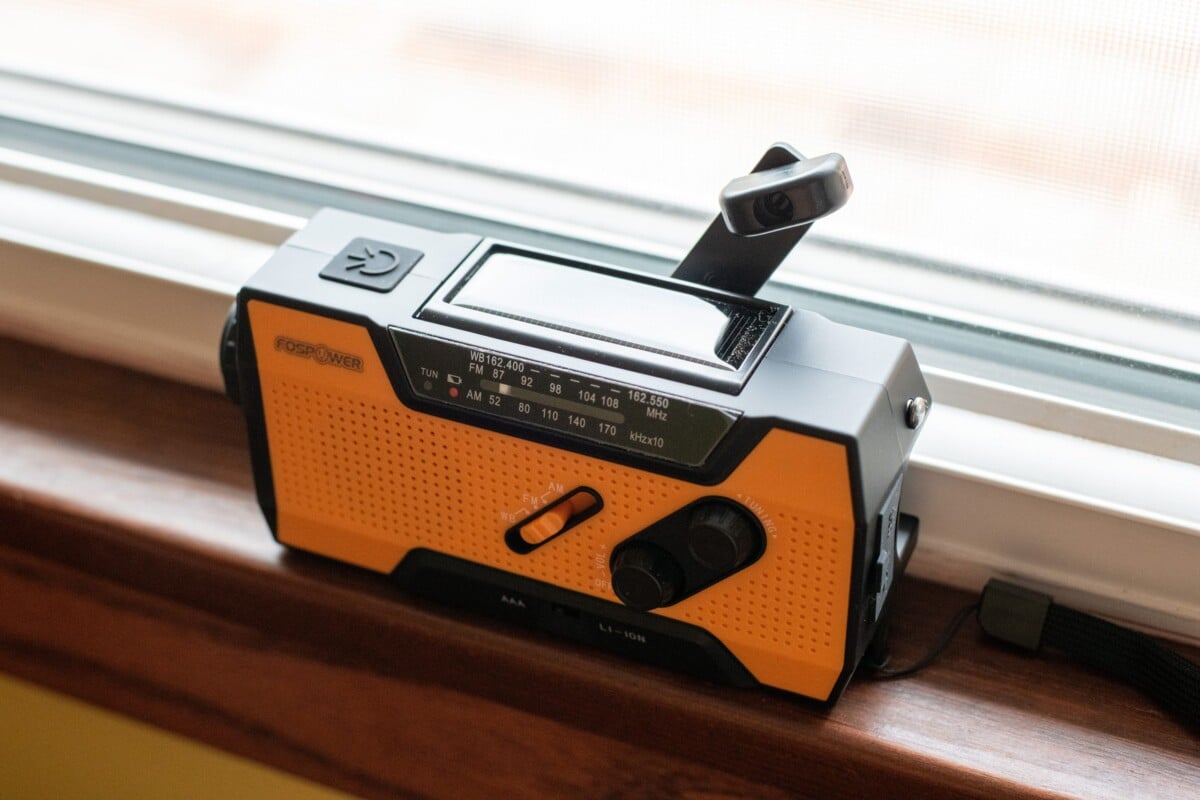
Every home should have an emergency hand-crank-operated radio that picks up NOAA alerts. The bonus with these is most of them have a built-in flashlight as well. This is the one I have in my kit. Not only does it have a flashlight, but it can be charged with the little solar panel on top, and you can use it as a small power bank to charge your phone. Hint: these make great gifts for the folks in your life who love a practical gift.
Learn how to use it before an emergency.
A Basic First Aid Kit
You can pick up a well-stocked first aid kit here or a basic kit at most home goods stores. It should have bandages, pain medications, burn cream, tweezers, scissors, gloves, etc. Keep in mind that all medications have an expiration date. It’s a good idea to check your first aid kit once a year and replace any expired products.
Some medications that don’t always come in a first aid kit, such as antacids, laxatives, anti-nausea medications and allergy medications, are also a good idea to keep on hand. Use common sense. If you normally keep these things in your home, then you’re already prepared.
Not Completely Necessary, But Wonderful in An Emergency
I bought myself a Jackery power station six or seven years ago. It gets used at least once a year, whether it’s to charge phones during a power outage or while camping, or in the case of my week without power, to run my coffee grinder so I could at least have a decent cup of coffee each morning.
When the emergency is over, the first thing I do is recharge it before I put it away.
This thing is wonderful. I’m thinking about picking up the solar panels that go with it, so I can keep it charged even when the power is out.
Don’t Forget Your Pets
The biggest need is food and water, but some basic first-aid supplies for your family pet are a good idea as well. Keep everything together with your other supplies.
When Temperature is a Concern
The kind of emergency that can leave you without heat or dealing with excessive heat requires a bit more thought and planning.
For colder temperatures, layer. Put on warm socks and a hat as you lose body heat through your feet and head quickly. Dress in warm layers. Hang a blanket in a doorway to preserve heat in one room. Don’t forget to open taps to a gentle stream to prevent pipes from freezing.
Grab a pack of space blankets and put them in your emergency kit. (Tuck several in your glove box, too.)
In summer, during a heat wave, drink plenty of water and stay in the shade. Heat rises, so stay on the lower level of your home and open windows to create a cross breeze. Wet a kitchen or hand towel and drape it around your neck for an evaporative cooling effect.
Things Most of Us Have On Hand Anyway
There are quite a few things that come in handy during an emergency, but you probably already have them lying around the house. For a little extra peace of mind, you may want to set aside some of these with your emergency kit, so you don’t have to worry that you’ve run out when you need it most or have to search for them.
- Garbage bags
- Duct tape
- Matches or a lighter
- Paper plates and disposable utensils (you don’t need dishes piling up in the sink if you have no running water)
- Feminine hygiene products
- Soap
- Disposable Gloves
- N95 masks
- Diapers and wipes if you have an infant in the house
Useful resources:
Get Garden Notes From Tracey, Right to Your Inbox
Pull up a chair on the front porch. Join 54,000+ gardeners who get Tracey\'s friendly notes, seasonal to-dos, and hands-on tutorials three times a week.