

It’s 1 AM, and I’m surrounded by three books, a digital magazine opened on my tablet, a podcast on my phone and a carousel of open tabs in my browser. It’s how I do research in hyper-focus mode, and there’s a method to the madness.
I have set myself a gardening challenge:
Create a gravel garden from scratch.
I mean, the gravel is there, but not the plants. So the “garden” part of “gravel garden” is up to me.
So I’ve decided to take our readers on a journey of gravel garden discovery and tell you what I’ve learned about it. I’m still in the initial phase of setting up the gravel garden, but if there’s interest (you can tell us on the Rural Sprout Facebook page), I will do a follow-up article on how the gravel garden is coming along once it comes into its own.
My challenge in creating a gravel garden.
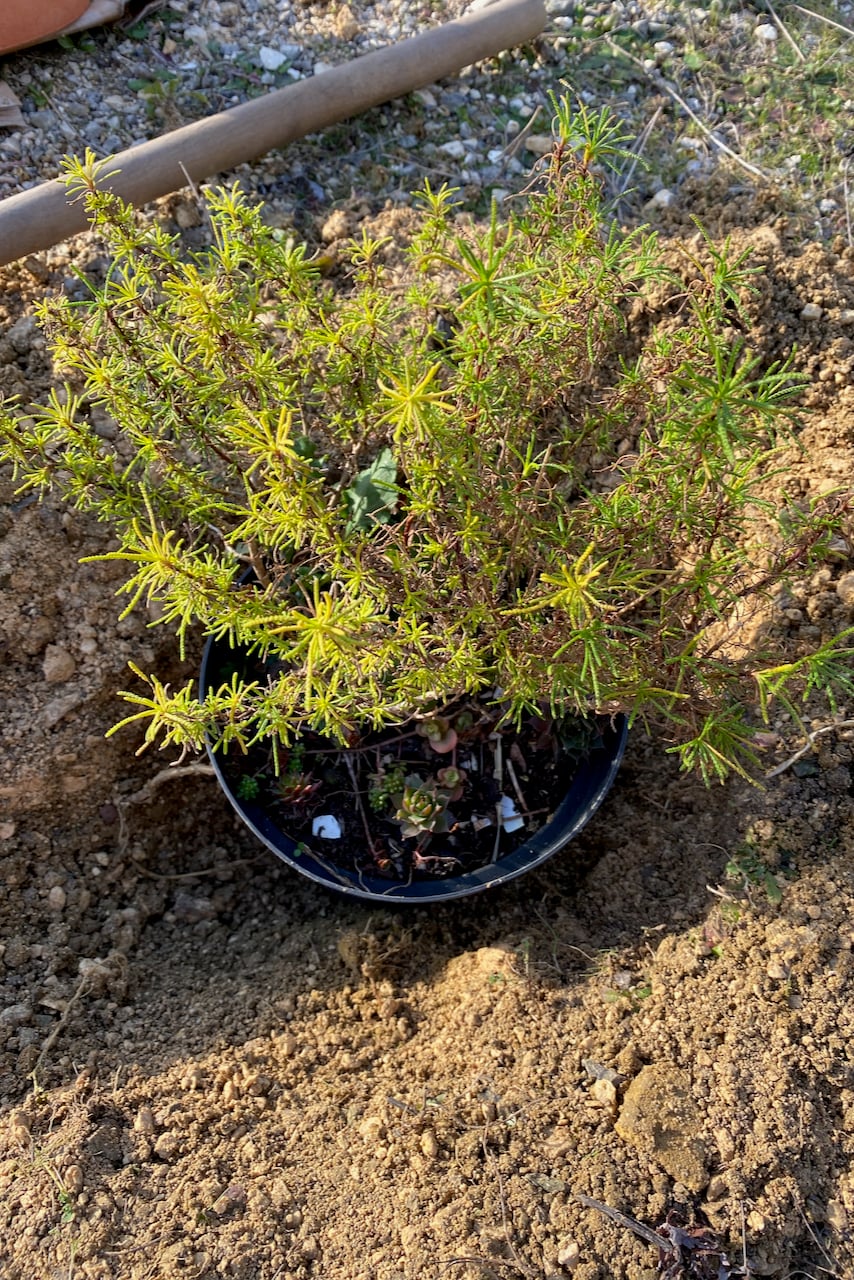
You see, our new yard has a gravel court. It sits to the side of the driveway and is separate from the rest of the garden. We were told the previous owners used it as a boules court. It’s a lawn game of French origin (they call it petanque) that you play with metal balls. Think bocce, but on sand and gravel.
As popular and timeless as this game may be, I’d much prefer a garden in that spot.
What’s a gravel garden?
You’ve probably seen this term pop up lately. It’s becoming a bit of a trend, although I’m not sure everyone understands it the same way.
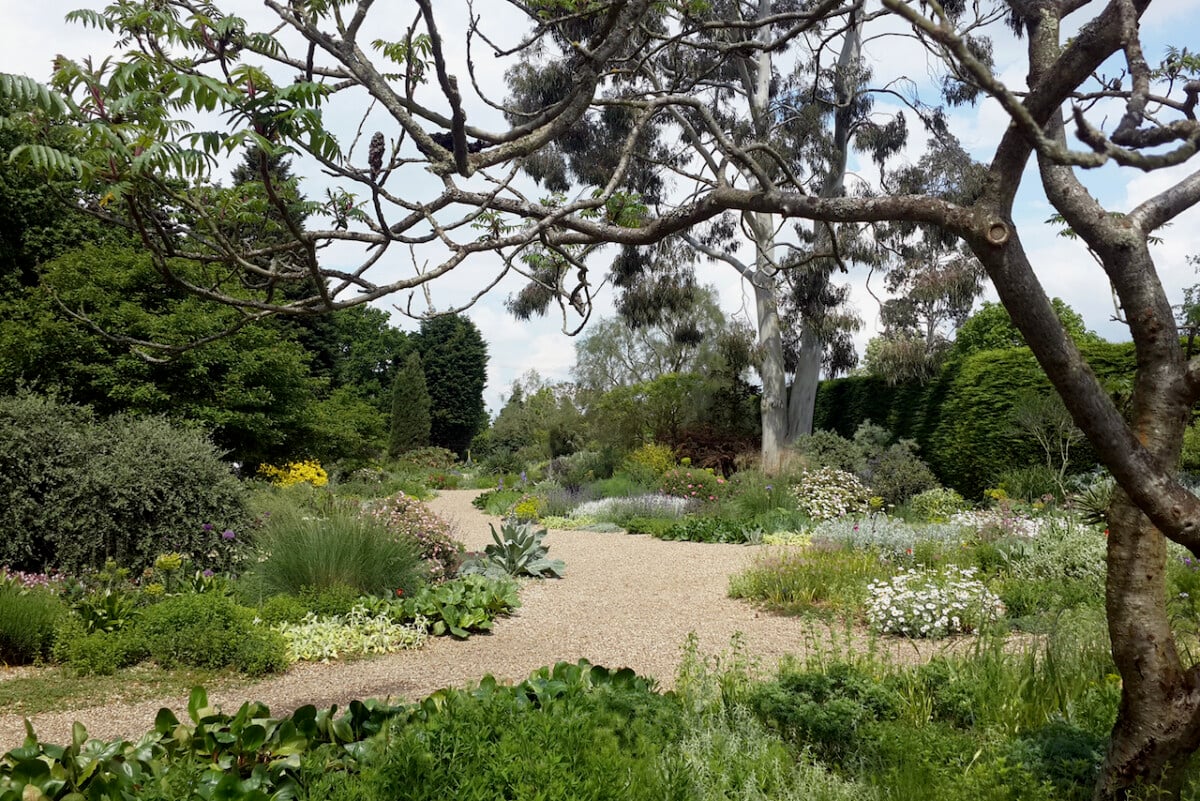
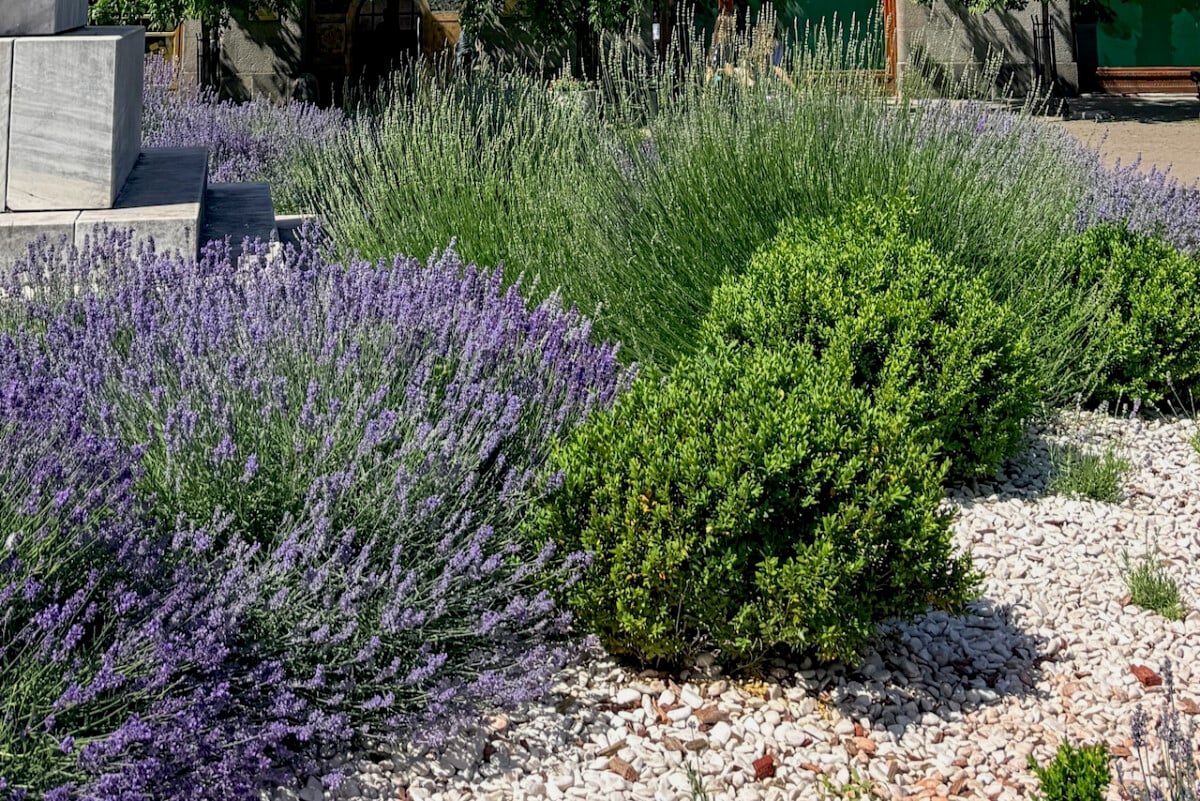
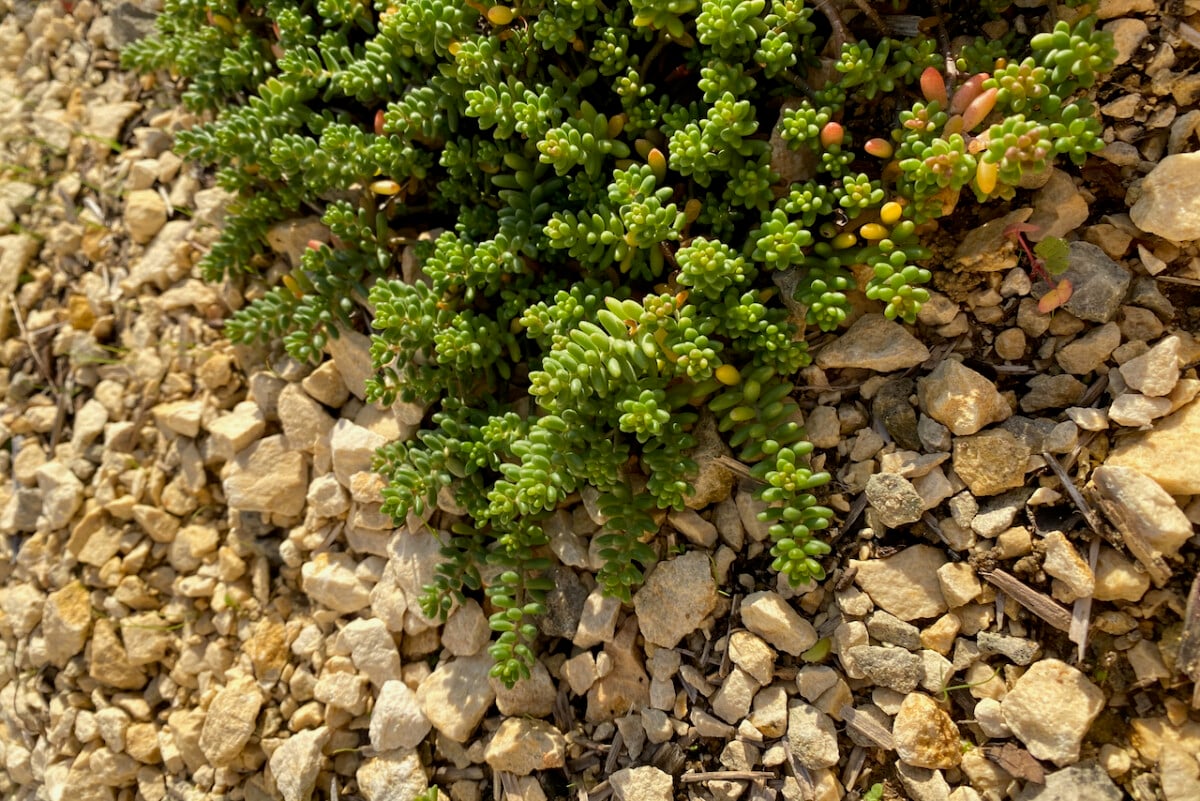
In a gravel garden, the plants are not planted in gravel per se, but rather a layer of gravel (anywhere from three to five inches) is used as a cover mulch. The plants are rooted in the soil that is hidden below the gravel.
The idea of gravel gardening has been popularized by the late and great Beth Chatto, a British gardener (to say the least), a nursery owner and an all-round unconventional experimenter with what it truly means to grow a sustainable garden. It’s only natural that the most famous gravel garden, and the blueprint of all such gardening so far, is the original one planted by Beth at Beth Chatto Gardens in Elmstead, Essex, in the South-East of England.
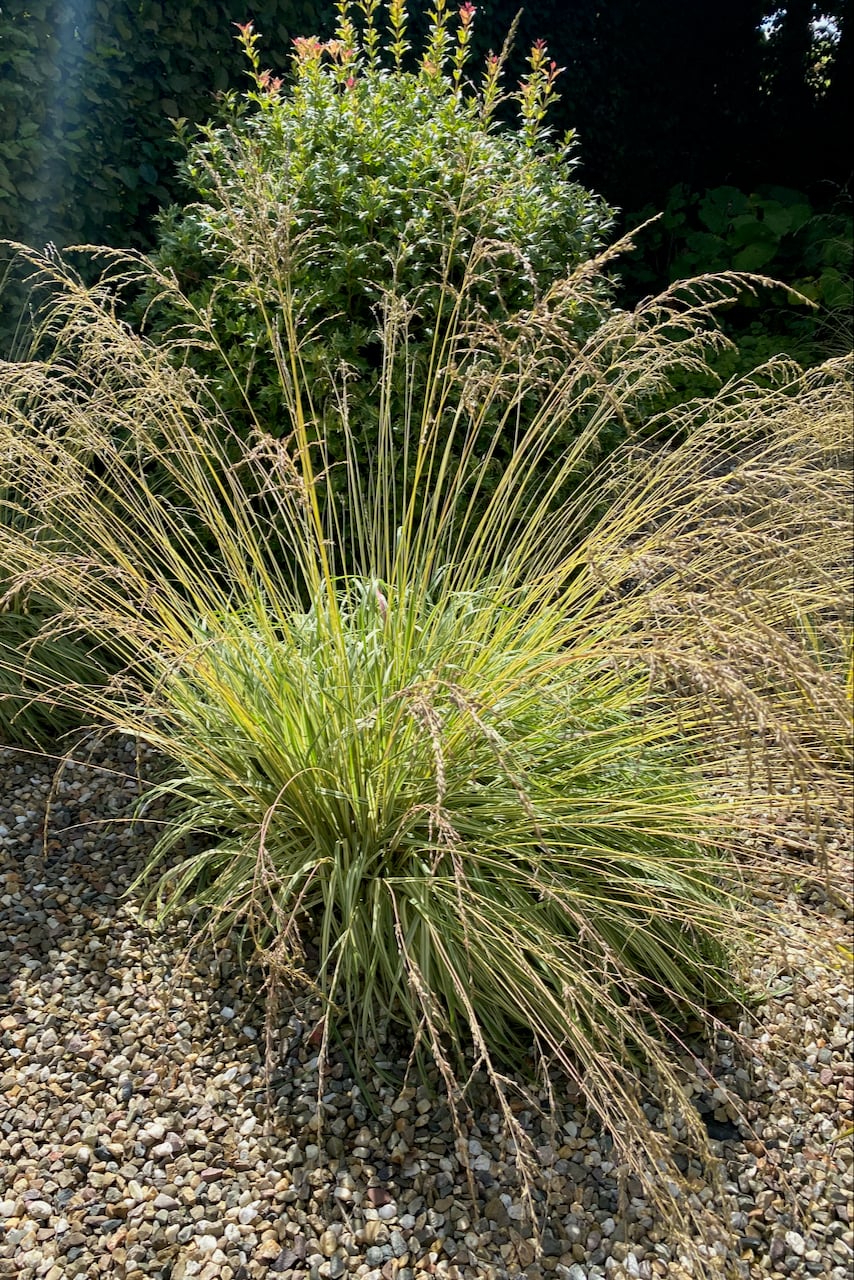
In 1960, Beth and her husband turned the parking lot of their nursery into a perennial wonderland, thus creating what was to become the world’s best-known gravel garden.
It’s the exact opposite of “they paved paradise and put up a parking lot.”
Beth is a pioneer and much revered in the world of garden design because of her devotion to creating sustainable gardens on different terrains. We may take that for granted now, but back when she was building her gardens and her gardening business (starting in the 1950s), the predominant gardening style was rigid and formal.
Why a gravel garden is a good idea.
The gist of it is this: a gravel garden is dry by design. Any area works for a gravel garden, although a sunny, well-drained spot is best for most Mediterranean plants. While it is possible to make a gravel garden on any type of soil, it will work particularly well on predominantly sandy soil that’s relatively low in nutrients.
Using gravel as a planting medium has four main advantages:
Number 1: Gravel locks moisture in the soil.
We use gravel as we would use mulch. Rainwater filters through the gravel, but due to the nature of the material, it does not evaporate as quickly as it would from topsoil during a prolonged period of drought. So plants covered with a layer of gravel benefit from this consistent moisture around their crowns.
Another facet of this advantage is that gravel locks in moisture but does not retain it (for example, like clay soil would). Rather, it allows water to percolate through.
But the gravel is only a layer, not the full depth of the garden. So eventually the water does infiltrate the soil below.
So the roots have access to water, but not an excess of it. In Beth Chatto’s garden, they do not water plants at all, not even during a heatwave. And trust me, I have been reading their weekly blog posts all throughout this extremely hot summer for a hint of extra watering. There was none.
The only time they water the plants is to help them get established when they first put them in the ground, according to Head Gardener Asa Gregers-Warg, interviewed on The Middle-Sized Gardener YouTube channel.
Number 2: A gravel garden stores warmth during the day and releases it back at night.
Essentially, gravel creates a microclimate in which excess heat is stored during the day and then released back at night. This, of course, benefits the plants during the day because the gravel doesn’t bake in the sun as clay would. But it also means that there’s not a sharp drop in temperature after sunset.
Avoiding temperature fluctuations around the roots and the crowns of the plants makes them more resilient and better suited to tolerate drought.
Number 3: Gravel slows down weed growth.
Gravel as a growing medium does not stop all the unwanted plants from growing. Nothing will, so you’ll just have to stay vigilant. But it greatly reduces their number.
And since we’re talking about weeds now, let me take the time to make this clear: there is no weed-suppressing membrane in a gravel garden. That would only reduce permeability and, over time, the accumulated debris on it would become a medium for growing weeds. Hello, backfire!
Number 4: Once established, a gravel garden is low maintenance.
When I think about maintenance, I think about a few factors that we constantly have to monitor and work on:
- maintaining an adequate soil moisture level – check! We’ve already talked about this above;
- weeds (same);
- mulching – there’s no need to mulch in a gravel garden. The gravel IS the mulch.
- feeding – there’s no need to fertilize a gravel garden. The plants that grow well in the gravel garden (more on them below) are the ones adapted to poor soil. Fertilizing them would be not just unnecessary, but counterproductive.
Are there any disadvantages to gravel gardens?
Of course, any gardening style (or is it a philosophy by now?) has its drawbacks. I’ll talk about them below. But first, I want to break up the two information-heavy sections with some pretty plants. That’s what you’re here for, right?
What plants do well in a gravel garden?
The beauty of this style of gardening is that we don’t have to stick to one type of plant. So it’s not just succulents, or just cacti, or just Mediterranean plants. One of the books I recommend below (The Gravel Garden by Jeff Epping and Teresa Woodard) features a prairie-inspired gravel garden in Iowa as well as a garden in Wisconsin, one in Rhode Island, one in Texas and one in Germany. We can set up a gravel garden anywhere we have an exposed patch of soil where not much else grows.
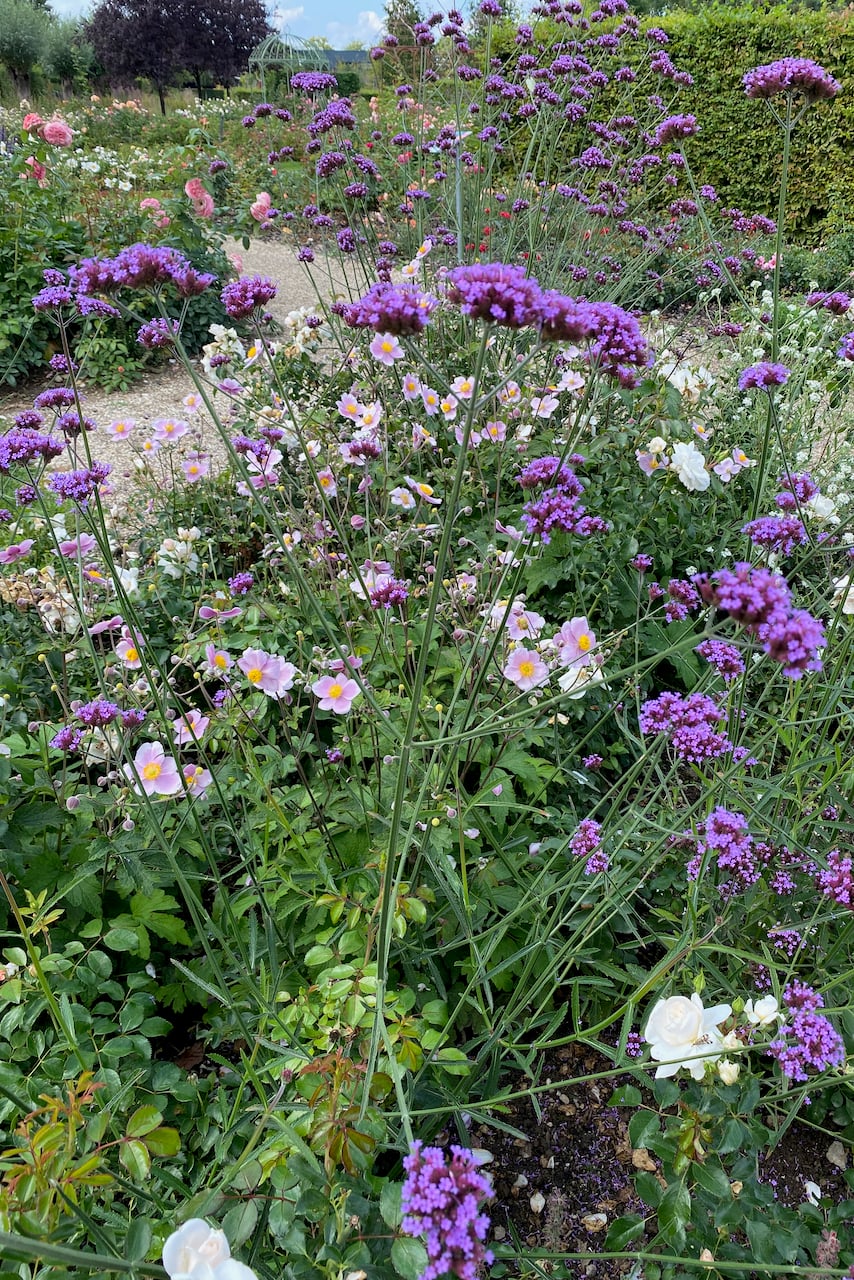
My first piece of advice if you’re starting a gravel garden is to see if there are any plants native to your area that grow well in poor, dry soil. You may be surprised to find out that, whether you’re gardening in the heat of Texas, the sandy heathlands of Massachusetts or the coast of California, there are at least a few native plants that you could incorporate into your gravel garden.
Since I can’t cover every single growing zone in this article, here’s my more general list of 60+ plants that will do well in a gravel garden.
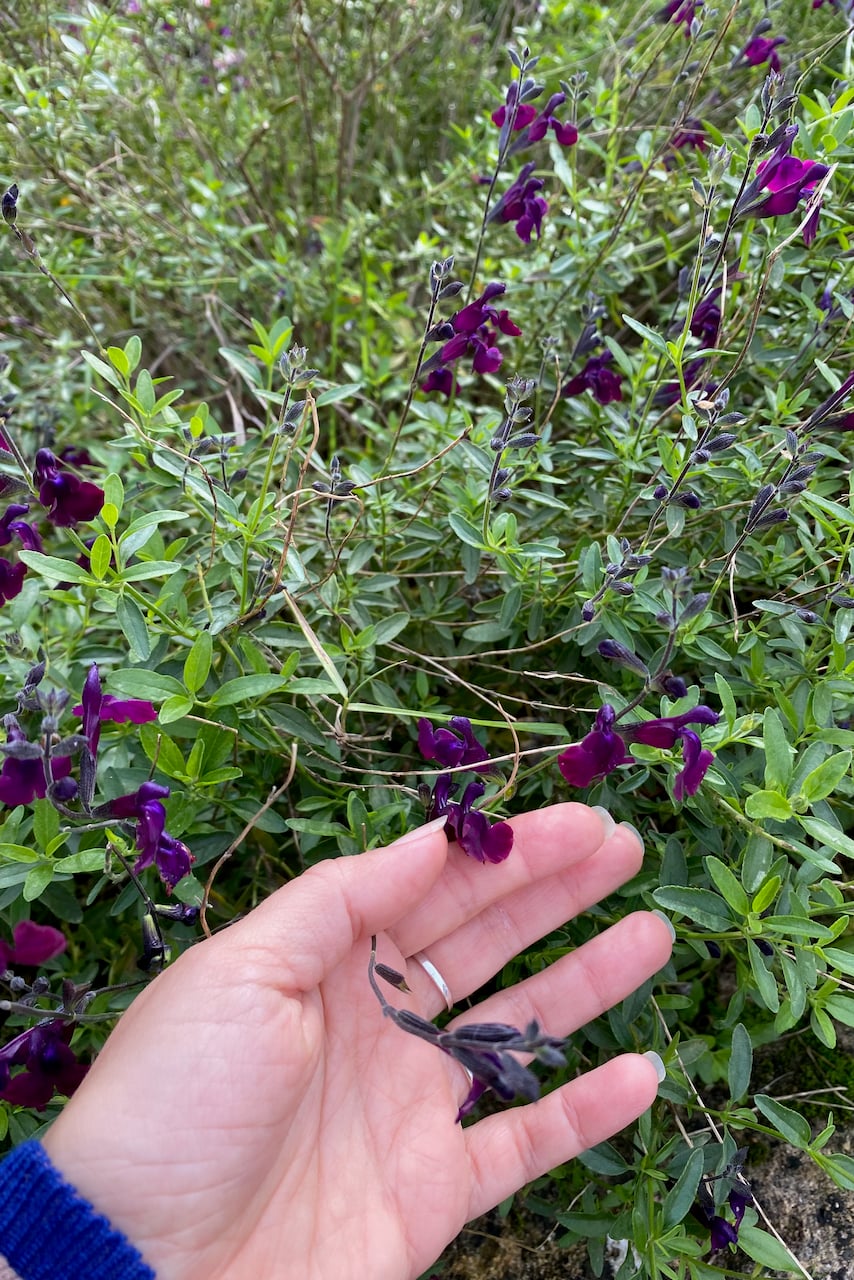
Absinth herb (Artemisia absinthium)
African daisies (Osteospermum)
Betony (Betonica officinalis)
Blue vervain (Verbena hastata)
Butcher’s broom (Ruscus aculeatus)
California fuchsia (Epilobium canum)
California lilac (Ceanothus)
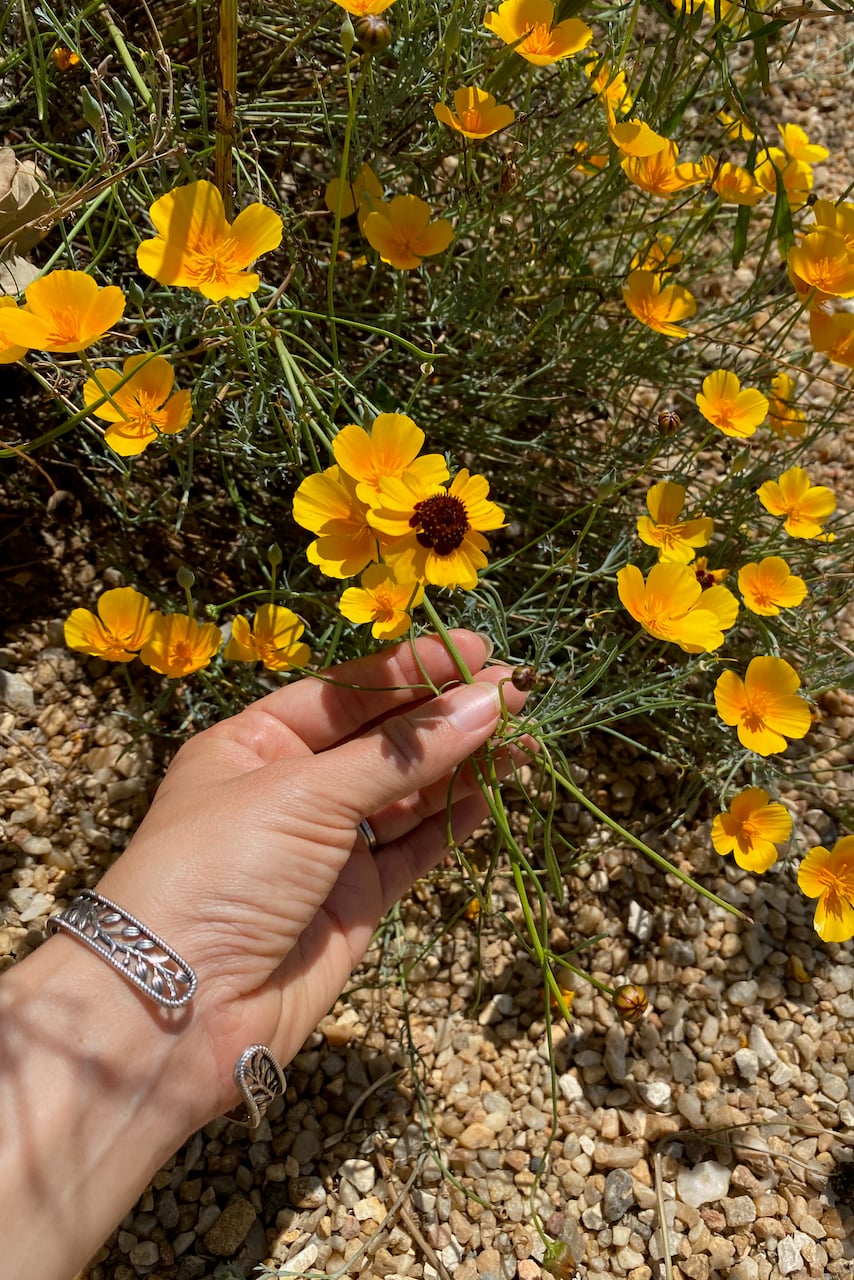
California poppy (Eschscholzia californica)
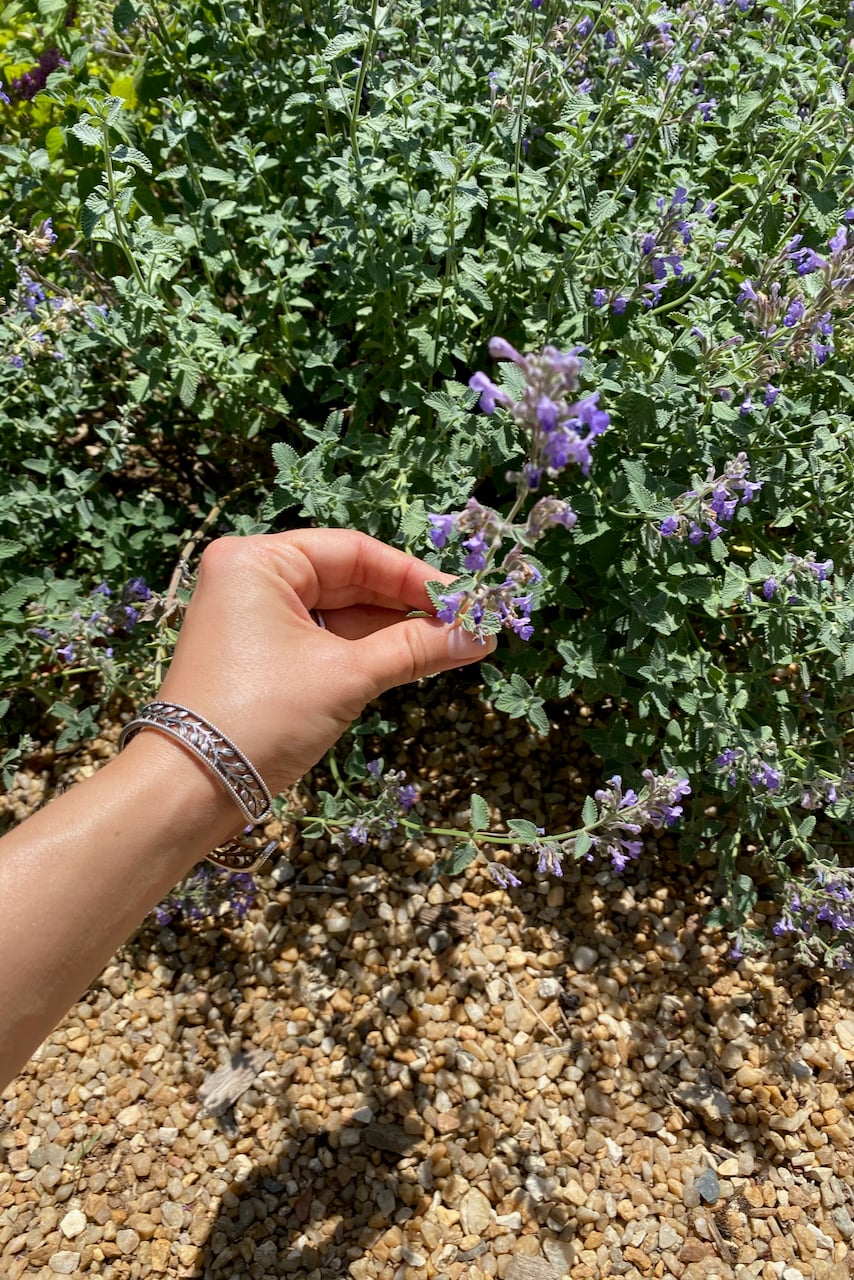
Cat mint (Nepeta cataria) – and all other types of Nepeta
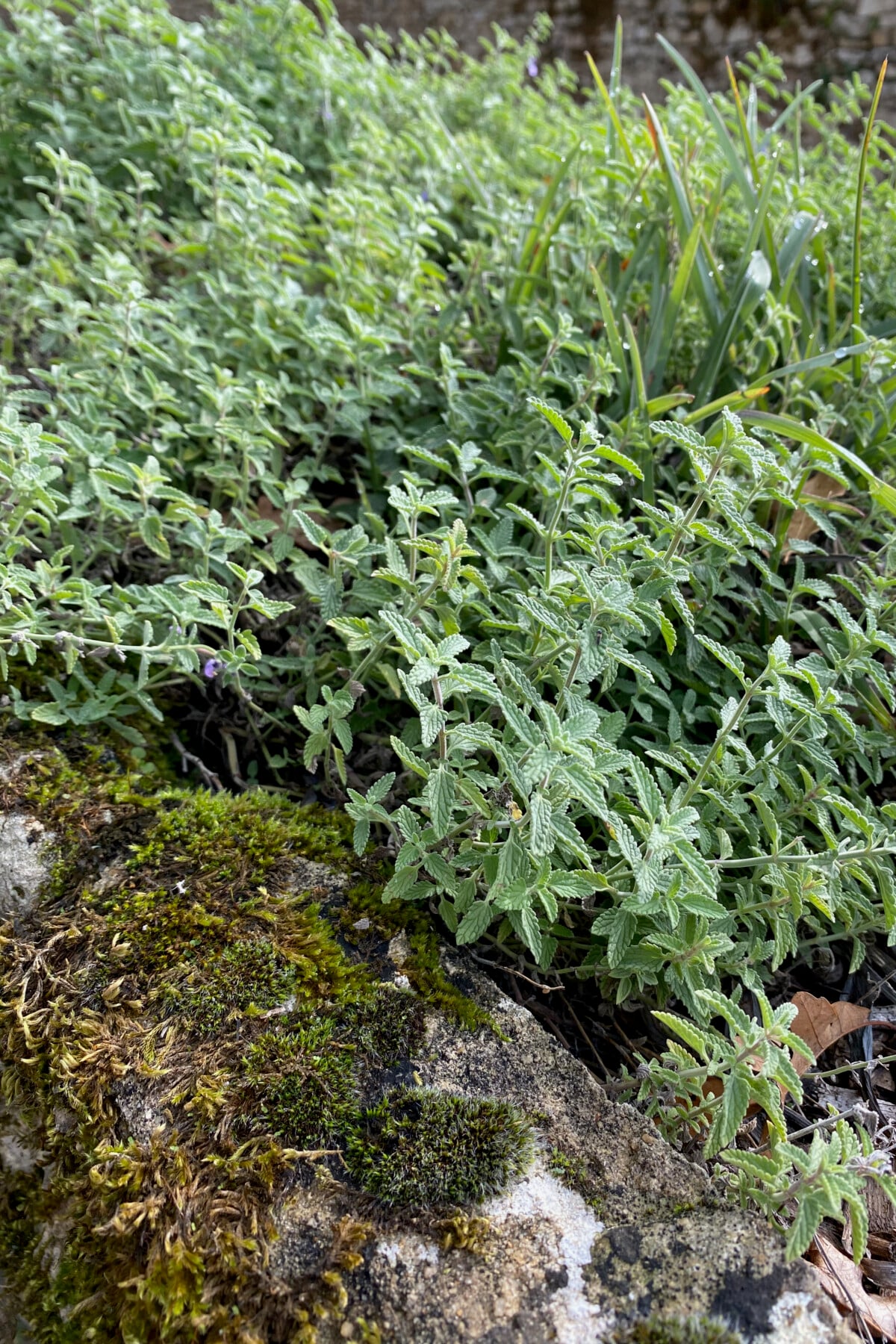
Cat thyme (Teucrium marum)
Cola herb (Artemisia maritima ‘Cola’)
Common vervain (Verbena officinalis)
Cordyline
Cosmos
Cotton lavender (Santolina chamaecyparissus)
Creeping juniper (Juniperus communis)
Creeping thyme (Thymus serpyllum)
Culver’s root (Veronicastrum)
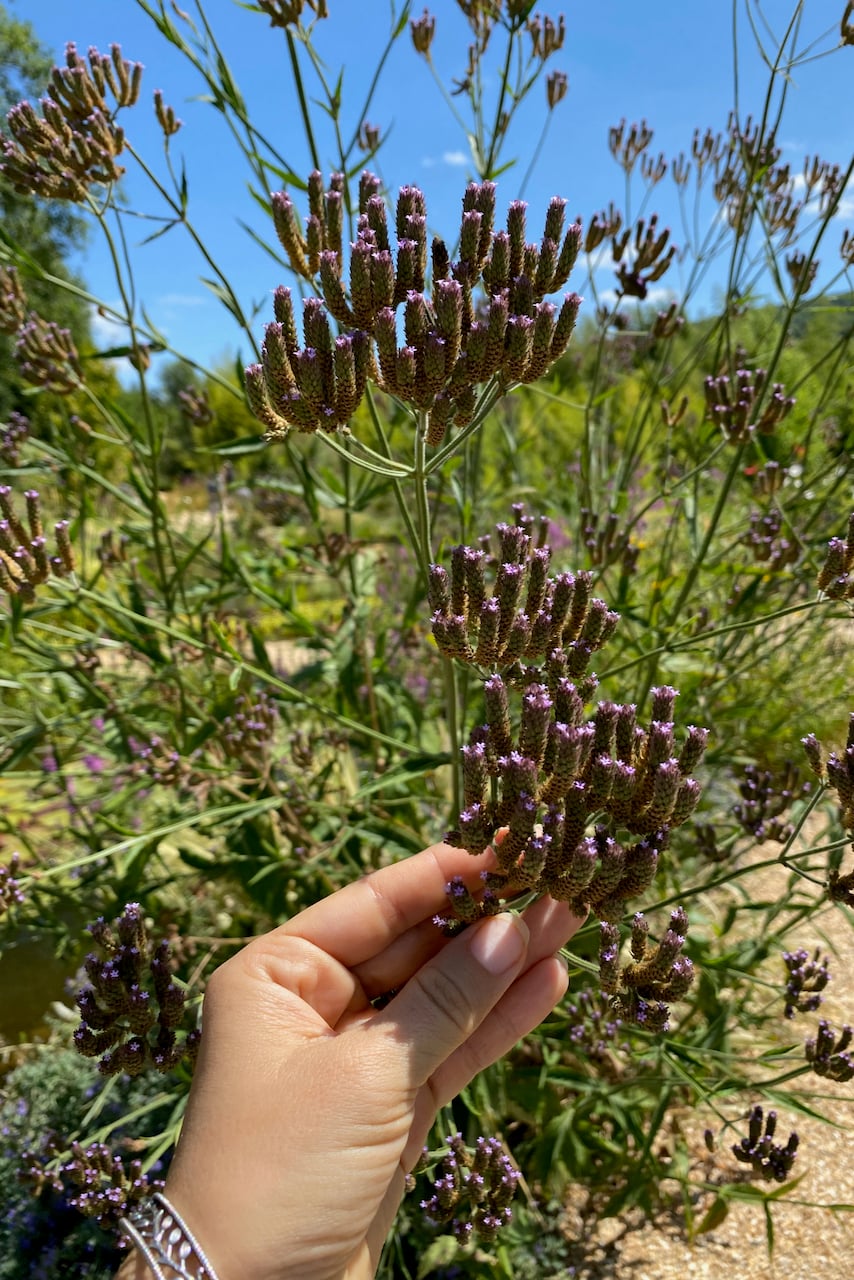
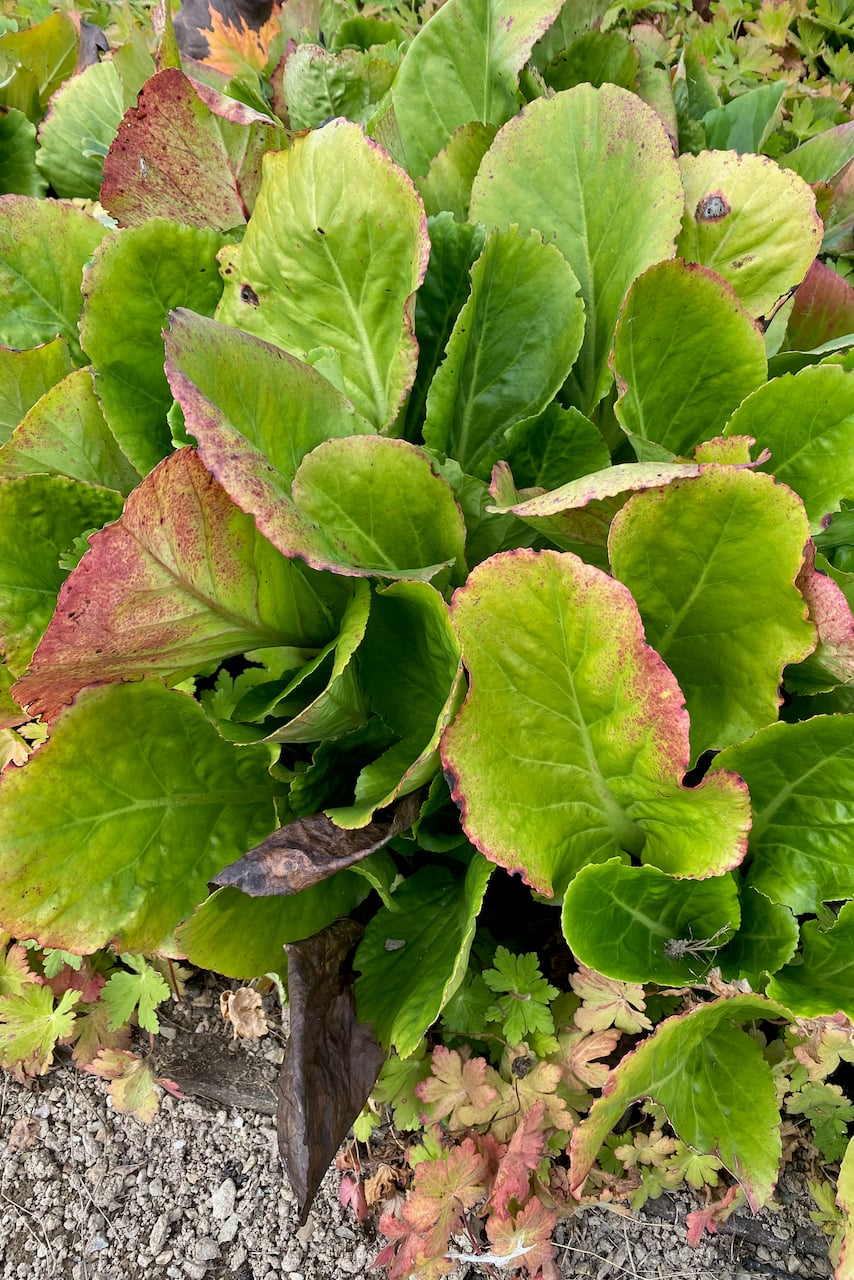
Elephant’s ears (Bergenia)
Euphorbia
False indigo (Baptisia australis)
Feverfew (Tanacetum parthenium)
Gaura (Oenothera lindheimeri)
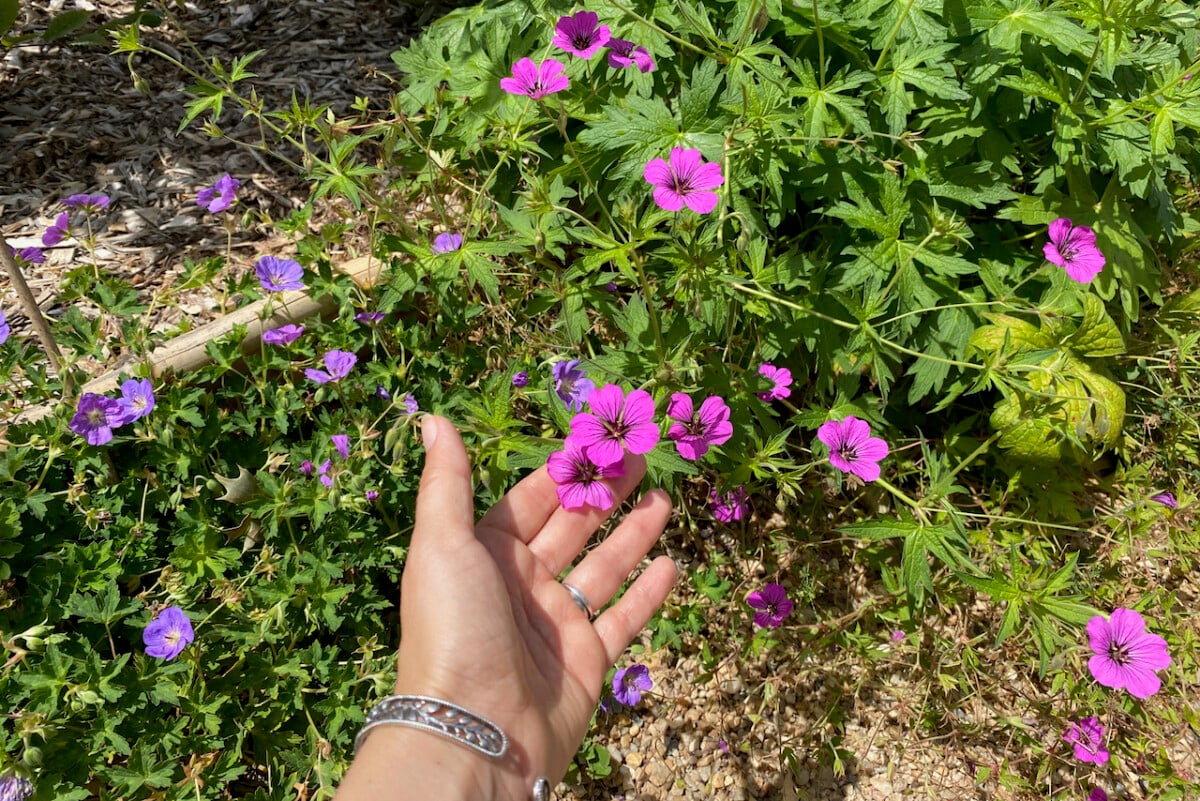
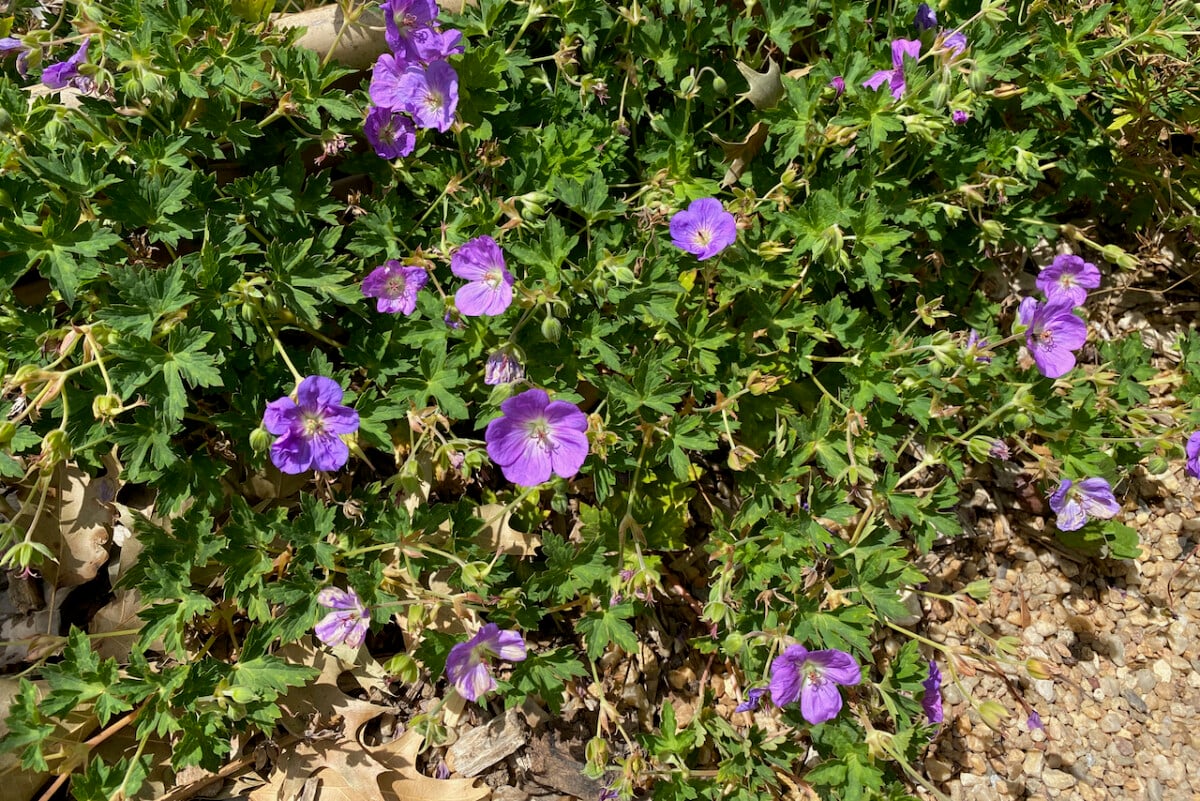
Geranium ‘Rozanne’
Giant fennel (Ferula communis)
Globe thistle (Echinops)
Golden oats group of ornamental grasses (Stipa gigantea)
Horned poppy (Glaucium flavum)
Knapweed (Centaurea scabiosa)
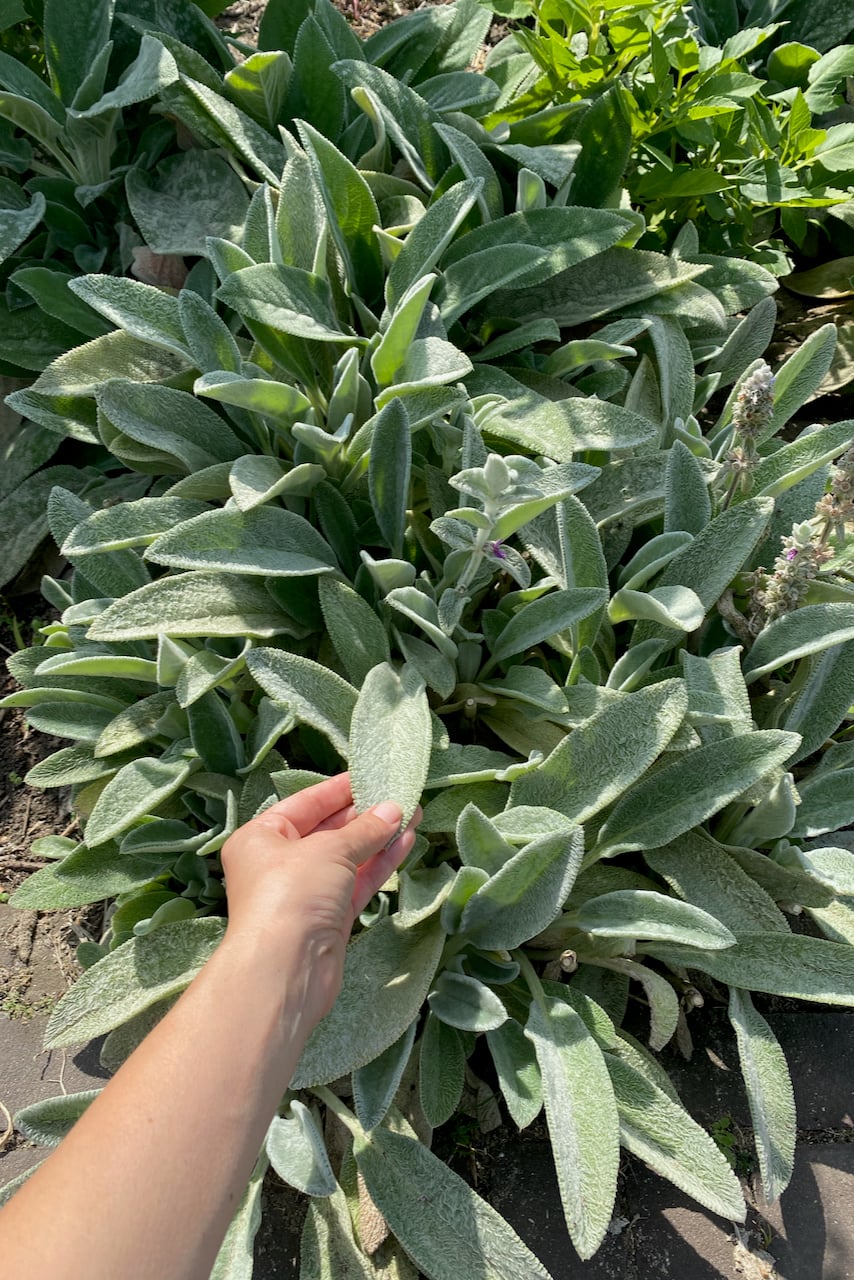
Lamb’s ears (Stachys byzantina)
Lemon verbena (Aloysia citrodora)
Moss rose (Portulaca grandiflora)
Olive herb (Santolina rosmarinifolia)
Oregon sunshine (Eriophyllum lanatum)
Oriental poppies (Papaver orientale)
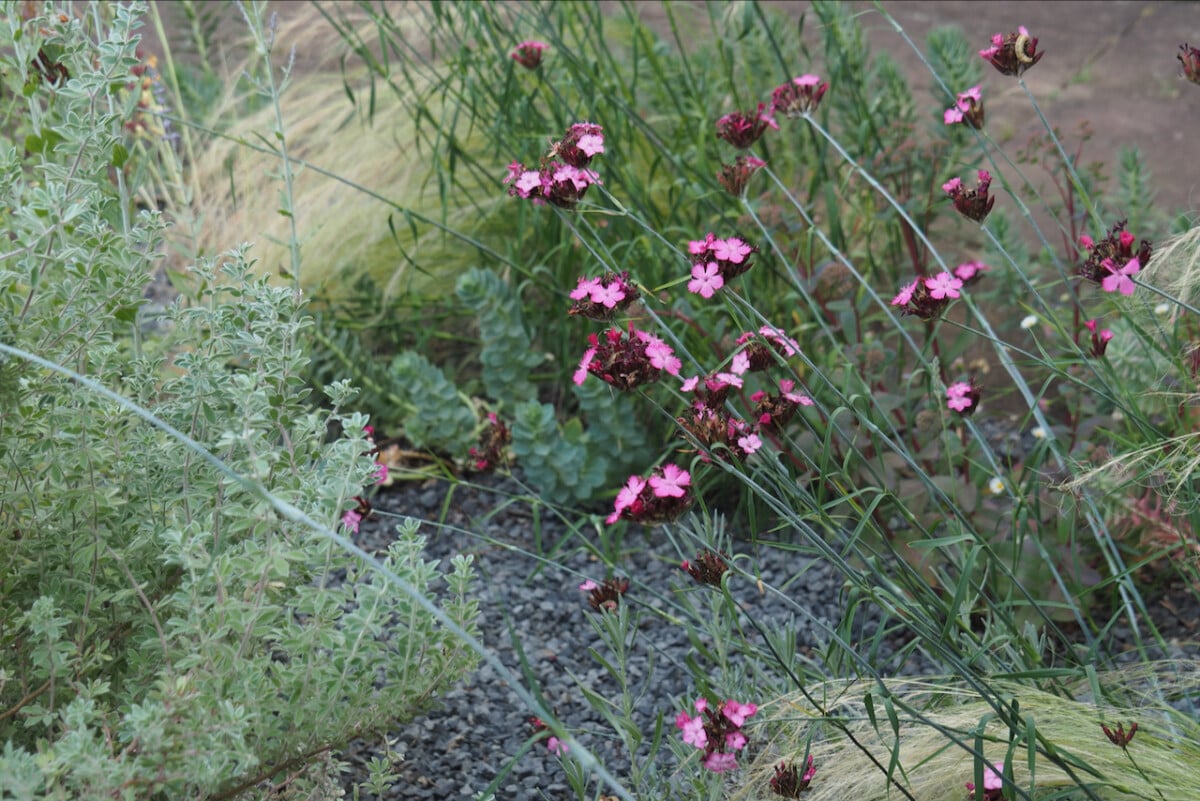
Pinks (Dianthus)
Purple scabious (Scabiosa columbaria)
Purpletop vervain (Verbena bonariensis)
Red campion (Silene coronaria)
Red-hot poker (Kniphofia)
Rock rose (Helianthemum)
Rosemary (Rosemarinus)
Sage (Salvia officinalis)
Sea holly (Eryngium)
Sea kale (Crambe maritima)
Sea lavender (Limonium vulgare)
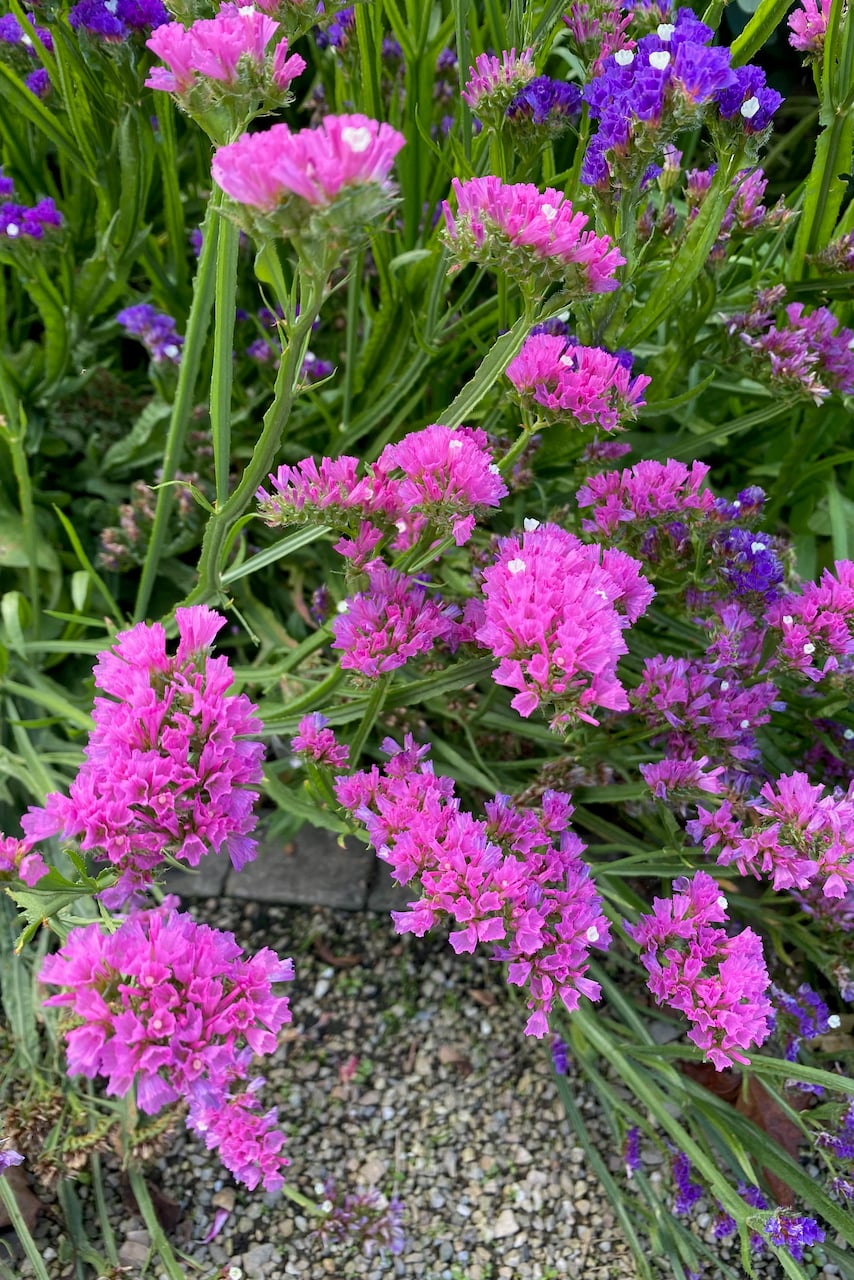
Sea thrifts (Armeria maritima)
Shrubby cinquefoil (Potentilla fruticosa)
Silver sage (Salvia argentea)
Skullcaps (Scutellaria)
Stonecrop sedums
Sun rose (Cistus)
Switchgrass group of ornamental grasses (Panicum)
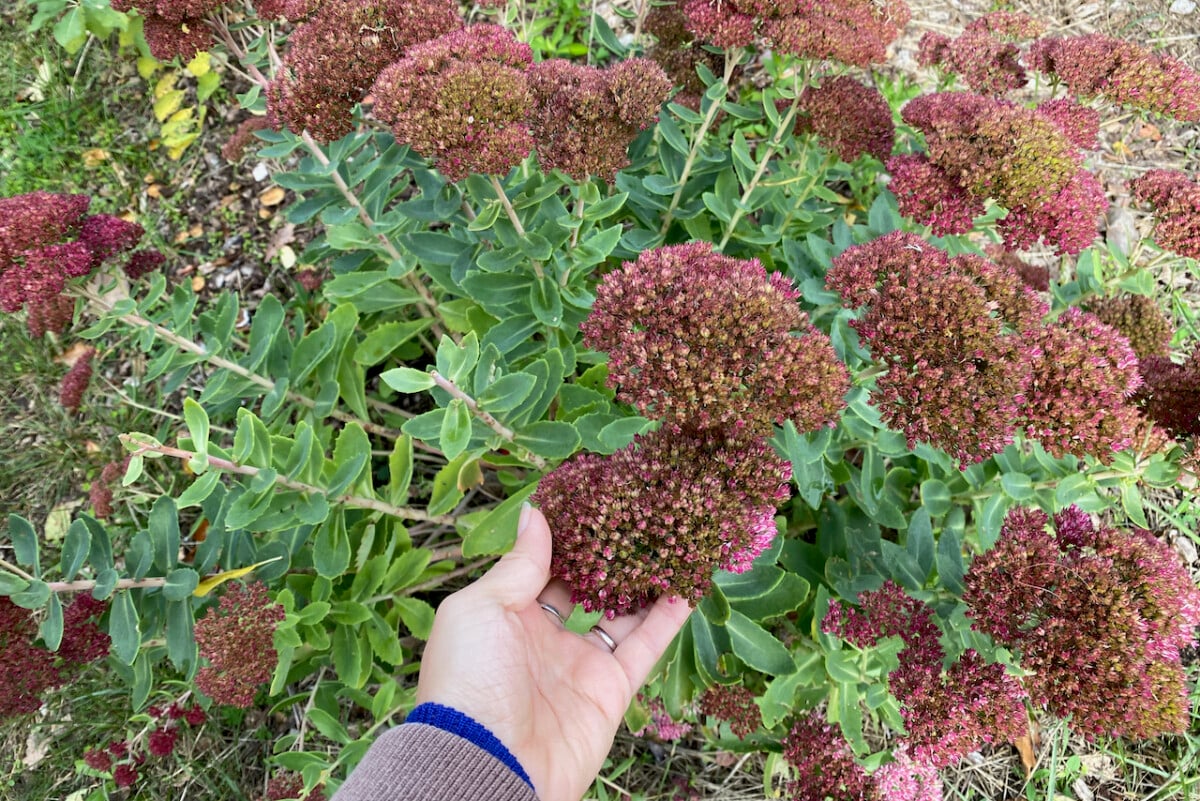
Tall sedums (Hylotelephiums)
Toadflax (Linaria purpurea)
Trailing ice plant (Delosperma)
Treasure flower (Gazania)
Turkish sage (Phlomis russeliana)
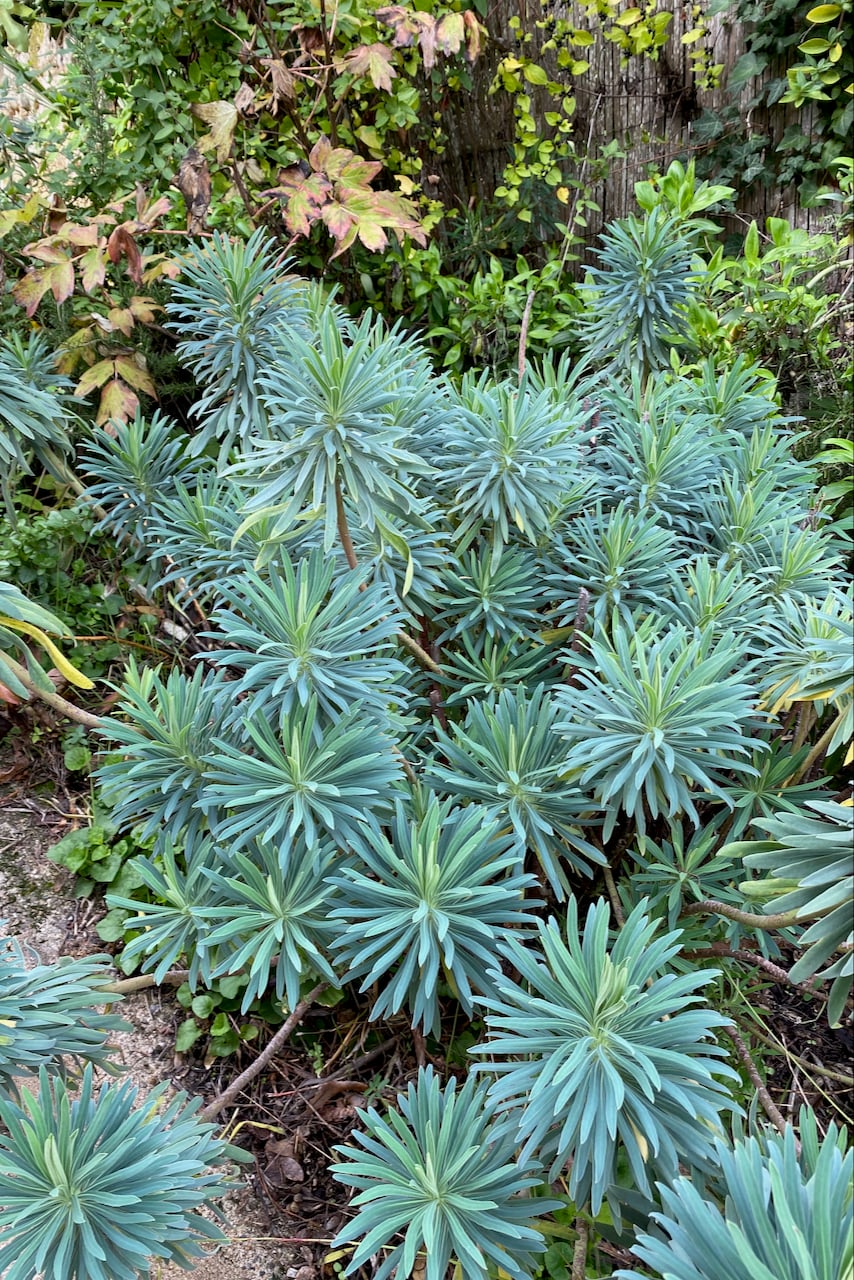
Verbascums
Wallflower (Erysimum)
Wild marjoram (Origanum vulgare)
Yarrow (Achillea millefolium)
Yucca
I’ve added some resources on gravel garden design below. The books I mention do a very good job of showing all these plants in coherent planting schemes.
Are there any drawbacks to setting up a gravel garden?
Having read so far in the article, it may seem to you, dear reader, that I’m coming to this style of garden with rose-colored glasses. That I see it as the answer to all my gardening dilemmas. That it can do no wrong.
I assure you, I am not.
Like with every long-term decision that I make about my garden, I will turn this one on all sides to find the flaws, the drawbacks and the potential ways to mitigate them.
Here are three of the disadvantages of creating a gravel garden:
Drawback #1: Gravel impedes wildlife from accessing the soil.
Oh, how quickly the advantages of gravel (locking in moisture and preventing weed seed) can turn into a disadvantage.
A 2023 study on soil biodiversity suggests that ”soil is likely home to 59% of life, including everything from microbes to mammals, making it the singular most biodiverse habitat on Earth.”
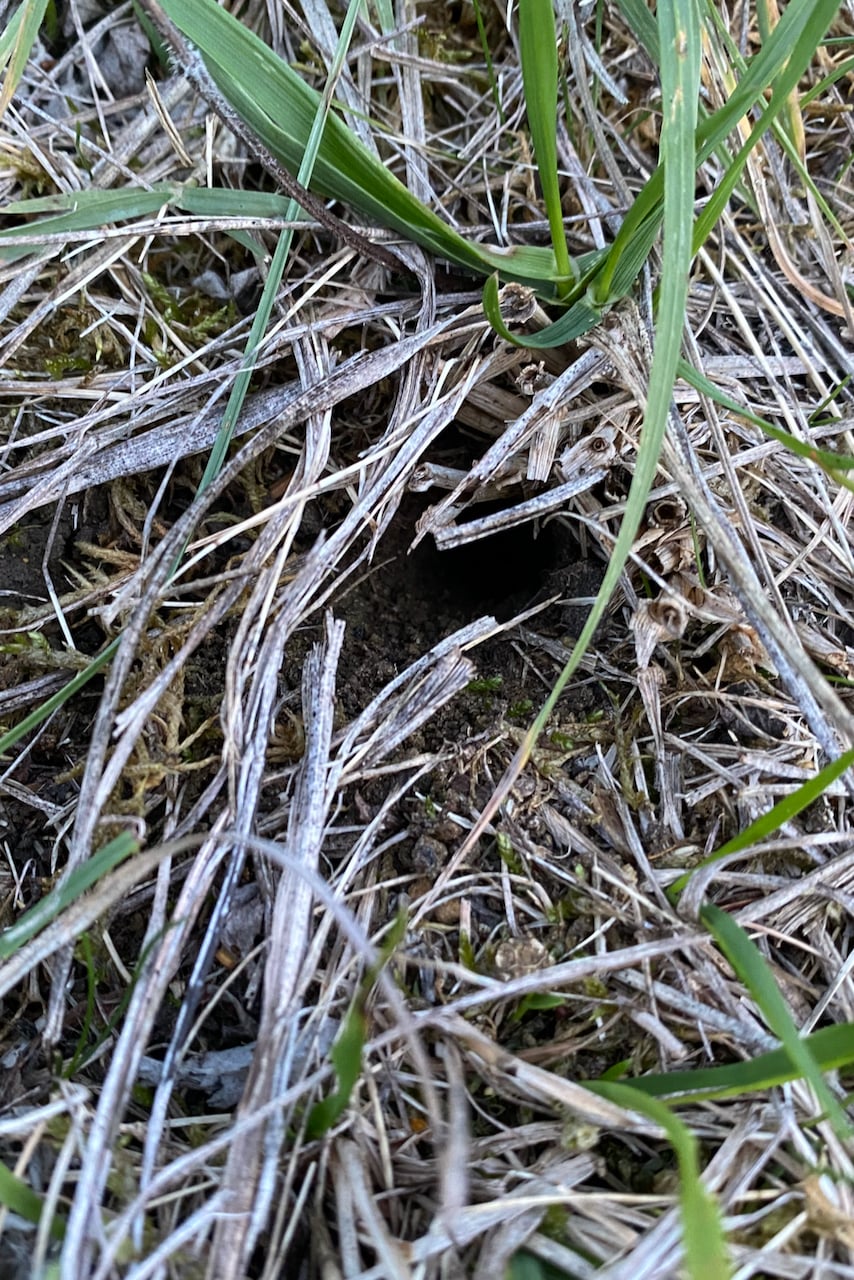
I’m not suggesting that gravel completely wipes that out. But it does prevent some wildlife from accessing the soil. A few examples, but not an exhaustive list, include:
- – solitary bees that overwinter in bore holes in the ground;
- – lizards and salamanders that use the soil to keep themselves cool and sheltered;
- – birds that dig in the soil for worms and grubs;
- – terrestrial toads and frogs that shelter in shallow burrows.
If there’s a thick layer of gravel that impedes these natural processes from happening, then the change may be felt in the entire backyard ecosystem.
Drawback #2:There is no soil building in a gravel garden.
Around these parts, we talk a lot about building soil. That’s why we advise our readers to mulch, to leave the roots of annuals in the ground at the end of the season, to make use of dead leaves in the fall, to practice no-dig gardening as much as possible, and generally to leave the soil undisturbed.
The single most important thing we could be doing for the health of our soil is to allow organic matter to remain on the surface. As the matter decays, it feeds the soil.
When we set up a gravel garden, we put an end to this natural cycle. If we still want to keep it as a gravel garden, we’ll have to clean up and remove all the organic matter that would otherwise add to the soil.
Leaving it would mean that the gravel is hidden (an aesthetic consideration), and also that the dead plant matter would start decaying on top of the gravel, thus creating pockets of soil for unwanted plants to germinate in (a logistical consideration).
Drawback #3: There is a cost to the gravel.
In addition to the actual monetary cost of buying the gravel, there is an environmental cost too. The gravel is not a renewable resource. It needs to be collected either from dry riverbeds or as a by-product of mining operations.
It then needs to be transported to a storage facility or a vendor, and then transported again to our garden. With such a heavy material, every step of the process has an environmental impact.
While it is a natural material, and so much better than the dreaded astroturf or weed-suppressing rolls of plastic that turn into microplastic powder, I still can’t imagine it would be a good idea to lay gravel gardens up and down the country.
A few resources I’m using to learn about gravel gardening.
As I mentioned above, I’m still in the process of converting my gravel courtyard into a functional gravel garden. So I’m very much still learning a lot about this new style of gardening.
“Plant it and forget about it” is a very counterintuitive method for me, so I’m trying to wrap my head around what this style entails.
Here are some of the resources I found most useful when learning about gravel gardens:
Book: The Dry Garden by Beth Chatto – Even though I do not garden in the United Kingdom, I find this book invaluable in helping me grasp the philosophy of this style of gardening. It also has plenty of examples of plants that grow well in drought conditions, including names of specific cultivars.
Beth Chatto literally wrote the book on gravel gardening based on decades of experimentation in her own parking lot-turned-garden. If you’re new to the idea, I recommend starting with this book.
Book: The Gravel Garden: Visionary, Drought-Defying Naturalistic Designs by Jeff Epping and Teresa Woodard, with photography by Bob Stefko – This is a newly released (2026) book by a garden designer who creates gravel gardens all over the United States. The author is based in Wisconsin, where he has a magnificent garden (and you can barely spot the gravel).
This book also showcases twenty examples of gravel gardens from the United States and Europe. Including a rooftop garden!
I’m very much a visual learner, so I find a garden photo tour much more inspiring than just lists of plants. I get to see how these perennials come together once they reach maturity, which is hard to picture when I’m just planting little dots of plants in gravel.
I don’t have enough time to go into the details of how to plan and execute a gravel garden in this article. But this book does, in a very accessible way, so I recommend you start with it if you want to get down to work right away.
Book: The Water-Saving Garden: How to Grow a Gorgeous Garden With a Lot Less Water by Pam Penick – This is another book that I keep going back to for inspiration. Even though it’s not about gravel gardening per se, there are plenty of gravel gardens featured in the photos. And if this style is not your cup of tea, you’ll find other drought-resilient gardens in this book.
A photo gallery on the website of Beth Chatto Gardens – Here’s what the garden that Beth designed looks like now, in all seasons.
A video of a May walk through Beth Chatto’s gravel garden from their official channel.
I’m curious what our readers think about this type of gardening. Do you have any corner of your property that would be significantly improved if you were to turn it into a gravel garden?
Get Garden Notes From Tracey, Right to Your Inbox
Pull up a chair on the front porch. Join 54,000+ gardeners who get Tracey\'s friendly notes, seasonal to-dos, and hands-on tutorials three times a week.