

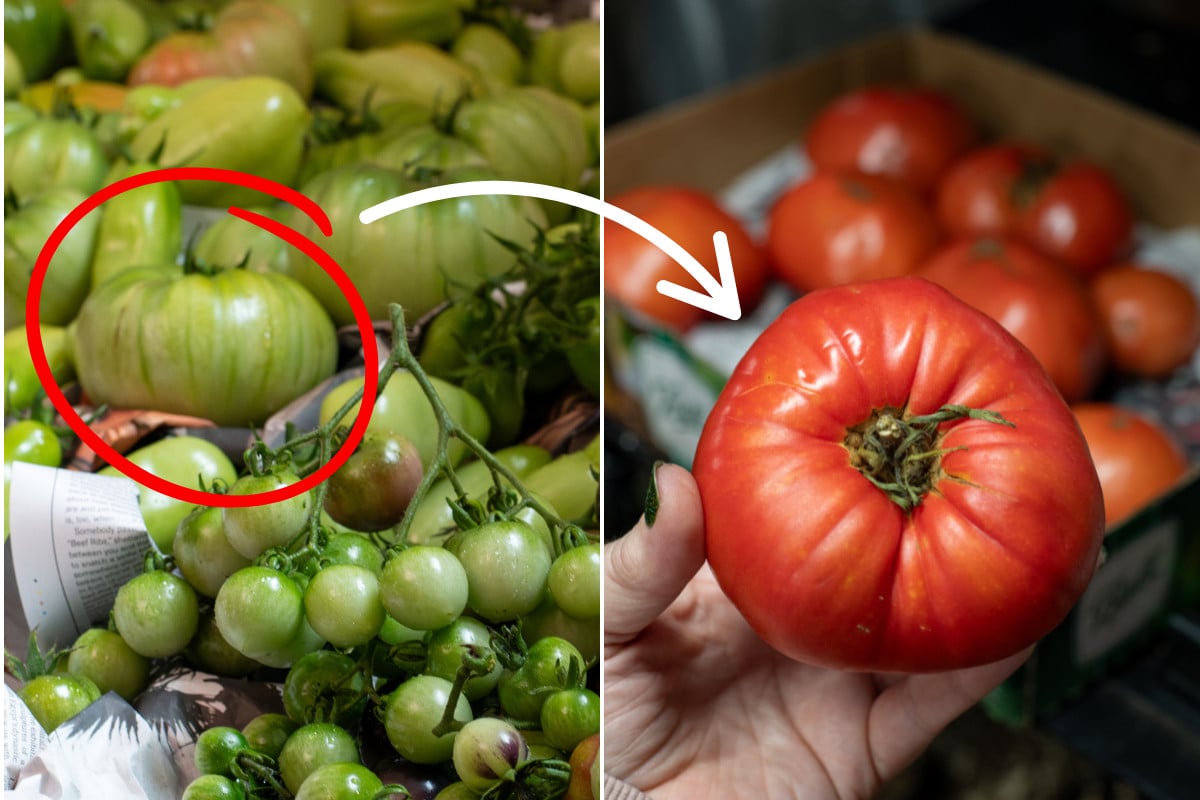
It happens every year. The end of the gardening season rolls around, and there are still green tomatoes hanging out. In some cases, quite a few.
Sure, there are plenty of things to make with green tomatoes, but let’s be honest, most of us grow tomatoes so we can enjoy them when they’re ripe. That’s why I use my dad’s old trick every fall, and enjoy ripe, red tomatoes well past the first frost.
The Best BLT in October

A quick note before we jump in. All the photos here are of my tomatoes from my garden, ripened indoors. I grew the following varieties this year: German Pinks (a lovely deep-pink-skinned heirloom), San Marzano (the traditional paste tomato), Napa Chardonnay (a delicious pale-yellow cherry tomato) and Black Strawberry (a pink and deep purple cocktail tomato). I mention this so you can note the colors of the fully ripened tomatoes and be wowed.
I’m always surprised to learn that there are still gardeners who don’t know you can ripen green tomatoes indoors, off the vine.
And no, they don’t taste anything like those gross, pasty things from the grocery store. To be fair, it does seem a little unbelievable, almost like some weird hocus pocus is involved. But no magic is needed —just some cardboard boxes, newspaper, and a little patience.
Speaking of magic.
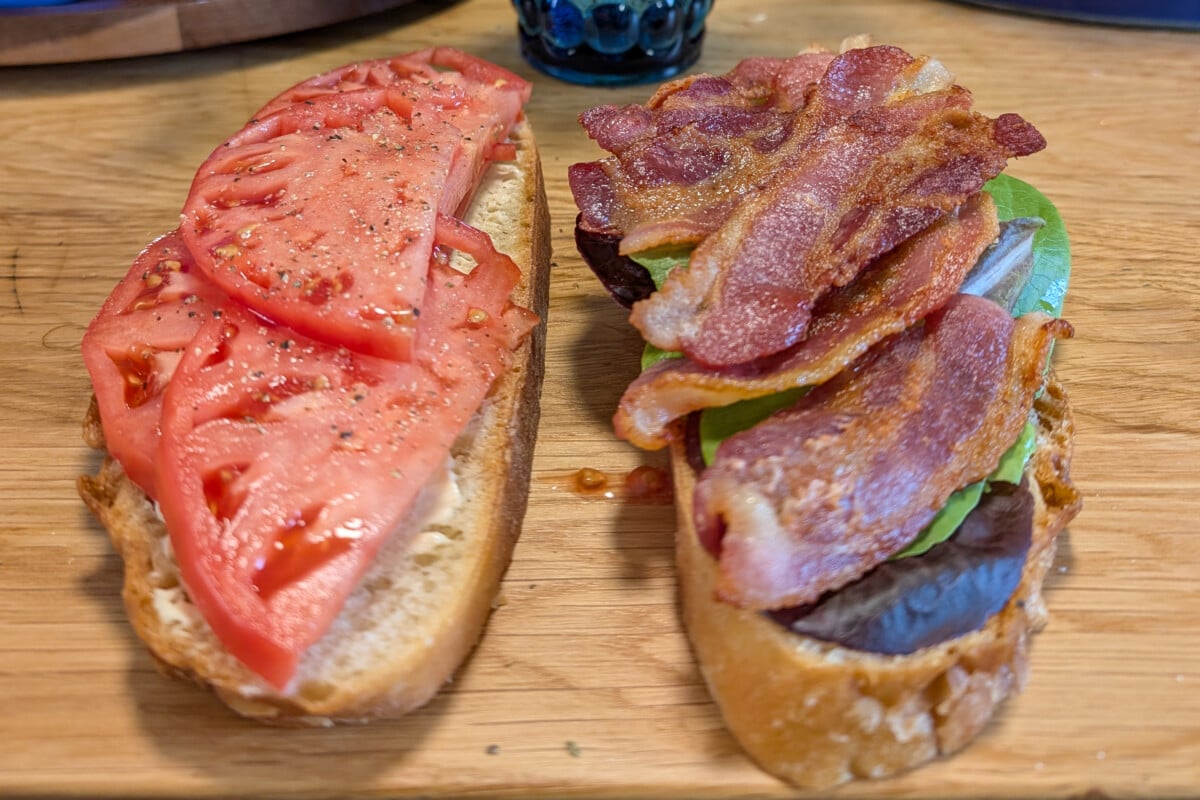
I ate the most magical BLT this past Saturday, October 18th, made with a German Pink tomato I picked, totally green, on September 25th.
If you’ll bear with me, I’d like to tell you a story about 20 lbs of green tomatoes.
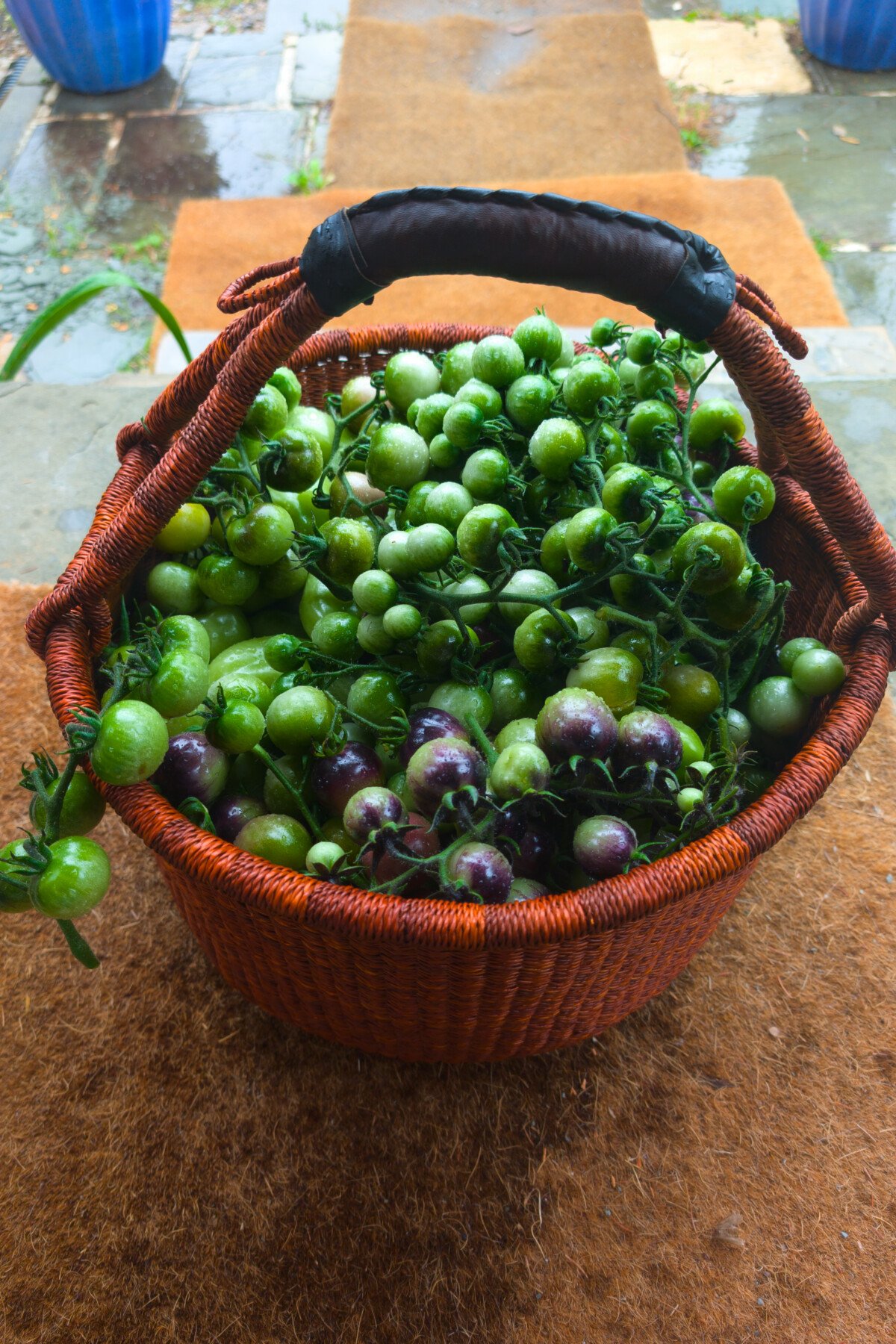
This year, we had a long period of drought in my neck of the woods. It was hot and dry, and my tomatoes were growing, but, as usual, when the temperature gets too high, they weren’t ripening. I have a drip irrigation system installed in my raised beds, so they are consistently watered.
I knew I just had to be patient, and when the temperatures cooled a bit in the fall, I would be rewarded with a bumper crop of ripe tomatoes.
At the end of September, though, the drought broke before the heat did. It started to rain. And it didn’t stop for two days straight. On the third day of constant, heavy rain with another one on the way, I knew what fate awaited all of my beautiful green tomatoes.
I knew if I left them on the vine, they would split from all the rain and rot before they ever got a chance to ripen.
So, I put on my boots and my field jacket and went out into the pouring rain and picked every single tomato. All of them – ripe tomatoes, sort-of ripe tomatoes, totally green tomatoes. Some were already so swollen from the rain that they burst in my hands when I picked them.

I brought my entire crop of tomatoes indoors and made a huge pot of roasted tomato soup with the ripe ones and the ones that had burst.
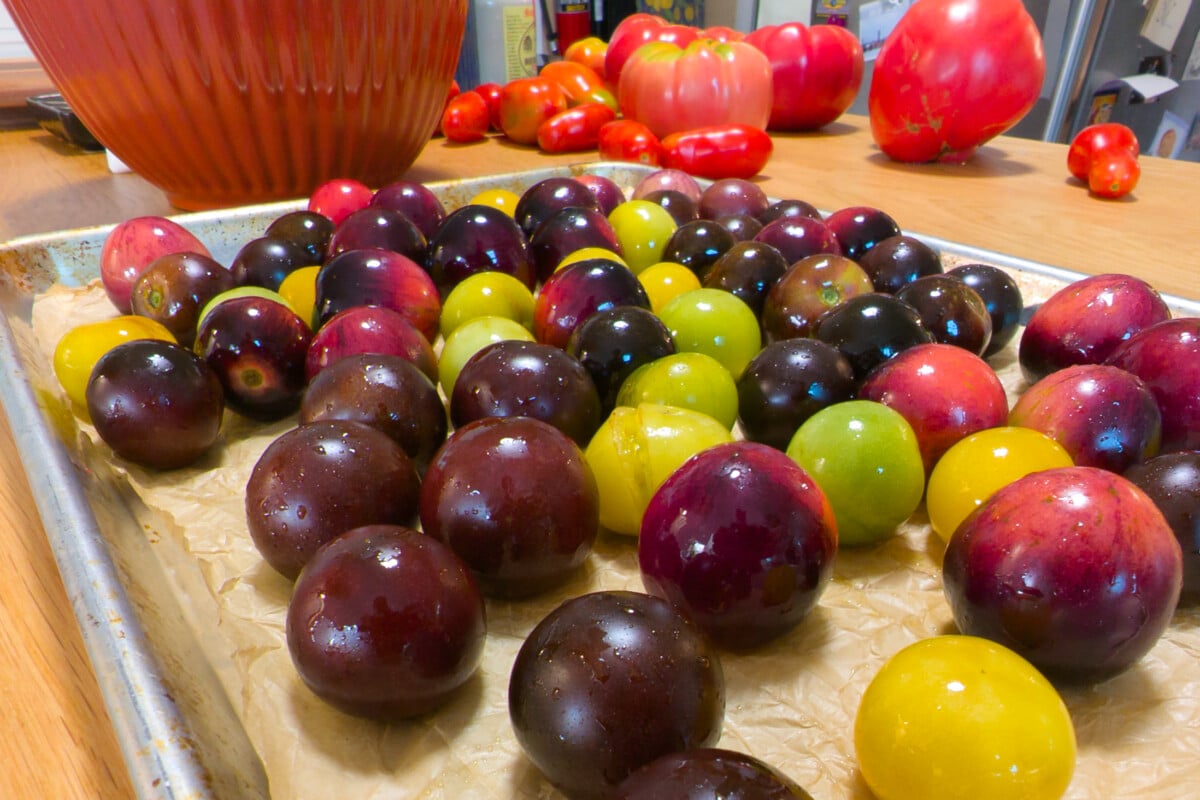
Then I took a page out of my dad’s book and used his old trick to ripen completely green tomatoes indoors.
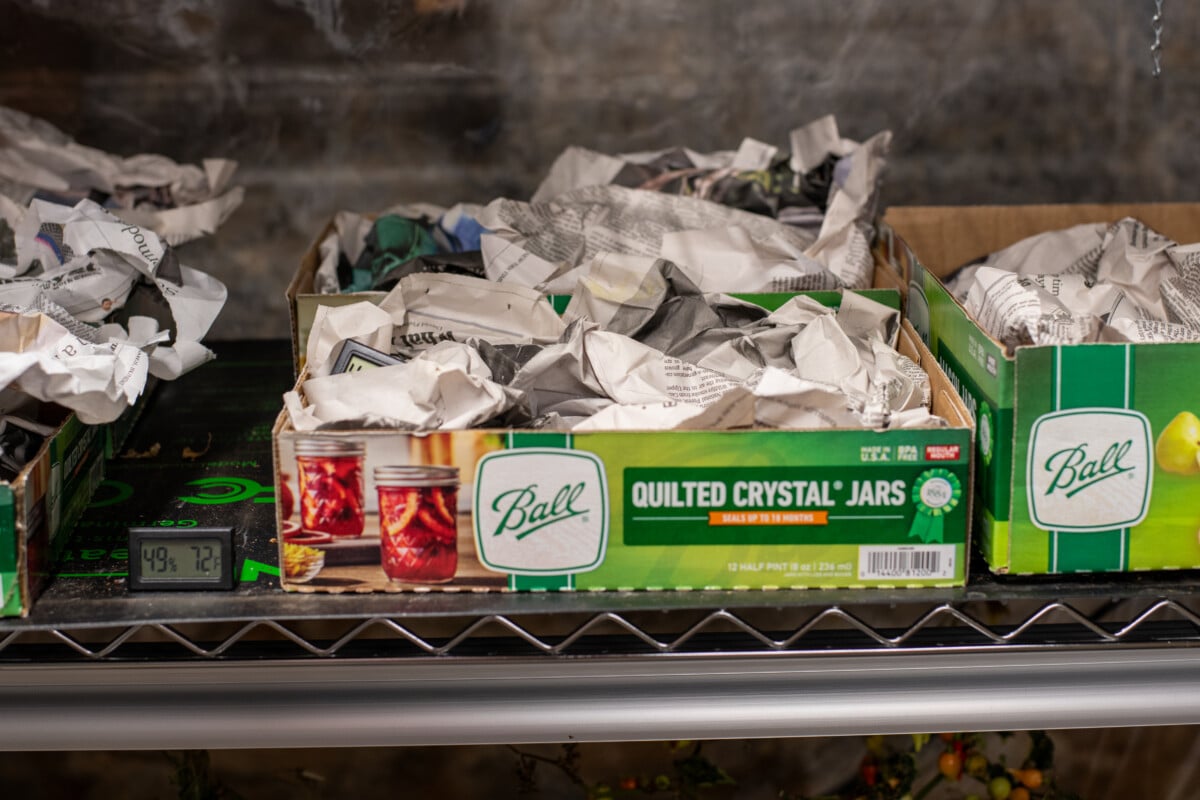
I wrapped them all up in newspaper, put them in cardboard boxes and let time and chemistry do the rest.
(By the way, I’ve been sharing this little saga and the tricks I used to manage it along the way, like what irrigation system I use, how to grow drought-proof tomatoes, and more with our savvy email subscribers. You should join them if you also like to play in the dirt. Click here to sit at the cool kids’ table. Don’t worry, we’re a friendly bunch.)
The next day, I pulled up the bare tomato plants, tossed them on the compost pile, and I’ve been enjoying tasty, ripe tomatoes from my basement ever since. (Note to self: Basement tomatoes do not sound appealing. Maybe call them something else.) We’ve had several frosts since. I’ve made a big pot of pasta sauce to freeze, more soup, pizza sauce and probably more BLTs than are good for me with all of my “green” tomatoes.
Most of the remaining tomatoes are now fully ripe, nearly a month after being picked, and I’ll make a final big batch of tomato sauce this weekend to put in the canner.
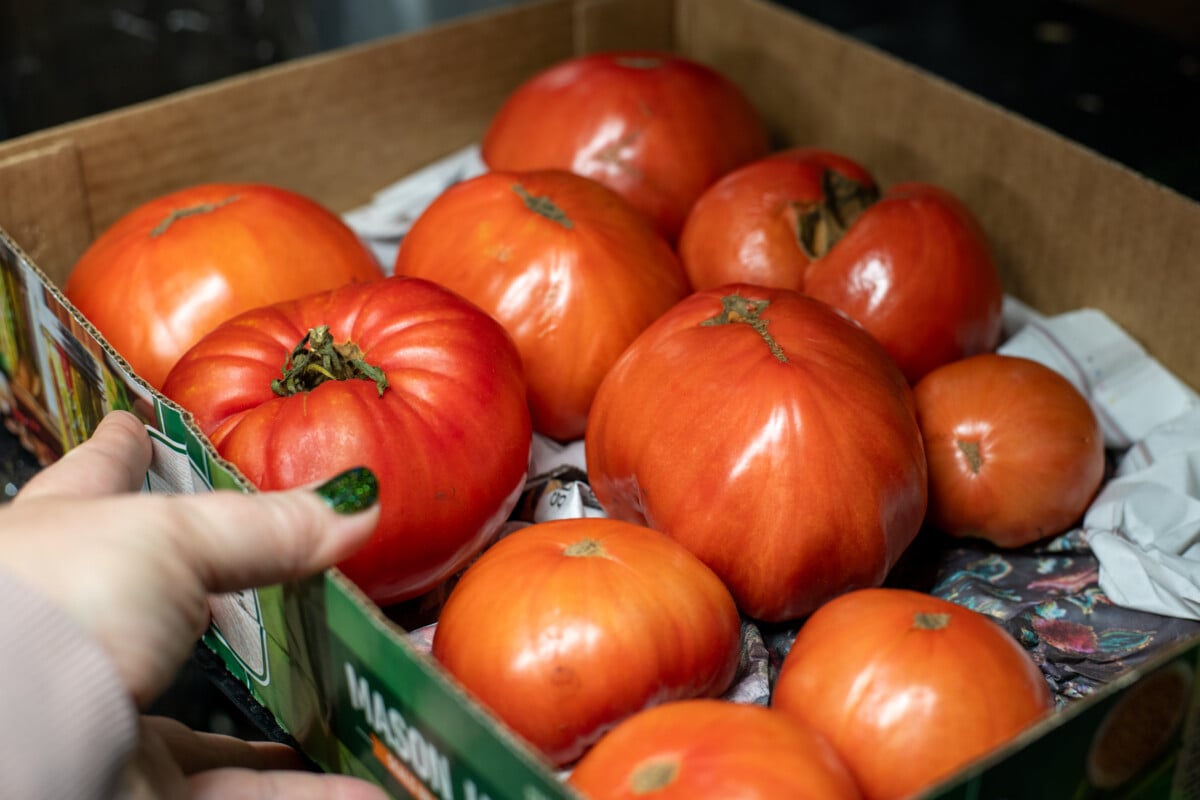
In the end, Dad’s old trick saved about 20 pounds of tomatoes from going to waste, and I ended up preserving more red tomatoes than green.
How to Ripen Green Tomatoes Indoors
Here’s the thing: so many gardeners are under the impression that it’s sunlight that causes tomatoes to ripen. That’s simply not the case. Light is needed for photosynthesis, which produces energy for the tomato plant to grow. It’s actually heat and hormones that trigger ripening, and it happens from the inside out.
Tomatoes grow in two distinct phases.
In the first phase, the tomato is growing in size. It’s producing seeds and the jelly inside, as well as creating the sugars and acids that make up that distinctive tomato flavor.
Once it reaches maturity, this growth will slow, and the heat will trigger the production of ethylene, an important plant hormone. This process starts in the very center of the tomato, which is why, when you pick a green tomato, it’s likely already begun to ripen, even if you can’t tell yet.
Ethylene then causes the synthesis of lycopene, which, as some of you know, is the carotenoid that gives tomatoes their distinctive red color. This process continues over a couple of weeks of nice warm weather and…
Voila – a ripe tomato.
Once the tomato has reached maturity, it no longer needs to be attached to the plant to ripen. It doesn’t even need the sun for energy at that point. So, pick your green tomatoes, bring them indoors, and let’s ripen some ‘maters.
The Process
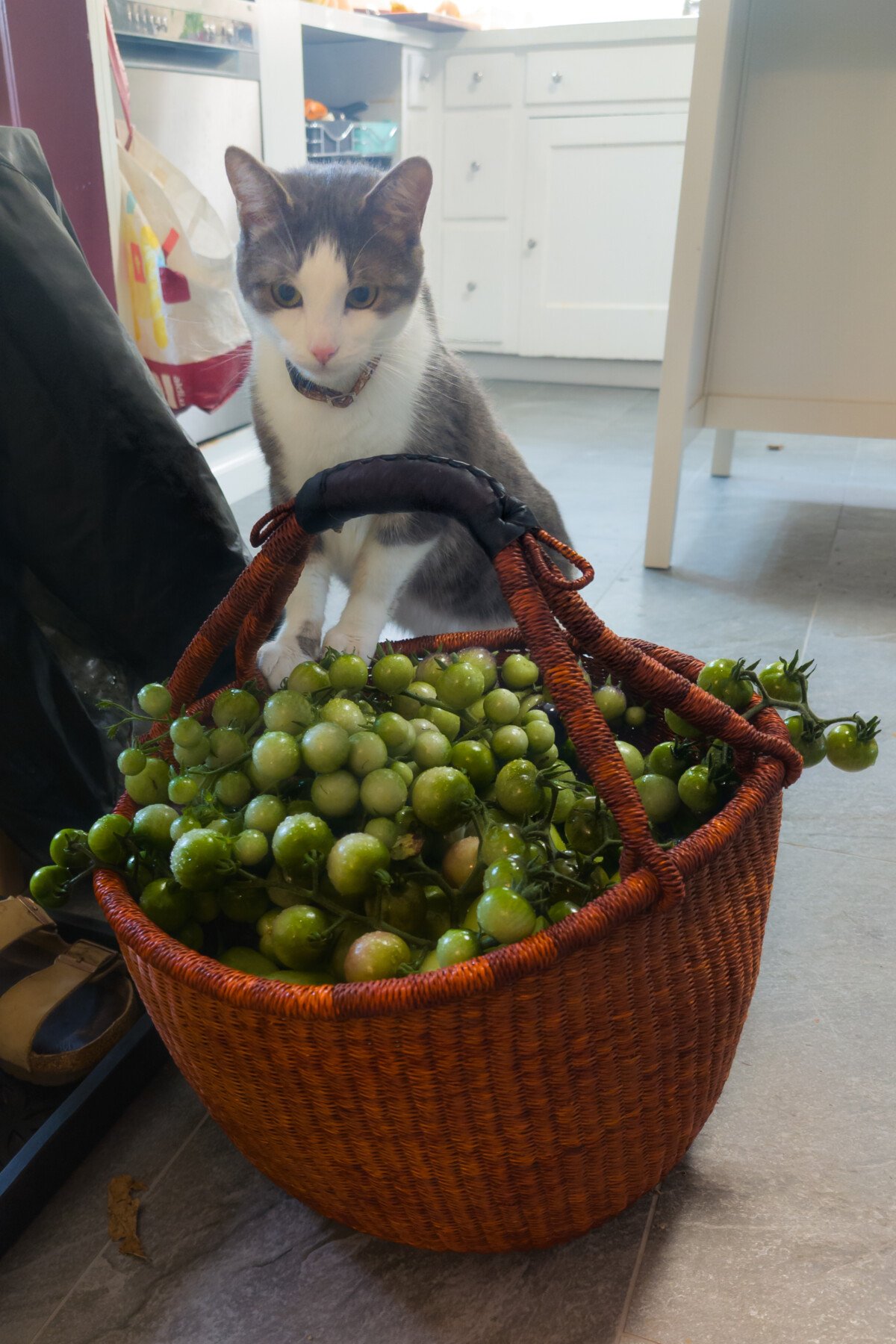
Inspect Your Tomatoes
You only want to use tomatoes that are blemish-free and free of cracks or pest damage. Eat any that are slightly bruised or cracked and compost any that are inedible. Make sure your tomatoes are completely dry before storing them. (Don’t wash them, just let them dry off if you picked them after it rained or early in the morning.)
Stem or No Stem?
For small cherry tomatoes, it’s much easier to cut off the whole cluster and leave it intact rather than picking off each individual tomato.
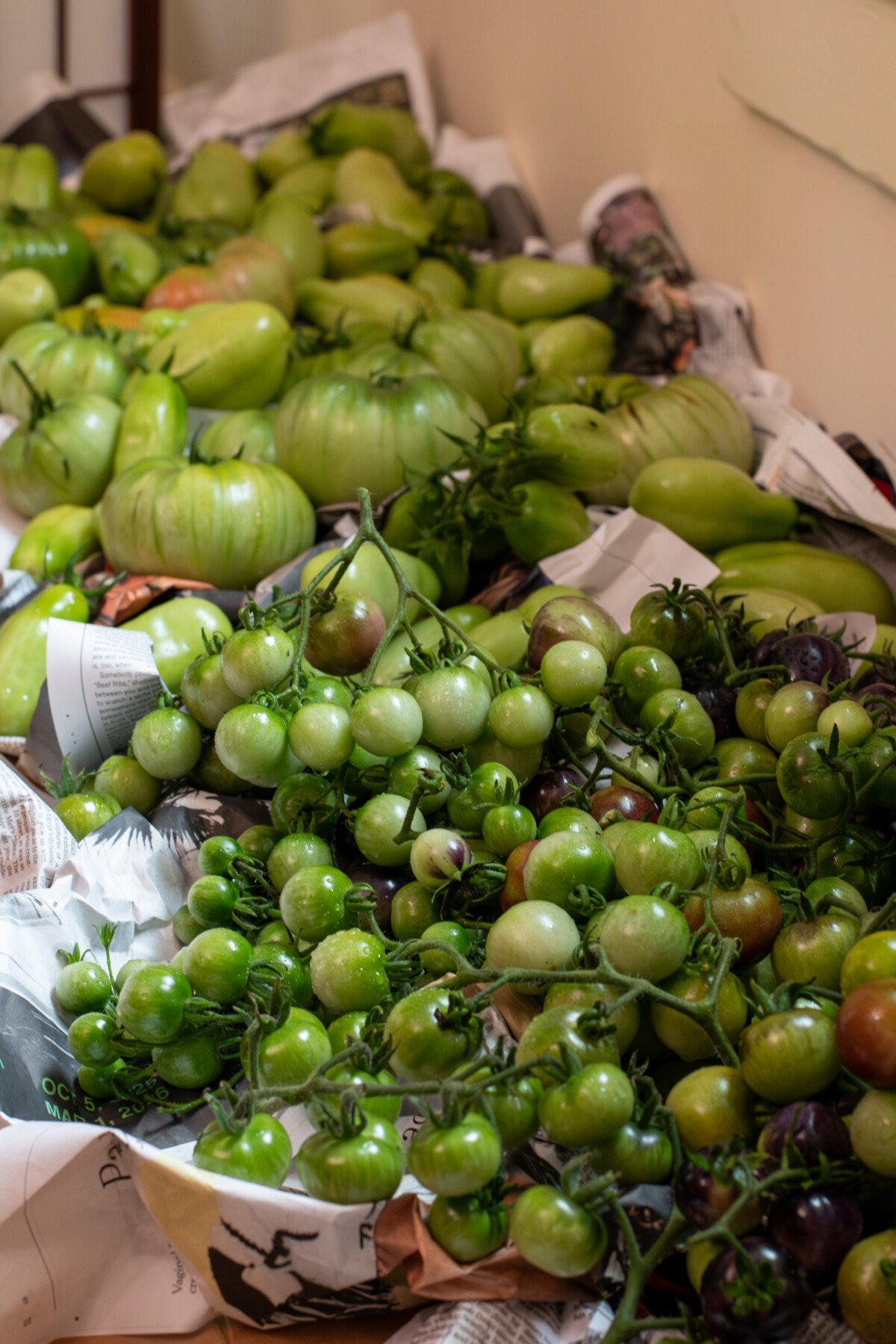
For larger tomatoes, if they still have the little green leaves attached, leave them. This helps prevent moisture loss. If the tomato no longer has this attached, you’re going to store it stem-scar down. So, the little spot where the stem used to be should be upside down. This will help slow evaporation while the tomato ripens.
A Note About Picking After Heavy Rain
If, like me, you end up picking green tomatoes during heavy rainfall to avoid split tomatoes, a common occurrence in the fall, you’ll need to take a little extra precaution.
Spread them out in a single layer on several sheets of newspaper or towels, and wait 2 to 3 days before packing them in boxes. This allows the tomatoes to dry. It also allows you to sort and find any tomatoes that may have split since you brought them indoors, and discard them.
Carefully Pack Your Tomatoes
Loosely crumple newspaper and line the bottom of a cardboard box with it. You want the newspaper to be loose, so that it provides the tomatoes with a nice cushion.
I’ve found that Mason jar boxes are perfect. You can fit a single layer of tomatoes in them and stack the boxes without squashing the tomatoes. Having them in a single layer makes it so much easier to check on their progress.
Begin putting your tomatoes on top of the newspaper, stem-scar down if needed. Make sure the tomatoes are not touching. You want air to flow around them. Once the box is filled, add another layer of loosely crumpled newspapers on top of the tomatoes, then finish by tucking a sheet of newspaper over the whole thing.
You can add another layer of tomatoes, but I don’t recommend it. I’ve found it’s much harder to check tomatoes when they’re stacked in layers. The weight of the tomatoes on top can end up squashing the tomatoes beneath, which will then rot.
If you don’t have enough boxes and don’t want to stack tomatoes on top of each other, wrap each tomato in a sheet of newspaper and place it on a table or shelf.
What we’re trying to achieve is a nice, warm little cocoon inside the newspaper, where the ethylene gas will be trapped as it’s released, helping speed up ripening.
Warm and Dry
Now store your tomatoes in a warm, dry place. Remember, you don’t need light. My tomatoes ripened in my basement in the dark. For the best flavor, you want temperatures between 60°F and 70°F. This temperature range provides the perfect environment for the hormones needed that cause the tomato to ripen and develop the sugars and acids for good flavor. Anything cooler and the flavor will be poor. Anything higher and you’ll slow down the ripening process.
Check Your Tomatoes
Once you’ve got your tomatoes all tucked in and ready for bed, it’s important to check on them regularly. Just like in your garden, they will each ripen at different times, so you need to collect the ripe ones every few days.
You will likely have a few spoil before they can finish ripening, but it’s a small price to pay when you consider you might not have had any of these tomatoes turn red. Remove spoiled tomatoes as soon as you spot them.
Make sure you tuck the newspaper back around your tomatoes each time you remove some to eat or check on them.
And that’s it! It really is that simple, and can be the difference between a bumper crop of green tomatoes at the end of the season or one more bumper crop of ripe tomatoes from your garden.
Okay, But How Do They Taste?
They taste wonderful! They are, after all, tomatoes that you grew in your garden. If they reach maturity (remember, mature and ripe are two separate phases) on the vine, they will be quite flavorful and delicious. (Tomatoes that didn’t reach full maturity are easy to spot after the first week or so, as they wither and don’t turn red. You can compost them as you find them.)
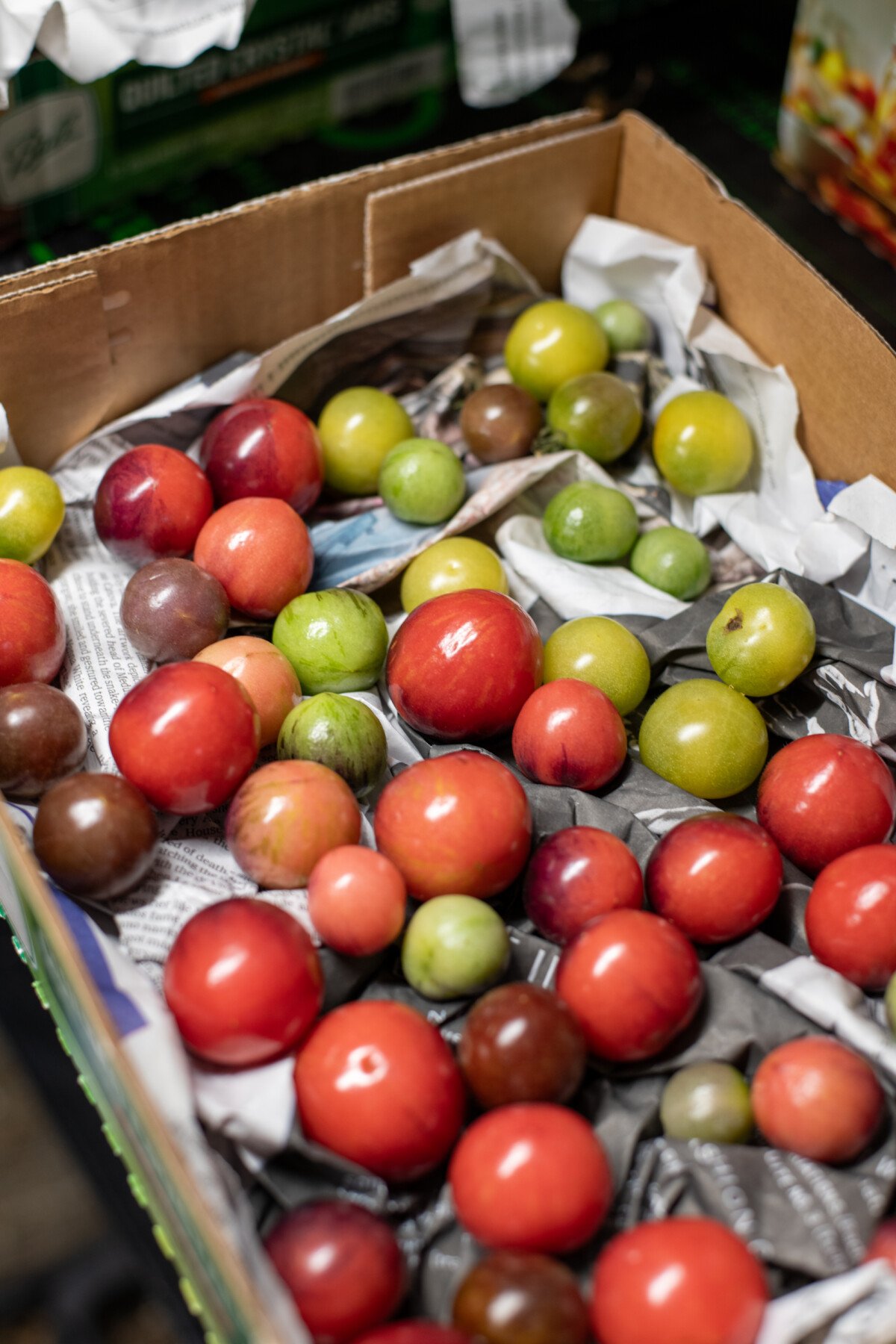
Will they be as tasty as a tomato that you pick at the peak of the season, fresh off the vine? No. But they’ll be pretty close.
Why Are so Many of My Tomatoes Green This Year?

There are several reasons you might end up with a bunch of green tomatoes toward the end of the growing season.
The most obvious reason is that you had a good year. You’ve had a bumper crop of tomatoes, and they keep cranking out new ones. But, as the season is winding down and that first frost is on the horizon, you know not all of those tomatoes will ripen before getting blasted by the cold.
This is why I find it’s good practice to top your tomatoes about 4-6 weeks before you expect the first frost.
You encourage the plants to put all of their energy into ripening whatever remains on the vine, rather than growing new tomatoes that won’t develop fully. I teach you how to do it here. It’s a good tool to keep in your back pocket for next season.
Another reason why you may have an abundance of green tomatoes is that it’s been a hot, dry summer. Periods of intense heat or drought can significantly slow plant growth. To conserve energy and nutrients, plants enter survival mode. It’s as though nature presses pause on your tomatoes. You can read more about it here.
Next year, use shade cloth to help cool your tomatoes and keep them ripening throughout the season.
Of course, now that you know how to ripen these slow pokes indoors, having “too many” green tomatoes at the end of the gardening season is no longer a problem.
Get Garden Notes From Tracey, Right to Your Inbox
Pull up a chair on the front porch. Join 54,000+ gardeners who get Tracey\'s friendly notes, seasonal to-dos, and hands-on tutorials three times a week.