

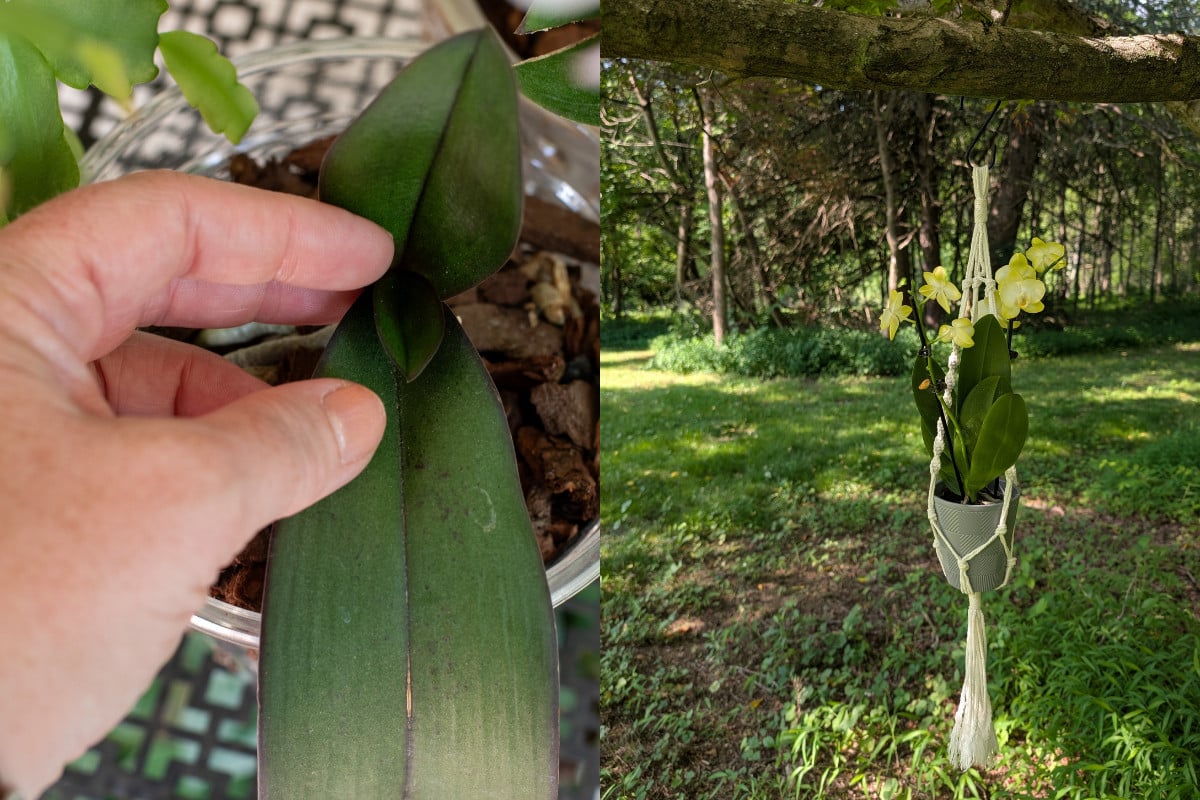
Moving your orchids outside for the summer is the easiest way to encourage new flower spikes, leaf and root development.
If you’re struggling to get your orchid to bloom again, and bloom profusely, summer will give you a jumpstart. But as we all know, these plants need special care, so it’s not as simple as plopping them outside and calling it good. This year, give your orchid the summer vacation it deserves and get rewarded this winter with blooms.
It Is Time!
I spend a lot of time on my porch in the summer. It’s where I do most of my writing from May to September. I have even taken to calling it my summer office. It’s shady, but still bright. I can wave to neighbors and cyclists as they go by. And if I keep my floor fan on, there’s just enough of a breeze to keep the bugs away. (Not the heat, though.)
But there comes a point when the humidity starts to get to me and even the shady front porch starts to feel a little oppressive. And that’s when I know. It is time.
(You have to say it like Rafiki, in The Lion King.)
I go upstairs, pick up my orchid, and give it a shower. Then I carry it downstairs, holding it high over my head, still dripping, while singing “The Circle of Life” and place it on my porch plant stand. It’s time for my phalaenopsis to start its summer vacation.
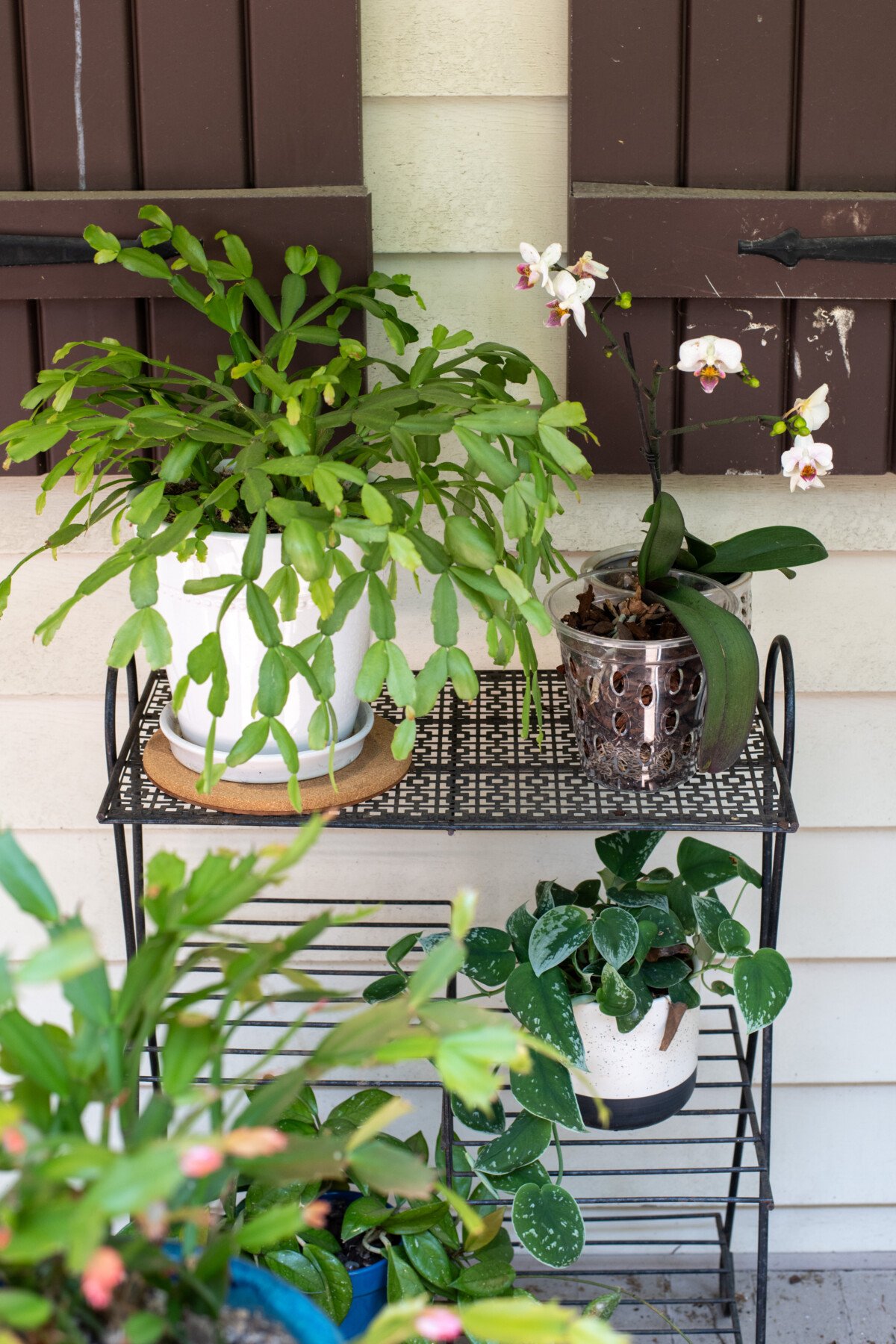
After all, they are tropical plants. When Pennsylvania starts to feel downright tropical – muggy, sweaty, gross and soupy – my plants are as happy as can be.
I, on the other hand, start praying for the crisp, cool days of fall and seek out air conditioning.
Related reading: Hate Dusting Your Houseplants? Use My Tip to Get It Done Fast
How to Move Your Orchids Outdoors for the Summer Without Murdering Them
Now, before you go sticking your orchids on the patio like a potted geranium, we need to talk. Because while these plants can thrive outdoors in the right conditions, they are not the set-it-and-forget-it type. We orchid owners are all too aware that these are high-maintenance houseguests who will get pouty if the humidity, lighting, or watering schedule isn’t to their liking.
A Summer Home
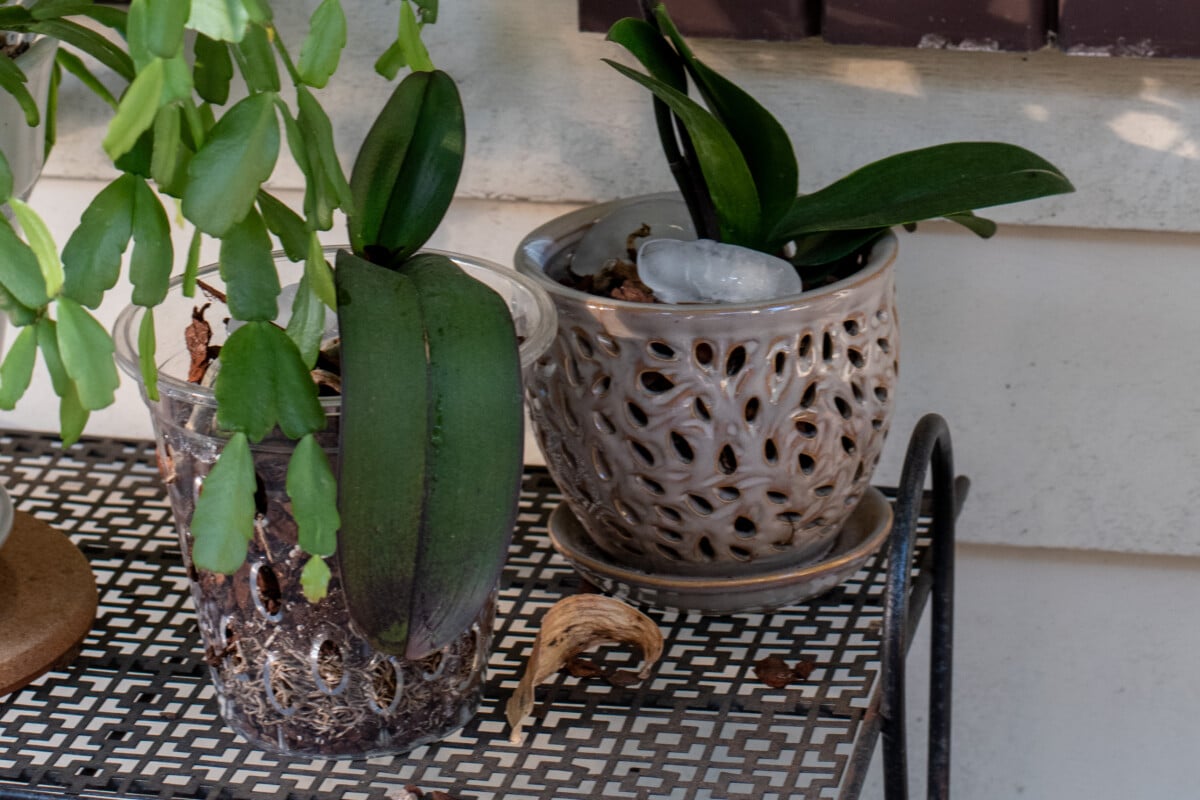
To prevent phalaenopsis failure, let’s start with the most important aspect of moving orchids outdoors for the summer – the pot they are in.
Orchid pots are easy to spot in your local garden center because they have holes in them, which feels a little counterintuitive. Unless you’re an orchid.
The holes allow water to drain freely so the roots are never sitting in it. They range from beautiful pottery (this one is my favorite because it has a built-in saucer with feet to keep the pot out of the water) to simple plastic ones that are a bit more utilitarian, but serve the intended purpose.
Regardless, if you’re going to move your orchid outside, putting it in a proper orchid pot is the way to go, especially if you plan on putting your orchid in a tree (more on this later) or another area where it can get rained on. You don’t want any chance of sitting water.
Temperature
Now that your orchid is happily ensconced in a proper orchid pot, let’s talk temperature. You’ll notice that I mentioned it has to be gross out before I move my orchids outside.
Moth orchids don’t want to be cold, ever.
I don’t take mine outside until nighttime temps are reliably above 60°F. Basically, when it gets to the point where opening up the house in the evenings is futile because it’s still going to be hot and muggy, I know my orchids will be happy.
During the day, they’re happiest in the 75 to 85°F range in the shade. If it climbs into the 90s, they’ll tolerate it, but only if they’ve got good shade and you stay on top of watering them. Both of which are important factors in bringing them outside.
Sunlight
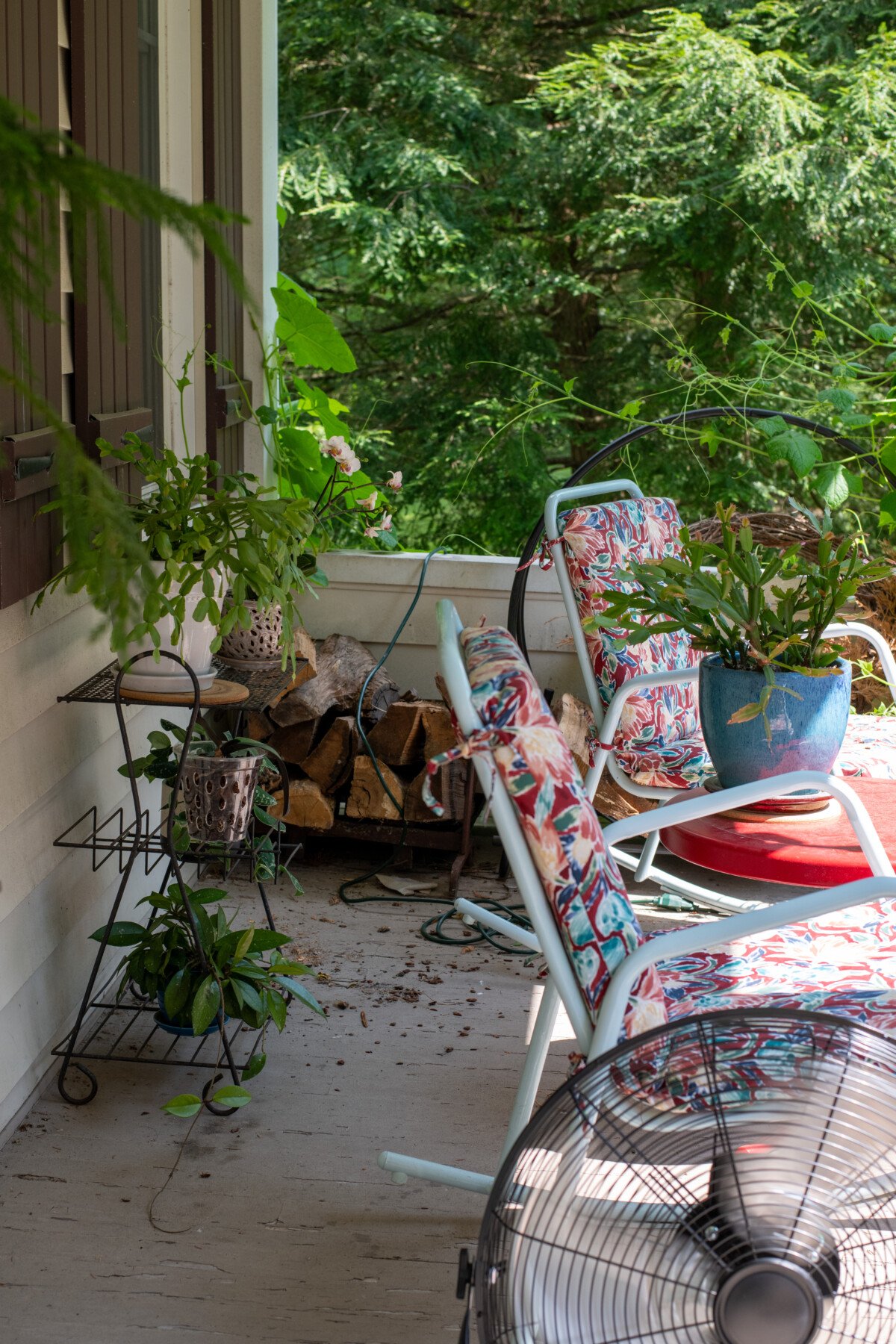
Moth orchids are not sunbathers. You will absolutely kill your orchid if you put it outside in direct sunlight. As in crispy, fried, no longer with us, your orchid has crossed into the great beyond. Yes, they are tropical, but tropical as far as houseplants are concerned means living well below the canopy of trees close to the jungle floor—lots of deep shade with dappled sunlight that’s filtered through the trees above.
It is imperative that you find a spot where your orchid gets filtered bright light. So, the actual plant is always in the shade, but it’s still pretty bright. A deep porch is a great spot. Hanging in a tree in a fancy macrame plant holder is also a great spot. (Not to mention, it just looks cool.)
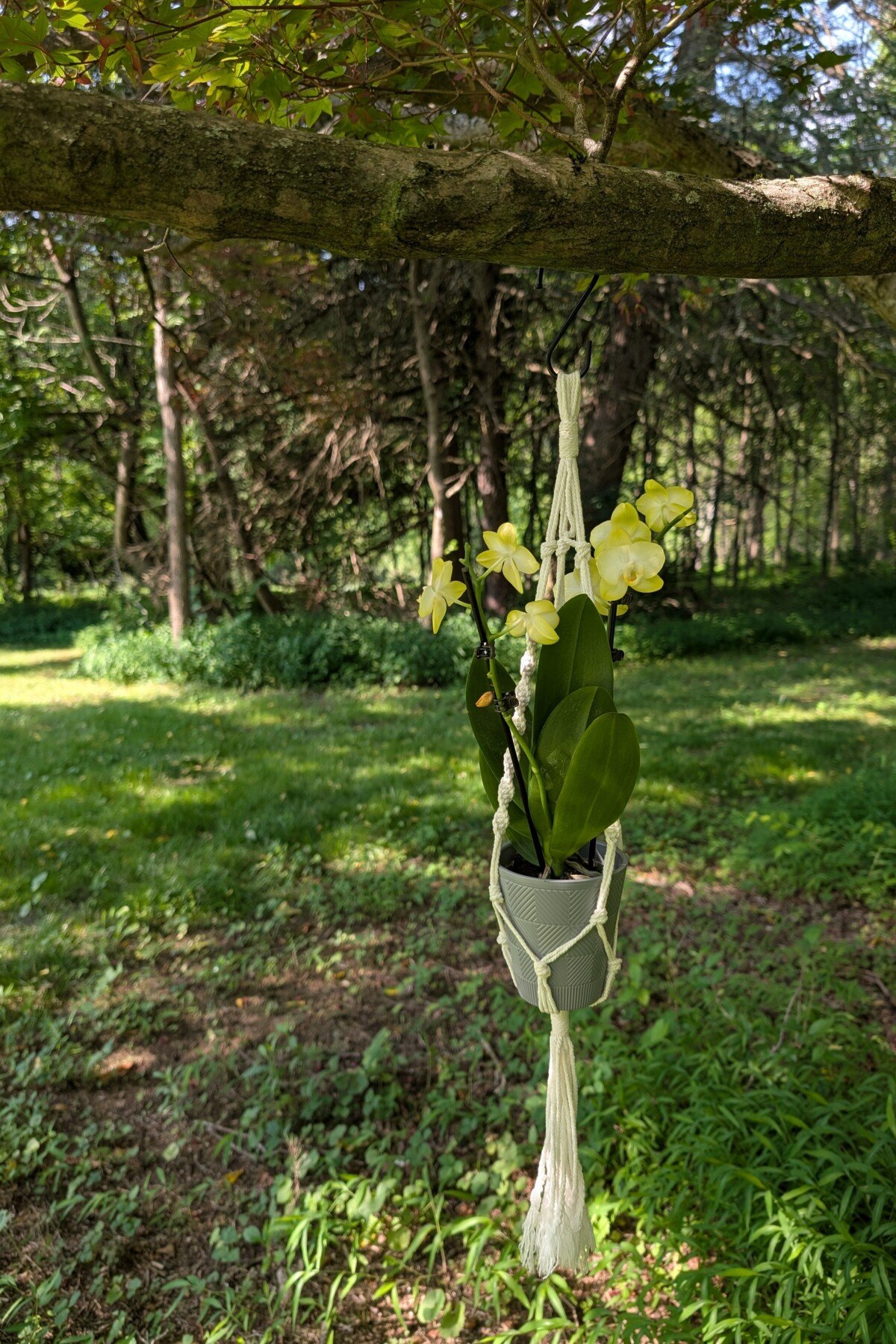
Check your plant carefully every day for the first week or so.
The leaves should be a healthy emerald green. If they are lime green, they are getting too much light and are well on their way to being sunburned. Move them deeper into the shade as necessary. If they develop a slight purple tinge toward the outer edges of the leaves, they require more sunlight.
Keep in mind that the light shifts as the summer progresses; what may be a great spot in June might not be great in August. Check your orchids frequently.
Watering
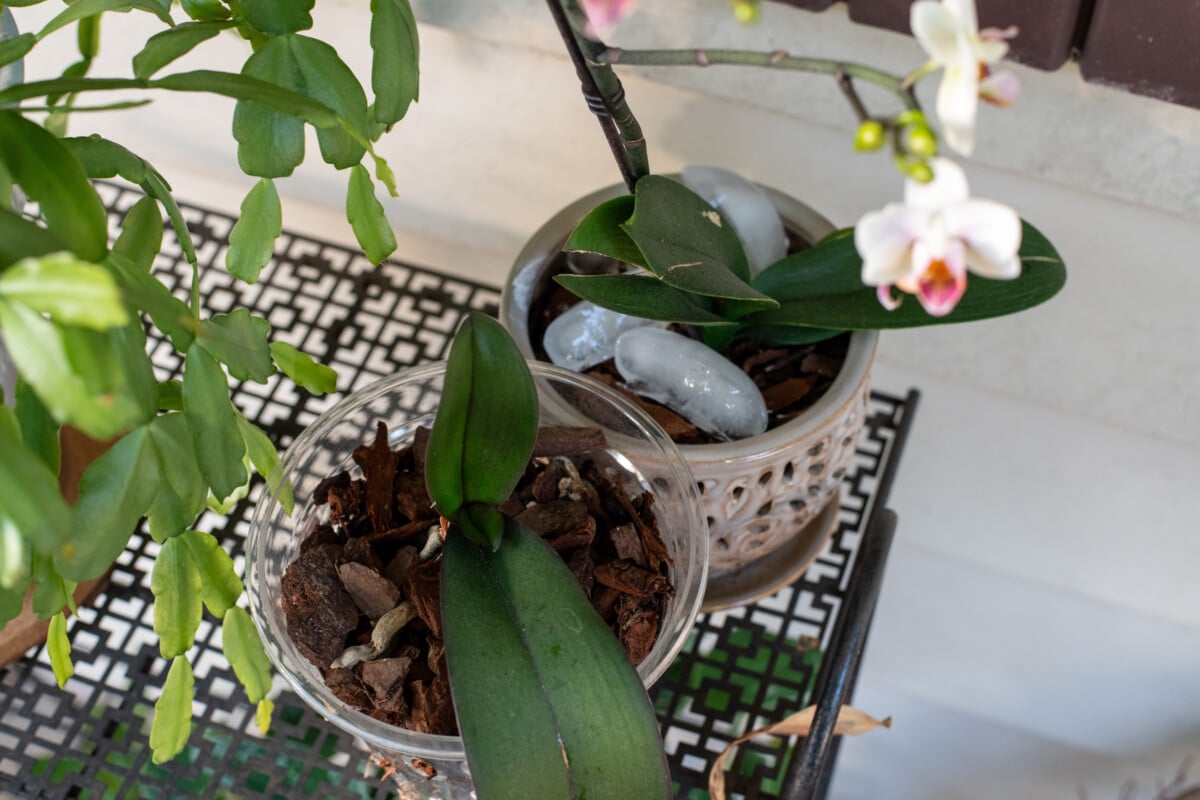
Let’s get this out of the way immediately – yes, it is safe to water your orchids with ice cubes. If you need reassuring, check out my article, which references scientific studies dispelling this myth. During the summer, they may even prefer ice cubes. I know I do.
Because they are outside and susceptible to wind and better airflow than in your house, your orchids will dry out faster. You will need to water them more frequently, especially if the weather becomes extremely hot. I water my orchids twice a week when they are on summer vacation. (Using ice cubes.) If we get a heatwave, I bump it up to three times a week. Just check in on them.
Airflow
As I just mentioned, being outdoors, your orchids have much better airflow, which can encourage sturdier roots. Air movement helps prevent fungal and bacterial issues, too. And if you have a soupy summer, orchids love the humidity. Just be sure they’re protected from wind gusts wherever you decide to place them.
Fertilizer

The rule of thumb for orchids is “weakly, weekly.” Fertilize every week with a diluted fertilizer. Orchid parents often find this topic a little overwhelming. Luckily, I’ve tackled it recently, breaking down what fertilizer to use when and how often. Check it out here. I’ve also included a pretty cool trick to make fertilizing orchids and watering them incredibly easy.
Coming Back Indoors
Now, at some point, the weather will turn, and you’ll need to bring your orchids back inside. Don’t wait too long. It’s better to bring orchids in early rather than too late. Once nighttime temps start dipping below 60°F, it’s time to bring them in.
But don’t just plop them back on their windowsill and call it good. Quarantine them away from your other houseplants for a couple of weeks to ensure no pests hitched a ride. Give the leaves a good wipe down and check the roots. Now is a great time to repot them.
Of course, orchids aren’t the only plants that benefit from a lovely summer vacation.
Do you struggle to get your Christmas cactus to bloom? Putting them outside was my mother’s secret to hundreds of blooms each year. You can read about the particulars of that plant’s summer needs here.
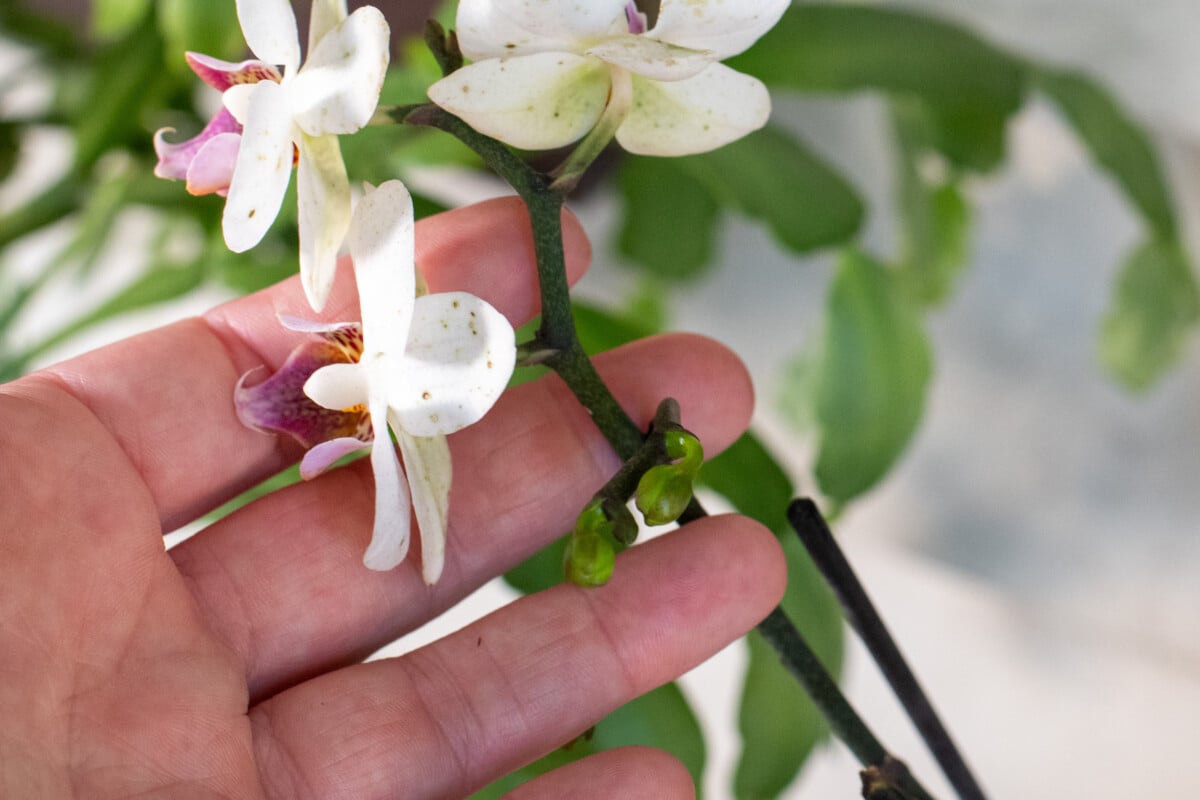
Done right, this summer retreat can be a game-changer. I’ve had orchids send up new roots, produce glossy foliage, and emerge with new flower spikes after a few months of outdoor rest and relaxation. But just like with any vacation, there’s a balance. No one likes to come back from vacation sunburned and dehydrated.
So, if you’re ready to give your moth orchids the summer they deserve, go for it. Just don’t forget they’re still the fussy, moody, and weirdly endearing plants we’ve come to love, and they need extra attention while on holiday. But at least they will get their moment in the sun—just not too much of it.

Get the famous Rural Sprout newsletter delivered to your inbox.
Join the 50,000+ gardeners who get timely gardening tutorials, tips and tasks delivered direct to their inbox.