

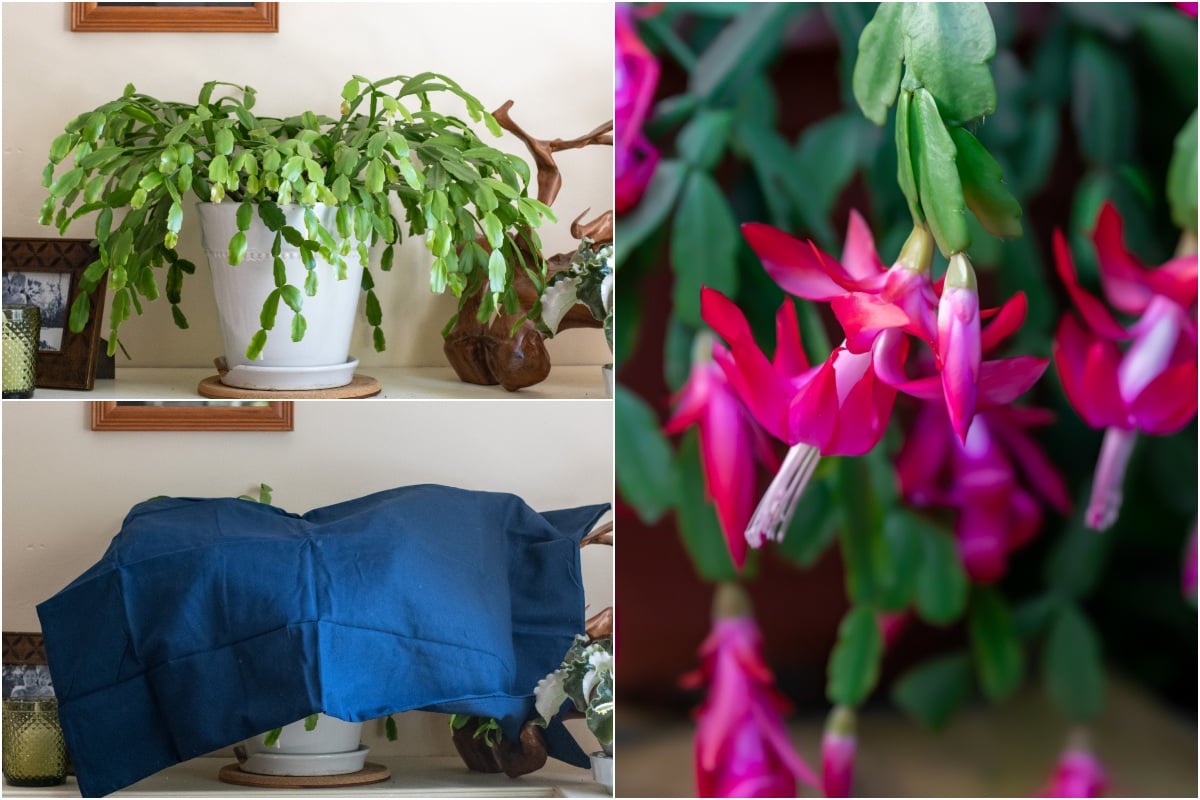
It’s time! Whether you’re ready for it or not, it’s time to start getting ready for Christmas. Well, it’s time to start getting your Christmas cactus ready anyway. October is a crucial month for ensuring your plant blooms this holiday season.
But first, we need to have an uncomfortable discussion about your plant…
The Truth About “Christmas” Cactuses

A lot of folks get annoyed because their Christmas cactus doesn’t bloom at Christmas. Their Christmas cactus blooms too early, and the show is over by the time Christmas rolls around. Or even weirder, it blooms in the spring.
That’s because most of us don’t own Christmas cacti. Most of us own Thanksgiving cacti.
Yup. I know. I remember the day I found out, too. The betrayal I felt over a plant was impressive.
Christmas cactuses and Thanksgiving cactuses are part of the Schlumbergera family of plants. They are not true cacti; instead, they are native to the coastal mountains of Brazil, not the desert. Unfortunately, the most popular and readily available Schlumbergera is the Thanksgiving cactus (Schlumbergera truncata), so named because it usually blooms around Thanksgiving.
Schlumbergera x buckleyi is the true Christmas cactus, and you would be hard-pressed to find it in a store near you.
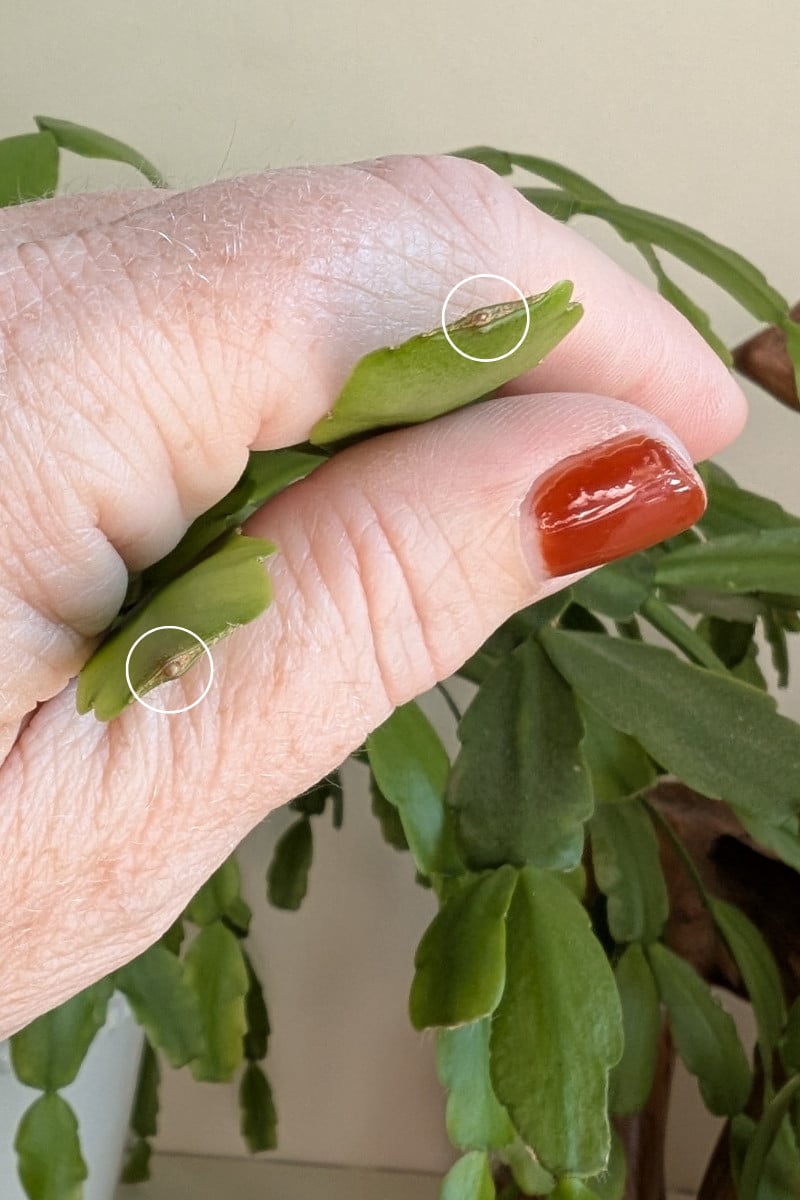
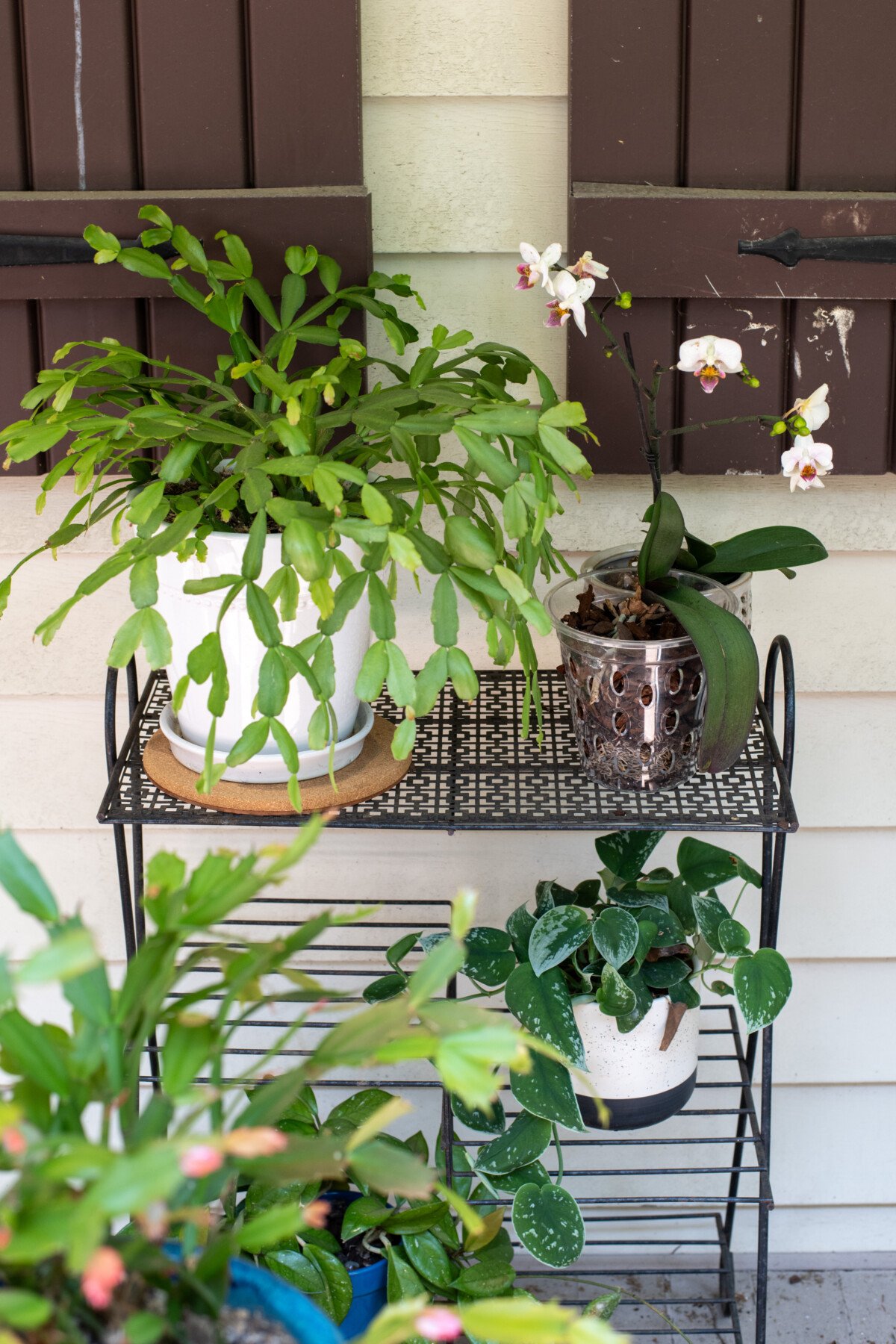
Determining which Schlumbergera you own is the first step in alleviating your non-blooming-Christmas-cactus-frustration. Take a look at the individual leaf segments (called cladodes) and you can easily ID your plant.
- Christmas cactus – Schlumbergera x buckleyi: Christmas cactus cladodes are elongated, with two to three rounded (scalloped) edges.
- Thanksgiving cactus – Schlumbergera truncata: Thanksgiving cactus cladodes are also elongated, but they have spiky edges.
- Easter cactus – Rhipsalidopsis gaertneri: Easter cactus cladodes are more rounded than the other two, and they have soft, scalloping edges.

Now that you know which Schlumbergera you have, we can talk about blooming.
If you have an Easter cactus, you’ll want to read this handy guide on how to care for them and get them to bloom. If you’ve just discovered that you’ve been struggling to get your Thanksgiving cactus to bloom at the wrong time of year, here’s a quick article on where you can buy true Christmas cactuses.
Even if you have a Thanksgiving cactus, you should still read this article. Thanksgiving cactus are also short-day bloomers, and the information here will benefit you as well, regarding the process involved in getting them to set buds.
How to Get Your Christmas Cactus to Bloom for the Holidays

Holiday cactuses, Thanksgiving or Christmas, have a reputation for being hard to get to bloom. While the majority of us are out here in December with a Christmas cactus as green as our Christmas tree, there’s always that one family member or friend whose plant is covered in blooms. Of course, when you ask them about it, they swear they “don’t do anything” and it just blooms on its own every year.
The annoying thing is they’re probably telling the truth.
Why these plants bloom easily in one person’s home and the rest of us struggle has a lot to do with how they grow in their native mountainous homes.
Schlumbergera are short-day bloomers.
Three key environmental factors trigger these plants to bloom: cooler evening temperatures, long nights and short days. All of these changes signal to the plant to set buds.
(Funny enough, in their native region, South America, these are not called Christmas cactuses, they are known as Flor de Maio – May flower. I’ll bet you can guess why.)
The friend or family member who does nothing and still gets their Christmas cactus to bloom probably has these conditions in their home where they keep their cactus. The rest of us can also have a blooming Christmas cactus, but it means we have to put in a little work, and it all starts in October.
Why? Because it takes around eight weeks for Schlumbergera to go through the process that produces buds. So, for lots of blossoms all through December, we need to start in October.

A Stressful Environment
Plants have two modes. Take over the world by spreading far and wide, and oh my gosh, we might die, stop growing and produce reproductive organs (aka flowers). As summer draws to a close, that first mode naturally tapers off for the year, and most plants come to that second part shortly after. But to encourage more blooms, we want to put a little stress on our Christmas cactus.
We achieve this in two ways: less water and a snug pot.
As summer comes to an end and we head into fall, the plant’s active growth cycle slows, allowing it to use less water. If you continue to water it as you have all summer, it will sit in the pot and cause root rot. Additionally, by withholding water, we stress the plant slightly.
Don’t repot your Christmas cactus this time of year. They like to be a bit rootbound before they will bloom profusely. Likewise, if you repotted your plant earlier in the year, you may not get as many blooms this winter.
Now that we’ve put a little stress on our plants, it’s time to get the environment in our homes right.
We need cool evenings for our plants, which means temperatures around 50-55 degrees F. Unless you’re like me and sleep with all the windows open in the fall because hot flashes are ridiculous, this can mean moving your Christmas cactus somewhere in your home, like the basement, a garage or the guest bedroom that you keep closed off when no one is using it. It just needs to be cool at night.
If you put your plant in a room with the window open at night, be sure the plant isn’t directly in front of the window.
We also need to emulate the shorter days and longer nights.
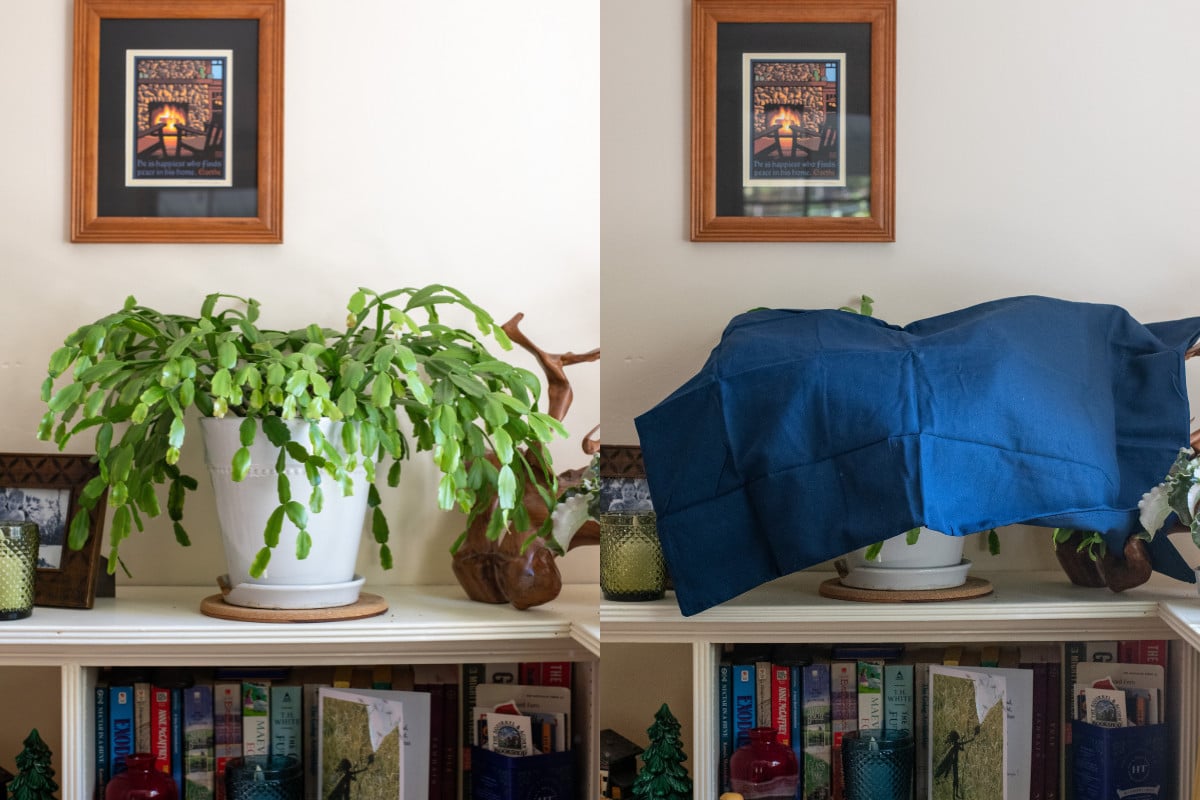
To be frank, unless you live somewhere with lots of natural light in your home, most of us can leave our Christmas cactus right where it is for light requirements this time of year. Our homes are naturally darker indoors, and the days are growing shorter. To help the process, cover your plant with a dark-colored pillowcase each day around 4:00 or 5:00, and remove it again in the morning.
The hardest part for most Christmas cactus owners is getting all three of these things to happen in the same location: a little stress, cool, long nights and short days.
My mom used to have a massive Christmas cactus, and every October, it went into the cellar to sit on top of the chest freezer, right next to the door. The door to the cellar had a big window in it, so the plant received enough fall light. Between the cool cellar and the short days, it was perfect. Mom would bring her plant upstairs at the beginning of December, loaded with buds.
Take a stroll around your house and look for the ideal spot. Oftentimes, it’s easier to find a weird spot to tuck your Christmas cactus away for a few weeks than it is to move it every day.
Regardless of how you do it, as long as you ensure these three factors, your plant will set buds.
What to Do When Your Plant Sets Buds
Check the tips of your plant periodically for buds. A few here and there are a good sign. But once the plant starts producing buds in earnest (more than a dozen buds), you’ll want to carefully move your plant to its normal indoor home for the season.
Keep it away from windows, drafty doors and heat sources, as all of these can cause buds to drop. Do not fertilize at this point; again, this can also cause bud drop.
Water the plant lightly and infrequently, when the first couple of inches of soil have dried out. Your Christmas cactus is on autopilot now and is ready for the holidays.
It’s one thing to get your plant to bloom at Christmas; however, it’s another to get it to thrive and be absolutely covered in blossoms. If you want your Schlumbergera to bloom profusely each year, then you need to take care of it well year-round.
Here are a few basics to keep in mind, along with my mom’s secret for achieving tons of blooms each year.
Let your plants get a little rootbound. Schlumbergera are one of the few plants that do better if you don’t repot them often. Once every five to ten years is fine. And when you do repot them, either trim the roots and put them in the same pot or only go up one pot size. I’ve written a step-by-step article on how to repot a Christmas cactus and when to do it. You can read that here.

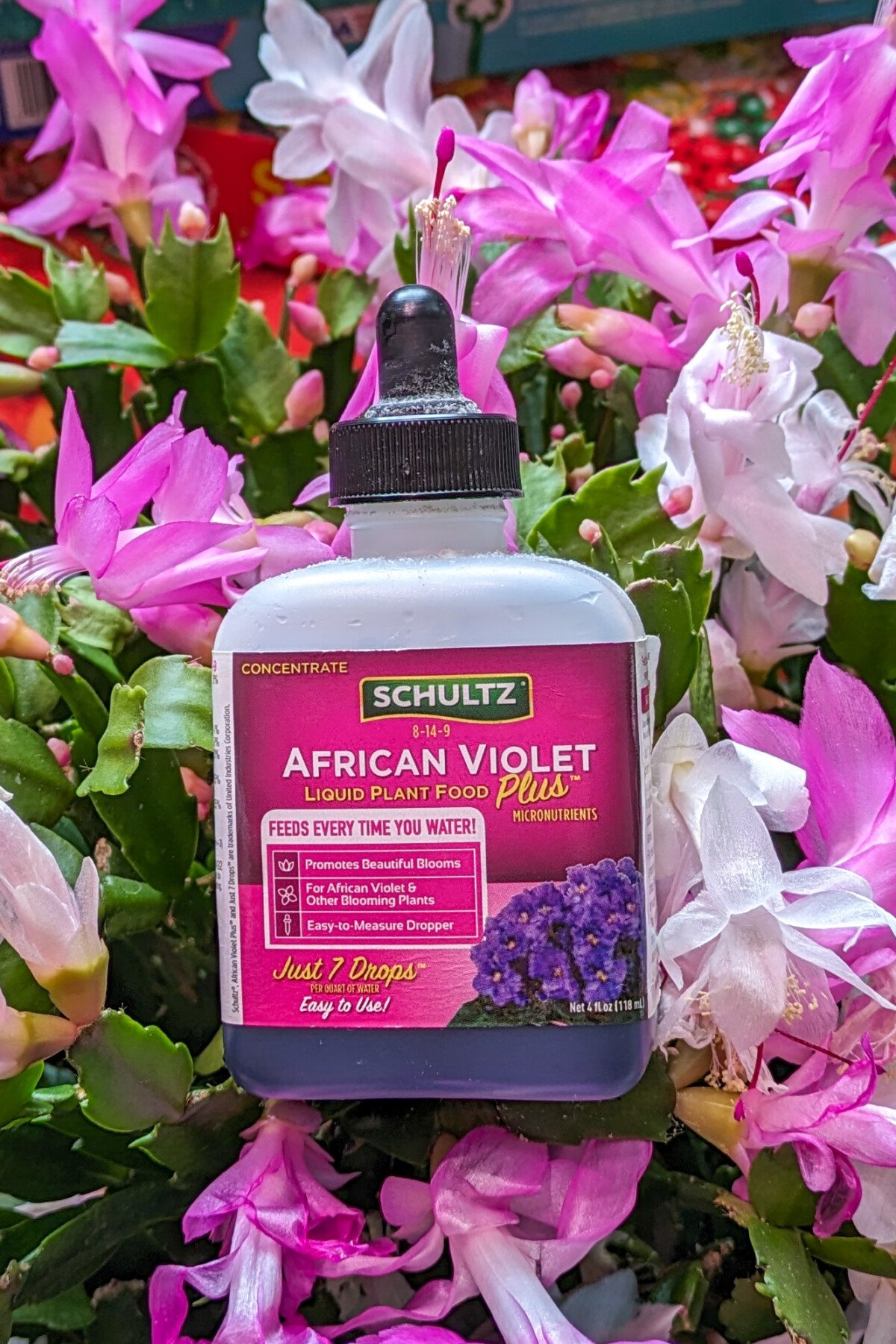
Fertilize regularly during the active growth period. After the plant breaks dormancy, usually in late winter, it’s time to begin feeding it again. Use a quality fertilizer meant for blooming plants. My favorite fertilizer for my Christmas cactuses is Schultz African Violet Food. (I know, but it works great for Schlumbergera, too.) Fertilize your plants at full strength each time you water them. Stop fertilizing at the end of the summer.
Allow your plants to dry out between waterings. Schlumbergera are susceptible to root rot if their soil is too damp. Always let the top 2-3” of soil dry out before you water it again. Don’t let the plant sit in water. Tip out any standing water if it’s sitting on a saucer. Better yet, use my tip.
To keep your Christmas cactus looking its best and encourage new growth, gently prune it at the start of the growing season. You can read how to prune your Christmas cactus here.
Finally, if you want an easy way to ensure your plant has a ton of blossoms each holiday season, check out my mom’s secret. She did this every year and always had a Christmas cactus that was loaded with flowers.
Now that you know which Schlumbergera you’re growing, and what triggers them to set buds, go forth and have a blooming holiday!

Get Garden Notes From Tracey, Right to Your Inbox
Pull up a chair on the front porch. Join 54,000+ gardeners who get Tracey\'s friendly notes, seasonal to-dos, and hands-on tutorials three times a week.