

Wait, wait … Don’t prune it!
My other half often jokes about me having a panel show in the style of Wait Wait … Don’t Tell Me! Except it would be called Wait Wait … Don’t Prune It! Because that’s apparently what I shout to him when I see him grabbing the shears and heading into the garden. I’m definitely an underpruner, but he’s not an overpruner either, and that’s what keeps the peace in our marriage.
This fall, especially so, since I’ve decided to have a different approach to my ornamental garden. I’ve just started a new flower border this year. I’m setting it up in a strip along my driveway that was nothing but fried grass before my ambitious project.
I’m looking to fill it quickly.
And cheaply.
And preferably with as little effort as possible. I have so many other projects I want to complete in the garden this fall that starting flowers from seed is sliding so far down my to-do list, it will soon slide off completely. Before I know it, spring will be here and I will be frantically trying to balance growing veggie seeds and ornamental seeds. Not this time, fair gardening friend.
This fall, I’m letting these flowers stand because I want even more flowers out of them next year. It may sound counterintuitive, but doing nothing now means I’ll get more blooms next year out of the following garden darlings:
1. Cosmos
I bet you weren’t expecting me to begin my “no fall pruning” list with an annual. We don’t prune annuals anyway, right? We just yank them out of the ground when they’re done blooming and (best case scenario) throw them on the compost pile.
Ah, but why? Why are we so obsessed with cleaning up annuals? Only to start them back from seed again next spring?
What if we allowed them to overwinter in the garden? Wouldn’t that be better?
Yes, we would get to skip two seasonal jobs: clean-up this fall (postponed until spring, so not technically skipping) and starting them from seed next spring.
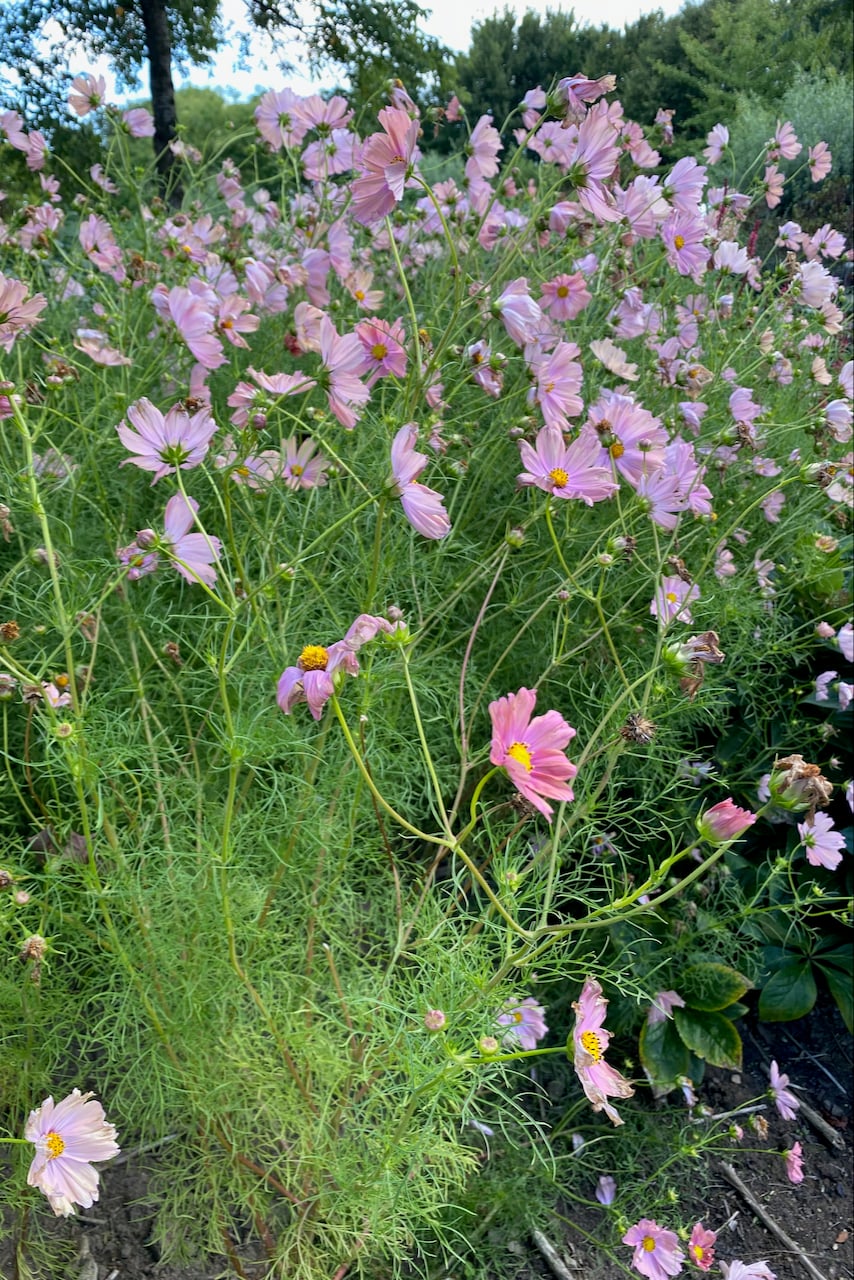
I’ve started these cosmos flowers from seed this past spring because I didn’t have them growing in this new-to-me garden. (You can have a look at my baby cosmos in this article.)
I know that once I bring cosmos into my garden, it will dutifully do its job and keep coming back year after year. That’s the main reason why I’ll not tidy it up this fall. Cosmos are reliable volunteer plants. And even though they’re annuals, we only have to plant them once and then let them self-seed with abandon.
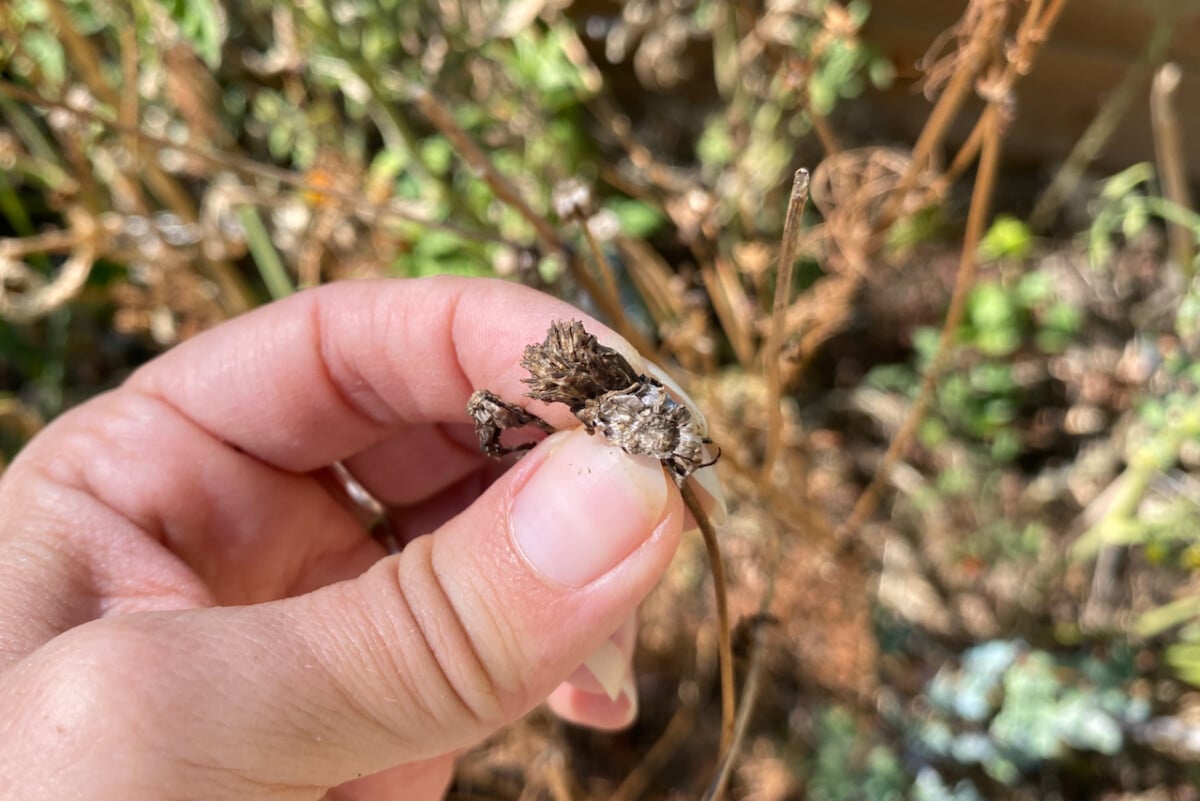
Sure, the stems will turn into hollow brown stalks over the winter. But the seeds will drop in place and help me fill this corner of the garden without any effort on my part.
My plan is this though: plant a new color of cosmos every spring, then let them all mix and self-seed every fall. I already have my eye on a couple of cultivars in cheerful hues of orange, fuchsia and vanilla. And some pretty swirly ones that look like assorted lollipops
For more tips on what to do with annuals once they’re done blooming, have a look at this article I wrote a couple of years ago.
2. Zinnias
After writing hundreds of gardening articles, and gardening for what feels like a hundred years already (in a good way), I didn’t think I could have plant revelations.
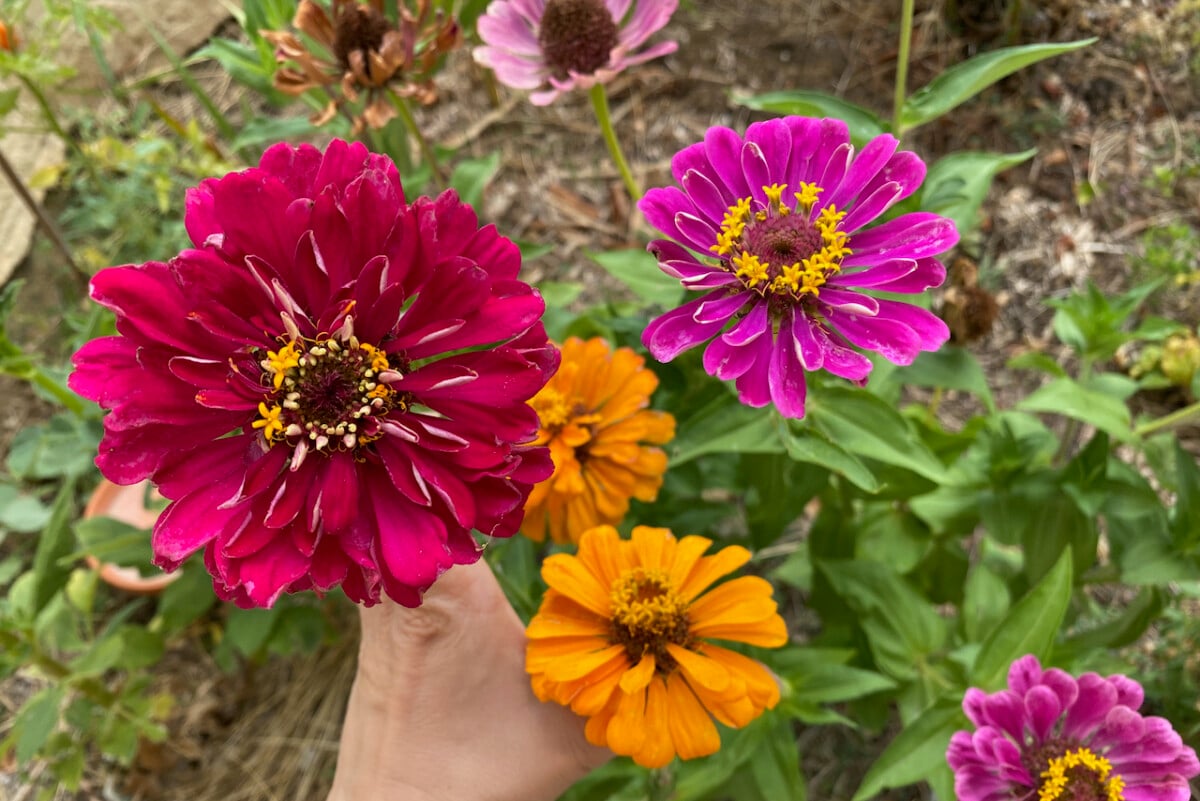
Well, dear reader, my zinnias this year have been nothing short of a revelation. They have been drought resistant and took the heatwaves like the champs they are. They have also been a reliable source of cut flowers. I have been picking zinnia posies every week for two months straight. Naturally, I want to expand my patch and graduate from zinnia posy to zinnia bouquet next year. And still leave plenty of zinnias for the pollinators to feast on.
Unfortunately, zinnias don’t overwinter well in my gardening zone. They’re generally grown as an annual anyway, so I don’t take that personally.
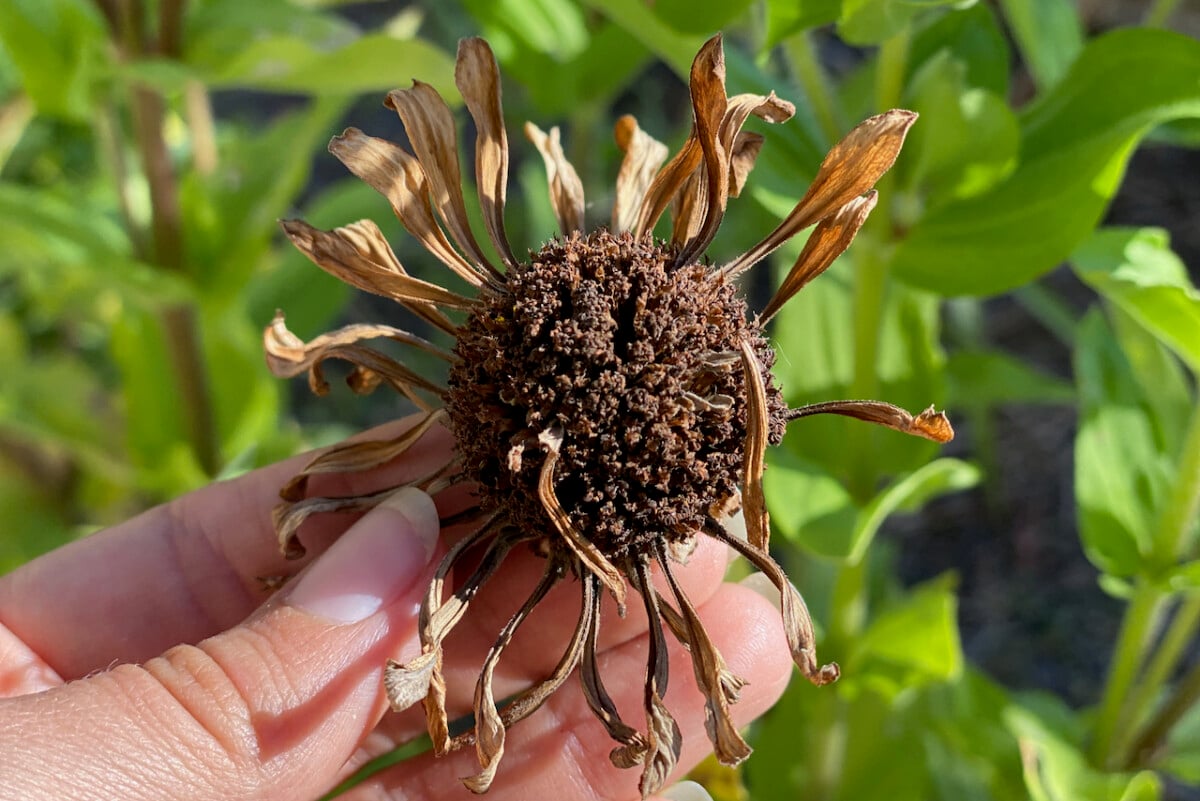
Fortunately, they have produced chunky seed heads. I’m letting everything stand in the garden this fall, and I’ll only clean them up once everything has well and truly wilted to the ground. Which will probably only happen with the long deep frost.
By then, the zinnia seeds will hopefully be scattered all over the ground in what I shall now call the zany zinnia corner.
Here’s my love letter to zinnias. I dare you to read it and then try to resist the urge to plant some in your garden.
3. Foxgloves (Digitalis)
Foxgloves are a bit tricky to leave in place in the fall because it’s hard to know whether they’re biennials or not. Most foxgloves are biennials, most notably the popular Digitalis purpurea.
But there are some cultivars that grow as perennials.
We can leave both in place over the winter months. However, we’ll benefit more from leaving biennial foxgloves where they are in the fall because biennials have a two-year life cycle. That means that if we start them from seed this year, they will very rarely bloom this year.
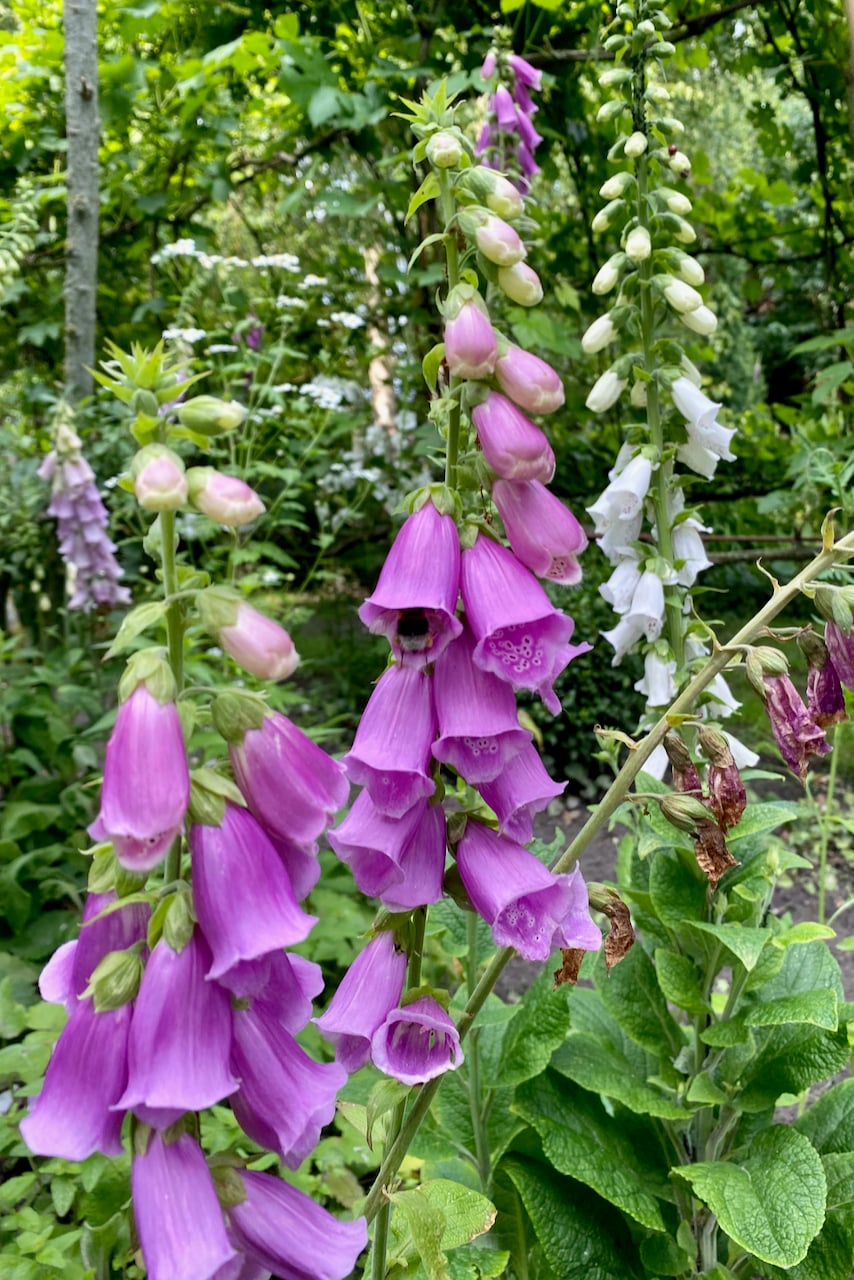
Biennials spend their first year developing roots and foliage and accumulating energy for blooming. They complete this cycle the following year by flowering. By not cleaning them up in the fall, we’ll allow them to self-seed for next year. And if we do that every fall, it means we technically won’t have to start foxgloves from seed ever because we’ll always have babies in the garden in their first year of growth, gearing up for the following year’s bloom.
I may have made it sound like it would be a problem if we allow perennial foxgloves to overwinter in the garden. There isn’t. It’s just that they might do so well, we’ll reach the exponential growth stage much faster. Digitalis grandiflora (the tall foxglove), Digitalis mertonensis (the strawberry foxglove) and Digitalis lanata (the grecian foxglove) are three such perennials that we might want to keep an eye on. I, for one, welcome these self-seeding overlords. And so does the wildlife in my garden.
4. Globe thistle (Echinops)
I’ll take any opportunity I can to popularize echinops (also known as globe thistle) as a low-maintenance ornamental perennial. And for good reason. If you have a veggie garden (or if you’re planning one for next year) leave your echinops standing this fall.
Echinops is an amazing plant at attracting parasitic wasps.
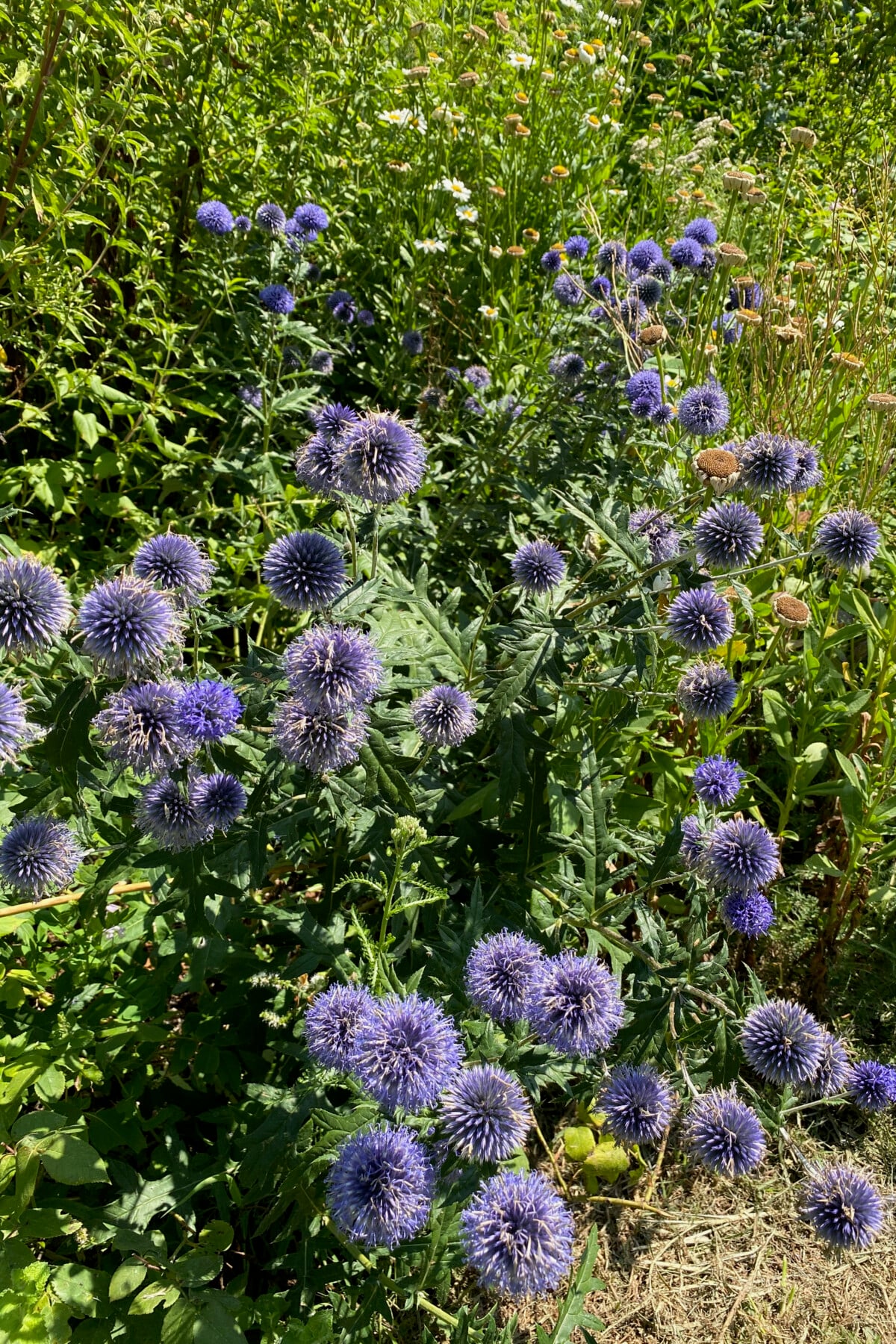
Wait, that’s a good thing! Wasps are excellent at feeding on vegetable pests, particularly the cabbage white butterfly that tears through kale, broccoli, bok choy and virtually all the other members of the brassica family. Wasps nip the infestation in the bud, as they eat the damaging butterfly at the egg stage. Those tiny white or yellow specks on the underside of leaves – they will be gone before they become a problem.
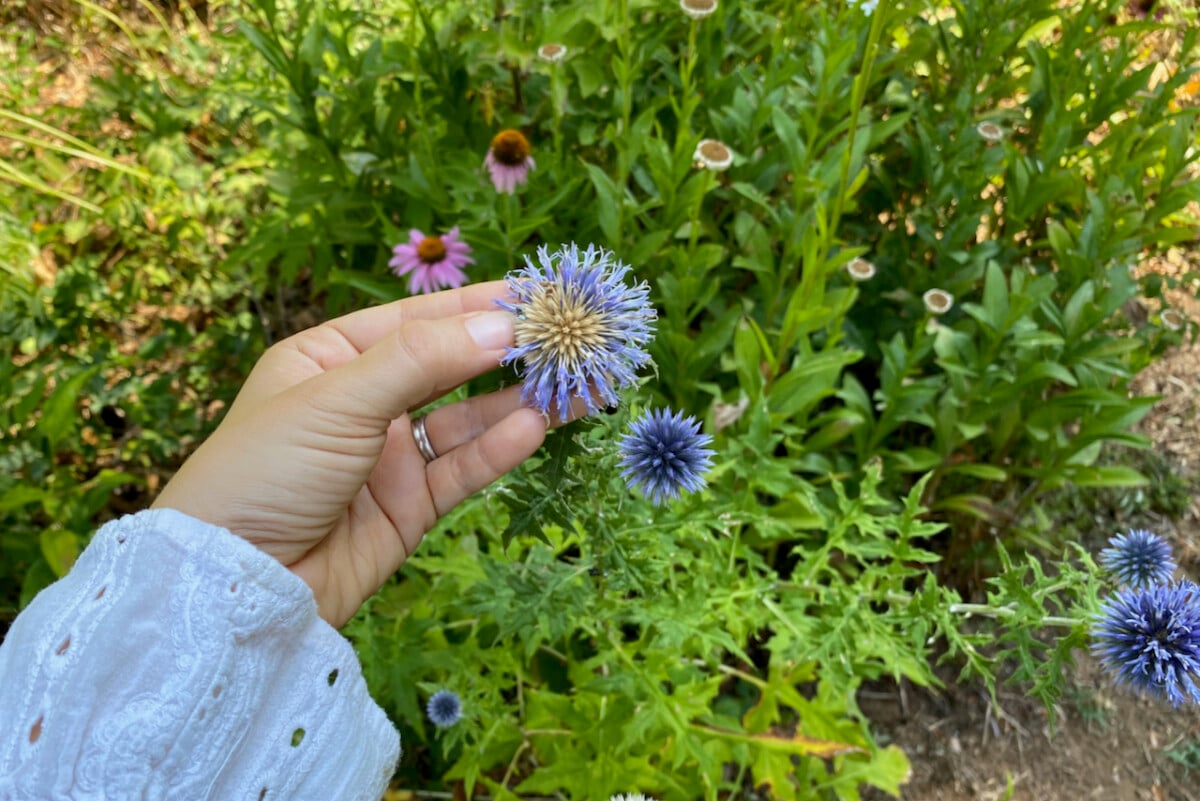
Let your echinops self-seed this year and you will not only get masses of flowers next year, but you’ll also get a chance to eat your arugula, for once.
5. Coneflower (Echinacea)
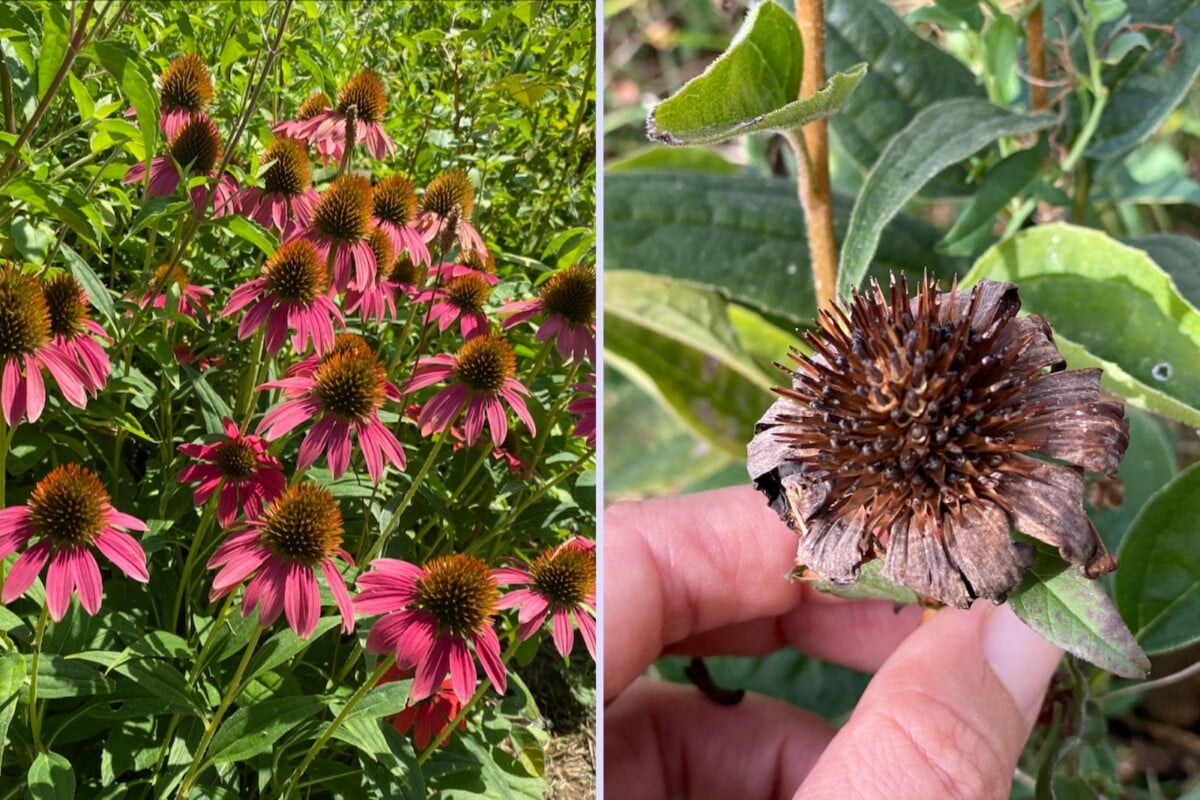
Did you notice that echinops (above) and echinacea have similar sounding names? They’re both derived from the Latin word “echinos” which means “prickly” or “spiny”. So even though echinacea is not thorny, it does look like a little hedgehog once all the petals have fallen off in the fall.
That’s ok. It’s the seed heads that we want to have in our gardens this fall. First of all, the birds will happily flock to the seed heads when the bird feeders are not yet ready and the winter berries are not yet ripe.
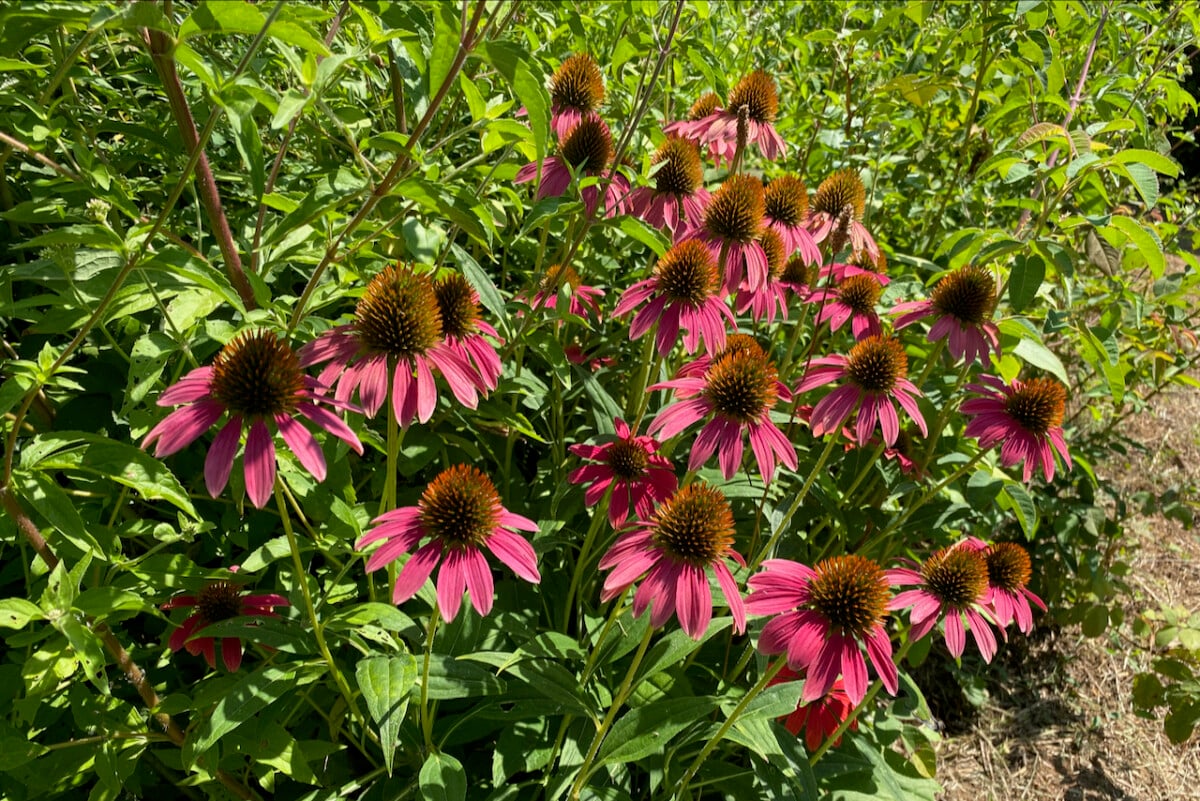
But every seed head left in place increases the likelihood of more coneflowers in our garden next year.
Echinacea are on the list of seeds that benefit from cold stratification. Like a lot of herbaceous perennials, echinacea seeds contain germination inhibitors (hormones and natural oils and wax). Think of them as a seal that protects the seed from the time it falls to the ground until the conditions are good for it to sprout again in spring.
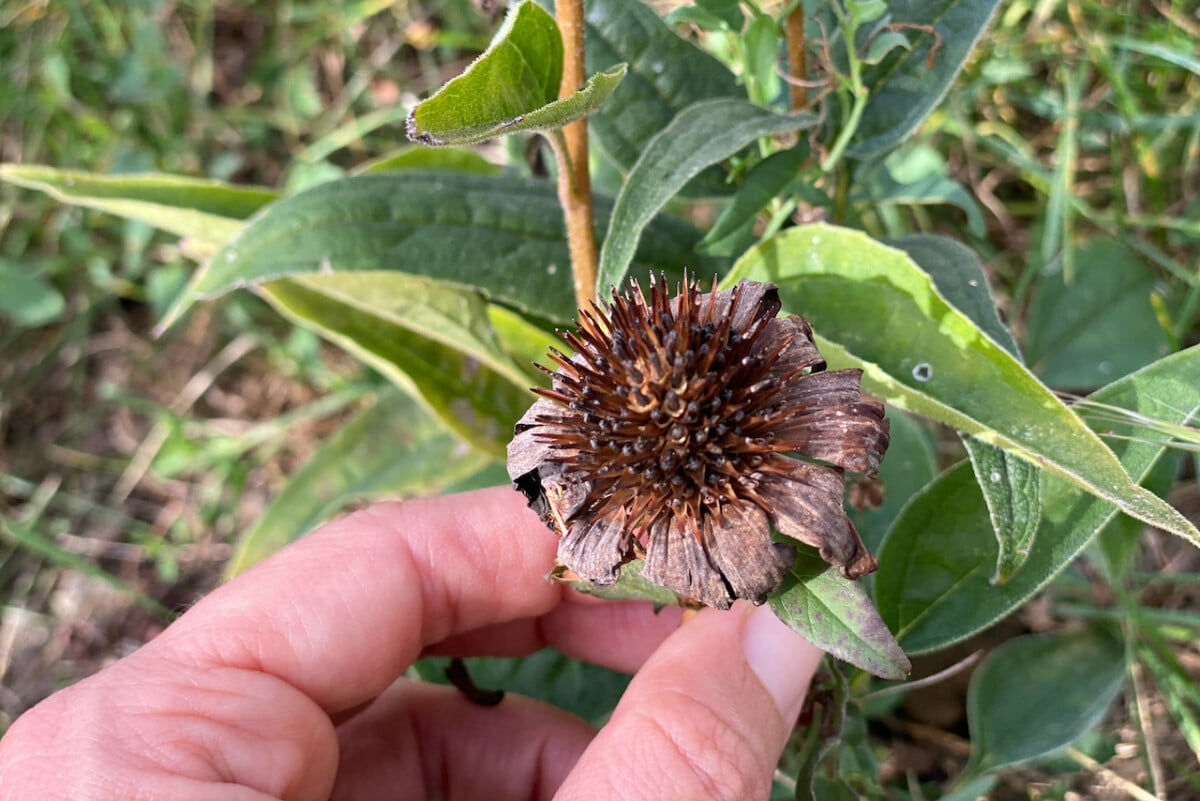
When we pick the seeds to store over winter, we’re breaking this cycle of dormancy and interfering with the germination process. That’s well and good, but in order to keep the same high rate of germination, we have to stratify the seeds ourselves (here are a few methods to do it). But when we let the seeds fall to the ground, nature is doing the work for us. I’d say that’s a great reward for doing nothing with our coneflowers this fall.
6. Lilacs
As I was writing my article on pruning lilacs this past May (here it is if you want to read it), I was already making a mental note to remind our readers not to prune their lilacs in the fall.
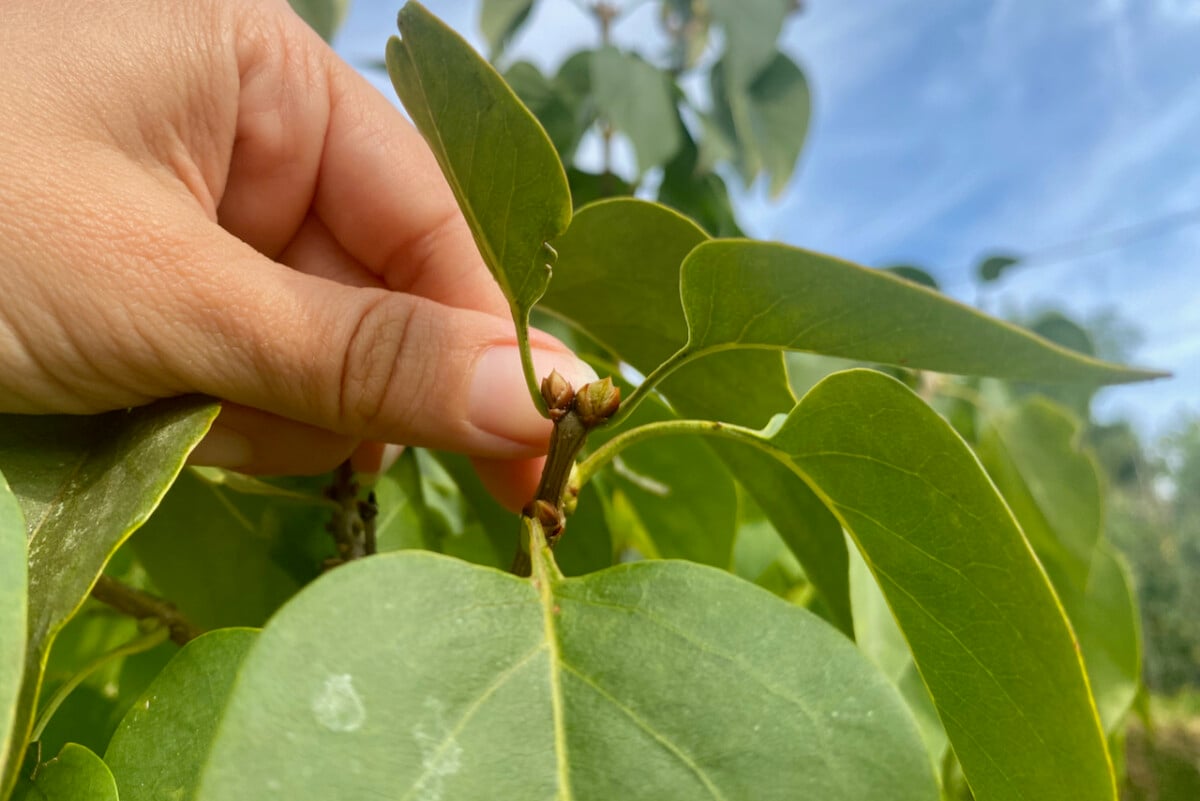
It’s kind of tricky to resist pruning them, especially if they’ve grown considerably during the summer. But set aside your shears and listen to this: pruning your lilacs now means cutting next year’s flowers. See these little buds that are already forming on the shrubs. This is it. These are the flowers that will brighten up our spring in about seven months’ time.
Lilacs are what’s called an old wood bloomer, which means that they form the following year’s flowers this current year. Yes, all lilacs do that. No, there are no exceptions that I know of.
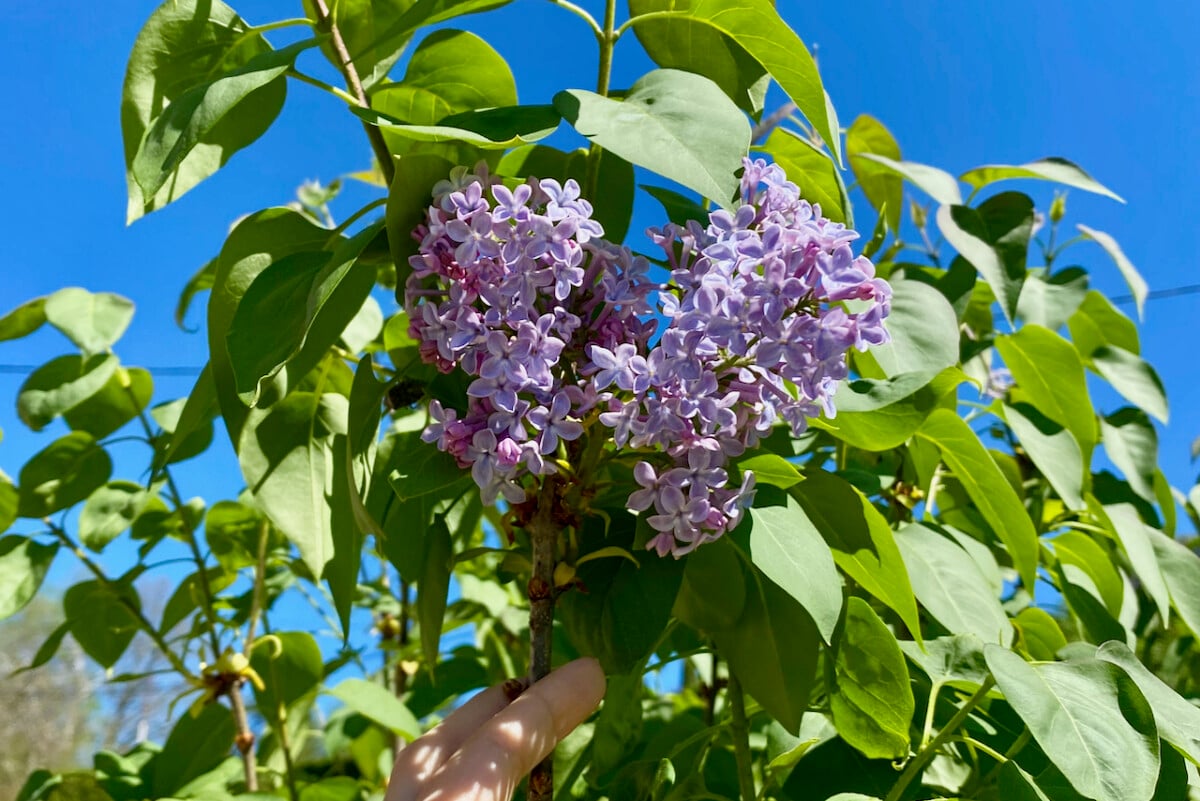
So they already have the flowers ready for us, as long as we leave everything standing this winter. That includes the irregular growth, the stuff poking out and yes, even that tall branch that’s growing sideways (unless it’s a danger to anyone, of course). Leave all your lilac stems standing this fall and the reward will follow – and smell divine – in late spring.
7. Sea holly (Eryngium)
Sea holly combines the brightness of electric blue with the kooky shape of an alien plant. Bees love it, hover flies adore it and butterflies are drawn to it like I’m drawn to the plant nursery on discount Tuesday.
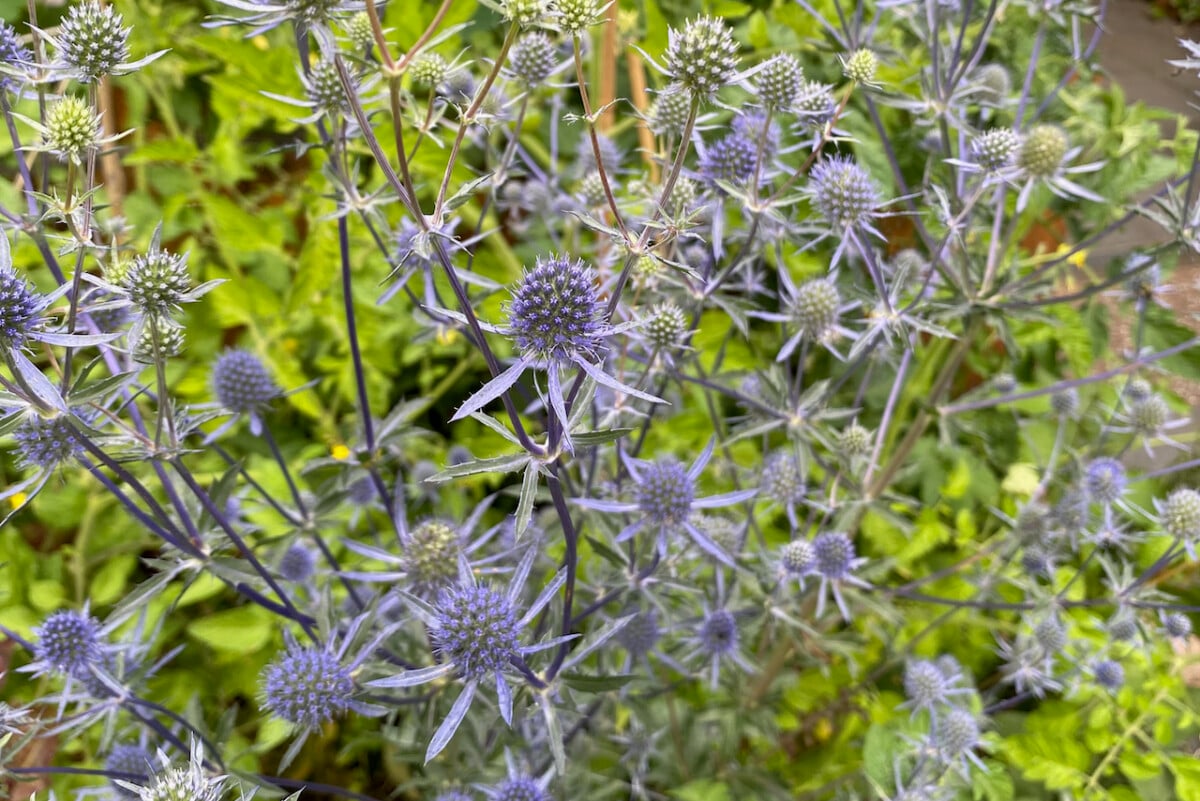
I love this perennial because it does well in poor soil (whether it’s sand or clay), it can withstand some pretty harsh heatwaves and, due to its parsnip-shaped tap root that penetrates deep into the soil, it can survive summer drought unscathed.
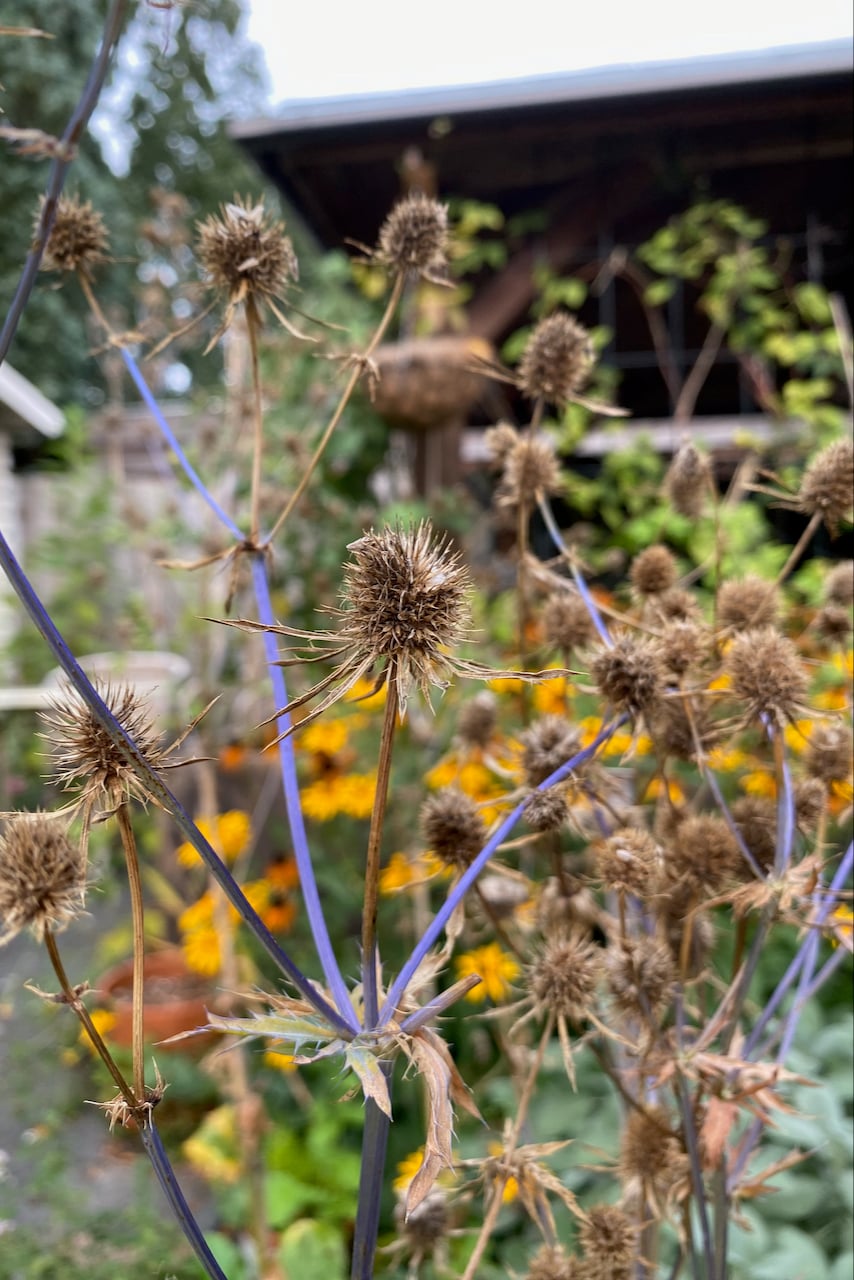
I’ve started with one single plant and over the course of three years, I’ve managed to fill a corner of my flower bed (for zero money) with this vibrant perennial and all the pollinators that feed on it. All I did was let it stand over the winter. Did I mention zero money?
8. Snapdragons (Antirrhinum majus)
For some gardeners, the thought of overwintering snapdragons is laughable. For others still, the thought of starting snapdragons from seed every year is even more laughable. Who’s in the know here?
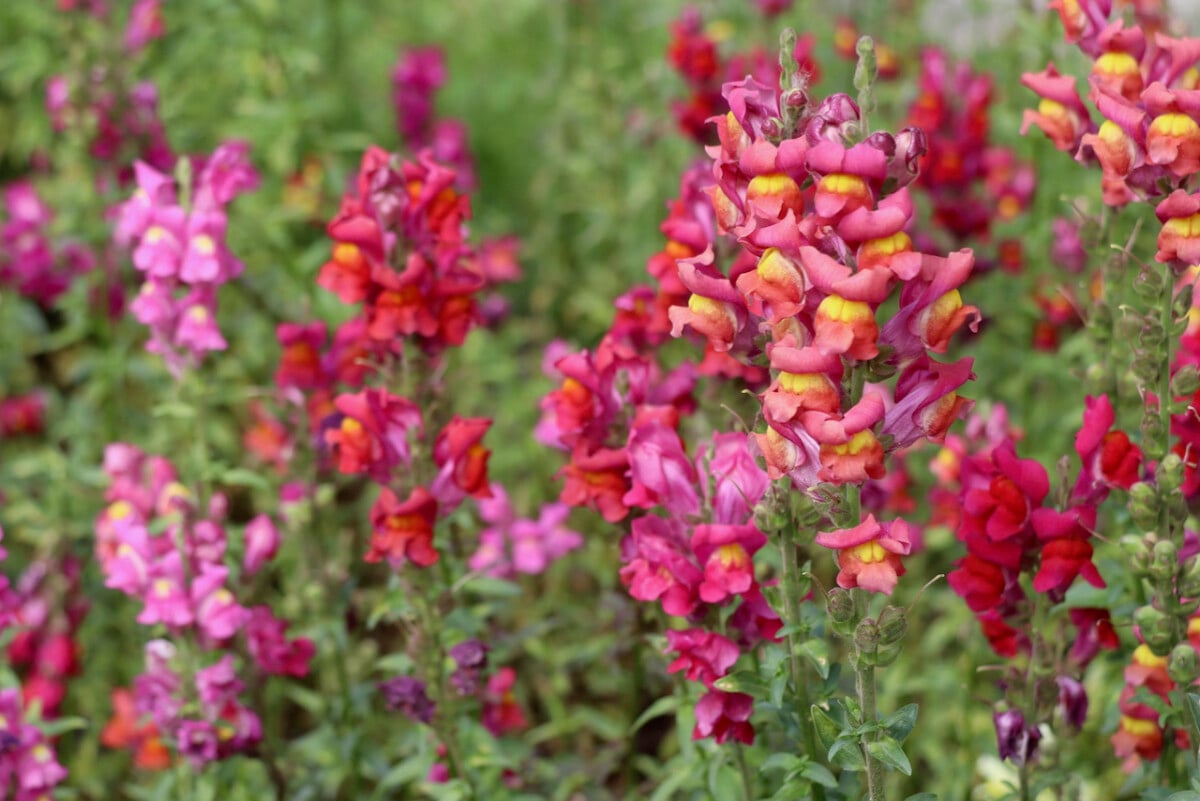
The seed of truth lands somewhere in the middle with these cottage garden classics.
In most USDA gardening zones, snapdragons grow as tender perennials. Which means that some years they might survive through the winter while in other years they’ll just succumb to the deep frost. Same garden, same gardener, same plant, yet different ways of coping with prolonged frost.
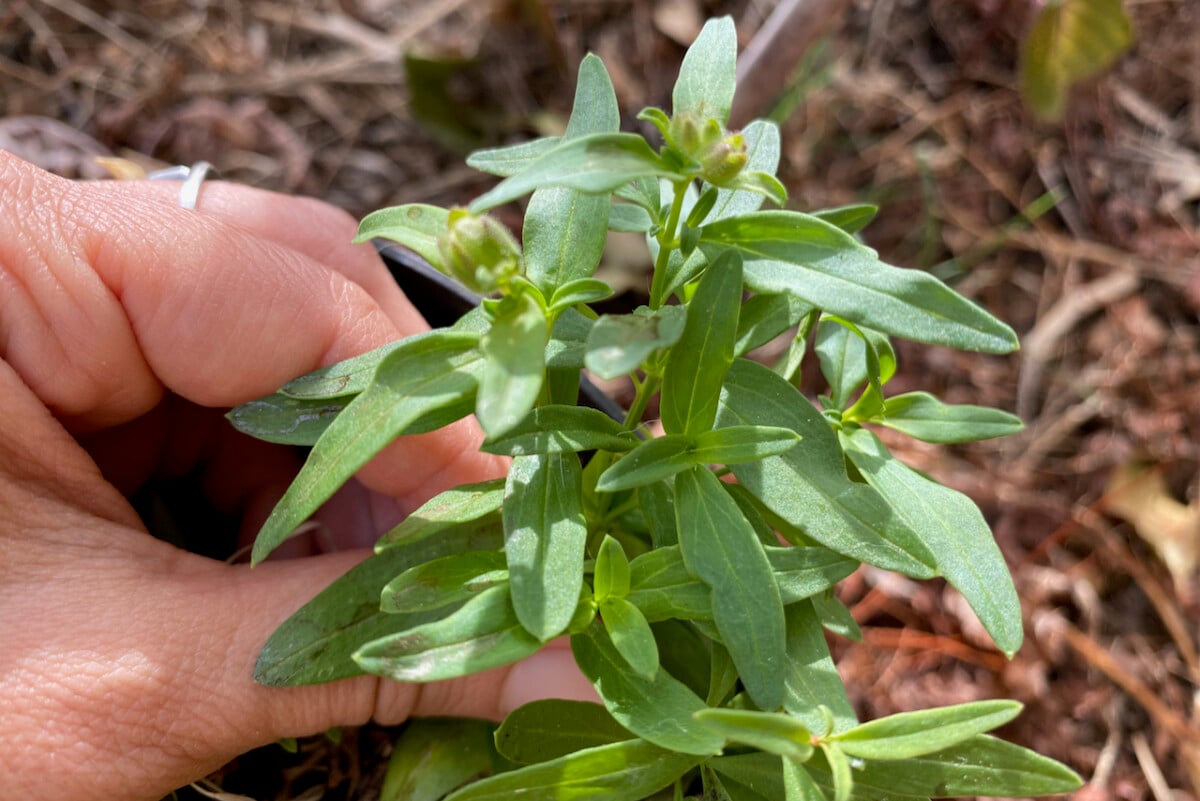
So consider not cleaning them up this fall as a backup against a harsh winter. If your existing snapdragons don’t come back in the same spot, their babies most likely will. And the more seed heads you allow to self-seed, the more tiny snapdragons there will be. More color. And even more pollinators.
9. Flowering tobacco (Nicotiana)
Allow me to start with a bit of disambiguation. The wonderfully fragrant ornamental we’re talking about here is Nicotiana sylvestris, also known as flowering tobacco or sweet tobacco. You can’t put it in your pipe and smoke it. Her cousin, Nicotiana tabacum (the tobacco plant) is the one responsible for the tobacco addiction.
I just wanted to get his out of the way now because I have a feeling some gardeners are avoiding growing this ornamental due to its bad family reputation.
Just like the foxgloves we talked about earlier, sweet tobacco flowers are theoretically biennials. But confusingly, they can also behave like snapdragons and grow as short-lived perennials. Just when you think they’ve perennialized, ZAP! comes a hard frost to kill them off.
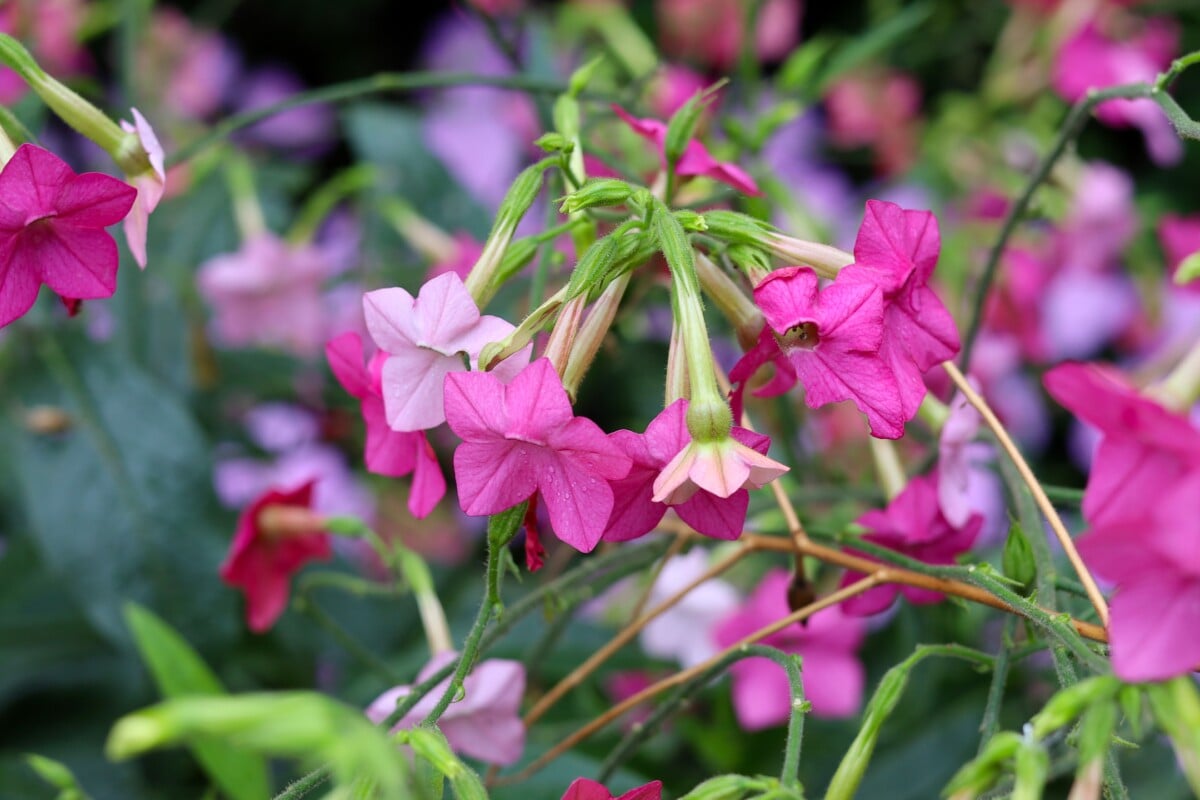
That’s why allowing sweet tobacco to stand this fall and self-seed in the garden is our best insurance policy. It not only guarantees that we’ll still have nicotiana growing next year, but it also means we’ll have small plantlets growing even if the main plant doesn’t make it.
Let flowering tobacco seed itself near a window and you’ll never want to close that window again. Pair it with some of the other fragrant flowers on this list for an extra layer of olfactive whimsy.
10. Hydrangeas
I admit, it may seem like I buried the lede by putting these uber-popular ornamentals at the end of my list. But I just feel duty-bound to remind you to allow your hydrangeas to overwinter as they are, dry flowerheads and all. Yes, all types of hydrangeas, whether they’re blooming on old wood or new wood.
For old wood hydrangeas, pruning them now spells trouble with a capital T. These shrubs – the most popular of which must be the French hydrangea (H. macrophylla), have already formed next year’s buds on this year’s growth. Let’s do ourselves a favor and not touch them over the winter. That includes deadheading.
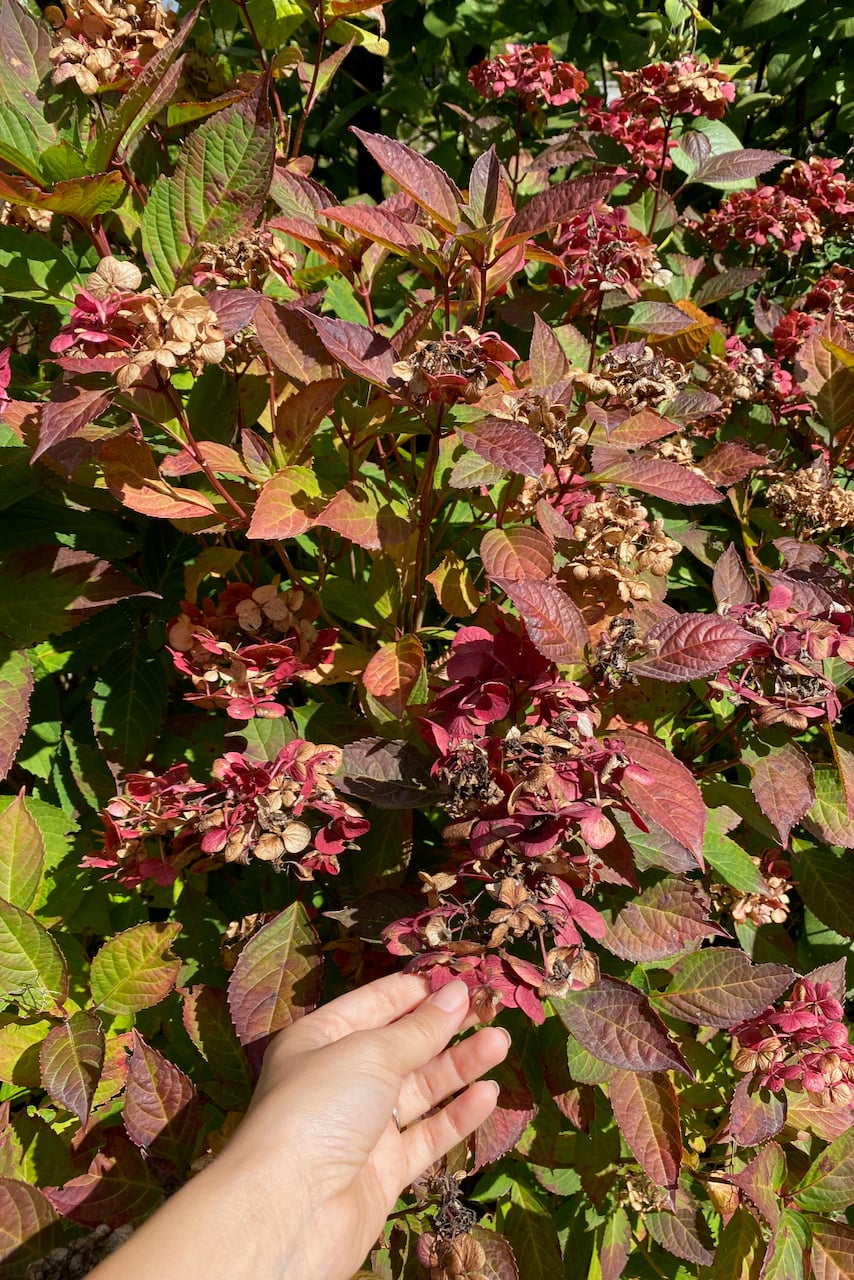
Think of the spent flowers as a sort of cozy padded blanket that protects the buds below and the crown from wind, frost and sudden temperature fluctuations.
This protective effect is the same reason why I always advise our readers to allow even the new wood hydrangeas to overwinter as they are. There is no benefit to pruning them now, even accounting for the fact that they haven’t yet formed next year’s buds.
For a quick reminder of which hydrangeas bloom on old wood and which on new, have a look at this post.
Get Garden Notes From Tracey, Right to Your Inbox
Pull up a chair on the front porch. Join 54,000+ gardeners who get Tracey\'s friendly notes, seasonal to-dos, and hands-on tutorials three times a week.