

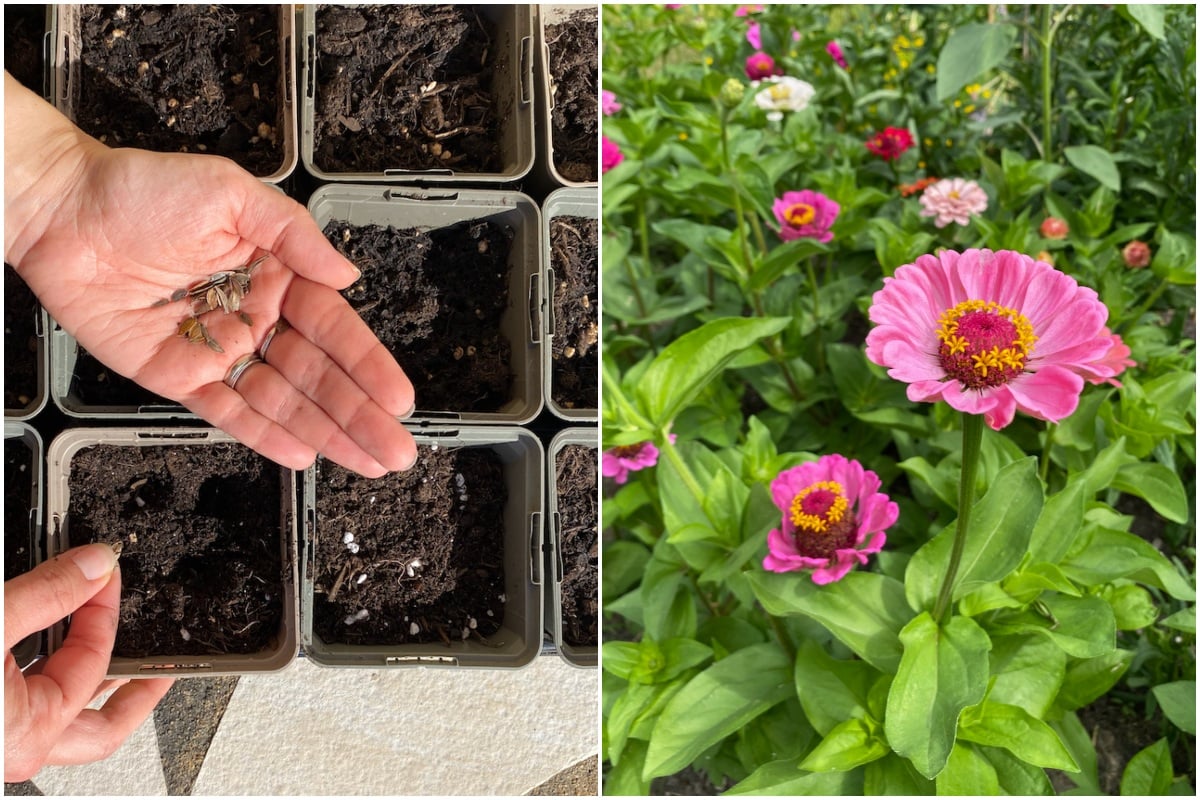
Zinnias are such dependable flowers, yet I didn’t think I could grow them for longer than I care to admit. I may have been a bit biased against them because they seemed too good to be true.
You mean you have an ornamental that’s drought-resistant, can grow super fast from seed to bloom, comes in all the colors of the rainbow and blooms all summer and all fall? And it’s an annual? What’s the catch?
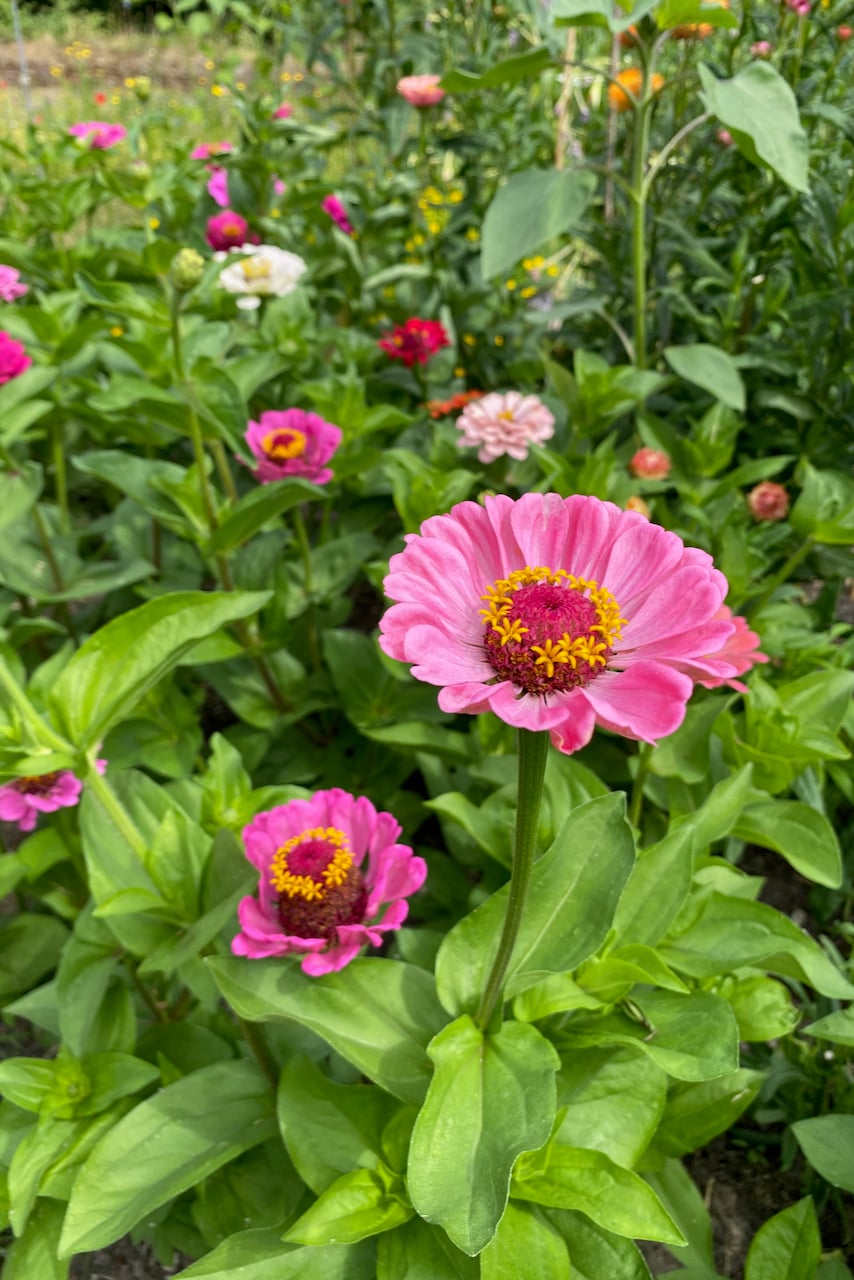
There’s no catch. And I learned that by reading (and watching) the diaries of commercial flower growers. These are women who farm flowers for a living. So when they vlog, I take notes. They often rely on a handful of cash crops that are fail-proof – most often zinnias and dahlias – to subsidize the risk of more tender crops, such as ranunculus and celosia.
Let me tell you some of the reasons why growing zinnias is such a great idea for us, as hobby gardeners.
1. Zinnias are really easy to start from seed.
I’d go as far as saying that zinnias are the perfect flower to boost your confidence if you’re feeling overwhelmed about starting annuals from seed. Sure, you could buy a six-pack of zinnia starter plants from the nursery, but starting them from seed makes it so much cheaper to grow an entire bed of zinnias without breaking the bank.
My one other tip is to buy a mix of zinnia seeds of different colors and varieties; I bought a pack of seeds called “the cottage garden” mix.
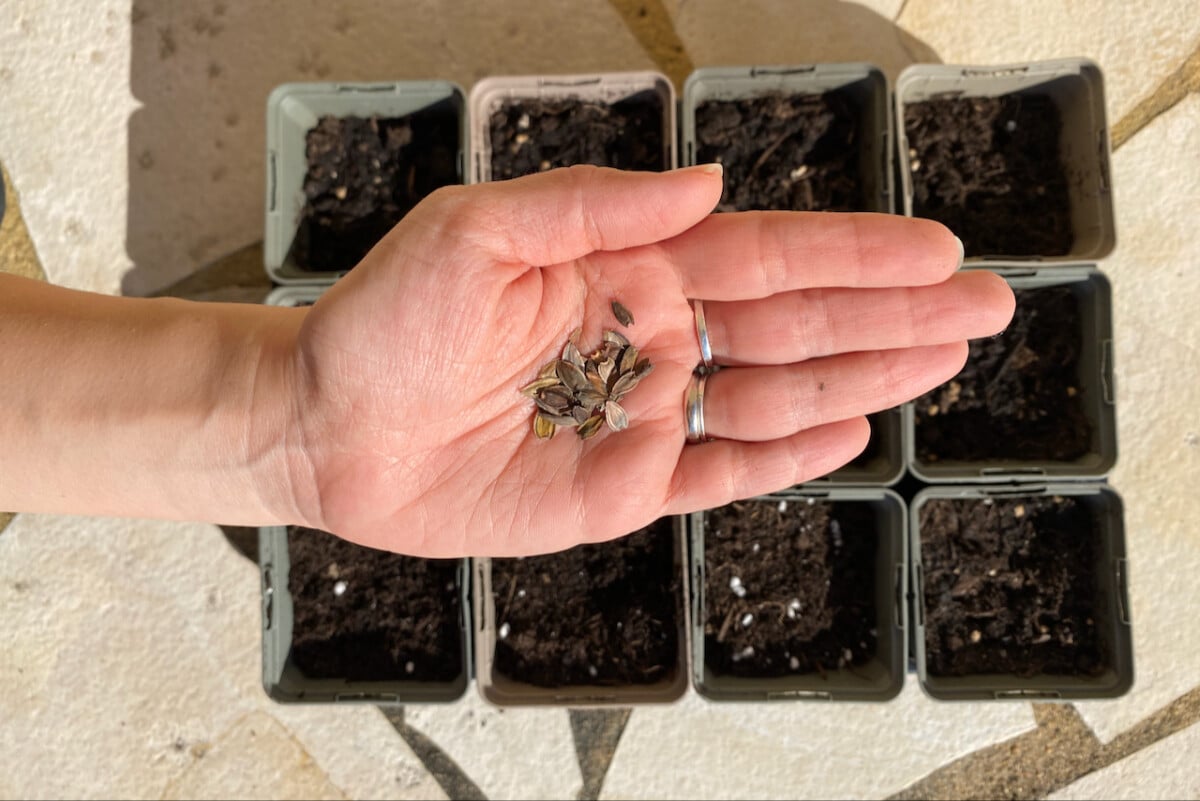
Usually, I start my zinnias in indoor pots in March, about eight weeks before I plan to transplant them in the garden. A little heat will help them sprout faster, but it doesn’t matter as much as keeping the seeds moist before germination.
We have to wait until the risk of frost has passed before we put our zinnias outdoors.
Of course, we can also direct sow our zinnia seeds straight in the garden. But in my garden, they’re much less likely to be eaten by slugs if I transfer them outdoors as larger plants.
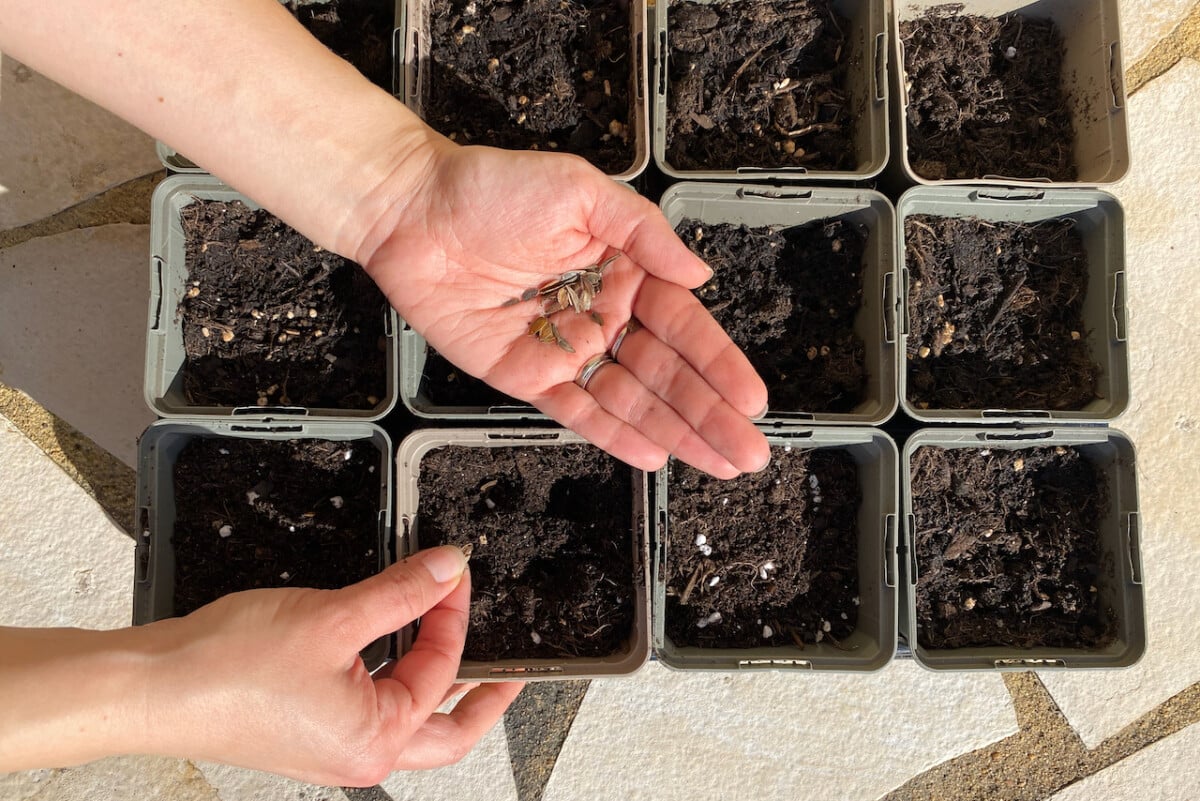
Zinnias take about ninety days from seed to bloom, but once they start blooming, they’ll continue until the first frost of the fall. Some newer cultivars might bloom faster, so check labels and seed packets before you buy them.
2. You don’t need to start extra seeds for zinnias.
Here’s another tip to save some money, but it only applies if you’re not working with old seed. Zinnias have good germination rates, so only sow as many seeds as you have room for.
Ok, perhaps a few extra.
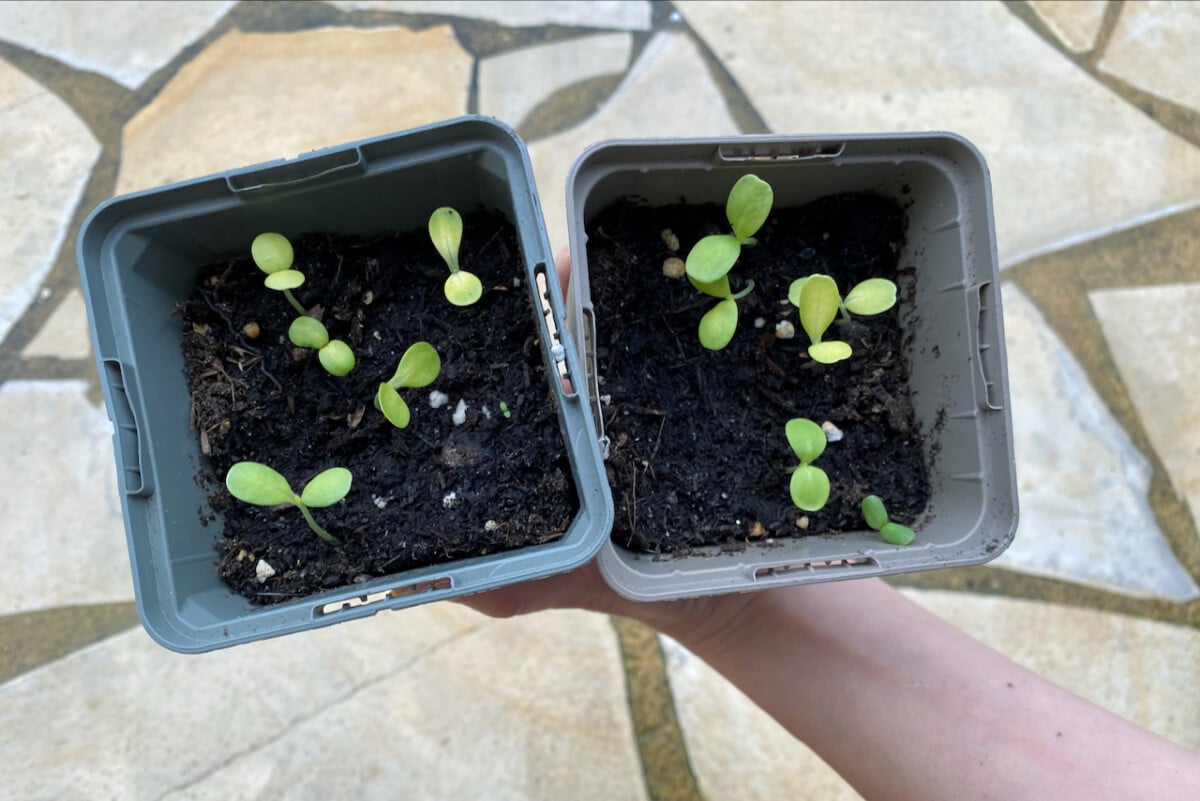
But don’t spend all your seed on one sowing session only to have to prick some out later. I had a one-hundred percent germination rate from the packet of zinnia seed I bought this year, and I have enough seeds left over to quench my zinnia thirst for the next two years. And that’s not even counting the seeds I’m going to save this year.
What if we don’t prick out the seedlings and plant every single one in the garden?
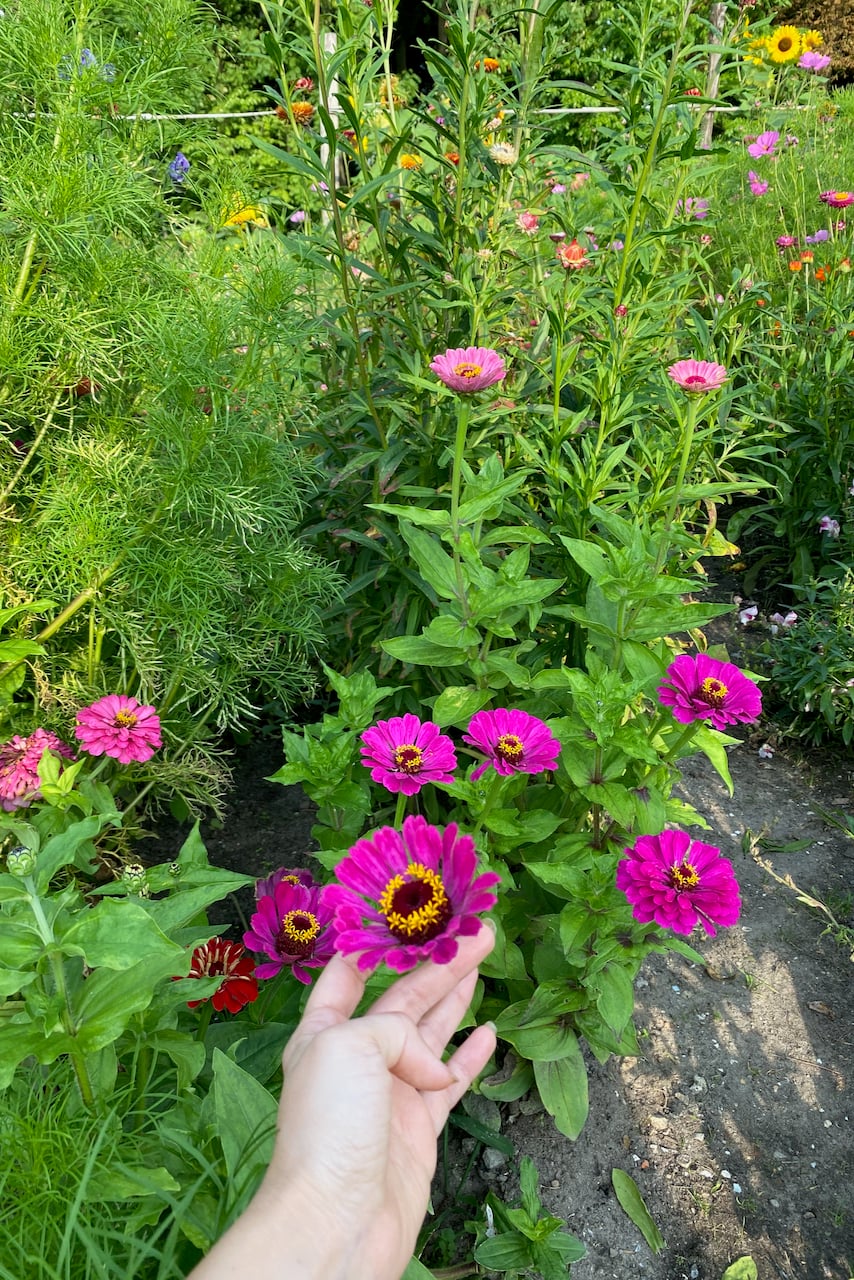
Yes, you can totally do that, but the problem with zinnias is that they’re very prone to powdery mildew. So by all means, plant every zinnia seedling you have, but take into consideration their size at maturity and don’t overcrowd them.
We want to allow for enough airflow to go through our garden beds in order to prevent mildew in plants prone to it, such as zinnias, calendulas and larkspurs.
3. Zinnias are true cut-and-come-again ornamentals.
If you’re growing zinnias to use in bouquets and flower arrangements, then you’ll already know this trick.
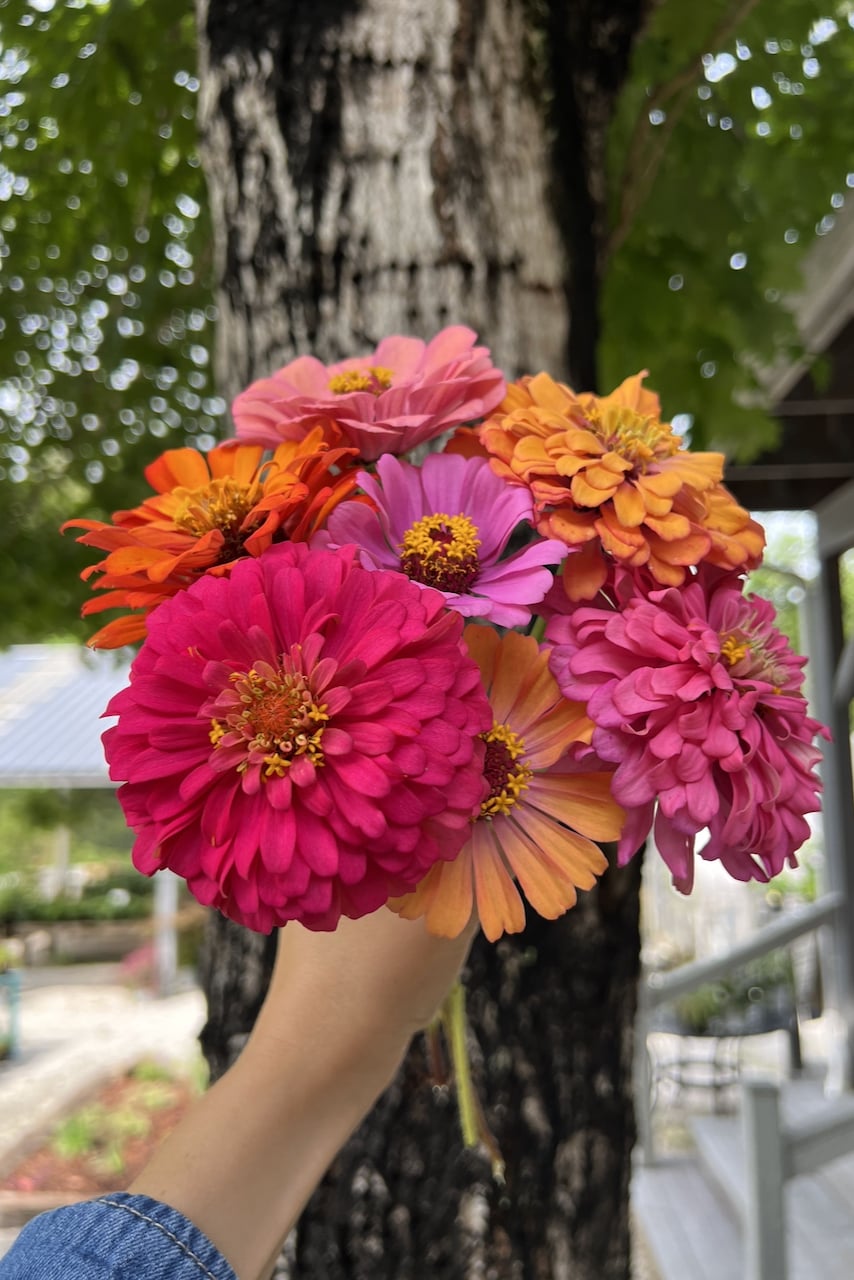
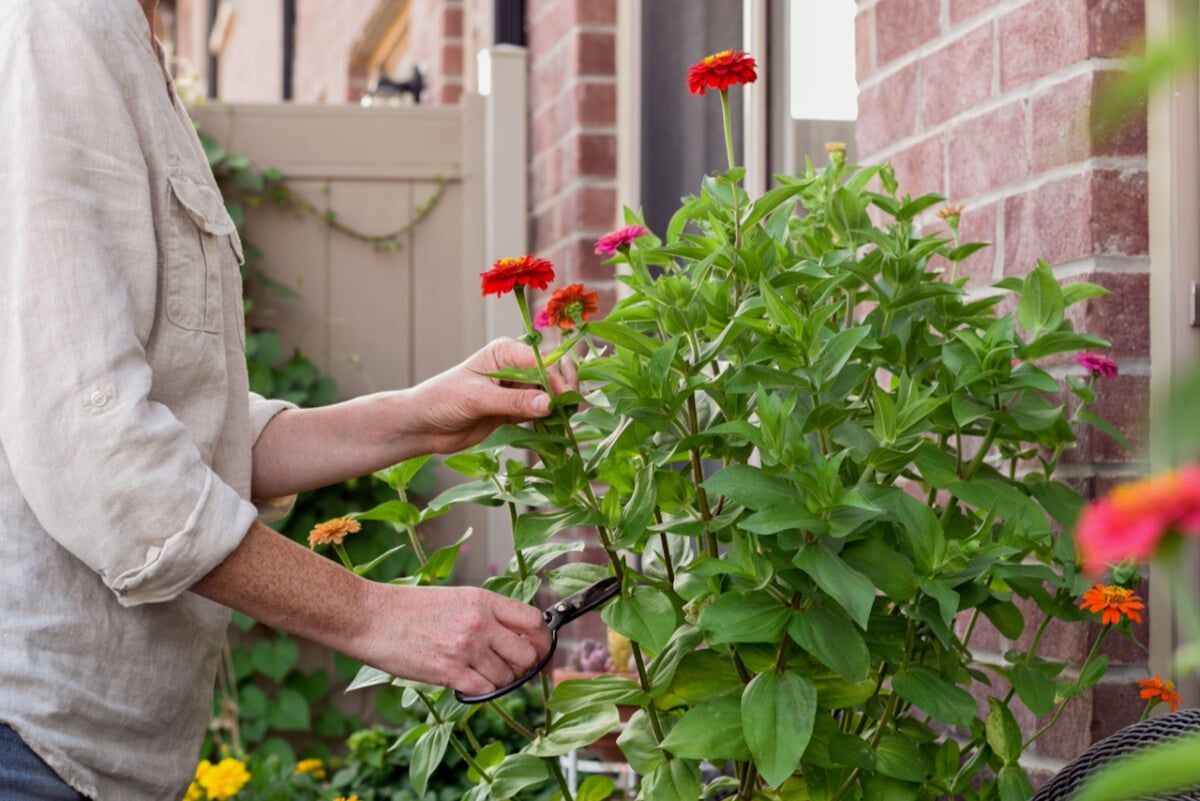
The more zinnias you pick (generally between July and September), the more you’ll get. And even if you’re not picking them for bouquets, you should still deadhead them back to a leaf node.
This will encourage more buds to show up at the height of the season. Zinnias will bloom from mid-summer until the first frost. In a good year, one single healthy stem may develop anywhere between twelve and fifteen flowers.
4. Zinnias are low-maintenance flowers.
Zinnias are what we call short-day plants. Which means that they don’t necessarily care about how long the days are (meaning how much light they’re getting) as much as they care about heat. So obviously, we need to plant them in a spot that gets enough sun.
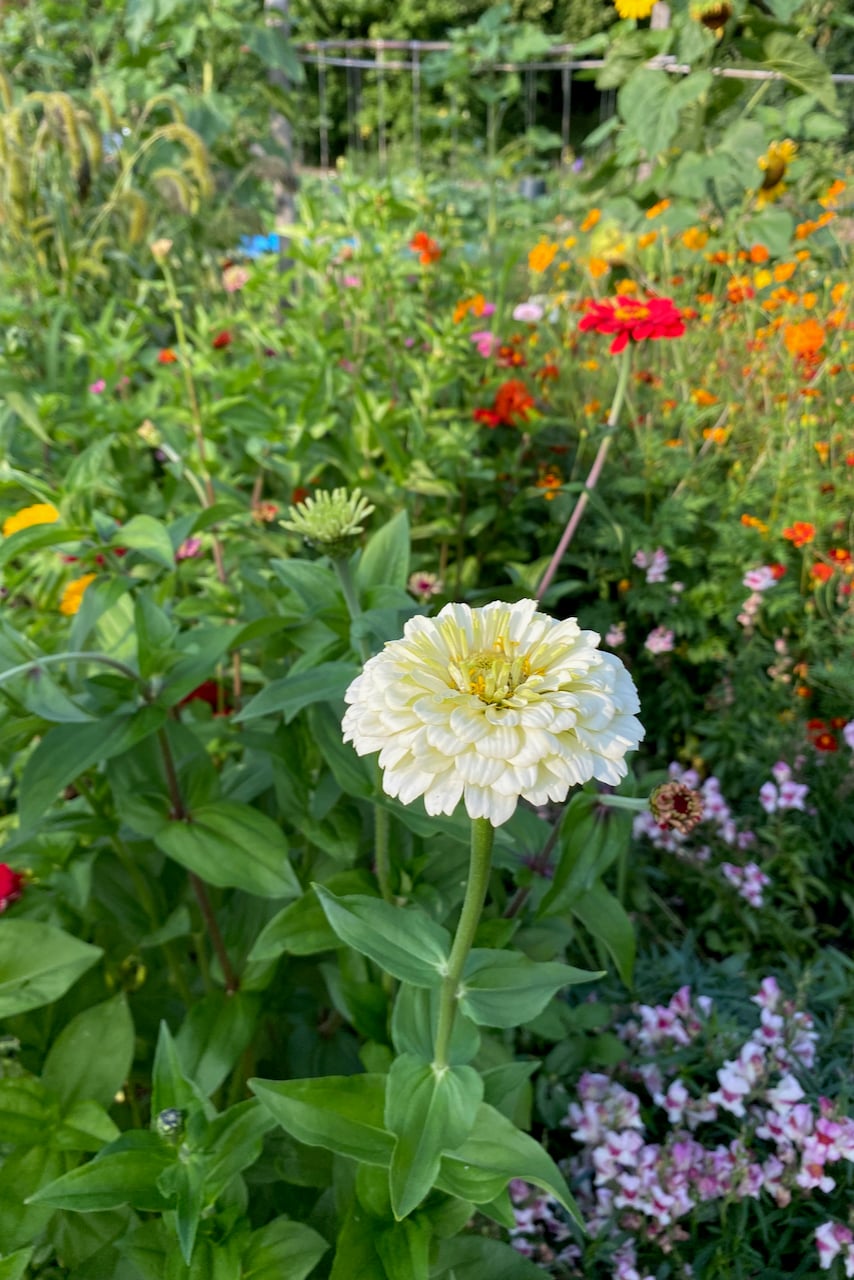
But other than that, they’re not very picky when it comes to the type of soil they grow in.
Their coarse leaves and thick stems also make them resistant to drought. But do give them a bit of water on a hot day if they start looking droopy.
5. Zinnias fill up fast.
If I had to write a list of ornamentals that fill up fast, zinnias would come in at number one. Even compared to other fast-growing annuals, once zinnias start growing, they’ll shoot up quickly. They don’t crowd out other plants, but they certainly make a statement with their dazzling array of blooms.
There’s a zinnia for every color you could ever want (except for true blue, of course, which is hard to find in nature). And there are even zinnias that resemble other flowers.
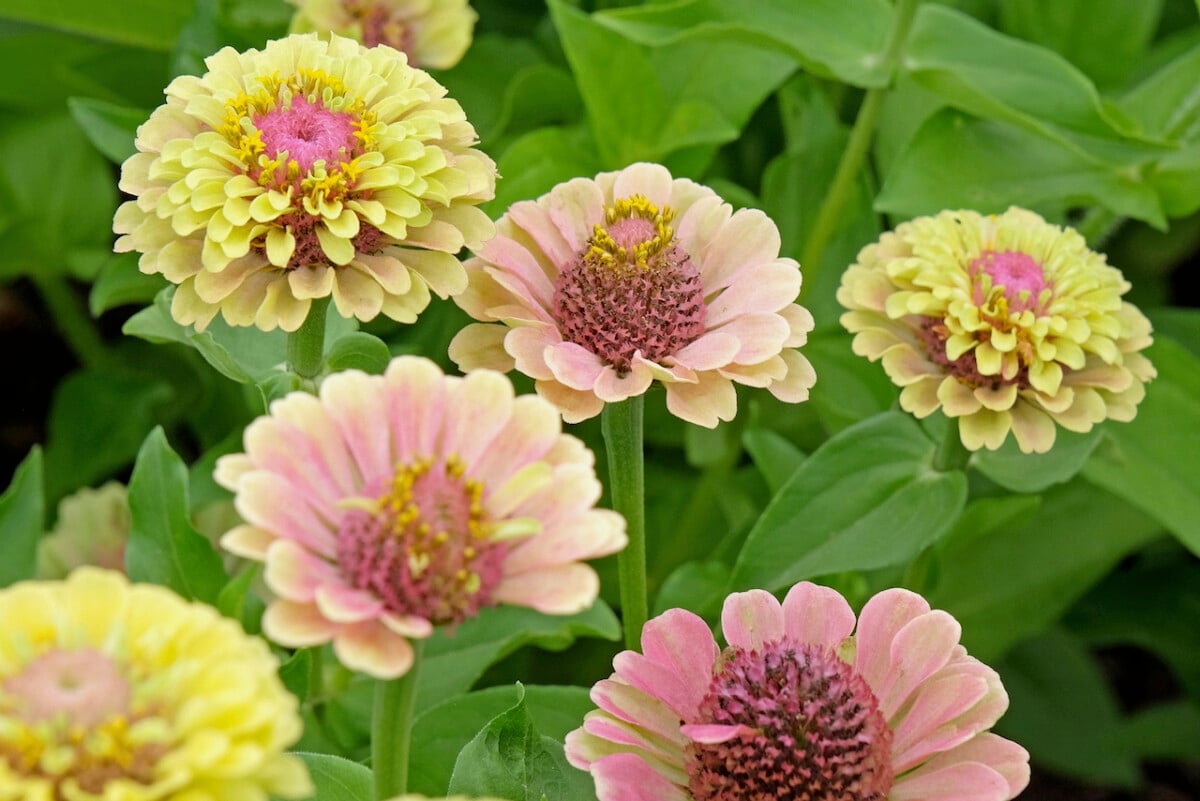
Common zinnias (Zinnia elegans) have large pom-pom blooms that look like dahlias. The layout of the petals can render the blooms single, double or semi-double.
Narrow leaf zinnia or Mexican zinnia (Zinnia angustifolia) has a compact mounding growth pattern. Its flowers resemble daisies.
The Peruvian zinnia or field zinnia (Zinnia peruviana) is the drought-tolerant variety used in xeriscaping. Its flowers resemble those of marigolds.
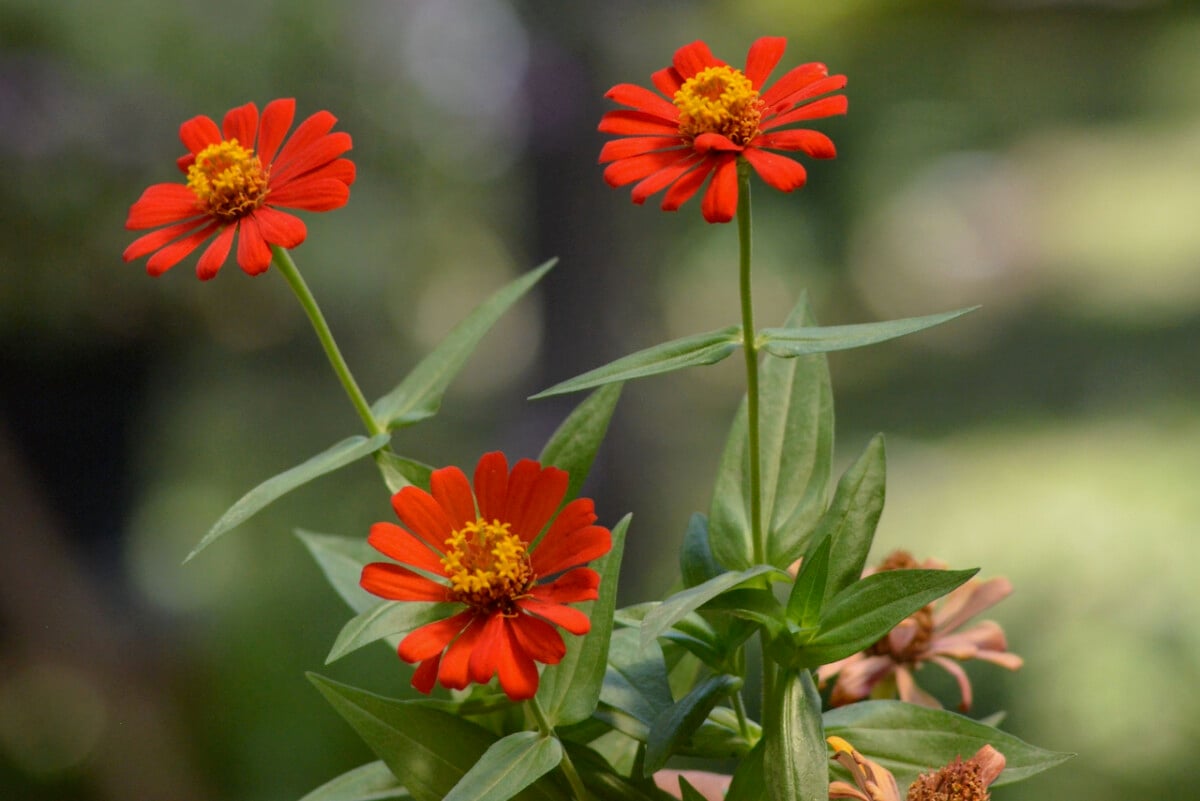
Wild white zinnia (Zinnia acerosa) is a low-growing variety native to the Southwestern United States. In the right climate, it can grow as a shrub.
Cactus zinnia is a Z. elegans hybrid whose blooms look like … you guessed it … cactus blooms.
In practice, a lot of the zinnia cultivars that we find on the market are cultivars of Zinnia elegans or a result of hybridizing it with Z. angustifolia
6. Zinnias attract insects, both friends and foes.
When your zinnias are in bloom, you’ll notice they function as a snack bar for all sorts of pollinators: bees, moths, and butterflies all love to land on the colorful pom-poms.
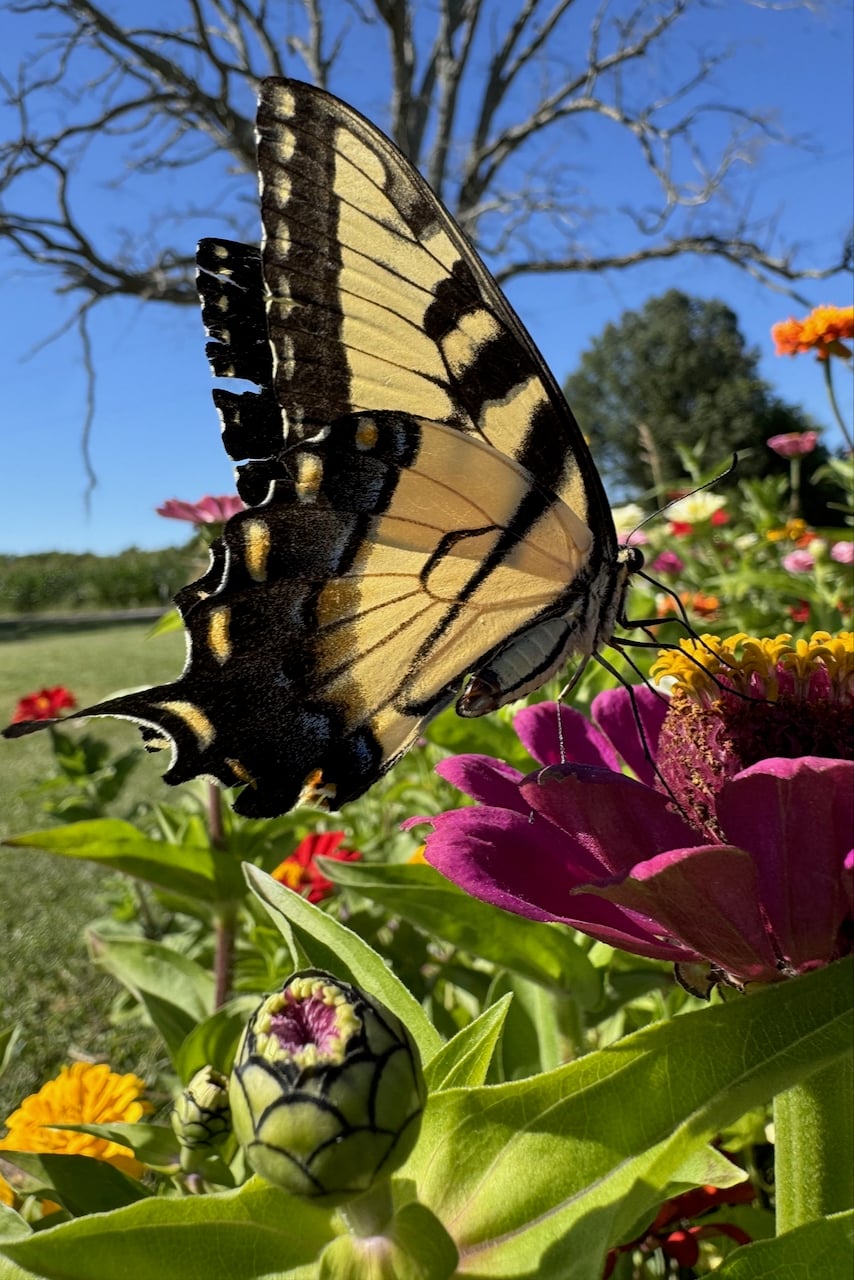
On the other hand, zinnias also attract aphids, which we definitely don’t want near our garden, right? But think about it. If the aphids are on the zinnias, then they’re not on the tomatoes. So they don’t so much attract them as redirect them from our veg garden to their own sweet flower heads.
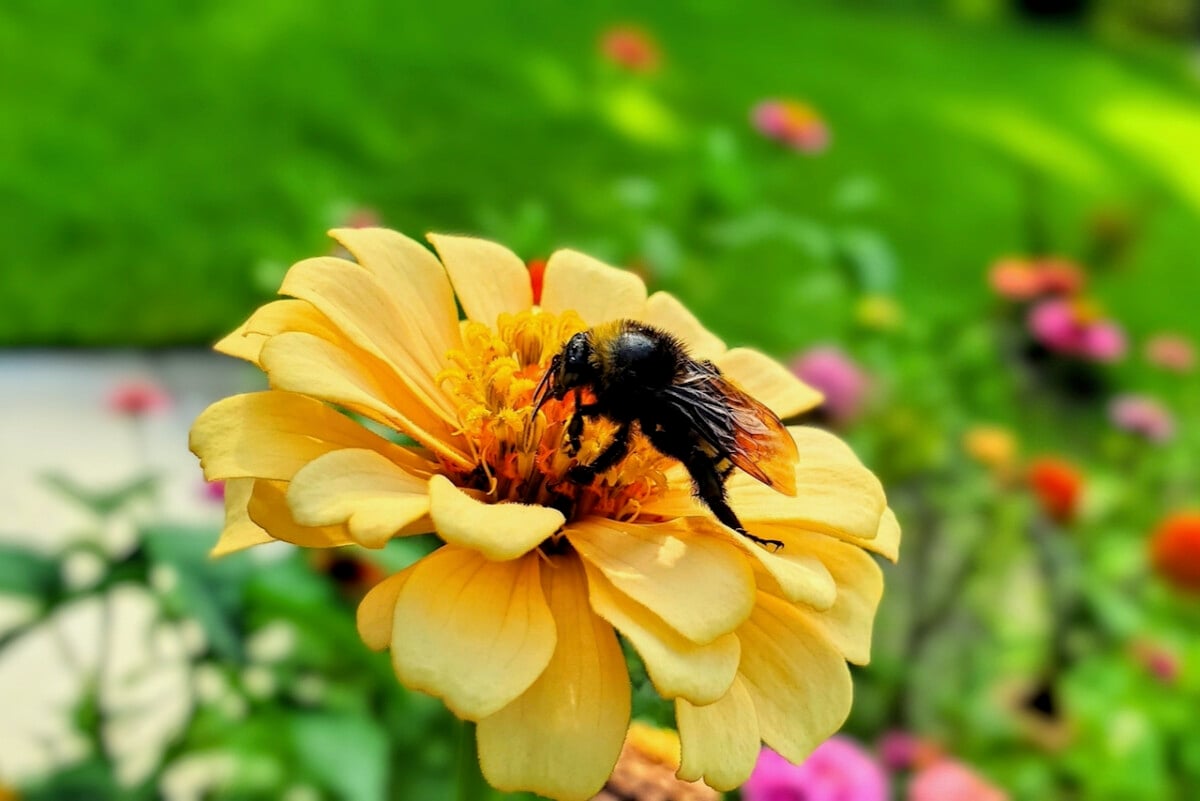
The good news is that ladybugs, renowned fierce aphid predators, also like to rest on zinnia blooms. Problem solved. That’s why zinnias are called a trap plant. And why you’ll see this cheerful ornamental in various lists of companion plants.
Zinnias are the true confidence boosters of the ornamental flower garden, and I do hope I have convinced you to give them a try this year. Or buy yourself a bouquet of cut zinnias, and they’ll do the convincing themselves.
Get the famous Rural Sprout newsletter delivered to your inbox.
Join the 50,000+ gardeners who get timely gardening tutorials, tips and tasks delivered direct to their inbox.