

I am endlessly fascinated by the power that scent can have on our mood. A well-chosen fragrance can help us feel calm, relaxed, joyful or pensive. It can unlock memories and transport us back in time with an eerie precision.
And yet, it’s not necessarily the first thing we consider when we choose plants for our garden. We’re often more interested in color, size or pest-resistance than in how good a plant smells.
Perhaps this is because we don’t always have the time to stop and smell the roses. But what if the delectable fragrance could meet us halfway, in a high traffic spot where we’re more likely to pay attention to its charms?
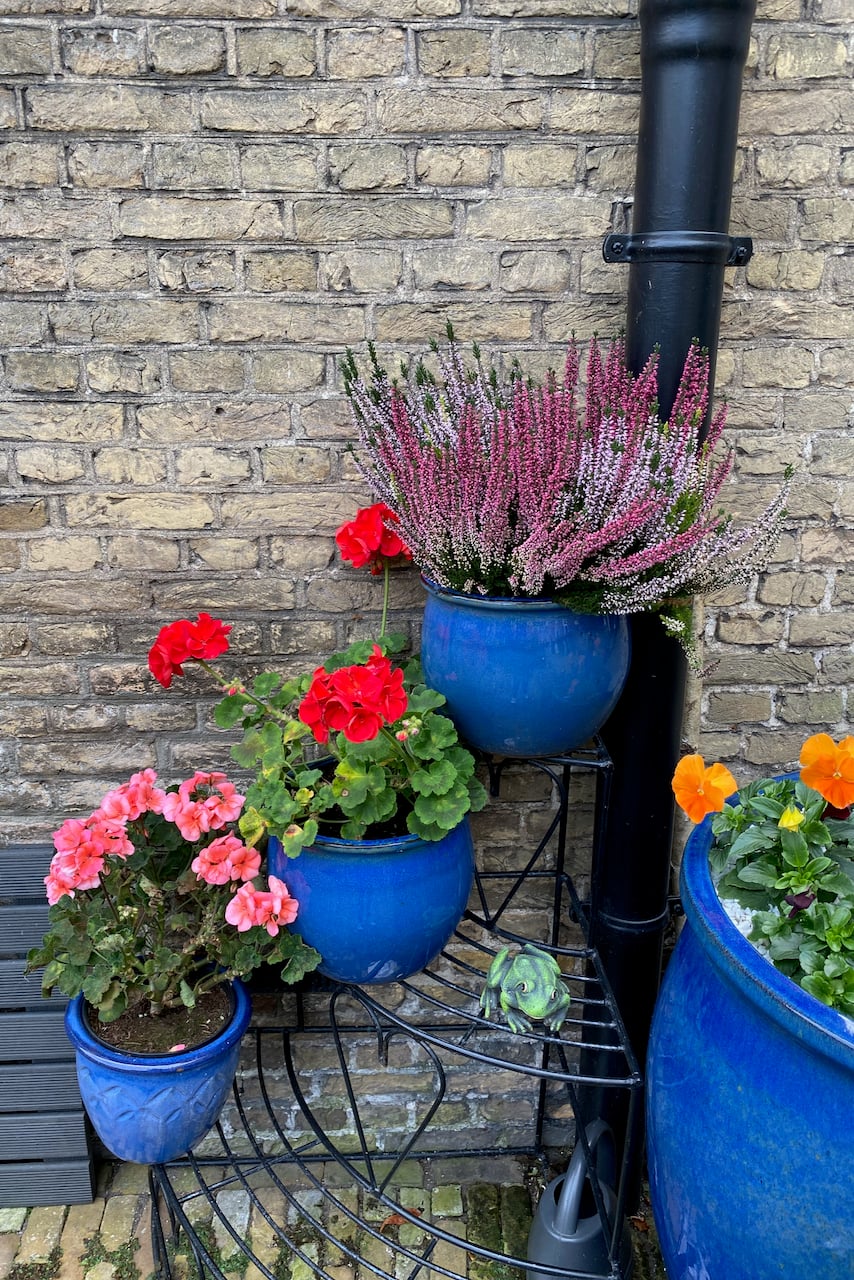
Say, by the front door where we’re less likely to ignore it as we’re coming and going. Or the back door, where we step outside with a cup of coffee for a brief respite from our morning routine. Or perhaps the patio door, where we start the weekend with a glass of wine.
I’ve put together a list of plants that fit this simple brief: they smell amazing while at the same time they’re not hard to fit into a smaller space. In choosing these plants, I tried to cover as many scenarios as possible, covering all seasons and all times of day.
When you plant your fragrant corner, I advise you to aim for this kind of layering as well, to maximize the fragrance you get from the same spot, whether you’re holding that cup of coffee or that glass of wine.
1. Star jasmine (Trachelospermum jasminoides)

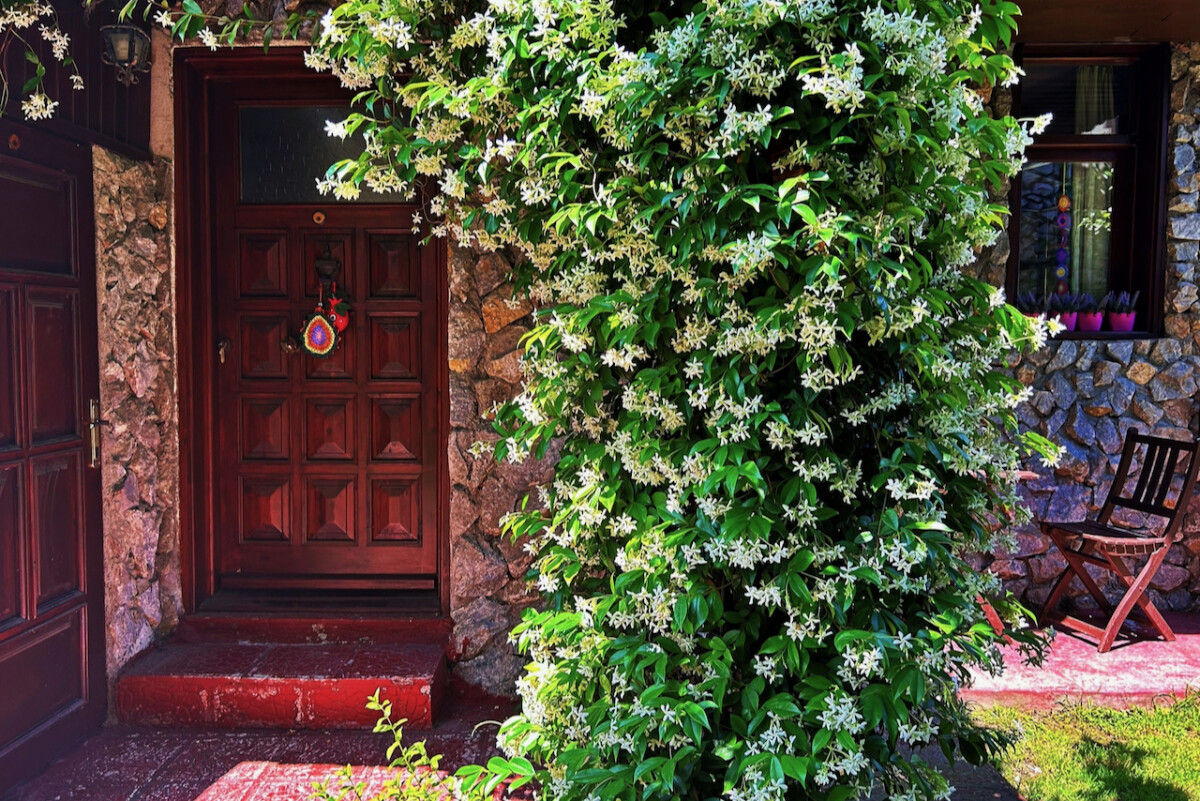
Star jasmine, even though not a member of the Jasminum family grown for perfume manufacturing, truly does smell like jasmine when in bloom in June, July and August. However, star jasmine is not as vigorous a grower. Which is a good thing when we’re trying to fit it in a small space.
I think they’re one of the best climbers to grow in containers (as long as their soil drains well) and will behave very well when we train them along a trellis or a tension wire. Even when they’re not in bloom, star jasmine grows as an evergreen and turns into a wonderful green wall all year round.
2. Hyacinths
If I had magic powers and could choose one plant for which to extend the blooming season, hyacinths would be my top choice. I find their fragrance delightfully uplifting and I’m always amazed at how much of a scent such small plants can pack. We can use hyacinths as scent placeholders to hold us over until all the other perennials start blooming.
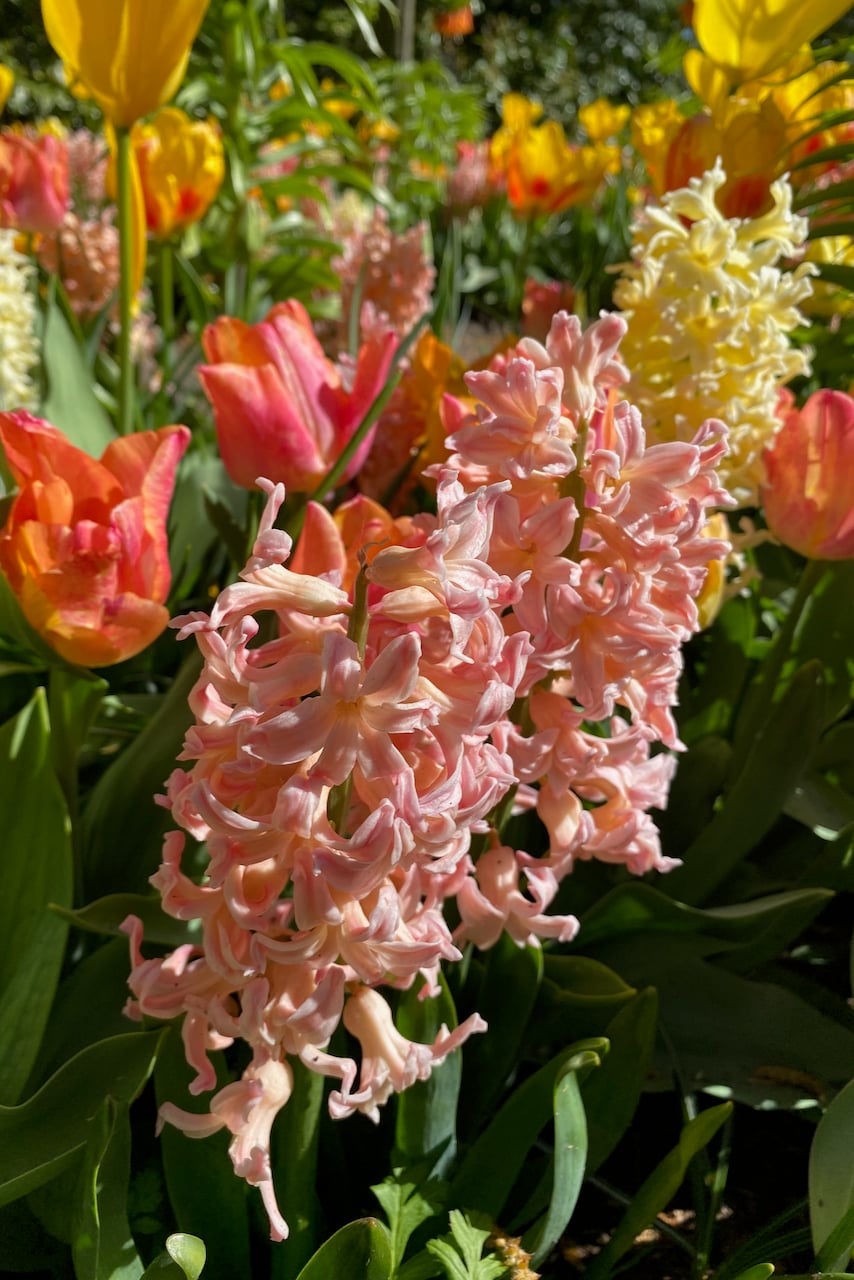
Whether we place them in a container or straight in the ground next to our door, hyacinths will bloom profusely as long as they get plenty of sun.
All hyacinths are fragrant, so you can’t go wrong with any choice. I’ve been very happy with the Pearl series in my garden which I bought in three different cultivars: White Pearl, Pink Pearl and Blue Pearl. They’ve naturalized well and come back the same size every year.
3. Stock (Matthiola)
I don’t know why stock is not more popular. Perhaps because it’s not a long-lived plant – it’s either a biennial or a tender perennial and that’s usually grown as an annual.
Stock is also a cold weather plant that can’t handle hot summers very well, but will start to decline by mid-summer. Maybe that’s why gardeners think it’s not worth the bother to start from seed every year.
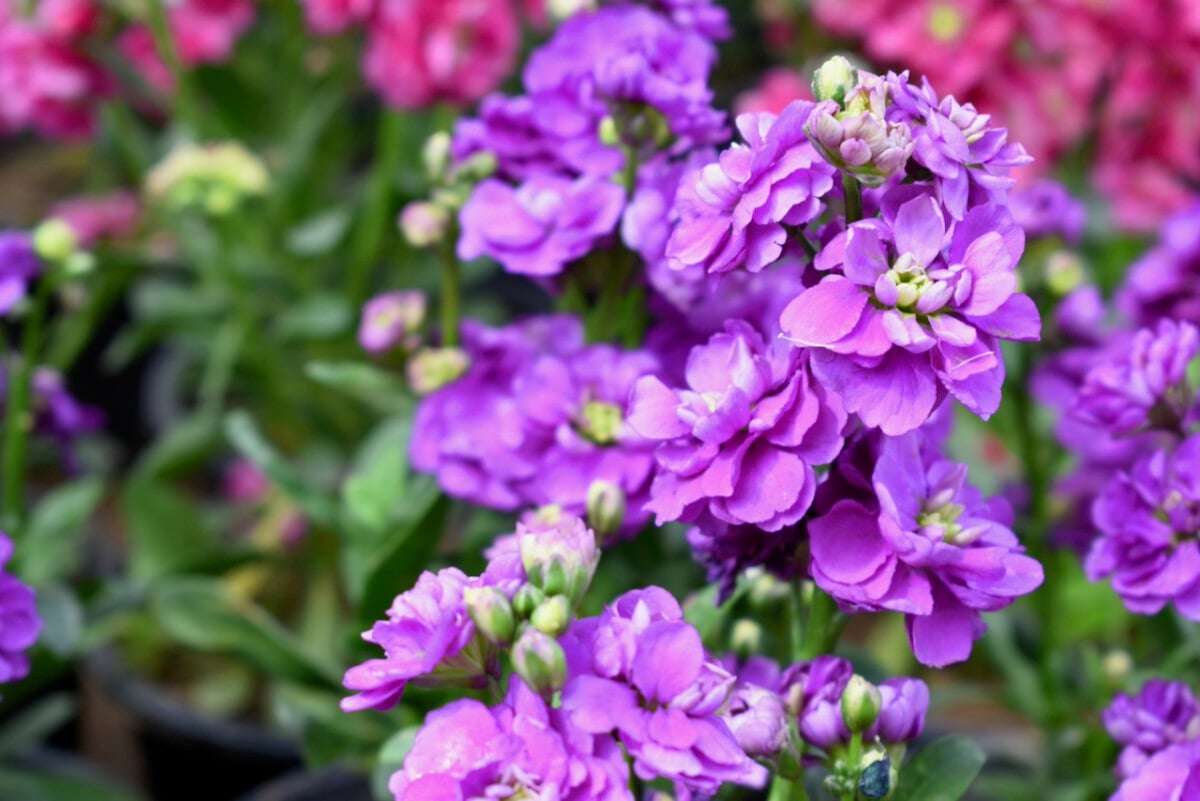
I think that’s only true for gardeners that have never smelled a stock in bloom in May or June. As cold weather lovers, Matthiola will release their fragrance in the evening – which is why you’ll sometimes see them called night-scented stock or evening stock. They make a perfect addition to a moon garden.
4. Sweet William (Dianthus)
Whether you call them carnations, pinks, cottage pinks or Sweet William, they’re all part of the Dianthus genus. Dianthus (from Greek), roughly translated to “divine flowers” is an apt name for this deliciously fragrant bloom. You can grow them in containers or in the ground, as either annuals, biennials or herbaceous perennials.
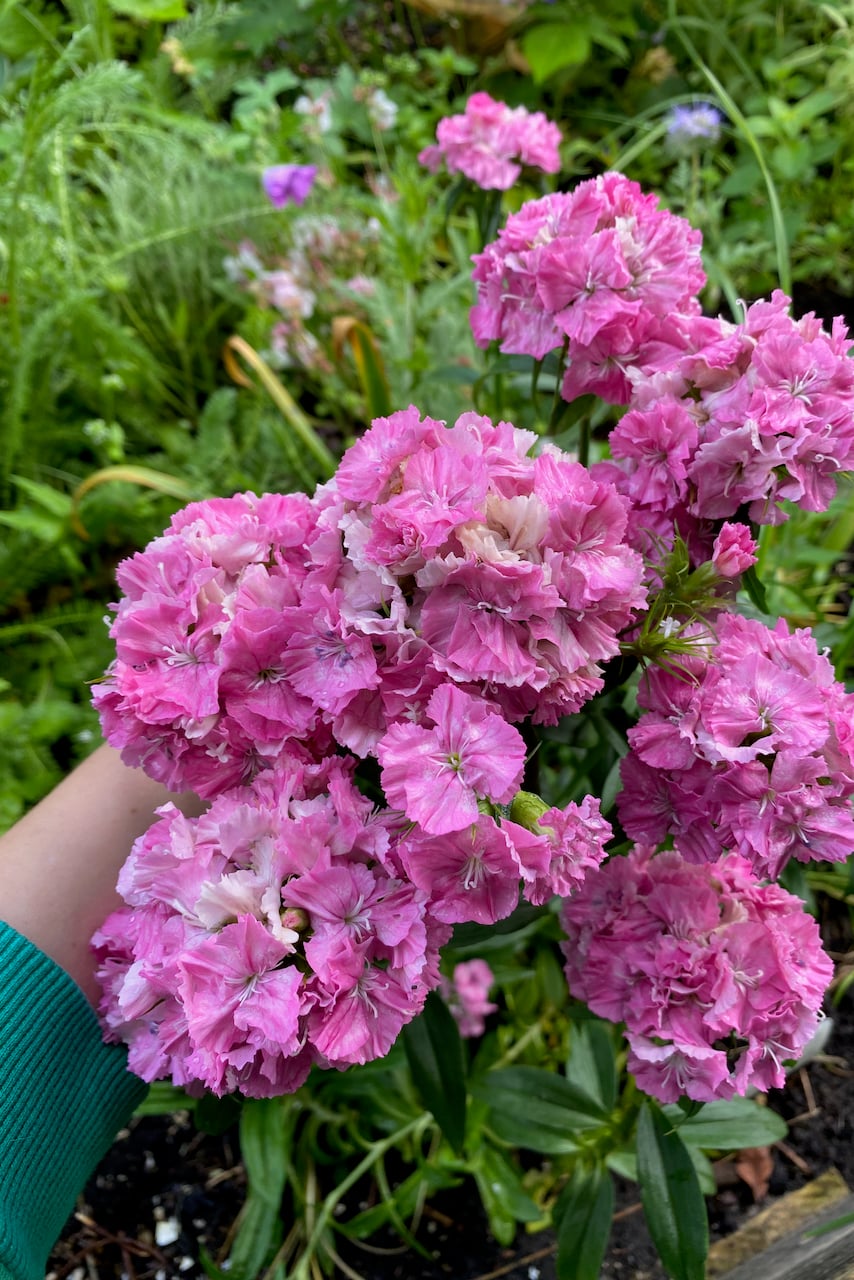
I started the ones in the photo above from seed; and even though they spent the first year just getting established, with no bloom in sight, they’ve been blooming reliably every year since.
They even propagate themselves by sending tiny plantlets from the base of the mother plant.
Sweet William releases their sweet and spicy scent throughout the day. The closer we stay to the cottage varieties (as opposed to the florist’s carnations used as cut flowers in corsages), the stronger they smell.
5. Sweet peas (Lathyrus odoratus)
Even though ‘odoratus’ (meaning ‘fragrant’) is in their name, not all sweet peas are scented. They used to be, but not anymore, as plant breeders have been optimizing for other qualities such as color and a longer blooming period. So before you buy sweet pea seeds, make sure they’re the fragrant kind. A few cultivars that will always smell nice include: ‘April in Paris’, ‘Matucana’, ‘Windsor’,’ Annie B. Gilroy’ ‘White supreme’ and ‘Romeo.’
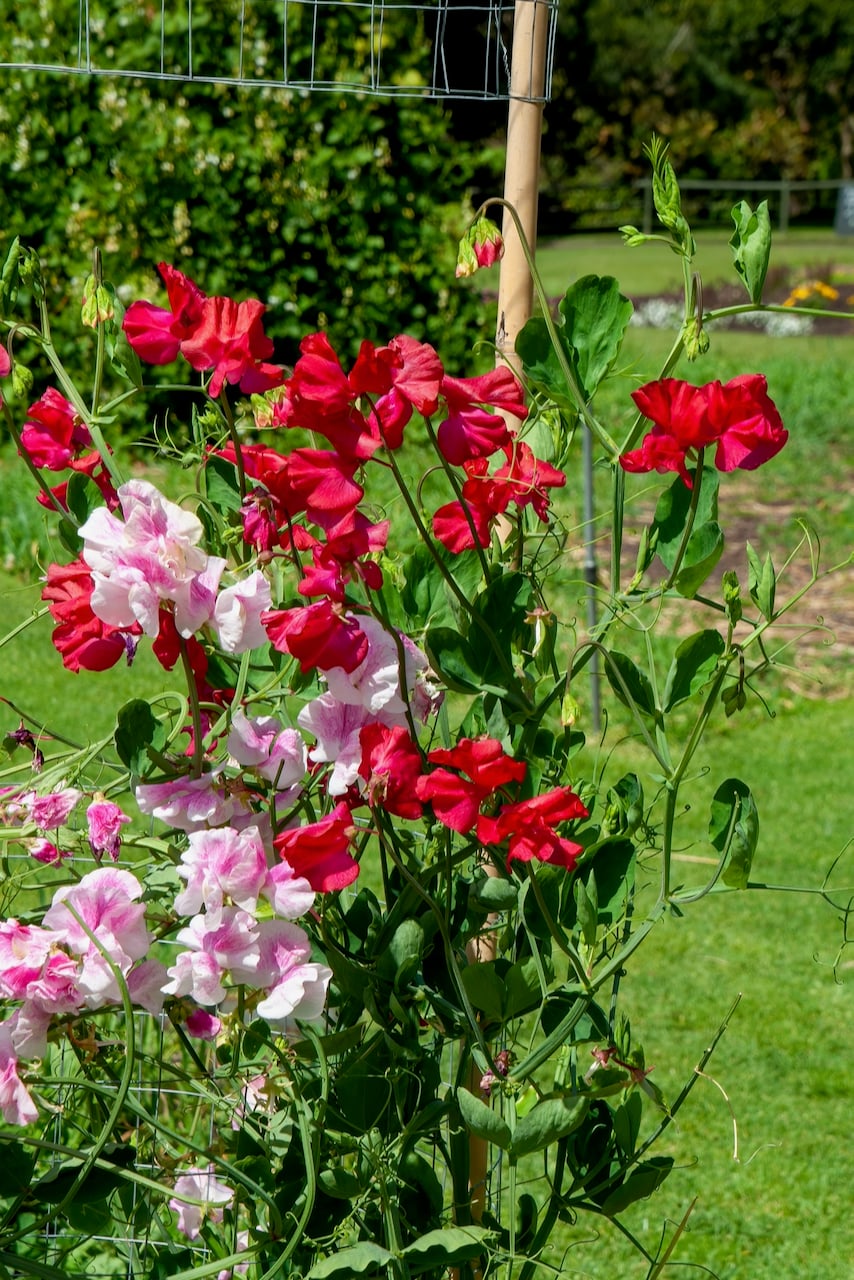
Personally I don’t remember ever seeing them as a plantlet for sale, just as seeds. They’re an annual plant, but they grow so quickly and so reliably that starting them from seed is a no-brainer. We can start them straight in the ground, either in the fall or in spring – the waxy, hard seed shells that form the seed will generally protect them from early germination.
This year, I’ve started mine in pots indoors in early February, just to get a head start on these delectably fragrant blooms. Even cut flowers preserve their fragrance for a few days.
Keep in mind that sweet peas grow like a long string, so give them something to climb on (it can be a trellis, another perennial or a shrub) or something to twirl around.
6. Flowering tobacco (Nicotiana sylvestris)
Even though they share a family (nightshade aka Solanaceae), the flowering tobacco that I’m referring to here is not the same as the one that’s cultivated for the cigarette industry (Nicotiana tabacum).
On the contrary, the trumpet-like white, pink, or light green flowers of nicotiana release an amazing jasmine-like fragrance on cold summer and early fall evenings, from July to September.
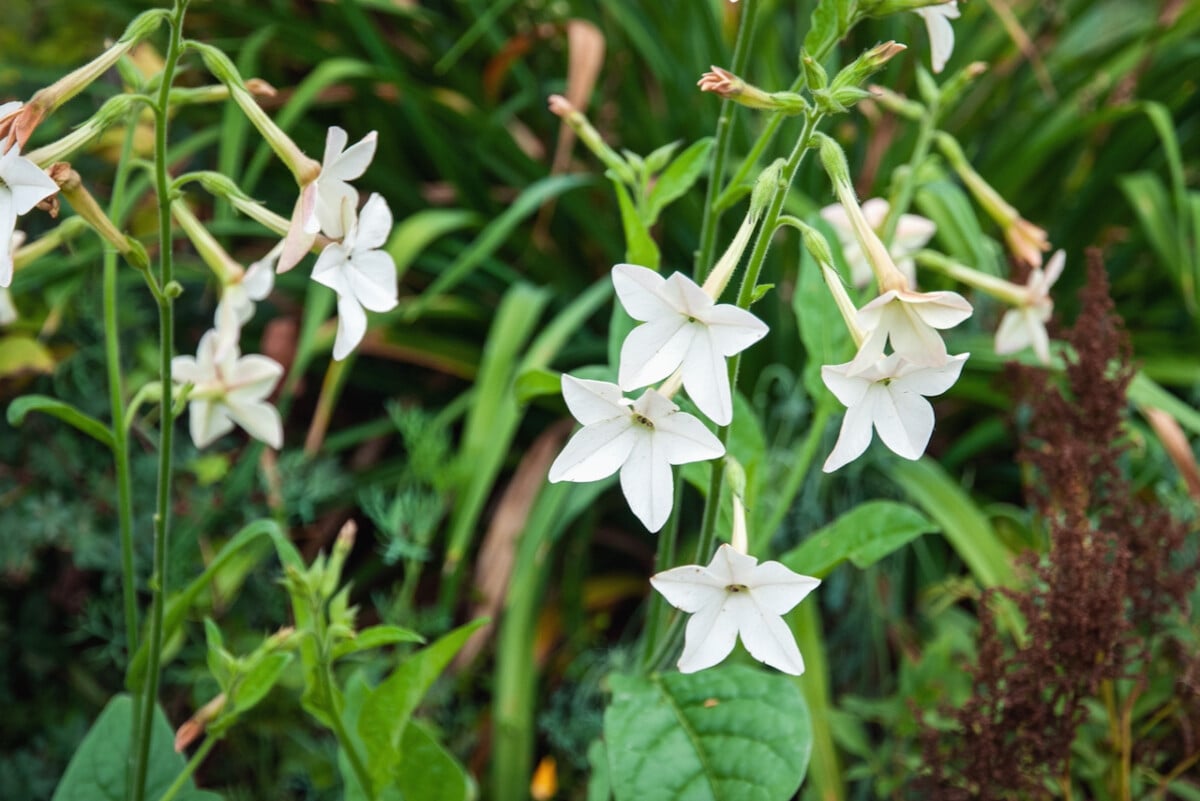
Plant it next to a window that you keep open and I guarantee the fragrance that wafts in will be the highlight of your evening.
Flowering tobacco (also known as sweet tobacco) is a short-lived perennial; however you may need to grow it as an annual in gardening zones with long cold winters. Allow it to self-seed in the fall and it will take care of the rest in spring.
7. Lily of the valley (Convallaria majalis)
I know I’ve added lily of the valley to my list of plants that we shouldn’t put in the ground. But growing them in a container by the front door means we can enjoy this “super scenter” without having to deal with its super spreader habit.
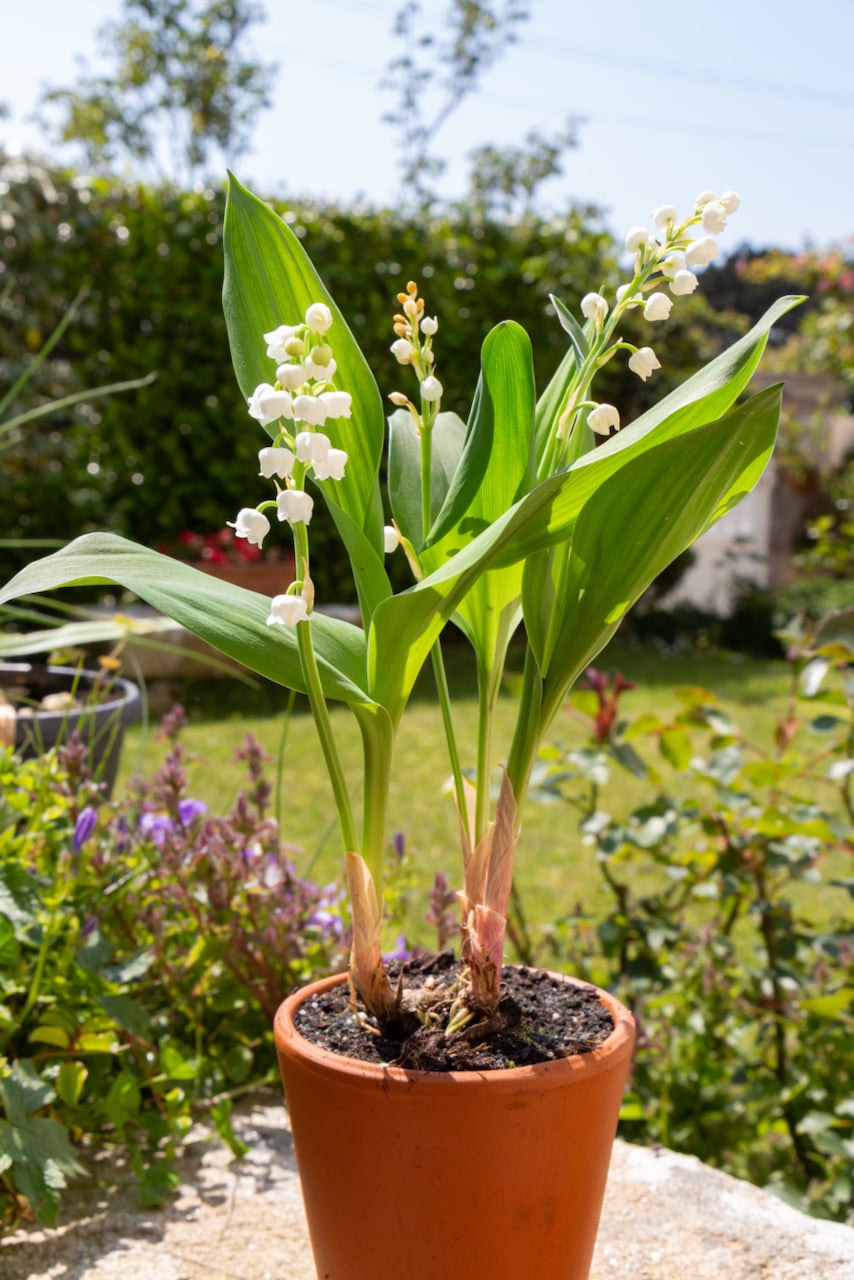
What I like about lilies of the valley is that they do really well in shaded areas where other fragrant flowers may struggle.
The delicate white bell-shaped blooms release a subtle, elegant fragrance in mid-spring, which usually peaks in the first week of May.
8. Roses
I could write an entire article on what roses to choose if you really want a classic rose fragrance, so I’ll just give you a couple of tips for now.
Look for heirloom roses and their cultivars.
Chances are that modern roses that have been bred for disease resistance, over-flowering or repeat flowering have not retained much scent. However, some still do.
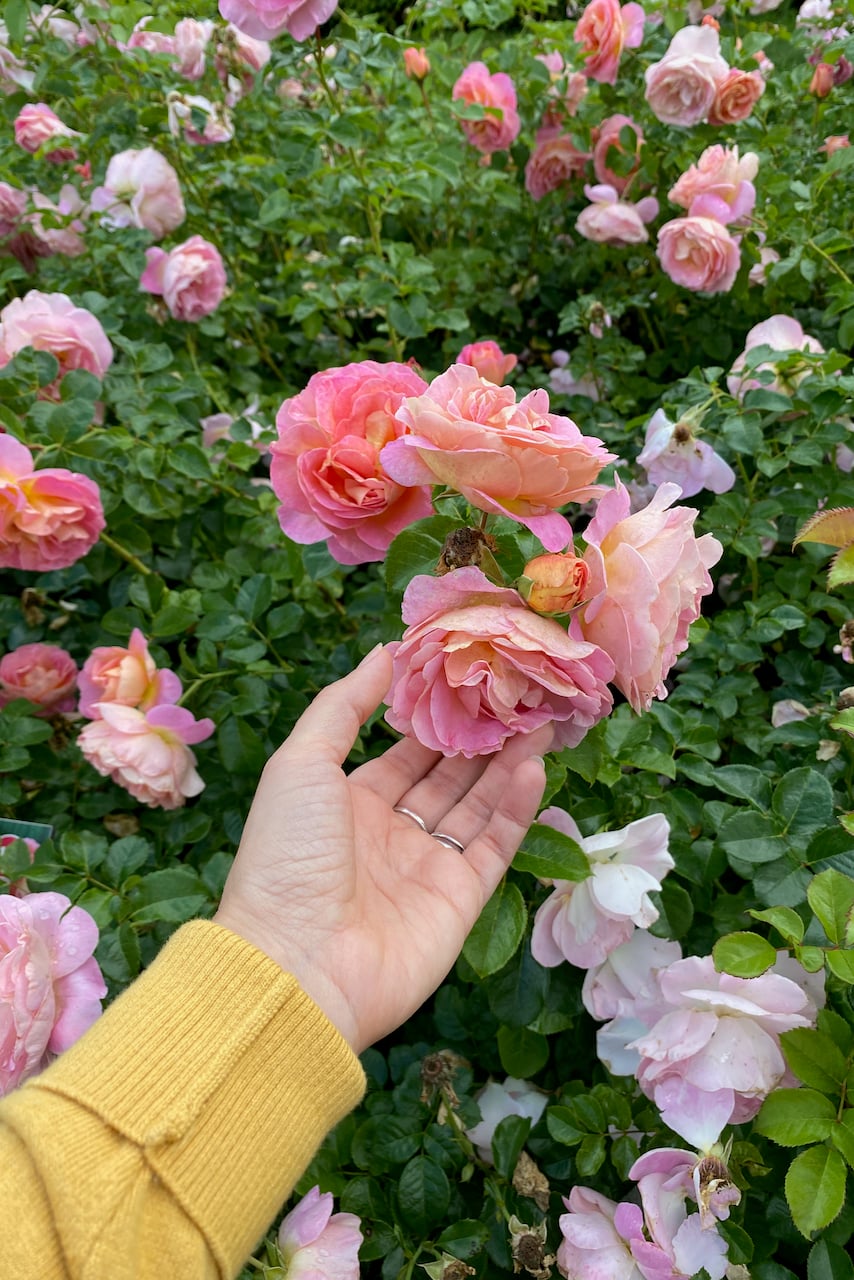
So before you buy any rose, thoroughly read the description for words such as ‘scented’, ‘fragrant’, ‘sweet-smelling’, ‘perfumed’, ‘musky’ or any other terms that might indicate their smell profile.
My shortcut is to start my research with cultivars of Rosa alba, Rosa centifolia and other such old roses. Damask roses (Rosa damascena), French roses (Rosa gallica) and moss roses (an old mutation of Rosa centifolia) are all heirloom roses with a pleasant fragrance.
9. Lilies
Similar to roses, not all lilies are perfumed. In fact, some newer cultivars don’t smell at all, having been bred for looks rather than scent. But oriental lilies, with their trumpet-like large blooms, will be the ones exuding really powerful fragrances.
Beware though, some people find the smell of lilies too intense. I’ve known a few people who would complain of headaches if in the same room with a vase of lilies in bloom.
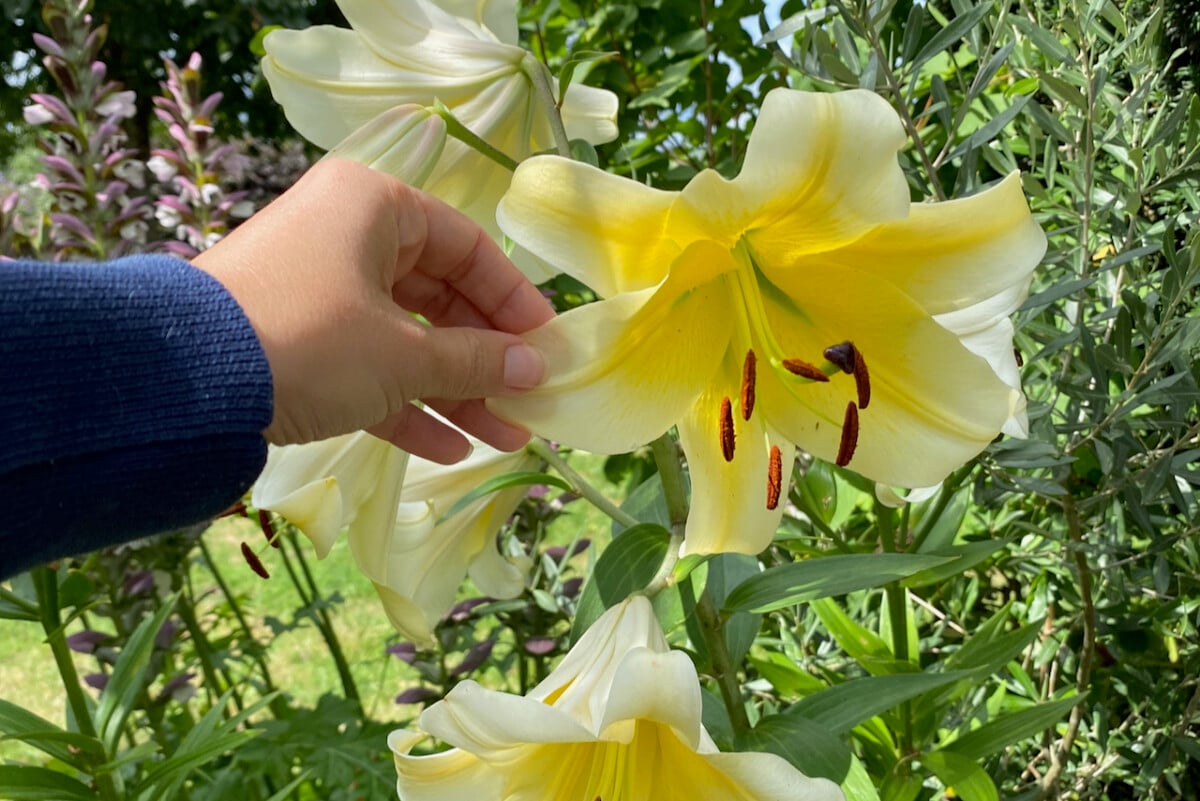
Check with all the members of your household if they can handle the smell of lilies by the front door before you plant them. You can always plant lilies a bit further back into the garden where you can still smell them, but the perfume will dissipate better.
10. Winter-flowering viburnum (Viburnum tinus)
I know I keep mentioning viburnum in my articles – such as here, as a plant we should not prune in late winter or even early spring. But it’s currently on my mind because it seems it has been flowering forever. And since it’s right off my patio, I can smell its sweet fragrance the moment I step out in the morning with my cup of coffee.
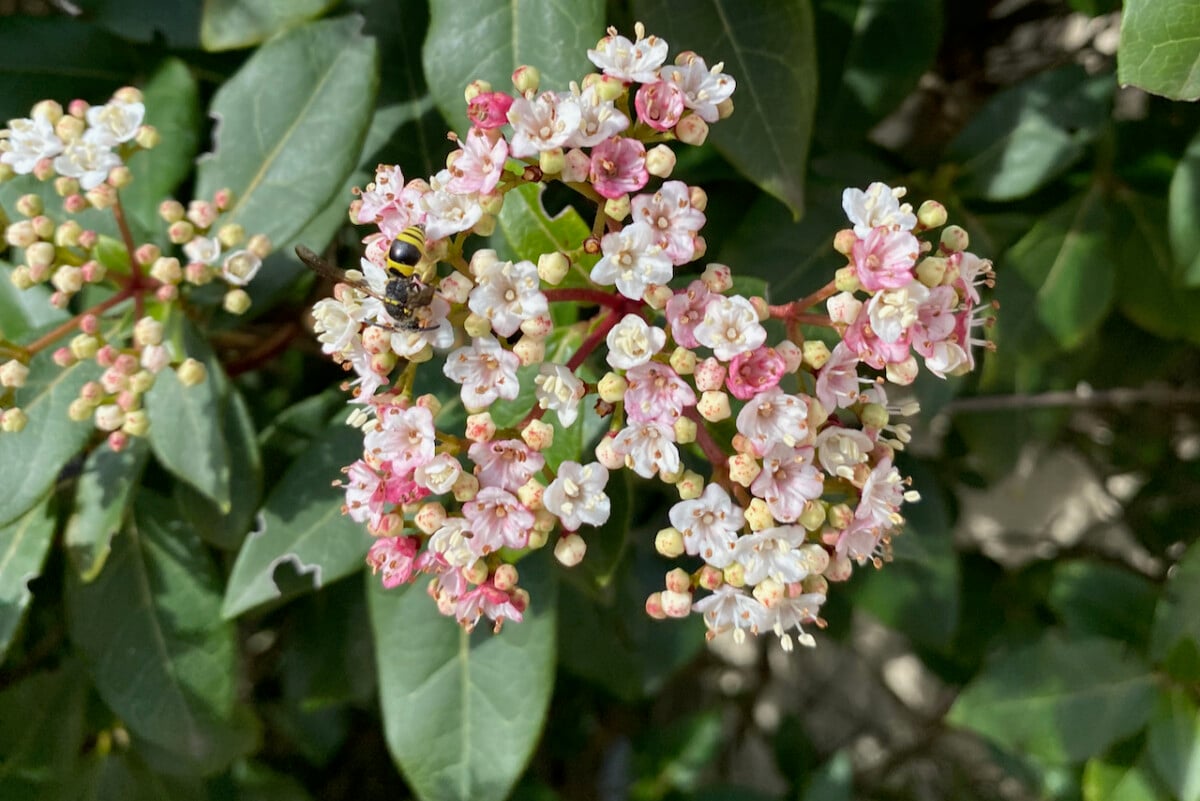
It blooms from January until the end of March (even earlier depending on the cultivar). It smells like rich spicy vanilla with notes of strawberry, especially when the flowers are just opening up. Viburnum tinus is an evergreen, so it creates a green wall even in the non-flowering seasons.
11. Korean spice bush (Viburnum carlesii)
The Korean spice bush is also a type of viburnum (Viburnum carlesii), but I’m adding it separately because its fragrance is infinitely more intense and complex than that of other viburnums.
Also, unlike the evergreen viburnums I mentioned above, the Korean spice bush is deciduous, but not before turning a gorgeous shade of red and burgundy in the fall.
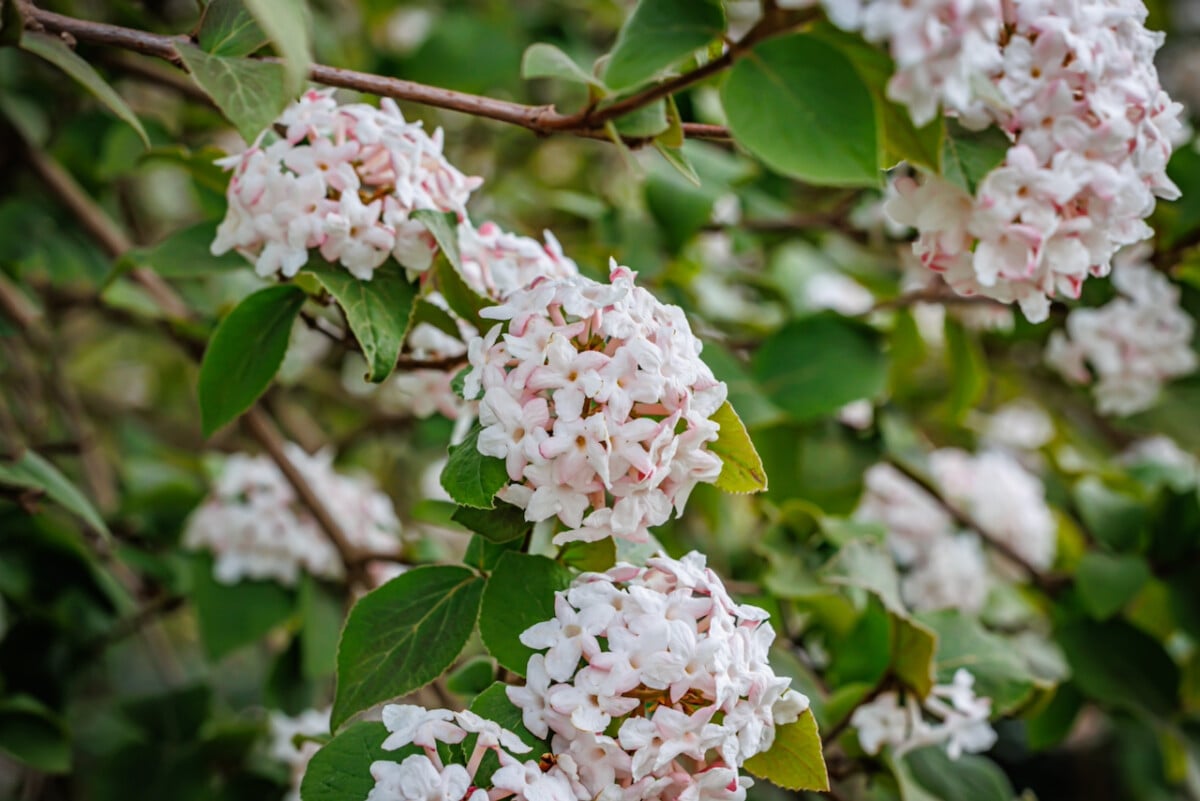
The flower heads are densely packed with waxy buds (ranging in color from white to baby blue to pink). When they open up in spring they release a rich scent of sweet and spicy vanilla. As the season progresses, the flowers turn into reddish berries that gradually fade to black. Birds love to snack on them.
There are multiple cultivars of Korean spice bush to choose from, so if you’re planting it in a tight space by your front door, go for smaller ones such as ‘Cayuga’ (up to 5 feet tall), ‘Compactum’ (3 to 4 feet tall) and ‘Spice Island’ (3 to 5 feet tall).
12. Sweet alyssum (Lobularia maritima)
The hint is in the name of this sturdy Mediterranean plant. Sweet alyssums smell sweet, but honey-sweet, not headache-inducing sweet. Bees, butterflies and other pollinators flock to it when it’s in bloom.

In their natural habitat, sweet alyssums are perennials, used to swaying in the salty breeze on rocky sea coasts. But even though they have been naturalized in the United States, they won’t survive a deep freeze, unfortunately; so we’re more likely to see them grown as annuals here.
The good news is that their seeds do survive the cold, and even if you’re worried they’re gone from your garden, you’ll see them resprouting not far from where they were planted. Lobularia like cold weather though, so even after they bloom in late spring and early summer, they might slow down a bit in the heat and bloom again when the weather cools down.
13. Daffodils
Just like hyacinths, daffodils are a good early season placeholder to offer some whiffs of perfume while we wait for other perennials to bloom.

Wild daffodils (Narcissus pseudonarcissus) that usually bloom in March are amongst the most fragrant ones. Rush daffodils (also known as jonquils or Jonquilla daffodils) also have an incredibly pleasant fragrance.
And if you want to delight your senses with white narcissi, Narcissus poeticus, Narcissus ‘Moonlight sensation’ and ‘Fragrant breeze’ are delectably fragrant.
14. Crown imperial (Fritillaria imperialis)
If there’s one underutilised spring bulb, it’s the imperial fritillary. You may know them as imperials, crown imperials or persian lilies.
Fritillaries bloom at the same time as tulips, yet they are a thousand times more striking in appearance. They also have a much stronger fragrance than tulips, with notes of a musky tang. Some people like the smell, some don’t mind it (I don’t), while some will describe it as way too garlicky. I think it smells earthy and perhaps a bit musky.
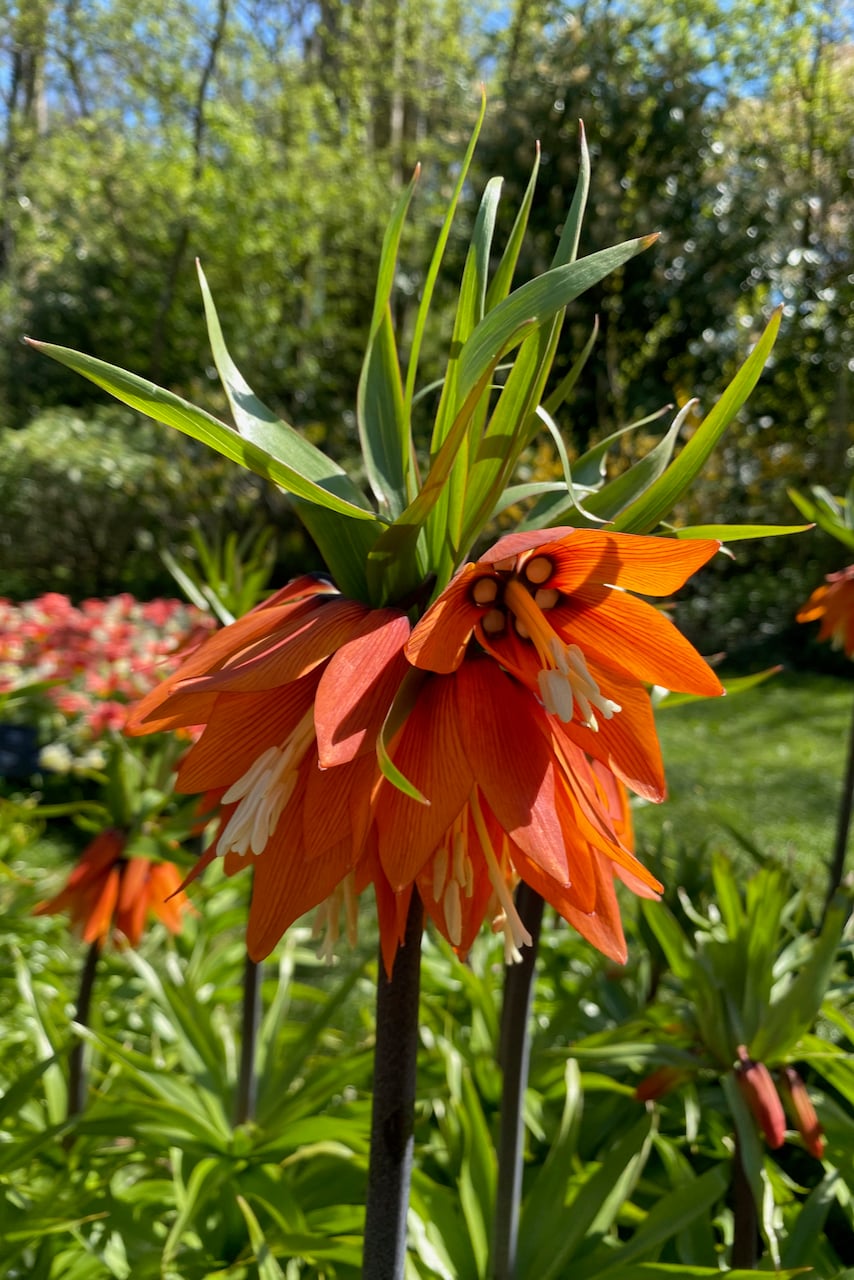
The nice thing about planting such an exotic flower with such a strong fragrance is that the bulbs aren’t in any danger of being eaten by squirrels or other such critters.
My advice is to start with a few bulbs by your front door and see if you like the smell. They grow in containers as well as in the ground, but be warned that they get pretty tall. Just like other spring bulbs, they recede underground once they’re done blooming. So even if the fragrance turns out to be too strong, it will only last for a few weeks.
15. Garden phlox (Phlox paniculata)
There are a few types of phlox that smell amazing and can fit in a small space. Moss phlox (Phlox subulata) and creeping phlox (Phlox stolonifera) work well as groundcovers, even when there’s not much ground to cover.
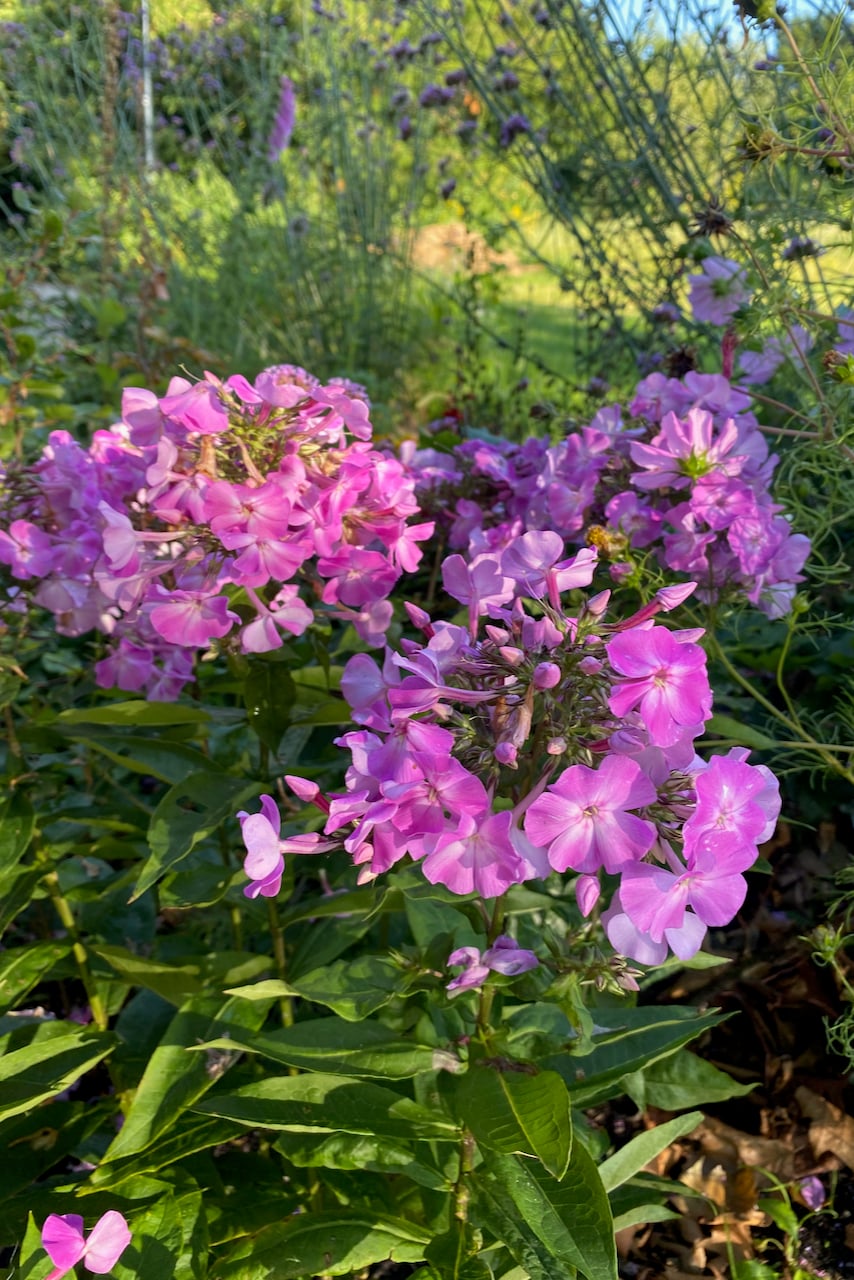
But if you want to top them up with a taller plant, my suggestion would be the garden phlox. It blooms in early summer and smells of spices – clove, chocolate, sometimes vanilla – mixed with floral notes.
Tall phlox made it to my list of herbaceous perennials that bloom all summer long, with up to two months of bloom if you plant them in a sunny spot.
16. Mock orange (Philadelphus)
One again, the clue is in the nickname with this fragrant shrub. The flowers, opening in mid- to late spring, have a deliciously citrussy aroma. If you’ve ever smelled orange blossoms, you’ll know what I mean. It’s the tanginess of an orange and the sweetness of a floral scent.
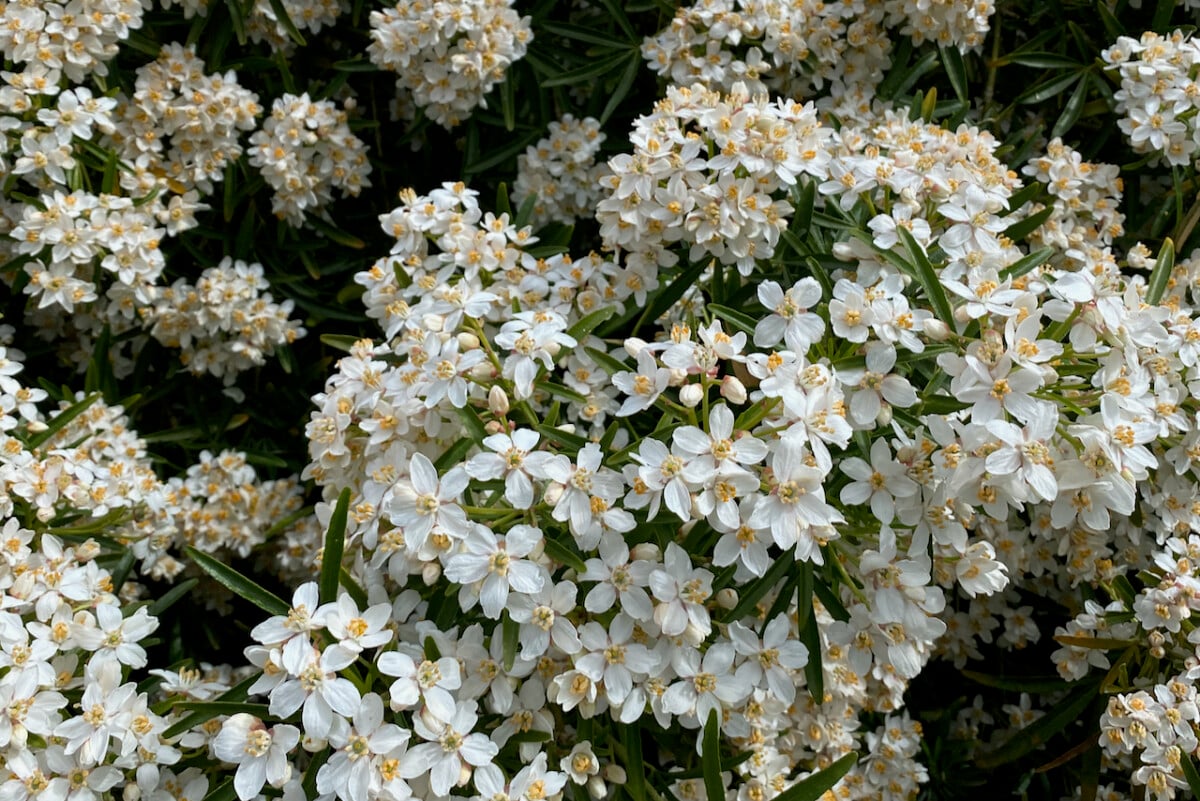
And I didn’t forget our brief of plants that can fit by the front door. Even though a lot of cultivars of this deciduous shrub can get pretty large, there are also compact cultivars for small spaces. Look for ‘Snow Dwarf’ or ‘Miniature Snowflake’, both small cultivars that only reach about three feet tall.
17. The cola plant (Artemisia ‘Cola’)
Artemisias are a dime a dozen and there’s nothing special about them, you’ll tell me. I think this ‘Cola’ cultivar will make you change your mind about that. You may find it under two other cultivar names: Artemisia abrotanum ‘Maritima’ or ‘Maritima Pure’.
The Cola plant really does smell like the fizzy drink, a fresh combination of star anise, lemon and sweet caramel. Unlike the curry plant below, it doesn’t smell unless we brush against it or rub the foliage between our fingers.
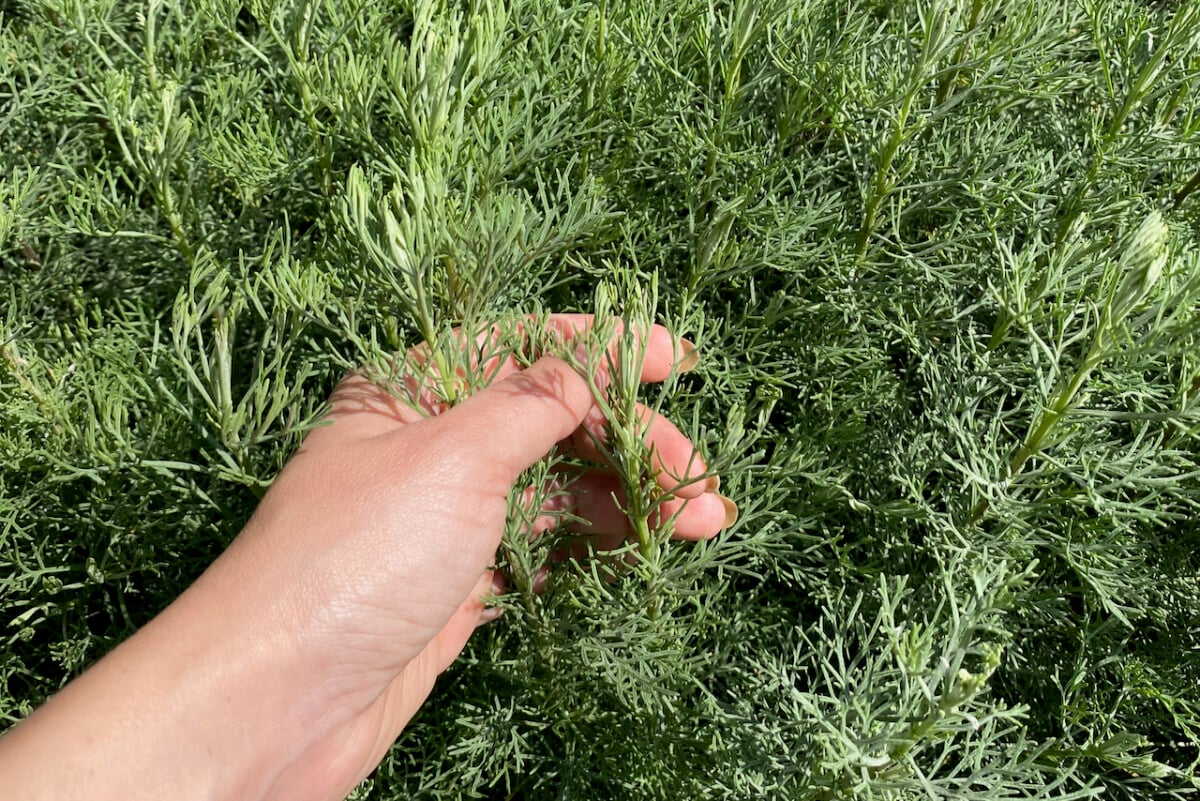
But just by placing it by a door, or in a spot that we frequently use, it gives us more chances to engage with it directly. I don’t know about you, but these fleeting moments of interacting with my garden throughout the day bring me immense joy.
If you want to know more about the cola plant, including an easy way that you can taste it, have a look at this article I wrote.
18. Curry plant (Helichrysum italicum)
Who doesn’t want to be greeted by the smell of a comforting warm dish when they get home? Plant a curry herb by your front door and your wish will be granted. It looks very much like lavender (with needle-shaped silver leaves, but yellow flowers) and it grows as a herbaceous perennial.
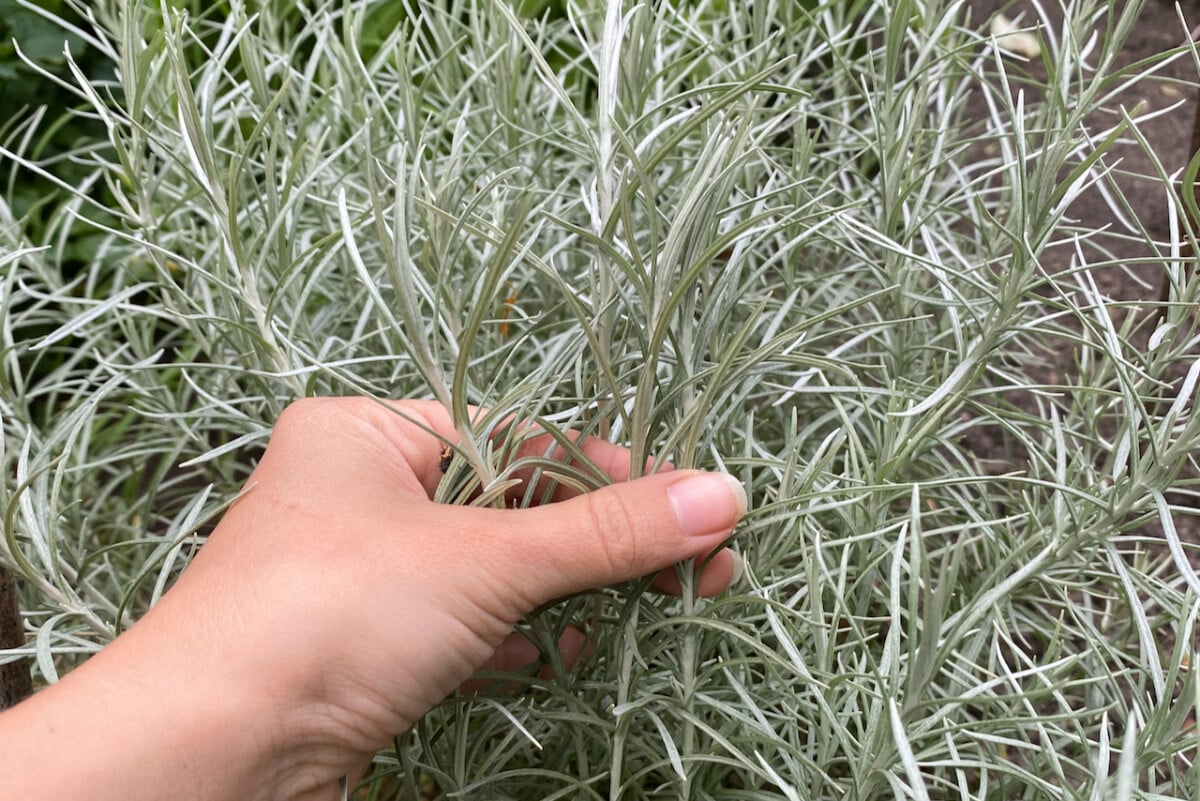
The curry plant (also known as Italian strawflower) does indeed smell like curry. But it’s not the same thing as the curry-leaf tree (Murraya koenigii) whose leaves we use in the curry dish.
Curry powder itself is a combination of cumin, turmeric, coriander, chili peppers and black pepper, with some regional variations including fenugreek, cardamom and ginger. So the curry plant does have a very complex fragrance profile. It releases its fragrance not just when you brush past it, but also in the evenings or when the temperature drops, especially after it rains.
If you want to know more about this plant, have a look at this article I wrote about growing the curry herb.
19. Scented-leaf geraniums
You know that geraniums and pelargoniums are not the same thing, right?
Geraniums are perennials. You may find them under the name “hardy geraniums’ or “true geraniums.”
Pelargoniums are generally annuals, although we can overwinter them indoors.
But the one thing they do have in common is that they’re loaded with scent. Although in perennial geraniums, only the leaves smell, not the flowers.
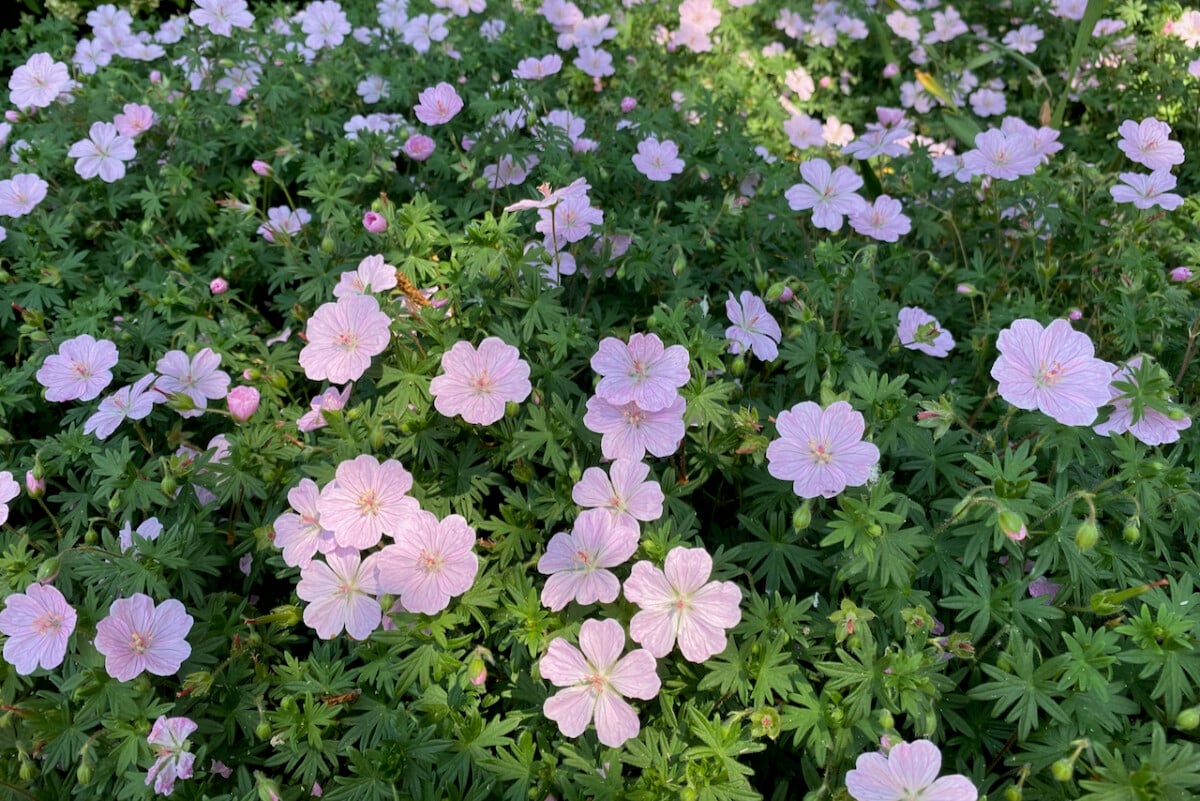
Brushing against this foliage releases a delightful fragrance, so this is another plant that needs audience participation. There are so many cultivars of scented geraniums out there and you can find them in various fragrances such as rose, mint and lemon.
I wrote more about the difference between the two types of geraniums (including how to tell them apart by the shape of their flowers) in this article.
20. Scented pelargoniums
Pelargoniums release scent both from their flowers and from their leaves. The large old-fashioned red pelargoniums (also known as windowbox geraniums) have a particularly musky tang emanating from their large pop-pom-like flower heads. Make sure you like the smell before you put them by your front door.
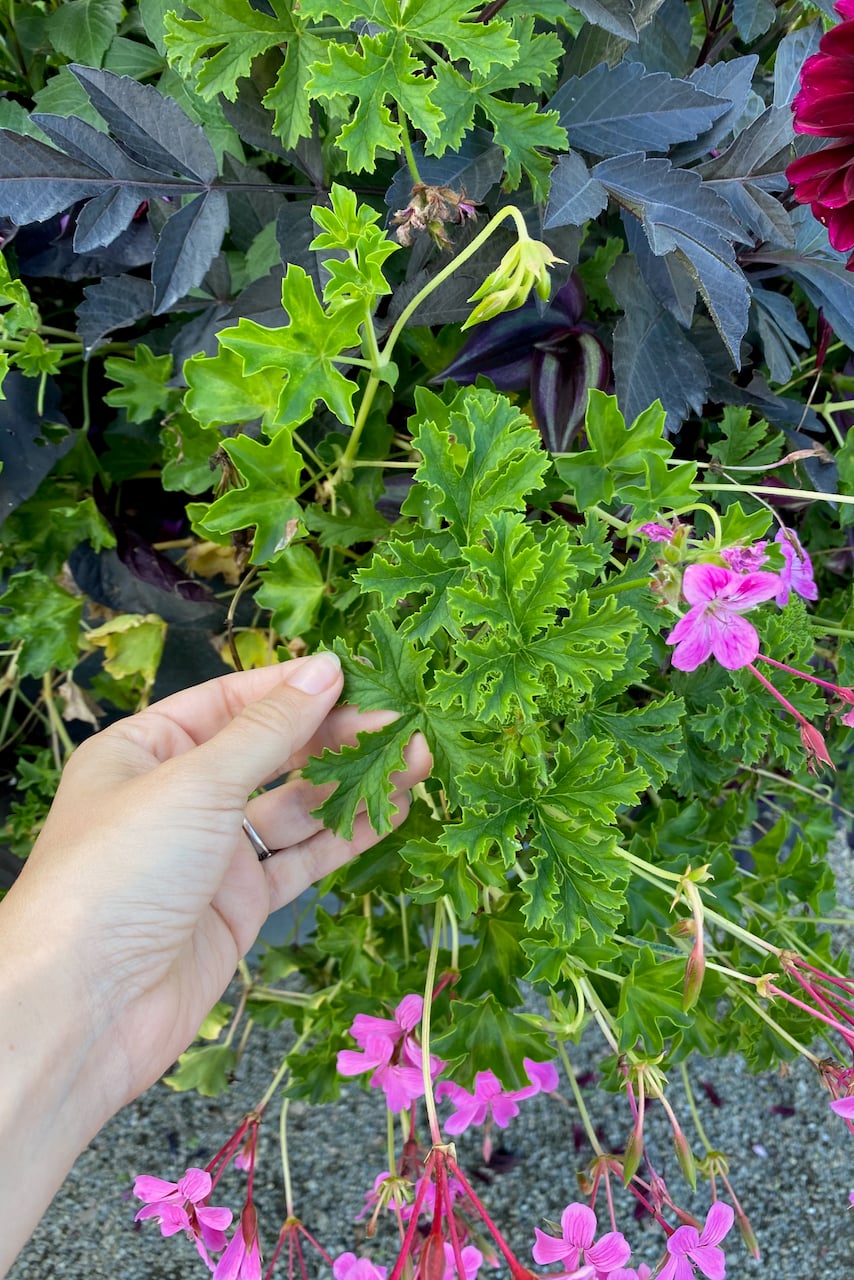
Newer cultivars are much more interesting to me. The flowers don’t smell as much, but the leaves are true scent chameleons. You can find pelargoniums that smell like grapefruit (‘Mabel Gray’), strawberry (‘Countess of Scarborough’), raspberries (‘Pink Capricorn’), ginger, melon, and even cinnamon.
21. Chamomile (Matricaria chamomilla)
What I like about growing chamomile is that even though it’s an annual, I’ve only had to plant it once. It does an amazing job at self-seeding which means there’s even more fragrance in the chamomile corner year after year. Just like the taste of chamomile tea has a calming effect on my mind, so does its scent.
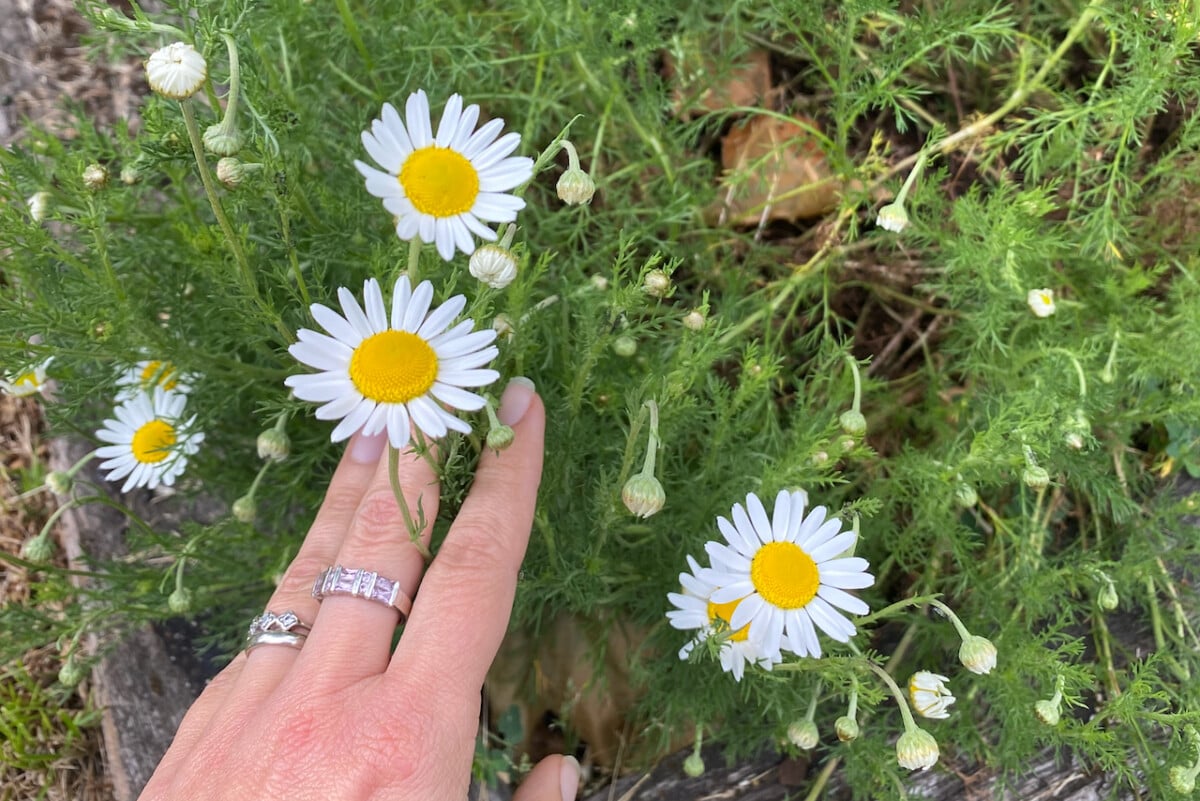
I pick about half of the blooms every year, dry them and add them to my tea blends (it pairs well with lemon balm and fennel). Then I leave the rest of the flowers to add fragrance to the garden.
22. Peonies
Fragrance may not be the first thing that comes to mind when you think of peonies. That’s probably because we’ve all been charmed by the flamboyant flowers that steal the show from late spring to mid-summer.
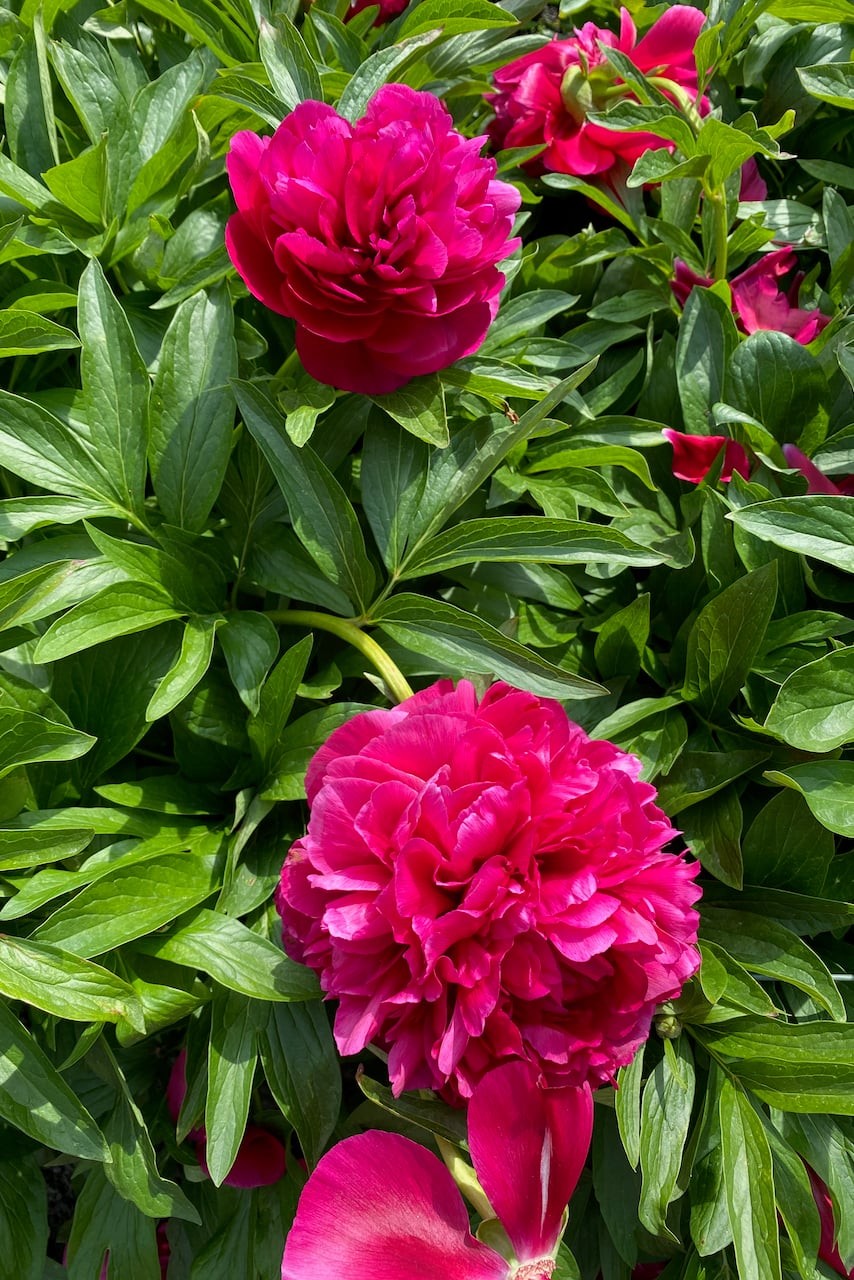
Peonies do have a subtle perfume while they’re in full bloom – they smell flowery with hints of citrus and vanilla. Generally, Paeonia lactiflora, an old group of peonies which bloom towards the end of the season, have the strongest fragrance. There are so many cultivars to choose from this group alone.
Earlier-blooming peonies tend to have a more subtle fragrance. The nice thing with peonies is that, once well established, they can live for decades. It’s definitely one of the plants with the highest return on investment on this list.
23. Anise hyssop (Agastache)
Speaking of getting a good return on investment, here’s an herb that I think more people should bring into their garden. You might see it for sale either as anise hyssop or hyssop anise. It’s the same plant and, ironically, it’s neither hyssop nor anise.
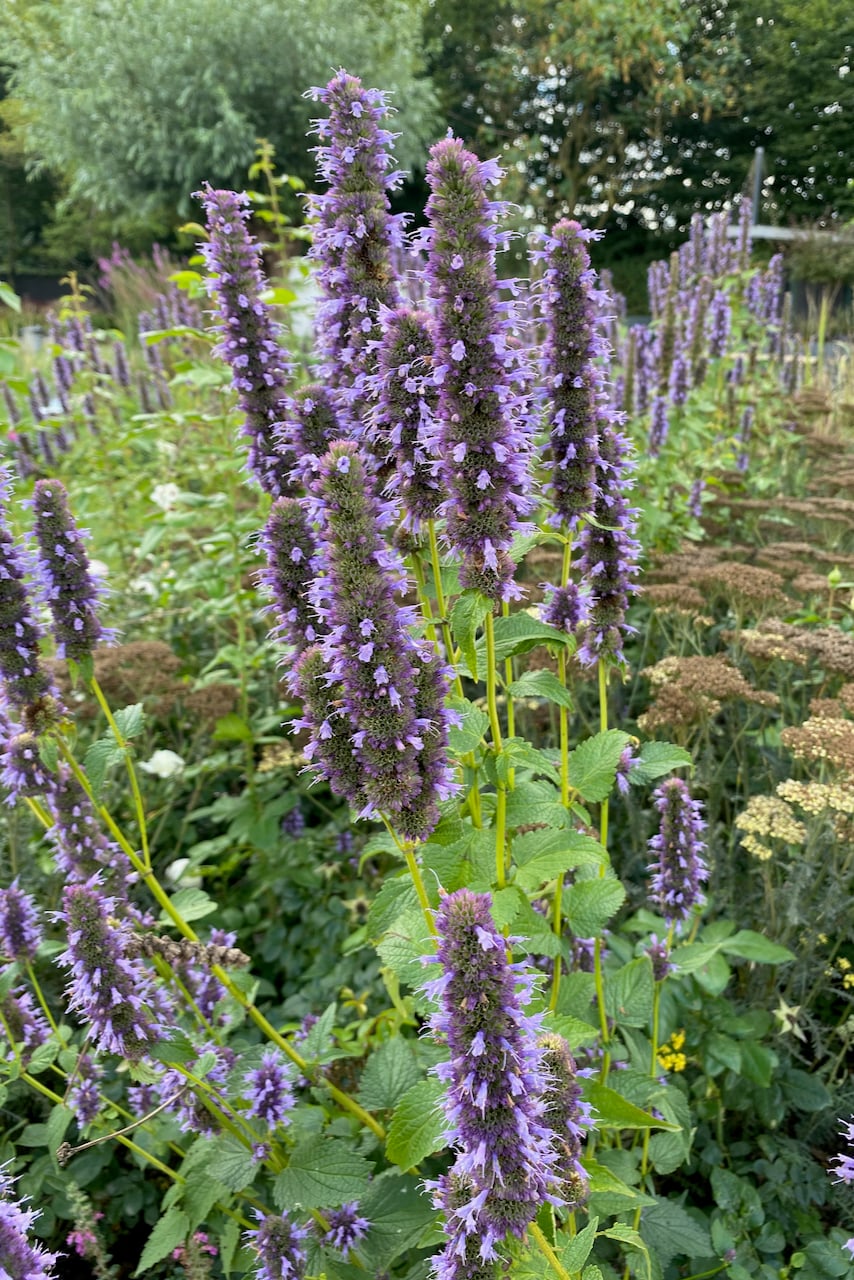
Anise hyssop is not just a very fragrant herb, but one in which we can use every single part. We can eat the leaves, flowers and seeds, and we can tie up the stems in small bunches and put them in the dresser drawers to keep our clothes smelling fresh. Agastache is really easy to start from seed and you can even buy a mix of seeds of different colors (purple, pink and white).
If you want to know more about this herb, here’s an article I wrote about it.
24. Shrub magnolia
We all know magnolias smell amazing, but do they pass the “can I plant it in a small space?” test? Obviously, planting a magnolia tree by your front door is not a wise choice, but there are some shrub magnolias that fit the bill.
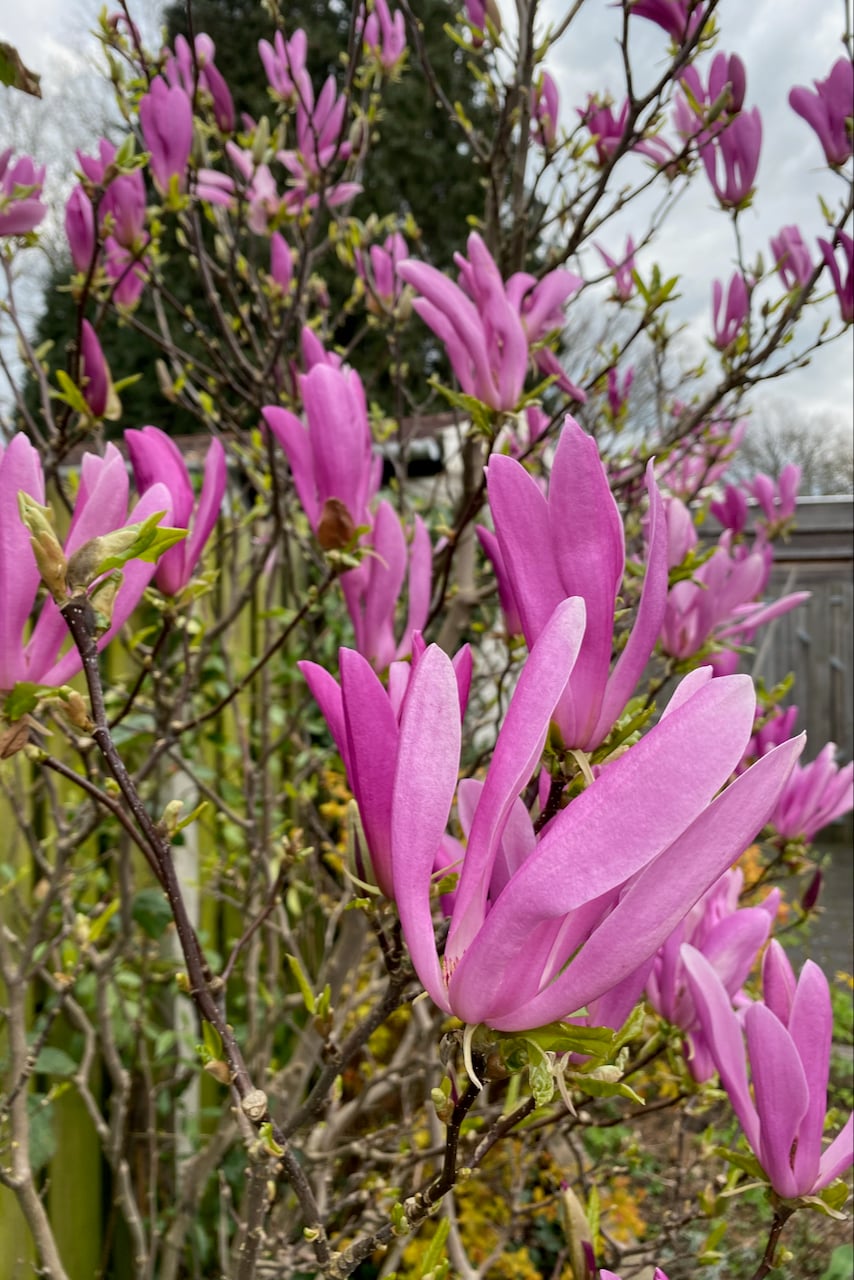
I’m partial to the so-called “tulip magnolias” (you can see why if you look at their blooms) that bloom in March, April and May. It’s hard to describe their fragrance to someone who hasn’t smelled them before. It’s like a perfectly balanced combination of flower, lemon zest, verbena and very subtle clove and nutmeg finishing notes.
25. Evening primrose (Oenothera biennia)
We have two types of popular garden ornamentals that we call primroses. First, there’s the spring primrose (Primula), one of the first plants to bloom in late winter. Then there’s the common evening primrose (Oenothera biennis) that is native to eastern and central North America. Both of these plants have a very pleasant fragrance, so if you have enough room, I’d suggest planting them both.
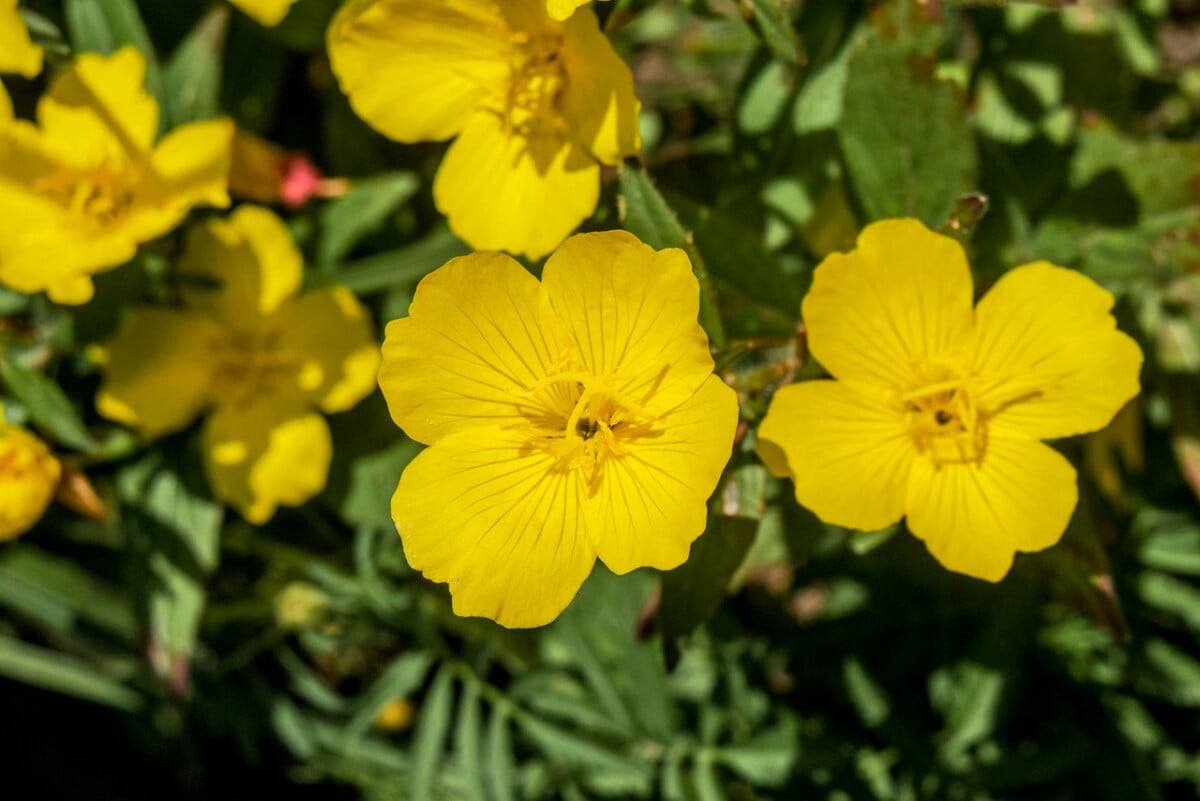
If you have to choose, it’s hands down evening primrose. As the name suggests, it blooms in the evening, with the flowers opening up and closing one by one on consecutive days at dusk. So it will never be fully open (a hundred percent of the flowers at the same time). Trust me, you don’t want it to anyway. The fragrance is pleasant but very strong.
It blooms from late spring to late summer, and one of the coolest things about it is that it blooms visibly. The eye can actually track the opening of the flowers. Bring a glass of wine on the porch and watch it open up.
Get the famous Rural Sprout newsletter delivered to your inbox.
Join the 50,000+ gardeners who get timely gardening tutorials, tips and tasks delivered direct to their inbox.