

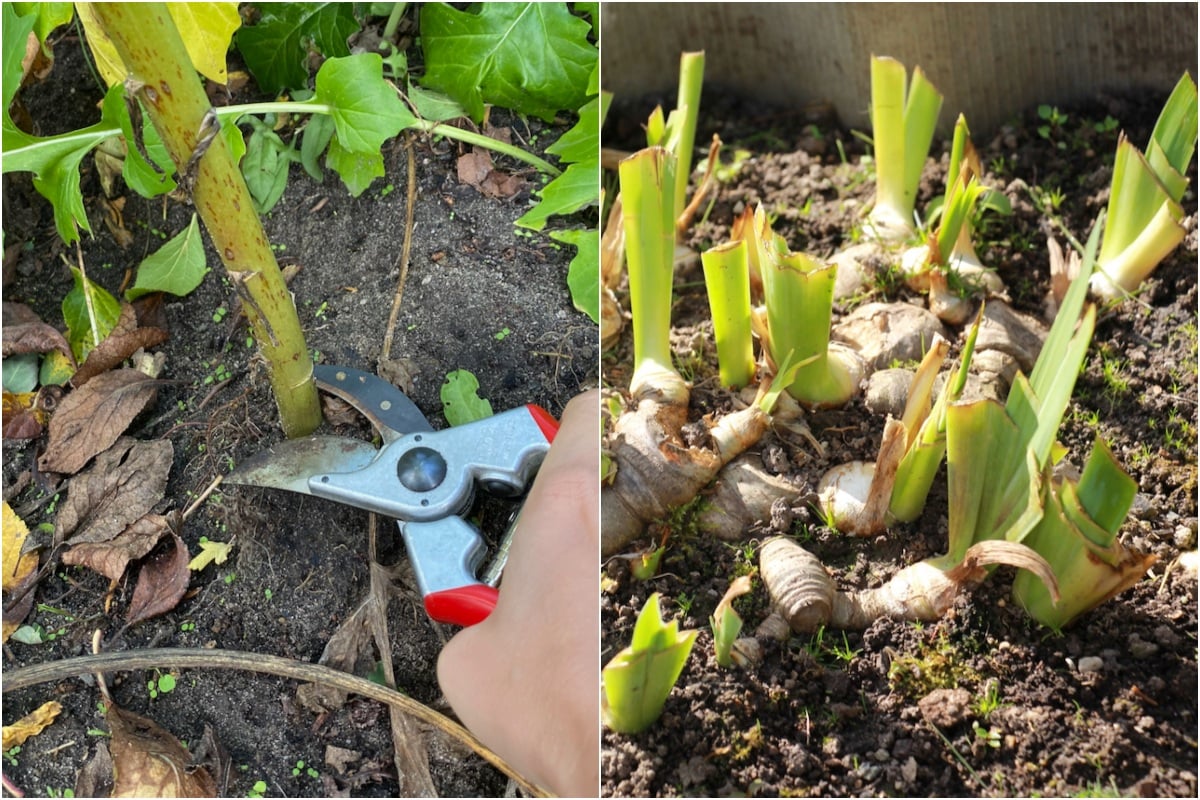
Have you heard the term “underpruner” before? I honestly hope you haven’t, because if you have, that would mean I haven’t just made that up. Which I totally did. To describe myself.
You wouldn’t know it by the number of articles I write here about pruning, but I’m a total procrasti-pruner. If I don’t absolutely have to trim something off, I’ll avoid it as long as possible.
Which is an apt disclaimer for this article on plants we should prune in the fall. Where possible, I leave perennials to overwinter in the garden. But that’s not always possible, and you’ll see why with every plant on this list.
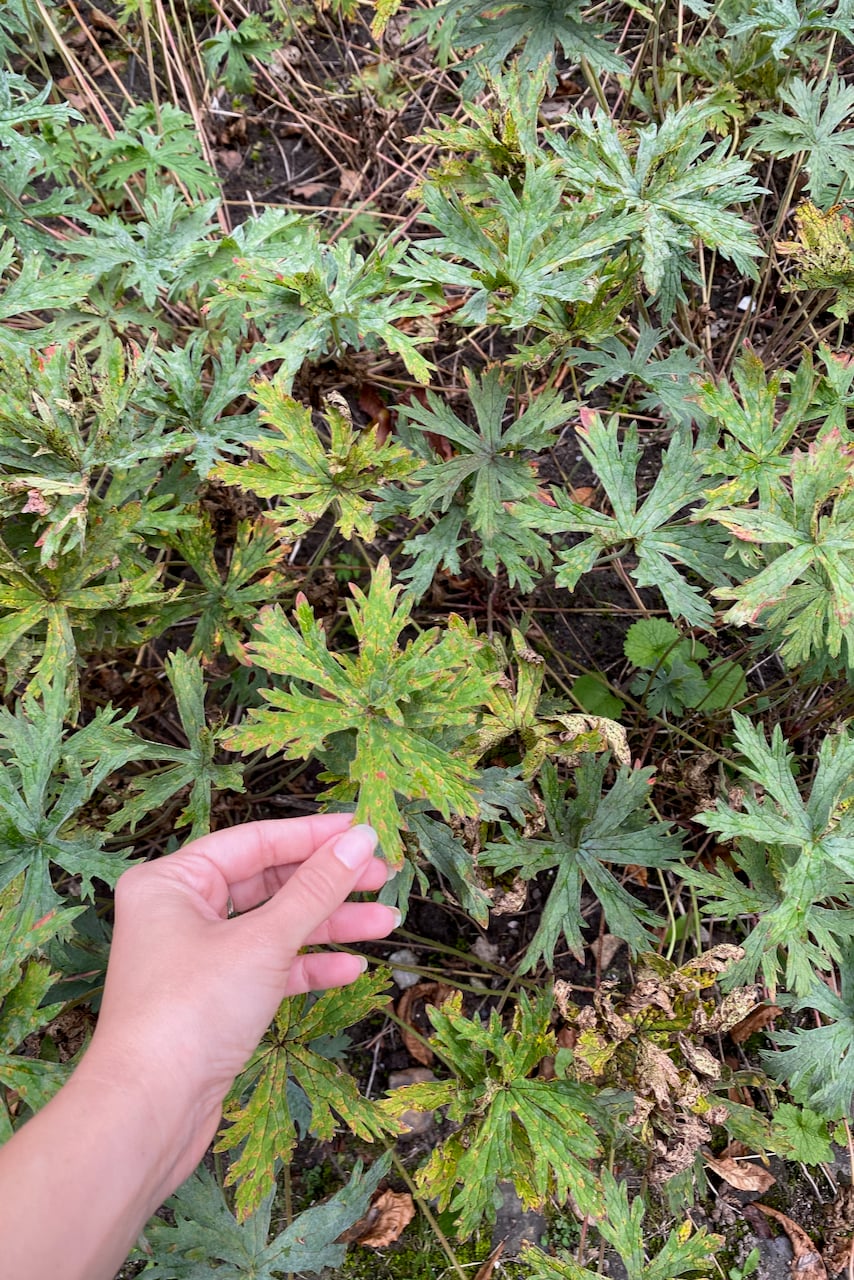
Sometimes, the foliage simply turns slimy and we need to remove it. Or it’s covered in mildew. Or slugs have built their empire at the base of the plant. That’s when we prune the plant hard, all the way down to the ground.
Other times, fall is the best time to do some light pruning and tidying that will help us maintain the shape of the shrub or the vine.
Before we get started, let me warn you that you’ll see some photos of sad-looking plants at the end of the season throughout this article. But I’ll do my best to balance them out with some photos of beloved perennials in bloom, because ultimately the color and the cheerfulness is why we’re growing them, isn’t it?
1. Lavender (Lavandula)
Let’s start with everyone’s sweethearts, lavender. I love growing and writing about lavender because it’s an incredibly forgiving plant. We can prune it in the fall or we can prune it in spring and it won’t mind either way.
What I usually like to do is a bit of both, but for very different reasons. In the fall, I snip off the dry flowerheads and the dead stems and shoots because I want to keep the shrub compact. The lavender flowers are a guilty pleasure from the garden for me. I crush them lightly, put them in linen satchels and shove them in all my closets.
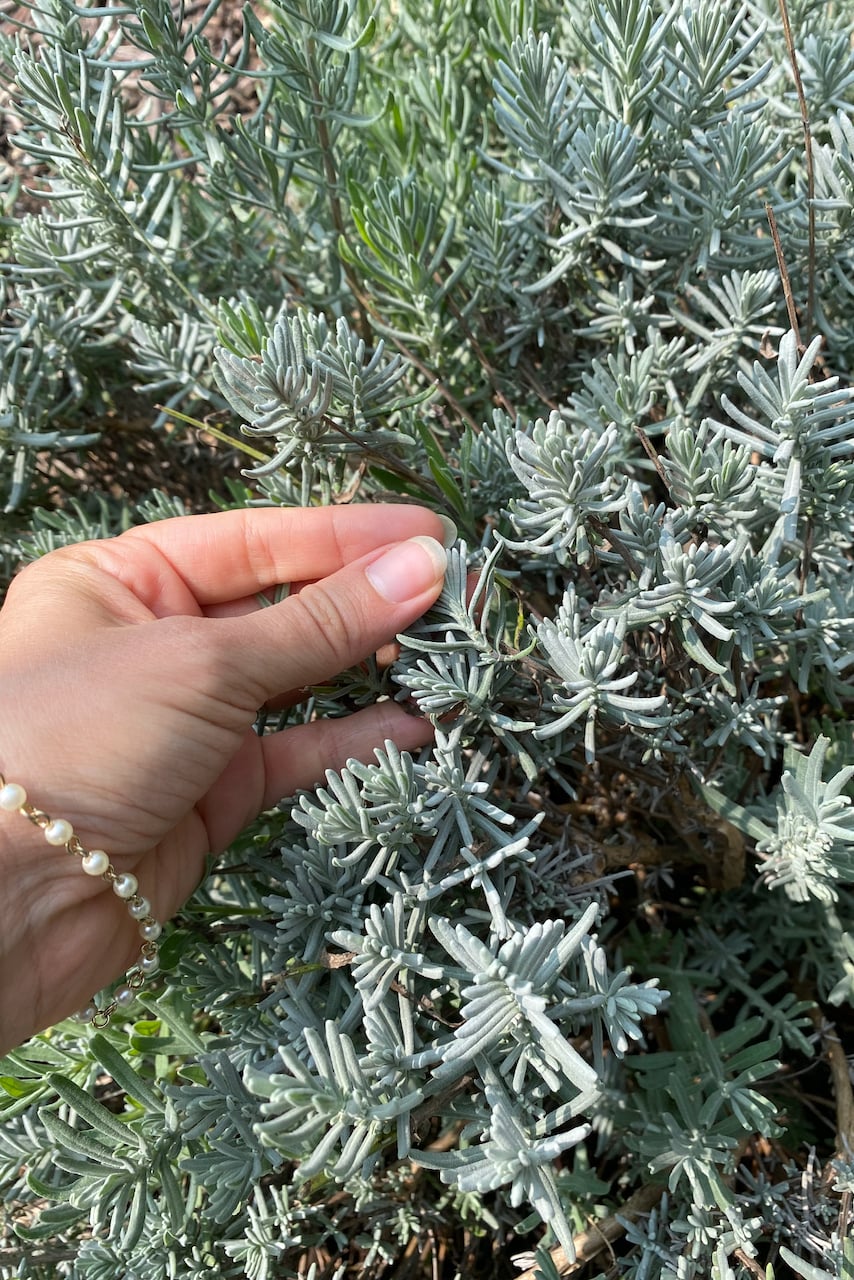
When I give lavender this fall haircut, I try to take a bit more off the sides, in order to give it a (very slightly) conical or rounded shape. This is a more winter-friendly shape for this Mediterranean native. If we get any heavy snow this winter, the conical shape will help with slowing down the snow accumulation at the top of the shrub.
However, this is not the best time to cut into growing lavender shoots because I don’t want to encourage soft new growth. Anything that starts growing before winter will only be damaged by the cold and the wind.
2. Hosta
At this point in the year, trimming back hosta foliage seems like an act of mercy, after these shade stalwarts have been gnawed on by slugs all summer long.
Even after a season that wasn’t particularly rainy, hostas end the summer looking like this.
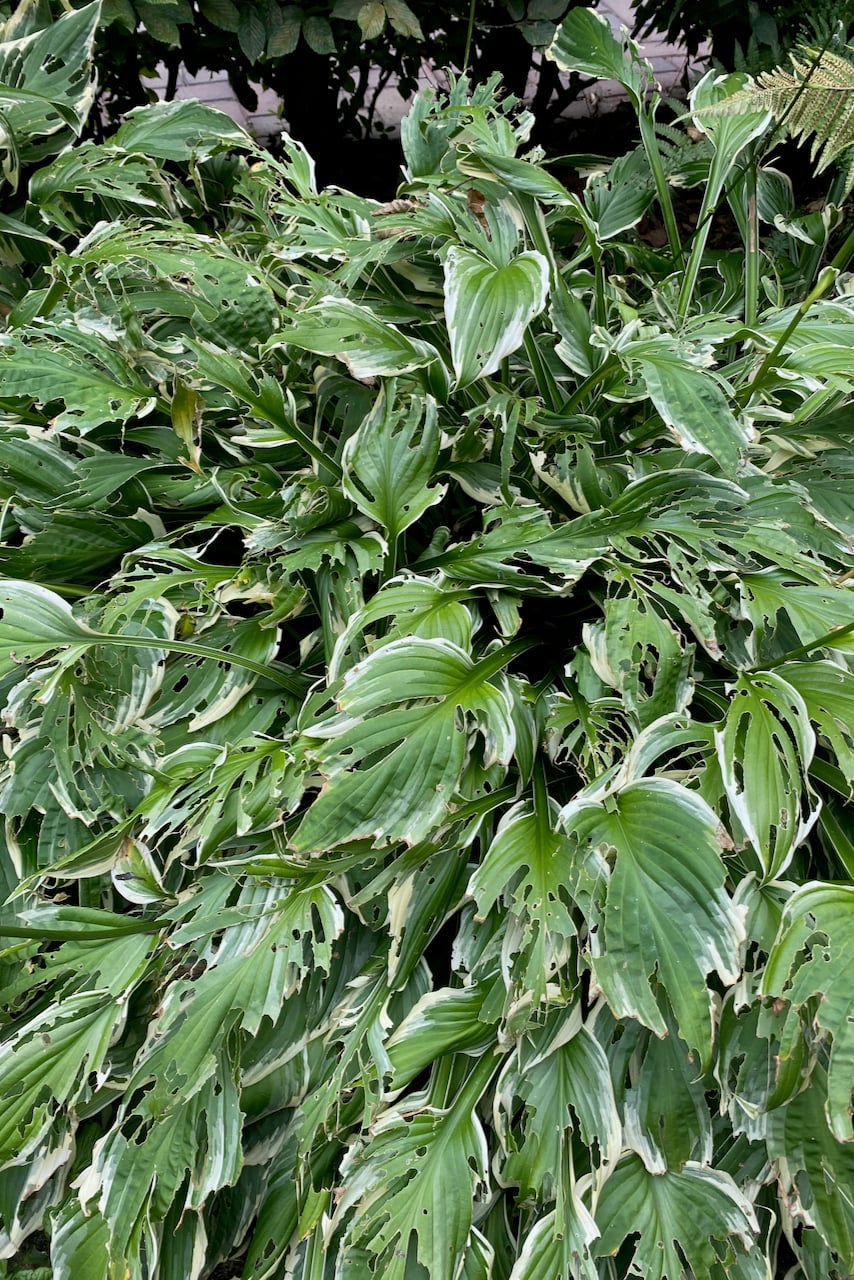
I like lace, but not when it’s foliage, thanks! And it’s not just a temporary eyesore. In the fall, the same slugs that have worked hard to create this pattern will lay their eggs in the dead foliage, setting the stage for another infestation next year. Also, I don’t know if you’ve seen hosta leaves after a hard frost. They get pretty slimy.
What we can do now is cut back the foliage, about two three inches above the crown. I usually wait until the leaves are completely brown, just to make sure that their energy is redirected towards the roots.
Once I’ve removed all the foliage, I take a closer look at what’s left to make sure there are no slug eggs left behind. They like to hide in the lower part of the concave stem.
3. Honeysuckle (Lonicera)
A quick disclaimer here, that I’ve learned is necessary lest we should get comments that we “shouldn’t grow honeysuckle anyway. It’s invasive!”
What you’re thinking of as invasive is the Japanese honeysuckle (Lonicera japonica), also known as the golden-and-silver honeysuckle. There are plenty of honeysuckle species native to North America, such as trumpet honeysuckle (Lonicera sempervirens), fly honeysuckle (Lonicera canadensis), hairy honeysuckle (Lonicera hirsuta) or yellow honeysuckle (Lonicera flava).
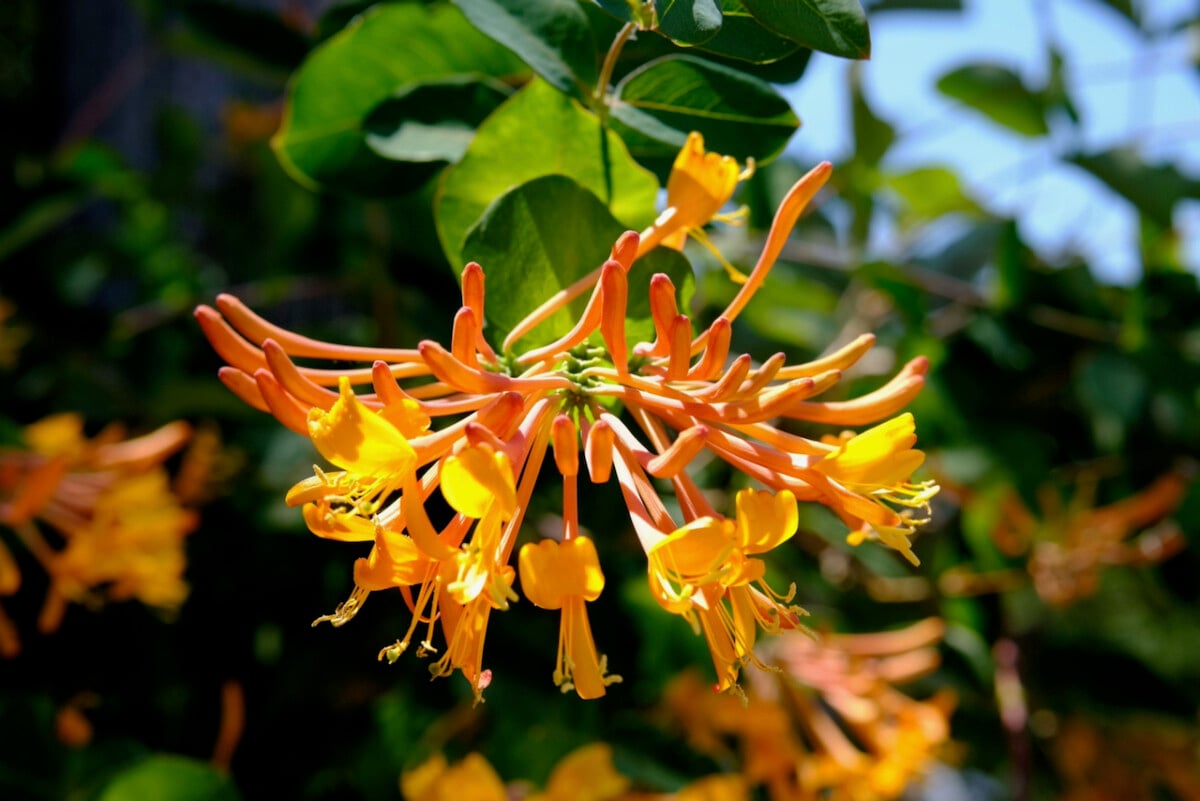
Regardless of which one you’re growing, fall is a good time to tidy it up a bit. We’re not talking about hard pruning here.
After a summer spent reaching and climbing, this vine may look like a tangled mess by fall. We are not cutting it back to the ground – like we do with some herbaceous perennials, but we are taking down some of this year’s growth. Like most vines, honeysuckle will generally resume next year’s growth where it left off this year, thus raising the flower level higher and higher every year.
We can also prune a couple of older stems from the base, just to encourage more growth at the bottom. This way, the honeysuckle won’t develop the bare woody base that’s so common with vines. But this is an aesthetic choice that you can ignore if you want it to have a thick trunk.
4. Star jasmine (Trachelospermum jasminoides)
The same advice as above applies to star jasmine because it has the same growth pattern as honeysuckle. Start by trimming back some of the younger vines. The longer they get, the more bare they’ll grow. Our goal here is to encourage branching and fullness and to keep the flower canopy lower.
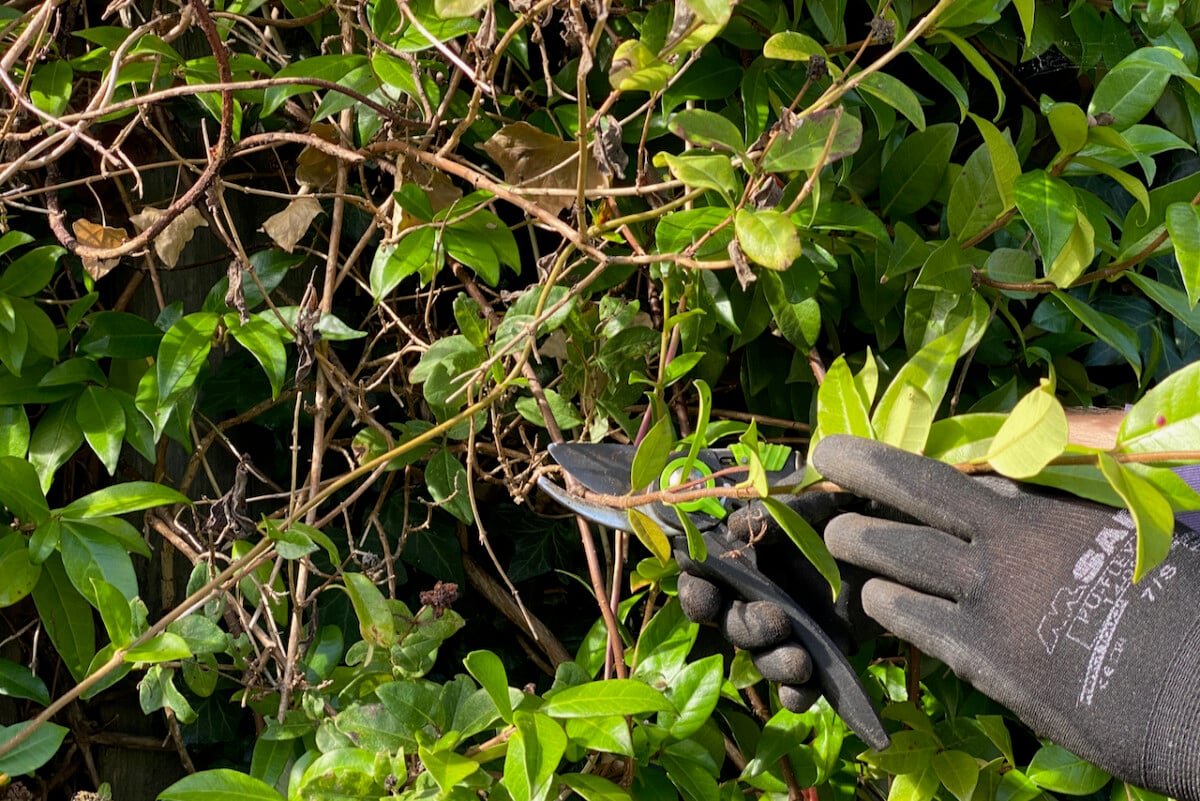
I have trained my star jasmine to have a lower thick trunk and branch from higher up (a couple of feet above ground). So I only have one basal stem. But if you’re training yours fan-shaped from the ground up, now is the best time to assess which stems to cut down (if any) in order to maintain this shape.
And please keep in mind that I’m only referring to summer-flowering jasmine, such as star jasmine. If you’re growing winter jasmine, which is usually in bloom from January to April, now is not the time to prune it. We’ll do that in May or June when the flowers are gone.
5. Irises
A few weeks ago, I was telling you that fall is the best time to divide your irises if they’re not blooming as well due to overcrowding. And this is also the best occasion to prune your irises.
But it can take about four or five years between divisions and in the meantime, we still need to lower the risk of iris borer. (A caterpillar that chews into the leaves and tunnels all the way down into the rhizome. Once it’s there, it starts eating around itself and destroys the rhizome from the inside.)
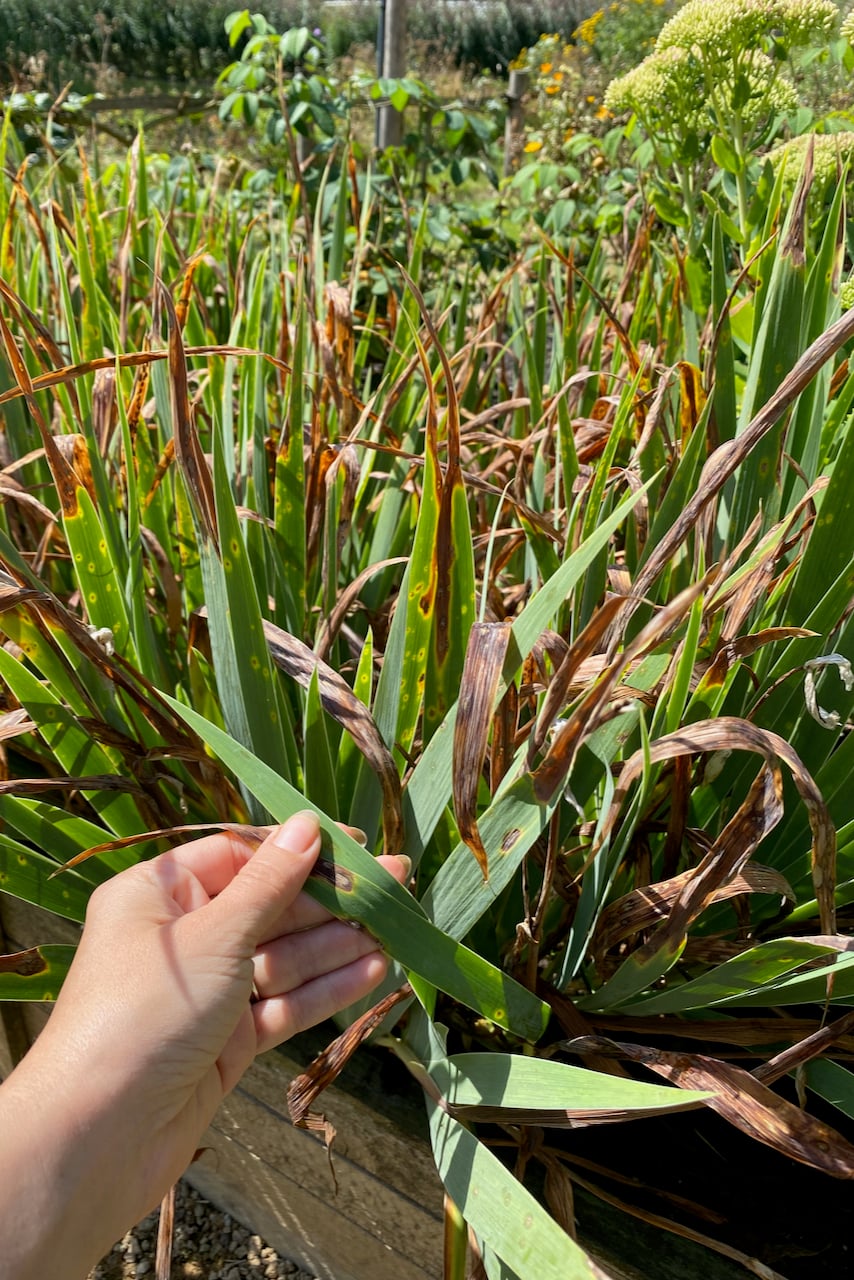
That’s why it’s a good idea to prune irises in the fall. I’ve seen a lot of advice online to trim back iris spears as soon as the flowers are gone, which would put this timeline in July.
I honestly don’t see the point in that. Other than to get a certain aesthetically-pleasing tidy look. perhaps. I prefer to leave the iris foliage in place for at least a couple more months. It’s not just pretty, but it plays a role in gathering enough energy for the rhizome. A healthy rhizome will not just overwinter better, but it will also flower better next year.
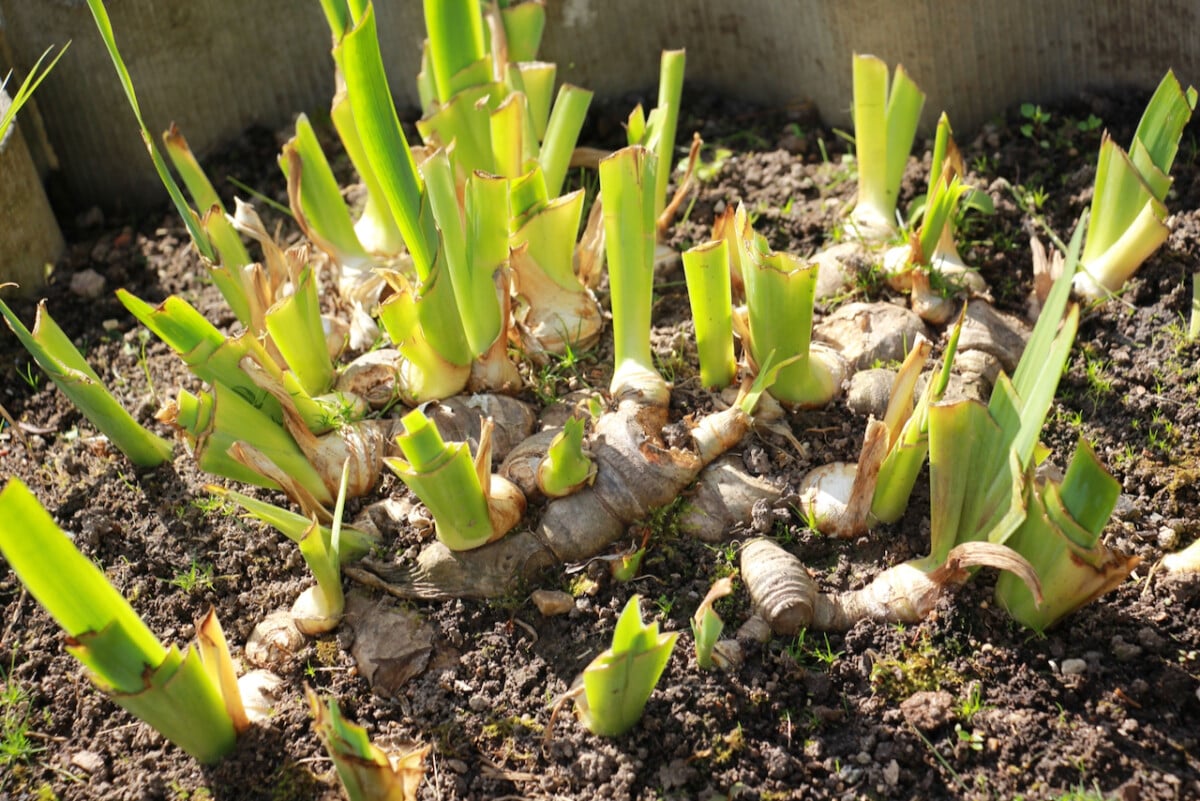
We can wait until the first frost to prune the foliage, or do it at any point in October or November after it’s turned yellow or brown. Cut a few inches above the crown. And while you’re at it, inspect for any slug or caterpillar eggs. They tend to lay them in the crevices between the leaves.
6. Daylilies (Hemerocallis)
I don’t think there’s a “prune in the fall” article out there that skips daylilies. And you can see why. Here’s how they look like in late-August and early September. Once the flowers are wilted, the foliage just flops.

But Mickey, my plants don’t look like this!
That may be. There are hundreds of cultivars of daylilies in circulation, so depending on which one you’re growing and the climate that you’re gardening in, yours might look a bit fresher.
This is usually the case with daylilies that are still in bloom in late summer. In my temperate climate, however, daylilies start to go downhill (sometimes quite literally) at the end of summer. And by October, everything is yellow, then brown.
I let the foliage die back in place, no matter how unsightly it is. Then I trim everything a couple of inches above ground level. There’s no point in allowing everything to overwinter in place, as leaves will become mushy once they get hit by frost anyway.
7. Asters
It feels weird for me to think of asters as plants that need fall pruning. Aren’t they a fall plant? Their electric blue purple daisy-like flowers brighten up flower beds and borders well into October, so when would we ever prune them?
Obviously not when they’re still going strong. But there comes a time in early to mid-November when the reliable asters have done their seasonal cheering up duty and are ready to take a rest until next year.
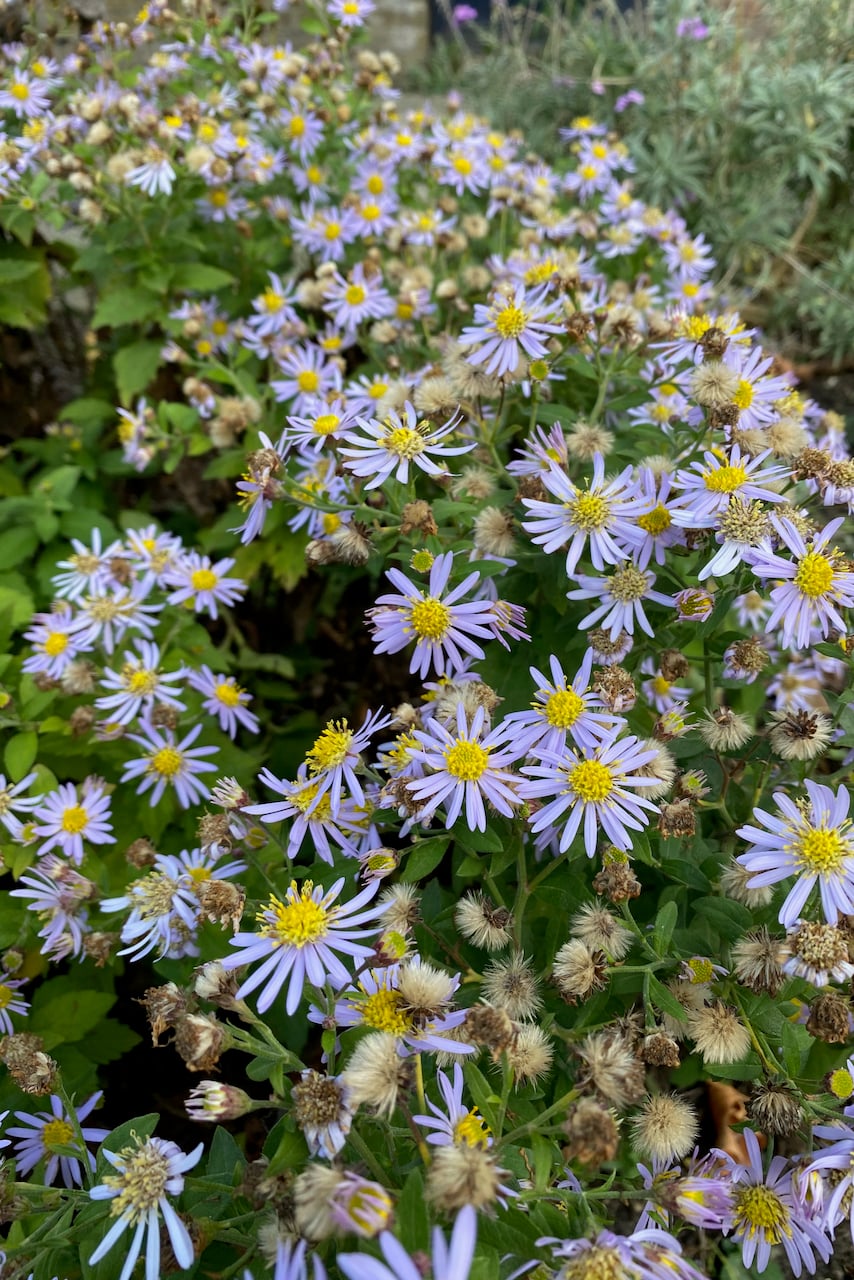
That’s when we would cut back all the dead flower stems down to the base. As the foliage fades later in the fall, we can cut everything back some more. I prefer to leave about six inches (15 cm) above ground over the winter.
Because asters are such a stem-dense herbaceous perennial, I think they make a really good nesting spot for insects over the cold months.
8. Savory (Satureja)
There may or may not be an ulterior motive for me to prune savory in the fall.
Yes, there is. It’s called “soup and stew” season. If you’re not growing savory, you’re missing out on a delicious taste that blends thyme, sage and rosemary into one single bite.
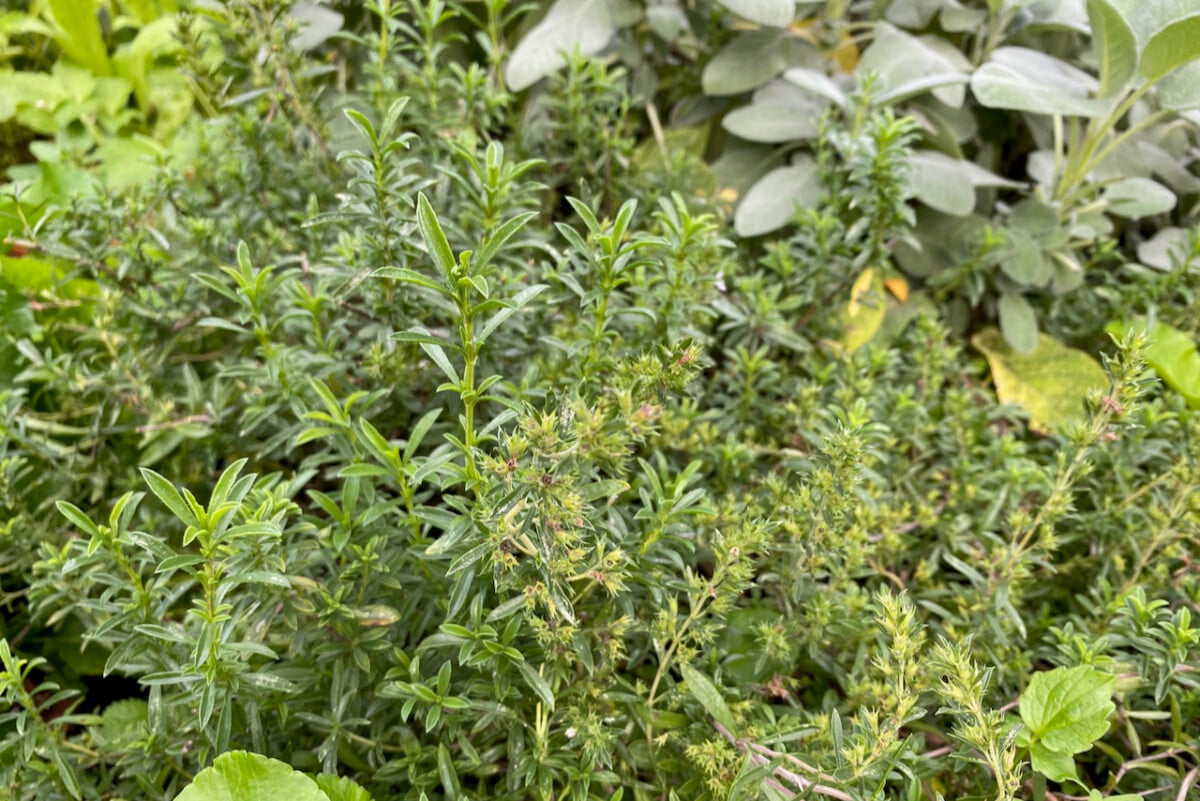
The trick with savory is that it tends to grow a bit unruly over the summer. The flowers (very small and understated, but also edible) are done by mid-fall. And the pollinators that visited them are also retreating for the season.
So now’s the perfect time to give it a haircut. I trim off about one to two thirds of this year’s growth (not of the entire plant, mind you!). This keeps the shrub relatively tidy, but without reducing too much of the mass that helps shelter the crown over the winter months.

I dry and de-stem the cuttings right away, then grind them in the food processor to use as a strong aromatic herb in Mediterranean-inspired soups or roasted potatoes.
9. Dahlias
In addition to the dahlia bulbs that I leave in the ground, I also like to start some dahlias indoors and transfer them to the garden when the weather gets warmer in late spring and early summer. One of the advantages of this method is that it staggers the blooming period of dahlias to cover virtually from August all the way into November.
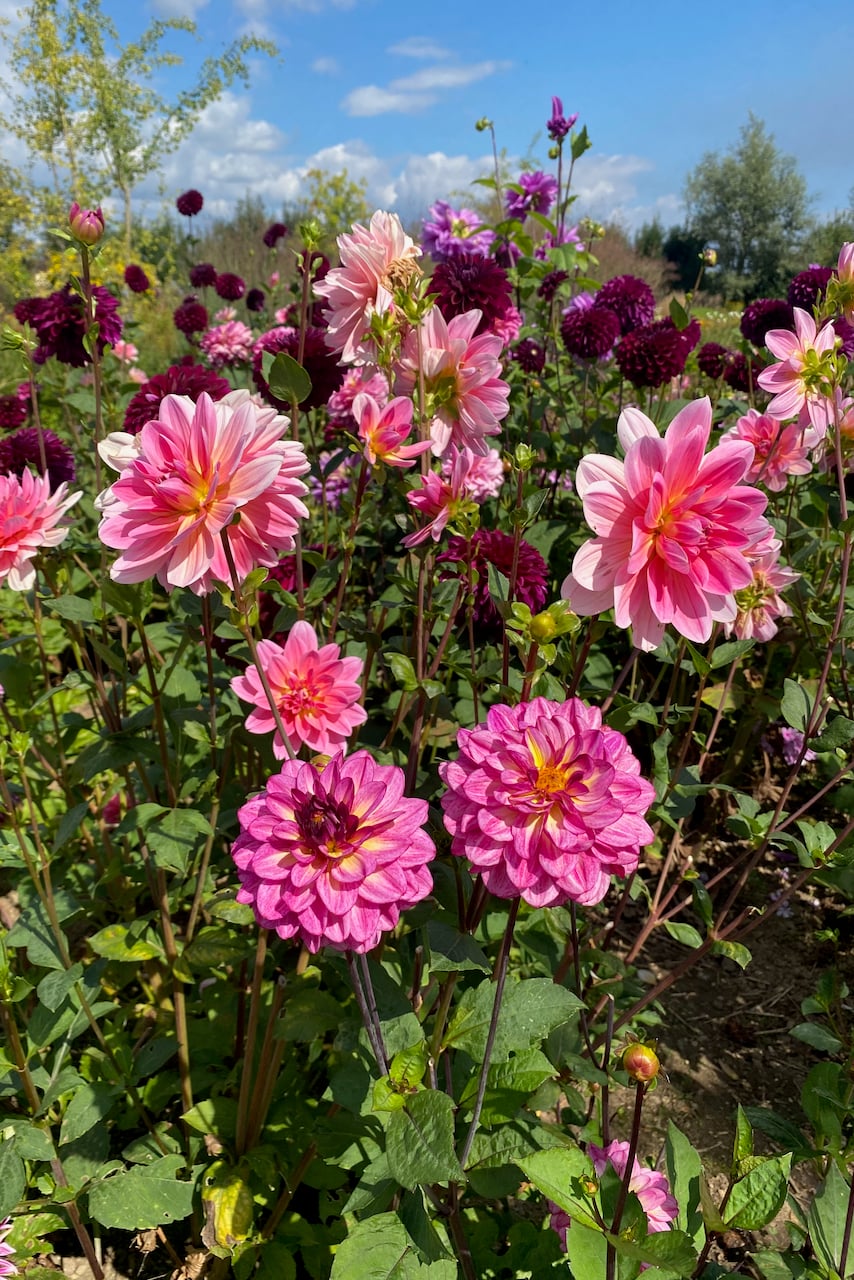
That also means that I stagger the timing of when they’re done in the fall.
And since I also continue to deadhead them regularly, this encourages more flowers to open up and look their best all the way up to the end. Most years, the end is a bout of frost that we get in November. Frost-bitten dahlias will first turn dark brown and very much resemble eighteenth century silhouette art.
It looks … interesting, and a bit eerie, but it won’t stay like that for long.
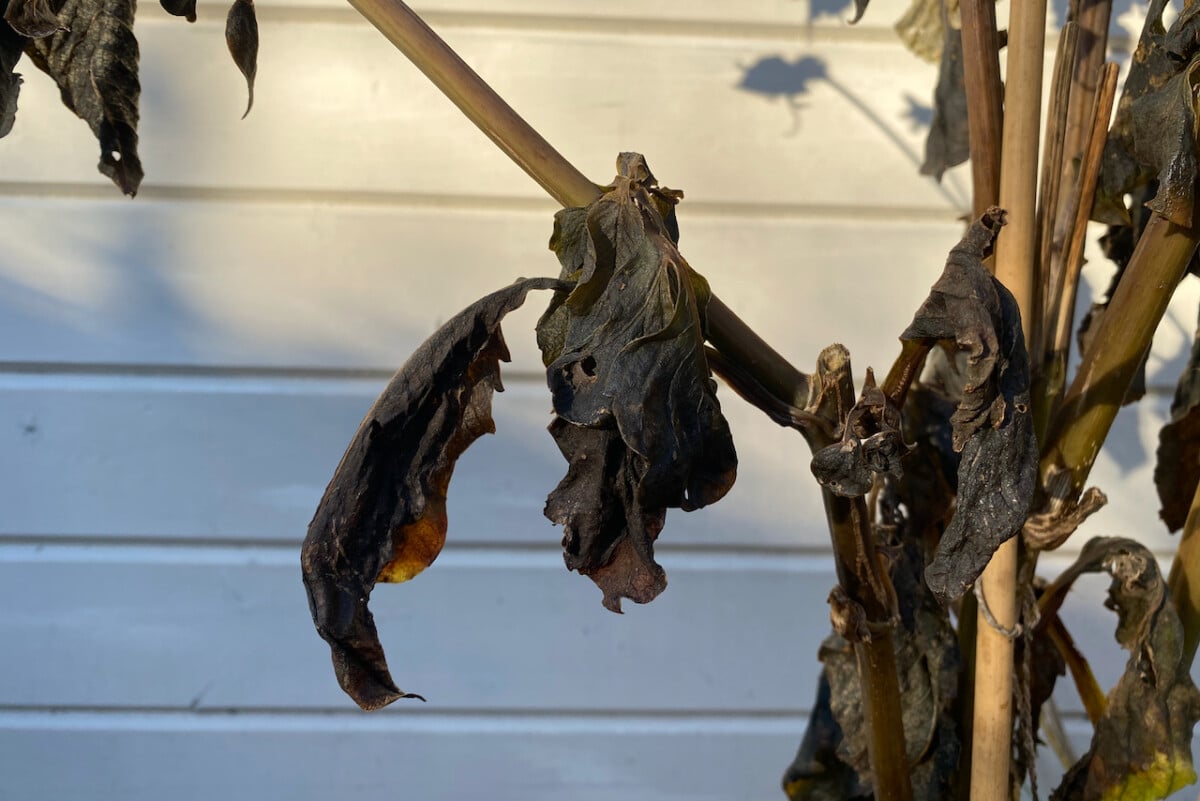
Some years, the frost doesn’t come until January, but the dahlias are done in November anyway. That’s when I cut the dead and dry dahlia stems all the way down to the ground. In my temperate climate, I’ve been successful at overwintering dahlias in the ground, but I do tuck them under with a layer of compost and a layer of dead leaves in the fall.
10. Oregano and marjoram
I’ve already mentioned that I use both lavender prunings and savory prunings once I’ve tidied these herbs up in the fall. It’s a bit different with oregano and marjoram.
By this time in the year, there’s not much to pick from the leaves for my culinary uses. The leaves have turned spotted with brown and yellow splotches. Not appetizing.
(You’ll probably remember that I’ve already pruned it once in the summer and dried the leaves to use as seasoning.)
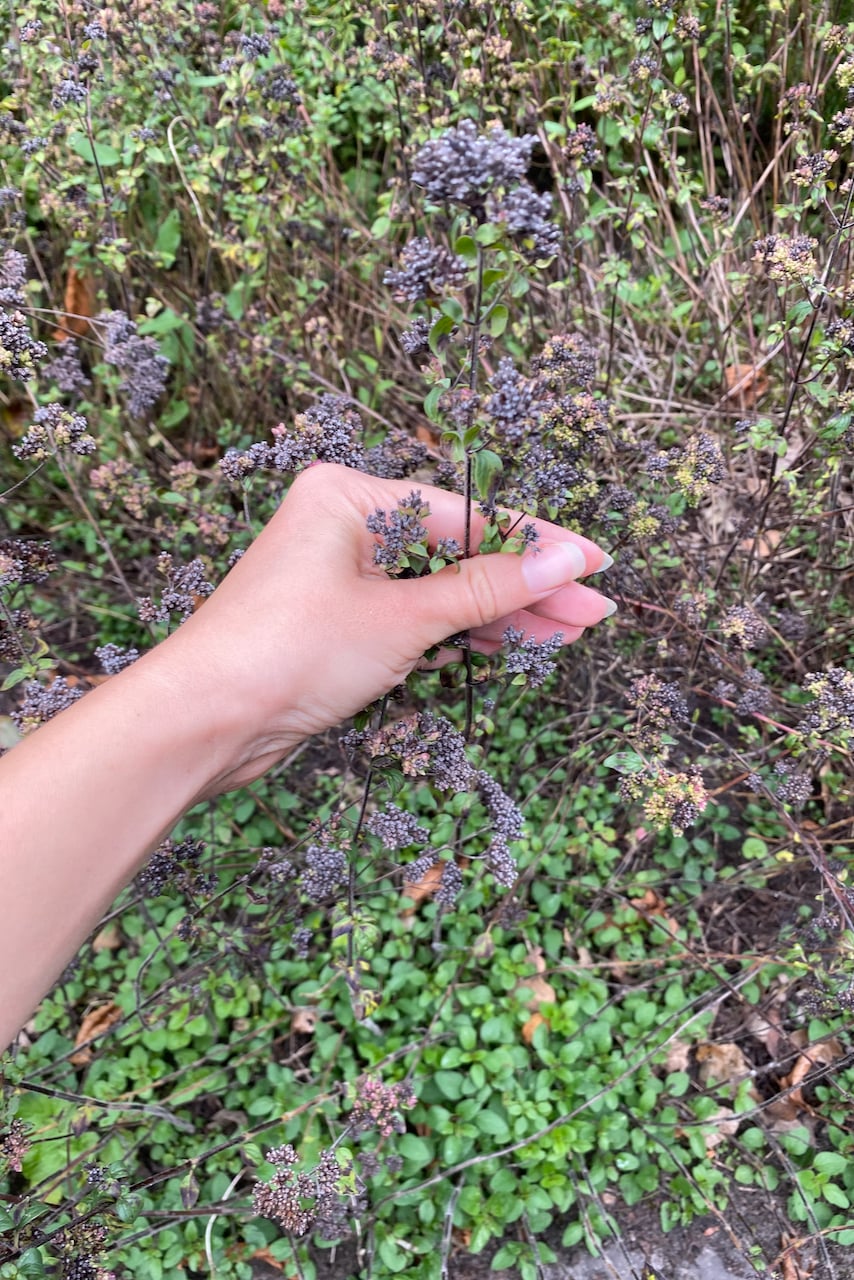
We can cut the old oregano “canopy” down to the ground now. And you’ll probably discover that the new leaves have already started to pop up at the base. Alternatively, we can leave everything in place and prune it down in spring. This is especially useful in order to preserve the rich seed heads in place as a nesting spot and snack bar for insects and birds over winter.
11. Canna lilies
When I first planted cannas in my garden, I was a bit unsure whether they would throw tantrums like the tropical divas that they are. I garden in a temperate climate and wouldn’t have had time to baby them and keep them happy.
I’m relieved to report they haven’t. And possibly the only indicator that they’re tropical plants comes from their reaction to frost.
Have a look at this shadow of a plant.

I took this photo on December 2nd, after we got some below freezing temperatures overnight. Once it warmed up again (relatively speaking, for December) all the foliage flopped over and turned into a muddy mess.
So I just trimmed it all the way down to the base. The larger plants are a bit tricky to prune once they get all limp, since they’re so fibrous. So you can also trim them before they freeze, while they’re still rigid.
Just like with dahlias, I add a blanket of compost and a layer of dry leaves and overwinter them in the garden. The older the rhizomes get, the more resistant they become in the winter.
12. Peonies
If you’re not prepared to see a bed of very sad peonies past their prime, you should avert your eyes now.
And while you do that, I’ll give you a little trivia, just to give you some space between paragraphs to look away. Did you know that, on average, peony flowers only last about ten days? That is a lot of baby-ing over such a short blooming period. But can you even imagine a cottage garden without peonies?
Ok, you’re still here. Here’s how a patch of peonies looks like in the last week of October.
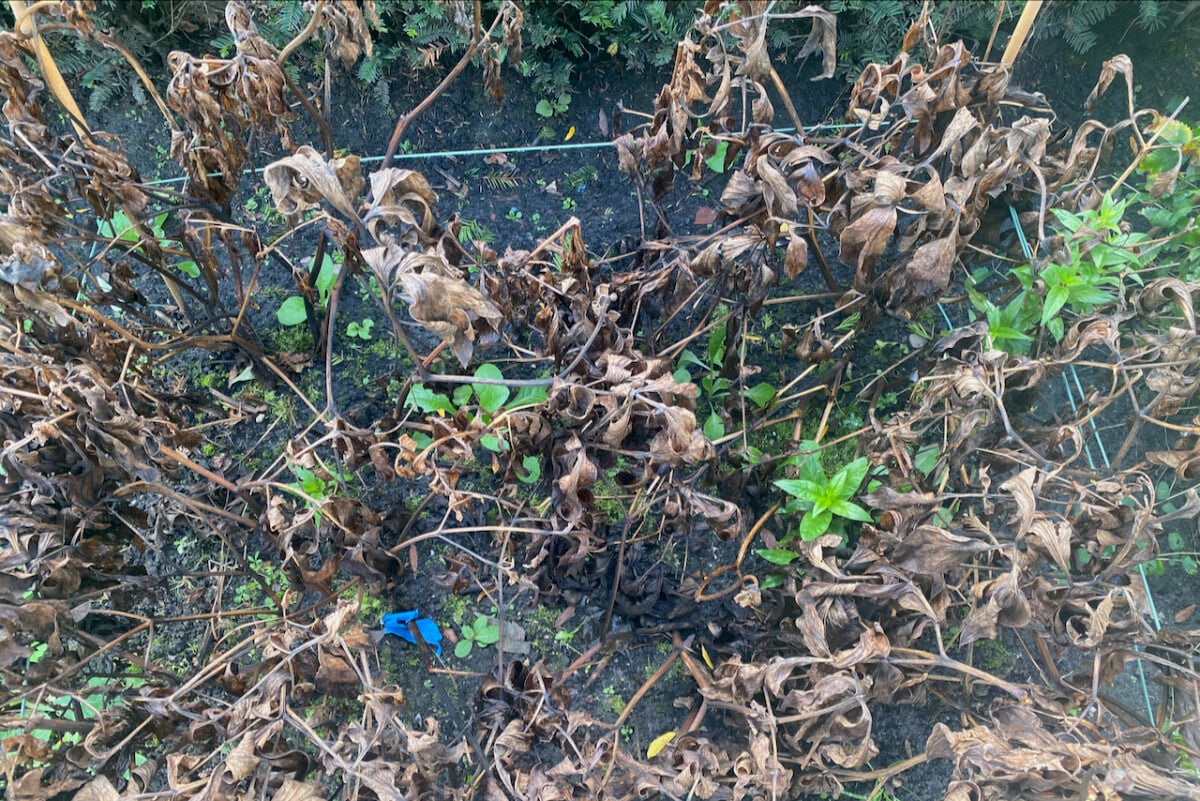
Not pretty. They’ll get even less pretty once the frost kicks in. More importantly, peony foliage is susceptible to fungal diseases such as powdery mildew and botrytis, which is something we shouldn’t allow to overwinter in the garden. If it weakens the plant too much, it may even stunt bloom for next year.

That’s why we trim down the peony stems to about two or three inches above soil level. Peonies are pretty resistant to cold temperatures, but a layer of mulch wouldn’t hurt at this point.
13. Elderberry (Sambucus nigra)
Really, Mickey? Sambucus? Do you mean the small shrub that we forage elderberries from at the height of summer?
Yes, that’s what I mean! And it’s not just a foraging shrub that you find on hikes either. There are a few dark-leaved varieties that combine ornamental and edible really well. You could say they’re edimental.
Read this article to find out more edimentals.
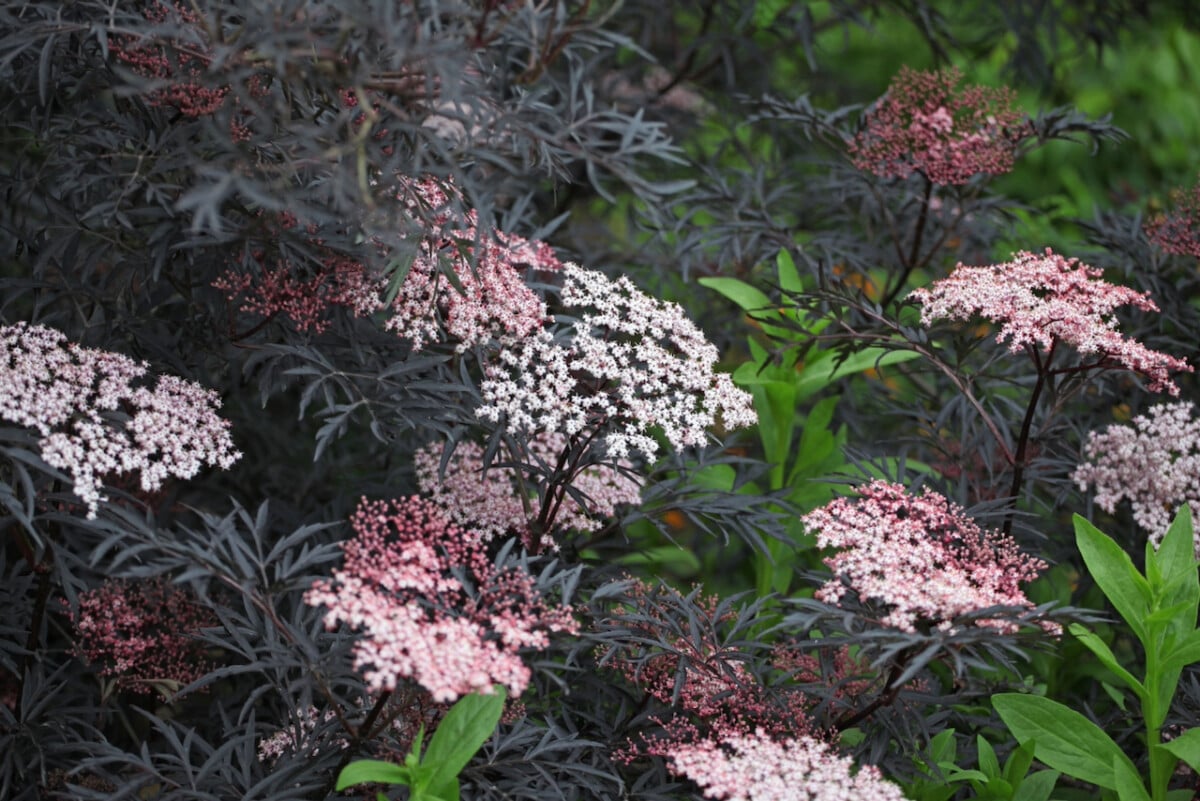
We can prune sambucus either in the fall or in the spring, as long as we do it after the leaves have fallen and while the shrub is still dormant. We can remove old or congested growth – where branches intersect and rub against each other.
And if we’re picking the fruit, we can also prune a section (about a quarter to a third) off the existing branches. This will encourage branching at a lower level, where we’ll be able to reach the fruit without having to go up on a step stool.
14. Hardy geraniums
I debated whether I should add hardy geraniums to a fall pruning list because they can very much wait until winter or spring.
But the Geranium genus contains over four hundred species of hardy geraniums. And the more popular species have cultivars of their own, putting the number of types of geraniums in our gardens into the hundreds. Obviously, not all of them will overwinter the same way. Another problem with geraniums is that some varieties tend to get covered in powdery mildew by the end of summer. Obviously, that’s a good reason to prune them.

If your hardy geranium stays green and healthy in the winter, then there’s little reason to prune it in the fall. On the other hand, if the frost turns the leaves brown and soft, then we can trim them off any time between late fall and March.
Be careful when you cut back the dead foliage as the tender growth of next spring might have already poked its head out of the ground. We can protect this growth by adding a layer of leaf mulch. Geraniums have evolved to grow under the canopy of trees, so even if they’re buried in leaves, they won’t mind.
15. Columbine (Aquilegia)
Now that the bees, hummingbirds and moths are done enjoying the flowers, and I’m done collecting the seeds, you’d think that aquilegia can finally rest over the winter. Well, it will, but it does so underground. The foliage will die back in the winter all the way down to the crown.

But if your aquilegia, like mine (above), gets a sad case of mildew, then cut everything down to the base as early in the fall as you’d like.
And remember not to compost the leaves. You can dispose of them with the household waste. It’s impossible to eliminate every single mildew spore, of course, but we can mitigate the fungal impact for our next growing season and give our aquilegia time to recover.
16. Black currants (Ribes)
This advice applies to other types of bush fruit as well, such as red currants, white (more like pink-ish) currants and gooseberries. I chose black currants because they tend to be more widely spread and also grow a bit more robust than the others.
If we let them go unchecked, they will grow into woody shrubs with a large footprint. That’s good, up to a point. And that point is when the fruit that we pick is getting smaller and less juicy. The solution and reversal of this trend is pruning.
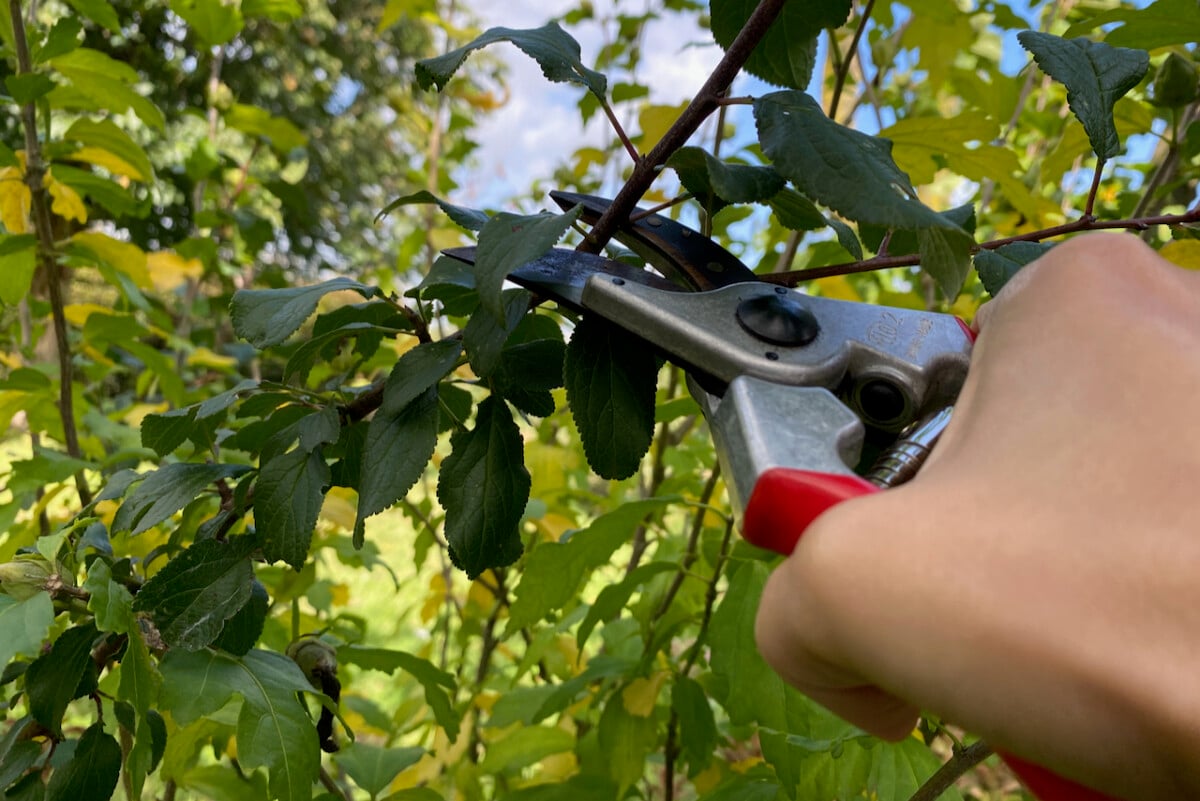
Every year, we can remove the oldest fruiting branches from the base. The oldest branches are generally the ones growing in the center of the bush. So by thinning them out, we’ll not only get a crop of larger, juicier tasty fruit, but we’ll also open up the shrub and help with air circulation.
While we’re at it, we can also remove any stems that are crossing and rubbing together.
17. Summer-fruiting raspberries (Rubus)
This advice applies to other types of cane fruit that we can harvest in the summer, such as blackberries and tayberries (a hybrid between raspberries and blackberries).
The raspberries that fruit in the summer (June-July) generally do so on last year’s canes. These canes are almost two years old by now, which means they will not bear fruit again. So we need to remove them now, in the fall, to make room for the young ones. The plants can redirect their energy into the new stems. And these new canes will bear next year’s fruit.
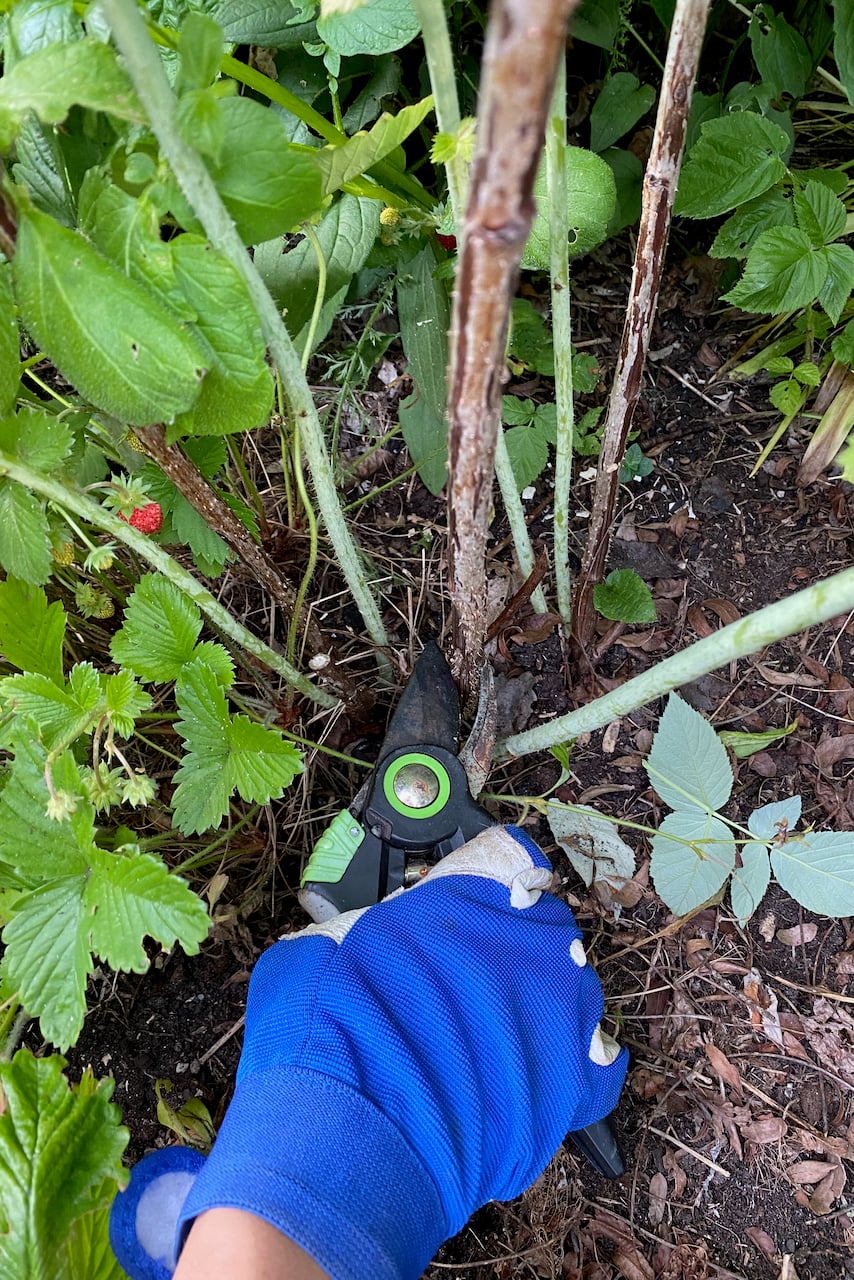
The color of the cane is a good indication that it’s an old one. The stems that have turned dark brown and woody are the ones we’re cutting down at the base. The green canes are the ones we’ll leave until next year. But if there’s too many of them, or if they’re too crowded, now’s the best time to remove the thinnest (thinner than a pencil) ones.
18. True lilies (Lilium)
We talk a lot about daylilies around here, but they’re not actually true lilies.
True lilies, from the genus Lilium, grow from bulbs. You get stunning fragrant flowers at the top of a single long (and very thick) stem.
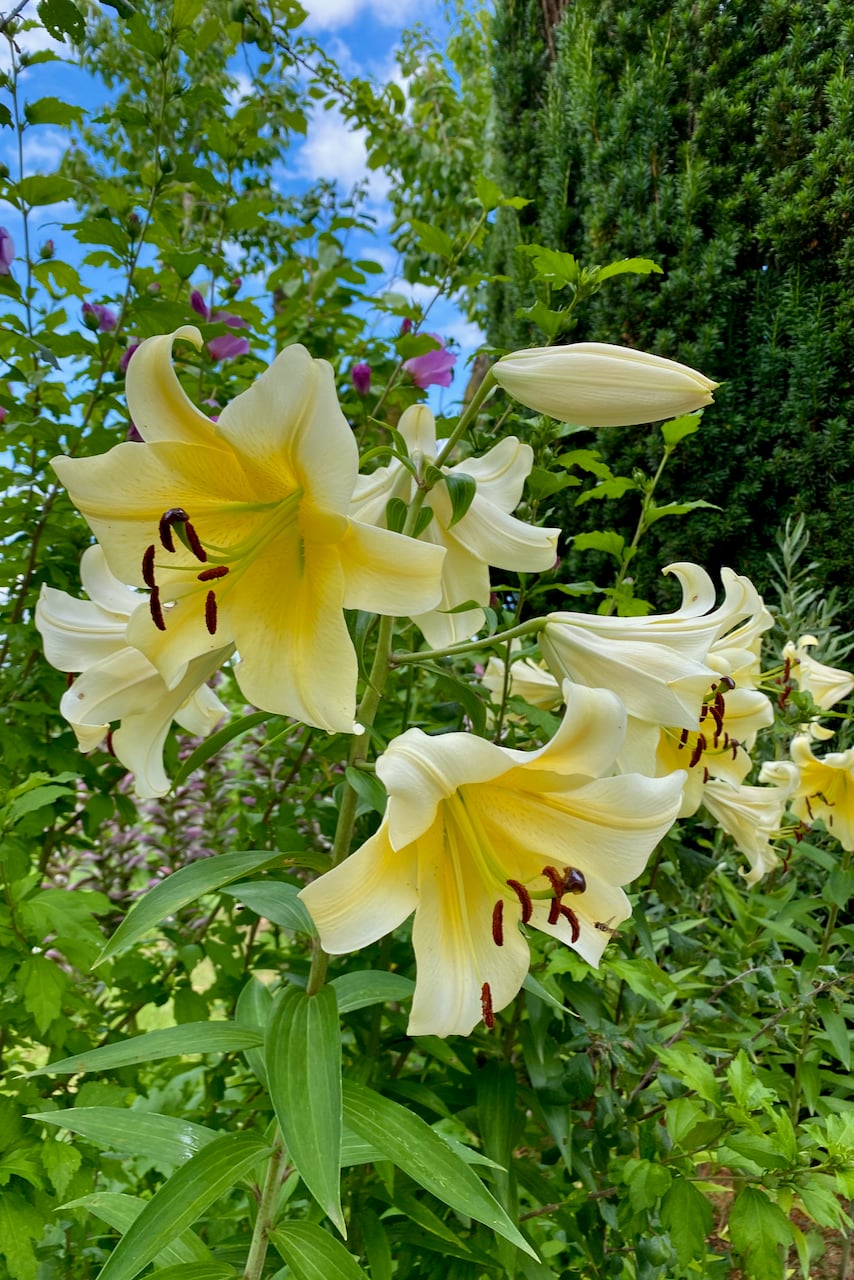
Like most ornamentals that we grow from bulbs, the bulb stays underground over the winter months, but the above ground plant needs to go once the flower show is over.
Not immediately after, of course, because like most bulbs we need to leave the leaves on to continue to photosynthesize.
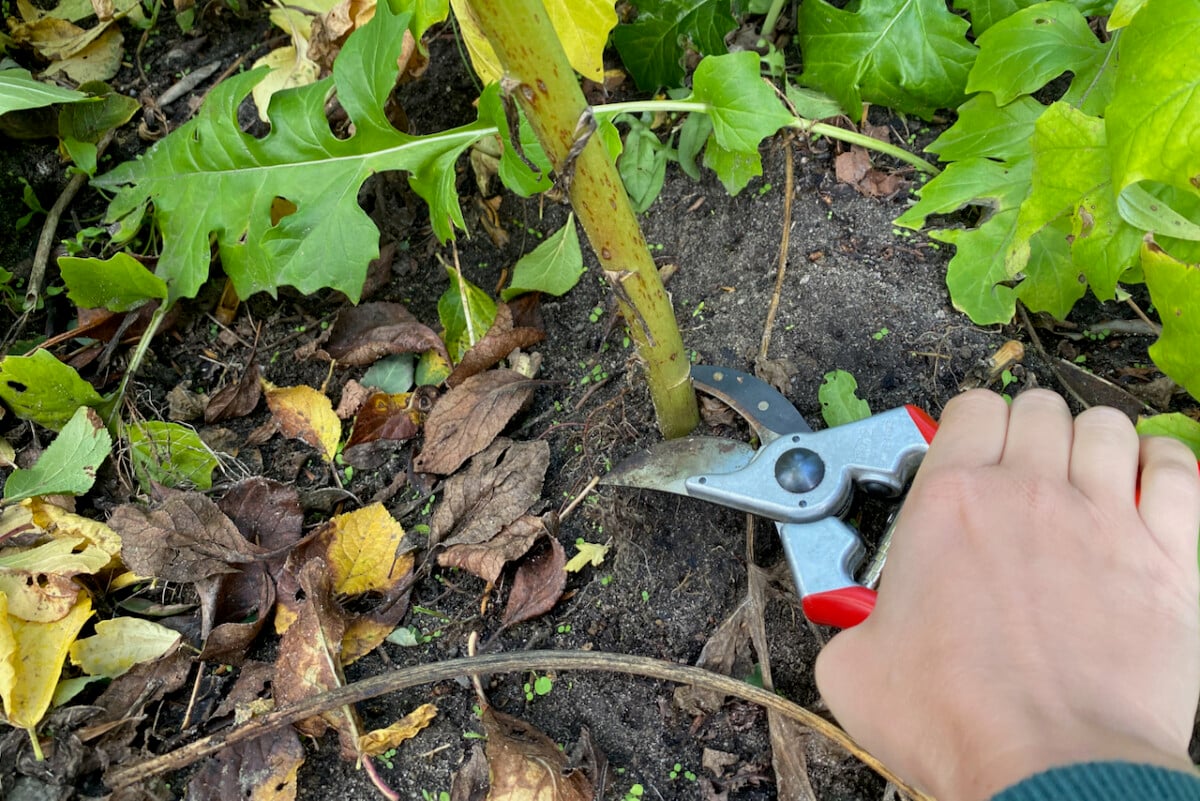
From August through to late October, they will collect energy and redirect it to the bulb to power up next year’s bloom. Once the stalks look dry and brown, that’s when we can cut them all the way to the ground.
This advice applies to oriental lilies, asian lilies as well as to hybrids.
19. Japanese anemone (Anemone hupehensis var. japonica)
Just like the asters I talked about above, Japanese anemones are quintessentially fall flowers. They start blooming in early August and go on blooming into late fall. But the large, quirky shaped foliage doesn’t endure winter very well.
The leaves turn brown and crispy and the flower pods turn to something resembling cotton candy – that’s how they spread their seeds.
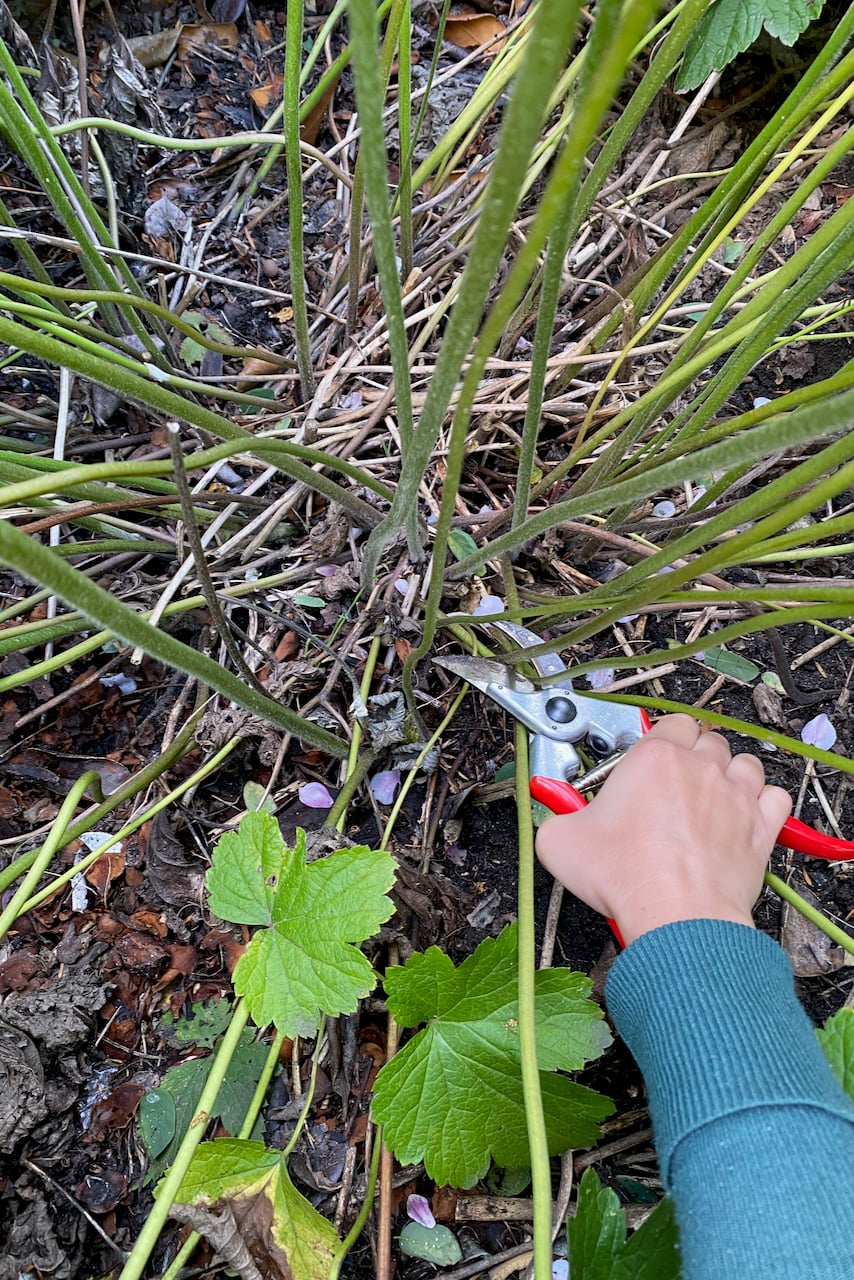
We can wait after the first frost, once the foliage turns brown, to trim everything back to a few inches above soil level. Japanese anemones are really solid flowers once established (I’ve seen them still making a comeback and blooming after being accidentally mowed over.) So they don’t need much protection over the winter, unless they’re very young plants.
20. Ligularia (Ligularia dentata)
Ligularia dentata goes by many popular names. Some of which it shares with so many other perennials that started as woodland plants. It all gets a bit confusing, to be honest. Who needs another plant nicknamed “fleabane”?
Ligularia is an underrated and underutilized shade-loving plant, with large foliage and cheerful yellow blooms that shoot up high above its canopy. The leaf footprint can grow quite large, so maybe that’s why it’s not more popular.

Ligularia hits peak bloom, usually in August in my climate, then the flowers fade quickly. But the lush foliage sticks around and looks great well into the fall. Once they experience a frost, there’s not much lush left about them. They’ll turn brown and mushy, so we have to cut them back to a couple of inches above ground level.
Just like hostas, ligularia attracts slugs and snails – as you can probably tell by my photo above – so we should double-check for eggs while we’re doing our fall cleanup.
21. Garden phlox (Phlox paniculata)
Garden phlox (also known as tall phlox, to distinguish it from the groundcover phlox varieties) is another herbaceous perennial that is very prone to powdery mildew. On damp years, I end up cutting down mildewey stems even when they’re still in bloom (which is from early July to mid August in my area.)

By late November, I cut everything down to ground level. And if the foliage shows any signs of disease, I dispose of it with household waste.
Even though it looks very sturdy, garden phlox is a relatively sensitive perennial. So think about applying a layer of mulch to keep an even ground temperature throughout the summer months. The roots will thank you. If you have potted phlox, I’d recommend you overwinter it in a sheltered spot such as a greenhouse or an enclosed patio.
22. Yew (Taxus)
Whether you’re growing yew as a stand-alone shrub or in a hedge, you probably know that this evergreen is tough-as-nails. It can tolerate its last pruning of the year later than most other hedge shrubs.
But don’t leave it too late. With evergreen shrubs – even though they experience winter dormancy differently from their deciduous cousins, there’s a risk with cutting late into the season. The risk is that the cut stems won’t have enough time to scar over and heal in time for winter. This leaves them vulnerable to frost burn.
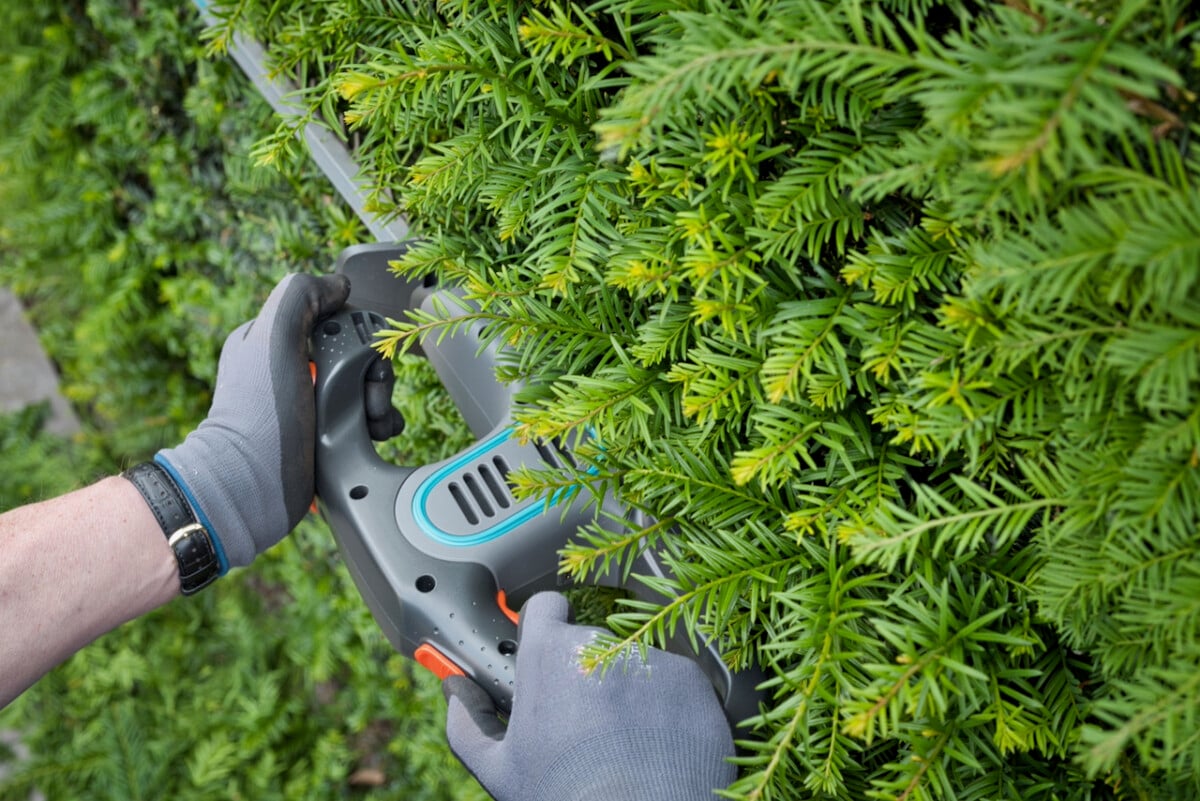
And one more tip if you’re cutting a hedge before winter, especially if you live in a climate that gets heavy snow. (Not surprisingly I learned this from a Minnesota gardener.) Prune the hedge at an angle, either in the shape of a triangle or a gentle slide.
This will prevent too much snow from accumulating on the top and putting pressure on the branches below. If you’re a little bit particular about your hedge being straight at the top, you can rectify the shape in spring.
23. Hollyhocks (Alcaea)
I have never seen a hollyhock that aged gracefully throughout the seasons. Don’t get me wrong, I love these cottage garden classics.
But by the time the tall spires of flowers have turned into seed disks, the leaves look a right mess. You get those yellow-brown bumps on their undersides, as if they’ve all come down with the measles. Hollyhock rust is common, and it’s not pretty.
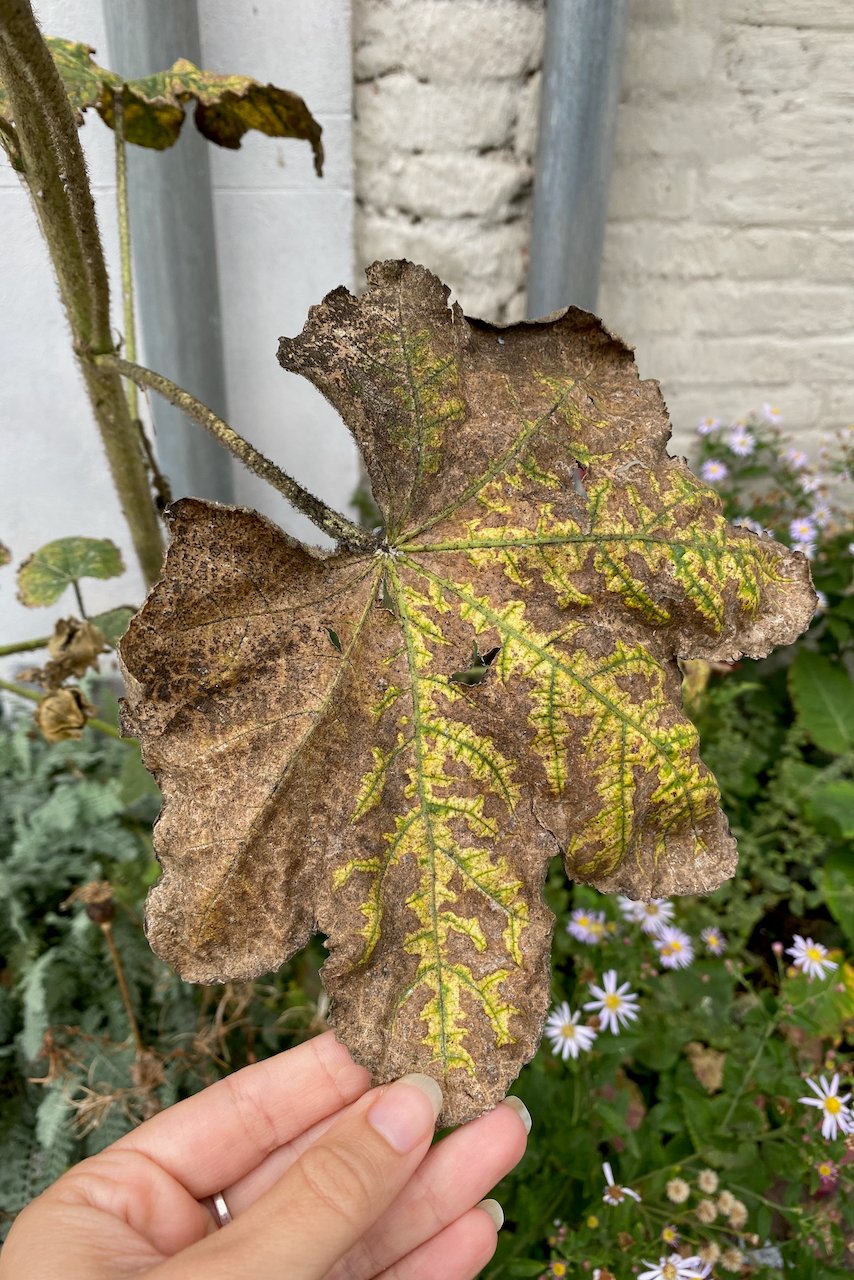
Most hollyhocks are biennials, meaning they grow leaves in their first year and bloom in the second. In some climates, some types of hollyhocks may even grow as short-lived perennials.
No matter how you’re growing them, you know that the leaves need to go in the fall. I cut them down to three inches above soil level and toss all the infected material. While I’m at it, it’s a good time to sprinkle some more hollyhock seeds around. Always have hollyhocks on the go for next year’s display.
24. Bee balm (Monarda)
Bee balm generously spends the summer bringing all the good insects to our yards. And for such a robust plant, you’d think we’re leaving it to overwinter in the garden.
Some years, I do let it spend Christmas and Valentine’s day in the company of black-eyed-Susans and echinacea. Other years, when it develops powdery mildew late in the season – much like peonies and garden phlox – we have to part ways in the fall.

Just like with most herbaceous perennials, I trim it down to a few inches above ground. It will retreat underground in the winter and emerge again happy and healthy come spring.
25. Rosemary
Just like the other Mediterranean herbs on this list (lavender, savory and oregano), rosemary can also do with a haircut at this time of year And not just because it’s the perfect time to use its flavor in fall cooking.

We don’t prune rosemary hard, unless we want to be left with a handful of woody stems. But we trim some inches off the top to encourage branching and achieve a bushier look. If we’re pruning earlier in the fall, we can even use the plant material we’re removing to start new plants from cuttings.
26. Lupines
Lupines are another short-lived perennial that likes to snooze underground over winter. You’d think the majestic spire flowers last forever, but the seed pods will pop by the time summer’s over (make sure you collect the seeds). And the foliage doesn’t fare any better.
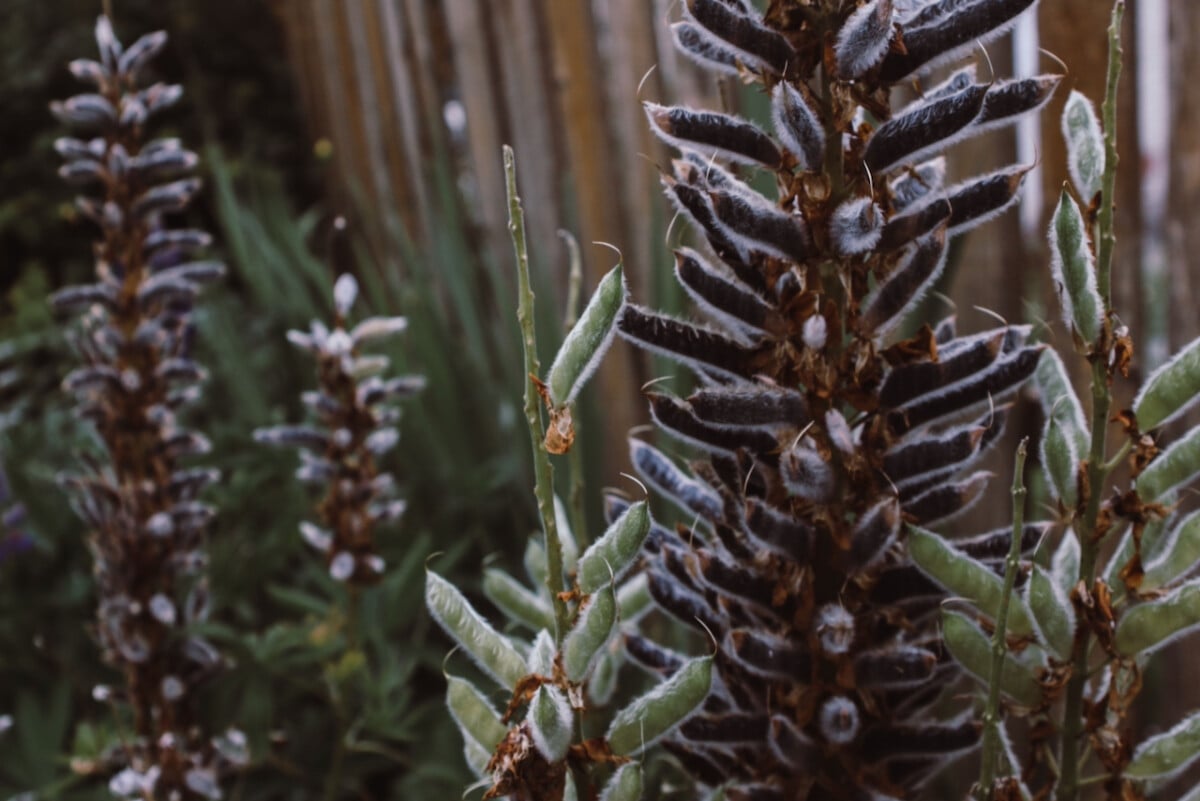
You probably know the drill by now: cut it down to a few inches above ground. In my garden, lupine foliage doesn’t get too ratty, so I usually wait until I’m done with the rest of my garden tasks for the fall. By then, we’ve usually had some frost, so I don’t feel bad cutting the pretty leaves, since the frost has turned them into the opposite of pretty.
27. Perennial sunflowers (Helianthus)
Did you know that there are numerous types of perennial sunflowers and only one type of annual sunflower (Helianthus annus)? In the central and eastern United States alone, there are more than thirty species of native perennial sunflowers. Yet when we think of sunflowers, it’s the annual ones that first come to mind.
We can let perennial sunflowers overwinter in the garden. The leaves are rigid enough and they’ll just turn brown, not slimy. The flower heads generally hold up in the winter.

However, there are two scenarios when we can prune them in the fall. First of all, if the sunflowers get covered in powdery mildew – which they’re prone to – then we should cut them back to soil level.
Secondly, if the perennial sunflowers are a tall variety, and especially one planted in a more open garden, then we should take at least the top third off now. We’ll finish the rest of the pruning in spring.
Here’s why: During the winter months, tall perennials that are planted in open, windy locations are prone to a type of damage called windrock. As the wind blows, it rocks the plant back and forth, turning the foliage into sails. This motion, repeated over the course of months, can dislodge the roots of our perennials and weaken them when they’re at their most vulnerable.
28. Elecampane (Inula)
Elecampane looks a little bit like a perennial sunflower or a combination of sunflowers and daisies. It’s a valuable perennial for wildlife with bumblebees, honeybees, hoverflies and some butterflies crowding to the flowers all summer long.
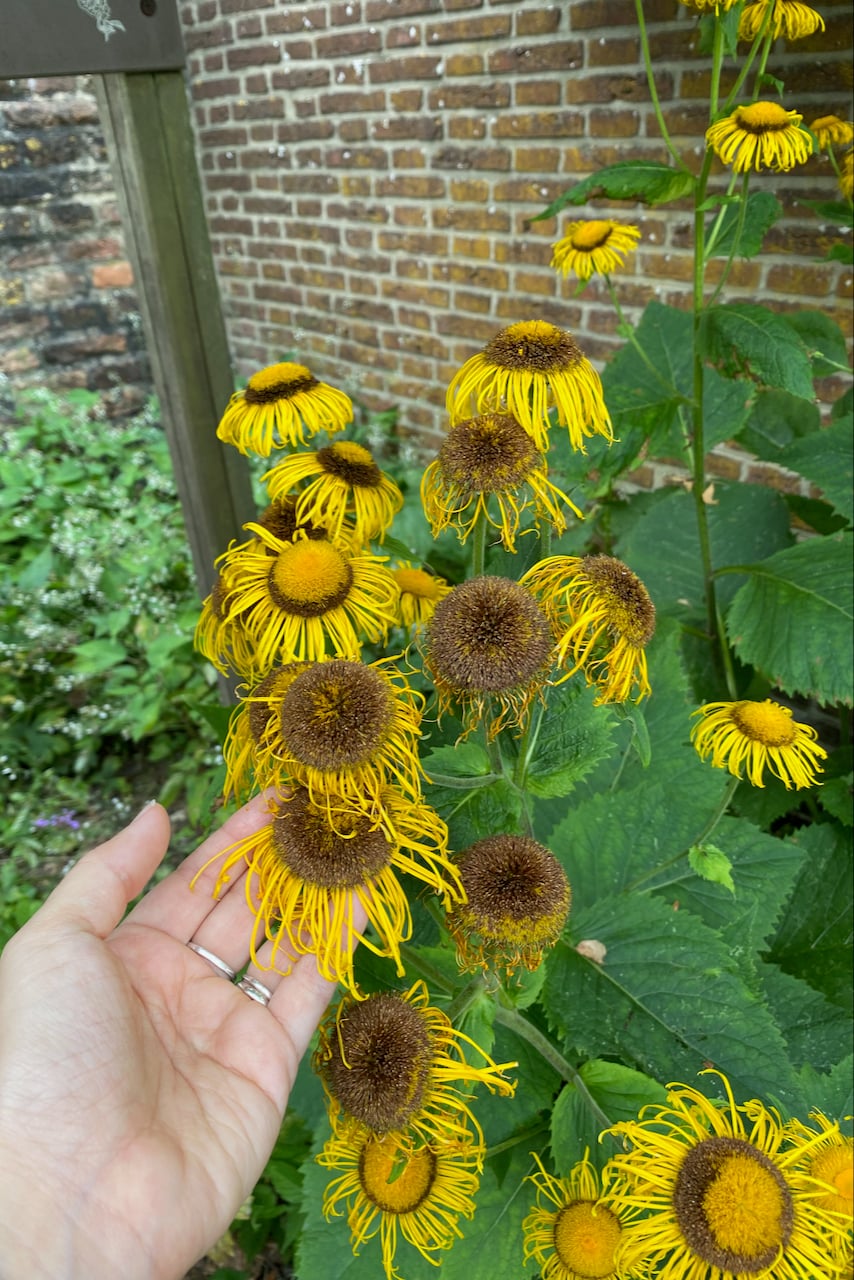
I first encountered Inula in a historical herb garden, where I read that the roots used to be caramelized into candy and the leaves were used to make a tonic. Nowadays, I’ve only seen it used as an ornamental perennial. It fits well in the back of borders and can tolerate some shade and soggy soil.
Just like with perennial sunflowers, we can cut it back in the fall if it’s showing signs of mildew or if it’s tall enough to become prone to windrock over the winter months.
29. Wallflower (Erysimum)
I want to end this list with another old-fashioned perennial that I don’t see mentioned much in popular gardening media. It may not enjoy the popularity of roses or the charm of dahlias, but I think we should make a comeback in our gardens.
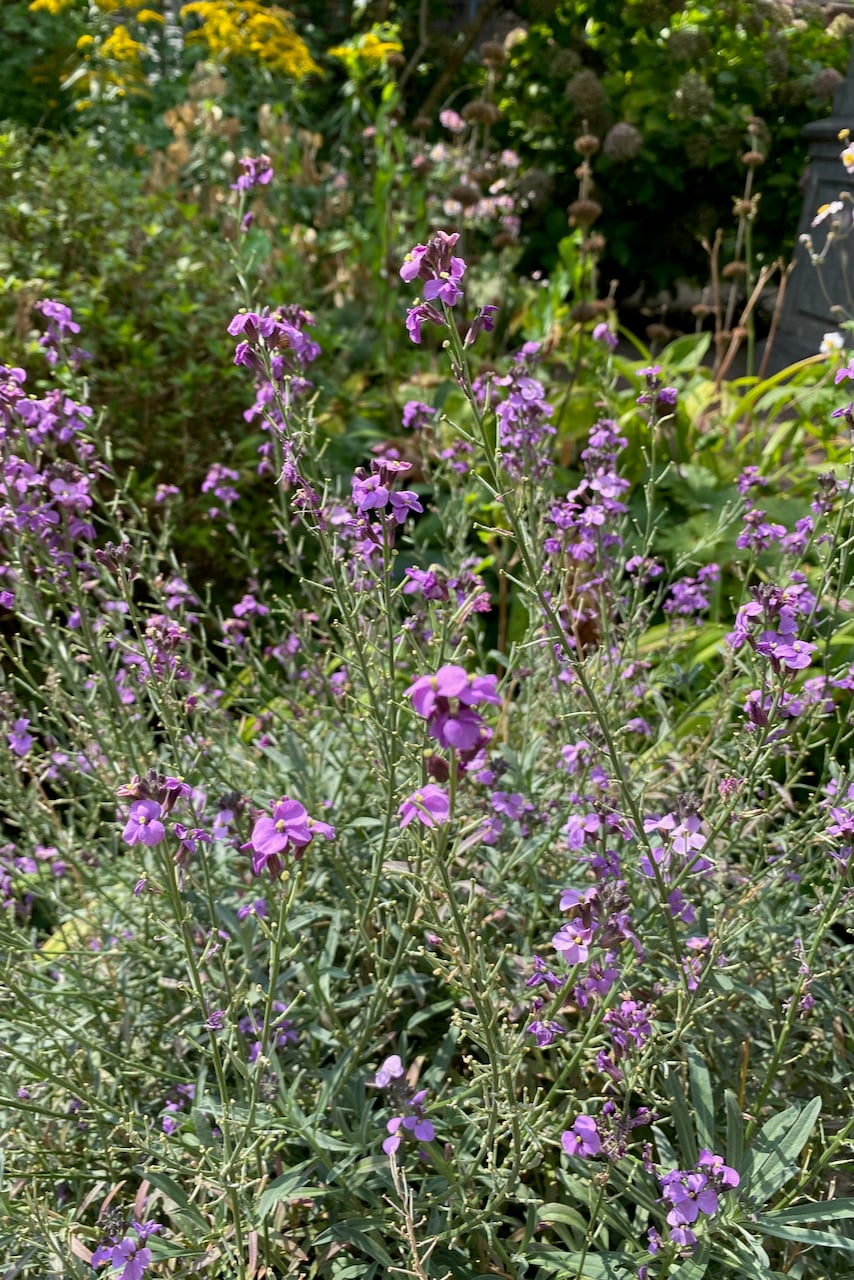
I’m talking about wallflower (Erysimum), a pollinator generalist, whose flowers are visited by bees, butterflies, hoverflies, hummingbirds and moths. Because it flowers on tall spires, from the bottom to the top, it can provide months of colorful blooms. It will often stay in bloom from mid-spring all the way into fall.
At the end of its blooming season, we prune it the same way we would prune lavender, taking a light trim off the top, but not cutting back into woody growth. This prevents it becoming leggy with age, which it tends to do.
30. “Prune” annuals
I wanted to finish this article with a word of advice on annuals at the end of their growing season.
But what’s the point of pruning annuals? Aren’t they done for the year? Don’t we just pull them out?
I know pulling out annuals is the most common way of tidying up the garden in the fall. Let me tell you what I’ve been doing for a few years.

I simply prune annuals as I would perennials, cutting them down at ground level. No, of course they won’t come back next year (unless they’ve self-seeded). But by leaving the roots in the ground, I’m mimicking what nature does when a plant dies. The root stays in the ground, decomposes and feeds bacteria and fungi in the soil in the meantime. By not pulling out the roots, I also avoid disturbing the mycorrhizal mycelium networks in my soil.
So for annuals – such as marigolds, nasturtiums, cosmos, busy Lizzies (Impatiens walleriana), and million bells (Calibrachoa), zinnia and annual sunflowers – simply remove the plant material above the ground and don’t worry about the roots. They’ll be gone by the time we’re ready to plant new things in spring.
Get the famous Rural Sprout newsletter delivered to your inbox.
Join the 50,000+ gardeners who get timely gardening tutorials, tips and tasks delivered direct to their inbox.