

For me, August is the month of lunching al fresco in the garden, a fresh meal sandwiched between getting a suntan in the morning and sipping cocktails on the terrace at ten o’clock in the evening.
I could probably name ten other pleasurable pastimes in the garden in August. And in between everything, I still like to keep an eye on how my plants are doing. There’s no garden without gardening, and I’m in love with both the place and the activity.
One of the tasks I undertake in August in the garden is deadheading: removing the old and spent flowers from my ornamental plants. I’m not a serial deadheader, and there are many reasons why I sometimes don’t bother. (I wrote about a bunch of reasons why you shouldn’t deadhead in this article.)
However, throughout the summer, my intervention philosophy is “deadhead early on and keep the seedheads later on.”
Generally, we remove the spent blooms in our garden for a few reasons:
- We want to prevent the plant from wasting precious energy by going to seed.
- For some plants, this energy is redirected into branching out and blooming again; this extends the flowering season not just for our enjoyment but for that of our pollinator guests.
- For other plants, the energy is redirected to increasing the size and vigor of existing buds.
- It simply makes our garden look tidy and well-kept. I like the look of some standing seedheads in the winter garden, but none of the plants that made this list would be a good candidate for that.
- There are some plants that we simply want to prevent from self-seeding where we don’t want them to grow.
Here is my list of plants that we should deadhead in August:
1. Roses, especially repeat flowering ones.
Roses are such a summer treat. In my experience, they can also be a summer disappointment, especially if they fail to bloom properly. (I’ve written about a few causes and fixes in this article.)
When we keep deadheading roses throughout the summer, we encourage even more blooms to open up fully. But don’t be disappointed if they don’t. Some roses will only have one set of flowers a year.
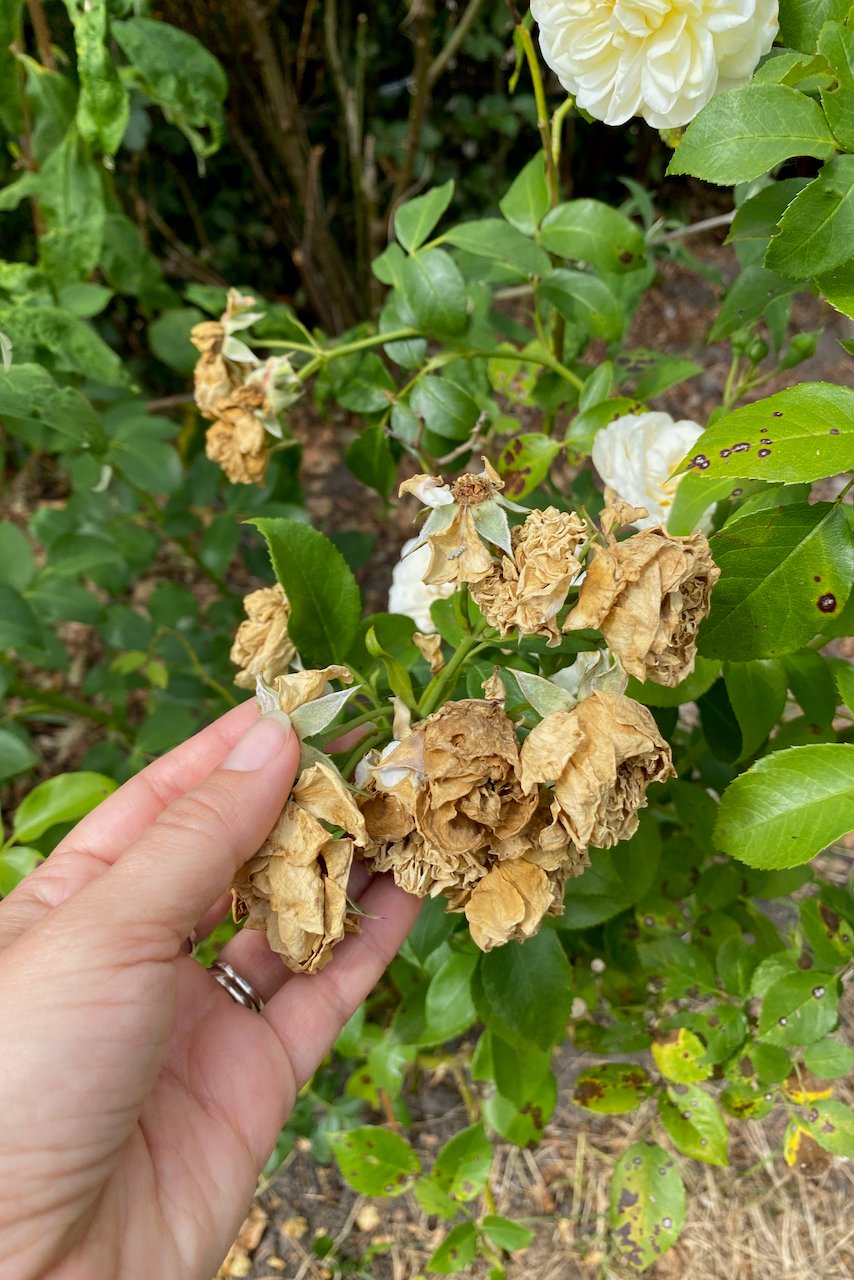
Only repeat-bloomers, most of which are either climbers or ramblers, will reward us with another batch of flowers later in the summer.
However, if you’re growing roses that develop good rose hips, such as Rugosa roses and dogwood roses (Rosa canina), I encourage you to stop deadheading early on and allow the hips to develop. You can pick some to use in cooking and leave the rest for the birds to snack on over the winter months.
2. Stonecrop sedum
I’ve been a fan of stonecrop sedum ever since I planted it in my shallow garden. It spreads reliably, albeit not as quickly in my zone; it has extremely shallow roots, so it’s easy to remove when not wanted; and perhaps crucial, given the summer we’re having, I don’t need to water it.
Stonecrop sedum blooms in June, and the flowers last until July. They spread like a scattering of snow floating above the juicy leaves, sustained by tall-ish stems (tall considering that this is a ground cover).
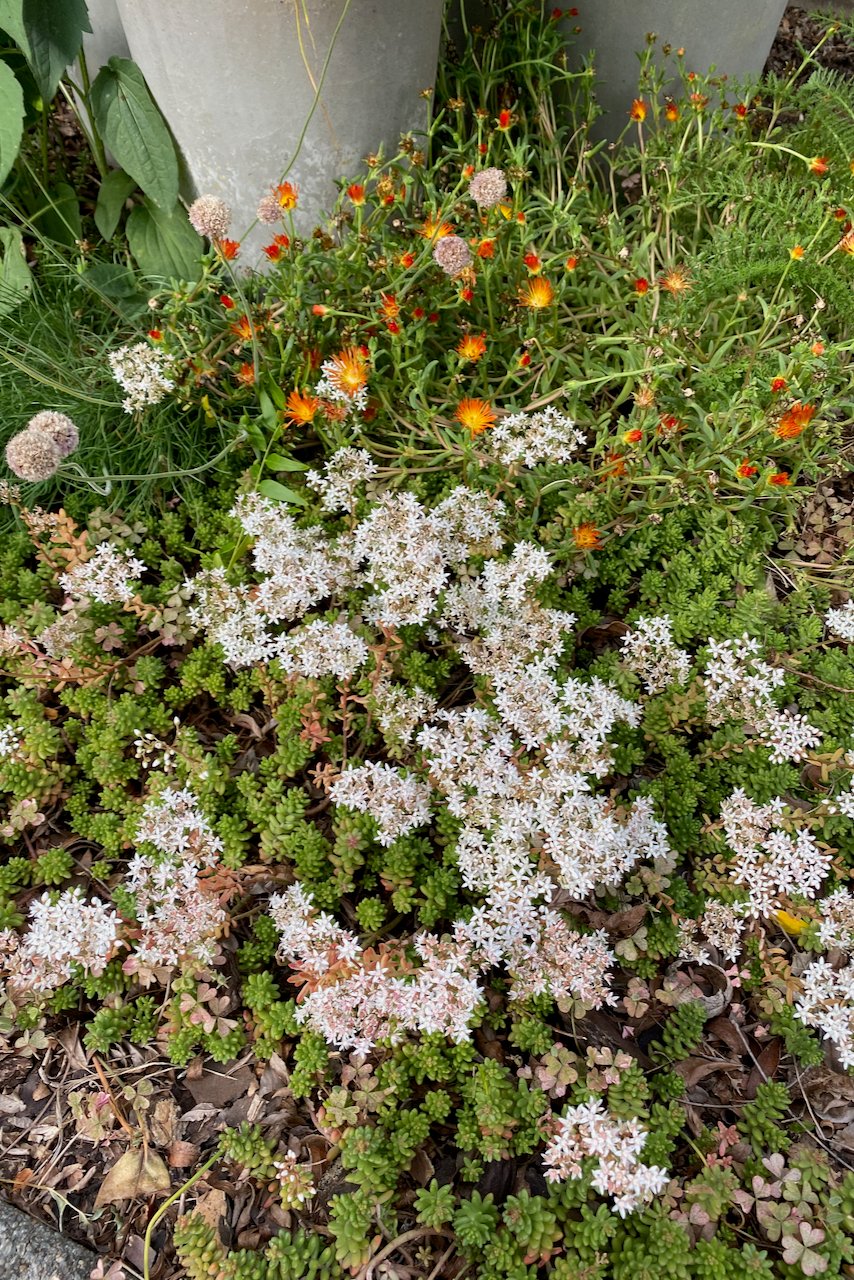
But once they’re gone, the dry flowers and stems turn mustard yellow and look very … unimpressive. I deadhead the entire stem to the first rosette of leaves, just to make it look tidier.
Stonecrop sedum does not rebloom in my zone, but it does turn into beautiful shades of oranges and rusty reds as the cold comes. That’s why I’ve included it in my list of ornamentals with three seasons of interest.
3. Dahlias
The good news is that, in August, the best of dahlias is yet to come. And for that, I am grateful to my past self who took the time to jumpstart dahlia tubers indoors in pots. However, the fact that the dahlias flowered early in the season also means that the first batch of flowers began to wilt early.
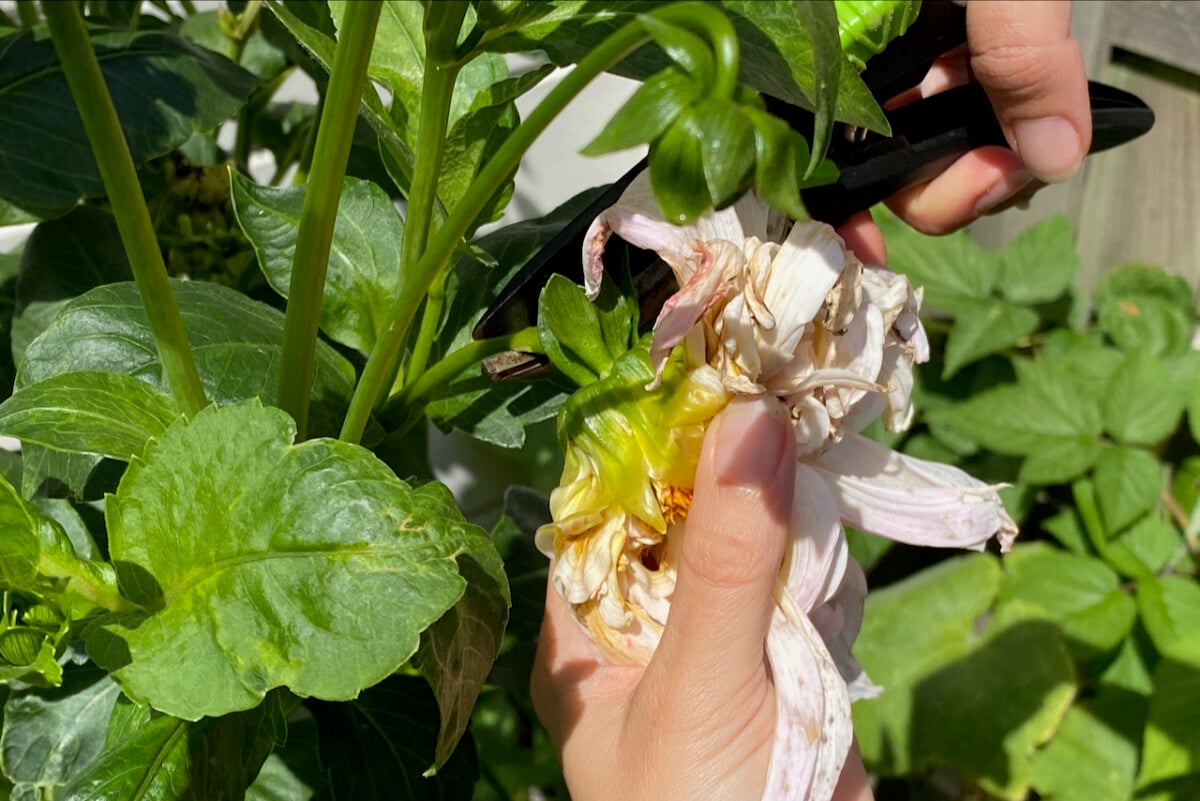
Even for my large dinner plate varieties, such as the Café au Lait below, the first blooms called it quits in the first week of August. Now I have no qualms about cutting them while they’re fresh and stunning and bringing them indoors for a vase arrangement. But for the ones I leave in the garden, I start deadheading them as soon as they start looking a bit ragged. This redirects the dahlia’s energy towards the buds that have yet to open up.
4. Sweet peas (Lathyrus odoratus)
I love seeing sweet pea flowers meander up and along anything they can climb on. Most of the time, I train them on trellises and support. But I especially enjoy it when they take the initiative and train themselves on the magnolia shrub. It truly gives the impression that the magnolia is in bloom in mid-July.
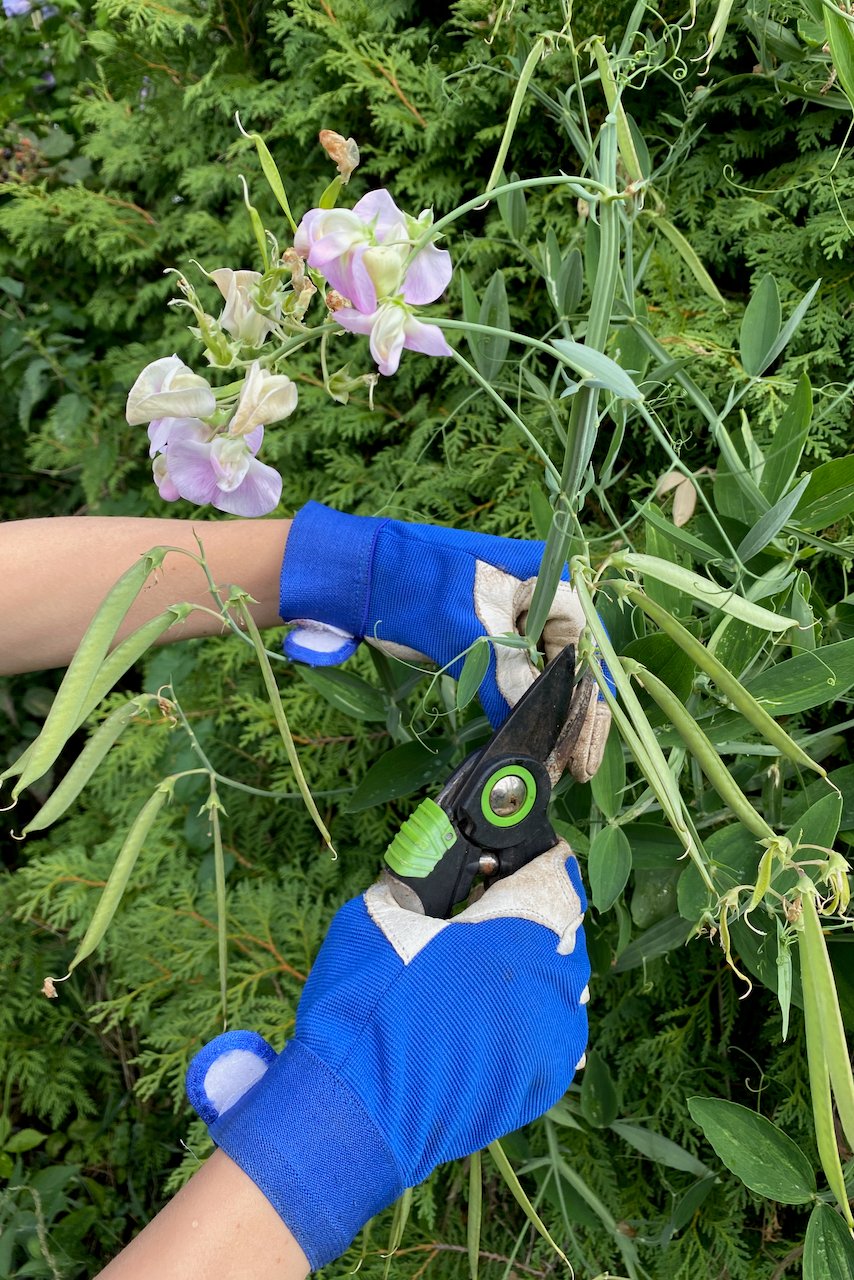
By August, some of the flowers will have shed their petals and begun to develop into pods. Meanwhile, other sweet pea blooms are yet to open fully. So I trim off the first few batches of pods to redirect the energy towards the newcomers. I leave the last batches for seed collection, since sweet peas are annuals that I need to start every year.
5. Hostas
Hostas are a reader favorite around here. They get a lot of love, and we also love writing about them. I think their main attraction is the wonderfully robust and varied foliage, and the flowers themselves are a boon for pollinators all throughout July. Once they’re done blooming, I remove the flowers to tidy up the plant and refocus on the leaves.
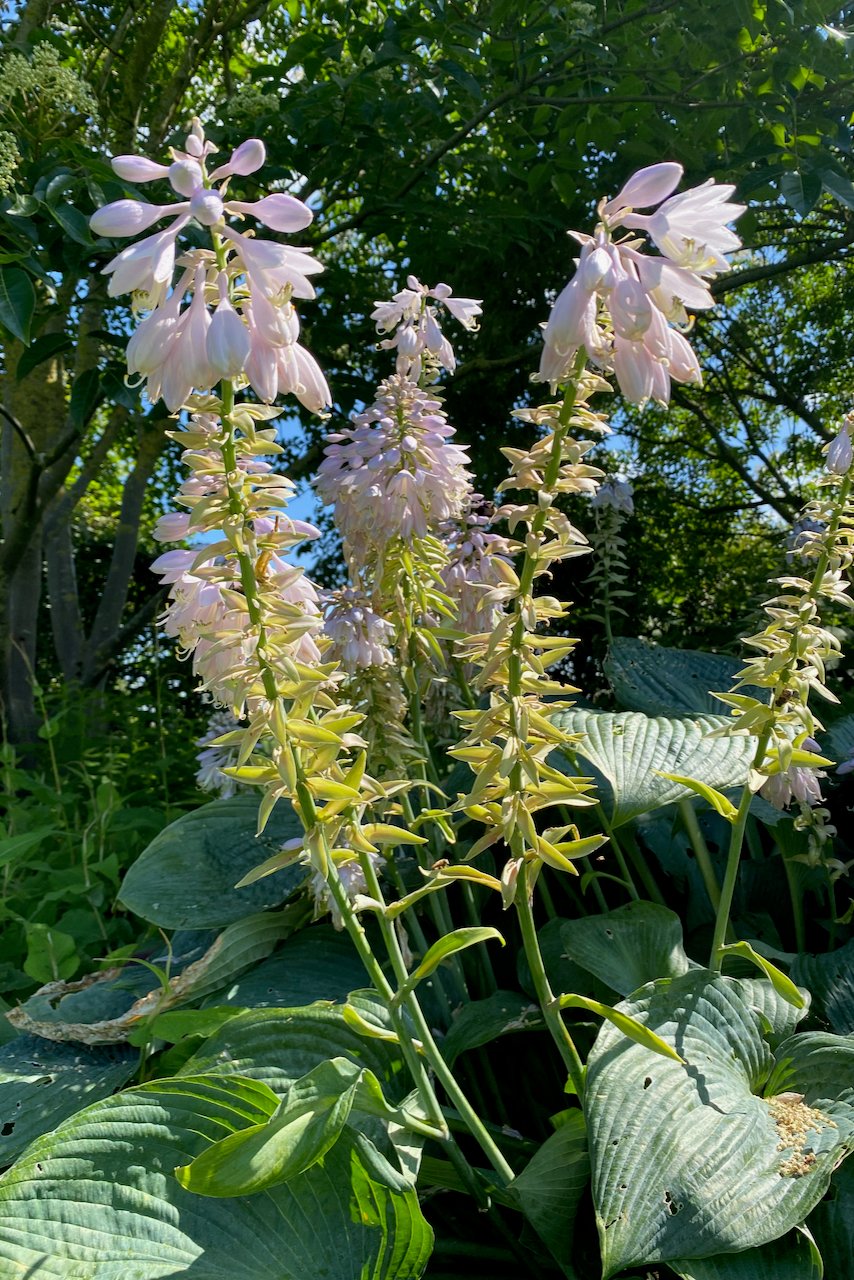
The flowers start wilting in the same direction as they started blooming: from the bottom to the top. Once the tops of the hosta flowers are gone, I remove the entire stem as far as I can reach into the foliage. Hosta will not rebloom, but it will continue to look attractive until late in the fall.
6. Strawflower (Xerochrysum bracteatum)
Strawflowers, whether you’re growing the classic ‘Gold everlasting’ or the more colorful varieties popular in Europe, are a stunning addition to any backyard.
In my garden, they don’t last long, mainly because I can’t help myself from using them as cut flowers. After about a week in a vase, I’ll start drying them. They retain their shape and color well when dried.
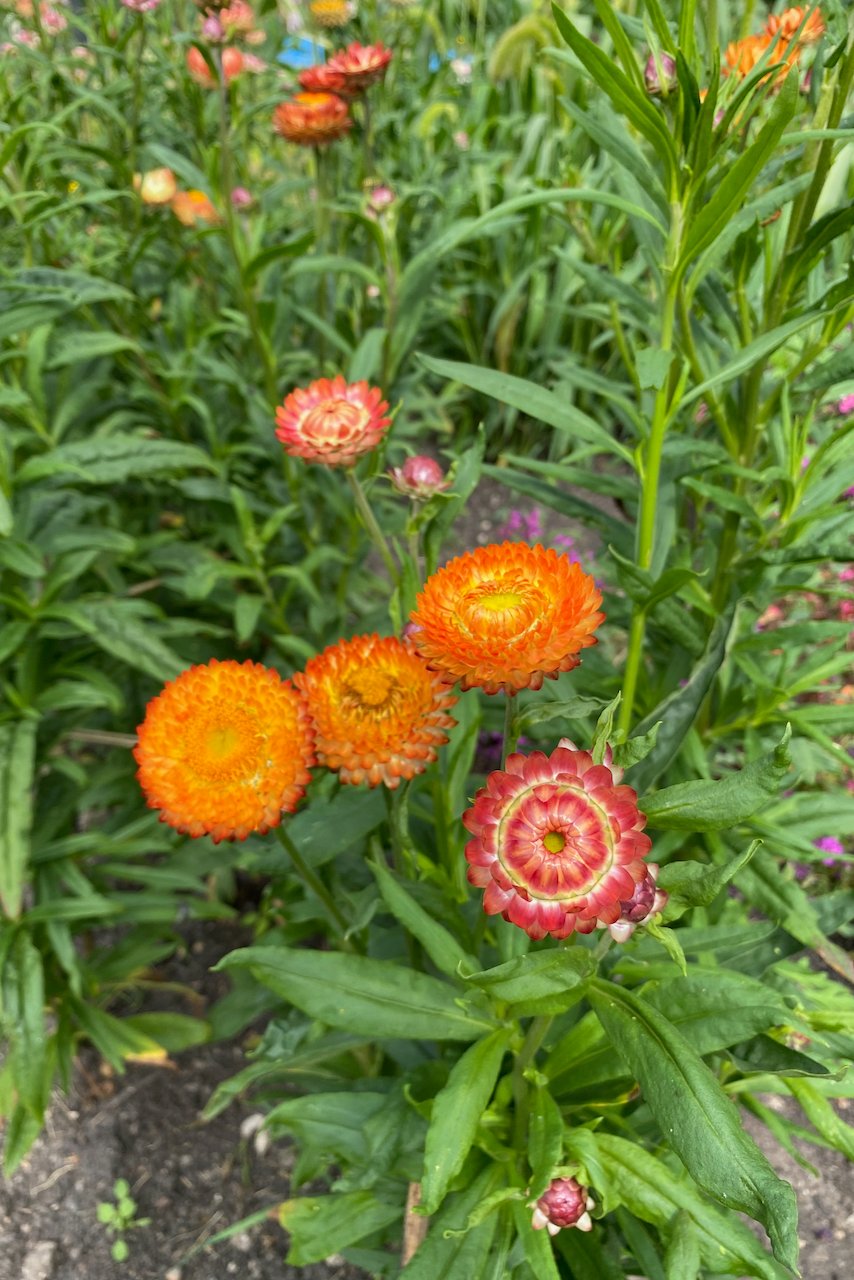
Depending on where you’re gardening, they’ll either grow as an annual or a short-lived perennial (here’s an article in which I explained what that means).
If we keep deadheading strawflowers throughout the summer, they’ll stay in bloom longer. Simply cut below the spent blooms, right above the first set of leaves from the top.
7. Helenium (Helenium autumnale)
Helenium – that of the unfortunate nickname “sneezeweed” – is generally considered a fall plant. Hence the autumnale in its name. But it does start blooming as early as late June. If we keep up deadheading it, it will continue to flower until it freezes.
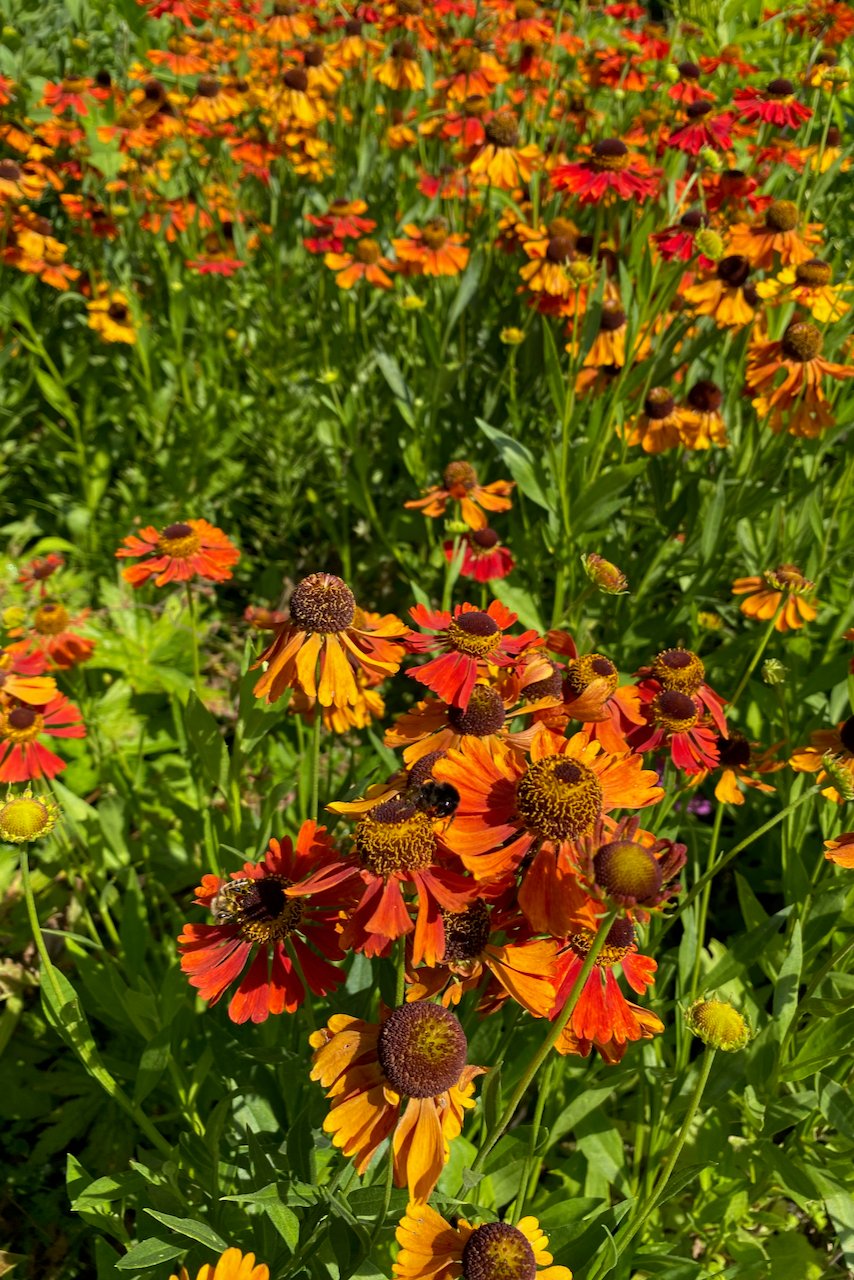
We simply have to trim off the spent flower heads down to the first set of foliage. Yes, that includes the stem too.
This will encourage the plant to develop side stems that will also bloom. Thus keeping the plant going for a couple more months, both to our enjoyment and that of our pollinator friends.
8. Globe thistle (Echinops)
Echinops (not to be confused with echinopsis, a large genus of cacti native to South America) made it to my list of 15 perennials that bloom all summer long. However, we must give them a helping hand by cutting off spent flowers all the way down to a side branch.
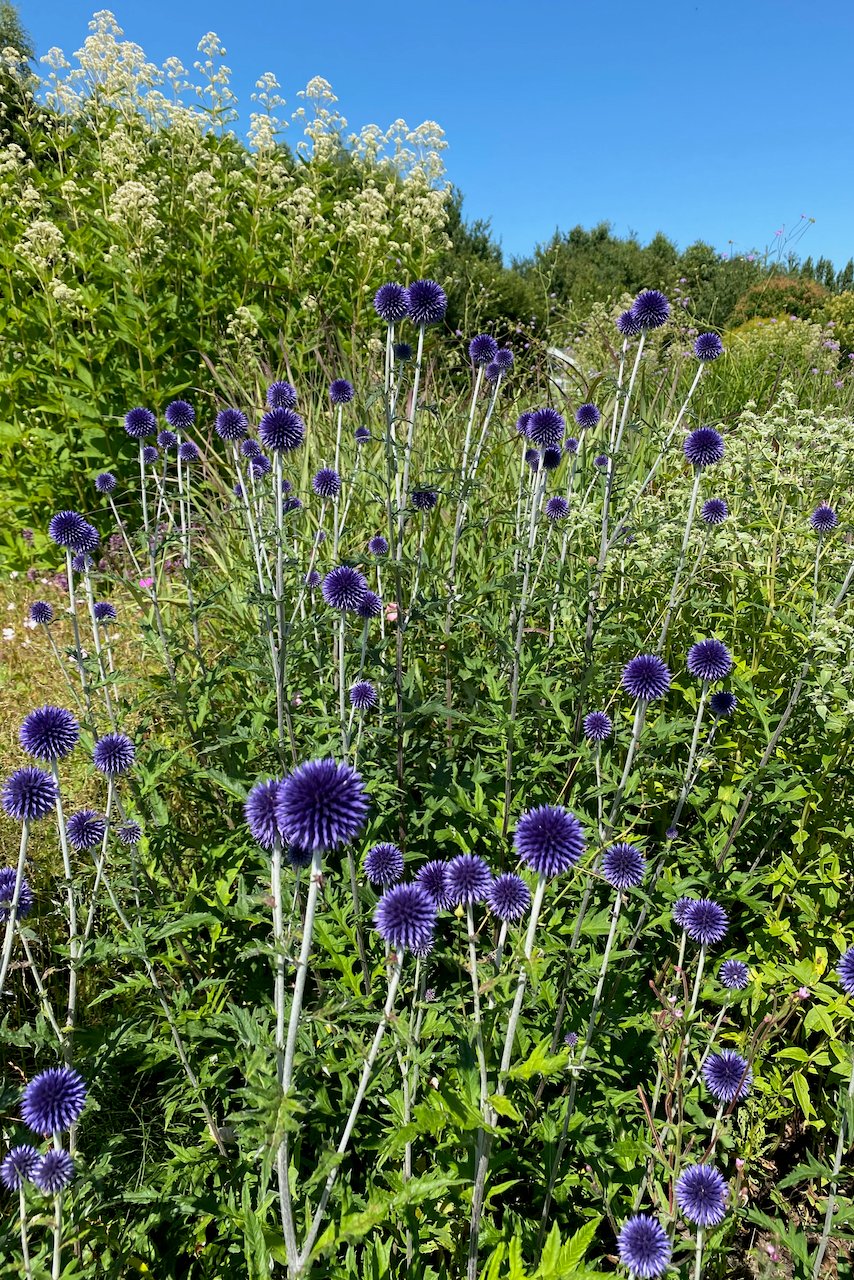
Once they’re done done, we can cut the entire stem down to the base, leaving just the foliage in place. They might rebloom for a final salve at the end of summer, but the flowers will be much smaller the second time around.
I’m in awe of how well this perennial handles drought and heat while managing to stay in bloom and a shade of electric blue that you rarely see in nature. Just like the strawflowers I mentioned above, globe thistles make excellent dry flowers. So you can deadhead them lower and keep them as indoor decor for months.
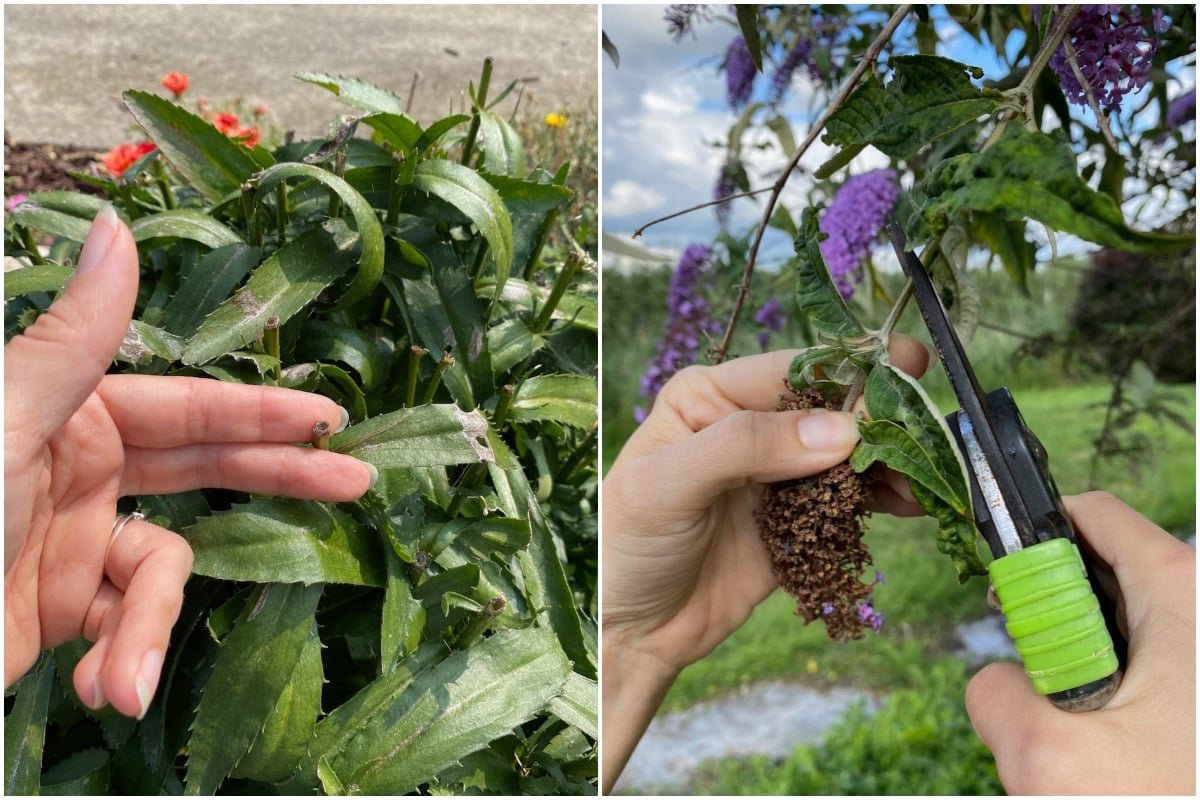
9. Butterfly bush (Buddleia)
The butterfly bush went from a popular garden staple a few decades ago to a much-reviled ornamental considered a “noxious weed” in some parts of the United States.
Truth be told, I’ve never had trouble with it spreading unwanted in my garden. However, we no longer recommend it for planting, now that we know the consequences.
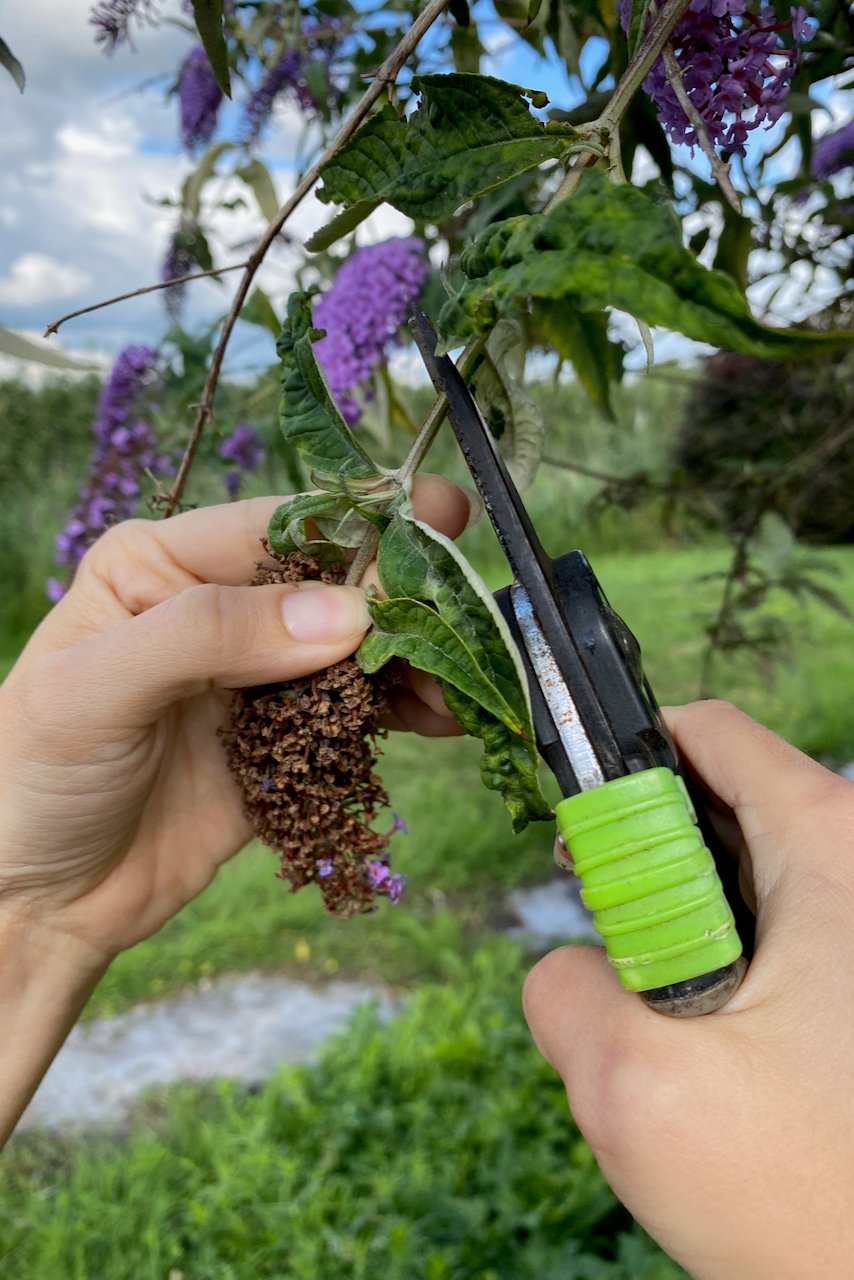
If you already have a butterfly bush in your garden, the best way to prevent it from self-seeding is to deadhead it as soon as the flowers are gone. Luckily, it doesn’t all go to seed overnight, so deadheading is manageable even on a slower schedule.
If you’re looking for a butterfly bush that has been specially bred not to self-seed (that is, a sterile cultivar), you can opt for cultivars in the series called Lo & Behold, Flutterby and Miss + a color.
10. Moss rose (Portulaca grandiflora)
Moss rose is neither a moss nor a rose. But it is a ground cover that blooms profusely, channeling the best of both worlds.
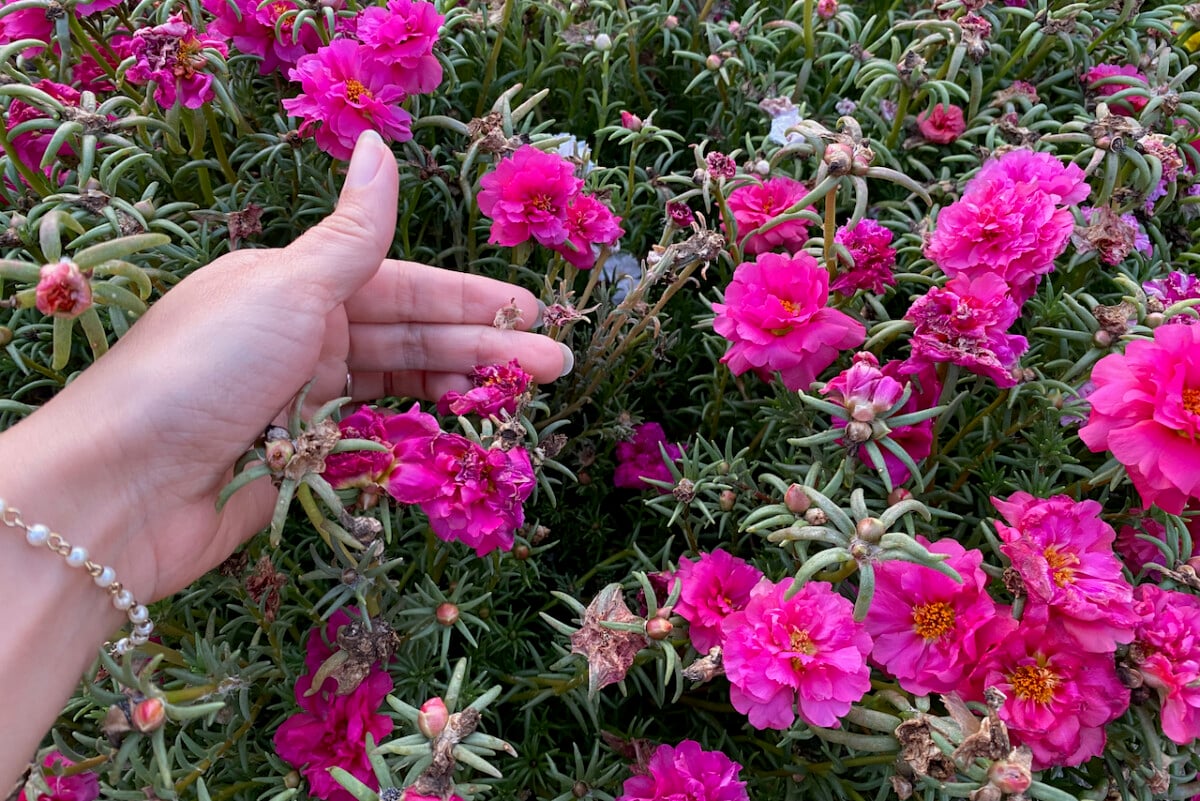
For me, it was another winner of the shallow garden. I bought a pre-mixed set of different colors. And as long as I keep up with deadheading the spent flowers all throughout the summer season, the moss rose looks like a colorful carpet of blooms for months.
Just like the stonecrop sedum, it is absolutely undisturbed by the lack of rain we’ve been having this summer.
11. Moss phlox (Phlox subulata)
I added this one right below because, once again, we’re talking about a groundcover perennial and not a true moss. Moss phlox is full of flowers for months at the height of the season, in pastel shades of pink, purple or candy cane.
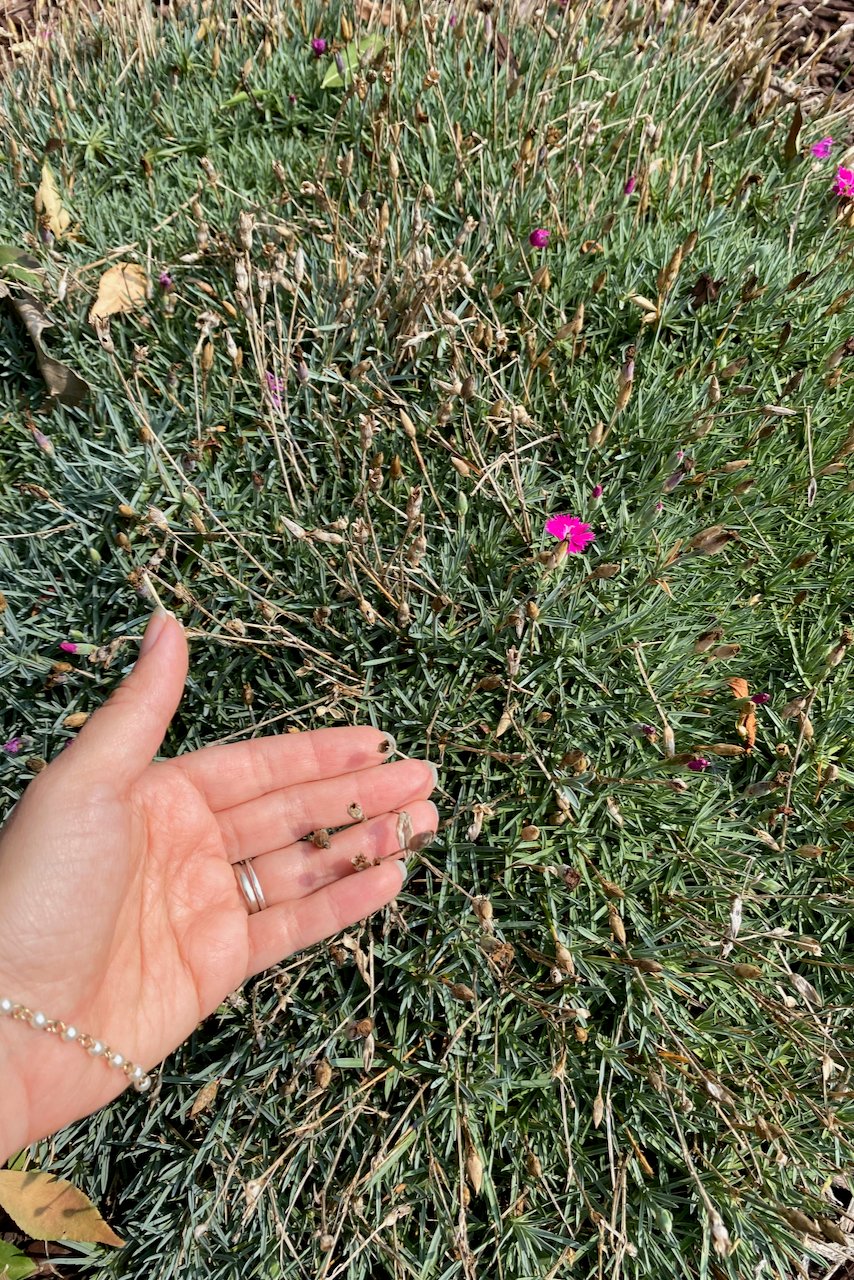
By August, however, it’s time to deadhead the stragglers and allow the carpet foliage to shine. And shine they will, as an evergreen perennial, all through the fall and winter months.
12. Marguerite daisy (Argyranthemum)
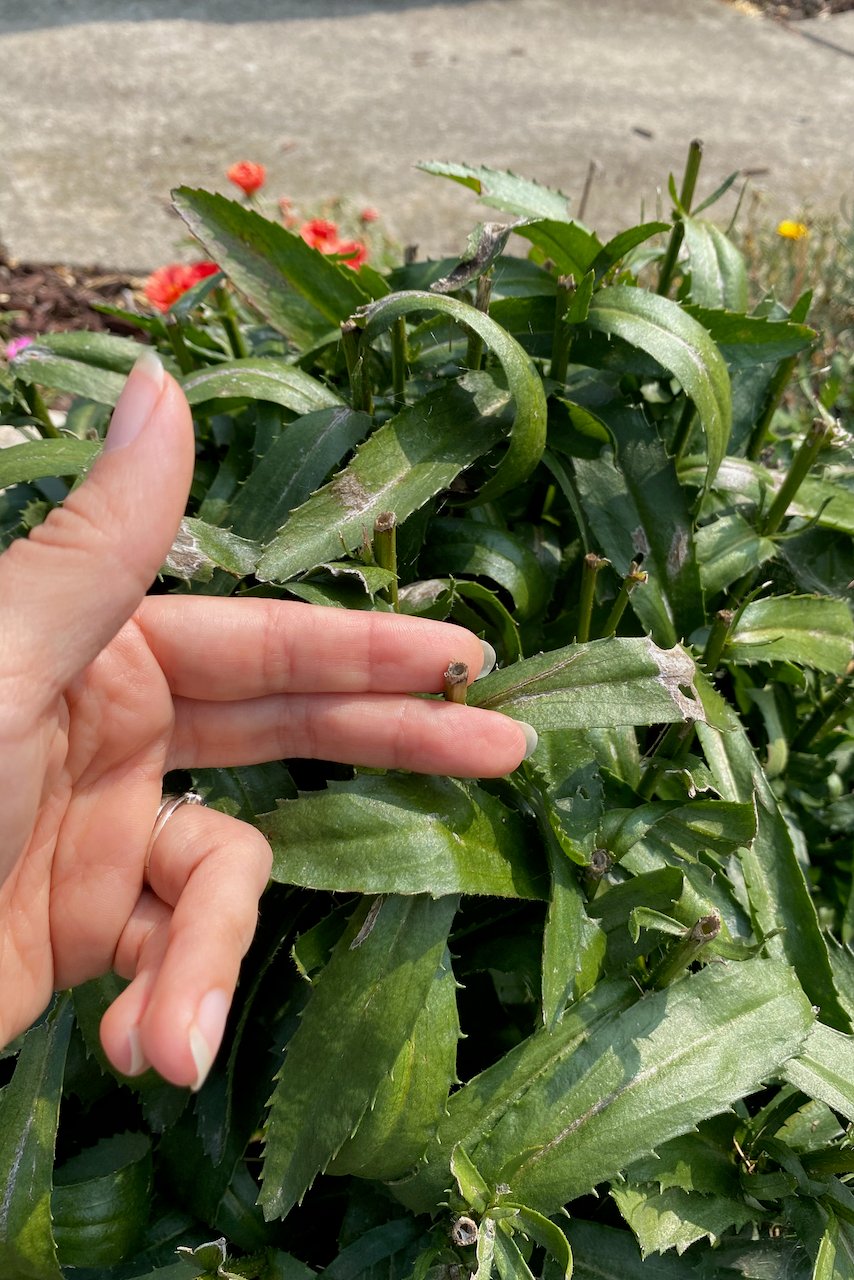
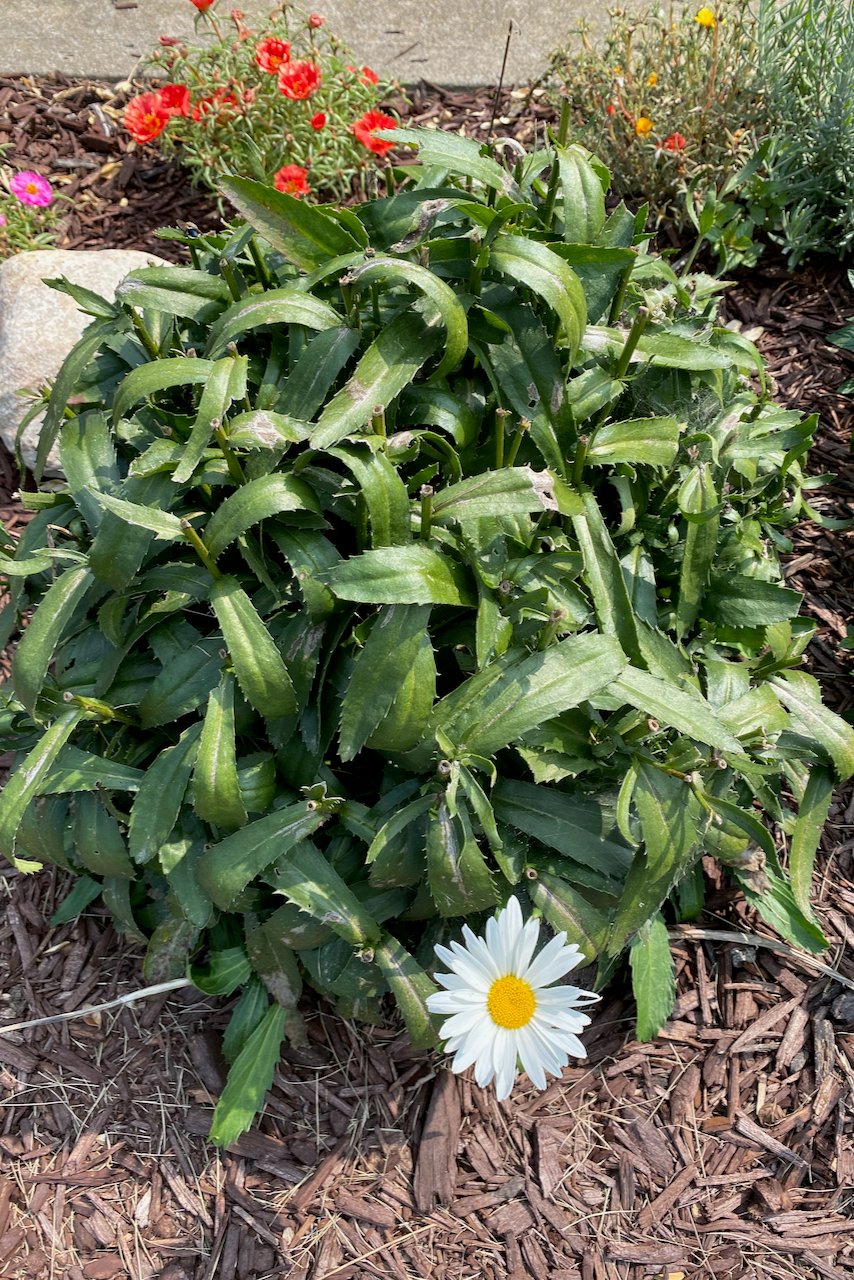
We talk a lot about shasta daisies (Leucanthemum × superbum) around here, mainly because they’re an American hybrid and popular with our readers. And you’ll see in the feature photo at the top of this article that I also deadhead them once they’re done blooming.
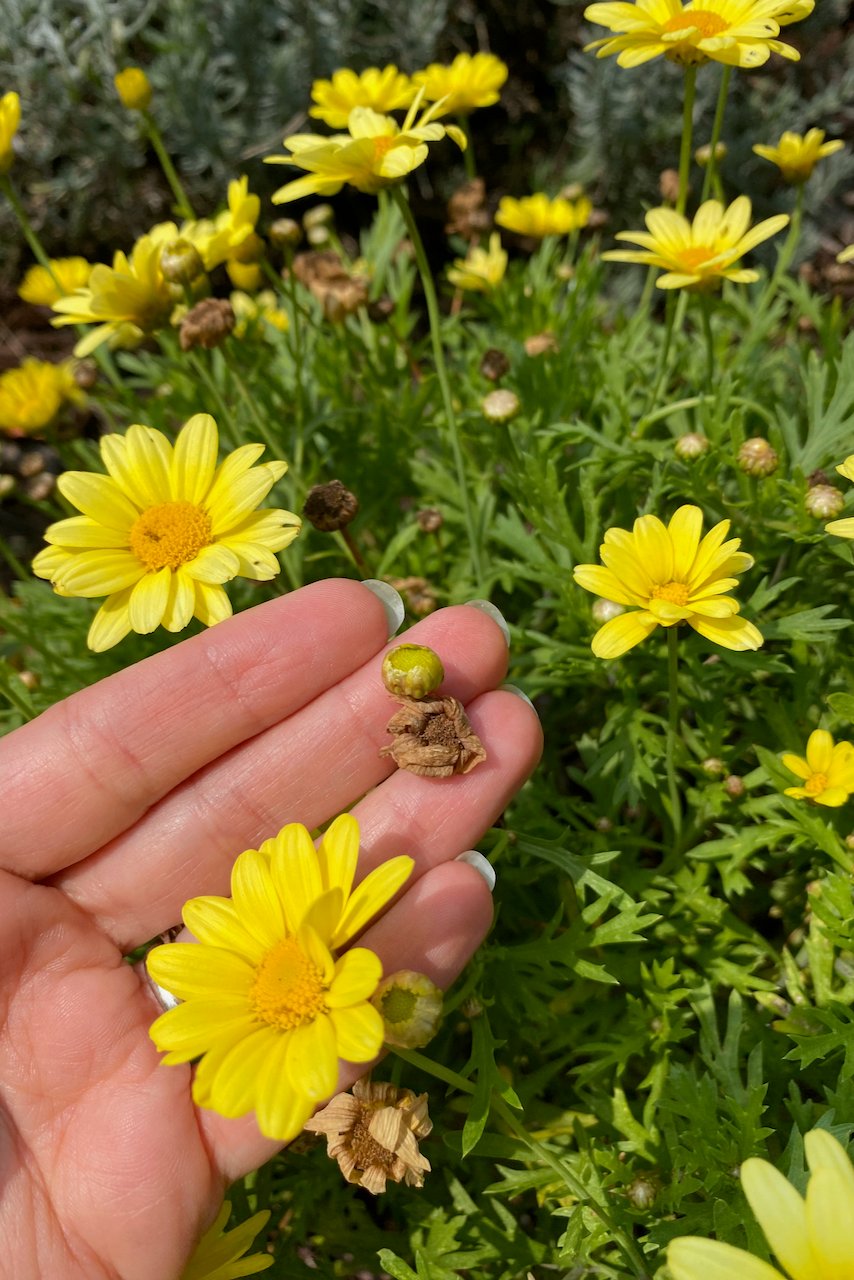
Marguerite daisies – native to the Canary Islands but naturalized in California- are just as pretty. And just like Shasta daisies, we need to deadhead them in order to keep them in bloom longer. They will still be putting our new blooms once the Shasta daisies are done for the year, so the overlapping effect is even more pronounced when deadheading.
13. Lavender (Lavandula)
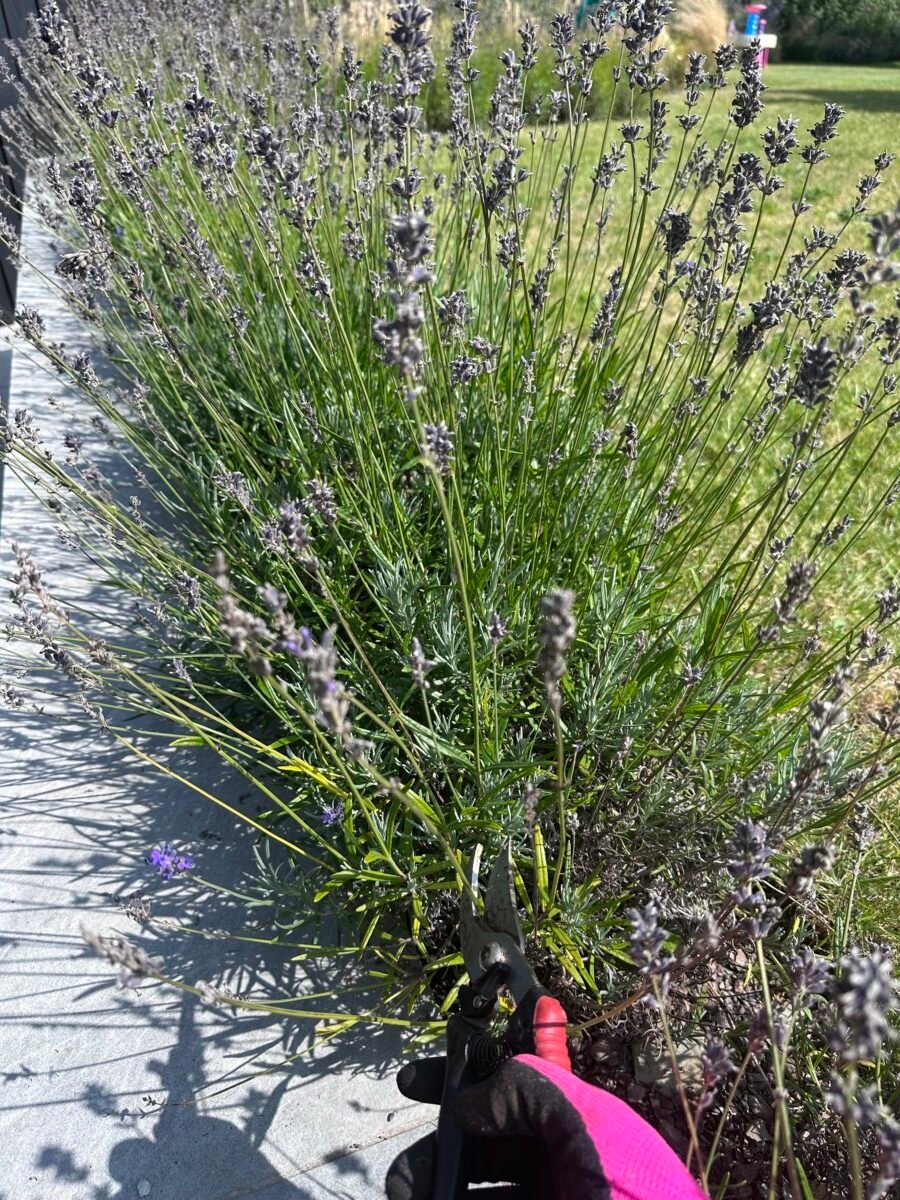
Lavender might be one of the most beloved garden staples—fragrant, drought-tolerant, and buzzing with bees all summer long. By August, many varieties have finished their first flush of blooms, and some have even started to dry on the stem.
Deadheading lavender in August is all about tidying up the spent flower spikes and encouraging a second, albeit smaller, wave of blooms. Use clean shears to snip just above the foliage, being careful not to cut into the woody base. This keeps the plant looking compact and also helps prevent legginess in the following season.
If you’re harvesting lavender for drying or crafting, August is your final window for this year’s crop. You’ll enjoy both the fragrance and the rejuvenated appearance of your plants heading into fall.
Get the famous Rural Sprout newsletter delivered to your inbox.
Join the 50,000+ gardeners who get timely gardening tutorials, tips and tasks delivered direct to their inbox.