

There’s an episode of the beloved 90s sitcom Friends, where it’s revealed that Monica (self-proclaimed neat freak) has a secret closet jam-packed with stuff.
A hodgepodge of knick-knacks, tucked away out of sight, was how she kept her apartment looking presentable, tidy and clean at all times.
I bet we all have that messy corner in our home, either a drawer of doom or a Narnia wardrobe of clutter. But I’m also willing to stretch that bet even further and say that, if you have a garden, chances are you probably also have a messy corner out there, too.
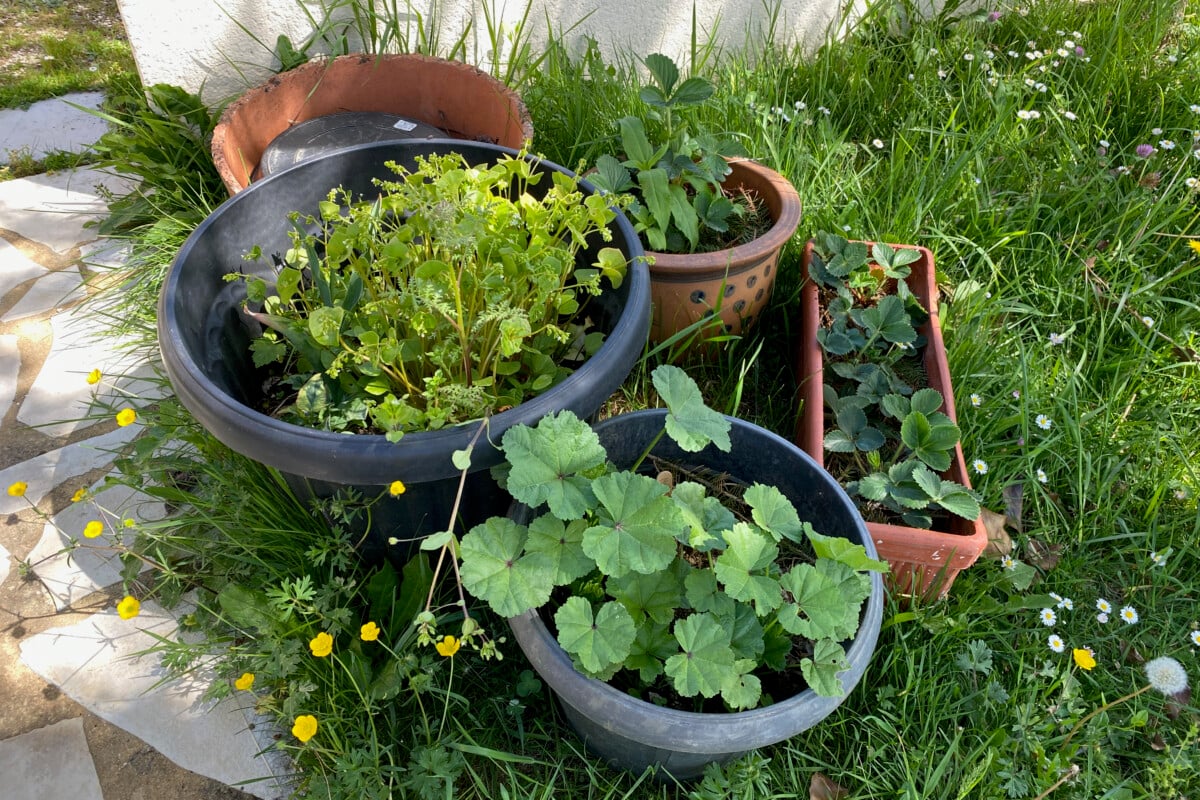
Take my multi-purpose messy corner in the photo below. I’m reviving some strawberries in part-shade (on the right), letting some miner’s lettuce go to seed (on the left), testing some mallow seeds (bottom container), and using the broken terracotta pot as a temporary compost bin.
For you, it may be an overfilled area behind the shed. Or a shaded spot where pots and seed trays go to rest for the summer. Maybe a pile of old paving slabs that have been waiting for their trip to the Habitat for Humanity ReStore for years.
My messy outdoor corners are a combination of all three.
If you want to tackle a messy garden corner, I have a few ideas on how you can use it and how to transform it.
1. Turn it into a wildflower corner.
Here’s the rule for my first suggestion: there are no rules. Broken terracotta pots stay in place. The rotten decking wood also stays put. You don’t have to clean anything, as long as there’s some bare soil where a seed could land and germinate.
Grab a bag of mixed wildflower seeds and scatter them around. Give everything a good watering if there’s no rain in the forecast. Then water it again once a week for the first month.
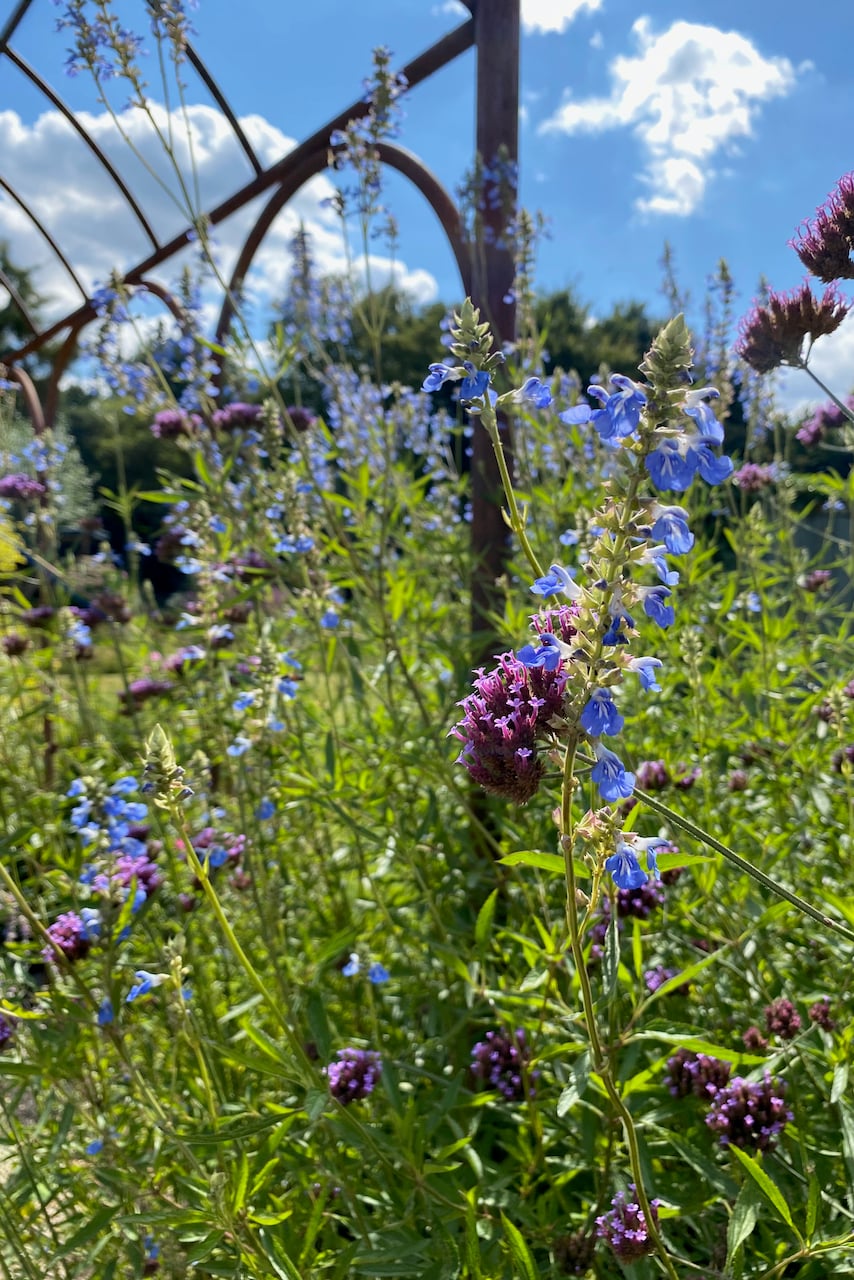
If you can find wildflowers native to your area or state, even better.
First of all, the pollinators will benefit from feeding on familiar, local blooms. And secondly, native flowers are better adapted to local climates, so they don’t need as much maintenance. You won’t need to water, weed, or mulch them. You can continue to neglect the messy corner, except now you’ll have pretty flowers to look at.
2. Cover up the messy corner with a container garden.
In one of my previous gardens, the messy corner I had almost given up on was simply too rocky to be used for planting. It was a weird combination of clay clumps, actual rocks and a few shovels of gravel thrown in for good measure by previous occupants.
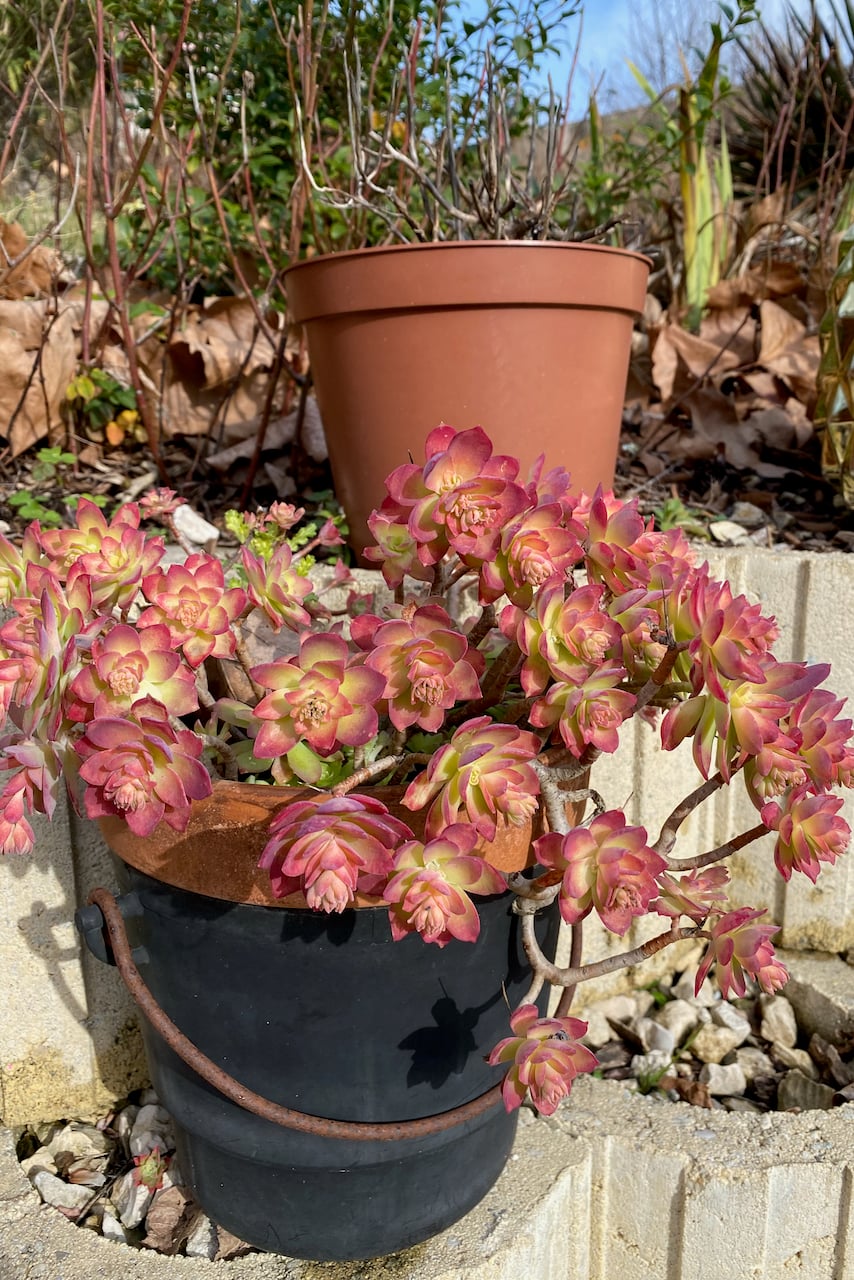
Instead of covering it with a tarp (Please, don’t!), we can just turn it into a container garden. “Garden” is a stretch in this scenario, so maybe a container “collection” is a better name for it.
Nothing fancy. Just select a few pots that you don’t need and plant a few low-maintenance plants that can handle some neglect. Succulents are my favorite easy-going plants because I don’t have to remember to water them, and yet they still bloom.
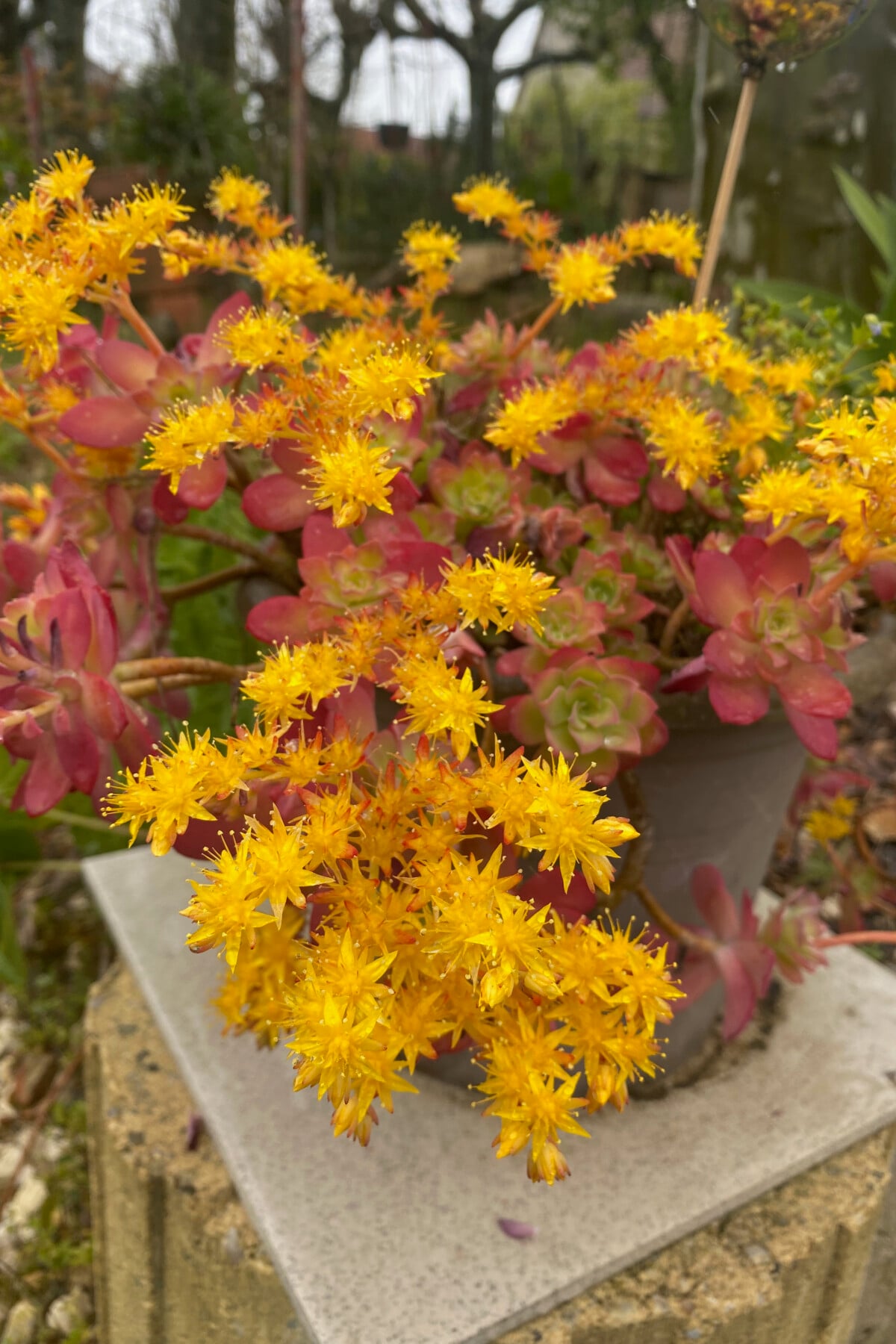
You can even go for the layered approach and plant multi-season containers. Have some bulbs at the bottom of the pot that flower in spring, followed by some geraniums in the summer and fall bulbs such as saffron crocuses for November bloom.
3. Use it as a testing bed for old seeds.
I don’t know about you, but my optimistic gardening spirit, coupled with my frugal tendencies, has led me to tend to some really old duds. I mean, old seeds. I’ve planted seeds that were four years old and acted surprised when they had a very poor germination rate. And I was angry when I realized they had taken up precious germination pots and veggie bed space without much to show for it.
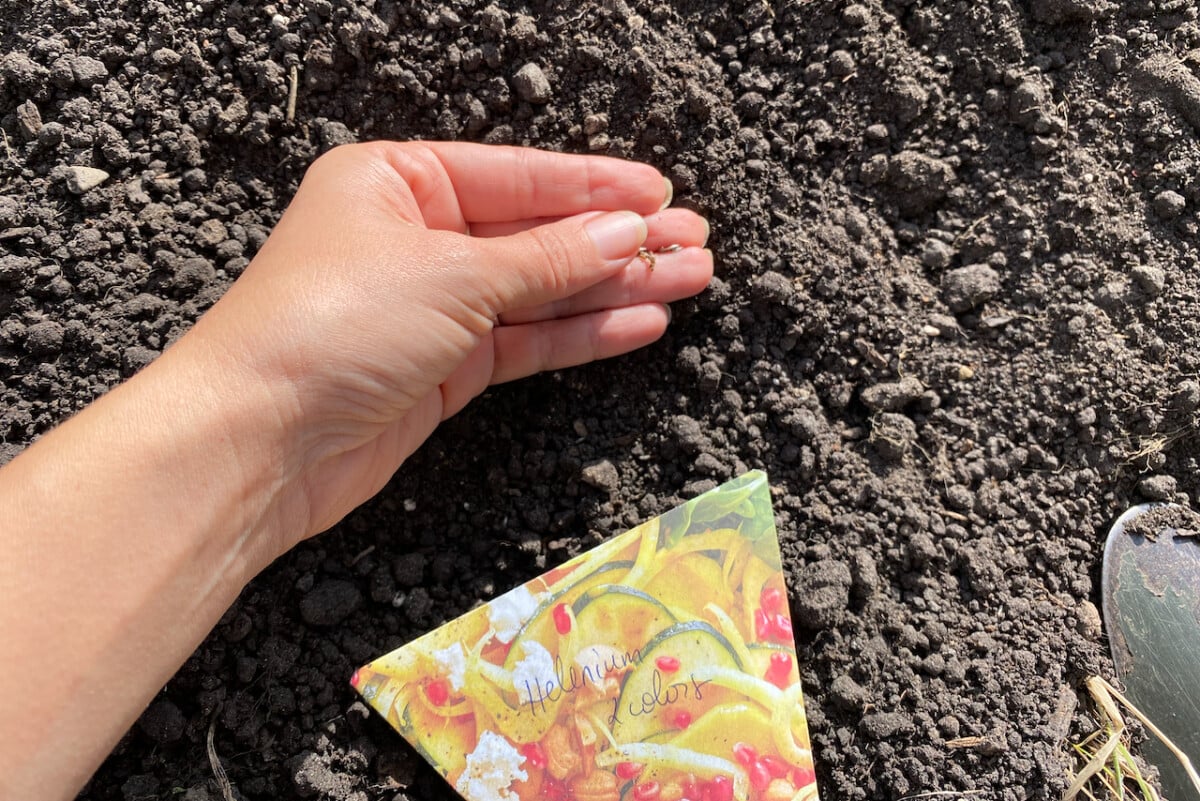
If you also can’t let go of old seeds that you’re not sure are viable anymore, but you can’t quite get yourself to throw them out, you can use the messy corner as a germination testing ground. You don’t need a lot of bare soil for that, just a small patch on which you can scatter the seeds and water them.
I call this the “I wonder” zone. As in, I wonder if this is still good. Keep the seeds watered, and if, by miracle, some of them sprout, treat them as a bonus and transplant them to better pastures.
4. Let one single plant take over.
So far, I’ve worked on the premise that we want to pack as many plants as possible in the messy corners. But who decided that we have to? A single plant, left to its own devices, can take over a spot in the garden without much fuss and look very pretty.
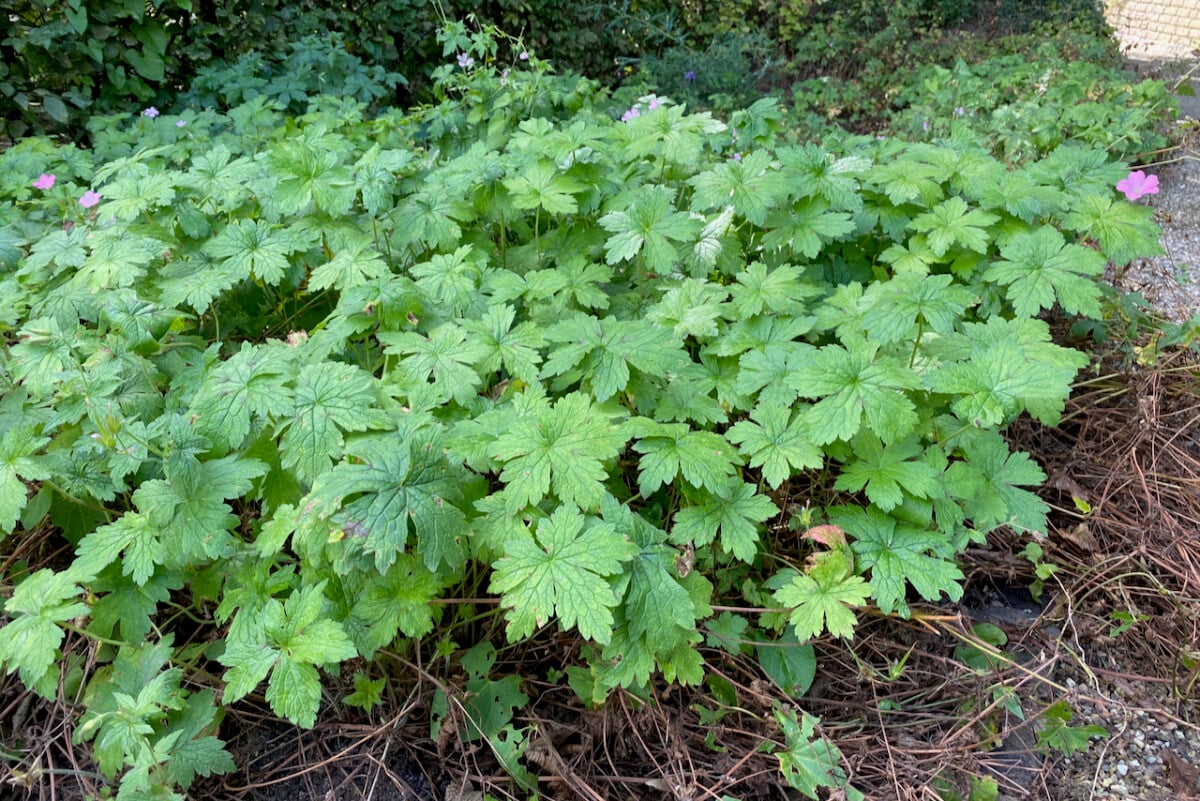
For shaded corners, I’m a big fan of letting geraniums spread. They won’t necessarily bloom as well with less sun, but not everything has to be blooming in order to be pretty.
For sunny corners, I like cosmos, sunflowers or calendula. They all require very little maintenance and self-seed with abandon.
5. Start a debris garden.
This idea is perfect for those messy corners that are cluttered with construction debris: broken roof tiles, rotting lumber, rocks, piles of gravel and forgotten cement pavers. You know the drill. (Yup, there might be some drill bits in there, too.)
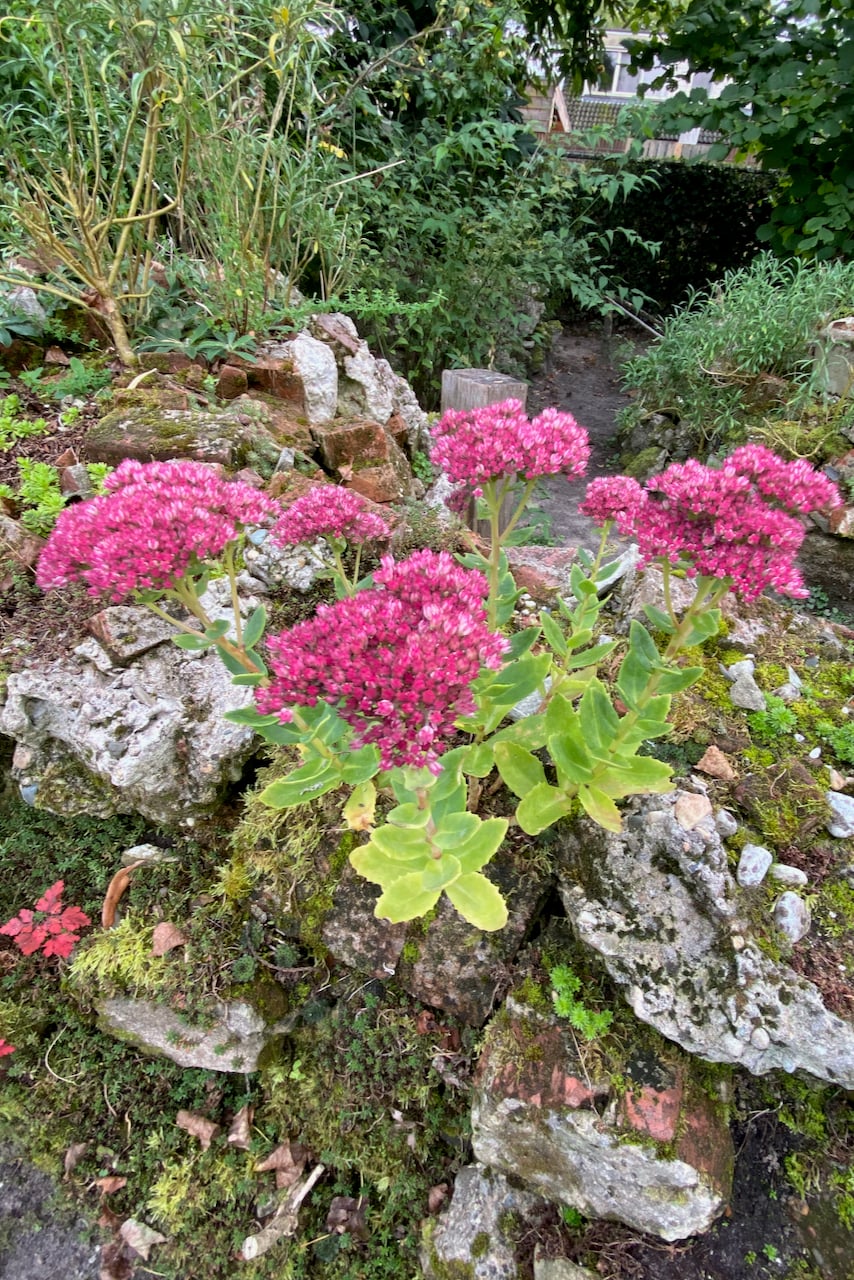
We can reframe all of these materials as just horizontal growing spaces. Obviously, start by safely removing anything that might be contaminating the area. (There will be no car batteries in our debris garden, ok?)
Pile up what’s left in a safe and stable way, then fill in the gaps with compost or potting soil. You don’t need a lot, just enough for roots to have something to anchor into. Planting in this mess may seem tricky, but it’s no different than planting in a shallow garden.
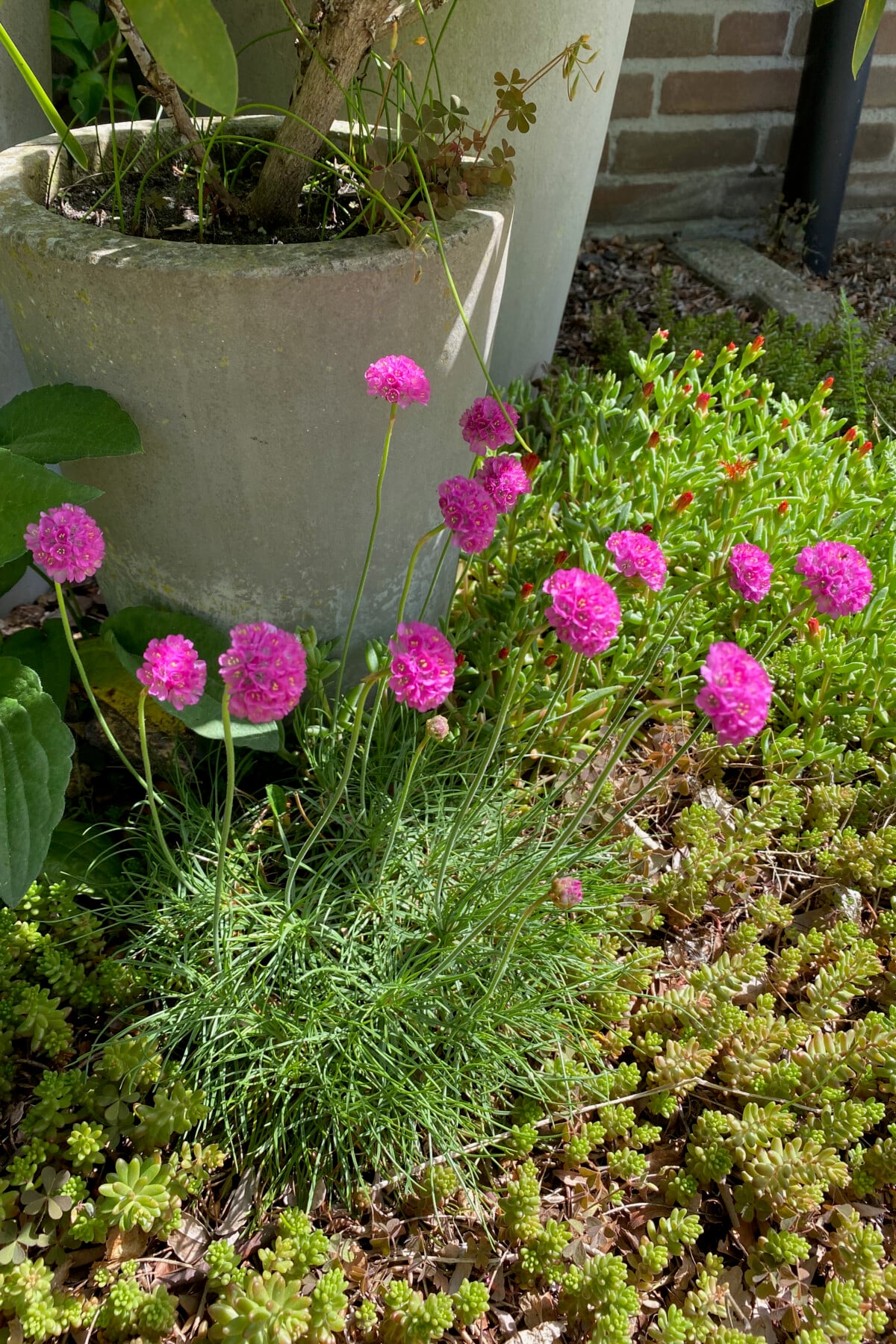
I wrote an article on plants that grew really well for me when I planted my shallow garden, such as moss phlox (Phlox subulata), moss rose (Portulaca grandiflora) and sedum ‘Autumn joy’.
6. Create an insect habitat.
Have you seen those elaborate insect hotels that look like they’re made by professional woodworkers and have fancy names such as AirBeeNBee? Yeah, we’re not doing that. Most of those end up killing more bugs than they host.
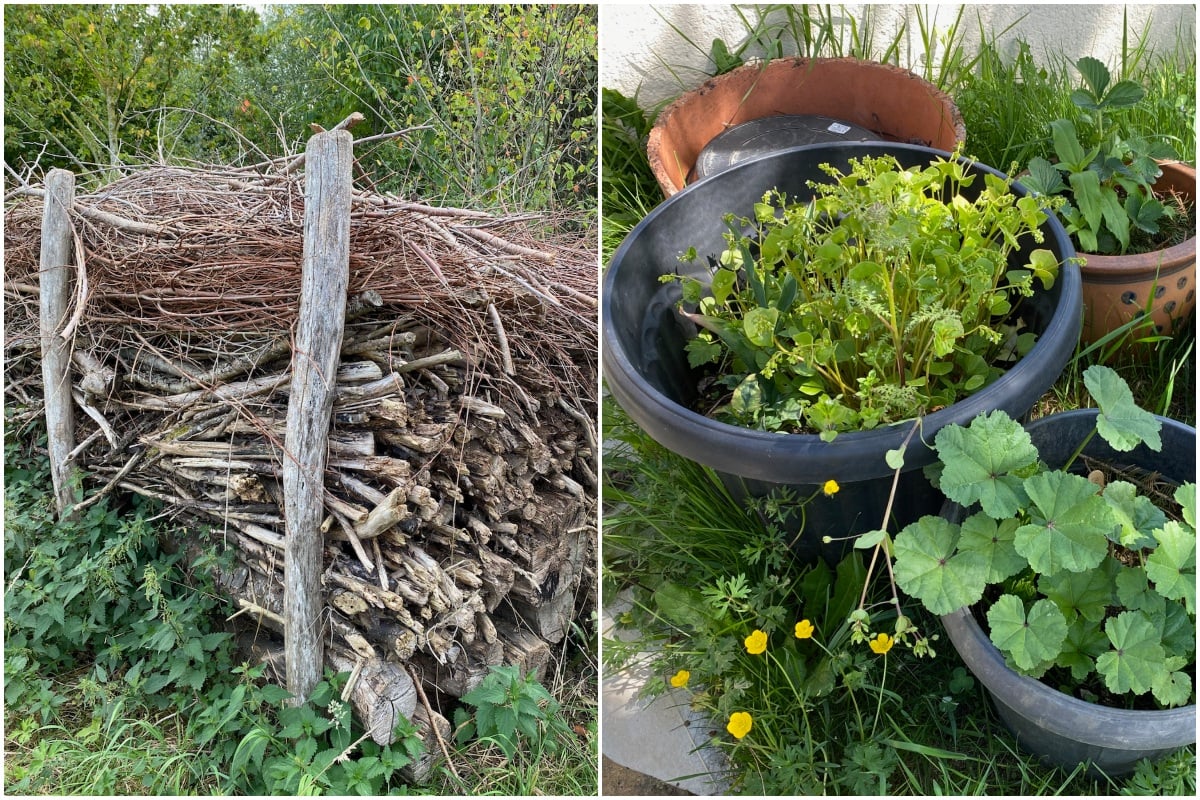
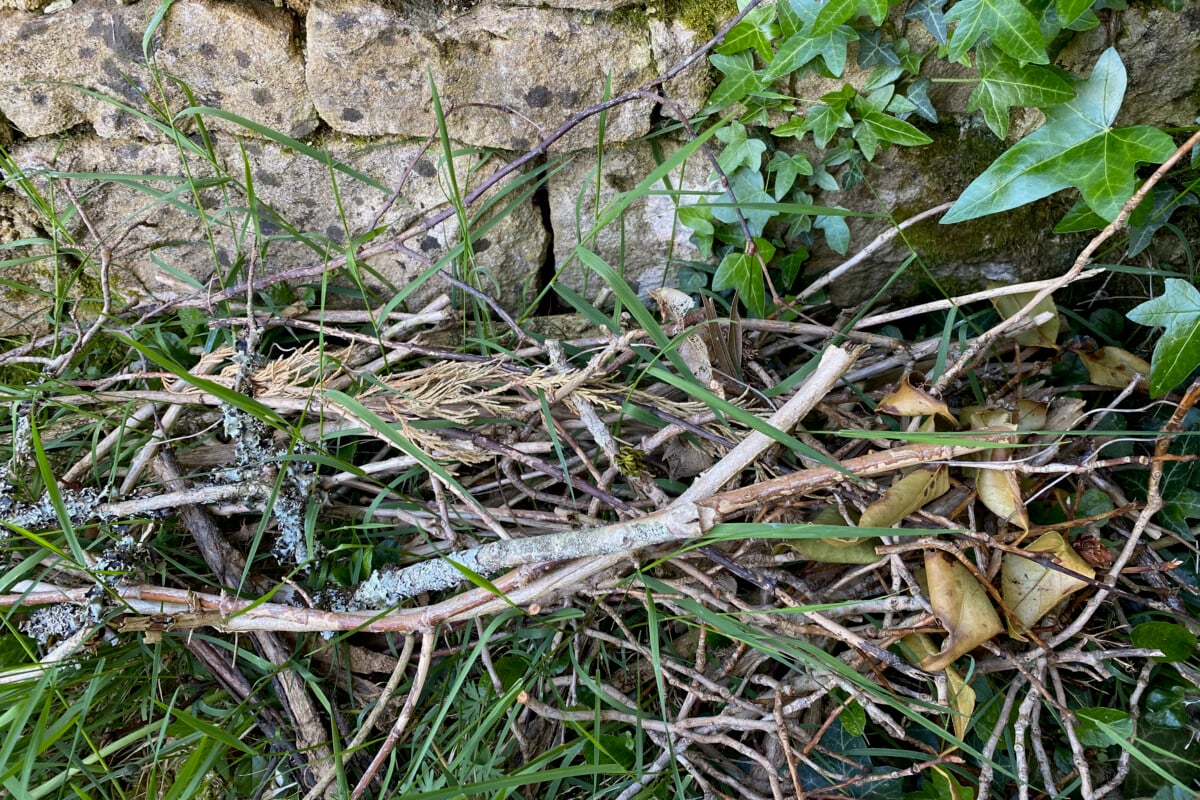
We’re going for function over form here in our messy corner and simply piling a bunch of logs, branches, sticks and maybe a handful of dry leaves and calling it good enough.
Here’s a small pile I built as I was pruning my hydrangea and some dead rhododendron bits this spring.
But, if you’re feeling ambitious and have a larger corner to fill, you could try your hand at building a dead hedge. It is a more elaborate and definitely a more permanent project than the pile of sticks above.
A dead hedge is like a fence that we keep adding to.
We start with two parallel lines of stakes, about a foot apart, that we can use as a structure to hold together our collection of dead branches. Then, in between these two rows, we add freshly pruned branches, twigs, raspberry canes, etc. The nooks and crannies between these sticks become little habitats for insects.
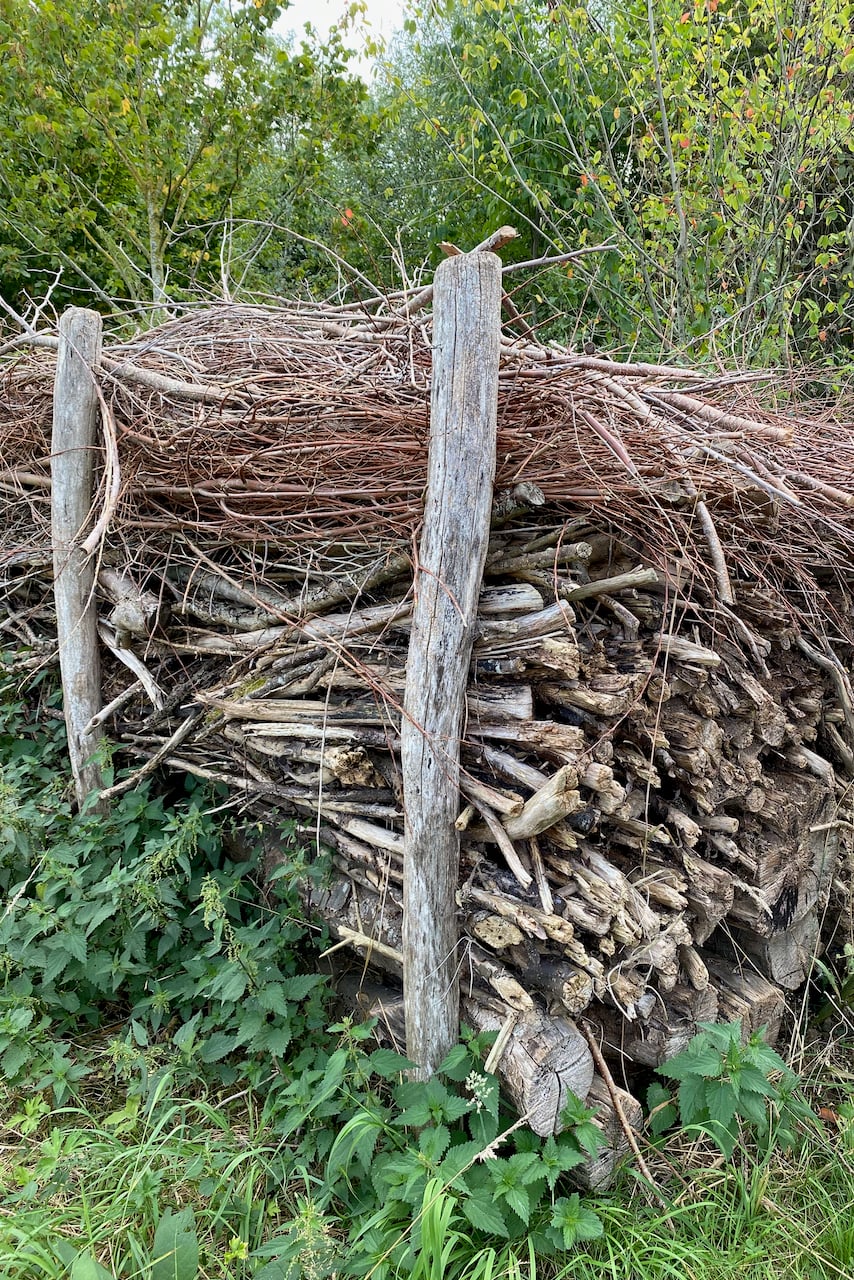
The nice thing about the dead hedge is that we can keep adding to it every year. The bottom part eventually degrades into organic matter that feeds the soil, thus freeing more space at the top.
One thing I would advise before you start building your dead hedge is to check local fire regulations. In some very dry areas of the country, piling up dead material next to your house may not be allowed, as it is a potential fire hazard. (Usually in areas prone to wildfires.)
7. Just leave it messy.
Listen, I’ve yet to see a ladybug dragging a vacuum cleaner all over the grass in my garden. (But that sure would be cute.) Nature doesn’t care about a place being messy. It’s just an obsession of ours, silly humans that we are.
So if you want to leave your messy corner be, just leave it. Let it go wild. Drop the weeding. Ignore the tidying. Just call it an insect habitat and let the wildlife rejoice in all the hiding spots and extra shelter they have access to.
I’ll leave you with the result of my “see what seeds are viable” experiment (see point three above) after I scattered a bunch of aster seeds. It turns out a lot of them were viable, so I couldn’t be bothered to relocate them. Let’s call it an intentional design choice, ok?


Get the famous Rural Sprout newsletter delivered to your inbox.
Join the 50,000+ gardeners who get timely gardening tutorials, tips and tasks delivered direct to their inbox.