

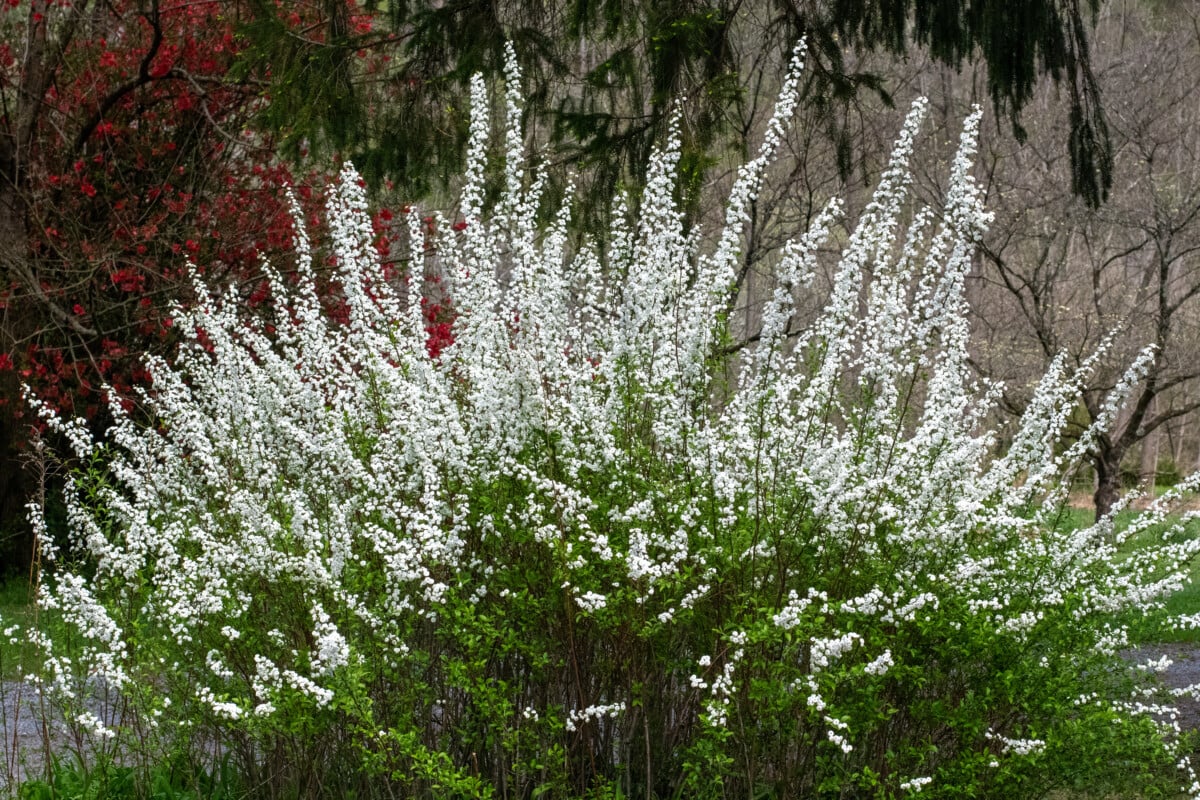
When it comes to Spirea, most of us are familiar with Spirea Japonica. Go to any garden center each summer, and you’ll find hundreds of them. Take a drive around any neighborhood. You’ll find them in backyards (probably your own) and in the landscaping of many businesses. But as lovely as Spirea Japonica is, it doesn’t hold a candle to the gorgeous display of a Bridal Wreath Spirea.
If you’re lucky enough to have one of these gorgeous shrubs growing in your garden, you already know what I’m talking about.
But there are a few important things to know about this spirea variety. If you already have one or you’re considering adding one to your yard, you’ll want to keep reading. In fact, we’ll start with the most important thing first: Is bridal wreath spirea an imposter?
1. Bridal Wreath Spirea Naming Confusion
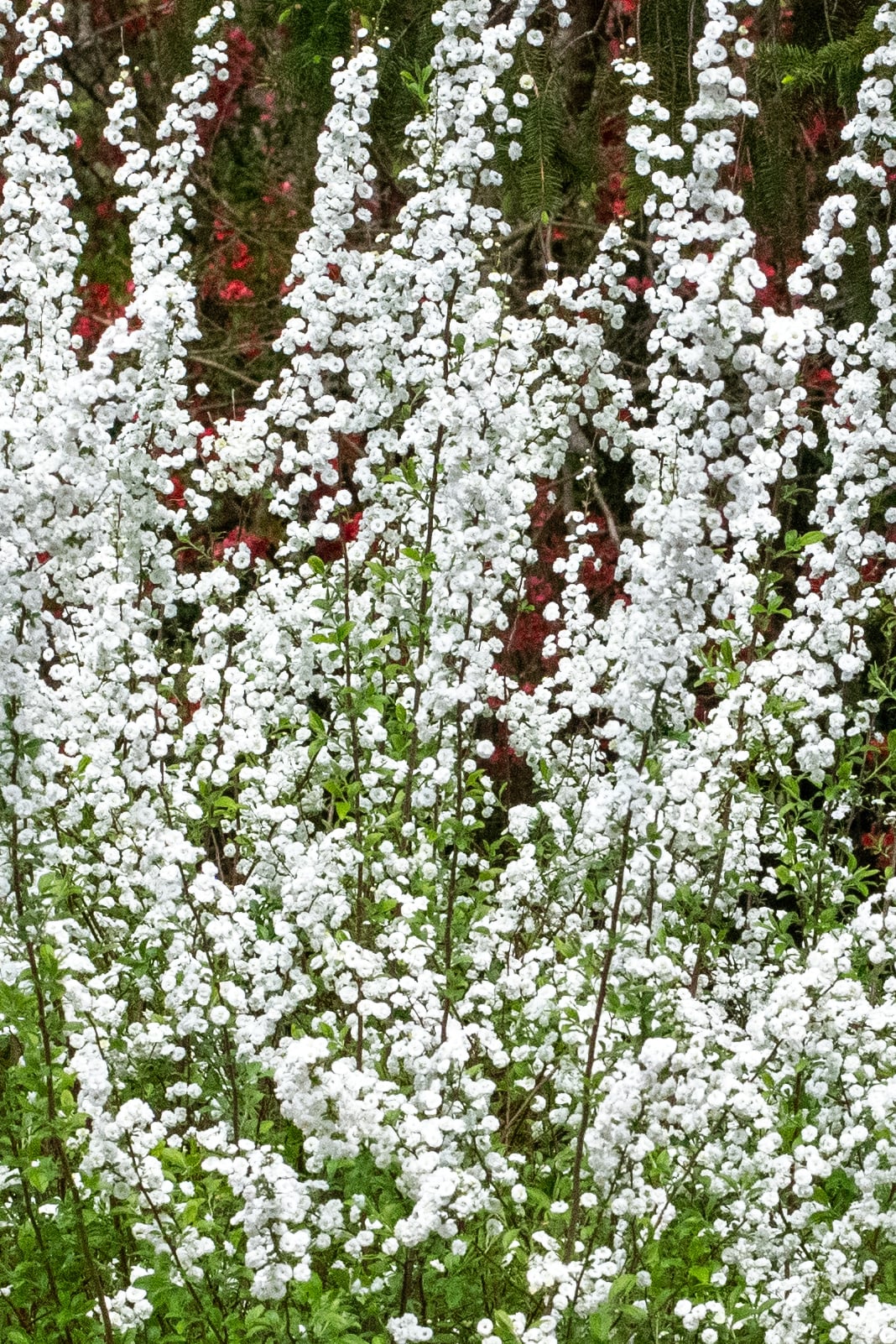
I hate to be the one to tell you this, but that plant with all the white flowers that you think is a bridal wreath spirea might be an imposter. Sort of. There are usually two plants called bridal wreath spirea. One is the OG old-fashioned variety that’s pictured throughout this article; the other is a hybrid that’s been popularized. Most garden centers label both plants as bridal wreath spirea, compounding the issue. It’s a bit like Christmas and Thanksgiving cacti.
But it’s pretty easy to tell them apart.
S. prunifolia ‘Plena’
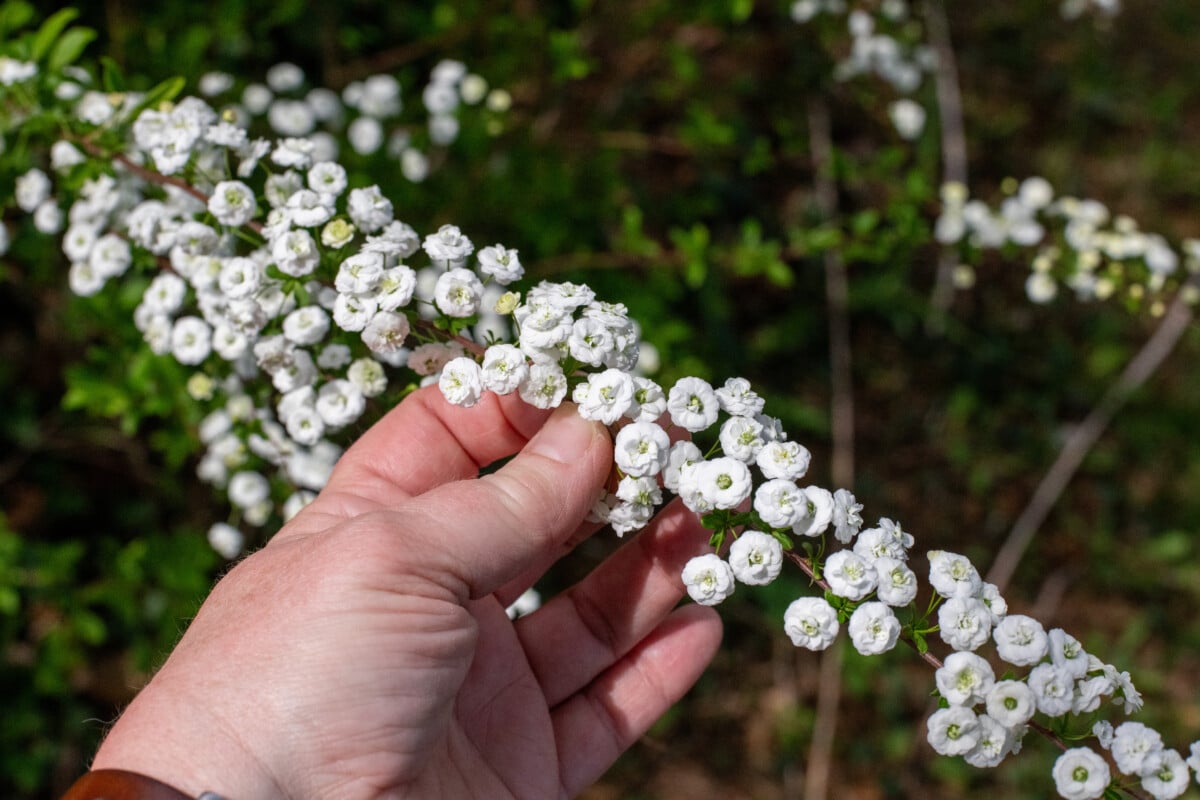
This is considered the old-fashioned variety, with a long, waterfall growth habit. Its flowers are tiny (1cm), white and double-flowered. They look like little bitty rose buttons that grow in clusters of 3-6, along the stem forming long white spires, with oval leaves growing below the flowers and down along the stem. These are incredibly long-lived plants; there are even some specimens in existence that are well over a hundred years old. They typically grow to about 4-6’ tall and wide.
S. x Vanhouttei
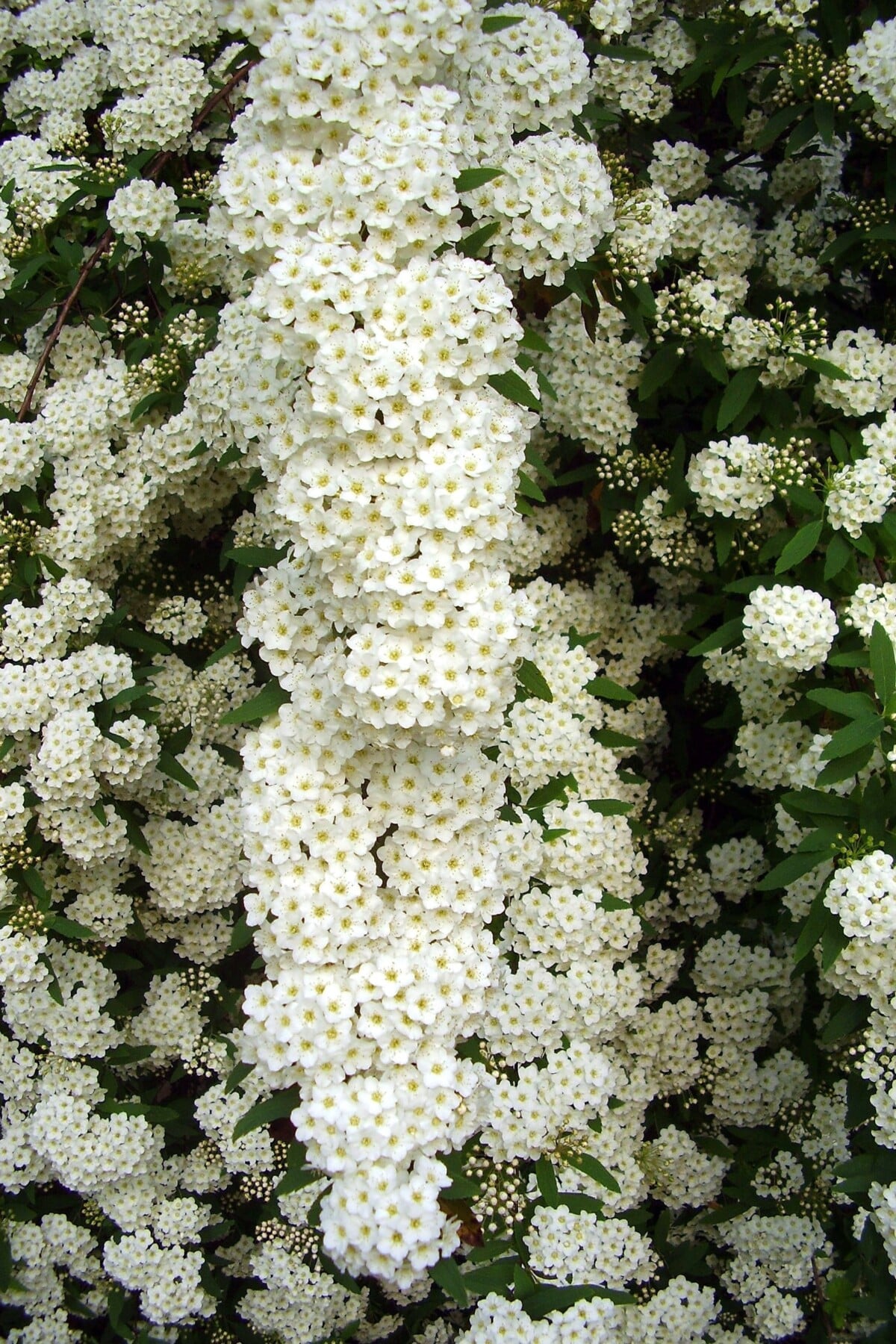
This is the hybrid that is often labeled as bridal wreath spirea, but should be called Vanhoutte spirea. It grows more like the Spirea Japonica most of us are familiar with. The blooms are clusters (corymbs) of individual white flowers, each with five petals and a flat appearance, a bit like a tiny, stubby daisy. Spirea x Vanhouttei grows more like a rounded shrub. The Vanhoutte spirea is even larger, often growing 8-10’ tall.
Both are called bridal wreath spirea, despite being separate species. In the end, this only really matters if you’re purchasing a plant in the hopes of getting a specific species. So, always check the species name or refer to the flowers to clue you in on which bridal wreath spirea you’re going home with.
2. No Buds for the Bees
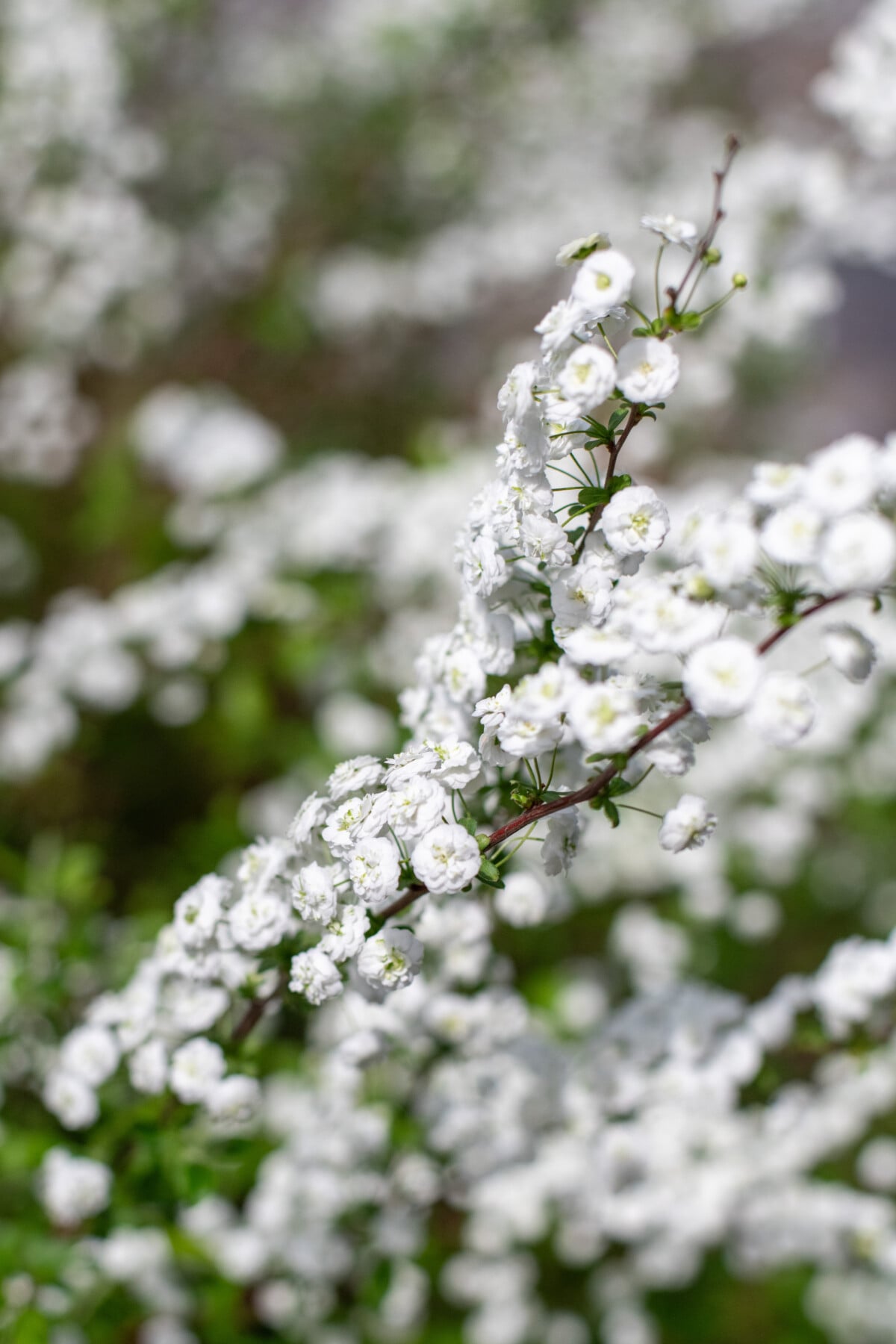
Bridal wreath spirea, or Spirea prunifolia, is a double-flowered species noted by the ‘plena’. It has extra petals, giving each tiny flower a fuller, rose-like appearance. While this makes for a beautiful plant, it means it’s basically useless for pollinators.
Ornamental plants specifically bred to have full, double flowers make it all but impossible for pollinators to access the nectaries, if they even have any. Often when these lovely flowers are bred, they are essentially sterile because to get the extra petals, stamens and pistils are absent.
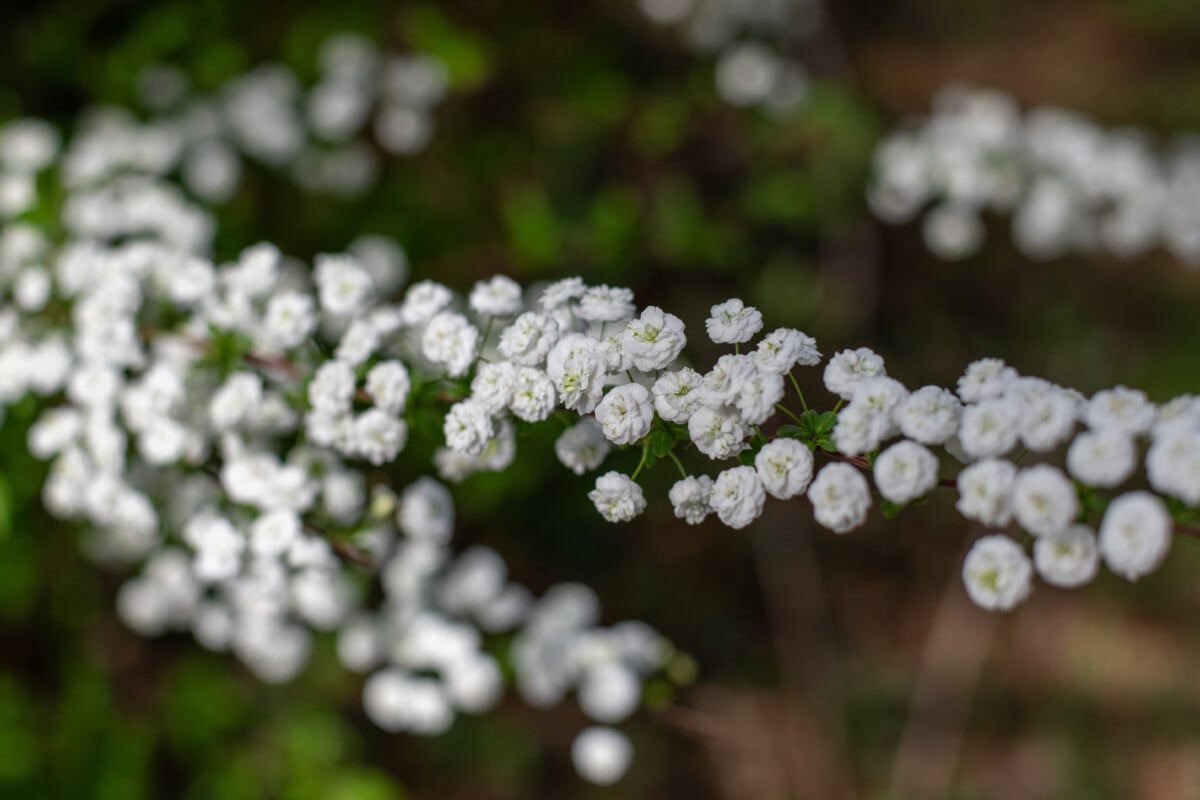
What’s interesting about Spirea prunifolia ‘plena is that it wasn’t bred to be a double-flower; the straight species (S. prunifolia) is naturally a double-flower plant. The S. prunifolia ‘plena’ just has even more petals.
But if you’re thinking that all those gorgeous flowers are feeding your local bee population, this isn’t the plant to do it. (And that’s truly okay. Not every plant in your yard has to feed the pollinators.) However, the imposter bridal wreath, Vanhoutte spirea, is a pollinator-friendly spirea, with its clusters of single flowers.
3. When and How You Prune is Important
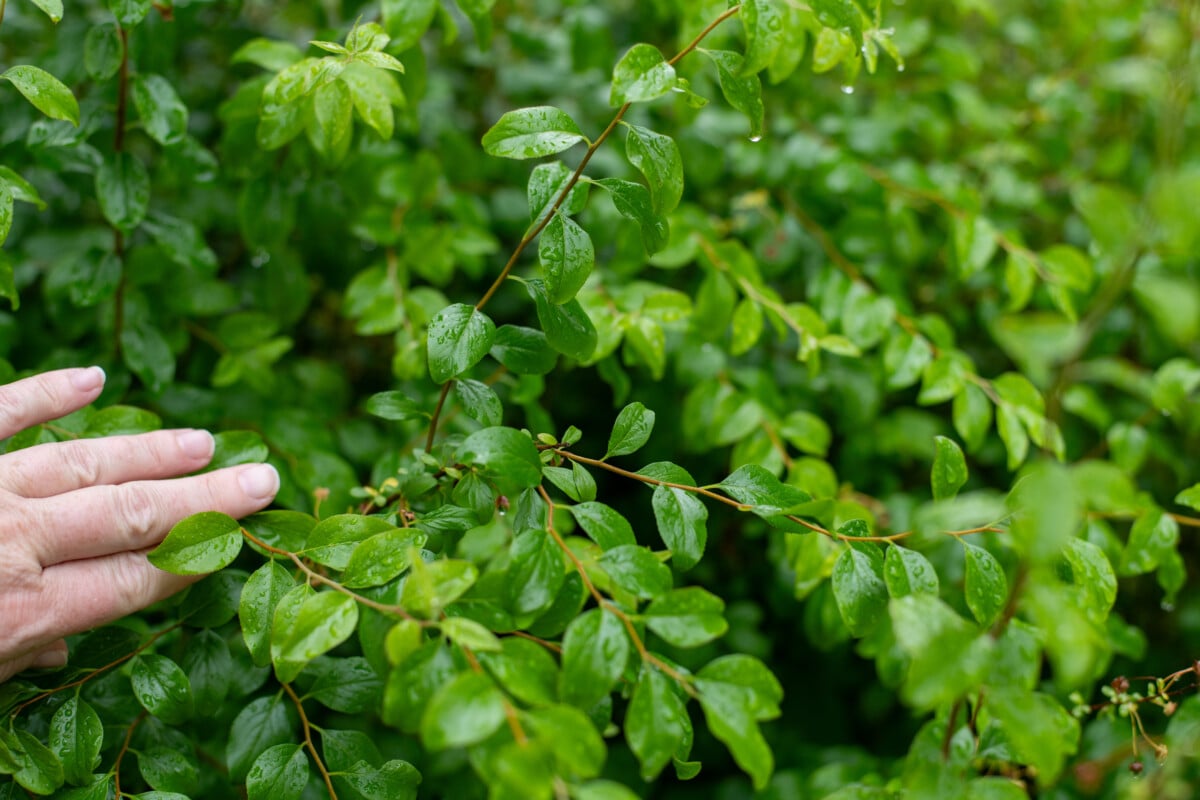
Both the S. prunifolia ‘plena’ and the S. x vanhouttei are old wood bloomers. That means next year’s flowers start growing the previous year. So, if you want to prune your spirea, the best time to do it is immediately after it finishes blooming.
Once the blossoms fade, you have a window of a couple of weeks to prune. After that, the plant starts forming the buds for next spring, and any pruning done after that removes next year’s blooms.
The thing is, if you have a bridal wreath spirea, you don’t really want to do much pruning.
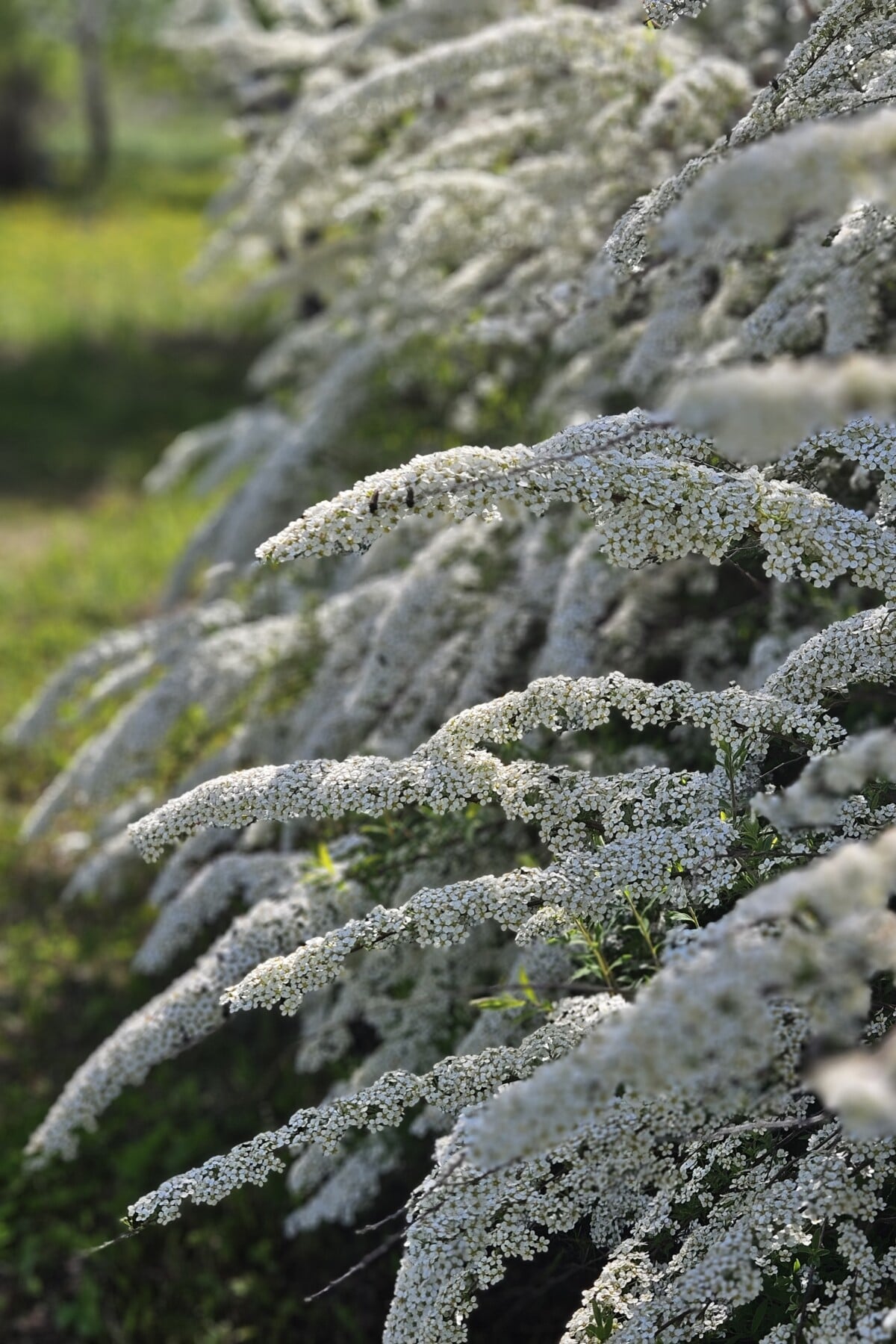
They both have a beautiful, natural waterfall growth habit. They are meant to grow up and spill over like a fountain. If you prune them heavily into your typical shrub shape, you’re missing out on their more organic, elegant form. (Not that I did this when I first moved here, and have been patiently waiting for mine to grow tall and spill over again. Ahem.)
If you’re going to prune a bridal wreath spirea, it’s best to trim the tips of branches that are touching the ground and very old growth in the center. Remove this old growth right down to the ground to keep the crown open. S. prunifolia does sucker quite a bit, so you’ll have to remove that new annual growth at the ground if you want to maintain its footprint.
4. Need a Hedge? Try Bridal Wreath Spirea
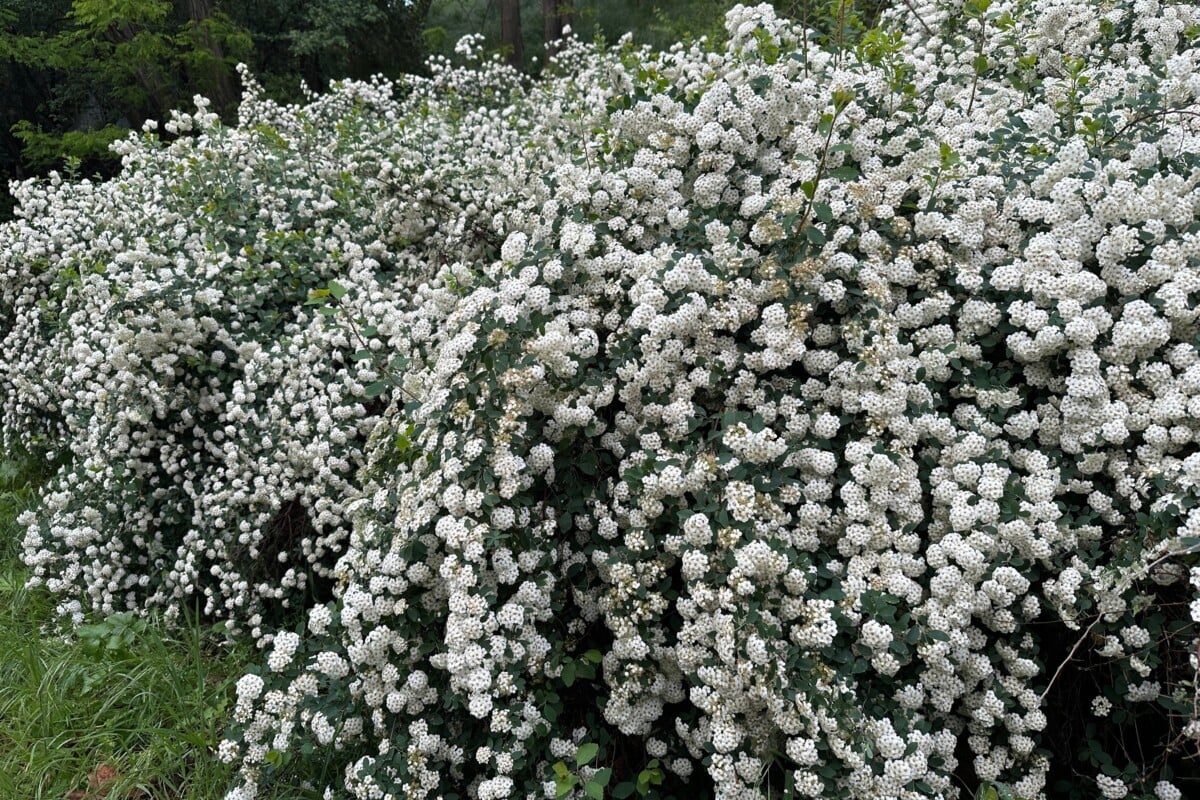
If you’re looking for a hedge, consider a bridal wreath spirea. Their blooms are gorgeous each spring, and when not in bloom, they have lovely emerald green foliage. In the fall, the leaves turn a lovely orange with a light purple blush.
Bridal wreath spirea practically lasts forever, and they’re very low-maintenance.
These plants are drought-tolerant, have few pest issues and don’t really need much as far as fertilizer goes.
If you’re hoping to grow a natural privacy screen, then opt for the Vanhoutte spirea. Its size means you’ll end up with a lush wall of green that will dampen sound and screen prying eyes. For something shorter to mark a border, you might prefer the S. prunifolia ‘plena.’ Either bridal wreath spirea makes for a beautiful and easy-to-care-for hedge.
5. Bring It Indoors
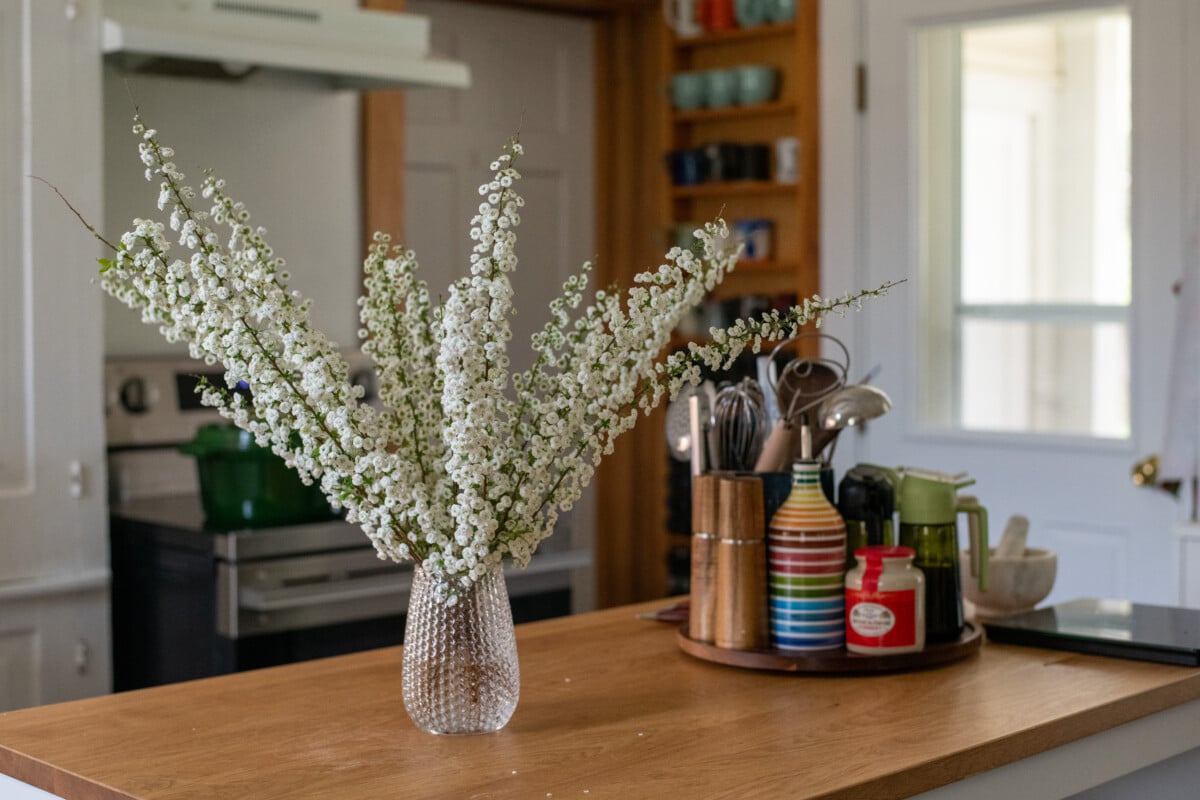
The bridal wreath spirea is a stunning bloomer, I think we’re all agreed on that. Not to mention it’s one of the earliest flowering shrubs each spring. I think my forsythia is the only thing that blooms before it. While we all appreciate the beauty of a blooming shrub after a long, gray winter, don’t relegate it to the backyard.
Bridal wreath spirea makes for a stunning cut flower.
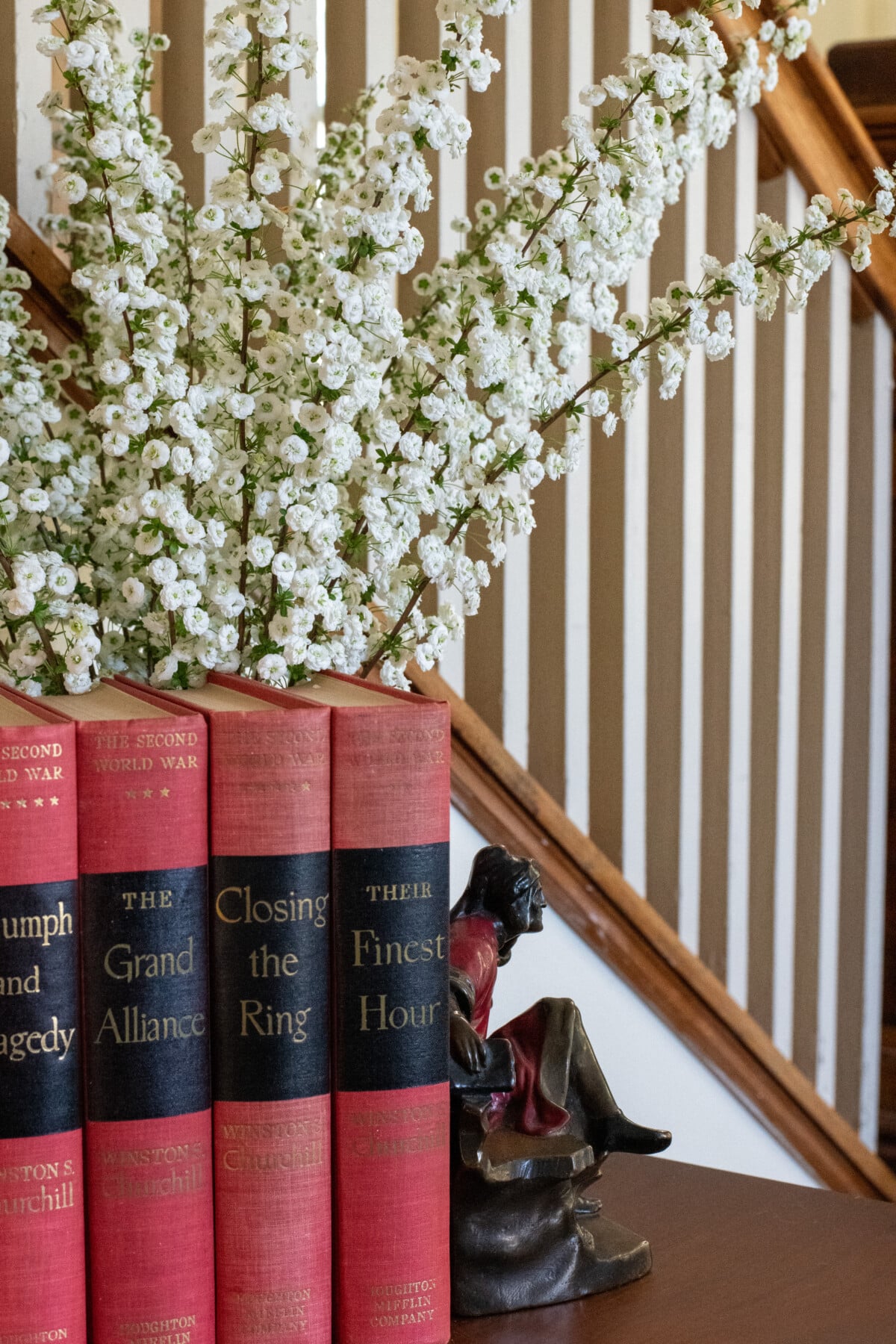
The tall spires covered in tiny white rosettes make for a truly dramatic cut flower arrangement right when spring is bursting on the scene. The white flowers look beautiful against dark backgrounds like wood or darker paint colors. They’re also a great flower for showing off a brightly colored vase, as the white flowers highlight the vase as much as themselves.
For a full, dramatic arrangement, cut between 15-25 stems. You’ll want to choose a vase that has a relatively narrow neck to keep the stems upright. Or you can wrap the stems loosely with a rubber band, just enough to hold them in a loose bundle.
Cut the stem at a 45° angle. Strip the lower portion of the stem of flowers and leaves, so that only the woody stem is submerged in water.
If you change the water every day or so, your bouquet will last for a week or more.
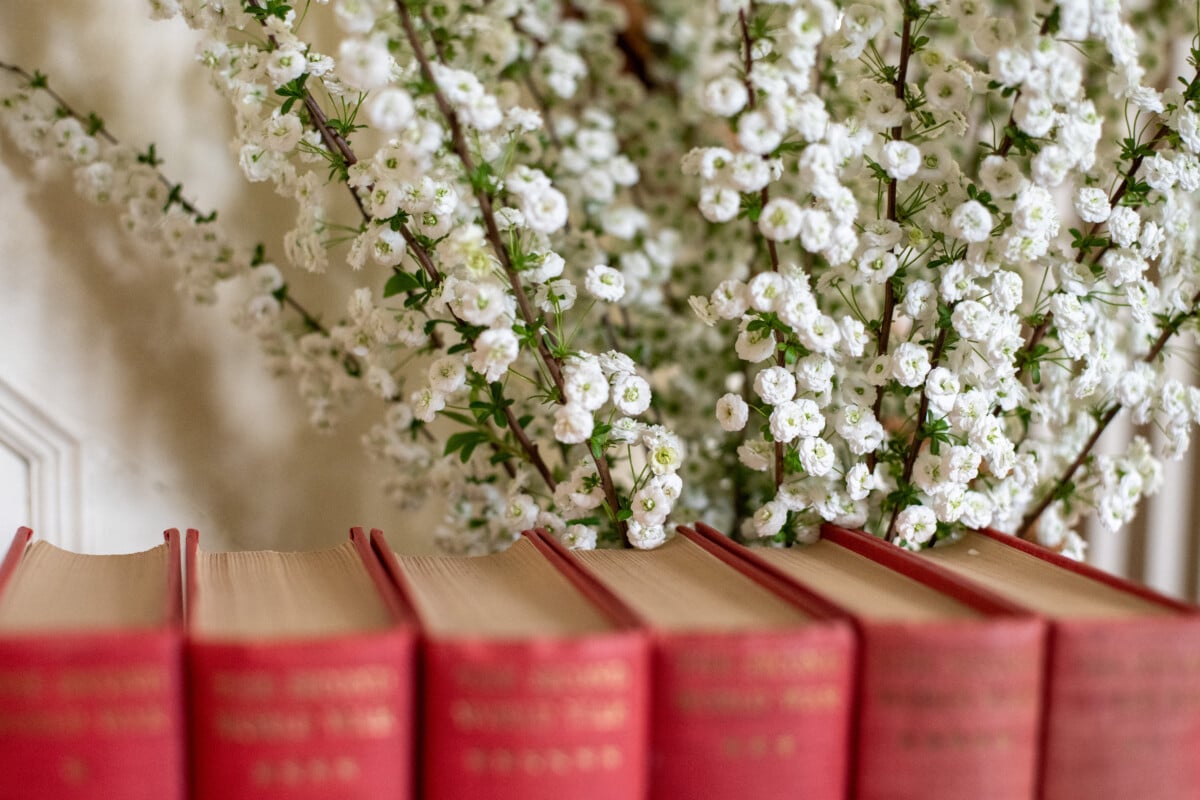
As the flowers age, they will drop their tiny white petals. These can easily be vacuumed or swept up with your hands. (I like to leave them. I think it looks rather pretty. Nature’s confetti.) To avoid a shower of white petals when your flower arrangement has reached the end of its life, you may want to dispose of it before it gets too far gone.
I love fresh flowers in my home, especially if they come from my own yard and garden, and this is one bouquet I look forward to each spring.
Get the famous Rural Sprout newsletter delivered to your inbox.
Join the 50,000+ gardeners who get timely gardening tutorials, tips and tasks delivered direct to their inbox.