

Let me clear the autumnal air here and get one thing on the record: I love mums! Their curvy shape. Their warm colors when everything else in the garden is starting to lose saturation.
I love mums so much, in fact, that I find myself every fall trying to keep them in bloom longer and every spring keeping my fingers crossed that they’ll come back in full colorful swing.
Somehow, they never do.
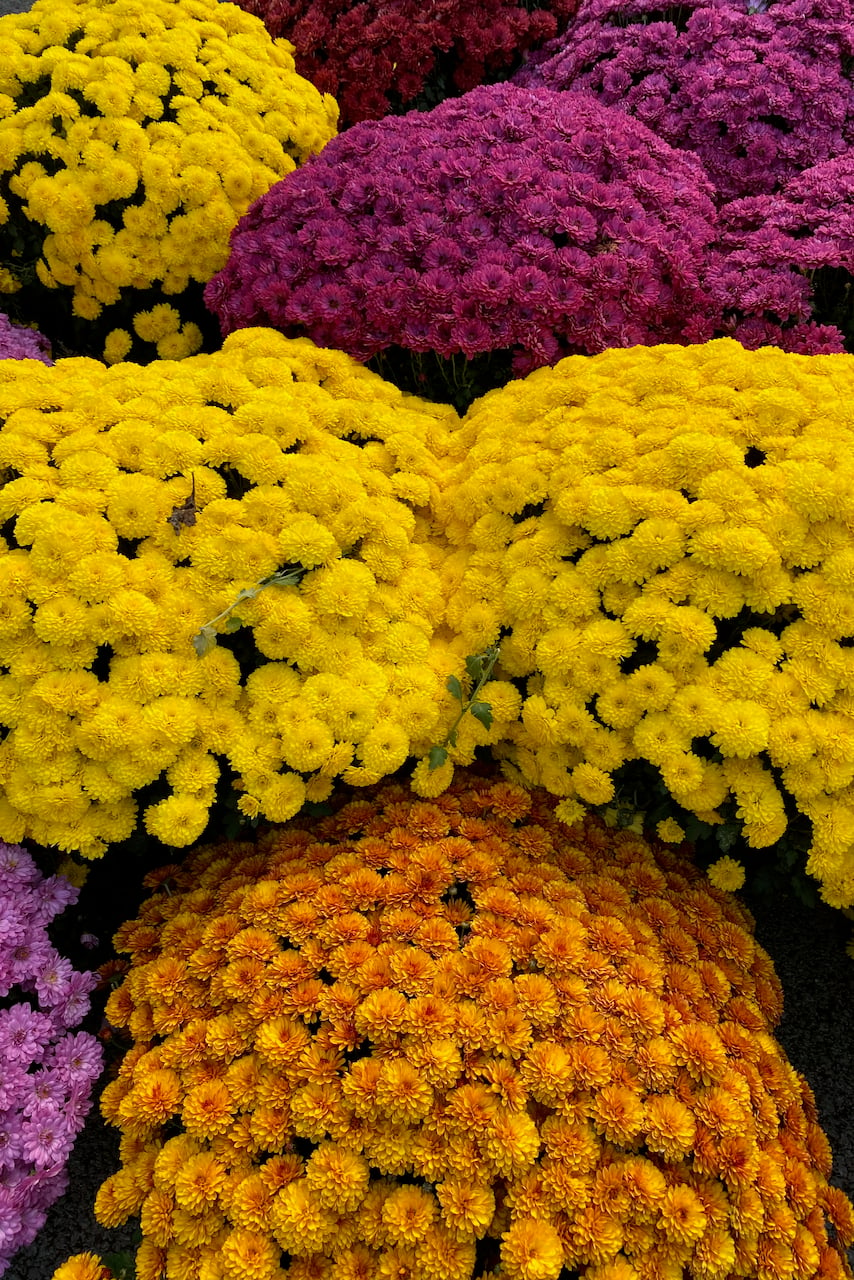
Supermarket mums are a one-season love affair. We cheerfully bring them home and gloomily have to dispose of them during the course of the same season. Tracey, our editor, calls them dispose-a-mums.
It’s weird, actually, because I love planting annuals such as cosmos, nigella and nasturtiums. But I know that these flowers are annuals, so I treat them as such.
Supermarket mums look like they should be perennials, yet they somehow never make it to see another fall. And even when they do, they remain shy of that glorious bloom of their first year.
There has to be another way to get color in the garden this fall.
Let’s have a look at a few colorful alternatives to mums.
Just to be clear, I’m basing my choices on these two criteria:
- The flowers below will be in bloom in the fall. (September and October are when I’m autumnmaxxing, as the kids say.) All of these mum alternatives will provide a riot of color and a sea of flowers to brighten up the days as they’re getting shorter.
- These flowers will only get better with age. These mum replacements are not destined for the compost pile or the trash can at the end of the season. And I’m very happy not to be left with yet more nursery pots to add to the collection of spare plastic pots that I’m this close to calling a garden art installation.
1. Asters (Aster or Symphyotrichum)
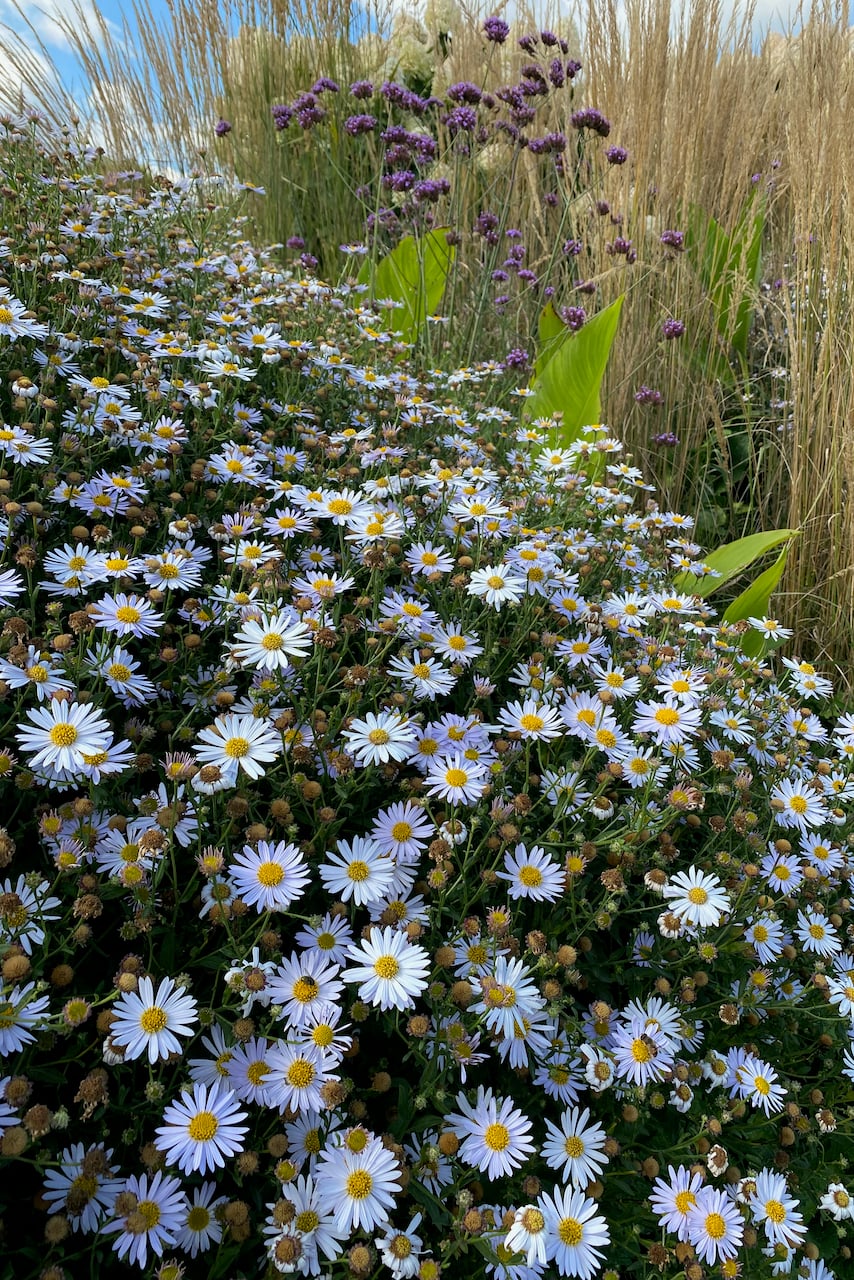
Aster season overlaps so neatly with mum season that I honestly don’t know why these electric purple beauties aren’t more popular. There are many species of aster native to North America, which makes picking one even easier.
Asters are not solely for our enjoyment. They are a keystone plant that provides significant resources to the ecosystem, with over a hundred species of butterflies and moths that rely on it for food and shelter. So these daisy-shaped mum replacements will be supplying our gardens with pollinator buzz until the cool weather rolls along. That last monarch stopping by the late-fall blooms makes for a special sight before winter.
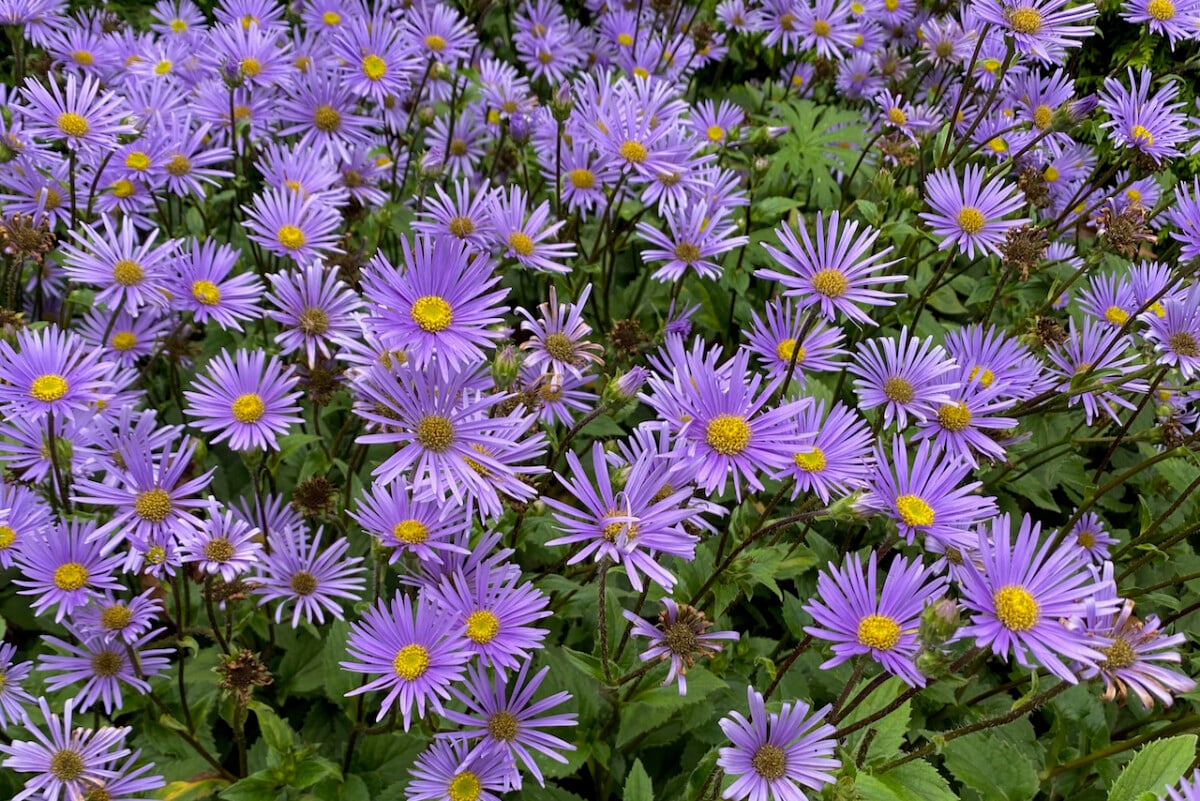
If you don’t know where to start, look for New England Asters (Symphyotrichum novae-angliae) or New York Asters (Symphyotrichum novi-belgii). The New England Asters do tend to grow tall and flop over towards the end of the season. A good June haircut (aka the infamous Chelsea chop) will prevent this scenario.
Ideally, asters need full sun, but they can bloom well in partial shade too. As long as they’re planted in well-draining soil.
2. Black-eyed Susan (Rudbeckia)
I promise I’ll go a bit more off the beaten path with my plant choices after this one. But I think black-eyed Susans are an excellent alternative to mums. They hold their daisy-like shape beautifully in bright hues of yellow, orange and red. And even though they’ve been ticking along nicely in my garden since July, they’re only now coming into full glorious bloom.
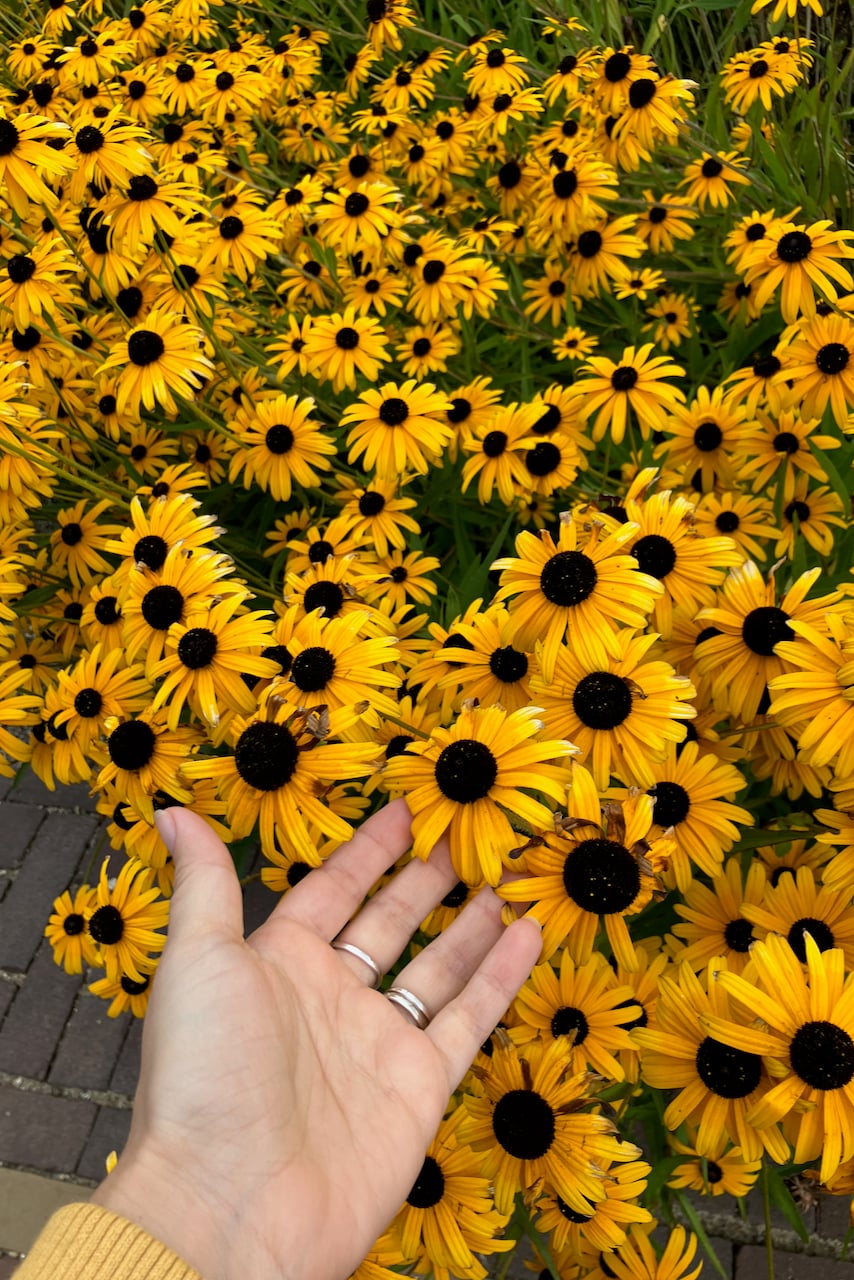
The trick to extending rudbeckia season way into late fall is to remember to deadhead them early on. I start deadheading black-eyed Susans as soon as the first batch of flowers is looking a bit tired (usually in late July), then continue to do so until September.
However, I leave the last batch of seedheads on the plant for birds to enjoy over the winter months. They’re one of the thirty plants I advise our readers not to prune this fall.
3. Blue mink or floss flower (Ageratum houstonianum)
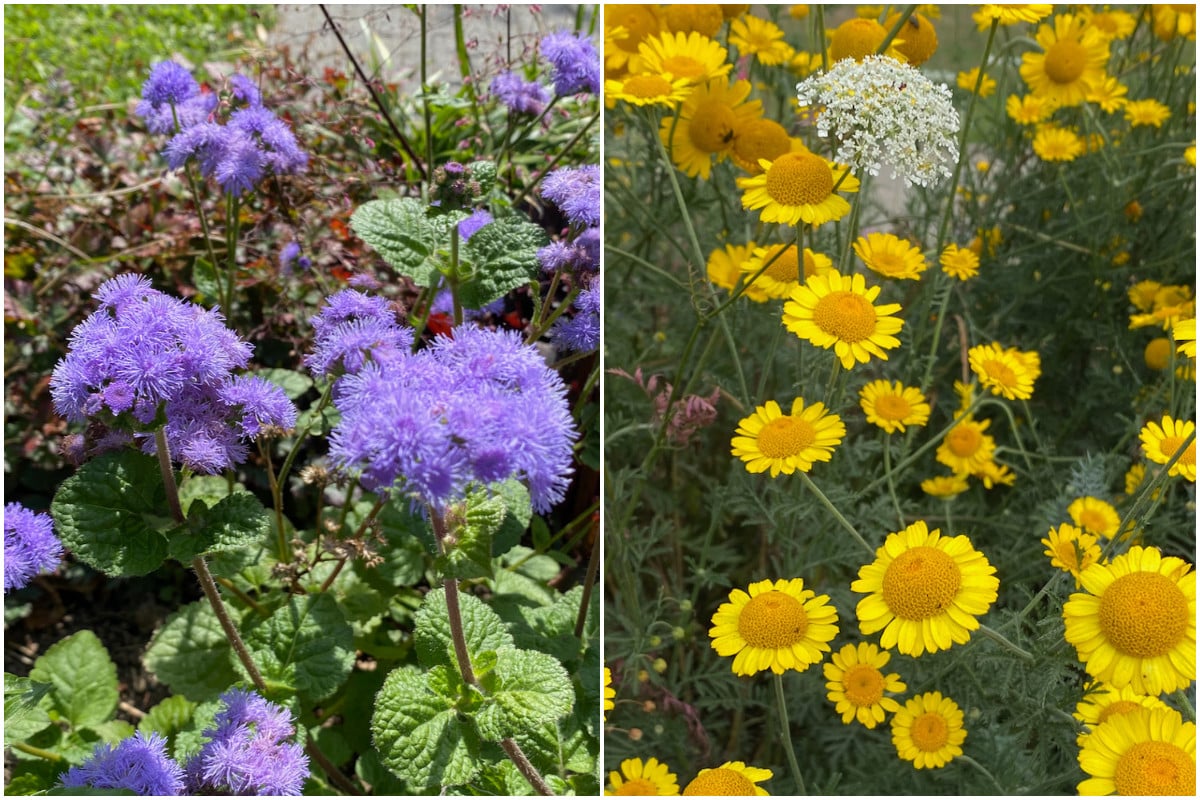
I promised something less common as an alternative to mums, and here’s me delivering: blue mink flowers (Ageratum houstonianum). Another common name for these beauties is floss flowers, due to the thin and wispy shape of the petals.
It’s hard to convey how beautifully they glow in the early fall sun. Have a look at this photo I took last September. Apologies for the background focus. The poofs of flowers in the foreground had such a speckled silvery sheen to them, it made it tricky to pull them into focus.
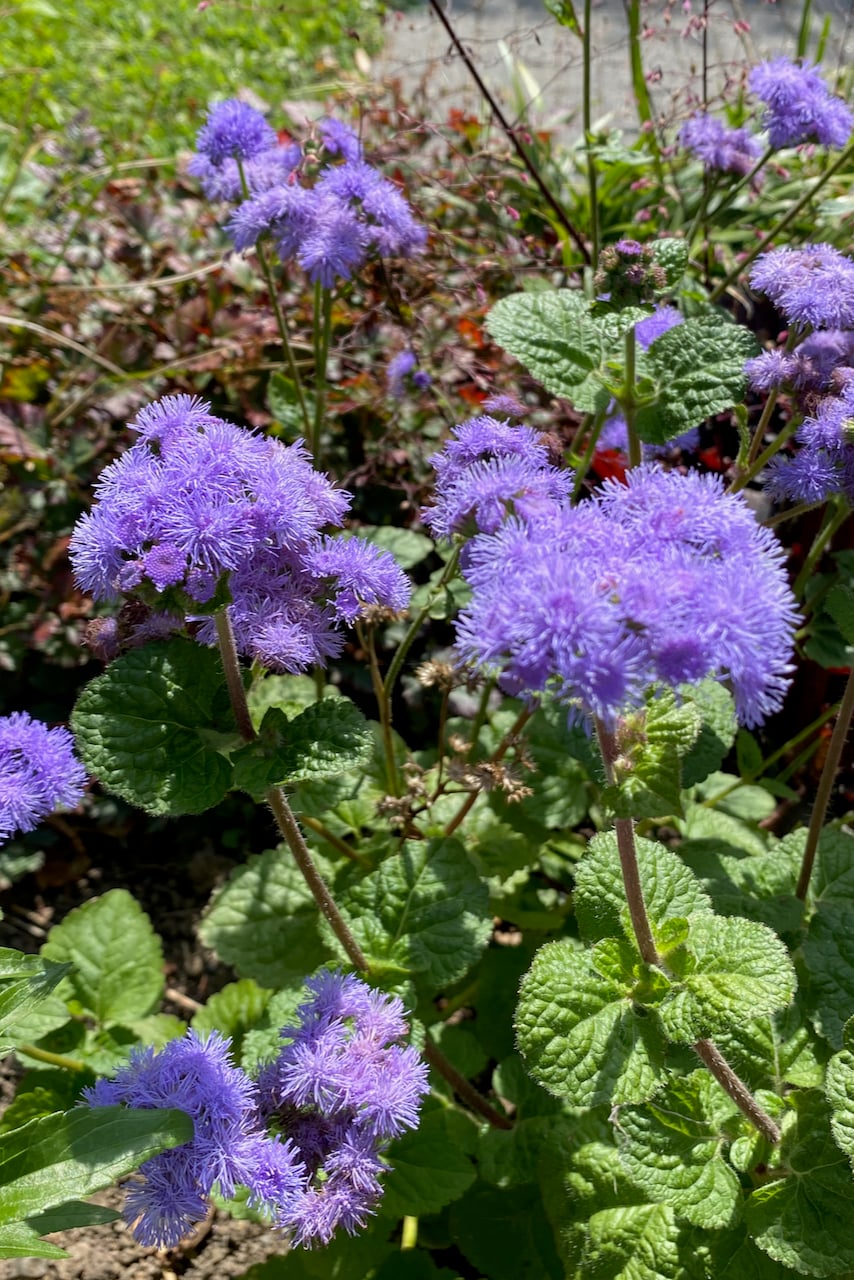
Blue mink are an annual ornamental, sure, but very good at self-seeding. (I don’t know about you, but I’ve never had a supermarket mum self-seed.)
If you buy a pack of seeds once, you can have floss flowers growing in your garden for years. That first year, you can start the seeds indoors about six weeks before the date of your last frost; then transplant them outdoors once the risk of frost has passed in the spring. They’ll take it from here.
Blue mink flowers start blooming around midsummer and will continue to do so until the first frost. The most common color is this bright violet (like the ones in the photo above), but there are also white, peach and pink choices.
Fun fact!
Contrary to what the Latin name might suggest, mink flowers are not native to Houston. They’ve been named after the Scottish botanist William Houston who brought them over from Central America.
He first brought them to England in the early eighteenth century. From there, they made their way over to the United States. There are records of blue mink flowers growing in American gardens as early as 1836.
4. Golden marguerite (Anthemis tinctoria, also Cota tinctoria)
You may find this member of the daisy family under a couple of names, with yellow chamomile, oxeye chamomile, dyer’s chamomile or Boston daisy at the top of the list. It is not a Boston native, though. It’s originally from Europe and Western Asia, but it has been naturalized in some parts of North America.
Perhaps it’s the confusion of so many nicknames that prevented golden marguerite from becoming more popular. But if you frequent rock garden forums (one of my favorite corners of the internet to lurk in), that’s where it gets the love it deserves.
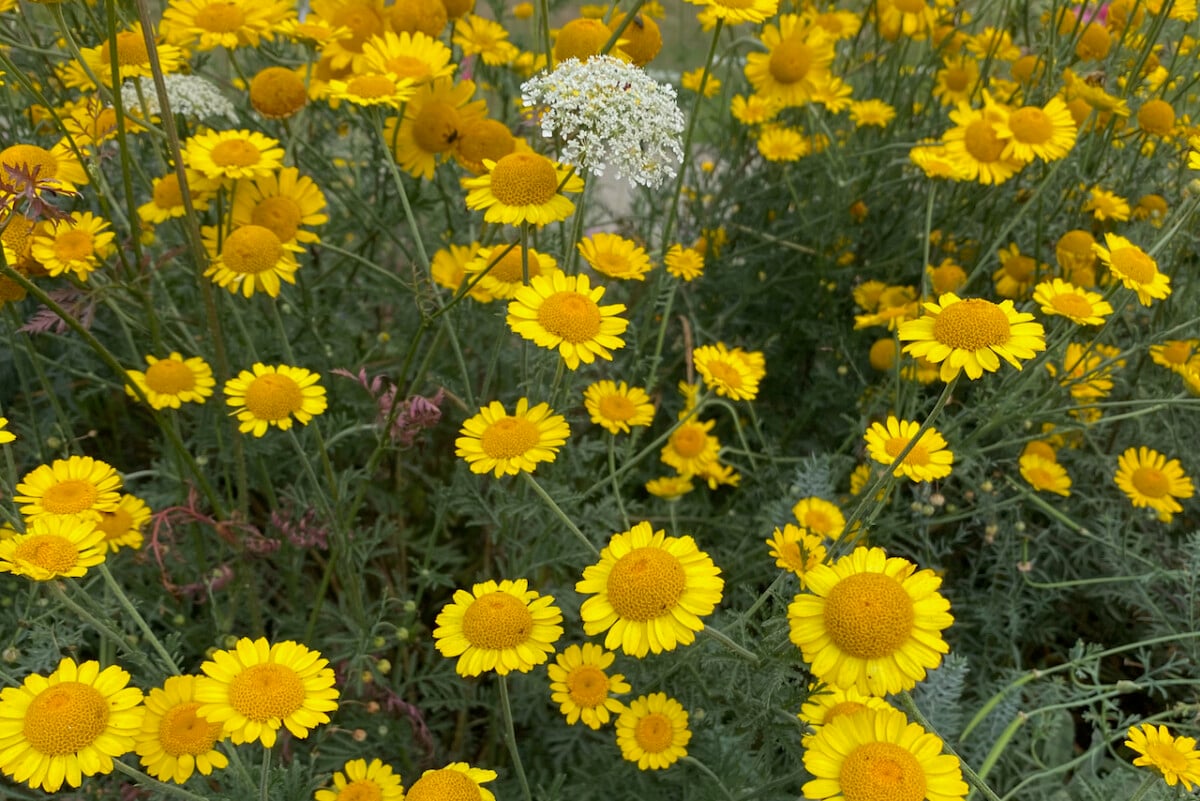
Golden marguerite is a short-lived perennial that is very drought tolerant. If you start it from seed, it might take a couple of years to reach full bloom. They do flower in their first season, but the blooms are a bit sparse.
So I’d advise you to look for a few starter plants if you want to make sure they fill up right away. Plant golden marguerites in full sun (they love it), but make sure the soil is well-draining. They don’t like to have their feet wet for too long, especially in clay soil.
5. Cup plant (Silphium perfoliatum)
If the golden marguerite (above) and the marguerite daisy (below) are dainty-looking flowers, this other member of the daisy family is their much tougher cousin. Although the sunshine yellow flowers are just as bright and beautiful, the large foliage and thick stems of the cup plant make it tough as nails. This is what makes an excellent long-lasting alternative to the ephemeral supermarket mums.
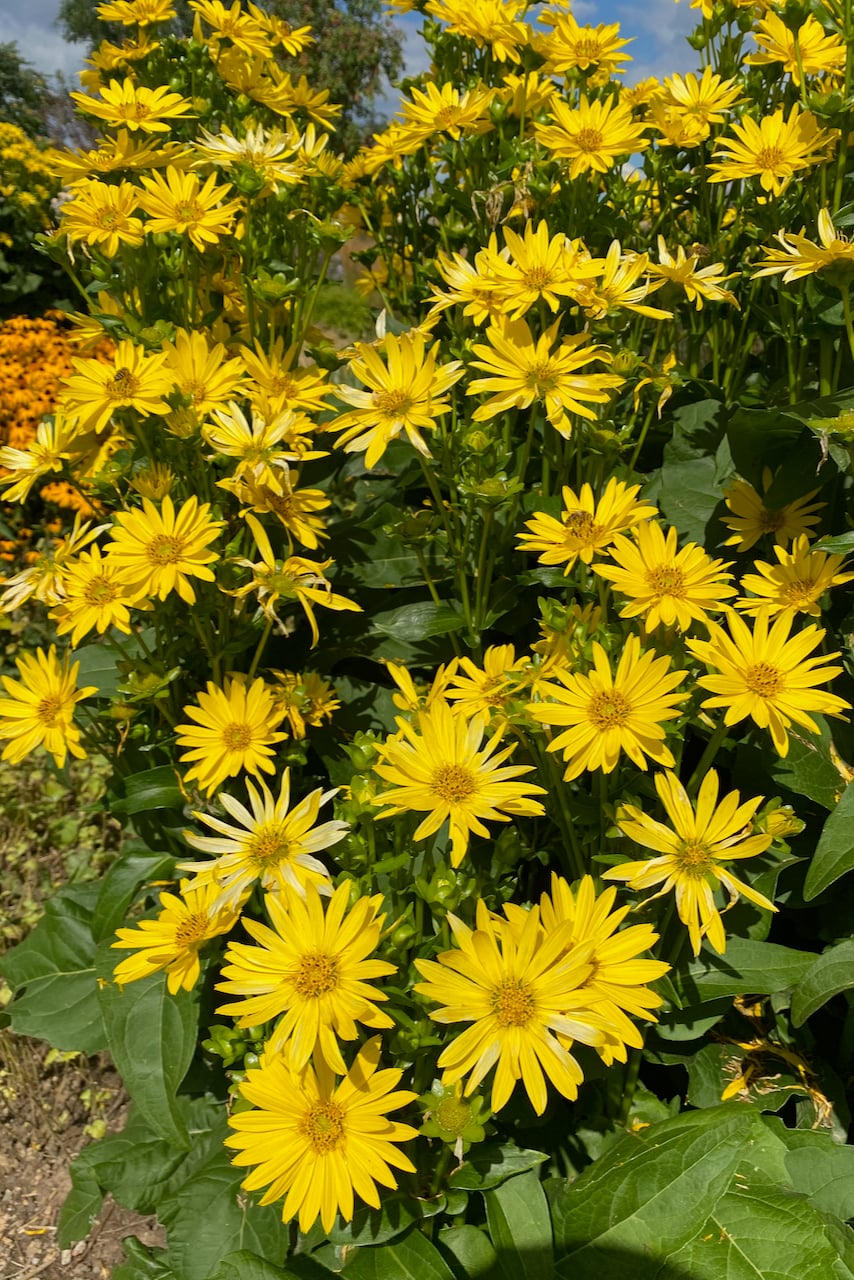
Cup plants are native to North America (Eastern and Central United States as well as Eastern Canada). It’s rare to find a plant that’s native from North Dakota to Texas, but here it is. There are documented medicinal recipes by Native American tribes that have used its roots and sap for hundreds of years.
I prefer to grow it as an ornamental, for the time being.
Cup plants are herbaceous perennials that start blooming in July and continue to hold their heads up high until October. Once established, cup plants are extremely resistant to drought and heat, due to their deep tap roots and thick foliage.
But here’s one detail to pay attention to when you choose where to plant them: they will grow tall. Think daisies on stilts. Really tall stilts. So it’s best to plant them to the back of the flower border, along a wall or a fence, or as a privacy screen.
6. Sneezeweed (Helenium autumnale)
If I had to choose a single replacement for supermarket mums, it would have to be Helenium autumnale (with that unfortunate nickname that we won’t mention again because it makes my nose itch). They come in the same shades of deep orange and burgundy that make mums look so dramatic in the middle of fall, but heleniums will bring back this game to the garden every year.
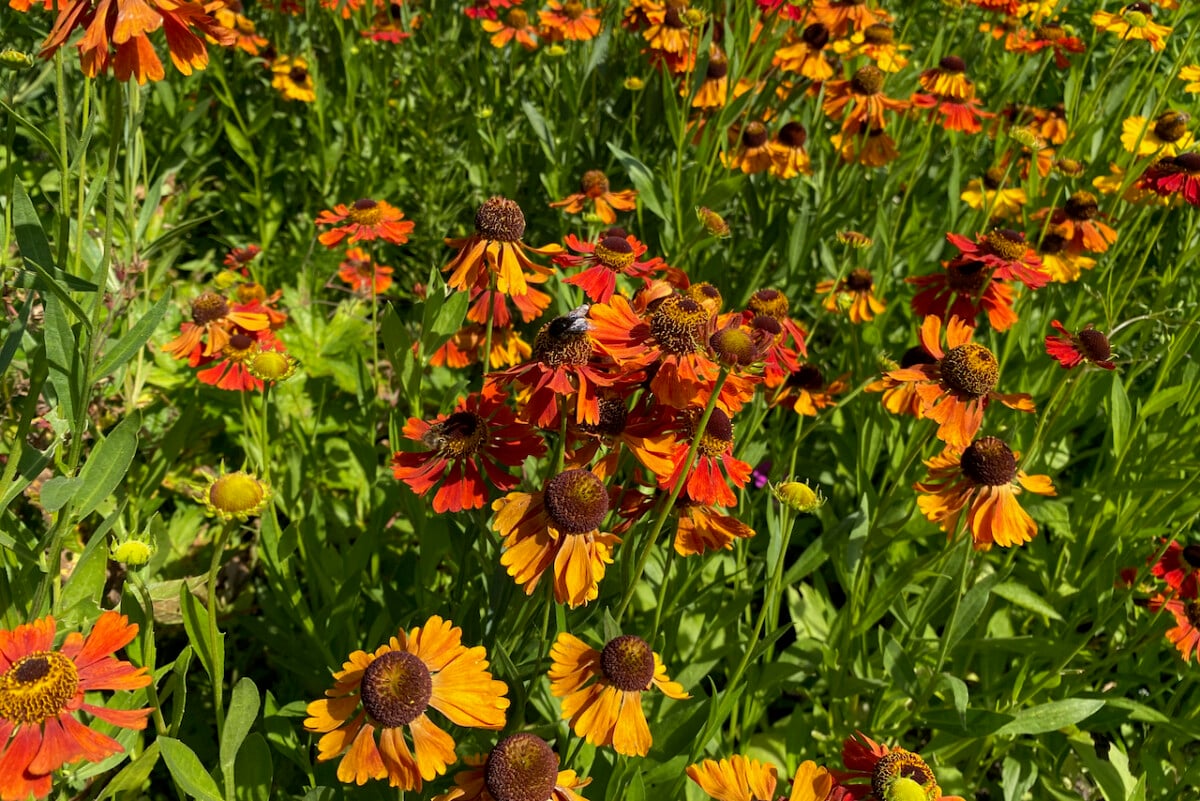
Heleniums start blooming in July and – with careful deadheading – will keep blooming all the way through November.
Helenium autumnale is native to North America, although the cultivars that we can find for sale nowadays have been much improved in terms of color and height choices, compared to the native varieties.
Helenium is a herbaceous perennial which does well in full sun and does not require any extra fertilizing. However, it will need extra soil moisture in its first year in order to get established.
7. Tickseed (Coreopsis)
Speaking of silly nicknames, who gave tickseed their unfortunate name? Coreopsis sounds much better and more elegant, doesn’t it?
Just like the heleniums above, coreopsis is also a herbaceous perennial with daisy-like flowers in warm shades of yellow, orange, red and burgundy. There are many different types of tickseed native to North America, and many other hybridized cultivars to choose from.
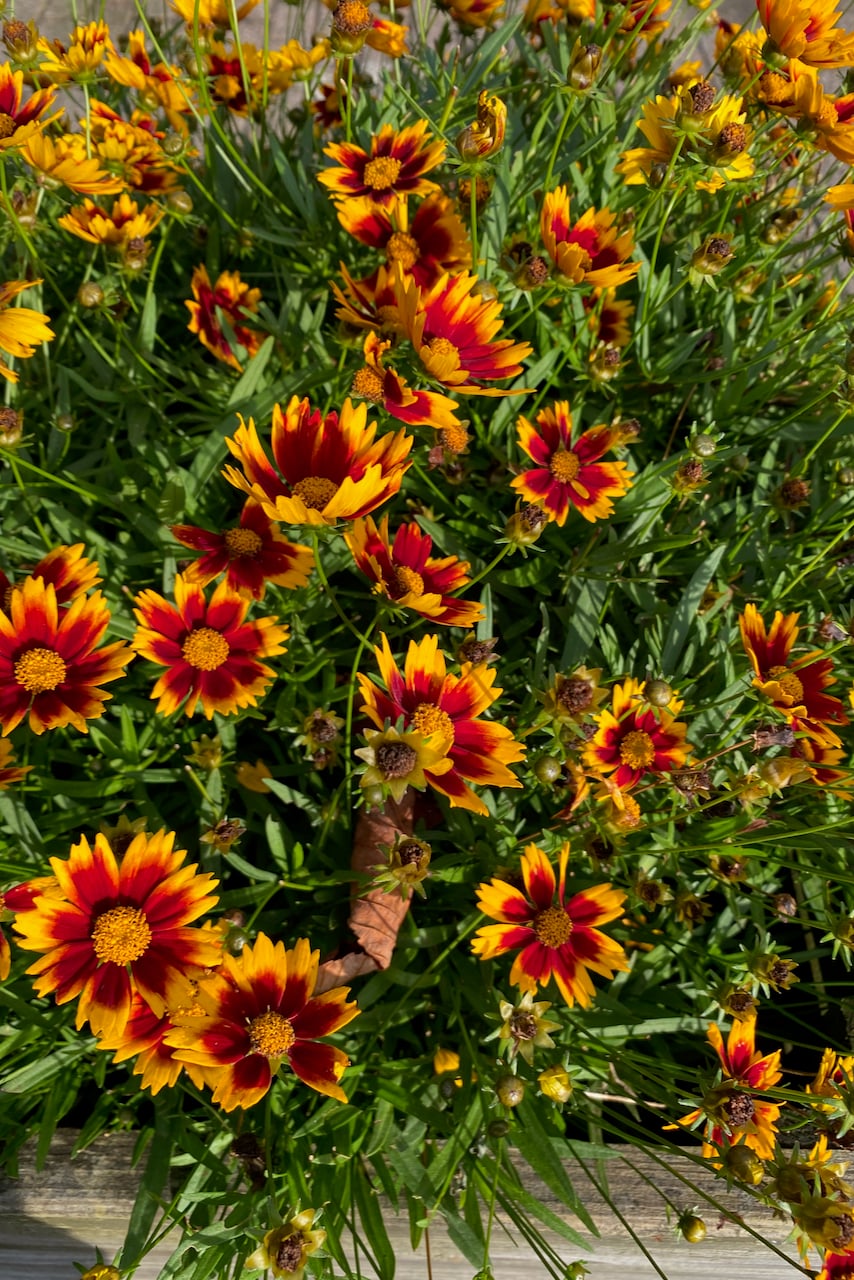
Coreopsis has a mounding growth habit, growing close to the ground, which makes it a worthy perennial alternative to disposable mums.
It prefers moist but well-drained soil and will explode into an abundance of blooms if it gets full sun (meaning six hours a day at the height of the season). If we keep it watered well while it’s working on getting established, coreopsis will fare even better during heat and drought.
8. Marguerite daisy (Argyranthemum)
At least this one has -mum in its Latin name, right?
Here’s a photo I took in my mother-in-law’s garden in late September. And here are her marguerite daisies. I was writing an article on deadheading perennials, but as you can see, there wasn’t much to deadhead on these plants. They happily bloomed until the first frost.
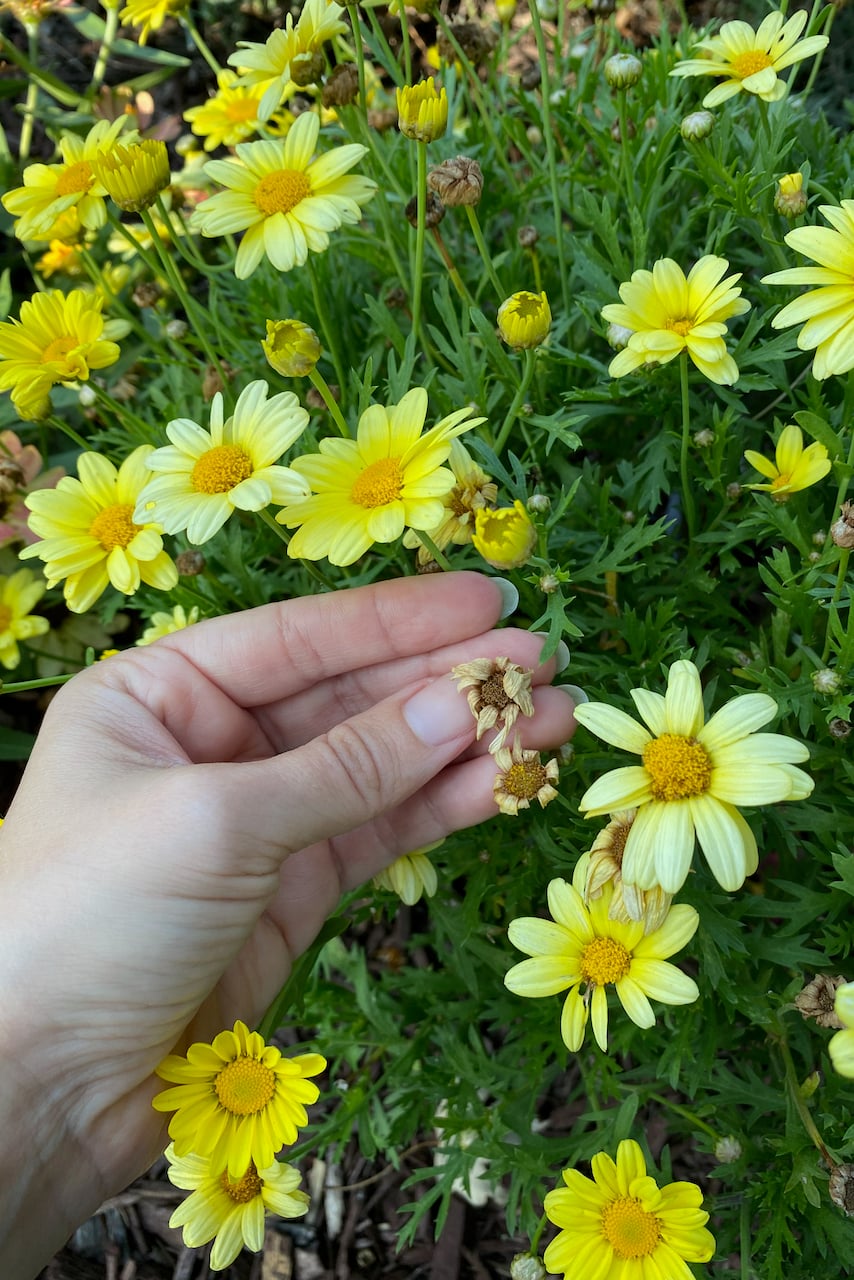
It may seem silly to call them marguerite daisies – like calling them daisy daisy, since marguerite is just the French word for daisy. In the US, we do this to tell them apart from Shasta daisies (Leucanthemum x superbum), a popular American hybrid in the daisy family.
However, marguerites will bloom much later into the season than Shasta daisies, which makes them a perfect perennial substitute for supermarket mums.
Marguerite daisies love full sun and well-draining soil, but they are short lived perennials that generally only last for a few years. They’re also not big fans of hard winters and being buried under a thick layer of snow.
Luckily, marguerite daisies are easy to propagate, either from seed, by taking semi-hardwood cuttings, or through division. Just make sure you keep the young plants sheltered over the winter.
9. Fall anemones (previously Anemone hupehensis, now renamed as Eriocapitella hupehensis)
I started working on this article at the end of August and my Japanese anemones were just starting to come into bloom. Just when all the summer ornamentals are packing their bags, fall anemones will gladly volunteer to fill in the color gap. They start blooming in August and keep on blooming until November. Sometimes, only the first frost can stand in their way.
So far, most of my list has been filled with daisy-like flowers, but fall anemones break that pattern. If the upright blooms won’t convince you, I think the pastel pinks will seal the deal.
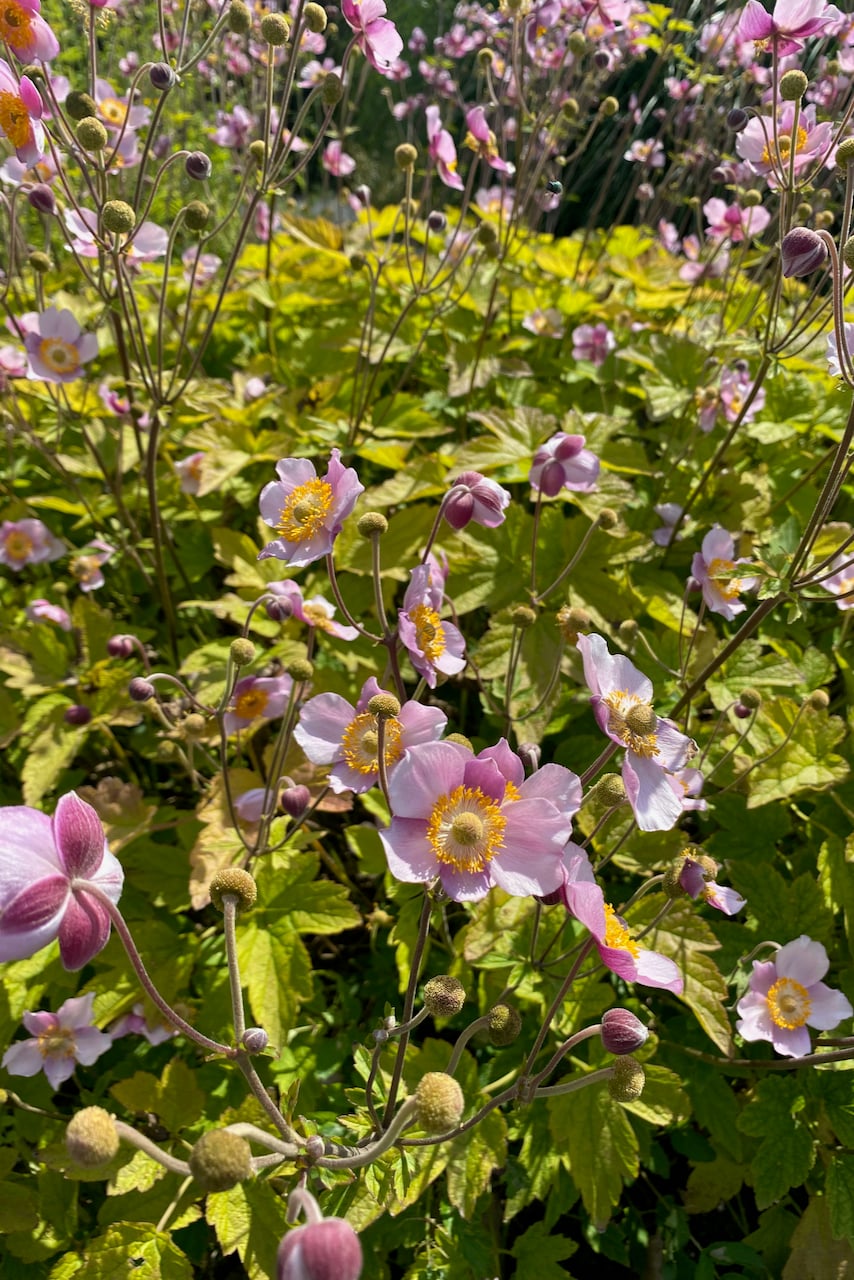
And learn from my mistakes. I knew them as low-maintenance, sturdy perennials in previous gardens, but I miscalculated their location when I first planted them in my current garden.
If you’re planting a Japanese anemone this fall (or next spring), take into account how much sun it will get at the height of summer. It needs partial shade when the sun is the strongest in July and August, otherwise it’s prone to leaf burn.
Even though it has a taproot and spreads through rhizomes, fall anemones need well-drained soil.
I wrote an entire guide about anemones, both spring and fall varieties. I invite you to have a read here and I bet you’ll join me in the anemone obsession.
10. Wandflower or gaura (Gaura lindheimeri, also Oenothera lindheimeri)
Attempting to take a photo of gaura is like trying to take a photo of butterflies in mid-flutter. I ended up having to grab hold of a clump because they kept going in and out of focus in a light breeze. It looked like a swarm of undecided butterflies bobbing up and down.
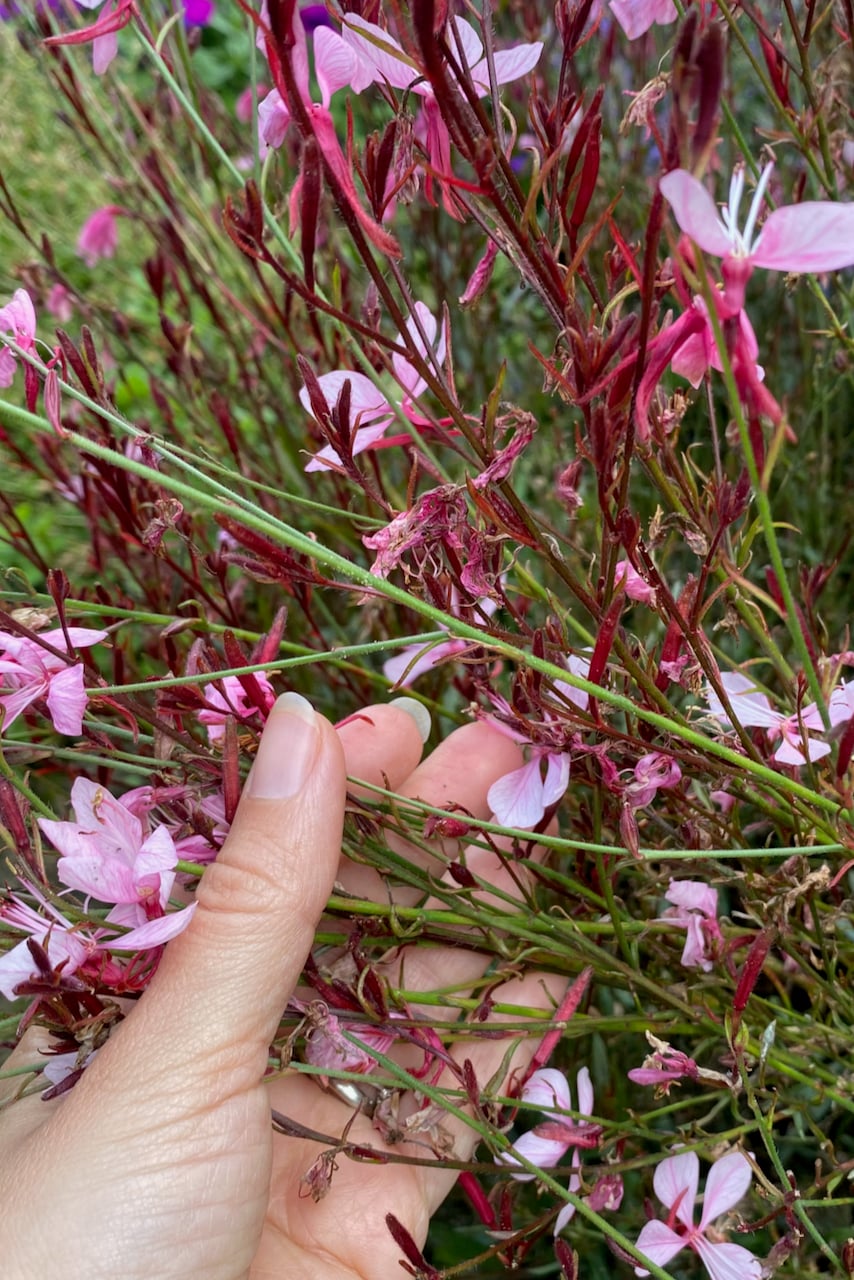
This is probably why its most common popular name is wandflower. And this is what I love about this plant. It’s so ethereal and such a good border filler amongst more showy ornamentals.
What makes gaura a good mum replacement? you ask. Its incredible ability to bloom continuously from June through November. On very little water, I might add.
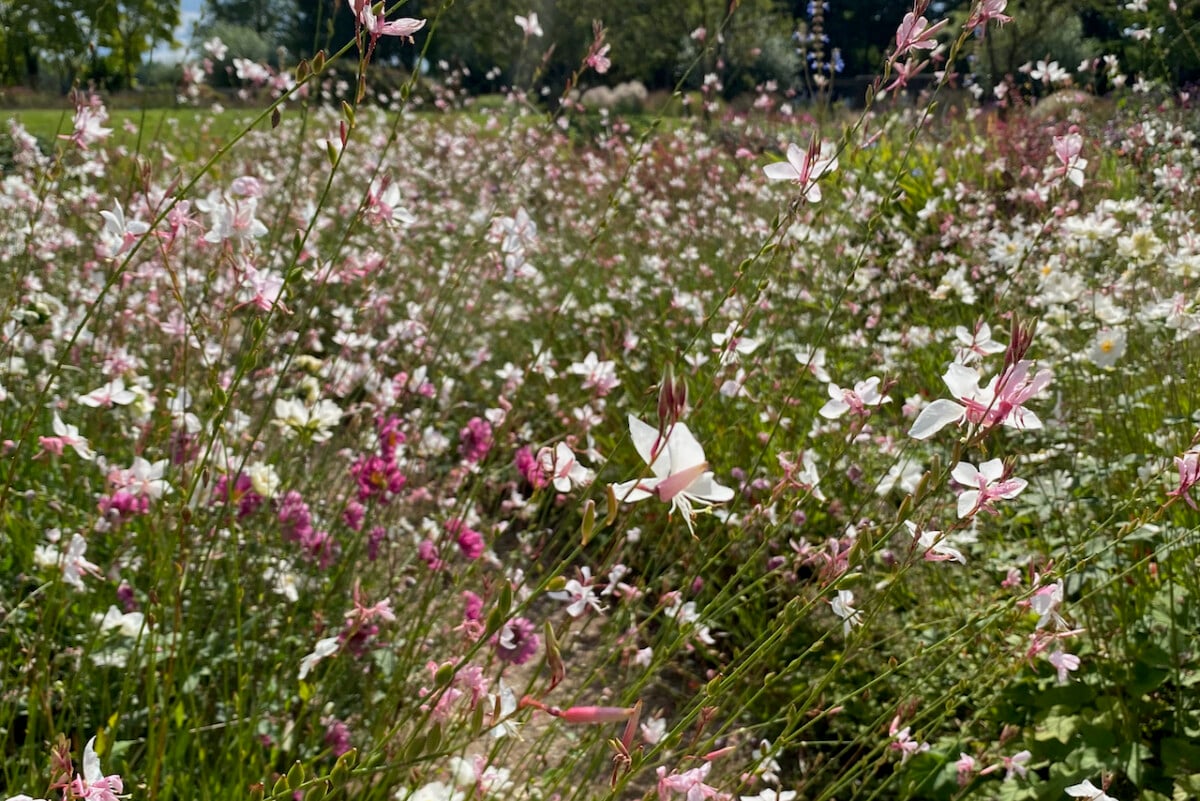
Gaura has been an absolute trooper in my garden during this hot and dry summer, so I’d put it up there on the low-maintenance plant pedestal. And to my surprise, pollinators loved it as well, flocking to it early in the morning. Which certainly explains its other popular name, bee blossom.
Wandflowers love full sun, but can also tolerate afternoon shade. What they don’t like is soggy soil. The soil needs to be well-draining.
What about my stoop? My porch? My patio?
Does it not deserve a glorious display of mums?
Let me tell you my secret. Mum’s the word!
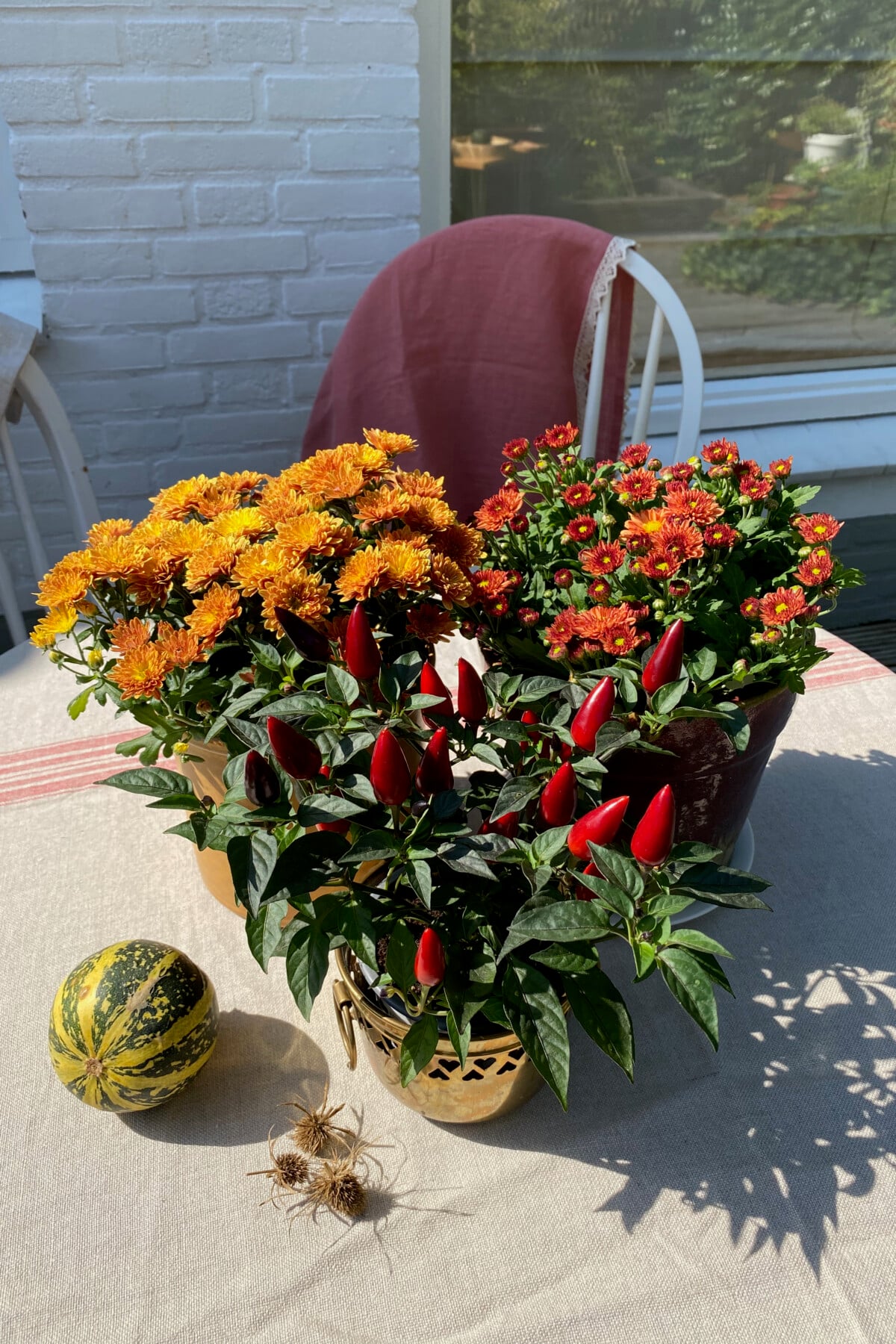
I still buy some mums in the fall. But instead of the inflated specimens that look too good to be true, I get a couple of small mums to use as centerpieces on my patio table. And I do my best to keep them in bloom as long as possible.
Tracey has a few tips to keep mums blooming longer into the season in this article. Give it a read as soon as you bring those babies home.
Get Garden Notes From Tracey, Right to Your Inbox
Pull up a chair on the front porch. Join 54,000+ gardeners who get Tracey\'s friendly notes, seasonal to-dos, and hands-on tutorials three times a week.