

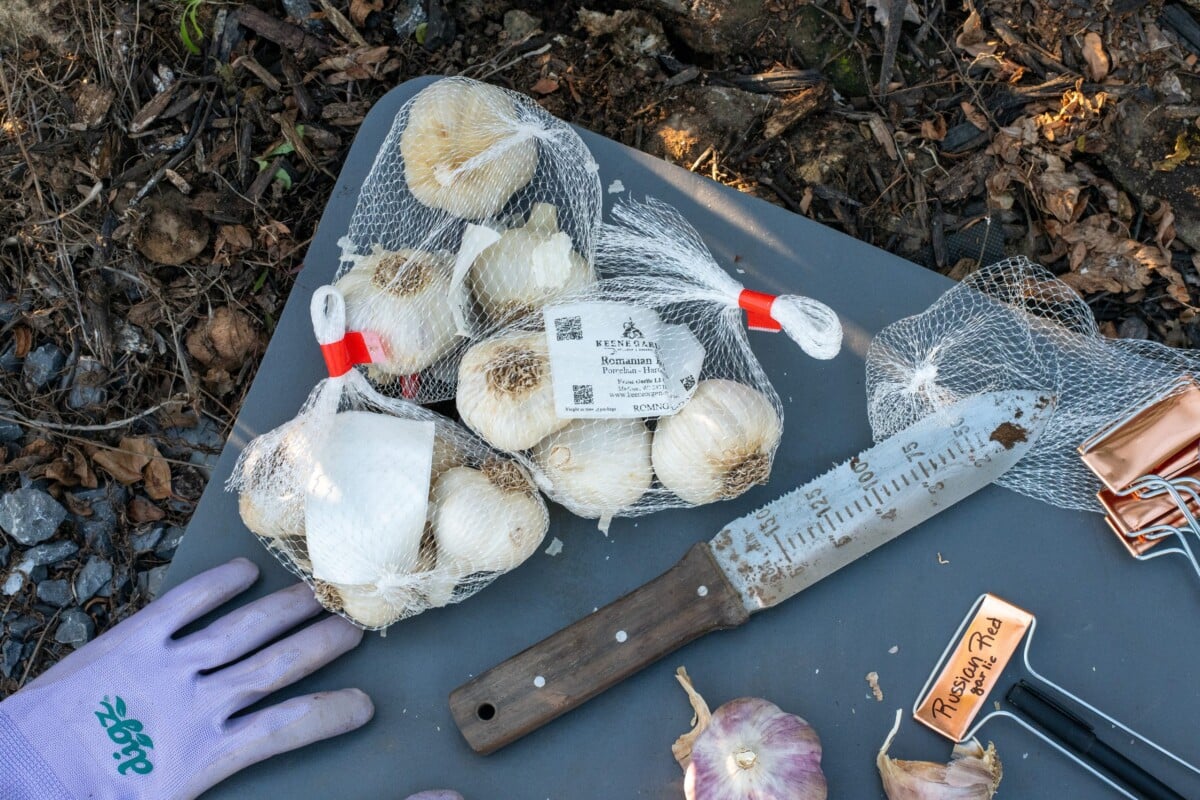
Fall is the time to plant garlic. And this fall, I’ll be trying a brand-new way of growing garlic that I learned from my new neighbor.
Judging by the size of the cloves he gifted me recently, I think I can expect excellent results. Let’s take a look at this brilliant garlic-planting method that will change the way you grow your garlic and free up some garden space.
Every year, thousands of gardeners eagerly await a special delivery from the mailman just as the gardening season is winding down for the year. It’s the box of garlic they ordered earlier in the summer.
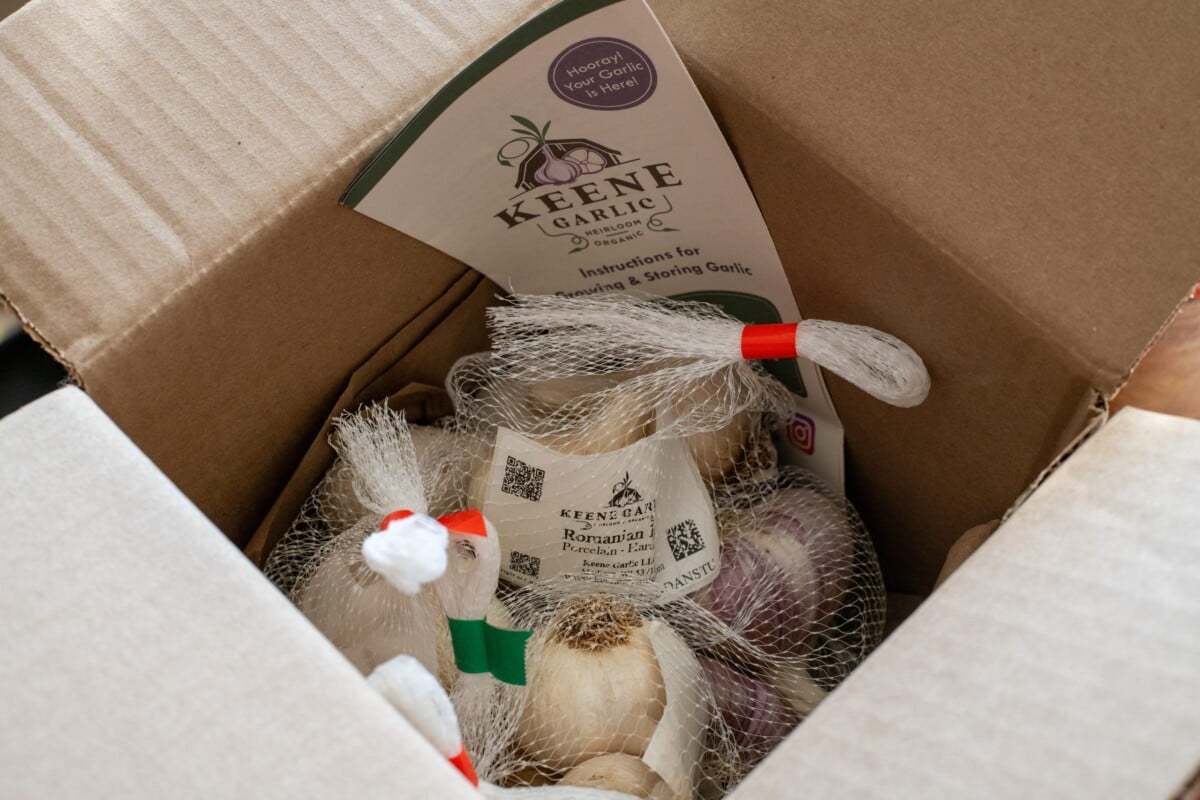
If you’ve never planted garlic before, this might be news to you. Now, before you whip out your phone to order some garlic for planting, keep in mind that for most seed companies, garlic is something that is offered on pre-order early in the summer, then shipped in the fall. So don’t be surprised if a lot of the varieties are marked as out of stock.
You see, fall is garlic planting season.
You’ll want to create a reminder on your calendar to order in August next year.
But no worries, you’re not out of luck yet. You can also hit up the good folks at Keene Garlic; they’ve still got a decent selection, and it will get you growing this year. Or you can hit up your local farmer’s market. If they are growing it, then you know that same garlic will grow well for you.
To learn the normal way to plant garlic, you can read my tutorial here.
If you’ve been growing garlic for ages, you’re probably hoping I’ll get to the point soon, so let me do that.
I bought a house this summer. I have neighbors, a lovely family, less than a hundred yards up the hill from me in my backyard. They have a lovely garden. I figured that’s always a good sign for neighbor compatibility, so I decided to walk on up and introduce myself shortly after I moved in.
I rang their doorbell and stood waiting. As I waited, I admired their lovely native flower garden between the house and the garage. (See? Good neighbors.) There were cheery rudbeckia, purple coneflower (echinacea), and…wait a minute. Is that a garlic scape?
It was.
Wait, there’s another one.
There was definitely garlic growing in the flower beds, but it had gone to seed. Ahh, I’ll bet they had vegetables here last year, and they converted to flowers this year.
They weren’t home, so I walked back to my place.
A few days later, one of my neighbors showed up on my doorstep to say hello and give me a housewarming gift. It was a brown paper bag full of large, homegrown garlic bulbs. I laughed and said,
“Okay, now I have to know: what’s the story with the garlic in your flower beds?”
I explained my prior visit and curiosity. He laughed and said those must have been missed, but no, it wasn’t a prior vegetable garden. He just grows his garlic in among his flowers
Excuse me? You what?
He’s an environmental scientist from one of the nearby universities, and he does a lot of work involving habitats and microhabitats, especially in wetlands. He’s a big fan of diverse habitats, and this was just one way his work has made its way home, so to speak.
I’ve noticed when pulling up the long, shared drive that he has quite a few tree stumps at the bottom of his yard, and they’ve all been drilled with hundreds of holes for bees. On the other side of our shared drive, he’s building a habitat hedge with all of the lawn clippings and tree trimmings from his property.
Wildflowers have already begun to pop up, and the birds love it. It’s a really cool space.
I think I’m going to like my new neighbors.
But back to the garlic.
As I walked back home with my (wonderfully fragrant and flavorful) garlic, I began to see the brilliance of his odd flower bed inhabitant.
Why Planting Garlic Among Your Ornamental Plants Just Makes Sense
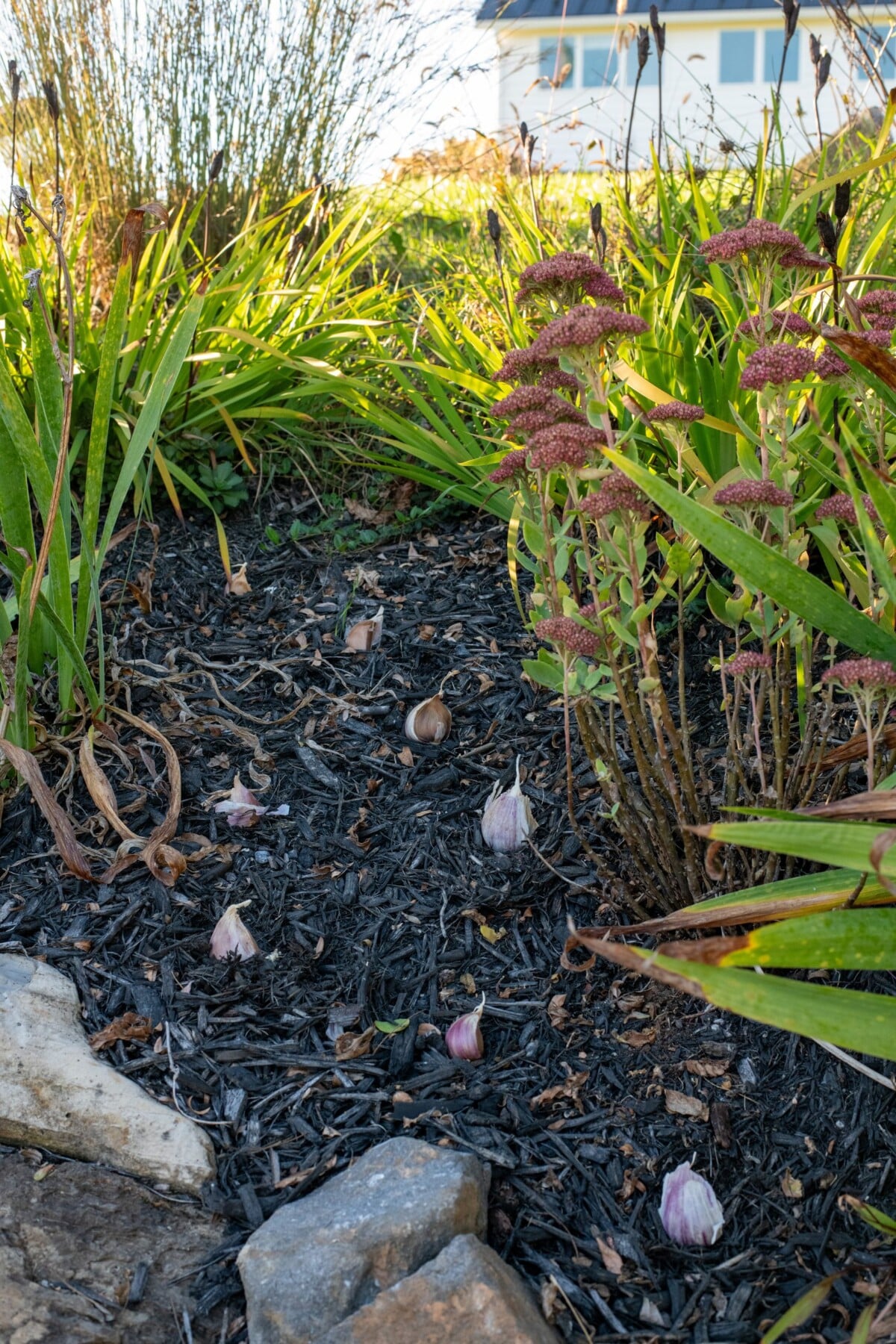
- Planting garlic among existing ornamental beds takes up less space in the garden.
- The tall green stalks add height and visual appeal to a flower bed.
- The strong scent of garlic helps keep certain pests like aphids, whiteflies and spider mites away from the flowers.
- Garlic is distinctive and easy to identify among the flowers (as evidenced by how quickly I noticed it).
- The more diversity in plant types in one area, the better it is for the soil and all the plants growing there.
- You’re less likely to forget where you planted it and accidentally dig it up next spring. (Been there, done that. Woops!)
Reader, let me tell you, I was gobsmacked. It makes so much sense.
I love growing my own garlic. It is always head and shoulders above anything you can get at the store when it comes to flavor.
You can’t top homegrown garlic.
But my biggest gripe about garlic is how much garden space it eats up and for such a long time.
You have to plant it in the fall, and by the time it’s ready to harvest in early summer, the rest of your garden has already been planted. So, the only thing you can put in behind it are quick crops like beans, radishes, beets, lettuce, etc.
I grow a lot of garlic, so that ends up being quite a bit of garden real estate eaten up.
But with this method, I can still grow tons of garlic without eating up my garden real estate.
Obviously, there are a few considerations to be made when growing garlic this way.
It’s going to be a lot harder to do, if not impossible, if you use landscape fabric in your ornamental beds. (A practice I highly suggest against, by the way. There are much better alternatives here.)
Likewise, if you have decorative gravel in your ornamental beds.
And naturally, you still need to plant your garlic where it will receive the right amount of sun, water and nutrients it needs. So, a shady flower bed won’t work, or a bed with quick-growing plants that will shade out the garlic before it can be harvested (peonies, bleeding heart, or other fast-growing spring perennials).
But for summer-blooming perennials, garlic is the perfect short-term neighbor.
If you’re ready to reclaim some garden space and still grow garlic, let’s get planting.
Choosing the Right Location
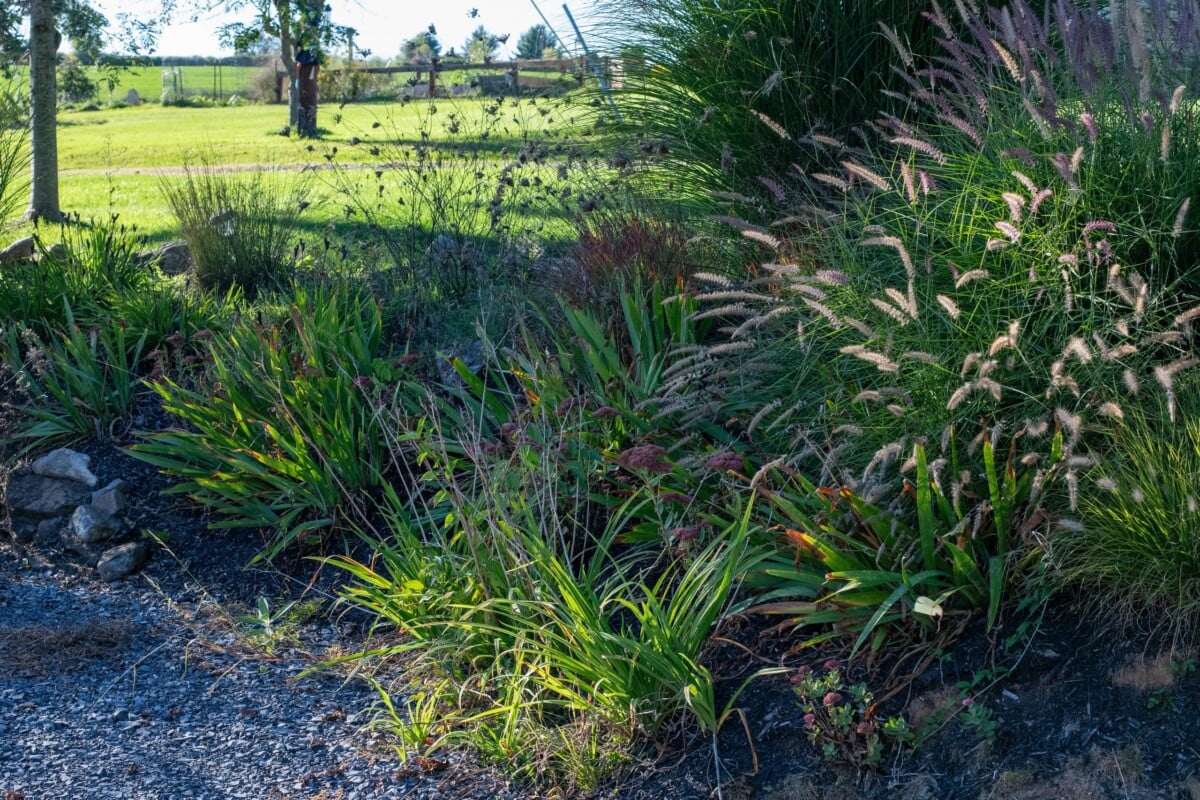
Obviously, you need to take a good look at your ornamental flower beds. Garlic needs a minimum of 6-8 hours a day of direct sunlight. However, if you want a good yield and big bulbs, then you should shoot for an area that receives 8-10 hours of direct sunlight. A southern-facing flower bed is a great option.
Because we aren’t planting our garlic in neat, tidy little rows, you don’t have to worry about “if you have room” in your flower bed. We’re simply looking for spots in between plants where you can poke a few cloves.
Garlic needs to be planted 4 to 6 inches apart, so keep that in mind if you cluster several cloves together in one area. You’ll also want to plant it away far enough away from established plants so you don’t disturb them when you dig down to plant the cloves.
If you plant more than one variety, it’s probably a good idea to group them all together in one specific area of the flower bed. You might even want to put a label in that area so you remember what variety is planted where.
Planting Your Garlic
If you’ve planted garlic before, you already know what to do. We aren’t doing anything different beyond changing up the location and not planting in rows. If you’ve never planted garlic before, I’ll give you a brief tutorial, but you’ll want to read more about growing garlic here.
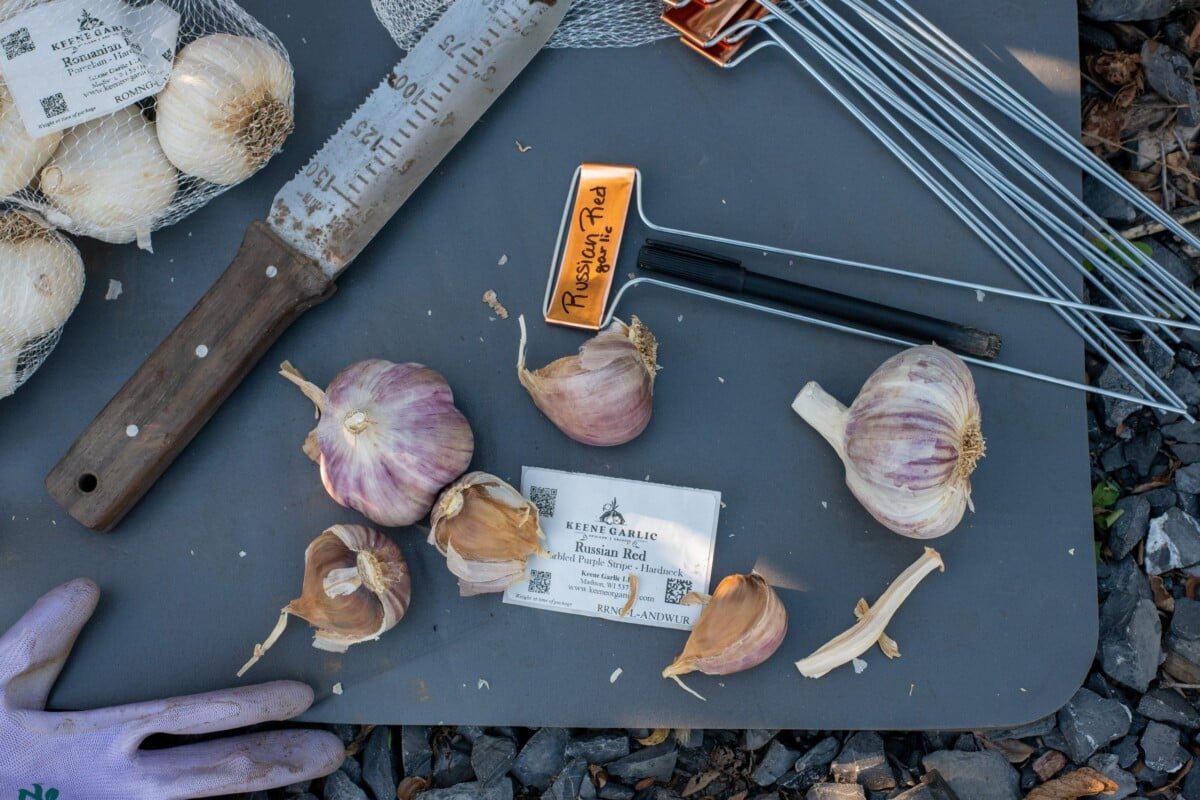
Carefully pull your garlic bulb apart into individual cloves. Try not to disturb the papery skin too much. It helps protect the garlic.
Some folks soak their garlic beforehand to prevent disease and give garlic a pre-feed before being planted. However, this step isn’t absolutely necessary. If you want more information on the benefits of pre-soaking garlic before planting so you can decide if it’s something you want to do, read about that here.
Working from one end of your flower bed to the next, using a sharp spade or a horihori knife (this is the one I have) slice down into the soil deep enough so you can slip a clove down into the ground (tip up and root-side down) 2-4 inches deep. Pat the soil back into place firmly.
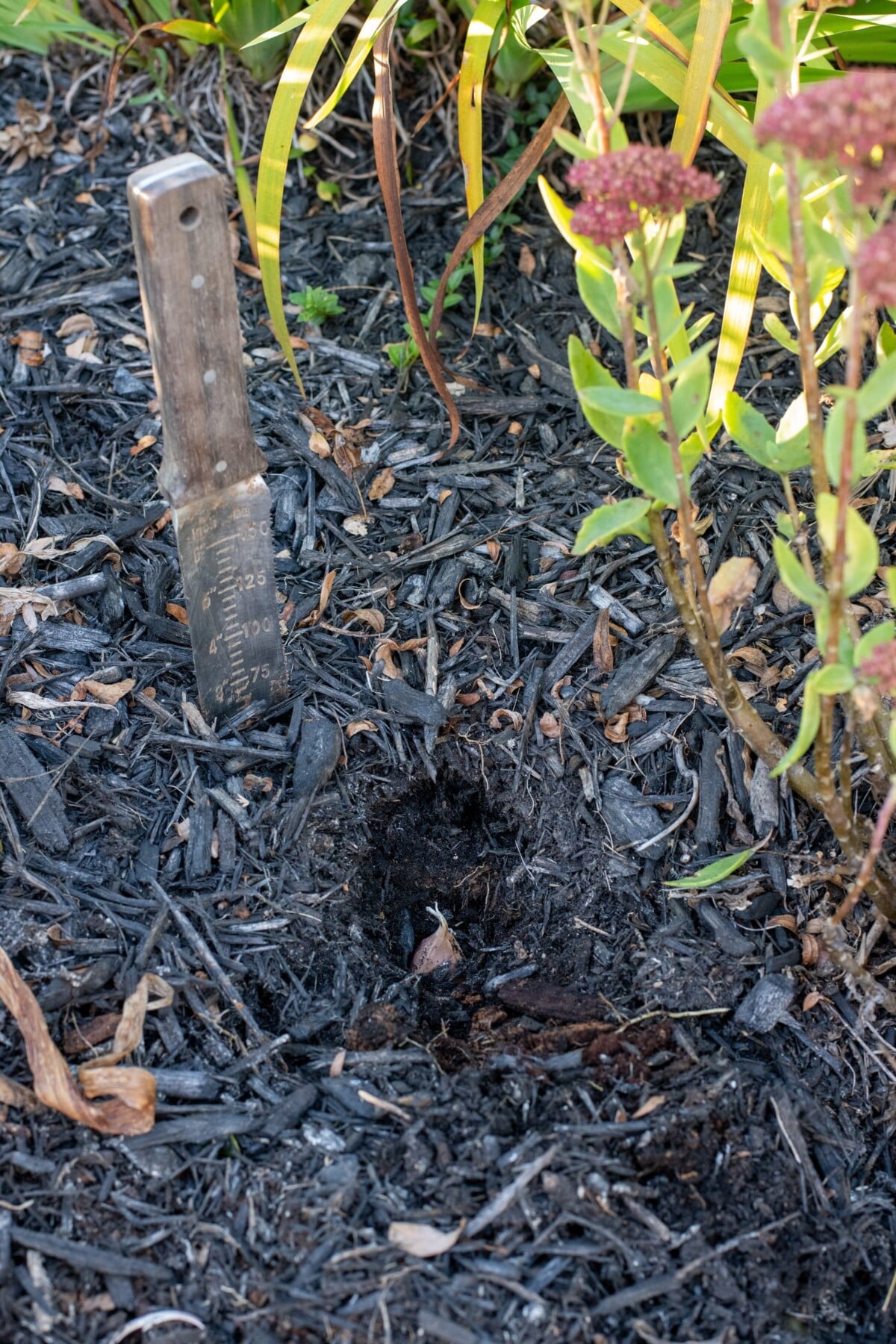
If you live where winters are extremely cold and harsh (Hi, Aunt Patti!), lean towards the deeper end of that range, so the cloves are a bit more insulated. Planting the cloves on the deeper side ensures that they won’t heave up out of the ground with each freeze-thaw cycle.
Another benefit of growing garlic in your flower beds is that you get to skip a step.
Since most of us already mulch our flower beds, you don’t need to worry about mulching your garlic. It’s already covered. Literally. A good layer of mulch protects your garlic from the harshest winter weather.
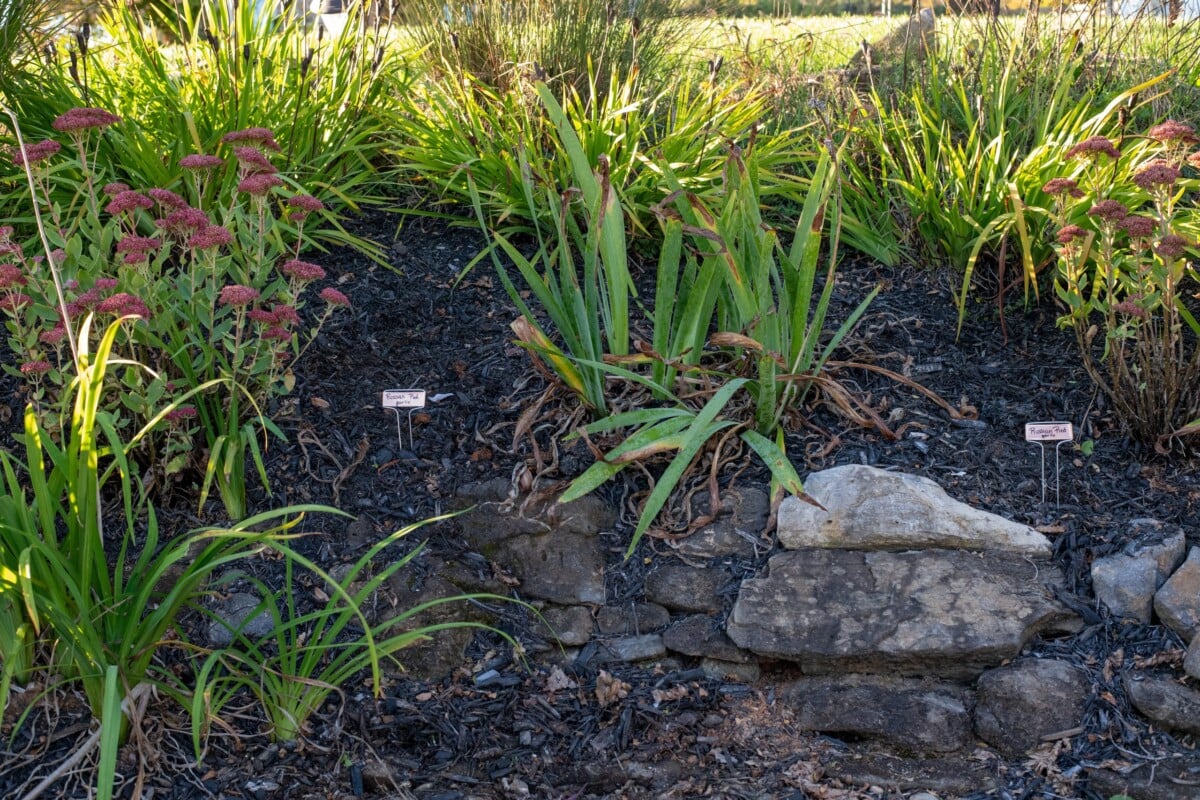
Water in your newly planted garlic, and don’t forget to label it if you planted more than one variety. It might not be a bad idea to label it regardless, or at least make a note somewhere that you planted your garlic in your flower beds, and not in your garden. But only if you’re forgetful like me.
I don’t know about you, but I like my new neighbors already.
Get Garden Notes From Tracey, Right to Your Inbox
Pull up a chair on the front porch. Join 54,000+ gardeners who get Tracey\'s friendly notes, seasonal to-dos, and hands-on tutorials three times a week.