

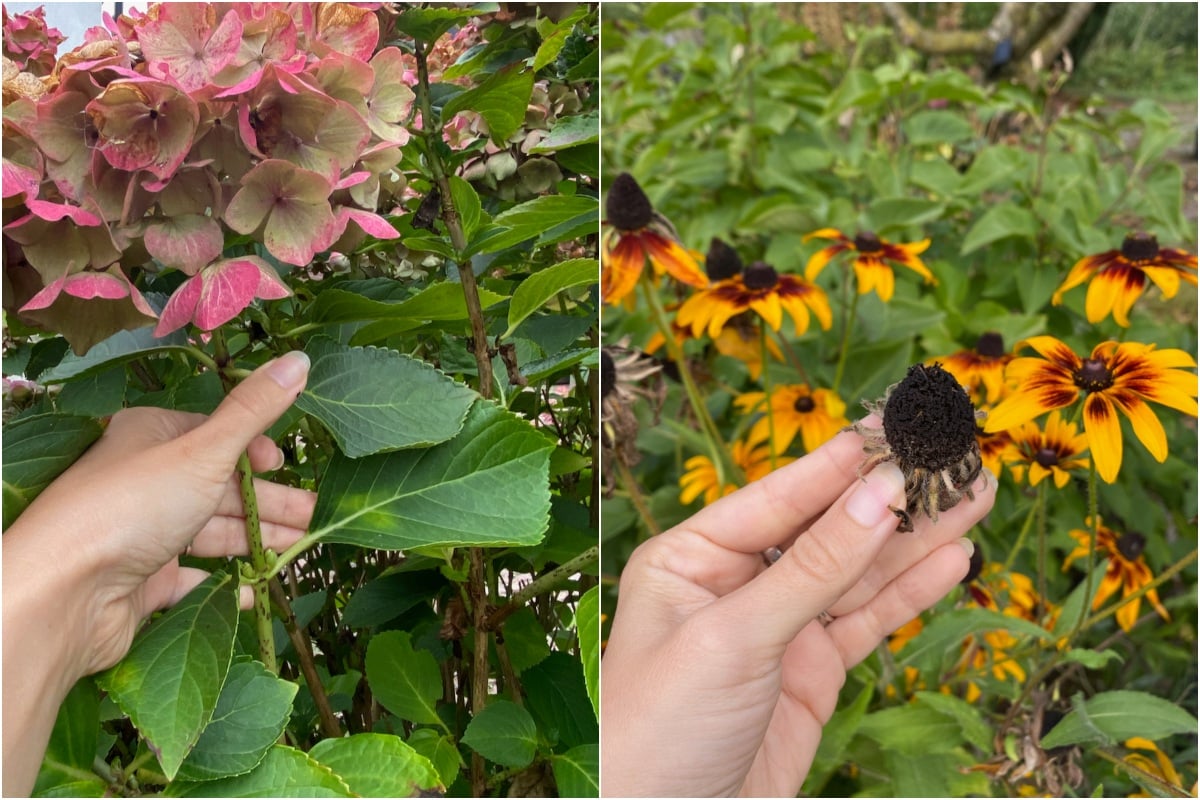
I love a messy garden! And not just as a self-confessed prune-crastinator. To me, a messy garden is a living garden. A diverse garden. And a welcoming garden.
So that’s why I wanted to encourage our readers to put down their shears and resist the urge to prune and tidy up their garden this fall.
(Although there are still some plants that DO need a fall pruning.)
About a third of the native bees of North America overwinter in leaf piles, hollow stems and plant husks. So do moths, caterpillars and lady bugs. If we want our garden ecosystems to be healthy and thriving, we have to provide shelter and food for wildlife, especially in the winter.
Another theme you’ll notice with some of the plants on this list is that they provide visual interest in the winter, which would be lost if we were to prune them in the fall. They delight us with colorful flowers when not much else is in bloom. They also grow berries for the birds (and some berries for us).
On top of that, some of the plants in this list flower on old wood. If we prune them in fall, we could be removing the buds which form next years flowers.
I could have added about 30 more entries to this list of plants not to prune in the fall. But for now, I thought I’d start with these popular ornamentals that we shouldn’t touch until spring rolls around.
1. Hydrangeas
I’ve written a lot of articles on the growth habits of hydrangeas, so I won’t go into too much detail on this list. The gist of it is that most of the hydrangeas we grow in our gardens – including the uber popular French hydrangea (Hydrangea macrophylla) set their buds on previous year’s wood. So all the blooms that we’ve been enjoying for months this summer were the product of last year’s buds.
Naturally, if we want the same richness of flowers next summer, this fall is not the right time to prune it. In addition, I also don’t deadhead my hydrangeas. I simply allow the flowers to stay on the plant over the winter months, watching their shades turn from bright pink to dusty red to gray.
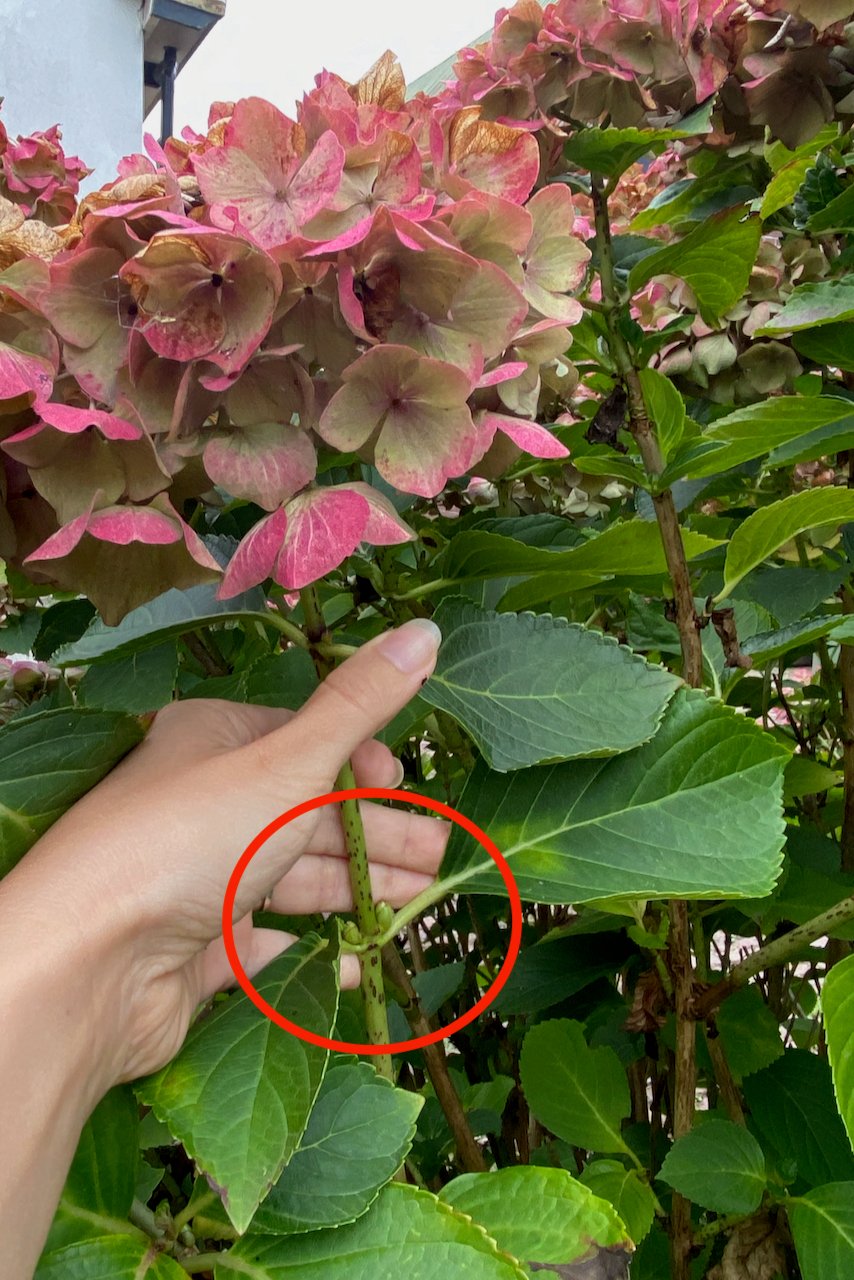
Hydrangeas that grow on new wood get the same treatment. There’s no reason to prune them just yet and certainly plenty of reasons to let the dry flowerheads decorate my garden this winter. The popular ‘Annabelle’ is one such new wood hydrangea that hangs around in the garden until next spring. Here’s how I prune my hydrangeas in spring, depending on what group they belong to.
And here are four jobs you should actually be doing to your hydrangeas in fall.
2. Clematis
I’m the first to admit that pruning clematis is a bit of a guessing game. Part knowledge, part luck, one hundred percent keeping my fingers crossed that I got both the timing and the height right.
I know I’m not the only one to feel like this about this beloved ornamental, so I wrote a detailed guide on how and when to prune clematis depending on what group it belongs to. I think this method, called traffic light pruning, will help demystify the rules.
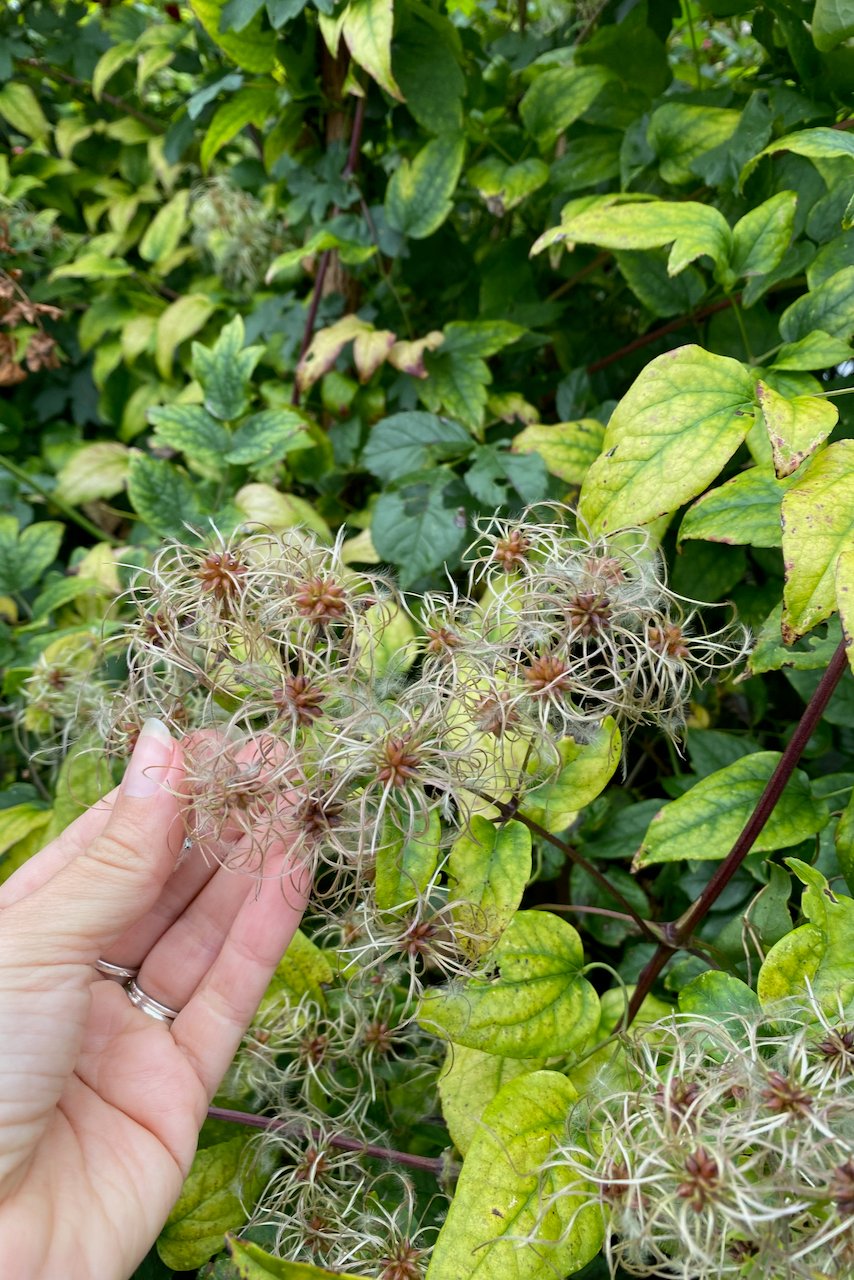
As a general rule, we prune clematis depending on when they bloom:
- Early flowering clematis (Group 1) blooms on previous year’s growth. They get a tidy up in the summer.
- Summer flowering clematis (Group 2) can bloom on both old and new wood. We tidy them up in spring.
- Late flowering clematis (Group 3) always flower on new growth. We prune them in late winter or early spring.
The article I linked above will tell you other characteristics of each clematis group and a few popular cultivars, so you can easily identify which one you have.
3. Magnolias
While I’m writing this article, in mid-September, my magnolia shrub is covered in a layer of shiny green foliage. It slowly starts to turn yellow and orange, and by November it is all over the ground.
The trouble with deciduous magnolias, arguably the most popular in US gardens, is that they often get lumped together with other plants that lose their leaves in the fall. So they end up getting the fall pruning treatment unnecessarily.
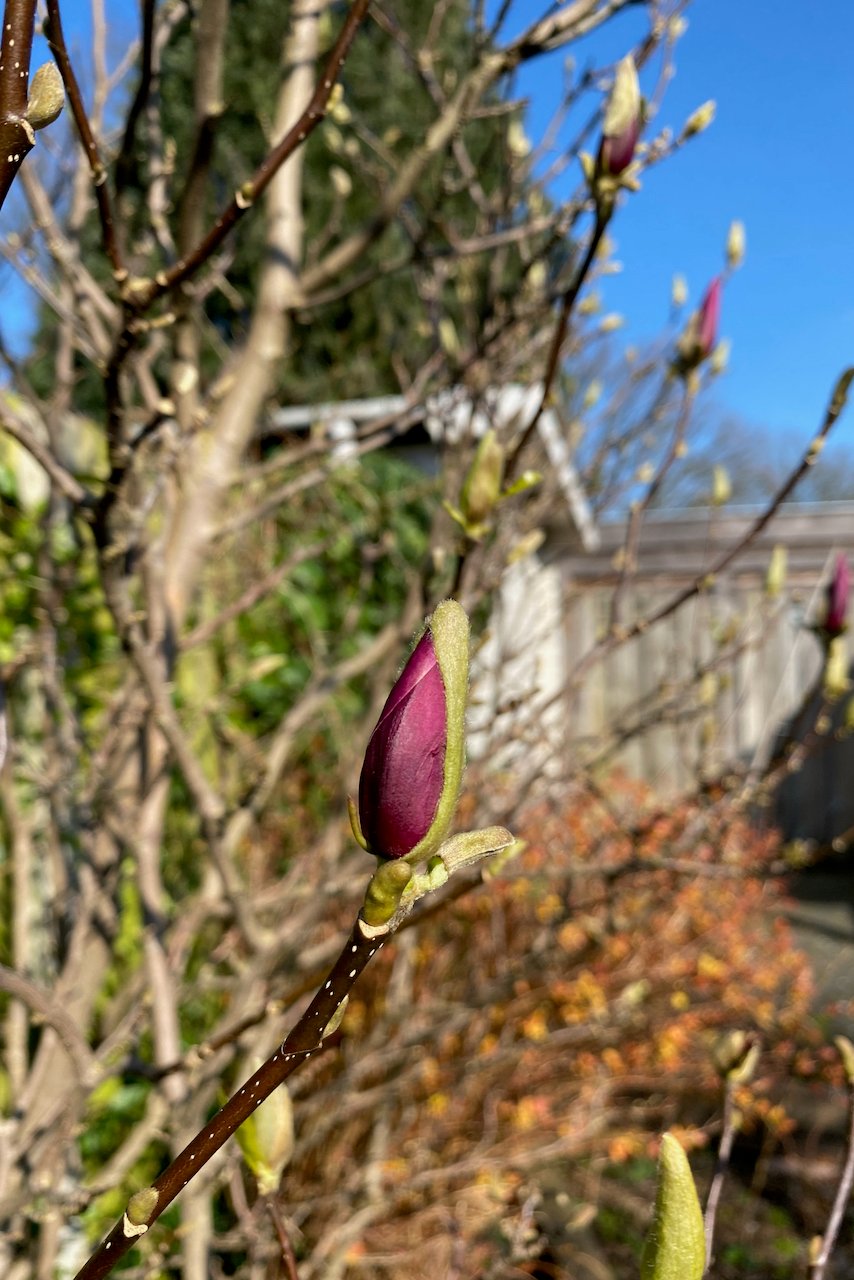
But once the leaves are off the shrub, it becomes very apparent why we shouldn’t prune magnolias in the fall. Can you see the golden velvet buds in the photo above? In a few months, starting roughly in late February in my area, they’ll open up into gorgeous flowers.
Magnolia doesn’t usually need hard pruning, but if you want to do some restorative pruning, you can wait until late spring next year, once the flowers are gone.
Remove only the branches that are dead, diseased or rubbing against each other. Here’s how I pruned my magnolia last May to improve airflow.
4. Japanese camellias (Camellia japonica)
Unlike magnolia, camellia doesn’t shed its leaves in the fall. Part of its appeal is that it remains a glossy green over the winter months. But a bigger part of its appeal are, no doubt, the colorful flowers that brighten up our gardens in the winter. Depending on what cultivar you’re growing, you can get camellia blooms in your garden as early as November. Camellia stelata, for example, is an early-blooming shrub.
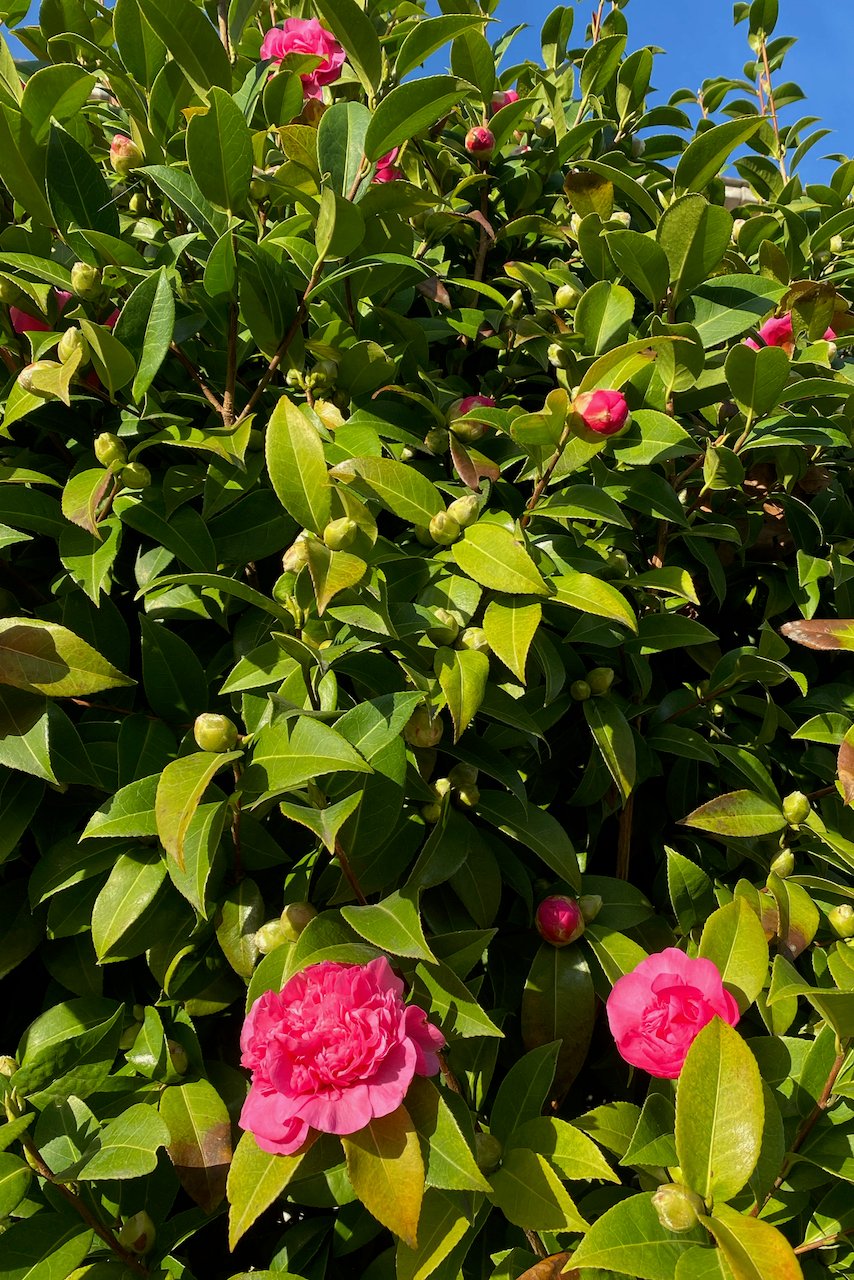
However, the most popular camellias usually start blooming in February. What I like about them is how they stagger their bloom. There are always a few early rising flowers that dot the plant here and there, then the rest opens up in unison. Finally, some stragglers hang on until late April.
The reason we should never prune a camellia in the fall is because all of these buds have started setting on the plant this year. You can start noticing them in the summer, and they really swell up in the fall. Were we to prune now, we’d remove all these future flowers.
And just in general, camellias don’t need a lot of pruning, though they might benefit from some trimming to encourage branching. We’ll have to wait until May for that.
5. Rhododendrons
Continuing on the theme of evergreen shrubs that set next year’s flowers on this year’s stems, let me remind you that neither rhododendrons nor azaleas should get a fall pruning.
Again, next year’s flowers are already budding on the shrub this fall. And unlike magnolias, where the buds are fairly small, we can clearly see the buds on the rhododendrons. They are right at the top of the leaf rosette.
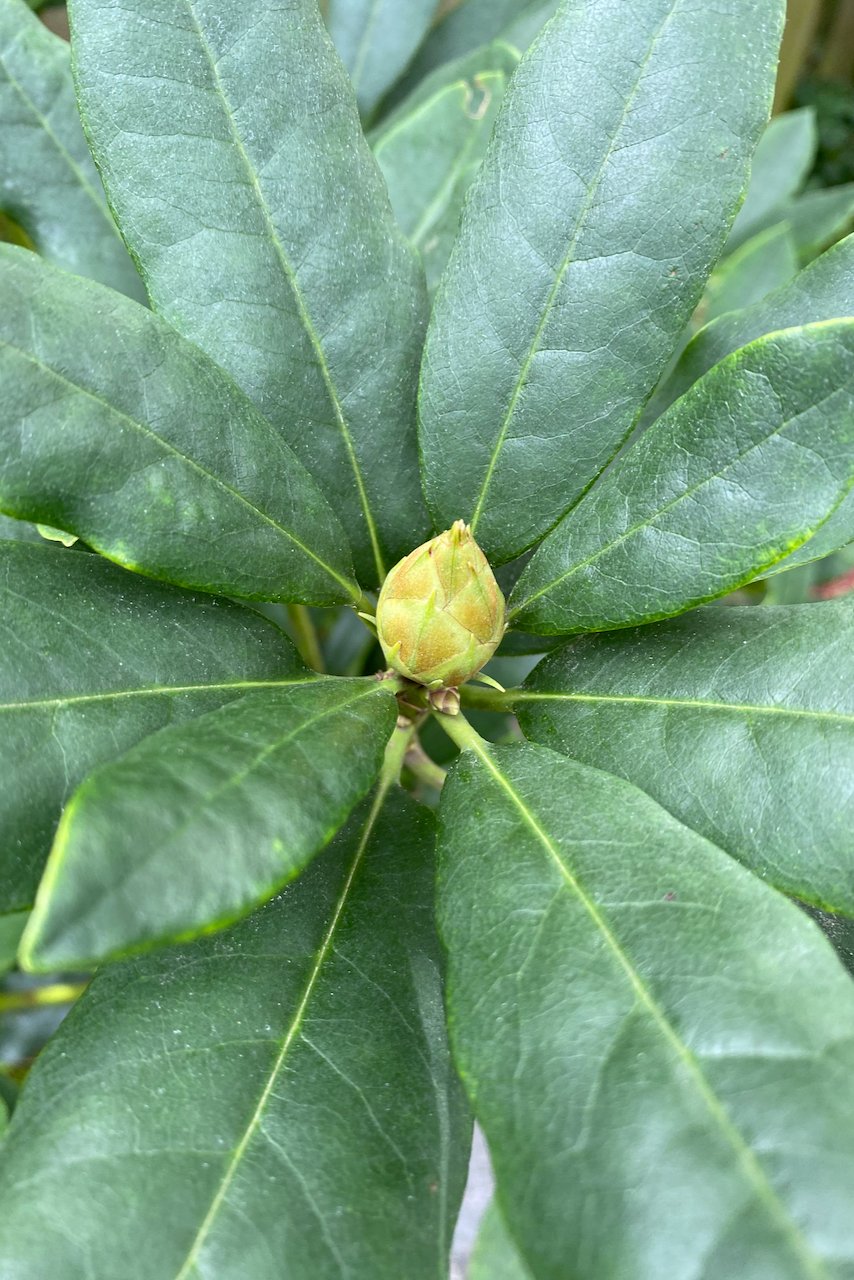
If we prune now, we’ll ruin next year’s display. We will have to wait until next summer, but not too late in the summer. Ideally, we would time our pruning to no later than three weeks after we’ve deadheaded the rhododendron flowers.
This deadheading gives the go-ahead for all the energy to go into forming new buds, so we’re working with a narrow window here. Certain varieties of rhododendrons are very precocious and set next year’s buds while their current flowers are still hanging on the plant.
In any case, rhododendrons just need a bit of cosmetic pruning if they’re overgrown or if we want to change their shape. They’re slow-growing shrubs, so there’s no such thing as a hard prune for them.
6. Forsythia
There’s always a branch of yellow forsythia flowers in any spring floral arrangement, isn’t there? Whether it’s the Easter table centerpiece or a spring renewal festival. These bright splashes of gold are blooming from buds that have formed on the previous year’s stem. And what makes it look even better is that there’s no foliage at the same time. It’s flowers all the way down.
That’s why … you guessed it … we don’t prune forsythia in the fall.
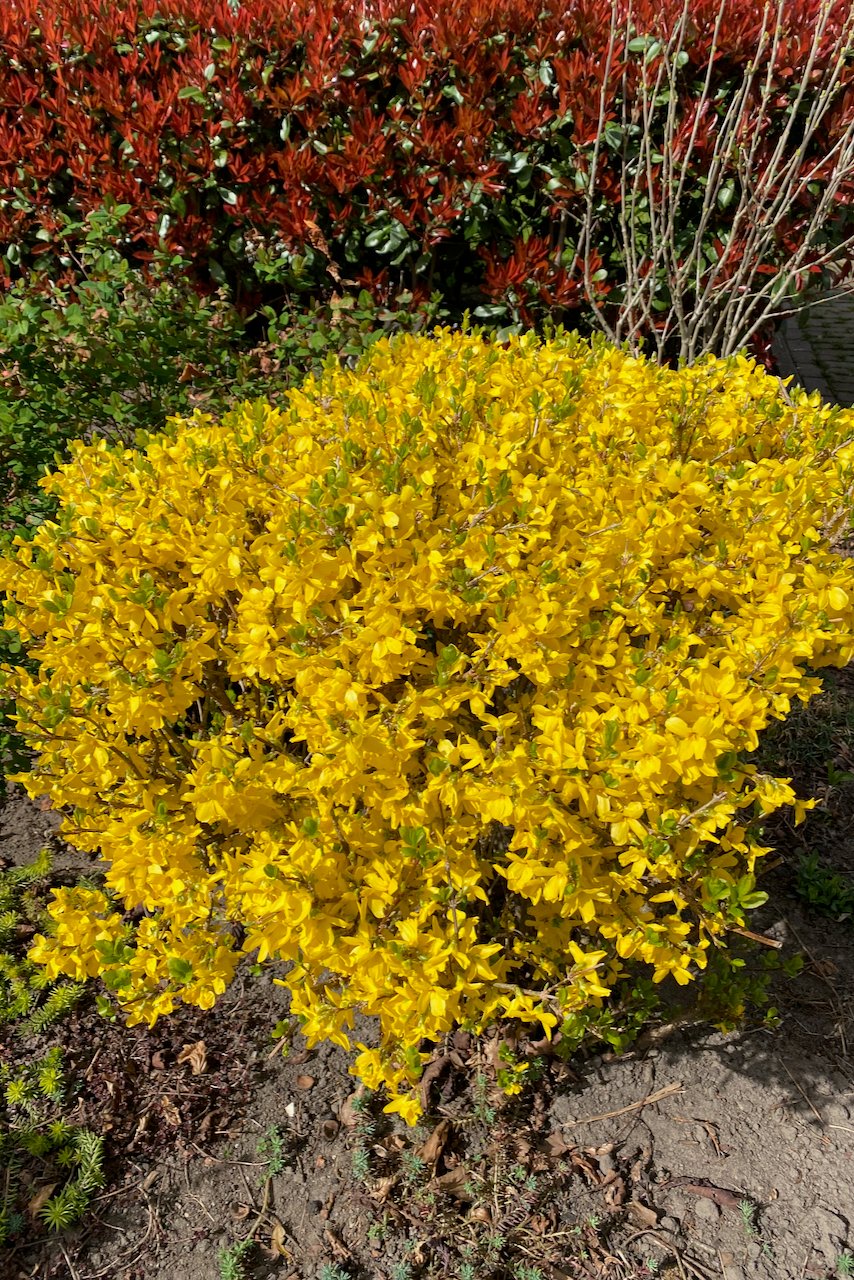
But unlike the camellia and rhododendrons above, forsythia is not a slow grower. Once the flowers are gone and it starts leafing up, the shoots just take off.
So it does need some tidy up every year, especially mature shrubs. The trick is getting the window right: don’t wait too long once the blooms are gone before you prune it. I know it feels weird to cut into branches full of green leaves, but that’s the right time to do it.
7. Upright sedums (Hylotelephium)
If I lift my gaze to look out the window now, I can spot a splotch of bright pink on one side of the garden, past the patio. From a distance (and without my glasses), they look like roses; but they are, in fact, upright sedums.
The one that I grow is called Autumn Joy, arguably the most popular upright sedum. It has just started opening up in late summer and by mid-September is in full majestic bloom. It would make absolutely no sense to prune it now, would it?

But even when the color fades off, the mounded caps turn into an attraction of their own. They beam with old-fashioned elegance once they’re covered in a dusting of snow. We can remove them at the base in spring to allow for new growth to emerge.
8. Lilac (Syringa vulgaris)
The scent of lilac is one of those memory-triggering smells for me. It transports me to when I was a child and we were visiting my great aunt. The adults would chatter away about adult matters around the dining table and there was always a pitcher of lilac flowers freshly picked in the middle. It started blooming in April (the white one first, then the purple) and would continue to bloom through late May.

Just like forsythia, these spring’s blooms are formed the year prior. So by fall, they’re already peeking out, waiting to open up as soon as the days get longer and the temperature warms up. I took the photo above this September, and you can already see the buds.
It would be beyond foolish to prune lilac in the fall. But they do need pruning, and once again timing is key. We should prune them immediately after they’re done blooming in order to keep next year’s flowering robust.
9. Black-eyed Susan (Rudbeckia)
I’ve been deadheading my black-eyed Susan all throughout the summer months, so it feels a bit disingenuous to say I haven’t been pruning it. But I don’t “fall prune” it, if that makes sense.
Let me explain. The more I deadhead it, the more it blooms and the longer it is in bloom. But at some point in August, I reckon I’ve maximized the flowers for the season. There are very few visible buds that would open up if I were to keep removing the old ones. And that’s when I stop touching it, other than to collect the seeds.
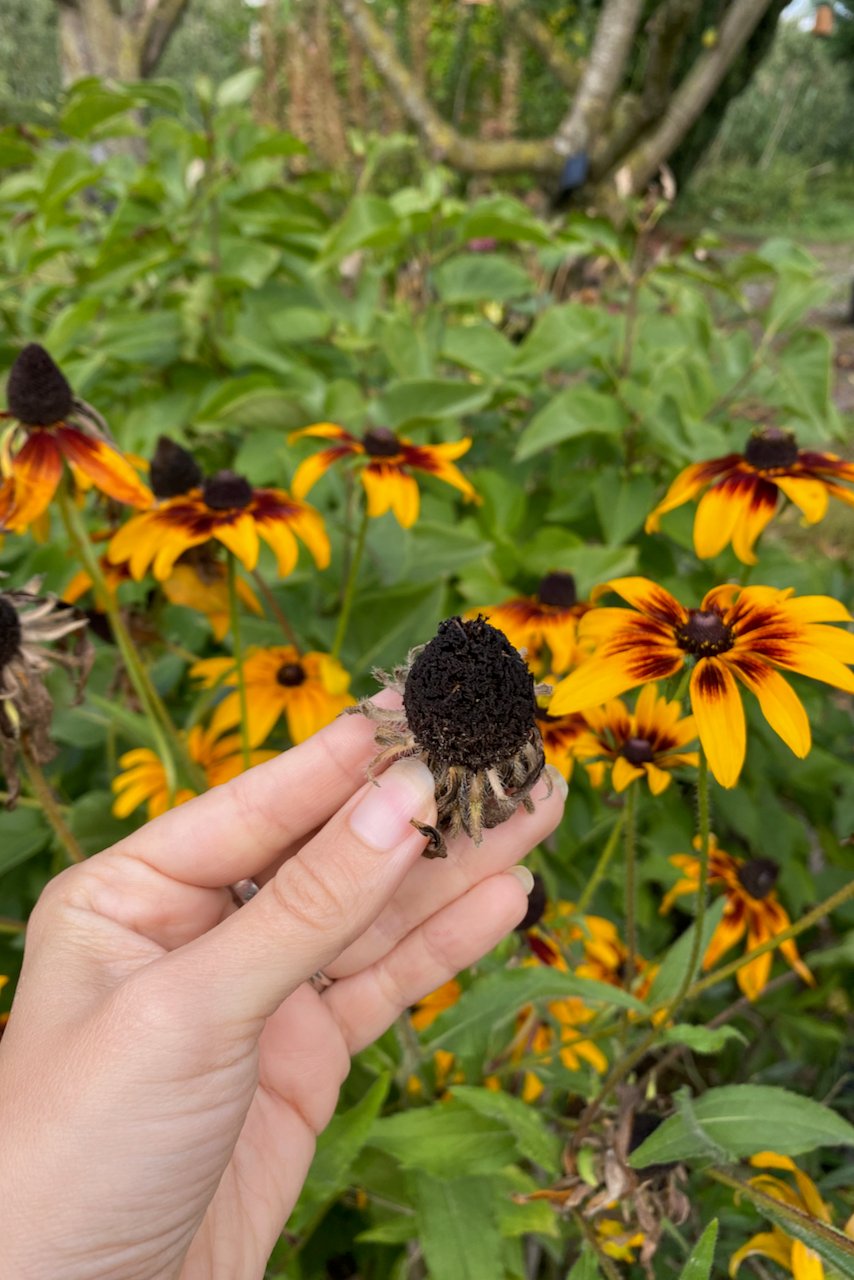
Once the last batch of flowers turns into seed heads, I let everything overwinter in the garden. The birds love to perch on a nearby bench and snack on the rudbeckia seeds. Some of the dry, hollow stems become a hiding place for insects in the winter. And the rough foliage, when it overwinters in place on a mild winter, helps protect the crown of the plant from freezing temperatures.
10. Anise hyssop (Agastache)
Anise hyssop gets the same treatment as black-eyed Susans in my garden, though I probably don’t deadhead it as much. Once the last batch of flowers goes to seed, I trim off a handful of seed heads and stuff them in a jar.
When they’re fully dry, I shake the jar to dislodge all the seeds. They’re a prized delicacy in our home since we use them as toppings on cookies or incorporated in the dough of bread and cake. They taste just like star anise, but not nearly as pricey.
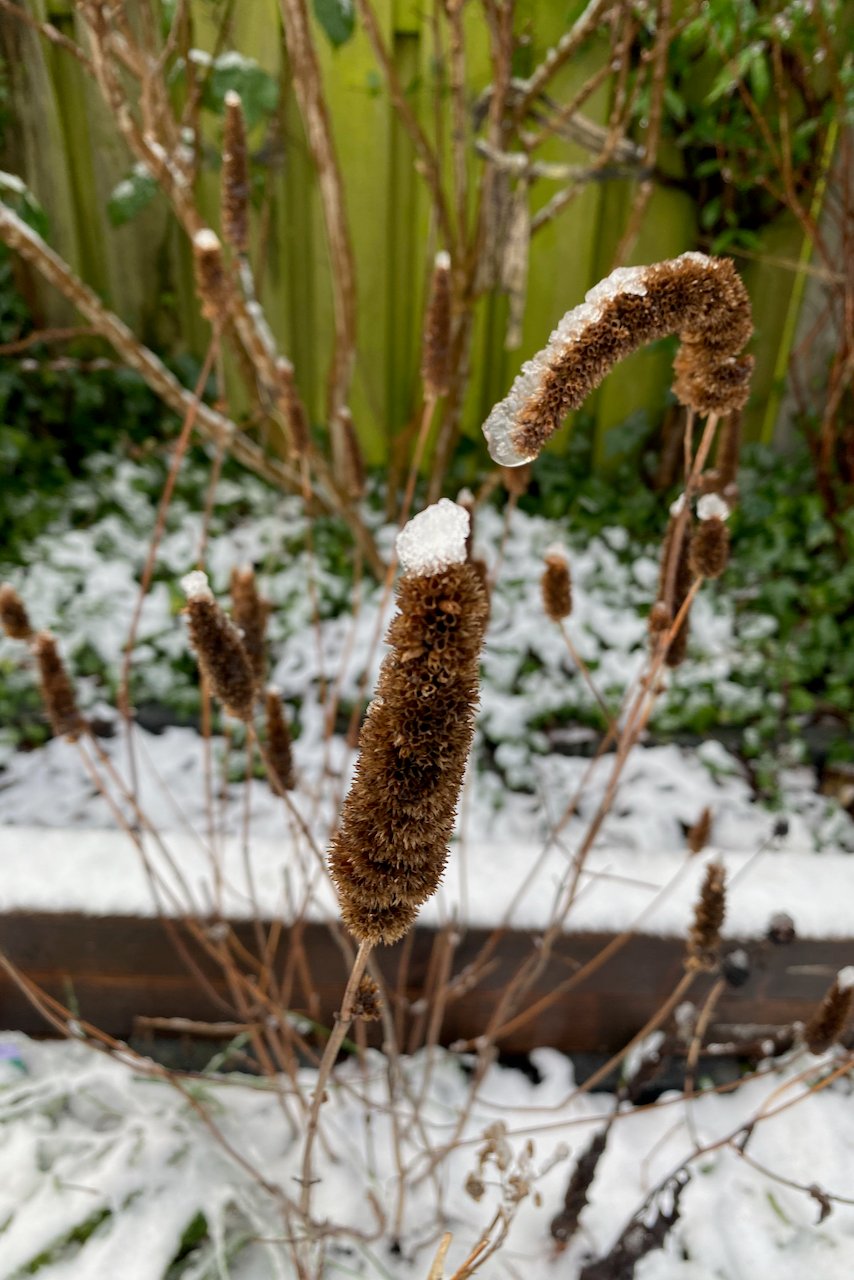
I leave the rest of the anise hyssop seed heads to overwinter in place, just in case the birds in our garden also have baking plans. And I also leave the dry stems from which I’ve trimmed off seed heads on the plant. They’re hollow, so they make a great insect hotel in the cold months.
11. Milkweed (Asclepias)
Just like goldenrod, milkweed is another North American native that plays a pollinator-support role in the ecosystem. Early in the year, Monarch caterpillars feed on the leaves.
In the summer and early fall, the flowers become the main attraction for native bees, butterflies and moths. Then in the winter, the hollow stems and empty seed capsules make a great insect hotel.
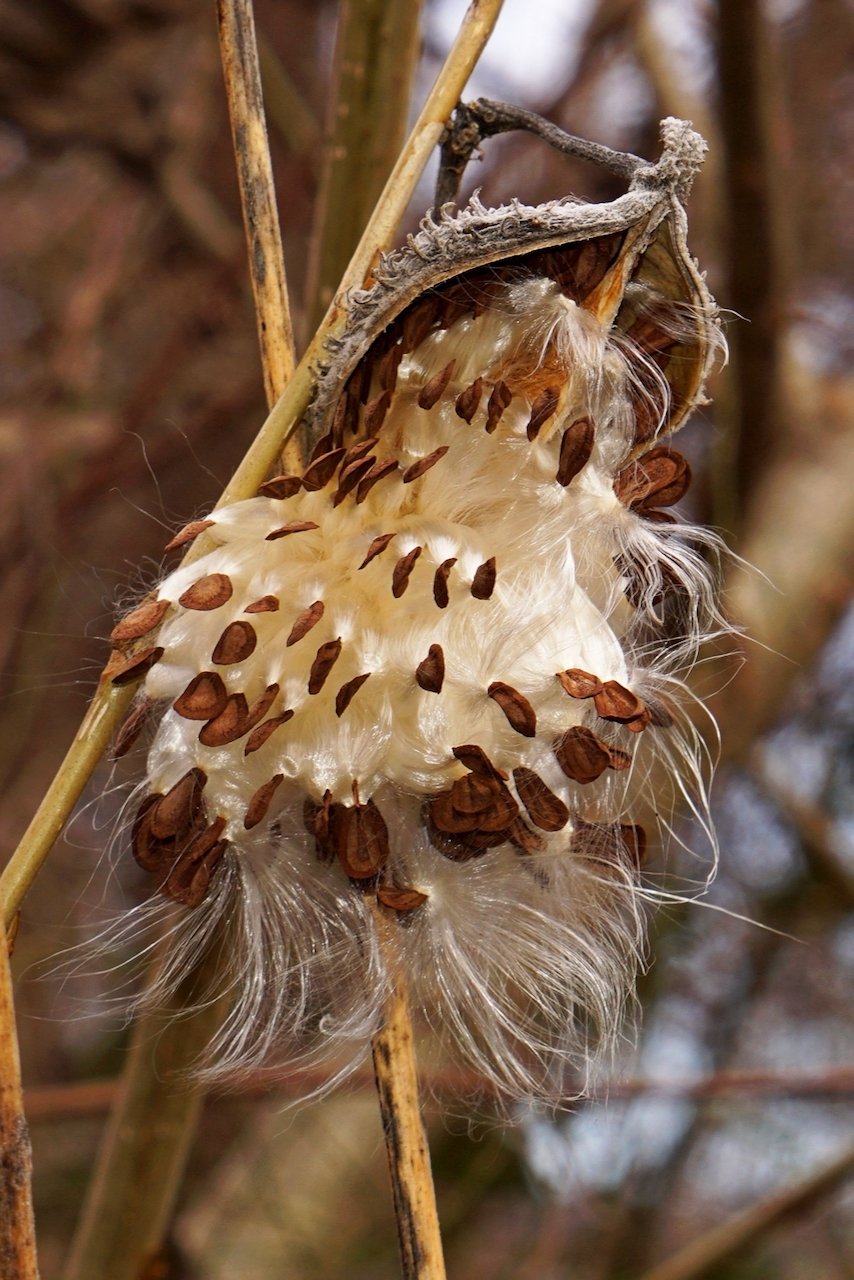
If you can resist the temptation, my recommendation is to also leave the fallen milkweed dead leaves around the plant. Adult butterflies, bees and beetles like to make a cozy winter home in the leaf litter of these native plants. There’s plenty of time to tidy up in mid-spring, when the shelter is no longer needed.
12. Winter jasmine (Jasminum nudiflorum)
In the article I wrote right before this one, on what plants we should prune in the fall, I was telling our readers that fall is the perfect time to tidy up jasmine. Of course, I was talking about star jasmine (Trachelospermum jasminoides).
Winter jasmine (Jasminum nudiflorum) blooms in the winter, usually in January and February, so it would make no sense to prune it in the fall.
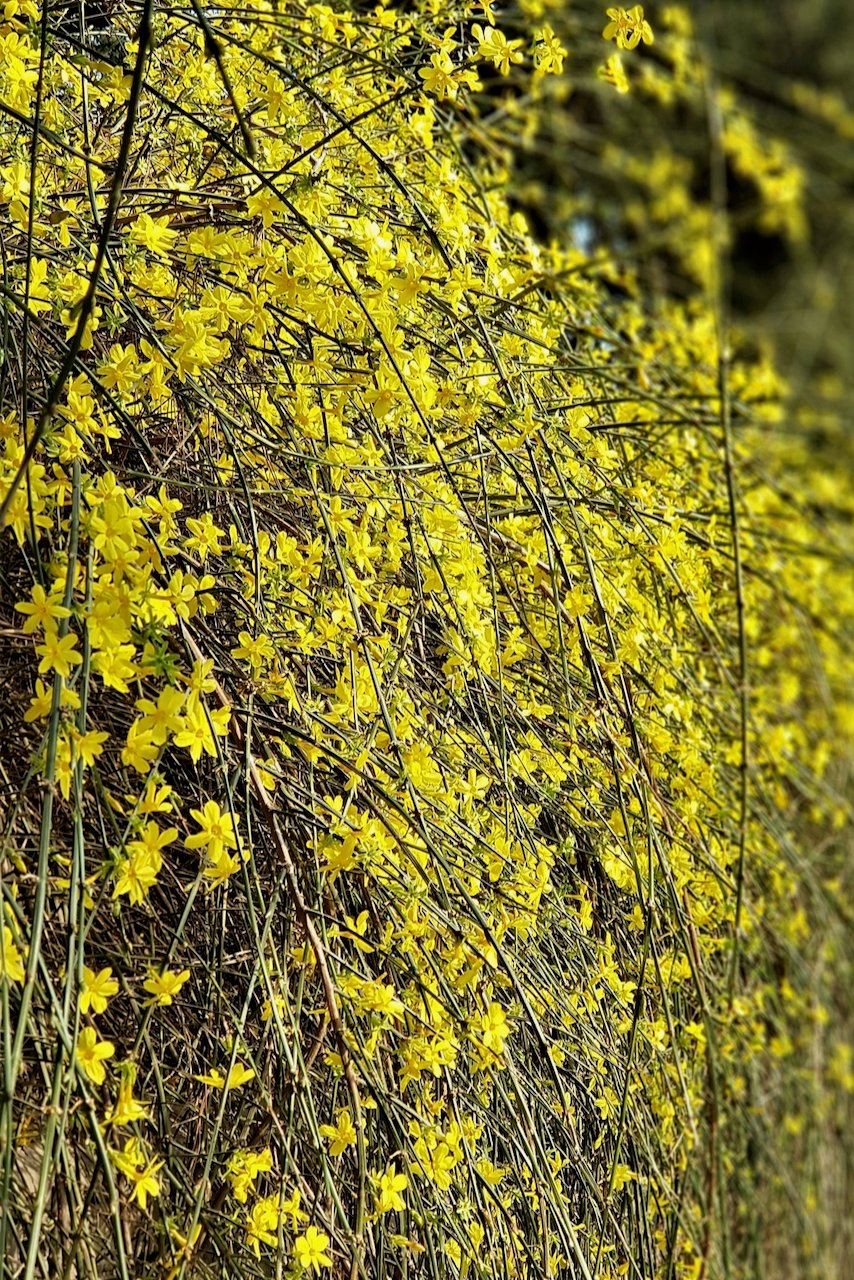
The name may be confusing, but it’s not that hard to tell the two jasmins apart. Winter jasmine (a true jasmine in the olive family) has bright yellow flowers that appear well before the leaves. Very much like forsythia with which it overlaps. And just like forsythia, once the flowers are done, we should plan to prune it right away.
I’ve seen winter jasmine grown in many shapes and forms: as a groundcover, as a climber on trellises and around pergolas or on a retaining wall. I’ve even seen it as a mounding shrub. It’s very versatile, but also a fast-grower. So in spring we should take the chance to prune it and train it as we want.
13. Turkish sage (Phlomis russeliana)
The long-blooming flowers of Turkish sage tower a good few floors over the sturdy foliage. And once they turn to seed pods, they will provide a pleasing architectural interest over the winter months.
This ornamental can grow as a herbaceous perennial, with the foliage dying back in the winter. But in my temperate climate, the leaves manage to hang on and turn it into an evergreen.
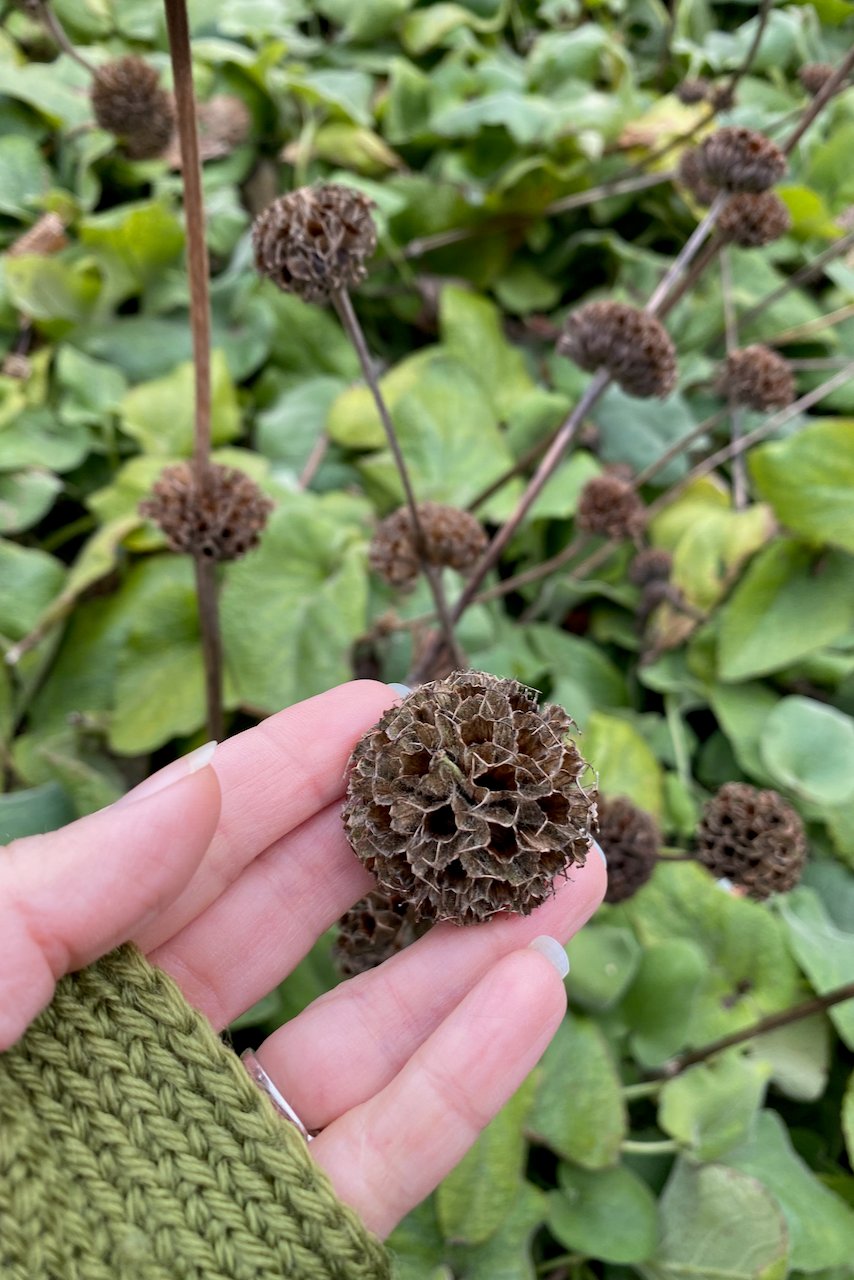
I took the photo above on February 15th this year and you can clearly see that there’s still a mass of green leaves acting almost as a groundcover. It also makes an excellent winter hibernation shelter for wildlife in our gardens.
If you’re also growing Turkish sage as an evergreen, simply trim off the seed head remains in spring and just clean up the bottom foliage which has died back. There’s no need to prune it back hard.
14. Joe Pye Weed (Eutrochium, formerly Eupatorium)
Some gardeners may get a bit uneasy when they see the feathery seed heads of Joe Pye Weed swinging in the late fall breeze. It looks very much like an oversized dandelion, so surely it will self-seed everywhere if we leave it over the winter, right?
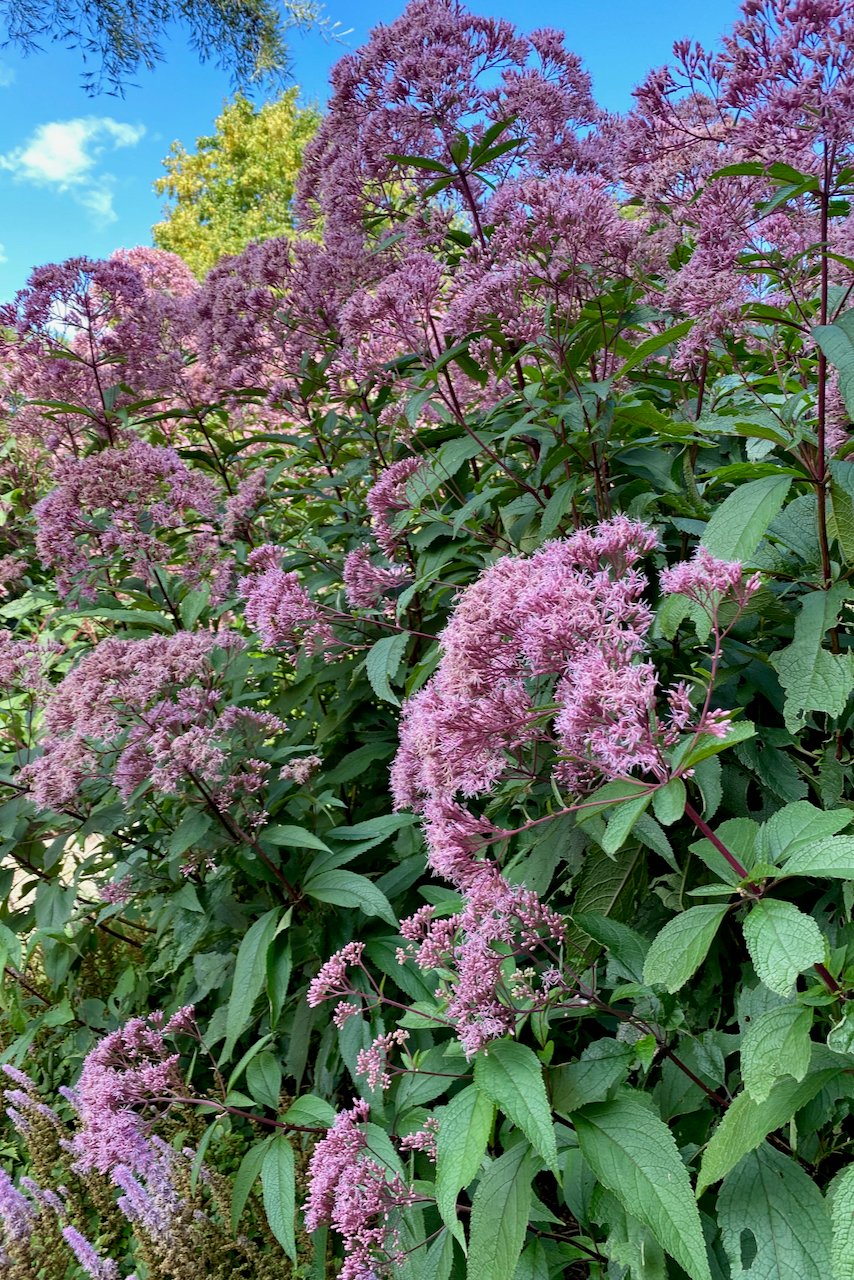
This hasn’t been my experience at all. In fact, I wish it did self-seed, so I could have a larger patch of Joe Pye and have even more butterflies in my garden. This North American native herbaceous perennial will die back and go dormant in the winter. I let it overwinter in place because caterpillars and other beneficial insects use its fallen leaves for shelter.
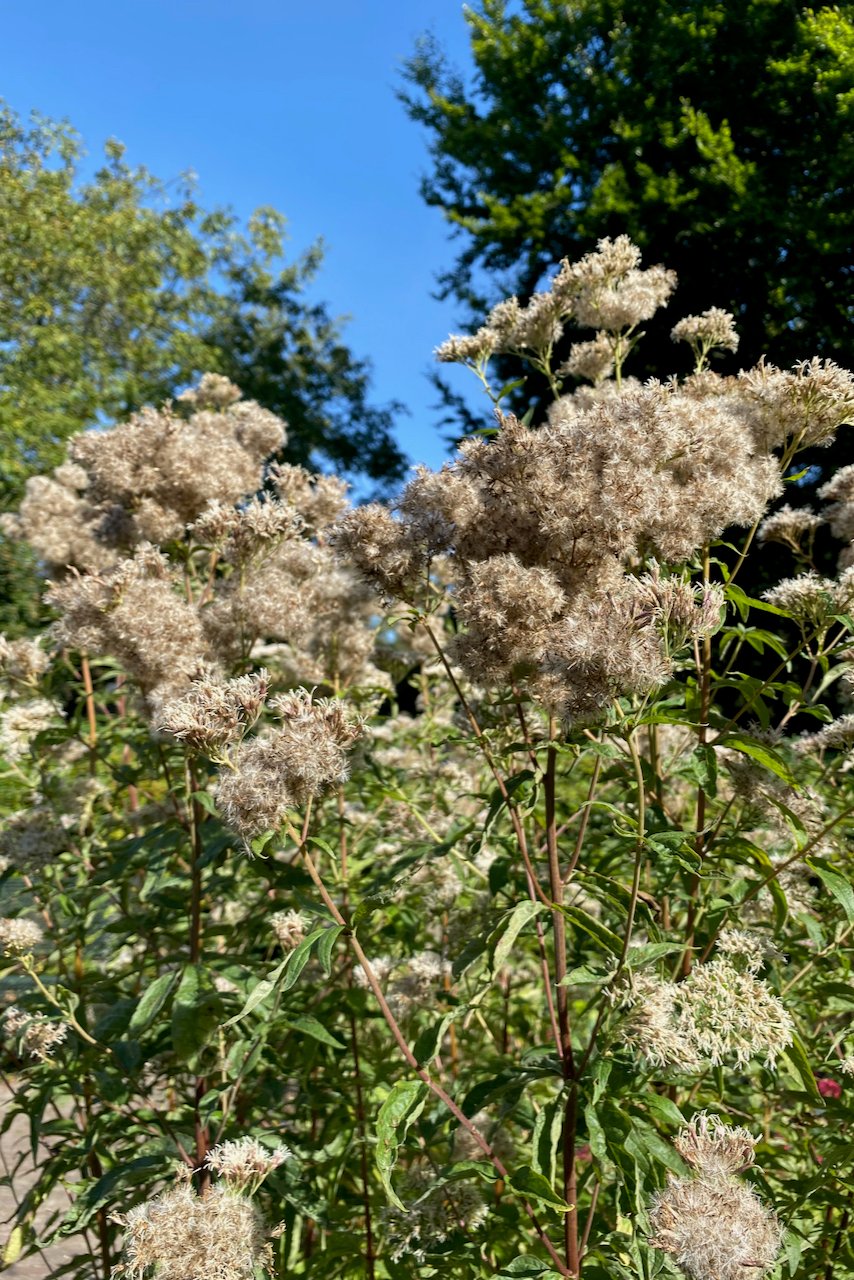
Joe Pye flowers on new wood (next year’s stems), so I try not to procrastinate too long in spring before I prune it.
15. Firethorn (Pyracantha)
Pyracantha is called both firethorn and fire hawthorn. And you can see why if you look at the photo I took last week. Look at those gemstone berries. Of course we don’t prune that in the fall.
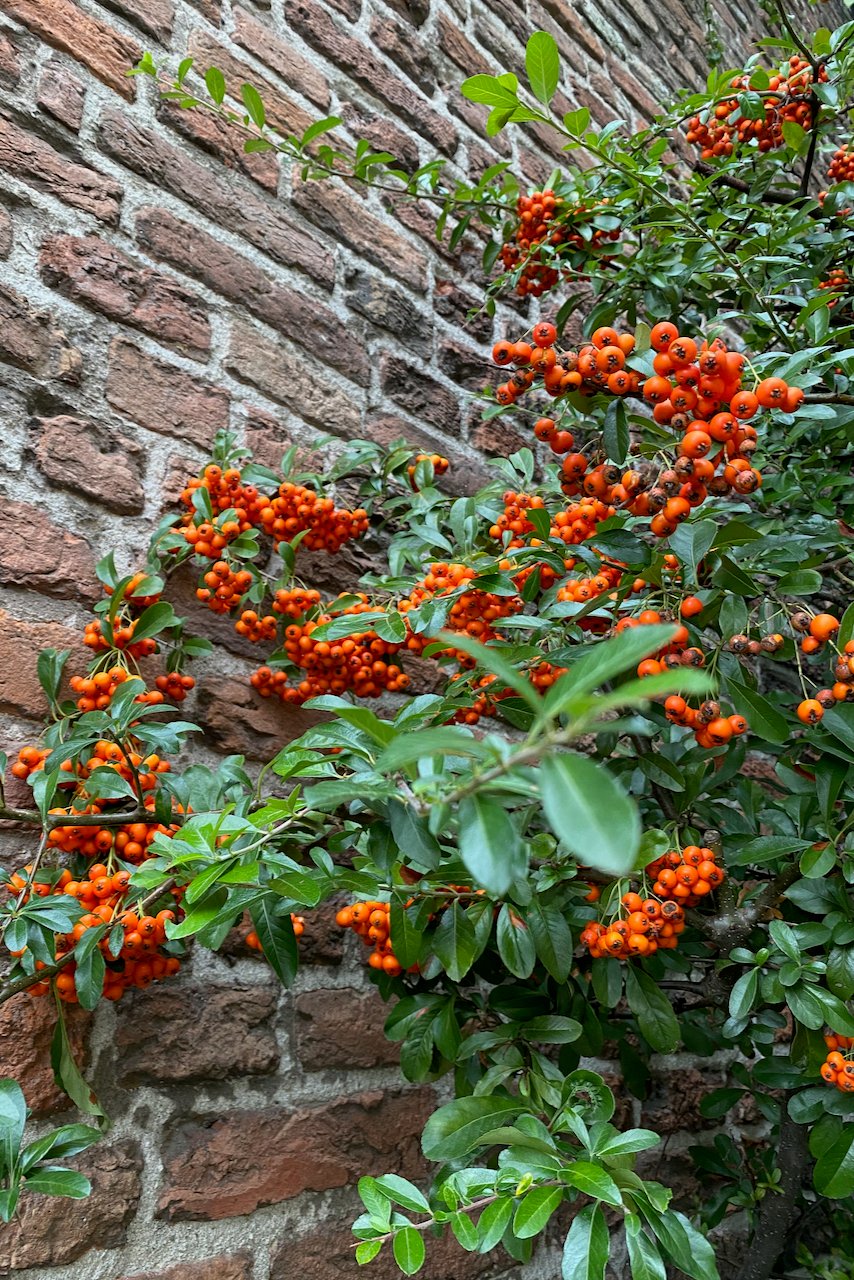
I’ve read that the berries are edible, but are not very tasty. You could cook them into a jelly (EatTheWeeds has a recipe), but I prefer to grow this as an ornamental shrub and feed the birds. (Cue Julie Andrews as Mary Poppins!)
Because it grows as an evergreen, and because the young shoots are very malleable, Pyracantha can fill a few roles in the garden. It can grow as a stand-alone shrub or on a trellis, in a container or trained as an espalier on a sunny wall.
You get to decide how you want to train it when it’s time to prune it in spring, once the berries are gone. Remember to put on your thickest gardening gloves before you come anywhere near it because most cultivars are very thorny.
16. Coneflower (Echinacea)
Whether we’re talking about the popular Echinacea purpurea or the more understated Echinacea alba, the birds don’t discern between the two. They like to snack on the seeds of both of them equally in the winter. Goldfinches, if you have them in your area, will be the first to come feast.
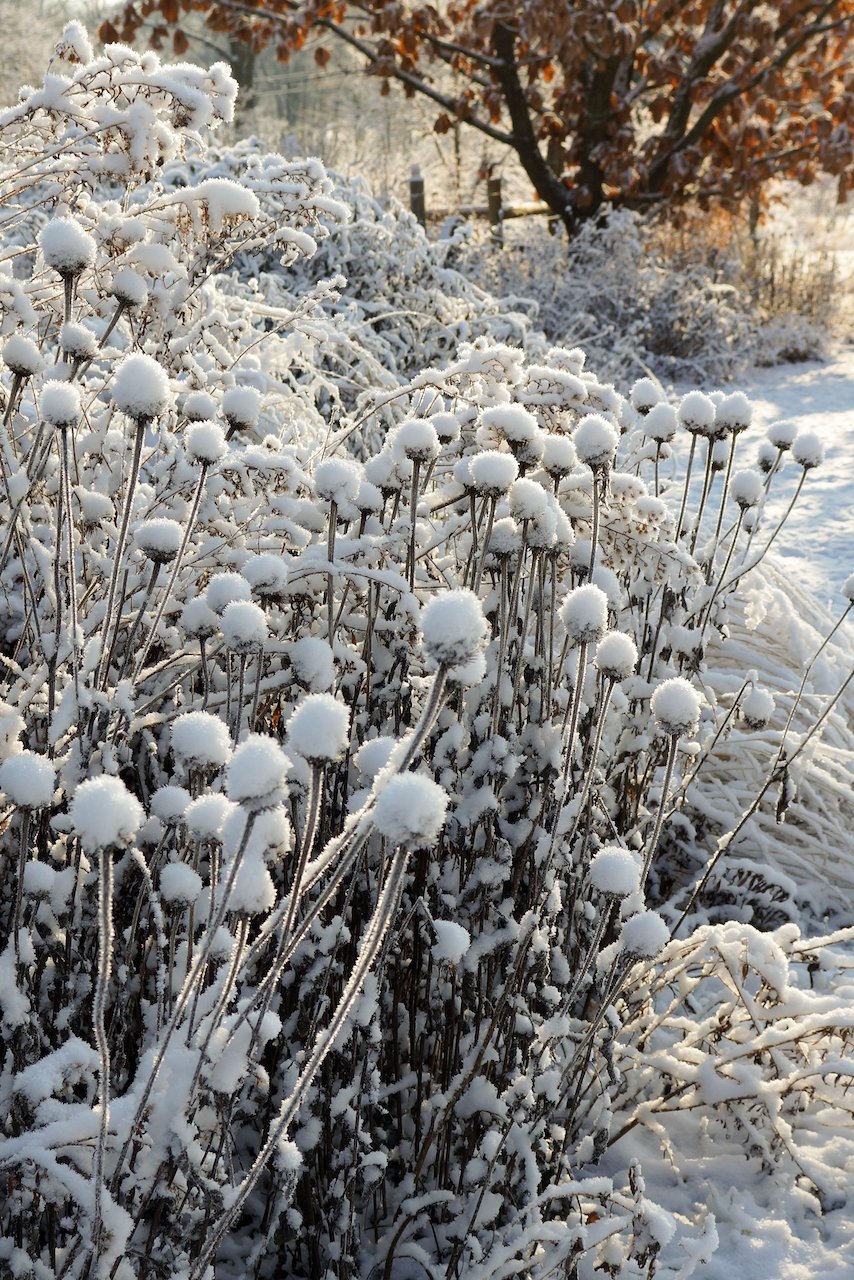
Just like with black-eyed Susans, the coneflower foliage eventually dries up and dies back, so by the end of the cold season all you have is some bare towering seed heads. Job well done! You can prune back echinacea in spring, just as you see the tiny new leaves peaking through at the base.
17. Coral bells (Heuchera)
Coral bells is another perennial that made it to my list of plants with three or more seasons of interest. Heuchera is an evergreen. Or an ever-silver. Or an ever-gold. It depends on what color foliage you choose for your garden.
My heuchera is an ever-burgundy. The color of the foliage washes out a bit in the summer, so you’d be forgiven to think it’s done for the year. But as soon as the cold weather returns in the fall, the leaves regain their vibrancy.
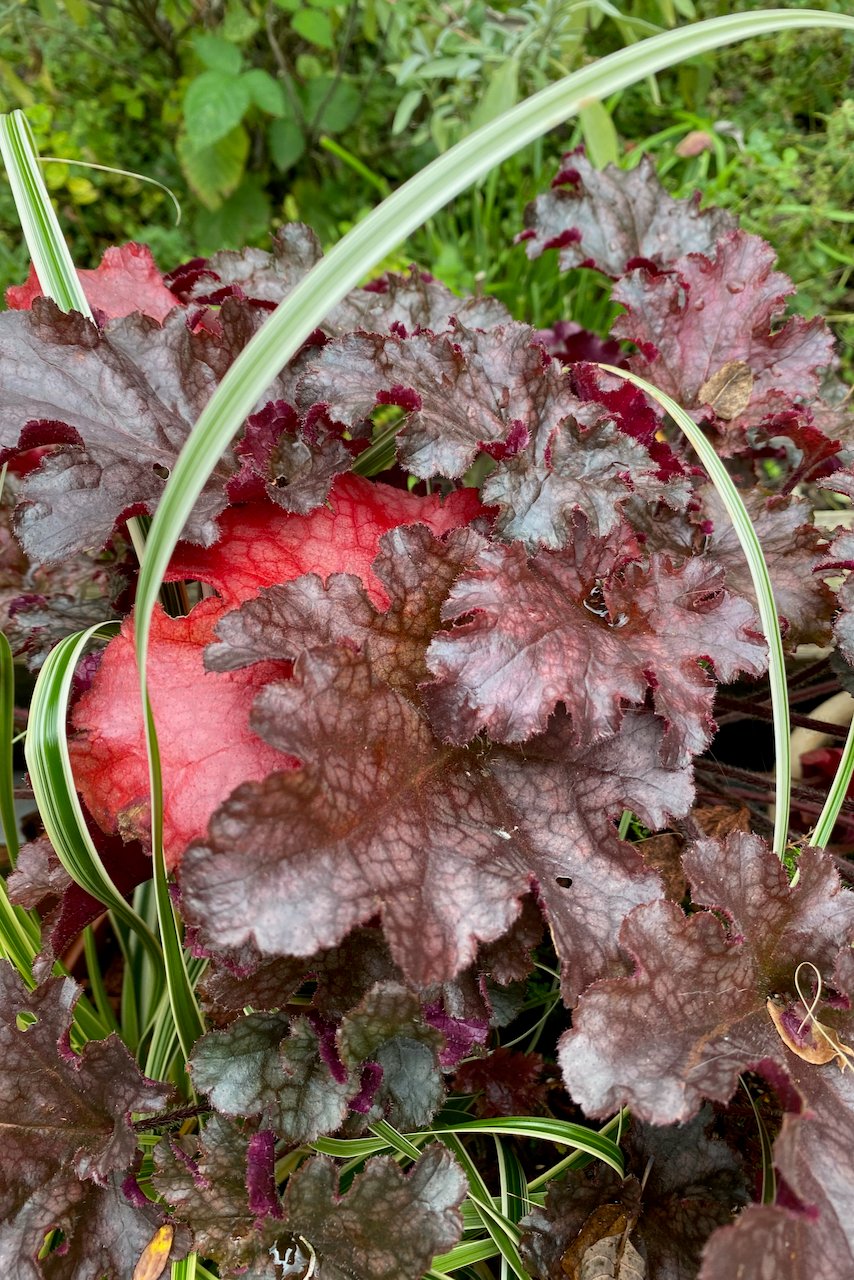
If you’ve ever inspected the stem of the coral bells, you may have noticed that it’s very “juicy”. It’s more similar to that of begonia than that of any other herbaceous perennials. So we’ll leave the foliage on to protect the stem and and act as a self-mulch during the cold months.
And even in spring, we’ll do minimal pruning. We just need to tidy up the dry leaves (usually at the base) and remove any dry flowerheads that may have overwintered.
18. Elephant’s ears (Bergenia)
There are a few plants nicknamed elephant’s ears, so just to be clear, I’m talking about bergenia. It flowers in late winter and early spring, providing a much-needed source of nectar for the first pollinators to come out of hibernation. I took the photo below in late-March
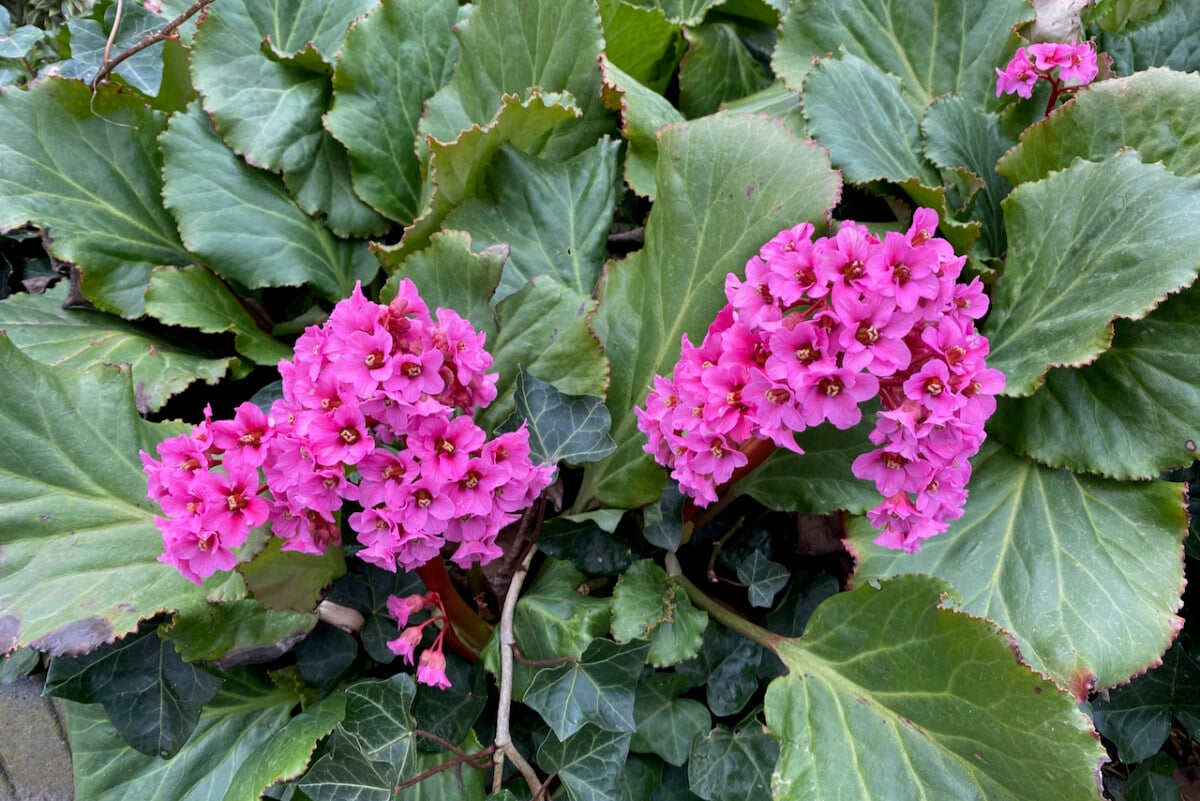
The flowers are a cheerful fuchsia-pink that matches the hyacinths and daffodils that they bloom alongside. Once the flowers are done for the year, we can prune off the dead stems (usually around May).
The foliage will remain evergreen and compact. This, coupled with the fact that it can do amazingly well in both sun and shade, makes bergenia a really good ground cover option. Sometimes, some of the leaves will turn bright red in winter.
Just like heuchera, bergenia doesn’t need much pruning even in spring. I simply remove the damaged or brown leaves when I trim off the dead flowerheads.
19. Snowball (Viburnum)
Viburnum, whether we’re growing them for their flowers or the ornamental berries, always blooms on last year’s growth. Most viburnum flower in the winter or in spring, although there are some new cultivars that will flower in the summer. You’ll recognize them because they have the word ‘summer’ in the cultivar name, such as Summer snowflake.
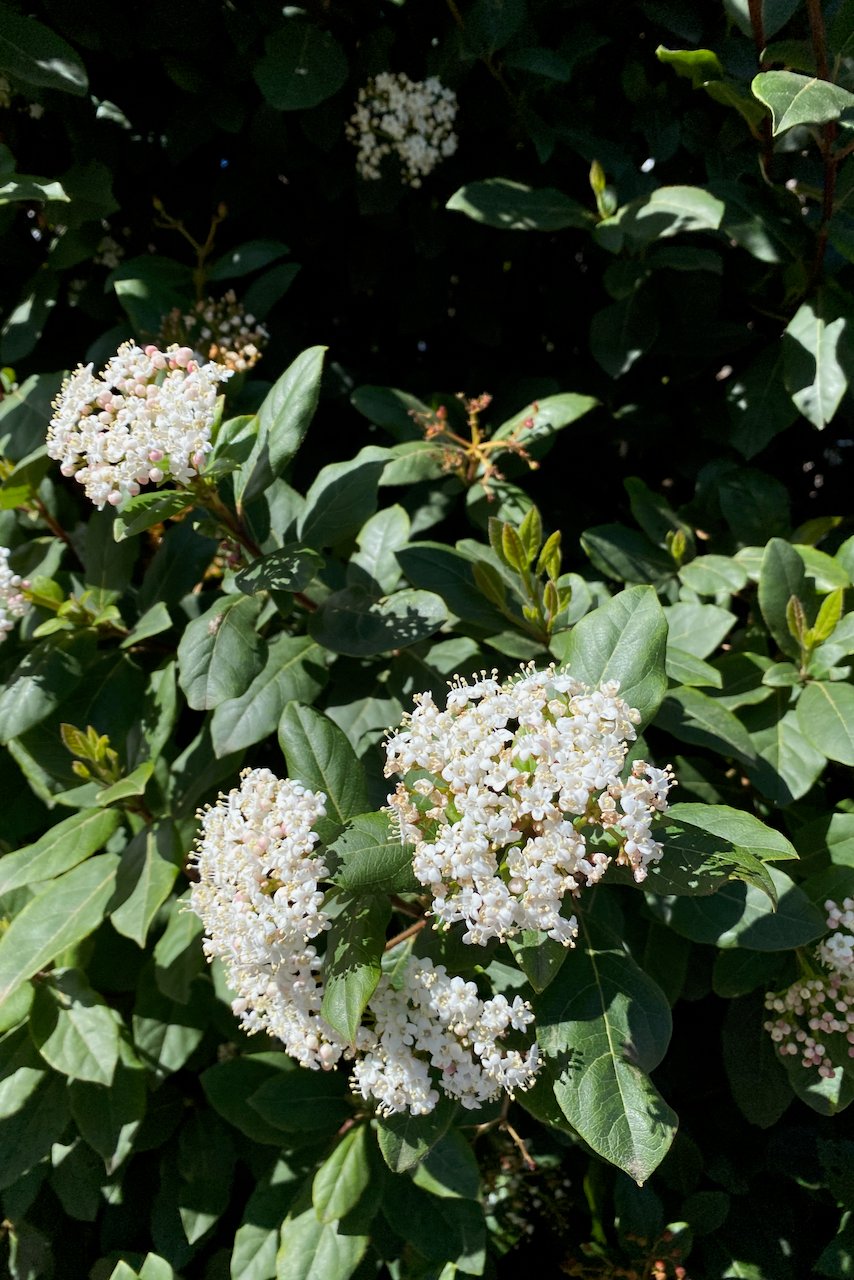
If we prune viburnum in the fall, we’re wasting all that blooming potential. We can tidy them up in spring and early summer, but the trick with old wood bloomers is to not wait too long. Or at least not until the new buds start forming.
We can cut back dead or diseased branches, though viburnums are pretty resistant shrubs so there won’t be too many of those every year. More importantly, we should remove any rubbing or intersecting branches.
20. Flowering quince (Chaenomeles)
I remember listening to a podcast interview with a flowering quince collector and thinking: What is there to collect? There’s only one type.
I was wrong, and then I was schooled – there are many cultivars of flowering quince (aka Japanese quince) and even more entering Europe and North America from their native Japan and Korea. In that part of the world, they don’t just grow it for the flowers; the fruit is also consumed because it preserves really well due to the high content of pectin.
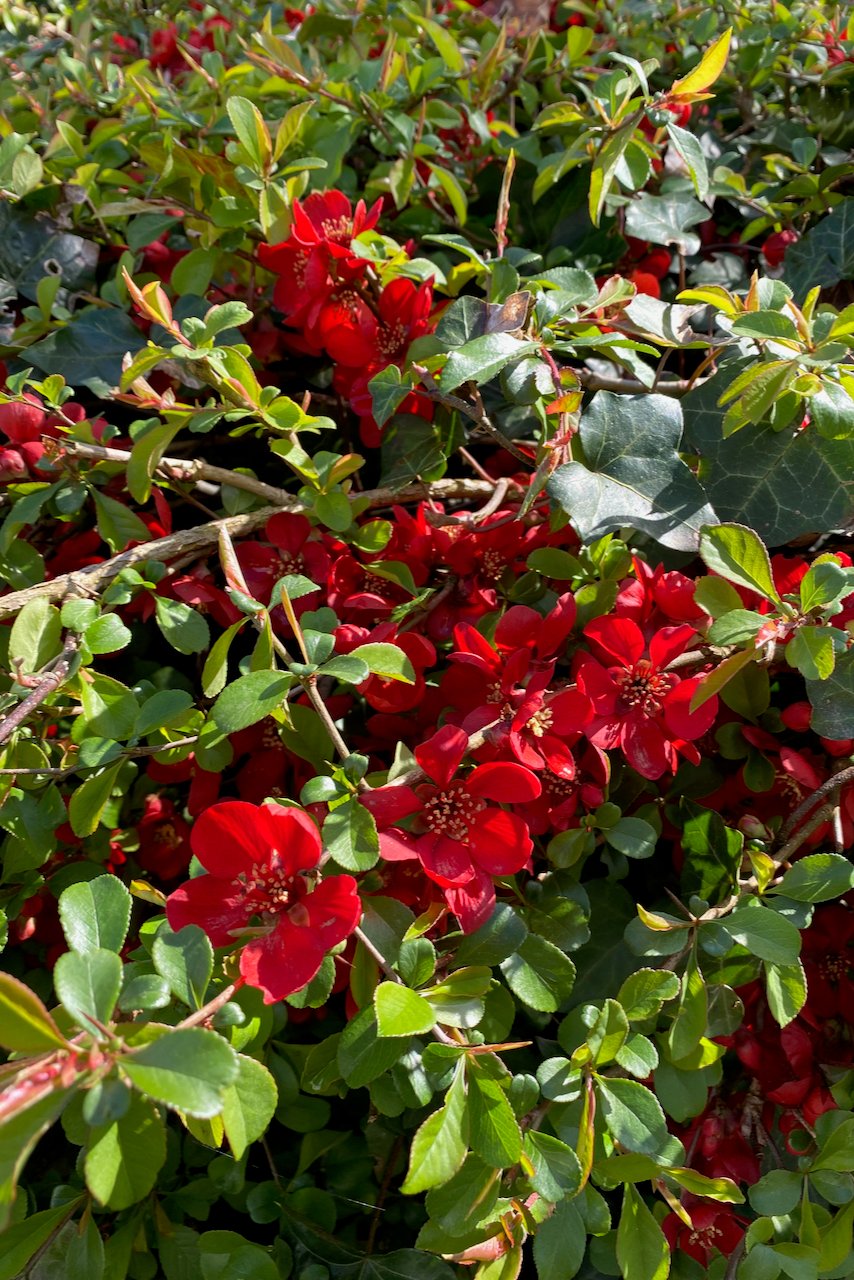
Have a look at this photo I took on March 29th (the same day I took the photo of the bergenia above). Isn’t this a spring beauty?
Around these parts, we mostly use flowering quince as an ornamental. It starts flowering at the end of winter, sometimes even in late January. And just like forsythia, for a good month or so the flowers are all there is on the stems. Once it starts leafing up, the flowers will still remain on the branches.
If you’re not interested in the fruit, you can prune the shrub in late spring or early summer. However, I recommend you skip pruning at least once, if only just out of curiosity. You can pick the fruit in the fall and experiment with some recipes.
21. Ornamental grasses
Whether we’re talking evergreen grasses (such as the hundreds of species of Carex) or grasses that turn brown and yellow when it gets cold, we should allow all of them to overwinter in place.
First of all, they make an excellent hibernation station for wildlife until next spring. It keeps them sheltered from wind, frost and rain.
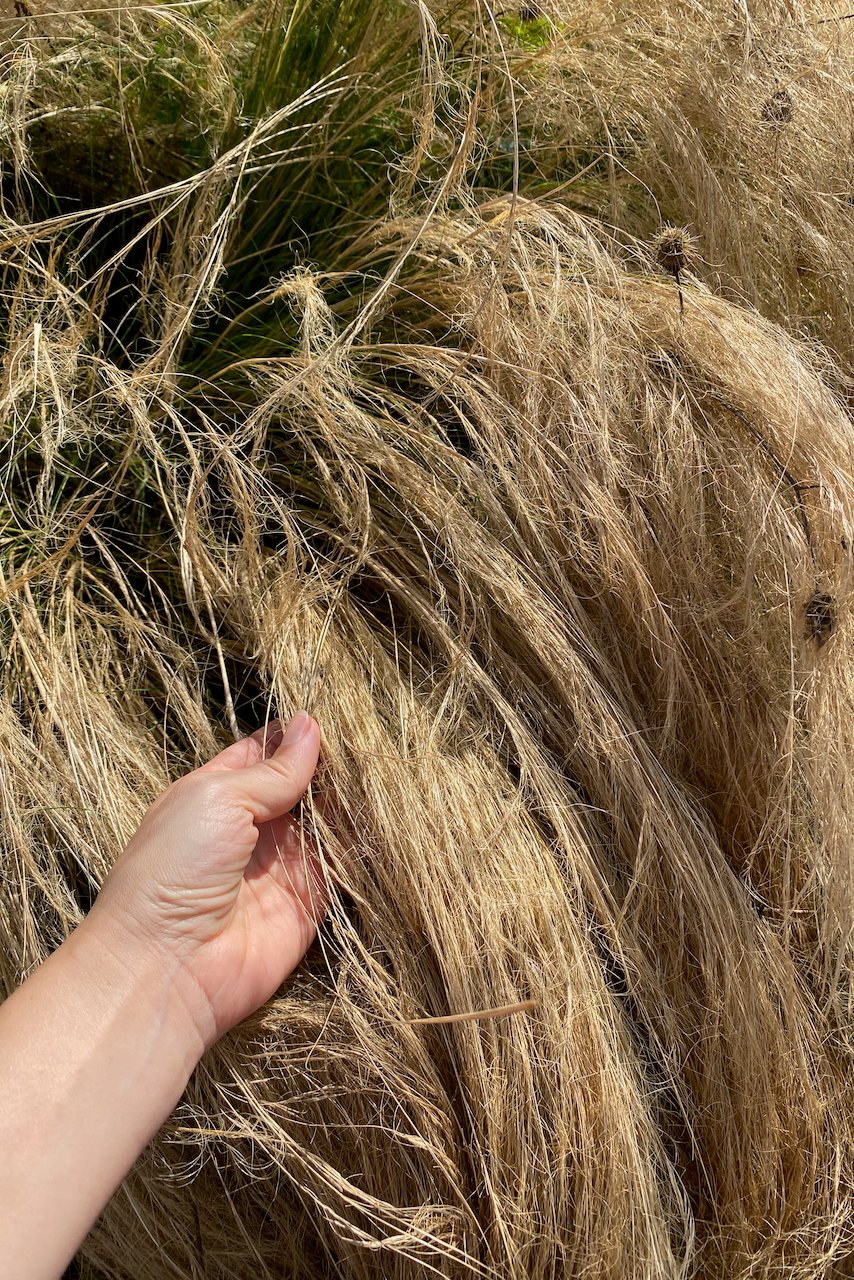
Secondly, and especially in the case of deciduous grasses, the plant mass helps shelter the crown from the elements over the winter. If we were to prune it down now, all the rain and snow would drain and infiltrate at the base of the crown. This would make the plant more susceptible to rotting when there’s no sun to dry up the base.
We can postpone the pruning of ornamental grasses until spring. Evergreens don’t need much pruning at all. We simply run our fingers through the grass mound (always wearing gardening gloves, unless you want papercuts) and take out any dead plant matter that gets dislodged. For grasses that turn yellow, I wrote about a special technique that makes pruning them really easy.
22. Goldenrod (Solidago)
You may remember that we pruned goldenrod around midsummer, giving it the Chelsea chop. This helped it get bushier and significantly increased the number of blooms.
Well, we’ll just leave it in place over the winter and prune it again in spring. A lot of varieties of goldenrod are native to North America, so they have evolved in the company of wildlife, providing shelter and food in the winter.
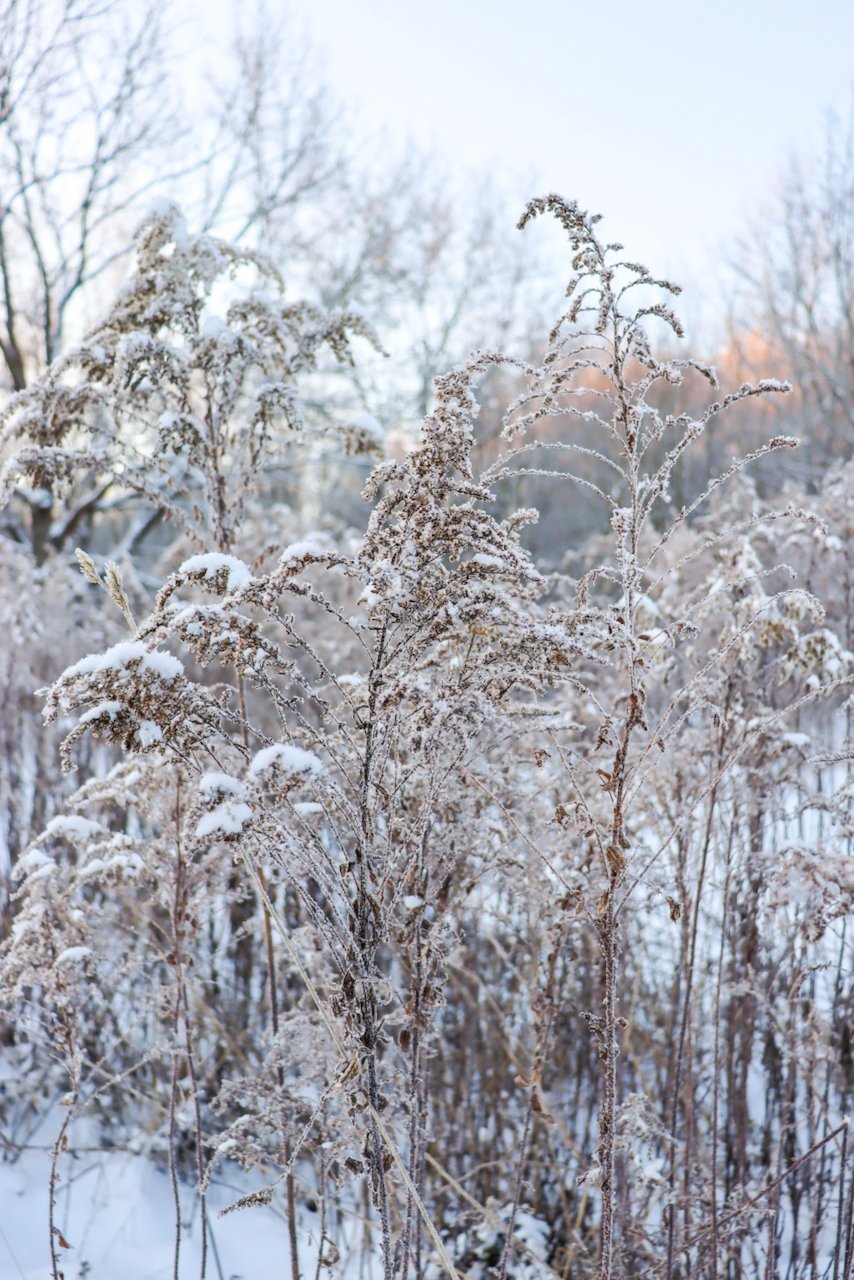
In late spring or early summer, we can either cut goldenrod back all the way to the ground or trim about a third off the top to encourage branching and more flower stems.
23. Ivy (Hedera helix)
I’m the first to admit that I wasn’t very thrilled when I moved into a house that had ivy growing along the fence on both sides of the garden. I really loved that I had a wall of evergreen to look at when everything else was dead in the garden. But ultimately I’m a pretty lazy gardener and I did not like the prospect of growing something that had to be pruned so often just to keep in check. (If you don’t have ivy in your garden, I’d advise you not to bring it in.)
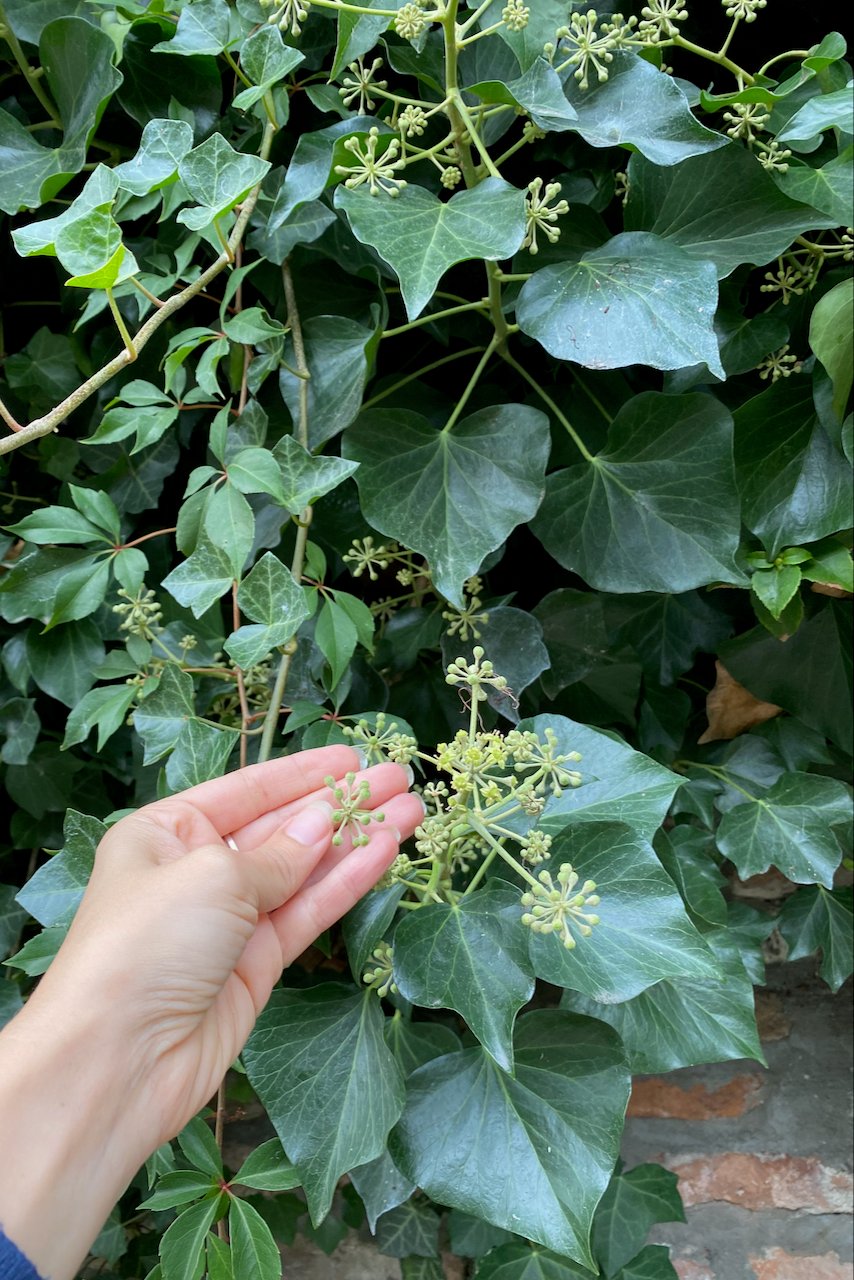
Over time, I noticed how the ivy served as a sound buffer between our yard and those of our neighbors on both sides. And studies show that it also has a cooling effect on its immediate surroundings during the heat of the summer. So not only did I not rip it off, as I was planning to, but I fully embraced it.
That’s when I found out that if I stop pruning it in the fall, and allow at least the buds at the top to flower, it will provide a late feast for pollinators when not much else is in bloom. Plus, it significantly slows down its growth when it’s cold. So it will not get ahead of my efforts to keep it under control if I just let it be for a few months.
24. Roses with hips
Obviously I don’t mean curvy roses, although wouldn’t that be fun to grow in a show garden? I mean don’t prune roses that produce rose hips in the fall.
Generally, I avoid pruning roses in the fall anyway, with the exception of cleaning up the dreaded rose black spot when it goes out of control.
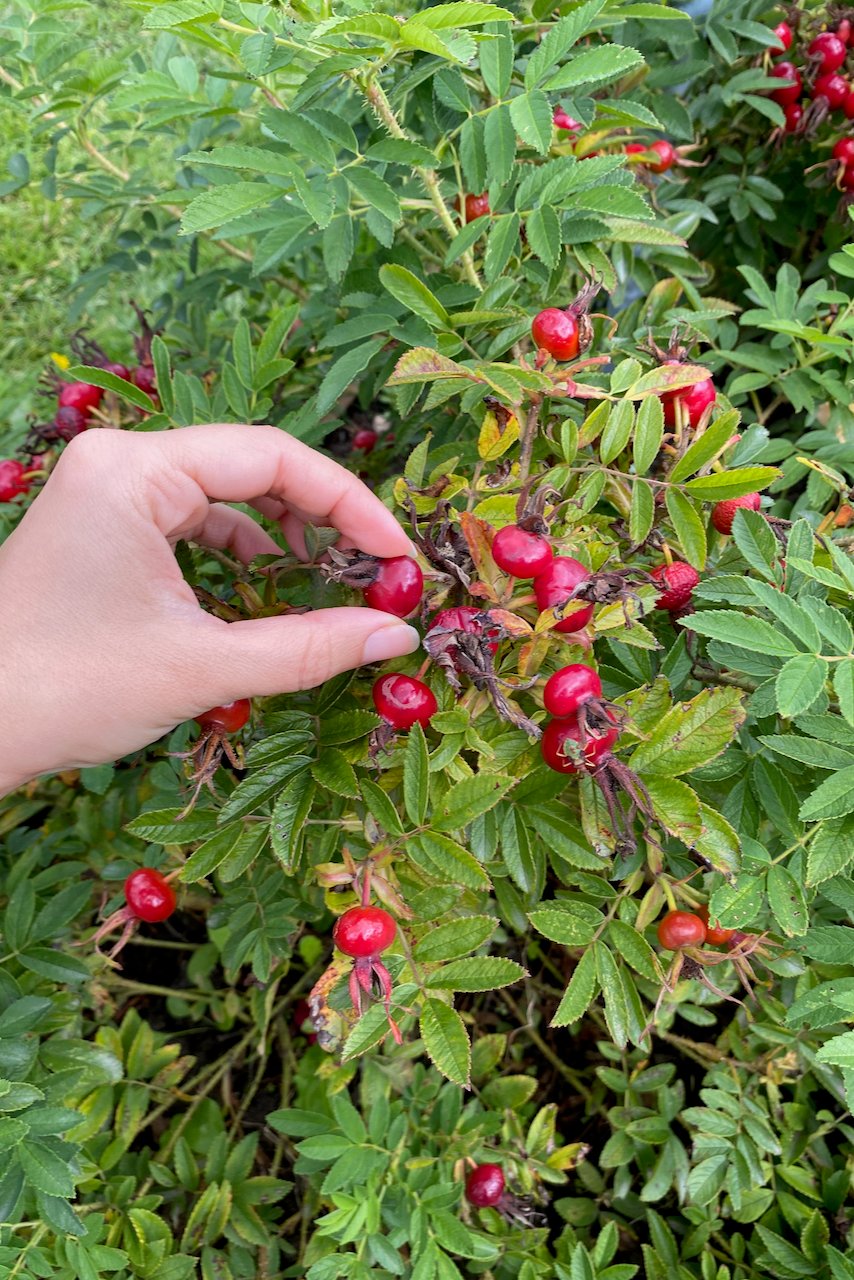
I prune my roses at the tail end of winter, while they’re still dormant. Sometimes, pruning them in the fall will lead to die-back which we’ll need to prune again next year. And for hip roses, the reason is simple. Birds feed on the hips all winter long, and in the meantime they look like cute Christmas ornaments in the garden.
Once spring comes along, here’s what we need to do to get masses of rose blooms.
25. Skimmia (Skimmia japonica)
Skimmia is so unfussy, with high tolerance of shade and drought, so it’s a lovely surprise when it gets so many colorful flower heads in the winter. And then the flowers turn into berries, very similar to those of holly shrubs (and just as poisonous).
However, if your skimmia shrub has never had berries, then you’re the proud owner of a boy skimmia.
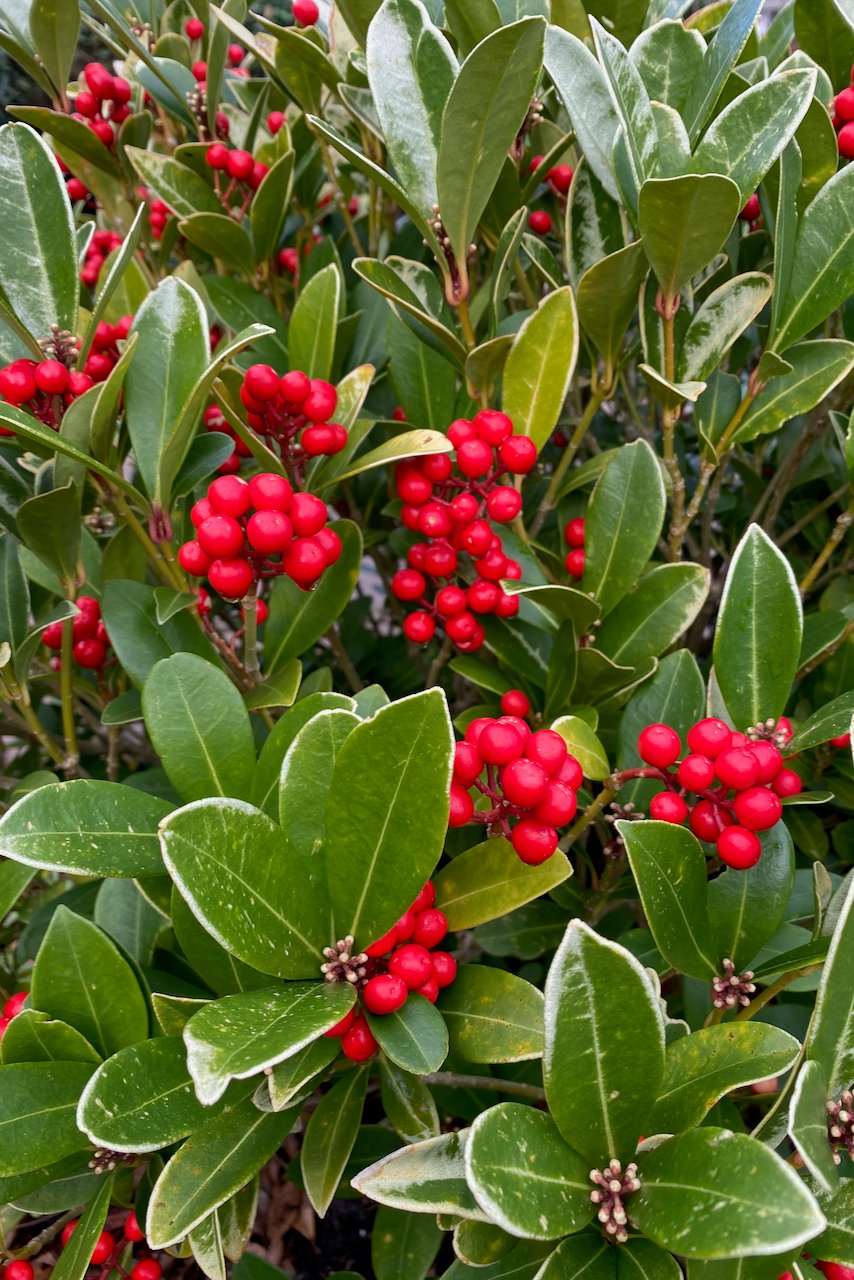
Skimmia are dioecious plants, which means the male flowers and the female flowers don’t grow on the same plant. Naturally, only the female flowers will turn into berries, and only if they’re planted next to a male shrub. So it’s entirely possible to have two skimmia shrubs side by side that look completely different. Both male and female flowers are pleasantly fragrant (with the male a bit more musky).
We can prune skimmia in late spring once the berries are gone.
26. Sea buckthorn (Hippophae rhamnoides)
Wait a minute! Haven’t we already seen this one a bit higher up this list? It looks exactly like the fire hawthorn (Pyracantha) above.
Yes, I agree that their berries look very similar. But there are visible differences.
- Pyracantha is an evergreen, while sea buckthorn loses its leaves in the winter (the berries remain);
- Pyracantha leaves are more oval while sea buckthorn leaves are thin and narrow;
- Pyracantha berries, though edible, aren’t necessarily harvested. Sea buckthorn is grown for the juicy leaves with high antioxidant properties.
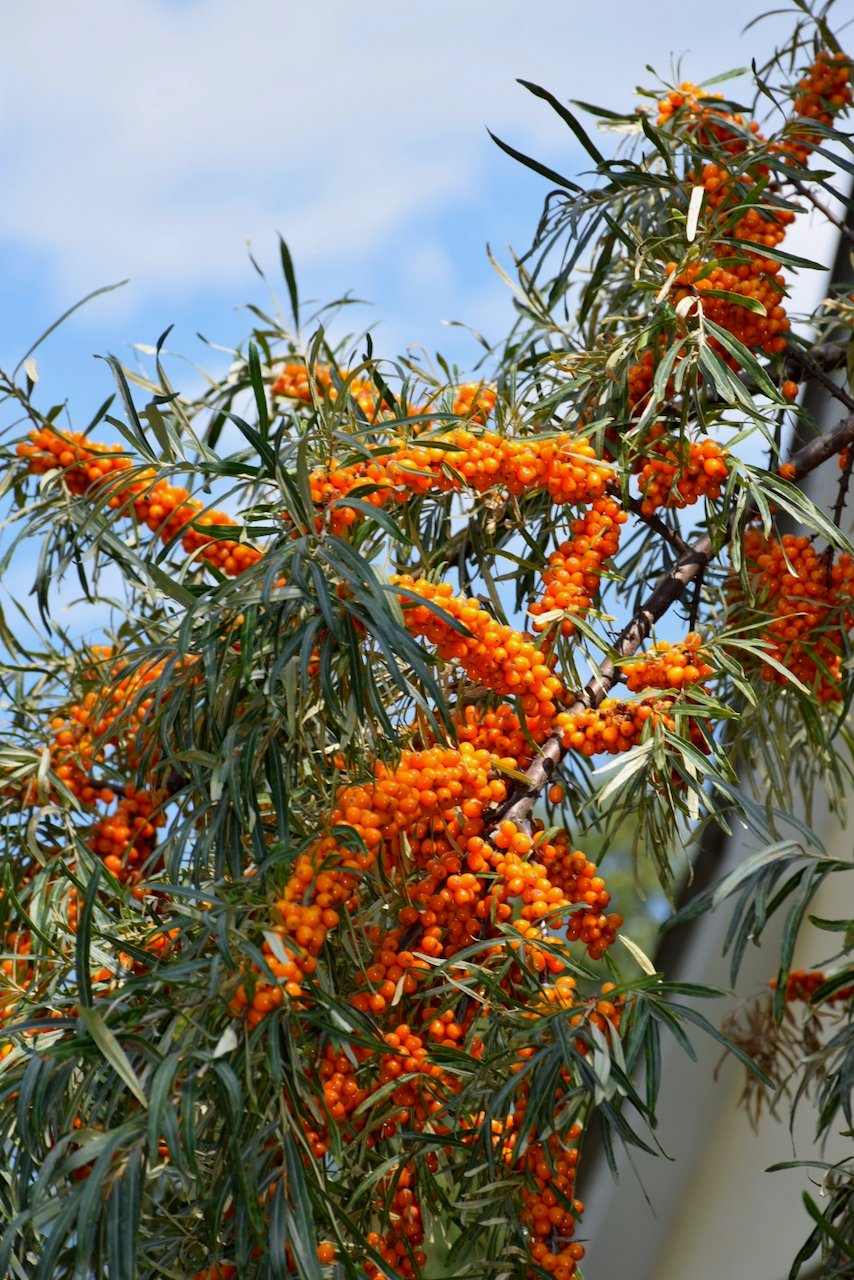
That’s why we don’t prune sea buckthorn in the fall. The bright orange berries look amazing in the winter garden and they can last for a really long time. They’re very high in Vitamin C (perfect to harvest during flu season) and we can eat them raw, in smoothies or cook them into jam and marmalade.
Just like skimmia, there are male and female plants, so it’s a good idea to have both if you want the flowers to turn into berries.
27. Red-barked dogwood (Cornus alba)
You’ll find Cornus alba under a few different names: Siberian dogwood, fire dogwood or Tatar dogwood. It’s a woody shrub that reveals bright colorful stems once it sheds its leaves in the fall. So pruning it now means that we would lose out on this vibrant winter display.
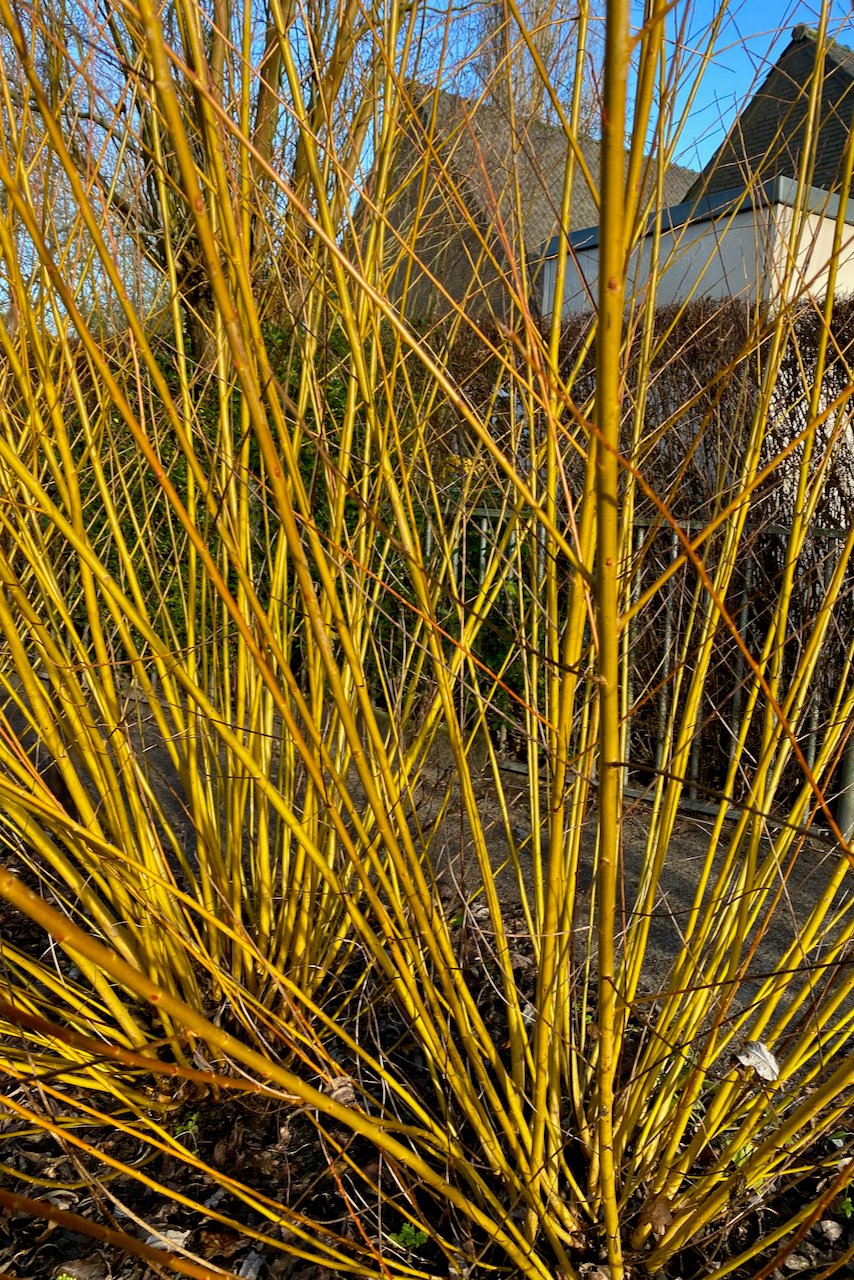
Despite the Latin name being Cornus alba (white), the stems come in shades of red, orange, yellow and burgundy. Interplant a few different colors in the garden for an even more striking effect. In spring and summer, it has small showy white flowers which turn into berries in the fall.
If you’re growing a native garden, there is a native variety of colorful cornus called Canadian dogwood, red willow or American dogwood. Look for Cornus sericea.
28. Cornelian cherry dogwood (Cornus mas)
There’s often some confusion about what “dogwood shrubs” (Cornus) refers to. So I thought I’d take the opportunity to talk about both.
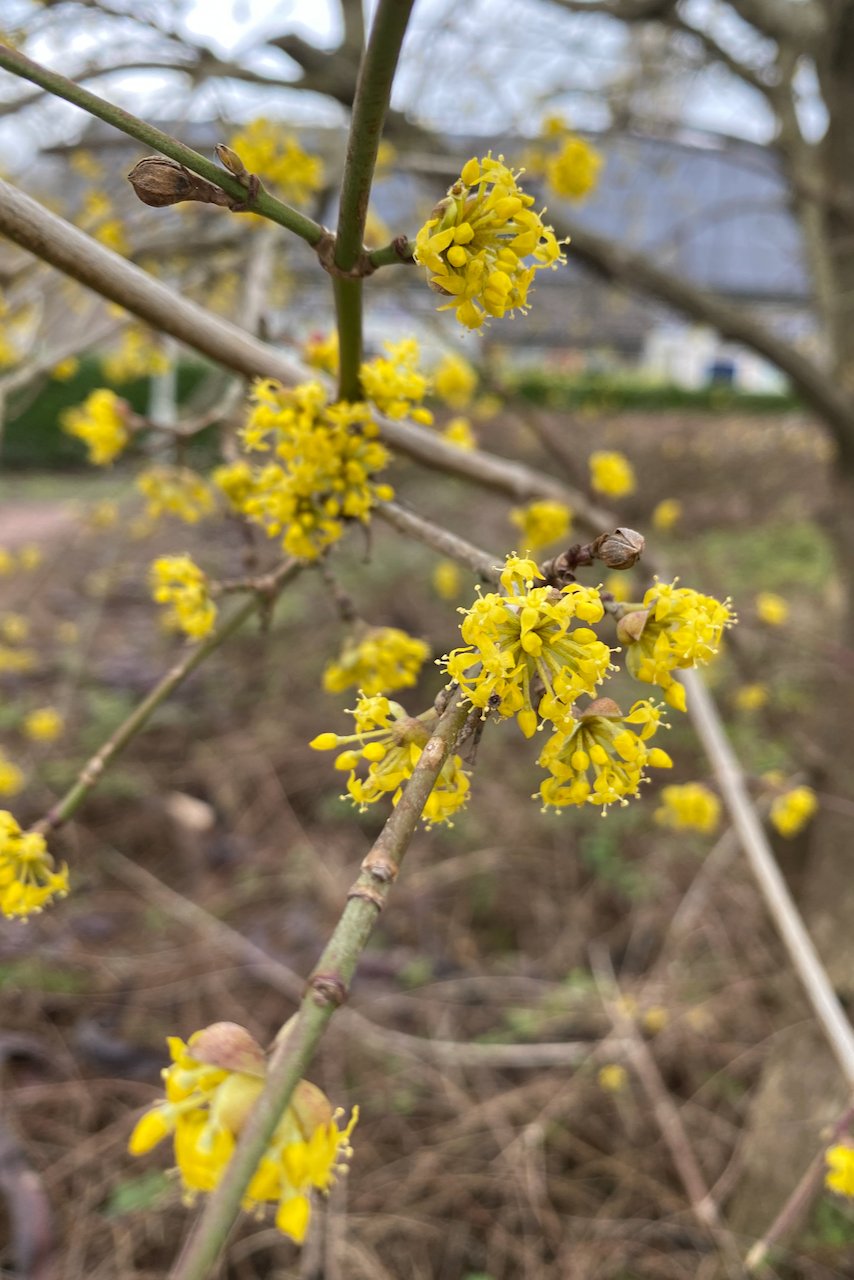
Cornelian cherry or cornelian cherry dogwood or simply Cornel are the most common popular names for Cornus mas. It flowers at the end of winter and early spring (a season earlier than the Cornus alba above) and the dark berries ripen in the summer.
The berries have a long history of being used as food in certain cultures, according to the Herbaria from the University of Oxford. But nowadays I think we mostly plant cornelian dogwood as an ornamental.
And it’s due to its late winter ornamental value that we shouldn’t prune it until spring. It blooms around the same time as forsythia – I took the photo above on February 19th – and its clusters of yellow flowers feed early rising pollinators.
29. Oregon grape (Mahonia or Berberis)
This evergreen shrub, a West Coast native, produces beautiful scented flowers from November to March. The clusters of yellow blooms feed all manner of pollinators, including bees, butterflies, moths and hummingbirds. What’s left turns into berries that, believe it or not, are edible and quite delicious in jams.
But the viciously spiky leaves make it a bit tricky to harvest the berries. This foliage quirk is why I think it makes for an excellent privacy hedge. There are also some darker foliage cultivars, like the one in the photo I took, that look even more striking contrasted against the yellow flowers.
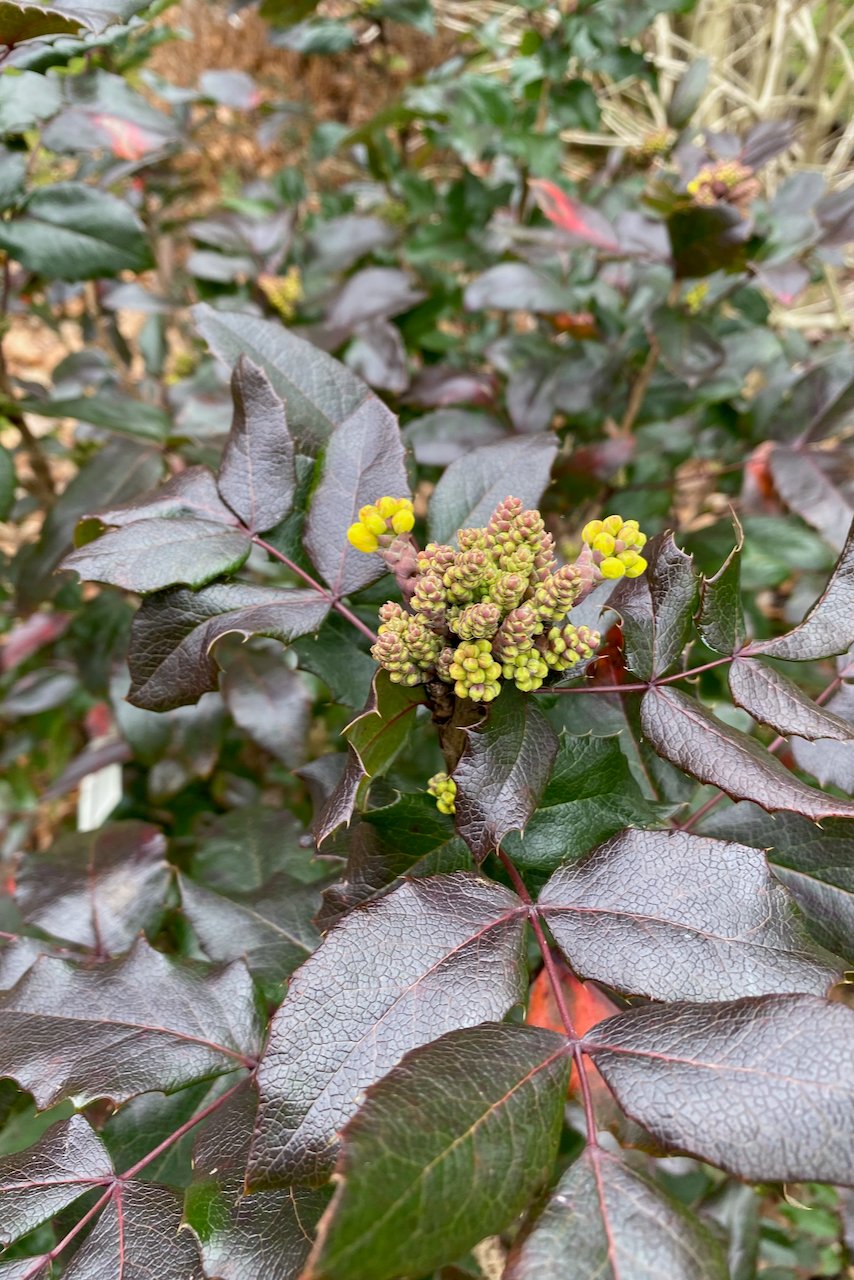
You can try one year, just to see whether it’s worth the trouble once you factor in the effort to make the jam.
If it turns out to be too much work, the birds will happily harvest. Oregon grape attracts robins and waxwings to the garden, just like a Christmas postcard coming to life.
Mahonia is a relatively slow-growing shrub, so it won’t require much pruning overall. But we can shape it in late spring, once the berries are gone.
30. Kerria (Kerria japonica)
Ending on the same “sun-yellow flowers brightening up winter months” tone, if you’re growing a kerria, you shouldn’t prune it in the fall.
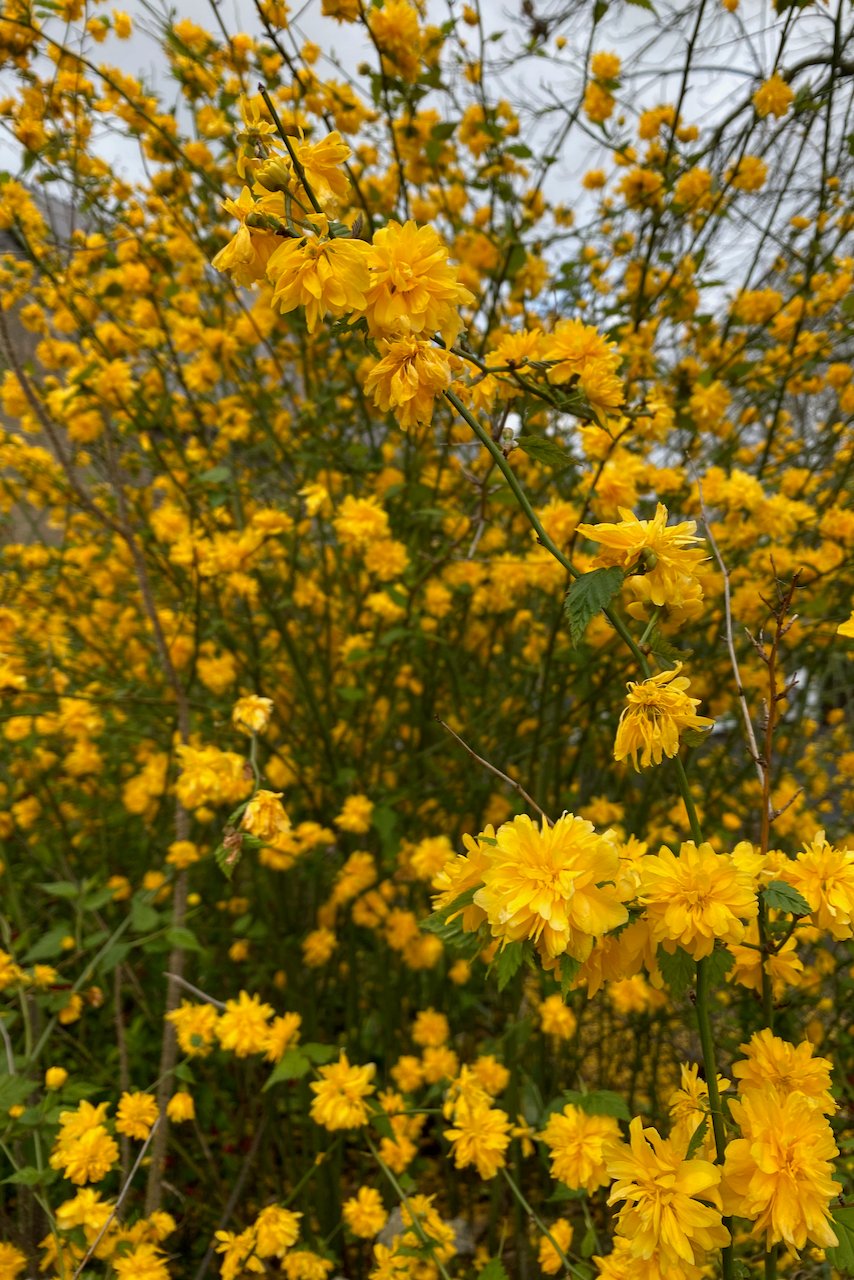
If you’ve never heard of a kerria, you may know it as a Japanese rose or an Easter rose (because it’s typically in bloom around Easter time). This is what it looks like in the third week of March in my area.
I don’t really think the flowers look like roses, do you? The flowers will slowly be replaced by foliage in late spring. We should plan to prune it by midsummer.
Read Next:
Get the famous Rural Sprout newsletter delivered to your inbox.
Join the 50,000+ gardeners who get timely gardening tutorials, tips and tasks delivered direct to their inbox.