

Sometimes, I like to do counterintuitive things in the garden.
I let the buttercups grow unplucked because they’re generous food sources for early pollinators. I cherish the moss between the pavers because it’s like a microcosm in and of itself. And I prune some perennials in June, when common advice says I shouldn’t even be looking at a pair of pruning shears between spring and fall.
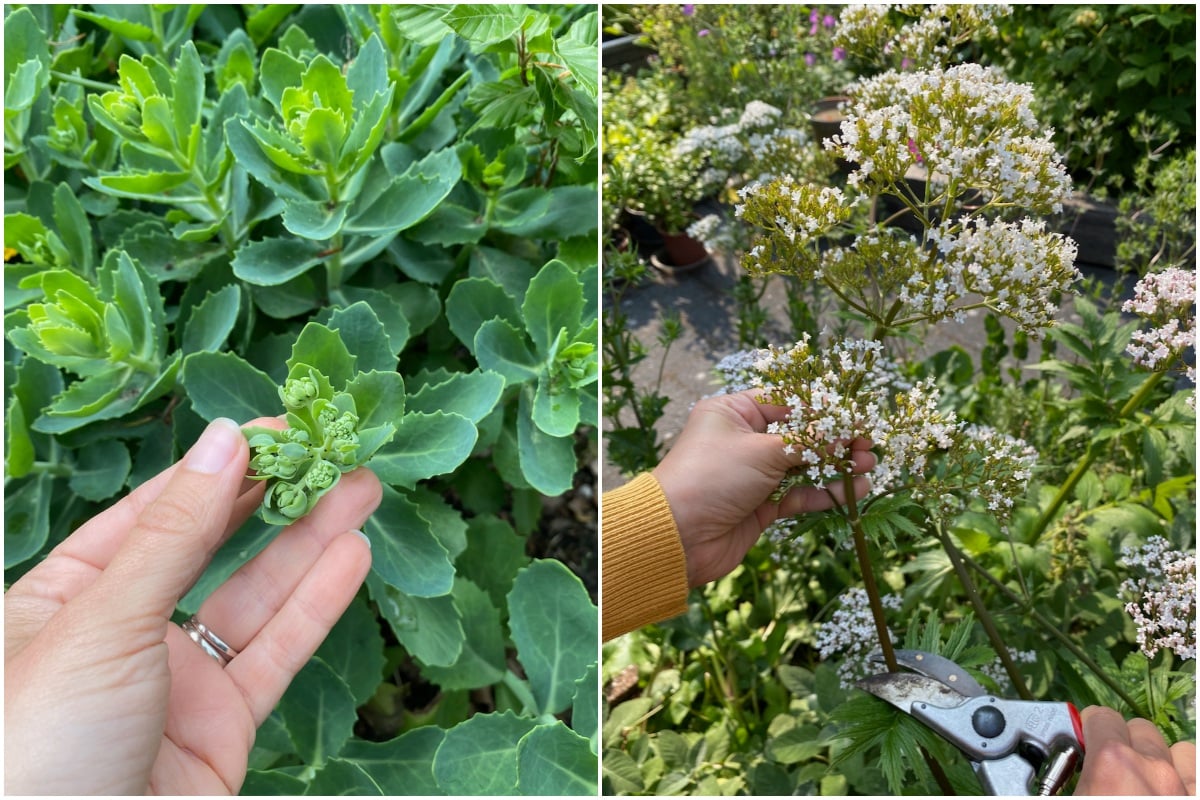
Pruning in June is not something you’ll see recommended too often, simply because it doesn’t apply widely to a lot of the plants in the garden, the way spring pruning does. But I found that there are quite a few scenarios in which pruning in June makes sense.
Here are four reasons why you could give your plants a trim this June – and what perennials to keep an eye on.
Word of advice, before we start.
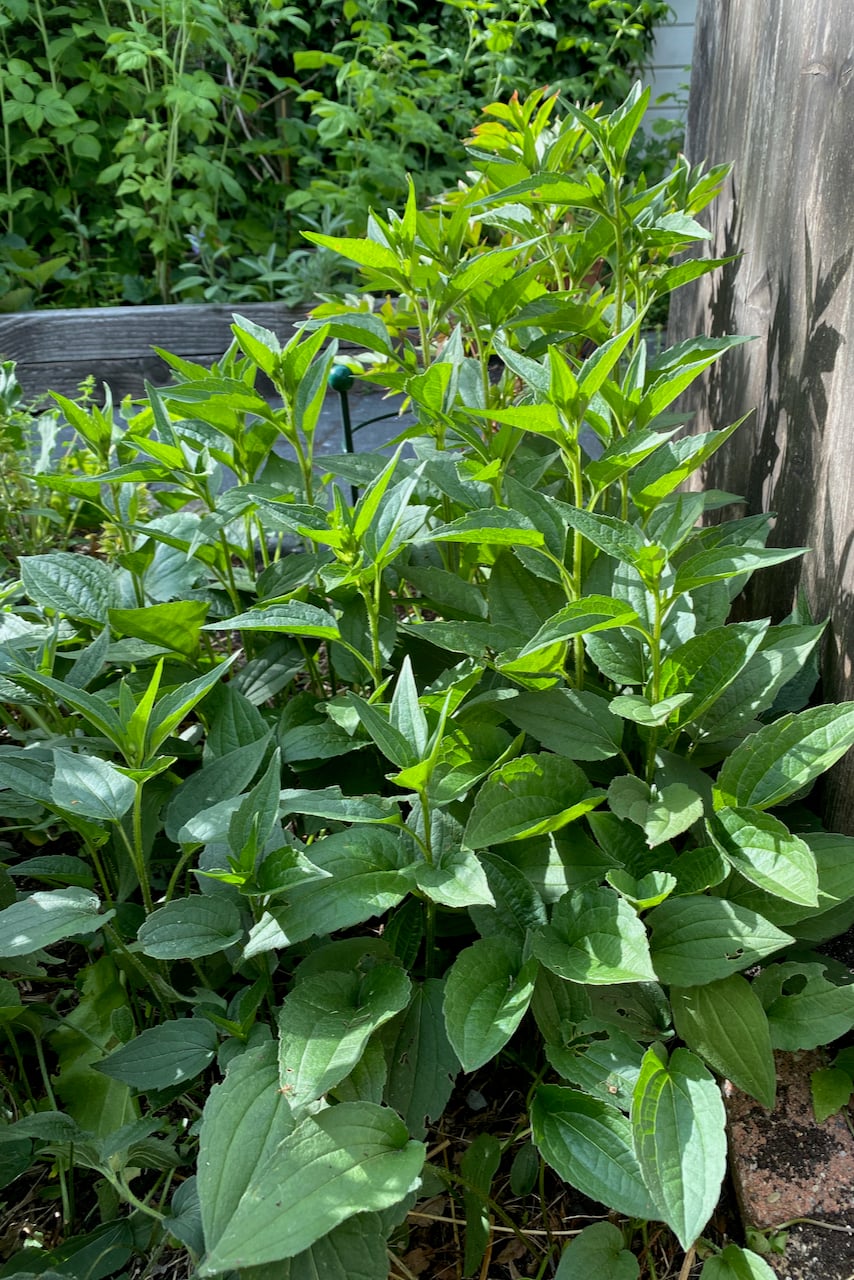
My advice applies well to mature plants that have already been established in your garden for a few years. If your perennial is still young, prune on a case by case basis. You may see limited results if your plant is only a couple of years old. If it’s even younger than that, please allow it to find its bearings before you prune it in mid-summer.
You may also notice that I’ve listed some plants multiple times. Take that as a sign that there are usually multiple good reasons to prune in June.
1. Prune in June to make plants rebloom.
Here’s how my perennial (aka hardy) geraniums look like in mid-June. We’ve had a warm spring, so they started flowering earlier than usual and are now just beginning to go to seed.
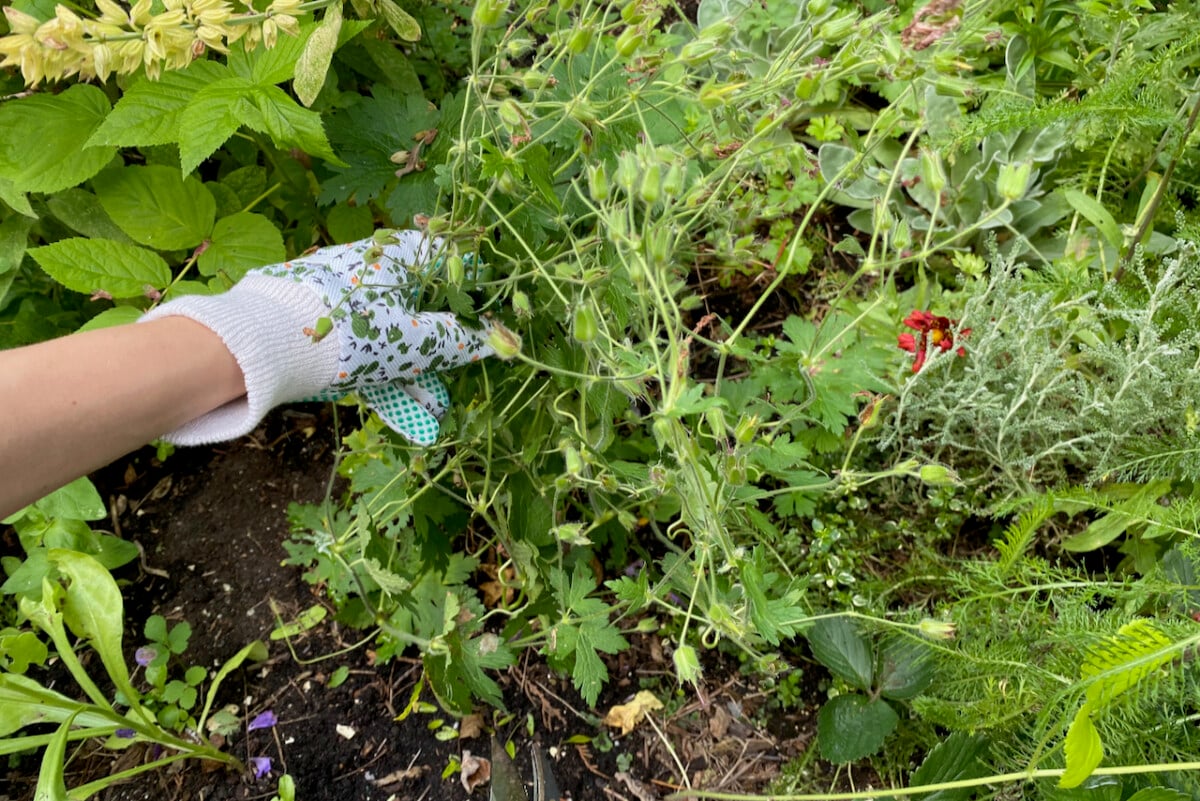
By June, most early flowering perennials are already looking a bit floppy. Luckily, pruning will encourage a new flush of flowers.
When we’re pruning, we’re telling the plant that it doesn’t need to waste energy on turning the first set of flowers into seeds. So it will try to create seeds again, which to us will look like another batch of flowers. Keep in mind that it might take up to six weeks for a plant to rebloom, so don’t panic too soon if nothing happens.
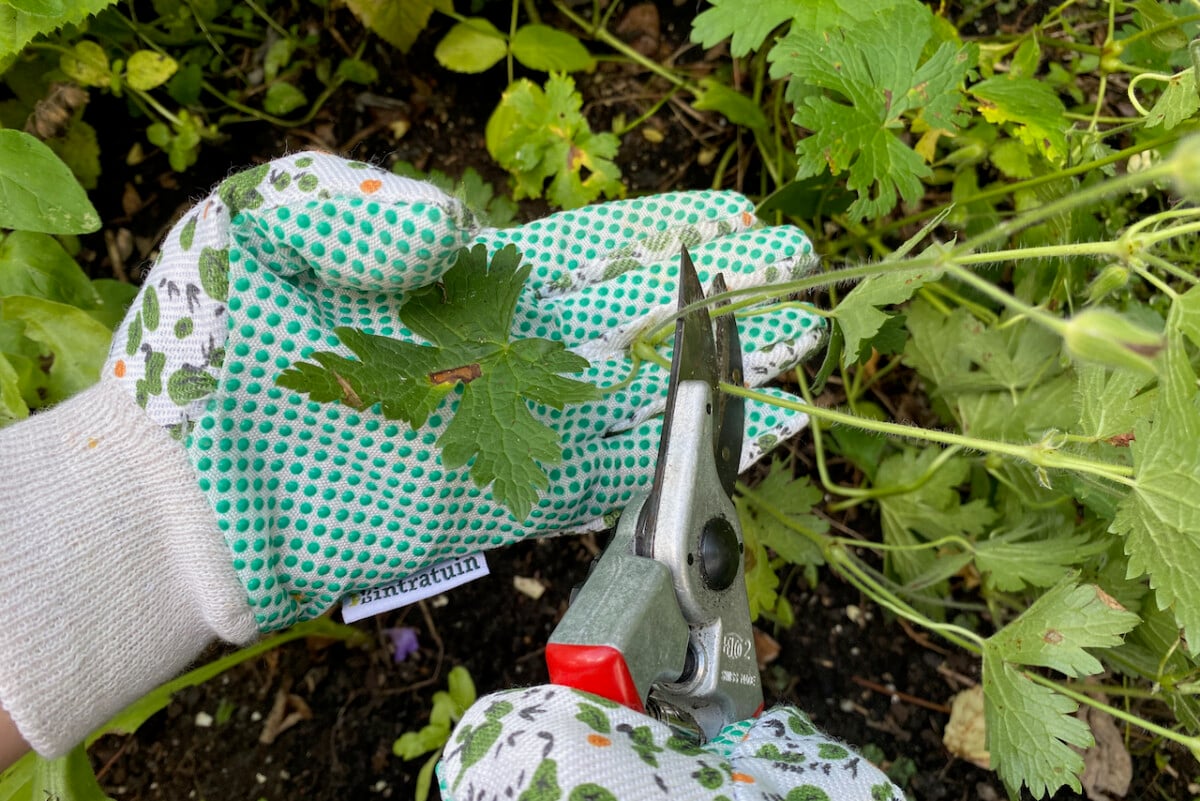
Another thing I should mention here, just to avoid disappointment: even though the perennials will rebloom, the second set of flowers will likely be smaller than the first. That’s normal and you’re not doing anything wrong.
I’ve had success with helping these perennials rebloom by pruning them now:
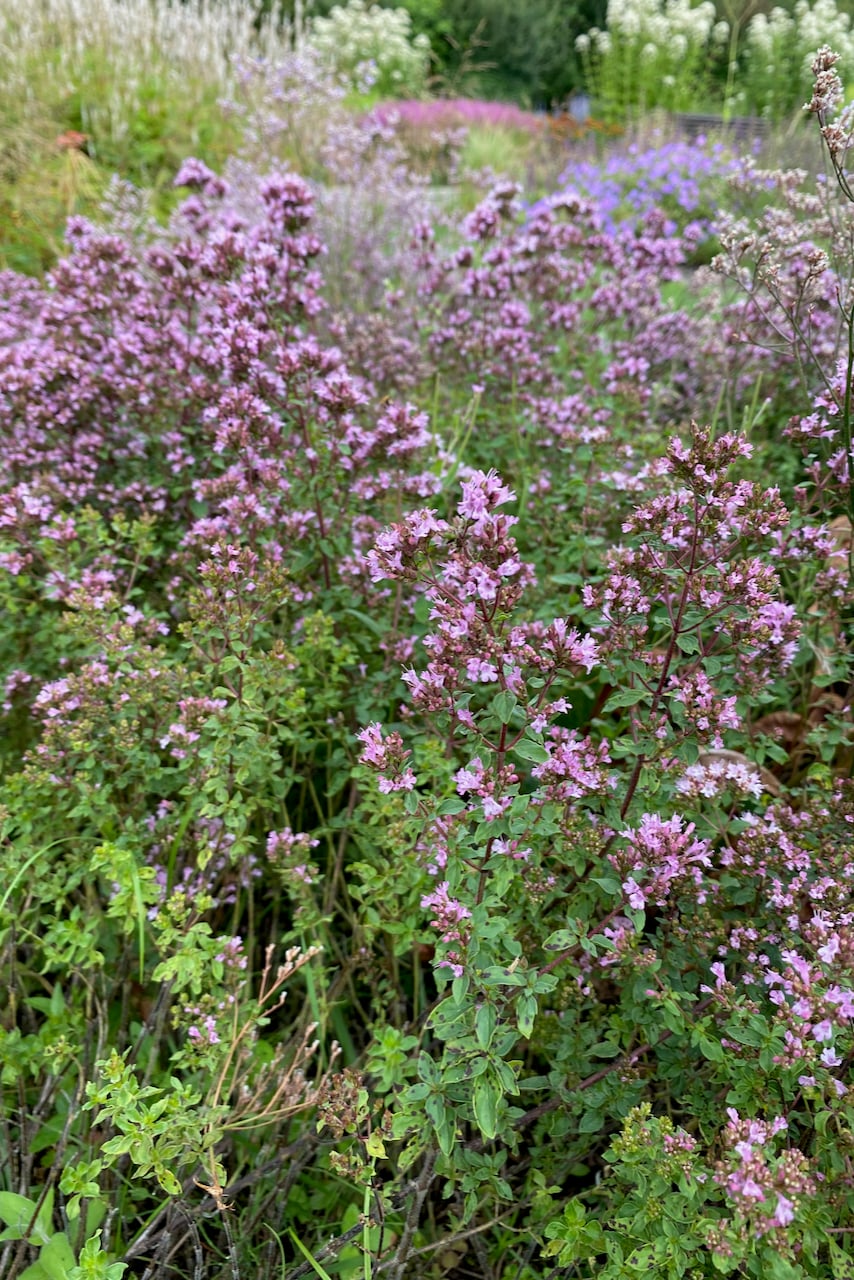
Oregano
Lemon balm (Melissa officinalis)
Perennial geraniums (not to be confused with pelargonium geraniums, which are annuals)
Catmint (Nepeta cataria)
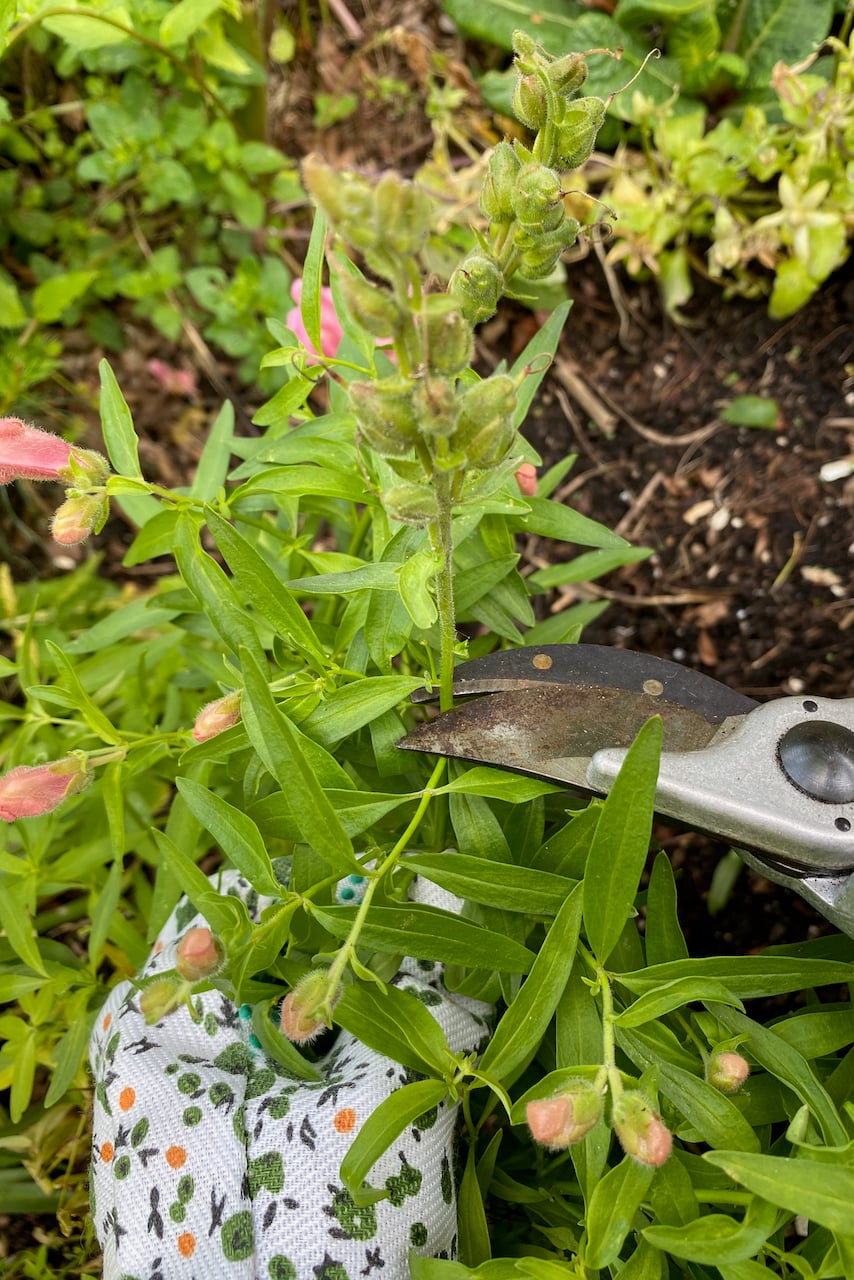
Snapdragons (Antirrhinum)
Columbine (Aquilegia)
Bee balm (Monarda)
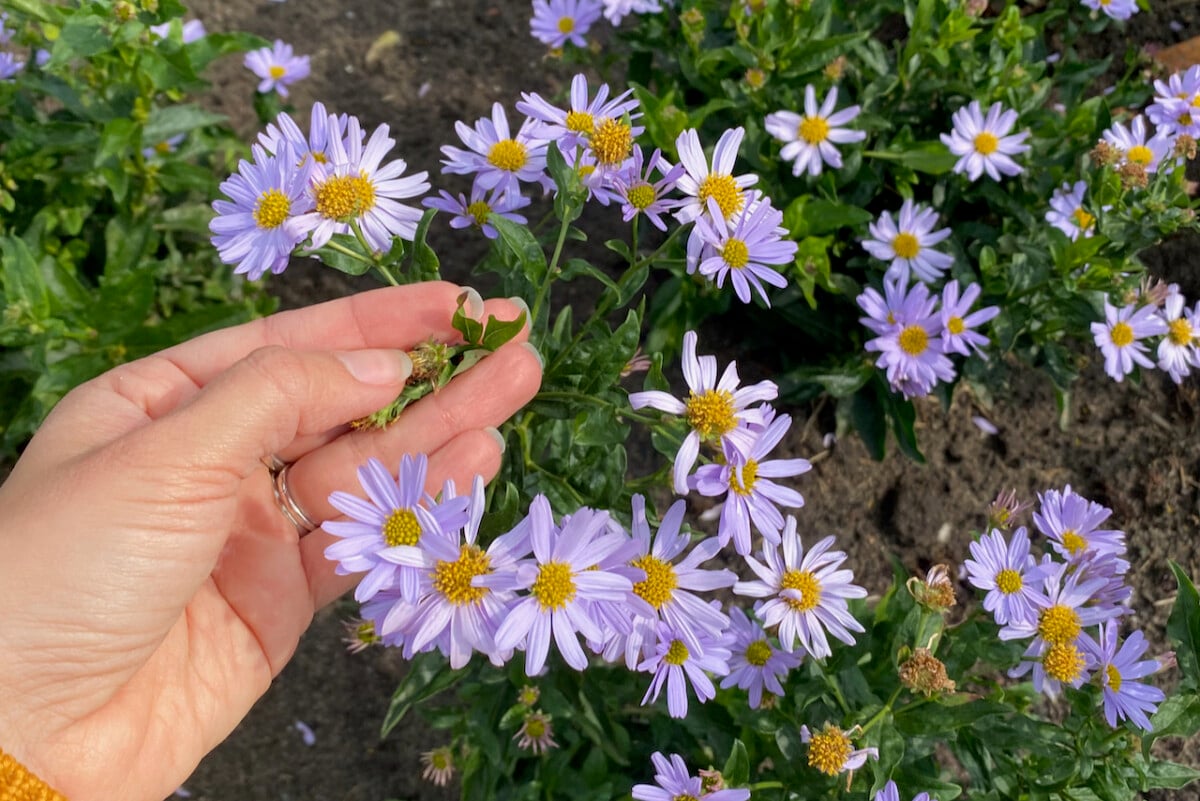
Early-blooming asters
2. Prune in June to improve flowering later in the season.
The second way mid-summer pruning encourages blooming is for plants that have not yet flowered, but will flower in late summer or in the fall.
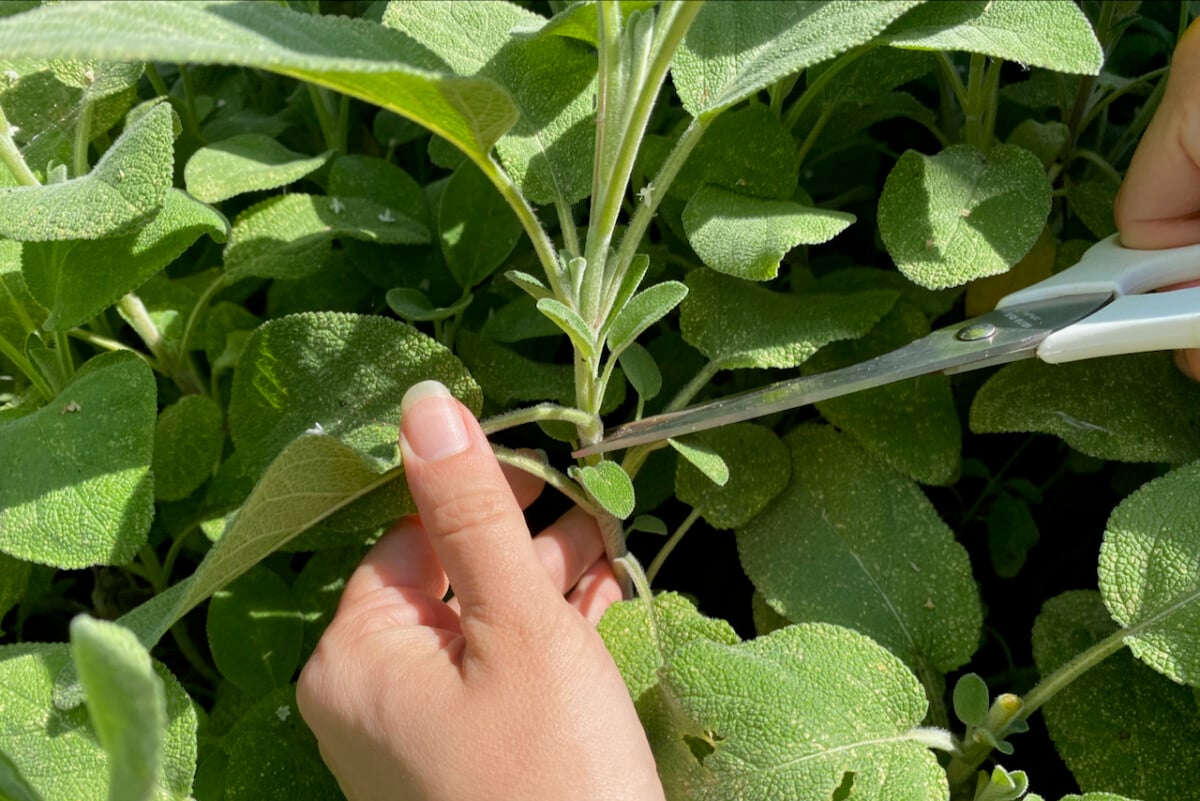
If we take a little bit of a pruning gamble now, we’ll get a more profuse bloom about six weeks from now. All we have to do is cut back (or pinch back) the main buds that are forming.
Trim right above an axil – that point where the leaf buds come out of the stem. This will encourage the plant to replace one lost bud with two fresh ones, effectively doubling our flower coverage. It’s what we do when we pinch our basil to make it more bushy.
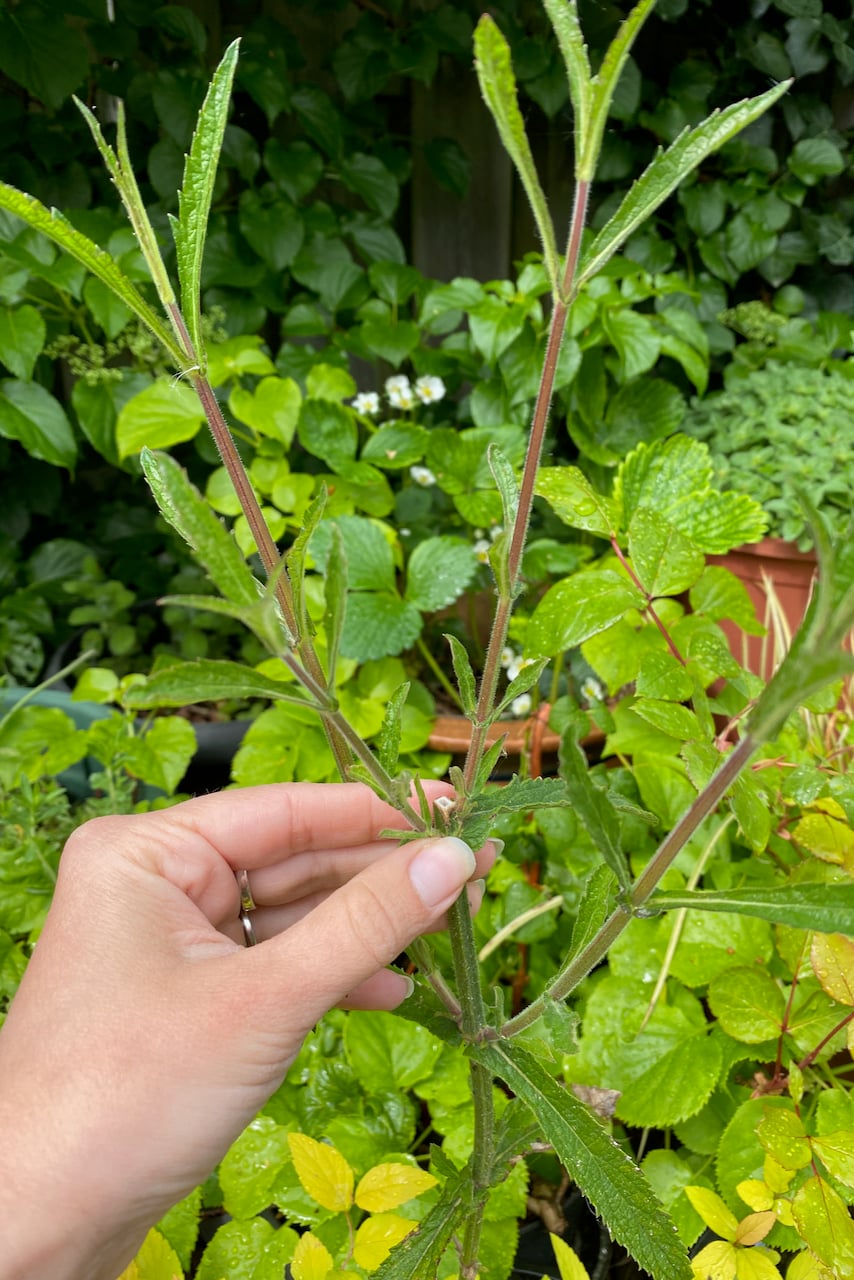
Another advantage is that this will result in perennials that are bushier and stockier, so they’re less likely to flop over under the weight of their own flowers in a rainstorm.
Keep in mind that you will be delaying the blooming period by a few weeks, because the plants need the time to regrow the buds. Think of it as a lesson in delayed gratification.
You can do this with perennials such as:
Black-eyed Susan (Rudbeckia)
Coneflower (Echinaceea),
Coreopsis
Verbena bonariensis
Asters
Group-two clematis
Tall phlox (Phlox paniculata)
Dahlias (you can try to root the pinched stems to propagate your dahlias)
Sage (Salvia officinalis)
Perennial sunflower (Helianthus angustifolius)
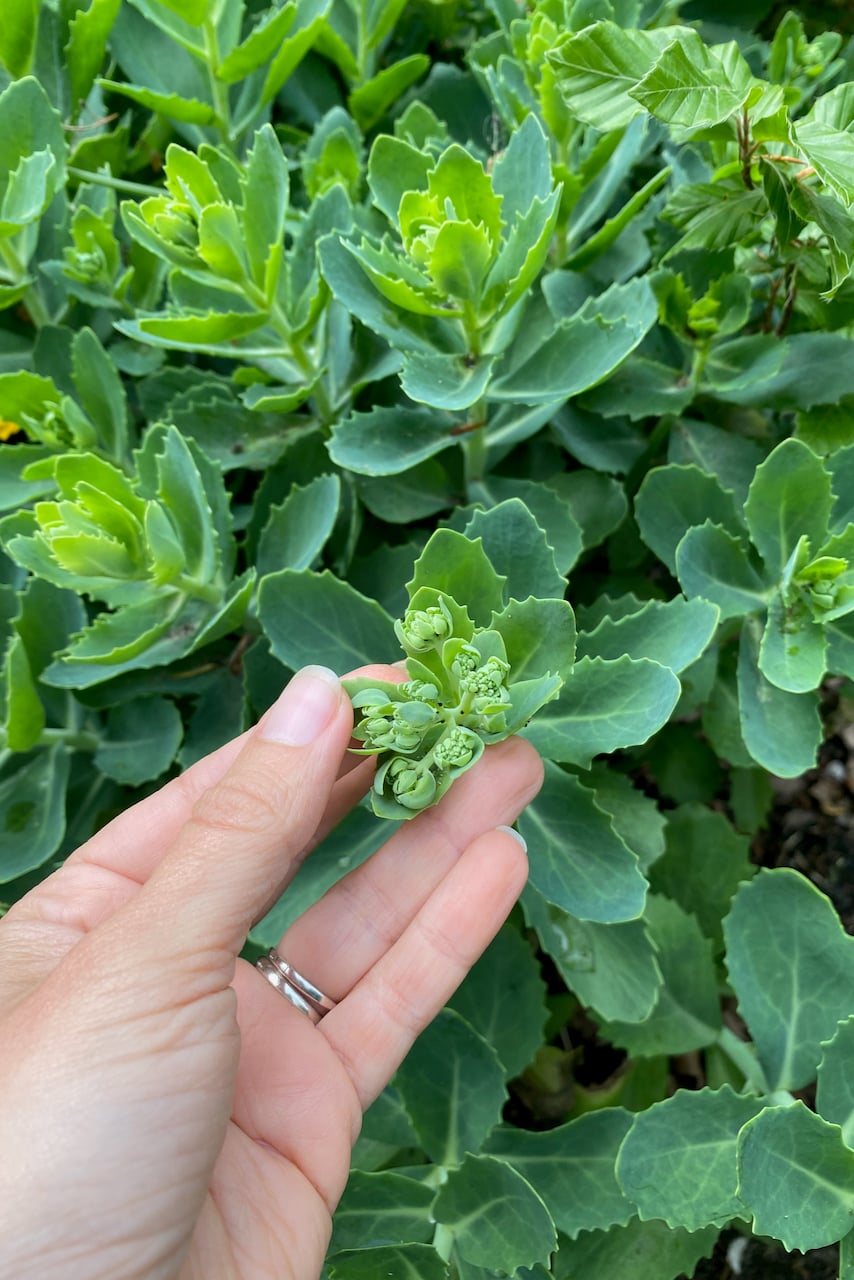
Tall stonecrop, such as the popular ‘Autumn Joy’ (Hylotelephium)
Golden rod (Solidago)
Sneezeweed (Helenium)
Bell flower (Campanula)
3. Prune in June to keep height in check.
The one perennial that taught me the necessity of this mid-June prune is tall verbena (Verbena bonariensis). It grows majestically, but when I grew it along a fence in my small back yard, it stretched so much to reach the sun that it spent the second half of the growing season flopped on the ground.
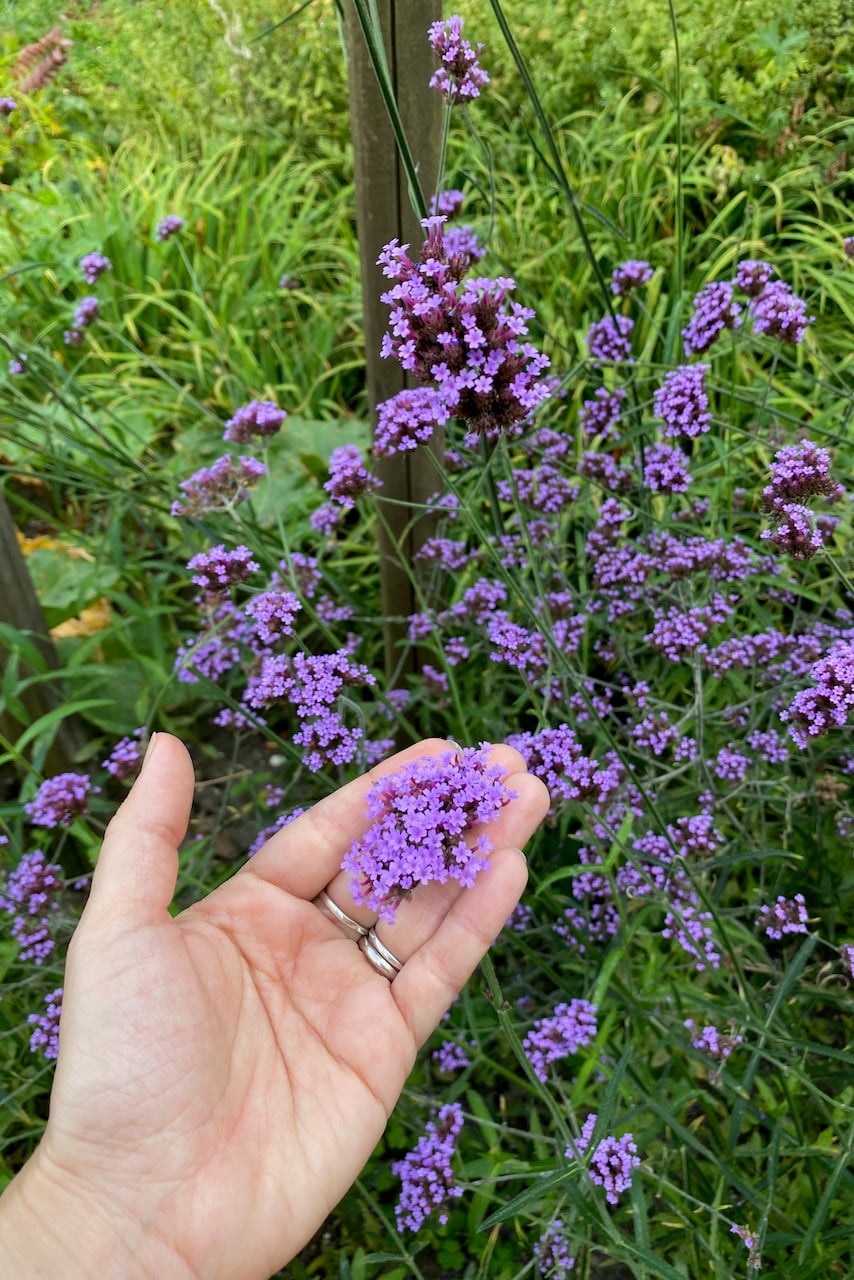
Luckily, the following year, I managed to save it from this fate by reducing its height early on. I don’t cut it all the way down, but I do prune it above a leaf node about halfway or a third, depending on how vigorously it’s growing.
Pruning now prevents these plants from getting too leggy by the end of summer. And it also allows me to skip possibly the one gardening job that I find an absolute chore: Staking! I won’t have to spend late July sourcing bamboo canes and wood trellises and figuring out how to anchor a tall perennial on windy days.
Tall plants that might require an early summer pruning to reduce their height include:
Tall stonecrop (Hylotelephium)
Giant black-eyed Susan (Rudbeckia maxima)
Joe Pye Weed (Eutrochium)
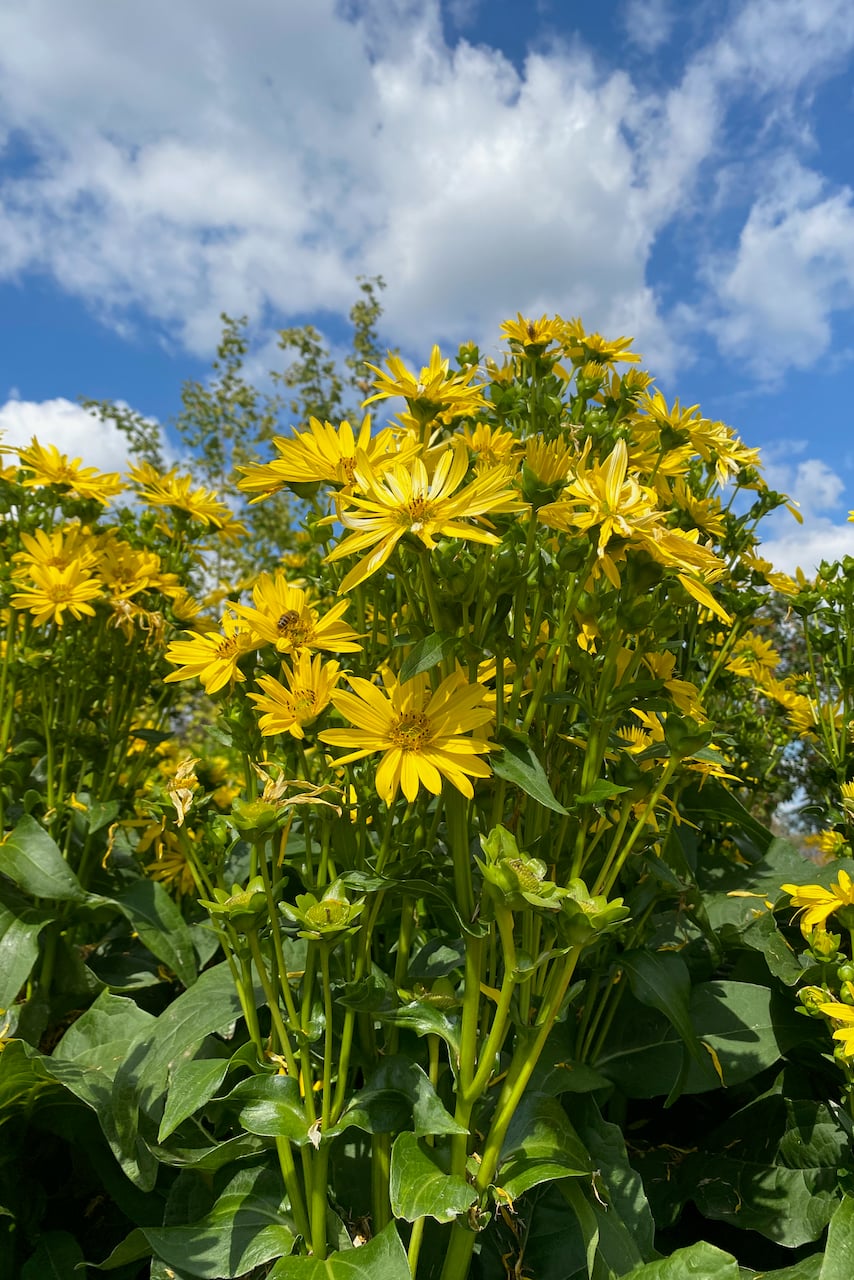
Cup plant (Silphium perforatum)
Bee balm (Monarda)
Beard tongue (Penstemon)
Tall verbena (Verbena bonariensis)
Tall phlox (Phlox paniculata)
Globe thistle (Echinops)
Sea holly (Eryngium)
Perennial sunflower (Helianthus angustifolius)
4. Prune in June to prevent self-seeding.
Another lesson from another one of my gardening sweethearts: verbena (Verbena officinalis, the medicinal herb, not to be confused with Verbena bonariensis above). It thrives in moist soil and part-shade corners. And if the soil is bare around it, it will self-seed with abandon.
The first year this was excellent news, because I was harvesting its roots so often that I could easily keep up with its spread. By year three, that was no longer the case, as the valerian had spread exponentially.
So I had to become very vigilant about pruning the flowerheads before they went to seed. And since verbena is also one of the plants that grows really tall in my garden, I didn’t just deadhead it. It trimmed off anywhere from a third to a half off the top.
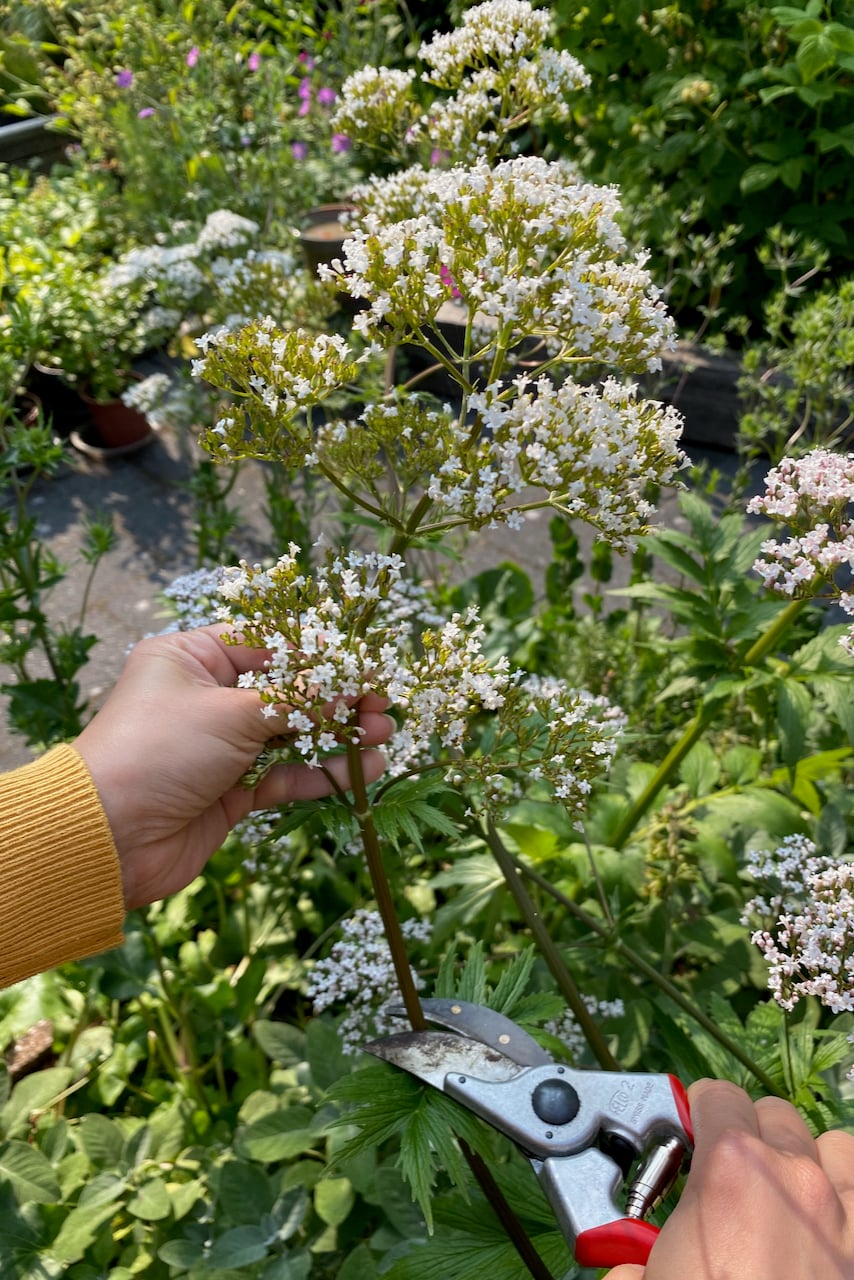
Obviously, the list of plants for this point is highly subjective, since what will self-seed happily in one garden will fail to germinate in another. (I wish I could get foxgloves to self-seed in my garden.)
But if you noticed in previous years that any of the May and June bloomers started to colonize the garden, make a note to prune them before they get the chance to go to seed.
I know that pruning in June is a hard sell. Who would be crazy enough to chop the top off perfectly healthy and perfect-looking plants that are just hitting their stride?
If you’re feeling a bit anxious that you’ll mess it up, that’s perfectly understandable. Just give it a try on one or two of your perennials this summer and notice the results.
Get the famous Rural Sprout newsletter delivered to your inbox.
Join the 50,000+ gardeners who get timely gardening tutorials, tips and tasks delivered direct to their inbox.