


It’s happening, folks. The cinnamon-scented brooms have taken up position in front of every grocery store in America. Store shelves are lined with orange packages that have the words “pumpkin spice” on them. And you can purchase your Halloween costume and candy, even if it isn’t even Labor Day yet.
Yes, according to retail, fall is officially here. Whether or not that correlates to our gardens, the calendar or the weather remains to be seen.
About the first time I’m assaulted with the scent of cinnamon on my weekly grocery shopping trip, a switch flips in my brain. I suddenly have the urge to eat soup, wear sweaters, and start getting my tomatoes ready for the end of the growing season.

I figure you might have a similar desire, so I thought a guide to cute wool sweaters end-of-season tomato care might come in handy.
If you start at the tail end of summer, you’ll have a nice, clean transition into fall, and be ready to hit the garden running next spring. If you play your cards right, you might even end up with a bonus bounty or ripe, red tomatoes to finish out the season with.

A quick note: Allow me a proud mom moment, if you will. 2026 was not kind to my garden. I had a splendid season right up until August, when, between flooding and humidity, my garden tanked. It drowned, to put it nicely. To that end, nearly all of the photos in this article are of my daughter and son-in-law’s tomatoes. This was their very first garden, and they did such a great job.
Final Fertilizer
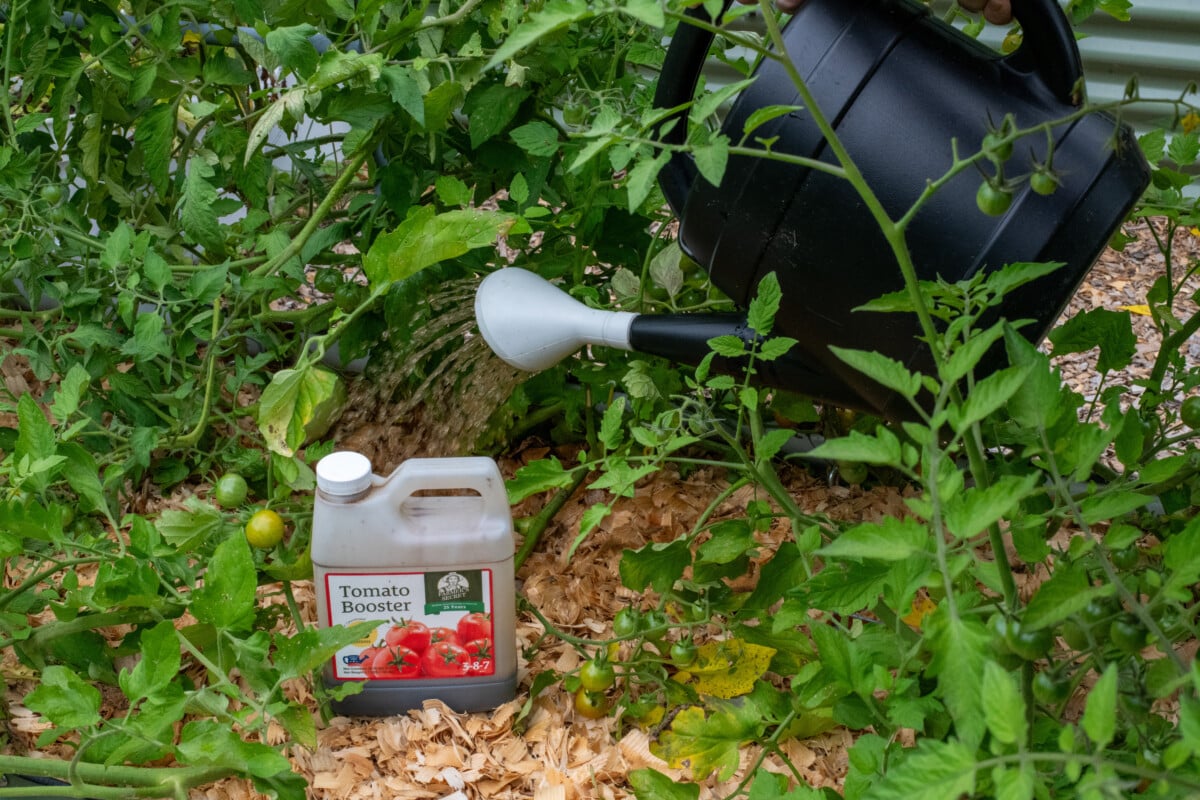
If you are anything like me, you’ve probably forgotten to feed your tomatoes in a while. Summer gets busy, and the next thing you know, a month has passed without fertilizing them. For a strong finish to the season, it’s important to make sure your tomato plants have the nutrients required to continue to produce fruit. That means feeding with a fertilizer high in phosphorus and potassium.
I’ve been using Farmer’s Secret Tomato Booster (3-8-7) for a couple of years now with excellent results. It’s a liquid feed and very easy to use. I highly recommend it.
Late Summer to Early Fall Topping

I’m not a fan of topping tomatoes during the regular growing season. It seems silly to me to cut off the part that will keep growing and putting out more tomatoes. At least, not until we’re in the home stretch of the gardening season.
When that first frost date starts to loom on the horizon, then it’s time to top your tomatoes.
You want to make sure your tomato plant is putting all of its energy into ripening the remaining fruit on the vine that has reached maturity. New foliage and new flowers at this point in the season are just wasted energy. For a full tutorial on when and how to top tomatoes as part of your end-of-season tomato care routine, click here.
I garden in growing zone 6b, which means my first frost date rolls in somewhere between the middle and end of October. So around the beginning of September, I top my tomatoes. I’m starting to lose daylight and the nights are getting cooler, which means ripening will happen more slowly. I want to ensure my remaining tomatoes have as much time as needed to finish the job.
Saving Seeds
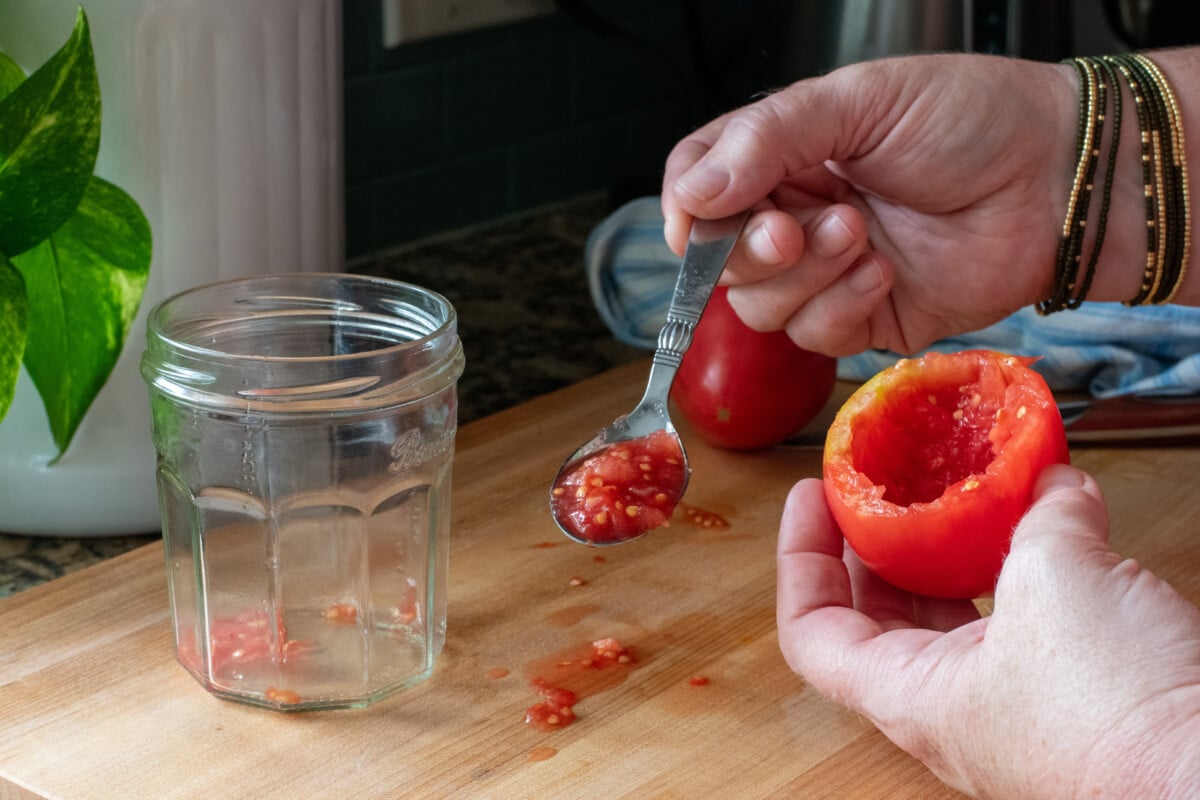
Now is also the perfect time to take a look at your tomatoes and single out some of the nicer ones for saving seeds. Let them get nice and big and ripe. Then pick them and follow my step-by-step instructions for fermenting tomato seeds. There are a number of good reasons (and benefits) to ferment your tomato seeds before you save them.
Just remember, if you don’t want any surprises, only collect seeds from open-pollinated or heirloom varieties. Hybrid tomato seeds will grow, but they will most likely not carry the same characteristics as the parent plants. Of course, this can be a fun experiment that may lead to you developing your own fancy hybrid tomato variety, and who knows, if you keep at it for a few decades, you could have your very own heirloom variety.
Plan What to Do with Green Tomatoes

Despite our best efforts, not every tomato out in your garden will ripen to a full, lush red before the season is over. But you have options!
If you still haven’t tried cooking with green tomatoes, my friend, you don’t know what you are missing. There are so many delicious things you can make with green tomatoes. Need some ideas? Don’t you worry, I’ve got you covered.
25 Tasty Ways to Use Up All Those Green Tomatoes
The other option takes a bit of space, but really comes in handy if you have a lot of green tomatoes on your hands – you can ripen them indoors. Yup, you read that right: you can ripen totally green tomatoes off the vine, in your house. (I feel like this should be announced at every party as a cool thing you know how to do.)
You can learn how to ripen green tomatoes off the vine indoors here.

Of course, now that you’ve got all the actual tomatoes squared away, you’ll need to do something about the plants.
What to Do with Tomato Plants at the End of the Season
When that first frost finally shows up and knocks out your tomatoes for good, you have a decision to make – what do you do with the brown, dead plants?
You’ve really got one of two choices: leave them as they are or yank them up.
If you ran into a little trouble this year and ended up with a diseased or pest-ridden plant, it’s always best to pull all of them up, roots and all, and dispose of them. Do not compost diseased or infested plant materials. You want to remove as much of the pathogen as you can as soon as you can.

However, if you had a reasonably healthy growing season, there is absolutely nothing wrong with letting your tomato plants just hang out in your garden for the winter. I myself take this approach most years. I’m more than happy to let the brown stems decompose. I kind of like the way they look under all the snow.
The best part is, in the spring, when it’s time to tidy the garden up a bit, the stems are so rotted that a good twist will snap them off right at the soil line. The roots are usually quite decomposed by that point, too, adding their own nutrients back to the soil for a new generation of plants to use.
Which brings me to your second option – remove the tomato plants.
If you want a neat and tidy garden space to end the year on, this is the way to go. However, instead of pulling up the entire plant, let me encourage you to cut it off at the soil line instead. As I mentioned, the roots will decompose throughout the winter, adding nutrients back into the soil.
But we’re not done yet. Before you hang up your trowel and shut off the valve to the outside tap, there’s one more thing to do.
Don’t Leave Bare Soil
Whether it’s chopped up leaf mulch, chopped up tomato plants, a layer of pine flake or a green (living) manure, you should always cover your soil at the end of the growing season. Nature abhors bare soil and will fill it in with all manner of weeds if left to her own devices. Add in gusty winter storms, and you have soil erosion issues to deal with as well.
Your soil has provided you with a healthy garden this year; it’s time to top up your soil bank account with some compost and a good thick layer of mulch.
Now that you’ve tucked in your tomatoes for the season, let’s talk about those sweaters.
Get Garden Notes From Tracey, Right to Your Inbox
Pull up a chair on the front porch. Join 54,000+ gardeners who get Tracey\'s friendly notes, seasonal to-dos, and hands-on tutorials three times a week.