

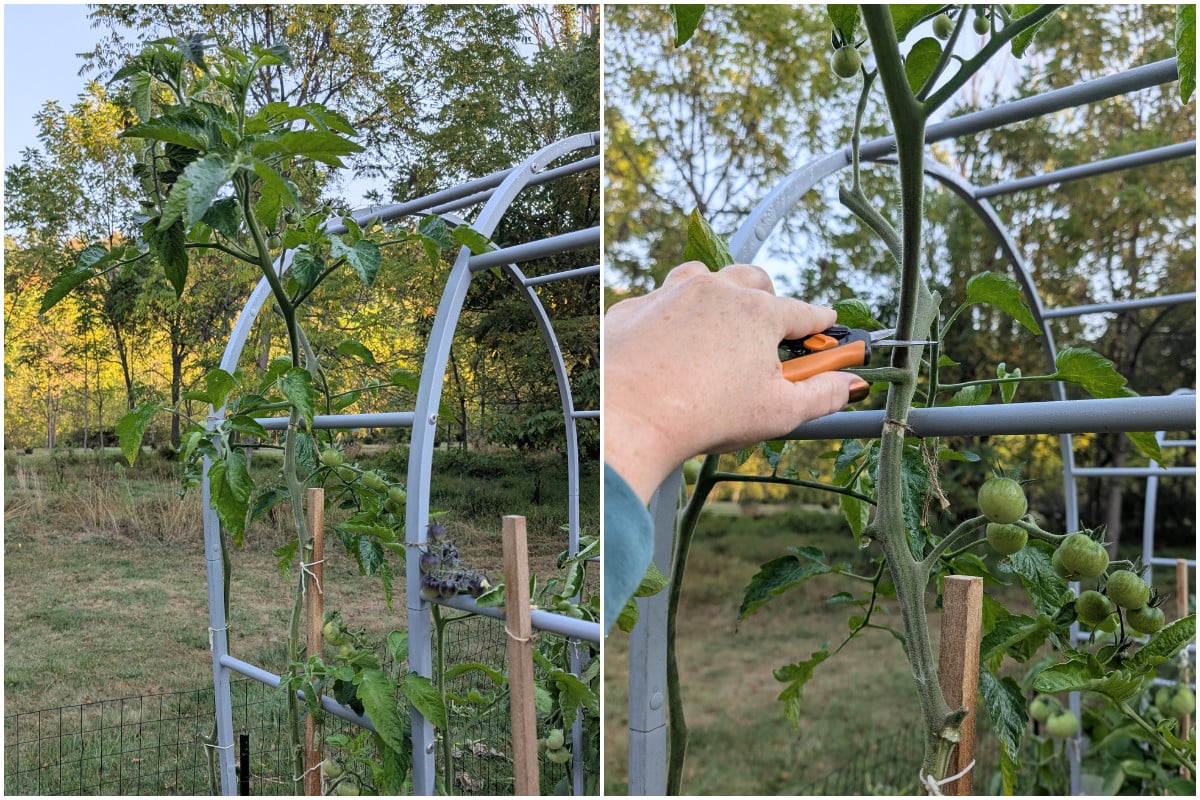
Most of us are still plucking sun-warmed tomatoes off the vine in September, but by now the plants themselves are starting to look a little rough. (Okay, a lot rough.) The leaves are yellowing, vines are sprawling everywhere, and the cool nights hint at a frost in the not-so-distant future.
That means it’s time to top!
I used to make the same mistake every year. I would keep letting my tomato plants grow as though summer would never end. It took me far too long to figure out I could easily help my tomatoes cross the fall finish line strong by topping them in September.
Oh, I know, chopping off the top of your tomatoes feels counterintuitive, but it’s the best thing you can do to ensure a great late-season harvest. Let’s talk about why you should top your tomatoes in September, and then I’ll show you how to do it.
Why Topping Makes Sense in September

I don’t know about your tomatoes, but when September rolls around, mine are still bent on world domination and putting out new growth and blossoms like it’s their job. Because it is, these warm-weather natives will keep on growing and putting out new fruit right up until they’re killed by frost.
Unfortunately, all those lovely blossoms that show up this late in the season don’t have enough time to grow and ripen. From flower to ripe fruit usually takes around 6–8 weeks, depending on the cultivar, and cool fall nights and shorter days only slow that process down further. If your first frost is coming in October or early November, those flowers are wasted energy.
When you top your plants in September, you’re telling your plants, “Okay, guys, that’s enough starting new projects, how about we finish what we’ve started?” That redirection of energy is the difference between green tomatoes that never finish and bowls of fully ripe fruit you can enjoy or preserve before the season closes.
Benefits Go Beyond Ripening

The main reason to top your plants is to encourage ripening, but there are actually some other smart reasons to do it this time of year, too.
Better airflow and light penetration
By chopping off the wild upper vines, you’re opening the plant to better sunlight and airflow. That means less chance of late-season fungal diseases like blight spreading across the foliage.
Less plant stress
Late in the year, tomato plants are often riddled with minor pest damage, spots, or weather stress. By topping, you reduce the workload on the plant so that it can focus resources more effectively.
Tidier plants
Let’s be honest, by September, tomato plants are a hot mess. Topping reins them in, which makes harvesting easier and end-of-the-season cleanup a breeze.
Bigger, better-tasting fruit
When a plant doesn’t have to split its energy between new growth and dozens of tiny green tomatoes, the existing fruit benefits. You’re more likely to get larger, sweeter tomatoes that actually ripen fully.
When to Top

Timing matters. If you top too early in summer, you’re cutting off productive growth that could still set fruit. If you top too late, you won’t see much benefit before frost cuts the whole season short. September is a sweet spot for most of the States. In warmer climates, you’ll want to top in late September or even early October.
A good rule of thumb: plan to top your tomatoes four to six weeks before your average first frost date. That window gives the plant enough time to finish ripening the fruit it already has.
How to Top Your Tomatoes
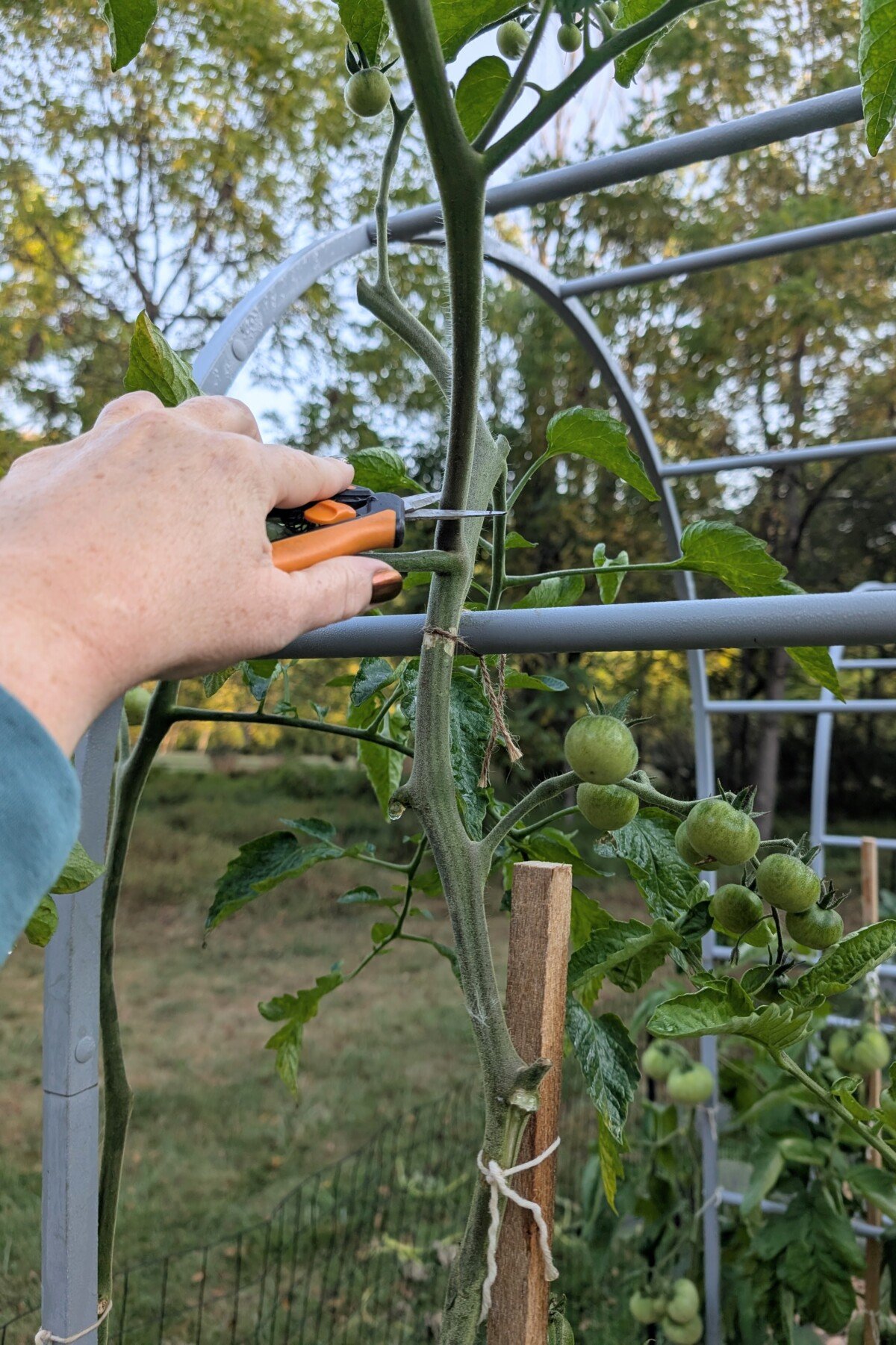
“Topping” sounds drastic, but it’s a simple process. You don’t need special tools, just clean, sharp garden snips or scissors.
Identify the main stem – Follow your tomato plant upward until you reach the tip of the main growing stem. This is where new flowers and leaves are still being produced.
Decide how far down to cut – Look for the highest cluster of developing tomatoes that you want to ripen. Go about one or two leaves above that cluster. Those leaves will continue to photosynthesize and provide shade as the fruit matures.

Make a clean cut – Snip the main stem just above that chosen leaf. You don’t want to leave a long stub, but don’t cut too close to the fruit cluster. A half inch of stem above a leaf node is perfect.

Check for new side growth – Now comes the fun part. Often, tomatoes don’t get the message right away and will continue to produce crazy side growth. Continue to pinch these off as they appear; otherwise, the plant will keep trying to grow instead of ripening fruit. (I do this once a week.)

Aftercare Matters Too
Topping works best when you pair it with a little extra late-season TLC. Here are some follow-up steps to make the most of your September tomato crop:
Water consistently. Dry summers followed by heavy fall rains can cause fruit to crack. This is the one time of year when it’s okay to water your tomatoes sparingly but frequently. Aim for steady moisture.
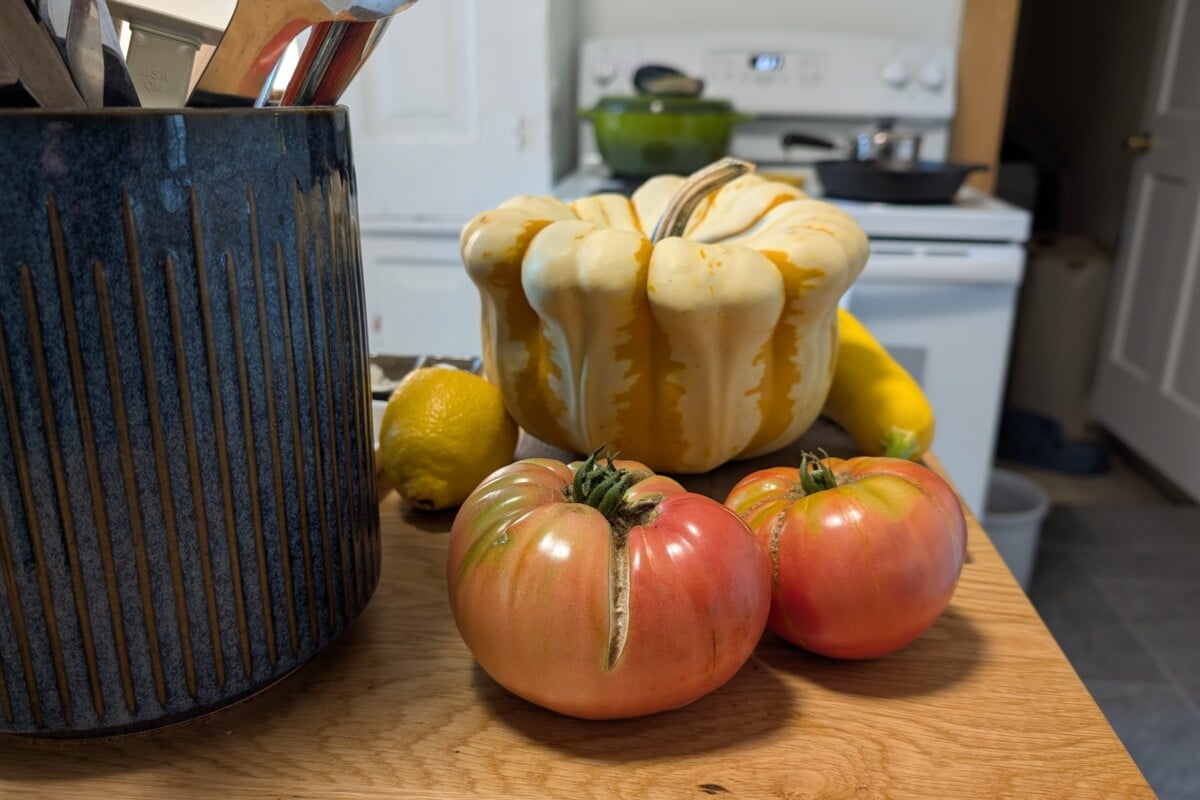
Harvest often. Pick fruit as it ripens. Even tomatoes that are mostly colored can finish ripening indoors. This is called the breaker stage. Picking tomatoes at this stage frees up plant resources for the greener fruit still hanging on.
What About Those Green Tomatoes?
Topping in September will definitely get you more ripe tomatoes, but you’ll probably still have a few green tomatoes left when frost comes. That’s not a bad thing. Green tomatoes are great in classic recipes like fried green tomatoes or green tomato relish.
A Simple Step with Big Rewards

By September, your plants need a nudge to stop chasing endless growth and focus on finishing what they’ve already got going on. (Wait, are we still talking about tomatoes or me?) A quick trim at the top tells them it’s time to wrap things up. The payoff is more ripe, flavorful tomatoes and fewer green ones.
So, grab your gloves and pruners, and let’s top those tomatoes. It’s the easiest September chore you’ll do in the garden.
Get Garden Notes From Tracey, Right to Your Inbox
Pull up a chair on the front porch. Join 54,000+ gardeners who get Tracey\'s friendly notes, seasonal to-dos, and hands-on tutorials three times a week.