

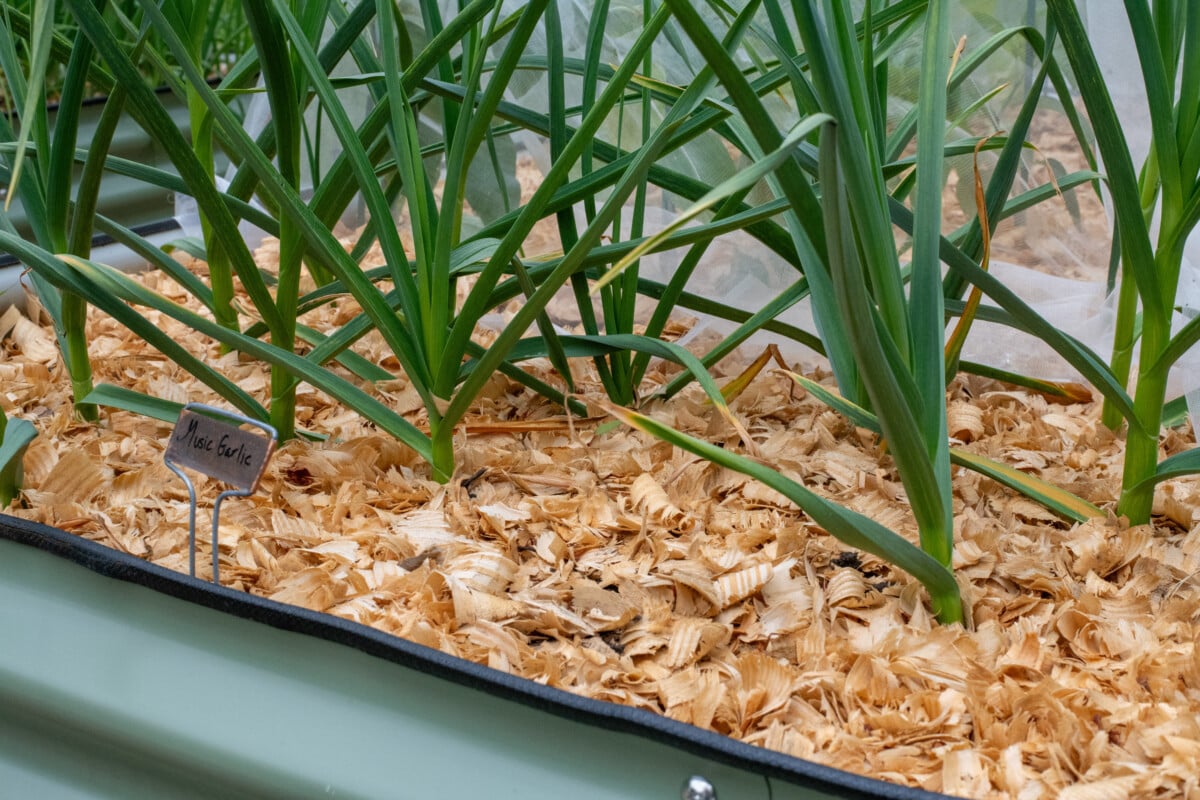
Once you realize what a game-changer it is to mulch your garden, the quest for the best mulch material begins. Well, you can stop searching, my friends, because I’ve found it, and my garden looks amazing. I’m done with all other mulch materials. This stuff is lightweight, it’s cheap and easy to find in massive quantities – it’s pine flakes.
What? Seriously, Tracey, as in the animal bedding?
Yup, my friend, that’s the stuff.
Oh, I know. I can already see a bunch of you rolling your eyes and saying, “But wood ties up nitrogen in the soil.” Trust me, friend. It’s going to be okay. Buckle up for my TED Talk on why pine flakes are the best mulch out there, and why it’s the only mulch I use in my vegetable garden.
First, a Rewind
For the longest time, I didn’t mulch my garden at all. My dad is an organic gardener. He taught me quite a bit about gardening. He had a downright impressive compost heap and a garden that the Rodale Institute would approve of. But he never mulched, so it was something I didn’t feel the need to do either.
Eventually, I came to mulching out of a desire to be the laziest gardener possible and still have a garden full of happy vegetables.
The Problem With Mulching
The problem was finding enough of my chosen mulching material to cover my whole garden. Apparently, I’m not alone in this. It’s a common issue for gardeners trying to find an accessible and inexpensive mulch material.
Yes, mulching is great, and there are a lot of benefits, but if you have even a modest-sized garden, sourcing enough mulch inexpensively can be a pain.
I started with grass clippings from the yard, but it was a mess and ineffective. For one, despite having a huge lawn at the time, there were never enough clippings to mulch the whole garden. It would also blow away as it dried out or introduce weeds in my garden, if the grass had gone to seed when it was mowed.
Chopped leaves were never an option as we only had one large shade tree on the property, an oak, and I found myself again without enough mulch to be effective.
I eventually settled on straw because it was cheap and I could buy a bale or two easily.
Big mistake.
No matter what they say, there are always seedheads in the dried straw. It is, after all, the stalks leftover from cereal grains. There will always be missed seedheads of wheat, barley, etc. I was essentially planting weeds in my garden with every layer I put down.
Also, straw bales are heavy! I always needed my partner’s help buying them and getting them out to the garden.
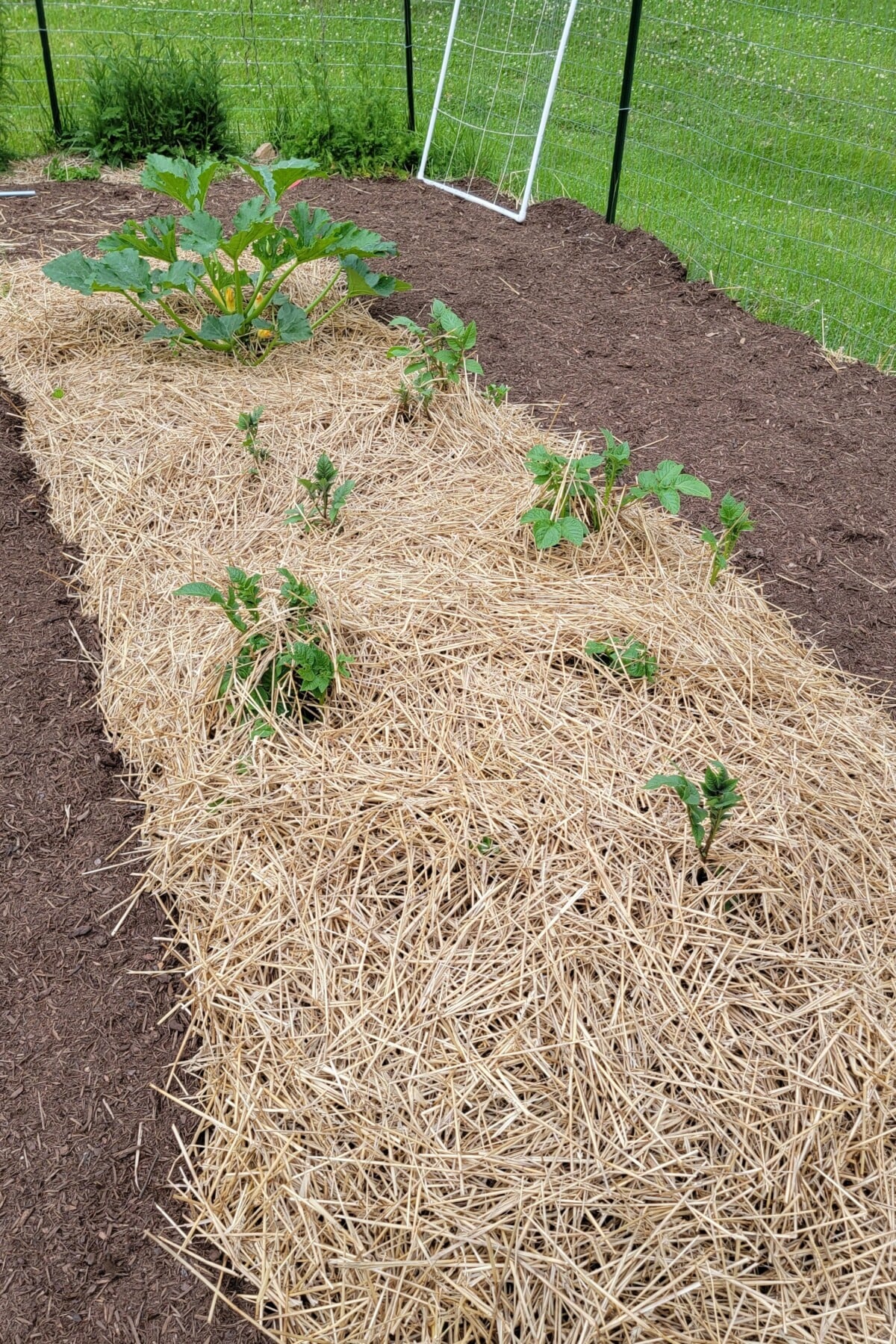
And then there were the slugs.
Did you know that if you record yourself saying ‘straw mulch’ and play it backward, it says ‘slug commune’? At least, that’s what it felt like every time it rained. Whenever I used straw mulch, I had so many slugs. And we’re not talking about the little buggers either. I’m talking about the huge fat ones that were an inch and a half to two inches long.
I mean, sure, beer traps work great at eliminating slugs, but for all the beer traps I was setting up, it felt more like I was running a craft brewery for slugs in my garden.
Enter Pine Flakes
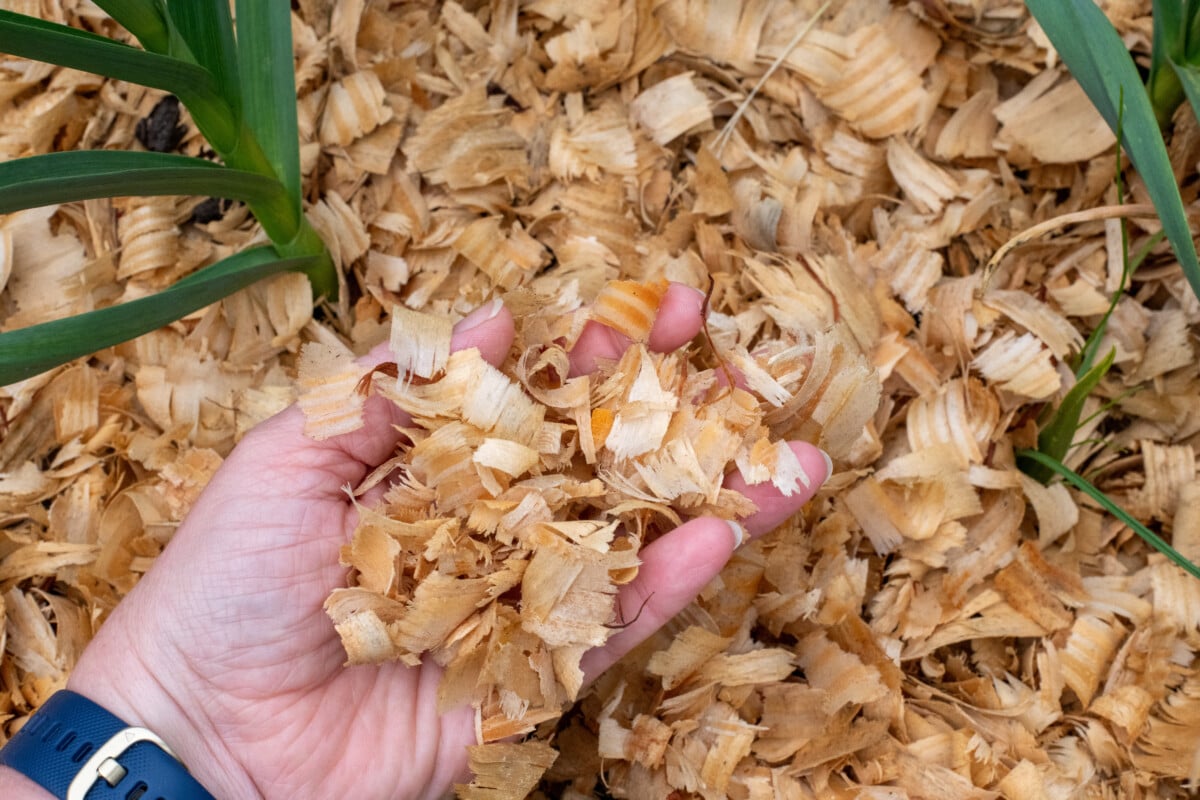
I finally came to pine flakes as a solution in a fit of rage and desperation. I had spent an entire weekend pulling up the sprouts of whatever cereal grain my straw had come from. Eventually, in my sweaty, exhausted (and rather foul-mouthed) state, I pulled it all up—all the straw. I was done.
Bare soil had to be better than the Sisyphean task of trying to keep my mulch free of weeds and slugs.
At the time, I had chickens, and we used big bags of pine flakes from Tractor Supply to do the deep litter method. We had an extra bag in the garage, so I grabbed it and started spreading it around my vegetables.
I expected the worst. After all, we’re all warned about mixing wood chips into the soil. We’re told that wood chips will tie up nitrogen and starve our plants. But at that point, I was so frustrated I honestly didn’t care.
Then I waited for all of my plants to be deprived of nitrogen and die.
But they didn’t. They kept right on growing. Of course, the squash died, but that was the year I had a huge infestation of squash vine borers. They were doomed before the mulch switch.
The next year, I started out with pine mulch from the get-go, and the rest, as they say, is history. It’s all I will use in my vegetable garden now.
I had a very good friend ask me about mulching his garden this past week. We did a video call, and I walked around my garden extolling all the benefits of using pine flakes. All the while in my head, I’m thinking, “I need to share this with my readers, too.”
So here you are. Just pretend we’re on a video call and I’m entirely too excited about little curls of pine.
Pine Flakes Are Life Changing
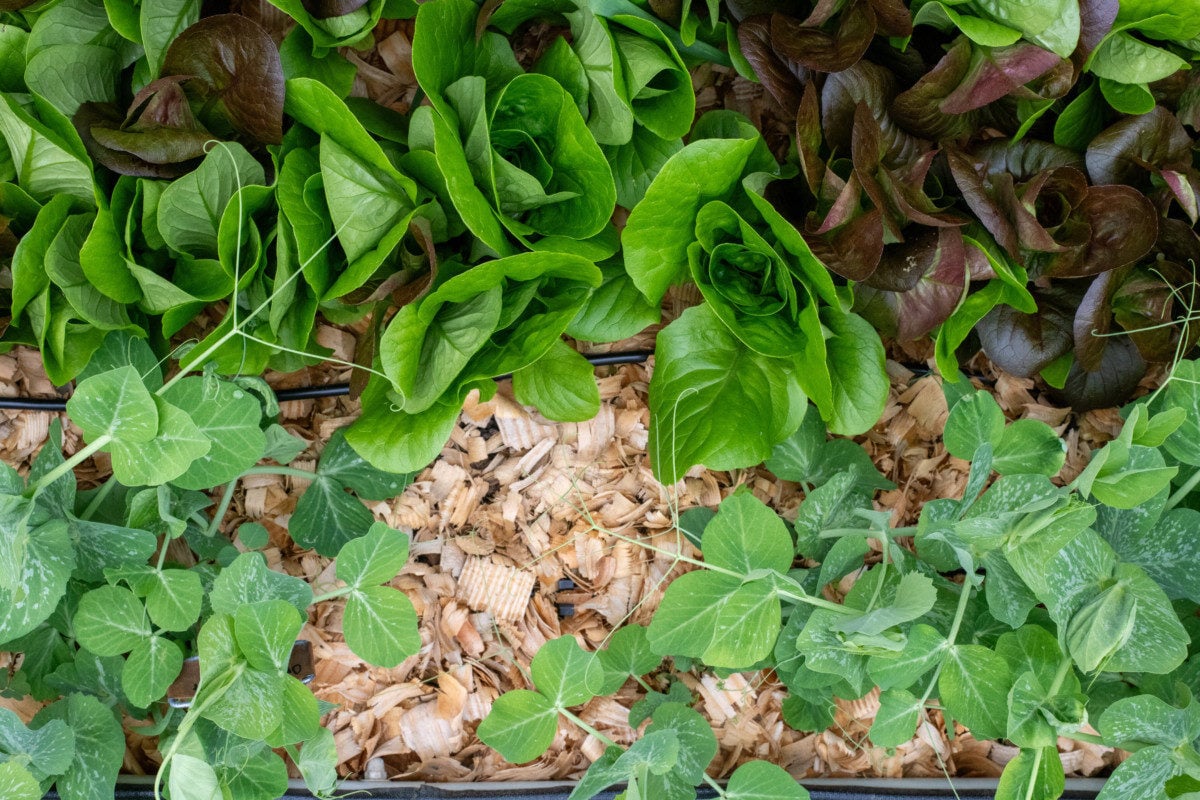
If there were one thing that has made gardening so much easier, for me, it would be a really close contest between using dripline irrigation and using pine flakes as mulch.
Let’s get the big one out of the way first.
Pine Flakes Do Not Tie Up Nitrogen
For years, we’ve been warned away from using any kind of wood mulch in the garden because “wood ties up nitrogen in the soil.” It’s one of those bits of gardening “wisdom” that have been repeated so often that most of us never stopped to question it.
Yes, wood will tie up nitrogen in the soil. But you have to bury wood for it to do that. We’re mulching with pine flakes. It sits on top of the soil. It doesn’t get buried. So no, using pine flakes as mulch will not steal nitrogen from your plants.
Even if you decide to scratch your pine flakes into the soil at the end of the season, and let them slowly decompose. It will only capture the nitrogen in the soil for about a year. There’s an easy workaround – use fertilizer, which nearly all of us do anyway. Scratch in some bloodmeal at the beginning of the season and you’re good to go.
Inexpensive & Easy to Find
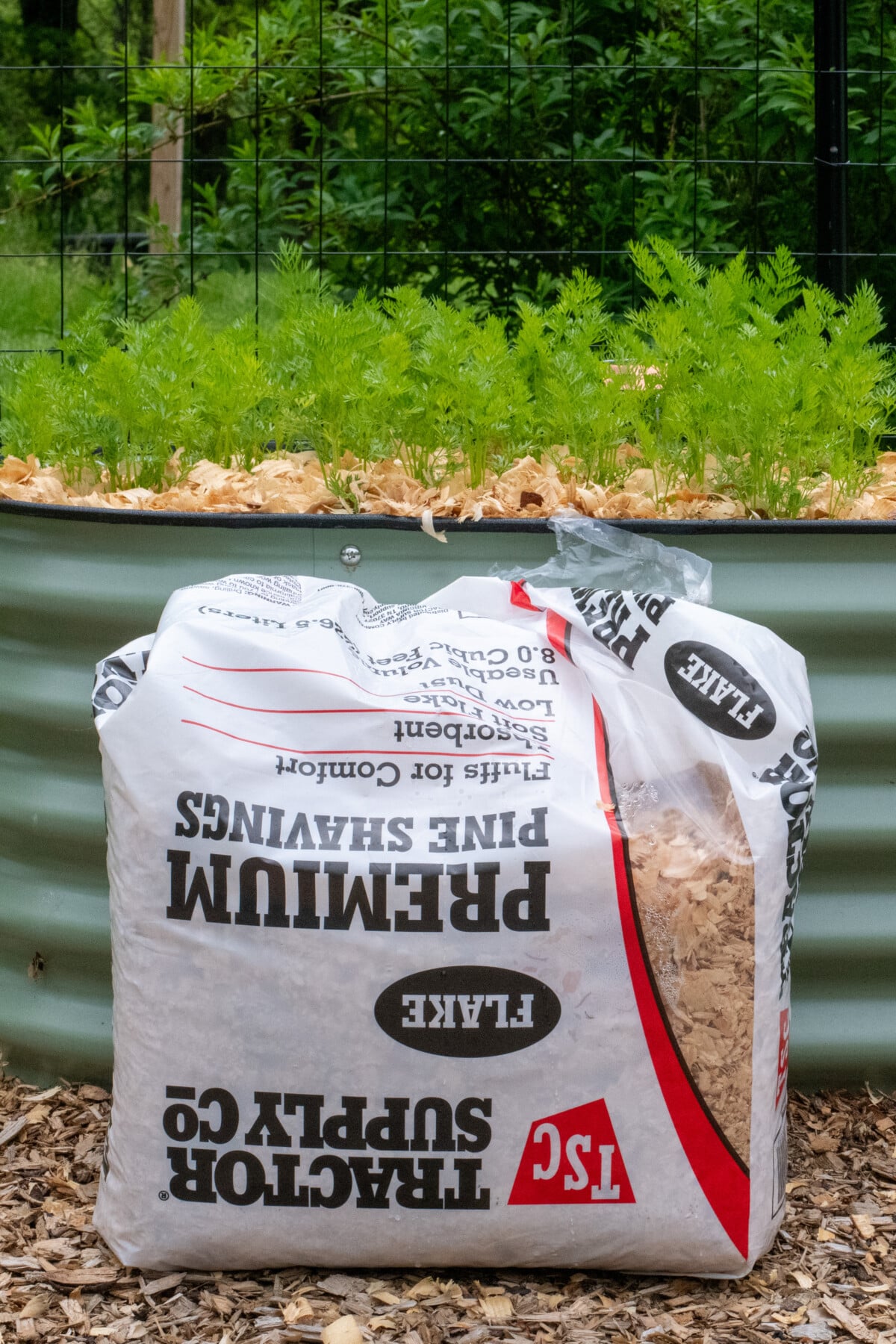
Let’s look at the cost. A compressed package of 8 cubic feet of pine flakes from Tractor Supply is currently $5.39 a bale at the time of this writing (May 2026). I can mulch my entire garden, 3-4” deep, with two bags of pine flakes. My garden consists of two 6.5’x3.5’ raised beds, six 2’x8’ raised beds and around a dozen 5-gallon buckets or similarly sized containers. With Pennsylvania sales tax, that works out to $11.43 a year for mulch. This price has remained pretty stable over the years, but even if, for some crazy reason, they doubled in price, it would still be the most cost-effective way for me to mulch my garden. (Heck, they could triple the price and I would still use it.)
I can easily find pine flakes, too. Even if you don’t have a Tractor Supply right up the road like I do, Rural King, Chewy.com, Ace Hardware and your local feed & animal supply store will have pine bedding.
No More Lugging Straw Bales
Pine flakes, even the big plastic, compressed bales from Tractor Supply, are incredibly lightweight. This means a lot to someone who is beginning to slow down a little. I would imagine it would make things easier for anyone who is aging or dealing with a mobility issue in the garden.
The Shape of Things
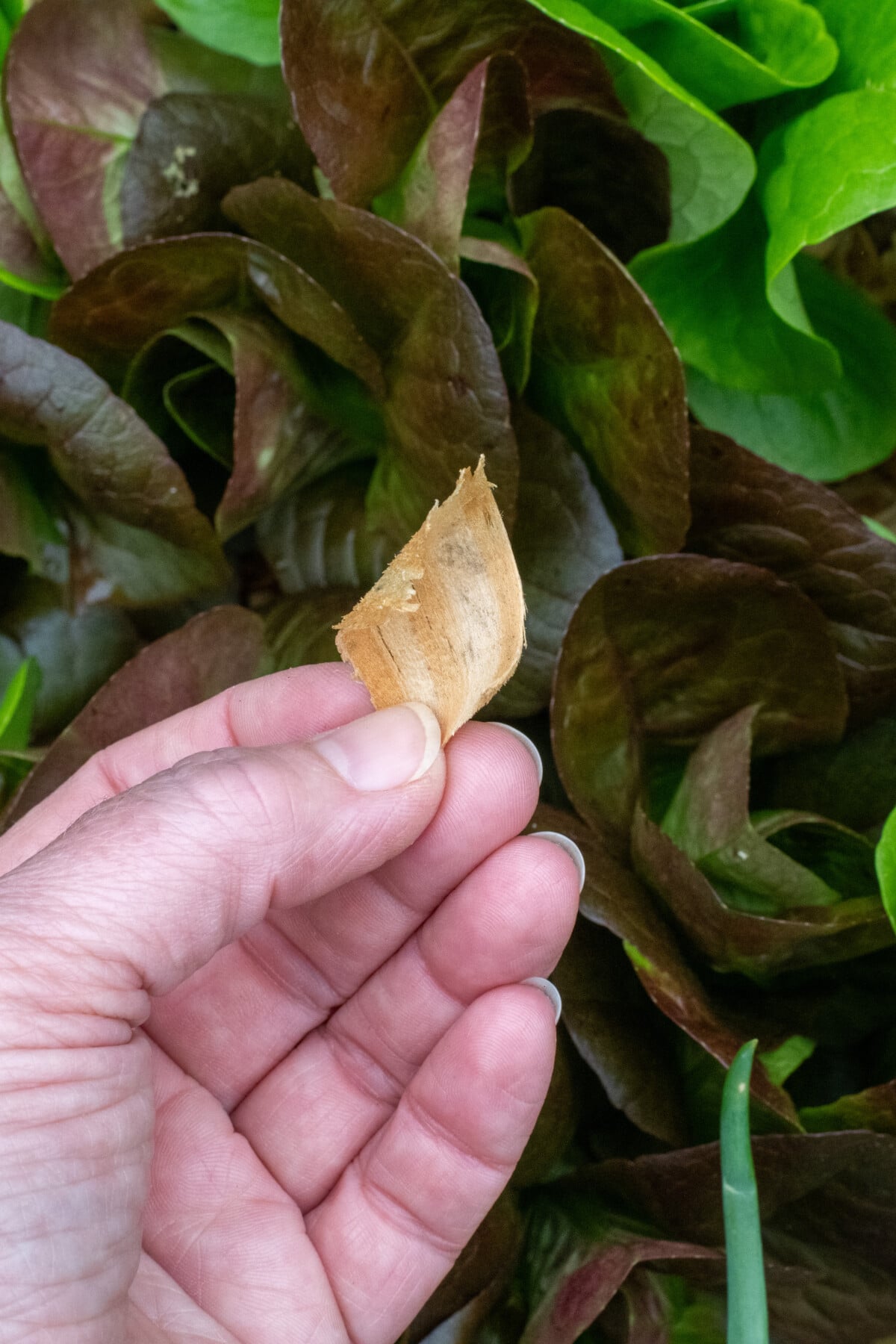
Part of why I love pine flakes is their shape. Unlike wood chips, which are, well, chips, or straw, which is long and thin, pine flakes are little curls.
Their natural shape does some incredible things in the garden.
Because the flakes are curls, they grab onto each other, locking the mulch in place. All I have to do is water it down well after applying it, and the mulch forms a lightweight mat. The pieces don’t blow all over the place. They stay where I put them, and it’s easy to put them where I want them.
I can also mulch directly around the stems of plants. There is enough airflow through the mulch to ensure stems don’t rot, but not so much as to let the soil dry out beneath.
This shape also means that the mulch never gets heavy. My mulch isn’t compacting my soil. No matter how hard it rains, the pine flakes don’t become matted and heavy, and that same trait also prevents my soil from developing a hard crust. This is essential for good germination rates.
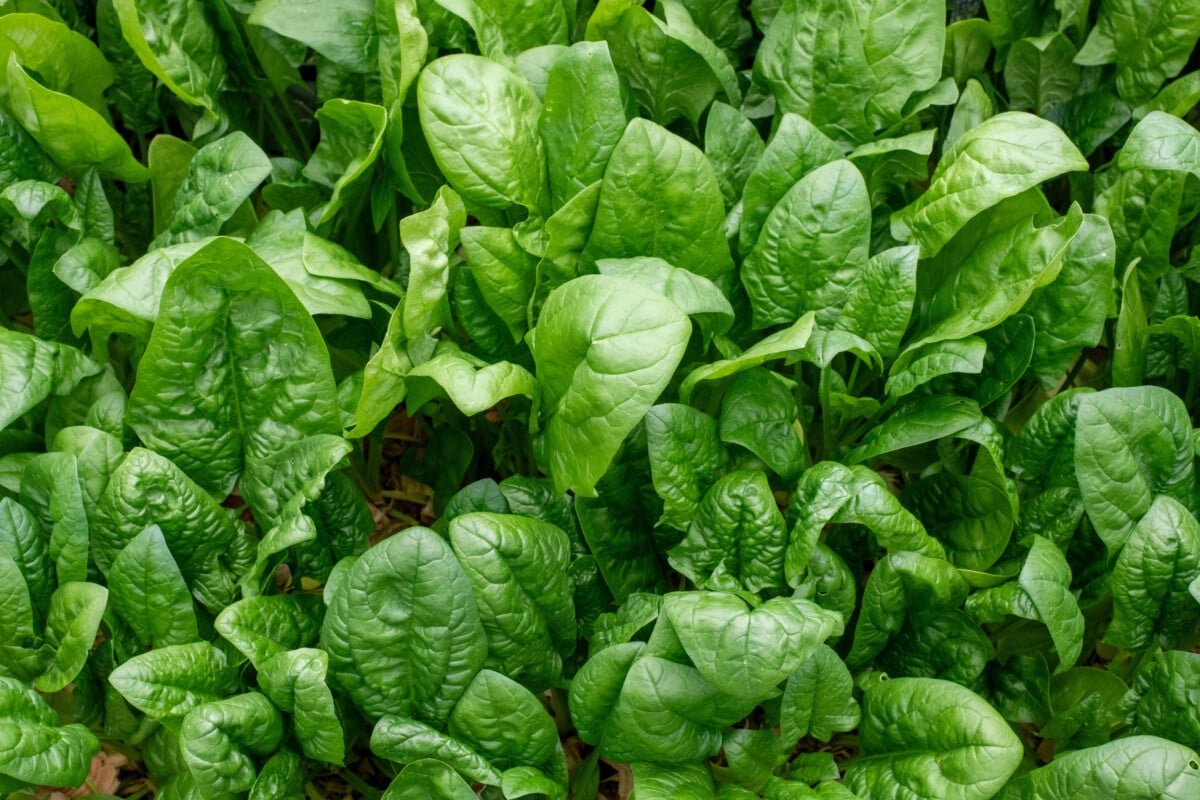
Pine Flake Mulch is Great for Seed Germination
This might be one of my favorite things about using pine flake to mulch my garden. I can prep my soil, sow seeds, and then mulch immediately. I don’t have to wait for the seeds to germinate and grow first.
I’ve noticed that since switching to pine flake mulch, I have much better germination rates, and it makes sense. The pine flakes are so light that the tiny emerging seedlings can easily push up through the mulch.
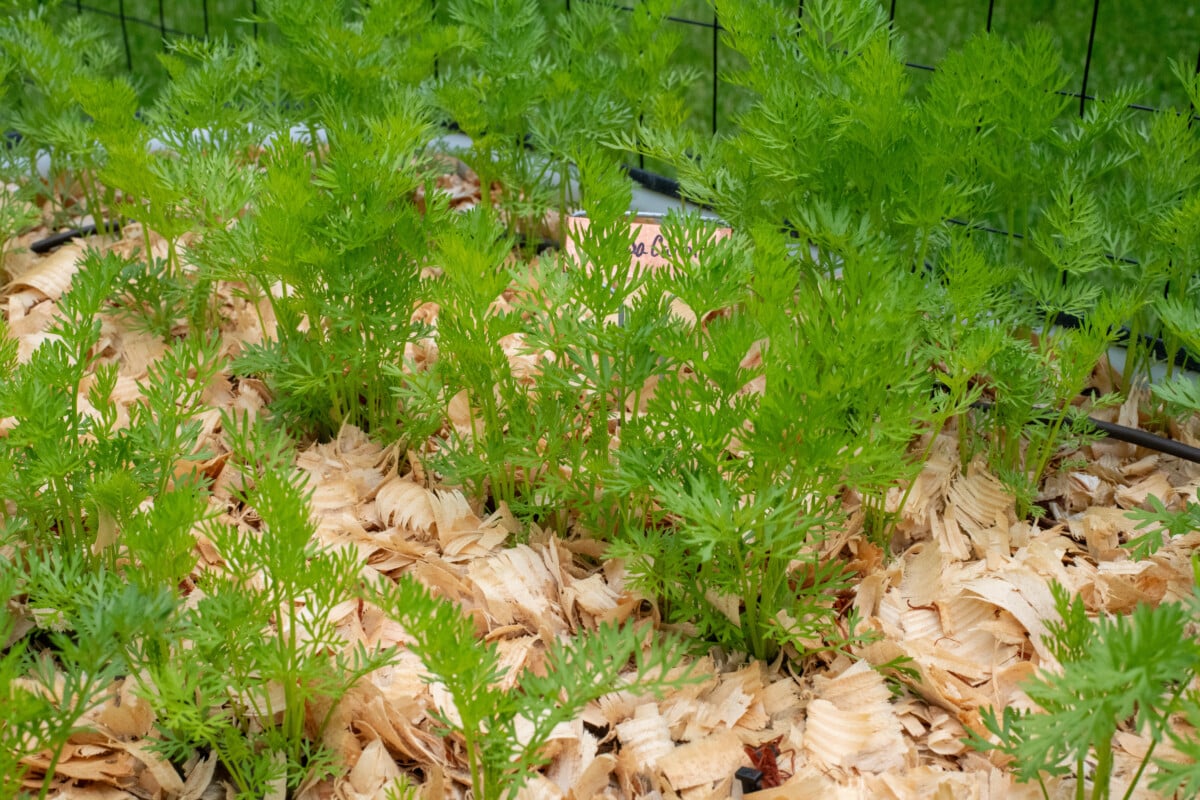
The mulch is protecting the soil beneath, so there is no hard, crusty layer that the seeds have to break through. And because I can sow and mulch immediately, that surface layer of soil where the seeds are stays moist, which is key for germination. I can’t tell you what a game-changer this has been for the vegetables that I direct seed.
No Introduced Weeds
I love the fact that the flakes do not introduce seeds into my soil, which I’m trying my best to keep weed-free. No leftovers from growing grains or bolted grass trying to take over my garden.
Suppresses Weeds
Weed suppression is one of the big benefits of mulching in the first place, and pine flakes do an amazing job.
Locks Moisture in the Soil
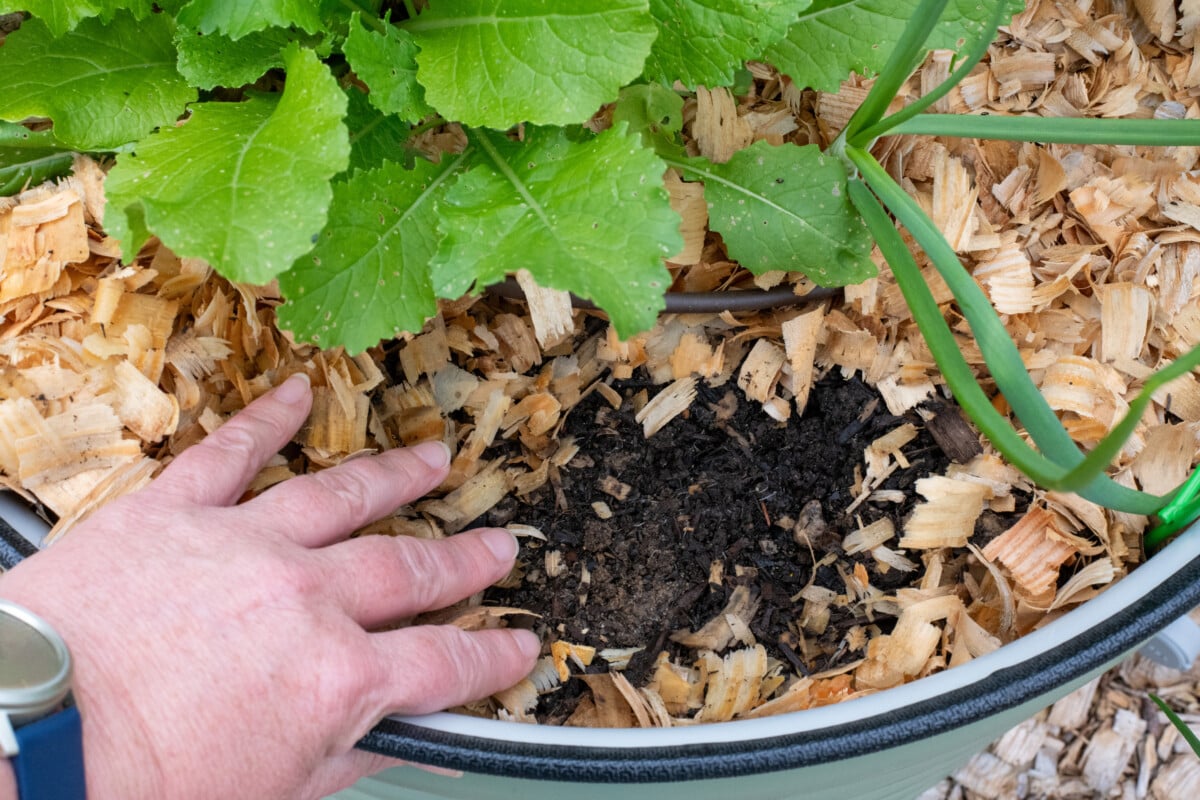
This is huge. I do not have to water nearly as often as I did before I started mulching. Another cool thing about using pine flakes for mulch is that they breathe, which means my slug problem is gone. The soil stays moist, but the mulch itself dries out quickly, leaving those little lettuce-munching jerks no place to curl up and hide.
Weeding is a Cinch
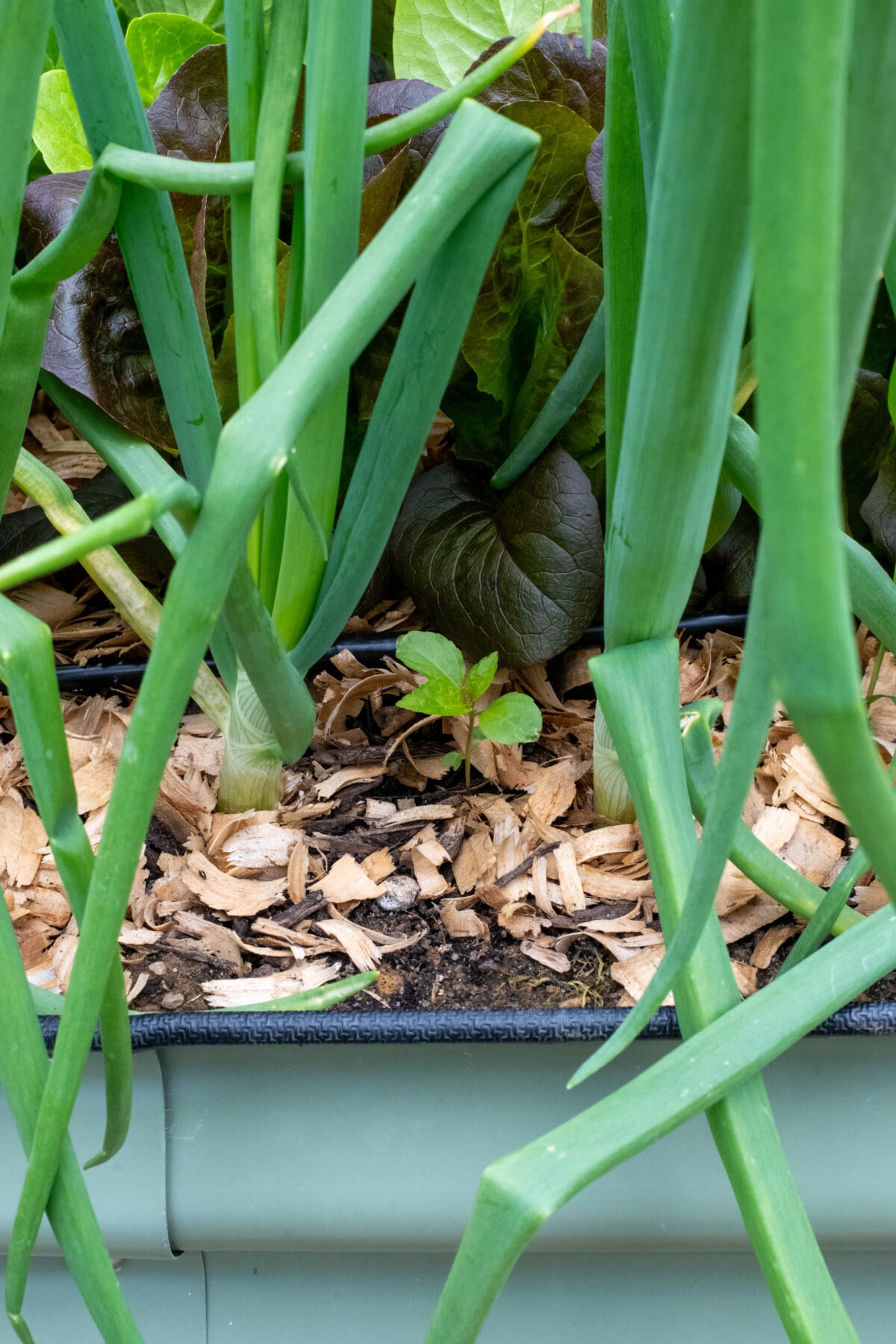
Oh, and because my soil stays nice and moist, the weeds that do show up are so much easier to pull up out of the ground. Not to mention, because I put my mulch down as soon as I sow my seeds, the weeds are super easy to spot, so I can pull them out before they become established and start stealing nutrients from my plants.
Clean Veggies = Fewer Soil-Borne Diseases
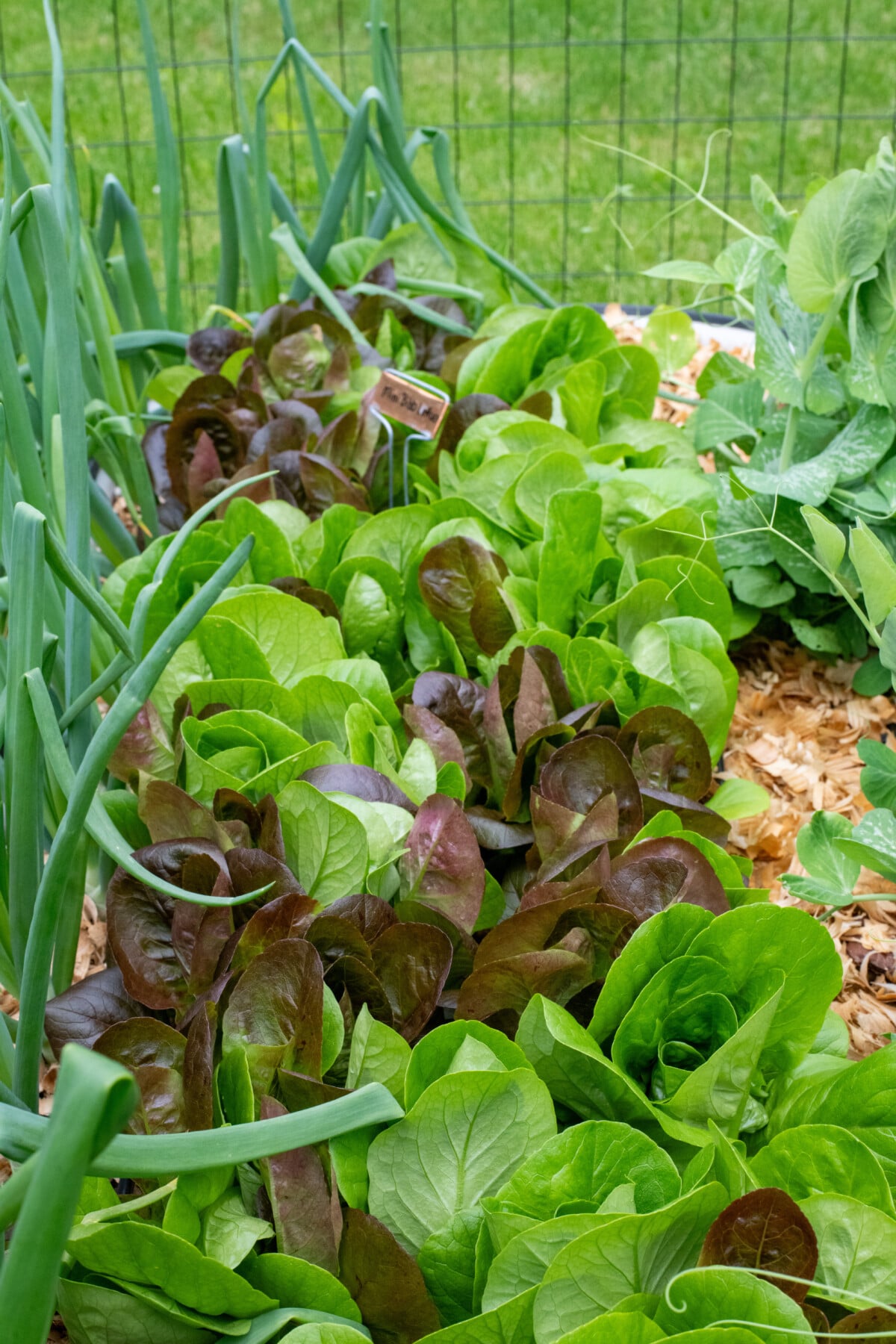
Finally, pine flake mulch makes for a beautiful garden. Now, I know that’s not the point. But I have to say it doesn’t hurt to walk around my garden each morning with my coffee, admiring my tidy, gardening-website-worthy garden. (Gosh! Maybe I should start writing for one.)
Vanity aside, there is a bonus to having a neatly mulched garden. My vegetables don’t get covered in grit and dirt from the rain splattering soil on them. This means washing my vegetables before we eat them is a cinch.
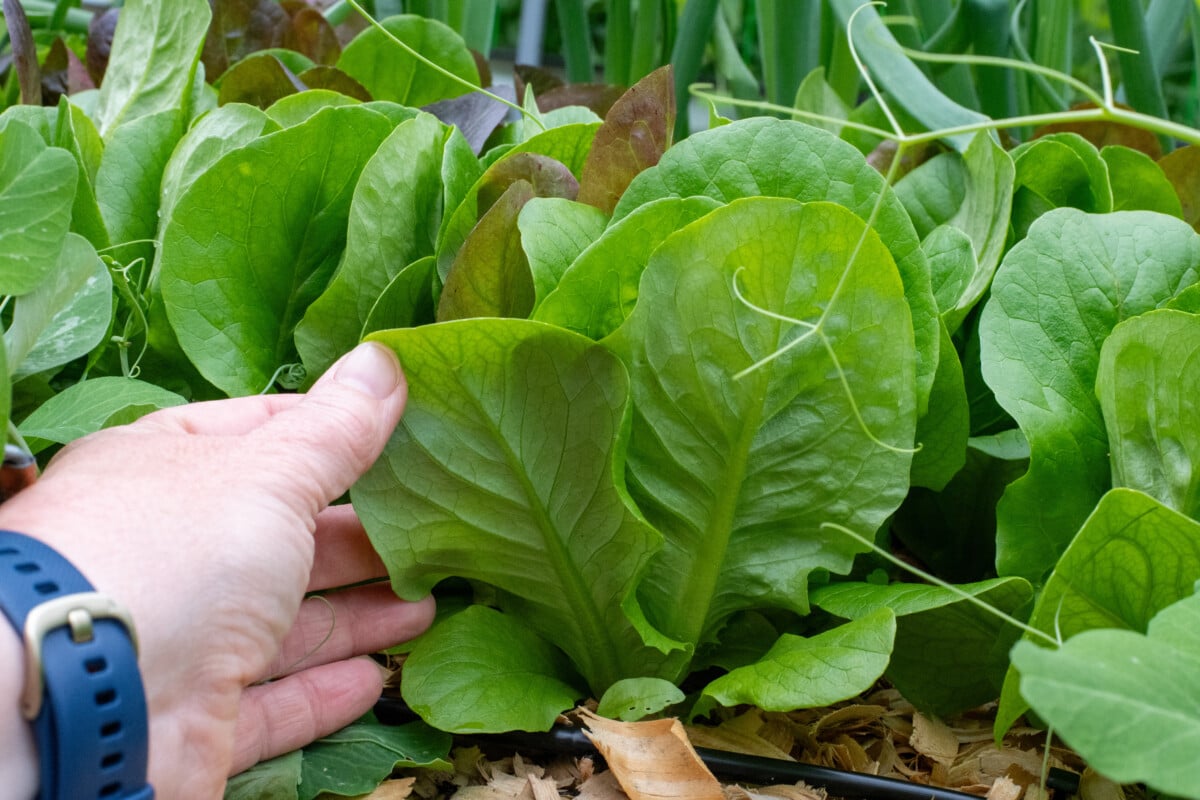
Even more important, I have fewer instances of soil-borne diseases showing up in my garden because the soil isn’t being splashed up on the bottom leaves of my veggies. The mulch dries out, even though the soil stays damp, which prevents the damp conditions where these diseases thrive.
Clear the Way
And this might be the silliest and most fun part of using pine bedding mulch. The pathways in my garden are made of wood chips. In the spring, if I want to amend the soil with compost or a slow-release fertilizer or the like, and I don’t want to dig the layer of mulch into the soil, I get out my little corded leaf-blower. With a few light passes, I’ve blown all the mulch off, and I end up adding another layer of mulch on my garden paths to keep weeds out. The soil stays put because I’m not aiming the blower down into the bed.
Of course, I can also just bury the flakes into the soil, which will add more organic matter.
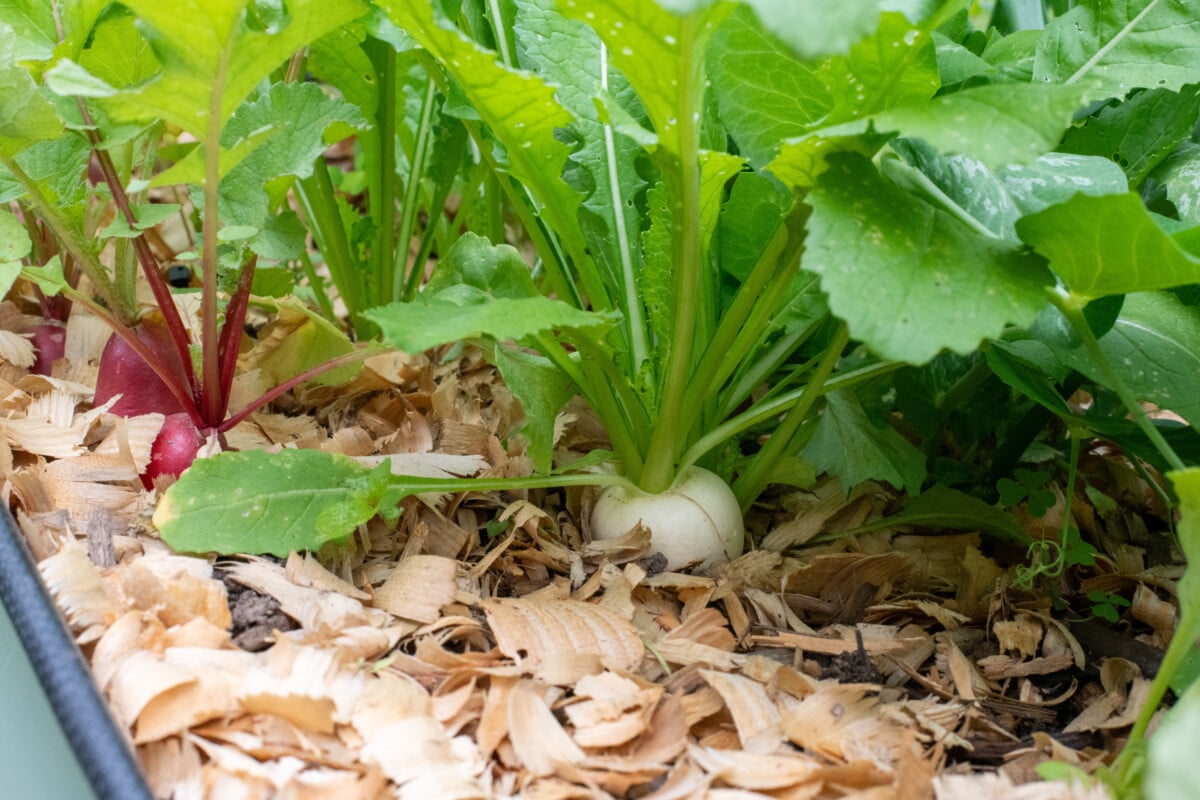
It’s taken me a long time to find the perfect mulch material, and as you can see by the length of this article, I can’t say enough good things about pine flakes in the garden. My beautiful, weed-free, moist-soil, tidy and disease-free, plenty-of-nitrogen, filled with happy, thriving veggies, pine flake-mulched garden.
Get Garden Notes From Tracey, Right to Your Inbox
Pull up a chair on the front porch. Join 54,000+ gardeners who get Tracey\'s friendly notes, seasonal to-dos, and hands-on tutorials three times a week.