

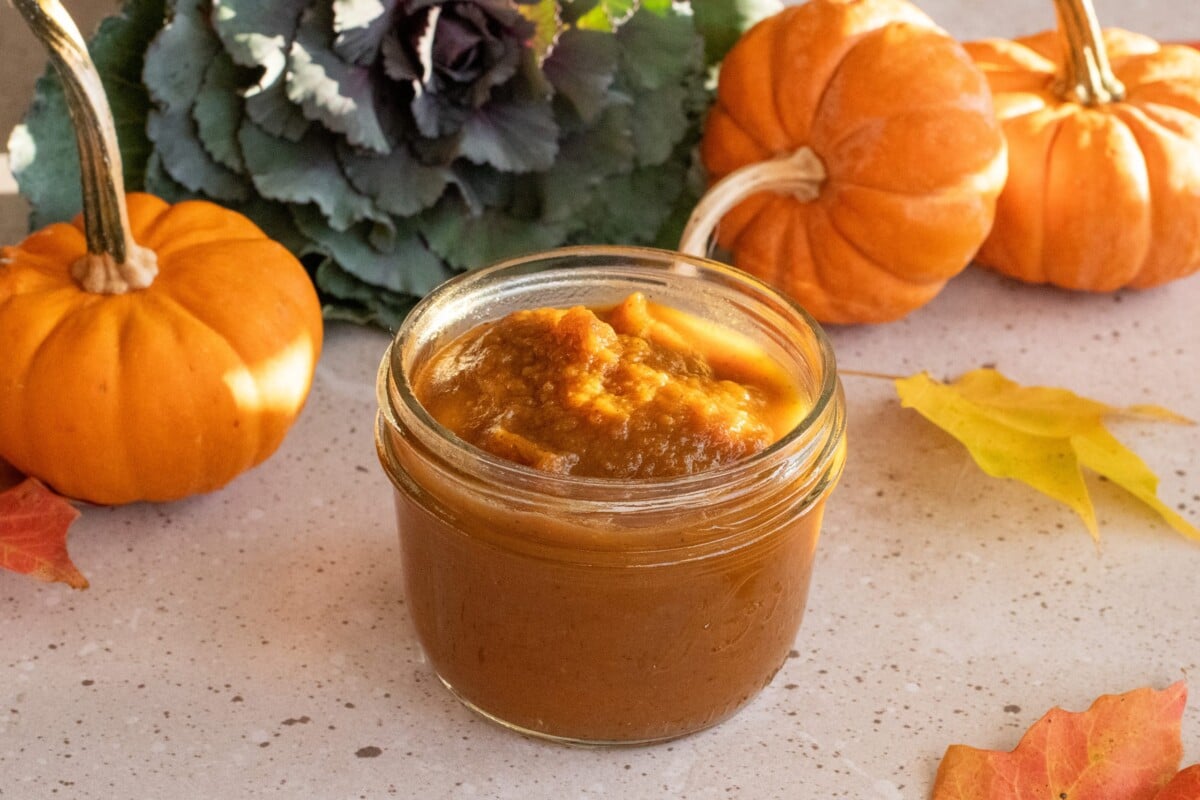
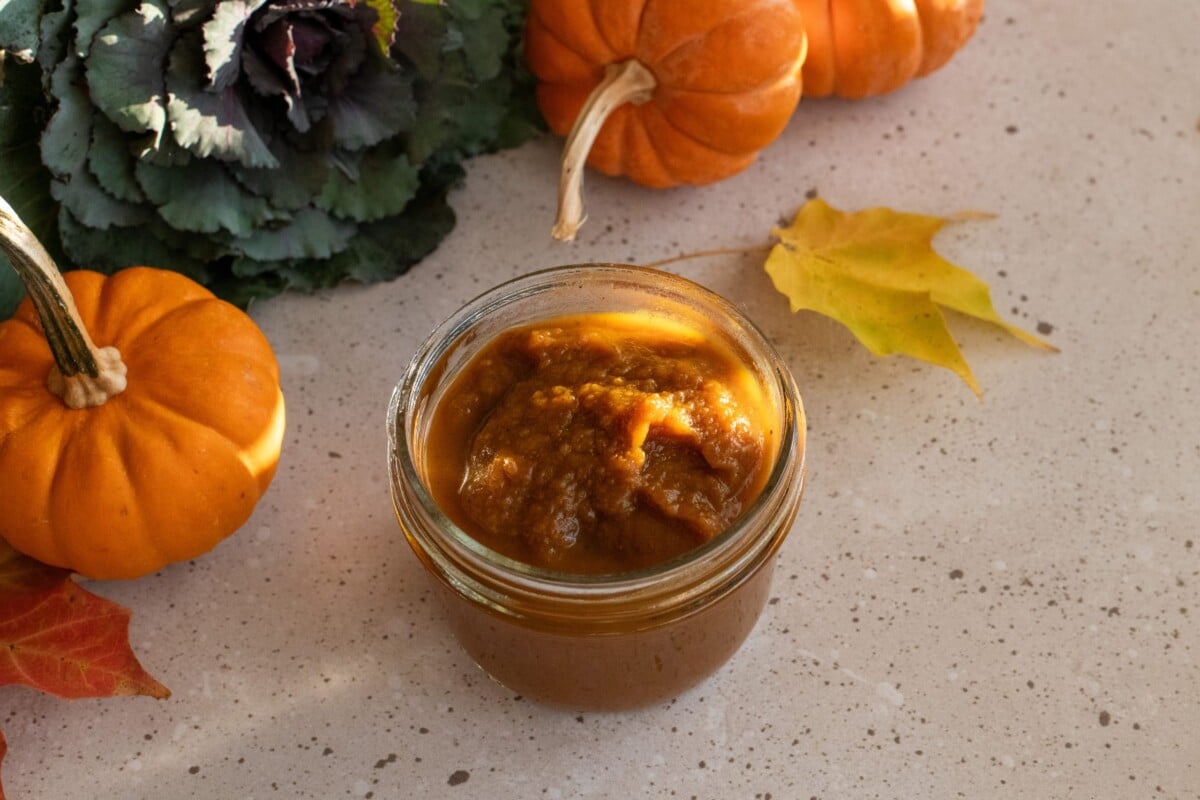
This is the best pumpkin butter you will ever eat. I know, it’s a bold claim, but it’s just that good. I’ve been making the same pumpkin butter recipe for years, and it’s wonderful. It’s like spreadable pumpkin pie. But last year, I had this crazy idea and changed three things in my recipe. Those little changes took my pumpkin butter from “Mmm, this is good,” to
“Tracey, I’m taking the rest of this jar home with me, and I need the recipe before I leave your house.”
Curious?
Good. Let’s get cooking.
Fresh or Canned Pumpkin
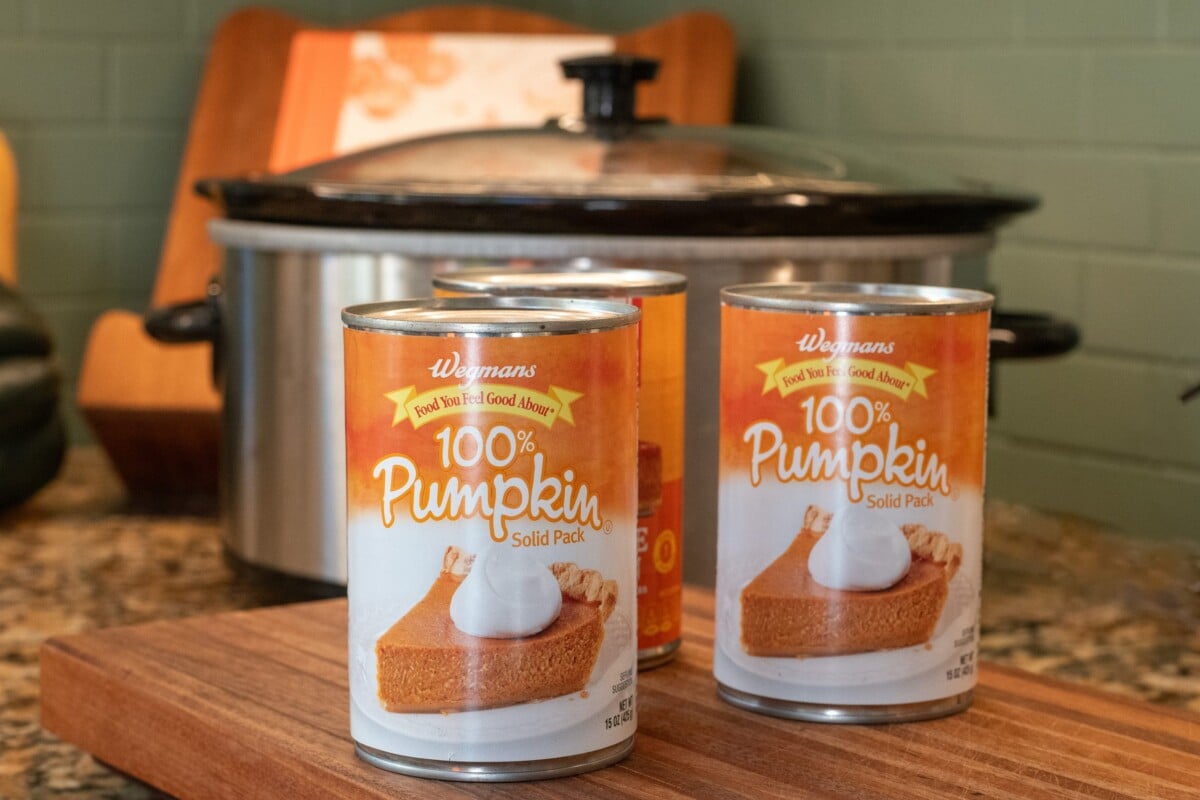
Honey, I am not the kitchen police. If you have time to be telling people this and that about what they do in their own kitchen, you need a hobby. You use whichever your heart desires. I have made this recipe with both canned pumpkin and fresh pumpkin, and no one said one was better than the other.
The only reason I could tell the difference between the two was that I was the one who made it. So, pick your pumpkin puree and get cooking.
(If you do use canned pumpkin, make sure it’s the plain pumpkin, not the pie filling that already has spices added to it.)
Baking Pumpkins
If you want to use fresh pumpkin, you’ll need to bake and puree it first. Speaking of things no one has time for, don’t waste your energy scooping out the seeds and the stringy flesh while it’s still raw. It’s much easier to bake the whole thing first and then scoop all of that out after it’s soft. You also end up with moister pumpkin puree this way.
(Unless you want to roast the seeds for snacking. Then scoop those out first.)
Wash your pumpkin, pat it dry, and remove the stem. (A well-aimed whack of the stem against the edge of the counter usually does the trick. It also lowers your cortisol.)
Slice the pumpkin in half vertically and place the halves on a parchment-lined sheet pan with the cut side down. Now roast it in a 375F-degree oven for 30-45 minutes. You’ll know it’s done when you can easily pierce the pumpkin skin with a fork.
Take the pumpkin out of the oven to cool.
As soon as it’s cool enough to handle, flip the pumpkin over. This allows the steam to escape, rather than being reabsorbed by the pumpkin.
Homemade pumpkin puree tends to have a higher moisture content than store-bought pumpkin puree, which is great if you are making something that you want to be moist, pumpkin muffins or cookies, for instance.
But since we’re cooking moisture off when we make a fruit butter, the more moisture we can get out beforehand, the better.
Once the pumpkin has cooled to lukewarm, scoop out the flesh and seeds. Scoop the cooked pumpkin out of the shell into a bowl and mash it with a potato masher, potato ricer or pulse in a blender. Voila! You have just made pumpkin puree, my friend.
Note: For a moister pumpkin butter, let the pumpkin halves cool completely cut-side down. The pumpkin will reabsorb most of that moisture as it cools, giving you perfectly moist puree.
The Big Change
You’re probably wondering what changes I made that put this pumpkin butter in otherworldly status?
First, I doubled the fresh ginger. Ginger and pumpkin go so well together.
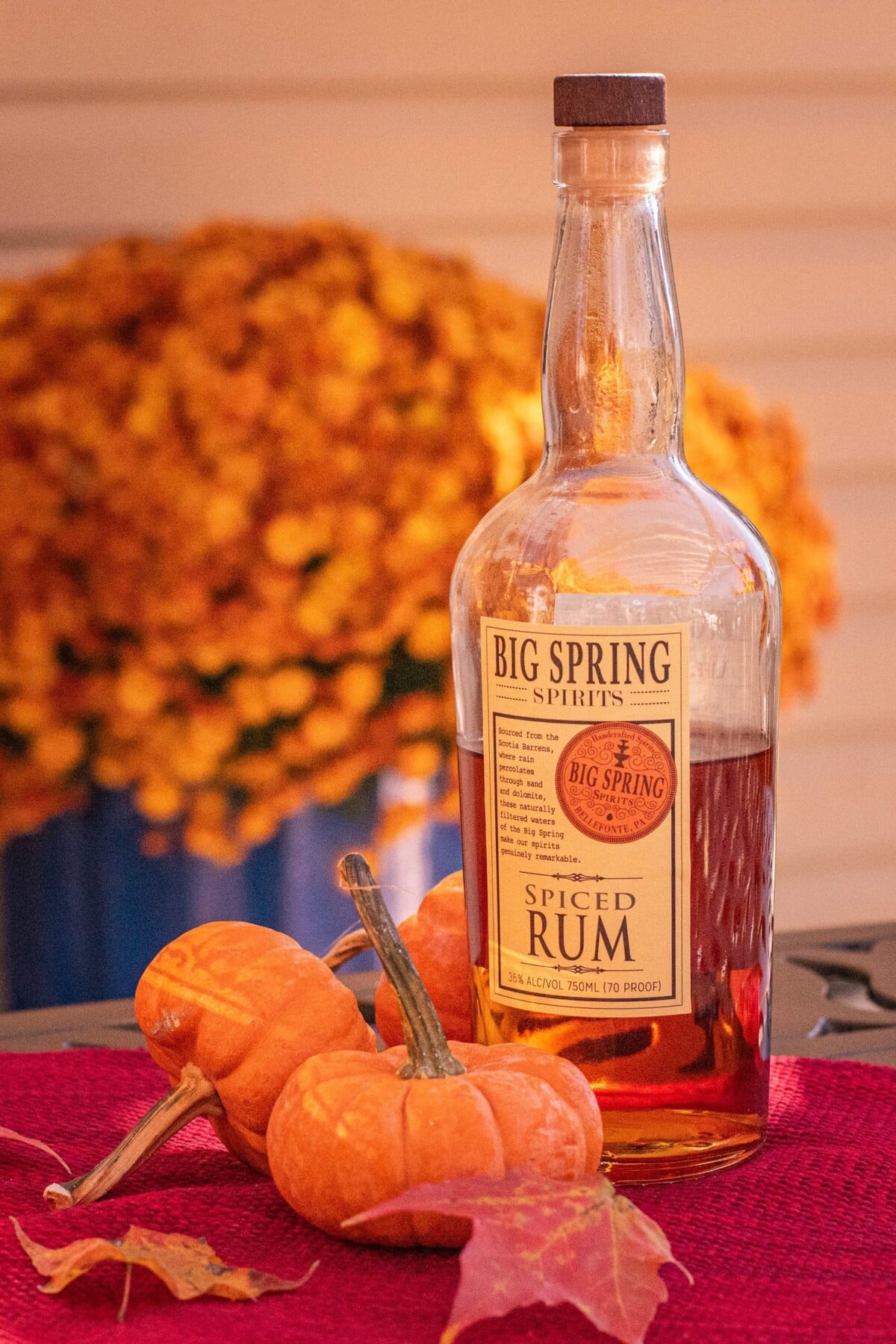
I also added rum. The natural flavors in rum gave the pumpkin butter a bit of depth and complexity you don’t typically find in foods made with pumpkin. Because we’re cooking the pumpkin butter for a long time, the alcohol cooks off, leaving the flavor behind without the booze.
Finally, right before I turned off the heat, I stirred in three tablespoons of butter. Fat does wonderful things to foods with these kinds of warming spices. The fat allows the cinnamon and clove to really open up, and even though it’s a small amount, the butter gives the pumpkin butter a silkier mouthfeel.
All throughout the holiday season, my improved recipe was met with rave reviews, requests for the recipe, and more than one jar disappearing at the end of a party. I’m getting ahead of the game this year and making two batches to put in the freezer, so I have quick gifts on hand.
Where are the Canning Instructions?
Pumpkin butter can’t be canned for a few reasons, especially in my recipe. For starters, it’s a low-acid food. Pumpkin doesn’t have enough acid to prevent the growth of bacterial spores.
The pumpkin butter is too thick. Water bath canning doesn’t create enough heat to reach the center of the jar to kill spores reliably.
And the butter means you definitely can’t can it, as you can’t can dairy.
For this recipe, we’re going to freeze our pumpkin butter. It freezes beautifully right in the jar. So, there’s really no downside here. Plus, it’s less work, which I love. This time of year, I have no time for canning. I either need four more hours in a day or two more arms. Probably both.
Now, it’s on to the laborious task of making pumpkin butter. Just kidding! Not only is this the best-tasting pumpkin butter, but it’s also the easiest to make because we are going to cook it low and slow in our slow cooker. However, if you give it as a gift, be sure to casually mention that it took you several days of slowly stirring the pumpkin butter by hand and that, to achieve the perfect texture and flavor, it must be cooked over an open fire in the open air, and that you still have splinters from adding firewood to the cookfire in the dark.
Ingredients:
- 6 cups homemade pumpkin puree
- or 3 15 oz. cans of store-bought pumpkin puree, not pumpkin pie filling (which is already spiced)
- 2 cups apple cider or apple juice
- 1/3 cup of rum, white or spiced (optional)
- 1 1/2 cups brown sugar, packed
- 2 tsp ground cinnamon
- 1 tsp grated fresh ginger or ½ tsp ground ginger
- 1/4 tsp ground nutmeg
- 1/2 tsp ground cloves
- 1/4 tsp salt
- 3 tbsp butter
Directions:
Set your slow cooker to low. Place all ingredients in the slow cooker, except for the butter and stir gently until well combined. I find a whisk works well for this first stir to incorporate everything. Scrape down the sides with a rubber scraper. Place the lid on the cooker, and set a timer for four hours.
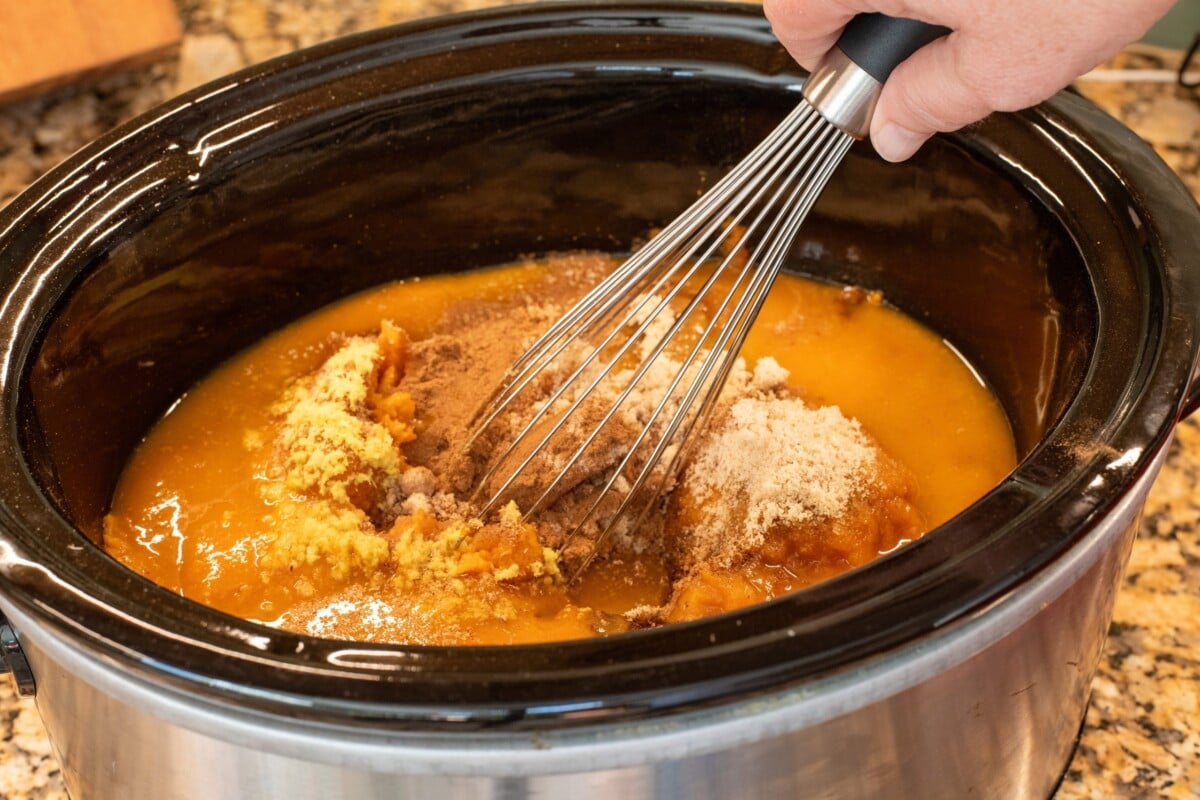
Check the pumpkin butter every hour and give it a good stir. Older slow cookers are notorious for hot spots; this is why we’re using the low setting and checking on it periodically.
At the three-hour mark, if your pumpkin butter still looks runny, leave the lid slightly ajar so extra moisture can cook off. Just keep in mind that the pumpkin butter will thicken as it cools. We’re looking for a consistency that doesn’t run off your spoon.
When the pumpkin butter has finished cooking, stir in the butter until it’s completely melted and emulsified in the butter.
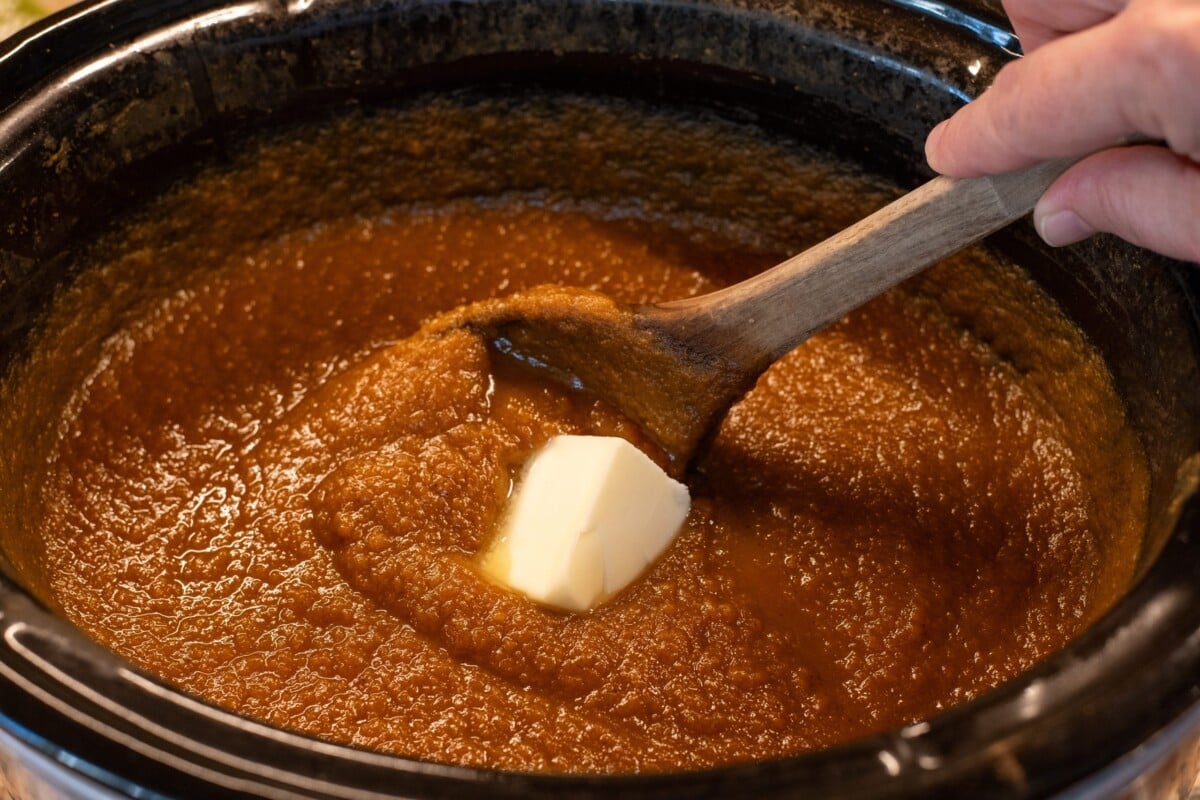
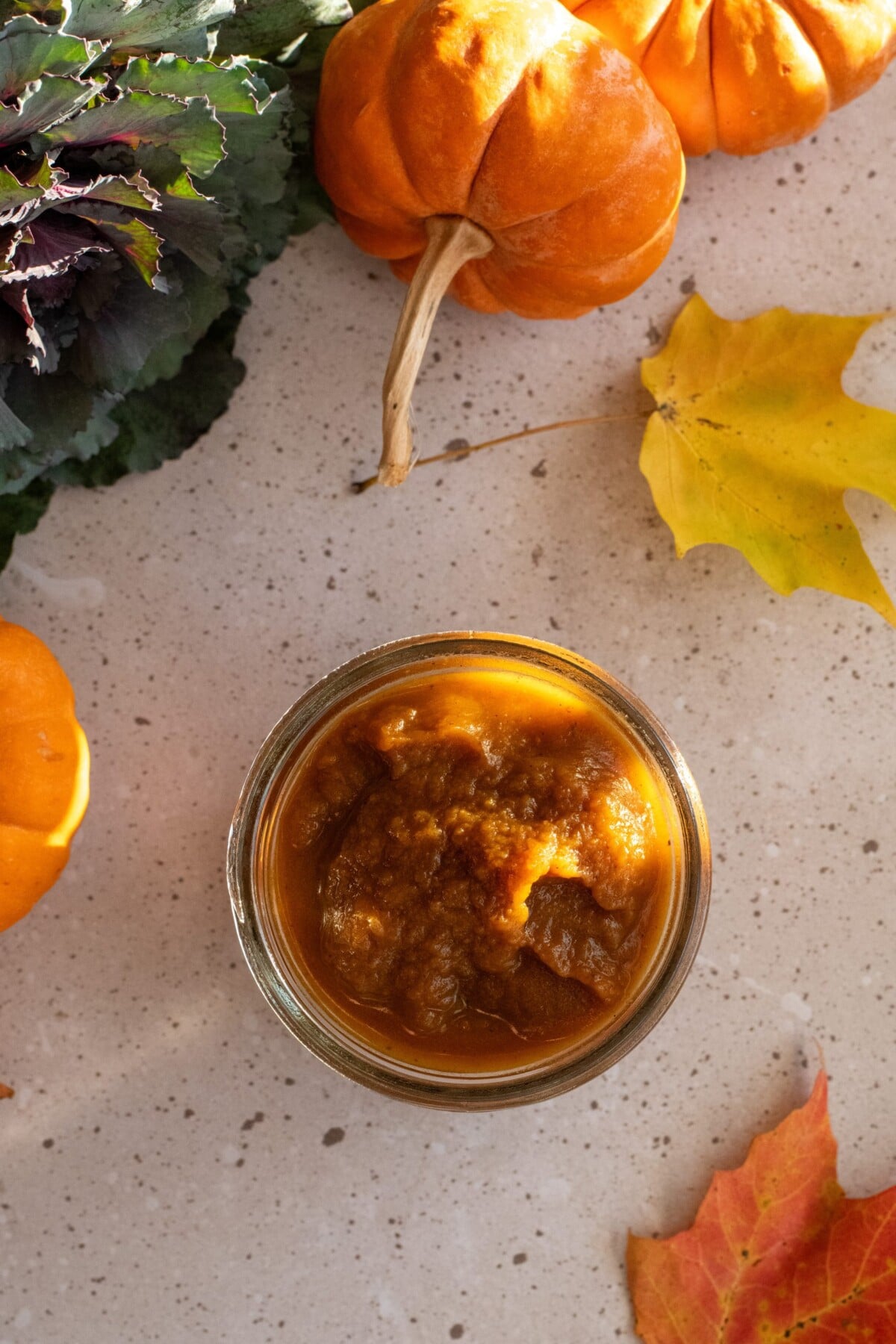
If you like a more rustic pumpkin butter (as pictured here), then you’re finished. If you want something a little smoother, you can use an immersion blender to carefully pulse the hot pumpkin butter into a smoother consistency.
Once the pumpkin butter is finished and has cooled to room temperature, ladle it into clean, sterilized half-pint jars. The jars do not need to be hot, since we’re freezing the pumpkin butter. Leave 1” of headspace for expansion. Wipe the lip of the jar to remove any oopsies.
Whenever I am freezing a liquid in canning jars, I always put it in the freezer unlidded, and allow it to freeze solid before putting the lids and bands on. I’ve never had a jar break this way.
When you take a jar out of the freezer to enjoy, give it a good stir once it’s completely thawed. It may separate a little otherwise.
The pumpkin butter will keep in the fridge for three weeks unopened and six months in the freezer. Once you open a jar, it should be used within a week. (This is why we’re putting it in half-pint jars; using it up in a timely manner is easier to do.)
Serving Suggestions
- One of my favorite ways to eat pumpkin butter is on buttered toast. Simple. Easy to make. It’s the perfect pumpkin butter delivery vehicle.
- Whip one cup of pumpkin butter with a block of cream cheese and serve with graham crackers as a dessert dip. It won’t last long.
- Pumpkin butter goes great with a cheese board. I don’t know why, but pumpkin seems to complement every cheese. Except for maybe the kind that comes individually wrapped in plastic sheets.
- And speaking of cheese, pumpkin and brie are a match made in heaven. Serve your baked brie slathered with pumpkin butter and toasted walnuts. Add some salty crackers like Triscuits, and you’re good to go.
- Bring pumpkin butter to the breakfast table to go on pancakes and waffles.
- And don’t forget to stir some into your coffee or hot cocoa.
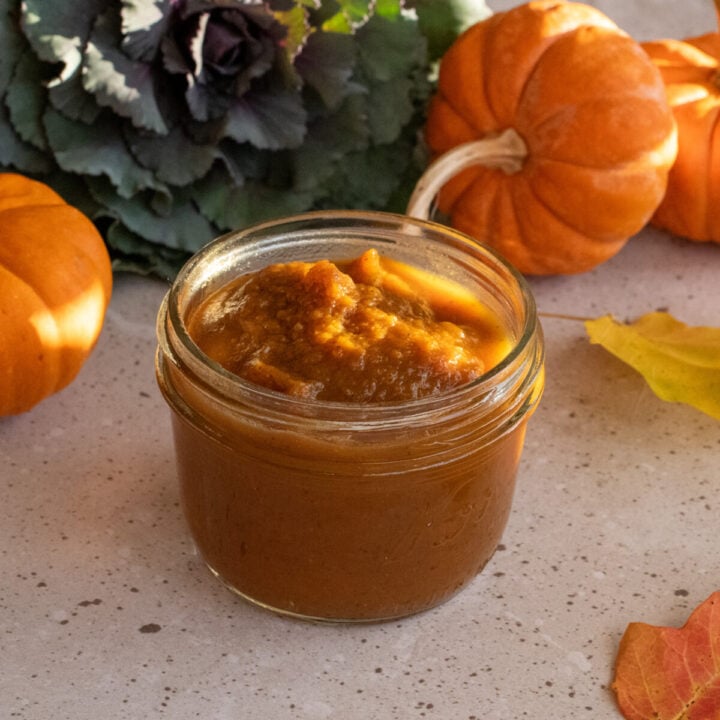
The Best (& Easiest) Pumpkin Butter
An easy and delicious pumpkin butter that freezes well.
Ingredients
- 6 cups homemade pumpkin puree
- or 3 15 oz. cans of store-bought pumpkin puree, not pumpkin pie filling (which is already spiced)
- 2 cups apple cider or apple juice
- 1/3 cup of rum, white or spiced (optional)
- 1 1/2 cups brown sugar, packed
- 2 tsp ground cinnamon
- 1 tsp grated fresh ginger or ½ tsp ground ginger
- 1/4 tsp ground nutmeg
- 1/2 tsp ground cloves
- 1/4 tsp salt
- 3 tbsp butter
Instructions
- Set your slow cooker to low. Place all ingredients in the slow cooker, except for the butter and stir gently until well combined. I find a whisk works well for this first stir to incorporate everything. Scrape down the sides with a rubber scraper. Place the lid on the cooker, and set a timer for four hours.
- Check the pumpkin butter every hour and give it a good stir. Older slow cookers are notorious for hot spots; this is why we’re using the low setting and checking on it periodically.
- At the three-hour mark, if your pumpkin butter still looks runny, leave the lid slightly ajar so extra moisture can cook off. Just keep in mind that the pumpkin butter will thicken as it cools. We’re looking for a consistency that doesn’t run off your spoon.
- When the pumpkin butter has finished cooking, stir in the butter until it's completely melted and emulsified in the butter.
- If you like a more rustic pumpkin butter (as pictured here), then you're finished. If you want something a little smoother, you can use an immersion blender to carefully pulse the hot pumpkin butter into a smoother consistency.
- Once the pumpkin butter is finished and has cooled to room temperature, ladle it into clean, sterilized half-pint jars. The jars do not need to be hot, since we’re freezing the pumpkin butter. Leave 1” of headspace for expansion. Wipe the lip of the jar to remove any oopsies.
- Whenever I am freezing a liquid in canning jars, I always put it in the freezer unlidded, and allow it to freeze solid before putting the lids and bands on. I’ve never had a jar break this way.
Notes
- When you take a jar out of the freezer to enjoy, give it a good stir once it's completely thawed. It may separate a little otherwise.
- The pumpkin butter will keep in the fridge for three weeks unopened and six months in the freezer. Once you open a jar, it should be used within
Get Garden Notes From Tracey, Right to Your Inbox
Pull up a chair on the front porch. Join 54,000+ gardeners who get Tracey\'s friendly notes, seasonal to-dos, and hands-on tutorials three times a week.