

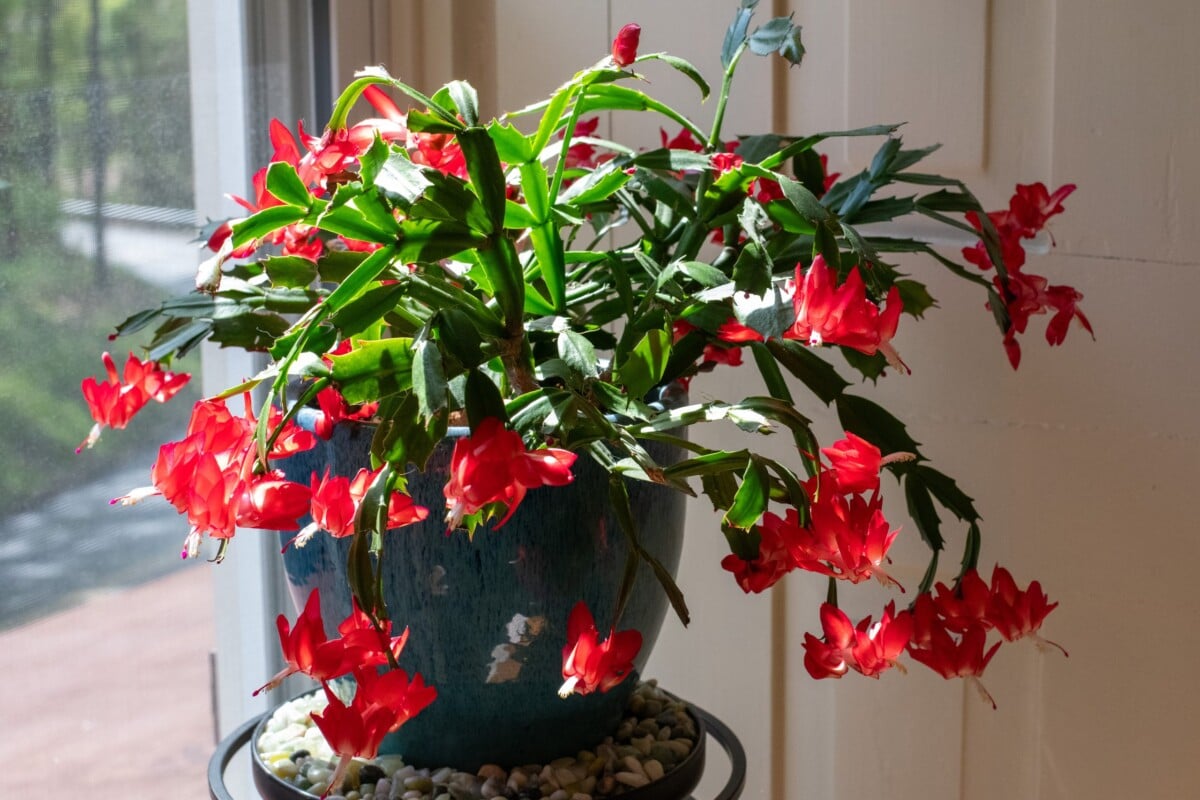
If you’re a longtime reader of Rural Sprout, you know my love of Christmas cactuses and talking about how to get them to bloom. If you’re not a longtime reader, you’re probably here out of frustration. Let’s fix that.
I’m going to show you just how easy it is to get a Christmas cactus to bloom.
Blooming Christmas Cactus? It’s Not That Hard
I love Christmas cactus. These plants are tough as nails. They aren’t fussy about their care, and they last for generations. I’ve forgotten to water mine for a solid month, and they were like, “Um, you know, whenever you get a moment, a little water would be great. No big deal. I’m fine. Just, you know, when you think of it.”
They are safe to have in your home if you have cats or dogs.

Sigh. Well, safe for the pets anyway.
They add drama to a room with their long, waterfall-like growth, and they’re stunning when they are in full bloom.
The problem is, people seem to struggle to get them to bloom.
I’ve written extensively over the years about how to get Christmas cactus (and other Schlumbergera) to bloom. While there are a number of variables involved, it’s rarely ever something difficult. I realize that in my haste to address all the problems that a non-blooming Christmas cactus might throw at you, I may have complicated the process.
So, in this article, I want to focus on three things that will get nearly every fussy Christmas cactus blooming again, or even blooming for the first time. If you take care of these three issues, and you still have an unwilling bloomer, then we can look at other issues, like fertilization or length of day issues. But only after you’ve done all of these three first. It may take some patience on your part, but we’ll get to that in a minute.
The Big Three
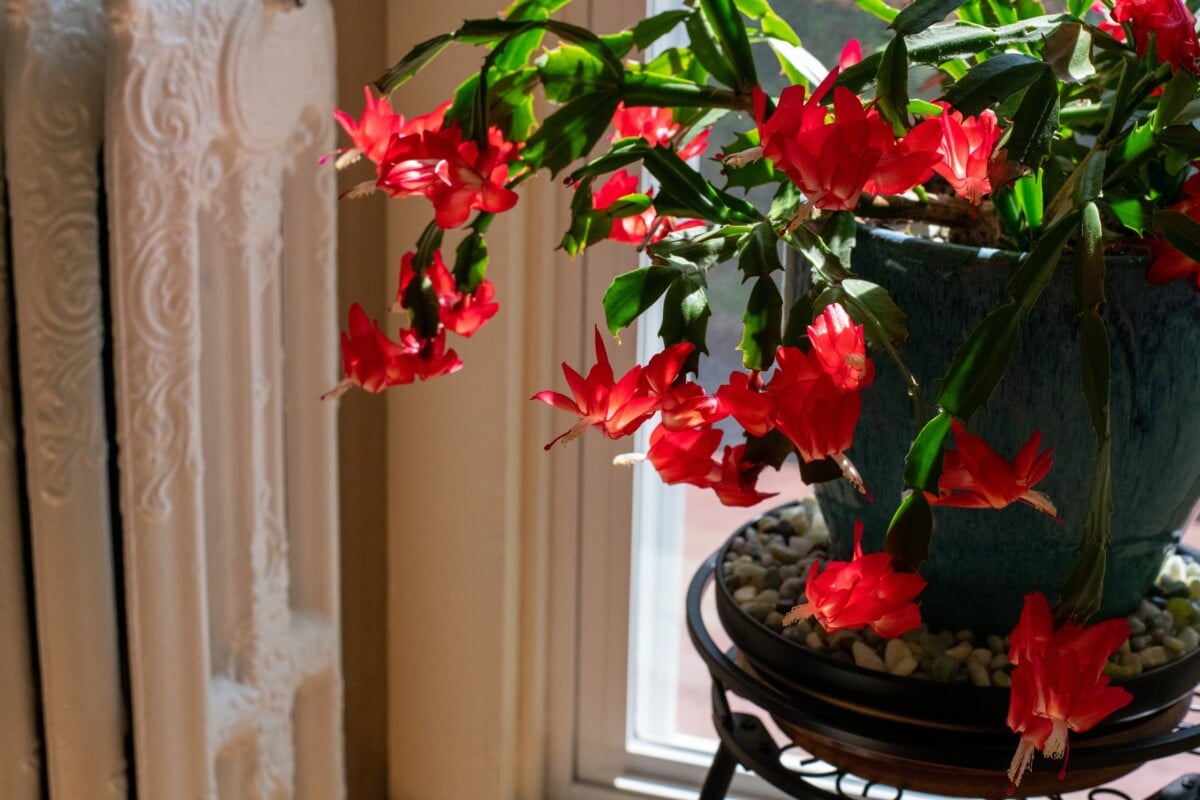
The true Christmas cactus – Schlumbergera x buckleyi – and the Thanksgiving cactus – Schlumbergera truncata – are short-day photoperiod bloomers. I’ve explained what this means in detail in this piece here. For today, all you need to know is that short-day photoperiod plants set blooms when daylight hours are shorter. So, in the fall and winter in the Northern Hemisphere.
Oh, and yes, you read that right: Christmas or Thanksgiving cactus, so named based on how close to either holiday the plant blooms in the Northern Hemisphere. You can see below which one you have by comparing the segments to your plant.
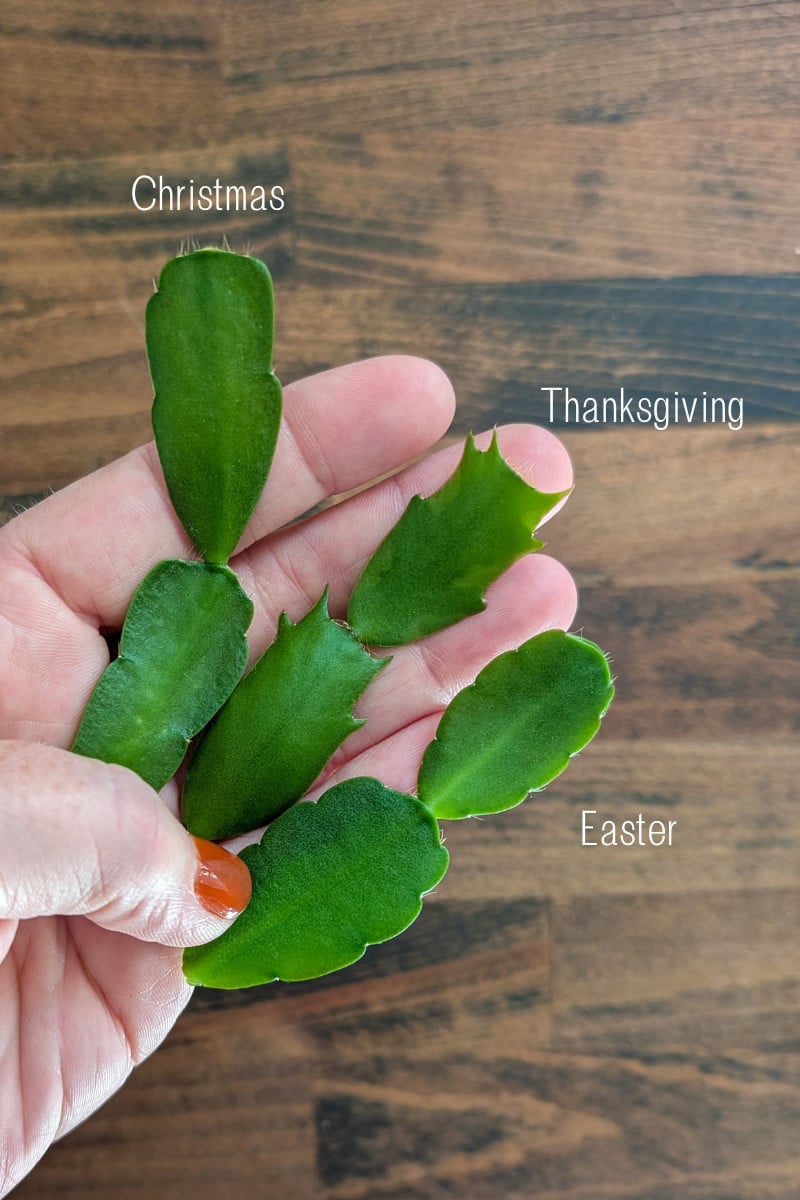
(I hate to break it to you, but quite a few people who think they own a Christmas cactus actually own a Thanksgiving cactus. If you want a true Christmas cactus? Click here.)
1. Snug As a Bug in a Rug
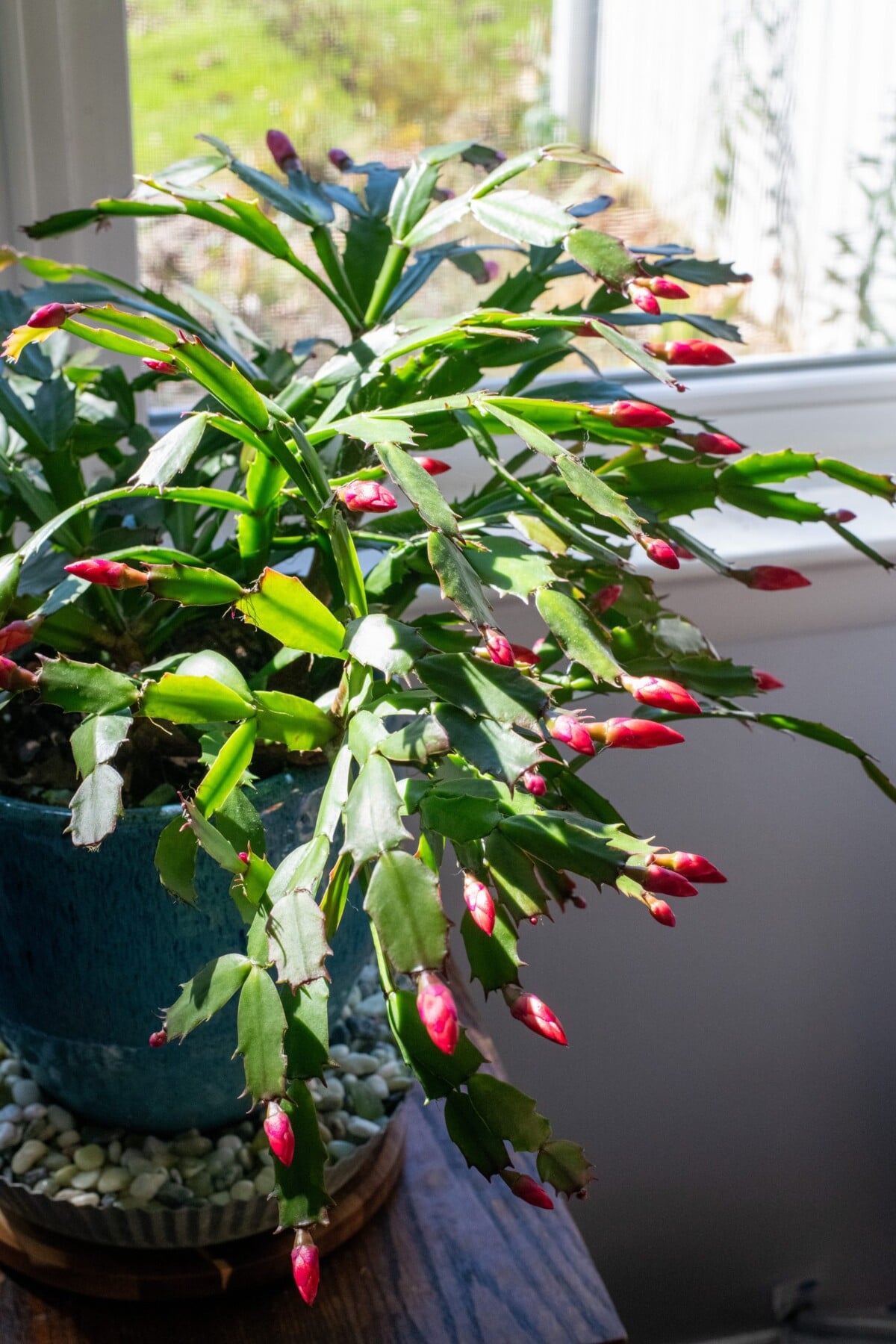
The box we need to tick is ensuring that your Christmas cactus is slightly rootbound. I know, this is usually a big no-no in the houseplant world, but not when it comes to blooming plants.
Plants are energy efficient, meaning they put their energy where it’s needed most. A Christmas cactus will always prioritize using energy to grow a larger root system over developing buds. But when your plant is slightly rootbound, that stops and puts just a little stress on the plant.
When it comes to blooming houseplants, a little stress = flower production.
We’re not talking about enough stress to throw your plant into full-on survival mode, just enough to make it prioritize flowers. After all, flowers are the culmination of what a plant wants most – world domination. Seriously, plants are singular in their goal to ensure they survive, or at least make copies of themselves if they can’t. That means seeds, and seeds come from flowers.
So, if a plant gets even a whiff of stress and it has resources to spare, it produces blooms.
A well-cared-for rootbound Christmas cactus ticks this box. If you have a newly propagated plant or one where the pot is too big for the size of the plant growing in it, it can take a year for the roots to become snug enough for the plant to bloom. If that’s the case, I suggest you sit tight. Uprooting it and repotting it again will restart the clock on those future blooms.
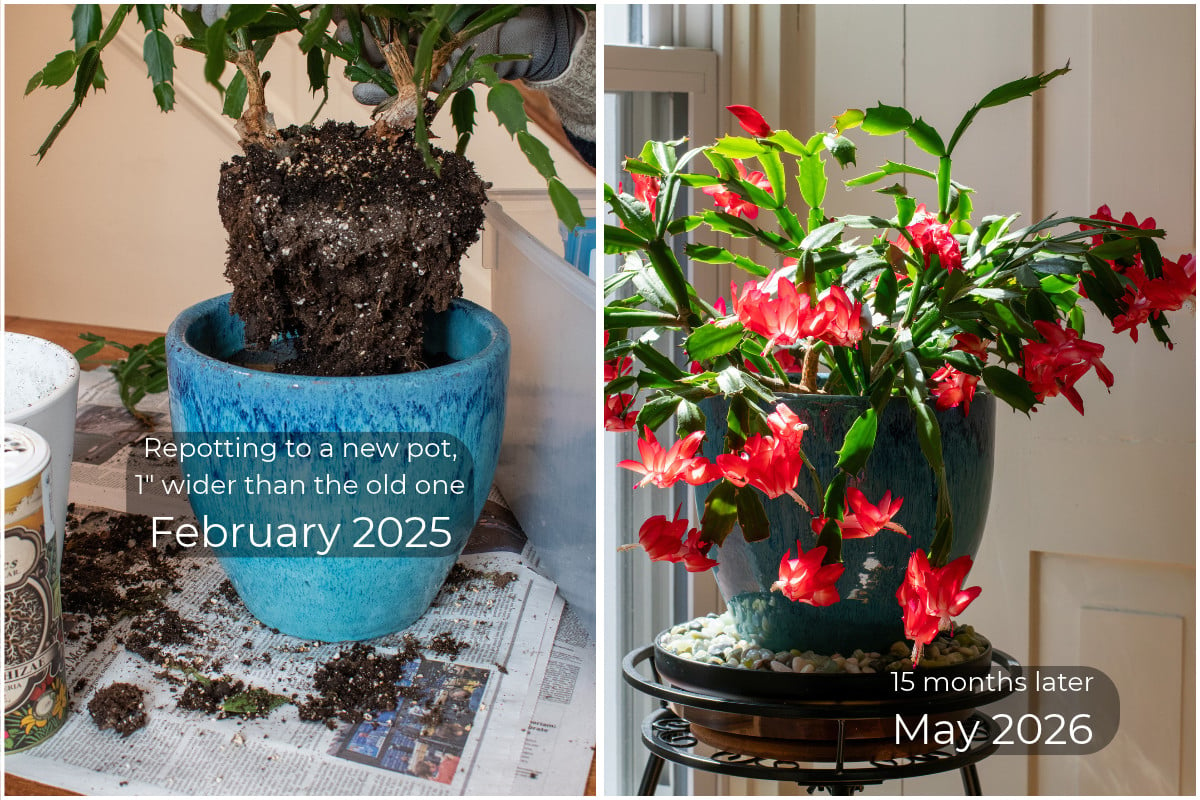
This is why when repotting your Christmas cactus, I recommend that you either stick to the same size pot and trim the roots a bit, or only go up by one inch in diameter with a new pot. You’ll find that this is also a common factor when you ask that friend or family member who has a huge Christmas cactus that always blooms what they do, and you get a vague answer of, “Nothing much.”
That plant has probably been sitting in the same pot for years.
2. The Perfect “Bright, Indirect Light”
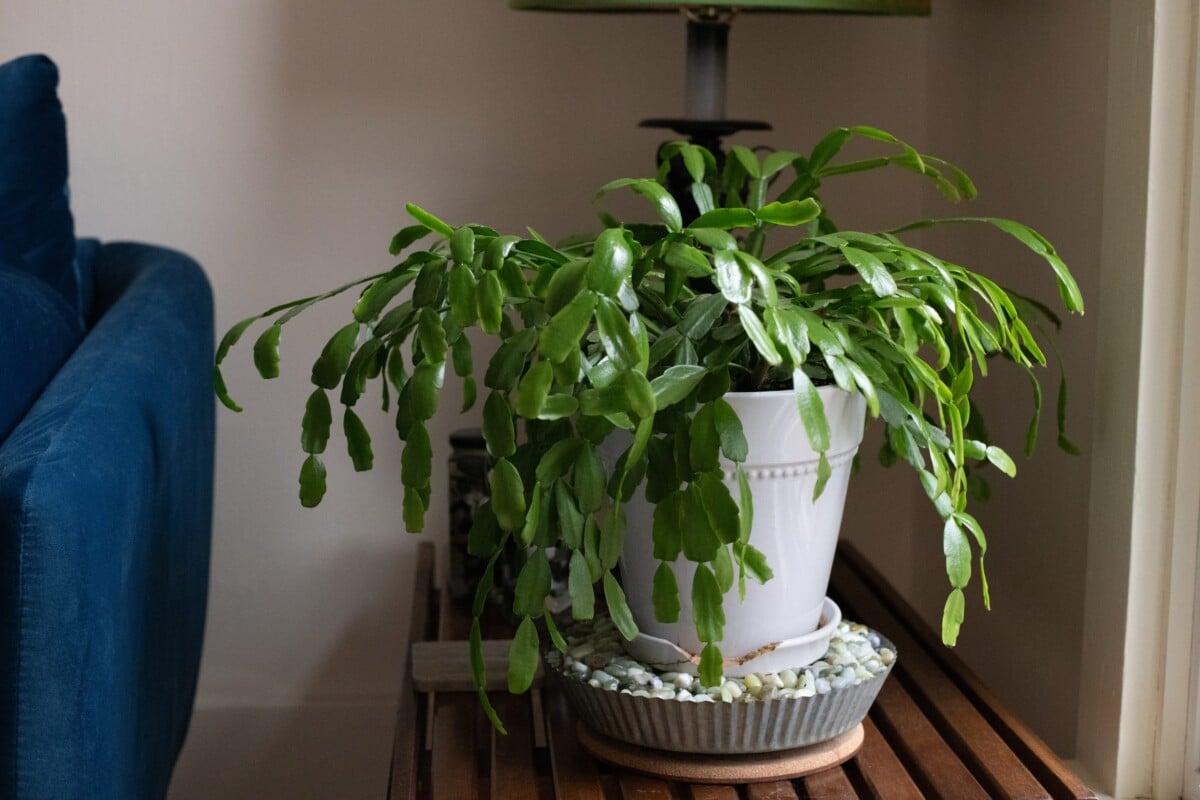
One thing houseplant owners are constantly trying to get right is light. Nearly all houseplants thrive with that magical combination of “bright, indirect light.” You find those three little words in nearly all plant care guides. I’ve written it myself hundreds of times.
The problem is that so few of us have a spot in our home that gets that kind of light for a significant portion of the day. Most houseplants need between 6-8 hours of bright, indirect light each day. But you need even more if you expect flowers.
Those flowers need a lot more energy than what’s needed just to grow new segments (called cladodes).
I’m going to let you in on a little secret – my Christmas cacti spend a good portion of the year hanging out where they don’t get that kind of light.
Yet they still bloom faithfully every year.
How?
I send them on vacation.
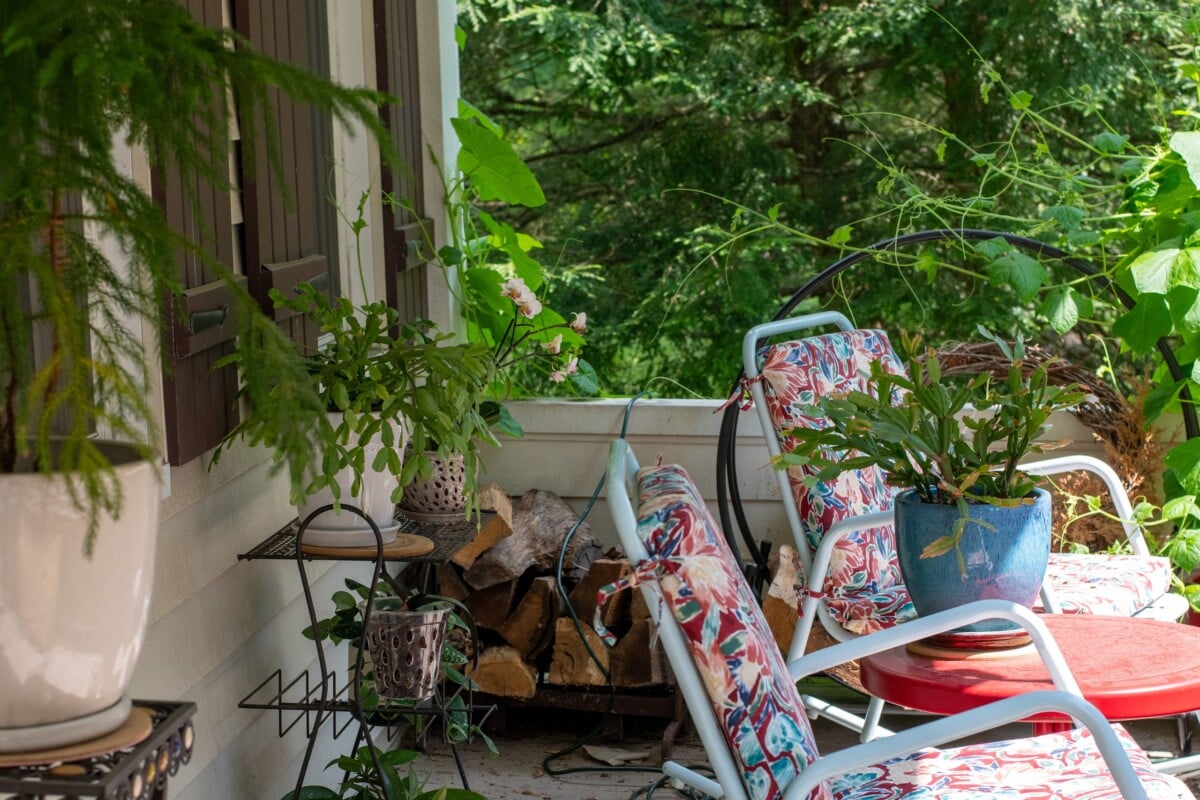
In mid to late June, all of my schlumbergera go outside. They spend the entire summer outdoors soaking up, you guessed it, bright, indirect light. Hours and hours of it. By the time fall rolls around, my Christmas cactus starts to look a little like me – slightly sunburned and ready to come inside.
The difference is I’m ready to hibernate, whereas my Christmas cactus has stored up plenty of energy and is just waiting to burst into buds.
A few months spent outside can make up for a whole year of less-than-ideal growing conditions in your home. Bring your Christmas cactus outdoors in early summer, long after the threat of frost has passed. Nights should be comfortably in the 60s.
If your plant begins to turn a deep burgundy, it’s getting too much sun. Move it someplace more sheltered. A little red around the edges is fine and will fade when you bring it back indoors in the fall, but if whole segments are turning red, you need more of the “indirect” part of the equation.
You’ll also want to make sure your plant is protected.
They might be tough as nails when it comes to you neglecting them, but Ma Nature can dish out some serious summer storms. Keep your Christmas cactus somewhere it’s protected from heavy wind and rain.
In the fall, bring your plant back indoors when nighttime temperatures begin to dip below 60F. That gives your plant time to acclimate as the days begin to shorten, which brings me to my final point.
3. The Room That’s Always on the Chilly Side
My mom used to bring her Christmas cactus in from the back patio every fall and place it in the pantry. Our pantry had an outside door with a window in it and a stairway down to the basement. So it was cool and shady. Within a couple of weeks, it was always covered in buds.
We don’t need to worry about going to such extremes in our own homes.
The natural shortening of the days and the cooler temperatures that accompany it happen all on their own. If your plant has been outdoors for the summer, it will already have less light just by bringing it inside.
This simple change in environment is often enough to trigger bud formation.
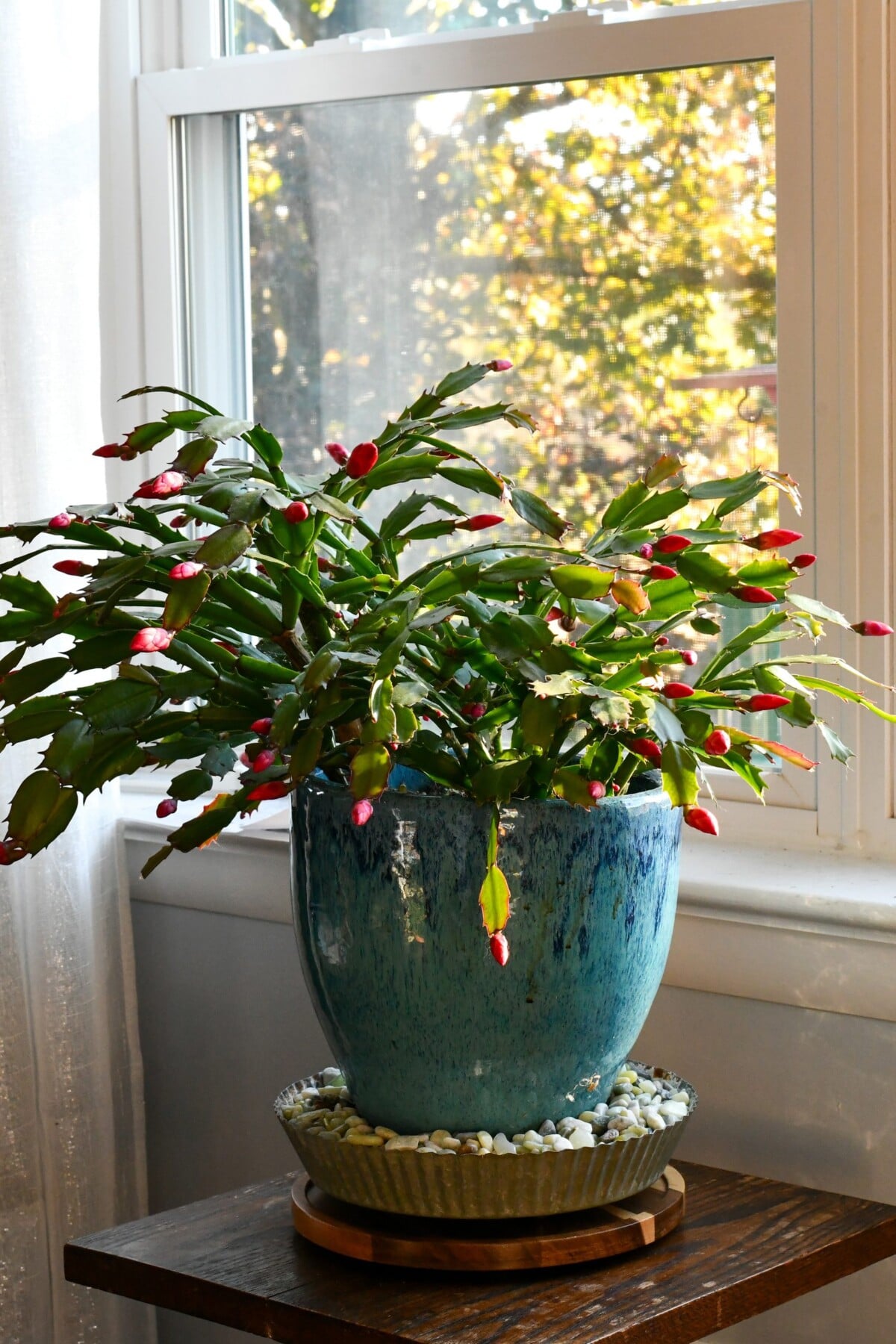
But for good measure, place your Christmas cactus in that room in your house that always stays a little on the chilly side at night, and put it near a window.
The temperature near windows is always slightly less than the rest of the room.
Between the lower temperature and less light from being indoors, your Christmas cactus will set. It’s important to note: you don’t want the plant to be against the glass, as it can be cool enough to cause the segments or buds to fall off.
Aside from the environment, I suggest this because that’s the room in which you’re less likely to have lights on late into the night, which can hinder bud formation.
It takes patience, but these three things are usually all you need to change.
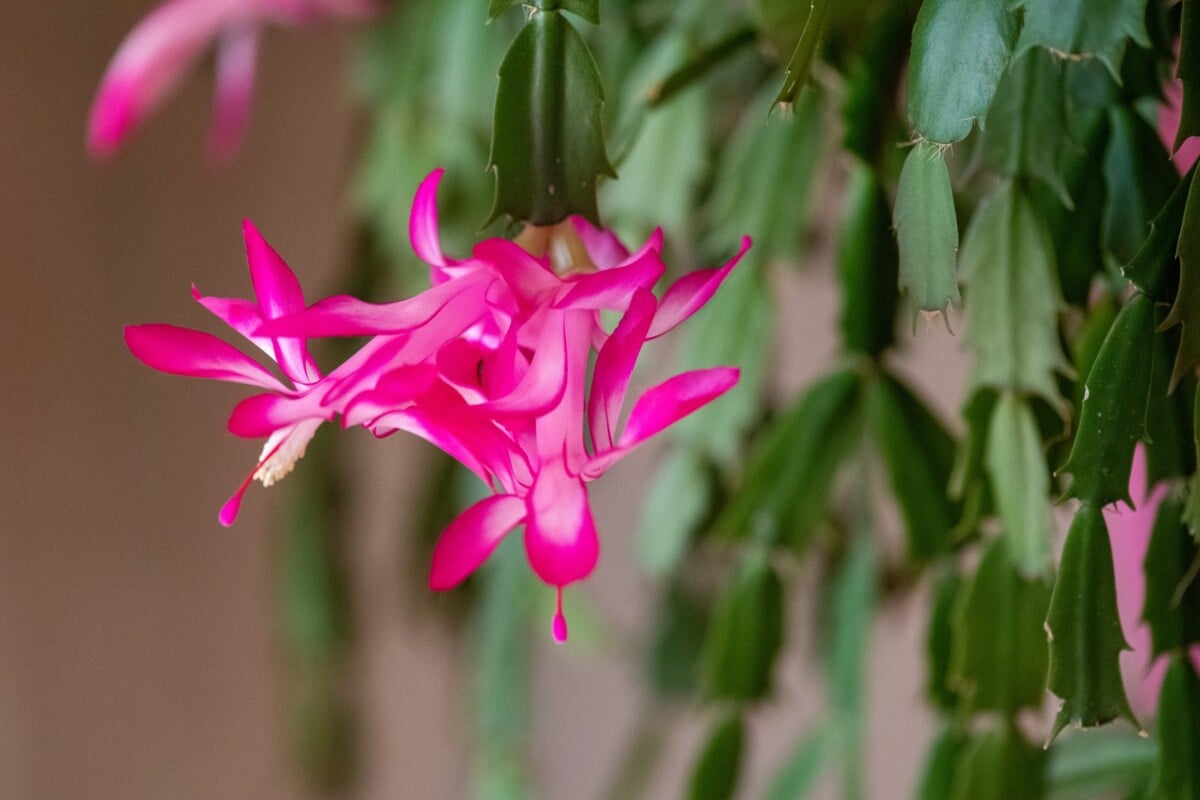
And that’s that. Start here, with these three things. Yes, it will take time, but from my decades of growing these plants, I’ve found that this is usually all that’s needed to get your plant back into the habit of blooming regularly every single year.
Of course, if you do all of these things and you still don’t have buds, there may be other issues at play, at which point I would suggest reading the below article.
Get Garden Notes From Tracey, Right to Your Inbox
Pull up a chair on the front porch. Join 54,000+ gardeners who get Tracey\'s friendly notes, seasonal to-dos, and hands-on tutorials three times a week.