

Allow me to introduce you to the spring bulb that will make your neighbors envious.
Ok, so envy is not exactly the sentiment I’m encouraging here. I’m hoping for more of a knock on the door from your gardening-afficionado neighbor with a simple question:
“Hey, what’s that flower and where did you buy it? Also, here’s some banana bread.”
This is the showstopping, scene-stealer they will be talking about.
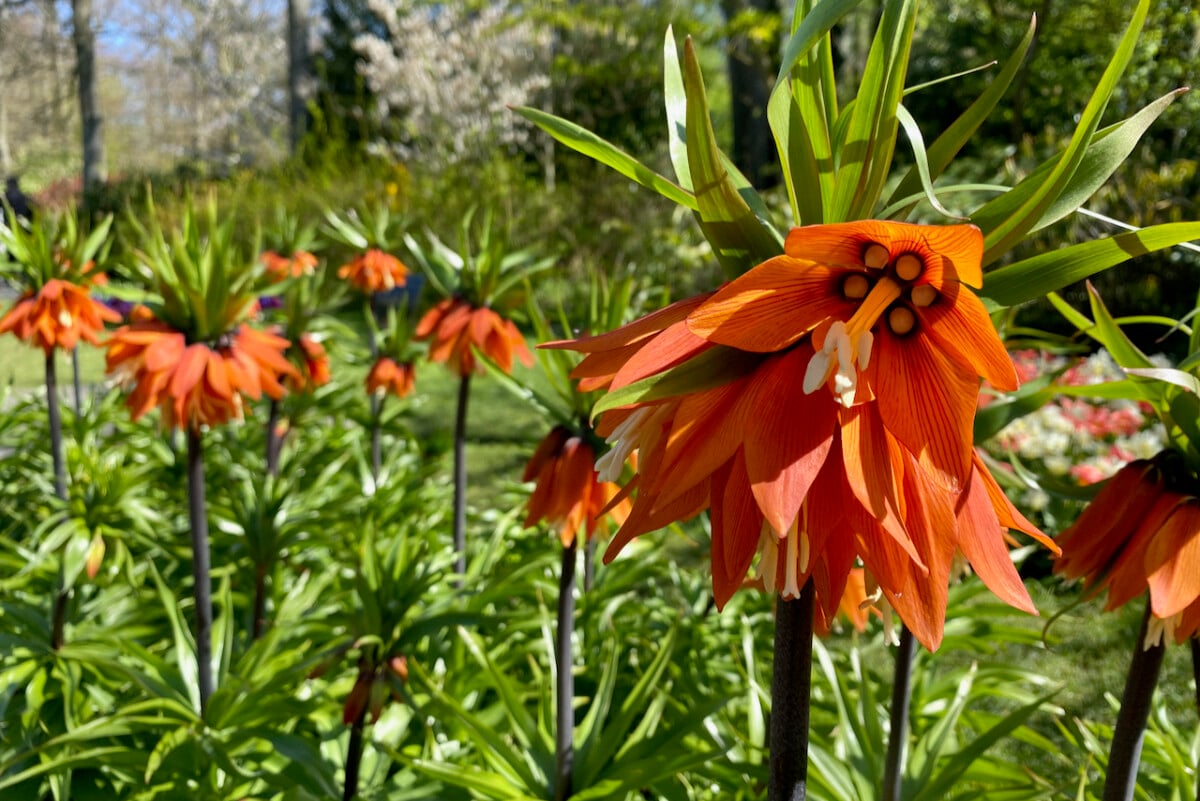
Isn’t it gorgeous? Its passport name is Fritillaria imperialis, but it goes by the nicknames of crown imperial, orange fritillary or simply fritillary.
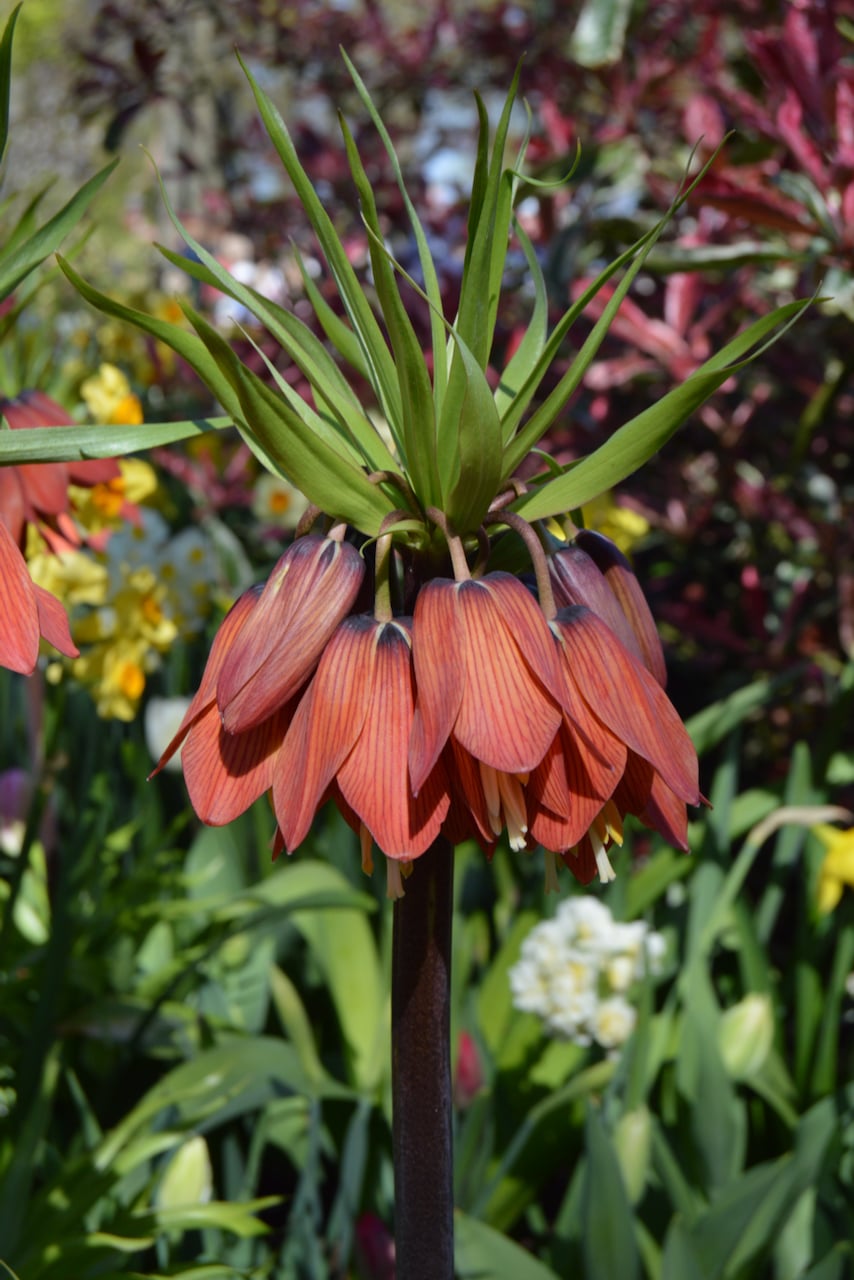
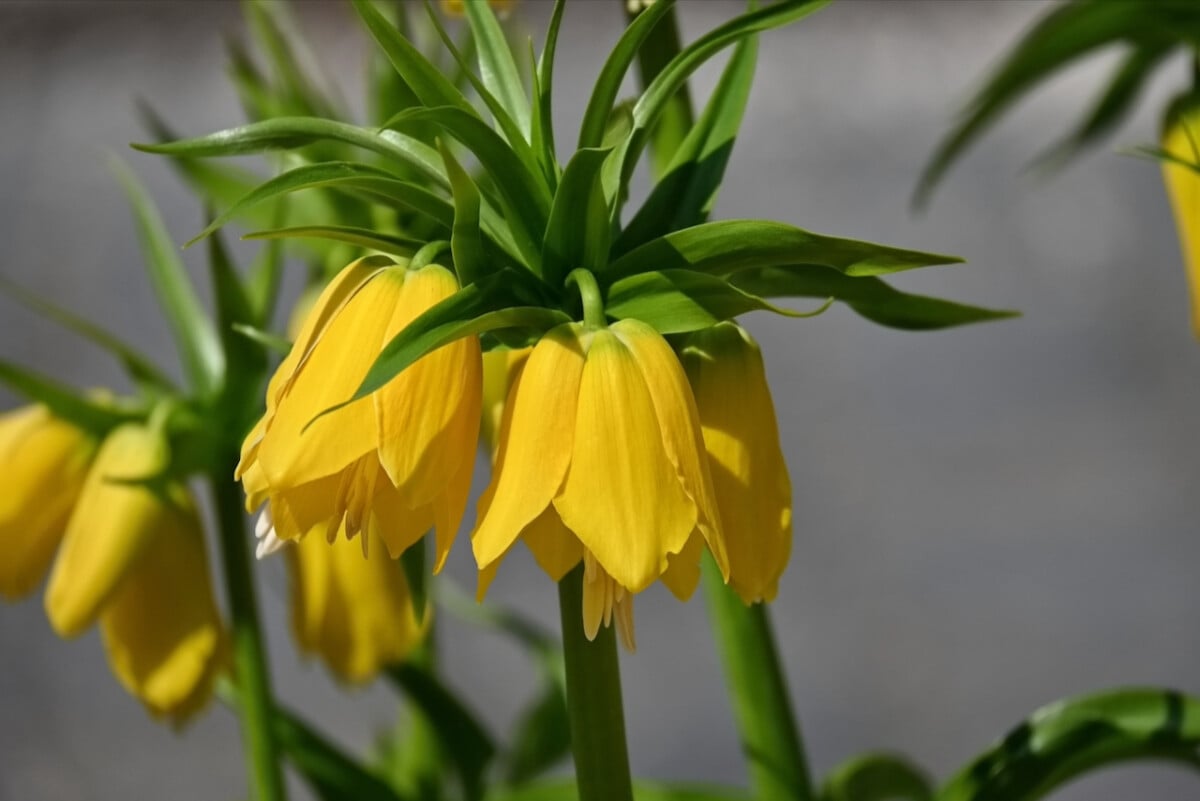
Its vibrant orange flower head consists of a cluster of bells topped by an elegant green crown. Hence the crown imperial nickname. A pleasure to make your acquaintance, your Highness!
Here’s a quick rundown of what fritillary is, what it likes and how to keep it happy. That way, when your neighbors knock on your door (or have yours switched to group chats by now?), you can also impress them with your wit and plant knowledge.
1. Crown imperials belong to the lily family.
The topic of our article, and the object of the neighborly envy, is only one type of fritillary. There are a few other types that have become popular additions to spring gardens.
In addition to Fritillaria imperialis (crown imperial), we also have Fritillaria persica (aka Persian lily) and Fritillaria melagris (snake’s head fritillary). So when you buy your bulbs, double check that you’re ordering the crown imperial fritillary.
All fritillaries belong to the lily family (Liliaceae), which becomes more evident as their foliage emerges in spring.
Just like lilies, fritillaries will also naturalize and come back year after year. So even though they may look exotic and slightly fussy, they are forgiving and easy-going plants.
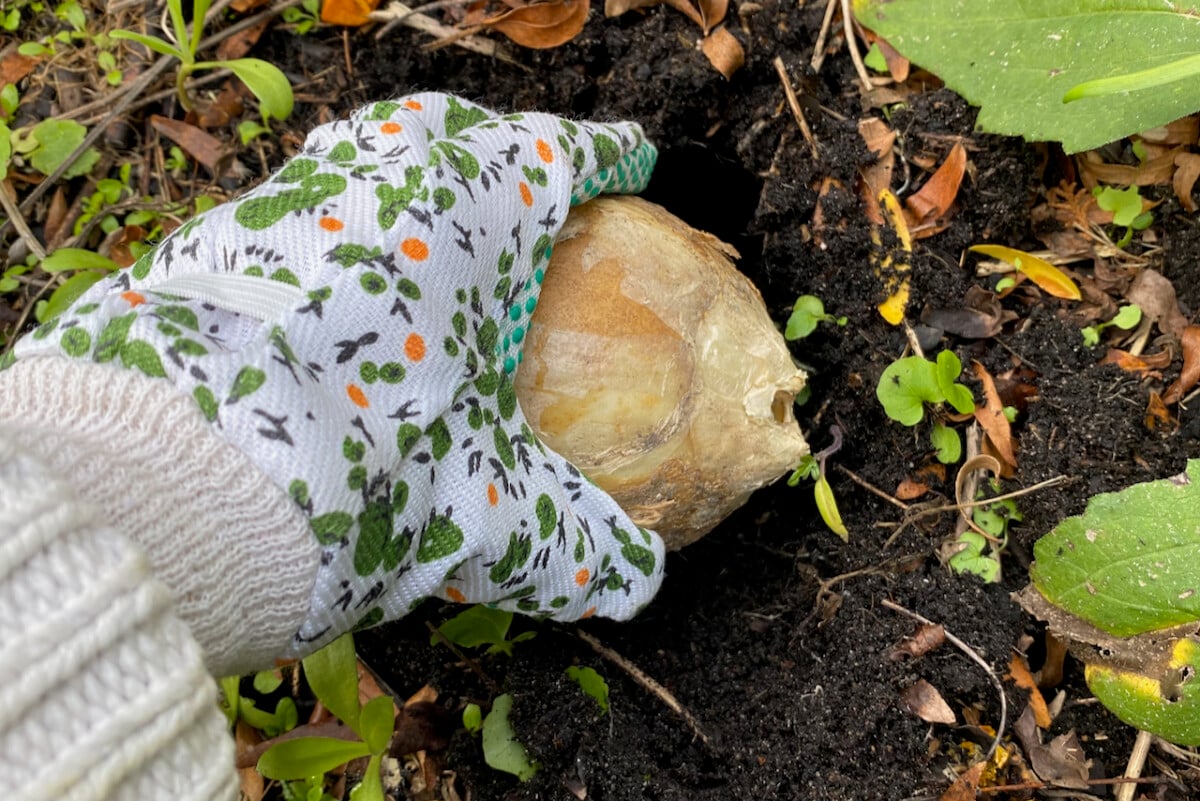
2. The bulbs are huge. And you need to plant them slightly tilted.
From my photo below, can you guess which one the fritillary bulb is?
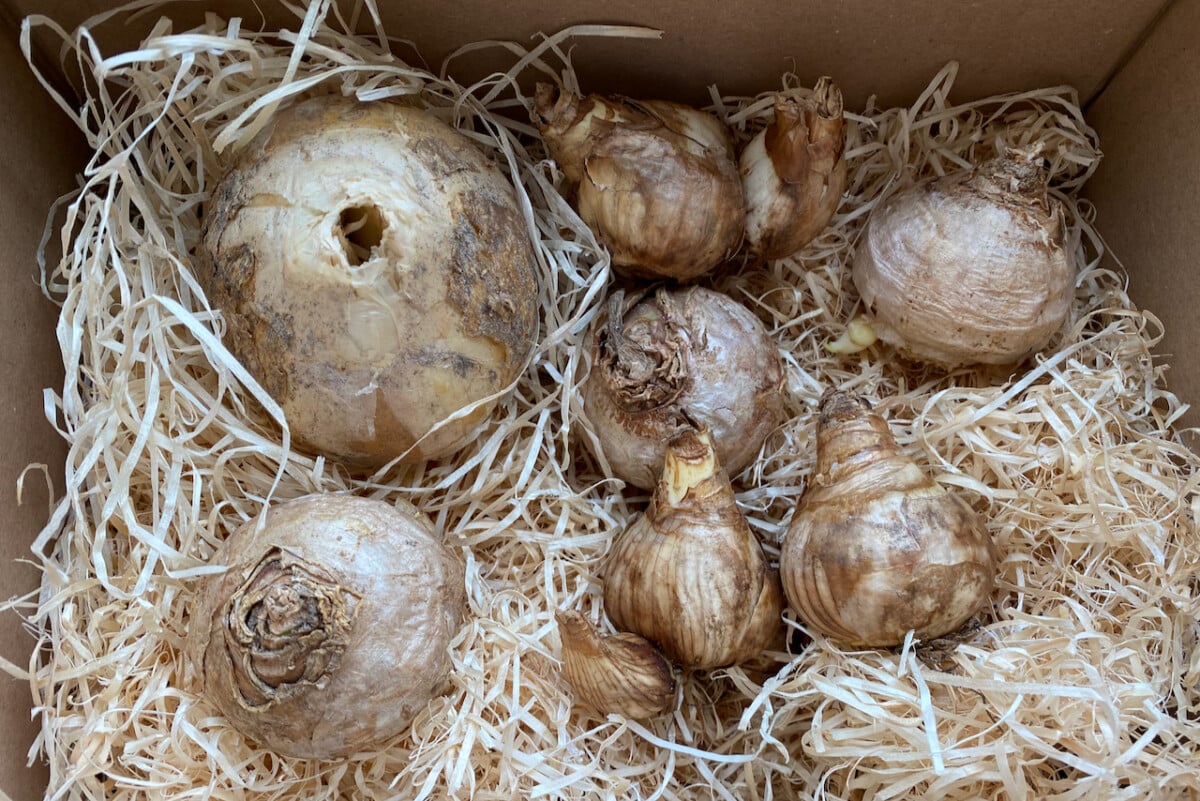
Yup, it’s the largest bulb in the upper left corner. The other bulbs are hyacinths, by the way.
You can tell that they’re large bulbs. What you probably can’t tell from my photo is that the bulbs have very thin layers, just like an onion. This is another detail they have in common with lily bulbs.
It does make sense for a tall and vigorous plant to have such a large bulb, right? All the energy needed to grow such a stunner needs to be stored in a large container.
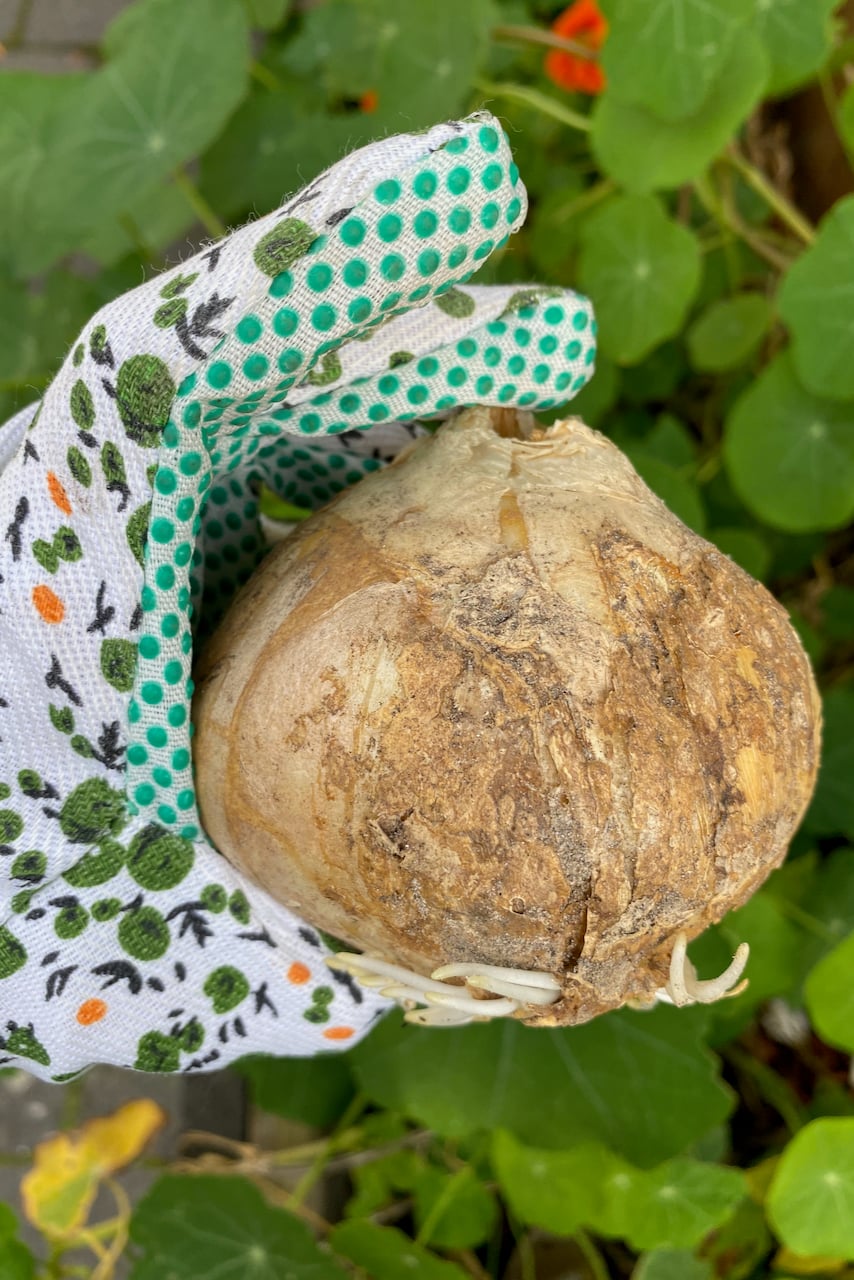
When I first ordered fritillary bulbs for my previous garden, it came with the following handwritten note on the paper bag: “Mickey, we’re going to have a rainy winter, so make sure you plant this bulb slightly tilted. Otherwise, it will rot.” Reader, I kid you not.
As an aside, it’s this level of customer care and attention to detail that made me return to this small business (an organic bulb vendor) year after year.
I was very grateful for their tip. It wouldn’t have crossed my mind to plant a spring bulb any other way than with the tip facing upwards.
The problem is that crown imperial bulbs have a hole in the middle. This is where the rather chunky stem used to be when the flower was actively growing. And this is where it will grow from again the following spring.
However, in the meantime, it has five months of wet winter weather to contend with, and if the water pools in that hole, that is bad news for the bulb.
So I took their advice and here’s how I planted it:
The hole isn’t facing straight up, but it isn’t facing sideways at a ninety-degree angle either. It’s slightly tilted, which means that water will not collect in the middle of the bulb.
When the stem starts growing in spring, its natural tendency will be to reach towards the sun. So the bulb will shift slightly to make that possible. After a few years of growing fritillaries, I can attest to the fact that it will grow upright, even if we don’t plant it upright.
3. Crown imperials are perfect for a dry garden.
We talk a lot about spring bulbs that prefer a woodland setting. Daffodils, snowdrops, species tulips and muscari are such bulbs that like to have wet feet and don’t do well in soil that dries out in the summer.
Luckily, for exposed corners of the garden that tend to bake in the summer sun, crown imperial bulbs are a much better alternative.
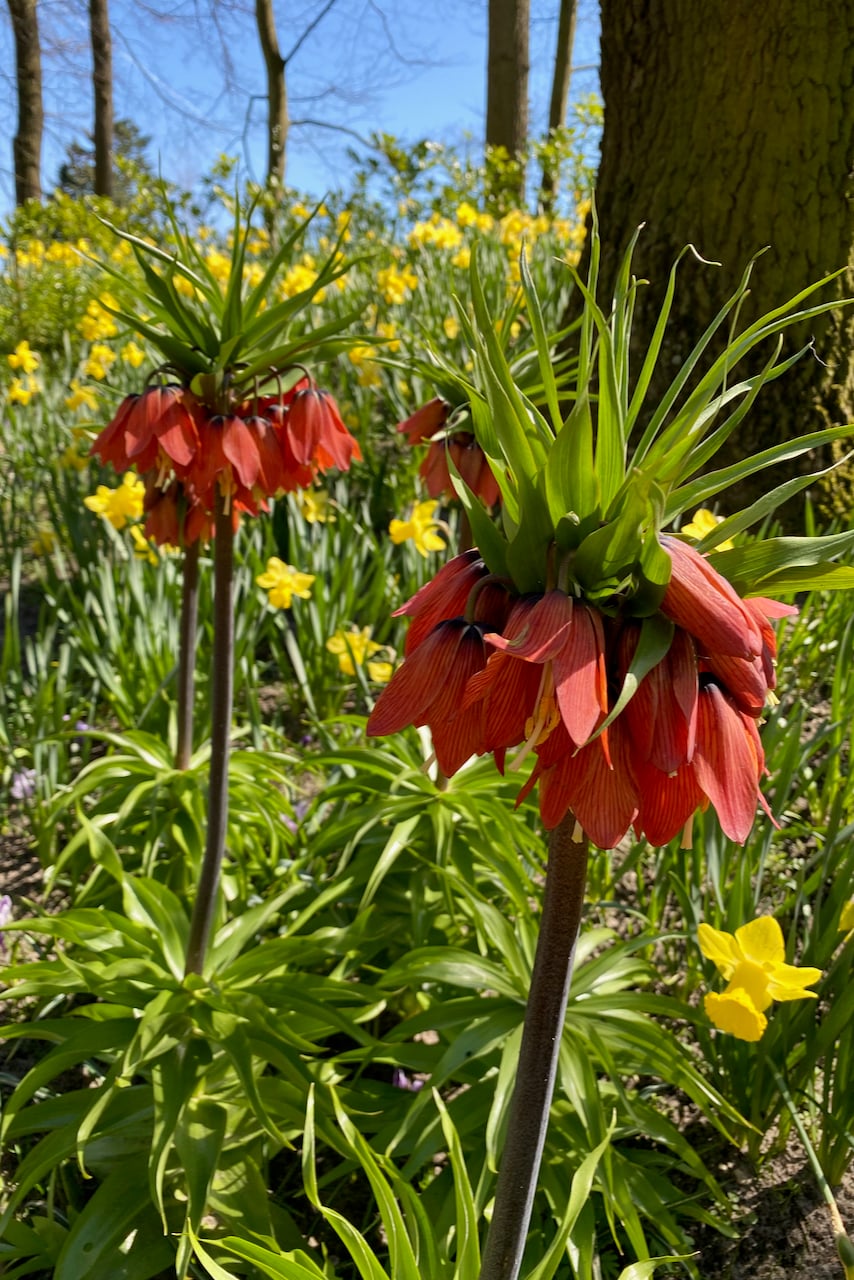
Of course, the flowers will be gone by summer, and the entire plant will retreat underground. But because the bulbs are so large and have so much energy and moisture stored, they can withstand high temperatures below ground. Even when in bloom during spring, fritillaries love sunny borders, provided that the soil drains well.
4. We can use crown imperials as flower bed punctuation.
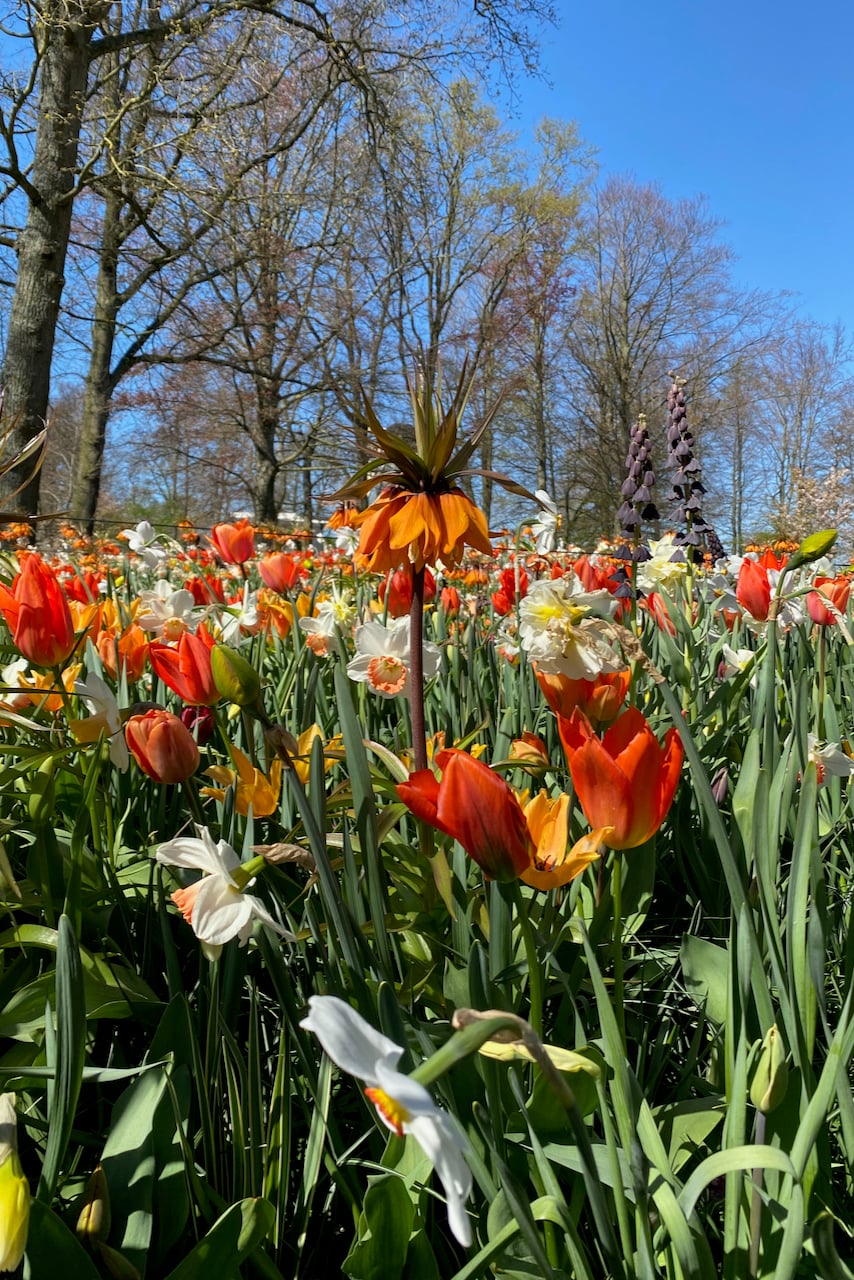
At an average of three feet tall (about one meter), you can already see how the crown imperial flowers tower over everything else that’s in bloom at the same time.
In show gardens, I’ve seen this bulb planted in drifts, with a whole section of just crown imperial blooms taking center stage in a flower bed. I must admit I’m not a big fan of this planting scheme. It somehow loses the grandeur when planted among its own kin.
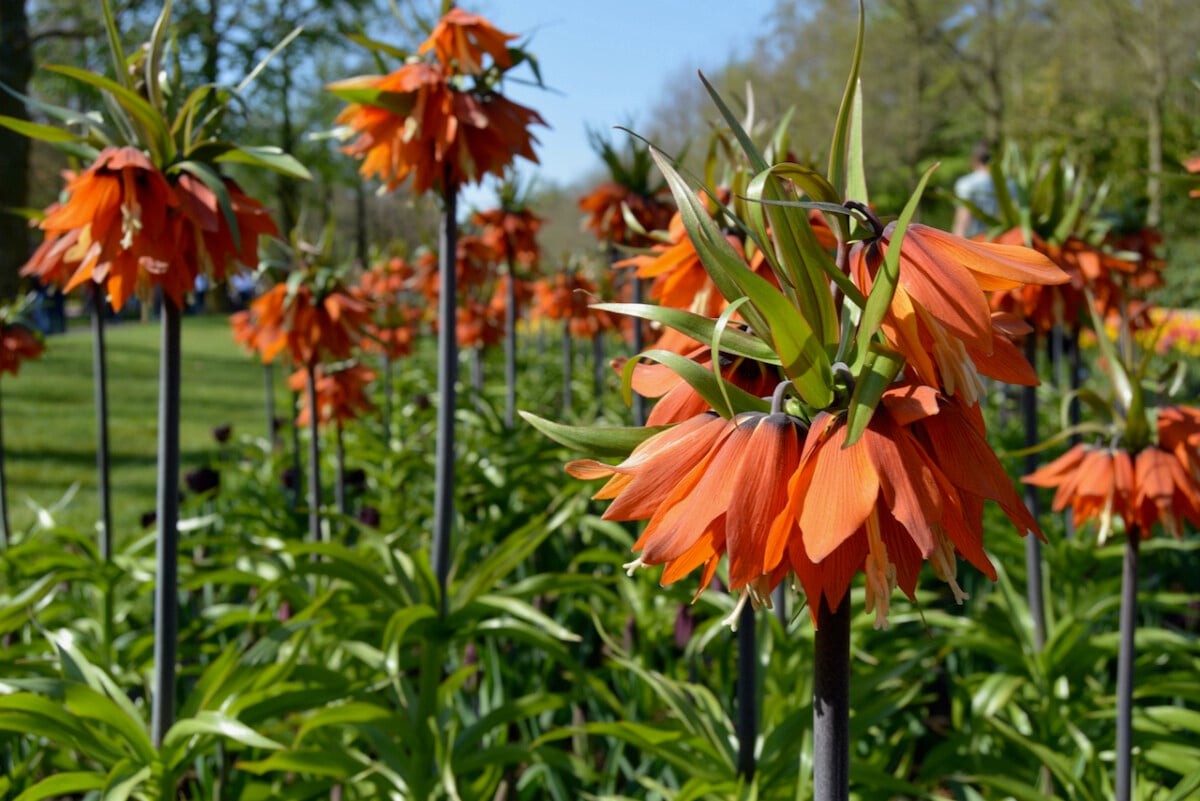
I’d much rather scatter them around shorter spring bulbs, such as tulips, muscari and daffodils. When the crown imperial is in bloom, it will add height and draw the eye upwards towards its impressive cluster of bells. I like to think of it as punctuation – like an exclamation mark that draws the eye on a page full of text.
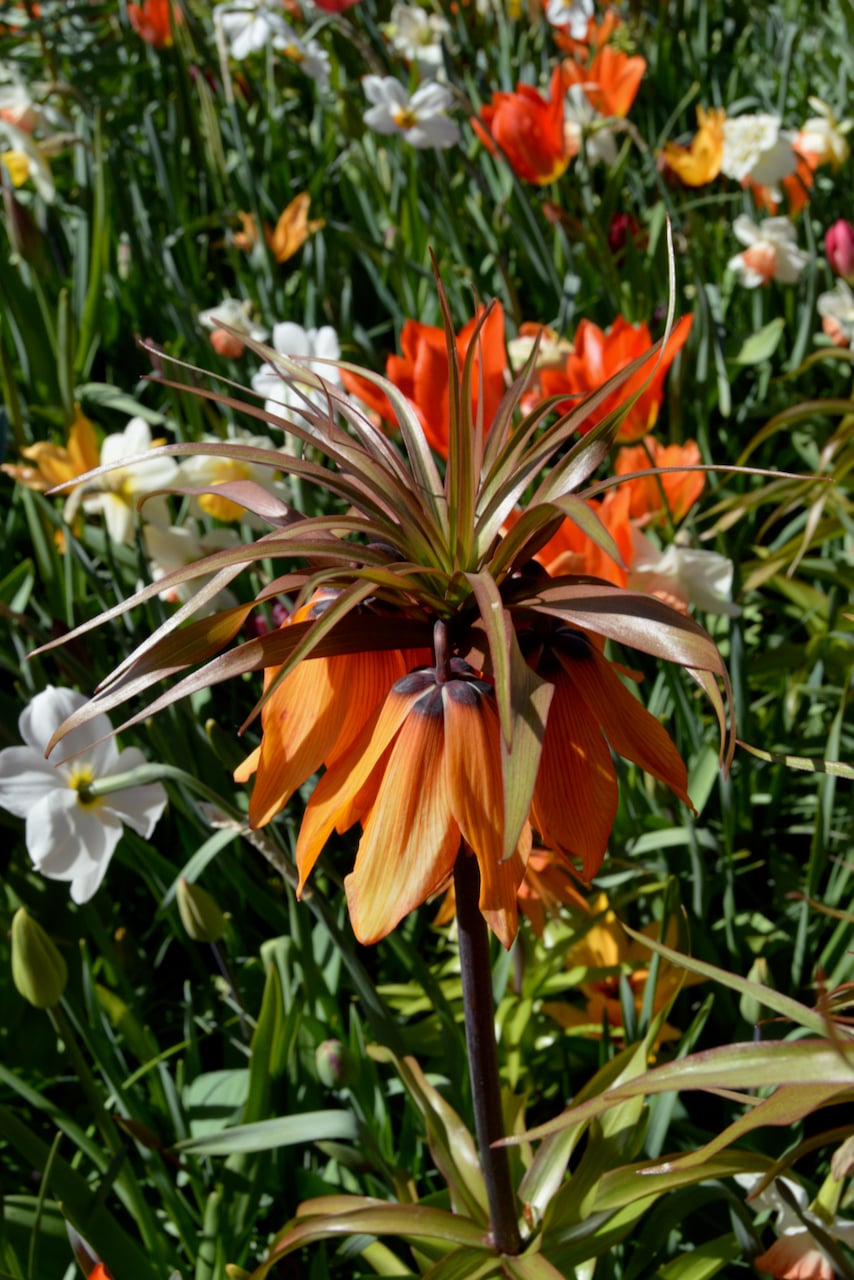
Here it is, in a photo I took in April, next to the equally imposing Fritillaria persica, which grows a cluster of smaller dark bells.
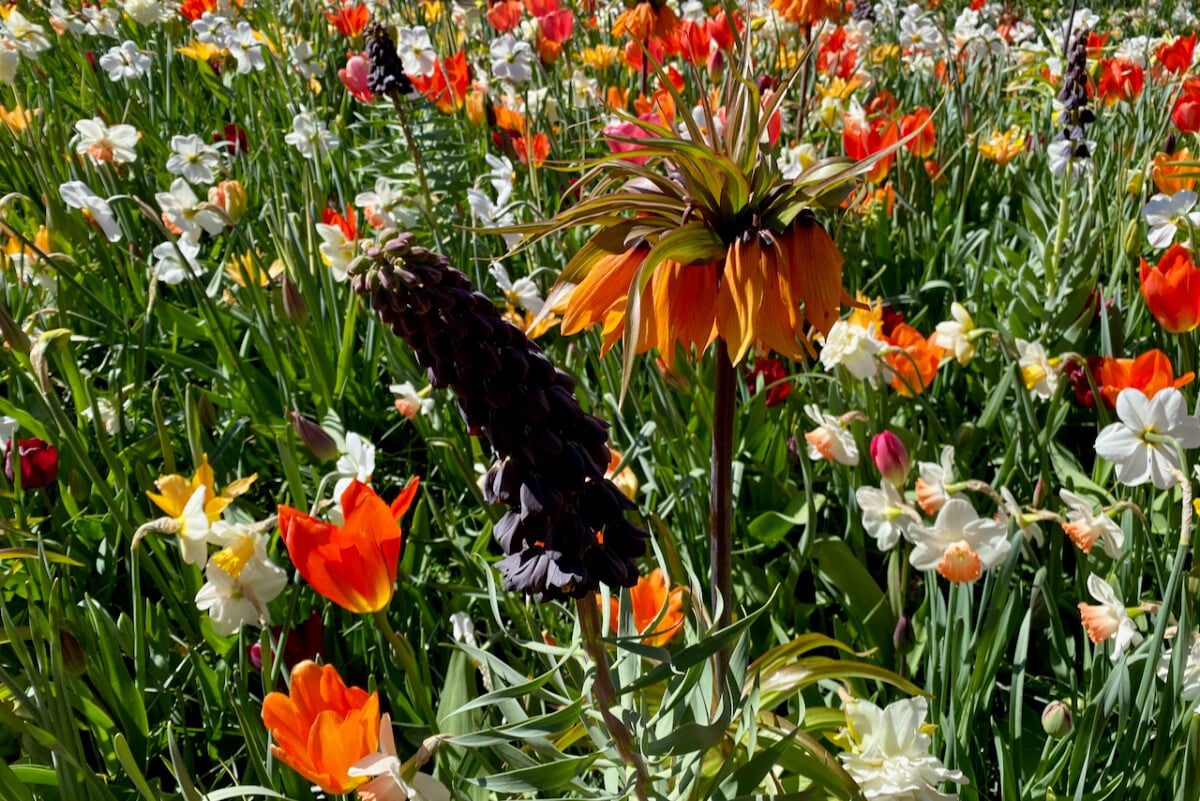
Crown imperial bulbs start blooming in late March and the long-lasting flowers can tower over the garden for weeks.
The foliage will still be standing in mid-May. And like with every other spring bulb, it’s important that we allow it to stand long after the blooms have faded. Its main job is to capture sunlight and redirect the energy towards the bulb. This ensures that the bulb will come back with the same vigor the following year.
5. There’s a slight musk to crown imperials.
Let’s talk about something which not many bulb vendor websites mention: the fragrance.
You’ll notice it first when you’re planting the crown imperial bulbs in the fall. Then again when the flowers start to open up in spring.
Fritillaria imperialis has a rather musky tang. It doesn’t smell bad, just different from what you would expect from such a gorgeous flower. I don’t know how else to describe it other than identifiable. You’ll know it when you smell it.
But on the upside, this brings the added benefit of keeping away squirrels, deer, rabbits and other such wildlife that might find spring bulbs a delectable delicacy.
If you’re super sensitive to musky smells, my advice is to just buy one bulb this fall and test it out. If you don’t mind the fragrance, you can start your fritillaria collection next year.
Oh, and when the neighbors knock on the door to inquire about this flower, you may want to redirect them towards the fritillaria to smell it for themselves. But tell them to leave that banana bread safe with you first.

Get Garden Notes From Tracey, Right to Your Inbox
Pull up a chair on the front porch. Join 54,000+ gardeners who get Tracey\'s friendly notes, seasonal to-dos, and hands-on tutorials three times a week.