

I know very few gardeners who don’t grow tomatoes. Actually, now that I stop and think of it, I can’t think of anyone I know who gardens, but doesn’t grow tomatoes. Tomatoes are the most commonly grown crop in the world by home gardeners. I think this fact says something about gardeners as a whole because our favorite thing to grow is also one of the most finicky plants in the garden.
Tomatoes are notorious for being water and nutrient hogs.
Every bug that can chew a leaf seems to be attracted to tomatoes.
Numerous plant diseases around the world can take out your tomatoes, sometimes, for more than one season.
And let’s not forget, keeping indeterminate tomatoes from taking over your entire garden is a daily struggle.
But when you pick a plump, juicy heirloom tomato and slice into it, back in your kitchen, all of that fuss melts away.
Growing tomatoes is always worth the effort.
Here at Rural Sprout, we’ve covered the bugs and the diseases, we’ve told you how to string train your tomatoes and the right way to water them, but today I want to address some common issues that don’t fall under the category of diseases or nibbling pests.
These are tomato disorders that can ruin a crop just as effectively as any bug or disease can. I’m going to talk about five distinct tomato disorders, as they are the most common, and at least one tends to make an appearance in one way or another every season. Knowing what they look like and what causes each makes preventing them much easier.
We’re going to tackle the most common one first, blossom end rot. (Ooh, did you feel that? It was almost like thousands of gardeners around the world shuddered and groaned at the same time.)
1. Blossom End Rot
What it looks like
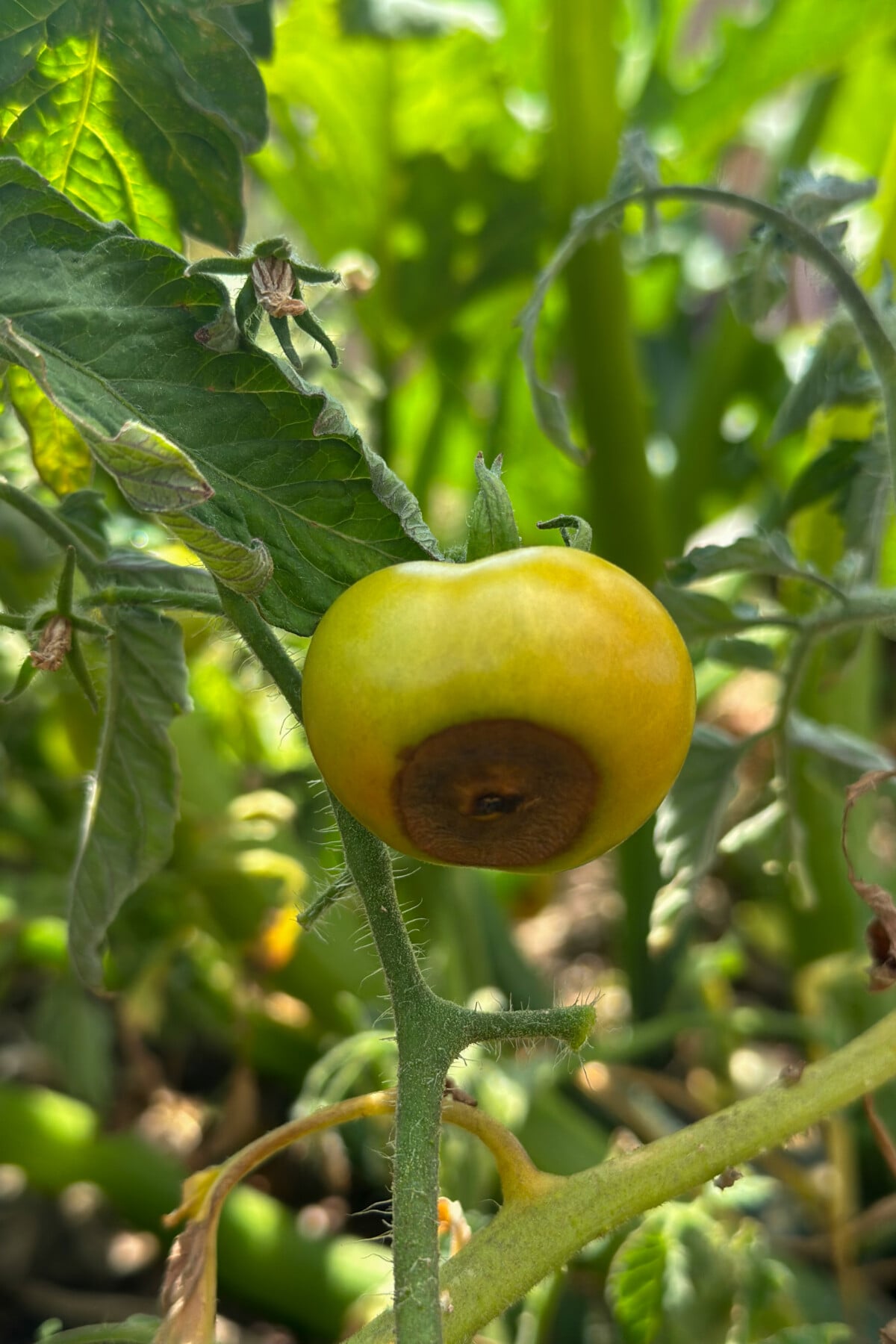
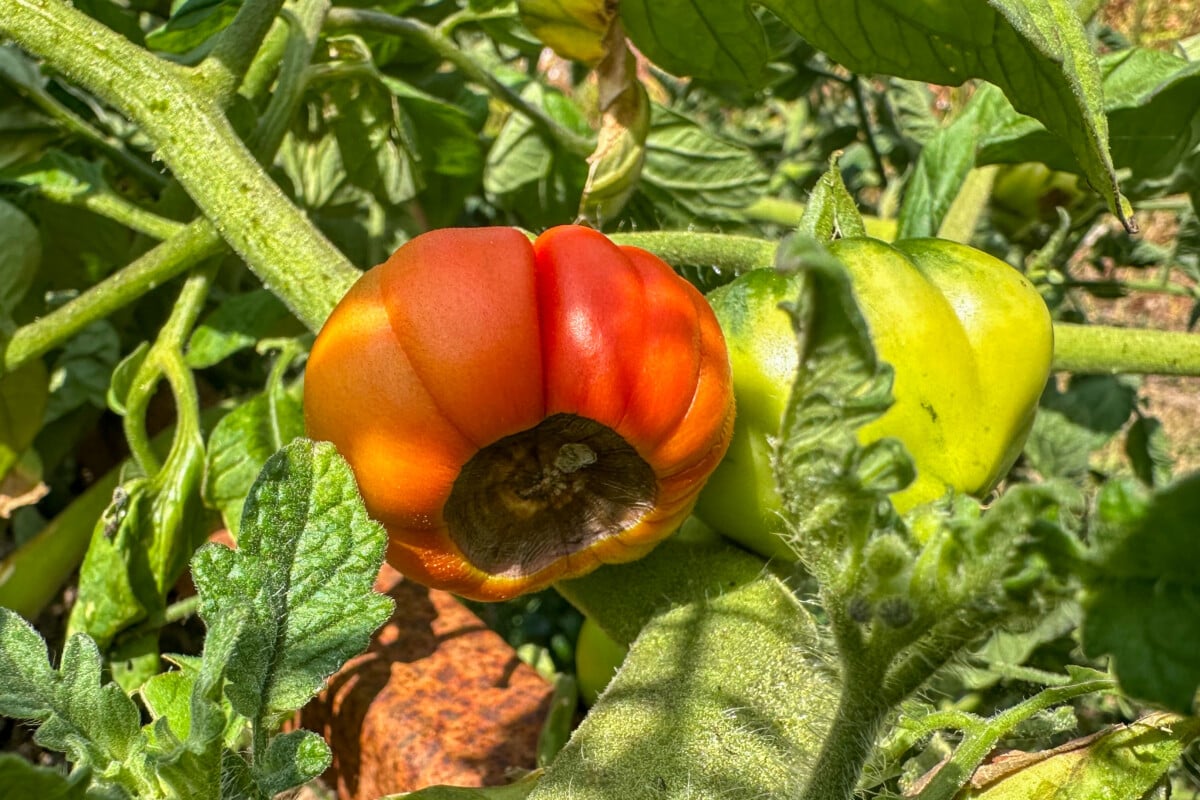
Blossom end rot begins rather innocuously, looking as though the bottom of your tomato has been sitting somewhere damp. You’ll notice a water-soaked spot starting at the blossom scar, that turns, over a matter of days, into a brown leathery patch. Eventually, this will turn black, and the spot will have a sunken-in appearance.
Blossom end rot usually hits green tomatoes first, but most of the time, it’s not noticeable until the tomato is well into ripening.
What causes it
Blossom end rot is caused by a lack of calcium in the plant when it’s developing fruit. Now, don’t let this simple diagnosis fool you. It is not caused by a lack of calcium in the soil. Calcium deficiency is rare. The problem arises in how this mineral is distributed throughout the plant. Calcium can only reach new growth in a plant via water; that applies to all plants that are susceptible to blossom end rot, not just tomatoes.
Common triggers & prevention
Inconsistent watering – this is nearly always the culprit, whether it’s because you forgot to water, or you went through a period with no rain and didn’t water, or there was a hot spell and water was used faster than it was replaced. As the plant grows, it needs consistent, regular watering to ensure calcium reaches the new growth. The old gardening advice of water tomatoes deeply and infrequently seems pretty vague and confusing, which is why I’ve written up some tomato watering advice that’s a bit more practical. You can read that here.
Too much nitrogen – this is less common, but if you’ve been using a fertilizer that’s high in nitrogen, the plant can push out new growth faster than it can move calcium into those new leaves and stems. Too much nitrogen is often an issue if you continue to fertilize with a high nitrogen fertilizer once the plant begins to set fruit. I highly recommend using Farmer’s Secret Tomato Booster beginning when you see the first blossoms on your tomatoes.
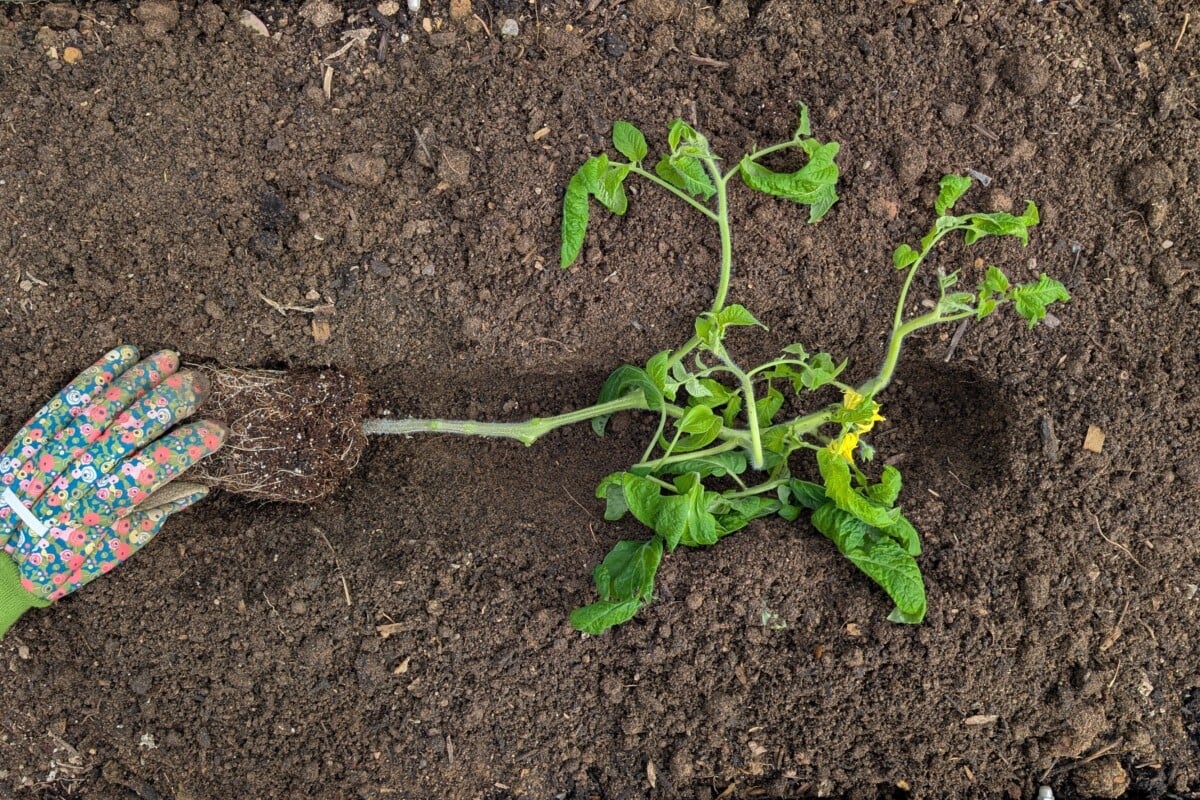
Root damage from transplanting – roots that have been roughly handled when you plant tomatoes out in the garden in the spring can’t move water and nutrients well into the plant until they have recovered. Planting your tomatoes deeply or sideways eliminates this issue and provides a strong root system throughout the entire growing season.
Container-grown tomatoes – tomatoes are great container plants, but you need to be sure to choose a very large container, as they have massive root systems. As there is far less soil volume in a container than in a garden, it is susceptible to evaporation much faster. Always water tomatoes in containers more frequently. In the hottest months of the year, daily or twice a day can be necessary.
Get your soil tested – but only if you’re still convinced you have a calcium deficiency. As I said, calcium deficiency is rare. You’re better off fixing the above first, then getting your soil tested if all else fails.
If you want to dig a little deeper into blossom end rot in tomatoes, you can read more about it here.
2. Fruit Cracking
What it looks like
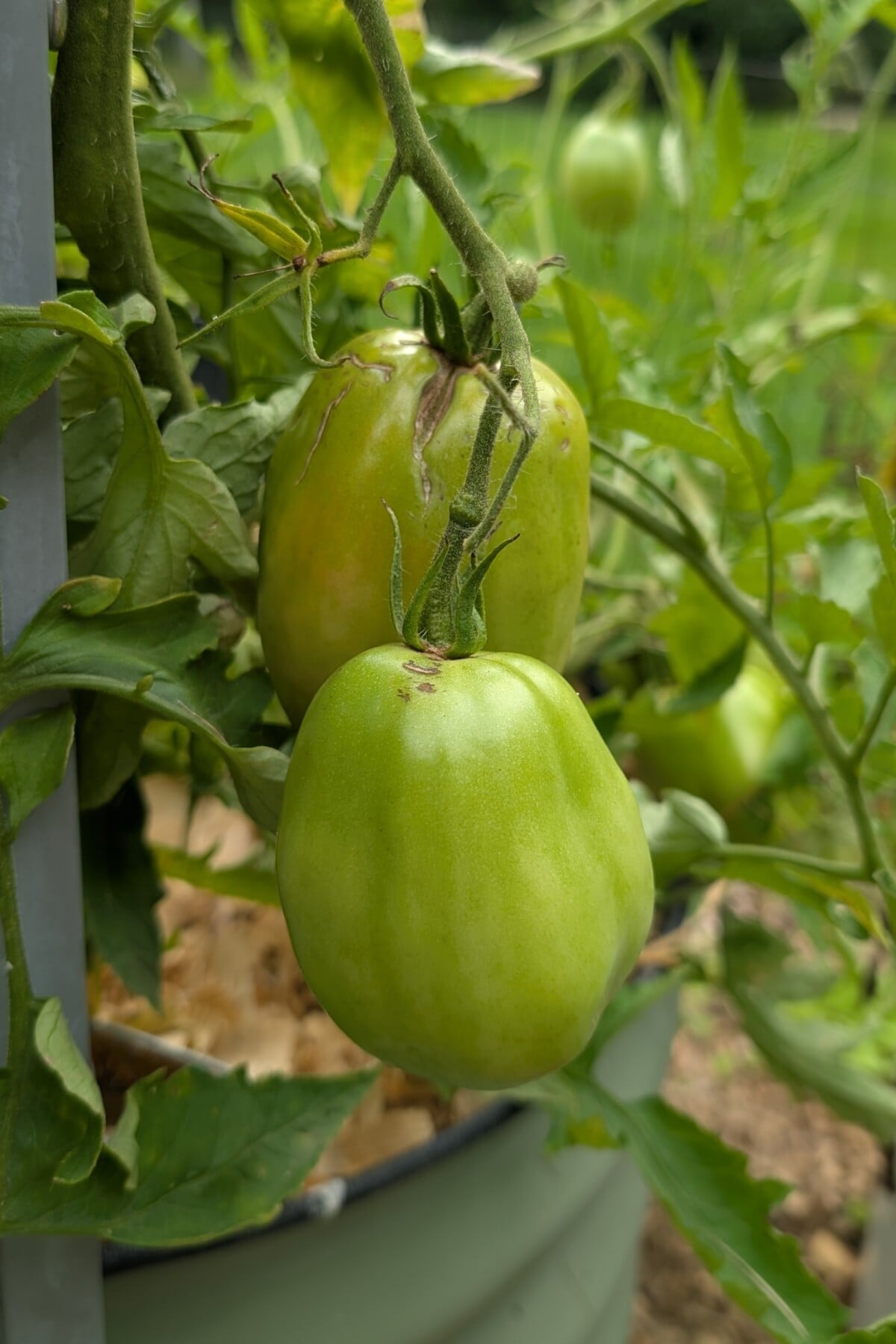
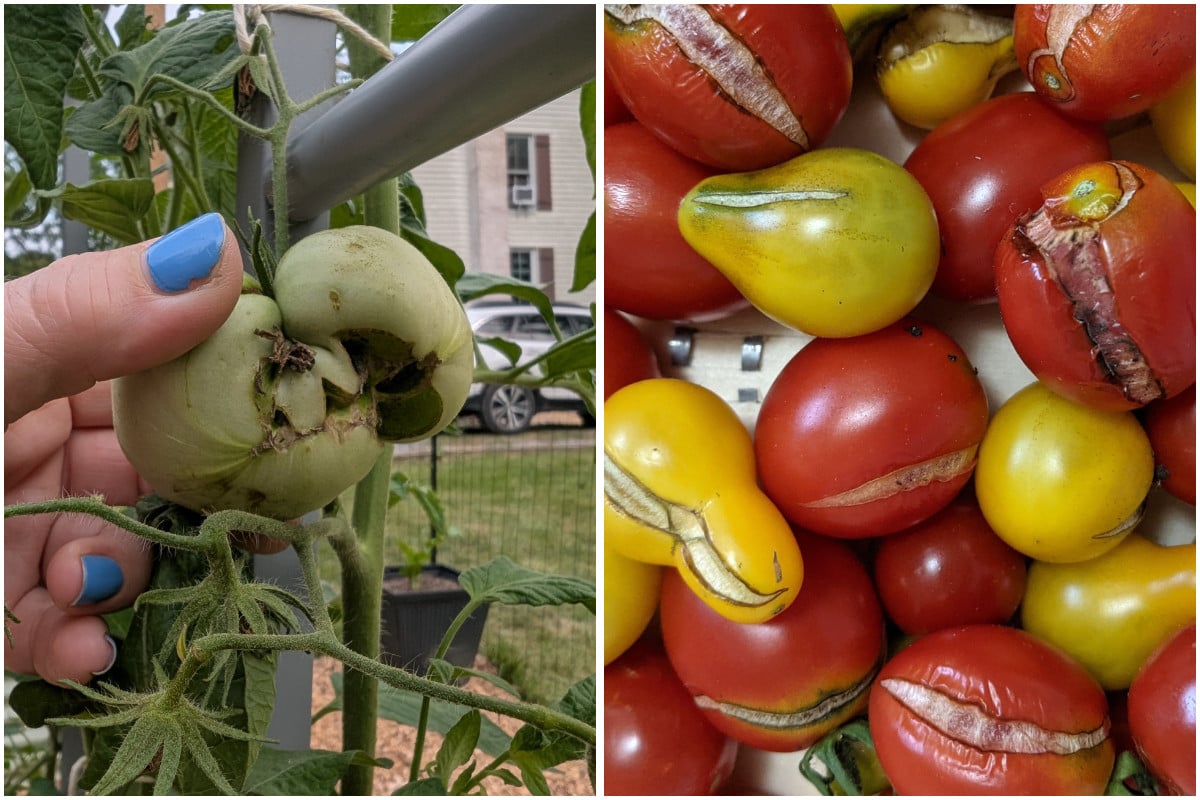
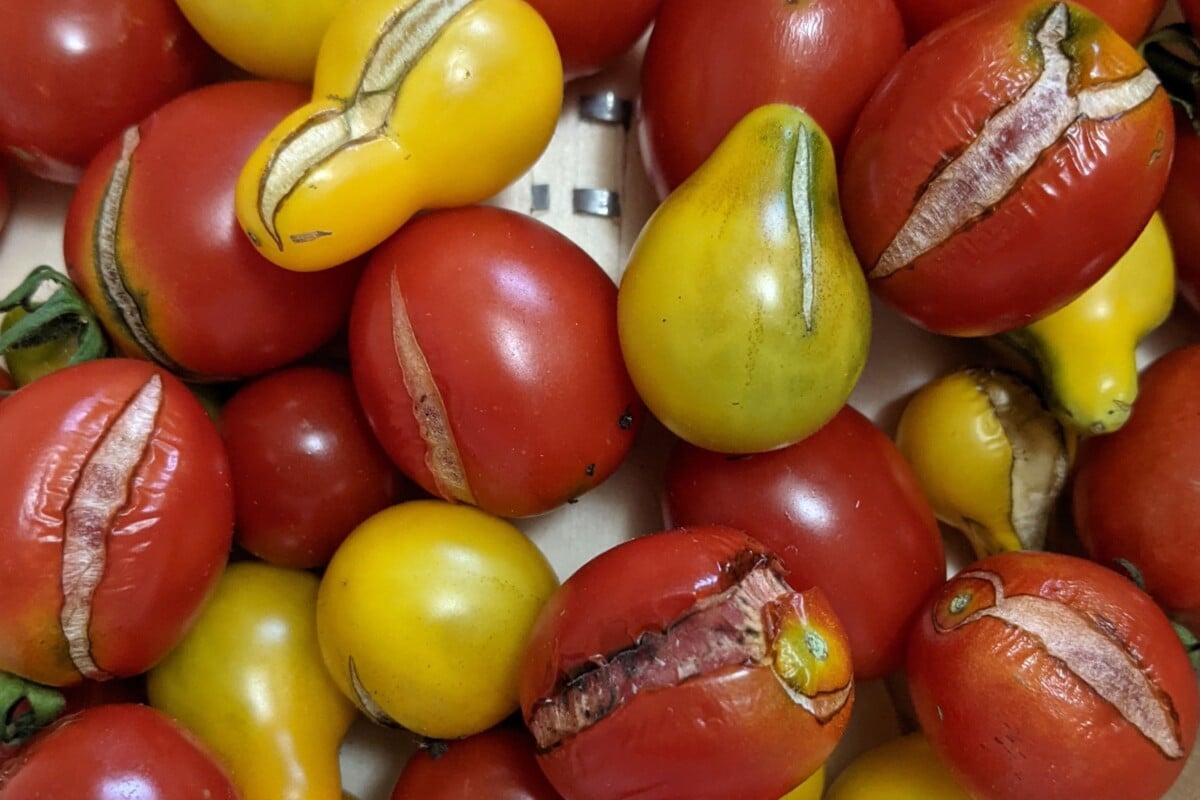
Radial cracking: This type of cracking looks like split lines that radiate out from the top of the tomato, and stretch down the side of the fruit toward the bottom.
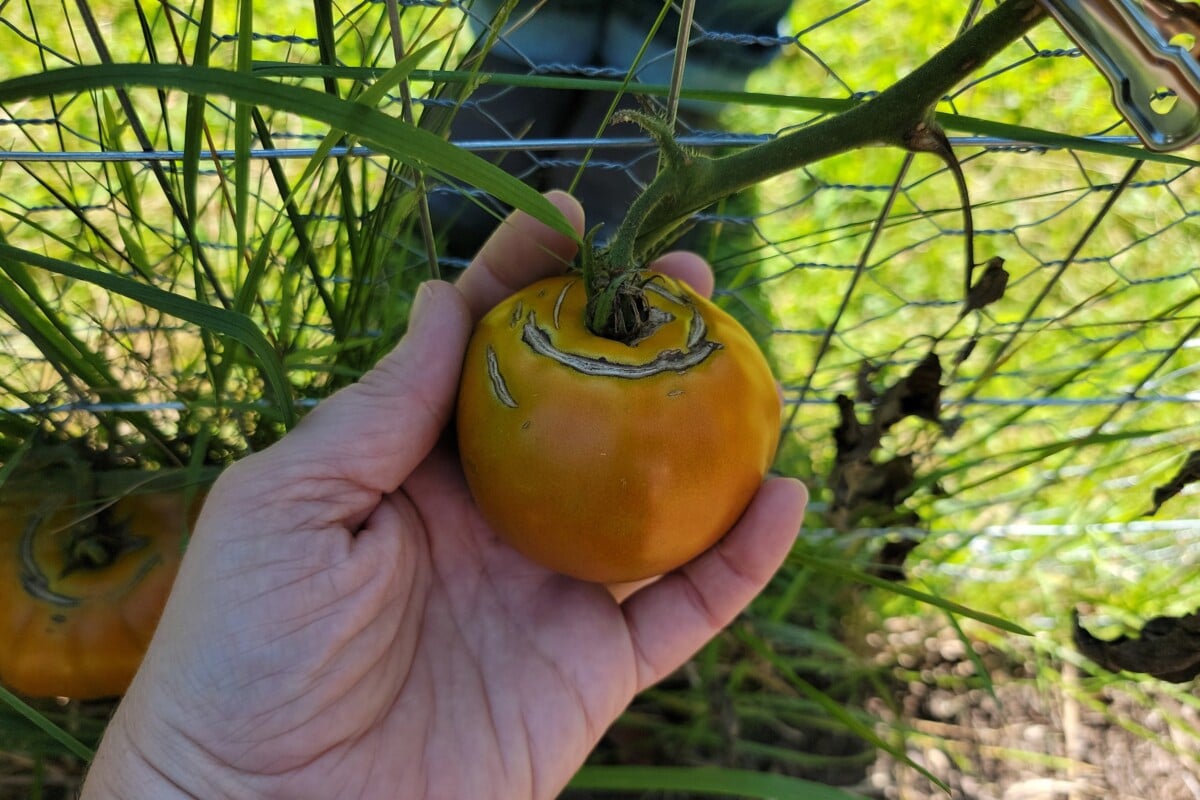
Concentric cracking: These also start at the stem but are circular, forming rings of cracks from the stem down.
Quite often, the cracks are shallow and will heal over within a matter of days. More serious cracks will split the fruit open, exposing the flesh of the tomato. If they aren’t picked right away, the tomato can rot on the vine.
What causes it
Cracks in tomatoes are caused by the rapid expansion of the skin. During a drought or if you water unevenly, growth slows down to conserve energy. If the plant suddenly receives a large amount of water, either from heavy rain or irrigation, the fruit swells, but the skin can’t stretch fast enough to accommodate it, so it splits.
Even if you are watering regularly, heavy rains can cause cracked fruit, so I always go out and pick anything that’s at breaker stake or riper when it’s rained hard the day before. This happened recently, and it saved quite a few of my tomatoes from ending up cracked.
Common triggers & prevention
These are pretty self-explanatory.
Heavy rainfall after drought – while we can’t control the weather, you can keep an eye on your local forecast. Watering a couple of days before a heavy rainfall can help the tomatoes grow at a steady pace, so that when the rain comes, they are already growing and can handle the swell of water better, which leads us to the next issue.
Irregular watering – watering regularly is truly the best way to prevent cracking. As I mentioned before, the old adage of water tomatoes deeply and infrequently is a bit too simplistic without further explanation, which you can find here.
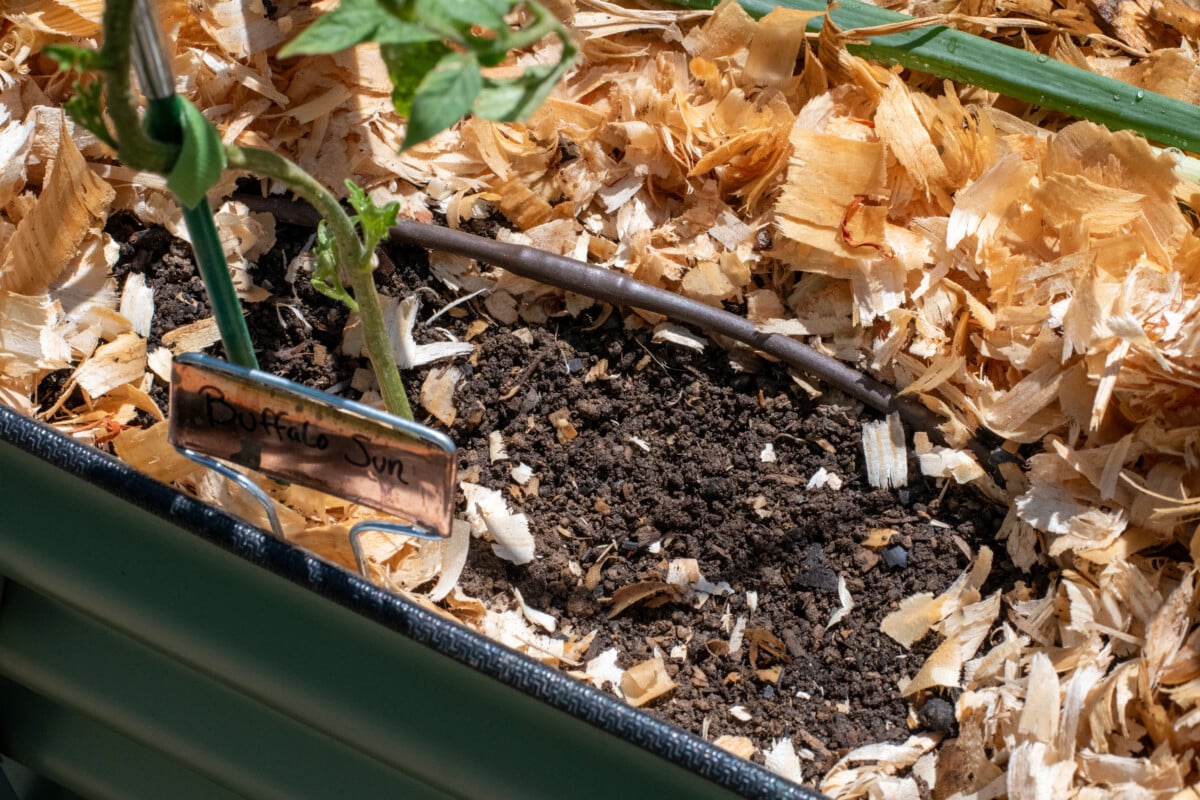
With the weather getting crazier each year, cracking is becoming more of an issue. Dripline irrigation is a great way to ensure your tomatoes are getting the water they need on a regular basis. I’m a huge fan of Rain Bird, and use it in my garden. Likewise, you can grow crack-resistant varieties of tomatoes.
3. Catfacing
What it looks like
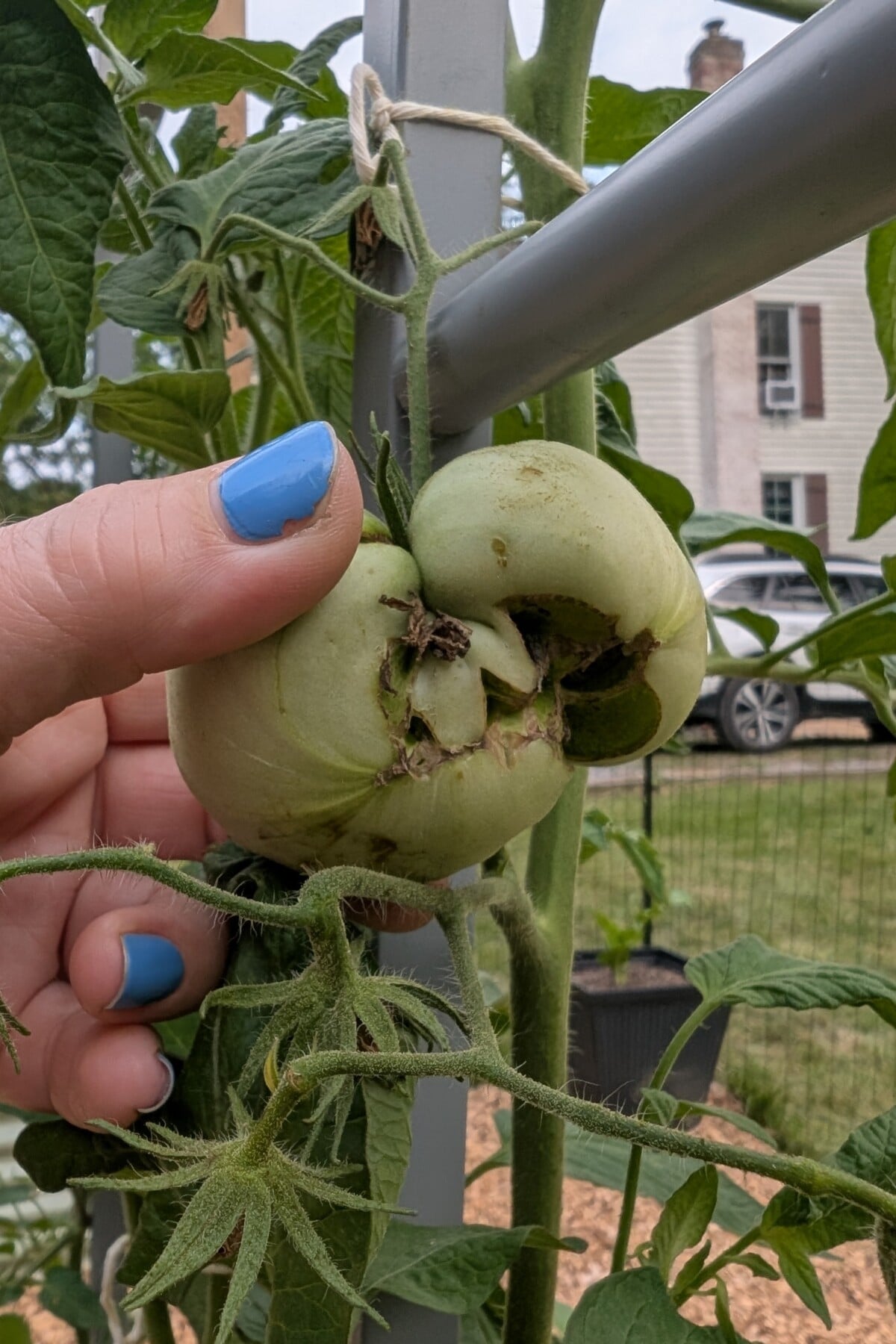
If you grow heirloom tomatoes, you know what catfacing is. (I have two cats, none of whose faces look like this.) Fruits that are severely puckered, scarred or oddly shaped are catfaces. They have weird folds, corky scars and sometimes cavities in the sides of the tomato.
What causes it
Catfacing is more common very early in the season or very late in the season, while the flowers are developing. It happens before there is even a fruit. Cool temperatures interfere with the normal development of flowers, leading to these wonky-shaped fruits.
Common triggers & prevention
Temperatures below about 55°F during flowering – This is mostly an issue in the early spring, and it’s also why it’s important not to set plants out too early, or to protect them from the cold if you do. Nighttime temperatures seem to be the worst, so ensuring your plants are well protected when nighttime temperatures are below 55°F will reduce catfacing in your tomatoes. As the season progresses, this issue usually resolves itself.
Herbicide drift – most of us are wise enough not to spray herbicides in or near our gardens, but if your garden is close to a neighbor’s fence, you may get some herbicide drifting over onto your plants carried on the wind.
Catfacing is pretty harmless, after all, the affected tomatoes still taste great, even if they won’t win any beauty contests. But if it really bothers you, then you may want to give up the heirloom tomatoes, as they are the most susceptible to catfacing. You can read more about this odd disorder here.
4. Sunscald
What it looks like
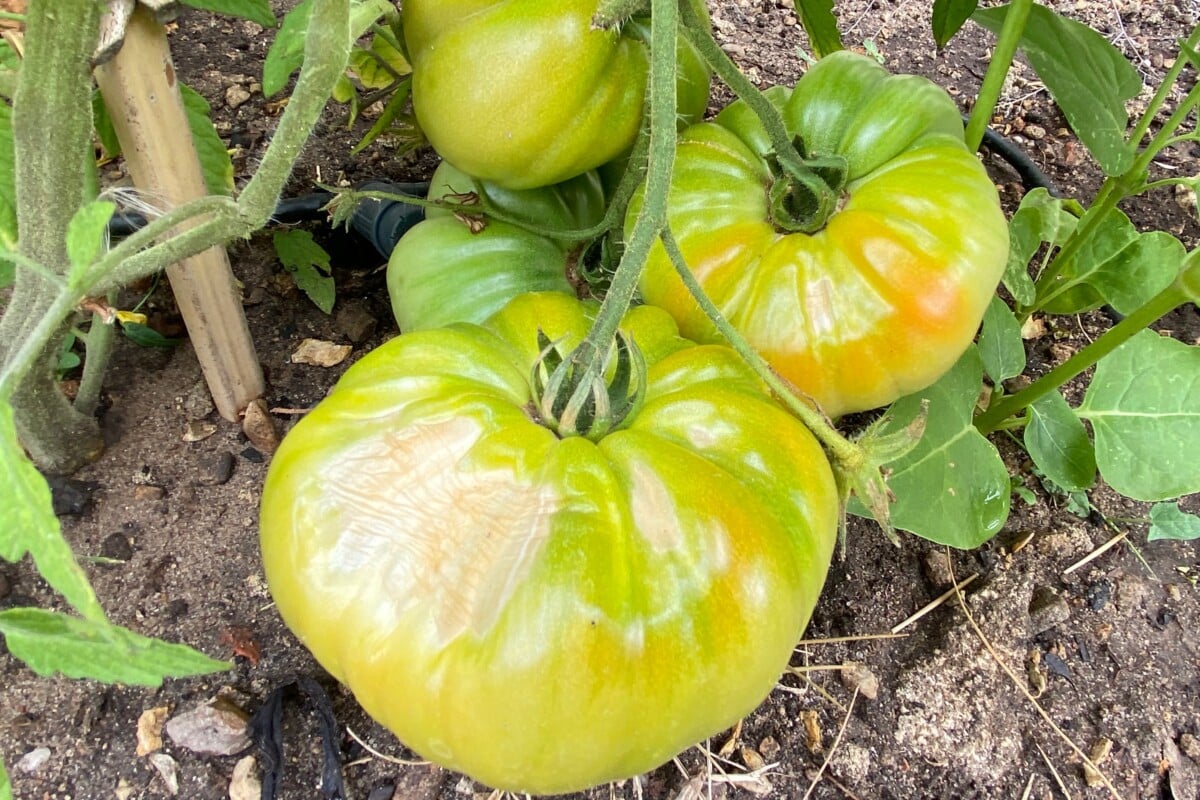
Sunscald shows up as pale yellow or white patches on the part of the fruit facing the sun. As the sunscald gets worse, the discoloration spreads, and the affected area becomes thin and papery, looking blistered. Once this happens, the damaged area usually begins to rot, and you lose the whole tomato. Think of it like sunburn on your tomato.
What causes it
Tomatoes need plenty of sun to grow well, but the fruits themselves need a bit of shade. This shade is provided by all the leaves that tomatoes are known for growing. When that foliage is suddenly removed, the tomato gets blasted by sunlight that it wasn’t adapted to handle (unlike a tomato that grew directly in the sun). And unlike when we get a sunburn, sunscald affects the tissue below the skin.
Common triggers & prevention
Heavy pruning – most of the time, we are the ones who cause sunscald by pruning too hard. This is an easy issue to prevent.
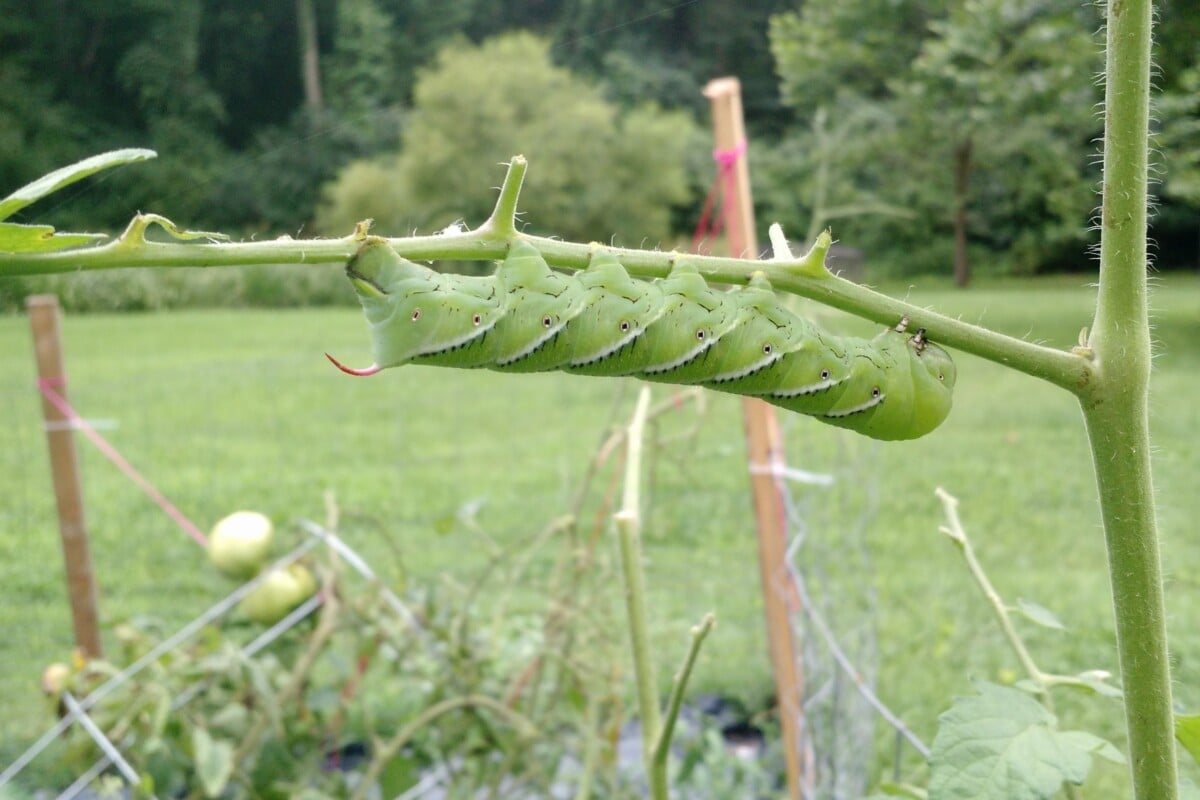
Sudden leaf loss – We’re not the only ones who can quickly defoliate a tomato, leaving the fruit exposed. Pests, such as the tomato hornworm, are notorious for stripping foliage in a matter of days. Snapped branches from storm damage, sparse foliage from a plant that isn’t getting enough water or nutrients, and sometimes even extreme heat can all cause foliage loss.
You can shade your tomatoes with shade cloth if you lose a lot of leaves to storm damage or an invasion of munching worms, as you wait for the plant to put out new foliage to protect ripening fruit.
5. Green Shoulders (Yellow Shoulders)
What it looks like
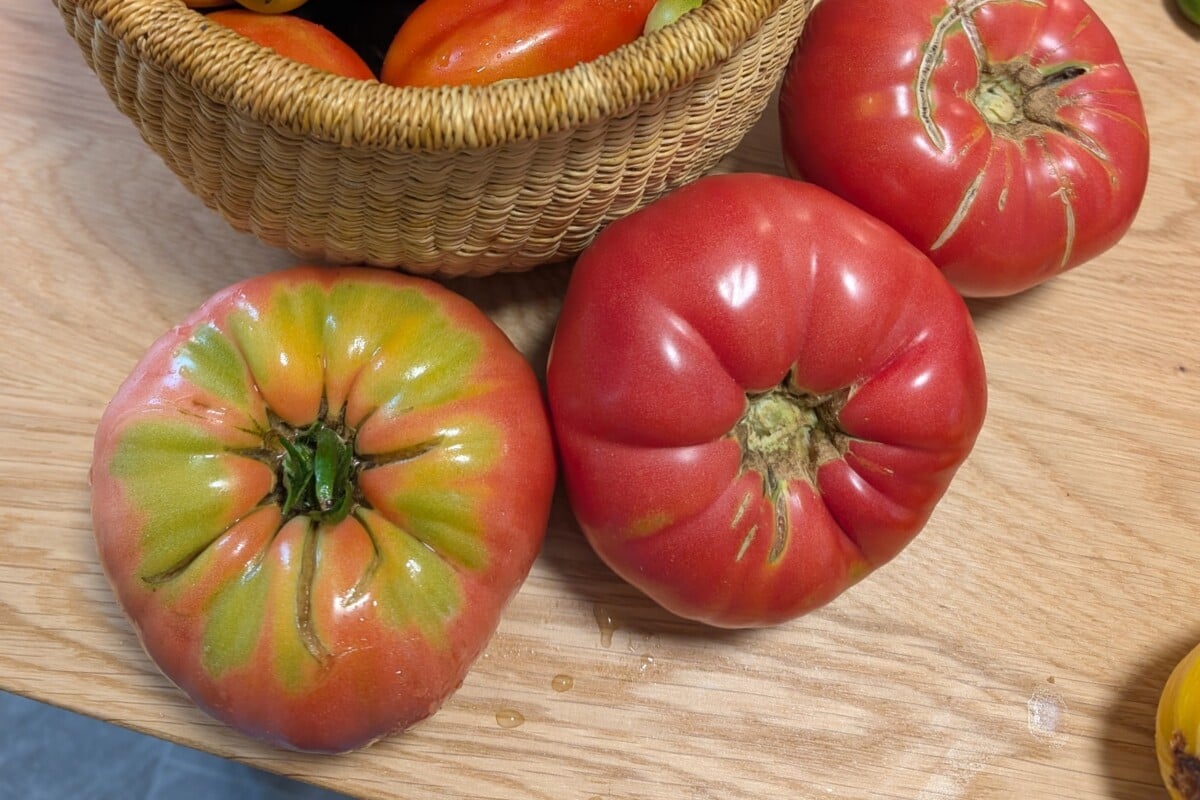
The area around the stem remains green or yellow while the rest of the tomato ripens red, and the flesh around the top of the tomato is usually firmer and less juicy than fully ripened portions.
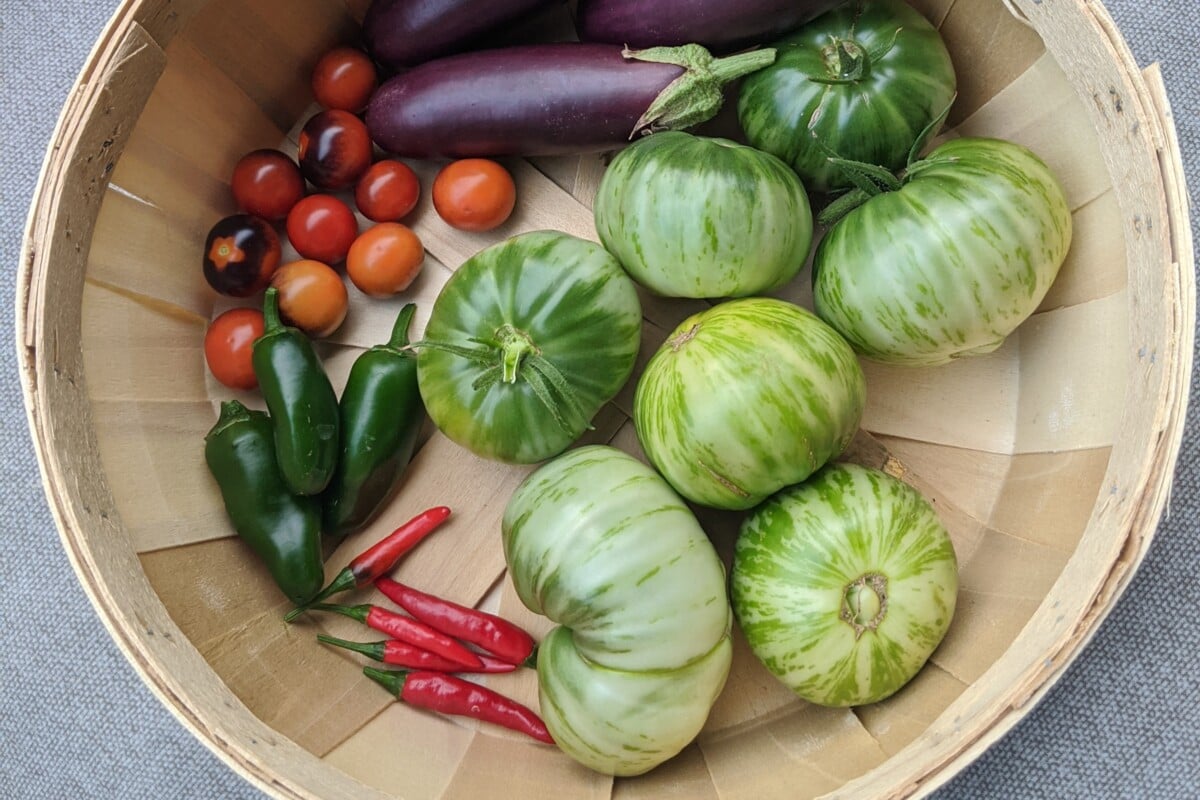
It’s important to note that some varieties naturally retain green shoulders, so you’ll want to be able to distinguish normal genetics from a disorder.
What causes it
Too much intense heat interferes with the production of lycopene, the compound responsible for giving tomatoes their characteristic red coloring. If the fruit is continuously exposed to direct, intense sunlight, the top of the tomato doesn’t ripen the same as the lower portion of the tomato.
Potassium deficiency can make the disorder worse, but usually, environmental conditions are the culprit.
Despite their reputation for needing a lot of sunlight each day to grow well, the actual fruits need to be protected by the leaf canopy in order to ripen.
Common triggers & prevention
Daytime temperatures above about 85°F – extreme heat, such as the weather we’ve been having the last few years, can bring lycopene production grinding to a halt.
Intense sunlight – this is almost always caused by overzealous pruning. Tomato plants are pretty good at putting out enough foliage to shade developing fruit. But when we get a little too eager with the pruning snips, we leave the tender fruit exposed.
Potassium deficiency – as soon as your tomatoes begin producing flowers, it’s important to feed them with a fertilizer that contains potassium and phosphorus to ensure the plant has all the nutrients needed to produce fruit.
Certain heirloom varieties – again, some heirloom varieties naturally have green shoulders.
Get the famous Rural Sprout newsletter delivered to your inbox.
Join the 50,000+ gardeners who get timely gardening tutorials, tips and tasks delivered direct to their inbox.