

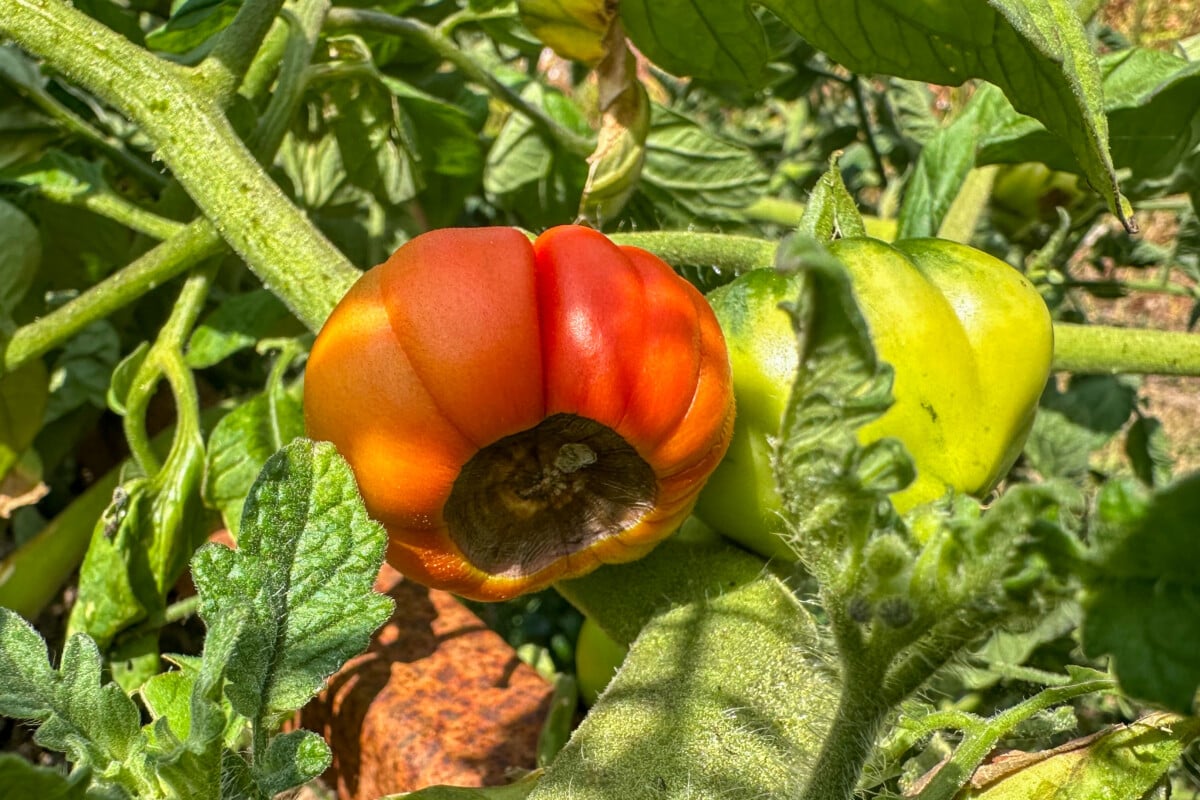
Few things are as infuriating as eagerly awaiting your first tomatoes of the season, watching them color up and ripen, only to find the tell-tale dark blotch of blossom end rot on the bottom. Blossom end rot is one of the most common issues we home gardeners run into each season. Unfortunately, it’s also one of the most misunderstood. Luckily, once you do understand it, you can stop it from showing up in your garden at all.
The one thing most gardeners seem to understand is that blossom end rot is caused by a calcium deficiency within the plant.
You’ll see all kinds of advice across the internet and social media advising gardeners to add lime to their soil, bury crushed eggshells, or even spray their plants with a foliar spray made from crushed antacid tablets.
But the problem with all of these fixes is that the gardener who came up with them didn’t understand the assignment. Yes, it’s a calcium deficiency, but it’s rarely your soil that’s the problem, so these remedies just don’t work.
If you’re encountering blossom end rot, you may be tempted to give up on your tomatoes completely. It can feel like you’ll never get on top of it. But before you go yanking up your plants, keep reading, and we’ll get to the bottom of this, so that you’ll rarely have to deal with this annoying disorder again.
What Does Blossom End Rot Look Like?
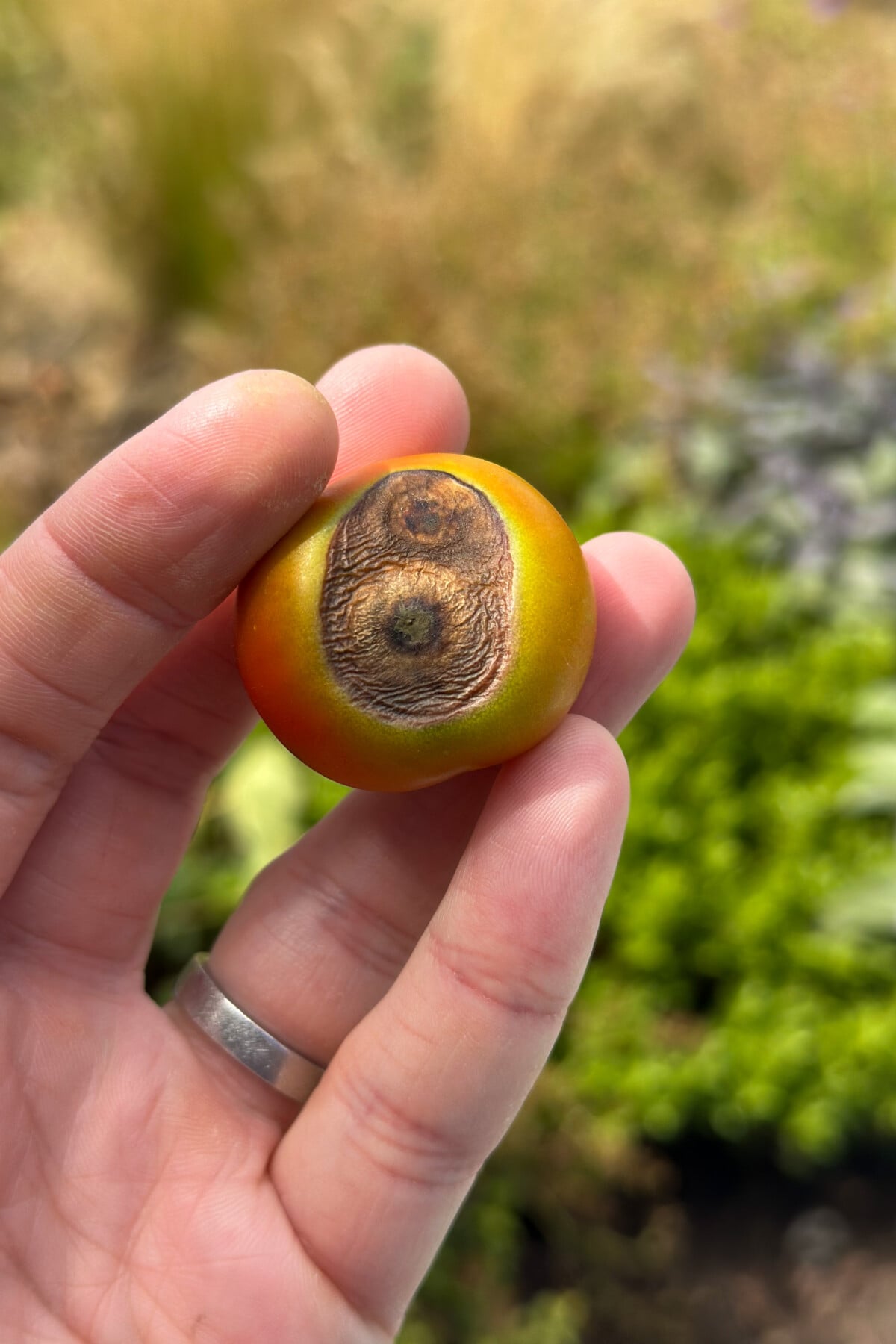
At first, blossom end rot shows up as a small, pale spot on the bottom of a developing tomato. It usually looks water-soaked, as though the tomato has been sitting somewhere damp. As the fruit grows, so does the spot. As it gets bigger, it also gets darker, turning brown or black and leathery with a sunken appearance.
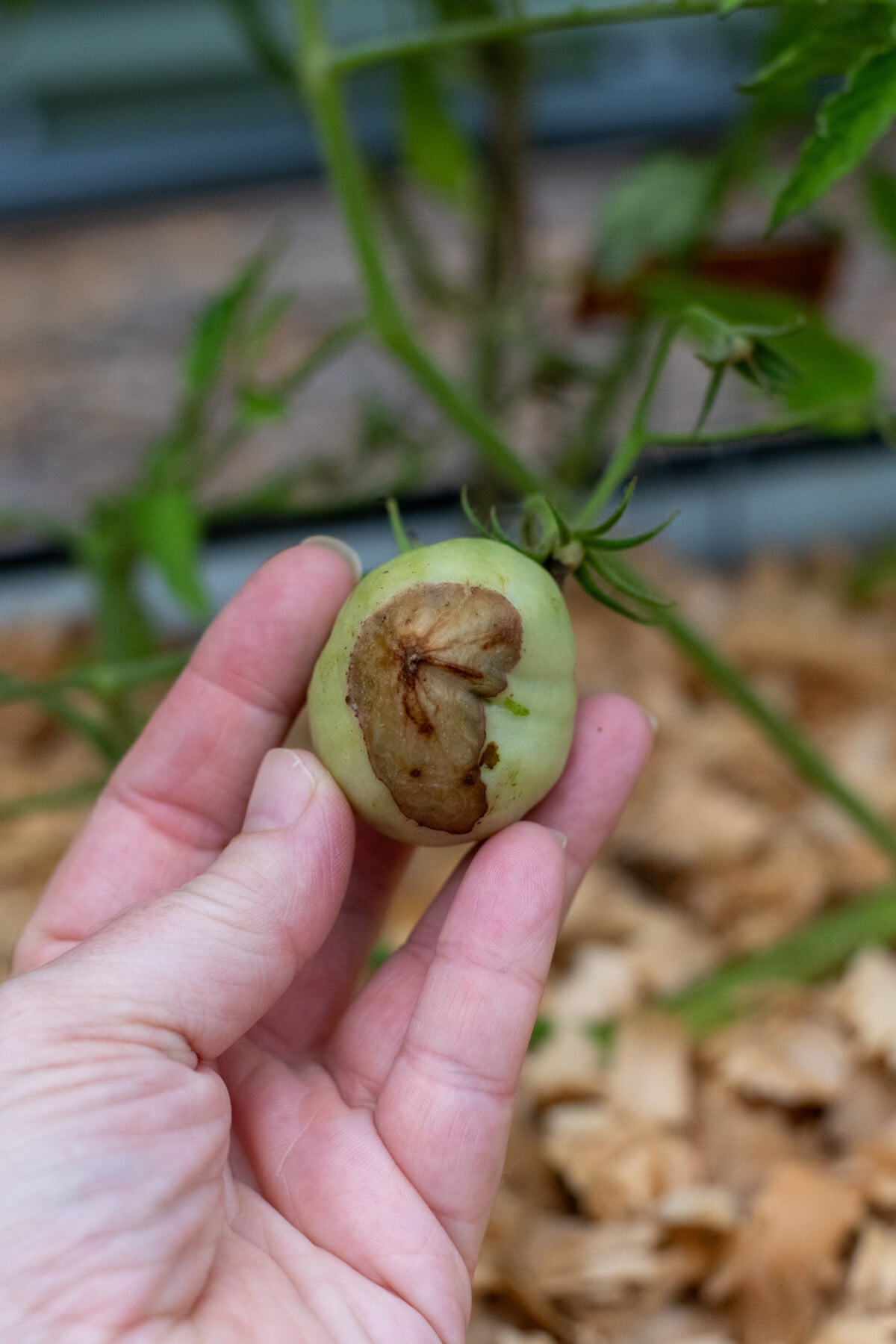
Although the damage almost always starts on green tomatoes, you may not find it until they begin to ripen and color up. Unfortunately, though, once the fruit is affected, the damaged part of the tomato won’t recover.
The silver lining
The good thing about blossom end rot is that it is a disorder and not a plant disease, so it’s not contagious. It won’t spread from one tomato to another (although it can feel that way sometimes), and it won’t infect nearby plants.
The Real Cause of Blossom End Rot – Calcium Is the Culprit
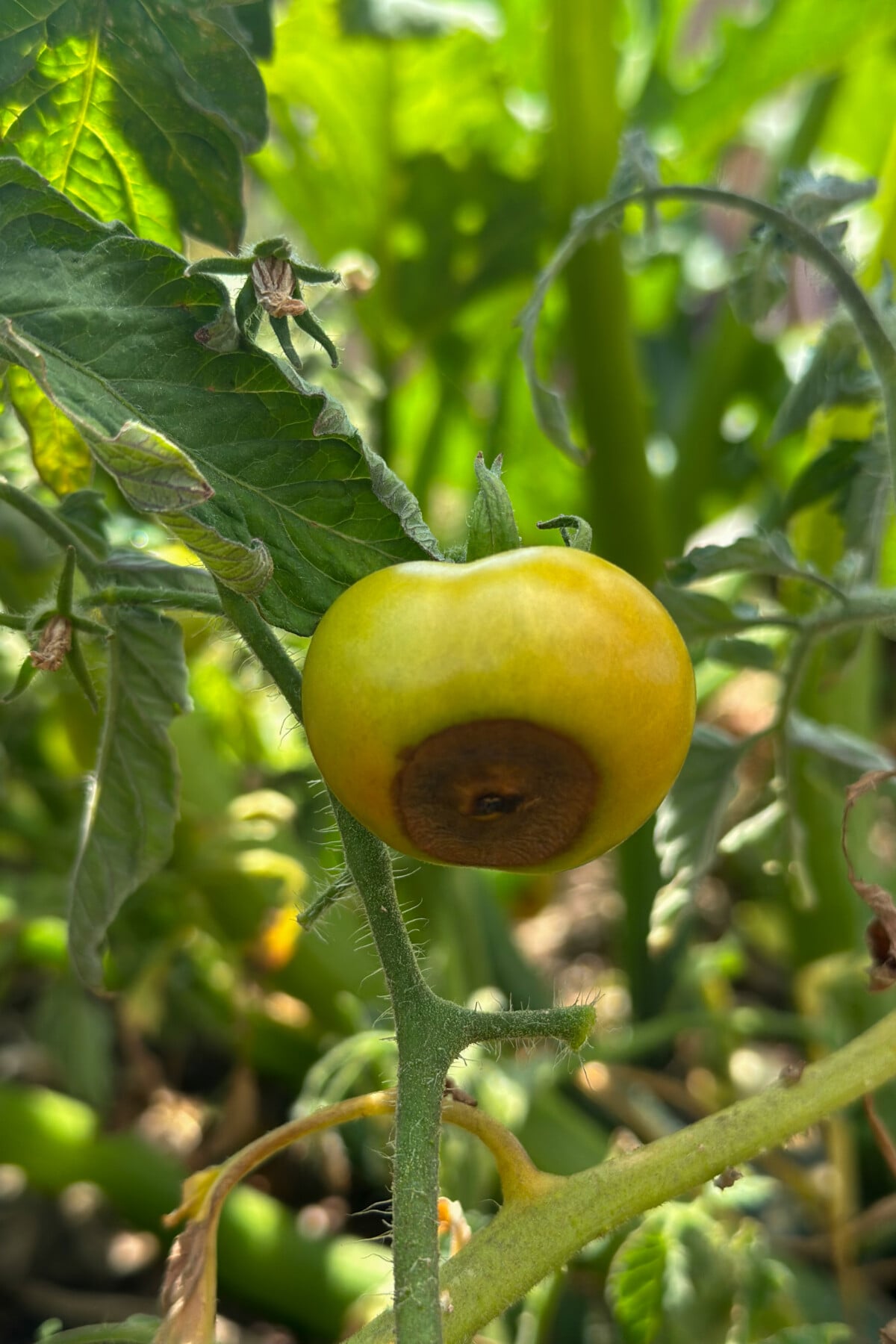
Or rather, a lack of calcium. Calcium plays an important role in healthy plant growth and fruit production. It’s super important for tomatoes in particular. Calcium is what strengthens plant cell walls, giving your developing tomatoes structure. It’s a lack of calcium that leads to cell collapse and those ugly, all-too-familiar black sunken patches.
But pay close attention because here is where most gardeners (and those social media videos) get it wrong.
They treat the soil.
After all, we said it was a deficiency, didn’t we?
Calcium-deficient soil is exceedingly rare. It’s just not that common. The problem isn’t that your soil has no calcium for growing tomatoes, rather your tomato plant can’t move that calcium into the developing fruit when it’s needed. The problem arises because of how calcium travels through plants.
The root system pulls in water and nutrients from the soil. Calcium is one of the nutrients floating along in the water, moving up into your tomato plant.
Unlike say, nitrogen, which can move throughout the plant, going where it’s needed once it has been picked up, calcium only goes as far as that flush of water takes it. Once distributed, it stays where it landed inside the plant.
It’s an oversimplification, but to help visualize what’s happening, let’s say your tomato plant is a foot high and you’ve watered it. The calcium moves throughout the plant with the water. The next week, your plant grows another foot, but you don’t water it. That new foot of growth on your tomato plant is now calcium-deficient, because no new calcium has been distributed through the new growth. Only the lower half of the plant has the calcium needed for plump, firm fruit.
Again, it’s a bit more complicated than this, but it helps you get an idea of how calcium moves or doesn’t through the plant.
As your tomato plant continues producing new leaves, stems, flowers and fruit, it needs a steady supply of water to keep moving calcium into all that fresh growth. If that flow of water is interrupted, say by a heat wave or a forgetful gardener, calcium can’t reach the rapidly developing fruit, even though plenty is sitting right there in the soil.
When we say blossom end rot is caused by a calcium deficiency, what they really mean is the fruit is calcium-deficient—not the soil.
Here’s Why Tomatoes With Blossom End Rot Seem to Come Out of Nowhere
As I’ve just mentioned, anything that interferes with steady water uptake can prevent calcium from reaching developing tomatoes.
The most common culprit is inconsistent watering.
I’ve been dealing with blossom end rot this summer, thanks to the heat waves. Even my good friend in Britain has had his share of blossom end rot thanks to the scorching temps they’ve been dealing with.
Now, I know what some of my readers are thinking, “Tracey? Don’t you have dripline and an automated watering schedule? Don’t you always mulch your tomatoes? What gives?”
Yes, you would be right. My mistake was in not checking on the soil during the first heat wave. Had I done so, I would have seen that my current watering schedule just wasn’t enough to keep up with the extreme temperatures we were dealing with. Thankfully, I got wise pretty quickly and was able to add an additional watering time each week. I now have a blossom end rot-free garden again.
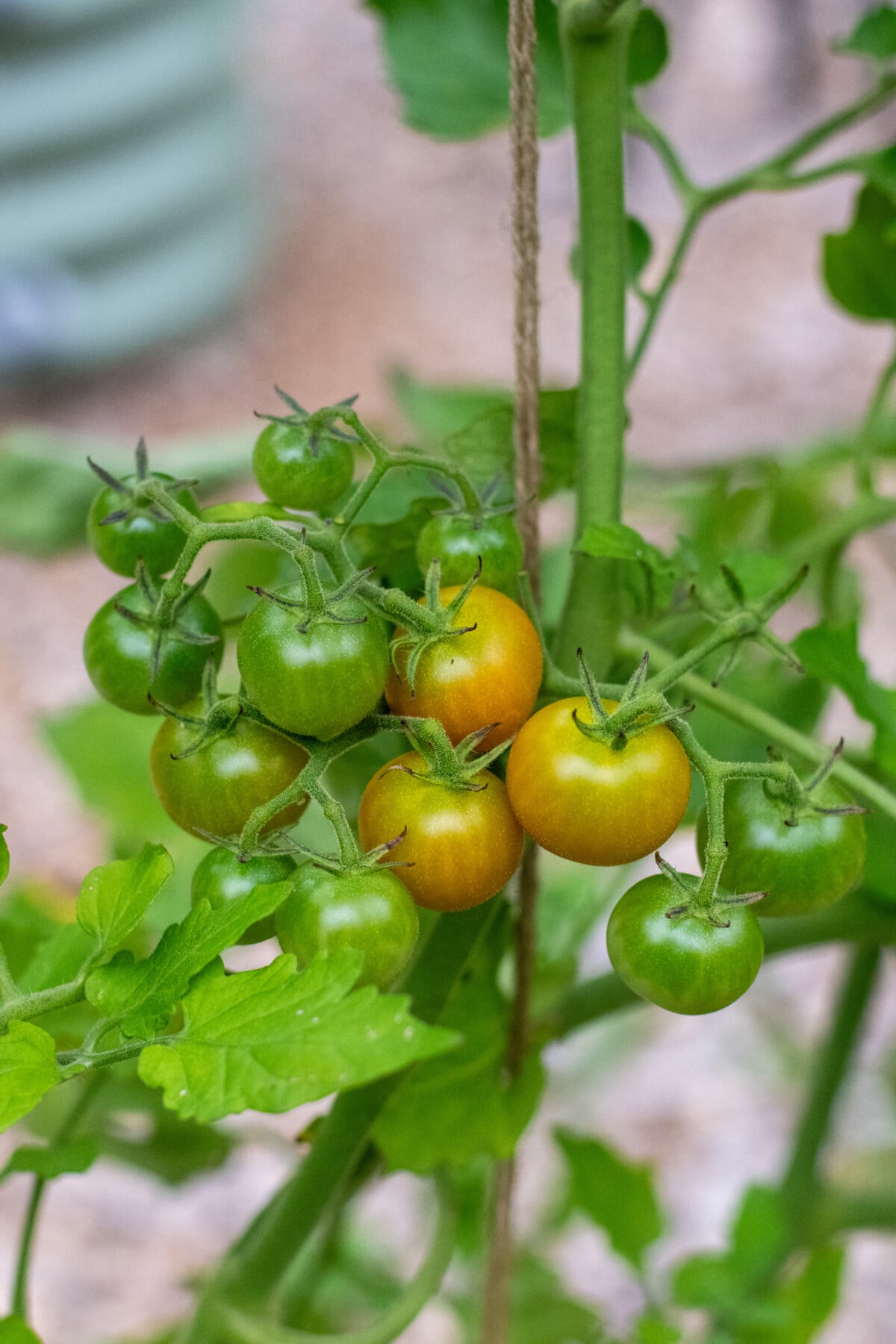
It only takes a few hot, dry days followed by a deep soaking or heavy rain to disrupt calcium movement right around the time fruit is developing and expanding rapidly.
A few other common reasons why your tomatoes may not be getting sufficient water to move calcium through the entire plant:
- Waterlogged or poorly draining soil, the roots begin to drown and rot and are unable to move water up into the plant properly
- Damaged roots from cultivation or transplanting, an unnecessarily rough detangling of the root ball can snap tender roots. Likewise, if you are teasing apart the roots of seedlings grown in the same pot together
- Container-grown tomato plants drying out too quickly before water is replenished
- Going heavy with a nitrogen fertilizer, which encourages rapid leafy growth that competes with developing fruit
- Hard, compacted soil that limits root growth
- Heat and wind together, this causes the plant to lose more water through its leaves than normal
Tomatoes growing in containers are especially susceptible because potting mix dries out much faster than garden soil, and there isn’t enough volume compared to plants grown in the ground. And yes, those of us who grow in raised beds, that includes us.
Why the Eggshells, Tums and Calcium Sprays Usually Don’t Work
The advice is meant well – give your tomato plant calcium. But the problem is that these fixes don’t actually solve the problem. As I’ve already pointed out, the problem isn’t a lack of calcium, it’s a lack of water.
Don’t get me wrong, eggshells are wonderful for your soil, but they break down slowly, so their contribution of calcium won’t happen this season. And those videos of people adding a Tums tablet to the soil? Again, the problem isn’t a lack of calcium. If you’re truly convinced that your soil is deficient in calcium, get it tested. You’ll likely be surprised to see that there is plenty of calcium.
You might be thinking, but what about foliar sprays containing calcium?
It’s water and calcium; it should work, right? Not really. Tomatoes haven’t developed to transport calcium to developing fruit by way of the leaves, only through the vascular system.
As you’ve probably already guessed, the best treatment isn’t adding calcium, it’s making sure the plant is able to consistently move the calcium that’s already there.
How to Prevent Blossom End Rot
The gold standard for preventing blossom end rot is to make sure your tomato plants have consistent moisture throughout the entire growing season.
But Tracey, what about watering deeply rather than frequently?
Yes, that advice does seem to fly in the face of ensuring your tomato has consistent moisture, doesn’t it?
I’ve written an article that addresses this common gardening advice and why it may not be the best advice if you grow tomatoes anywhere other than directly in the ground. Even raised bed gardeners may want to revisit this old advice and give it a closer look. You can read the article here.
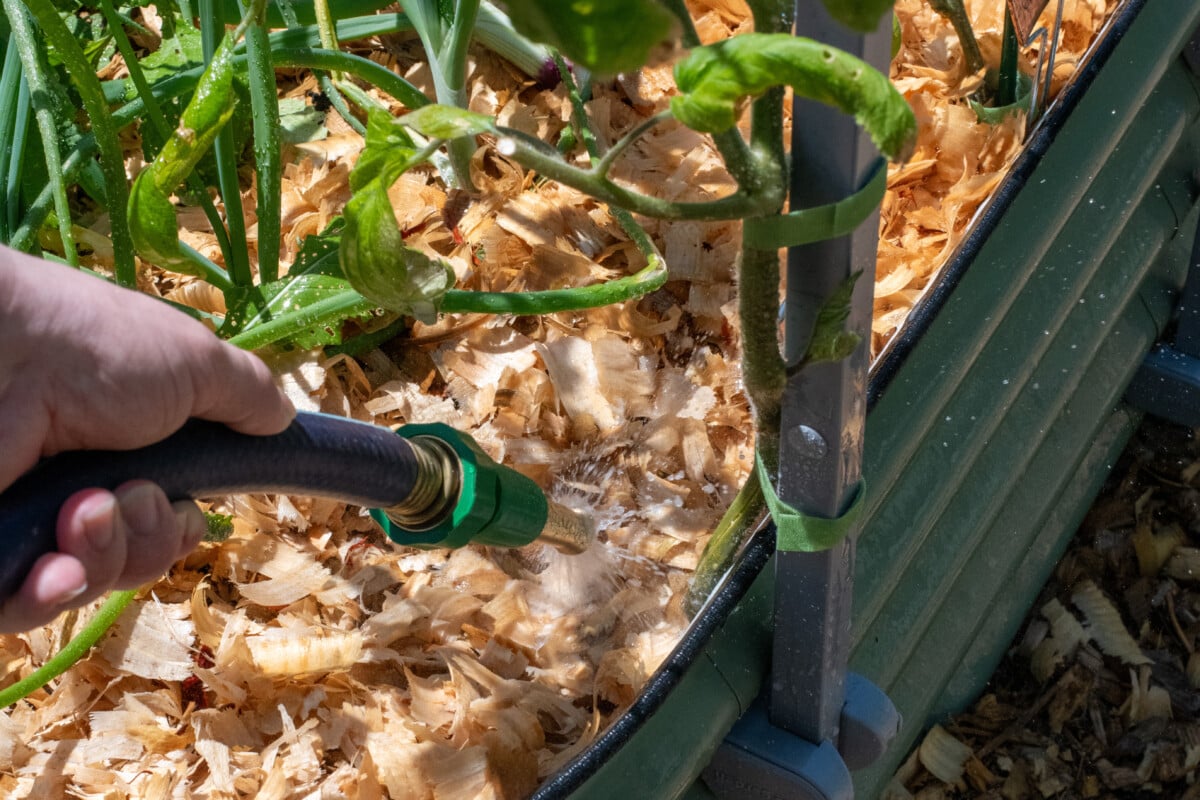
The Cliff Notes version is as follows: yes, you do want to water deeply to ensure your tomato plant stretches its roots deep down into the soil. But if your plant is in a container or the soil beneath your raised beds is compacted and hard, there’s only so far those roots can go. In those cases, you need to water deeply and sometimes frequently.
Mulch like your life depends on it.
Well, at least like your tomato’s life depends on it because it does. Mulching is the smartest thing you can do all season to prevent blossom end rot. It makes such a huge difference in how much and how fast water evaporates from the soil. It also helps to keep roots cool, so they can continue to work efficiently.
Consider drip irrigation.
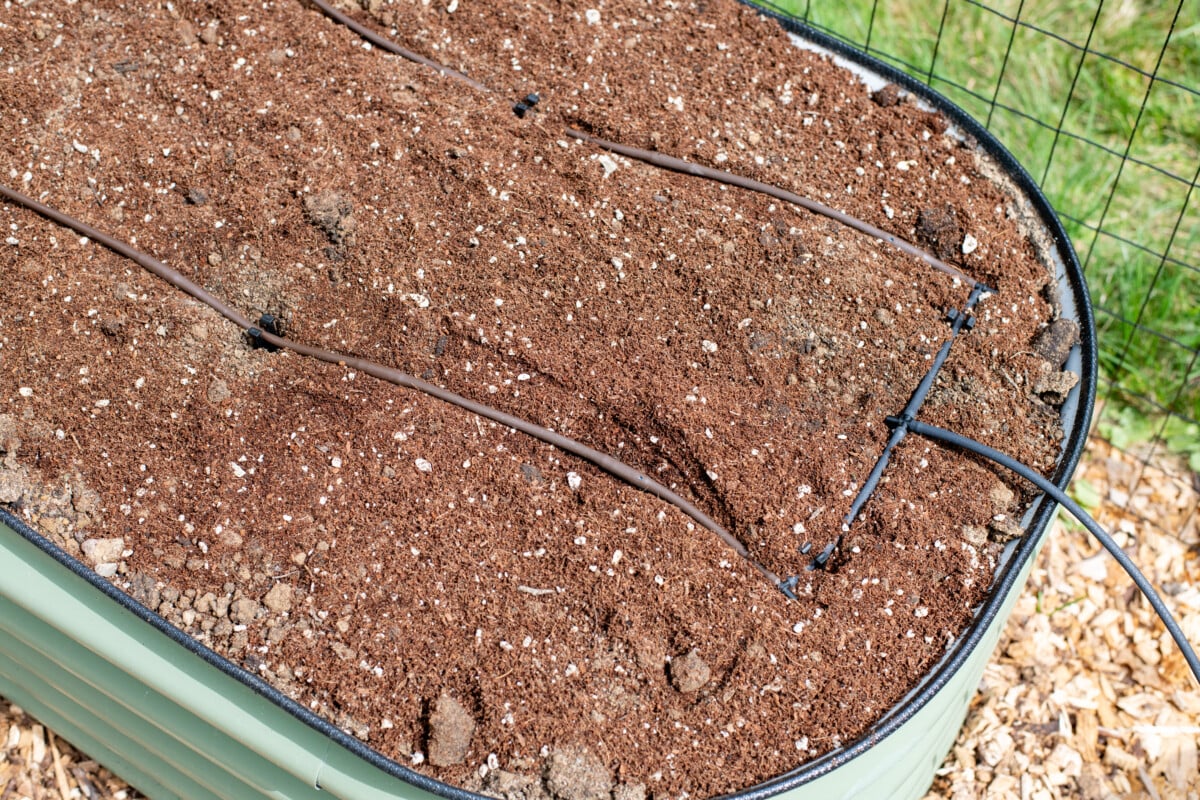
Adding dripline to my raised beds is probably one of the smartest things I have ever done as a gardening. It puts the water right where it’s needed – at the soil, and if you mulch over top of it, you reduce evaporation even further. This is the drip irrigation I use throughout my garden.
Lay off the nitrogen.
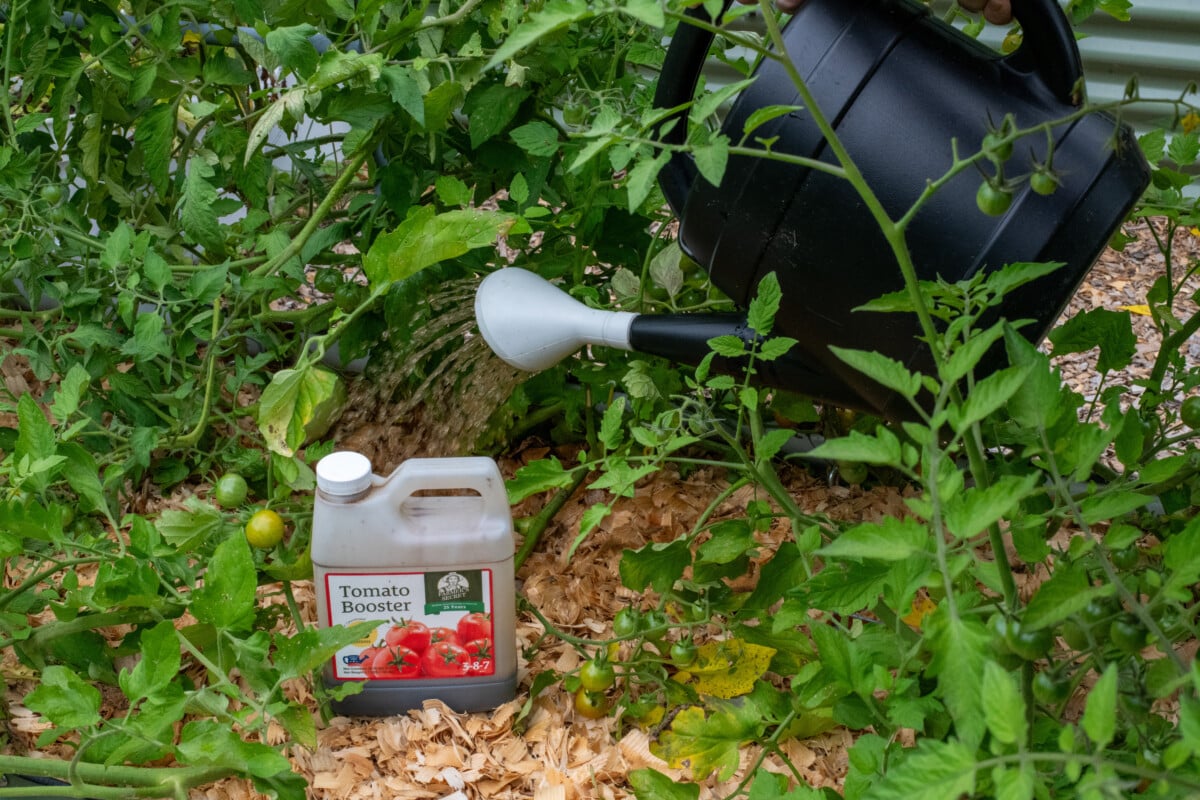
Once your plant starts setting fruit, it’s time to put the high-nitrogen fertilizer away. It will encourage lots of leafy growth that ends up competing with the developing fruit for calcium. I only use Farmer’s Secret Tomato Booster once my plants begin to set fruit.
Is There Any Way to Save Tomatoes With Blossom End Rot
Unfortunately, once that all too familiar watery patch shows up on the bottom, that tissue won’t heal. The good news is that your plant is still perfectly healthy. I know it can feel like blossom end rot is spreading because you keep finding more fruit affected.
Just remember that until you correct the issue with consistent watering and begin moving calcium through the plant again, you will continue to have fruit affected.
Stay on top of watering, and the problem will sort itself out in a week or two.
It’s a good idea to remove any affected tomatoes as soon as you find them. That way, the plant isn’t still putting energy into growing and ripening a damaged fruit. Later tomatoes will develop normally.
Only You Can Prevent Blossom End Rot
Skip all of the confusing advice about calcium. Remember, this is a watering issue at heart, not a nutrient issue. Our job is to ensure our plants are actually getting the nutrient in question. As long as you continue to water deeply and check your soil moisture. (Seriously, take a few extra minutes to read about watering tomatoes and the advice we all misinterpret about watering deeply.)
Once you understand that blossom end rot is a watering issue and not a lack of calcium in your soil, you’ll likely find that this common tomato disorder becomes rare in your own garden.
Get the famous Rural Sprout newsletter delivered to your inbox.
Join the 50,000+ gardeners who get timely gardening tutorials, tips and tasks delivered direct to their inbox.