

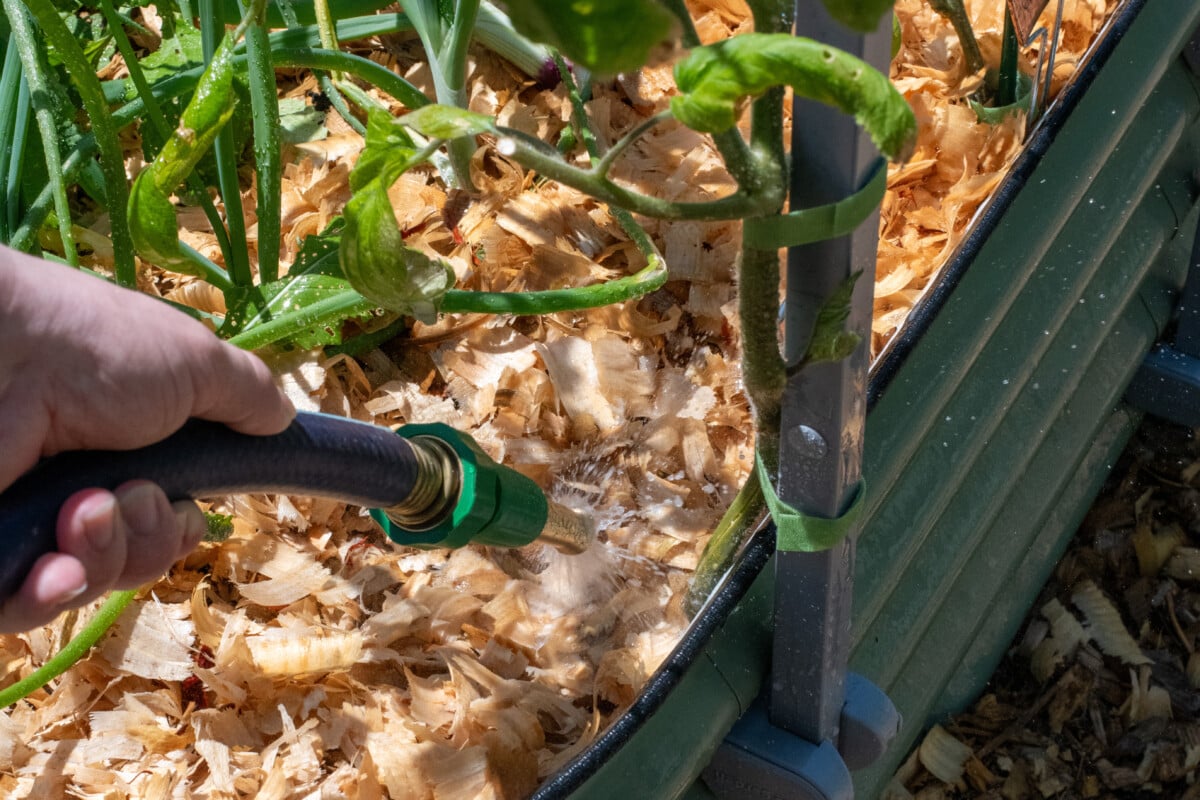
We’ve all seen the same advice when it comes to watering tomatoes: water them deeply, but infrequently. Okay. Well, ‘deeply’ isn’t exactly an amount. It’s not really something you can measure. How deep is deeply? How often is infrequently?
Aside from being annoyingly vague, this advice is based on the assumption that all of us are growing our tomatoes directly in the ground. That may have been the case fifty years ago, but gardening has become far more accessible through the means of raised beds and container gardens. So, does that advice still make sense for your growing situation?
It’s time to take a look at more up-to-date watering information for everyone’s favorite garden tenant, the tomato.
I’ll be straight with you, this is a good ten-minute read. But if you stick with it, you’ll have a better understanding of where that age-old advice comes from, whether or not it applies to you, and most importantly, what to do if it doesn’t.
I’m going to show you how much water your tomatoes actually need and how to water them, taking into account how you grow them. I’ll also discuss how I water my tomatoes, as a raised bed gardener. In the end, you’ll have more productive tomato plants and fewer cracked tomatoes.
Let’s start by discussing the reasoning behind this common advice, who should follow it still, and how to get the best results using it.
Which Gardeners Should Still ‘Water Deeply & Infrequently’
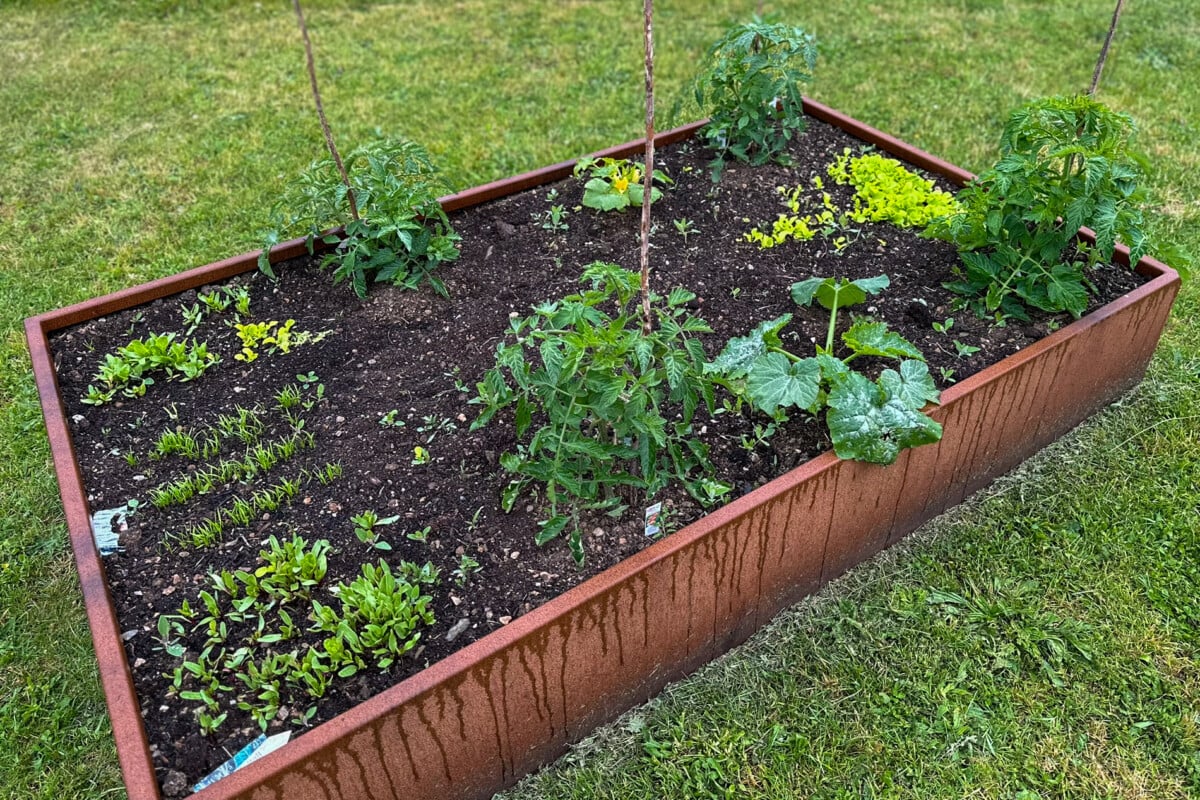
As I already mentioned, this gardening advice is meant for folks growing tomatoes directly in the ground. When you water in-ground tomatoes deeply and infrequently, you are forcing the plant to search for water. The roots will grow much further down into the soil in search of water, and that’s where you want them to be.
If you were to water your tomato plants lightly every day or every couple of days, the roots would stay at the surface where the water is. Without that lack of water, they do not need to grow deeper. Unfortunately, this can cause issues throughout the growing season.
Roots that grow close to the surface dry out much faster, so unless you plan on staying on top of daily watering, your tomatoes won’t grow as well.
The soil at the surface also heats up faster. If your roots are mainly in that surface level of soil, they are much more susceptible to drought. Your plants will also drop blossoms and stop producing fruit if the roots get too hot.
By watering your plants deeply (don’t worry, I’ll give you the amount in a moment), then letting them dry out for a few days, the roots will naturally grow further down into the soil. Deep underground, water evaporates slower, so there is more water available than at the surface. This cooler soil also helps to keep your tomato plant’s roots cool.
When you’re dealing with a heat wave, it’s usually the soil temperature that causes dropped blossoms and slowed fruit production, not air temperature.
So, if you are growing your tomatoes directly in the ground, then yes, this age-old gardening wisdom holds true for you.
How Much Water is ‘Deeply’ and How Often is ‘Infrequently’
Tomatoes require one to two inches of water every week.
This is another one of those gardening tidbits that makes me want to pull my hair out. One to two inches of water every week. Great, what does that even mean? One to two inches of water per cubic foot of soil, per yard, per plant, per my entire backyard?
This confusing advice always applies to rainfall. Your tomatoes need between 1 to 2 inches of rain a week. That’s enough to soak the first 6 to 12 inches of soil.
But let’s be honest, I don’t know a single gardener out there who relies solely on rainfall to maintain their garden.
So, we’re going to take that advice and compost it right now. Bye-bye.
Here’s a more practical and easier-to-measure watering guide: your tomatoes need one to two gallons of water per week, per plant, watered in slowly at the base of the plant. As the summer temperatures rise, and your plant is producing heavily, that number goes up to two to three gallons of water per week, per plant.
This amount is necessary for tomatoes, whether you grow them in the ground, raised beds, or containers, but there are other factors to take into consideration when you aren’t growing tomatoes in the ground that may increase that number. I’ll cover those shortly, but first I want to cover two parts of this common tomato-growing advice that bear closer scrutiny.
The Caveat Concerning ‘Infrequently’
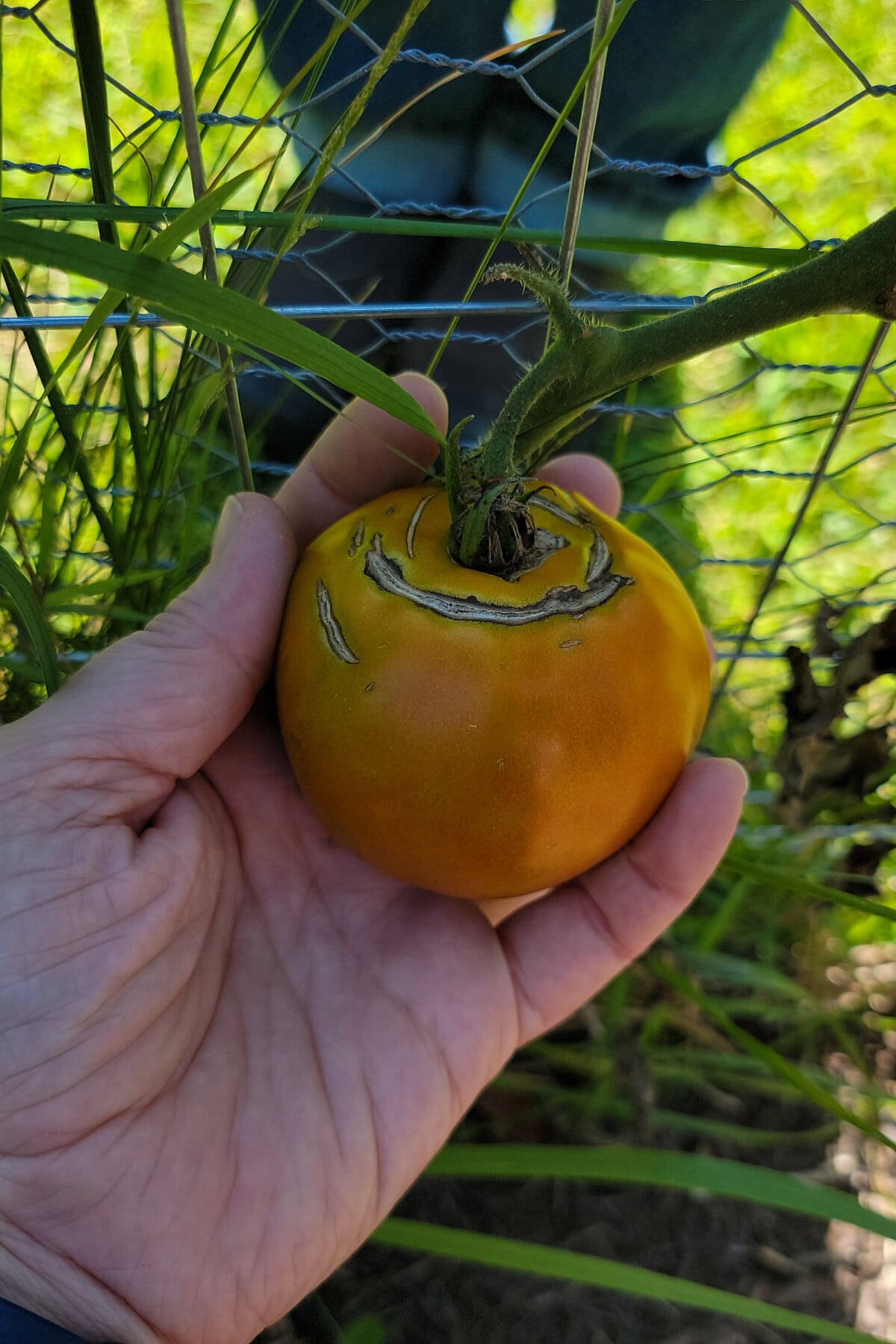
Later in the season, to prevent your tomatoes from cracking, you can get away with watering more frequently, but still deeply. If you started out the season encouraging your tomatoes to push roots deep down in the soil, then that’s where they will be.
The reason tomatoes crack is that they have inconsistent watering, which can look like waiting too long between waterings, a drought followed by a sudden heavy rainfall, or regular, consistent watering followed by several days of non-stop rain. The tomato skins can’t grow as fast as the roots take in water, so the skin splits.
You can prevent most cracking by watering your tomatoes more often.
Luckily, the time to do this usually coincides with the time of year when tomatoes need that extra gallon of water each week. So instead of watering once a week at a gallon or two per plant, you can water twice a week at a gallon or two per plant. Again, we want the water to be soaked in slowly, so it doesn’t run off.
What ‘Drought-Tolerant’ Really Means
Here’s the thing we don’t talk about when we say that watering your tomatoes “deeply and infrequently” creates drought-tolerant tomatoes. Yes, it does, and it makes a big difference for shorter periods of drought. Tomato plants with deeper roots have a buffer and will take longer to succumb to the stress caused by a lack of water.
But like all plants, if the drought is long enough, they will eventually stop producing fruit.
If you live in an area of the country where watering bans are common during the growing season, then growing tomatoes in a way that makes them more drought-tolerant is a good thing. However, it doesn’t necessarily mean your plant will keep on cranking out fruit during a long drought.
Realistically, it means when the drought breaks, your plant will still be alive, and if there is still time left in the growing season, it will bounce back and start producing fruit again.
If you are experiencing a drought, but have no water ban, then it makes sense to keep watering your plants so they will keep producing tomatoes, at which point, you have to ask yourself, does it really matter whether they are drought-tolerant?
So, the drought-tolerance that is often touted along with the water deeply and infrequently advice needs to come with a grain of salt. I think it’s important to manage expectations.
Watering For the Rest of Us
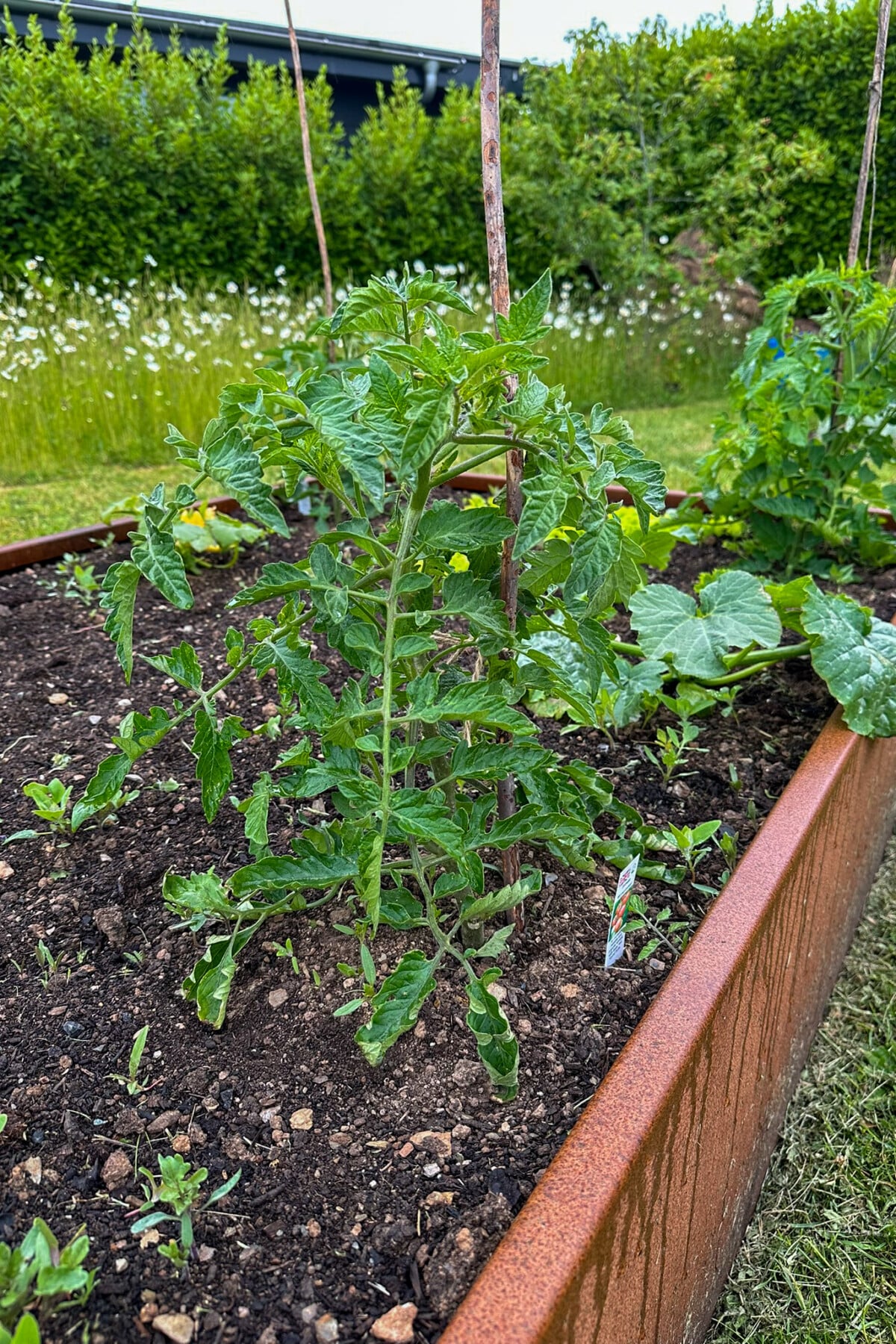
As I mentioned back at the start, this common tomato watering advice doesn’t really work for a lot of modern gardeners. The popularity of raised beds has exploded in the last decade or so. When it comes to small home gardens, raised beds are more common than in-ground gardens these days simply due to accessibility. Raised beds have made gardening possible for people with poor soil, mobility issues, small yards, or even no yard at all.
But raised beds also change how we garden.
For example, I garden with raised beds myself these days. I have the lovely 17” tall Vego Garden classic raised beds. Like many folks, when I set them up, I filled a portion of the bottom of the beds with old firewood and wood chips, much like a Hügelkultur bed. This helped defray the cost of filling the beds and added organic matter that will slowly break down and improve the soil over the years.
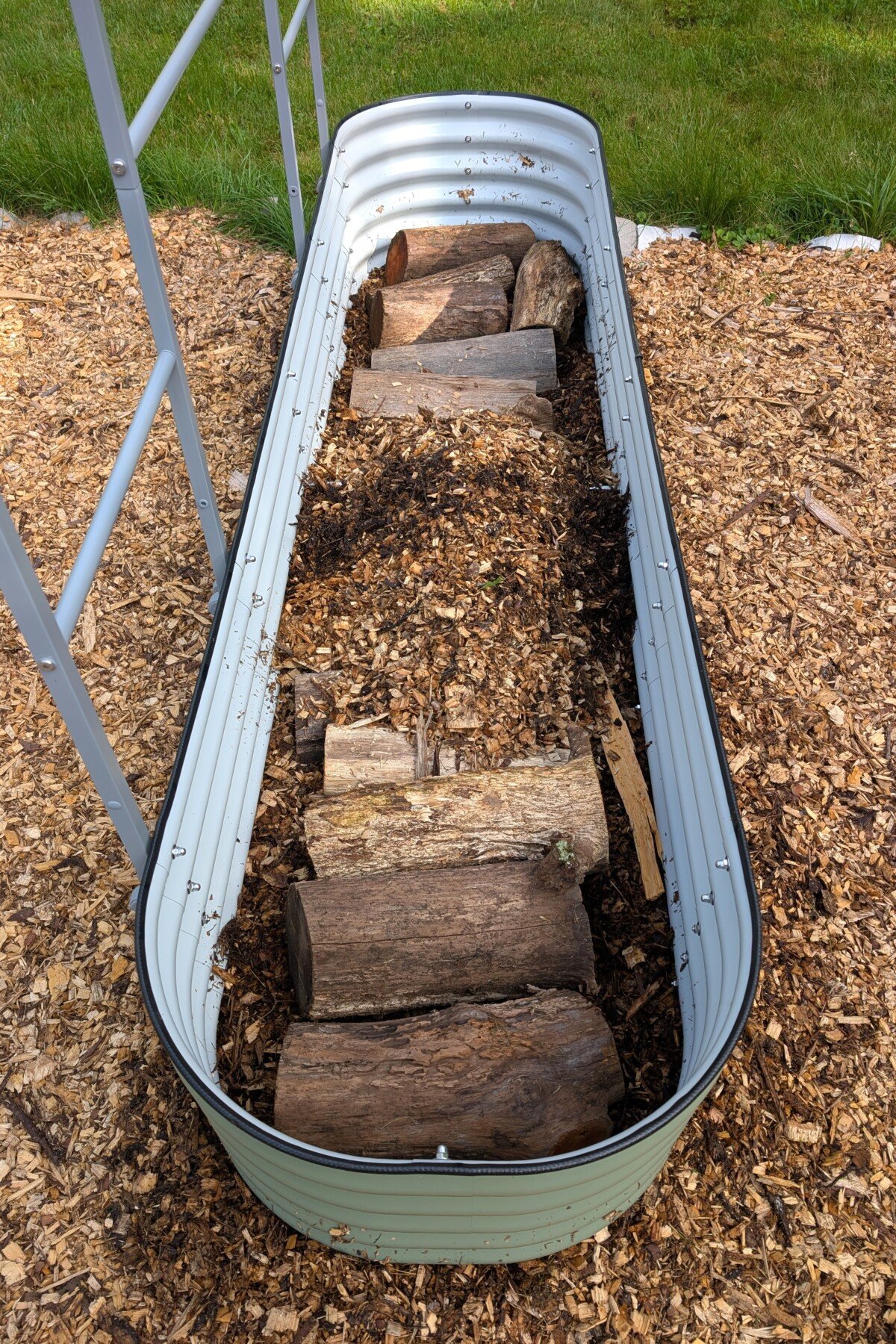
It also means my tomatoes are limited in how deep they can put down roots.
What that means for my plants is that as they push their roots down, they will eventually be obstructed by firewood. If the soil I put in has settled enough, they should be able to work their way down past the wood into the soil below my raised beds. Of course, the reason I switched to raised beds is that where I live, the soil is filled with shale and clay. Regardless, what’s down in the ‘deeply’ portion of my garden isn’t doing much for my ‘maters.
I can just imagine me standing next to my tomato plants with a hose, saying, “Now, you don’t get any more until you push your roots deeper,” and my tomato plants saying, “I don’t know what you want us to do here, lady.”
This is a real problem for anyone growing tomatoes in raised beds with bottoms or with soil below the raised beds that is hard and compacted or full of clay.
Yet, I still manage to grow beautiful tomato plants that crank out large, juicy tomatoes like nobody’s business. How?
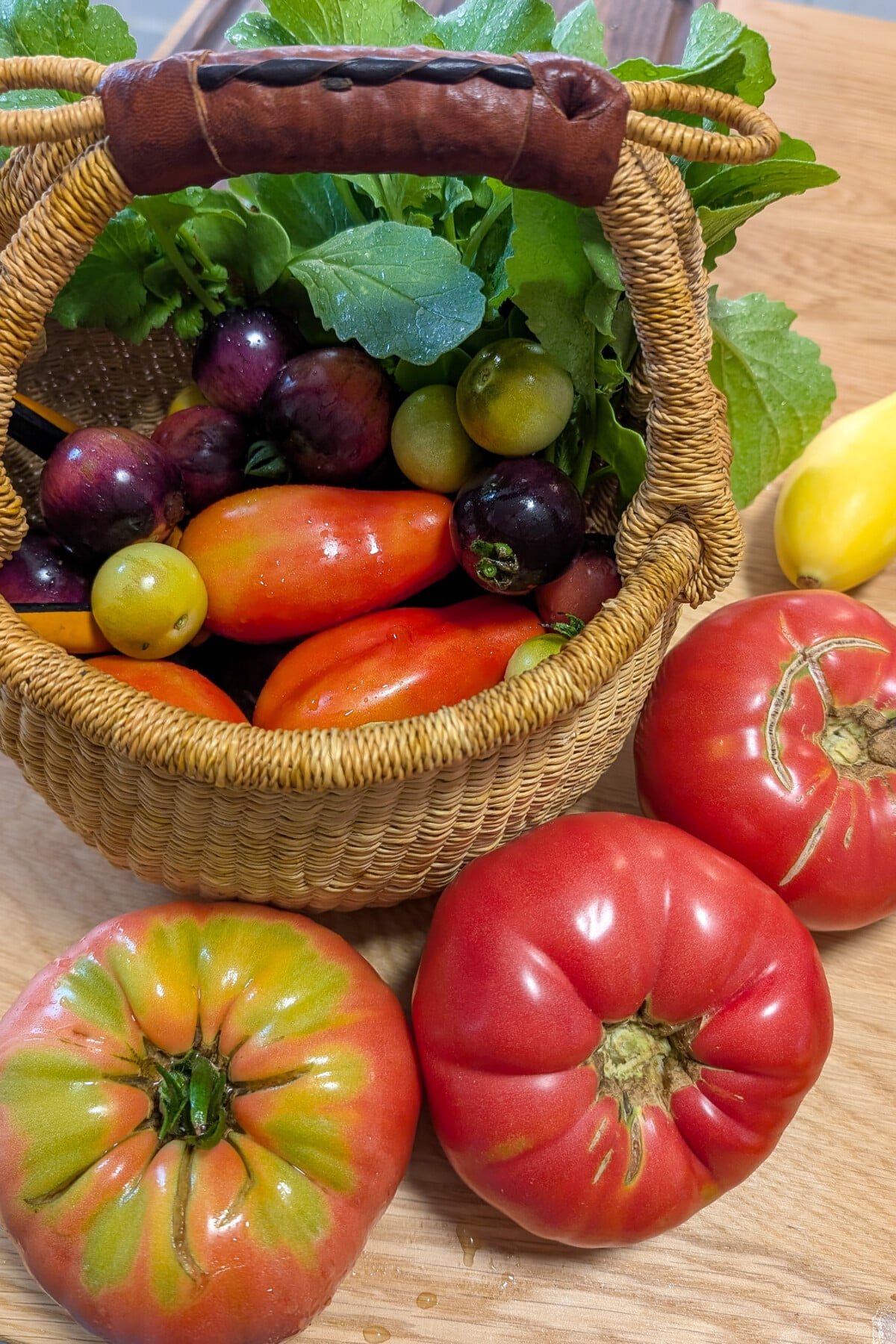
I stopped following the tomato watering rules because they no longer apply to my garden.
Now, before we go any further, I will acknowledge that I am lucky enough to live in an area where, even during a drought, I can still water my garden. That makes all the difference in the world. Unfortunately, if you live somewhere that experiences long periods of drought during the growing season and garden watering is banned, there is only so much you can do for your tomatoes, but I suspect you already know this.
How to Water Your Tomatoes If You Garden in Raised Beds
Your tomatoes still need those one to two gallons of water a week, bumping up to the two to three gallons of water a week during heat waves and when the tomatoes are in full production mode. They may even need more because water evaporates from raised beds faster.
There are several factors you need to account for.
If your garden happens to be in some lovely raised beds, and you know there are no obstructions between your tomato roots and the ground beneath your beds. And you also know that the soil below your raised beds is fairly decent, then you would also follow the water deeply and infrequently method for watering your tomatoes.
I would also pull you aside and ask why you aren’t growing directly in the ground? You’re missing out on some important benefits of growing a garden below the soil with a no-dig garden.
For the rest of us raised bed gardeners, we, too, are going to encourage our tomatoes to grow deep roots, or at least as deep as they can go.
An important note: no matter where you are growing tomatoes, in the ground in raised beds, in an old commode in a flower bed, when you first plant your seedlings, you need to water frequently until they are established. Seedlings need to grow more roots before they can send them down deeply. To do that, we’re going to water our seedlings often in the first two weeks after they’re planted.
Always Plant Your Tomatoes Sideways or Deeply
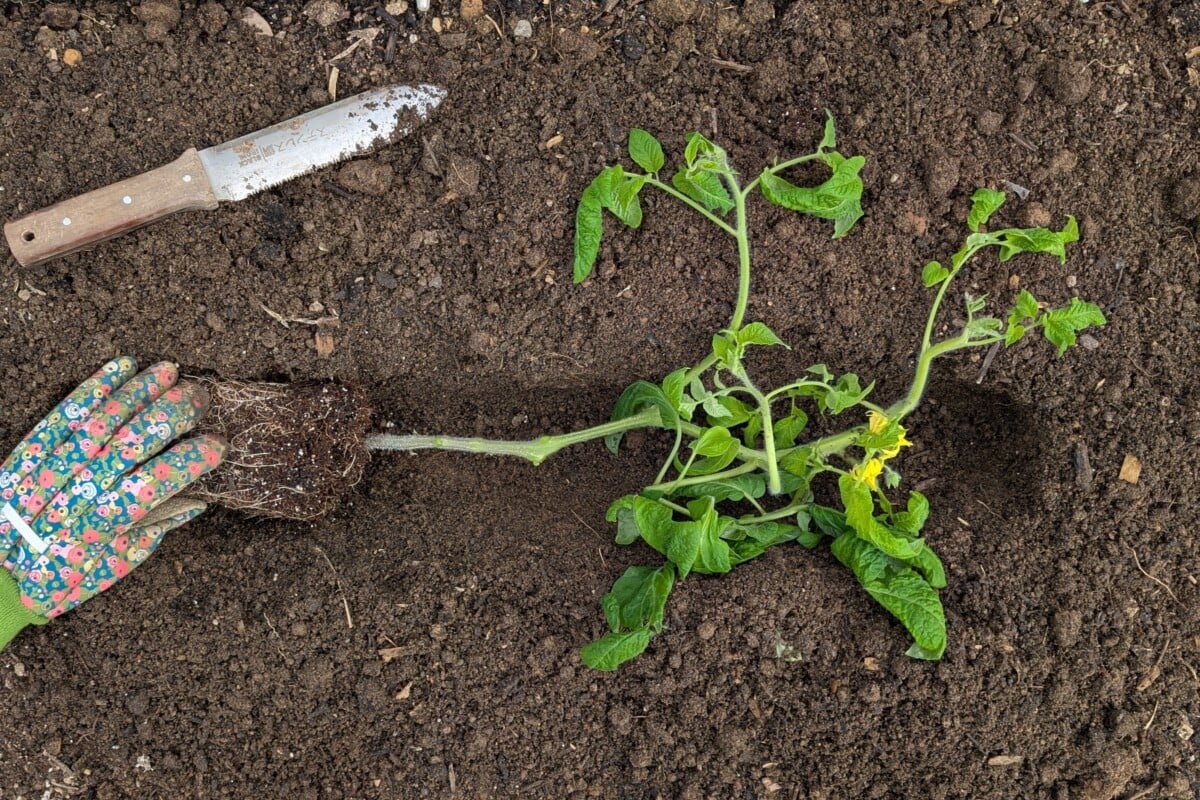
Raised bed gardeners have a secret weapon when it comes to our lack of access to the deep underground. We can plant our tomatoes on their sides or bury most of the stem when we plant our seedlings. In doing this, every part of the stem that is buried will put out roots. So, while our tomatoes may not be able to grow deep roots, we can make up for it by growing a lot more of them. More roots = more access to water.
You can learn how to plant tomatoes on their side or deeply here. It’s a good read and discusses how this process benefits your plant and which method to use if you are growing indeterminate or determinate tomatoes.
If you’ve already planted your tomatoes for this year, don’t worry, save this information for next year.
During the first part of the growing season, as our tomatoes settle in after being planted, we, too, are going to practice watering deeply and infrequently. Doing so will encourage our tomatoes to at least put down roots as deep as they are able.
When the true heat of summer arrives, and our plants start to produce fruit, we’re going to switch tactics a bit.
One of the benefits of raised beds ends up being one of the problems as the season progresses. Soil in raised beds heats up faster. That’s great when you want to get a jump start on the growing season, and you’re hoping to start cool-weather crops early. But it’s not so great when you’re trying to keep tomato plants cool and prevent hot soil from baking off the water you put in your raised beds.
These are the two biggest benefits we lose by not growing in the ground: slower evaporation and cooler soil.
Because our tomato roots can’t push deep down into the ground, we have to take steps to make that soil near the surface cooler and stay moist longer.
Mulch, No Arguing
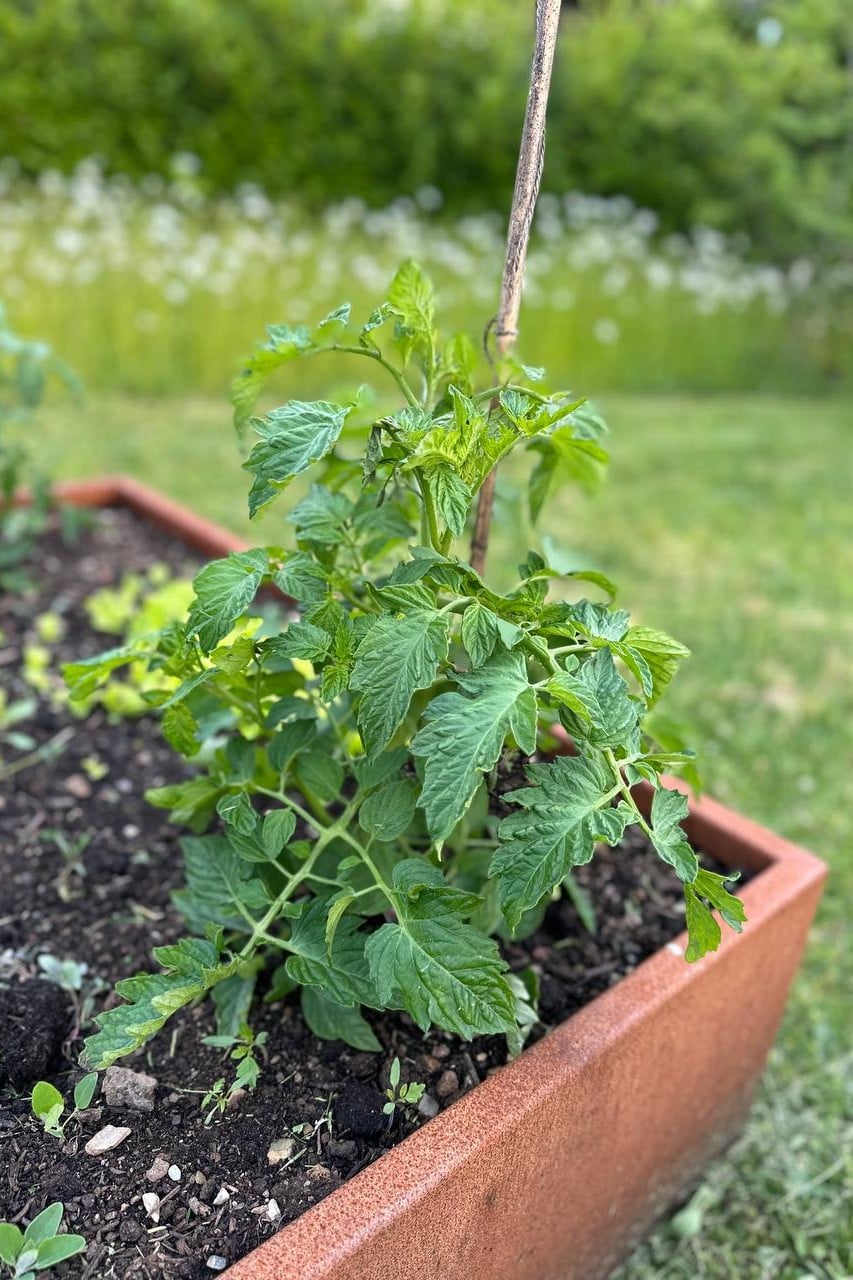
The first thing you are going to do is mulch your raised beds. No, no skipping it. Mulch is the difference between a happy, thriving raised bed garden in the middle of August and a crunchy, slightly yellowish garden with very few tomatoes. (And very few other happy plants, either.)
Does it really make that much of a difference, Tracey? Absolutely!
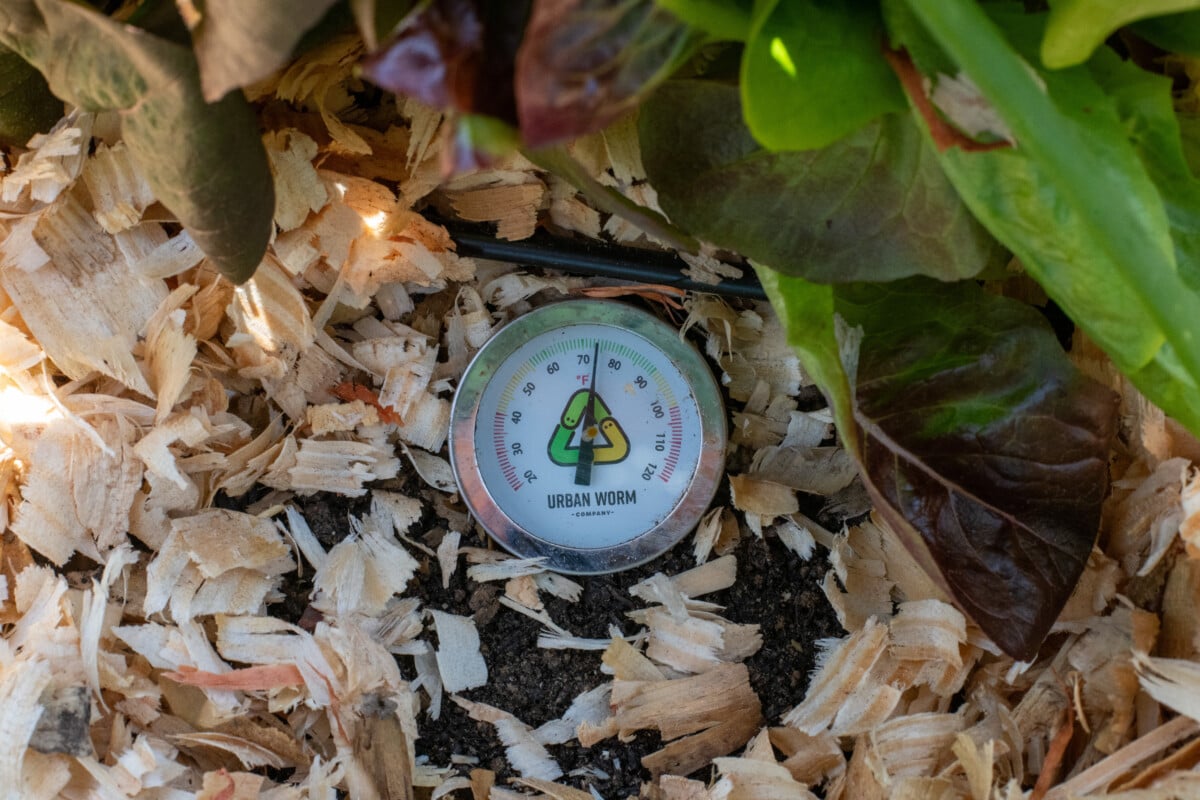
Mulched soil can be as much as ten to twelve degrees cooler than unmulched soil. When it comes to hot soil, that can be the difference between having tomatoes and having none. There are certain chemical processes that happen within your tomato plants that trigger blossom production and fruiting that shut down if the roots get too hot.
Mulch holds all that water we’re putting in and slows evaporation drastically.
You end up with much cooler soil that’s better at holding that moisture in for longer. Both of these are important in keeping roots cool.
So, as soon as you plant your tomatoes, mulch them well. I am a huge fan of using pine flakes. Because it is lightweight, I can pile it on thick and mulch right up to the stem of my tomatoes without having to worry that it will cause them to rot. A few weeks later, after the plants have grown taller, I put down another layer, so that I end up with a final layer of mulch that’s 3”-5” thick. I switched to pine flake about two years ago, and it’s been a game-changer in my garden. Check it out here.
Water Deeply AND Frequently
There’s just no getting around it. Water in raised beds, even mulched raised beds, is going to evaporate faster than water in the ground. Add to that the fact that our tomatoes are growing slightly closer to the surface than in-ground tomatoes, and it means our plants need to be watered more frequently.
We still want to water deeply and slowly, letting water seep in around the base of the plant, so that it can penetrate as far down as it will go.
This is why I am a huge fan of dripline irrigation. It sits on the surface of the soil, and then it gets covered by all of my mulch. The water drips directly into the soil, and the mulch keeps it from evaporating off. I don’t have to worry about runoff or standing there with a hose staring at my wrist watch. I have even automated my irrigation with a timer. If you want to know how you can recreate this setup yourself, click here. When it comes to gardening ‘hacks,’ it is downright miraculous.
If you don’t want to use an irrigation system, you can do what I used to before I made the switch. Grab your hose, a watering can that’s at least a gallon, and a watch or the stopwatch setting on your phone. Set your hose nozzle to the mist setting. Now fill the watering can to one gallon and time how long it takes. (You can see where I’m going with this.)
Great! Now go water your window boxes with the watering can.
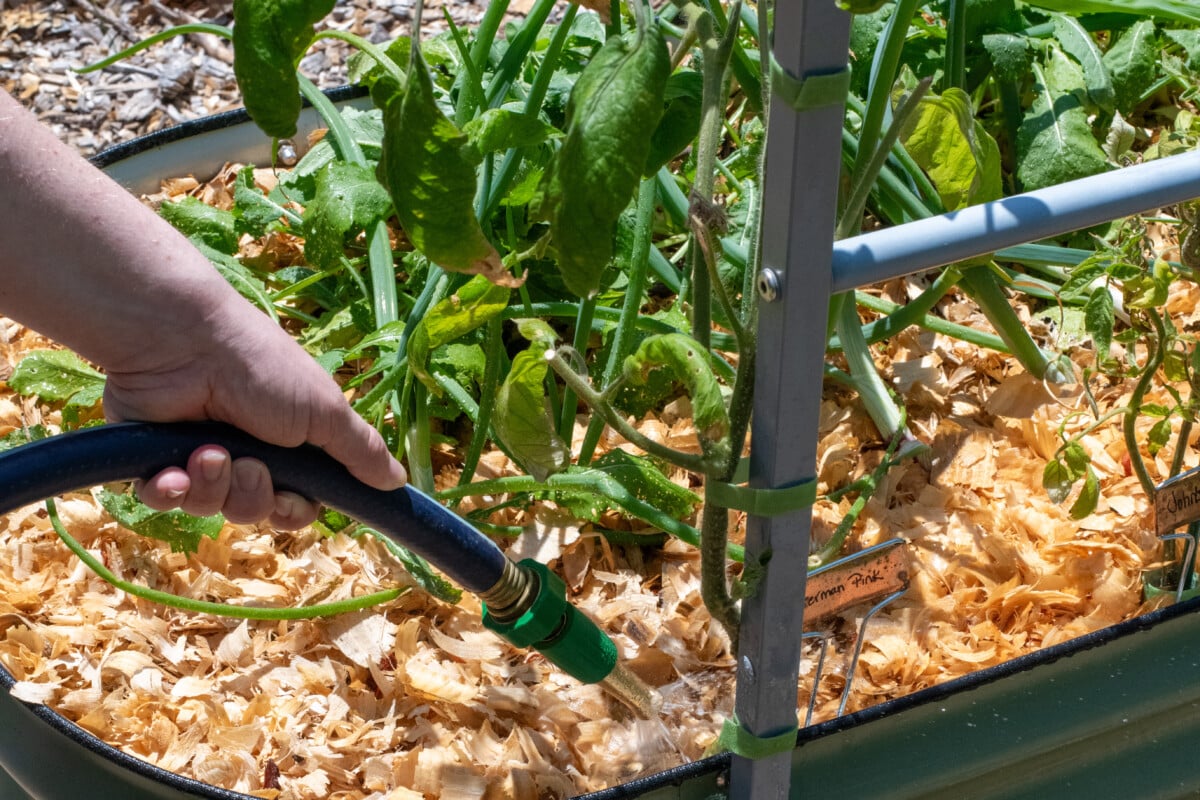
Then use your hose on the mist setting (this ensures the water seeps into the soil slowly and doesn’t run off) and place it right on the ground at the base of your tomato plant. Water the plant for however long it took to fill your watering can to a gallon. Voila! You’ve just given your tomato plant a gallon of water. Wash, rinse and repeat with each tomato plant.
If the soil becomes waterlogged and doesn’t soak up the full gallon all in one go, this is where the ‘frequently’ part comes into play. Split that gallon or two gallons over a couple of days each week. The point is to slowly, but thoroughly, saturate the soil without waterlogging it.
If you have a small garden with only a couple of plants, then you can easily use a watering can to do the job.
How Often Should I Water My Raised Bed Tomatoes?
This is a question only you can answer, and it’s going to change throughout the season. It may even change throughout the week, especially during a heat wave.
Just like I say when it comes to watering houseplants, do not water indiscriminately. It’s a waste of water, and if your plant doesn’t need it, you’ll end up harming your plants.
The best way to know when to water is to check your soil frequently.
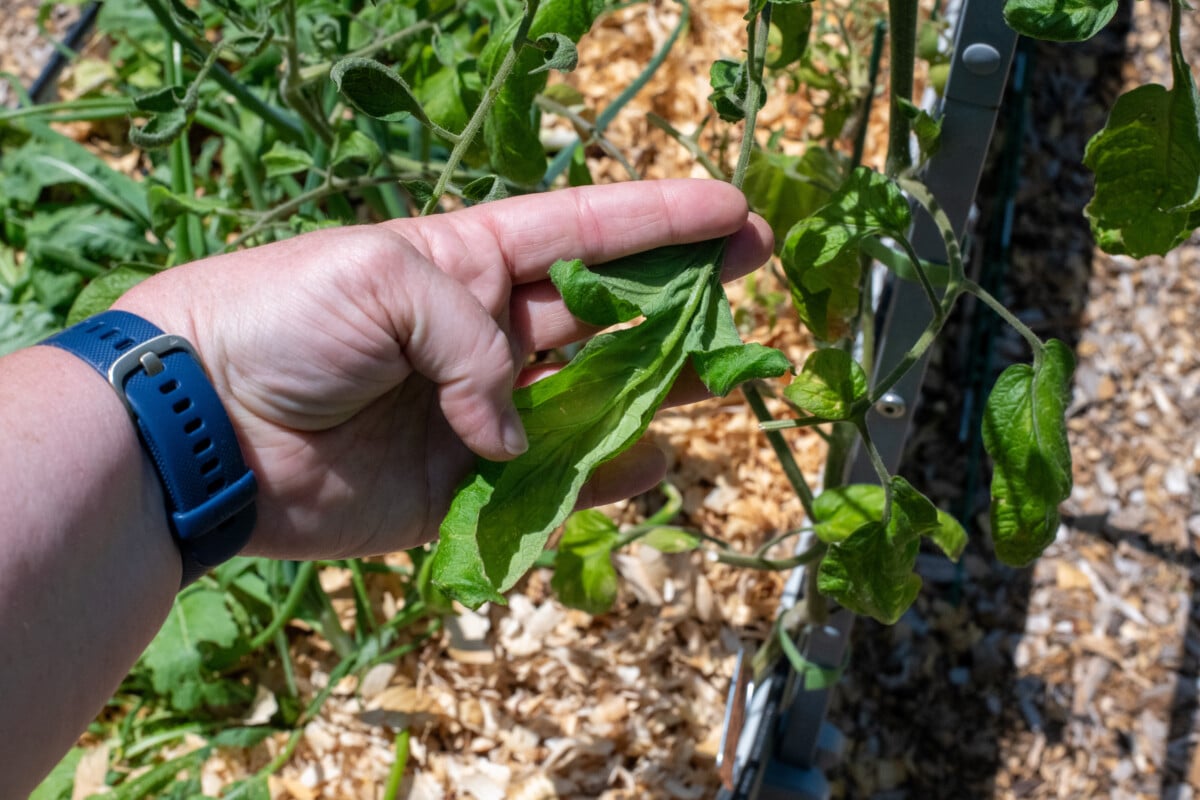
(I take my coffee in the garden most mornings and do all of my checks then.) The soil will tell you when you need to water. Notice, I didn’t say check your plants first. Far too often, people see curling tomato leaves and reach for the hose. Curled tomato leaves are not a great indicator of whether your plant needs water. Neither are yellowing leaves.
The soil should always be your first stop, then check your plant for signs that it needs water.
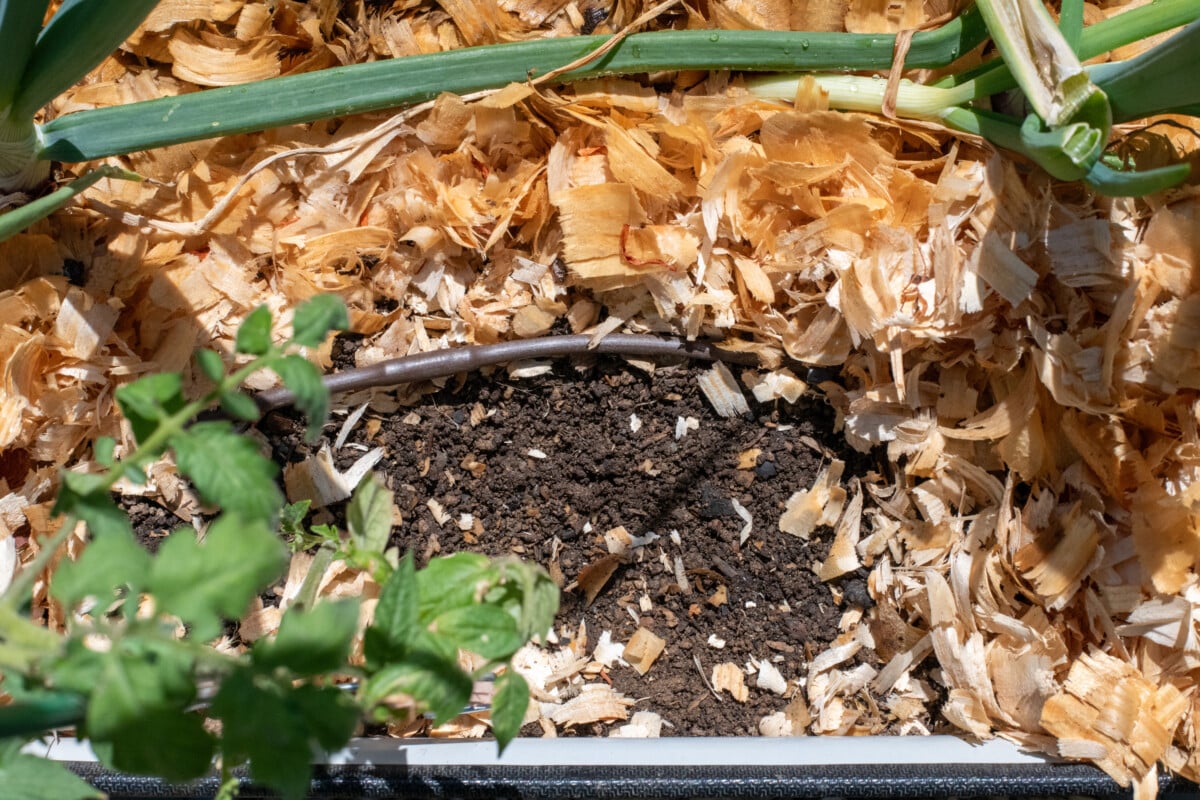
Move some of the mulch out of the way if you can see that your soil is visibly damp (dark), good for you. Your mulch is working, and things are good. If your soil looks soggy or too wet, back off on the watering a bit. I’m going to say something that could start a fight in the gardening community, but I never let my tomato’s soil dry out.
These plants are water hogs. They need to be kept routinely watered to produce a ton of fruit. If you’re growing them in the ground, and the first few inches of soil are dry, that’s fine because you know there are deeper roots below that have access to water. That’s not the case when you’re growing in raised beds (unless you have those lovely 24” tall raised beds that my aching back is so jealous of). We raised bed gardeners are dealing with plants with surface roots, and that means the surface soil needs to stay moist for tomatoes to do their thing.
As long as you have soil that drains well, keeping it consistently moist (not waterlogged) is the best way to keep yourself in tons of tomatoes. It also means that raised bed gardeners are less likely to have cracked tomatoes. How’s that for a silver lining?
I water as frequently as needed to keep the soil at the surface below my mulch visibly damp. If it’s dry, I know my tomatoes are on the verge of needing water.
Between planting them on their side, watering more frequently, mulching well with the right mulch, and the occasional use of shade cloth, my shallow tomatoes can keep up with the deepest-rooted inground garden dwellers. And so can yours.
Container-Grown Tomatoes
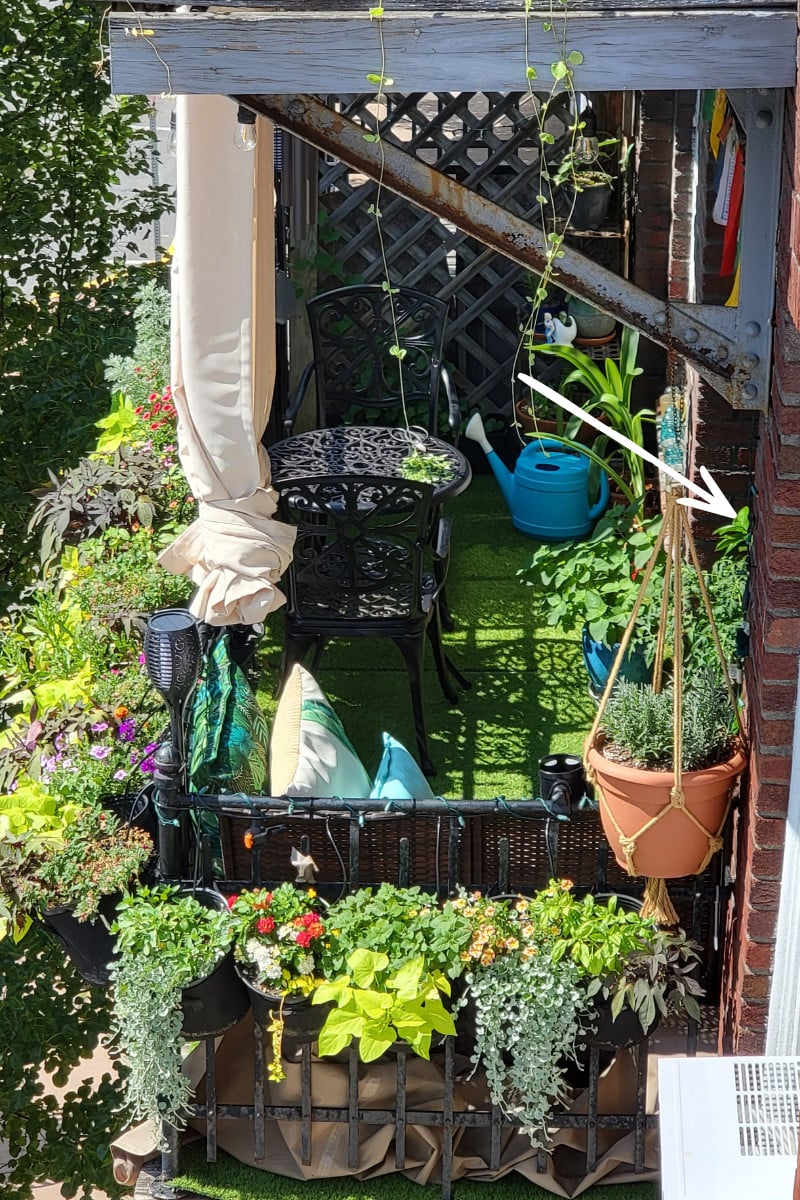
If you have a balcony garden (Been there, it’s fun!) or like the occasional patio tomato, then throw all the watering rules out the window. Yes, you can grow tomatoes in containers, but there just isn’t enough soil in them to cool the roots sufficiently.
So here are my rules for watering tomatoes in containers:
- Never use a container without a drainage hole.
- Always use a container bigger and deeper than you think you need. The more soil you have for the roots, the better.
- Mulch your containers. Yup, mulch helps here, too.
- Water as soon as the top layer of soil is dry. This can be a Sisyphean feat come August, when you may need to water twice a day. I grew tomatoes on the second-story balcony of an apartment I lived in years ago. Because I was so high up, my balcony got blasted by the afternoon heat. I was watering in the morning and then again at 4:00 in the afternoon.
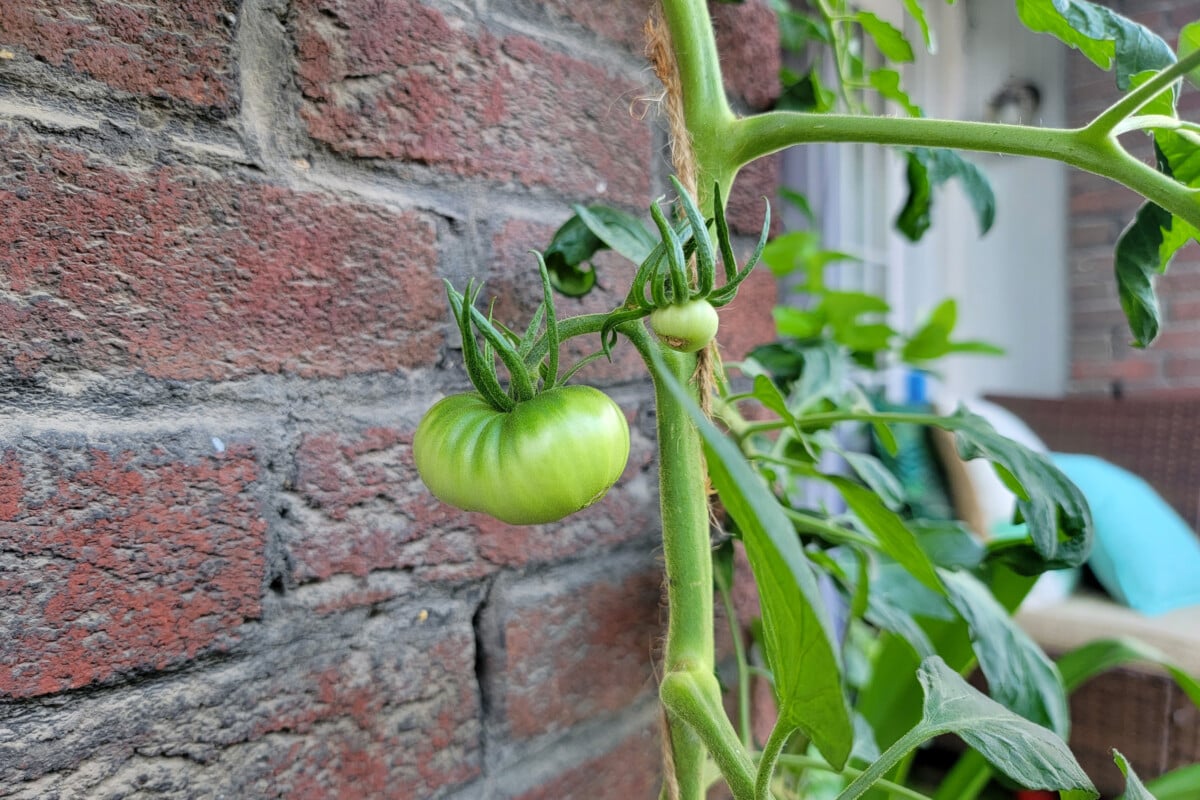
Well, it was a slog, and I’m sure you’ve finished your coffee or tea ages ago, but now you have a firm grasp on how much water your tomatoes need to flourish and how to go about providing it. May your summer be filled with crack-free tomatoes, my friend.
Get Garden Notes From Tracey, Right to Your Inbox
Pull up a chair on the front porch. Join 54,000+ gardeners who get Tracey\'s friendly notes, seasonal to-dos, and hands-on tutorials three times a week.