

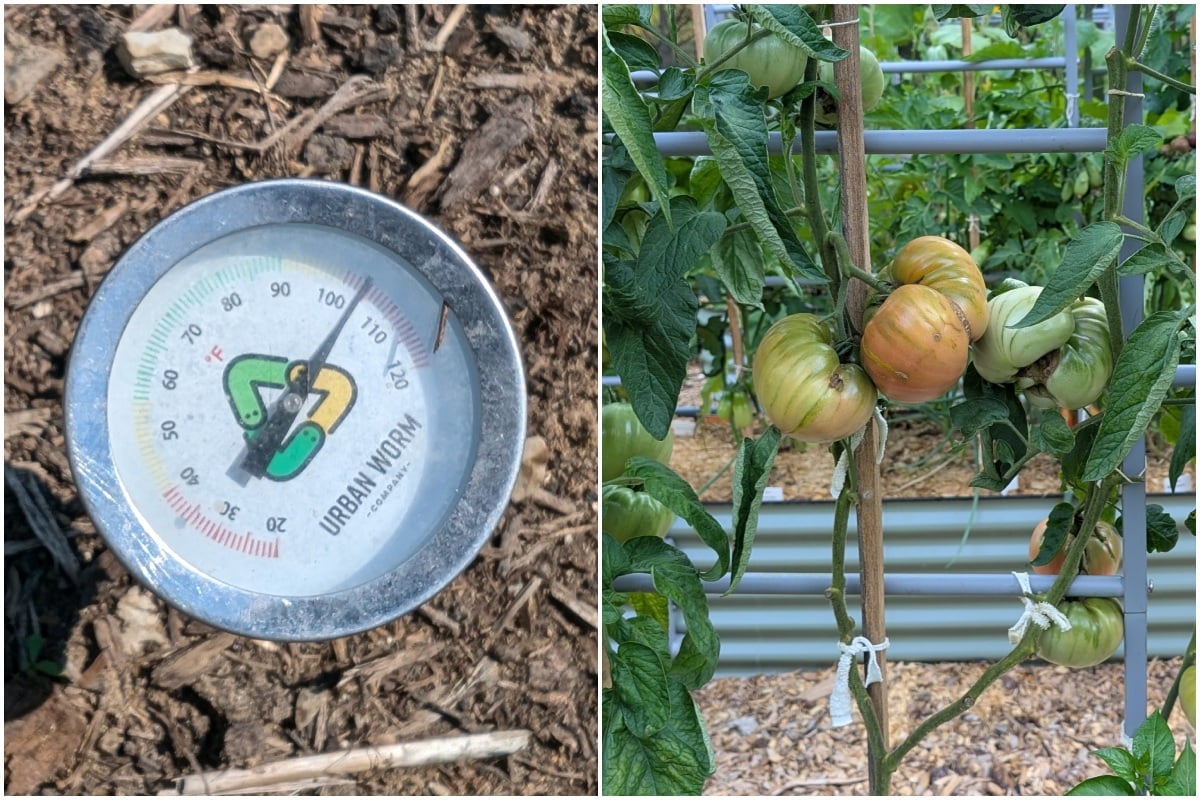
When the temperature spikes, few vegetables can throw a temper tantrum about it the way tomatoes can. Dropped blossoms, slow growth, suspended ripening. When your tomatoes aren’t happy, ain’t nobody happy! But I have a few tools in my garden shed that always keep my tomatoes growing even during the hottest summer weather. Let me show you my Tomato Heat Wave Survival Kit.
What Happens to Tomatoes When It Gets Too Hot Outside
First things first, why do we even need a tomato heat wave survival kit?
I thought tomatoes were a sun-loving crop, Tracey?
They are, and they need plenty of sun to grow tons of tomatoes. But when we say tomatoes need between 8-10 hours of direct sunlight a day, we’re talking specifically about the light, not the heat. The plant uses sunlight for photosynthesis to fuel all of the actions that happen within the plant: growth, transportation of water and nutrients, blossom and fruit production, etc.
Naturally, heat is important as well, otherwise we would all be growing tomatoes in the sunniest spot in our lawn in January. (Maybe some of you southern gardeners do.)
But how much heat is key. Tomatoes are native to South America. They like things warm.
All of the chemical processes that happen within the plant have evolved to function within a specific temperature range. If it’s too hot or too cold, those chemical processes (the release of growth hormones, the triggering of hormones to control blossom and fruit growth or ripening, etc.) don’t work.
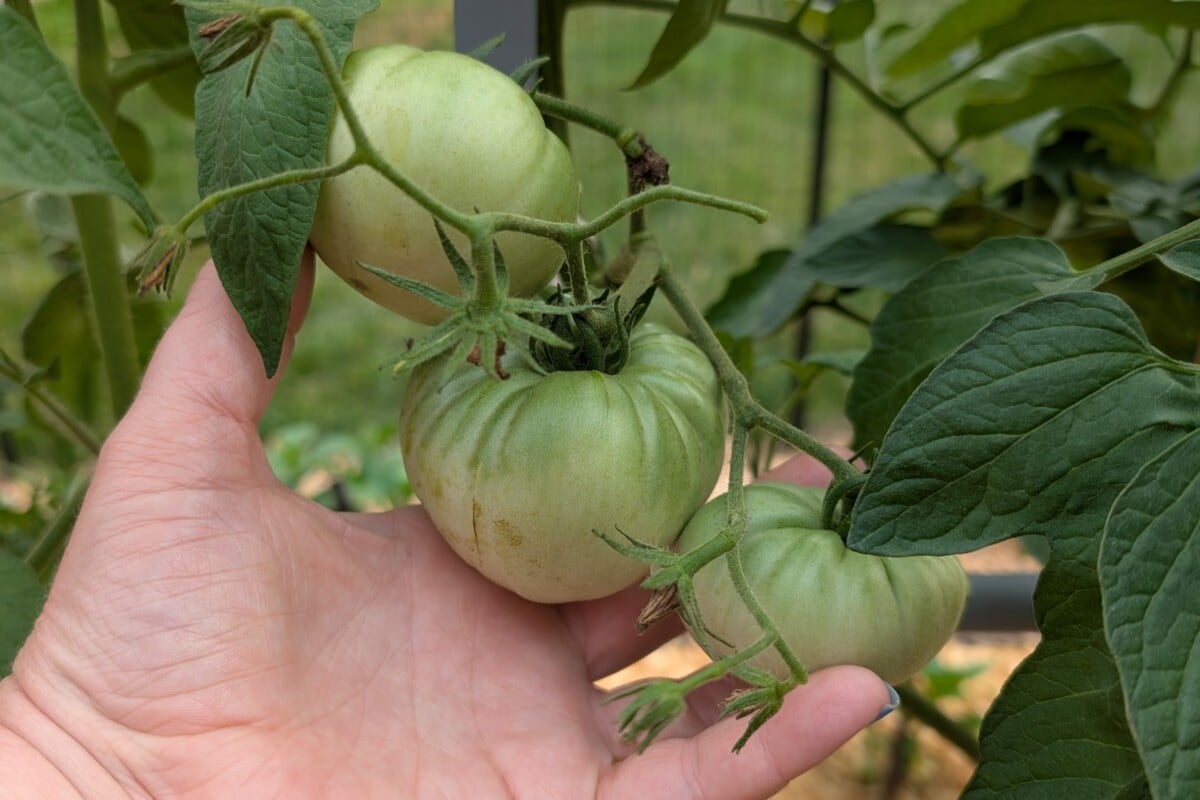
In either case, too hot or too cold, the plant will do what it needs to do to survive, and one of the first things you’ll notice when the mercury climbs is that the plant will roll its leaves up a bit. This slows transpiration, or the loss of moisture through the leaves.
You’ll often see this in the dog days of summer in the late afternoon, the hottest part of the day. By the next morning, the leaves will have unfurled, and everything will be hunky dory again.
But if it stays hot for too long, the plant has no choice but to start making sacrifices to stay alive, and the first thing to go is always the blossoms. The tomato plant will abort blossoms to conserve energy; not exactly something you want if you’re hoping to eat tomatoes this summer.
The other thing that will happen is that immature fruit will stop growing and mature fruit will stop ripening. Again, this is a hormone/chemical thing. These hormones are only produced within specific temperature ranges.
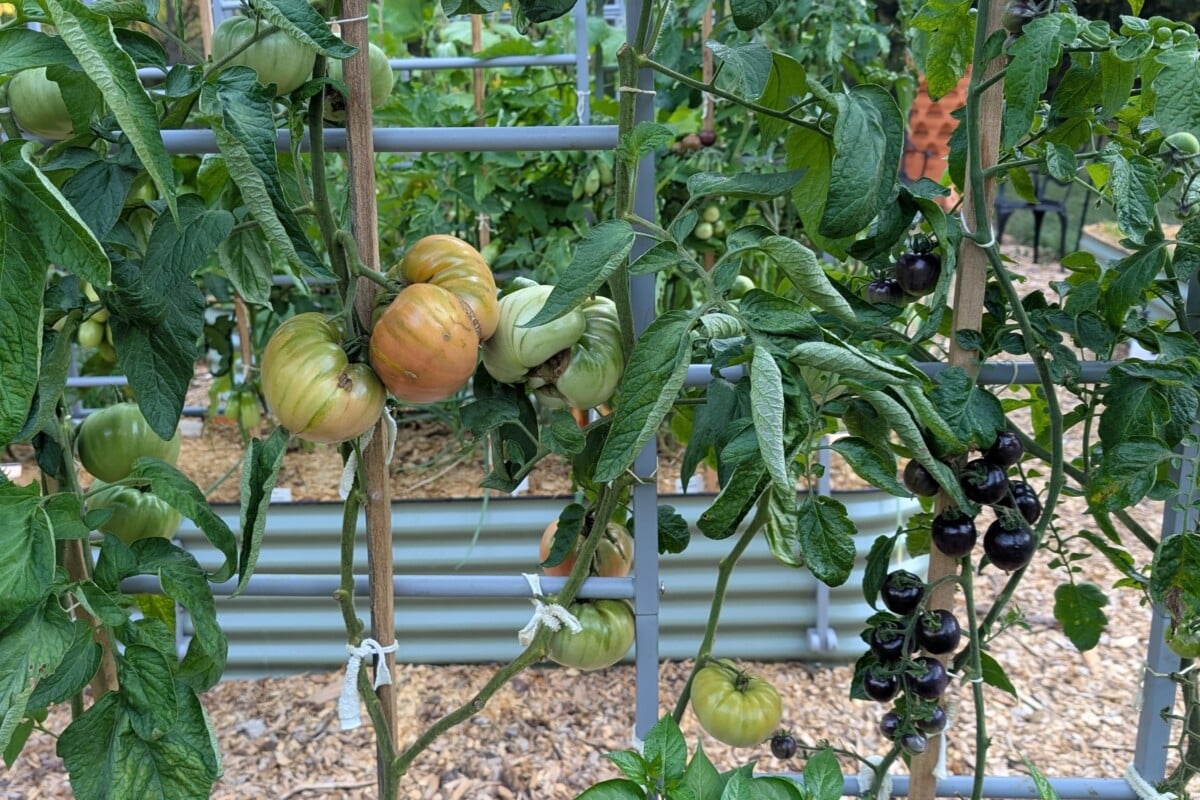
When it gets too hot, your tomato plants basically say, “We’ll be powering down until it’s cool enough for us to make tomatoes again.”
Have you ever had a warning that your phone is too hot and you need to cool it down before you can use it because you set it down next to you under the glaring sun while gardening instead of putting it back into your garden apron pocket? Me either, but if you have, it’s basically the same concept.
How Hot is Too Hot?

What temps are too hot for tomatoes? Generally, your tomatoes will start slowing down and curling their leaves around 90°F. At around 95°F and above, more and more of the internal growth and ripening processes stop working, and that’s when you begin to see things like aborted blossoms and fruit not ripening or growing in size.
But the most important thing to keep in mind is that the soil temperature is more important than the air temperature.
Once the roots get too hot, they can’t do their job of shuttling water and nutrients to the plant, and that’s when everything else begins to shut down, too. So, instead of worrying about air temperature, keep an eye on soil temperature above all else. When your soil temperature starts creeping up over 85°F, that’s when it’s time to start taking action. Those of you growing tomatoes directly in the ground have a leg up here, as it takes longer for the ground to heat up.
It’s important to remember that your tomatoes (despite what they want you to think) are pretty tough, and the occasional scorcher of a summer day isn’t going to slow them down one bit. What we’re talking about here are extended periods of extreme temperatures, so a week or more.
If you’ve got a nasty heat wave on the horizon, you’re going to need this handy tomato heat wave survival kit. Trust me, you and your tomato plants will be so much happier during and after the heat ends.
My Tomato Heat Wave Survival Kit
Soil Thermometer
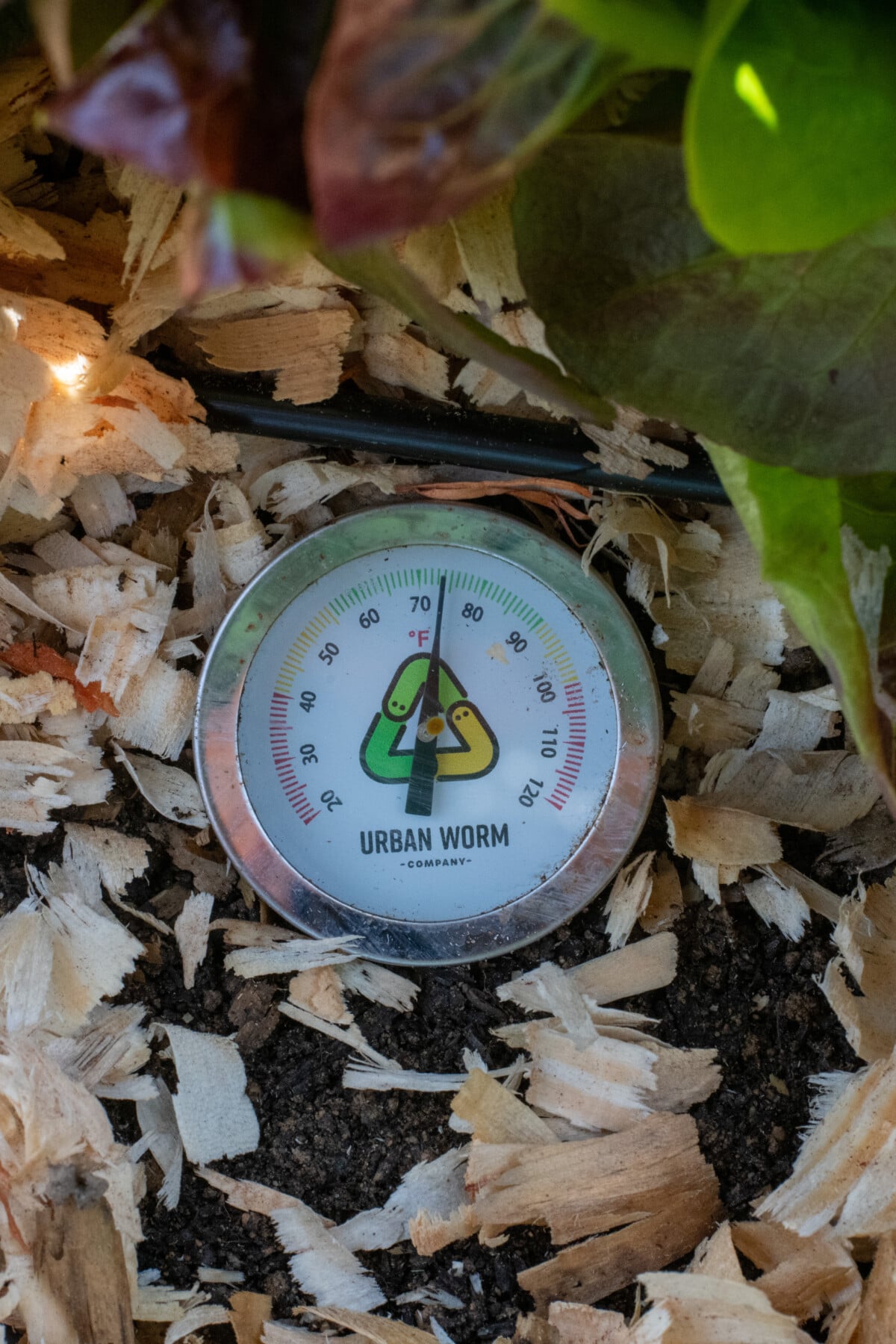
This is the most important tool in this whole kit because it’s what is going to allow you to monitor the soil temperature. If you’re only measuring the air temperature, then you’re just guessing.
I have several of these stuck in my raised beds. Now, I want to point out a couple of important things you need to know about the Urban Worm soil thermometer.
The first is that I’ve had two of these for five years now.
The glass is still clear, and they still work great. I cheaped out this spring and bought a less expensive brand, and within the first week, I could no longer read the dial because there was so much condensation inside the glass. Lesson learned, those were pitched, and I ordered the Urban Worm brand thermometers. (To my daughter and son-in-law, I’ll be replacing the two crappy, cheap ones I gave you as well. Sorry!)
Yes, they are a little spendy for what they are, but that’s because they are good quality, which is something that’s getting harder and harder to find these days. I like having more than one because one area of my garden gets a bit of afternoon shade, and it’s nice to tuck one into the many 5-gallon buckets I use to grow things, too. But if you’re only going to buy one, put it in the soil with your tomatoes.
The second thing you need to know is that the rim of the thermometer is made of metal that attaches to the temperature-sensing probe.
If it’s in direct sunlight, the rim will heat up, and the temperature will reflect that intense heat rather than the true temperature of the soil. How do you fix this? Easy. Put your thermometer in the shade of one of your tomatoes, and make sure you push it down so the bottom of the thermometer face is snug against the soil. Now, mulch right over the top of it. Voila – accurate soil temperature readings. Stick a little flag or marker next to your mulched thermometer so you know where to find it under the mulch.

Mulch
You’ll notice I talked about mulching over your thermometer; that’s because you should already have mulched your tomatoes. Mulch is the single easiest and most effective tool we have as gardeners to keep the soil from overheating.
And if you use raised beds, then it’s even more important to mulch your tomatoes, as the soil in raised beds heats up faster than the ground. (It also cools quicker, too, which can come in handy once the heatwave is over.)
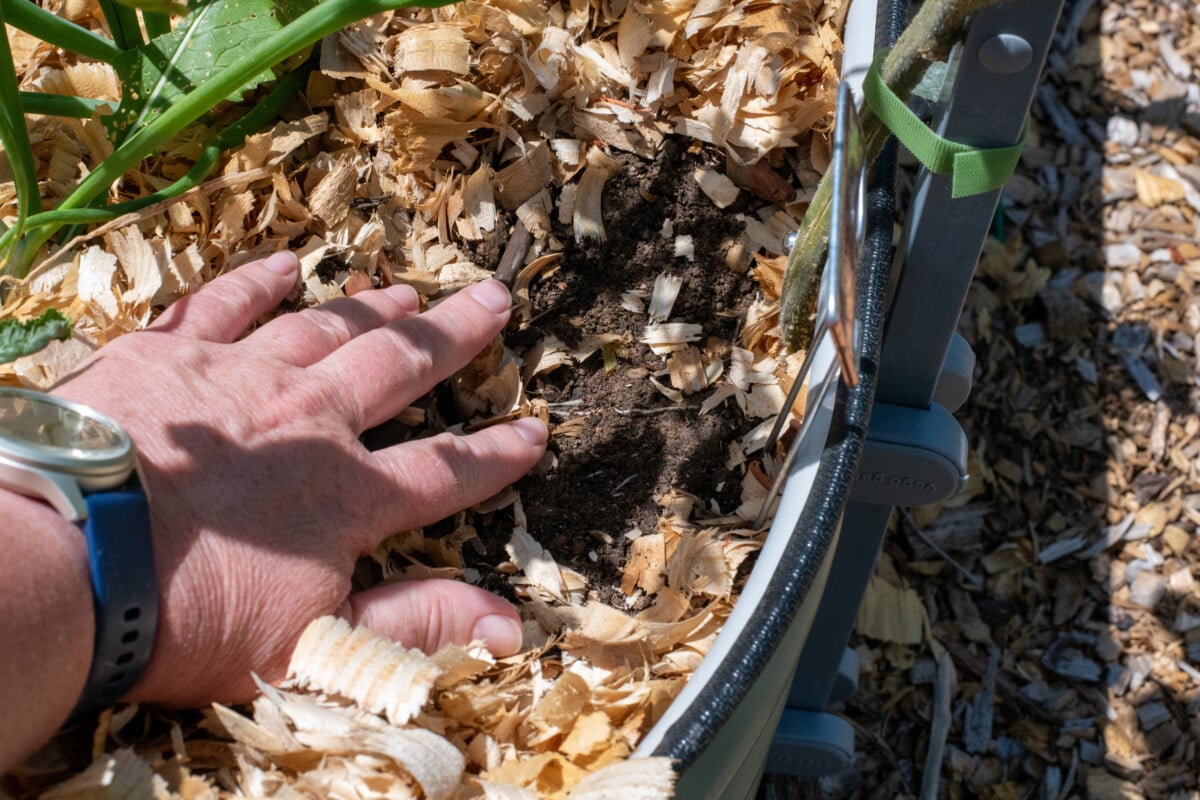
I am a huge fan of using pine flakes for mulch in my garden.
(Click here to learn just how passionate I am, and all the benefits of using this cheap, easy-to-source mulch.) But regardless of what material you choose, you want to put a layer down at least 3” thick around your tomatoes and extend it beyond them a few inches to ensure their roots are protected. (As you can see in the article I just referenced, I mulch my whole garden.)
Mulch does two important things during a heat wave. It slows down evaporation. Moist soil is cool soil. You can’t have moist soil if you don’t mulch. It also acts as a barrier, absorbing some of the heat. Another benefit to using pine flakes is that because they are light in color, they reflect the sunlight, so the soil beneath stays cooler.
Agricultural Shade Cloth
This stuff is great when the heat just won’t quit. It’s helped my stuck tomatoes start ripening again. It’s basically breathable black mesh with grommets that you use to shade your plants and cut the amount of sun they receive, thus the amount of heat. The most common shade cloth percentages are 30%, 40% and 50%.
When it comes to tomatoes, I don’t mess around. I go straight for the 50%. If we’re at the point where I need to engage my tomato heat wave survival kit, it’s usually late enough in the season that my plants are full-grown and loaded down with ripening tomatoes. At this point, I’m more concerned with the heat than how much sun my tomatoes are getting during the week or two of a heatwave.
Don’t make the mistake I made the first time I used shade cloth!
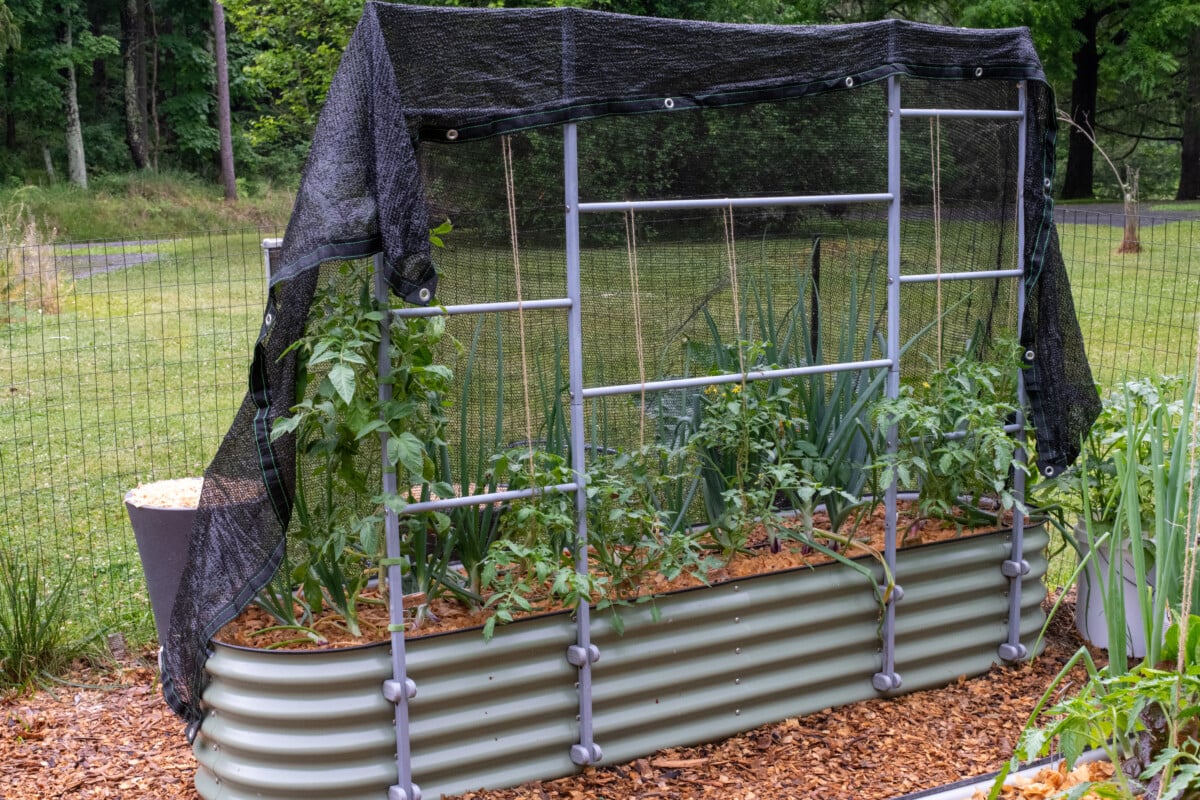
Don’t drape it directly over your tomatoes. You’ll snap branches and knock tomatoes off, and if it’s on for more than a day or two, your tomatoes will begin to grow up into the mesh. Or worse, you’ll have a thunderstorm break the heatwave, and the shade cloth will do a number on your plants during the wind. Yeah, not great. Don’t be me.
The grommets are there for a reason.
You can suspend the shade cloth above your tomatoes using sticks, poles, or even by tying it to your garden fence if you have one. Fiberglass poles used to create hoop houses are perfect for this! (I like these ones as they are a bit thicker than other brands and quite sturdy.) I can make the hoops as tall as I need to.
You can put the shade cloth on and leave it until the heatwave is over, or you can put it on in the afternoon and remove it when the sun goes down, so your tomatoes are getting the morning sun. But if it’s a real scorcher and it’s the kind of weather where it’s hot even at the start of the day, I would recommend leaving it in place for the duration of your blasted heat.
Dripline Irrigation
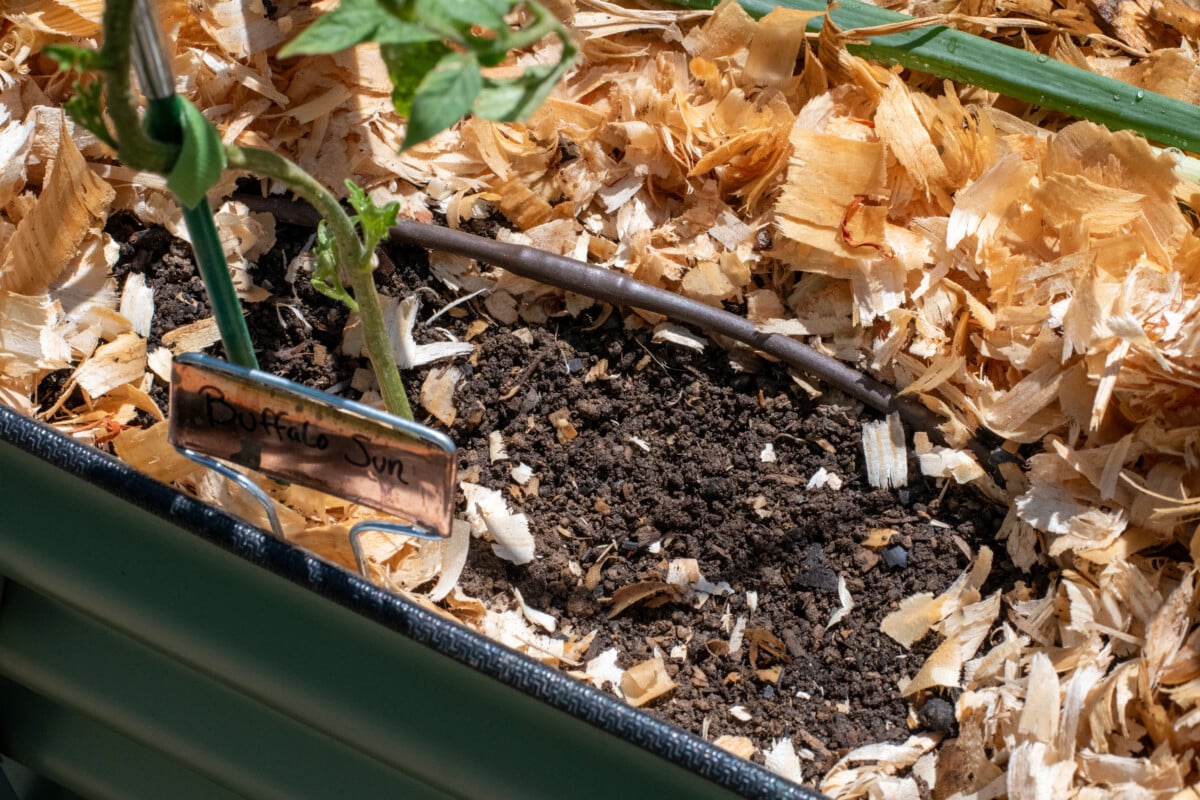
This final one is optional, but boy, does it make a huge difference in your entire gardening season, and especially so during a heat wave. Dripline irrigation is meant to sit against the top of the soil and slowly drip water into the soil. Ideally, it’s installed before you mulch, so you can mulch over top of it, so the soil is absorbing the water and not your mulch.
Remember how I said moist soil is cool soil?
I see this firsthand every year with my Rain Bird drip line in my raised beds.
We all know we should water tomatoes deeply and infrequently to encourage them to put down deep roots. (Although I have my own thoughts on who that advice is best for.) But during a heat wave, you should water your tomatoes frequently enough to keep the soil consistently moist. It keeps roots cool and happy.
While you can do this with other watering methods, I am amazed at how efficient it is with dripline. I use a lot less water, and it’s all going directly where it needs to be – the soil. Since I put mulch right on top of my dripline, the water going into the soil stays fresh from the faucet cold. I’ve often pulled back the mulch on a hot day while my dripline is running and found condensation on the line. It certainly makes a big difference in keeping my tomatoes happy and cool.
Now, if only I could find an easier way to keep myself cool and happy during a heatwave. Who wants to go to the lake?
I know these simple tools don’t seem like a whole lot, but I can assure you they have a huge impact on protecting tomatoes when the mercury won’t stop climbing. Deploying this little tomato heat wave survival kit can help your tomatoes keep on producing through the hottest of summers.
Get the famous Rural Sprout newsletter delivered to your inbox.
Join the 50,000+ gardeners who get timely gardening tutorials, tips and tasks delivered direct to their inbox.