

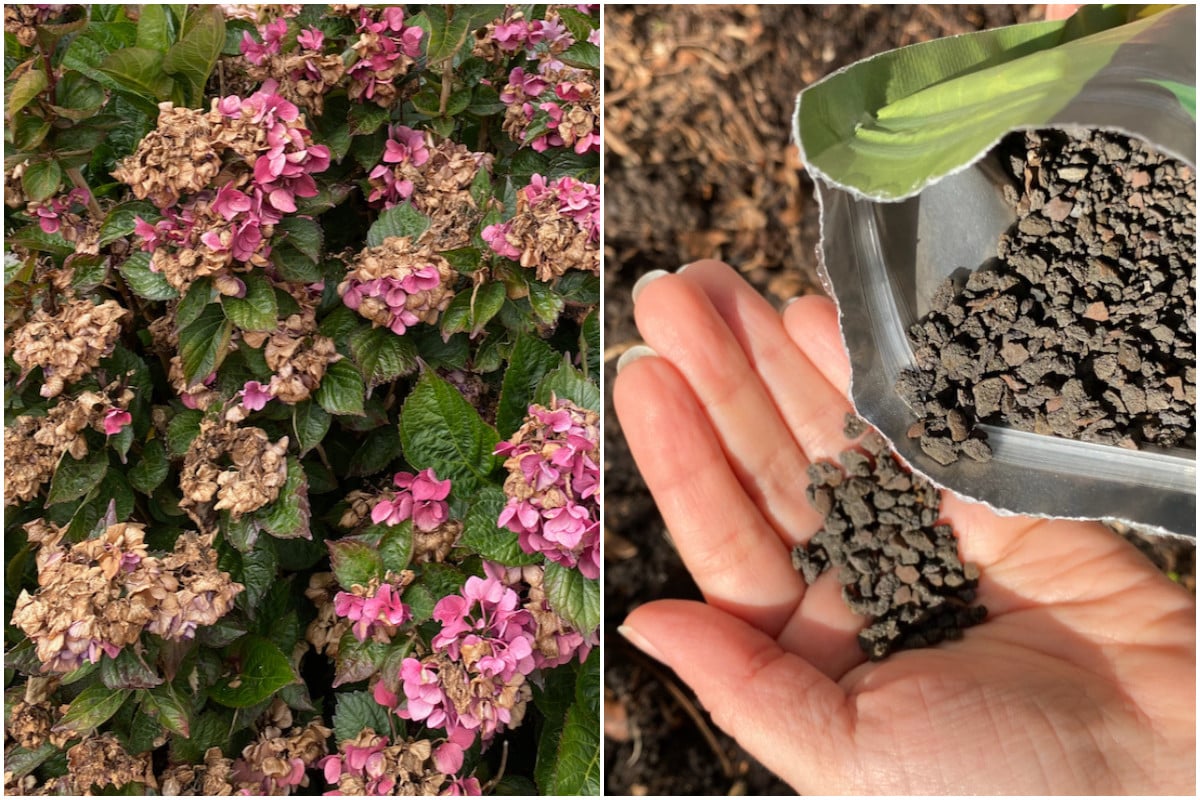
We love our hydrangeas around here. And judging by the popularity of our articles on this topic, we think you might be just as infatuated with these magnificent shrubs as we are.
Perhaps this is why we tend to panic when hydrangeas start to look a bit worse for wear.
When our hydrangea’s leaves turn yellow, brown or droopy, is there anything we can do to fix the problem?
Yes, there’s always a solution. But first, we’ll have to figure out the cause of the hydrangea distress.
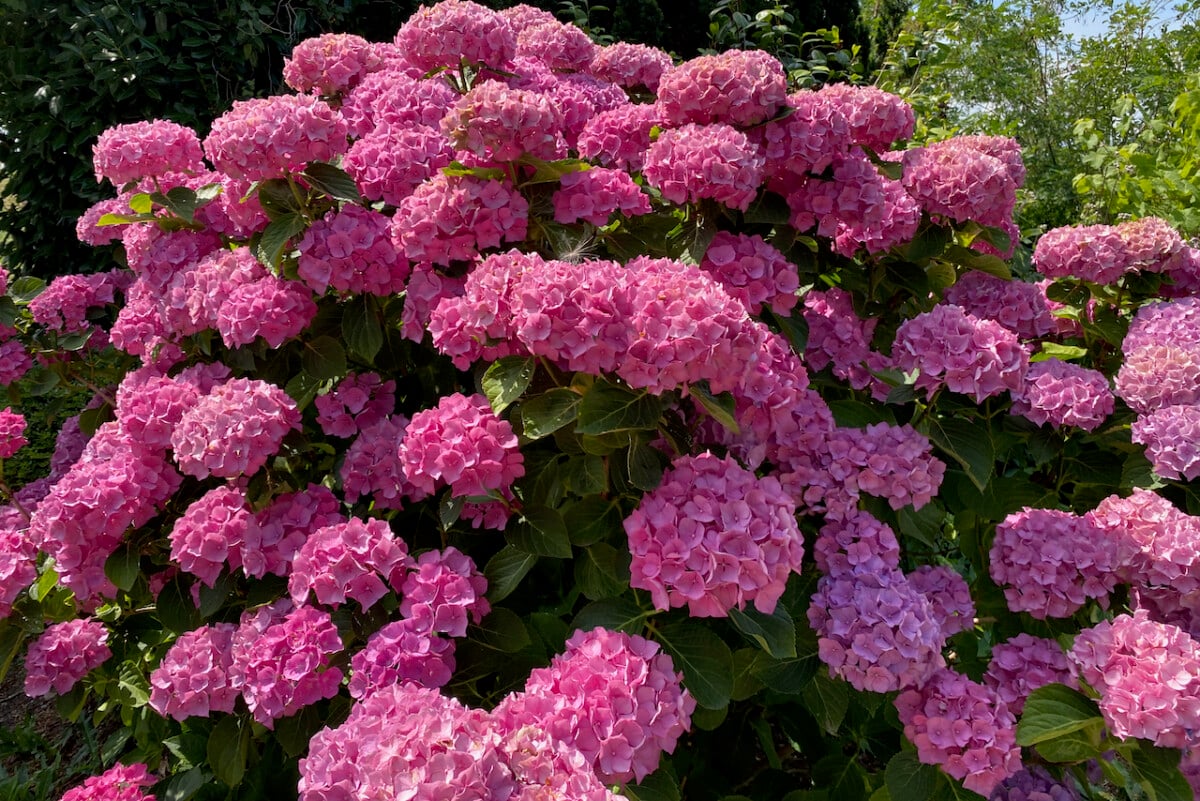
We’ll start with the most obvious and easy-to-fix reasons why your hydrangea might be turning brown and work our way to the more complex problems. Fingers crossed that you’ll find the solution to your yellowing hydrangea within the first couple of points.
1. Your hydrangea has been too hot for too long.
Even though we’ve come to associate hydrangea blooms with the arrival of summer, these are not summer plants. At least, not in the way we’re experiencing summers now, with heat waves and droughts putting a lot of stress on our gardens.
The popular French hydrangeas (Hydrangea macrophylla), also known as mopheads, are native to East Asia, particularly Japan, China and Korea.
Other popular varieties, such as smoothleaf hydrangeas (H. arborescens) and oakleaf hydrangeas (H. quercifolia) have their roots firmly planted in North America.
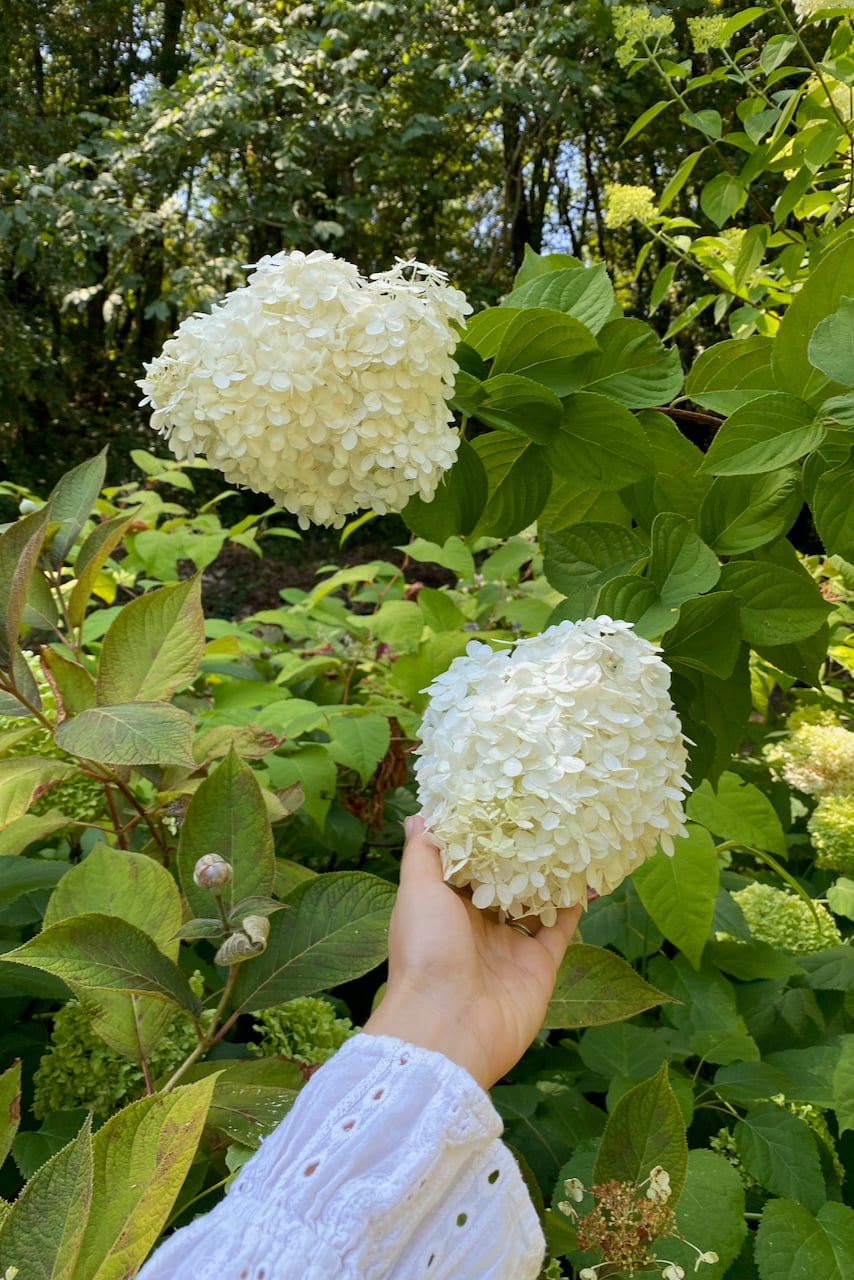
No matter what type of hydrangea you’re growing, it’s a given that in its natural habitat, this shrub grows as an understory.
This means the trees that it grows under keep the hydrangea cool and shaded all summer long. In addition, the soil is rich in organic matter, which means it will stay evenly moist, even when it gets hot in the summer.
In our gardens, we may not have room for trees tall enough to cast shade. And we may have planted our hydrangea in a location where nothing else casts shade, either.
Or, and this is what’s going on in my garden, the hydrangea is planted against a wall. The wall gets hot during sunny summer days and radiates heat back to the plant long after the sun has set.
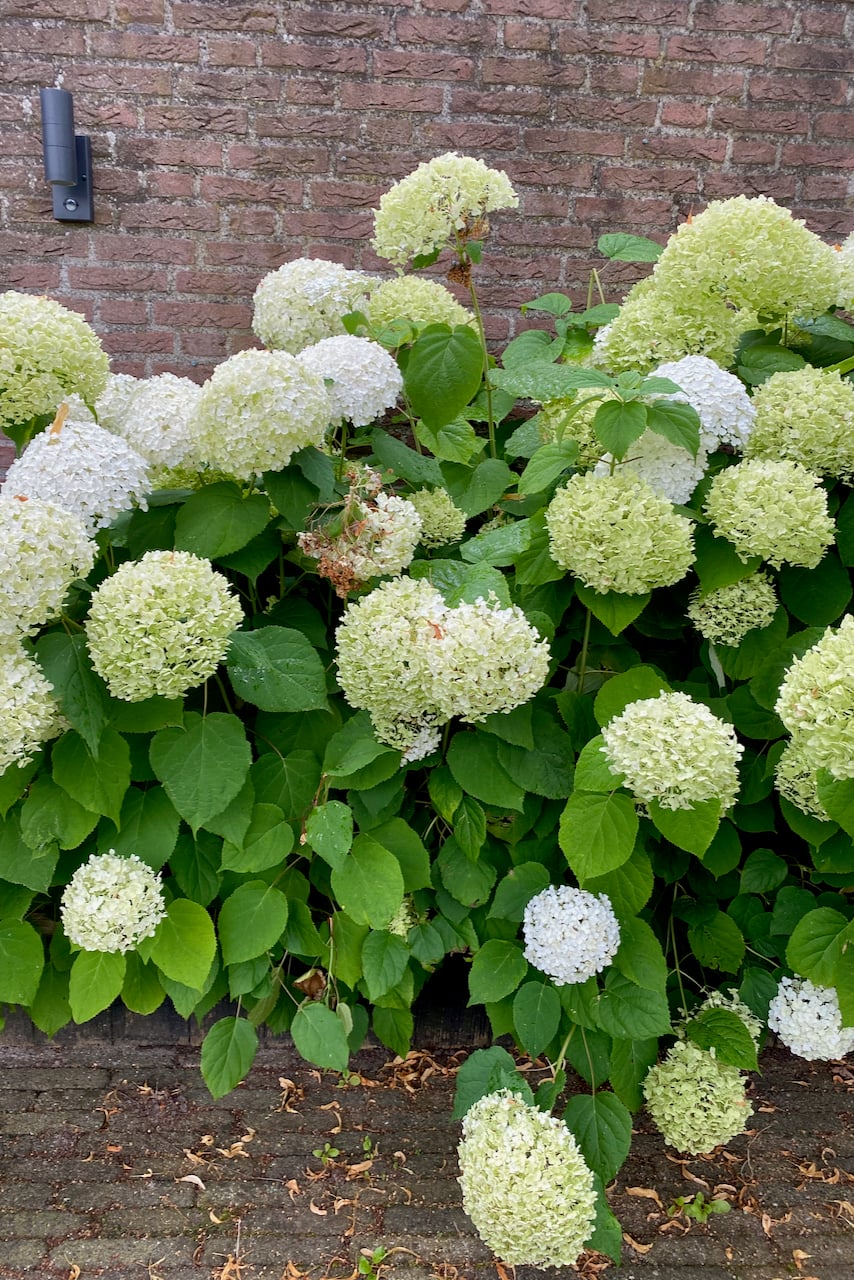
As a response to the heat, hydrangea leaves droop naturally in order to slow down evaporation and prevent scorching.
But the longer the heat stress lasts, the higher the likelihood that the leaves will not bounce back. Wilted leaves that have lost too much moisture may turn yellow, then brown, then die back completely and detach from the main plant. It doesn’t mean the whole plant is dead, but it is a clear sign of stress.
How to fix it:
We obviously can’t control how hot it gets, but we can mitigate the effects of that heat on our plants, up to a point.
What direction is your hydrangea facing? In most of the Northern Hemisphere, a hydrangea facing south or west without any other type of shade will likely be getting too much direct sun in the summer months.
You might have to move the hydrangea, but definitely hold off on this task until the plant enters dormancy, in early fall. The shrub is too stressed now, and a relocation would compound the stress.
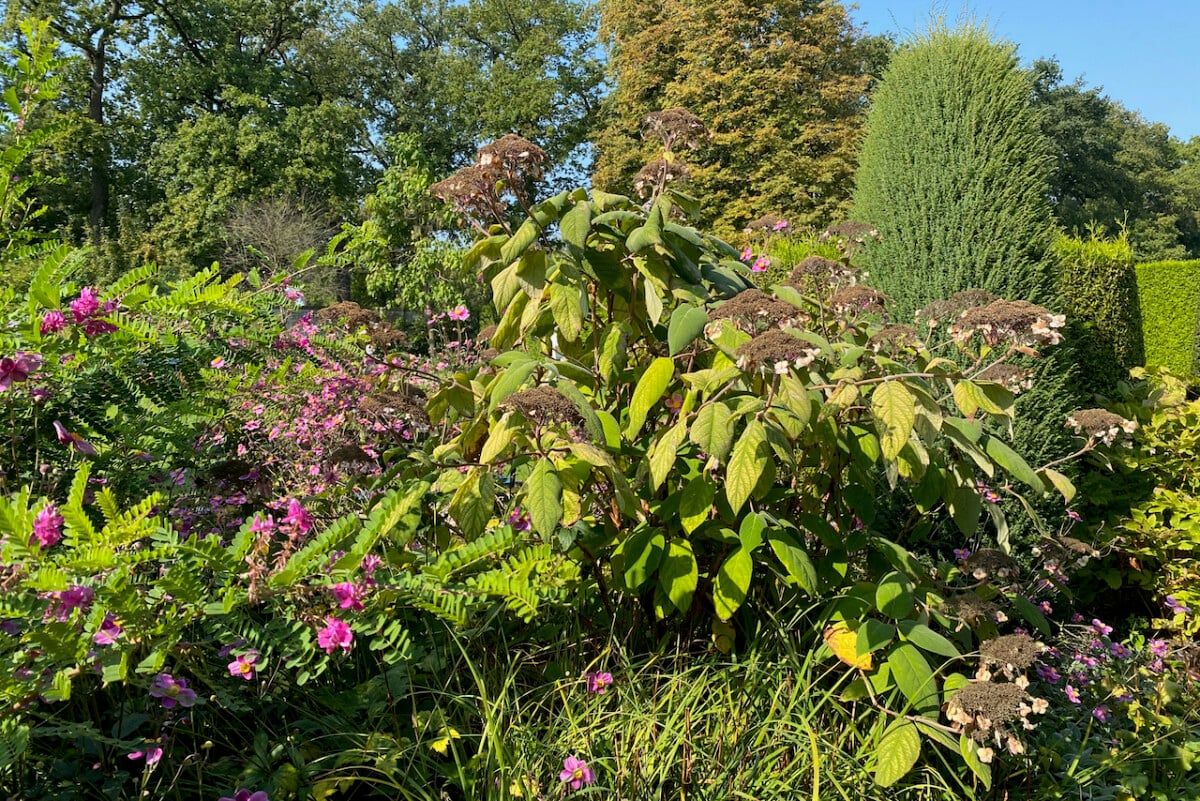
But start thinking about where you could move it to. Preferably, to a spot where it gets morning sun or evening sun, but it’s not scorched by the brightest rays.
In the meantime, while we wait to implement a more permanent solution, we need to focus on cooling down the plant.
Is there any way you can create some shade in the hottest hours of the day? Notice how and when the sun hits the foliage. You’ll see that the hottest period might not necessarily be at midday. It could be in the late afternoon.
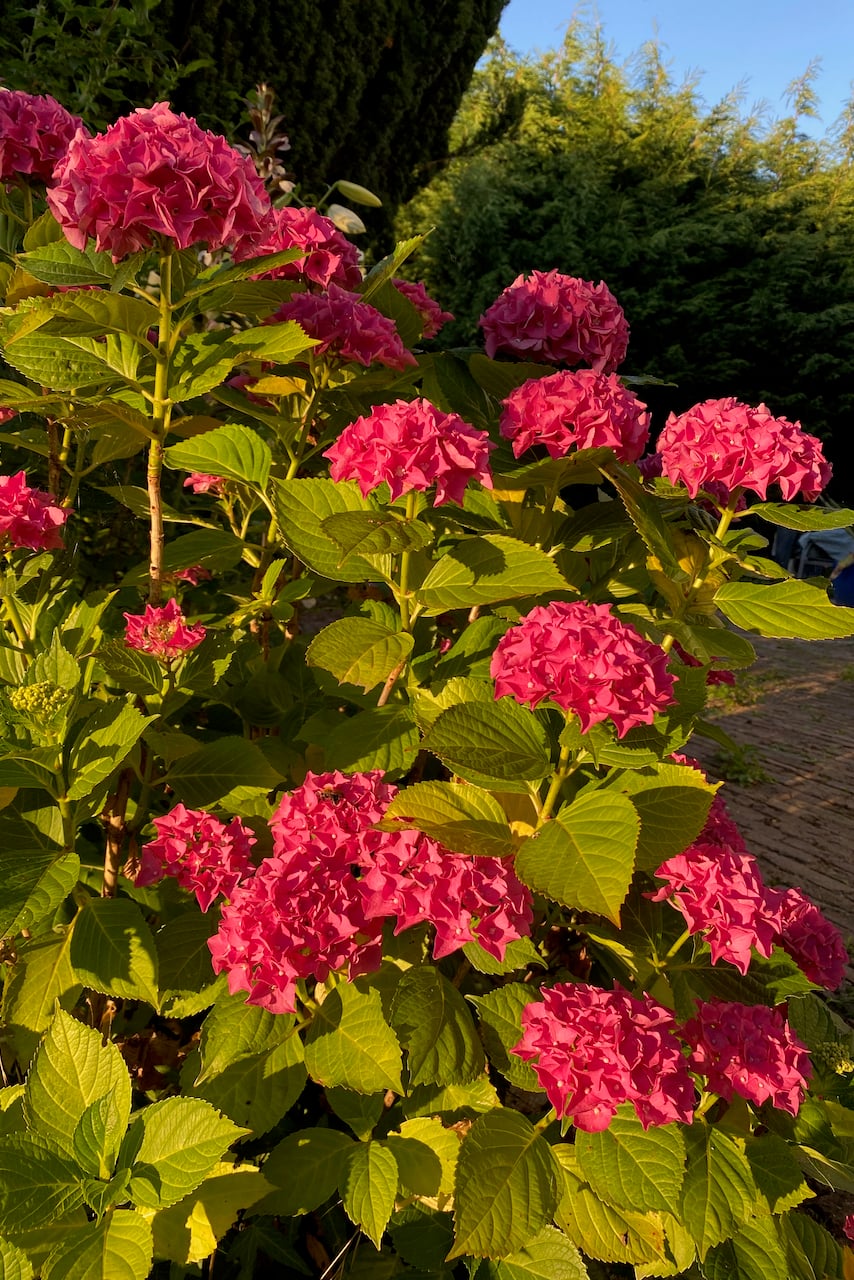
Obviously, it might be too much to build a shade structure (trellis, pergola) and fill it with plants fast enough to solve the shade problem. But you can purchase an inexpensive garden shade cloth to drape over the plant during the hottest hours of the day. (This 40% shade cloth is ideal.)
This temporary solution will prevent compounding the heat stress to your hydrangea.
2. Your hydrangea has been too thirsty for too long.
The secret to hydrangea happiness is firmly embedded in its name.
Hydrangeas love hydration.
(Somebody please put that on a T-shirt. I promise to place the first order.)
They need water and that’s that. That’s why I would never recommend planting a hydrangea in a low-water garden or a garden where you’re not planning on watering at all.
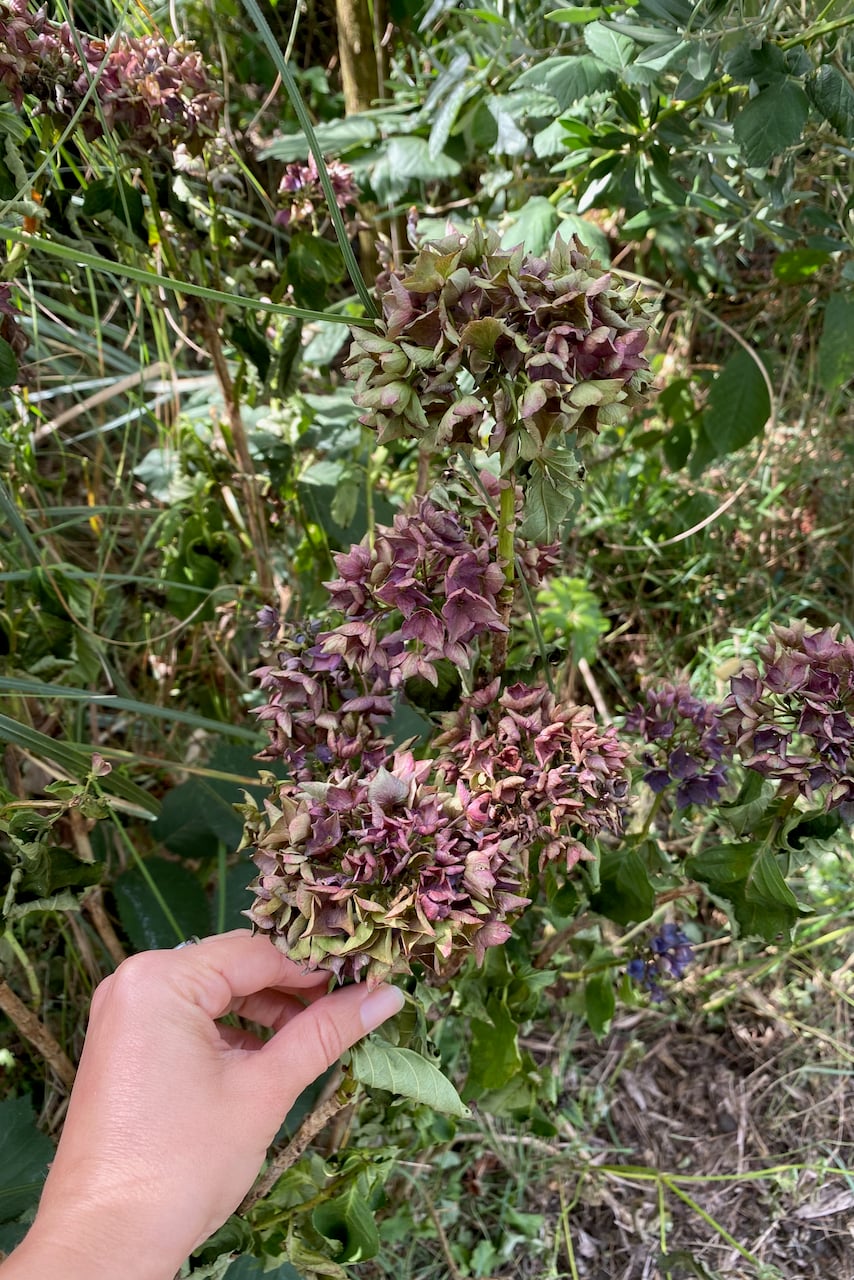
And the younger the shrub, the more it will suffer during a drought. One of the first signs of distress in this case shows up in the leaves. First, they droop. Then they lose their shine. And in more severe desiccation cases, they just turn brown, shrivel inwards and die back.
It doesn’t necessarily mean that the whole shrub is dead. But if we don’t do anything to fix the issue – and the weather doesn’t play nice and send some water our way – it may come to that.
How to fix it:
Start watering, but not overwatering, your hydrangea. It needs consistency, not a deluge. You won’t be able to bring back the brown hydrangea leaves, but at least it won’t get any worse.
And in the future, we should think about prevention rather than cure. Remember to water your hydrangea on the days when it’s not raining and there’s not enough moisture in the ground. Get in the habit of watering first thing in the morning or late in the evening in order to prevent the water from evaporating in full sun.
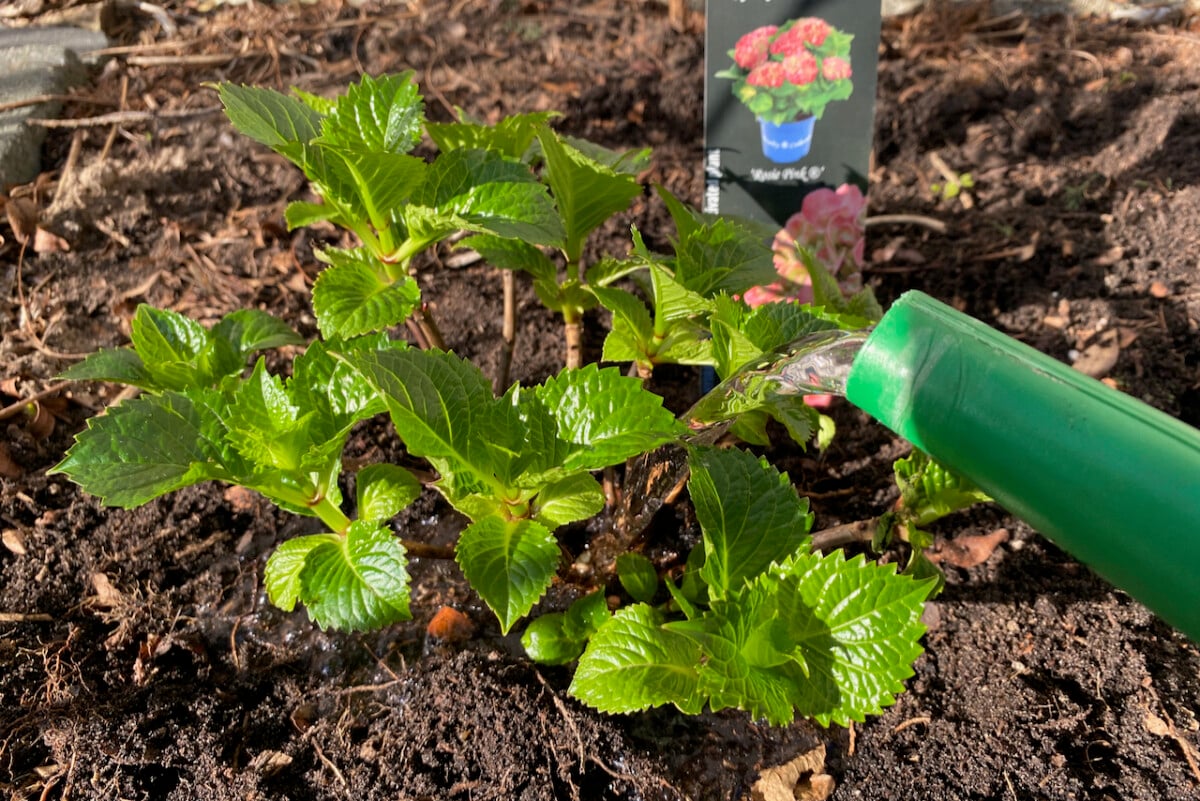
Water deeply, right at the base. Don’t be tempted to sprinkle water on the leaves, no matter how sad they may look. While we’re at it, we can add a thick layer (a couple of inches) of mulch to prevent the ground from drying too quickly.
Any type of mulch will do. Remember, though, that pine mulch is not acidic enough to affect the pH of the underlying soil. Hydrangeas love acidic soil, but if you need to amend your soil to make it more acidic, pine chips won’t do the trick.
3. Your hydrangea is approaching the end of the season.
Listen, I’m not crazy enough to think that our readers don’t know that hydrangeas, like any other deciduous plants, will turn brown and lose their leaves in the fall.
I know you know. You know you know. So why am I reminding you of the obvious?
Well, because fall may not always fall when the calendar says it should fall. (Welp! I think I confused myself there.)
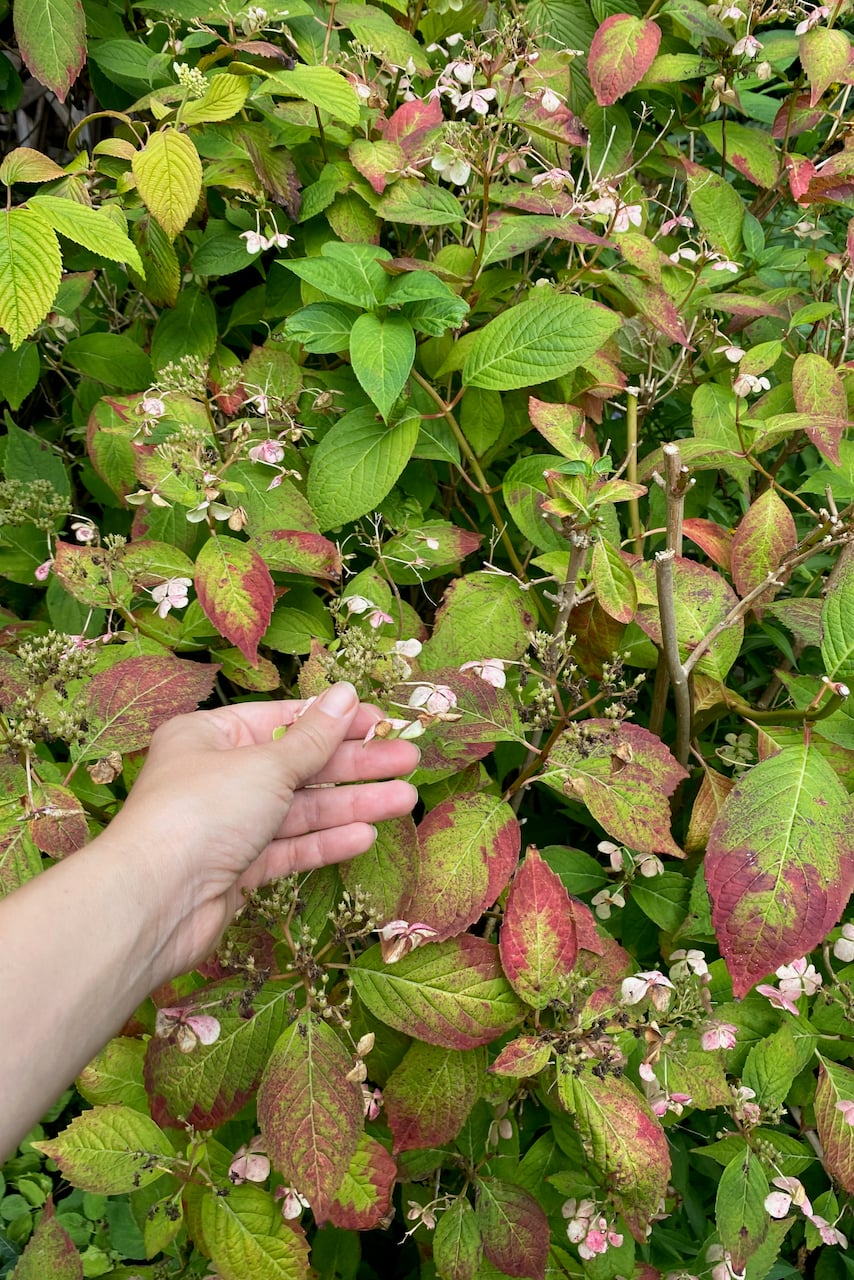
My point is that hydrangeas may show signs of autumnal fatigue sometimes as early as the middle of August. It usually happens after hot and dry summers (see my two points above) when the hydrangea has been too stressed for too long. It simply doesn’t have enough energy and moisture stored to keep its leaves lush and green for another month.
This is also likely to occur when said hydrangea has gone through what I like to call yo-yo care.
Let’s say you were watering properly. Then stopped watering it, right when it needed it the most (Summers are busy with other fun things!) You then watered again. Then stopped.
Or maybe it wasn’t under your control at all. It was a scorcher, followed by a cool spell, followed by a scorcher, then a cool spell. You get the gist.
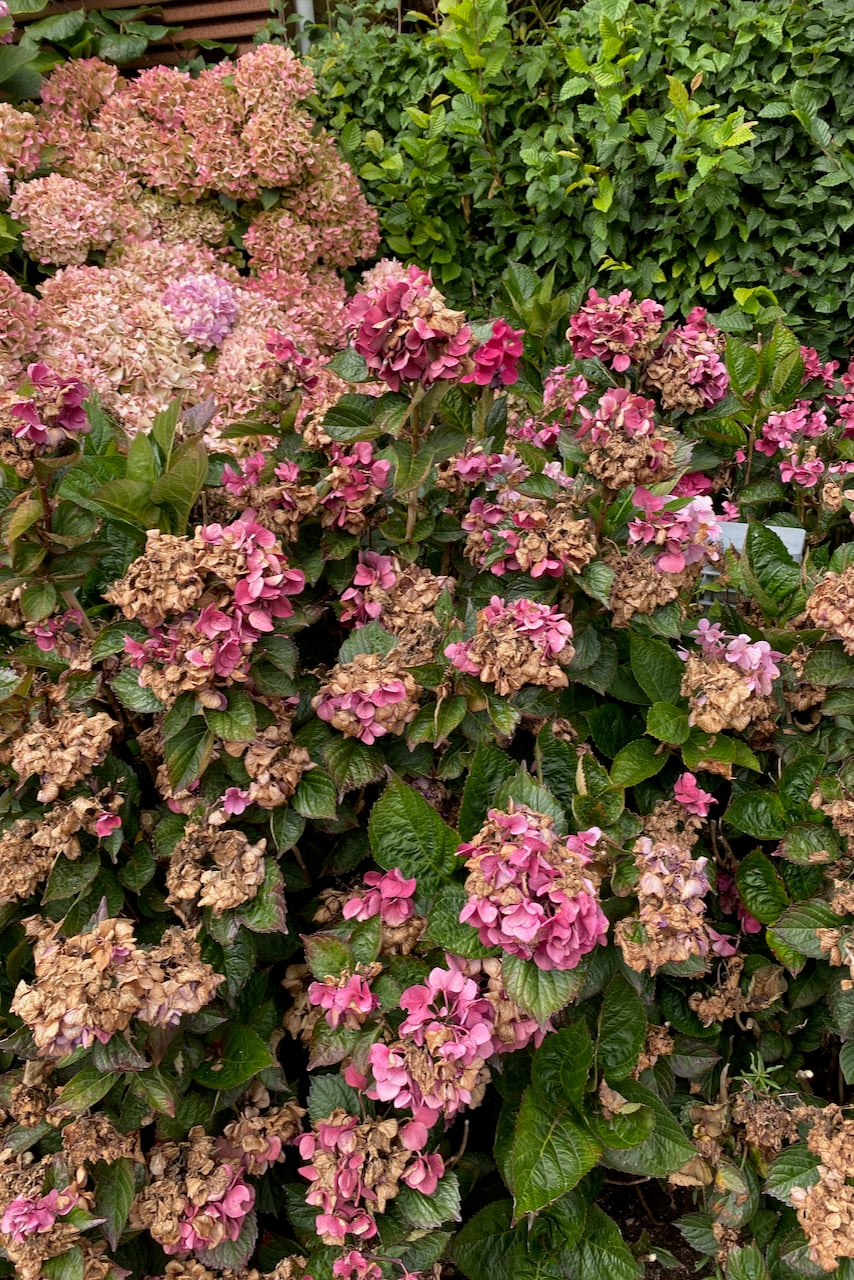
All these fluctuations cause stress on our plants. And when these factors combine during the same season, the effects may lead to an early leaf loss.
How to fix it:
You should still keep your hydrangeas watered, but don’t overwater them. As the leaves drop, the transpiration process is significantly reduced. So the plant won’t be able to get rid of excessive moisture.
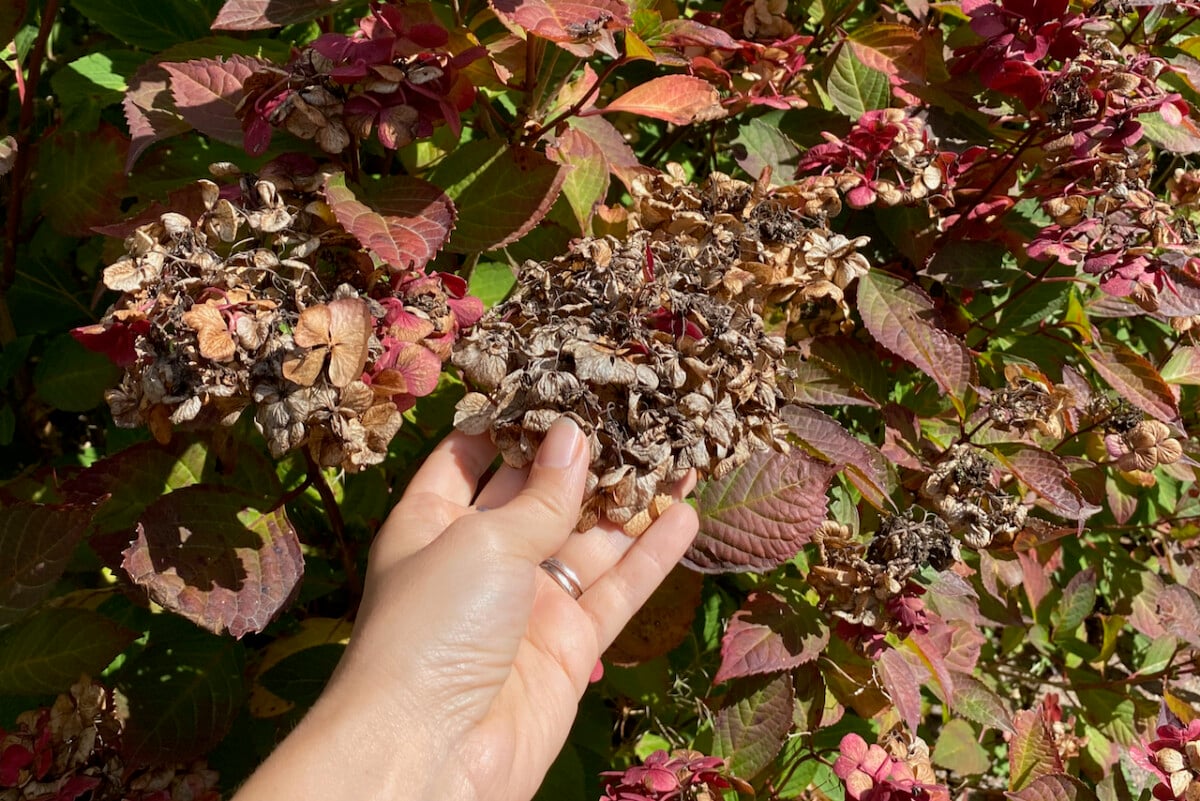
The best way to prevent this from happening in the future is to assess whether you need to move your hydrangea to a spot that gets more shade. Or perhaps you may need to install a more hands-off irrigation system, and not rely on your memory to remember to water your hydrangeas.
4. You’re growing an oakleaf hydrangea, and that’s just what they do.
If you’re growing an oakleaf hydrangea (Hydrangea quercifolia), the leaves turning maroon is a feature, not a flaw. You’re in for a show. I’m actually kind of jealous of the spectacle you’re about to enjoy.
I know a lot of gardeners prefer the cheerful mophead hydrangeas (H. macrophylla) for their brightly colored pom-pom blooms. But if you’re ever feeling like your garden needs more depth and glamor, plant an oakleaf hydrangea. They’re more than just a pretty mophead.
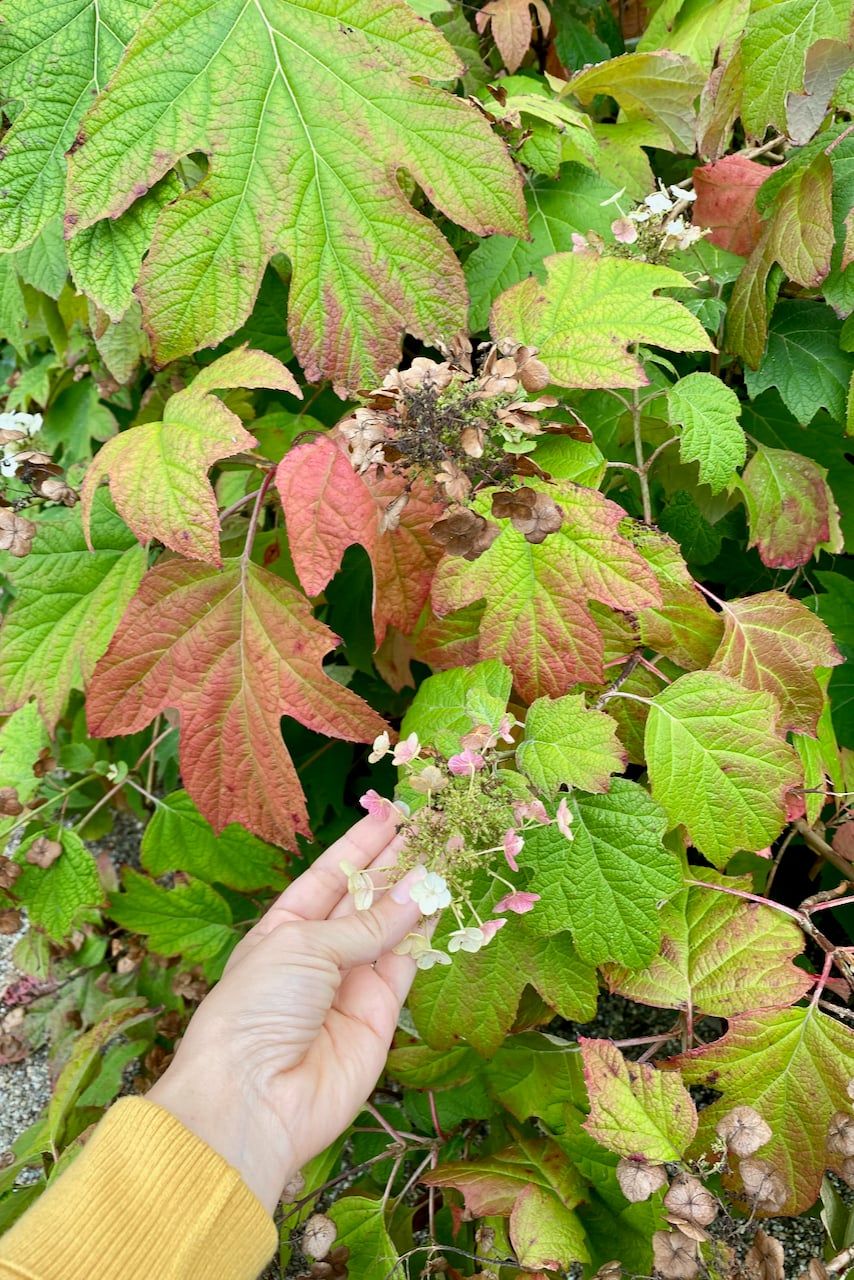
The leaves really do resemble those of oak trees. The panicle blooms look like a cluster of white, tightly-packed flowers. And you may remember that it’s native to North America.
How to fix it:
There’s nothing to fix. Enjoy this beauty while it lasts, even if fall may have come early for its foliage this year.
5. Your young hydrangea is suffering from transplant shock.
You may agree with me that moving a hydrangea is a shock for the plant. Yet it might still sound baffling that transplanting one is just as much of a stressor.
How could that be? We’re just taking the plant out of a flimsy nursery pot and allowing it to spread its roots in the ground. What’s so stressful about that?
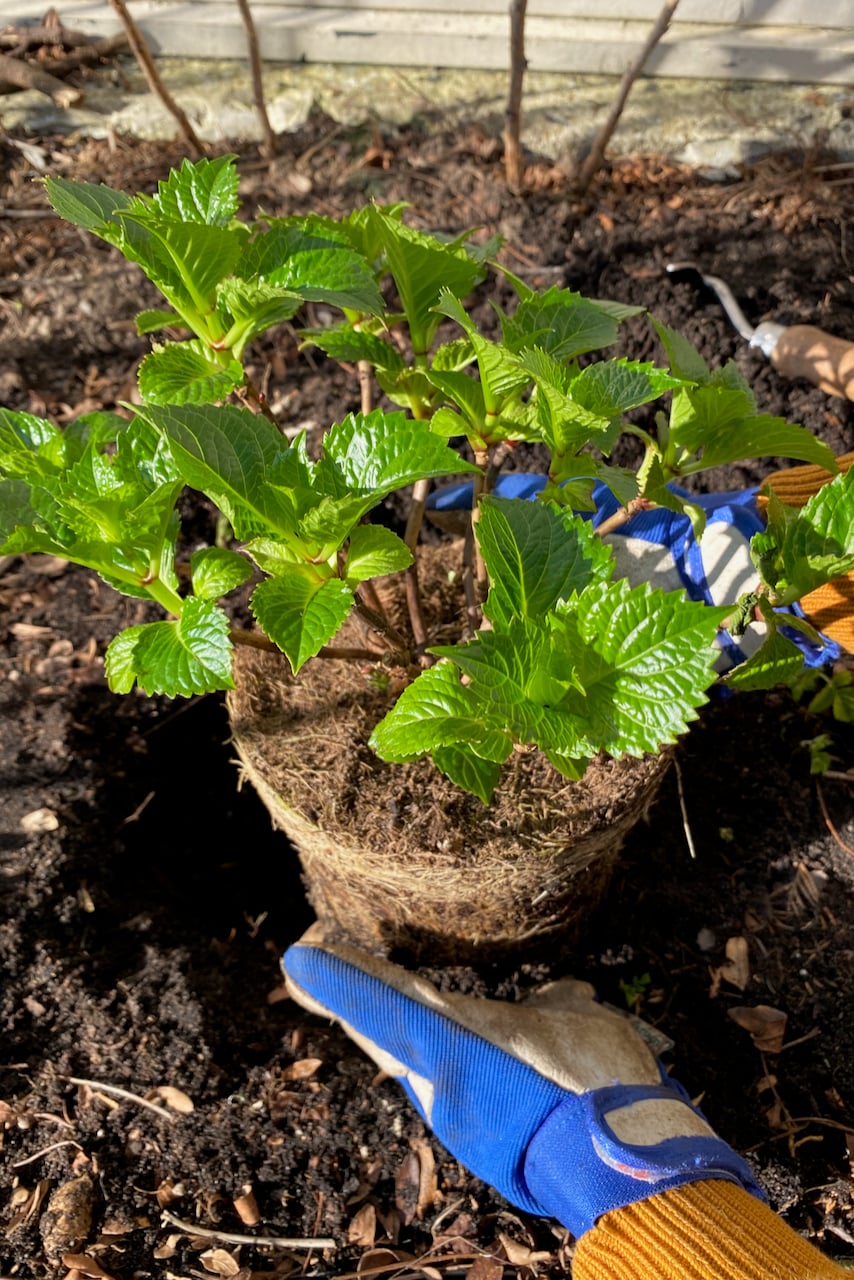
I find the most common scenario is when a newly-planted hydrangea is getting too much direct sunlight. Even if the sunlight wouldn’t be excessively strong for a mature hydrangea in the same spot, young plants don’t yet have deep roots.
This means they can’t tap into the soil to reach the level of moisture they need to sustain the existing leaves. Thus, the leaves turn brown and die. Then the entire plant is more likely to die since the root structure is not strong enough, and the leaves that capture and redirect energy (in the form of photosynthesis) are no longer there to do the job. Not a good start!
How to fix it:
You’ll have to start by creating more shade. And if you haven’t done so already, add a layer of mulch around the drip line to lock in the moisture.
However, don’t be tempted to troubleshoot it by just watering more. Overwatering a young hydrangea is often not a good idea since the plant doesn’t have a mature enough root system to absorb the water. All you’d be doing is contributing to root rot.
In the future, when you’re transplanting any perennial from pot to ground, add a spoonful of mycorrhizal fungi.
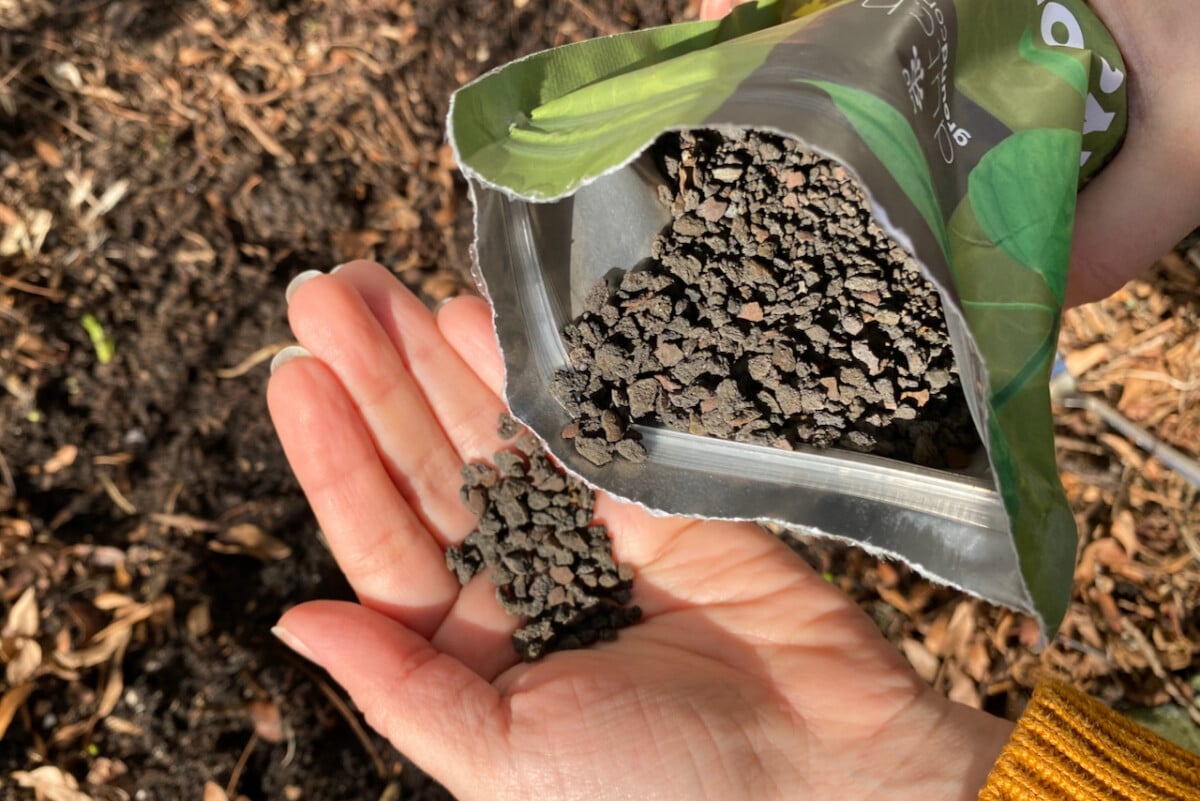
By inoculating the roots with these healthy fungi, we help our hydrangea with root development.
The roots will grow faster and stronger, thus helping the plant absorb water and nutrients better. It’s not that it doesn’t get stressed by the transition anymore. It’s about increasing its resiliency to stress.
We swear by this magic dust in our gardens, so we’ve been talking about it a lot over here at Rural Sprout. I won’t go into too much depth on the topic now. But if you want to learn more, my colleague Tracey does a deep dive into how this soil improver works in this article.
6. Your hydrangea has some fungal damage.
Now we’re getting into “I hope this isn’t the case” territory for reasons why your hydrangea’s leaves are turning brown.
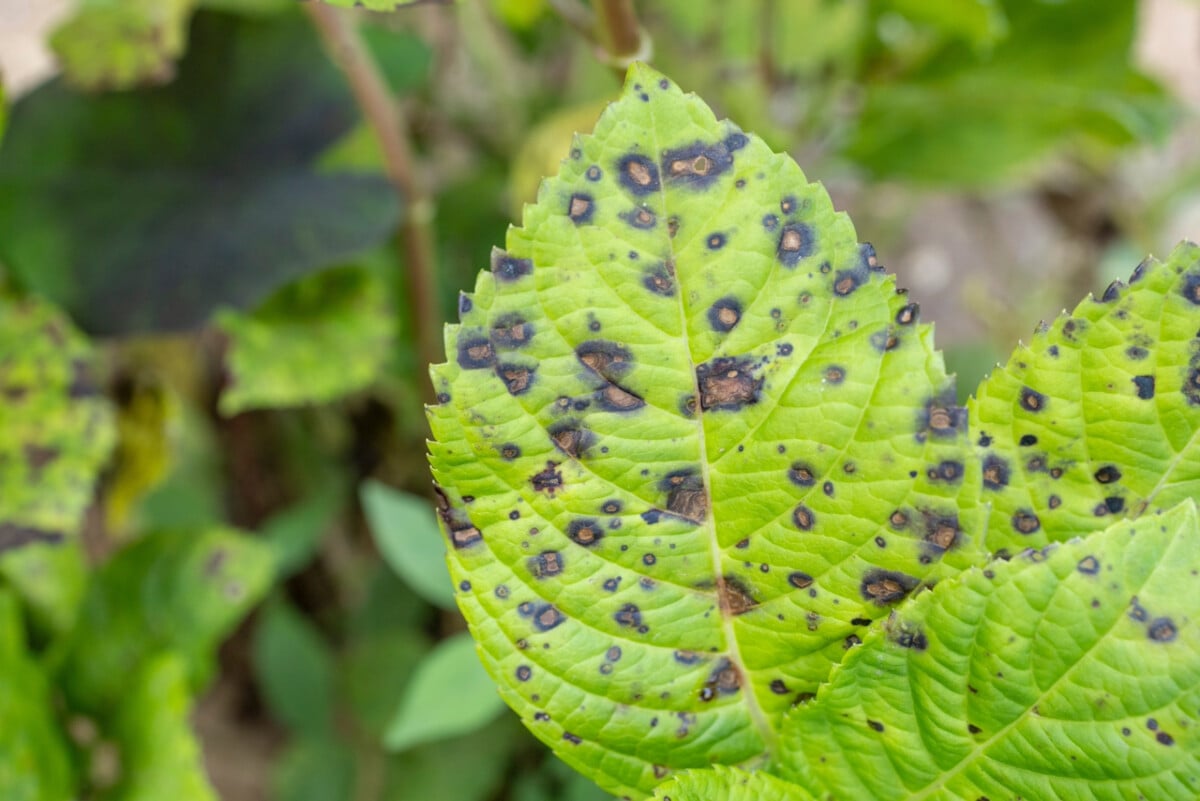
The most common culprit that causes brown leaves in hydrangeas is the dreaded Botrytis blight (Botrytis cinerea). It’s a fungus that starts to show up as brown spots on an otherwise healthy green background. Sometimes, the color may look purple or dark pink, making the leaves look bruised.
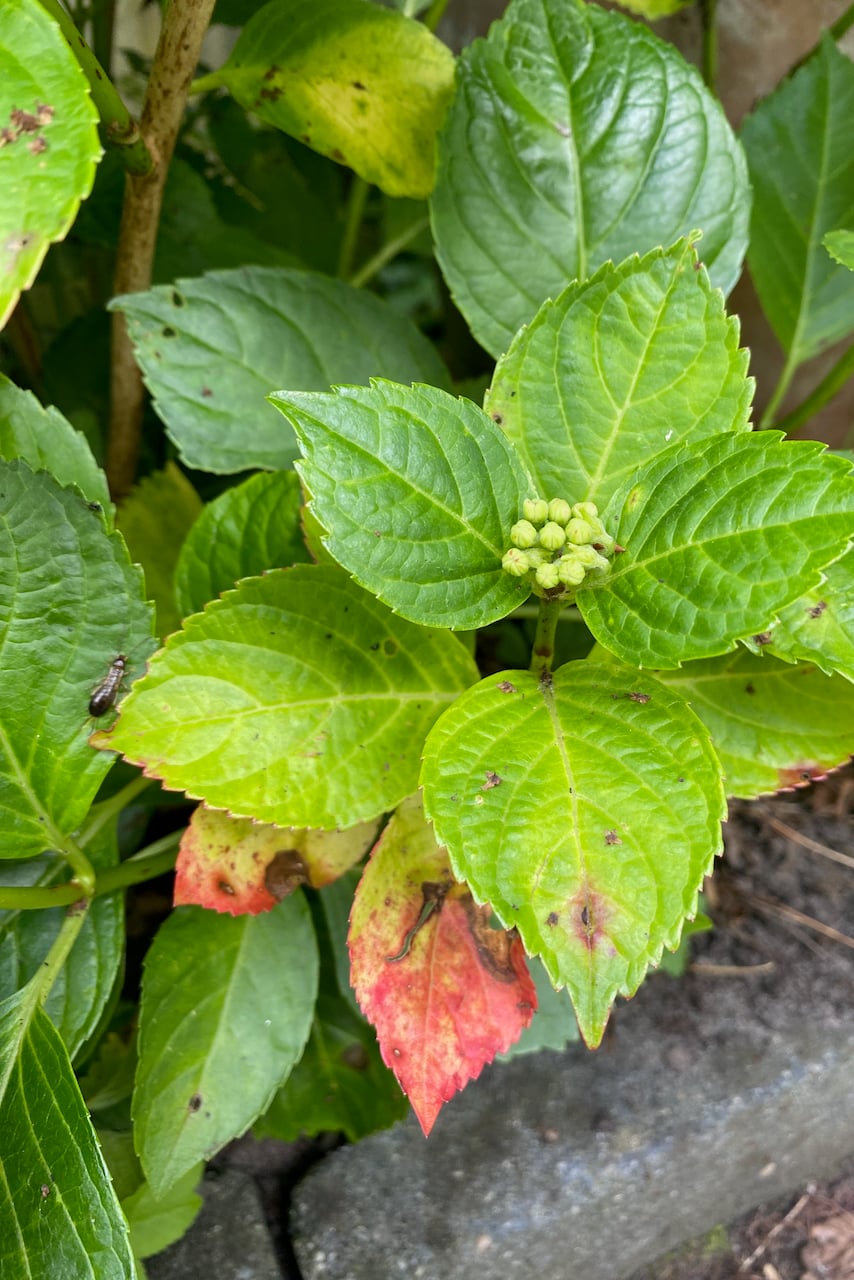
Another common leaf spot that can develop on hydrangea is called Cercospora. The spots are similar to those caused by Botrytis.
Unwanted fungal growth happens when we have a prolonged warm and wet winter followed by a damp spring. The fungus (always in the air) is spread by wind and lands on healthy tissue. When the conditions are right, it starts to spread from one leaf to another. Sometimes, it may even affect the flowers.
How to fix it:
First of all, take a deep breath. Blight is not the end of the world, and it won’t be the end of your hydrangea either. Is it unsightly? Yes. They don’t call it a blight for nothing. But in and of itself, it won’t kill the shrub.
Second of all, I want to discourage you from applying fungicides to get rid of the problem. Fungicides kill fungi irrespective of whether they’re the good fungi or the bad ones. And as we’ve already established, we want the good fungi in the garden to help it be more resilient.
What we can do, for now, is remove the affected leaves and dispose of them in the trash. We can’t compost them. Don’t go plucking off all the leaves, though, just the ones that are badly infected. If there are any fallen leaves or debris, we’ll pick that up too.
In the long run, we want to practice some good plant hygiene.
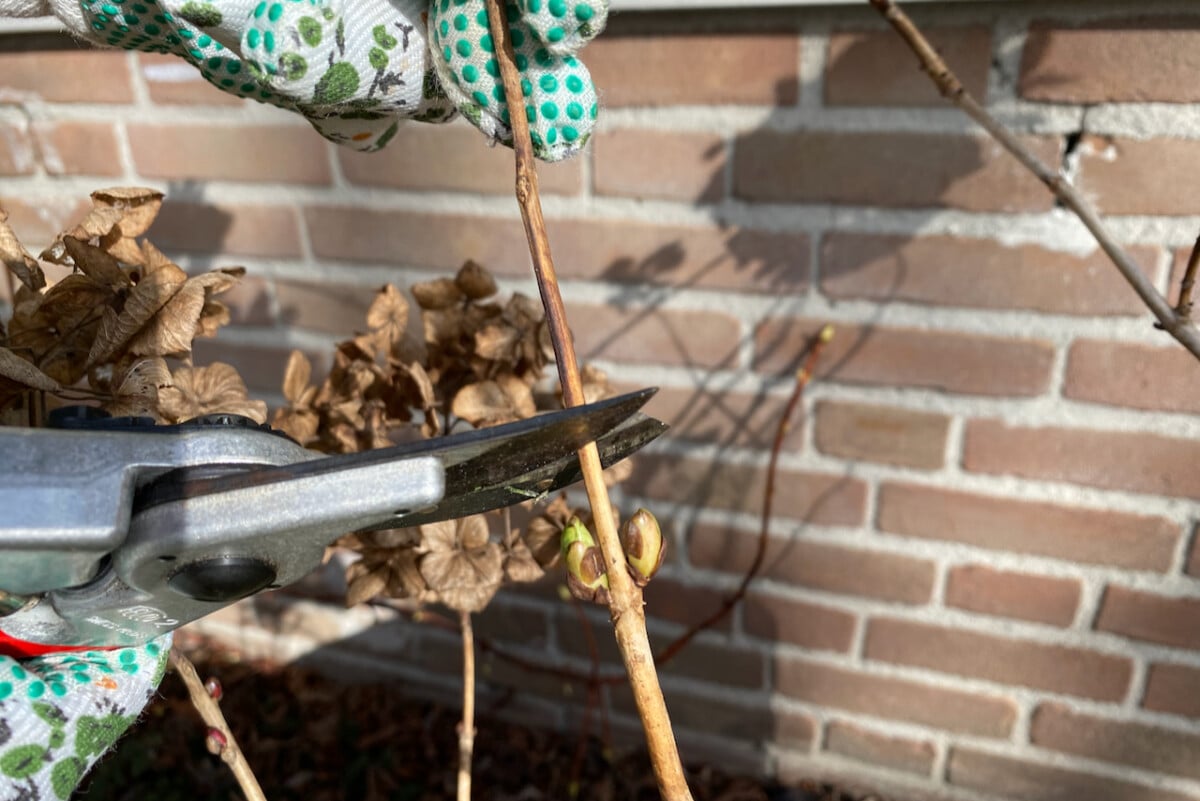
Is there any way that we can increase the airflow around the hydrangea? Perhaps by pruning off a couple of overcrowded branches. Or moving some of the plants that are planted too closely? Or perhaps moving the hydrangea itself?
Also, remember to never water the hydrangea from above, which only increases the risk of fungal dispersion.
And since we can’t control the humidity in winter, we’ll have to learn to live with these fungal issues. They show up later in the summer anyway and will almost never kill the hydrangea outright.

Get the famous Rural Sprout newsletter delivered to your inbox.
Join the 50,000+ gardeners who get timely gardening tutorials, tips and tasks delivered direct to their inbox.