

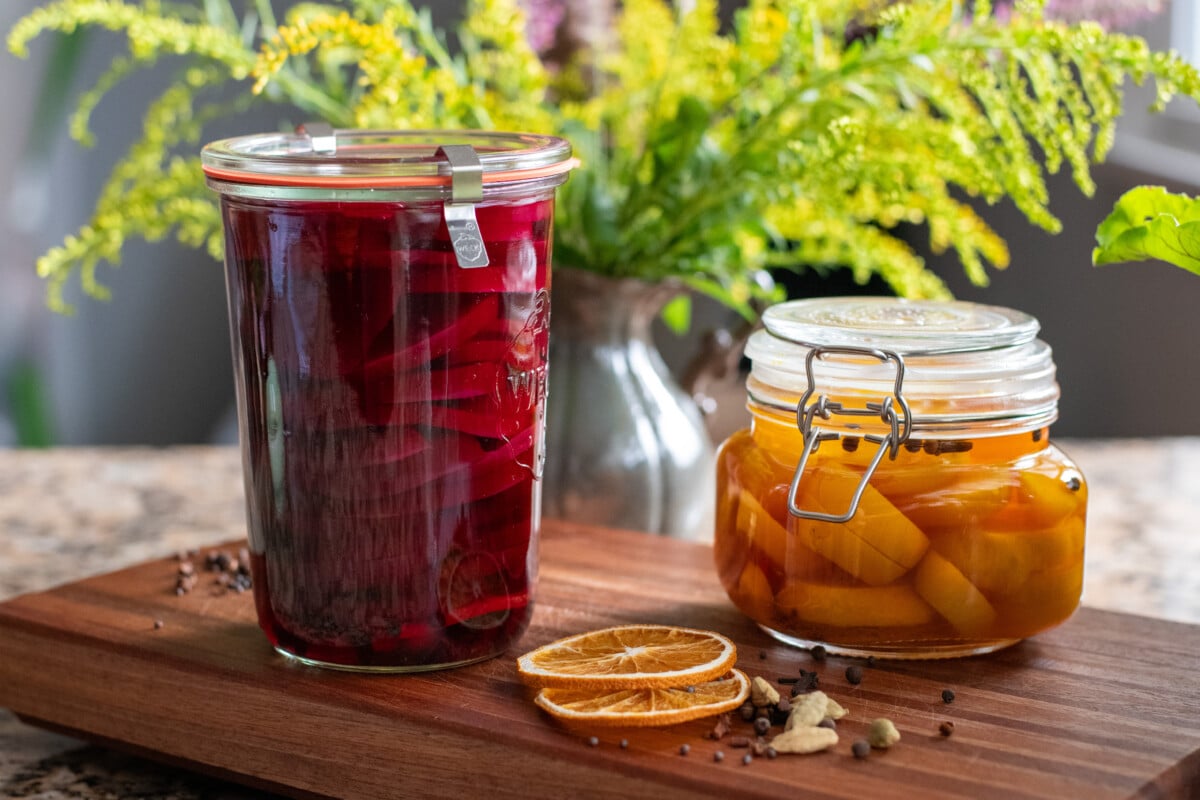
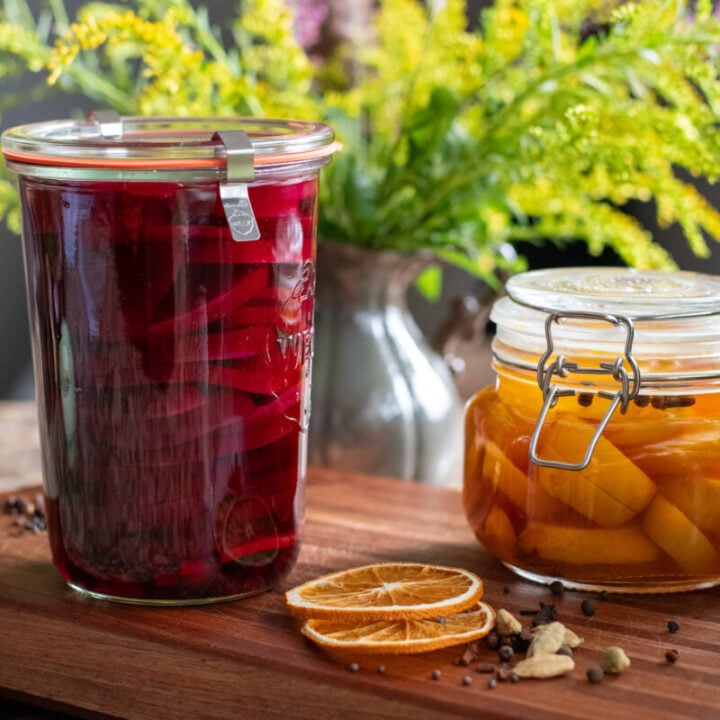
Warm and spicy, almost Christmassy, pickled beets are quite unlike most pickles. They go great with a charcuterie or cheese board, or layered on your favorite sandwich. And since we’re making quick refrigerator pickled beets, you don’t need to mess with all the equipment that goes with water bath canning.
A Modern Take on a Classic Canned Pickle
Pickled beets always remind me of the relish trays my grandmother would set up for holiday meals. They were always served on one of her pretty cut-glass dishes, with individual sections for black olives, green olives, tiny cornichon pickles, fresh, crisp radishes and, of course, her homemade pickled beets.
You couldn’t help but pop an olive in your mouth on your way past the dish.
Judging by all the cut-glass relish trays I see in thrift stores, it appears this tradition has fallen by the wayside.
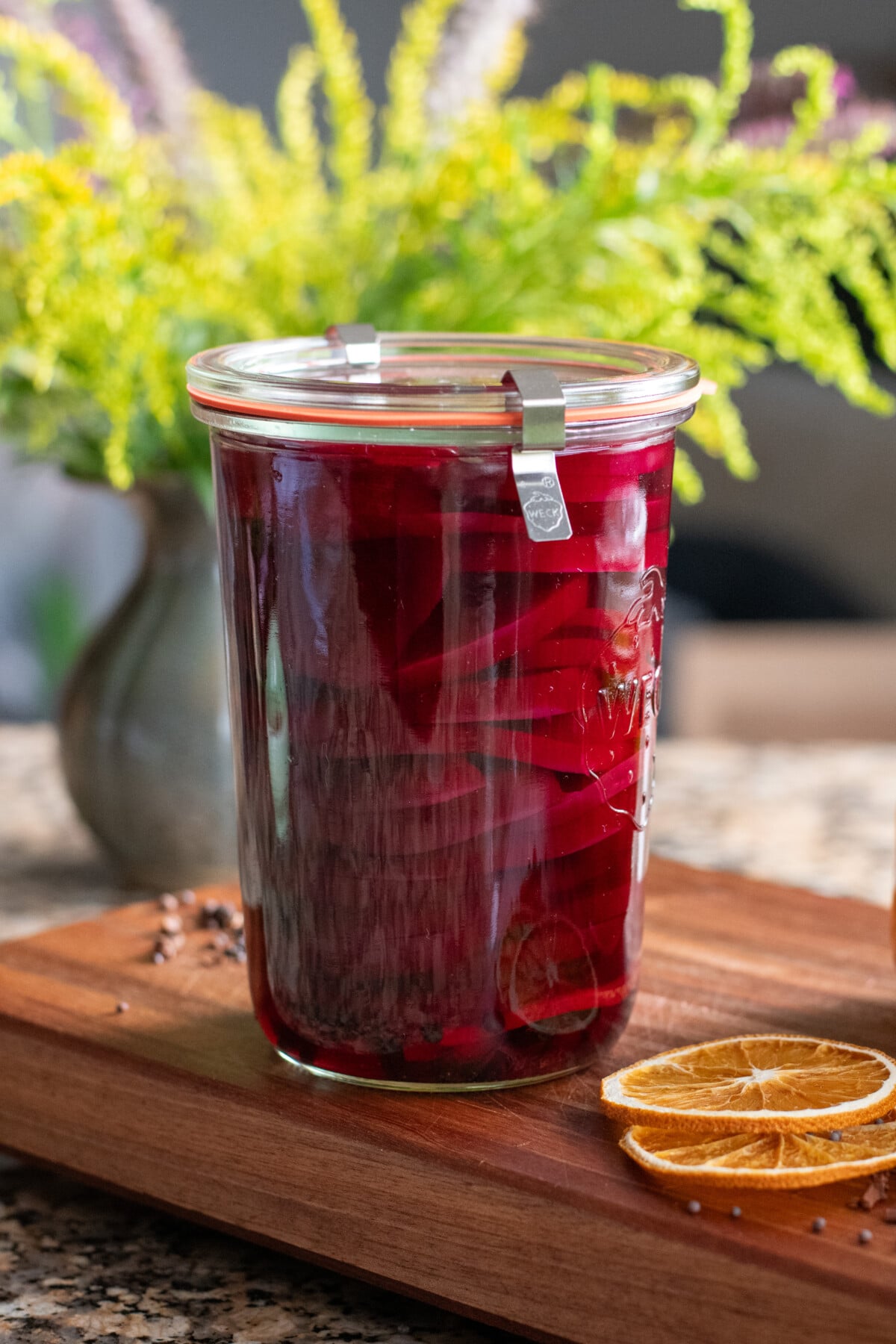
Thankfully, making pickles hasn’t.
In fact, making pickles has become more accessible to everyone thanks to quick pickles, also known as refrigerator pickles.
You no longer need a bushel of fresh produce from your garden and a pantry full of empty mason jars to enjoy homemade pickles. Quick pickles have become increasingly popular because of how easy and quick they are to make. And they come with an upside. If you’ve had more soft, mushy canned pickles than you care to recount, quick pickles offer a crunch that’s hard to find with traditional canning methods.
When we take a modern approach to pickle-making and apply it to a rather old-fashioned (and often unpopular) vegetable, the results are pretty darn tasty.
Holiday Spices
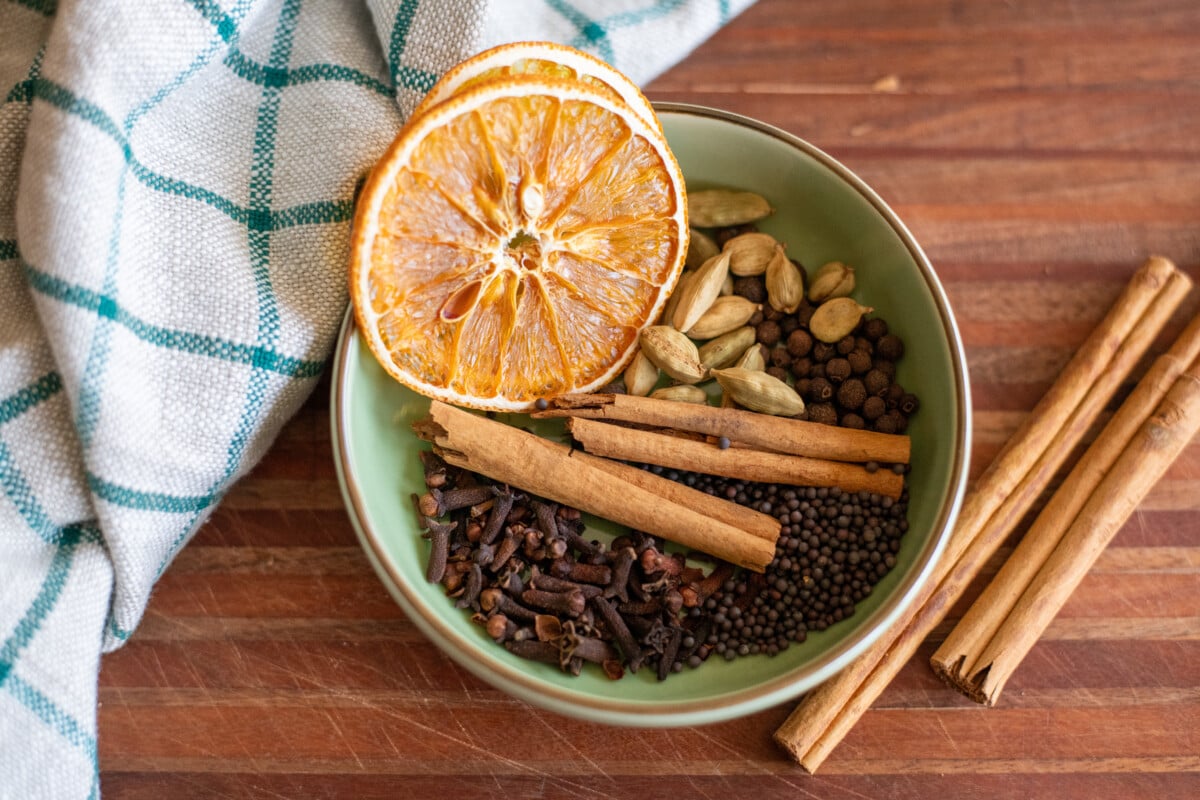
What makes pickled beets stand out from other pickled vegetables is the spices used. Most pickles have a tangy, savory zing that comes from the combination of water, salt, vinegar and spices such as peppercorns, mustard seeds, dill, and coriander (to name a few).
But with pickled beets, we’re adding more sugar than salt to the brine and spices that read more like something from a holiday pie recipe. Things like allspice berries, cloves, cardamom, cinnamon and the like. The result is still tangy, but the overall flavor profile leans warmer, and the zing is mellowed. You get a complex pickle with a lot of depth.
Not bad for something that takes mere minutes to make and hangs out in your fridge.
I’ve found that plenty of people who don’t care for beets enjoy pickled beets nonetheless.
Go for the Gold!
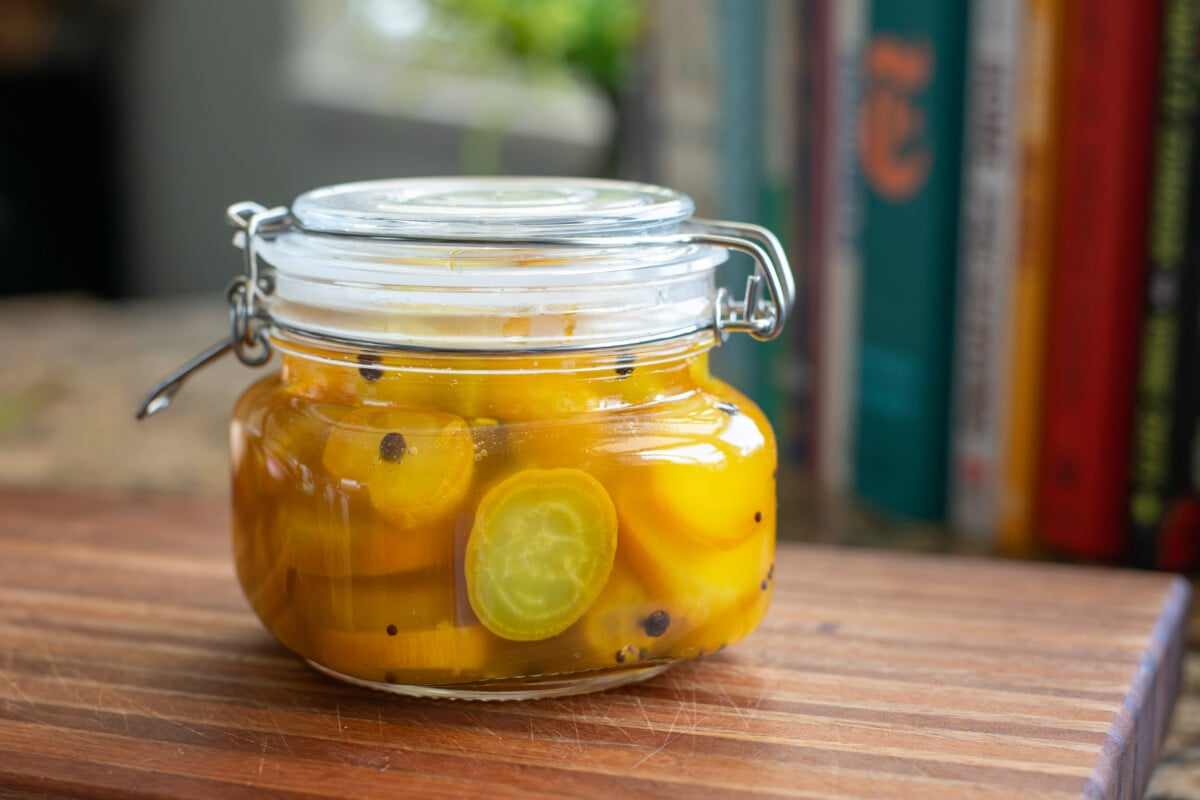
If you can find them, I highly suggest you try this recipe using golden or yellow beets. Yellow beets are much milder than red beets, and lose some of that earthy flavor that puts many people off. Golden beets tend to be sweeter, too.
I love golden beets, and they make absolutely beautiful pickles. I grew Baldor golden beets from Territorial Seed Company this year, and they will certainly be a mainstay in my garden going forward. As you’ll see, I used golden beets from my garden in most of the photos for this recipe. My aim is to gently persuade you.
A note about using beets from your garden: I often find that when pulling up my beets for harvest, there are enough little bite-sized beets that got crowded out by the bigger fellas to fill a pint or half-pint jar, so this recipe is great for a jar of those little guys.
This recipe is incredibly simple.
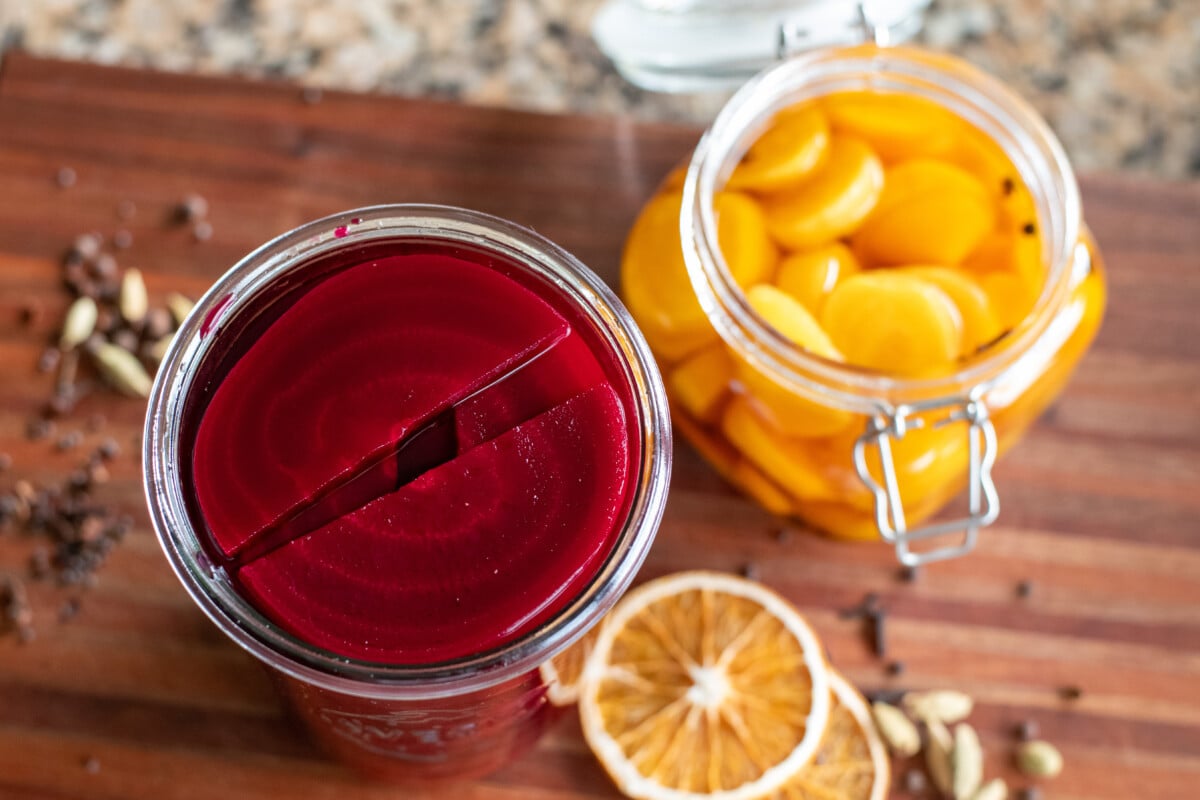
I’ve kept the spices minimal, but feel free to add a crushed cinnamon stick, a cardamom pod or even a desiccated orange slice or two. The orange really plays well with the umami of the beets and brightens the whole thing. (These are the oranges I use.)
Normally, white vinegar is used when making pickles because it has the correct acidity for canning to prevent spoilage. Since we don’t have to play by those rules here, we can change things up. Apple cider vinegar is a marvelous choice for this brine, but feel free to try other flavored vinegars in your cupboard.
The recipe makes a pint of pickled beets, and it’s quite easy to scale up, depending on how many beets you have. Just remember, they aren’t meant to be shelf-stable, though, and should be eaten within two months. Because we aren’t water bath canning, there’s no need to sterilize or prewarm your jars. Just be sure you use a nice, clean jar.
Alright, my friend, let’s make some quick pickled beets. Here’s what you’ll need.
Tools
- Pot for boiling beets
- Colander
- Small saucepan to make brine
- Paring knife
- Pint jar with lid
- Measuring cups and spoons
Ingredients
- 2-3 large beets or 5-6 smaller beets, red, golden or a mix of the two
- ½ cup of water
- ½ cup of apple cider vinegar
- 1 ½ tbsp sugar
- 1 tsp coarse kosher salt
- 8 black peppercorns
- 8 cloves
- 8 allspice berries
- ¼ tsp black or yellow mustard seeds
- 1 desiccated orange slice (optional)
Instructions
If your beets have tops, slice the tops off and save them to use in salads or soups. Beet greens are hardy and delicious. Slice the bottom root off and discard or compost.
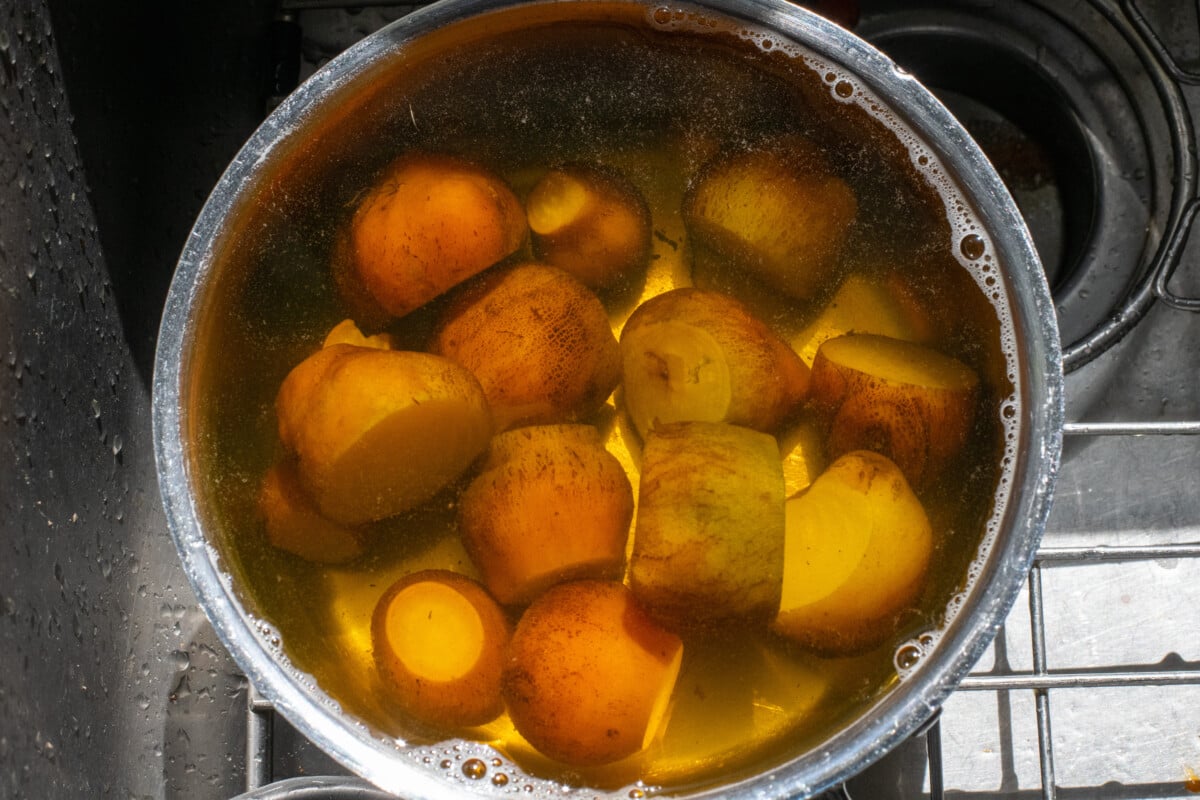
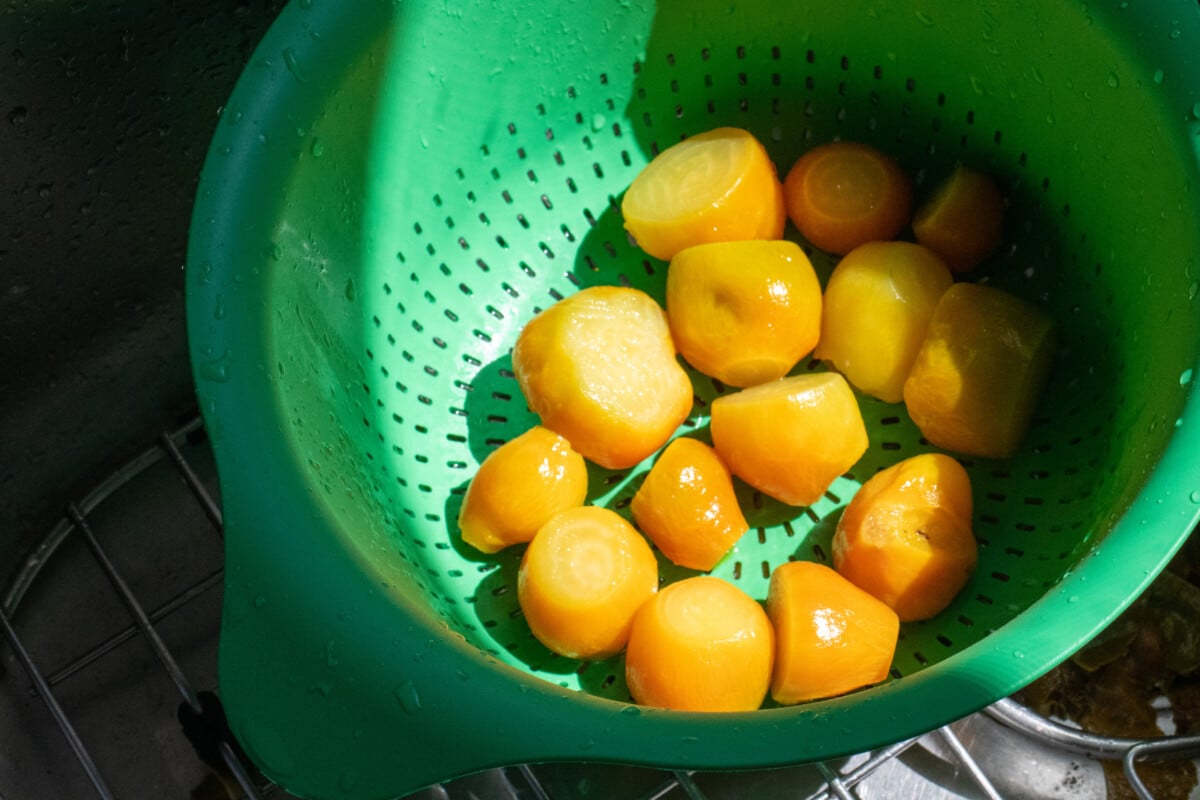
Boil the beets in a pot of water until they can easily be pierced with a fork. You want them firm, but tender. Drain off the water and run the beets under cold water to stop them from cooking.
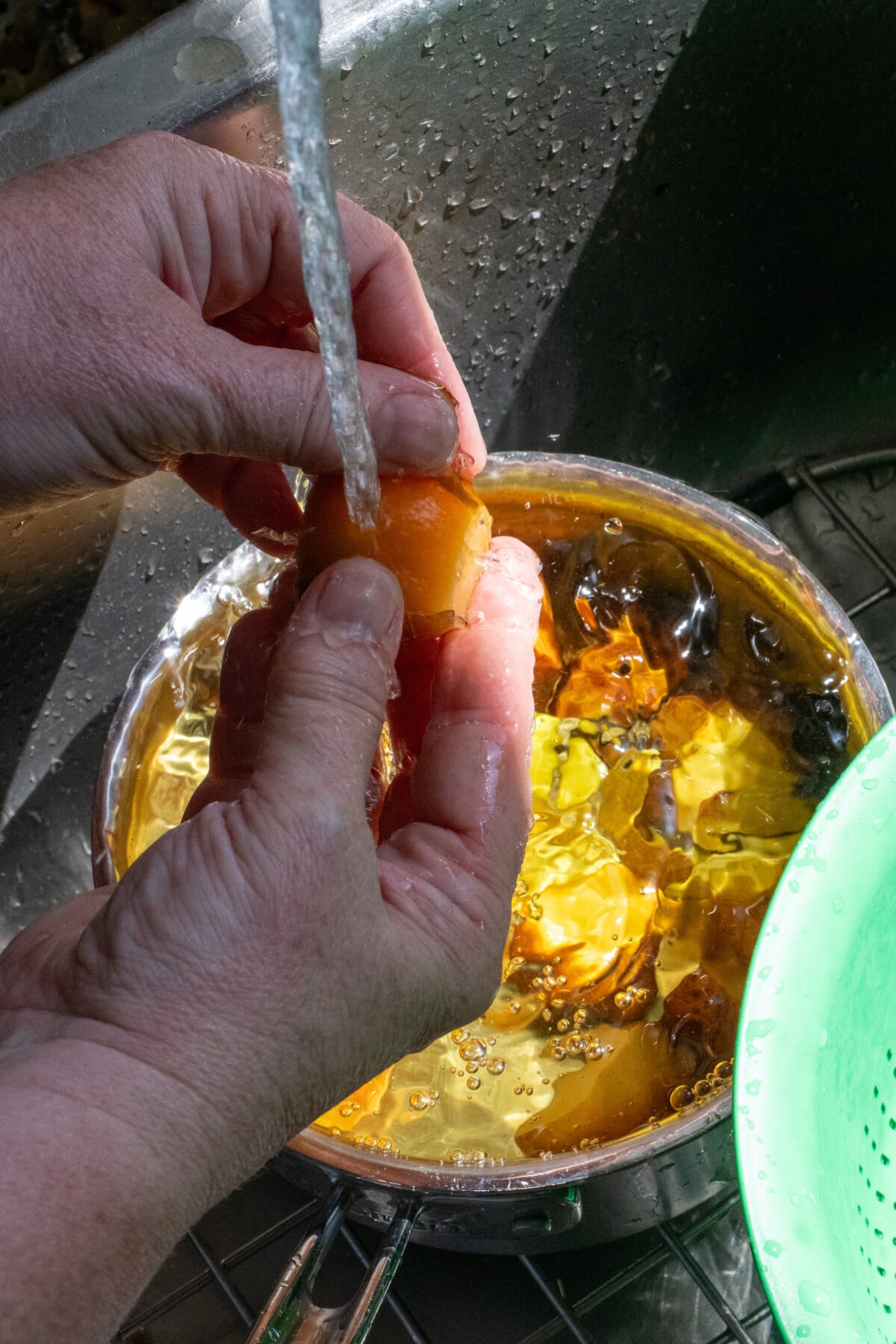
Once the beets are cool enough to handle, slip the skins off under running water. Rinse the skinned beets and allow them to drain.
In your clean jar, add the peppercorns, cloves, allspice berries, mustard seeds and orange slice if using.
In a small saucepan, bring the water, vinegar, sugar and salt to a simmer, stirring until the sugar and salt have dissolved and steam rises from the brine. Turn the burner off.
Slice the cooled beets and layer them in the jar, pressing gently to pack them in, leaving a ½” headspace.
Pour the hot brine over the beets, leaving a ¼” headspace. Put the lid on the jar and label and date it.
Keep the pickled beets in the fridge. For the best flavor, let them sit for at least 48 hours before eating. Beets will keep in the fridge for up to two months. Always use a clean utensil to remove them from the jar so you don’t introduce bacteria.
Ready to make more?
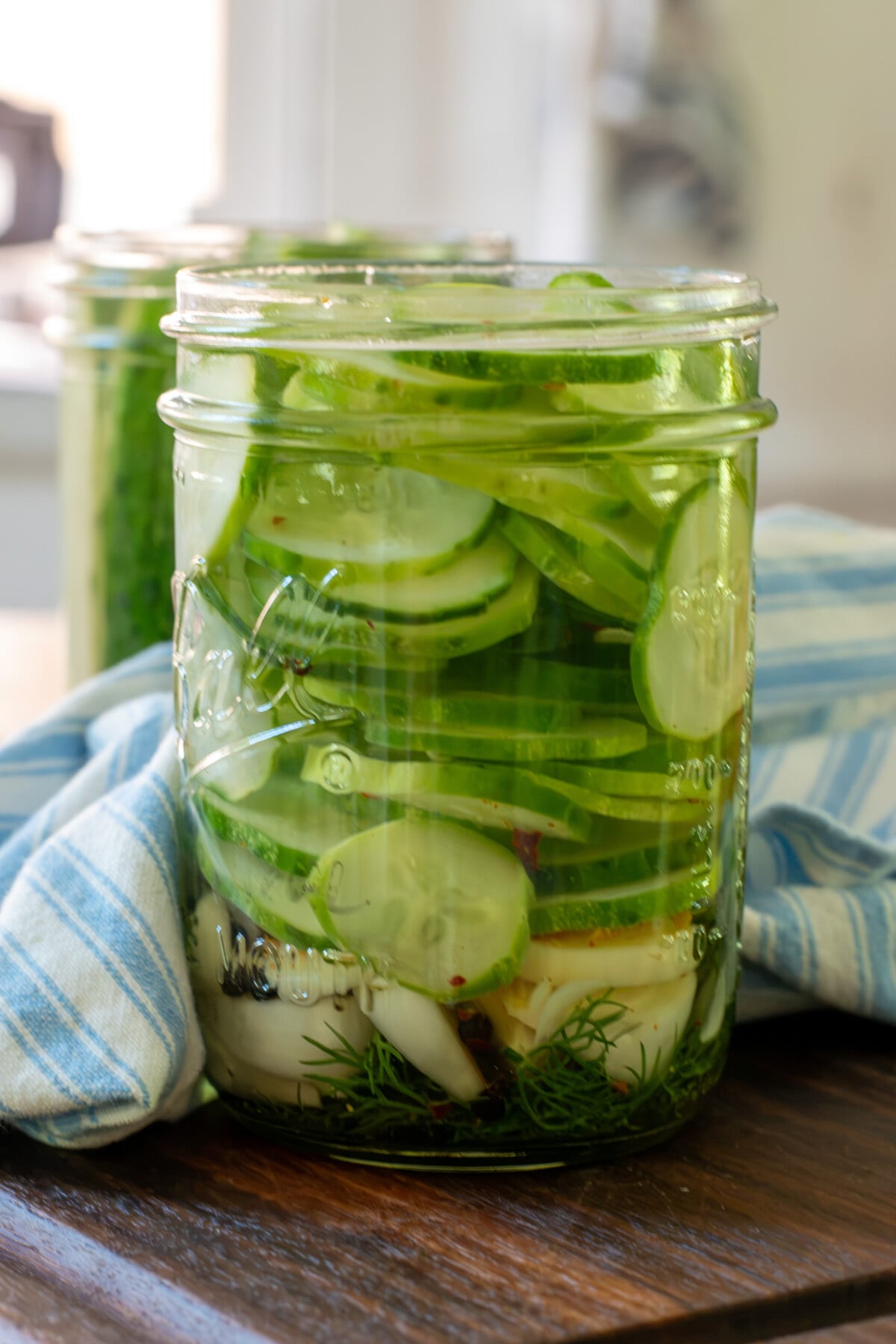
Once you’ve been bitten by the quick pickle bug, it’s hard to stop, so may I also suggest quick pickled red onions, quick pickled cherry tomatoes, and, of course, 5-minute fridge pickles.
Spiced Quick Pickled Beets
These snack-worthy spiced pickled beets are fast and easy. They're at home on a charcuterie board, in a salad or sampled one bite at a time straight from the fridge.
Ingredients
- 2-3 large beets or 5-6 smaller beets, red, golden or a mix of the two
- ½ cup of water
- ½ cup of apple cider vinegar
- 1 ½ tbsp sugar
- 1 tsp coarse kosher salt
- 8 black peppercorns
- 8 cloves
- 8 allspice berries
- ¼ tsp black or yellow mustard seeds
- 1 desiccated orange slice (optional)
Instructions
- Scrub any dirt off the beets. If your beets have tops, slice the tops off and save them to use in salads or soups. Beet greens are hardy and delicious. Slice the bottom root off and discard or compost.
- Boil the beets in a pot of water until they can easily be pierced with a fork. You want them firm, but tender. Drain off the water and run the beets under cold water to stop them from cooking.
- Once the beets are cool enough to handle, slip the skins off under running water. Rinse the skinned beets and allow them to drain.
- In your clean jar, add the peppercorns, cloves, allspice berries, mustard seeds and orange slice if using.
- In a small saucepan, bring the water, vinegar, sugar and salt to a simmer, stirring until the sugar and salt have dissolved and steam rises from the brine. Turn the burner off.
- Slice the cooled beets and layer them in the jar, pressing gently to pack them in, leaving a ½” headspace.
- Pour the hot brine over the beets, leaving a ¼” headspace. Put the lid on the jar and label and date it.
- Keep the pickled beets in the fridge. For the best flavor, let them sit for at least 48 hours before eating. Beets will keep in the fridge for up to two months. Always use a clean utensil to remove them from the jar so you don’t introduce bacteria.
Get the famous Rural Sprout newsletter delivered to your inbox.
Join the 50,000+ gardeners who get timely gardening tutorials, tips and tasks delivered direct to their inbox.