

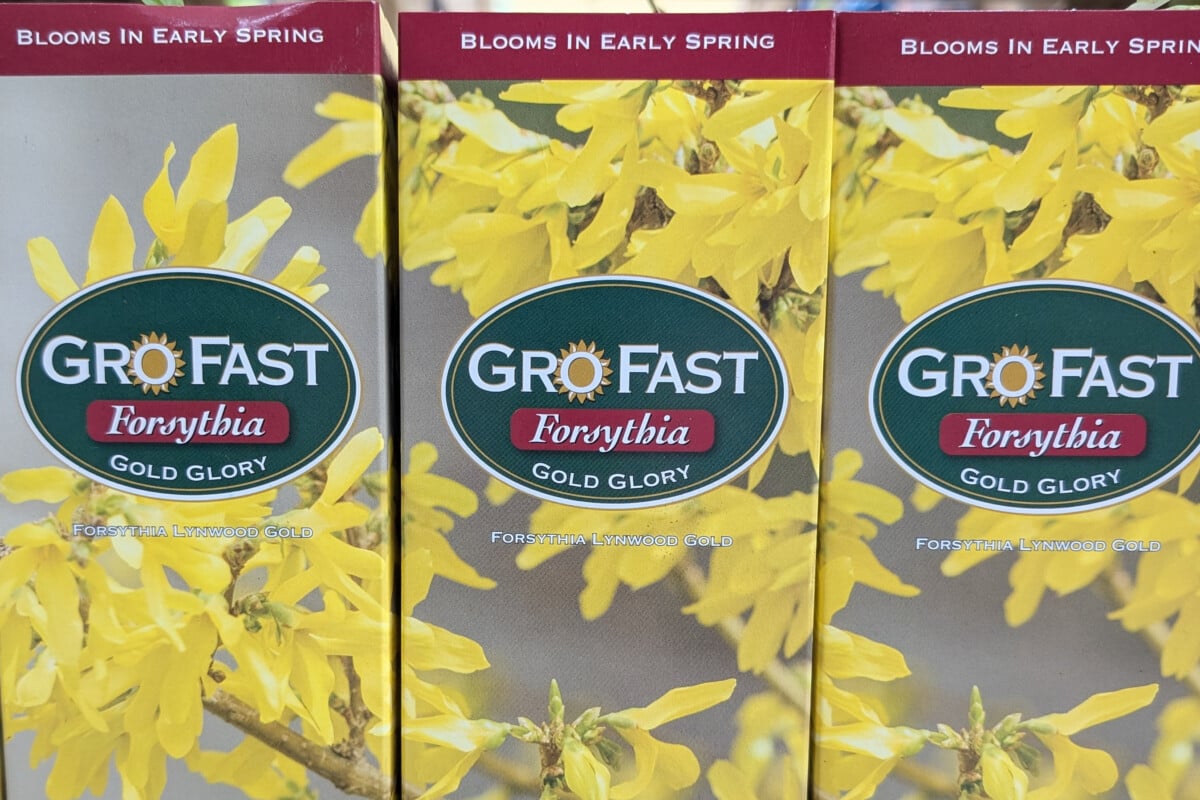
Bare root plants are a great way to add to your garden without spending a lot of dough. One look at the display in your local garden center, and you’ll see that the variety of plants on offer as bare root stock is pretty impressive. But hidden among those choices are a number of plants that you should skip.
Bare Root Plants are the Bomb
One of my first stops every spring, when seed packets and gardening accoutrements hit the shelves, is to check out what bare root plants are on offer. They’re always a great bargain if you’re looking to expand your perennials, add some decorative foliage, or grow berries. Short of getting cuttings or divisions from a friend, bare root plants are the cheapest way to grow what you grow.
But there are always a number of items I avoid. Some I even end up shaking my head at because I know some poor unsuspecting gardener is going to buy them, and then be frustrated when they don’t work out.
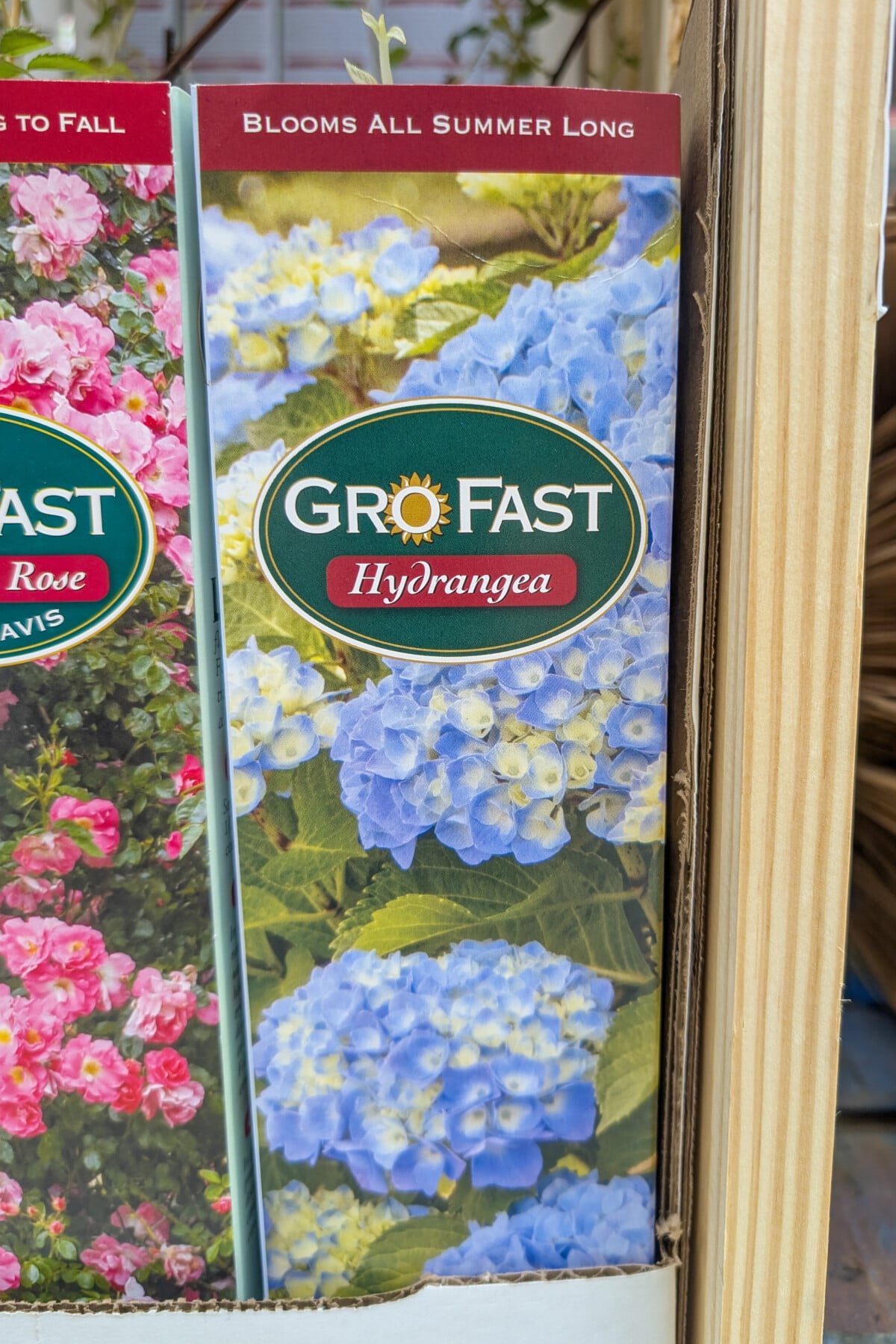
Not every plant on offer, with its colorful header card attached to the little green baggie, is destined to grow into a tall, lush plant in your garden. Here are eight different bare root offerings I always steer clear of each spring, and you should, too.
1. Fruit Trees
The whole point of fruit trees is to enjoy their fruit. Depending on the rootstock and type of fruit, if you start them from bare root, you’re looking at anywhere from 2 to 5 years before you get your first fruit. And keep in mind that the first fruit is likely to be a couple of figs, peaches or plums, which should be removed before it even turns into fruit, to encourage a larger, healthier tree (and more fruit) in the long run. (How many times can we say fruit in a single sentence?)
If the goal of a plant is to eat something from it, and it’s not a cane, then it’s always best to buy the largest established plant you can afford. Growing stone fruit or apple trees from bare root is truly playing the long game with mixed results.
2. Plants that Won’t Survive in Your Growing Zone
You would hope that if it’s for sale in your hometown store, it would be a plant that can grow in your hardiness zone. Nope! At the end of the day, the corporations that put these plants in their stores want to sell the product. It doesn’t matter what happens once it leaves through their front doors.
If you see a plant that you don’t think you’ve ever seen grown locally, be wary and do a bit of googling before you put it in your cart.
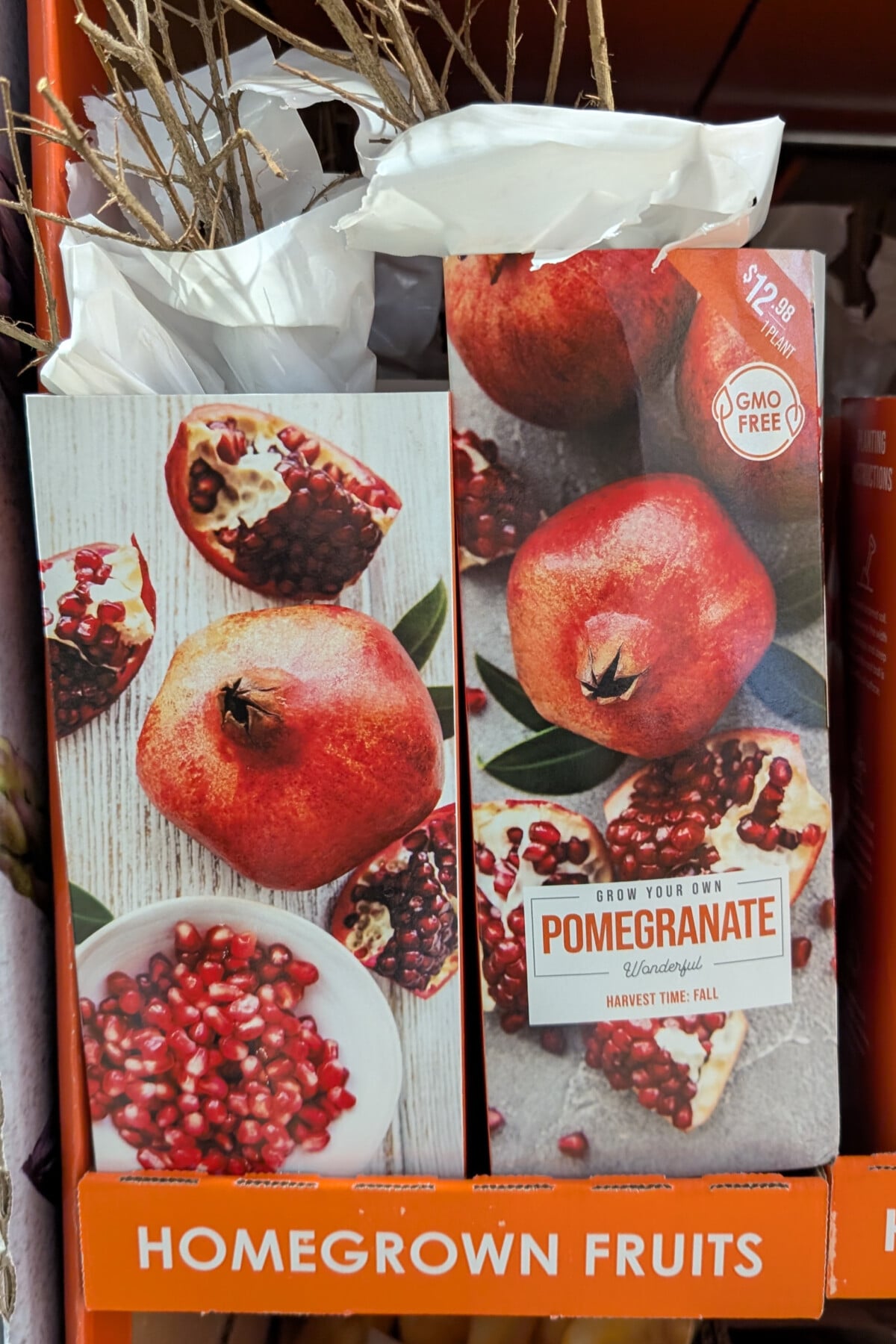
Check out this pomegranate I found at the local orange big box home improvement store. Now, I live in zone 6, and I know of at least one cold-hardy pomegranate variety that will grow in my region (‘Russian 26’), but ‘Wonderful’ isn’t it. By the way, ‘Wonderful’ is hardy in zones 7-11. So, my local big box store is selling a plant that will die this winter.
For this reason, unless it’s a perennial flower or foliage I’m already familiar with, if it doesn’t have the name of the variety on the package (so I can look up growing information online), it stays in the store. Generic, bare root shrubs, berry canes, strawberries, etc., don’t interest me because I have no way of knowing if they’re meant for my hardiness zone or their growth habit, i/e strawberries, is it June bearing, everbearing, etc.?
3. Flowering Shrubs
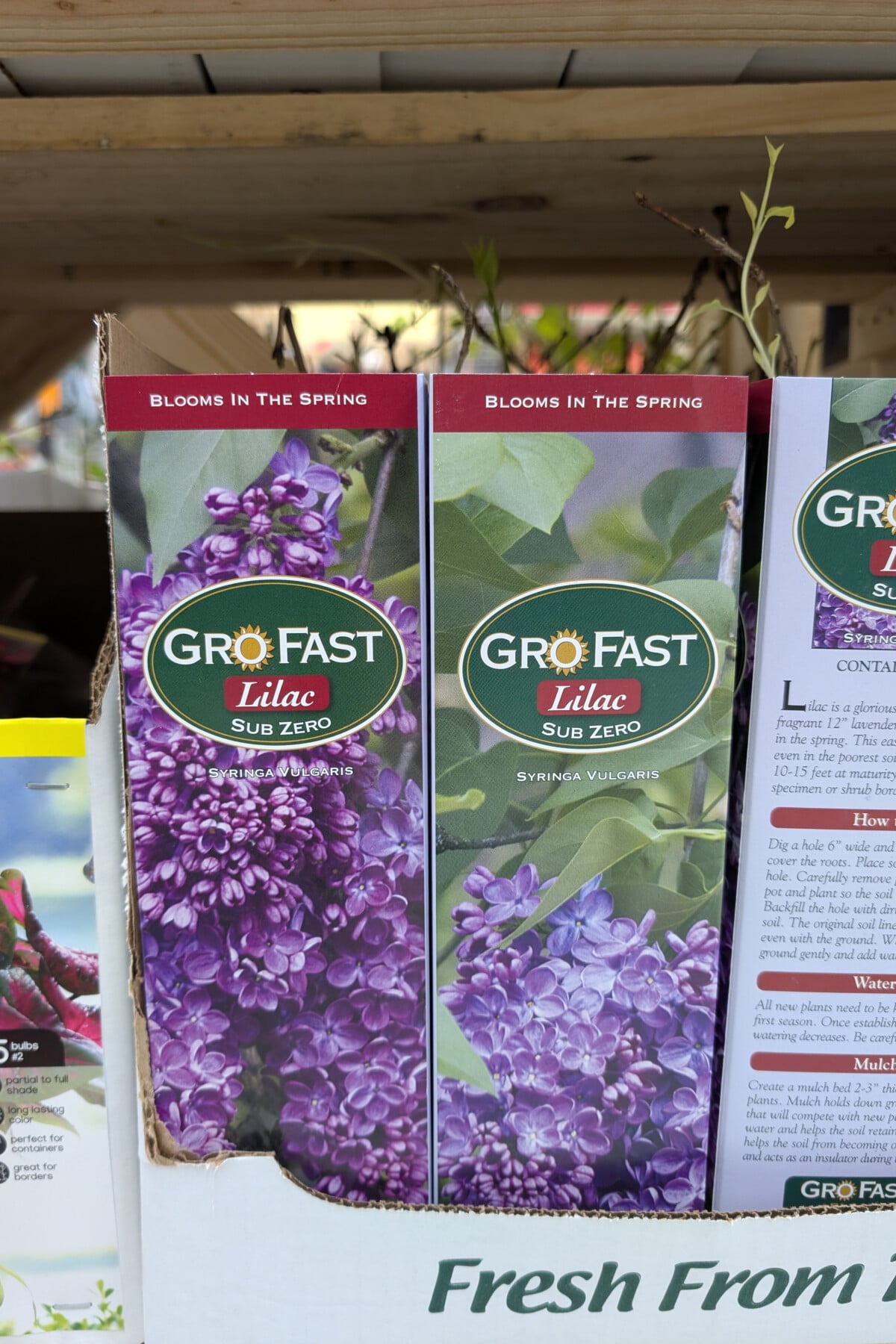
Lilacs, hydrangeas and forsythia, oh my! Who doesn’t love the color and beauty of flowering shrubs in their yard? But if you purchase these in their bare root form, you’re going to be waiting an awful long time to enjoy them.
When it comes to flowering shrubs, you’re much better off going to a local nursery and buying an established plant. These already have considerable growth. That means they establish quicker, handle a hard first winter better, and bloom and fill in a lot quicker.
While you’re at the nursery, take a look at the size of the flowering shrub in your container. Most flowering shrubs are sold in 2-gallon containers, which are anywhere from 2 to 4 years of growth. The larger the pot, the more time that plant has spent in it. If you think those shrubs are still pretty small, imagine how much longer you would be waiting had you started from bare root!
A quick note: I don’t include roses in this category, as bare root roses are an excellent bargain on an otherwise spendy plant that grows pretty quickly from bare root. By all means, buy bare root roses!
4. Blueberries/Currants/Gooseberries
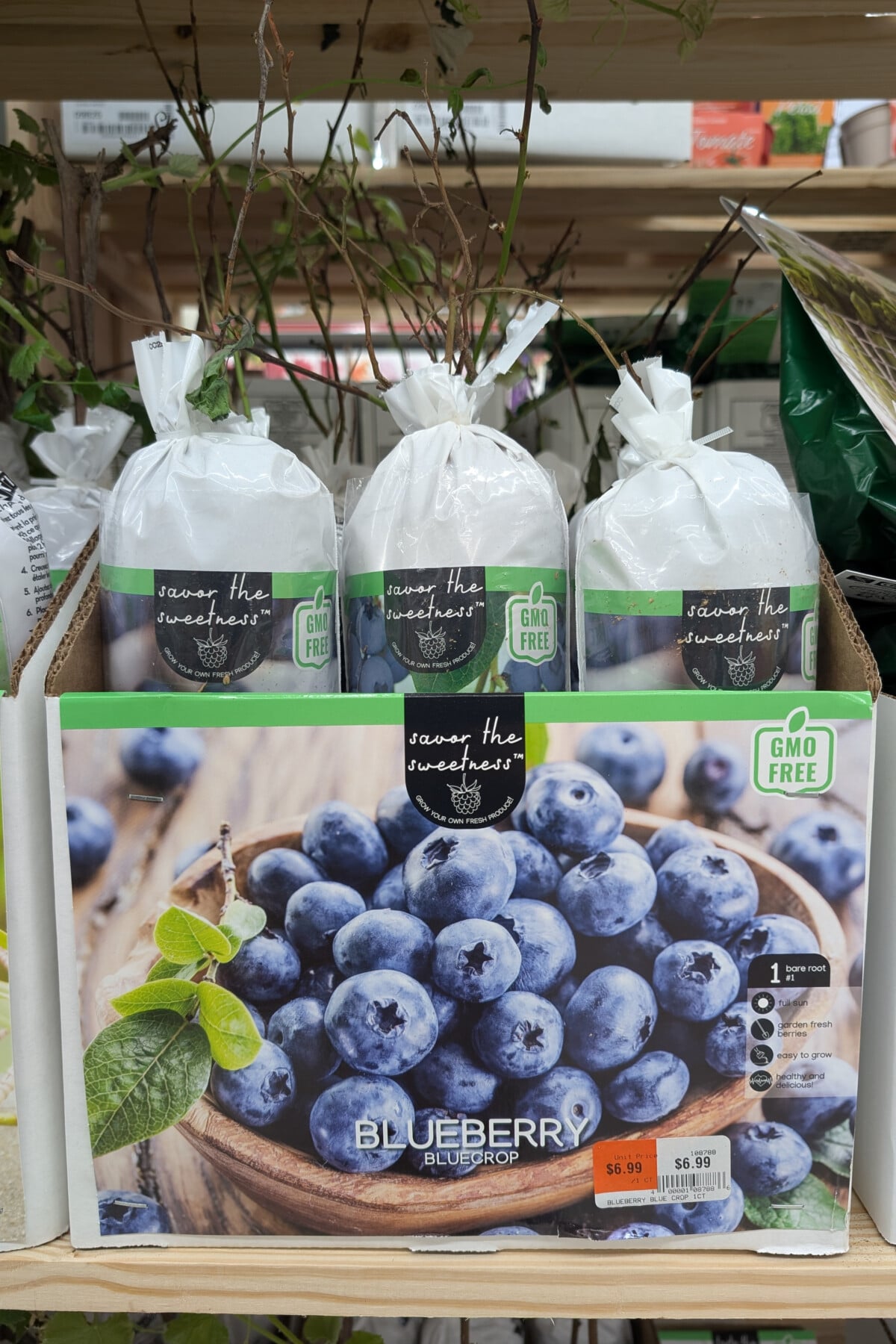
You should skip bare root berries that grow as a shrub for the same reason you should skip flowering shrubs and fruit trees. If you have dreams of picking blueberries and making pies, sprinkling them on yogurt, or even freezing some, then bare root berries are going to take quite a while to get you to that point.
For berries that grow as shrubs rather than canes, you’re better off buying an established plant from a local nursery. (Here’s a guide on how to plant blueberries once you get them home.)
5. Don’t Buy Bare Roots if Time is an Issue
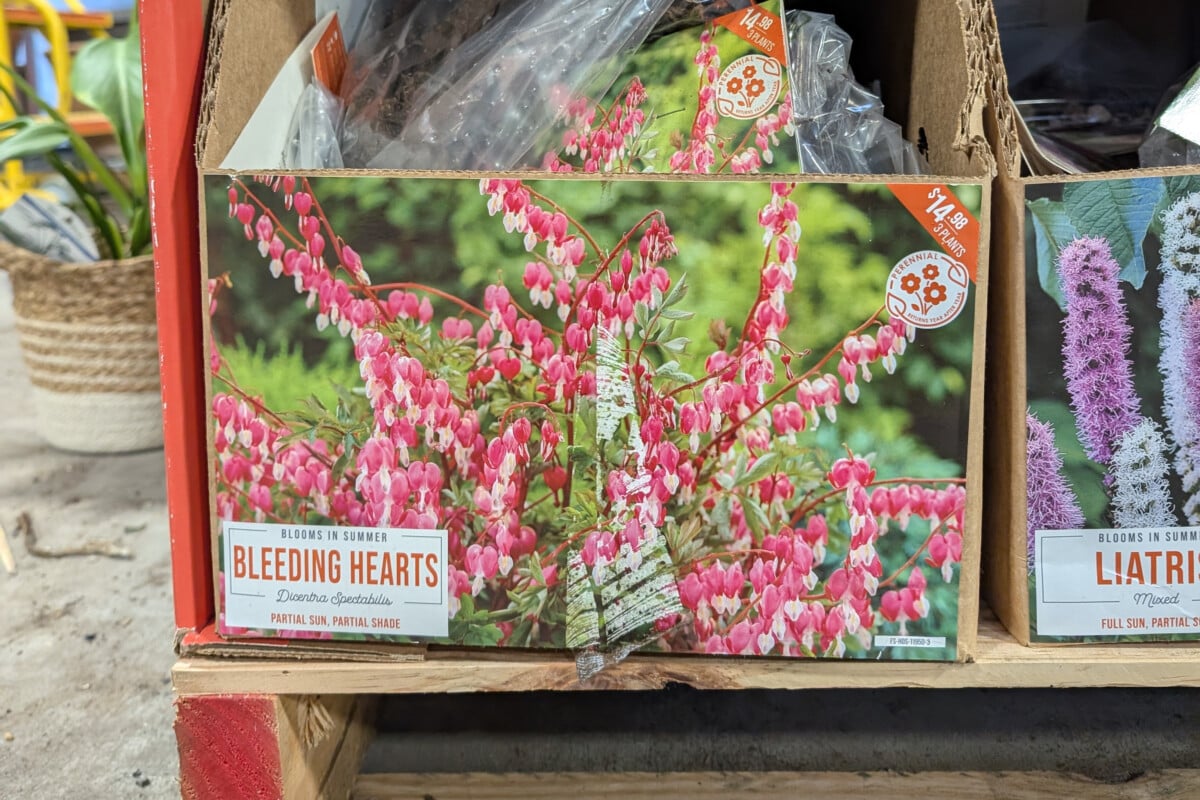
Bare root plants are an incredible deal. The price point is low enough that you can grab several and not feel the pinch in your wallet too keenly. But as I often tell my kids, there is no such thing as the perfect solution, only the trade-off you can live with.
The trade-off with bare root plants is pretty obvious: you’re paying less and getting a lot less plant.
There are some plants, like strawberries, berry canes, hostas, and dahlias, that grow quite quickly from bare roots. For many others, such as peonies, clematis, and bleeding hearts, you’ll be waiting a few seasons before they get going. And that’s fine. If you’re willing to wait one to three seasons to see that payoff, then yes, bare root plants are the way to go.
However, if you want to enjoy certain plants right away, or if you’re starting with an empty flower bed or landscape and you want to fill it in fast, then purchasing already established plants is the way to go.
6. Skip Them All if You Can’t Plant Them Right Away
If you can’t plant the bare root plants that you buy right away, you’ll also want to skip them. The roots have already been stored for quite a while before shipping. The window to get them in the ground before they die narrows the longer you wait to plant them. Ideally, you should plant any bare roots you buy within three weeks or less. The sooner the better.
7. Garlic
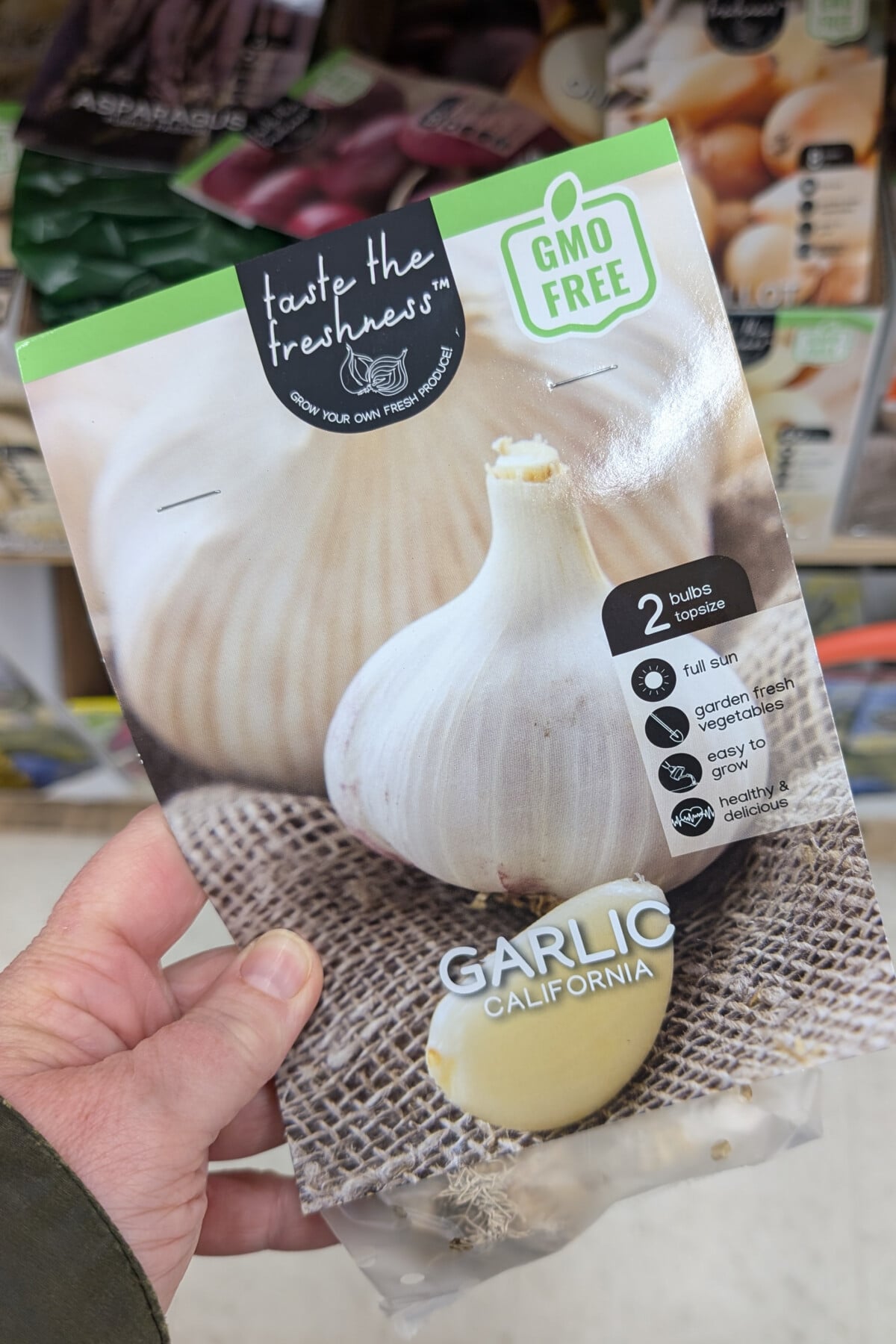
While it’s technically not a bare root, it gets mixed in among the displays of bare root plants. Garlic showing up in the spring should always make you suspicious, as it’s a crop we plant in the fall. Yet, I see it among the potatoes, asparagus, and onion sets every single year.
While you can plant and grow garlic in the spring (see how here), it requires you to put it in the fridge for several weeks beforehand. To do that, you would need to have the garlic in March or late February, and most bare root plants don’t hit stores until April.
The other important reason to skip “bare root” garlic is that it’s softneck garlic. Softneck garlic is best grown in hardiness zones 8-12, the warmer part of the United States. (Planted in the fall, though.) Yet, you’ll see these baggies of softneck garlic being sold across the entire country, regardless of hardiness zone. (That’s because softneck garlic stores longer than hardneck, so it’s easier to sell it for seed.)
8. Potatoes
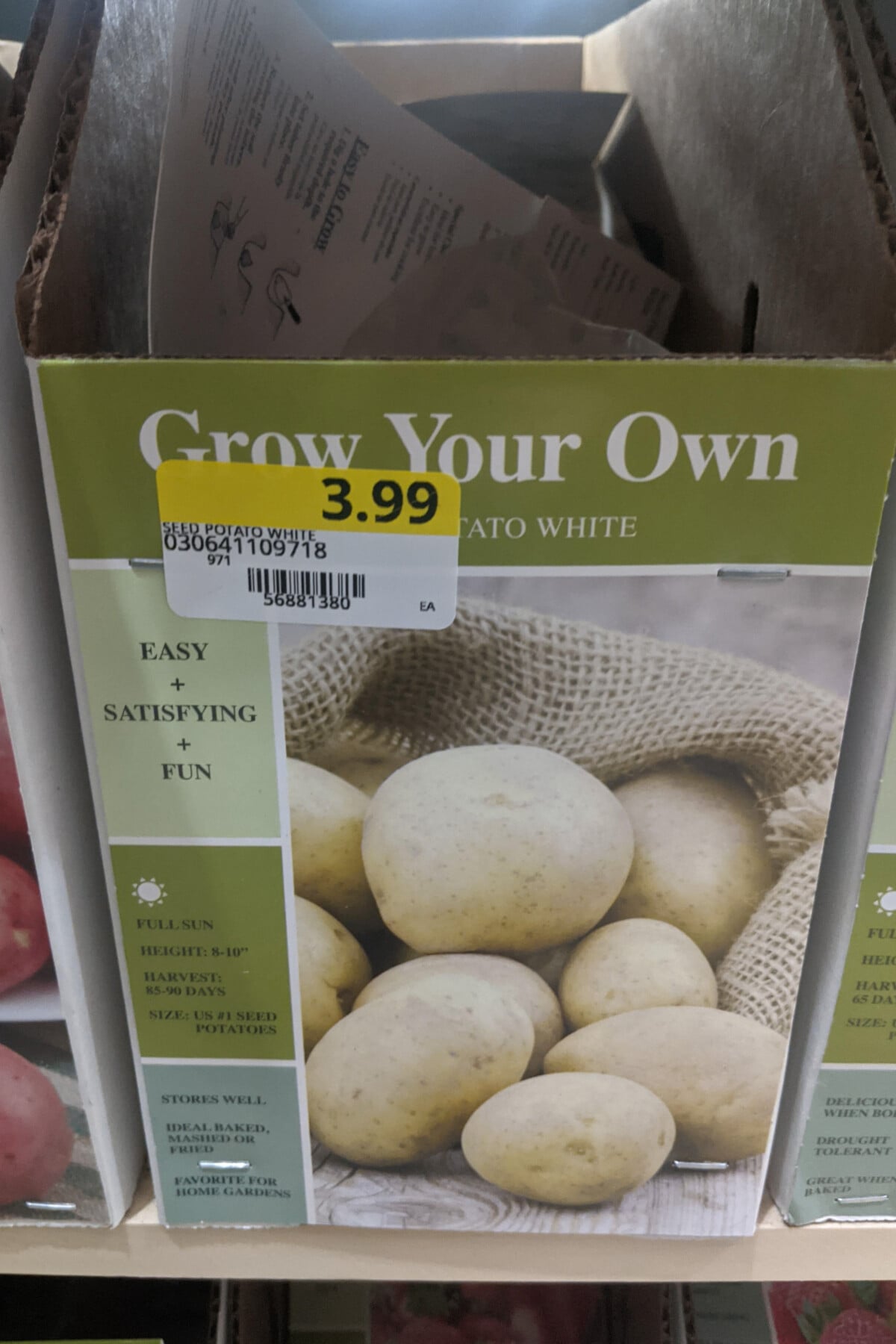
Like garlic, potatoes aren’t really a bare root plant. Yet, they end up being sold among them at the same time of year, so I’m including them here. There are a couple of reasons not to buy these seed potatoes.
The first is that depending on when they show up in stores, you may not have time to chit them before getting them in the ground. If you live somewhere with a long growing season, that may not be an issue. If you live in a climate with a shorter growing season, or have an especially cold, wet spring, chitting your potatoes before you plant them makes all the difference.
The most important reason I avoid these potatoes is that they can carry soil diseases, like blight. Potato blight can turn a good growing season into a hassle. When it comes to growing potatoes, always opt for certified seed potatoes from a reputable producer. In the U.S., potatoes grown for seed undergo inspections of the soil and the tubers before being certified, so as to restrict the spread of soil-borne diseases. Look at the header card. If you can’t see where they are grown and whether or not they are certified seed potatoes, leave them in the store.
Get the famous Rural Sprout newsletter delivered to your inbox.
Join the 50,000+ gardeners who get timely gardening tutorials, tips and tasks delivered direct to their inbox.