

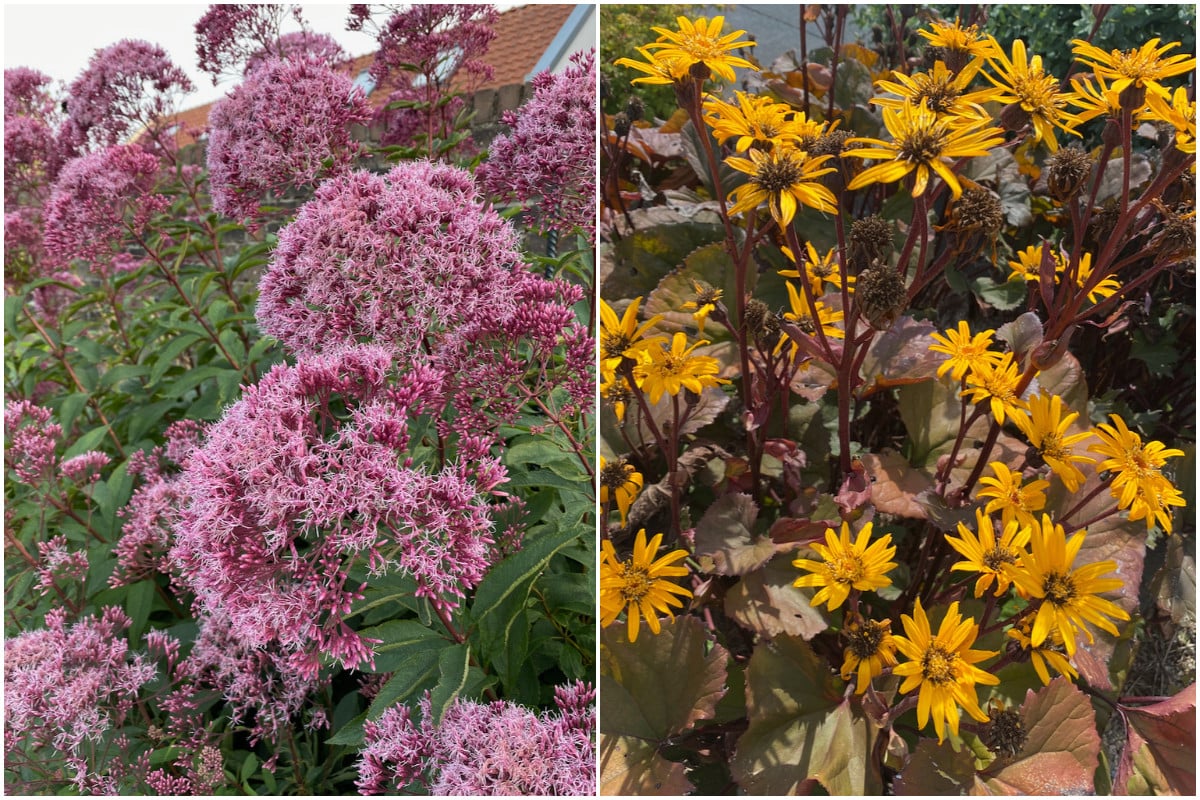
The idea for this article stemmed from a list of tall plants that I made for my own garden. I’m of the firm belief that good fences make good neighbors, but what happens when putting up a fence isn’t possible?
Most of my yard is enclosed, but there’s a gap along the common driveway between our neighbors’ house and ours that could benefit from some sort of privacy screen. Ordinarily, I would recommend planting a shrub or two to close that gap. But this also happens to be the spot where our water mains enter our yard, so planting shrubs that would grow strong roots on top of water pipes would not be a good idea.
I’m lucky enough to have very nice neighbors, the kind that will keep an eye out when we’re traveling while also being respectful and non-intrusive when we’re pottering around in the garden.
I’m the problem. It’s me. I’m that kind of gardener who just walks outside to check on my tomatoes first thing in the morning in my pajamas and messy hair bun. I’d rather spare everyone the awkward hand-waving by adding a plant screen for privacy.
3 Things to Consider Before We Plant Tall Flowers
Creating a privacy screen is not the only reason to plant tall perennials. Maybe you want to hide an unsightly air conditioning unit or an ugly fence. Or perhaps it’s just to add depth and height to the flower border.
Whether you’re planting tall flowers for privacy or for their looks, here are a few things to keep in mind:
The “right plant, right place” principle still applies.
Don’t just take plants off this list and rely on the fact that they’ll grow tall without doing a bit of research first into the best conditions for said plants. (I know you wouldn’t … just saying.)
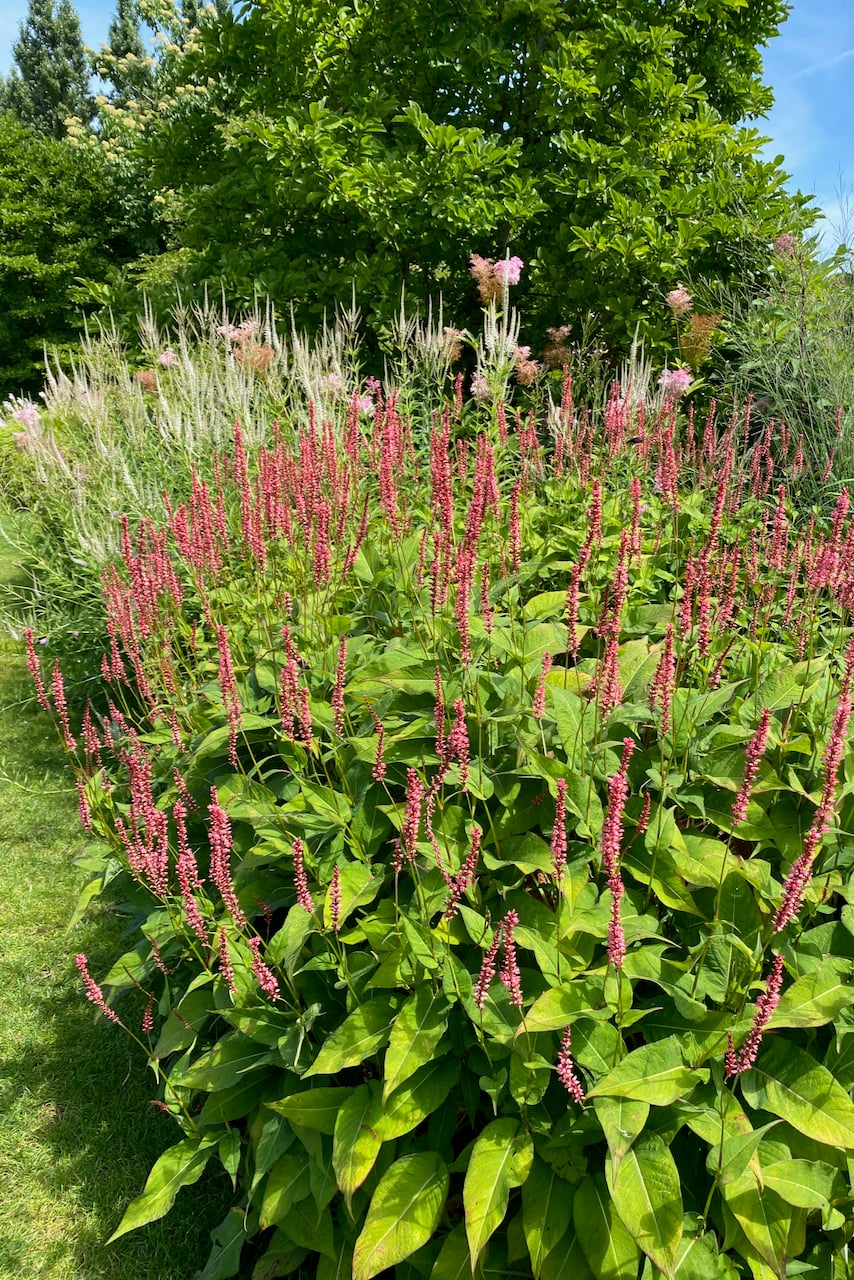
The same principles of matching a plant with a location still apply. That’s why we should evaluate factors such as:
- Sunlight – How many hours of sun does a spot get? A plant that needs full sun to grow tall will struggle in the shade. Similarly, a plant that gets scorched in too much sunlight will struggle to reach its height potential.
- Soil permeability – Does it drain quickly? Does it dry too fast? Or does it pool water after it rains? Again, an ornamental that needs plenty of moisture to reach full height will spend a very pleasant summer in dry clay.
Be mindful of what the tall plants will cast a shadow on.
Tall perennials, just like tall people, will cast a longer shadow. (Or so I’m told, I’ve been on the short side my entire life.)
So when you’re planting taller perennials, you don’t want to shade out shorter ones planted at the base. The good news is that you can pair taller cultivars with shorter plants that don’t mind a bit of shade.
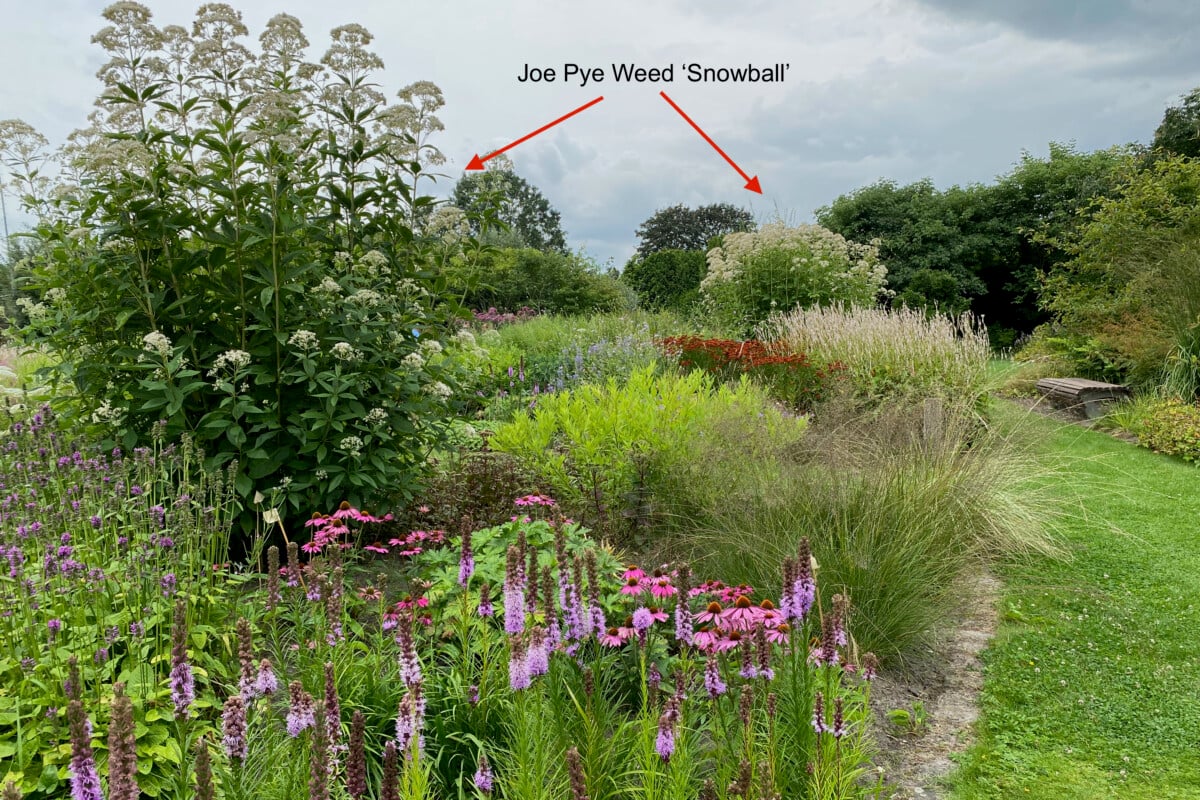
Put supports in place early.
Some of the plants on this list will hold up on their own just fine. Others might need a bit of support, especially if they have large blooms (such as hollyhocks) or thin stems.
Place the supports early on (when the plants are still manageable in size), whether it’s bamboo stakes, fancy swirl stakes or lower grow-through rings that will keep the bottom half of the plant from bending under the weight of the top. Make sure you anchor the supports themselves well enough to withstand heavy winds and rain.
1. Joe Pye Weed (Eupatorium or Eutrochium)
Height: 3 to 8 feet tall.
Whoever nicknamed this one “weed” certainly did it dirty. But seeing that “weed” is just a plant in the wrong place, I’ll declare Joe Pye very much welcome in my garden. You’ll be hard-pressed to find a North American native plant with such an extensive range of distribution – from southeastern Canada to Florida, to the Great Lakes region and the Great Plains.
The white varieties are extremely elegant, but I’m partial to the pink and purple poufs of blooms.
Joe Pye starts blooming in mid-summer, and reaches peak bloom in late August to late September, depending on your growing zone. It will be full of butterflies, bees, moths and swallowtails for weeks.
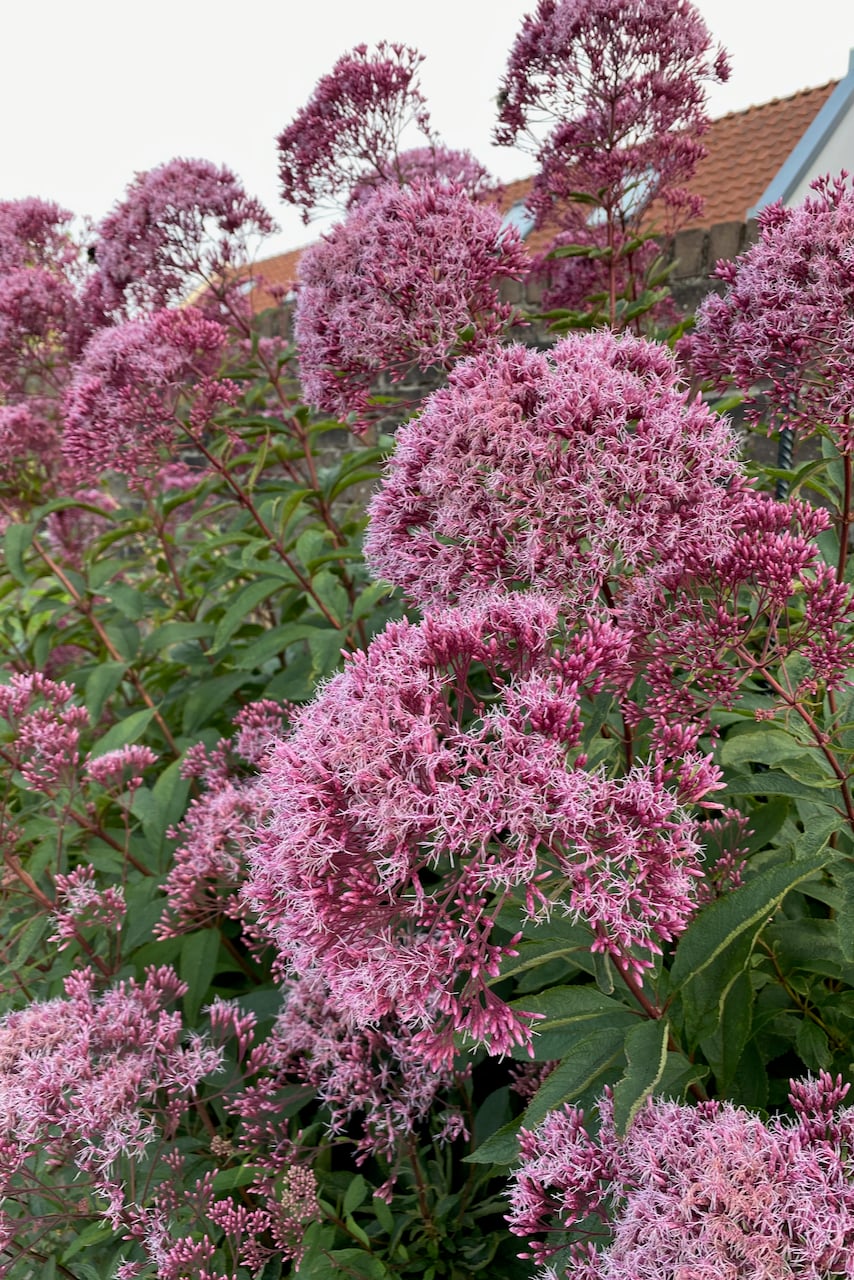
The most common variety for gardeners, Eutrochium maculatum, does well in sun and half shade in soil that stays moist throughout. If you want a scented variety, Eutrochium purpureum (also known as Sweet Joe Pye) will engulf the flower border with a subtle scent of vanilla.
They are perennials that die back in the winter, with only a hollow stem left behind, topped up with a feathery cluster of seedheads.
2. Purpletop verbena (Verbena bonariensis)
Height: 3 to 6 feet tall.
Verbena bonariensis is native to South America (particularly Brazil and Argentina), but it has naturalized in some parts of the United States. Its place of birth is a good indicator that verbena likes sun, and lots of it, although it will happily grow in shadier spots too. It will just bloom less and grow perhaps a bit slower.
Another thing I like about it is that it’s low maintenance all around – it can handle drought as well as dampness, and it doesn’t need any extra fertilizing. I’ve seen it swaying in coastal gardens full of sand, in which I’m pretty sure nobody was fertilizing the soil.
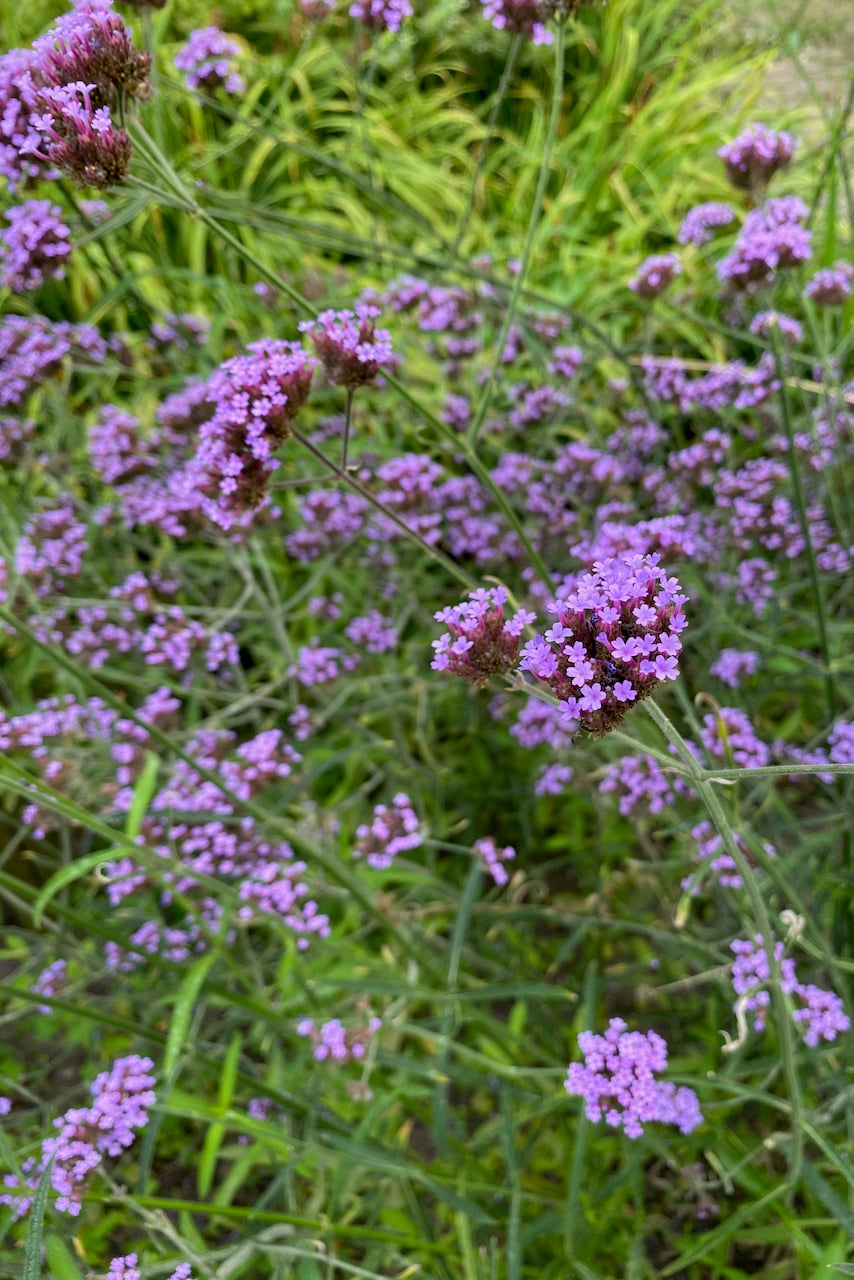
The stems of purpletop verbena are wispy, so you may wonder how exactly it will create privacy. Just plant plenty of them and intersperse them with other tall perennials. If you want it to get denser at the bottom, you can cut back the main flowering stem in mid-spring. Cut it right above a leaf node, and it will branch out, creating two flowering stems out of a single one.
3. Cannas
Height: 3 to 8 feet tall.
Canna rhymes with banana. Lucky coincidence because they’re related. I like the bold colors of their blooms that come in shades of red, peach, yellow, burgundy and pink. The blooms start opening up in mid-summer, ready to take over just as iris blooms are fading.
But I especially like cannas for their tropical foliage. Some even come in funky patterns, such as stripes and dot variegation.
Some cannas will max out at around four feet tall, so check the label to make sure you’re buying a taller cultivar before you commit. Cannas grow from tubers (much like these other summer bulbs I wrote about), so it may take a couple of years after planting for the tuber to gather enough strength to reach its maximum height potential.
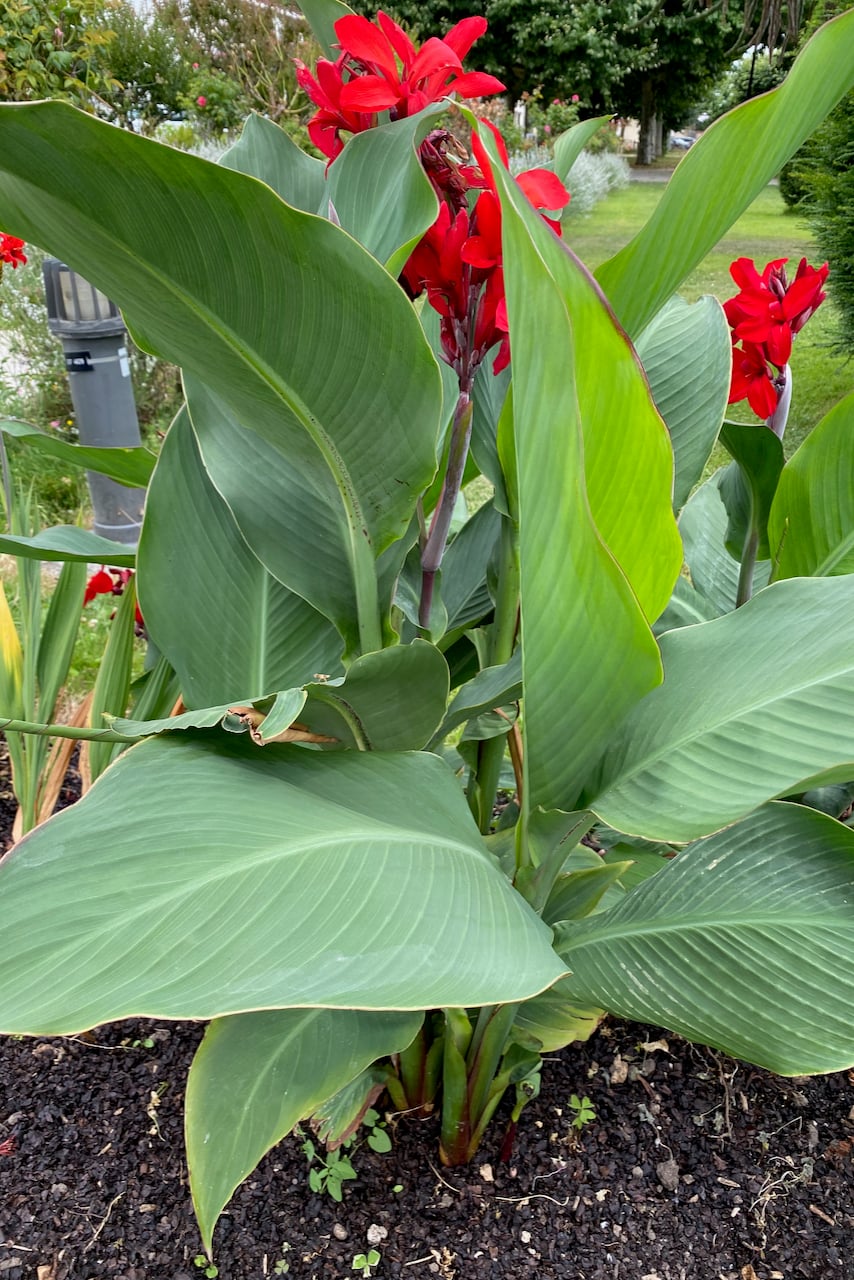
Cannas like full sun to part shade, as long as the soil is consistently moist (but not waterlogged). If you garden in a cold zone, you can dig up the tuber in the fall and overwinter it in a frost-free place. I don’t like the disruption this causes, so I just add a thick layer of mulch on my cannas to tuck them in for the cold season.
4. Hollyhocks (Alcea rosea)
Height: 4 to 7 feet tall.
I initially set out to draw a list of perennials only, since I’m not keen on replanting this privacy screen every year. But I couldn’t, in all honesty, leave out the queens that tower over any respectable cottage garden: the majestic hollyhocks.
Hollyhocks are generally biennial plants, meaning that they spend the first year establishing their roots and foliage and only bloom in their second year.
If you buy one that’s already established, you get to skip that first year of waiting. I’m planting them from seed this year, and I’ll be planting some more next year (or possibly this coming fall), to fill in the gap years.
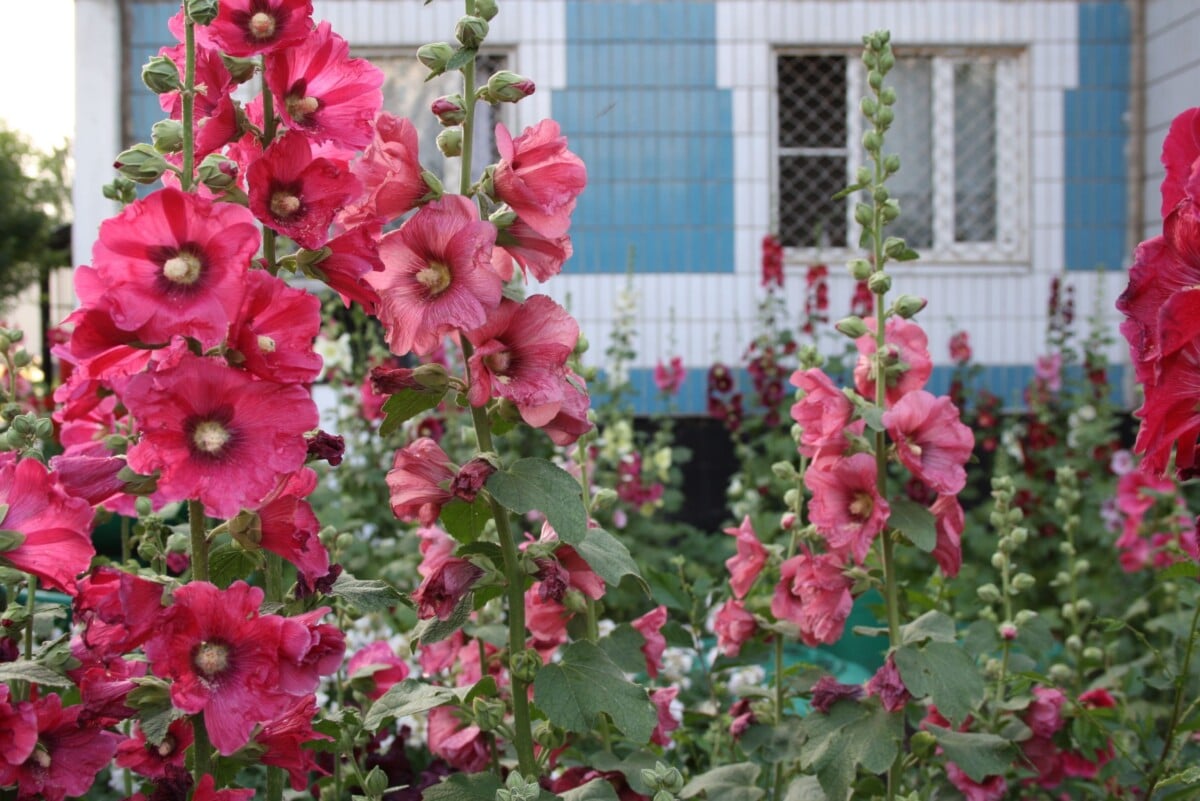
With the amount of self-seeding they do – even in the crampiest of spaces – hollyhocks might as well be perennials. Full sun and well-drained soil will keep them happy and seeding.
I like the fact that both the foliage and the flower spikes (in all colors imaginable, other than pure blue) are tall, so they create a few layers of colorful plant screen that fill in very quickly throughout the spring months. I’m still amazed by how quickly this plant goes from the size of a plate to the size of an entire plate hutch in just one season.
Hollyhocks tend to get top-heavy when they’re in full bloom. And they have hollow stems, so they have a tendency to topple over, especially in strong winds or lashing rain. They’re one of the tall plants that we must add supports to in order to keep them upright.
5. African lily (Agapanthus)
Height: Up to 6 feet tall.
Somewhere on my husband’s phone, there’s a photo of me smiling and poking my head from behind a white agapanthus flower. We were at the beach. The agapanthus was white. I was wearing a white linen shirt. It’s hard to tell the difference between a woman’s head and a giant white flower pouf.
Note: Agapanthus can also come in shades of blue and purple. A woman’s head does not, fortunately.
In addition to having tall flower spikes – the older the plant, the more flowering stems it grows – agapanthus also creates privacy by growing lusciously green foliage. Some African lilies remain evergreen in the winter, while others die back all the way down, with just the rhizome left in the ground.
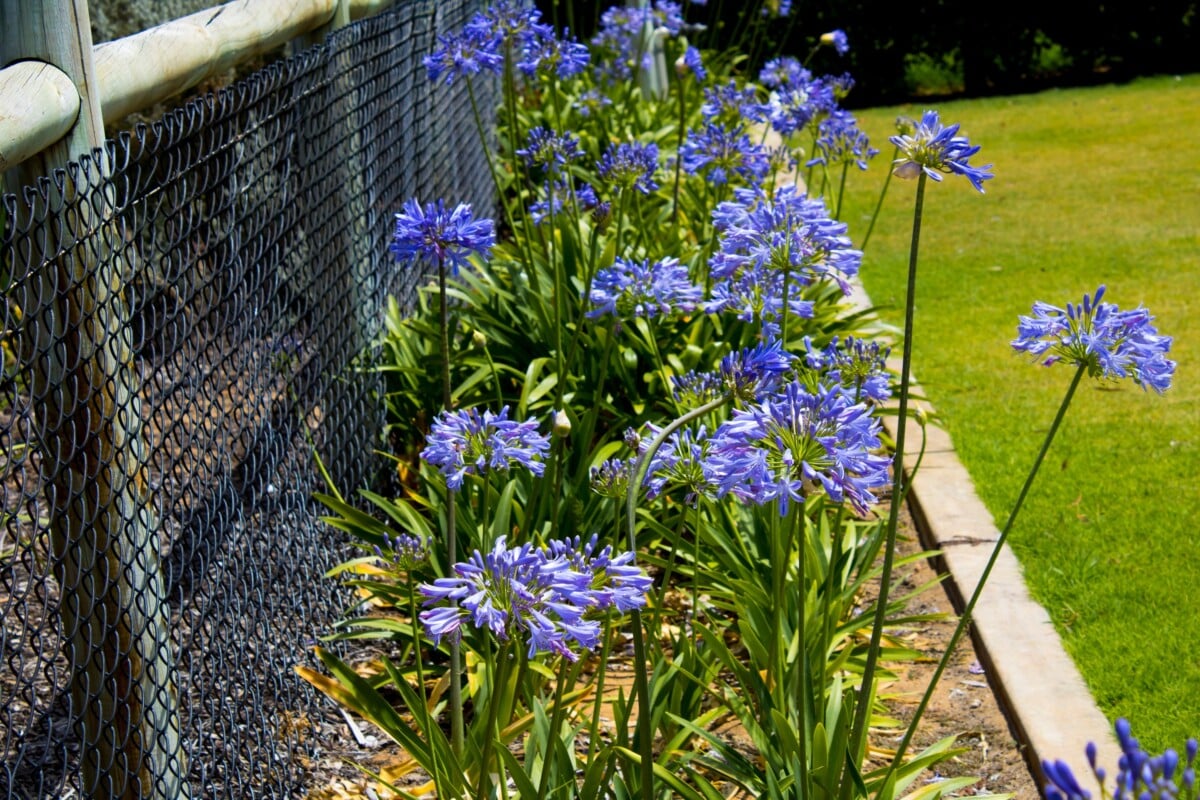
Once established, African lilies will grow well in different types of soil conditions. Naturally, they do well in soil that drains well (like most rhizomes, keeping them too wet may be detrimental). However, they will also happily grow in sandy, loamy or clay soil, and even in soil that’s not particularly nutrient-rich.
If you want to know more about how to keep your agapanthus happy, have a look at this article I wrote.
6. Tall alliums (Allium giganteum)
Height: Up to 6 feet tall.
There are hundreds of allium cultivars to choose from, both edible and ornamental. But if it’s height you’re after, there’s one that tops them all.
Allium giganteum, as the name suggests, can get up to six feet tall and two feet wide. It’s one of those bulbs that we must remember to plant in the fall – right when we plant our tulips, if we want to enjoy it the following summer. The nice thing about it is that, unlike tulips, it perennializes really well, and it can overwinter in the ground.
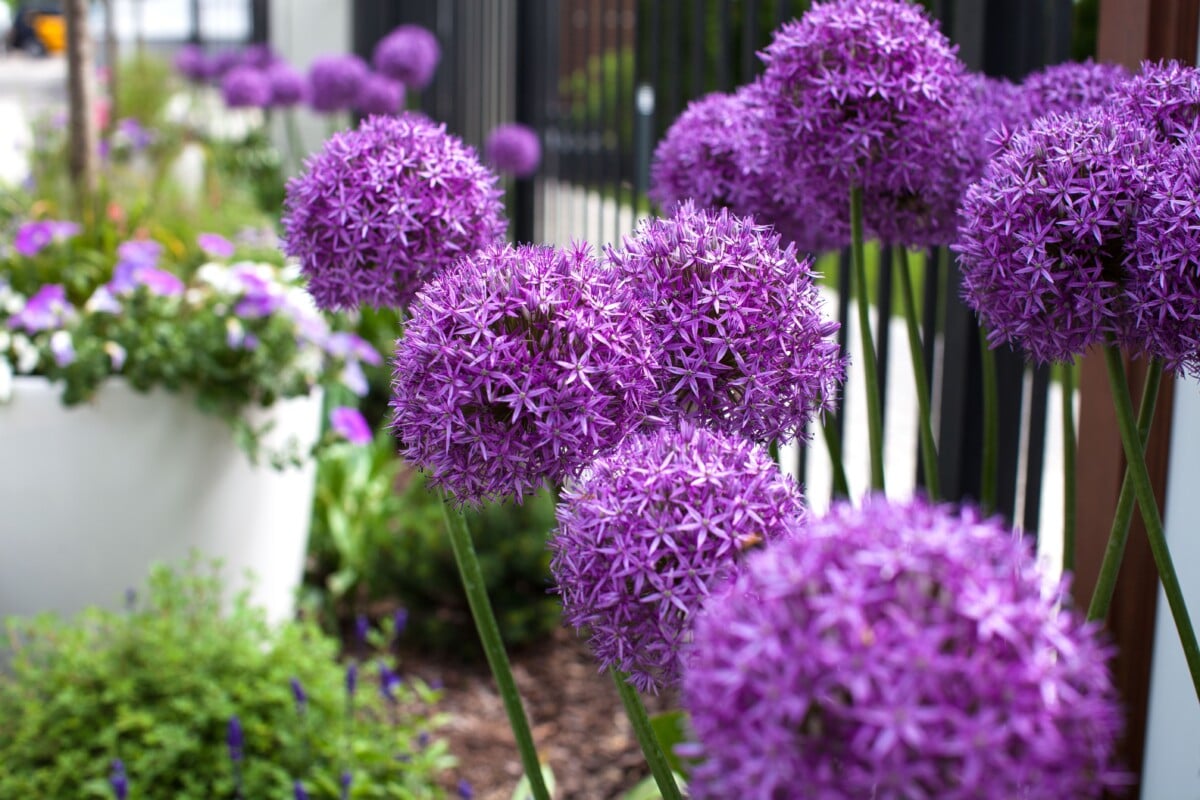
Tall alliums bloom in early summer (generally in May and June) in a large cluster of deep pink flower heads. Butterflies, bees, moths and other pollinators will flock to it for weeks.
Allium giganteum does really well in full sun, but can also handle part shade. And while it can tolerate droughts in the summer, it will try to conserve energy by not growing as tall. So plant it in a spot where you know you can keep the soil moist throughout the hot months.
7. Crocosmia
Height: Up to 5 feet tall.
I included crocosmia in my list of summer bulbs you can plant in spring. So if you’re reading this in spring, there’s still time to put some bulbs in the ground. If not for this year’s privacy screen, certainly for next year’s, as crocosmia (also known as Giant Montbretia) perennializes really well.
The more mature the plant gets, the larger the clumps get and the more blooms (electric red) we’ll get. The blooms get tall, but so does the foliage – no allium-like pinheads in this crocosmia patch. The sword-shaped leaves are elegant and plentiful.
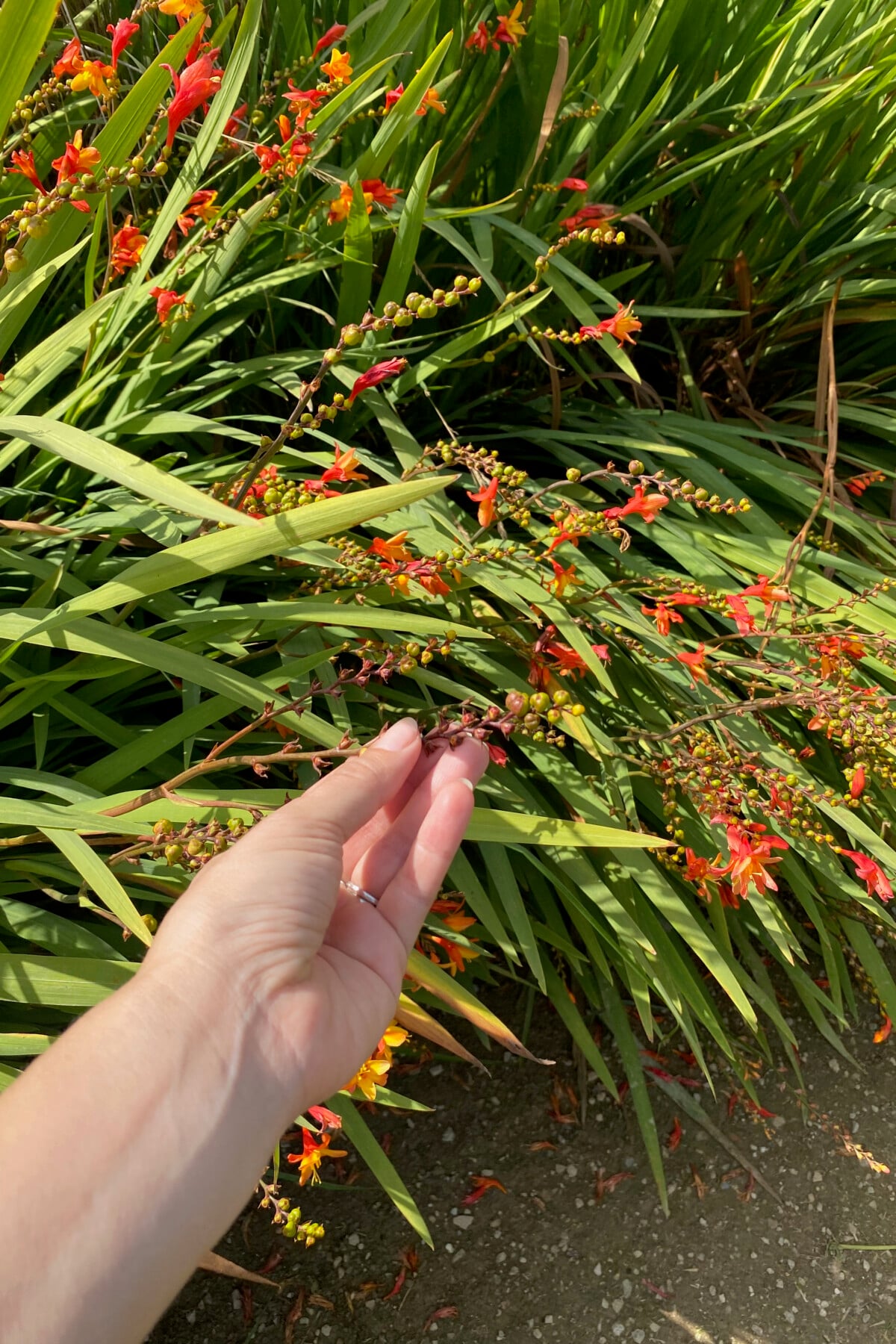
I also like the fact that it’s a late bloomer, usually at the end of July and in August, staying in bloom up to mid-September. So just as other perennials are on their way out to fade-town, crocosmia is just getting started.
Since it’s a South African native, it prefers full sun and moist soil to thrive. We can also grow it in partial shade, but it will reach towards the sun, which means it will need extra support.
8. Japanese anemones (Eriocapitella hupehensis)
Height: Up to 6 feet tall.
Pair crocosmias (above) with Japanese anemones, and you’ll have the entire plant privacy screen covered for the fall. The flowers of these cottage garden staples come in shades of pink, white and red, but the leaves are just as showy as the flowers. It’s the combination of the two that gives the effect of fullness.
Japanese anemone takes a couple of seasons to establish from a small plant, especially if you plant them in spring. (I found out the hard way that they’re not big fans of full sun.)
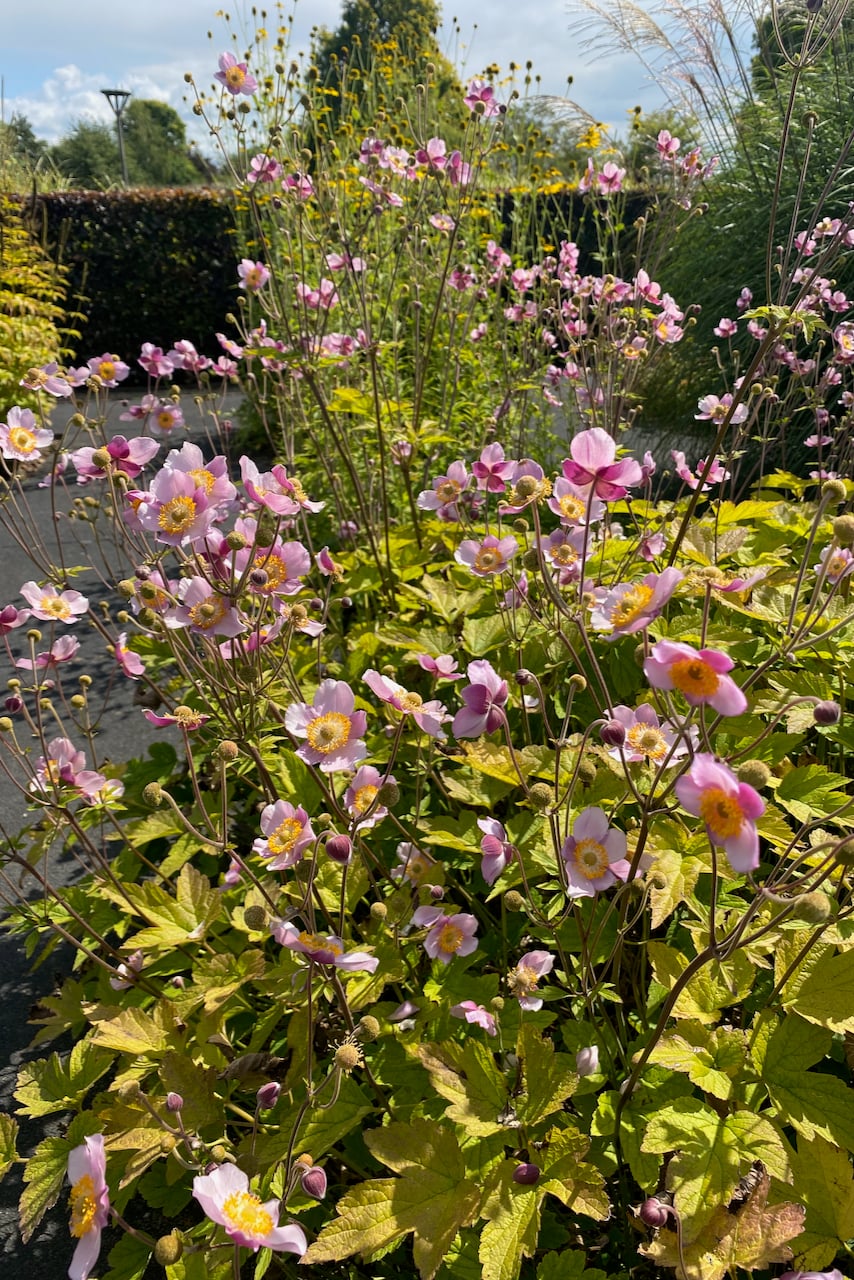
But once they do, they’ll spread easily by sending underground runners. So start with a plant that you can dig out and divide after a couple of years. They grow tap roots, so we’ll be dividing the runners from the mother plant.
The taller cultivars will need staking for support, especially if you grow them in too much sun.
9. Culver’s root (Veronicastrum virginicum)
Height: Up to 6 feet tall.
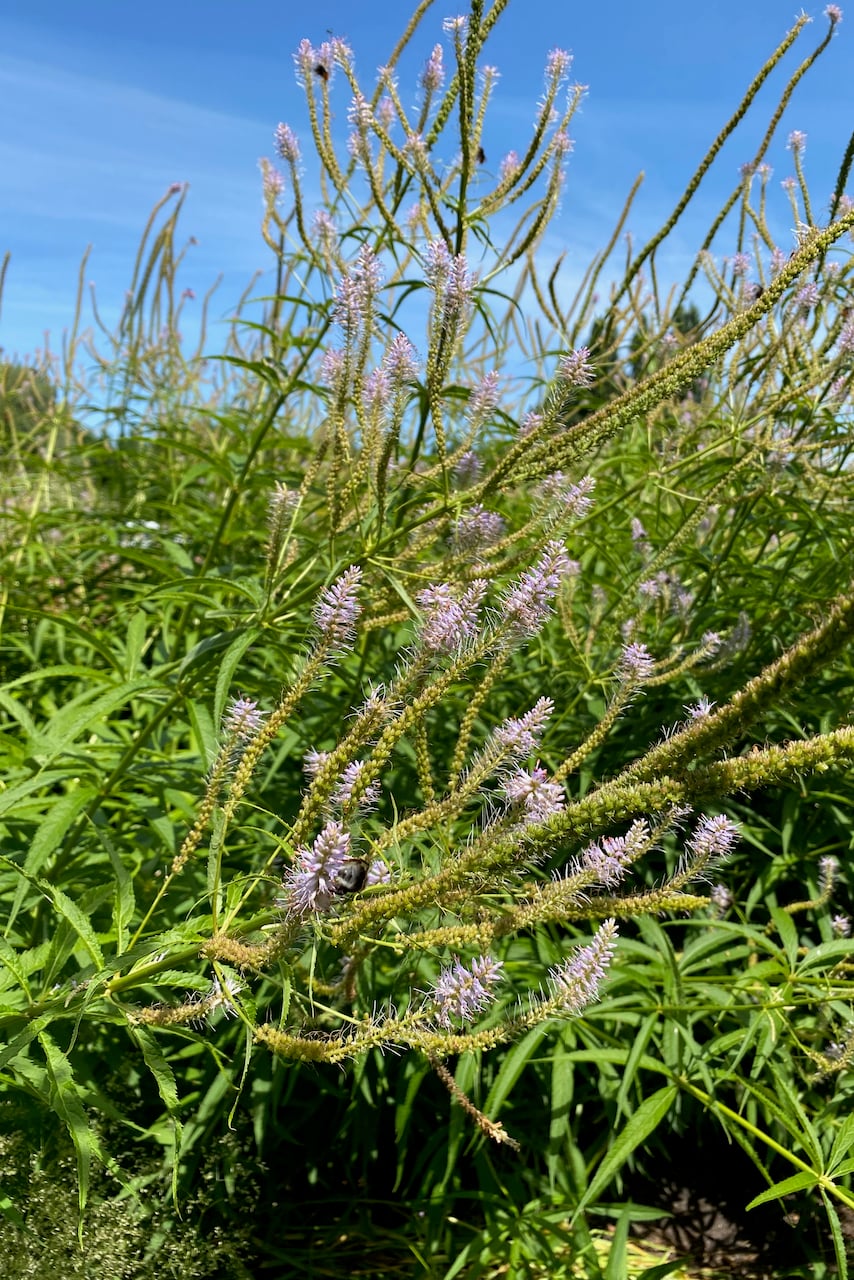
Culver’s root is what I like to call a “problem-solving plant.” If you have a patch that stays wet and boggy and everything that you’ve tried to grow there fails, slap a veronicastrum there and call it a day. It will thrive and take up the entire area without much input from us. A single plant can grow up to six feet tall and four feet wide, thicket-style.
Fun fact for your next trivia night: Did you know that if a plant has “-astrum” as the suffix in its Latin name, it means “not quite the real thing”? In the case of Culver’s root, they’re not quite real Veronicas (commonly known as speedwell).
The candelabra-like tubular spires of culver’s root come in shades of pink, white, peach, purple and blue. It’s a hardy perennial that likes full sun and consistent moisture. And because the foliage is so thick and sturdy, the entire plant stays upright without any supports needed.
10. Rodgersia (Rodgersia aesculifolia)
Height: Up to 6 feet tall.
Rodgersia was brought out in the United States from Asia in the 1850s, so it’s always a surprise to me that it’s only popular in botanical gardens and gardens in the Pacific Southwest. And yes, they are named after a Roger. American taxonomist A.Gray named it after Rear-Admiral John Rodgers in the 1880s.
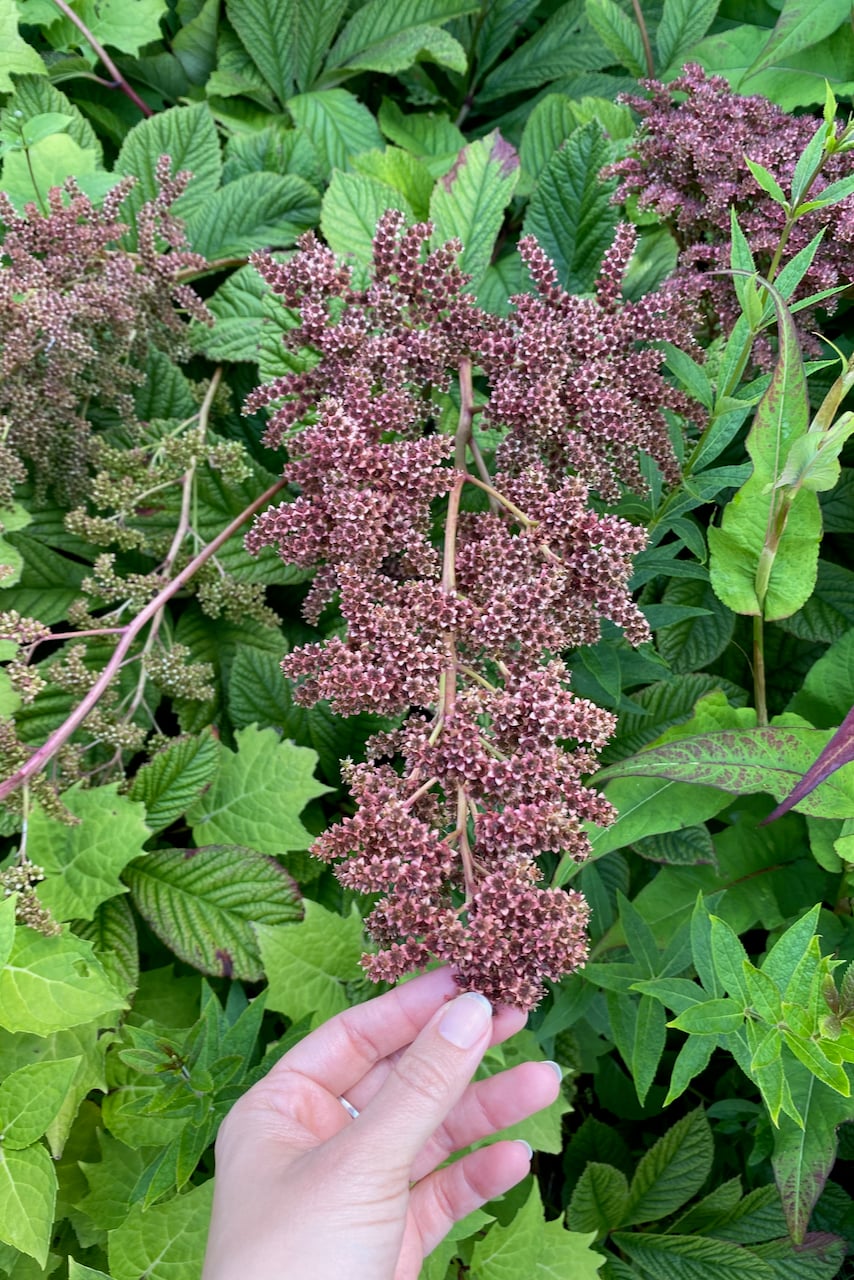
In their native habitat, rodgersia thrive as an undergrowth in moist and shady woodlands. So when we’re planting them in our gardens, a shaded spot will do best, as they tend to suffer from sun scorch. Rodgersia has large, leathery foliage and large, peculiar flowers, either white, pink or red.
If you’re planting them along a fence, keep in mind that they do spread by sending underground rhizomes, so make sure you either enclose them or that your neighbors don’t mind getting their own clump in a couple of years.
11. Ligularia
Height: Up to 8 feet tall.
You may know this one as “leopard plant” or “summer ragwort”. It goes by a few other nicknames, probably because it looks like a few other plants.
The yellow, star-shaped blooms growing on tall spikes peak in late summer, but the foliage is as much part of its appeal as the flowers. The large leaves mean that a single plant will fill in quickly, even though it’s a relatively slow spreader.
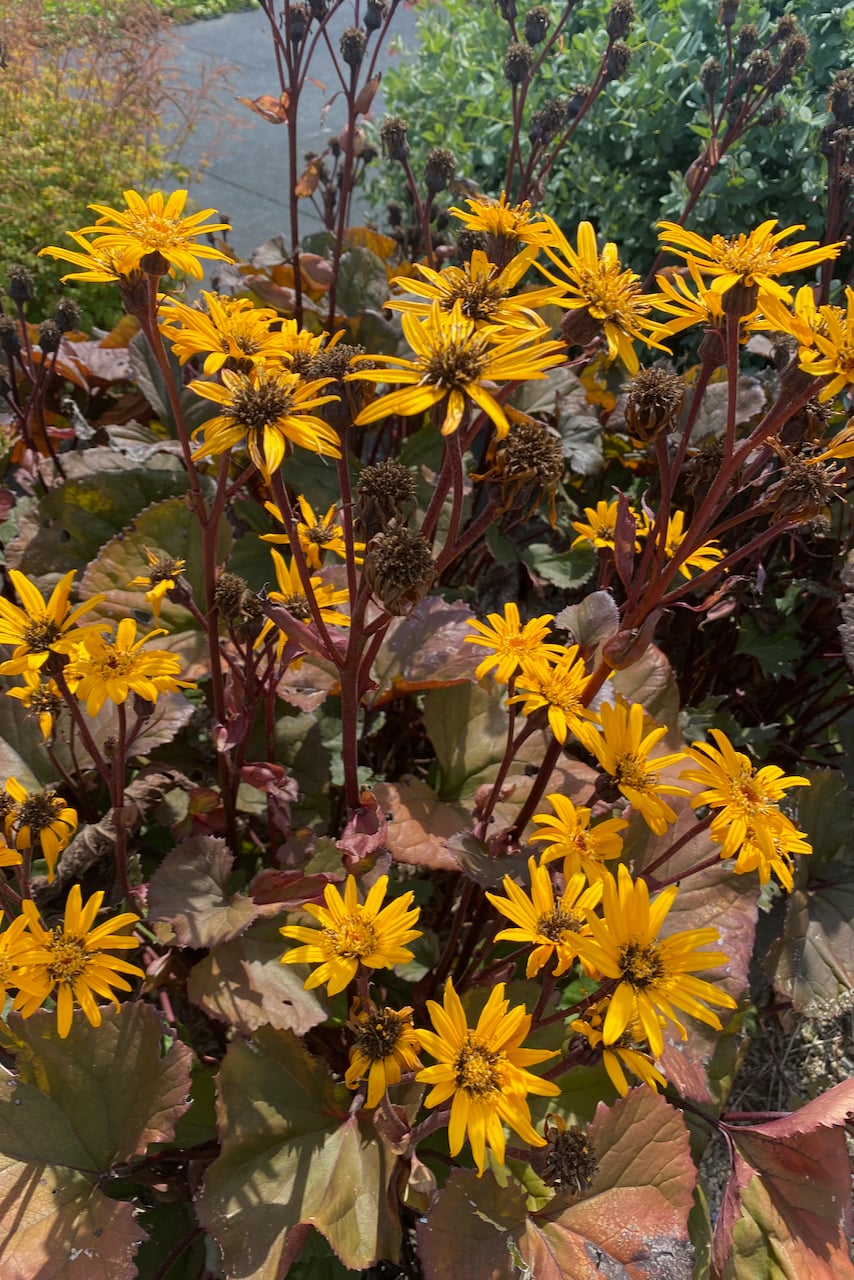
If you have a spot that stays consistently damp, ligularia will be happy to take over. It doesn’t mind clay soil or part shade either. Ligularia has a tendency to flop over when it’s thirsty or when it gets too hot, but it perks back up when the weather cools down in the evening.
There are cultivars varying from two feet tall to about eight feet tall, so check the label before you buy to make sure you’re getting a tall cultivar. The tallest one I could find is a hybrid called ‘Bottle Rocket.’
12. Queen of the prairie (Filipendula rubra)
Height: Up to 8 feet tall.
Queen of the prairie, also called meadowsweet, is another North American native that is not as popular as it should be.
The clusters of pink and white blooms float above the sturdy foliage from mid- to late summer. And even once the flowers are done, the seedheads look elegant in the fall garden.
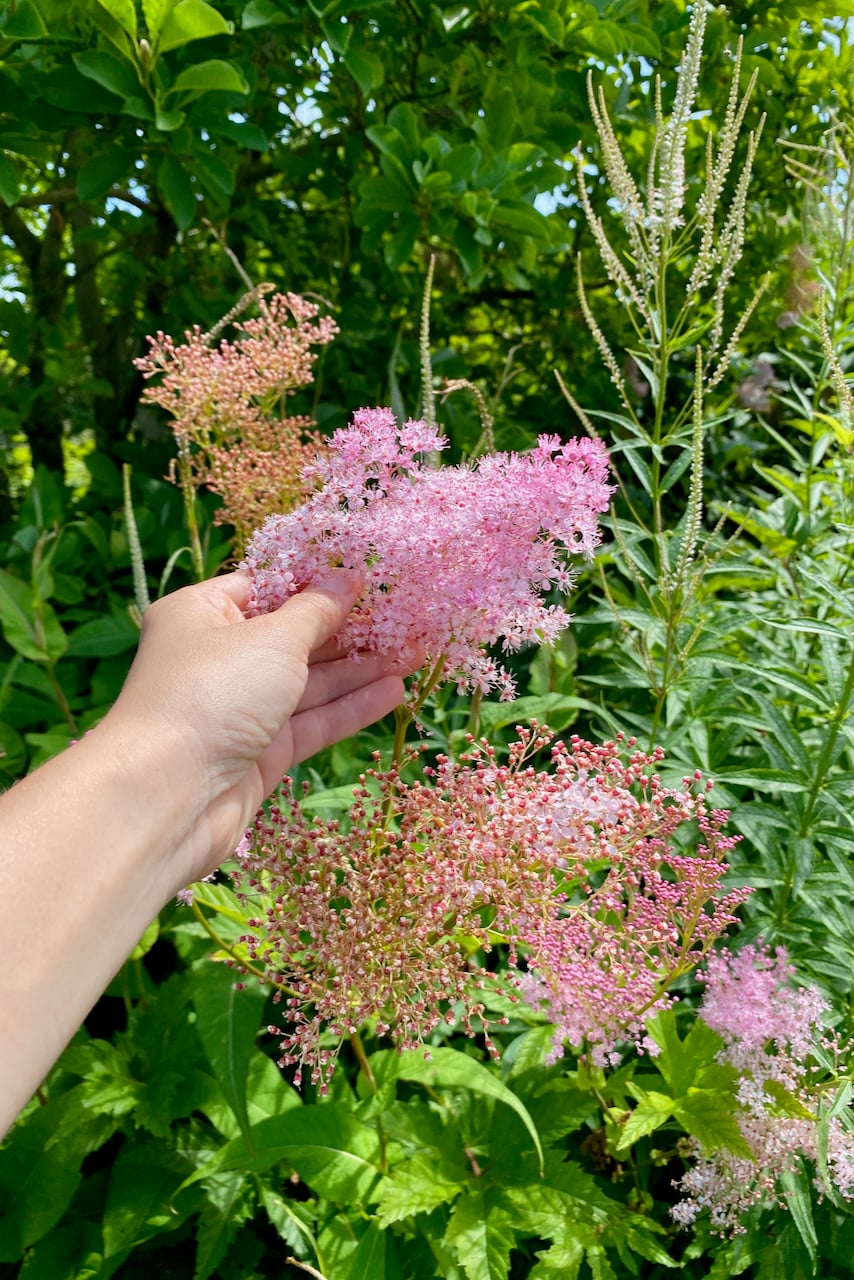
You don’t need to worry about self-seeding too much because this herbaceous perennial is self-incompatible. This means that, even though it has both male and female flowers, it can’t self-fertilize.
One more thing I like about it is the subtle fragrance of the blooms (hence the nickname meadowsweet) and the texture they add to any plant border.
Queen of the prairie does well in full sun to part shade and soil that stays moist. It flowers better the more sun it gets, but it is not a big fan of afternoon heat.
13. Wingstem (Verbesina alternifolia)
Height: Up to 10 feet tall.
Wingstem, sometimes called yellow ironweed, is a North American native and a member of the daisy family (Asteraceae). It’s a fast-growing herbaceous perennial that can reach up to ten feet tall.
Wingstem prefers garden spots that mimic its native habitat: moist soil and full sun to part shade. It opens up in late summer (August through late September) in an explosion of loose clusters of bright yellow flowers that look like they’re floating on top of the coarse toothed foliage.
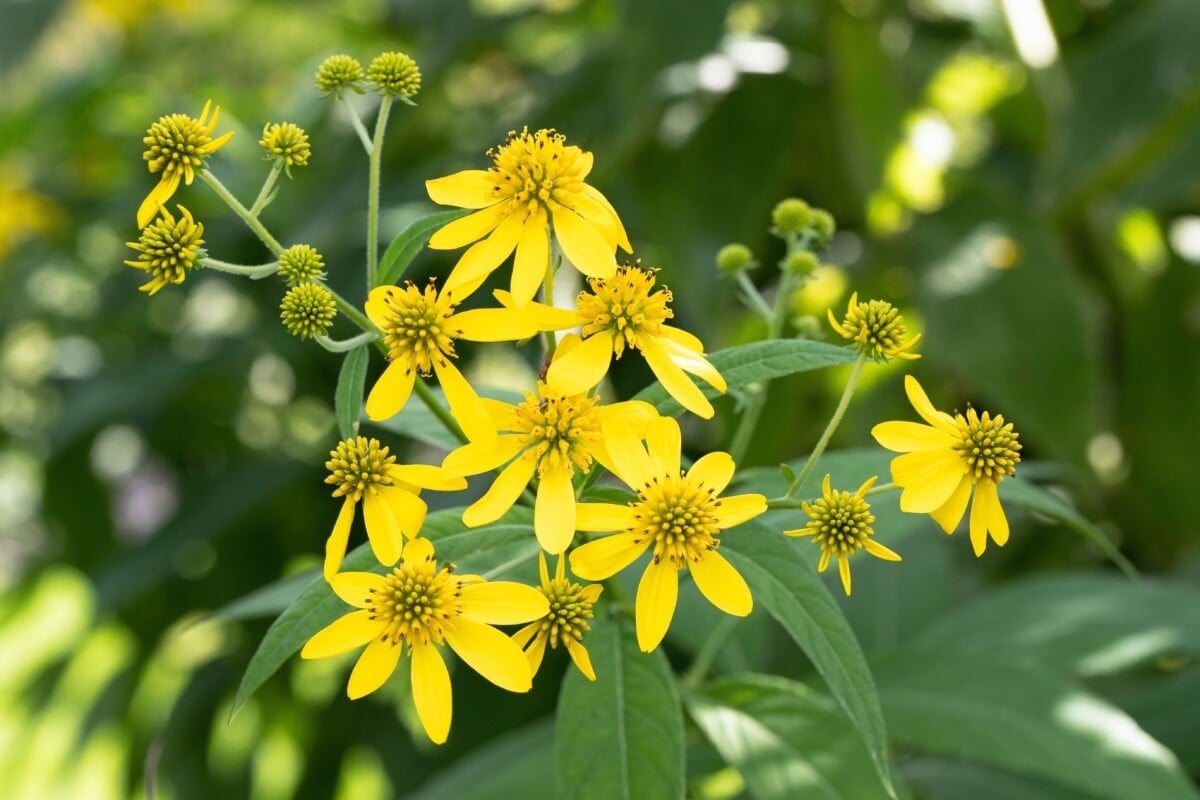
Verbesina is an important source of food for native bees, wasps, butterflies and nectar-drinking tachina flies. And even though it’s a native, we should be careful when planting it in open spaces, as it spreads very quickly through rhizomes.
Most cultivars are tall, and the tallest one I could find is called ‘Jonesboro giant’. It gets up to twelve feet tall.
14. Cutleaf coneflower (Rudbeckia laciniata)
Height: Up to ten feet tall.
The name of this herbaceous perennial is tricky because it’s not really a coneflower (that would be an echinacea), but not a black-eyed Susan either (that’s a name usually reserved for Rudbeckia hirta). I’ll admit it’s closer to the latter in looks, but it grows much taller. I think the green-headed coneflower nickname suits it much better.
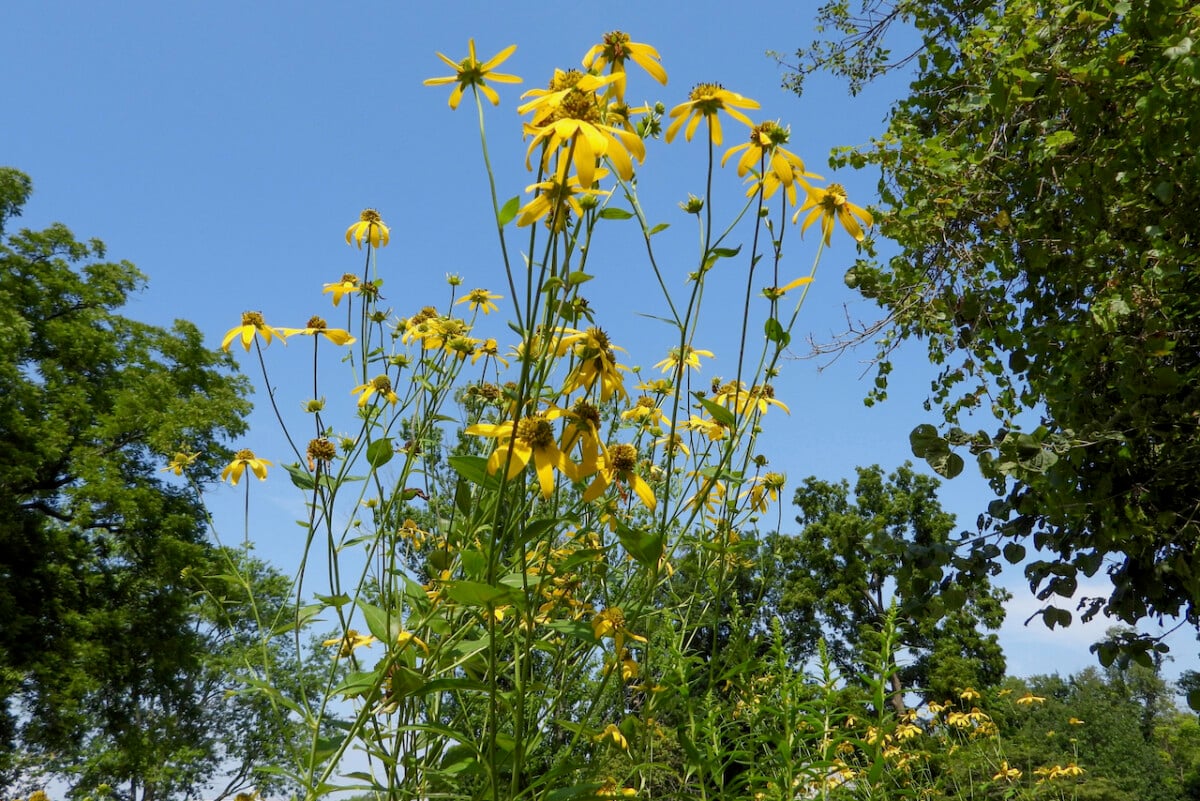
Cutleaf coneflower is native to North America, where it’s a good source of food in the fall for American goldfinches. While the bright yellow flowers are still in bloom, it’s much beloved by native bees and butterflies.
When we plant it in our garden, we have to keep in mind that it spreads easily underground, so if we don’t want it to take over, we have to keep it contained.
It likes conditions that mimic those of its native streambanks and meadows: moist soil and full sun.
The dry stems are hollow, which makes them excellent hibernation spots for native bees in the winter.
15. Goldenrod (Solidago)
Goldenrod is a bit of a misunderstood plant, I think. To be honest, I thought it was an invasive bully, but it’s far from it.
There are seventy-five species of goldenrod native to the United States, and native pollinators love them. The flowers start blooming at the end of the season, often in September, when everything else in the garden is winding down.
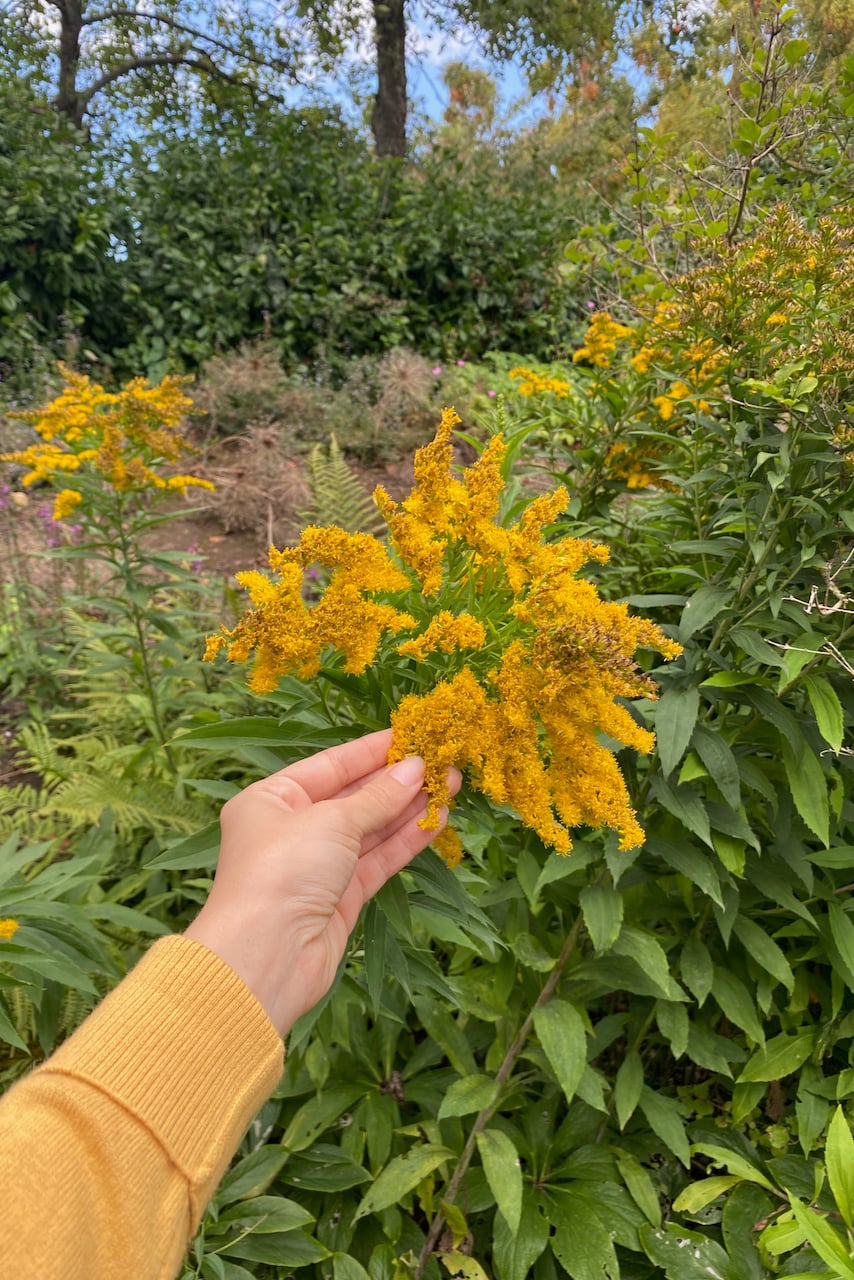
So it extends the feeding season for hundreds of species of pollinators that depend on it. And once the flowers go to seed, they become a great source of food for songbirds. A true native ecological powerhouse disguised as such a humble-looking plant.
Goldenrod has also been blamed for fall allergies, when in fact it’s ragweed (that looks similar and blooms at the same time) that’s the culprit.
Goldenrod is one of the herbaceous perennials that I would recommend to newbie gardeners because it’s so easy to get it established and easier still to keep it alive. It does well in sunny locations, though it will tolerate part shade. But blooming-wise, the more sun it gets, the more it will bloom.
Get the famous Rural Sprout newsletter delivered to your inbox.
Join the 50,000+ gardeners who get timely gardening tutorials, tips and tasks delivered direct to their inbox.