


I got the idea for this article just as I get most of my inspiration: working in the garden, noticing something, and thinking to myself, “I wonder if anyone else would find this interesting?”
It’s the end of August, and I’m out collecting seeds. I get to the sweet peas (Lathyrus odoratus), I reach out to pick some dry pods, and as soon as I touch one, it curls open and flings all the seeds at my face with a pop!
I should have brought goggles.
This, dear readers, is called explosive dehiscence, and it’s one of the coolest things you’ll see in the plant world. The pressure builds up in the seed pods, and once they reach full maturity, they split along the lines of weakness. Because of the pressure, the pod doesn’t just release the seeds inside, but it also disperses them, sometimes as far as twenty feet away.
Naturally, I went back to film the exploding sweet pea seeds.
It’s nature’s catapult, and it is fascinating, for kids and adults alike. For gardeners, it’s a good idea to know which plants have explosive seeds because it helps us prepare better for seed collection. (Let’s just say I changed my strategy for collecting sweet pea seeds after having them flung in my face.)
In other cases, knowing which seeds go ballistic helps us identify which plants we should remove before they produce seeds.
I’ve put together a list of thirteen plants with seeds that explode. I’ve added the ones more common to backyard gardeners at the top of the list. But you’ll notice that the further down the list we go, the wackier the seed missiles get.
1. Sweet peas (Lathyrus odoratus)
Let’s start with the inspiration for this article, Lathyrus odoratus. Commonly, we know them as sweet pea, but it is neither a pea nor is it sweet.
In fact, it is best not to eat it at all, as it can be toxic if consumed in excess. But it has this moniker because its flowers resemble those of peas, and it has a sweet scent (thus the odoratus in its Latin name).
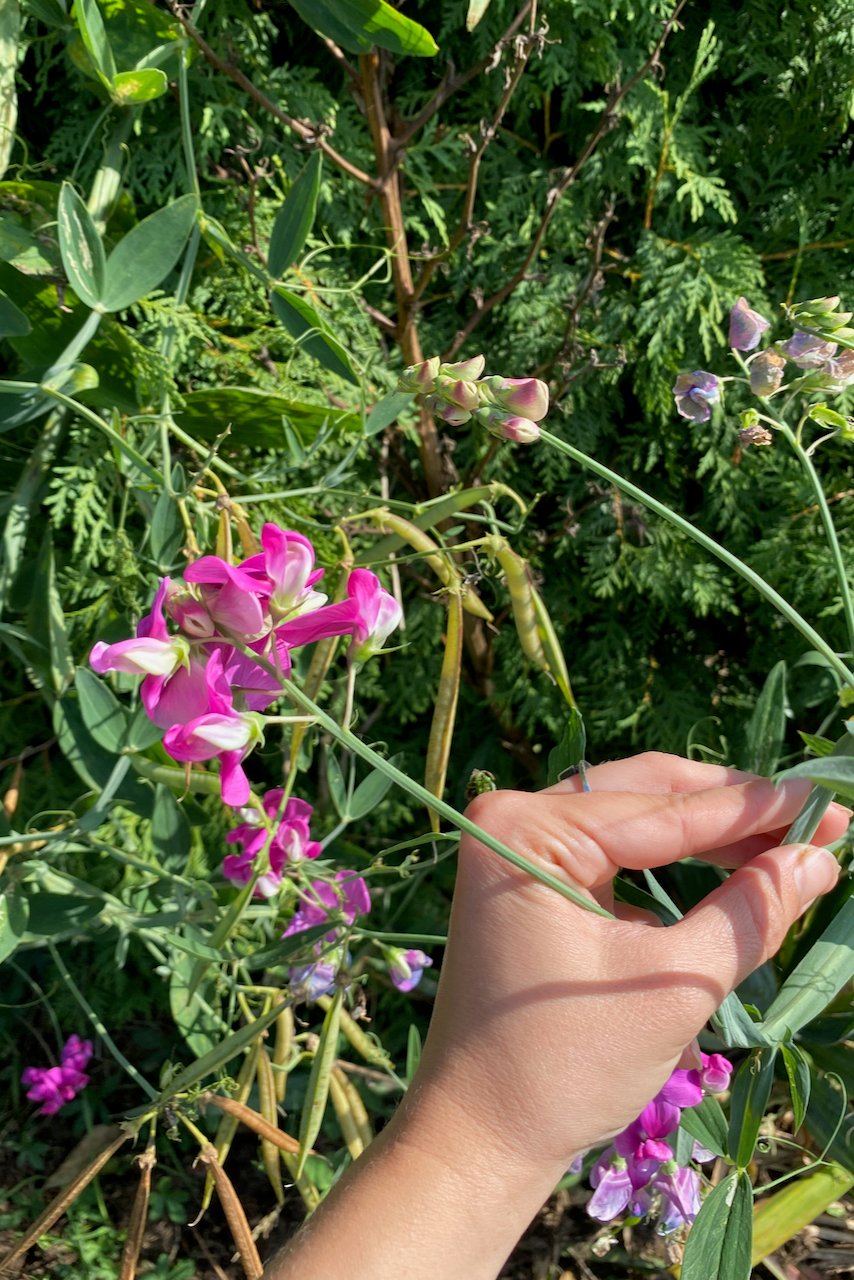
Sweet peas are ornamental flowers that grow as annuals in temperate climates. If you add some supports for them, they’ll climb wonderfully to about ten feet or more.
But they’re not just pretty plants. Because they belong to the Fabaceae (legumes) family, they’re also really good at fixing nitrogen in the ground.
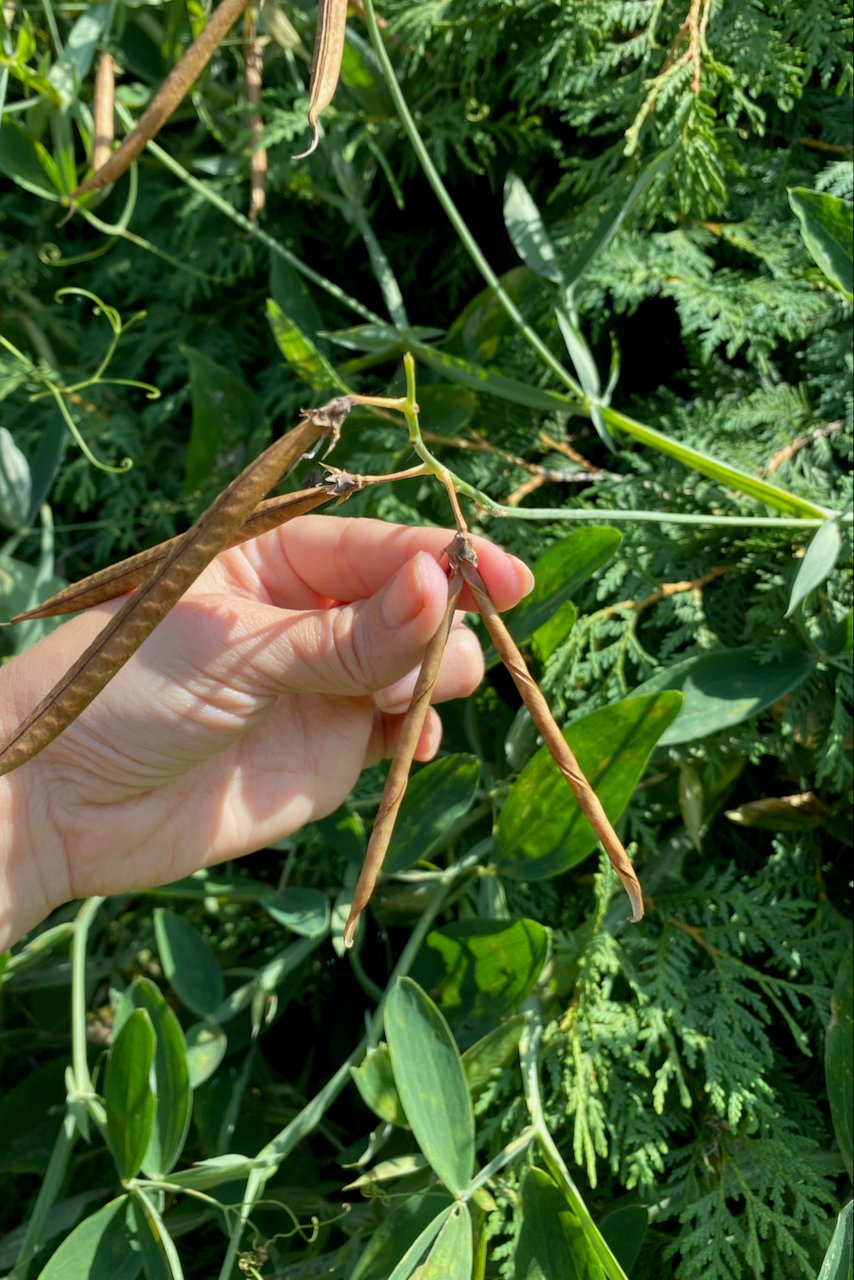
Once the seed pods are fully dry, they will start popping open and spreading seeds everywhere. What we have left behind are torqued seed pods that look just as pretty. You can collect the seeds, but don’t wait too long. Hold them by the petiole and trim them straight into a jar or a bag.
For more tips on collecting these seeds, have a look at this article I wrote.
2. Wood sorrels (Oxalis)
I recently mentioned Oxalis in this article on plants that you shouldn’t put in the ground. But I was focusing on cultivated oxalis varieties that we can buy at the garden center.
The “original” wild versions of oxalis, yellow wood sorrel (Oxalis stricta) and creeping wood sorrel (Oxalis corniculata), come with their own challenges in terms of spreading. Both these species have exploding seed pods. If you dare to touch their dry pods, remember to avert your eyes and keep your mouth closed.
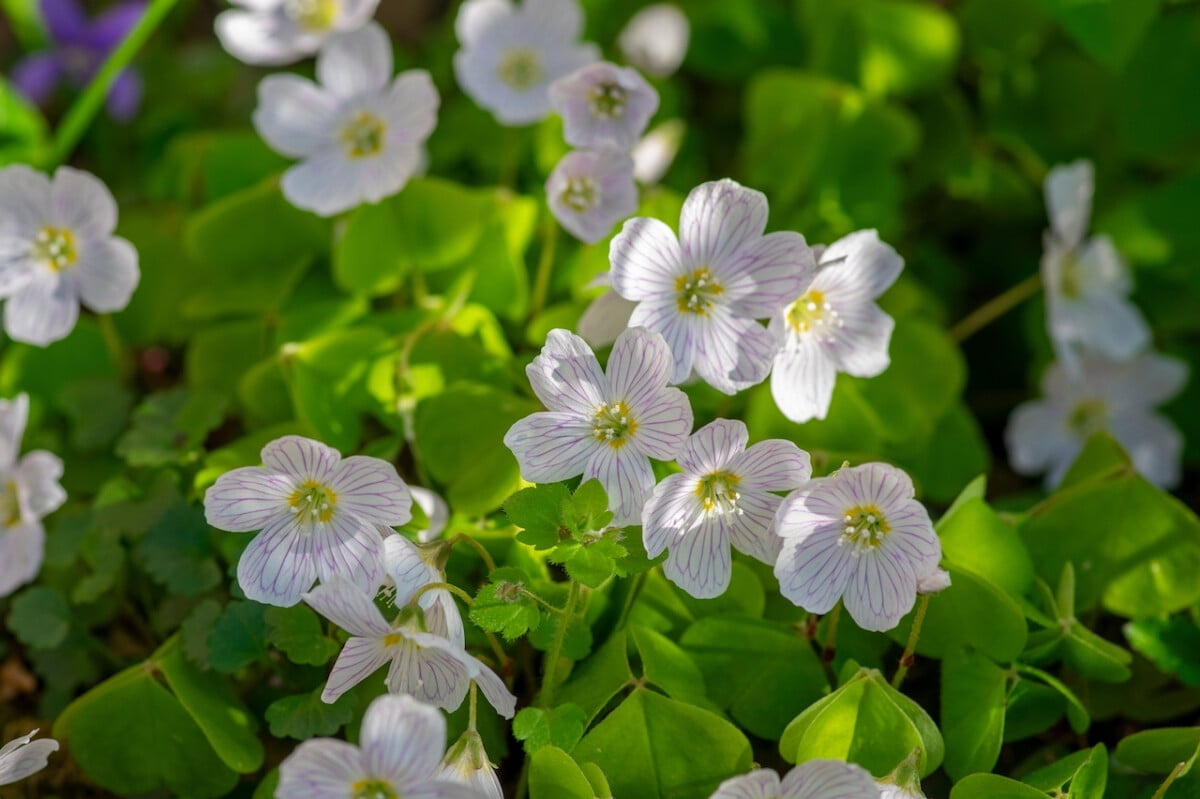
If you grew up a wild child in the pre-Internet era, chances are you’ve probably kept yourself entertained outdoors by snacking on these zesty pods. Did you call them grass pickles or sour weed? Or perhaps it was more fun to flick them open.
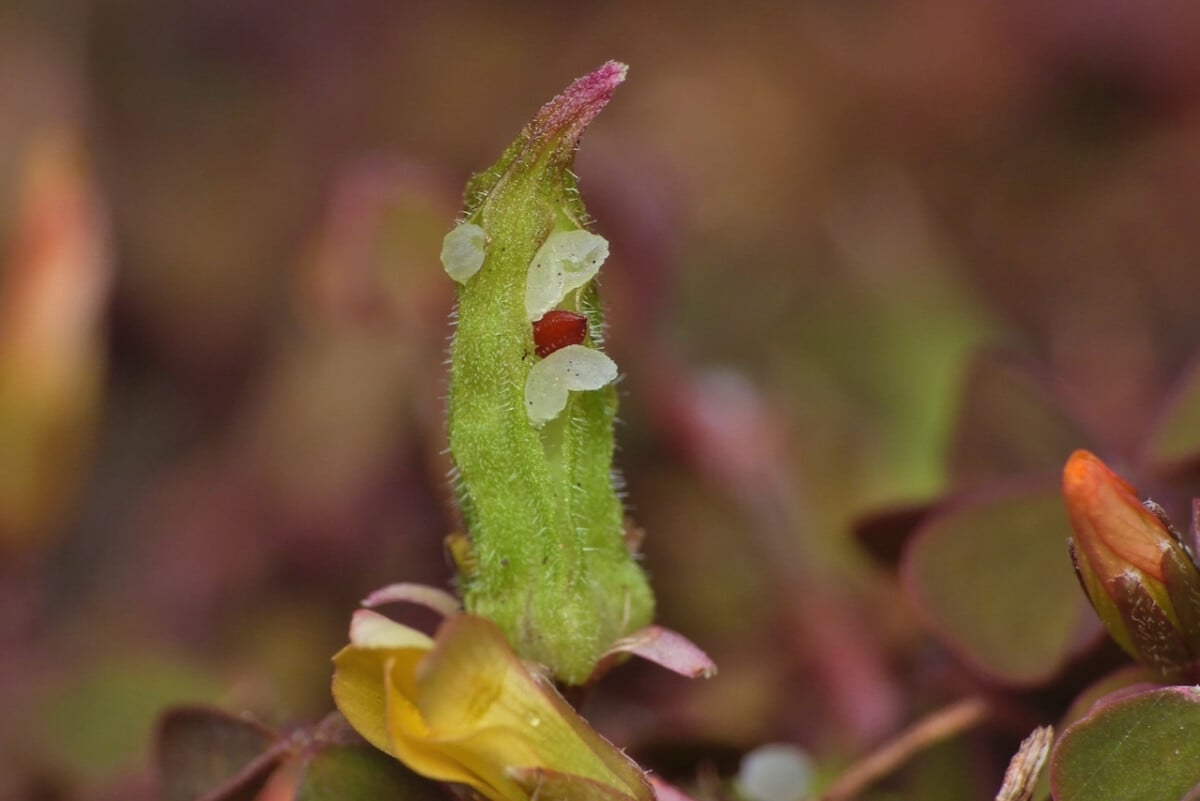
Like most oxalis plants, every part of this plant is edible (including the seed pods). They have a sour, lemony taste. But if it’s taking hold of your garden, better start eating it while it’s still a flower. You know, just to prevent the spread. If zesty is not your preferred taste, you can simply pull them out by the root before the flowers go to seed.
3. Bear’s breeches (Acanthus mollis)
Imagine this scenario, based on a true story that happened to yours truly.
You’re seated in your garden on a warm fall evening with a glass of your drink of choice. You’re craving a salty snack, and all of a sudden, it sounds like someone read your mind and put a popcorn pot on the stove top.
Pop-pop-pop!
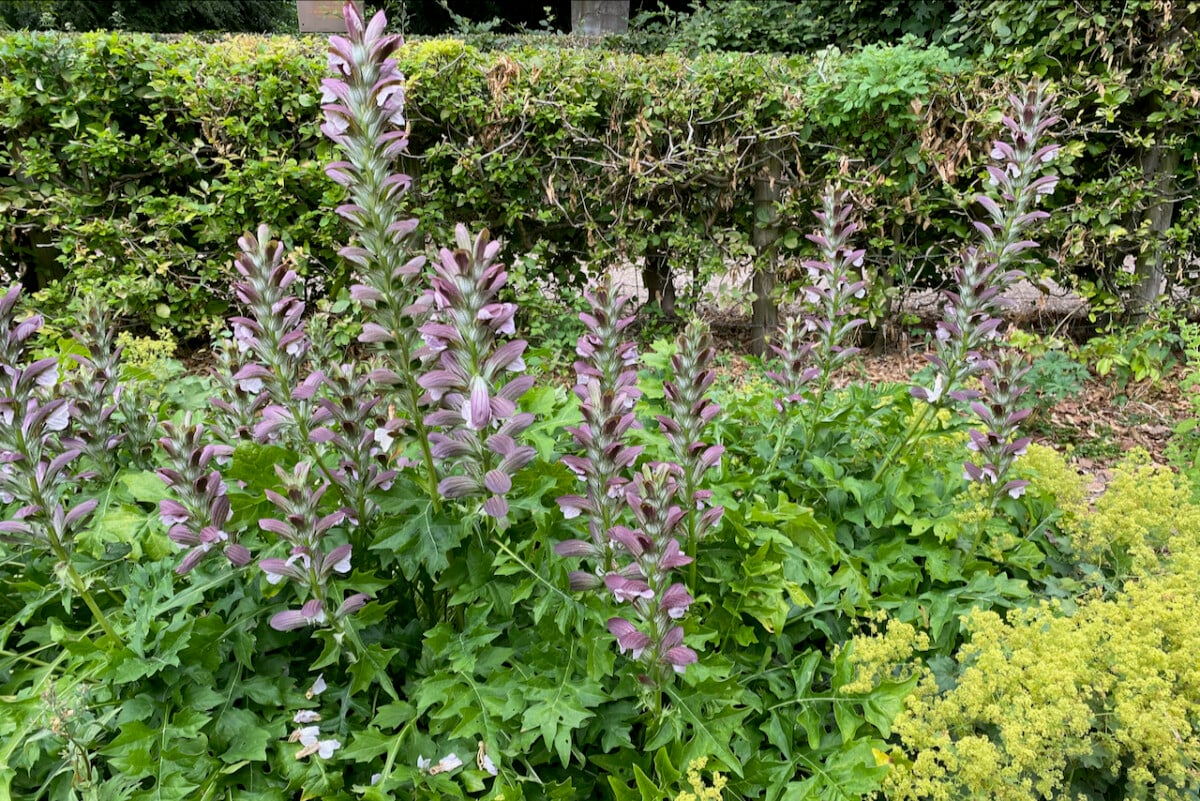
Sorry to disappoint. No salty, butter snacks are being prepared. It’s just the bear’s breeches (Acanthus mollis) finishing off its blooming season with a bang. Or rather, a series of pops as the seeds are ejected from their dry pods. It’s nice of acanthus to do this because it’s super spiky and not very accommodating to having its seeds picked. If you put a plastic bag on a few of the spires, you can catch the flying seeds and even save some.

However, if you don’t need more seeds (these are pretty long-lasting perennials, so you shouldn’t need to replace them often), self-seeding is easy to avoid. It takes the seed pods about a month to go from green (just ripe) to brown (ready to pop). So there’s plenty of time to cut down the torch-shaped flowers of this plant once their color is gone.
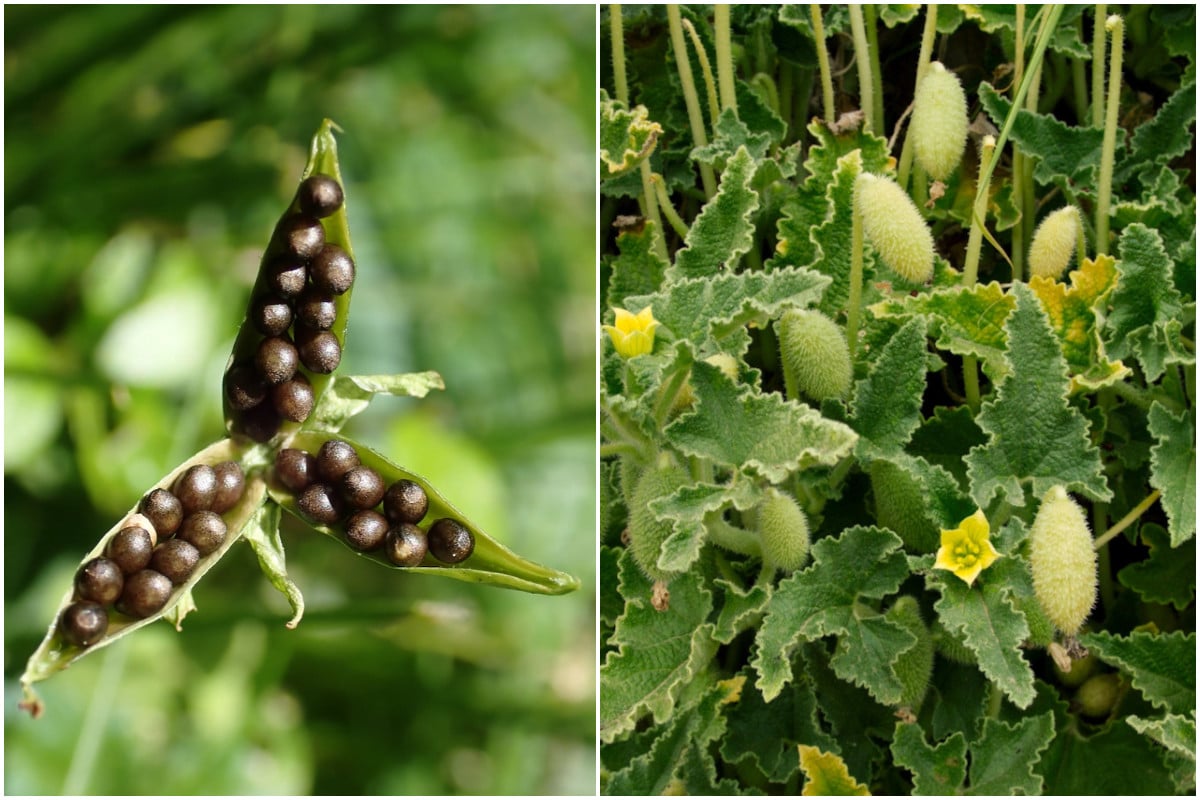
4. Squirting cucumber (Ecballium elaterium)
In Spain, they call this plant “devil’s gherkins.”
In English, it is called a “squirting cucumber.”
But I will forever refer to it as “the plant that made Sir David Attenborough giggle with delight on the BBC.”
Here’s the video, if you want to watch the man who has encountered thousands of species of plants erupt into giggles at the squirting cucumber.
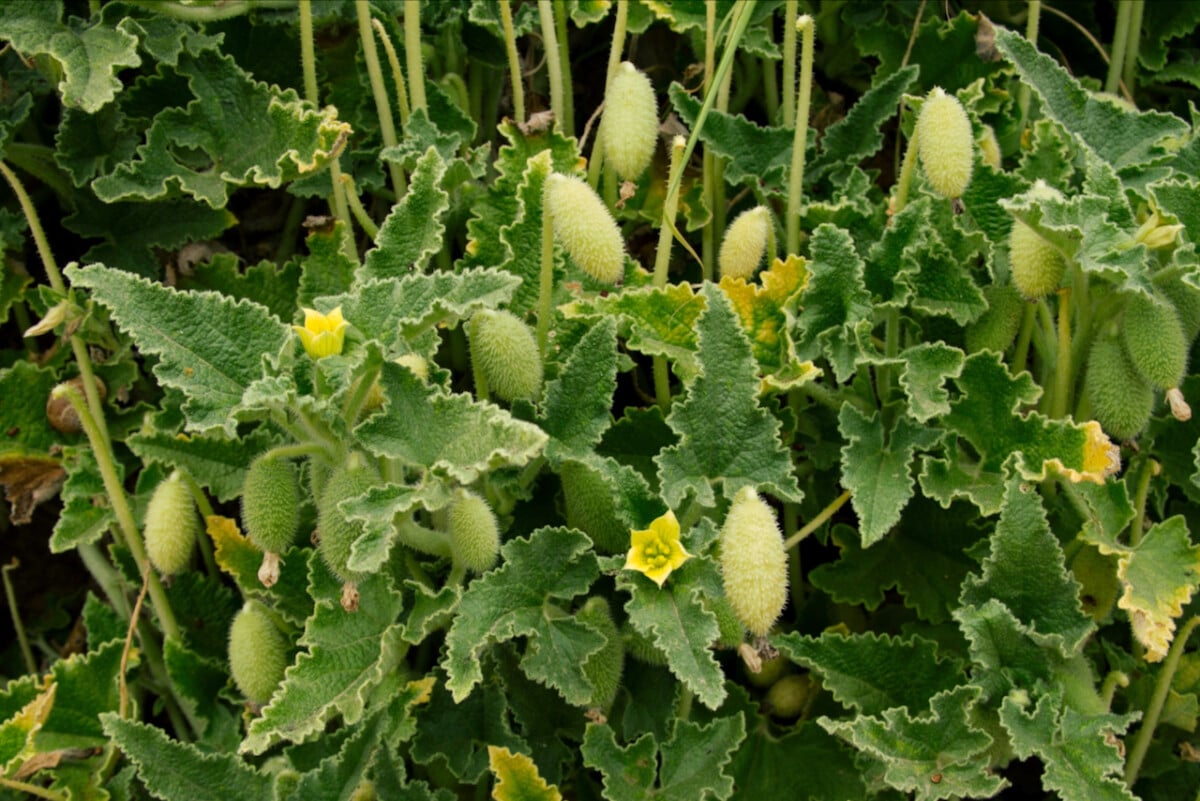
Don’t pull out the pickling supplies just yet. Although this plant is part of the Cucurbitaceae family (the same family as cucumbers and all gourds), it is not edible. In fact, it can be quite an irritant.
The name comes from its appearance and behavior, rather than its edibility. And honestly, once you see the gooey squirt, you’ll probably be put off any food anyway.
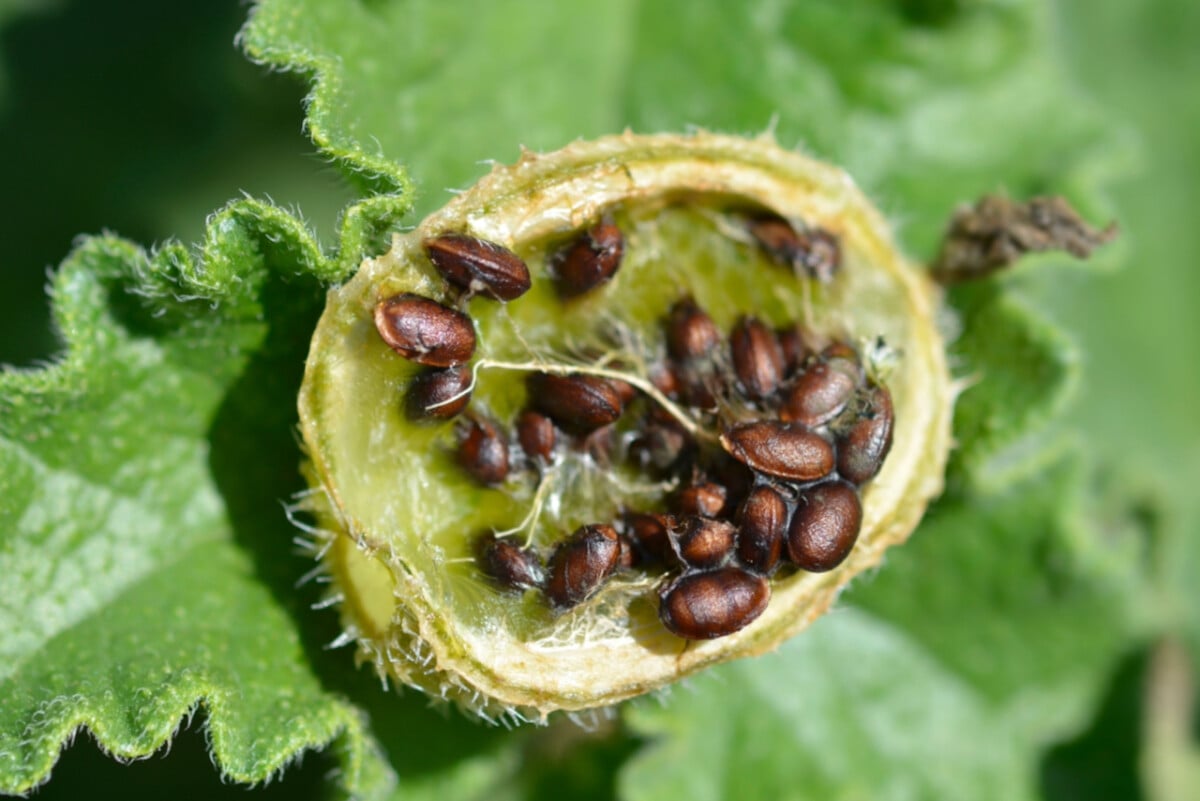
The ripe fruit (that stays green when ripe) contains a mass of mucilaginous liquid that engulfs the seeds. Only female flowers create fruit, so not all flowers will turn into marshmallow projectiles.
Once touched, at peak ripeness, the fruit releases from the stem and fires off in the opposite direction. The recoil is pretty cool to watch in slow motion. The gel and the seeds are dispersed at high speed with a squirting sound. And the seeds can land up to 23-26 feet away (around 7-8 meters). Talk about a party trick! Time it with an end-of-season garden party and you’ll be the talk of the town.
5. Common blue violet (Viola sororia)
Blue violets are a welcome sight in early spring, when not much else is in bloom. You’ll see them everywhere: in parks, forests, meadows, back yards, even between cracks in the pavement. I know some people pull them out of their gardens, but I honestly don’t understand the violet hate.
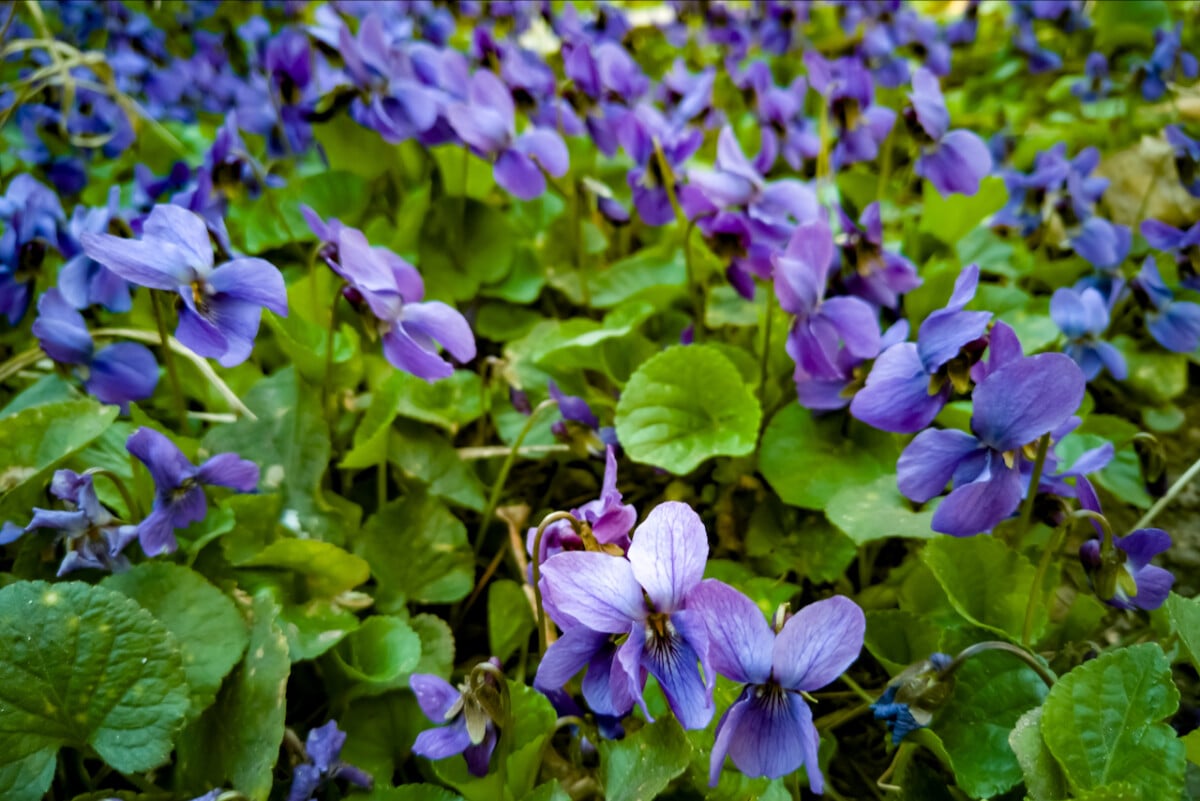
These perennials are native to the United States and they’re also a source of food for native species of fritillary butterflies. Sometimes the only source of food that these insects have evolved to consume. There’s a species of mining bees (Andrena violae) that only forages on violet flowers. Not only are these violets natives, but they support natives.
Yes, but they spread so fast, you’ll say. Exactly! That’s by design. And wait until you hear about the mechanism.
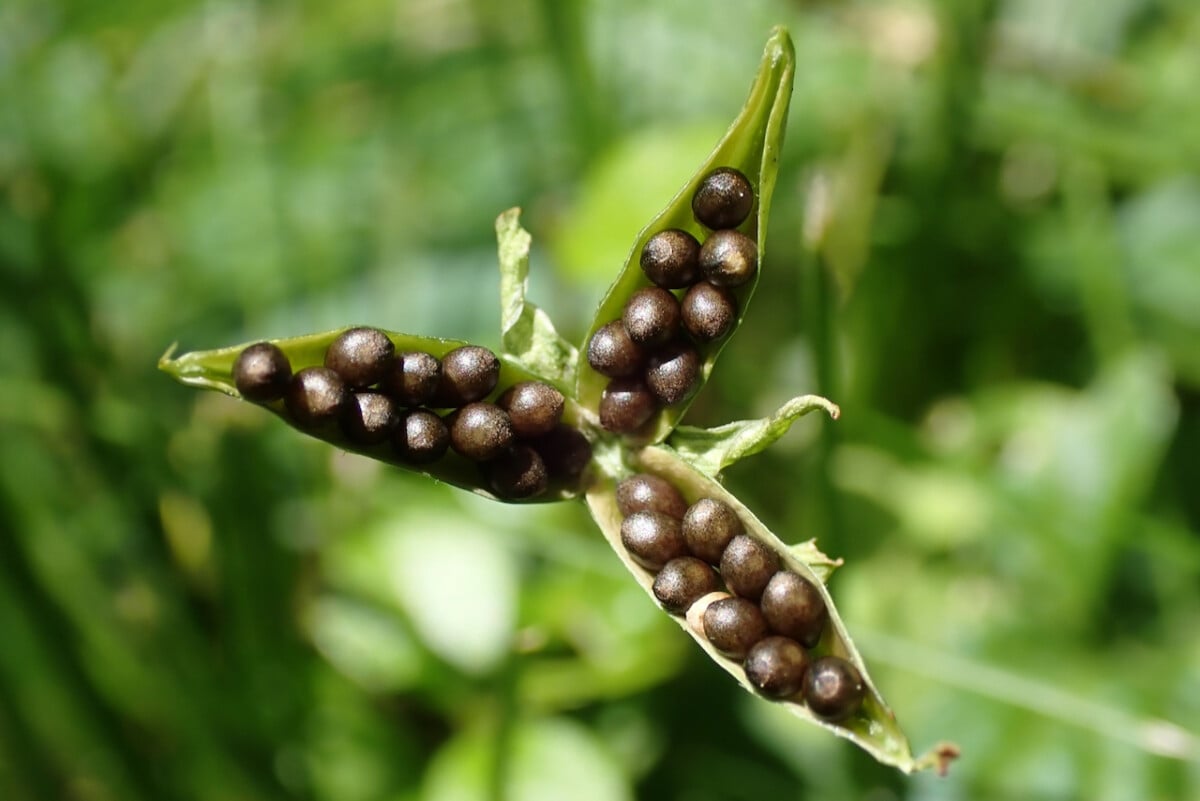
Because violets bloom so early in the year, when it’s still quite cold and wet, they don’t rely on just open pollination for seeds. They have a backup set of flowers that never open. These buds, usually found under the open blooms, can self-fertilize, just in case there aren’t that many insects to do the job right.
Then all the fertilized seed capsules fling open to expose the seeds. After a couple of days, the seeds are ejected and scatter the seeds all around.
6. Garden pansies (Viola wittrockiana)
It’s probably not hard to guess, judging from their appearance, that the woodland blue violet that we’ve just talked about is a distant cousin of the popular garden pansies.
Pansies, with their vibrant color combinations and wide variation in size, are the cultivated versions that result from hybridizing several species in the genus Viola.
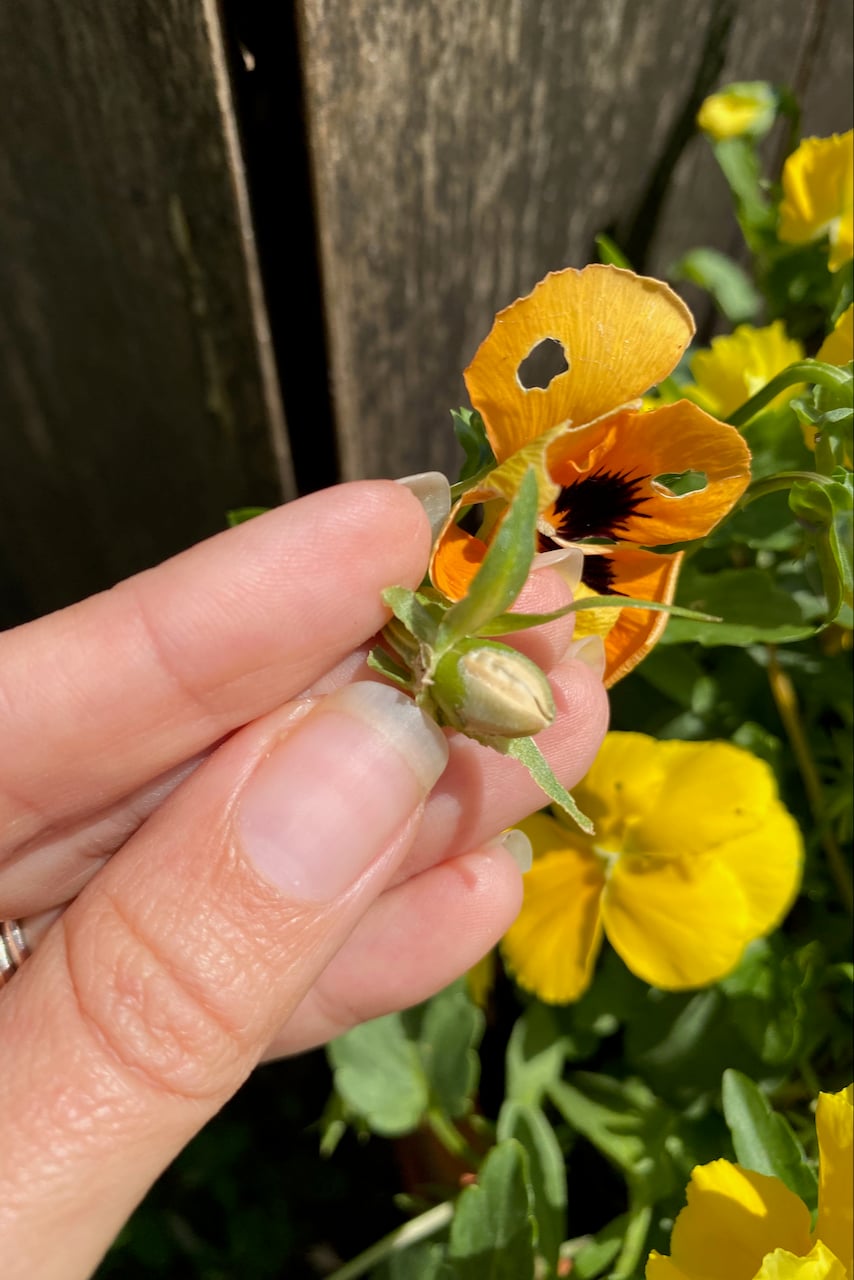
As a bonus, in addition to the rainbow colors and patterns, they also have a much longer reblooming habit. In theory, we could have pansies blooming in the garden in spring, summer and fall.
Once the petals fall, the seed capsule left behind is initially green. But once it dries (and it only takes a couple of weeks), it just peels back into three sections to reveal the seeds. Give it a couple more days, and the seeds pop out of the pod in slivers all on their own.
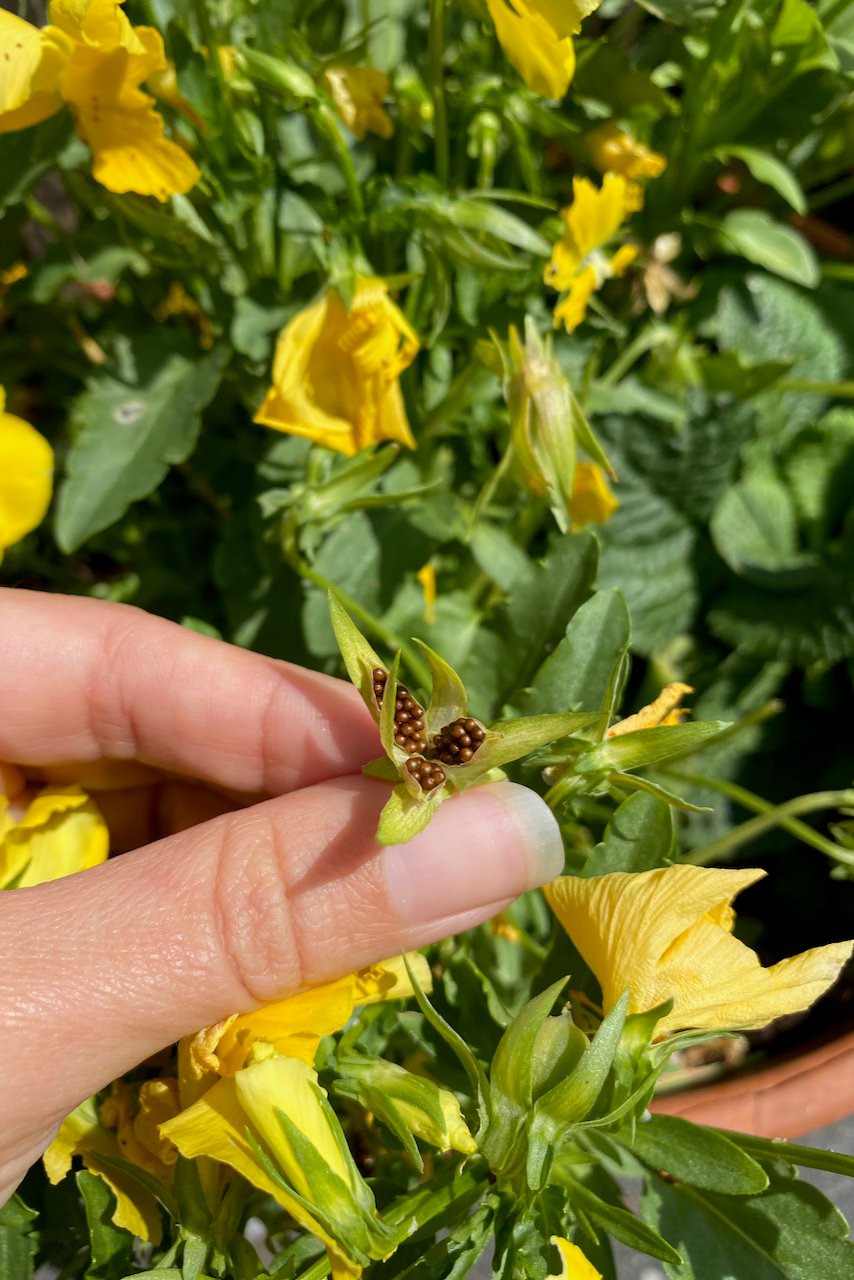
And since ornamental pansies are also in the habit of spreading seed like confetti, they’ll likely reseed and rebloom in the same year. I love that about them.
7. Common broom or Scots broom (Cytises scoparius)
How you feel about Scottish (or Scots) broom depends very much on what part of the world you live in. This deciduous leguminous shrub is native to Central and Western Europe (including the United Kingdom and Ireland), and it has naturalized in the Mediterranean climate. This is where you’re very likely to have seen it for sale at garden centers.
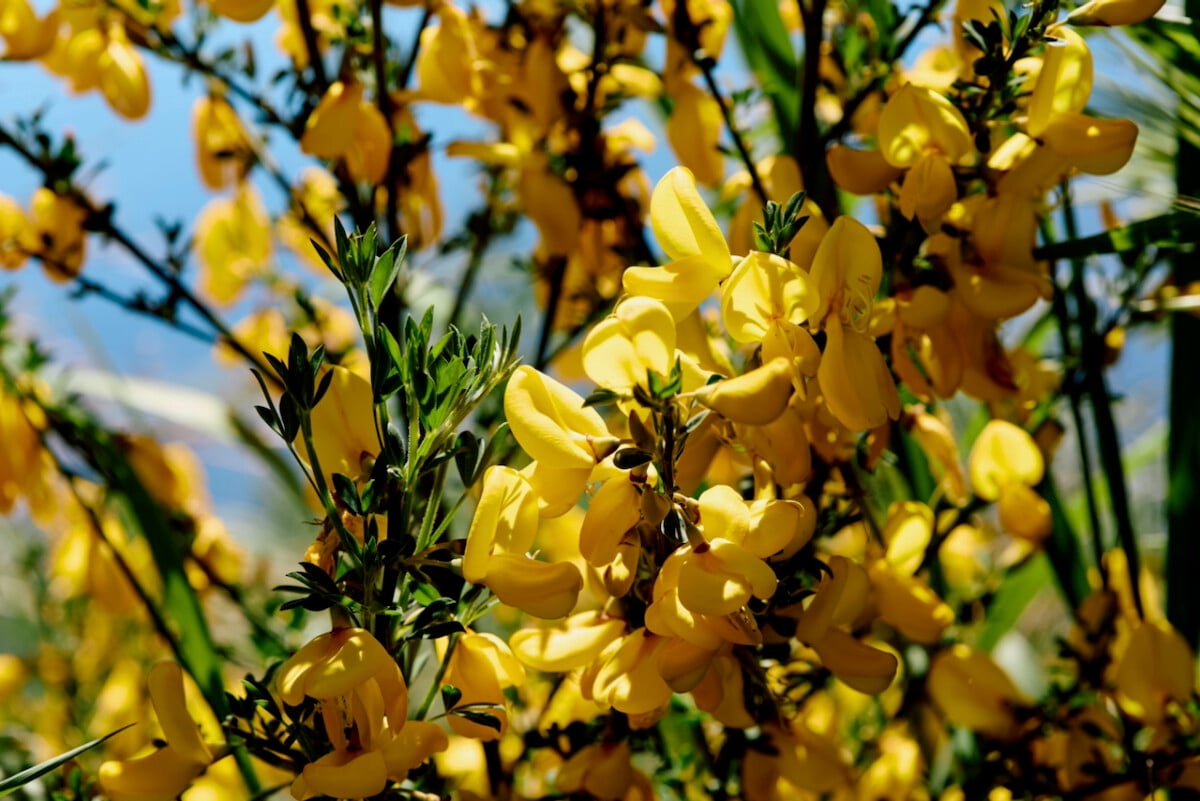
You’ll probably see it for sale in North America, too. But if that’s where you’re gardening, I’d like to do my best to discourage you from planting this.
Listen, I can’t blame you if you want to bring it into your garden. The gorgeous yellow flowers are so dense and compact that they look like the sun just landed in your garden.
The shrub is also part of the legume family, so it’s very useful at fixing nitrogen. It grows well in both dry, sandy soil and acidic soil. Again, what’s not to love?
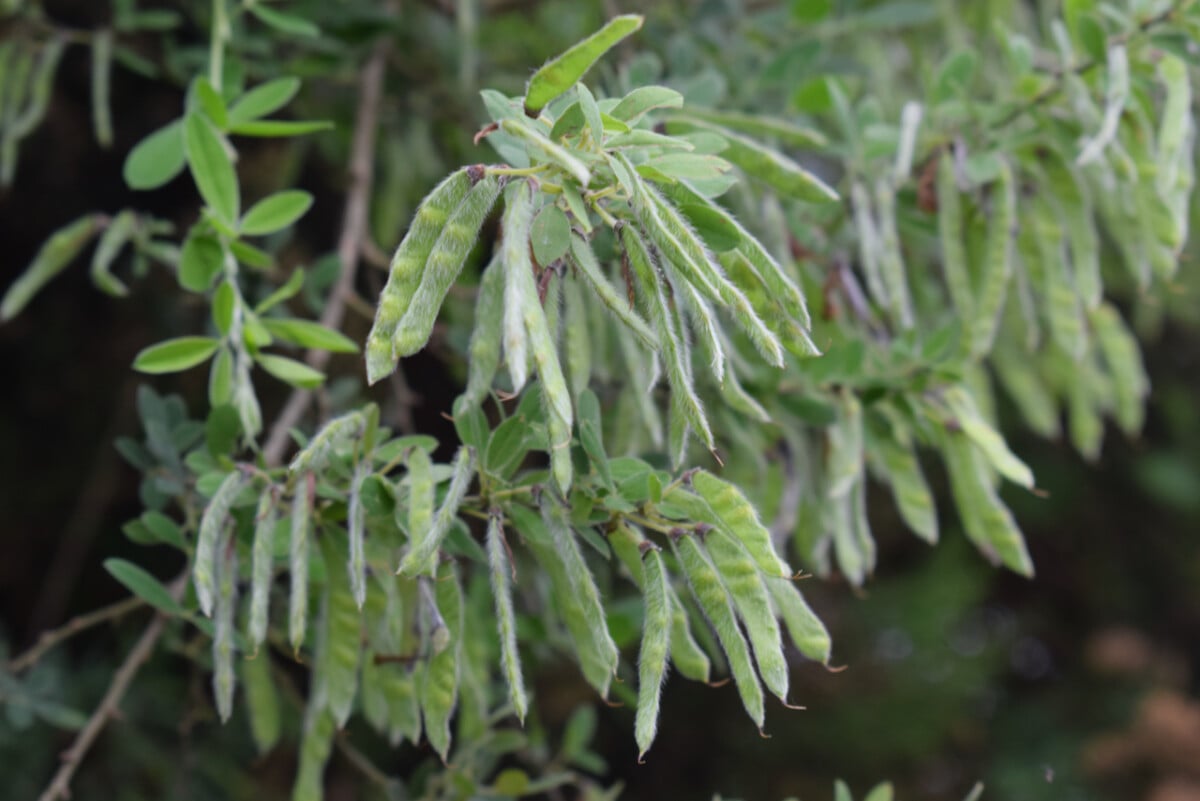
When the green seed pods ripen in late summer and early fall, that’s when you know you’re in trouble. When they burst open with a crack and a pop, the seeds are dispersed far and wide.
The trouble with that? These seeds are viable for up to ten years. And when they germinate, they will colonize grasslands and woodlands, displacing US-native species.

So if you’re gardening in this part of the world, I think you should admire these shrubs from afar. Really, really afar.
8. Firecracker flower (Crossandra infundibuliformis)
Guess what’s the source of this plant’s nickname? Yes, it’s the seed pods that pop like firecrackers when they’re ready to disperse. In the United States and Europe, we’re more likely to grow this as a houseplant.
In parts of Africa and Asia, where it’s native, it grows as an evergreen shrub. The waxy, glossy leaves and fan-shaped flowers in various shades of orange, red and yellow make it a prized ornamental. Unfortunately, it will not do well if temperatures go below 50°F (10 °C).
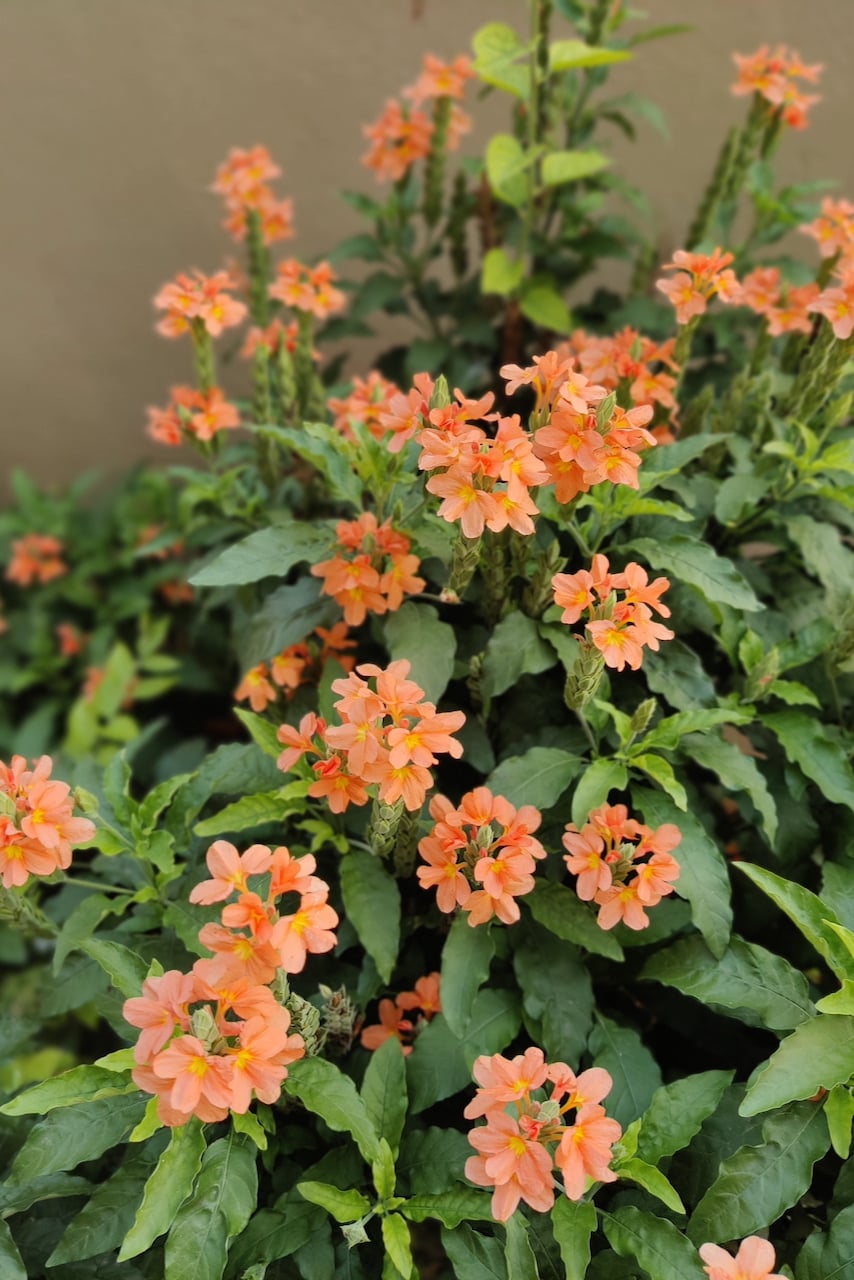
So, my only chance is to grow it as a houseplant that goes outdoors in the summer and returns inside during the cold months.
The seed pods that are left once the flowers wither away remind me of birthday candles. Once they dry (the pods, not the candles), they go ballistic. In their native high-rainfall habitats, this dispersal is typically triggered by high humidity. Naturally, that’s when the seeds would be more likely to survive and start growing.
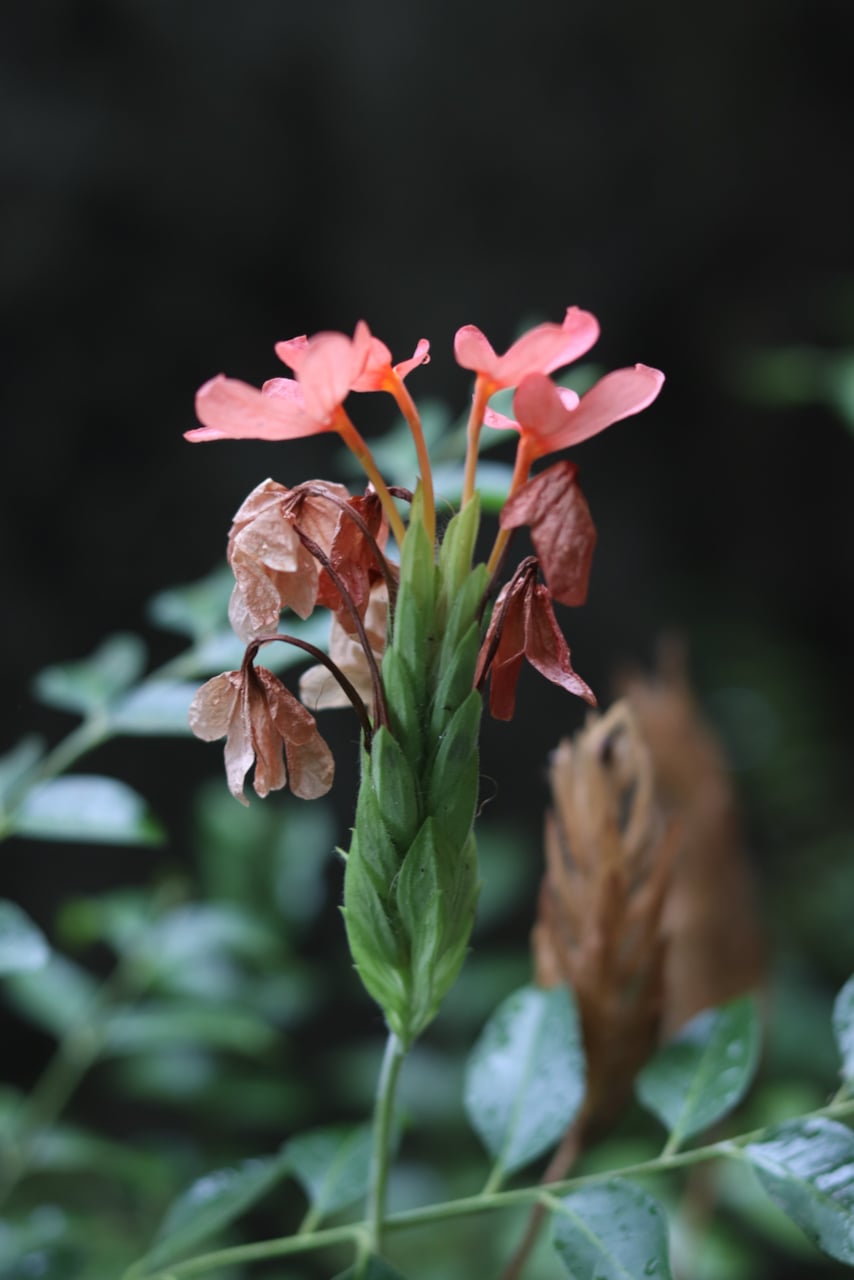
In my temperate climate, the seeds will spread, but will not survive the winter. And if it’s an indoor plant only, there will be no pollination, therefore no seed dispersal.
9. Spotted geranium (Geranium maculatum)
Let’s keep it positive for a while longer with a plant that is native to the United States. Spotted geranium, also known as wood geranium, is a winter-hardy (up to USDA Zone 3!) herbaceous perennial that grows really well as ground cover.
I recommend growing it instead of the aggressive Lesser periwinkle (Vinca minor) that I mentioned in this article. Native bumblebees and solitary bees will enjoy the pollen of this geranium, but it is also a larval host for leaf-mining moths.
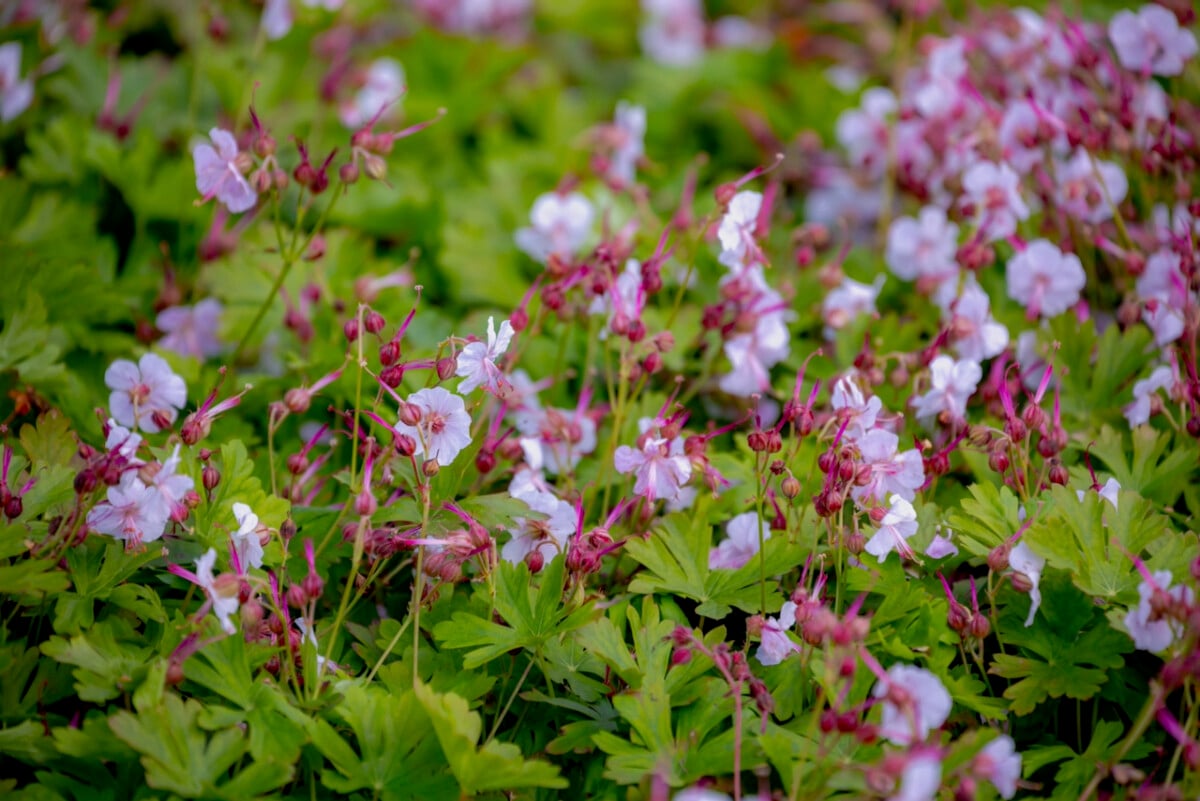
Did I mention it can grow in partial to full shade and flower for about six to seven weeks? Yup, the whole package!
Once the flowers are past their prime, they’ll turn into beak-like seed pods, hence the nickname crane’s bill. And once these seed capsules are fully dry, they spring open and make it rain with minuscule seedlings.
However, don’t rely on self-seeding for propagation for wild geraniums. Because the birds also like to nibble on the maturing seed pods. If you want more of these geraniums, you can divide them in the fall. The same goes for a few other perennials that I talked about in this article.
10. Witch hazel (Hamamelis)
We’re staying in native territory here, so let me tell you about the long game that witch hazel plays.
First of all, you should know that there are three different species of witch hazel native to North America:
- Big leaf witch hazel (Hamamelis ovalis) – amber flowers,
- American witch hazel (Hamamelis virginiana) – yellow flowers,
- Ozark witch hazel (Hamamelis vernalis) – the most beautiful one, in my opinion, with yellow flowers and an orange center.
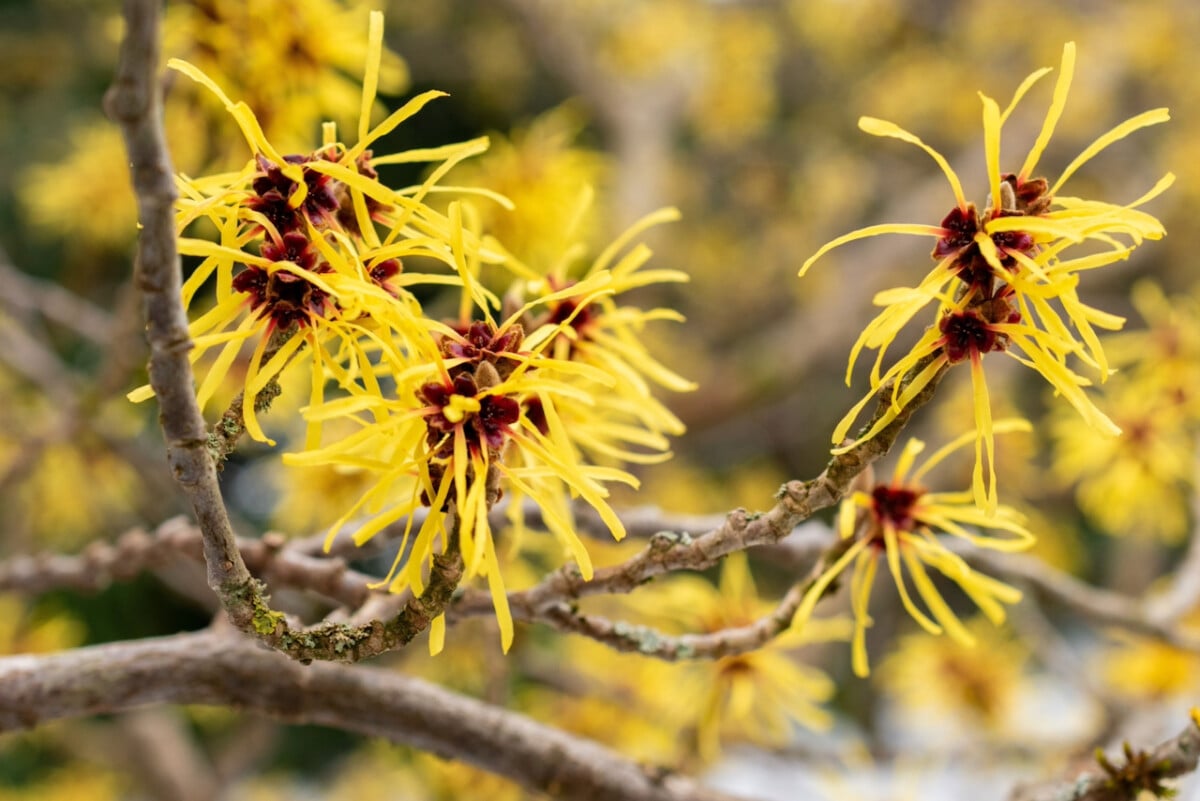
I love this shrub because it blooms on a different timeline from the rest of the garden. Most witch hazel shrubs bloom between January and March. Hamamelis virginiana is precocious, blooming from late September to November.
It takes a flower about eight months to turn into a two-chamber seed capsule (with a single seed in each of the chambers). And once it reaches maturity, the capsule splits with an audible snap, propelling the seeds with enough energy to fling them up to 12 feet (approximately 3.5 meters).

Which is why another name for this shrub is “snapping hazel.”
But here’s what’s interesting. The seeds that are dispersed this year (usually in late winter) are from last year’s flowers. And they occur at the same time as this year’s flowers. So basically, we have two generations on the plant at the same time.
11. Himalayan balsam (Impatiens glandulifera)
Himalayan balsam reached Europe around the 1840s. And like the majority of plant distribution mistakes, it was brought to the United Kingdom from its native India as a garden ornamental. From there, it has spread onto the rest of Europe, the United States, Canada and even Australia.
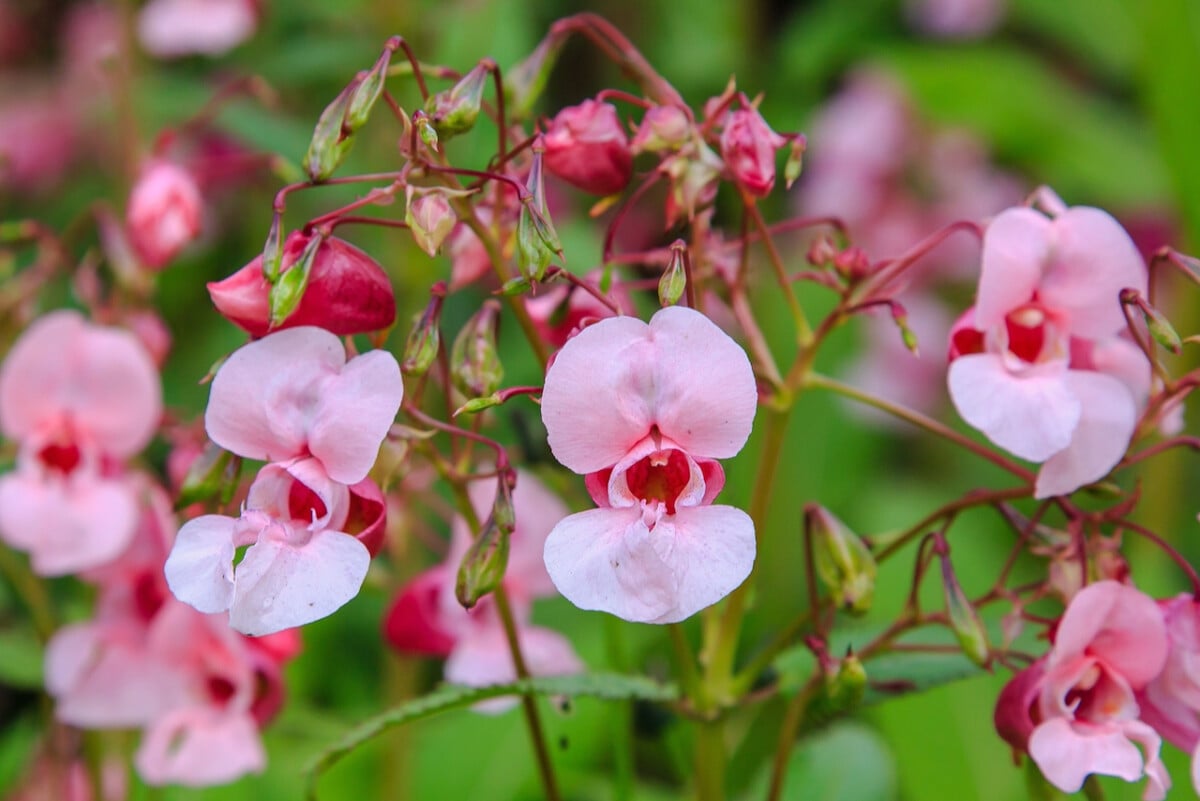
It’s probably the beautiful flowers that helped it weasel its way into the hearts of gardeners. And once there, the seed pods do the rest of the work. The irony is that when Himalayan balsam was first introduced in Europe, the exploding seeds were marketed as an exciting plaything for children. One of the names it was sold under was “Mr Noisy’s exploding plant”.
Unfortunately, it turned out to be a very fast-spreading species that quickly took over wild areas and riverbanks. The exploding dry seed pods can shoot seeds up to 23 feet (7 meters) in every direction.
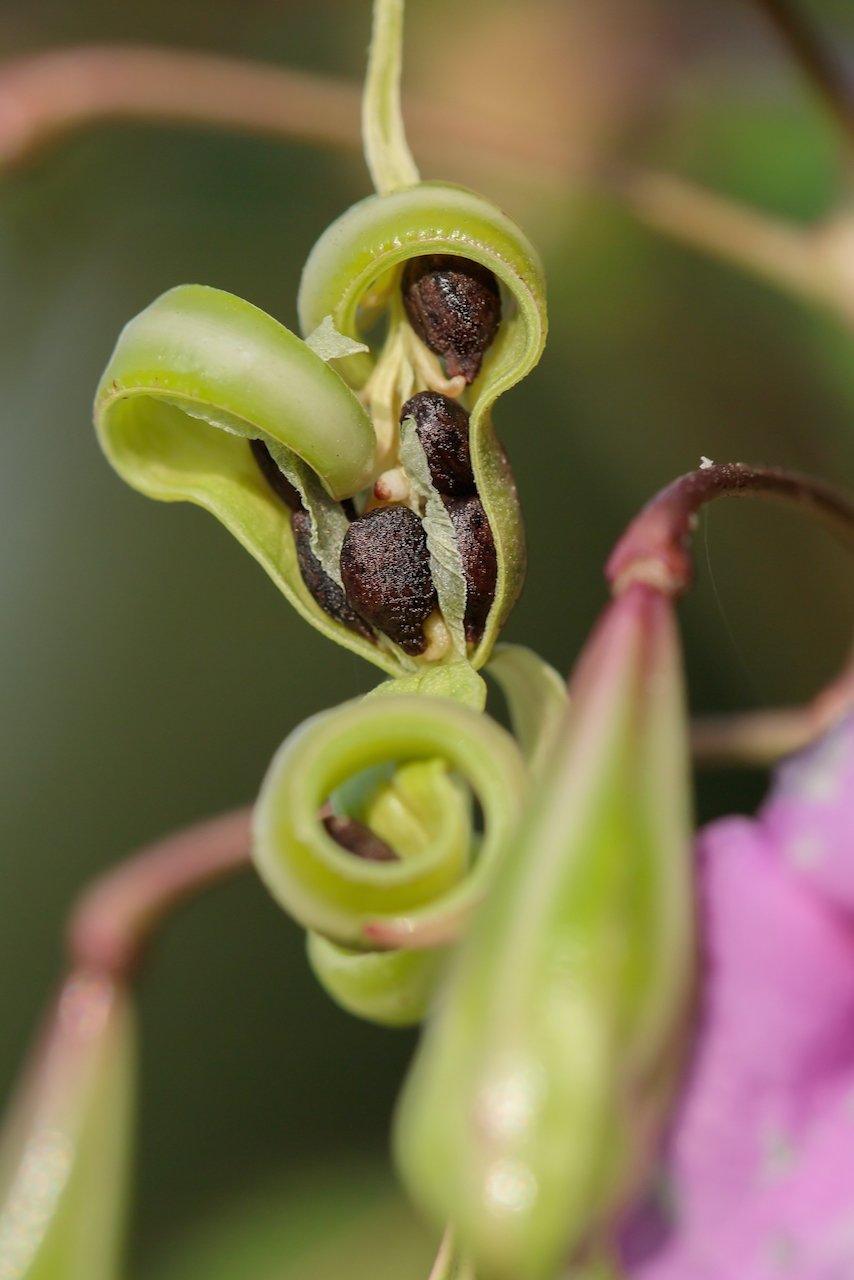
A single plant can carry hundreds of seeds in dozens of pods, and every time the wind blows or an animal just happens to graze past it, the dry seeds get another chance at colonizing even more soil.
The good news is that it’s an annual. The bad news is that, since it colonizes riverbanks and crowds out native plants, when Himalayan balsam dies back in the winter, there’s nothing to prevent the water banks from eroding.
12. Touch-me-nots or jewelweed (Impatiens capensis)
Another Impatiens, but this time it’s not bad news. Impatiens capensis is native to North America, and you can find it in boggy, shaded areas from Minnesota to North Carolina.
Jewelweed goes by many names and comes in various shades of orange (some spotted and some not). It can also be yellow, in which case we’re talking about its cousin Impatiens pallida.
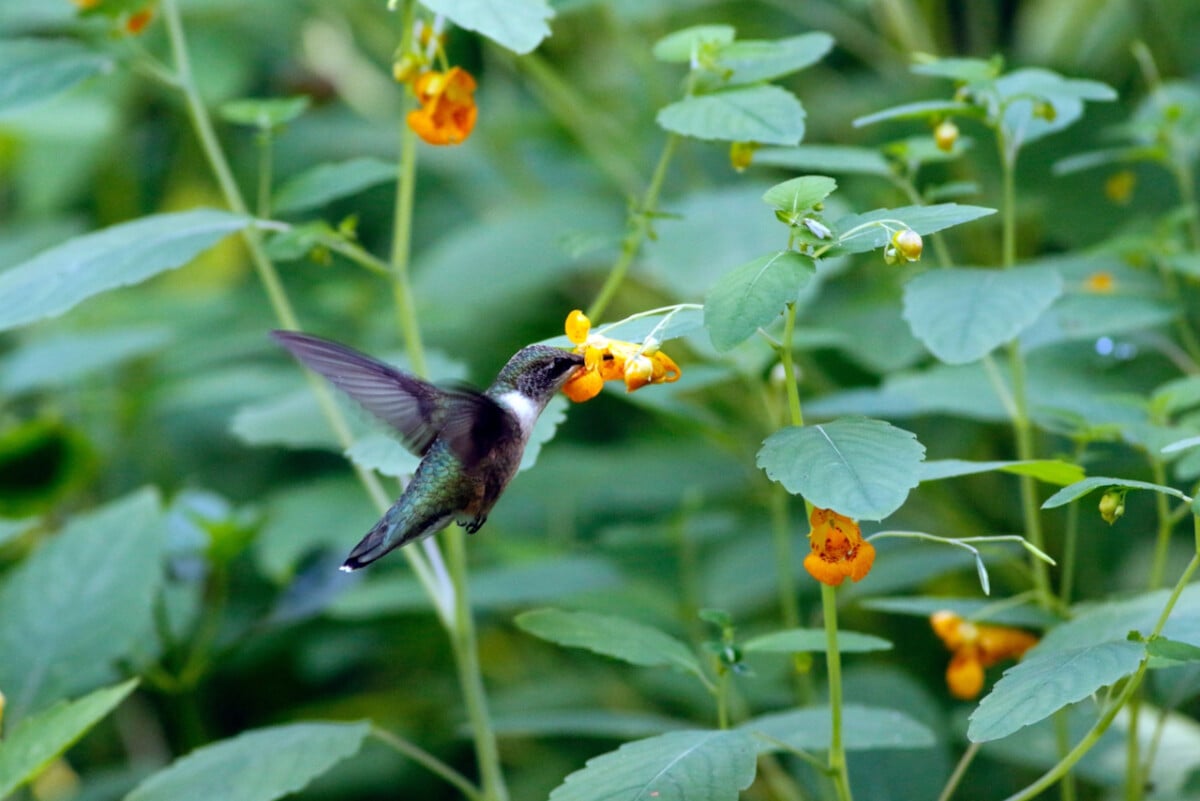
When it rains, the drooping flowers truly resemble shimmering jewels. The scalloped flower appears to have a small pouch that hangs down. There’s precious nectar in this pouch waiting for pollinators, such as hummingbirds, bumblebees, and butterflies.
The common name, touch-me-not, sounds ominous. But it has nothing to do with any danger. It’s a simple warning that if you touch the elongated seed pods, they will explode.
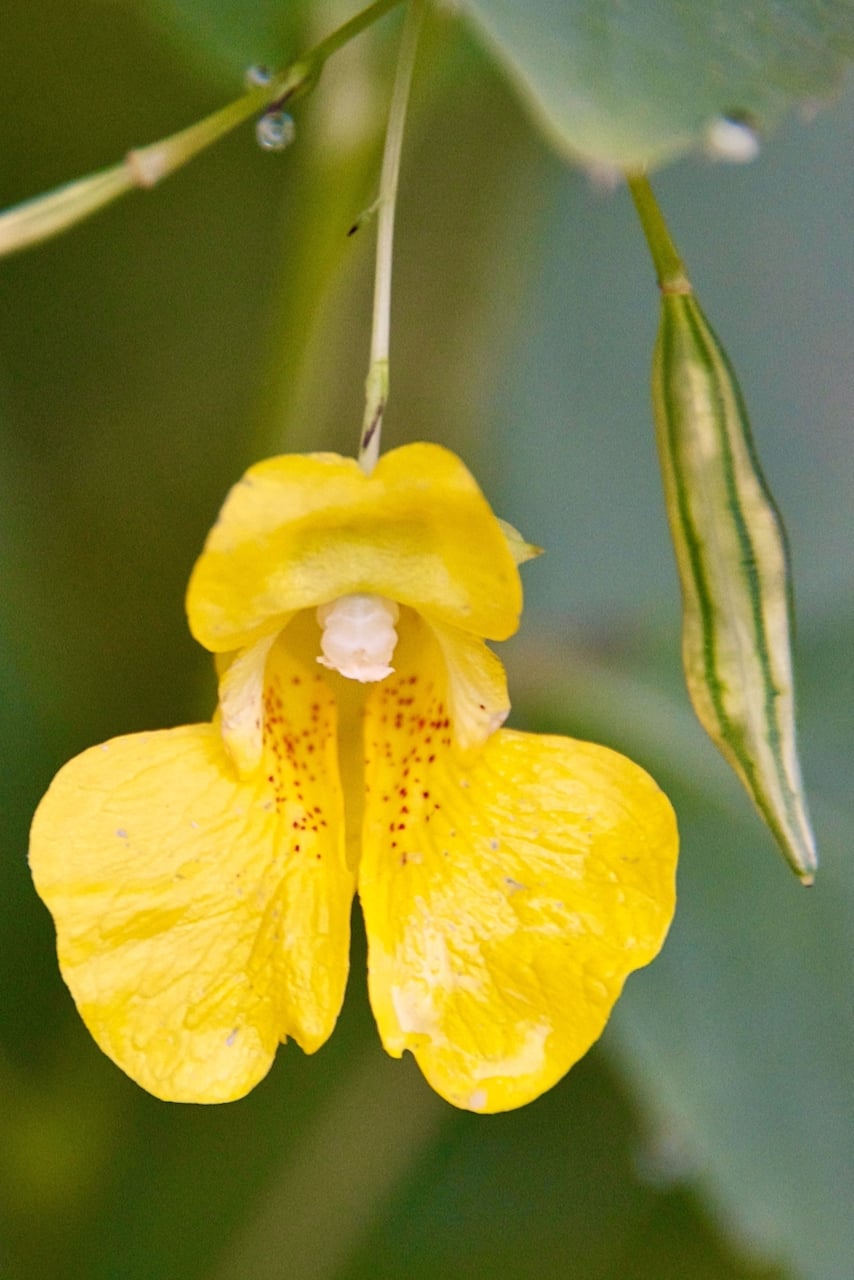
In the fall, when the seeds ripen, the slightest brush against the plant will cause the swollen seed pods to roll back (much like a waxed 1930s moustache) and eject the seeds.
13. Hairy bittercress (Cardamine hirsute)
I know many gardeners dislike hairy bittercress. Even though it’s an annual, it seems designed to survive the apocalypse. And that is because … you guessed it … seed dispersal.
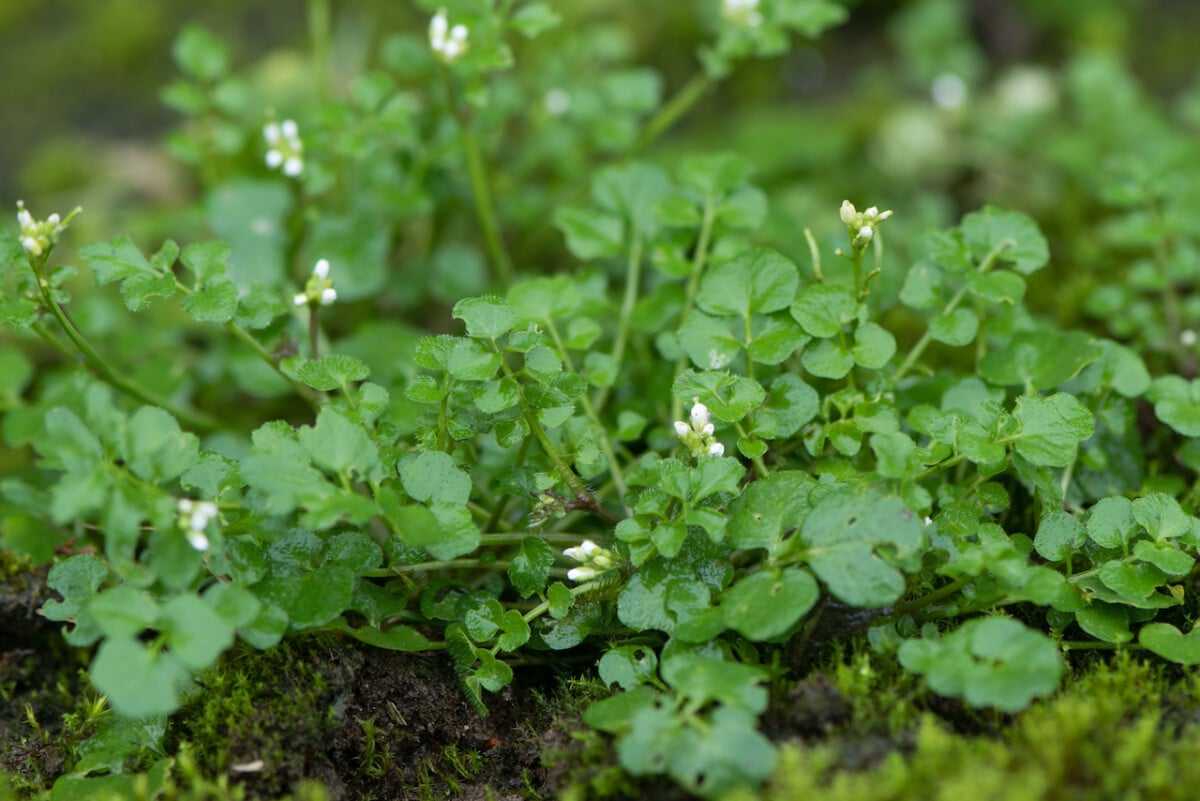
Let me tell you why I love it. Ok, maybe not love it the way I love tomatoes. But I don’t mind it in my garden. It’s a member of the mustard family (Brassicaceae), which means it has a somewhat spicy flavor. It’s good in salads in spring.
And it’s fairly easy to pull out by hand. As long as you can keep up with it before it flowers, you should be able to remove it manually within a season. Even quicker if you start the bittercress patrol in the fall.
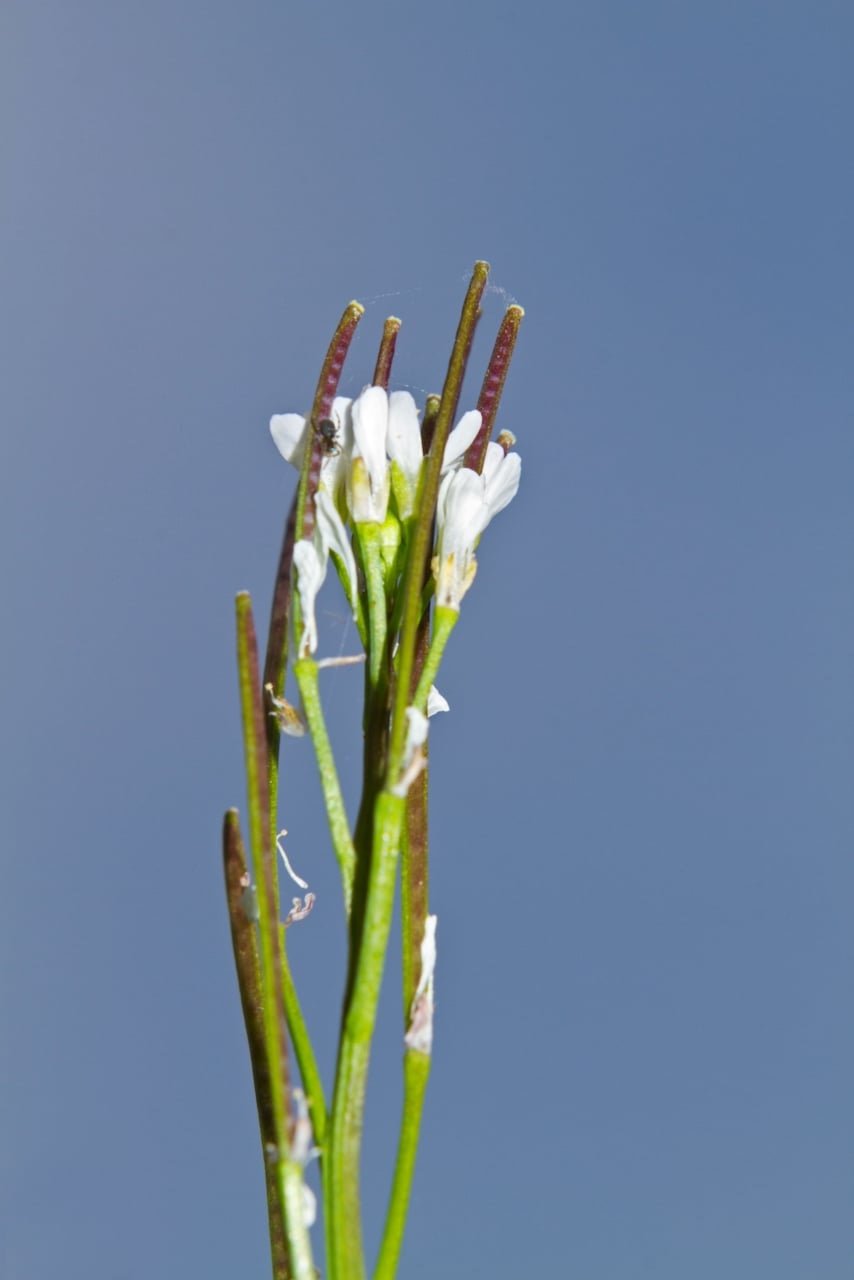
Hairy bittercress becomes problematic, of course, when we let the flowers go to seed. A single plant can produce hundreds of seeds. And a single kid can amuse themselves by popping dozens of seed pods.
Get Garden Notes From Tracey, Right to Your Inbox
Pull up a chair on the front porch. Join 54,000+ gardeners who get Tracey\'s friendly notes, seasonal to-dos, and hands-on tutorials three times a week.