

As a gardener and a garden writer, I enjoy taking photos of plants, in all their stages of growth (and sometimes demise). Most photos I take for my own record-keeping, but I also post quite a lot on my Instagram account. I love connecting with like-minded folks over our shared love of gardening.
However, there’s one plant that will not make an appearance on the grid any time soon, even though it has been growing happily in my possession for four years. It’s called yellow loosestrife (Lysimachia punctata), and the reason why I don’t post about it is that I don’t want to inspire anyone to plant it in their garden.
I grow yellow loosestrife in a pot. I’ve never not grown it in a pot. And I don’t even allow it to wink at an empty patch of soil.
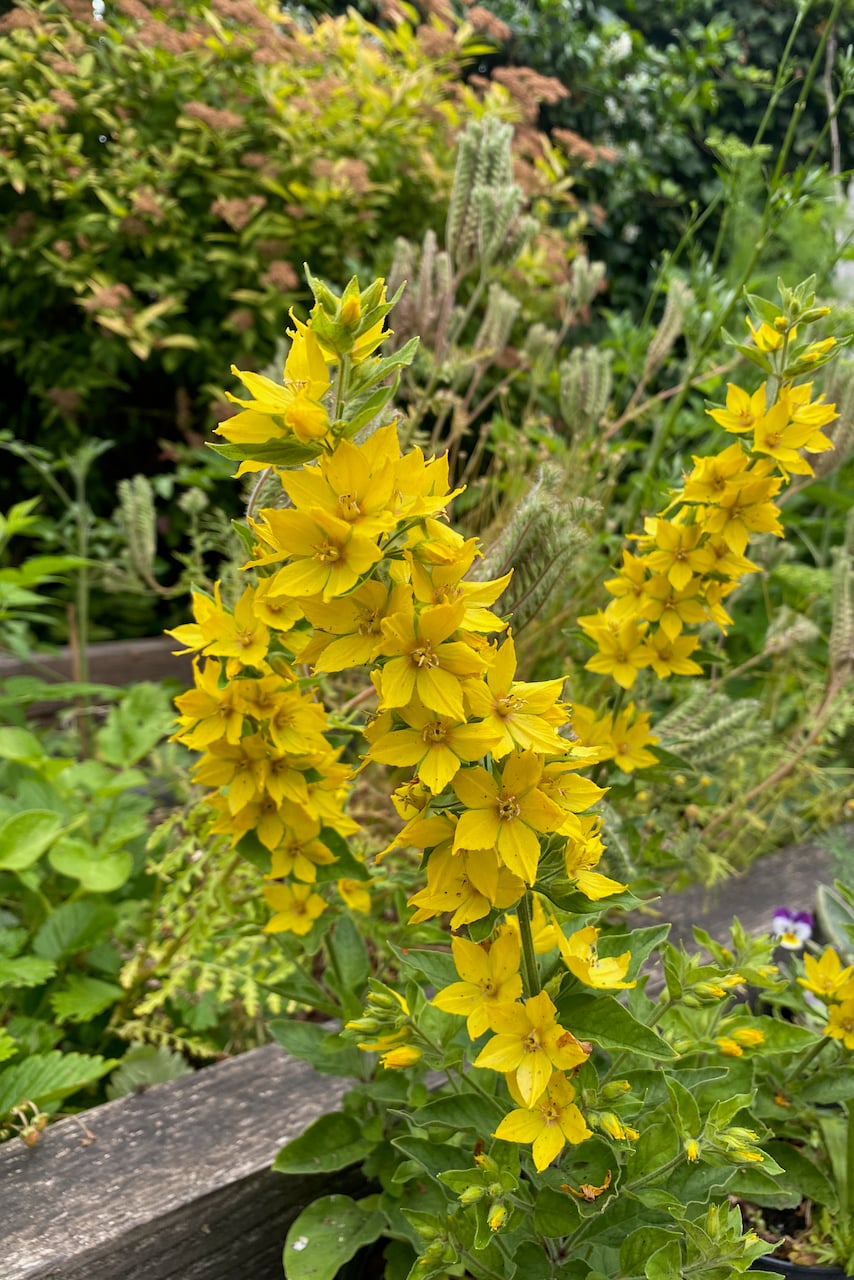
Yet, no matter how much I talk about keeping it contained, I don’t want anyone to ignore this piece of advice and put Lysimachia in the ground. Because it sends such vigorous runners that in a couple of years, you’ll message me just to tell me I ruined your life. No, thanks!
My luck is that I have a small garden where there’s not much ‘ground’ to plop down plants in. So by necessity, some ornamentals and herbs simply remain forever potted plants.
But even if space is not an issue in your garden like it is in mine, it will become an issue if you plant these vigorous growers. If any of the following ten ornamentals beckon to you at the garden center, you should only get them if you can solemnly promise that you will never ever plant them in the ground. Ever!
But let’s just get one thing out of the way first.
Why I will not be referring to these plants as invasive?
I see the word invasive thrown out a lot these days. And I think it’s great that gardeners are becoming more aware of plants that could become problematic. (In fact, that is the whole purpose of this article.) But labeling something as invasive does not make it so. For a plant to be invasive, it generally has to meet two conditions:
- It has to be a non-native to your area.
- It has to be crowding out native species and triggering an imbalance in the ecosystem. When the introduced plant is competing with native species for resources such as space, water, nutrients and sunlight and winning, then it’s likely (but not always) an invasive species.
So if a plant is native to your area, it’s not considered invasive even if it’s a vigorous grower. And even if a plant is non-native to your area, it’s not necessarily considered invasive. It’s just a non-native plant. Dig deep enough and you’ll probably find that most plants we use as garden ornamentals are not native to the United States.
Did you notice how I said your area?
That’s because an aggressive grower in one climate can struggle to get off the ground in another. A Florida gardener and a New York gardener could be standing side-by-side at the garden center buying the same plant. But once they bring that plant home, they’ll have a vastly different experience with growing it, keeping it alive and (sometimes) getting rid of it.
That’s why it’s always a good idea to consult local sources of information before you bring something into your garden. And definitely before you jump on the “this is invasive” bandwagon and rip everything out.
Your local horticultural extension, your local botanical garden’s education branch and your state’s agriculture department are good resources for up-to-date information.
The best way to keep these plants is to keep them in pots.
At the risk of sounding alarmist, I’d like to warn you that growing these plants in pots may not be enough to prevent spreading. A lot of these ornamentals will send runners that can escape through the drainage holes of containers.
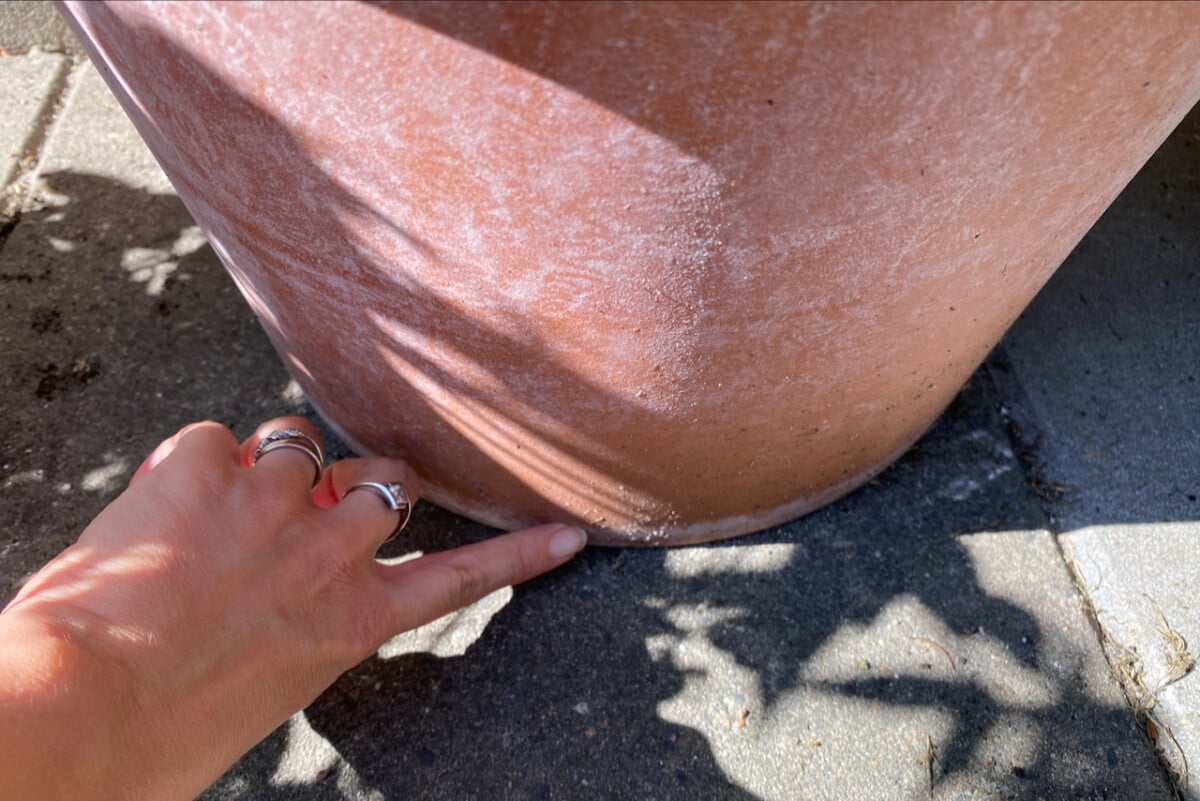
So we also have to place the containers either on a hard surface (such as brick, concrete or a wood deck) or place a hard barrier between the pot and the soil (a terracotta plant saucer works great). Whatever you do, do not put the container directly on the ground. These plants will find a way to make the soil their playground.
Now that you’ve been properly forewarned, here are the plants that I would never plant in the ground.
1. Yellow loosestrife (Lysimachia punctata)
Let’s go back to yellow loosestrife and let me explain why you should keep an eye on it. Keep in mind that ‘loosestrife’ is a loose term in popular parlance, so you might encounter other plants nicknamed loosestrife that are not Lysimachia.
Also known as dotted loosestrife, this is an herbaceous perennial in the Primulaceae (primrose) family. It has naturalized widely in North America, even though it’s native to Europe and Turkey. Lysimachia loves sunny spots, but it will grow just as well in part shade.
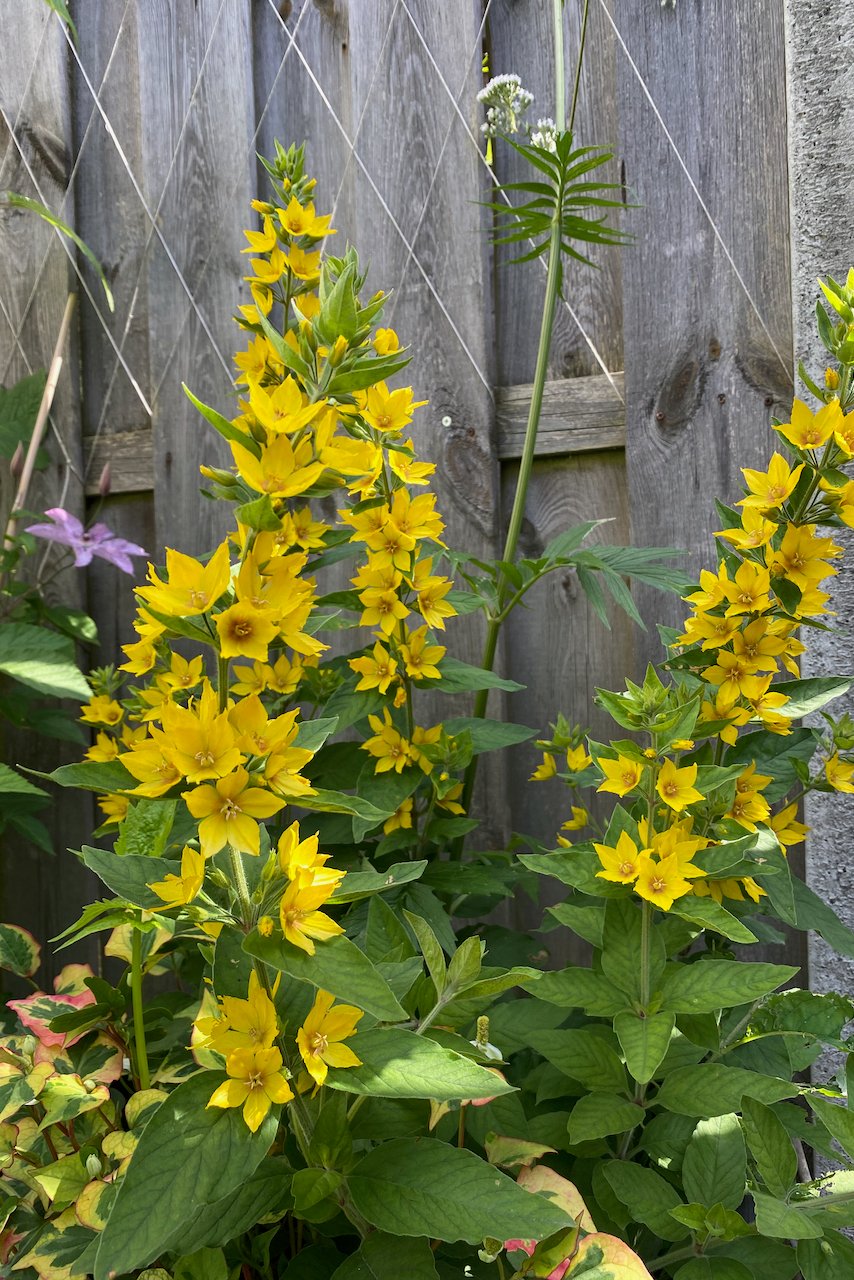
The bees love it. The butterflies love it. And the vibrant torch-like spikes of yellow flowers are a gorgeous addition to any cottage garden.
The problem with it is that it’s a rhizomatous plant and it forms mounding colonies. The rhizomes don’t travel far at first, but they do go thick. So even if it may not seem like it’s spreading fast, you’ll notice the compounding effect in a few years. It’s best to keep it contained. I’ve been growing my yellow loosestrife in a container set on pavers for years, and so far it hasn’t spread anywhere else.
2. Purple loosestrife (Lythrum salicaria)
Here’s another plant called loosestrife, which has nothing to do with the yellow loosestrife I mentioned above. Purple loosestrife (Lythrum salicaria) came to North America in the early 1800s, and nowadays you’ll find it in every single state.
It’s colorful, pollinator-friendly and can tolerate just about any type of soil. However, it does better in damper areas. That’s why you’ll sometimes find it in the pond plants section of plant nurseries.

However, just like Lysimachia punctata above, it sends lateral roots. The severed pieces of stem might also develop roots of their own. A mature plant can grow up to five feet in clump diameter. That’s why it’s best to keep it contained to a pot, especially if you’re gardening in damper areas.
3. Chameleon plant (Houttuynia cordata)
Chameleon plants are so deceiving. Not only are they super attractive, with their kaleidoscopic pattern and heart-shaped leaves, but they’re also sold really small. So you wouldn’t think that something so pretty and so tame-looking would end up taking over your life and your garden, right?
Oh, it so will!
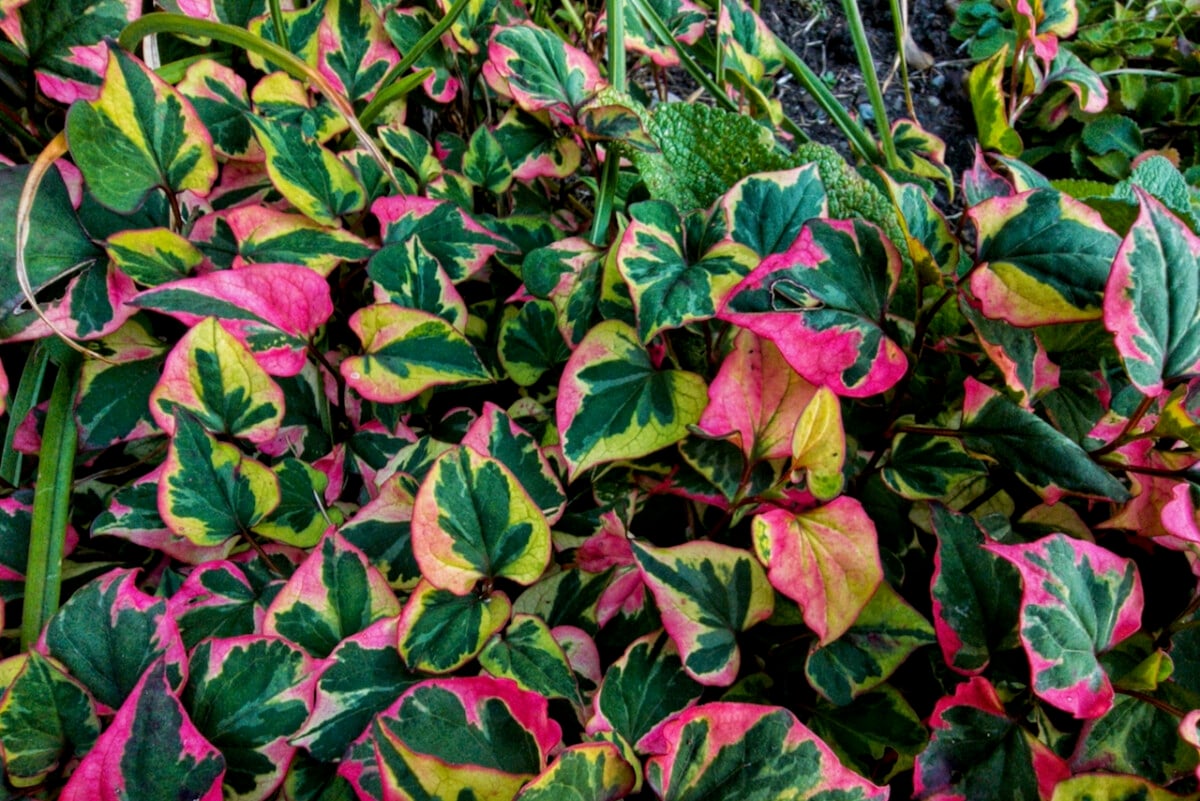
This pretty plant spreads very fast by sending slim rhizomes as far and wide as it can. And when you try to pull it out, it will just break in your hand, leaving the root in the ground. Congratulations, you’ve just made it worse!
This is truly the one plant for which I seriously considered putting up signs at the garden store to warn people before buying it.
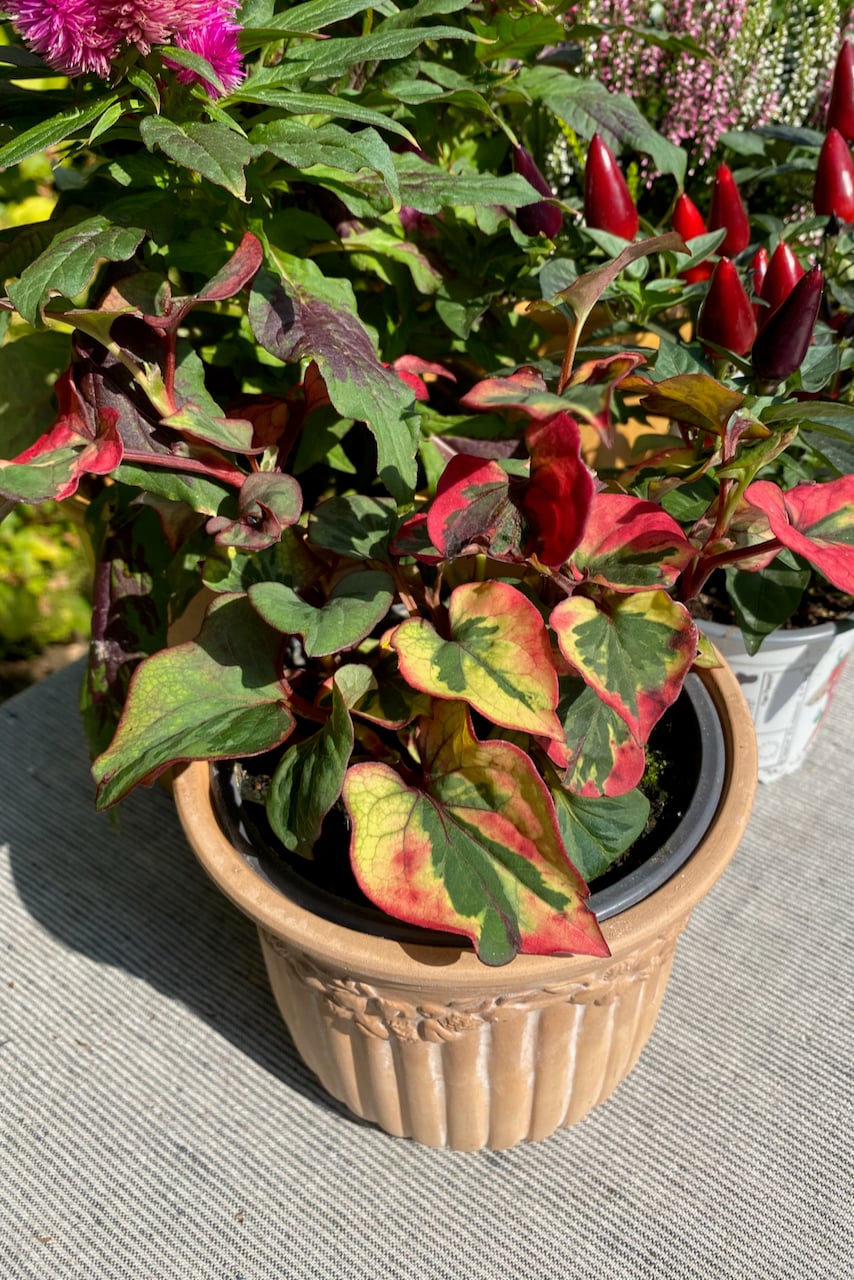
That being said, if you keep it contained, you can still enjoy its colors without any of the headaches.
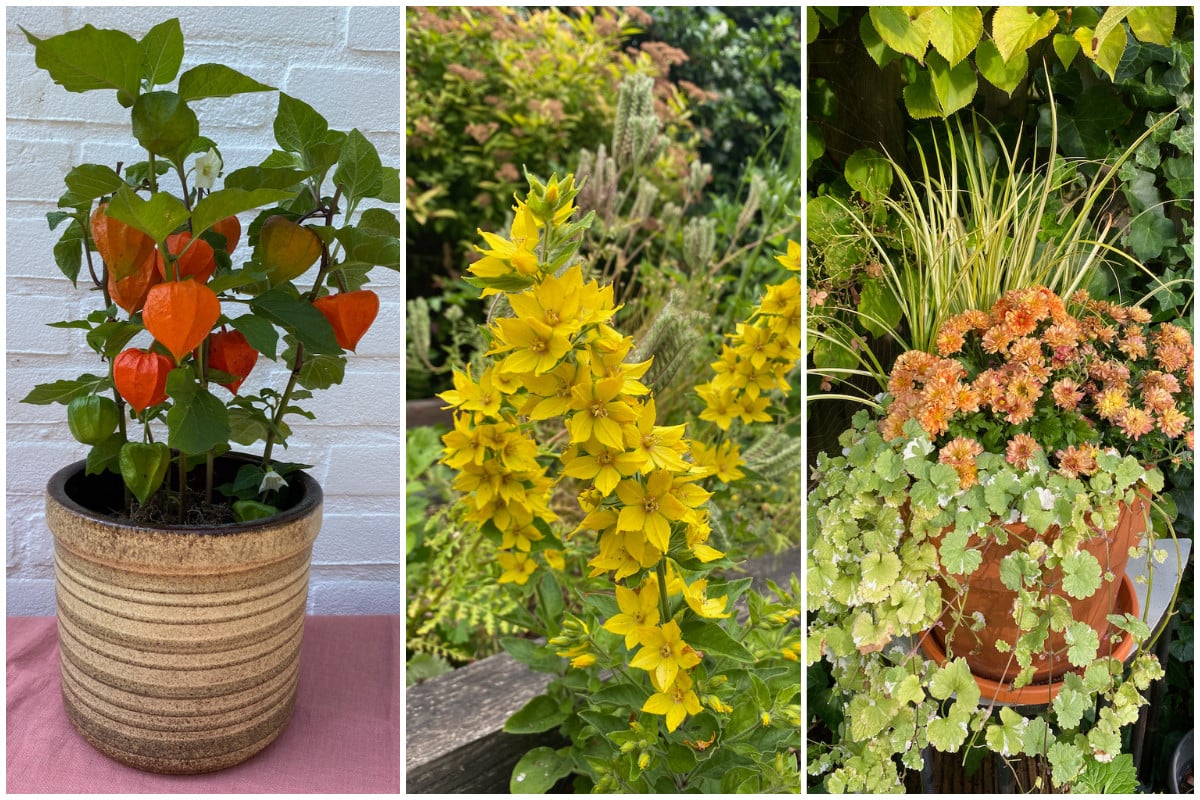
I used a couple of chameleon plants in my fall window boxes a few years ago, planted together with dark heuchera, golden chrysanthemums and Chinese lantern plant. I’m pleased to announce that I still have the same chameleon plant in a pot in a sunny corner of my yard. But the pot is on concrete pavers, and it almost never gets watered.
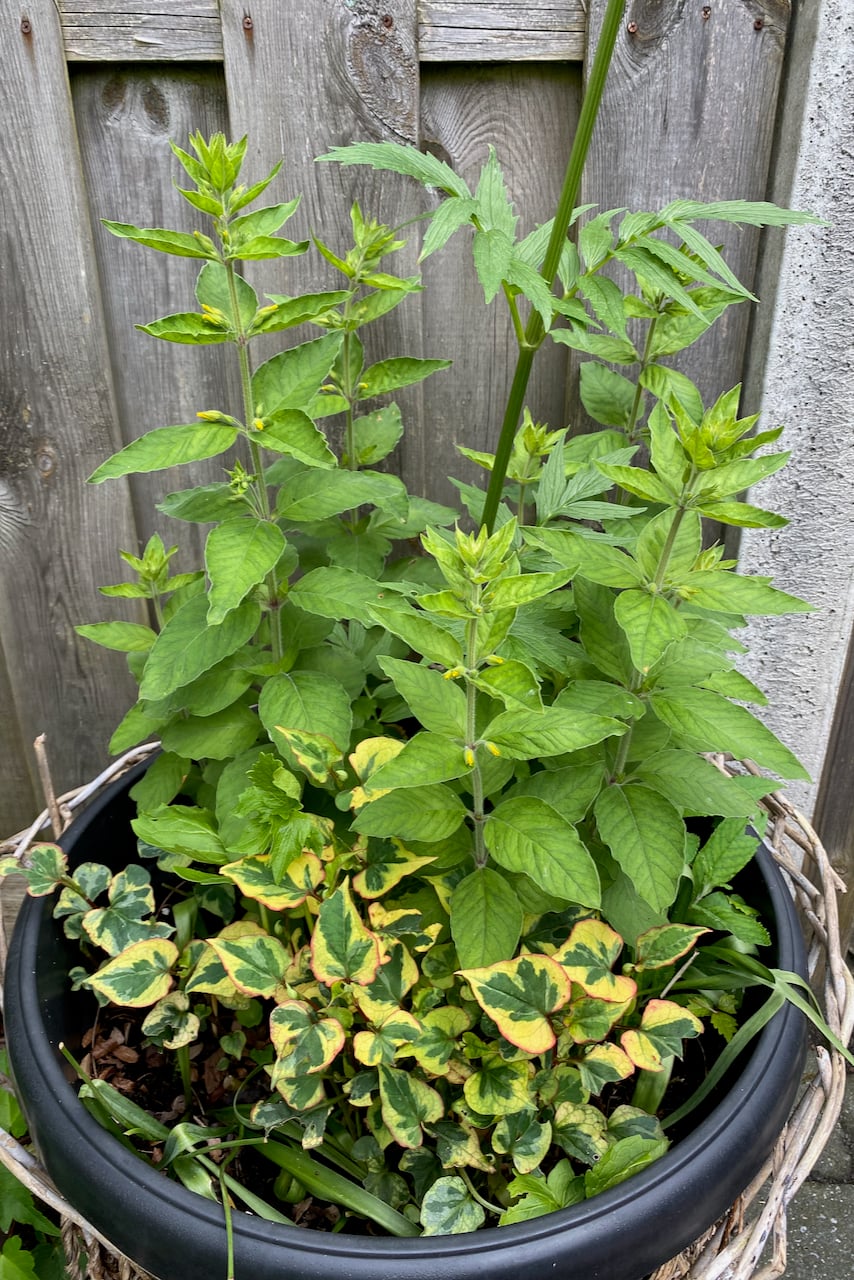
4. Chinese lantern plant (Physalis alkekengi)
Speaking of the plants in my fall containers, here’s another plant that I would never transplant into my garden soil.
Chinese lantern is a herbaceous perennial that has many different popular names. Some of them may even contain the word “cherry”, but don’t be misguided. This plant is not edible. The unassuming, tiny white flowers are nothing to write home about, but the papery husk that engulfs the fruit turns from green to a vibrant shade of orange in the fall.

Knowing that the plant can be a bit of a bully, I made it share a container with another bully (the yellow loosestrife I mentioned above). My thought was that they would duke it out and keep each other in check. They did, for a couple of years, but the yellow loosestrife won in the end, and the Chinese lantern just failed to resprout one spring.
5. Creeping Charlie (Glechoma hederacea)
You know how in container garden design, there’s a saying that you need a thriller, a filler and a spiller. Well, Creeping Charlie is the plant that’s usually used as a spiller. In fact, I used a variegated glechoma in this colorful spring container to add a draping, flowy effect that contrasted the sturdiness of Dianthus and carex grasses.
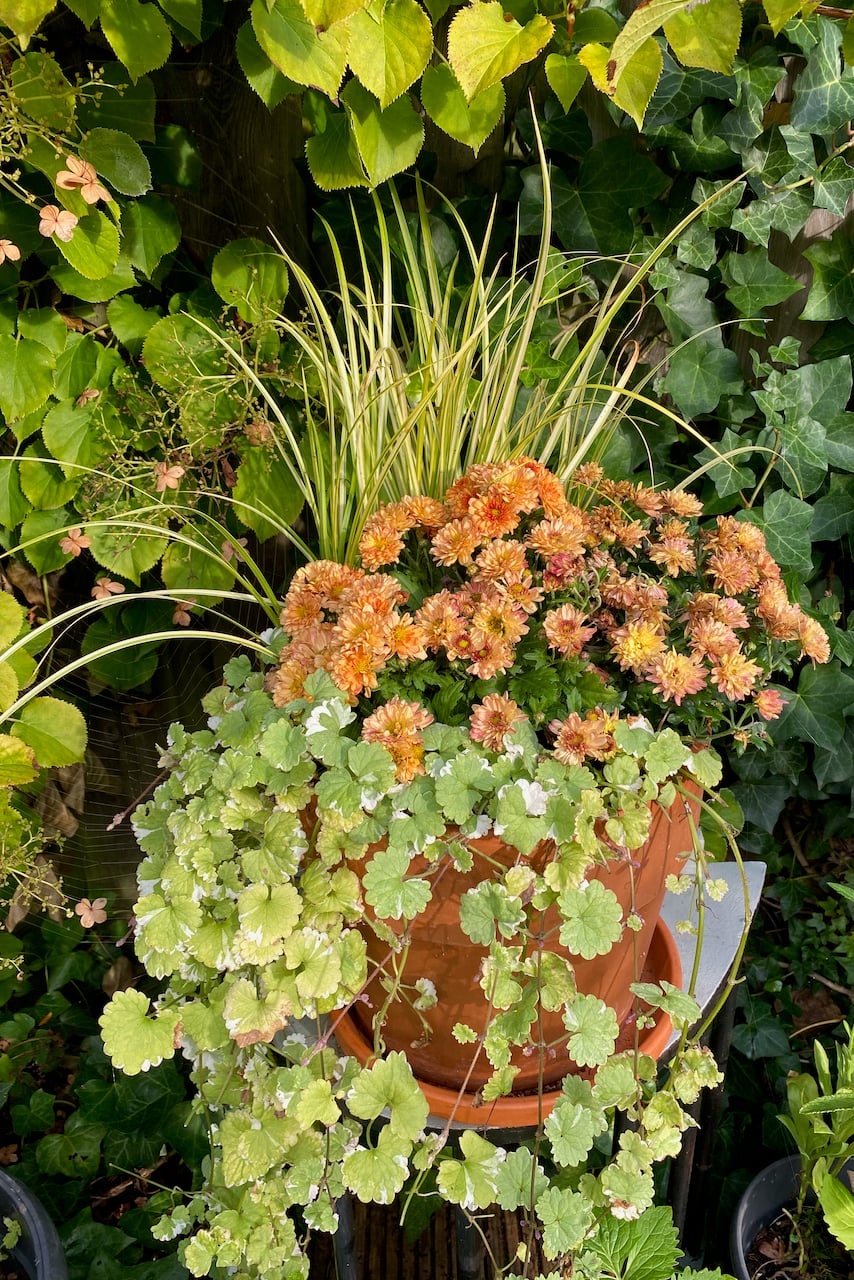
I ended up leaving it in the container and just swapping the accent plant. Then I combined the creeping Charlie with chrysanthemums in the fall and muscari and forget-me-nots in late winter. Every time I did a plant swap, I gave the glechoma a haircut.
It worked great until it died back naturally one summer and never came back. I think the only reason why it didn’t become problematic was because I didn’t let it spill all the way to the ground and take root. If you don’t have this kind of babysitting willingness and attention to detail, I advise you to choose another spiller, such as nasturtiums.
6. Lesser periwinkle (Vinca minor)
I know it sounds a bit silly to tell you not to plant Vinca minor in the ground when it’s always sold as a ground cover. But trust me on this one. There are other ground covers that you can plant in the bare patches under trees and shrubs or on slopes that will not send runners all over creation. Such as wild raspberries (Fragaria vesca), for example. A good ground cover that also produces delicious fruit.

Yes, the violet or white flowers of the lesser periwinkle are pretty. Yes, they do well in most soils, including full shade. But if you’re not committed to keeping it in check – and it will form mounds of foliage – then you should not plant it in the ground. You can still plant it in a container as a spiller, but make sure it doesn’t touch the ground and set root.
7. Myrtle spurge (Euphorbia myrsinites)
I debated whether to add myrtle spurge to this list, given its varying habits depending on the growing location. It’s a low-maintenance perennial that grows well in sandy soil and full sun. It’s drought-tolerant and foolproof.
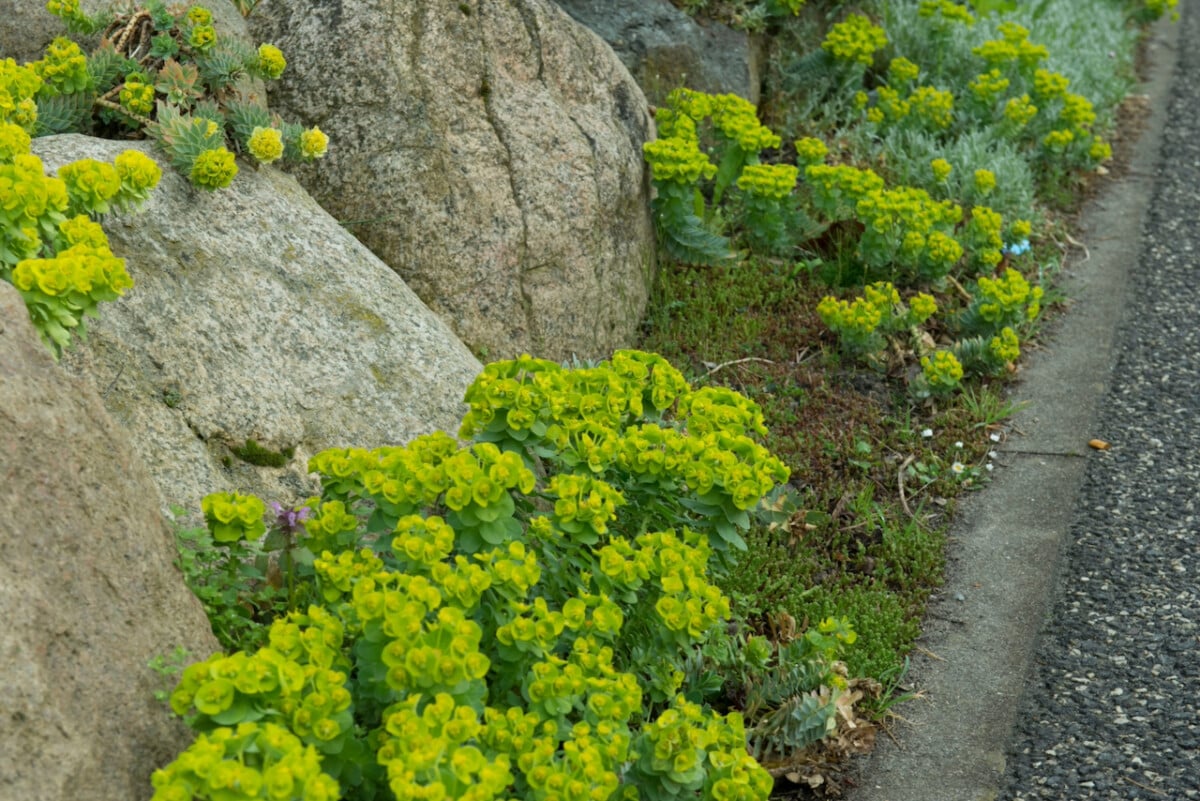
And the blue-green foliage topped with yellow-green bracts with cup-shaped flowers makes a bold addition to any garden. Truly, I think it’s a beautiful plant. But the more you go west in the United States, the more reviled you’ll find it is. That’s where it’s thriving and spreading quickly due to the climate’s compatibility.
So if you do want it in your garden, that’s ok. But it’s better to plant it either in a container or in a contained area. Having it in narrow borders along walls or in rock gardens is the best way to make sure you won’t regret choosing it in a few years.
8. False shamrock (Oxalis)
Oxalis gets a bad rap. And depending on which one you’re growing, it may even be deserved.
If you’re growing the purple shamrock (Oxalis triangularis) as a houseplant, then I fully encourage that. But if you’d like to vary your oxalis collection, I recommend you keep it in a pot.
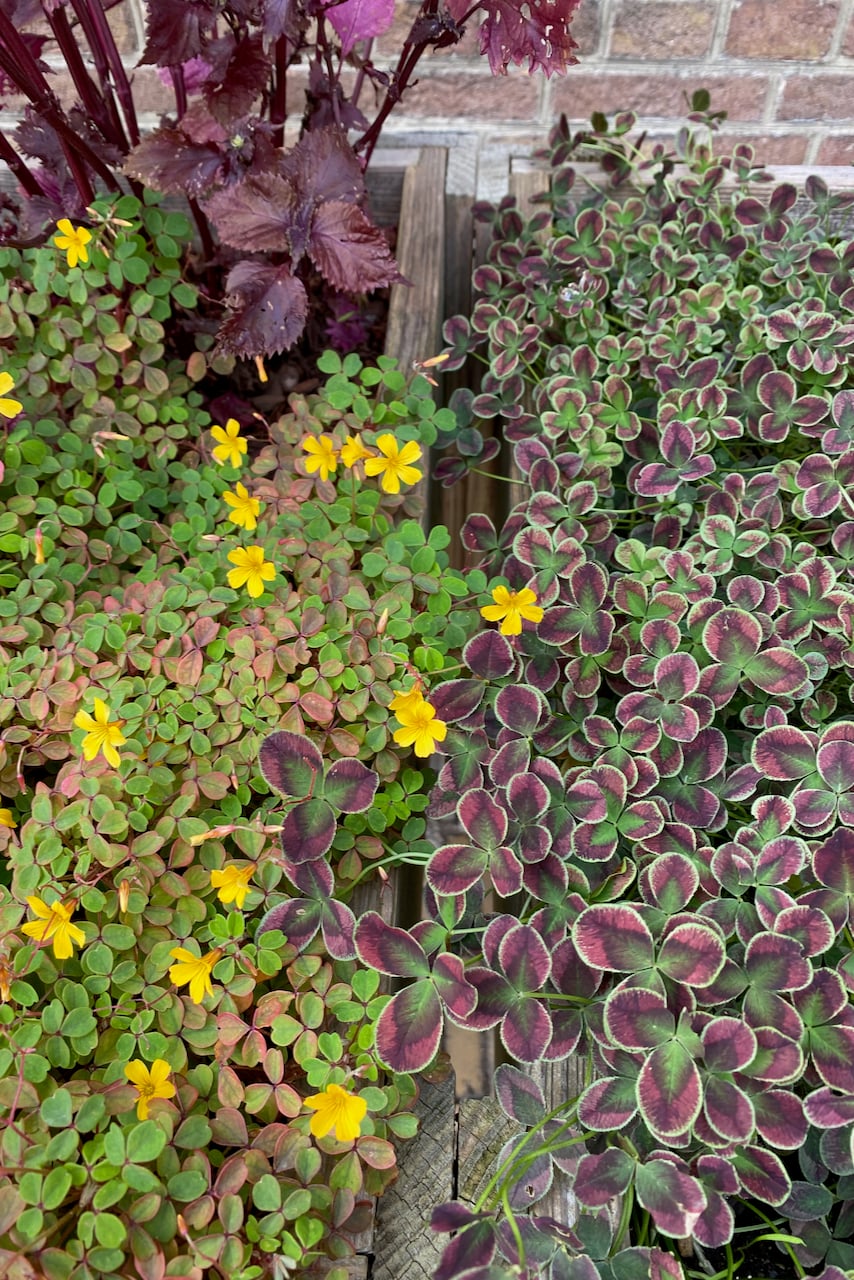
I’m partial to a good shamrock plant, so I planted the popular ‘Iron Cross’ cultivar in a terracotta pot. I’m happy I did, because it grew beautifully over the course of a couple of years.
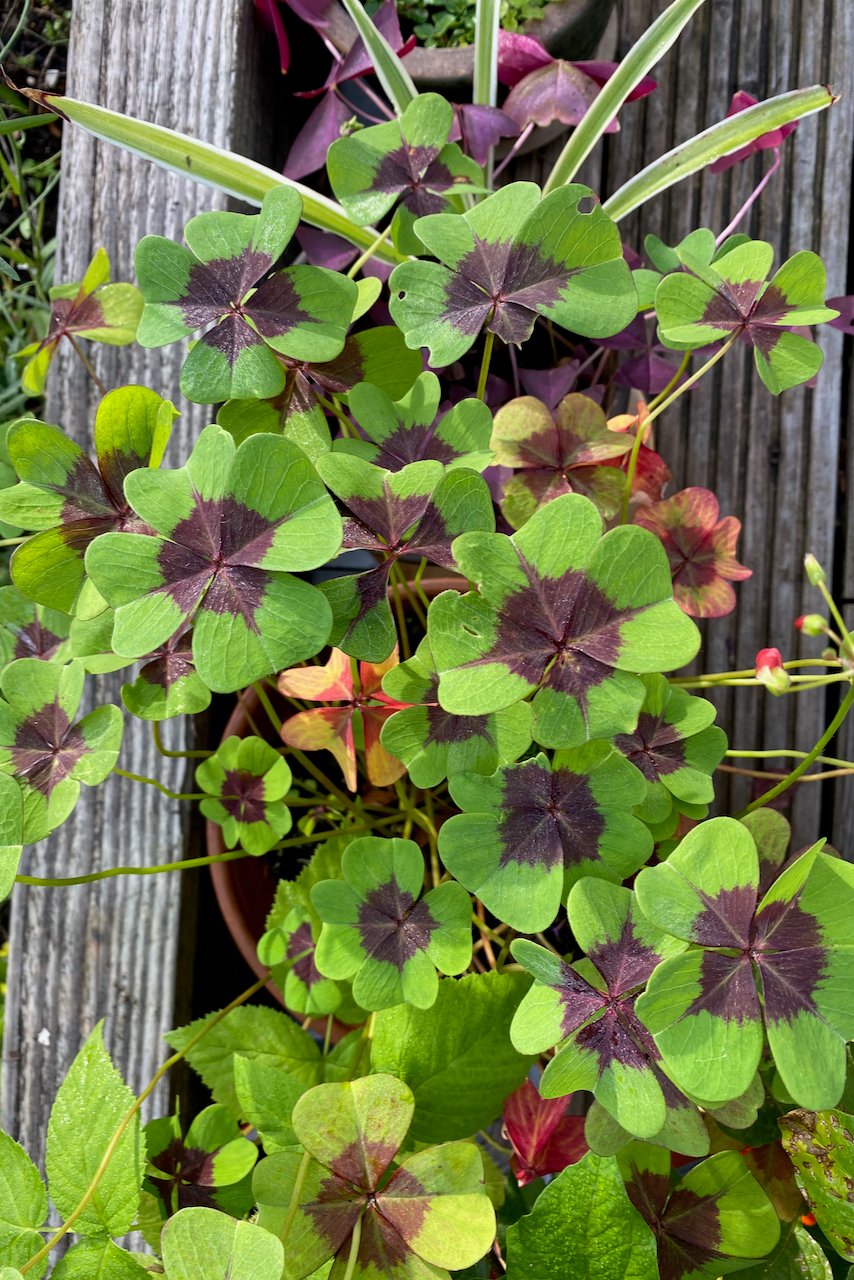
Although it does completely disappear underground in the winter, it makes a full recovery in spring. And judging by the multiplying of the rhizomes that I noticed when I transplanted it (I had to upsize the pot), it would have had a field day had I planted it straight in the ground.
9. Lily of the valley (Convallaria majalis)
You knew it was just a matter of time before I brought up lily of the valley.
Don’t plant it! Do not plant it!
Does it smell amazing? Yes! Does it survive in almost complete shade? Yes. Does it spread like there’s no tomorrow? Also yes. Will it slowly take over everything that it touches? Categorically!
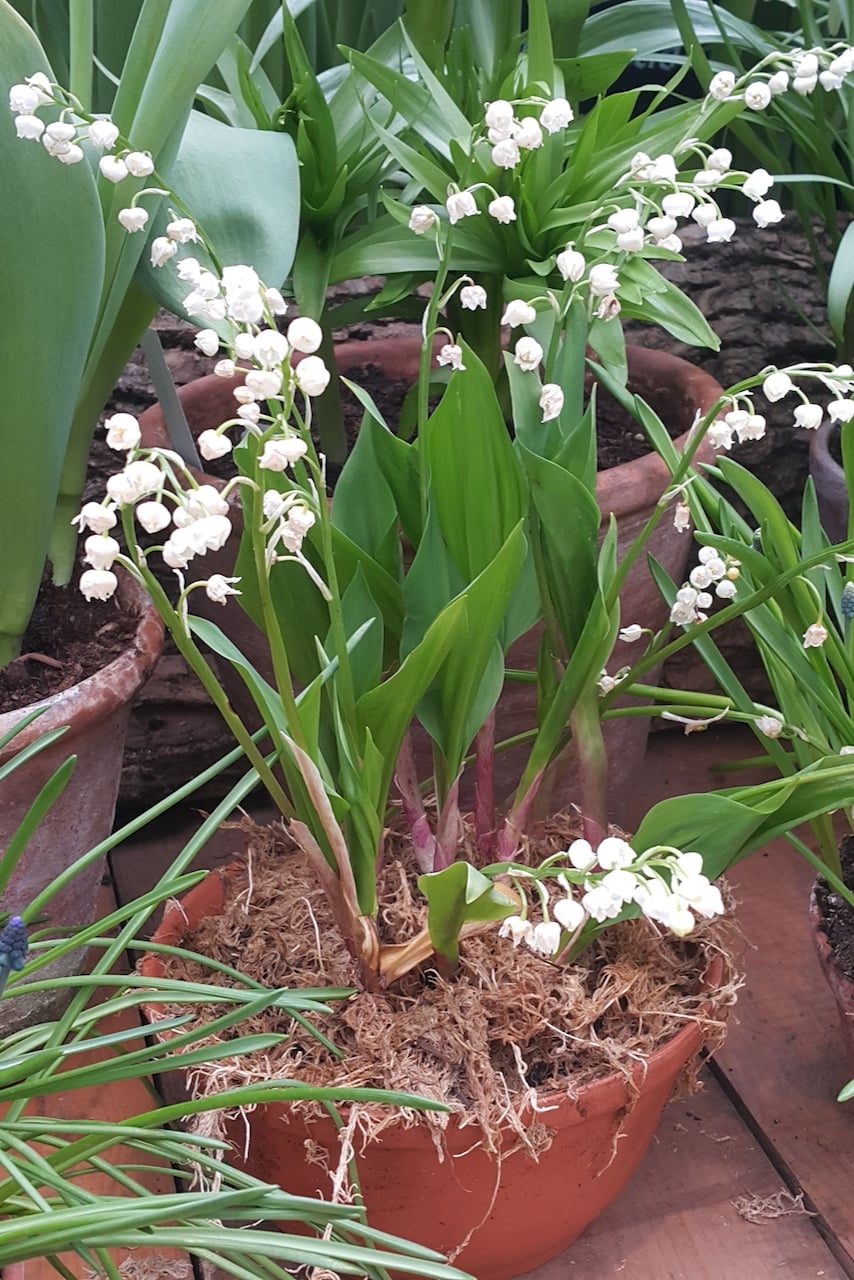
But I’ll admit that the fragrant flowers make a beautiful addition to late spring bouquets (when not many flowers are in bloom). So I know the temptation is there to bring it into the garden. My advice is that, if you really want it – perhaps out of a sense of nostalgia – never to plant it in the ground. Keep it contained to a pot or a bucket where you can control the spread of the rhizomes.
10. Yellow tansy (Tanacetum vulgare)
It wouldn’t have even crossed my mind to add tansy to the list until I saw it for sale. Granted, it was in the meadow plant section of the nursery. And it is indeed a meadow plant. You’ll often find it in roadside ditches and deserted fields.
Tansy is also a very common addition to a dry flower arrangement because of how well it holds its shape and yellow color. The vibrancy of the color is the reason why you’ll often see it in historical herb gardens. Back when botanical dyeing was more popular, tansy was used to get different shades of yellow.
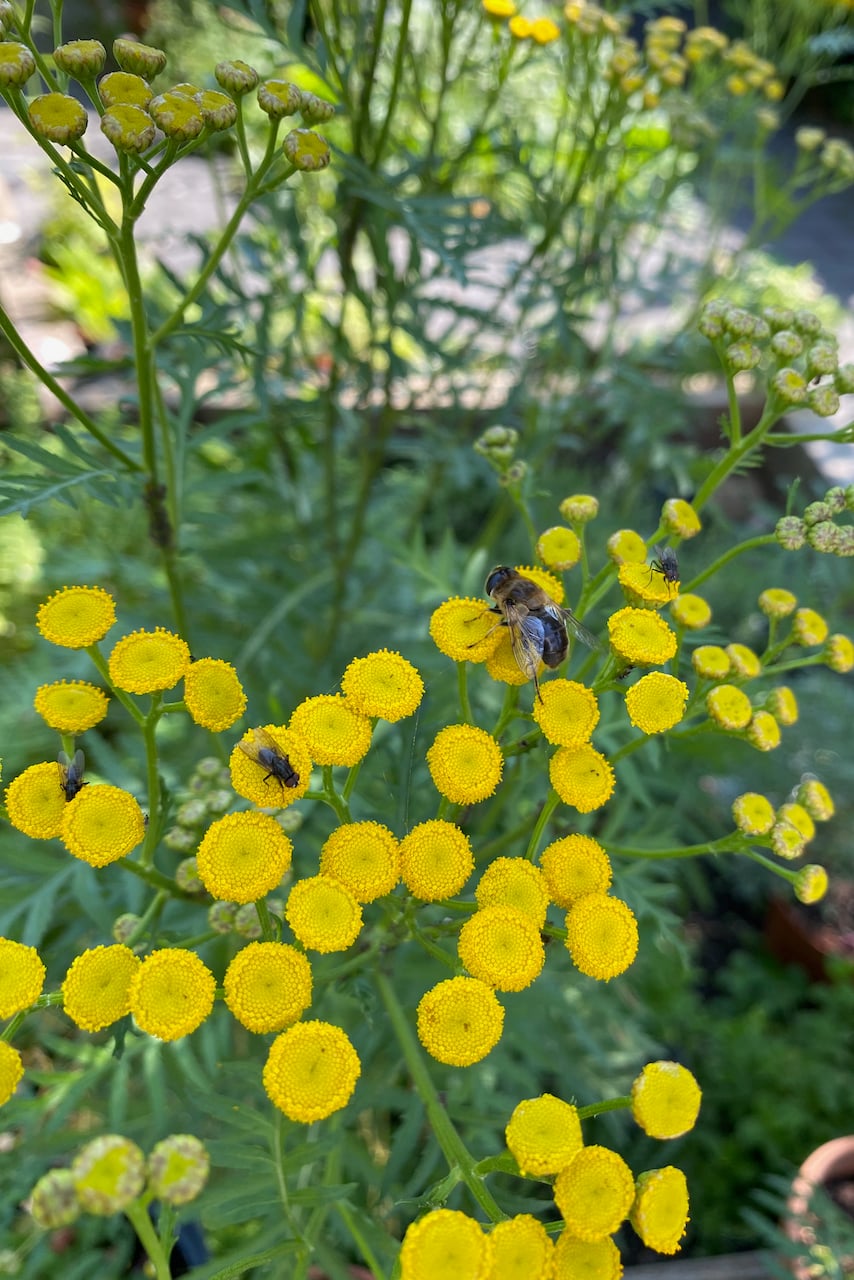
Honestly, if you see tansy at the store, I would strongly encourage you never to buy it. It spreads so fast, sending a web of rhizomes from one year to the next, so even in a container it will become overcrowded immediately. If you want to try your hand at drying yellow tansy or dyeing with it, all you have to do is find it in the wild (not hard, it’s in every US state). Then harvest to your heart’s content. You’re technically doing conservation work by removing it.
If you dry tansy, be careful how you (eventually) dispose of it. Please don’t throw it in the compost pile because you don’t want to spread it all over your garden inadvertently. It’s better to get rid of it with the household waste.
Get Garden Notes From Tracey, Right to Your Inbox
Pull up a chair on the front porch. Join 54,000+ gardeners who get Tracey\'s friendly notes, seasonal to-dos, and hands-on tutorials three times a week.