

I’m a big fan of a plant with multiple functions.
Does it feed me? Great!
Does it feed pollinators too? Even better.
Does it look pretty in addition to all the food? I’ll buy it.
Does it cast shade? I think I need it.
Does it offer privacy and provide a windbreak? Let me go get my spade! We’re planting it right now.
This is what I’m talking about in this article, inspired once again by my research on what I should plant in my new garden.
I have a section where I would like to plant a hedge, but don’t want to continue the uninspiring (and frankly sad-looking) row of leylandii (aka Leyland cypress) that I inherited from the previous owners.
No. I want something that provides some privacy, while also filling with flowers and – here’s where I get greedy – edible fruit for us. Don’t worry, I have a lot of sources of berries for the birds, but I’m a big fan of berries fit for human consumption too.
This is how my shortlist of hedge plants with edible fruit looks like. I’m curious if you’d all something else, dear reader.
1. Serviceberry (Amelanchier)
A few years ago, I read a book that stayed with me for a long time. It’s called The Serviceberry by Robin Wall Kimmerer. It is not a gardening or even a botany book; it is a book about gift economies, the wealth of the natural world and how we can build communities based on mutual support and kindness.
The author used this American native shrub as a metaphor for the abundance of nature and its willingness to share. And I’ve wanted a serviceberry ever since.
Amelanchier has two other popular names: Saskatoon and Juneberry.
And if you think it got its name from the Canadian city of Saskatoon, it’s the other way around. The city was named after the tree. It’s that native!
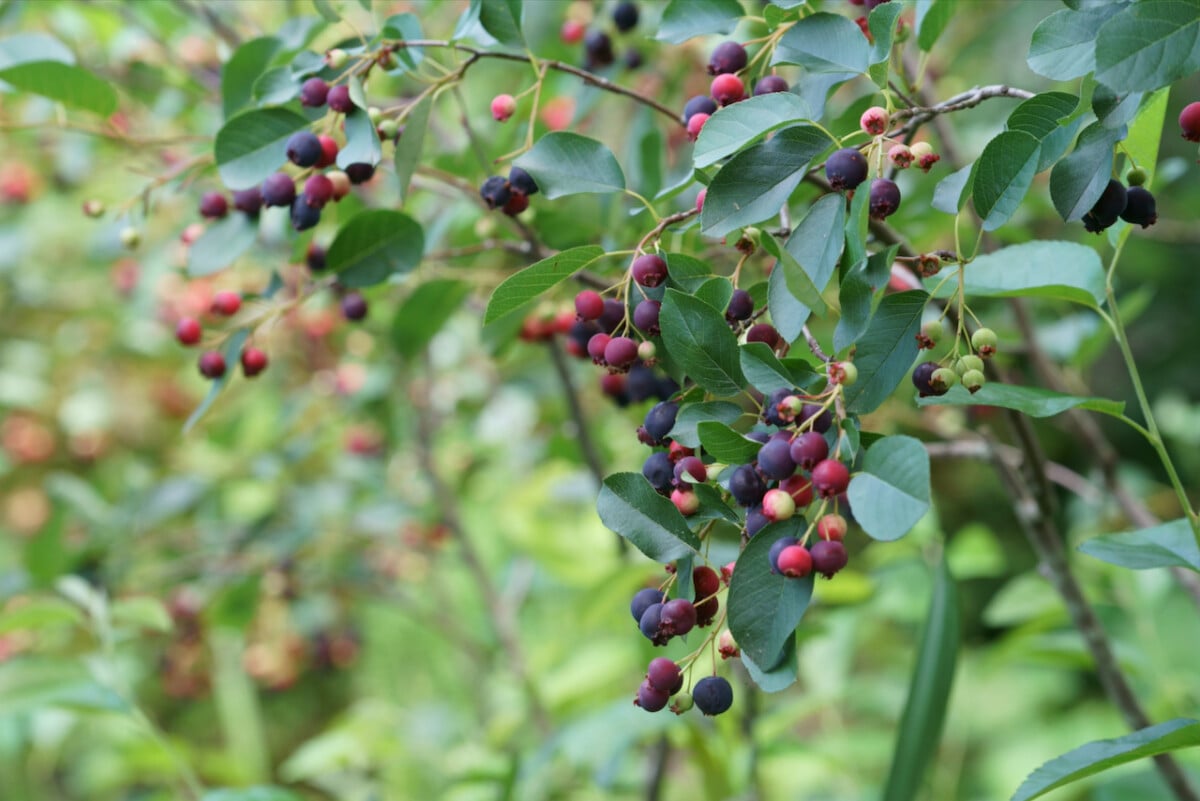
No matter what you call Amelanchier, you will surely enjoy its tasty and highly nutritious berries from the end of June to August. The juicy berries grow in clusters and are super easy to pick.
Juneberries often form a shrub structure with a cluster of several upright trunks, which makes it a perfect candidate for a tall hedge. The wild varieties will grow pretty tall, but there are newer cultivars (such as ‘Great Berry ‘) that will not exceed seven to ten feet at maturity.
Amlanchier is extremely hardy to cold temperatures and wind. It’s not very picky when it comes to soil either, but will prefer non-calcareous and well-drained soil. Once established, it adapts well to relatively dry and hot summers. But for a good harvest, we need to keep it well-watered when needed.
2. Honeyberry (Lonicera kamtschatica)
Honeyberry is the shrub to buy if you’re having trouble growing blueberries.
I love blueberries and they’ll always have a spot in my garden; but sometimes they can be a bit fussy if you don’t get their soil right (by that I mean acidic enough and well-drained but still moist, somehow).
Anyway, plant some honeyberries for a dose of instant gratification while you wait for your blueberries to be happy with life again.
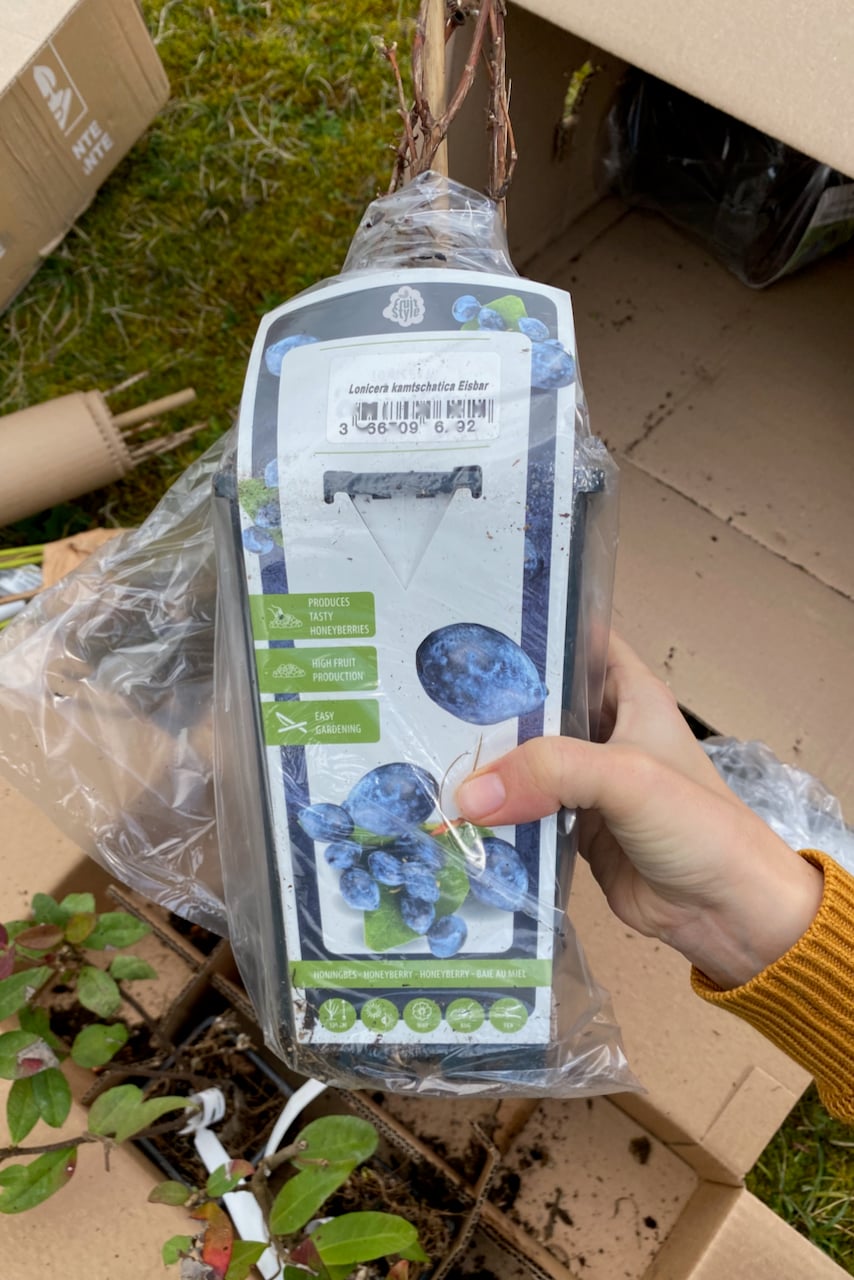
I planted my honeyberries in February and I’m already getting a handful of berries from each shrub in May. First-year fruiting is a good sign, I say. In spring, honeyberries produce an abundance of creamy white flowers delicately scented. The flowers morph into clusters of vitamin-rich fruit that are ready for picking in May and June.
The honeyberries taste like blueberries and are packed with antioxidants. Have I mentioned they have a funny, angular shape?
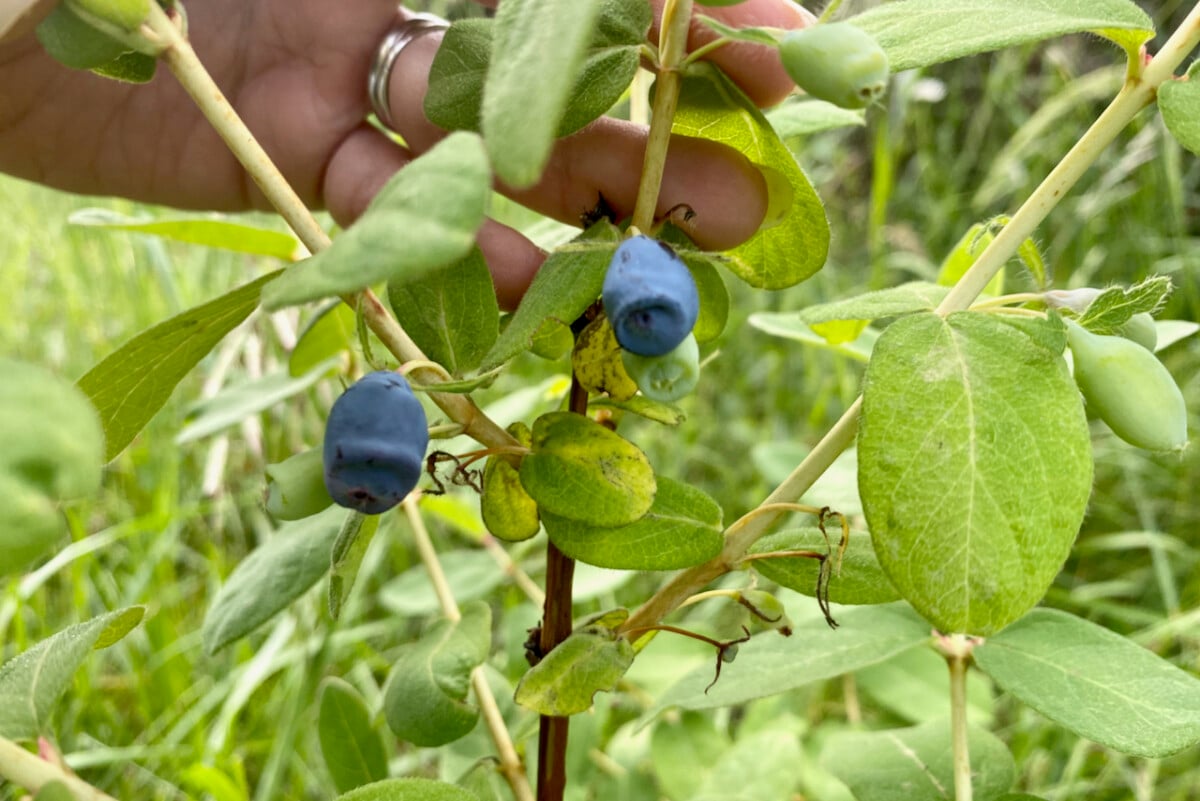
Other names for Lonicera kamtschatica include Siberian honeysuckle, sweetberry and haskap.
And if the name Lonicera reminds you of invasive Asian honeysuckle and sends a shiver down your spine, you don’t have to worry. Honeyberry will not spread (I wish!); it’s not a vine and it’s not invasive. It’s native to Eastern Europe and Siberia, which makes it very hardy to low temperature, but quite sensitive to drought.
If you want a few cultivars to start with, try Lonicera kamtschatica ‘Myberry Sweet’ a Canadian variety developed in the early 90s and selected for its high yield. ‘Eisbar’ is another cultivar I’m trying. Both of these cultivars are hardy to temperatures as low as -40F (-40C).
Planting two or three shrubs together will improve their pollination rates and therefore their fruiting. Honeyberries only grow to about four to five feet in height, so they’re suitable for a shorter hedge or perhaps planted alongside an existing fence.
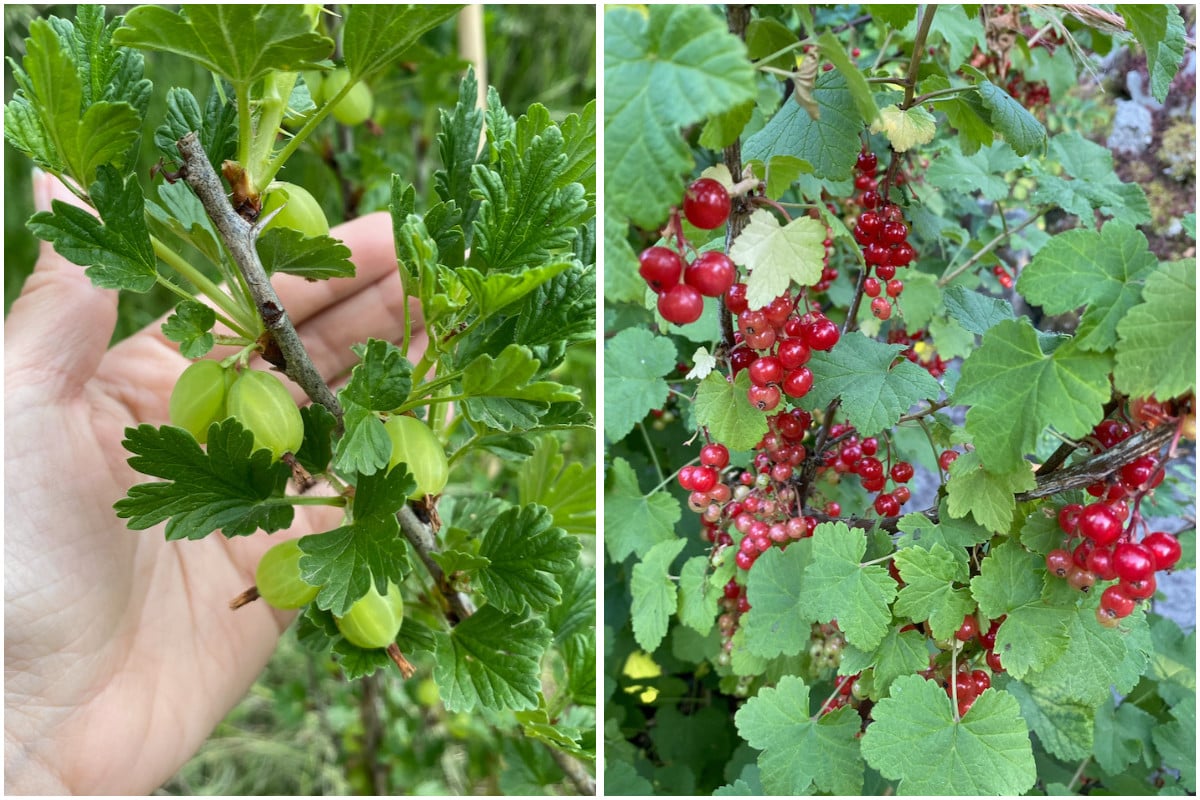
3. Gooseberry (Ribes uva crispa)
You’ll see we’ll talk a lot about shrubs in the Ribes genus, which includes all manner of currants. However, I wanted to start with gooseberries because I think they get a bad rap.
Yes, they have prickly thorns. But this is what makes them an excellent hedge shrub. Grow them in a tight row and you got yourself an impenetrable fortress.
Yes, the berries can be a bit sour. But there are new cultivars with a much higher sugar content, for gardeners who can’t handle the tartness. (I recommend ‘Darling’ and ‘Hinnonmaki’.)
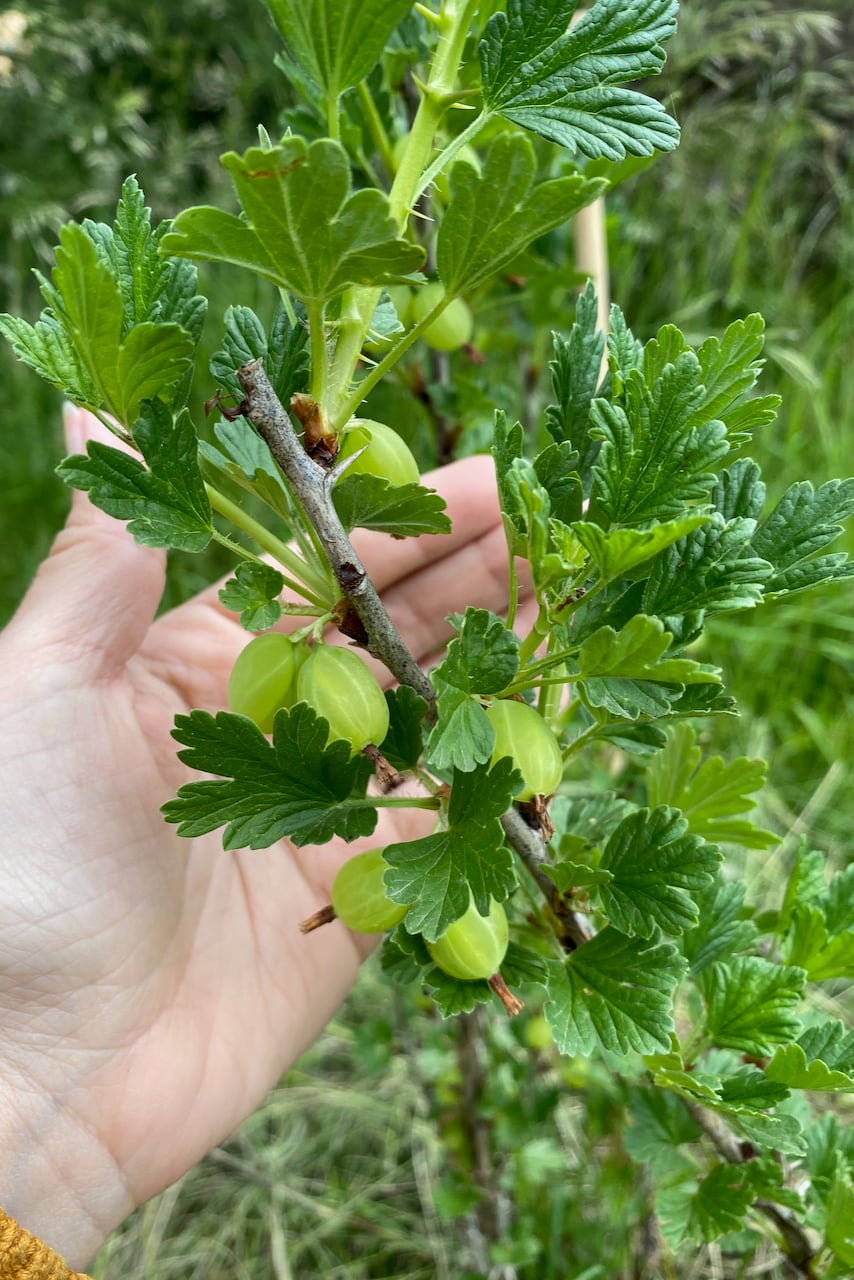
In terms of choosing one, you can either opt for European gooseberries (Ribes uva-crispa) or American gooseberries (Ribes hirtellum), although nowadays you can even find hybrid cultivars of these two.
The fruits (harvested in July and August) are delicious – either yellow, black or pink.
We can enjoy them raw or cooked in a multitude of savory or sweet recipes.
Gooseberry shrubs do well in full sun as well as part shade, but what they can’t handle is extended periods of hot afternoon sun. They also need a winter chill of around forty days to fruit well the following year.
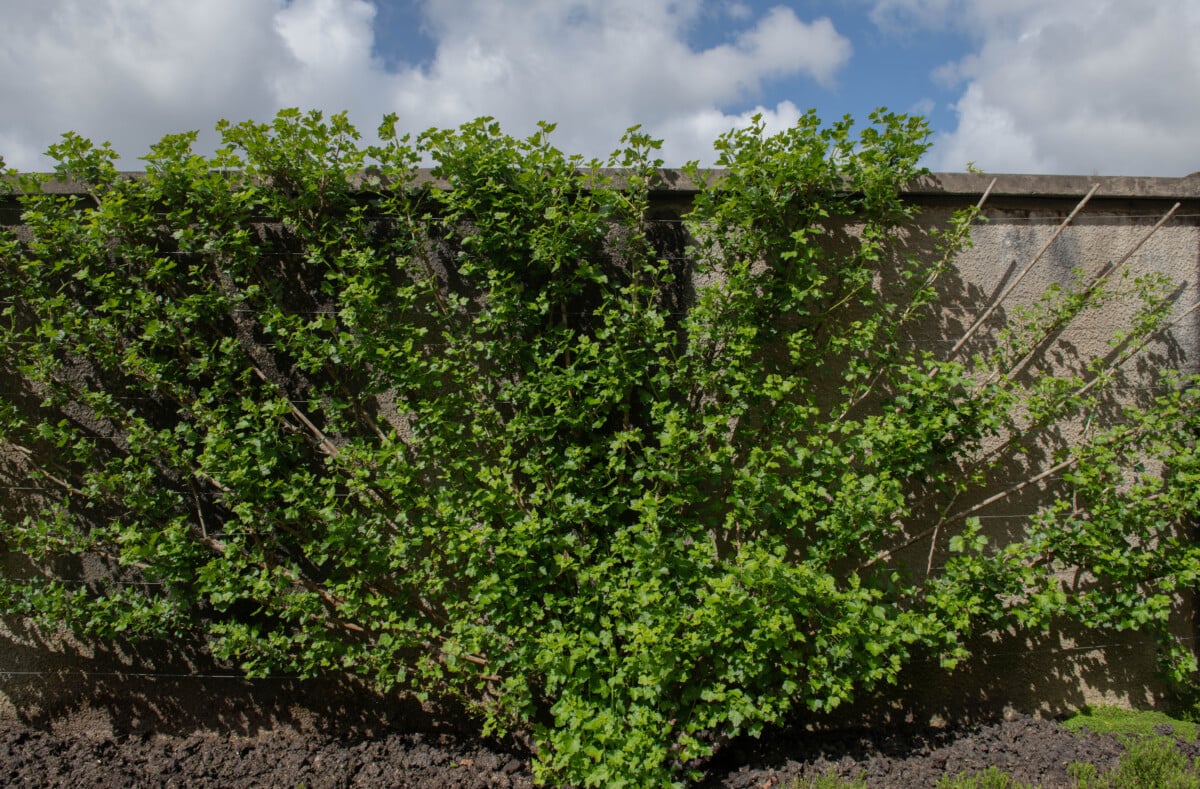
As a sidenote, I was watching a video of a Texas gardener reminiscing about growing up snacking on gooseberries in her backyard in the 1980s, but being unable to keep a gooseberry shrub alive today because of how much hotter summers have been getting.
We have to adapt and plant in the shade along a building or fence or under a tree canopy. Then add a thick layer of mulch in a three-foot diameter around the base of the gooseberry to keep the soil cool and moist around the root ball.
Gooseberries are generally self-fertile, although the presence of another variety nearby will improve pollination and increase fruit production.
4. Blackcurrants (Ribes nigrum)
One of the most delicious things that my husband ever made (he’s the baker in the family) was a pie filled with blackcurrant goo.
I say “goo” because we just pre-cooked the blackcurrants, but didn’t really turn them into jam or jelly. Just an in-between goo-type filling flavored with vanilla and sugar. In a flaky crust. Divine!
We had “rescued” a large crate of blackcurrants from our local CSA farm after one of their deals with a local supermarket fell through and they were left holding the bag. Better said, holding an oversupply of blackcurrants.
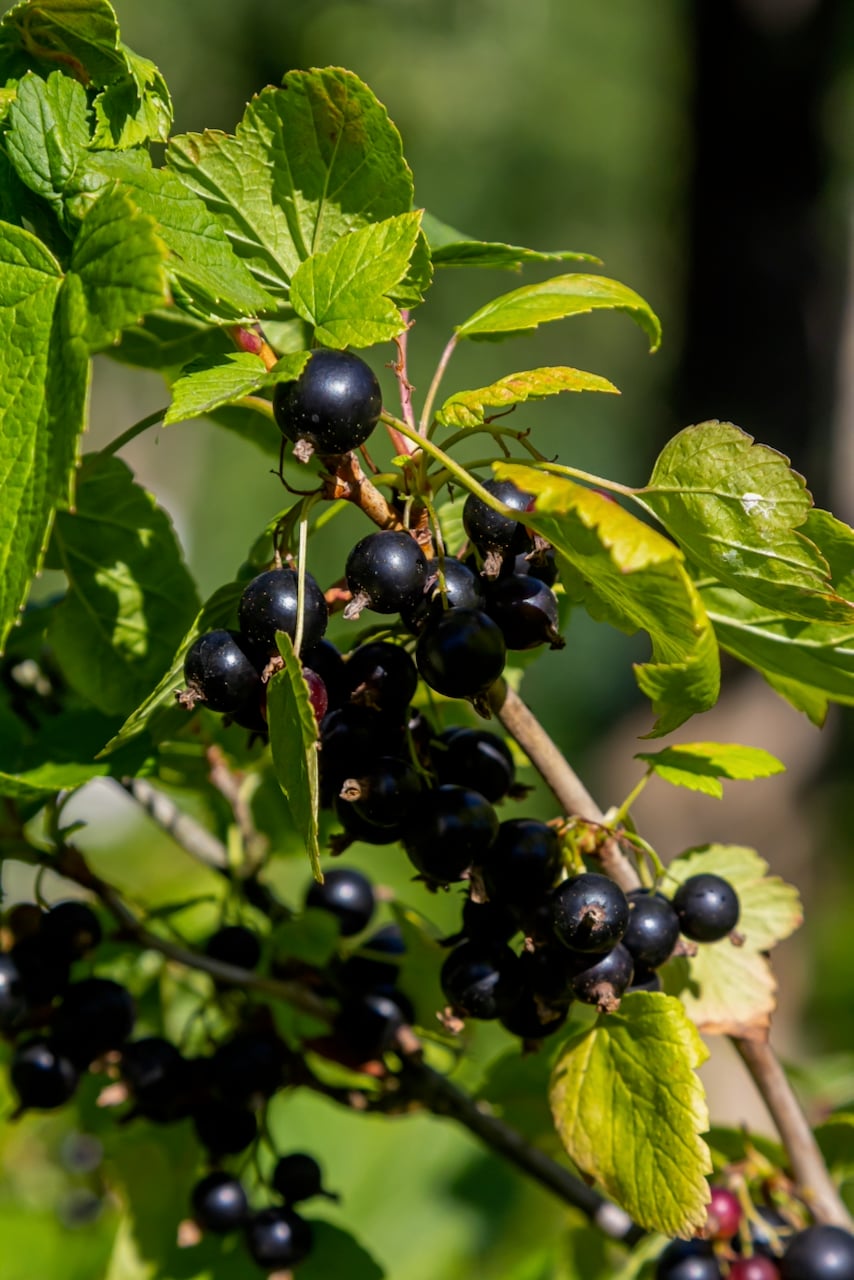
And it’s pretty much when we decided to grow our own shrubs. Which is a good thing, because we haven’t been able to find that large a quantity of fruit at that low a price ever since.
Black currant shrubs are generally hardy (down to -13F or -25C) and will do well in morning sun or part shade. They originate from Northern Europe, but the first record of their introduction to North America dates back to 1629 in Massachusetts. (A fun fact I learned from this growing guide from the University of Wisconsin.)
The clusters of white spring flowers turn into fruit that ripen in July. The leaves, the buds and the fruit are intensely fragrant due to the presence of essential oils. Naturally, this makes them a popular ingredient in perfumes.
There is a species of black currant native to North America called Ribes americanum.
Its range expands from New Brunswick (in Canada) to Delaware, Virginia, Indiana, Iowa, Nebraska, Colorado, and New Mexico. It forms a very dense vegetation due to its a bushy and spreading habit and reaches an average height of 6.5 feet (2 meters) in all directions at maturity. The foliage of Ribes americanum turns a beautiful shade or reddish-yellow in the fall.
Can we grow blackcurrants as a hedge?
Absolutely. It won’t be a house-height privacy hedge, but some cultivars can grow to about eight feet tall. Keep in mind that this would be a deciduous hedge, not an evergreen one.
5. Red currants (Ribes rubrum)
There are a lot of similarities between black currants (above) and red currants. In terms of temperature and soil preference, the same things apply. Both types of Ribes grow vigorously and produce juicy aromatic berries in July.
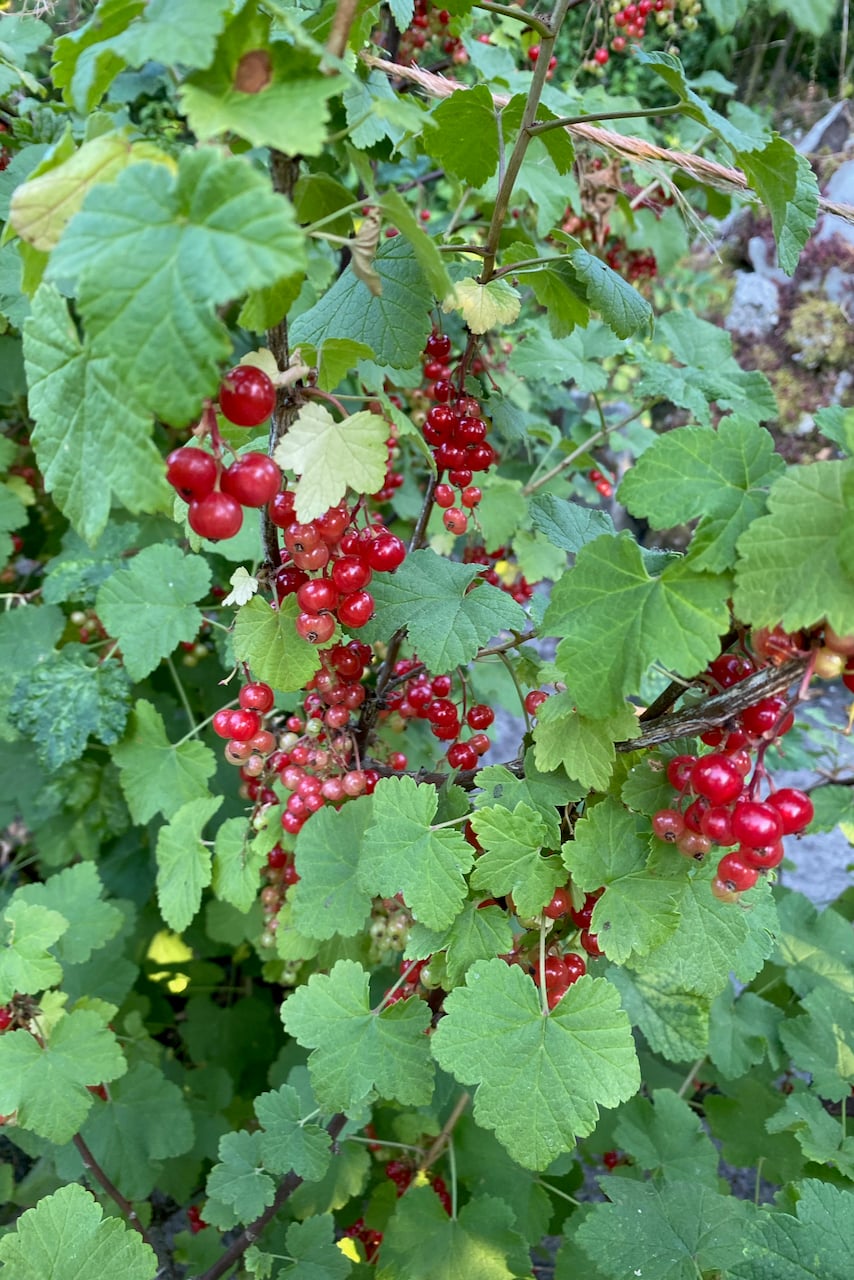
So let’s talk about the differences.
First of all, red currants produce fruit on old canes (previous year’s growth) while black currants produce better on new wood (this year’s growth). But both produce best on two and three year old canes, with the quantity of fruit diminishing the older the canes get.
Red currant flowers are vanilla-yellow, while black currant flowers are pure white.
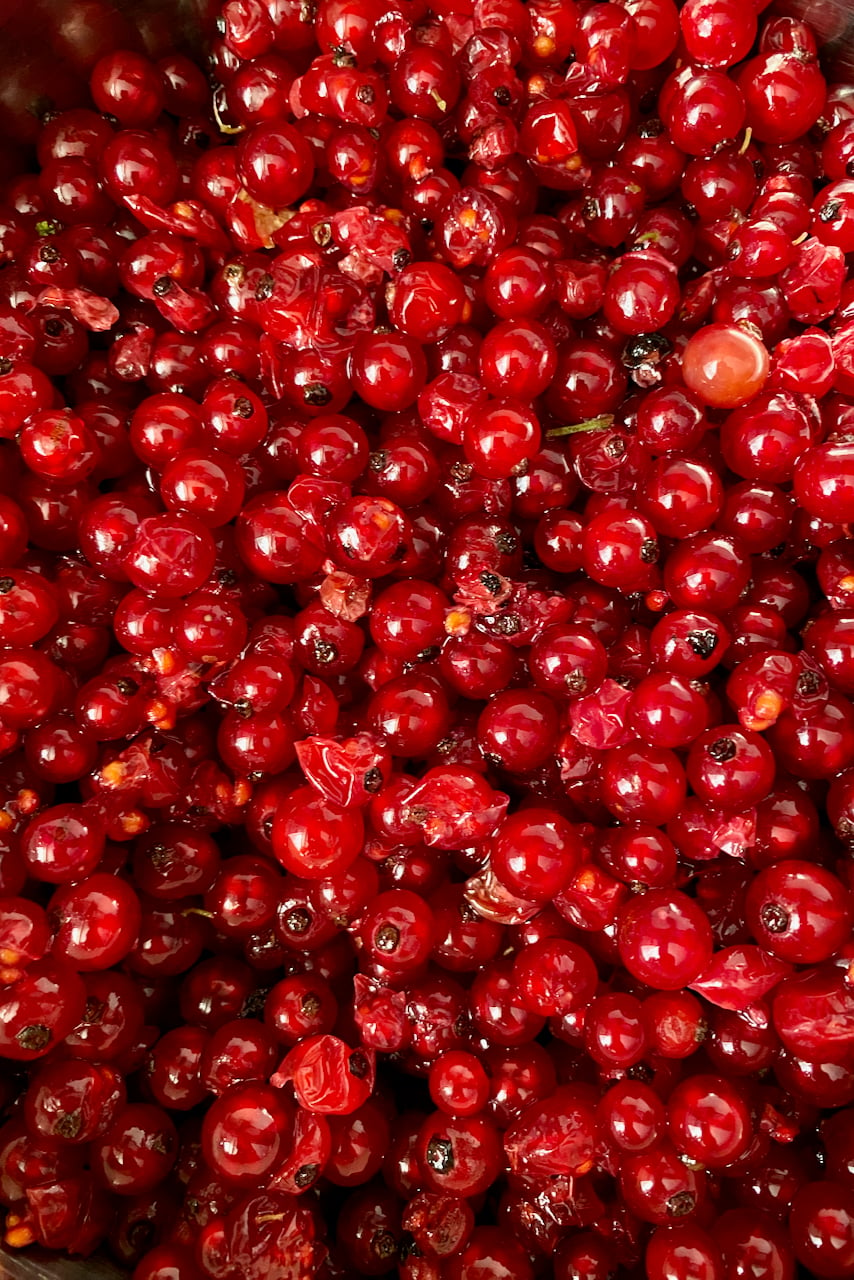
And finally, red currants are more tart while black ones are generally sweeter.
But keep in mind that these are generalized statements and that there may be cultivars and hybrids that don’t follow these rules.
6. Strawberry tree (Arbutus unedo)
As I was putting together the lineup of shrubs with edible fruit for this article, I noticed that so far all of the plants I mentioned don’t really like heat and direct sun. So what’s a southern California gardener to do, for example, if they don’t have enough shade on their property to grow any of these berries?
The solution comes from the similarly challenging climate of the Mediterranean basin in the shape of the strawberry tree (Arbutus unedo). It is an evergreen shrub that does well in hot climates. It flowers in the fall. But its peculiarity is that it takes about twelve months for the fruit to mature.
So in the fall, you might see both flowers (from this current year) and fruit (from the previous year) on the tree at the same time.
This overlap and slow ripening period is one of the reasons why it doesn’t make sense to grow it commercially. And why the fruit isn’t more popular.
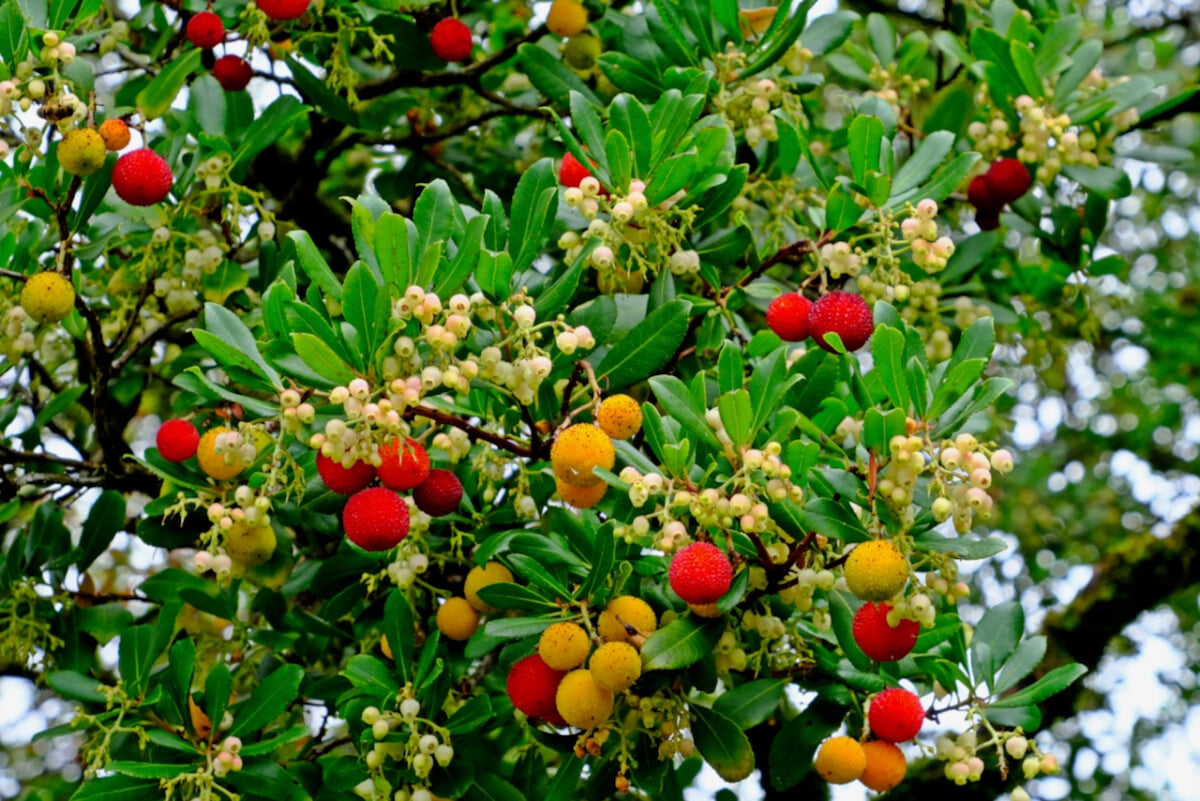
But in a backyard setting, this is the perfect shrub for hot climate hedges. Depending on how you prune it, you might be able to grow it as a tree as well. Once established, Arbutus is fairly shade tolerant, drought resistant and frost resistant. Although keep in mind that an overstressed tree won’t produce as much fruit.
And speaking of the fruit? Does it taste like strawberries?
It’s not part of the Fragraria genus, so it’s not a real strawberry. But it does look like a strawberry, although the taste is not as tart. The fruit has a high content of sugar, antioxidants and vitamin C. We can eat it raw, cook it, preserve it or use it to flavor spirits.
7. Chokeberry (Aronia)
With such an unfortunate nickname (chokeberry), it’s no wonder Aronia doesn’t get more love in the productive garden. It’s such a beautiful decorative shrub with deep green foliage that turns reddish-purple in the fall.
The bigger attraction for a fruito-holic such as myself are the berries, similar to those of blackcurrants but larger and fleshier. Depending on what type you’re growing, the fruit can be either black (Aronia melanocarpa), red (Aronia arbutifolia) or purple (Aronia prunifolia).
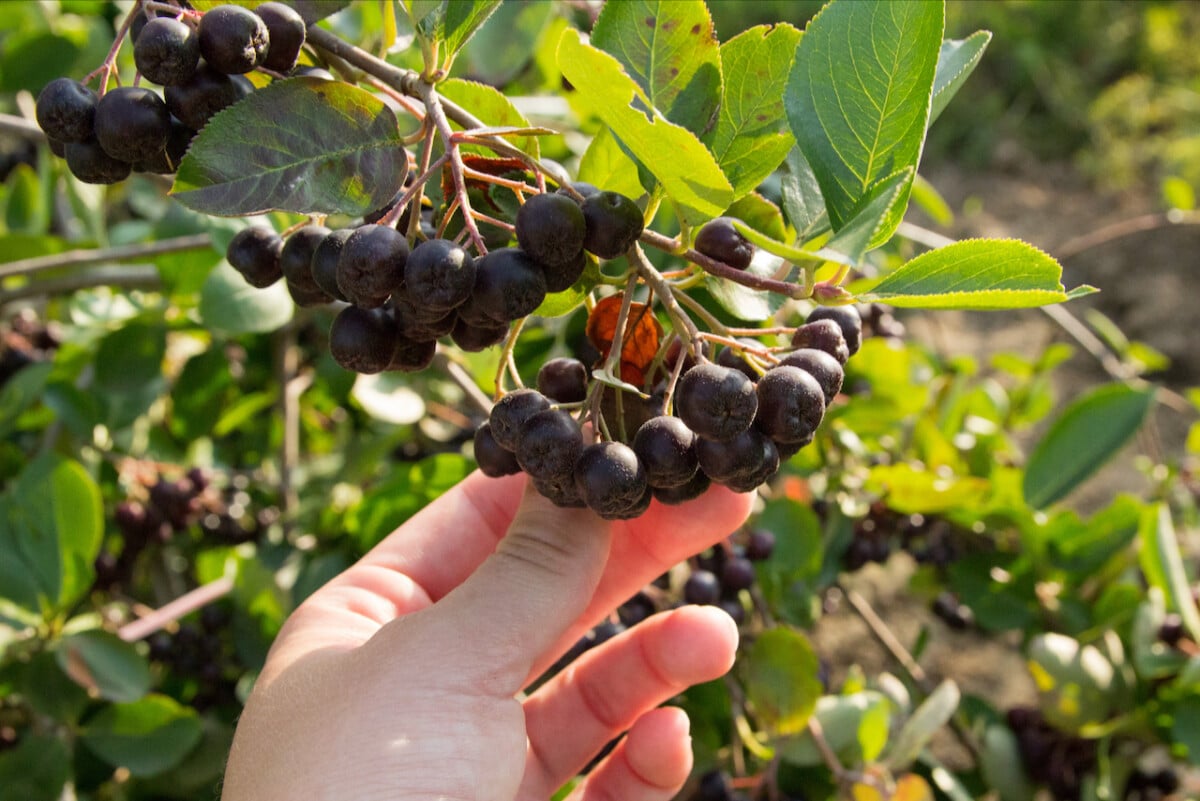
Aronia is native to the United States and it can grow up to seven feet tall, making it perfect for a privacy hedge.
Aronia likes part shade or sun, as long as it doesn’t get too scorched at the height of summer. It thrives in light, moist and well-drained soil, but can adapt easily. Another nice thing about it is that it’s naturally resistant to diseases.
8. Medlar (Mespilus germanica)
I want to end on another, less popular, note by suggesting an heirloom shrub (or small tree, depending on how you train it). The humble medlar.
There is evidence that medlar, a European native, has been in cultivation for three thousand years.
Medlar was a very popular source of fruit in the Roman Empire and Ancient Greece and it even makes several appearances later on in Shakespeare’s plays.
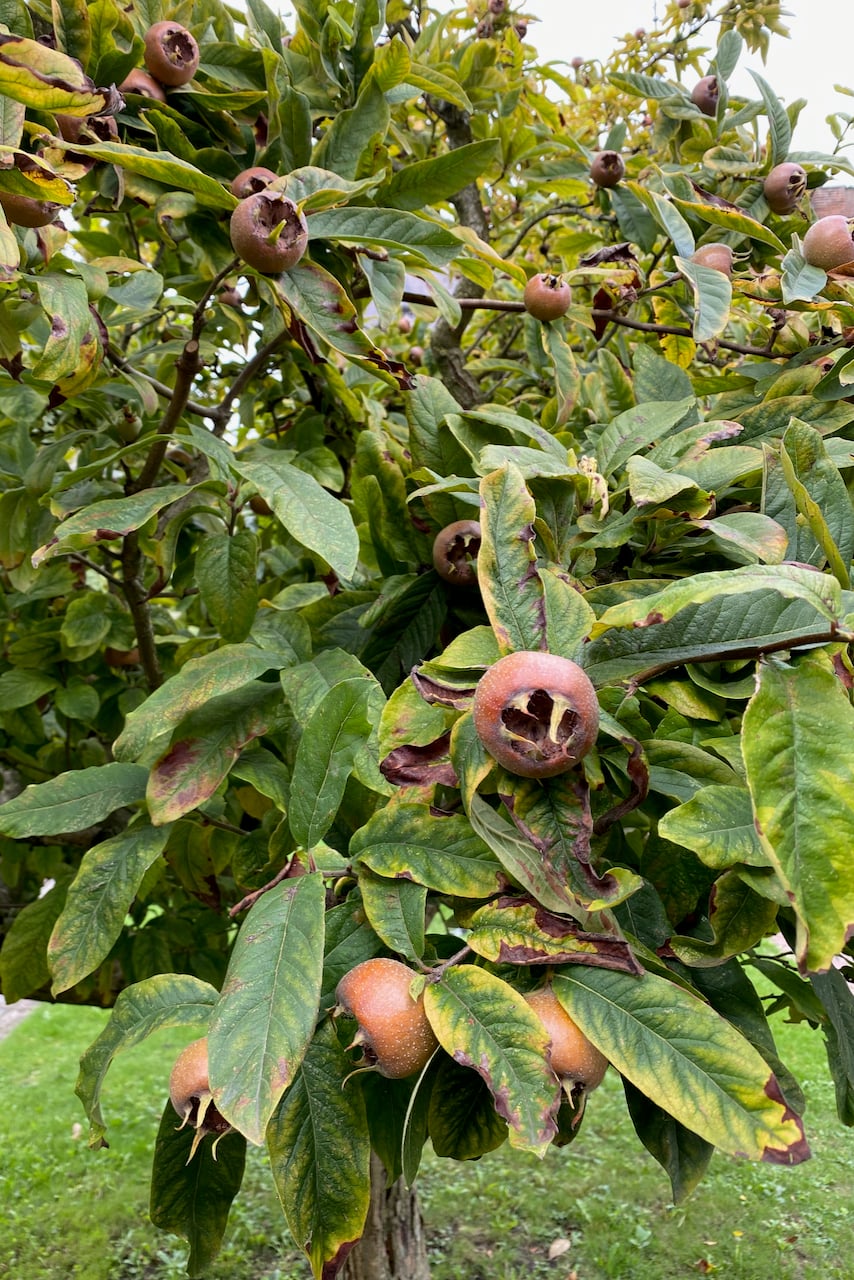
Medlar is the great-great-grandfather of today’s apple tree.
The fruit of the medlar tree are like beautiful bronze globules, but you’d be very disappointed if you were to take a bite out of one. Even when ripe, they would taste quite acidic. They need to go through a chemical process called bletting before resembling anything edible.
And the best way to do that is to leave them on the tree until the first frost of the season hits. The frost breaks down the cell walls and starts the decaying process. In the meantime, this increases the sugar content and decreases the acids and tannins which make even the ripe fruit unpalatable.
What we’re left with are little pouches of apple sauce that taste delicious. We can eat them straight off the tree or process them into preserves.
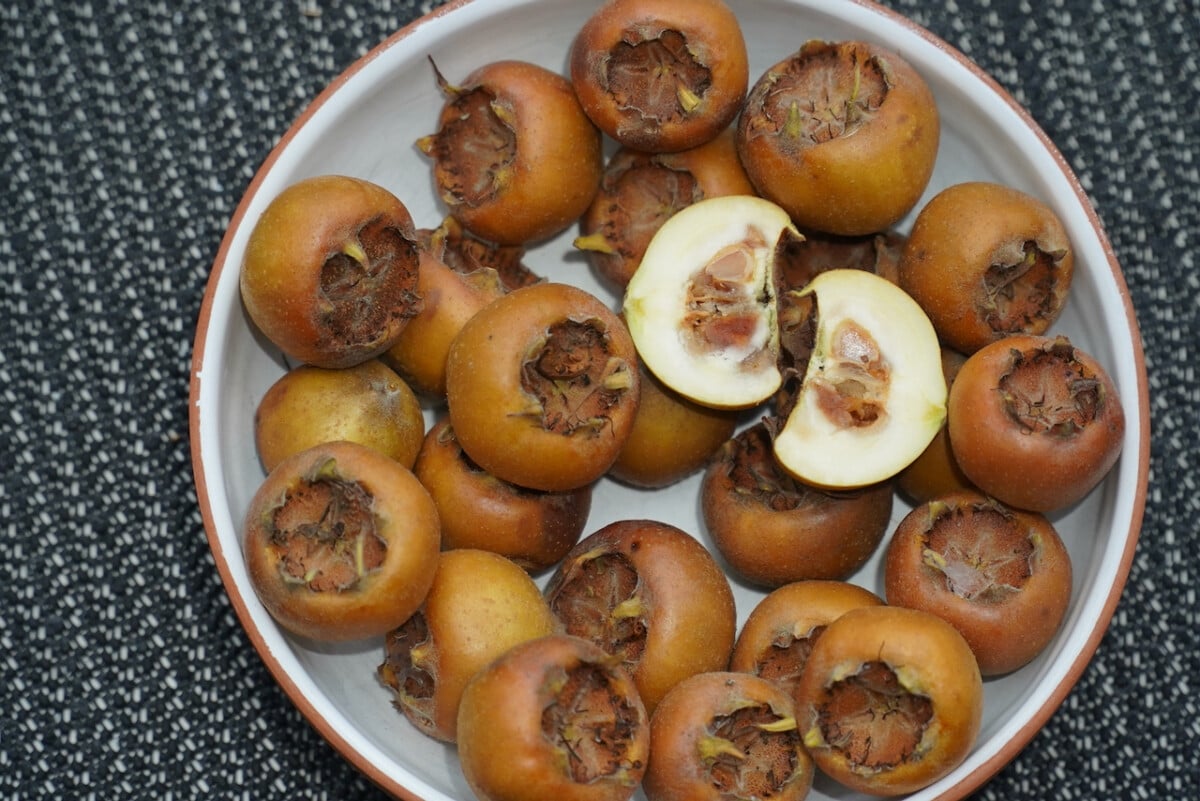
So you can see why this would have been such a popular fruit for hundreds of years. With no refrigeration and no berries shipped from halfway across the world, a fruit that you could harvest in winter was pure gold.
Even after writing this article, I still haven’t decided what shrubs to plant for my edible hedge. I think it might end up being a mixed hedge, cottage garden style, that would supply fruit for half the year. Living the dream, I tell ya’.
Get Garden Notes From Tracey, Right to Your Inbox
Pull up a chair on the front porch. Join 54,000+ gardeners who get Tracey\'s friendly notes, seasonal to-dos, and hands-on tutorials three times a week.