


As a recovering pessimist, I have become quite adept at not making a big deal out of gardening mistakes. Sometimes, my plan(t)s don’t work out because the elements conspire against us: too much rain, a surprisingly late frost, a hidden root mesh that stunts the plant’s growth.
Other times, it’s just a matter of hubris and me choosing to ignore instructions. Who needs spacing instructions anyway?
Most of the time, I know what I’m doing and things work out.
However, when I first started gardening over a decade ago, it was the exact opposite.
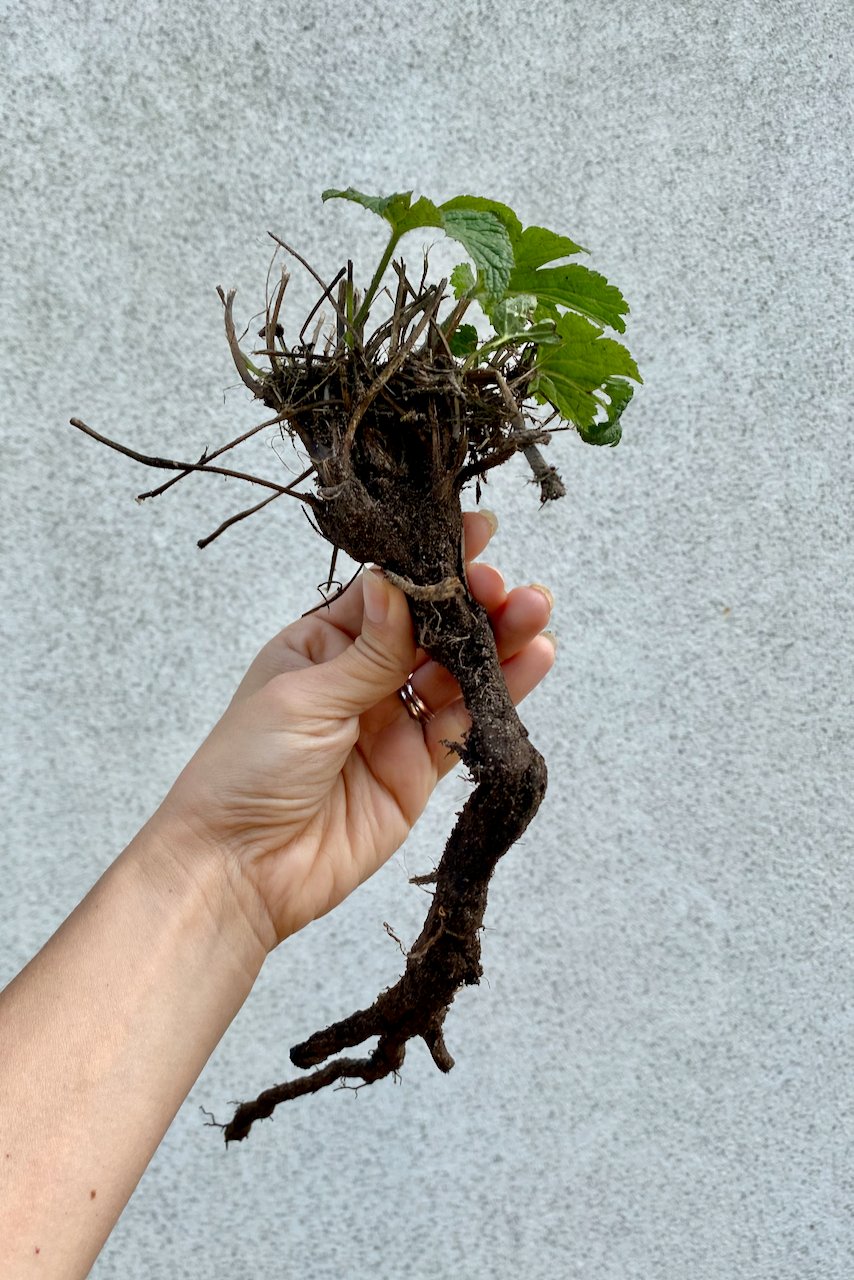
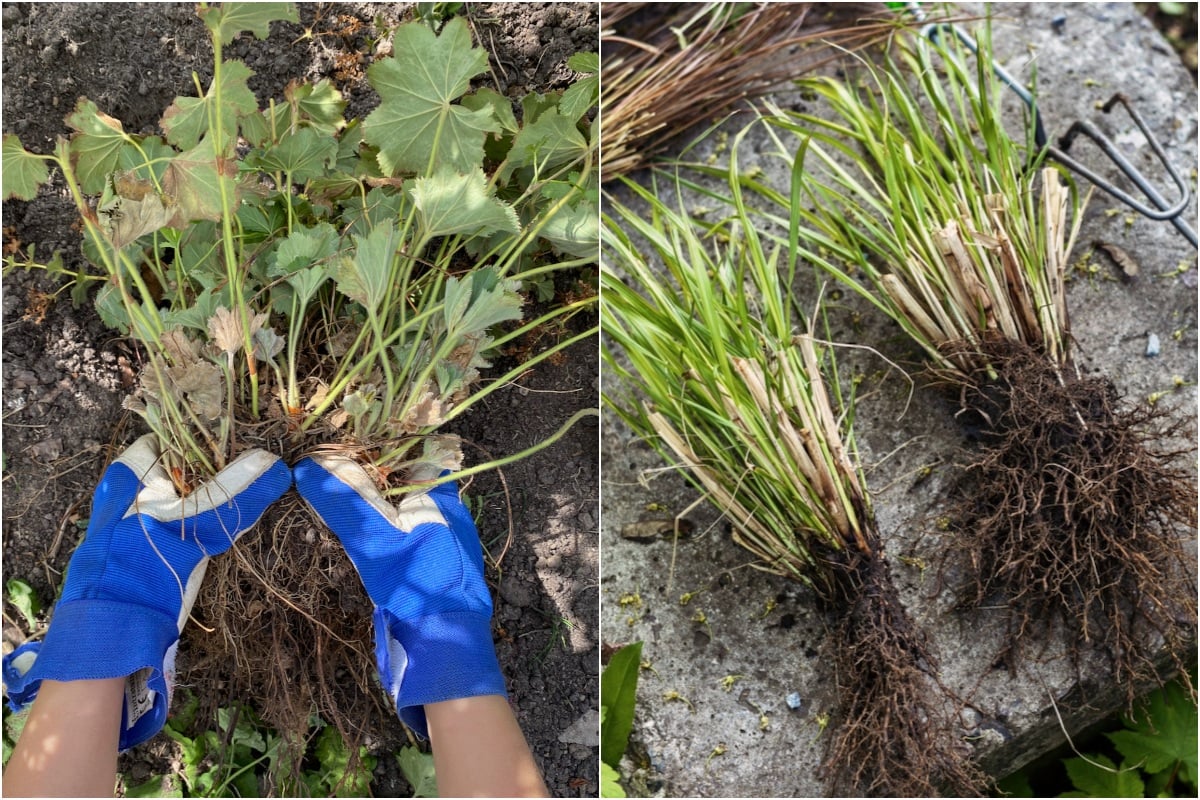
I didn’t know what I was doing most of the time. But I also didn’t know that I didn’t know. And I still remember one of my early lessons when I wanted to divide some fall anemone in a friend’s garden and take some for my own backyard. The more we dug, the more we realized that there was no way we could divide what we were pulling out of the ground.
You probably know now, but we didn’t know back then, that plants that grow tap roots are impossible to divide. You can’t divide a stick, after all. Well, we pulled out a gnarly stick of a root, looked at each other incredulously and then burst out laughing at our naivety. Lesson learned, the practical hands-in-the-ground way.
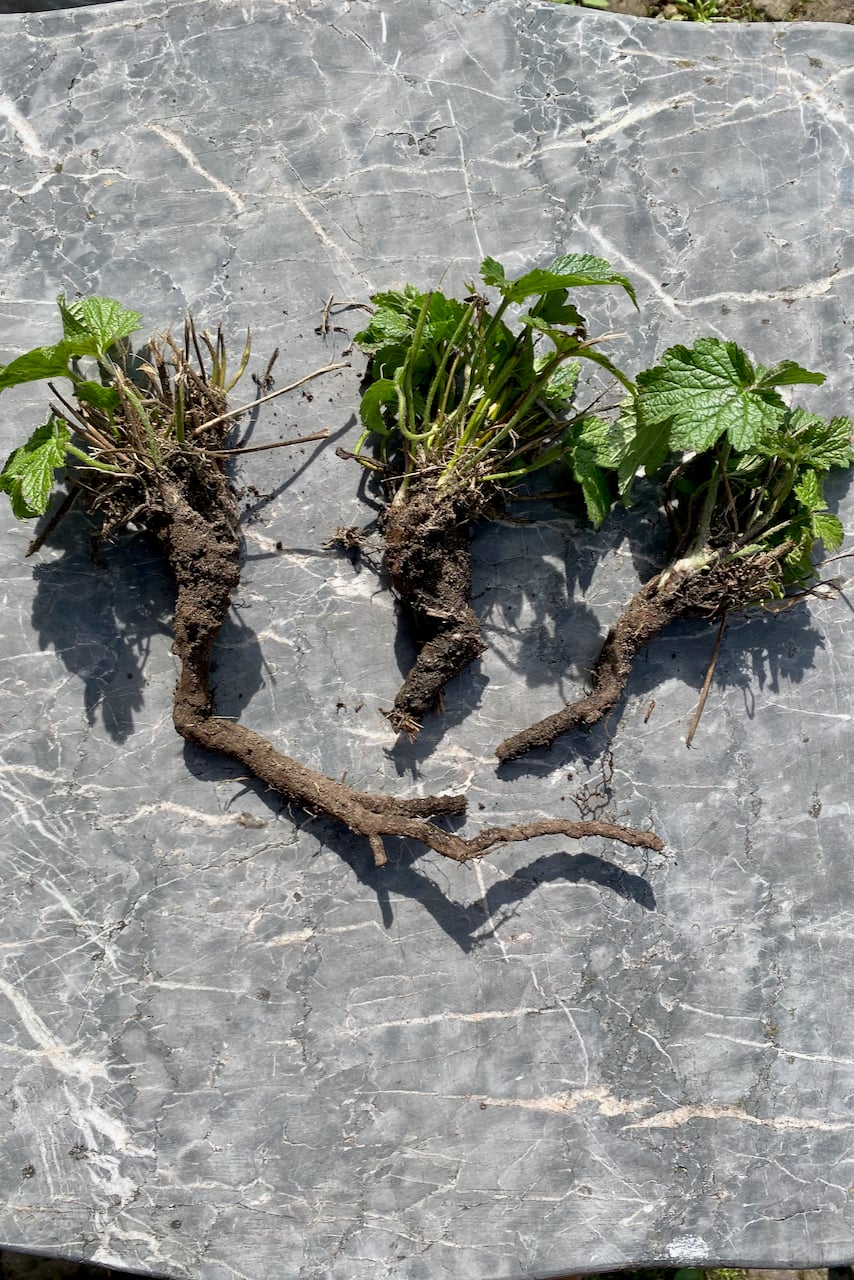
Allow me to spare you the disappointment and possibly hard work by compiling a list of plants that you shouldn’t even try to divide, just in case this is also something that you don’t know that you don’t know. And don’t worry, I’ll add some alternatives for propagating these plants instead.
Related Reading: 10 Perennials You SHOULD Divide In Fall
1. False indigo (Baptisia australis)
How to propagate it instead: You can start false indigo from seed.
False indigo (Baptisia australis) is a deceiving plant when it comes to division. It grows several stems out of the same root clump, so on the surface it looks like we could easily divide it.
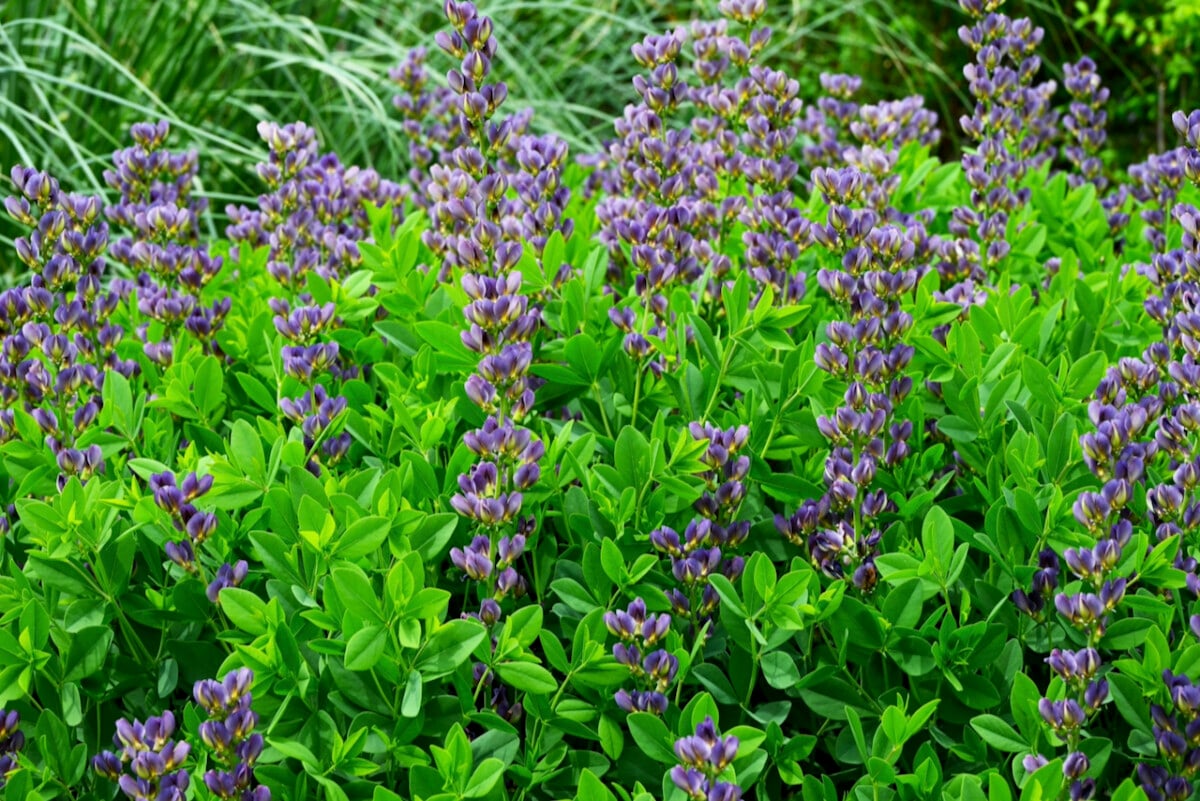
But below ground, it’s all supported by a single tap root formation. While we could, theoretically, cut a section of the tap root and layer it (I explained how in this article on root propagation), I think it’s not worth the trouble. False indigo propagates really well from seed, but keep in mind that the seeds are pretty hard and waxy, so planting it in the fall might be the best choice for your gardening zone.
2. Burning bush or dittany (Dictamnus albus)
How to propagate it instead: You can start dittany from seed.
Burning bush is neither a bush nor … burning? Its popular name is a reflection of the volatile oils that it contains. We’re not talking about the bright red ornamental shrub (Euonymus alatus) also called “burning bush” either. The herbaceous perennial I’m referring to is also called fraxinella or dittany.
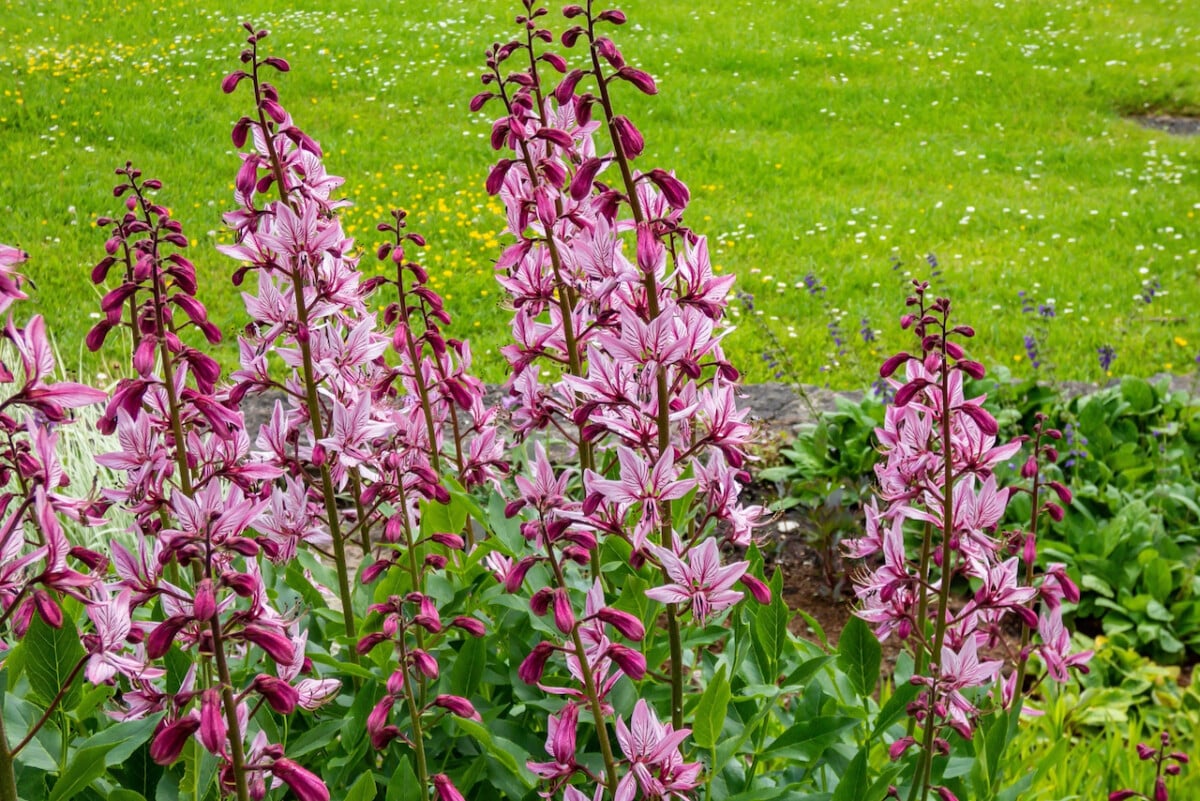
It’s not necessarily a very popular perennial, so that’s why I added it to the top of the list. Thought I’d get it on some gardener’s radar and give it a bit of a spotlight. Dittany is a woodland plant that’s native to much of Europe, Asia and some parts of North Africa.
The plant itself lives for a long time, although it may take a couple of years for it to flower. It’s a gorgeous cottage garden staple with pollen-rich flowers in shades of peach, pink, white and sometimes purple. Burning bush grows from a strong, long taproot, so once we choose a spot for this plant, we should do our best not to disturb it.
3. Lavender (Lavandula)
How to propagate it instead: You can take cuttings (here’s how) or you can propagate it by layering (here’s how).
Lavender doesn’t necessarily have a long taproot like many other plants on this list. However, it has a compact root structure that does not allow for division very well. It’s also not very forgiving of being disturbed or relocated, both actions that we need to do when we dig out a plant to split it in half.
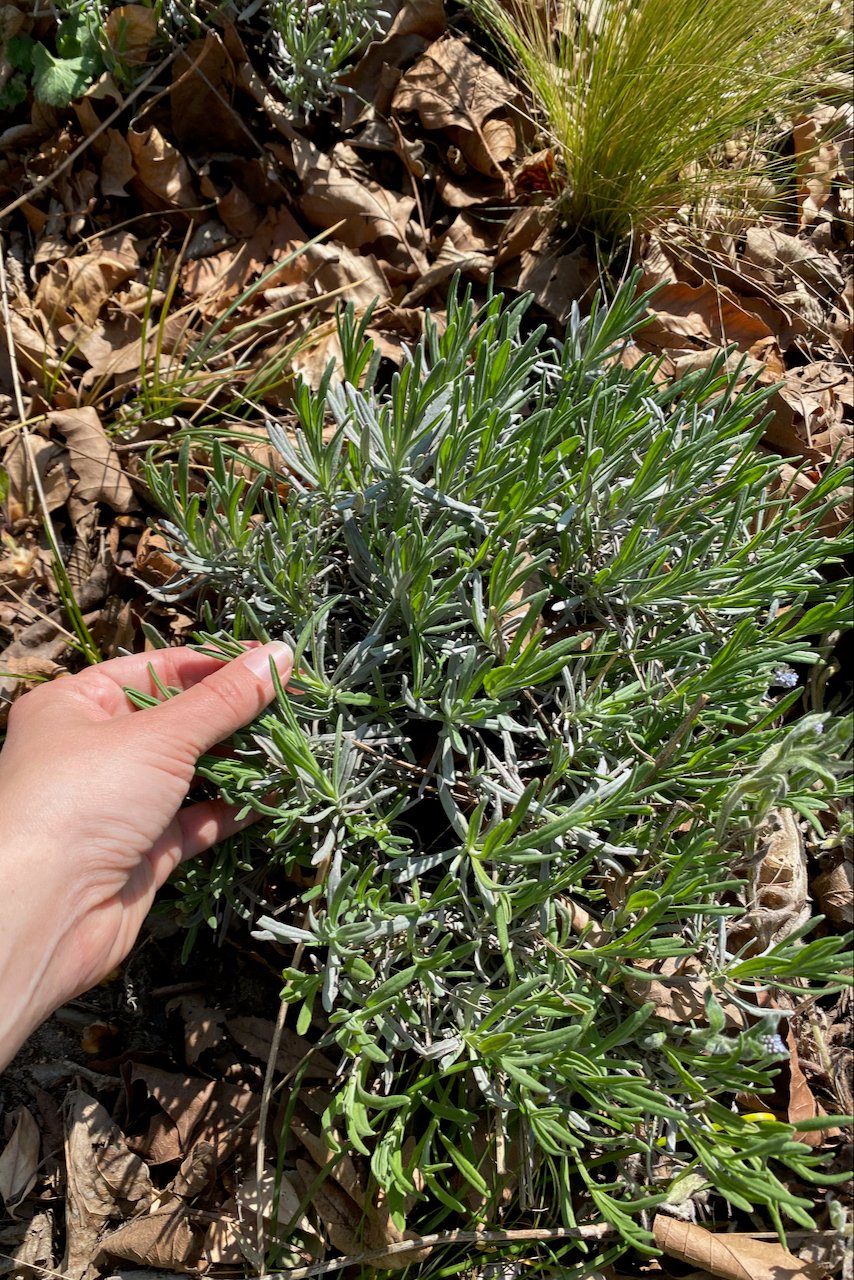
Generally, plants that grow woody at the base (such as lavender, sage and rosemary) will not take well to division.
I have successfully started lavender from seed in the past, but if you want to go that route, I suggest you start with a reality check on your own patience levels first. Unlike other plants that we start from seed, it may take a couple of months to see (something that vaguely resembles) a result. Growing lavender from seed is very satisfying, but it’s a pain in the bud.
4. Bleeding heart (Dicentra)
How to propagate it instead: Take cuttings of non-flowering stems. If you propagate by seed, remember that they need cold stratification.
Speaking of cottage garden sweethearts, how elegant are these old-fashioned bleeding heart plants with their arching stems and dangling medallions. Bleeding heart flowers light up the late spring garden, but by summer it’s hard to tell where they’re located. And even harder to get them divided.
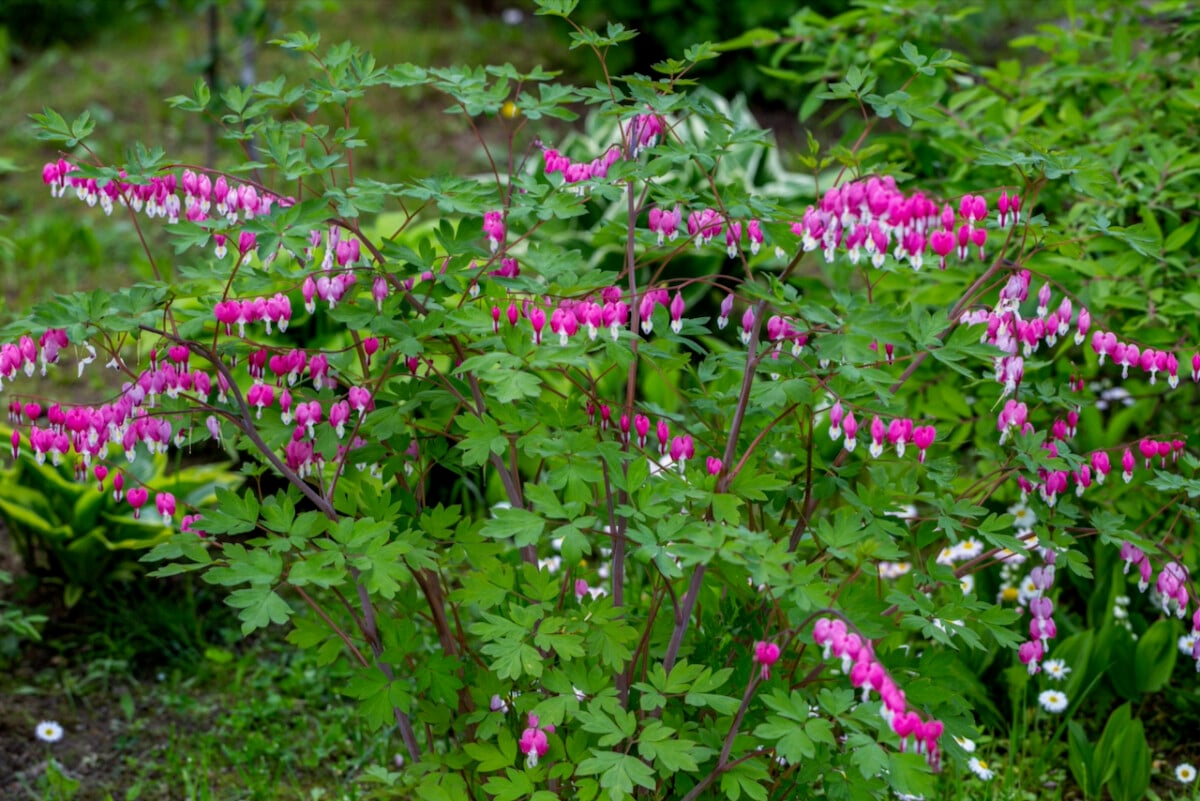
I didn’t add this plant to the list because it has a tap root. It doesn’t. But it does have wispy brittle roots that are full of sap. These kind of roots don’t divide well. Bleeding heart will naturally spread over time, forming a larger clump. So if you can wait a few years for the plant to grow large, you can risk digging half of it up.
5. Evening primrose (Oenothera macrocarpa)
How to propagate it instead: Wait for runners to form and then move them. Or start growing it from seed.
I know evening primrose is better known as an herbal remedy than a garden plant. But wait until you get a whiff of its scent in the summer evening breeze. I think it used to be more popular as a cottage garden plant, but it’s falling out of favor because it doesn’t cater to our idea of “showy plant”.
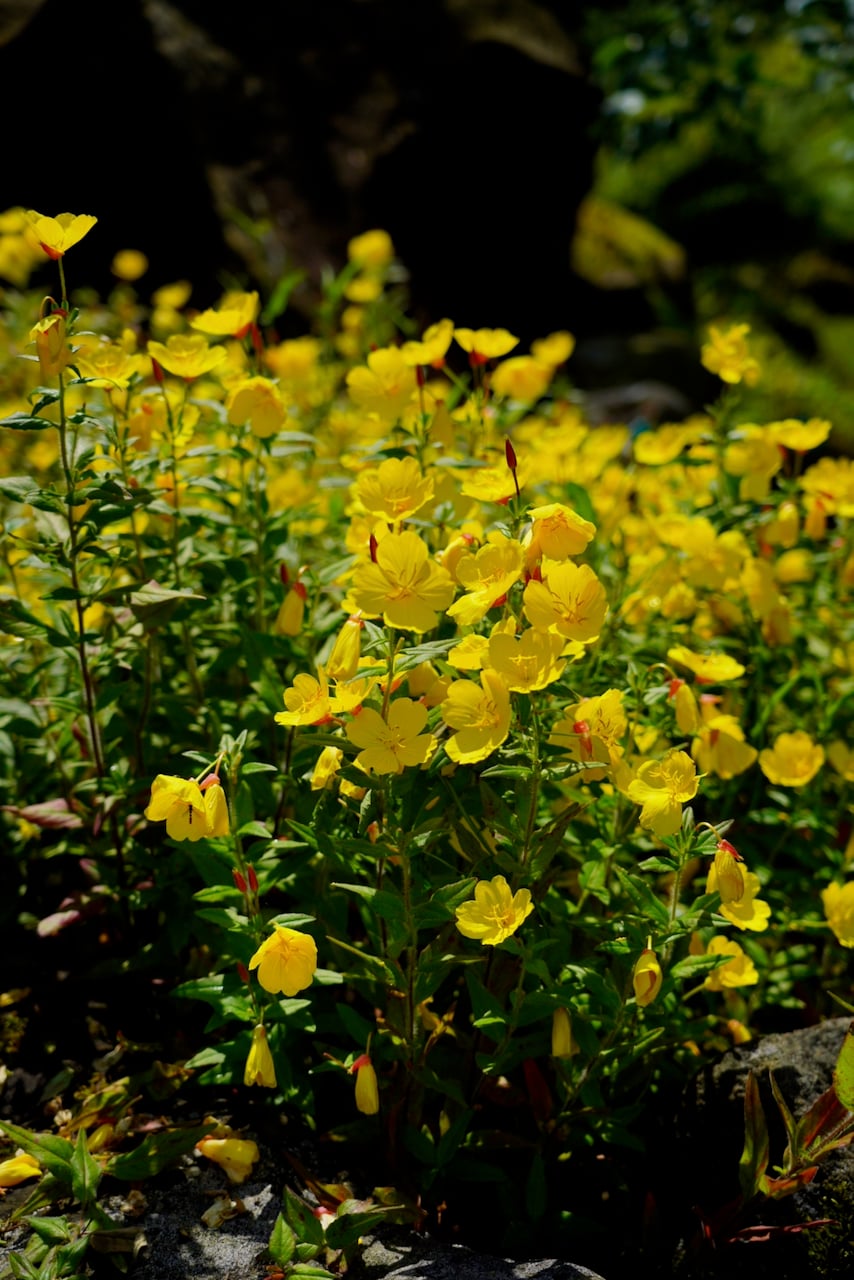
It is showy, but only when we’re back indoors tucked in on the couch in the evening. That’s when the yellow flowers open up – even then only one or just a few at a time – and they smell divine.
Evening primrose plants have a taproot, but the root sends little sideway shoots that turn into more plants. So while we can’t easily divide one plant, if we wait long enough, the plant will divide itself. Even so, digging it all up won’t work as well. We simply sever a couple of rosettes while they’re still in place – a hori hori knife works best for this – and lift up these pups without disturbing the main plant.
6. Columbine (Aquilegia)
How to propagate it instead: Start it from seed in spring or fall.
Some Columbine species have a tap root, while others have a combination of fibrous roots with a tap root growing at the center. Either way, they won’t divide very well.

There’s little reason to propagate aquilegia through any other method than seed starting. This cottage garden beauty is such a reliable self-seeder that it’s not even worth considering the effort of taking cuttings or dividing it.
My colleague, Tracey, wrote an article on what to do with Columbine after it is done flowering, including how and when to collect the seeds.
7. Sage (Salvia officinalis)
How to propagate it instead: You can take cuttings (here’s how) or you can propagate it by layering.
Just like lavender (above) and rosemary (you’ll see it below), sage is a woody perennial herb that does not like to be disturbed once established.

Sure, I have dared to relocate some of my sage plants a couple of times each, but only because I was desperate to get them into a spot that got more sun and better drainage – both factors essential to their survival. Even so, it took the sage a long time to recover. And I wasn’t even dividing or cutting into the roots.
Luckily, making more sage plants is easy and requires zero disturbance. All you have to do is layer them on the ground, wait a couple of months, then once they form roots, cut them off the main plant. I used sage to explain layering propagation in this article, so have a look at the photos for clarification.
8. Rosemary (Rosmarinus officinalis)
How to propagate it instead: You can propagate it via cuttings or layering.
The same deal as sage – rosemary is a woody perennial that doesn’t handle division well. And just like sage (and lavender) we should try to optimize its location the first time around, because it does not like being disturbed. It will probably recover, but it will be stunted for a while.

Luckily, it’s very easy to propagate rosemary by taking cuttings or by layering it. I have successfully started this one from seed too, but it’s a fairly long process.
9. Foxtail lily (Eremurus)
How to propagate it instead: You can propagate it by seed in the fall, but it takes a few years for a seedling to reach its full blooming potential. For best results, buy bare roots.
If you’ve never grown foxtail lilies, consider this a sign to keep a look out for them next time you go plant shopping. They’re not real lilies, of course, but they are just as much of a showstopper.

The foxtail-like flower spikes pack all the elegance of lupine flowers, adding the inflorescence of foxgloves and a dash of kniphofia. They’re truly dashing flowers that you can buy in shades of peach, bright yellow, blue and even purple. Unfortunately, the octopus-shaped root structure doesn’t divide very well. Fortunately, as the plant matures, it will produce more blooms.

They do well in a sunny spot with very good drainage (they’re prone to crown rot if there’s too much water pooling around them).
10. Sea holly (Eryngium)
How to propagate it instead: Start it from seed in the fall or in spring.
I know, not a list goes by without me mentioning sea holly. It’s a beautiful low-maintenance perennial that adds color (deep electric blue or silver) to our gardens. All manner of pollinators love it, and the hoverflies in particular swarm around it for weeks. And it blooms really late into the growing season. Last year, I was still hanging on in October.

Last time I wrote about it, I was telling you how easy it is to start from seed. And that’s a good thing, too, because sea holly grows a really deep tap root that’s impossible to divide. It very much resembles a baby turnip, so go ahead and imagine how you would split a turnip in two without cutting it. Impossible.
11. Lavender cotton (Santolina chamaecyparissus)
How to propagate it instead: just like with lavender, we can either take cuttings or layer it.
Also known as cotton lavender, you’ll probably not be surprised that it’s neither cotton nor lavender. But it does have a similar growing habit to the latter. You get a mass of fragrant foliage (usually green or silver) with a layer of flowerheads rising above it.

The santolina flowers, shaped like yellow buttons, last for a long time.
Another similarity to lavender is its growth habit. The plant eventually becomes woody at the base so the best way to maintain its compact shape is by pruning it in spring.
12. Balloon flower (Platycodon)
How to propagate it instead: start it from seed in the fall.
Balloon flowers got their weird nickname because, before the flowers open up, the buds swell up like a little balloon. It’s as if they’re puffing up their cheeks, ready to blow out a birthday candle.

If the blue flower reminds you of bellflowers, it’s because they are. Or at least part of the same family. They like full sun, but do well in part shade too, in cottage gardens, rock gardens or containers. Balloon flowers are hardy in all continental USDA zones and love being planted in moist but well-drained soil. Give them this, and they’ll stay in bloom from early summer all the way into late summer.
Pretty easygoing, right?
Well, if you don’t count the many fleshy tap roots that don’t do very well if we divide them. But that’s ok, because balloon flowers are so easy to propagate by seed. New plants hit their flowering stride in the second year.
13. Fall anemone (Anemone hupehensis)
How to propagate it instead: they’re easy to start from seed.
Remember the perennial that was responsible for my light-bulb moment of “not all plants can be divided”? It’s such a thrill to notice Japanese anemone opening up, although I know that by that point fall is truly knocking on our garden gate. I like the fact that I can rely on it for blooming, even in the shade.

Fall anemone grows from a really strong and deep tap root, so dividing it is impossible. It’s also impossible to take cuttings, since these perennials don’t exactly have a central stem, just leaves on really long petioles and flower stems.
But the good news is that they’re really easy to start from seed. And the seeds are really easy (and fun) to collect. Once the flowers are done blooming in late fall, the seed heads expand into cotton candy-like poufs.
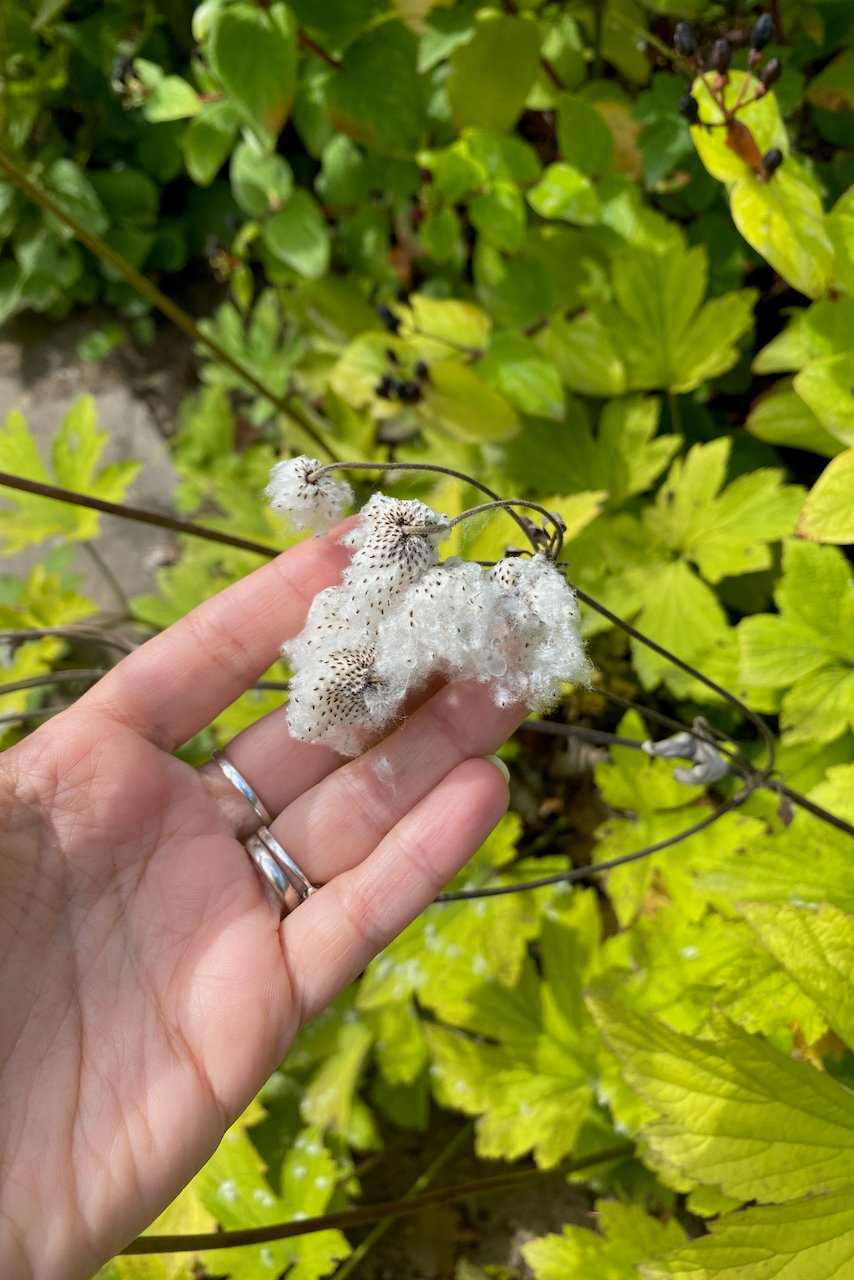
Because of these little parachutes, Japanese anemone seeds can travel far from the plant. But there’s plenty of time to deadhead them before they do, if we don’t want them to self-seed.
We can plant the seed now, in the fall, or we can save the seed as is, making sure the surrounding material is dry.
14. Baby’s breath (Gypsophila paniculata)
How to propagate it instead: You can start baby’s breath from seed.
It’s pretty surprising that a plant that produces such wispy, floaty, delicate flowers can have such a deep tap root, isn’t it? It’s certainly not the first thing we think about when we see the elegant flowers in corsages and wedding bouquets.

Gypsophila had to develop such a vigorous root structure in order to access water in its dry, sandy and calcareous natural habitat. The root forms a crown from which fresh stems grow every year. The stems die off in winter and new ones sprout from the crown in spring.

In some parts of the world, the root is used in the pharmaceutical industry for its saponin and flavonoid production. But in some parts of North America, the same sturdy root earned baby’s breath a place on the noxious plants list. Check to make sure it’s not considered invasive in your area before you sow gypsophila seeds in your garden.
15. Lupine (Lupinus)
Lupines are such robust ornamentals that it’s hard to believe that we can’t make more of them by division. But it’s only hard to believe until you see their tap roots. This colorful early summer favorite will self-seed in the right conditions.

However, the best way to ensure you get lupines where you want them is to let the seeds dry in their pods, collect them, and then plant them again. You can start lupine seeds in spring, but keep in mind that they have a hard, waxy coating. So you’ll have to scar them and cold stratify them if you want to make sure germination goes well. Alternatively, you can opt for easy mode and let nature handle those tasks for you by planting lupines in the fall.
My bonus tip on when to avoid division.
I’ve included the most popular garden ornamentals that we shouldn’t even attempt to divide. There’s one more scenario I want to mention. If your plant is weak or stressed in any way (for example, because of drought, too much rain, low temperatures or too much direct sunlight), then I would advise you to postpone dividing it.
We should focus on helping the plants recover first, and only once the plants are healthy, attempt to divide them.
Read Next:
Get the famous Rural Sprout newsletter delivered to your inbox.
Join the 50,000+ gardeners who get timely gardening tutorials, tips and tasks delivered direct to their inbox.