

Both the garden and I get a second wind in September.
After the mellowness of summer months, and leisurely August pastimes, my mind craves a refocus and regroup. It’s not quite the back-to-school feeling of when I was a child, but a more relaxed version of “I get to prioritize the garden again and I have so many goals I want to accomplish.”
And as fall rolls around, the joy of harvesting is compounded by the joy of planning next year’s garden. My head is spinning with ideas, but part of the fall refocus is wrangling them into categories. And the first order of business is making a plan for what ornamental plants I can start from seed this fall.
There are two main reasons why starting plants from seed in the fall makes sense to me.
First of all, I get to skip having to do the cold stratification.
Here’s what that means.
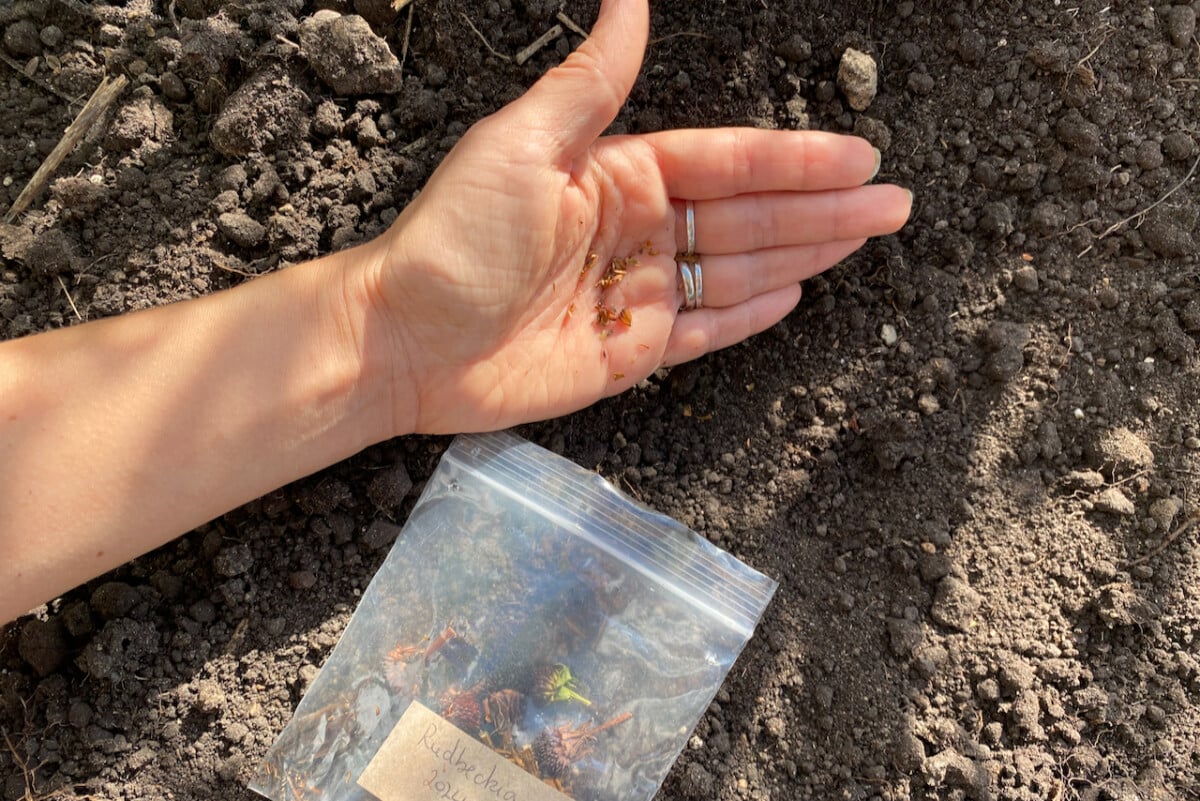
The seeds of most temperate-region perennials and annuals need to experience a period of cold in order to germinate. When we sow seeds outdoors in the fall, Mother Nature provides these right conditions for us. It provides the cold days (followed by warmer ones) as well as the right amount of moisture.
If you think about it, it makes perfect sense. This is how the plants have evolved in their natural habitats. Plants shed their seeds in the fall, but those seeds don’t start sprouting as soon as they hit the ground. Otherwise, everything would be killed by frost. Bye, bye offspring!
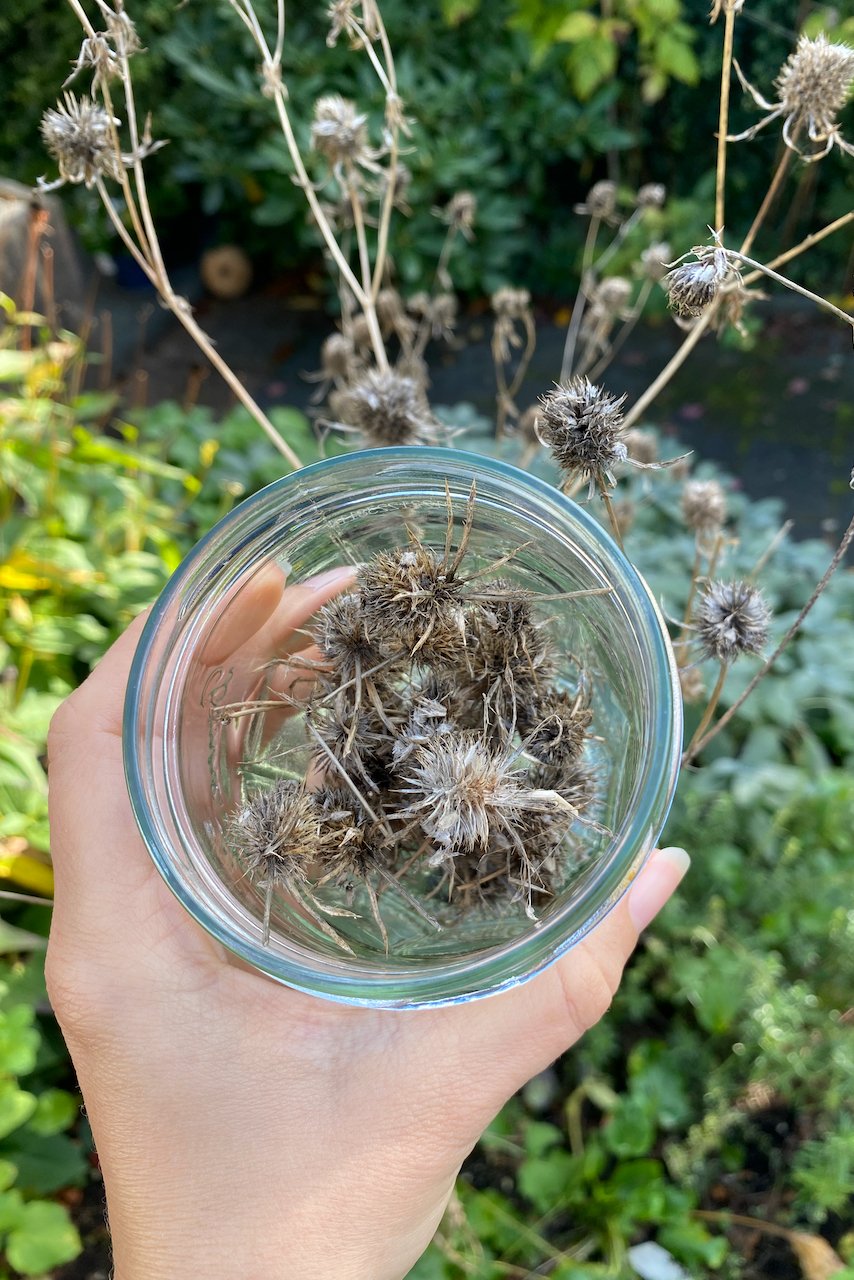
Instead, the seeds stay dormant over the cold months, and only start sprouting in spring. Some germinate in response to the temperatures warming up, some as a response to the days getting longer. Indeed, some seeds need both factors to be present in order to start growing again.
Secondly, planting seeds in the fall allows me to get a head start next spring.
The perennials that I plant now will mature and start blooming earlier than the ones I’ll start next spring. Which will free me to focus more on starting seeds for the veggie garden next year. After all, I can’t plant tomato seeds in the fall, but I can definitely plant black-eyed Susans.
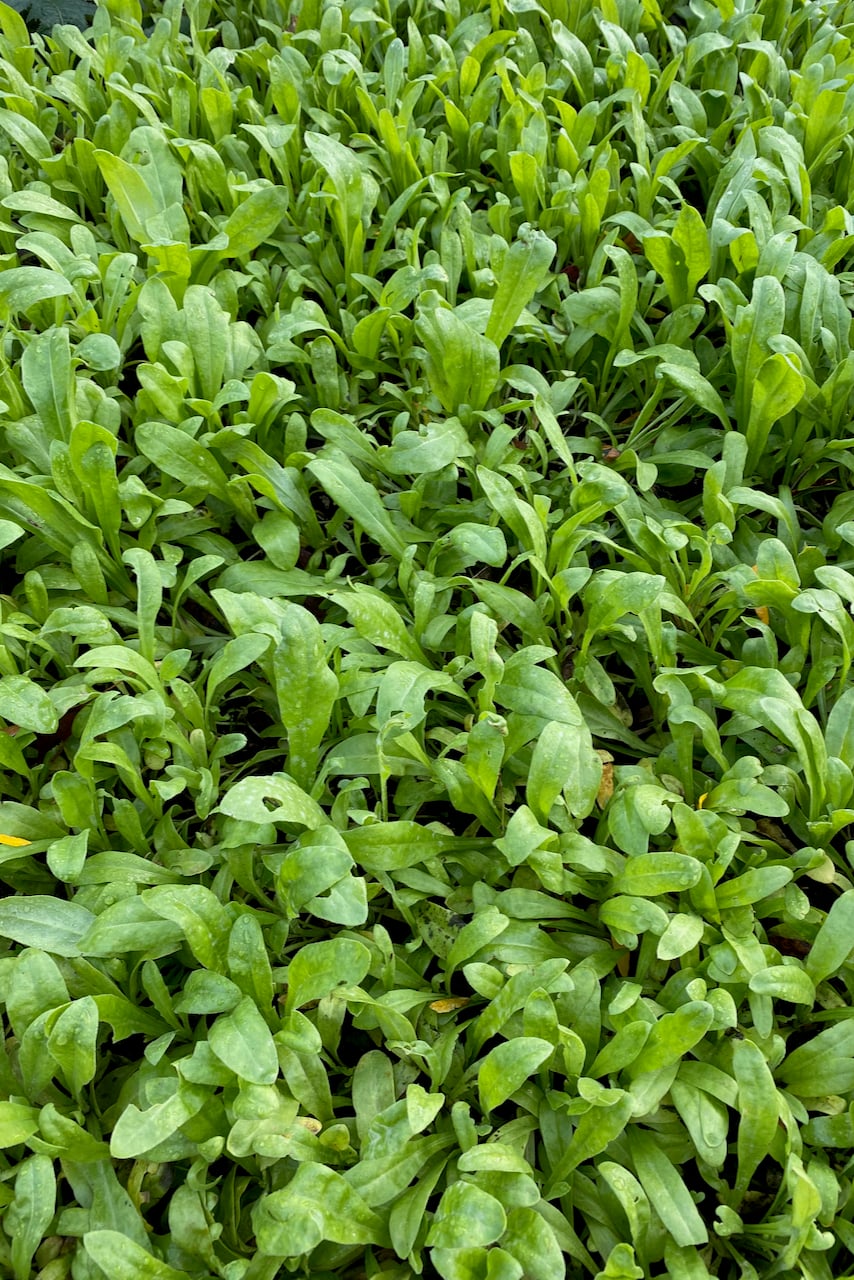
Chances are I will still sow some ornamental seeds indoors next spring (most likely in March and early April). But by then, I will know which of the seeds I’m sowing now, in the fall, did well and which ones need a bit of supplementing. So I can just focus on cold stratifying and sowing a handful of ornamentals, while others are already ticking along nicely in the garden.
If these two reasons make sense for the way you garden too, let’s have a look together at what seeds we can start in the fall for a colorful and welcoming garden next year.
1. Anise hyssop (Agastache)
If one day I chose to write an ode to an herb, it would certainly be dedicated to anise hyssop. For now, I just have a list of reasons why we should all grow this delicious plant that doubles as an ornamental. Allow me to brag and tell you that the article linked above has been very popular with our Rural Sprout readers.

Anise hyssop (or hyssop anise) has edible leaves, flowers and seeds. And not just edible for me. Pollinators in my garden go crazy over the flowers. The anise hyssop seeds are really tiny and they require cold stratification.
So planting them in the fall is a great way to naturally expose them to the cold temperatures they need for germination. Just gently scratch them into the ground. There’s no need to bury them too deeply.
2. Calendula
I could give you ten reasons why every gardener should grow calendula (or pot marigold, if you’re still using its old-fashioned name).
But I’ll start with just one. Calendula are a natural pest control ally in our organic gardens. Sprinkle some seeds now where you’ll transplant your tomatoes next year and you just got yourself an aphid trap and a beneficial insect magnet at the same time.
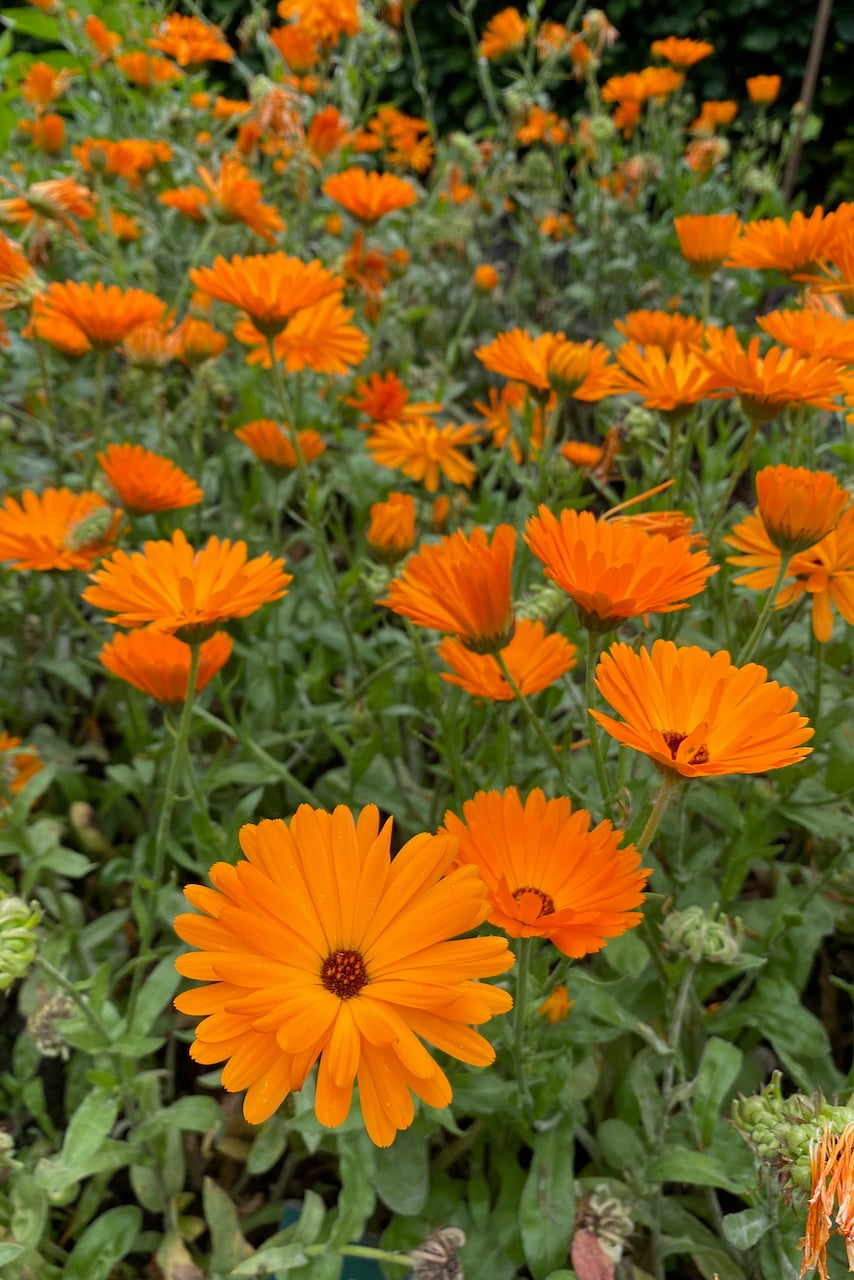
Ladybugs, hoverflies and lacewings are all big fans of calendula. And it just so happens that these insects are also big devourers of aphids. If we sow calendula next to the plants that take the brunt of aphid love, we won’t have to spend next summer fighting off the infestation.
Even if calendula seeds sprout before winter, they are often sturdy enough to survive mild winters intact and bloom by mid-spring. Then we can sow them again in spring to extend calendula season.
3. Love-in-a-mist (Nigella)
It seems like we’ve just collected the seeds in August. Is it really time to start sowing them again? Nigella seeds start sprouting in response to the increase in light level, rather than in temperature. So if they’re already in place in spring, they’re more likely to get a head start when the days will be getting longer.
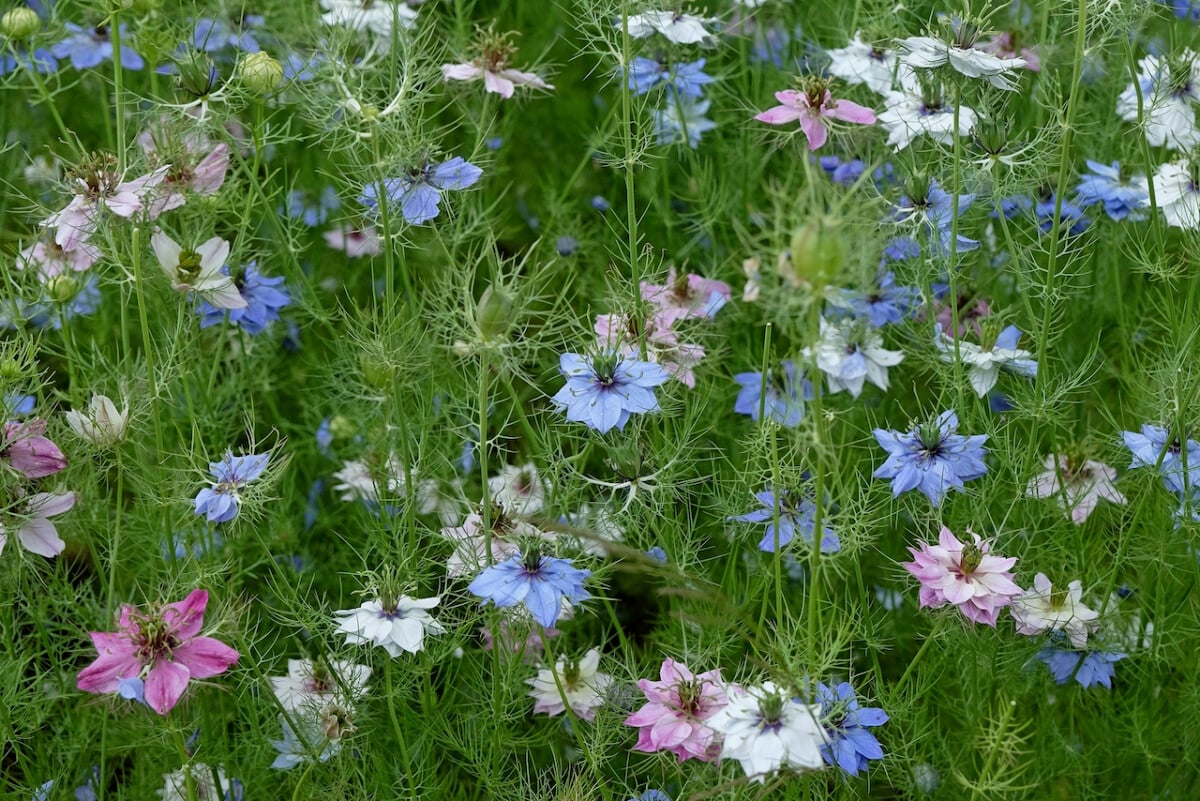
I recommend sowing nigella straight in the spot where you want them next year because they really don’t do well when we transplant them. You can plant nigella in larger clumps – as a gap filler in garden beds or borders – to get that “waving in the breeze” effect in early summer.
My favorite love-in-a-mist is the traditional blue – usually a Miss Jekyll cultivar – but I’m experimenting with mixing them with white, purple and even fuchsia nigella cultivars.
4. Coreopsis
Coreopsis are still in bloom in October in my temperate climate, so it seems a bit weird to write about starting them from seed now. But that’s precisely why. This is the time of year when they would disperse their seeds naturally anyway.
If you’ve never grown coreopsis, or if you’re just bringing a new color combo coreopsis into your garden, now’s the time to get them started from seed.
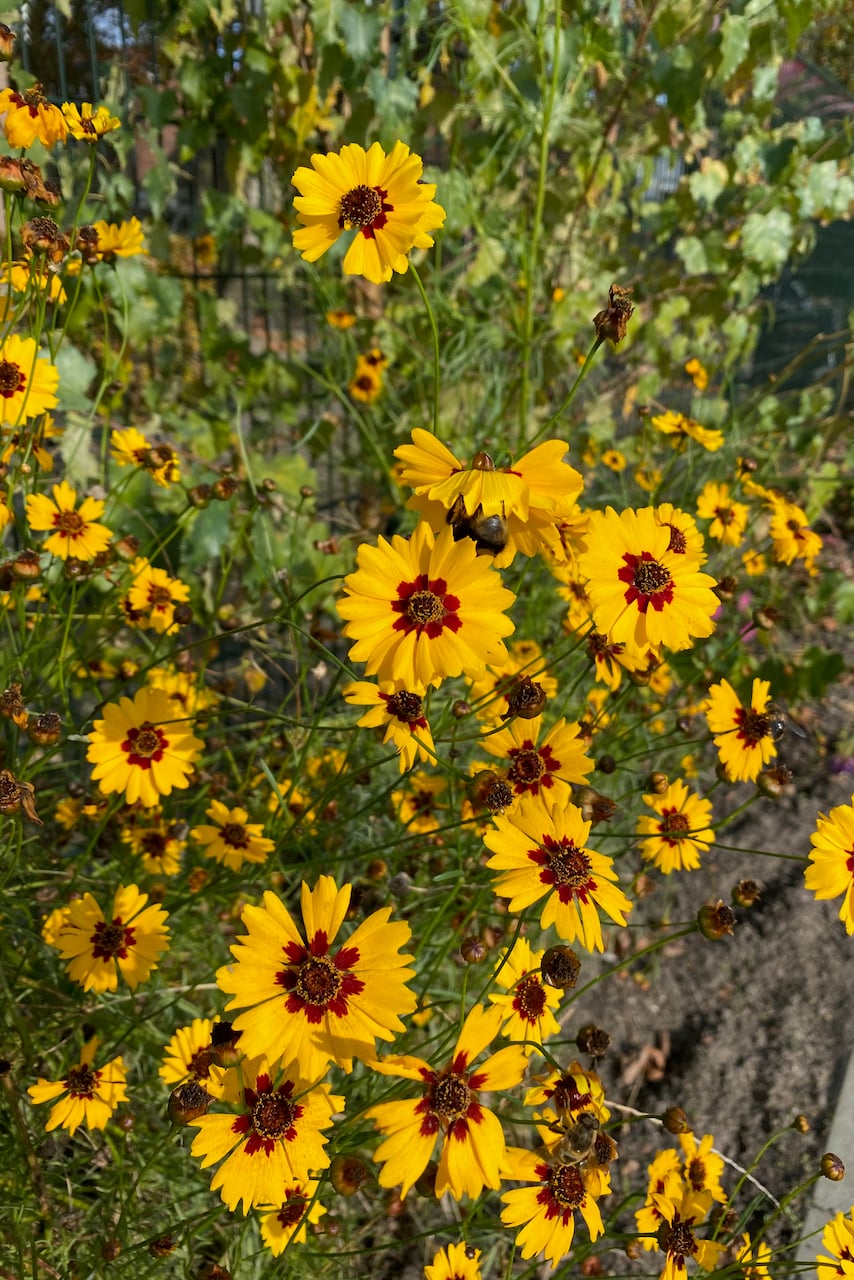
There are two popular types of corepsis – threadleaf coreopsis (Coreopsis verticillata) and lanceleaf coreopsis (Coreopsis lanceolata). They are both native to North America, and once you get them started, they will self-seed with abandon. The trick is to have a bit of patience.
You might only get foliage and a few sporadic flowers during its first summer in your garden. But give it another year and you’ll notice the mounds getting larger and bloomier (don’t know if that’s a word, but it is now). Coreopsis like full sun, but they will thrive in poor sandy soil as long as it is draining well.
5. Golden marguerite (Cota tinctoria or Anthemis tinctoria)
Speaking of an ornamental that should definitely be more popular than it is, allow me to introduce you to golden marguerite.
It’s also known as yellow chamomile or oxeye chamomile (although it’s much larger than chamomile) or Boston daisy / Paris daisy (although it’s not a daisy).
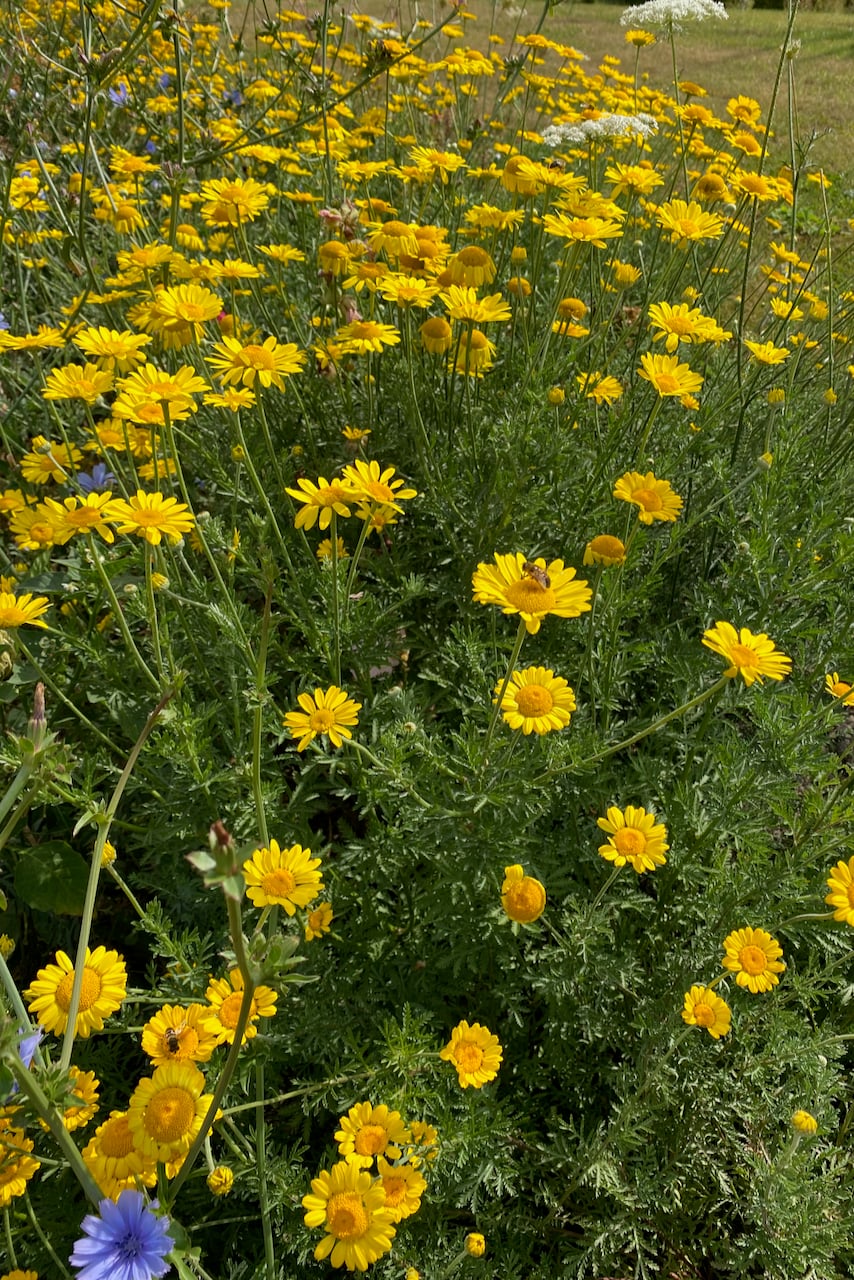
Perhaps it’s these many names that it’s known as that have kept it from making more of a name for itself.
Golden marguerite is a short-lived perennial native to Europe and Western Asia and naturalized in some parts of North America. You can start it from seed this fall and enjoy its bright yellow flowers the following fall. Although it might take until the second year to reach its full floral stride.
6. Snapdragons (Antirrhinum majus)
Snapdragons are known as prolific self-seeders. You can see me trying to wrangle snapdragon seeds in a jar in August in this article, just in time to get them ready for a seed swap in September. And I’ll be planting the snapdragon seeds that I got now, in the fall, just as nature is doing.
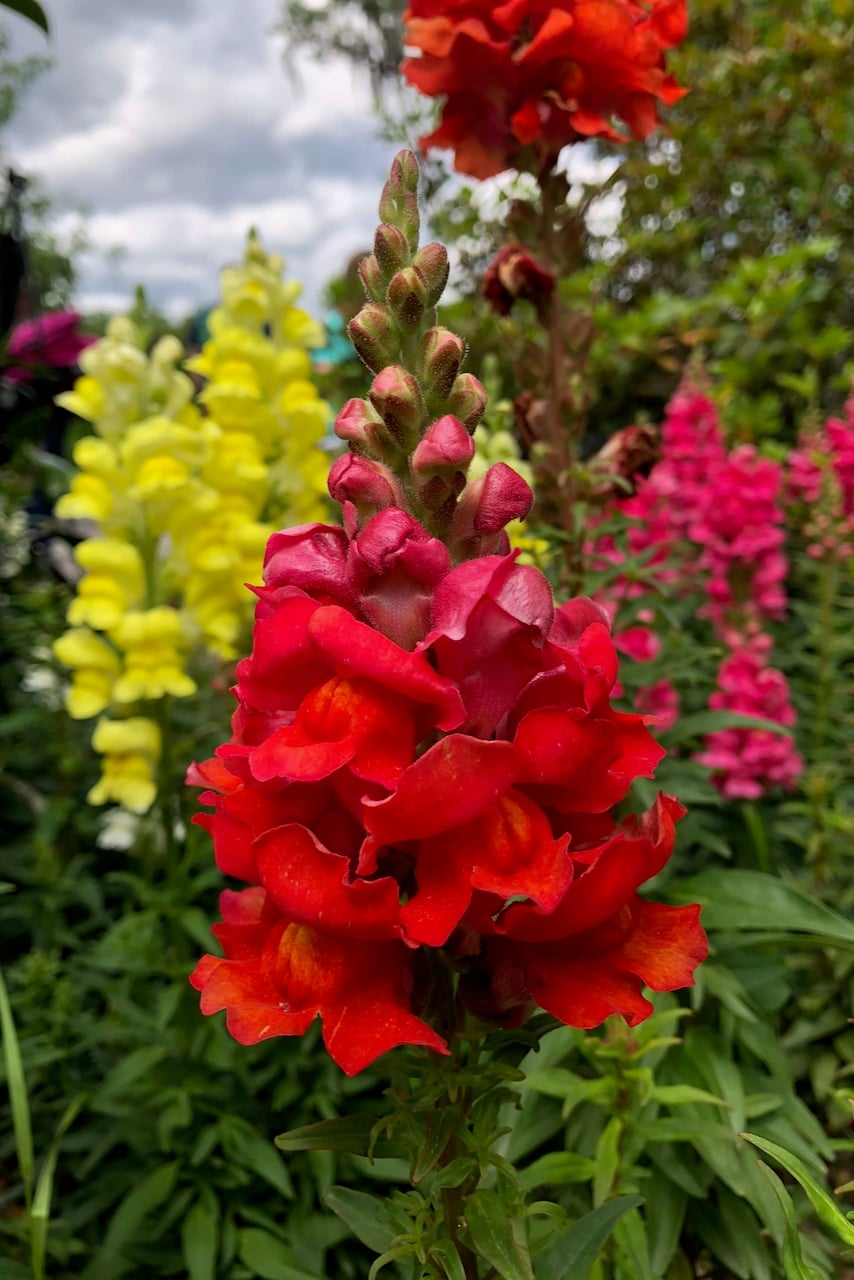
Snapdragon seeds are very small; and like most minuscule seeds, we just need to scatter them around the surface of the soil and not worry about burying them too deeply.
7. Blue vervain (Verbena hastata)
I initially had Verbena bonariensis on this list, but I already wrote an entire article about it with details on how easy it is to start from seed.
So I swapped it out for its less famous sister, Verbena hastata, also known as American vervain or blue vervain.
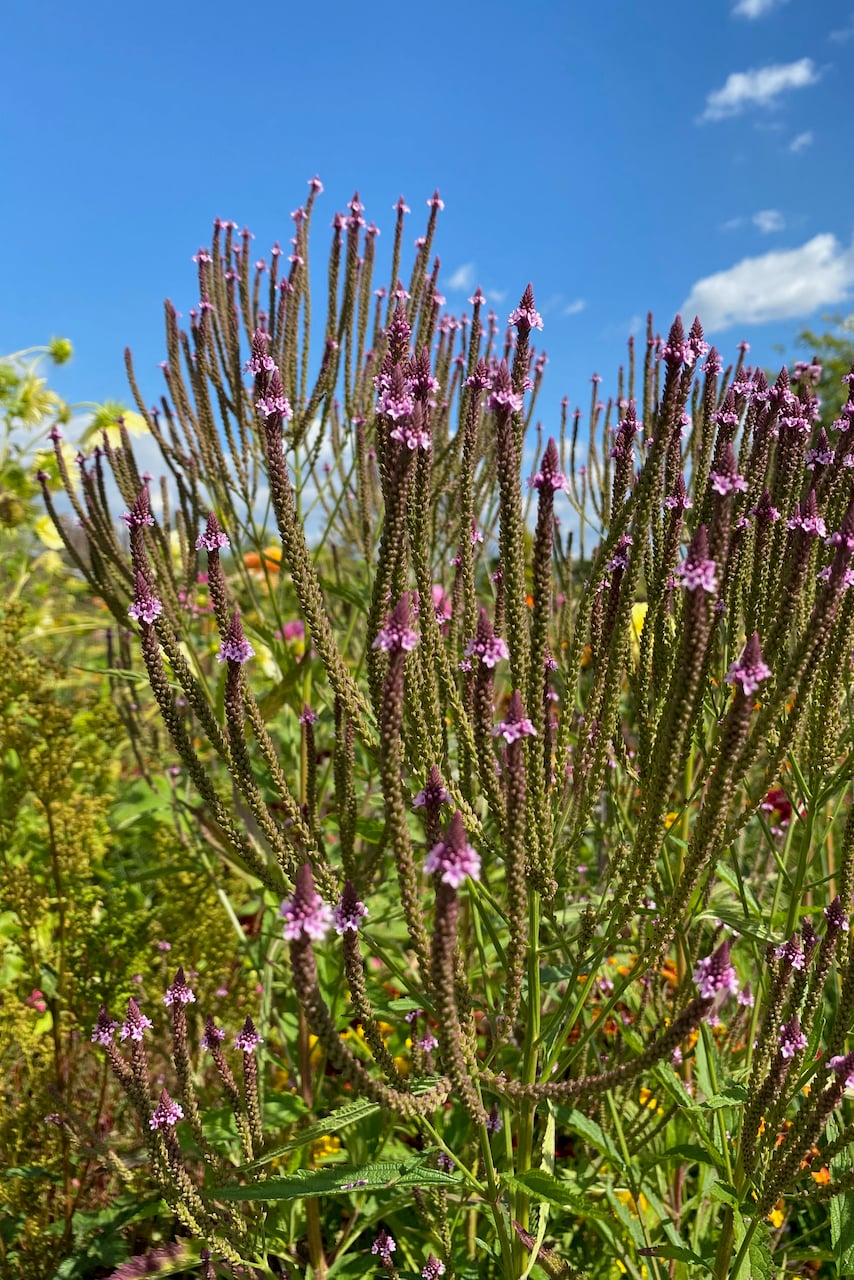
A North American native, this beautiful short-lived perennial self-seeds readily in the fall. Which is exactly when we can intentionally seed it too, if we’re just bringing it into the garden this year. It can do well in full sun or part sun, but it really thrives in moist soil. It’s the perfect candidate for a meadow garden.
The myriad of spires (which remind me of an antique candelabra, à la Beauty and the Beast) start opening up into blooms from the bottom up in early July.
8. Sea holly (Eryngium)
I will never get tired of promoting sea holly for the garden, mostly because I wish someone had recommended it to me sooner.
Sea holly plants add a statuesque visual interest to any border; bees and hoverflies love them; and you can get them in a shade of electric blue that’s hard to replicate in nature. Although I’ve also become a big fan of sea holly in shades of silver and claret.
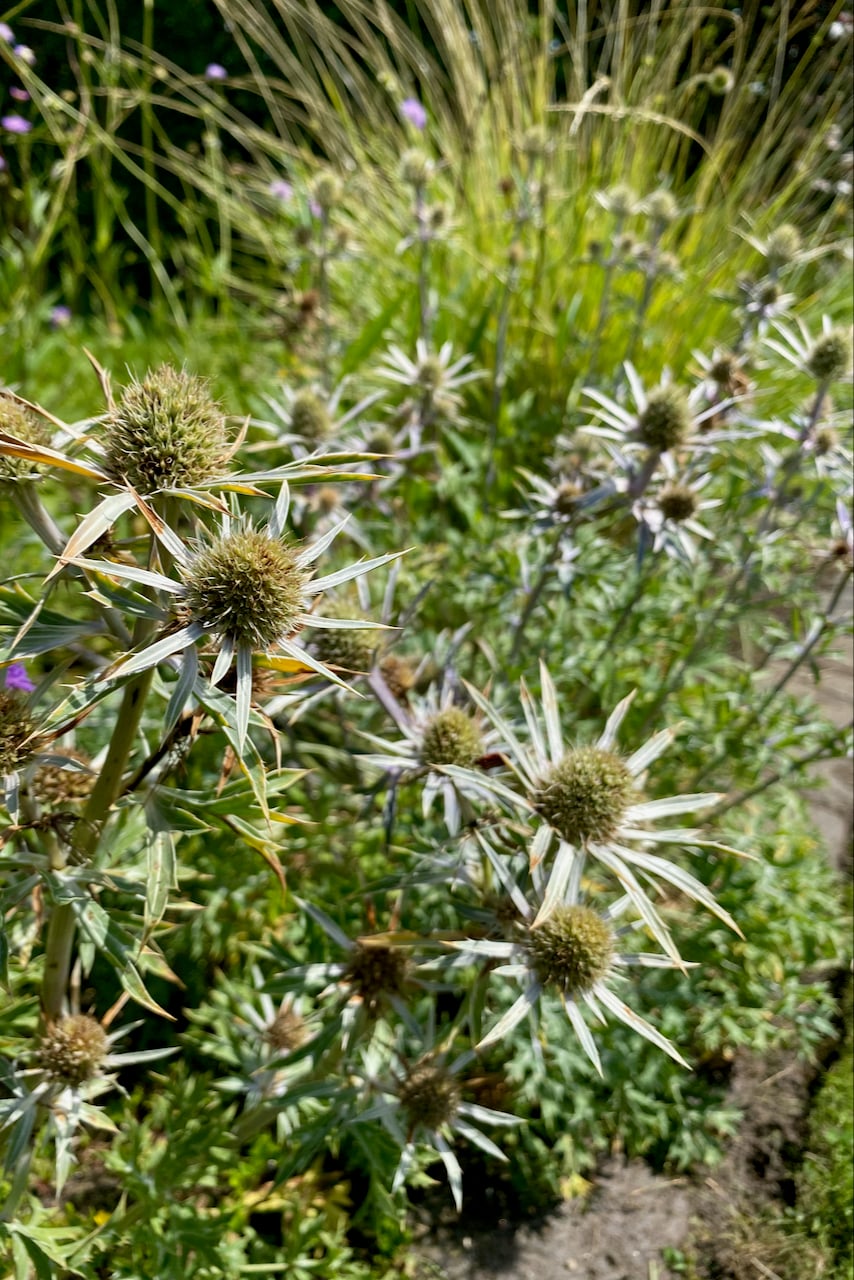
Their cone-shaped flower heads surrounded by a starry tiara really shine, both in the summer sun and in the autumn rain.
Sea holly get a bit of a bad reputation as being sun worshippers, but I found they’re not very fussy about growing in part shade either. Their deep tap roots make them resistant to drought and the spikey leaves means that no insects touch them.
If we plant eryngium seeds in the fall, they’ll start sprouting by next spring.
9. Cosmos
Cosmos is one of those fast-growing annuals that you would be excused to categorize as a perennial because it is so ubiquitous. This pastel wispy ornamental is the perfect backdrop for a cottage garden, although it works really well as a temporary best friend to so many other perennials – from roses to asters and ornamental grasses.
Cosmos is what we call a short-day seeder.
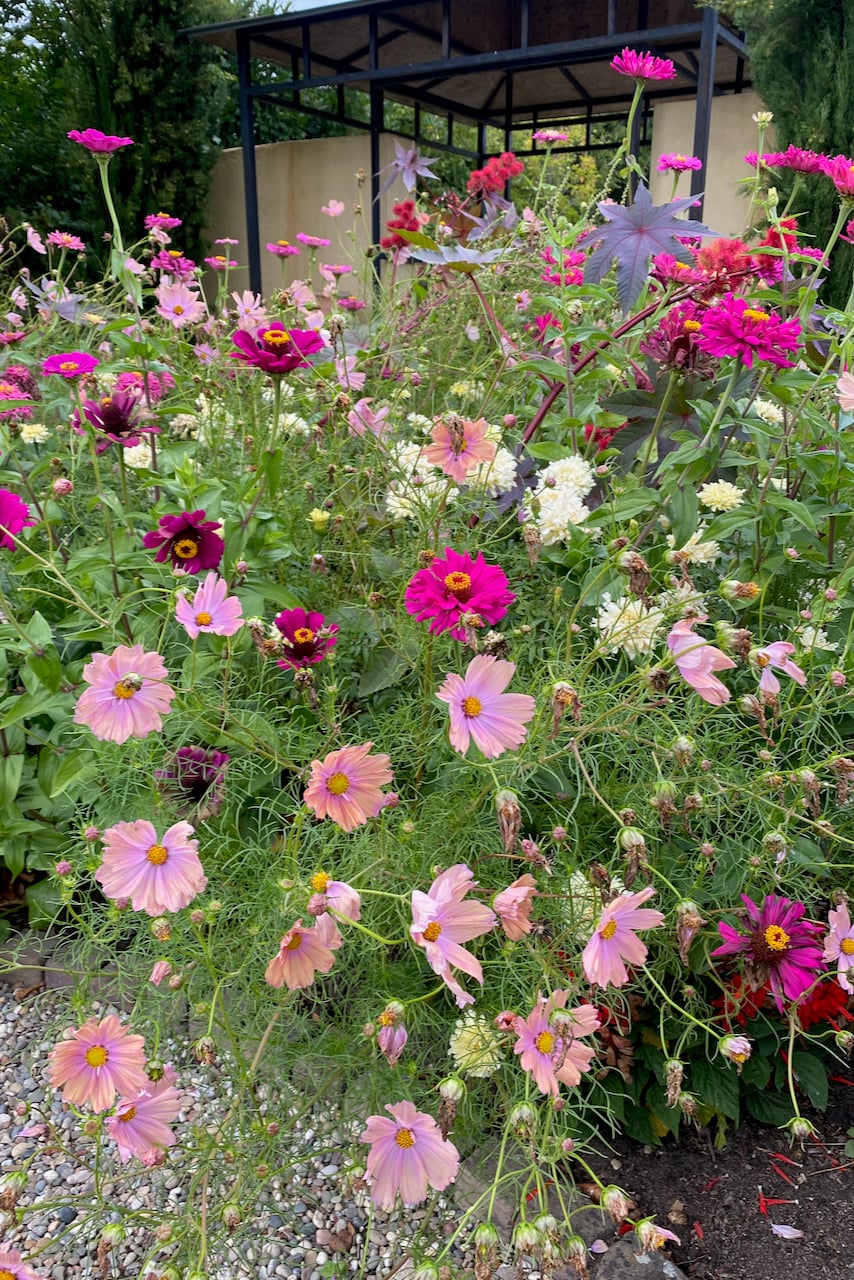
This means that when the seed germinates, it cares more about the temperature than it does about the levels of light. Cosmos can handle low light, as long as the temperature is warm enough to trigger germination.
This is why I would advise you to plant this one indoors in modules and keep it frost-free. If you want to sow it straight in the garden, you should wait until the temperature gets warmer in spring.
10. Columbine (Aquilegia)
Columbine is one of those ornamental plants that look very delicate but are in fact big toughies. The seeds do require cold in order to germinate, so they’ll happily start from seed outdoors. And the nice thing is that aquilegia are adaptable to both damp soil and dry soil.
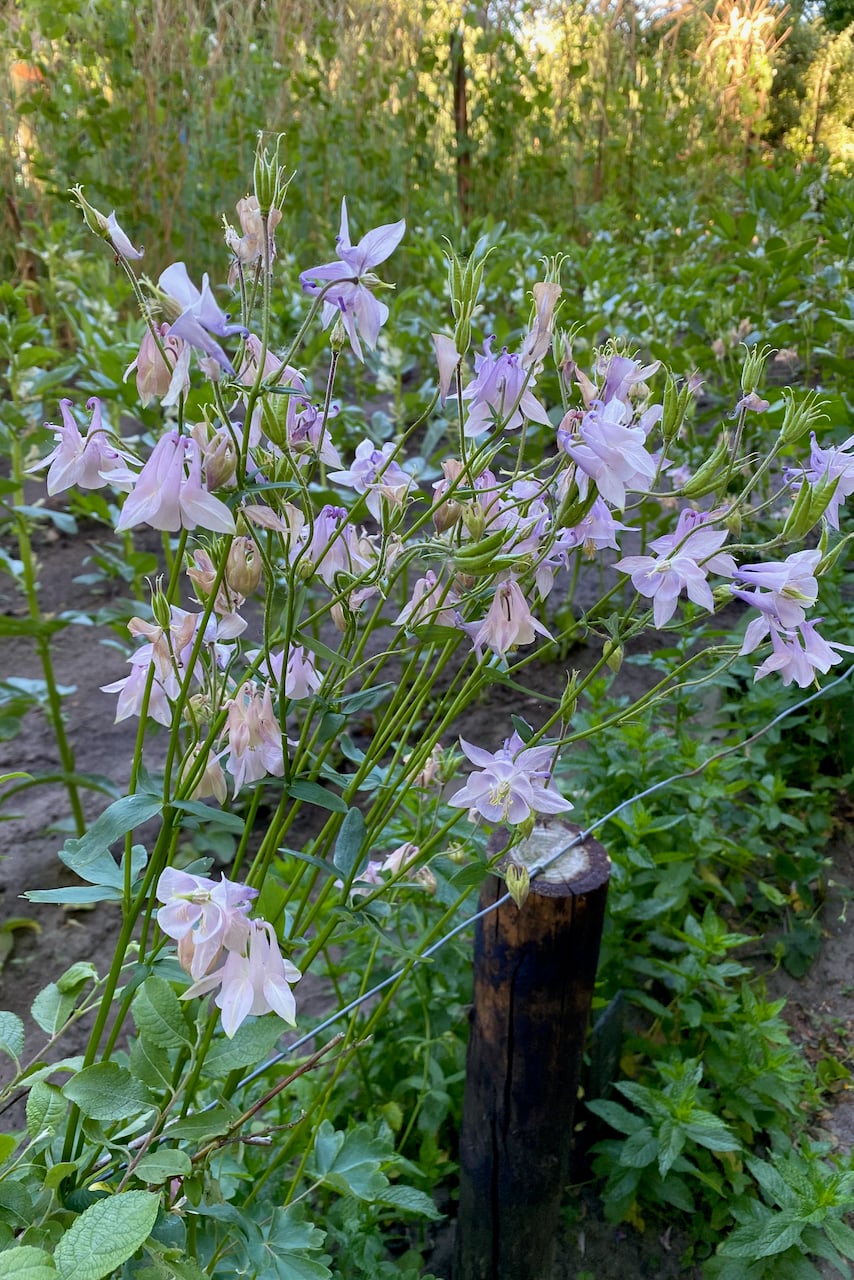
One thing that’s worth mentioning is that aquilegias (just like hellebores, for example) will easily hybridize within their own groups. So what you’re growing from seed now may be slightly different from the plant that you collected the seeds from. That’s perfectly ok, and in fact it contributes to the genetic diversity (and local adaptation) of our gardens.
11. Coneflower (Echinacea)
You didn’t think I’d write an ornamental list without a mention of this garden staple – the coneflower – did you? Both Echinacea purpurea and Echinacea pallida need cold stratification in order to trigger germination, so getting them planted in the fall is the shortcut to that.
When they’re young, coneflowers like to get as much sun as possible and will thrive in moist (but not soggy) soil that still drains well.
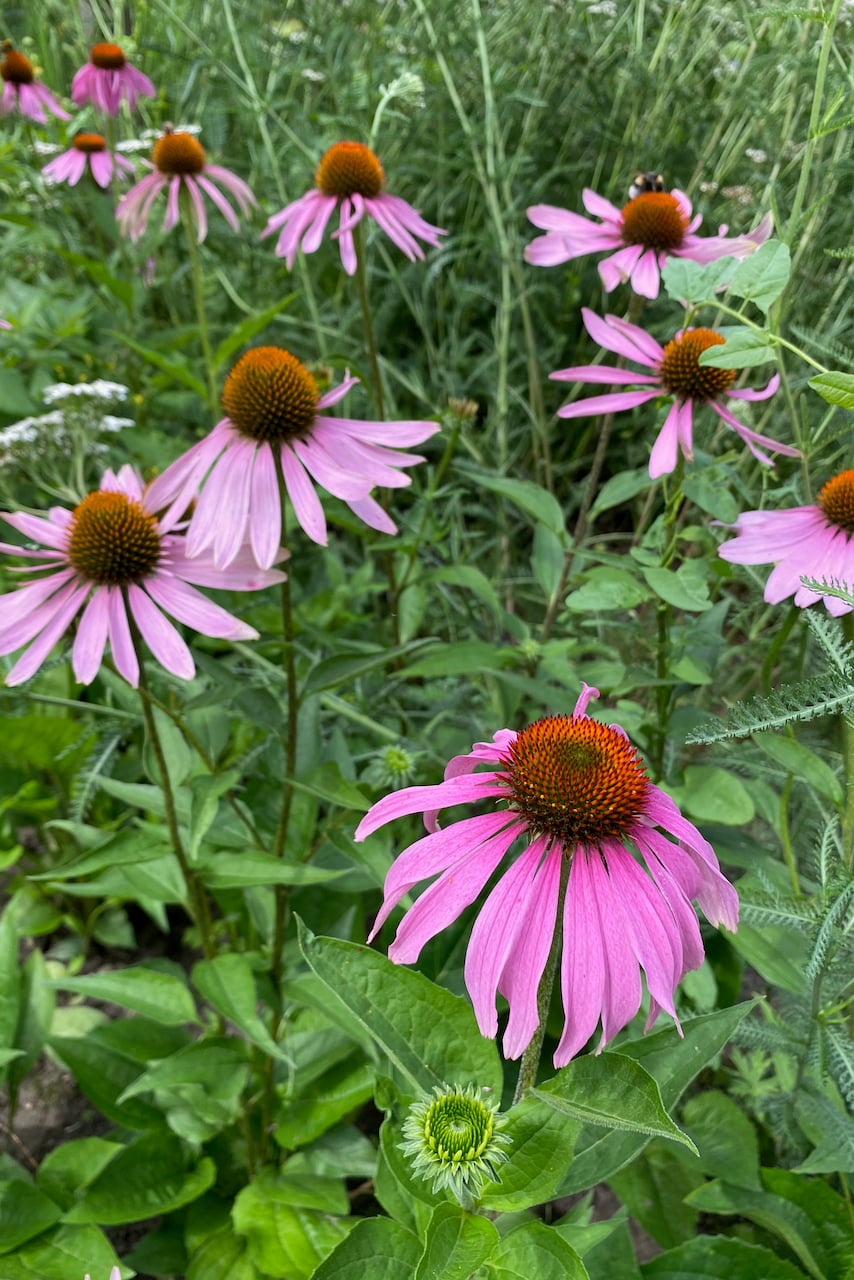
Once they get established, echinacea become very drought-tolerant plants. Just a heads up that birds really like to snack on echinacea seeds – off the plant and off the ground – so you have to cover the seeds if you want to have any plants growing next year.
12. Blanket flower (Gaillardia)
Last time I planted blanket flowers in my garden, I didn’t want to risk starting them from seed. So I bought a few starter plant cultivars and planted them in the garden in spring.
The following year, I wanted to grow some blanket flowers in a container, but the gaillardia in my garden wasn’t old enough to divide.

So I tried my luck with collecting seeds and getting them in the ground in the fall. It worked wonderfully and this is how I’m going to grow blanket flowers from now on.
If you’d like to read a few of my reasons why blanket flower is an excellent addition to any garden, have a look at this article.
13. Blazing star (Liatris)
I may or may not be cheating a bit by adding blazing star to this list. You see, if you plant it in the fall, I think you’ll have a better chance of getting it to germinate if you start it from corms. If you want to try starting it from seed, you might want to postpone that until spring.

There are two types of popular liatris, and both are native to North America. The spire blazing star (Liatris spicata) and the button blazing star (Liatris aspera) both have blossoms that are much beloved by bees and monarch butterflies.
If you’re growing a meadow garden, you can also choose meadow blazing star (Liatris ligulistylis). It looks a bit more disheveled, but it’s just as easy to grow and does really well on rocky soil.
14. Sweet alyssum (Lobularia maritima)
In their native Mediterranean region, sweet alyssums grow as perennials, swaying in the salty breeze along rocky sea coasts. On this side of the pond, however, we tend to treat them as annuals because they won’t generally survive a deep frost. But their seeds do.

Lobularia are cool weather plants. This means they like to bloom in spring, take a short break during the height of the summer heat and have another go at it when the weather cools down in the fall. Young sweet alyssum plants don’t like to stay dry for very long, so get them started somewhere you can keep an eye on them and keep them watered.
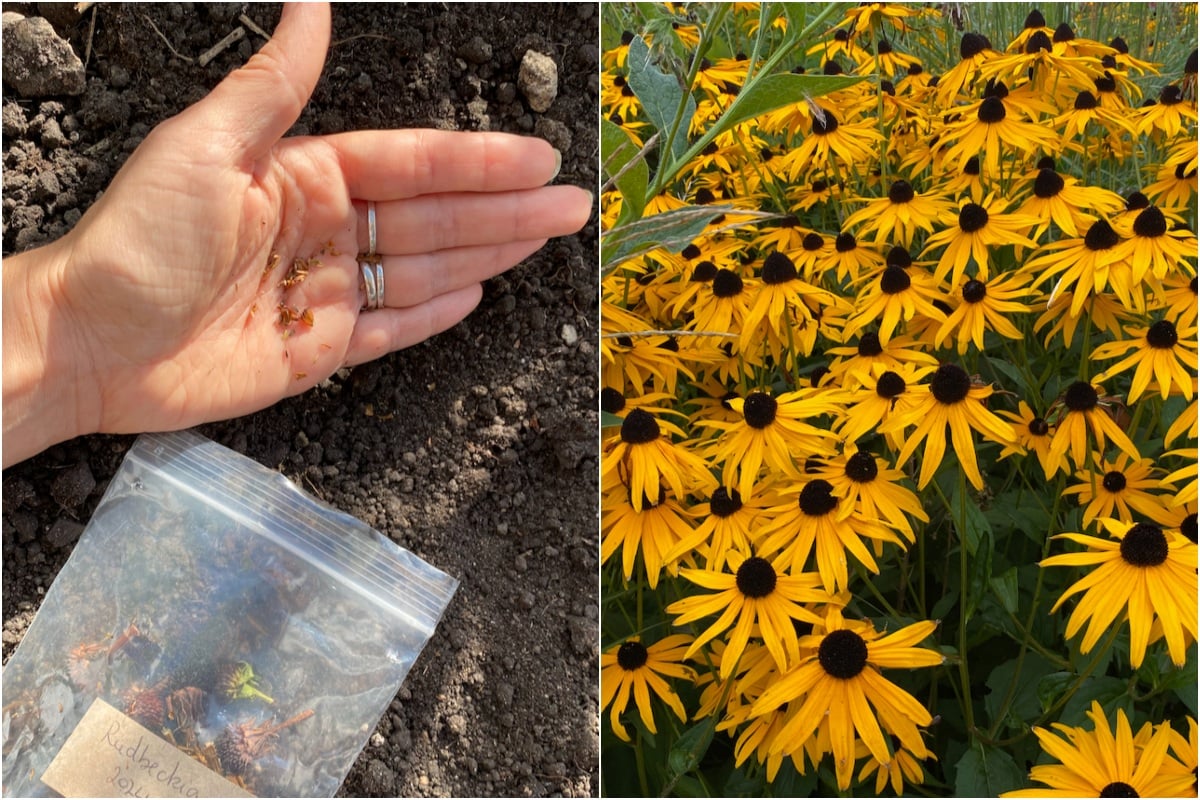
15. Black-eyed Susan (Rudbeckia)
There are so many ways to get some black-eyed Susans into our gardens.
We can divide them. Here’s how.
We can buy bare root plants. Here’s why.
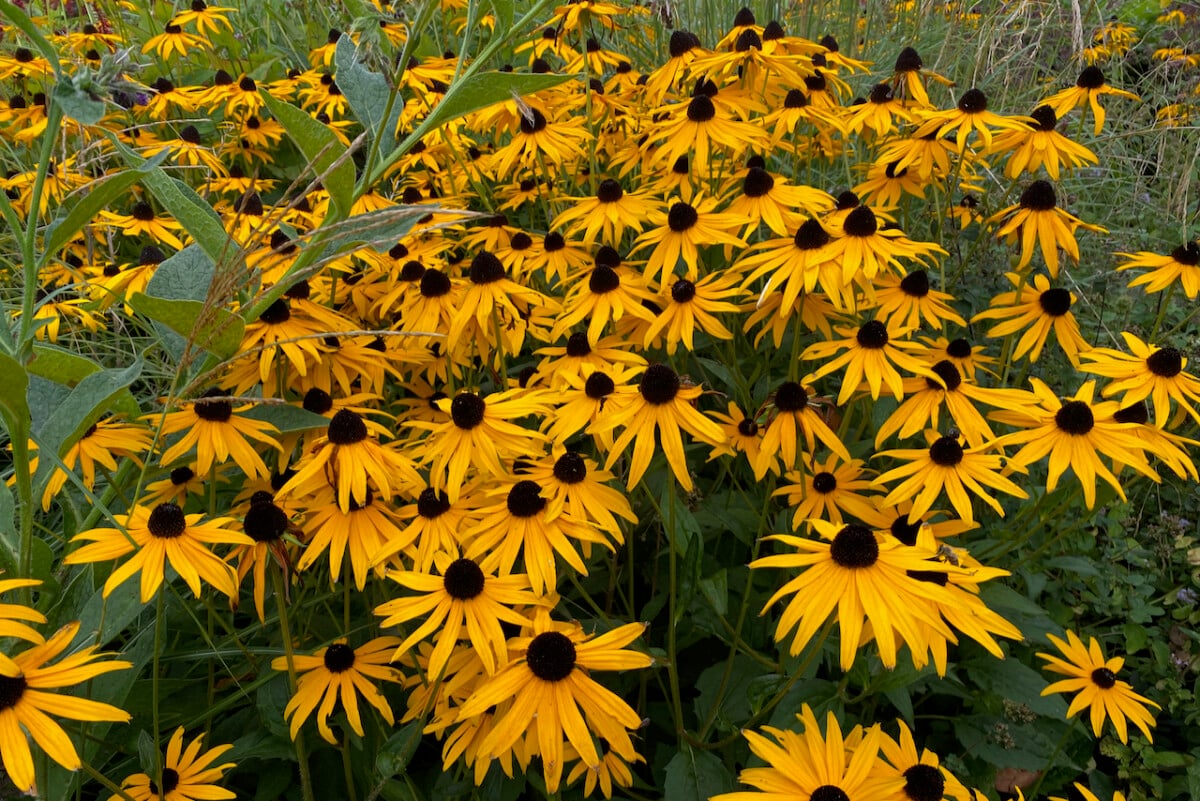
Or we can start them from seed in the fall. Rudbeckia seeds need cold stratification to germinate. Birds really like to snack on the seed when there’s not much else to eat.
So remember to cover the seeds with a bit of dirt if you’re going to sprinkle them in the garden this fall. Alternatively, you can leave a few dry seed pods to overwinter in place in the garden, as a decoy for hungry wildlife.
16. Goldenrod (Solidago)
Hang out on any (US-based) native plant forum and I’ll guarantee that you won’t scroll more than five posts deep until someone mentions goldenrod. And not just because it’s like a low-maintenance ray of sunshine in any garden. But because bees and butterflies really like to plump in late summer and fall on goldenrod nectar.

Solidago is a major source of food late into the season. But you can get your goldenrod seeds in the ground almost a full year before the bees need it if you plant the seeds this fall.
And the nice thing is that you only have to plant it once. Solidago comes back every year and the patches will get larger and larger every summer (without becoming too aggressive), even in a drought.
17. False indigo (Baptisia)
I’m working on an article of perennials you shouldn’t divide, and let’s just say baptisia is at the top of that list. Part of the robustness of the mature baptisia is its strong tap root that can reach water and nutrients deep down in the soil.
So starting it from seed is the next best way to get this perennial in our gardens. And fall is the best time to do it. False indigo seeds have an outer layer so hard, you’d think they’re covered in concrete.
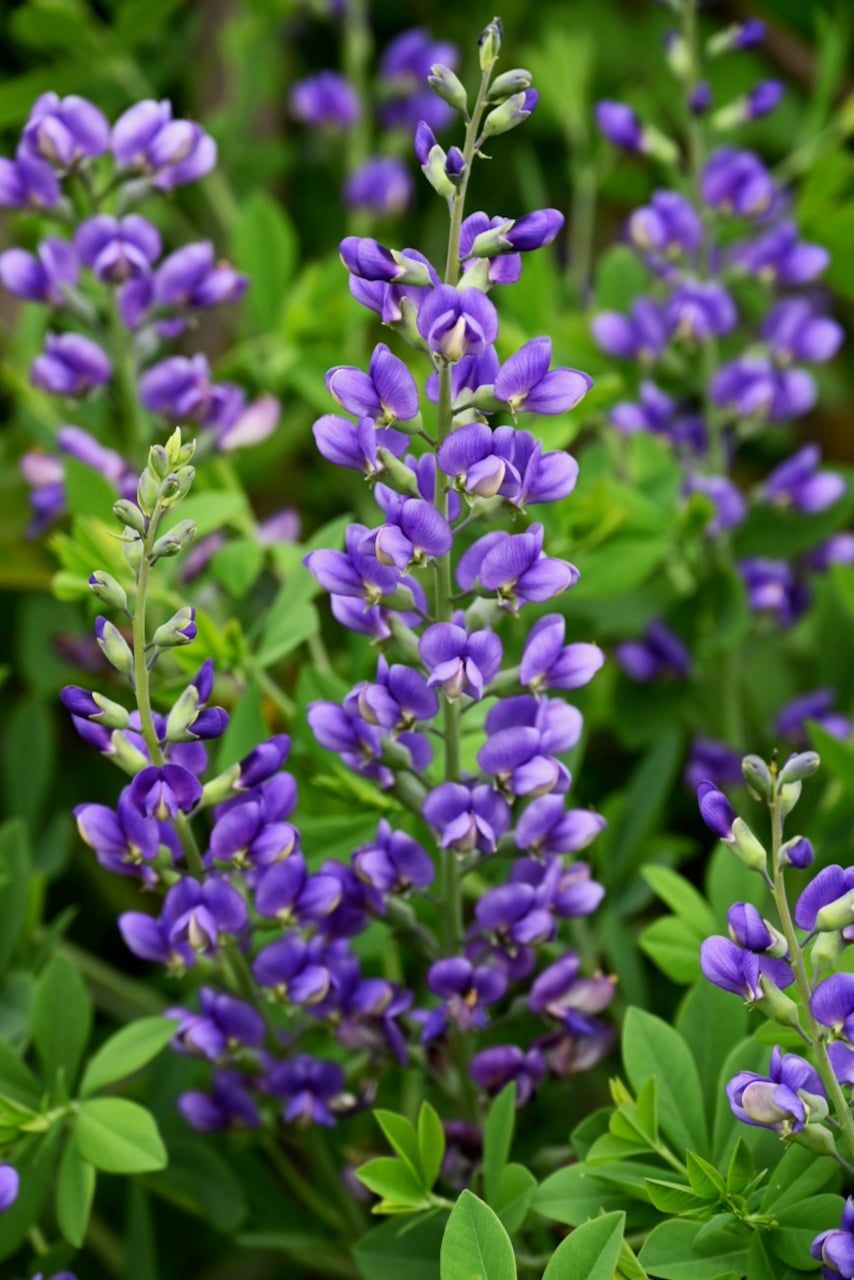
If we were to start them in spring, we’d need to master another skill: seed scarification. We would need to scratch or sandpaper the surface of the seed in order to make it permeable and trigger germination. But when we put the seed in the ground in the fall (about half an inch deep), nature takes care of this step for us.
False indigo is a slow glower, at least above ground. It spends the first couple of years just developing a strong root system, but once it’s established, you won’t be able to imagine your garden without this long-lasting perennial.
18. Bells of Ireland (Moluccella laevis)
The first time I saw these quirky annuals in a garden, I had to do a double take. Were they real or plastic? How come the spires looked so symmetric? And why is the green on green on green so mesmerizing?
Yes, Bells of Ireland are real plants, although when you see them in flower arrangements they look way too perfect to count.
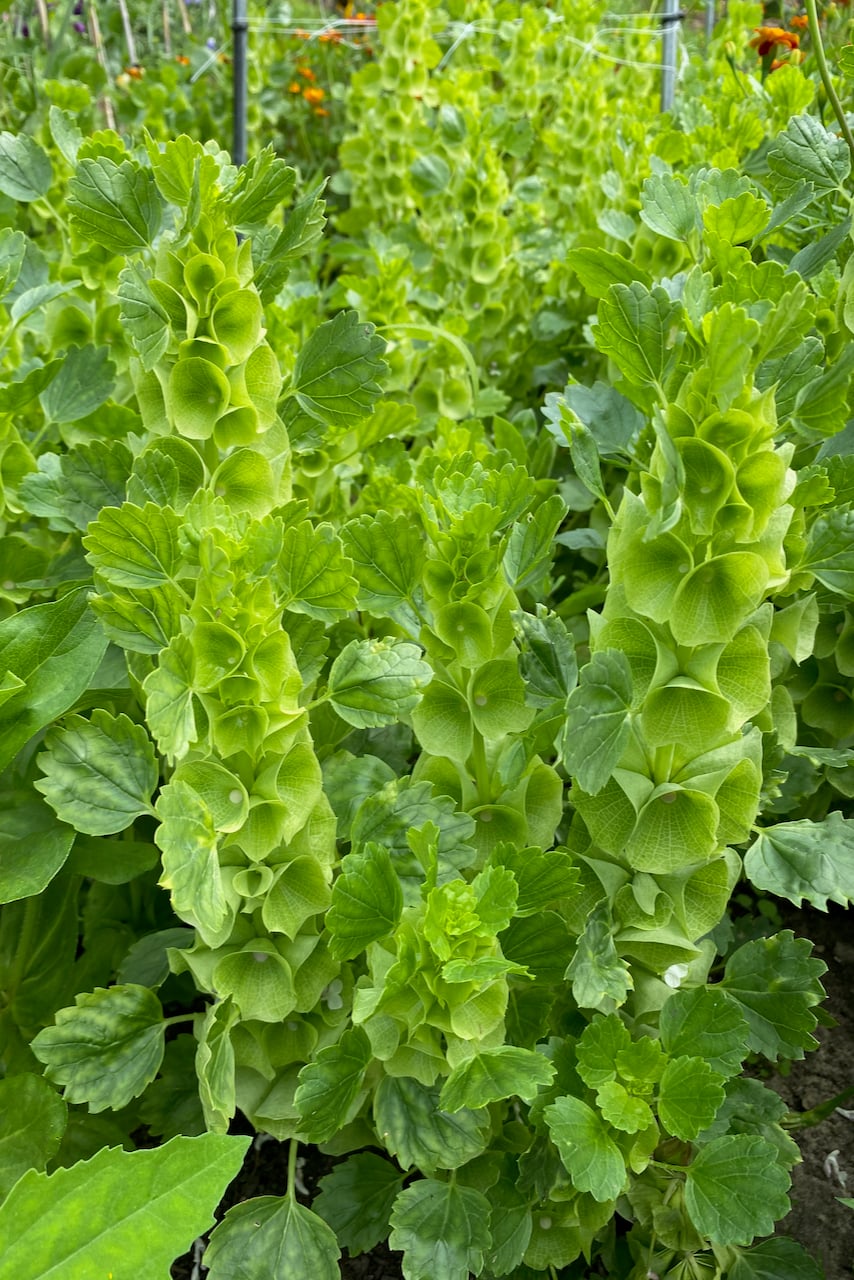
We can start them from seed in the fall (the seeds need stratification) and they’ll reach their peak show time in July and August.
The nice thing about Bells of Ireland is that they do really well in containers as well. They add an interesting texture and shape to any container design, but we can combine them with fillers and spillers of brighter colors for a more vibrant effect.
19. Larkspur (Consolida ajacis)
I know for sure that we can plant larkspur seeds in the fall because that’s exactly how I got my plants. The dry seed pods erupted and flung seeds through the fence from my neighbor’s flower patch to mine. (What a blessing it is to have neighbors with the same gardening philosophy, lemme tell ya’!)
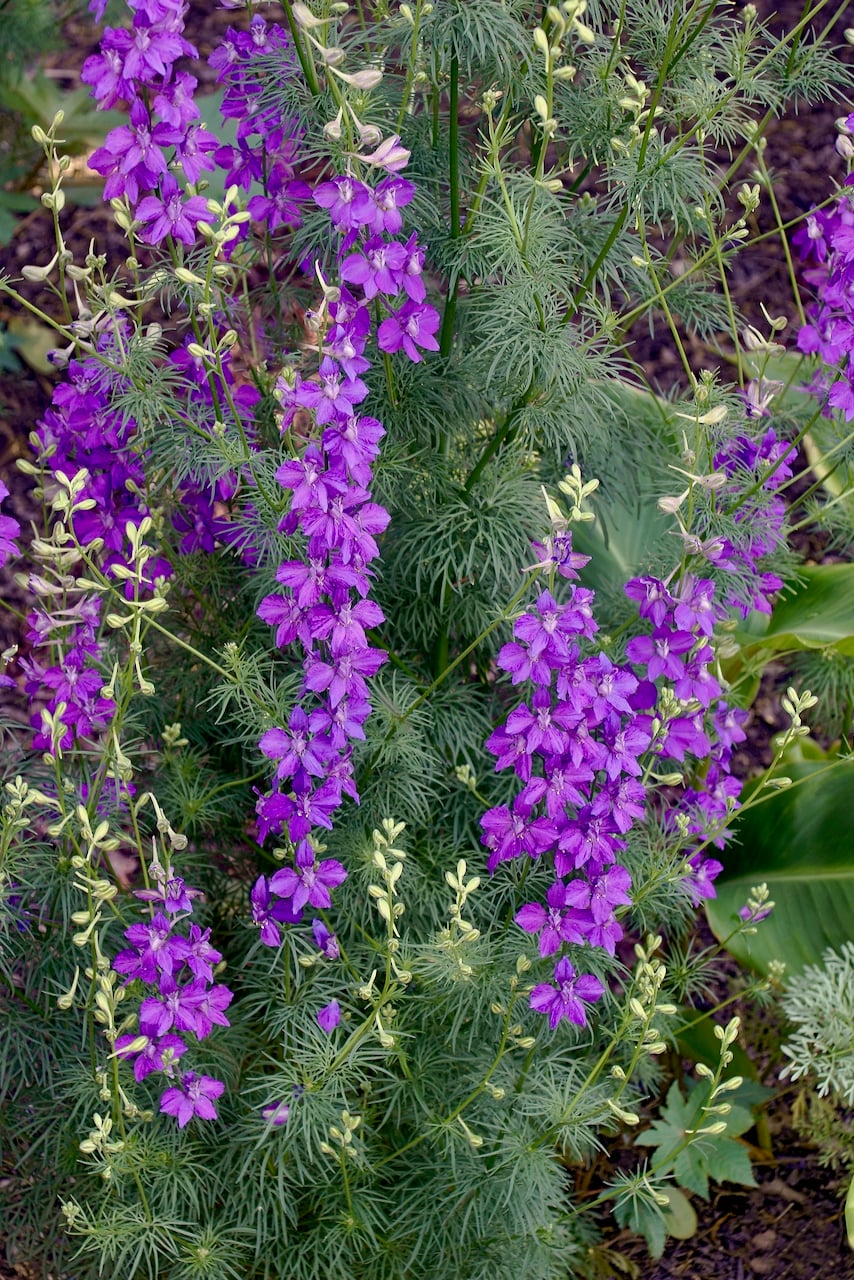
Some people use the name ‘larkspur’ to refer to delphinium, but they’re not quite the same thing. Although they both bloom in early summer, larkspur are a bit more subdued and (depending on the mildness of the winter) can behave as short-lived tender perennials. Larkspur also don’t grow as tall or top-heavy as delphiniums, so there’s no need for unsightly stakes to keep them from flopping.
20. Basket flower (Centaurea americana)
How can a plant with a Latin name worthy of a superhero have such a bland common name? Shall we petition to rename it?
Centaurea is an absolute beauty, boasting all the rich inflorescence of a thistle, but none of its prickly tendencies.

This underrated American native will attract all manner of bees and butterflies to our yards in early summer. Collect the seeds at the height of summer and sprinkle them back on the ground in the fall. Or simply allow it to perpetually self-seed.
21. Beardtongue (Penstemon)
Speaking of nonsensical common names for plants, how’s this one for a headscratcher: beard tongue? And just because they have a little fuzzy “tongue” (the pistil) that you’d need a magnifying glass to even notice.

How about we rename it to “America’s sweetheart” or “spires of color”? Knowing that there are over two hundred species of penstemon native to North America, doesn’t that sound like a better name?
Penstemons are perennials, so we’ll only need to plant them once in the fall (when they’d self-seed in the wild anyway) and enjoy them for years. Or perhaps add a new species or color every year? You can find a guide on the website of the American Penstemon Society.
22. Pansies (Viola)
I know some gardeners don’t see the point of starting pansies from seed when you can buy a twelve-pack for a bargain at any garden center. In my experience, the pansies I plant from seed in the fall hold up better than the ones I buy ready-grown. They stay in bloom longer and usually produce more flowers per plant in the long run.
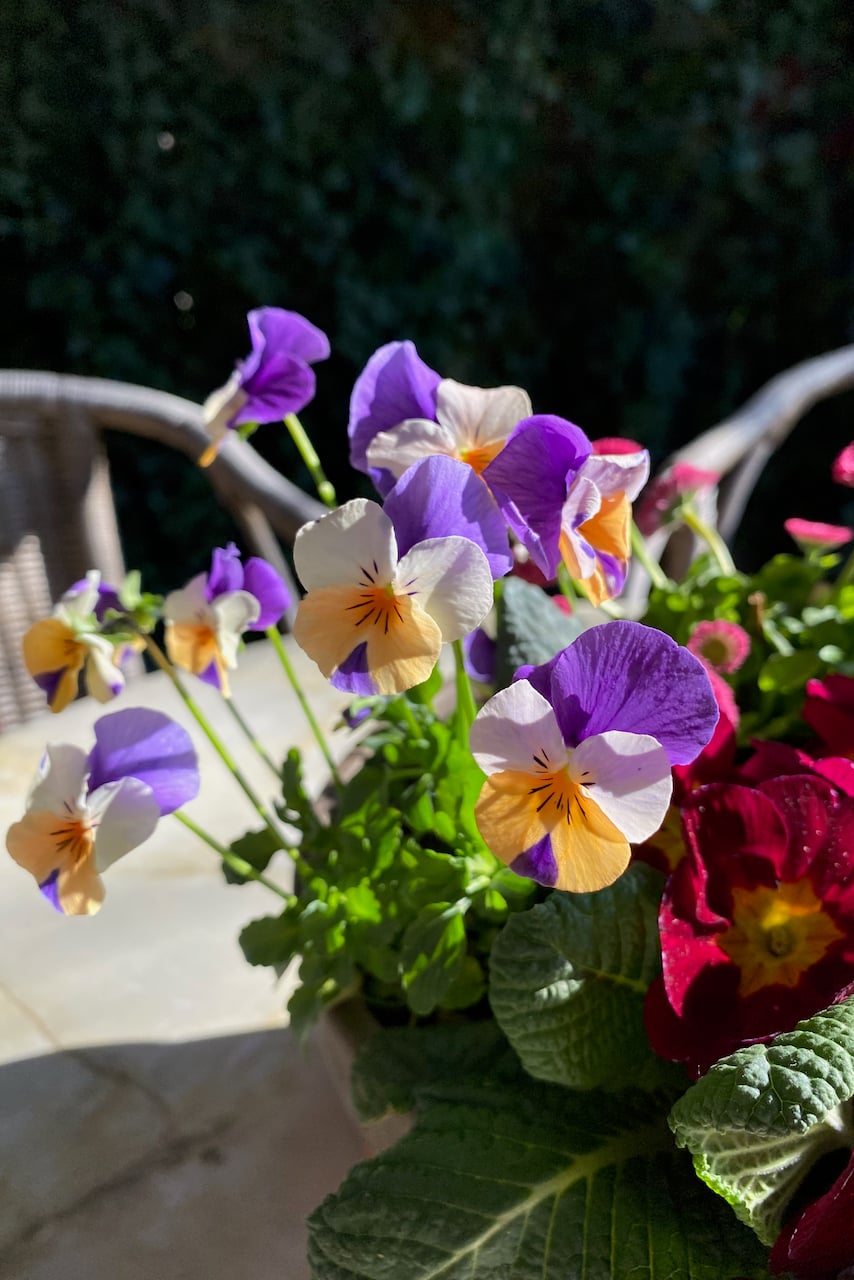
Pansies are so easy to direct sow in the garden – and mix and match colors and sizes – that you’ll be wondering why you bothered with all those plastic pots in the first place.
23. Sweet William (Dianthus)
Sweet William is another one of my current obsessions. When I first planted it, I thought it had a reputation of being hard to start from seed. Then the plant that I bought promptly died (that’s what happens with plants that are forced in a greenhouse.)
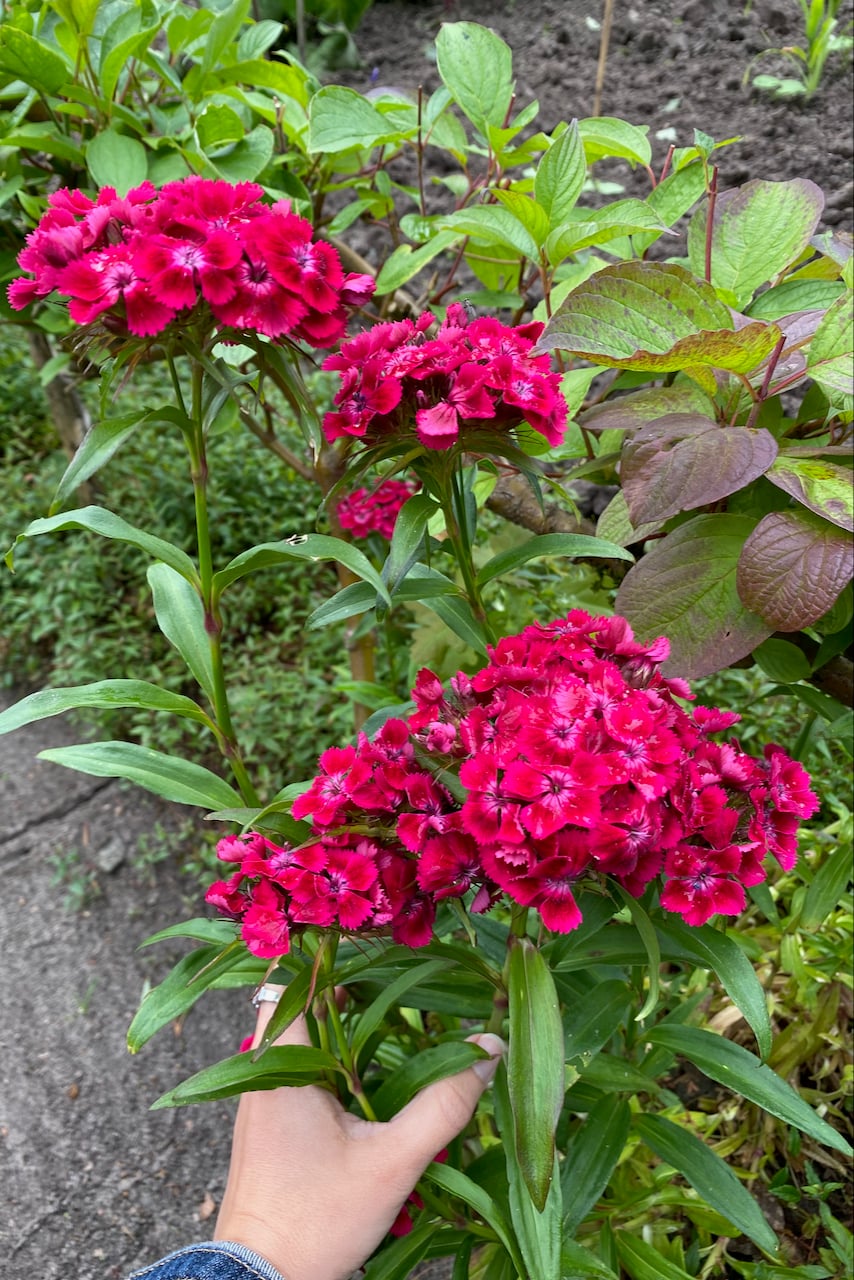
It turns out Dianthus is a bit tricky to start from seed. But only because it spends the first year just developing its roots and foliage. Once Sweet William gets established, it will start to self-seed and form thick blankets of blooms. For a bit of extra cheek, interplant a new shade of dianthus every year.
24. Culver’s root (Veronicastrum virginicum)
Did you know that whenever we have “-astrum” as the suffix of a plant’s Latin name, it means “not quite the real thing”? In the case of Culver’s root, they’re not quite the real Veronicas (commonly known as speedwell), although there is a strong resemblance.
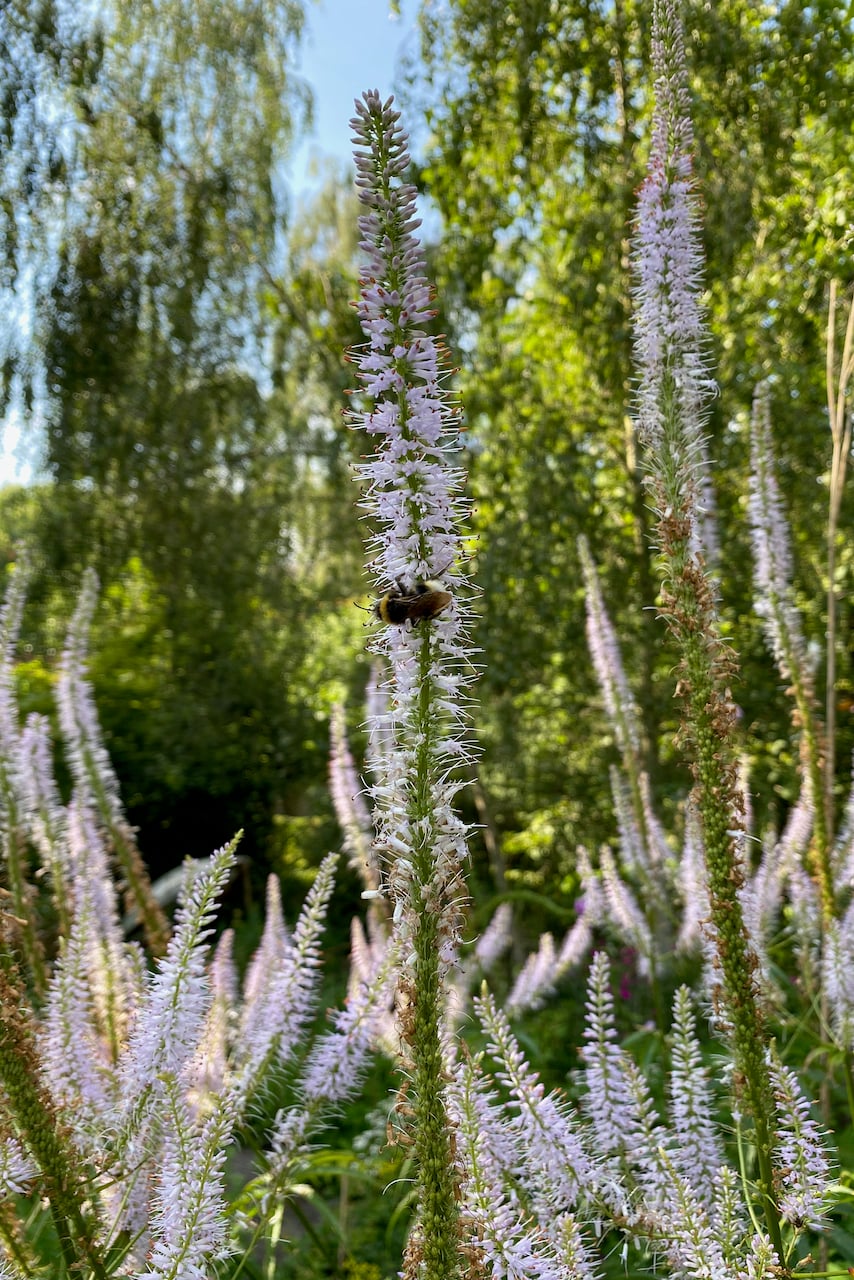
And I won’t even go into the details of what Dr. Culver used this root for. It’s not pretty.
Culver root’s candelabra of pinkish-white tubular spires (which remind me of our #7 on this list) make a great backdrop for other colorful cottage garden sweethearts that bloom at the same time, such as crocosmia and rudbeckia. The seeds are very small, so you can just scratch them into the ground in the fall without adding too much soil on top.
25. Yarrow (Achillea millefolium)
Yarrow? More like yawn-no!
Or at least that’s what I imagine our readers are thinking whenever I find an excuse to add yarrow to yet another one of my articles.
But I dare you to find me a reason not to bring this plant into your garden. It’s a tough-as-nails perennial naturalized virtually all over North America.
It tolerates drought and poor soil. It even tolerates being mowed (though hopefully not when it’s in bloom). And it blooms for ages and serves as the neighborhood snackbar for many pollinators.

Did I mention it’s edible and makes for some floral spicy tea infusions? There are so many colorful cultivars to choose from, you’ll be surprised only the white one came to mind.
26. Blue thimble flower (Gilia capitata)
I almost added garden phlox at number 26, but I thought you might already be familiar with it. So let me introduce you to one of its relatives, called blue gilly. (More like a second cousin twice removed, actually)
This underrated plant is native to the northwestern United States. It blooms from mid-spring all the way into summer on stems that can grow up to three feet tall. The more sun you plant it in, the better it will bloom.

The seeds need cold stratification in order to germinate properly, so sprinkling them in the garden in the fall is the best way to bring this blue-eyed beauty into your garden.
27. Cardinal flower (Lobelia cardinalis)
Cardinal flower is not the only type of lobelia native to North America. But it’s by far the most striking looking one, with its deep red flowers that bloom in mid- and late summer on slender stems. Hummingbirds and other pollinators love to pick at the nectar of this herbaceous perennial.
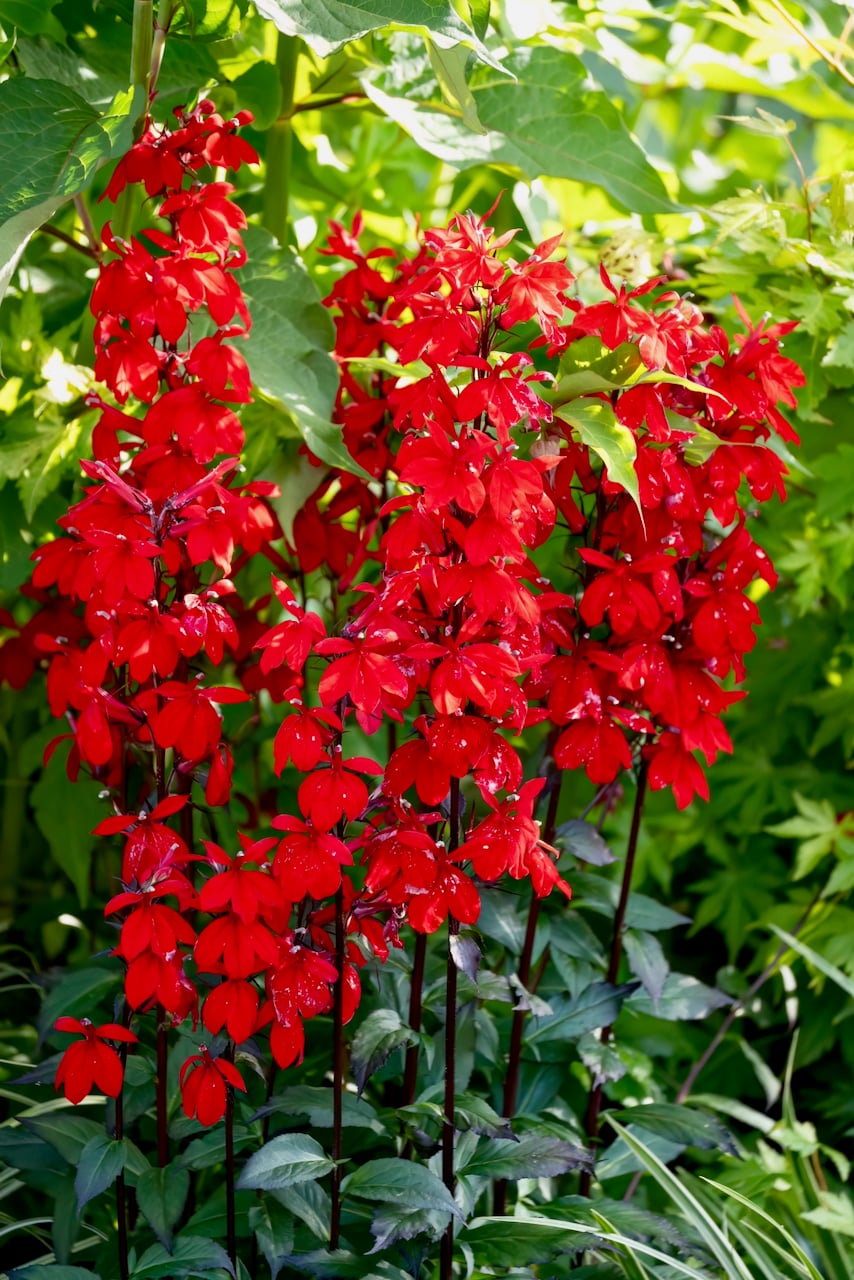
You can plant lobelia in the fall, but you must remember to place it where it will thrive: a spot in the garden that stays relatively damp, perhaps around a pond or in a lawn meadow. The more your conditions mimic its natural wetland habitat, the better your lobelia will thrive. The seeds are quite small, so don’t bury them too deeply.
28. Elegant clarkia (Clarkia unguiculata)
You may have noticed that I’m going a bit off the usual script with my ornamental flower recommendations here. My goal is to include some more plants native to North America alongside the usual suspects of ornamental gardens.
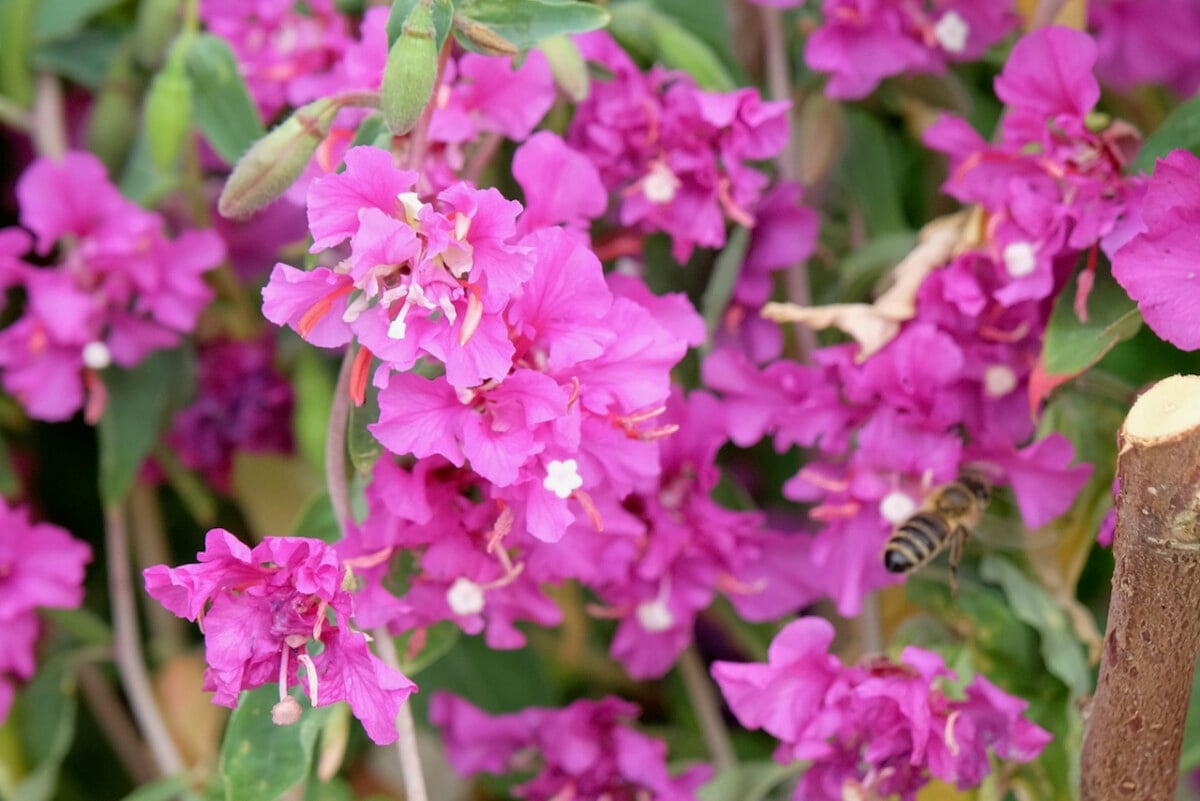
Elegant Clarkia, also known as “farewell-to-spring” is a perfect example of an underutilized annual. It is a relative of the evening primrose, a California native wildflower and loves the moist conditions of the Pacific Northwest.
But it’s not just for Instagrammers to enjoy these meadows. The slender stems that hold white, purple or pink flowers are a treat for backyard gardeners too. Just make sure you buy them – either as seeds or starter plants – from reputable nurseries (such as American Meadows), not from “meadow robbers.” The more crowded it gets, the better it flowers, reaching its peak in late spring and very early summer.
29. Pincushion flower (Scabious)
Pincusion flowers are the cheerful confetti polka dots of the garden. They come in all colors, from pink, lilac, burgundy white and rose, but only one single shape of flowerhead.
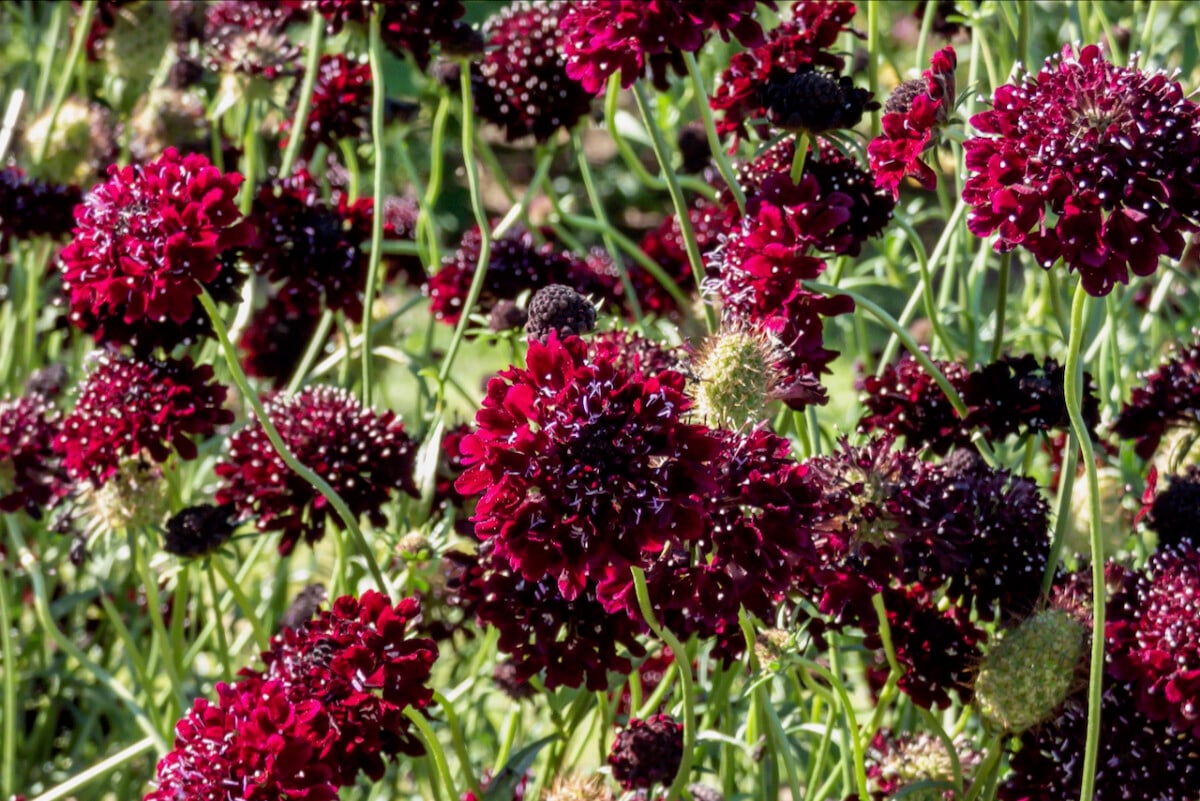
Scatter pincushion flower seeds in any type of soil because they will thrive in loamy or sandy soils and can even tolerate poor soil conditions. But they do need sun to reach their full blooming potential, so we must account for that when we plant in the fall.
30. Sneezeweed (Helenium autumnale)
I think that helenium needs a bit more love and recognition as a backyard ornamental. All species in the Helenium genus are native to North America, although it is Helenium autumnale that has the most popular hybrids of different colors and heights.
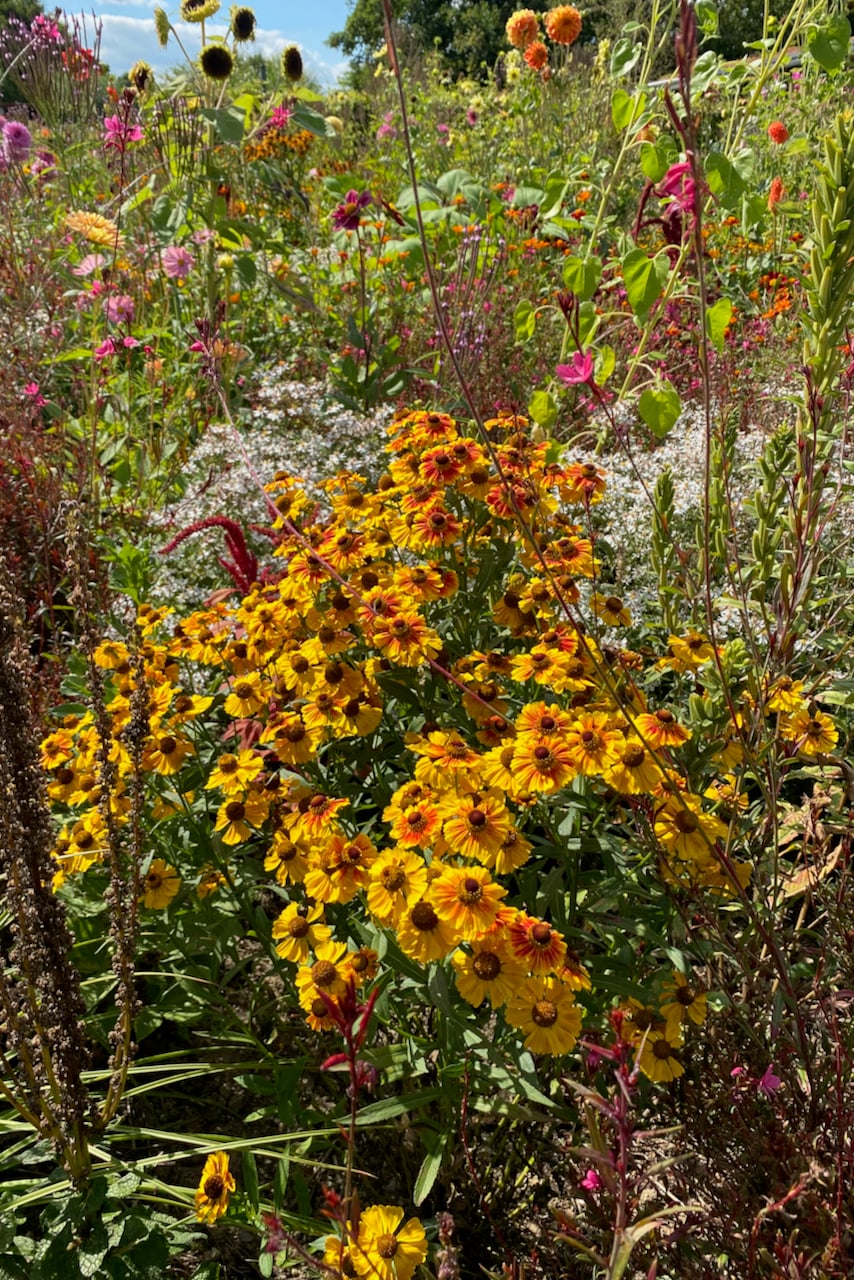
With its flowers (in shades of orange, yellow, burgundy or copper) that can last for up to two months, sneezeweed is a really autumnal plant. I may even place it above marigolds, just because I don’t need to resow it every year.
If you start helenium now, in about ten months you’ll have an explosion of color in your garden.
Get the famous Rural Sprout newsletter delivered to your inbox.
Join the 50,000+ gardeners who get timely gardening tutorials, tips and tasks delivered direct to their inbox.