

Where I live, columbine grows wild all over the mountains. I see it when I’m out hiking, and I feel as though I’ve stumbled into a fairytale.

I fully expect some mythical creature to come bounding out of nowhere to invite me to tea. Naturally, it makes a delicate and beautiful addition to your perennial flower garden.
It’s no wonder, then, that so many gardeners fall in love with it.
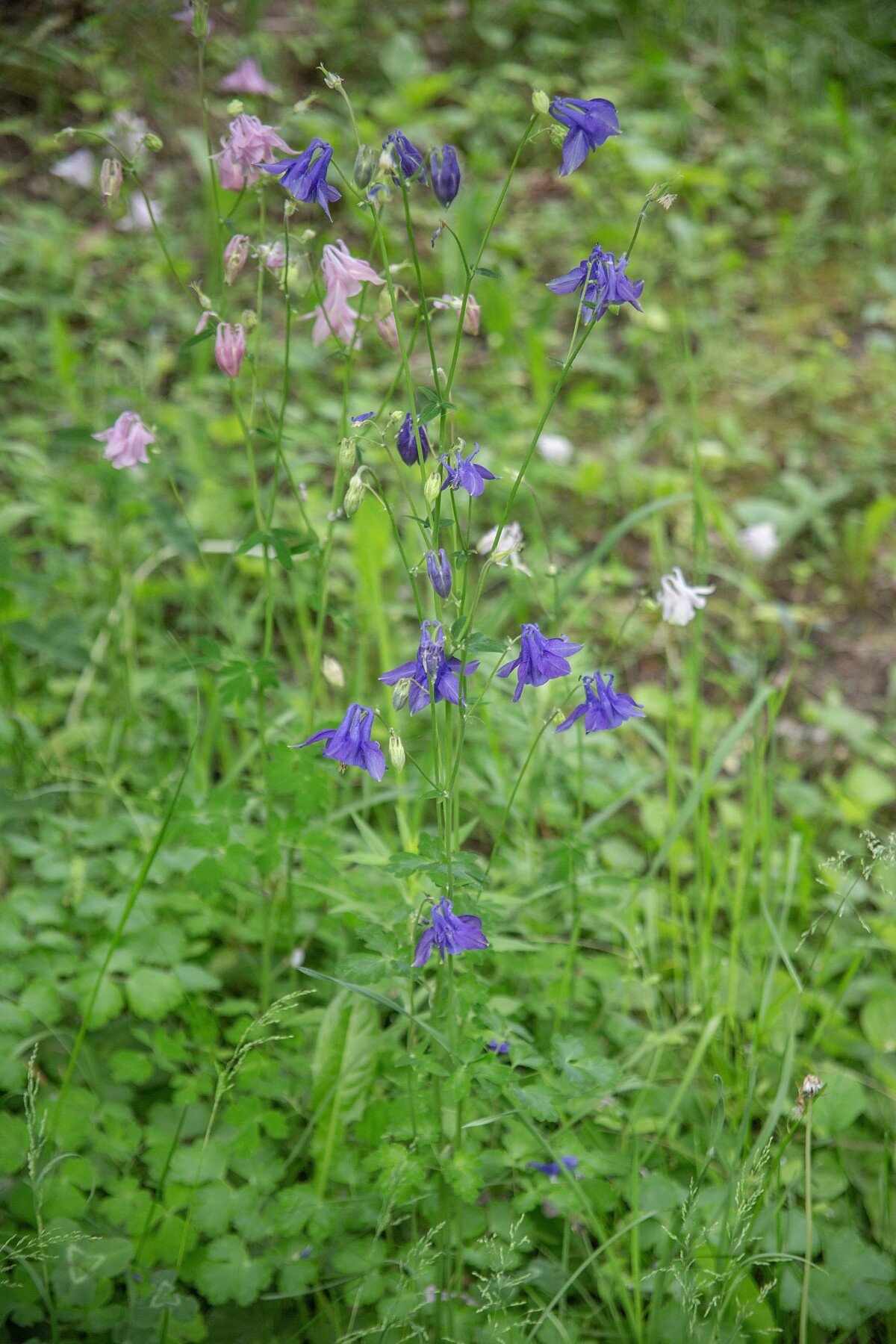
But once that magical blooming season comes to an end, columbine tends to sort of fade into the background. One minute it’s there, and the next we forget it was even growing in our gardens. It’s not surprising, really, with its slender stalks and low-growing foliage; it easily gets absorbed into the onslaught of midsummer foliage and flowers.
But before that happens, what should you do with it once those charming blossoms come to an end?

First, let’s look at how long you can expect columbine to bloom.
Generally speaking, Columbine (Aquilegia spp.) puts on its fairytale floral display from mid-spring to early summer. If you’re in zone 6 like me, that usually means May through June, sometimes squeaking into early July. It varies depending on your growing zone.
The entire bloom period tends to last anywhere from four to six weeks, depending on the weather and the particular variety you’ve got in your garden. Cooler spring temps and steady rainfall can stretch the bloom time a little longer, but early summer heat and drought will rush things along.
We had nothing but rain this spring, so it was a stellar columbine season.
So, what happens after the final bloom?

Deadhead any straggler blossoms while your columbine wraps things up. Then, as the true heat of summer rolls in and the foliage begins to yellow, you can go ahead and cut the whole plant back. (You are going to use clean and sterilized scissors, right?) Leave about three to four inches of the crown to protect the plant this winter.
You’re not left with crazy foliage that slowly takes a month to wilt before you can remove it, like with spring bulbs. By removing the whole thing all at once, there’s less of a chance of diseases taking hold as the plant slowly decays in your flower bed.
In that way, I kind of appreciate that columbine is a no-fuss cleanup flower.
After you’ve chopped it and composted the foliage, add a light top dressing of compost. It will act like a protective mulch while also providing nutrients for the root system below ground. Now, you’re basically set for next year’s fairytale ball.
5 Hardest Flowers To Grow – Are You Up For The Challenge?
What about just letting it go to seed?

Ah, the great self-seeding debate.
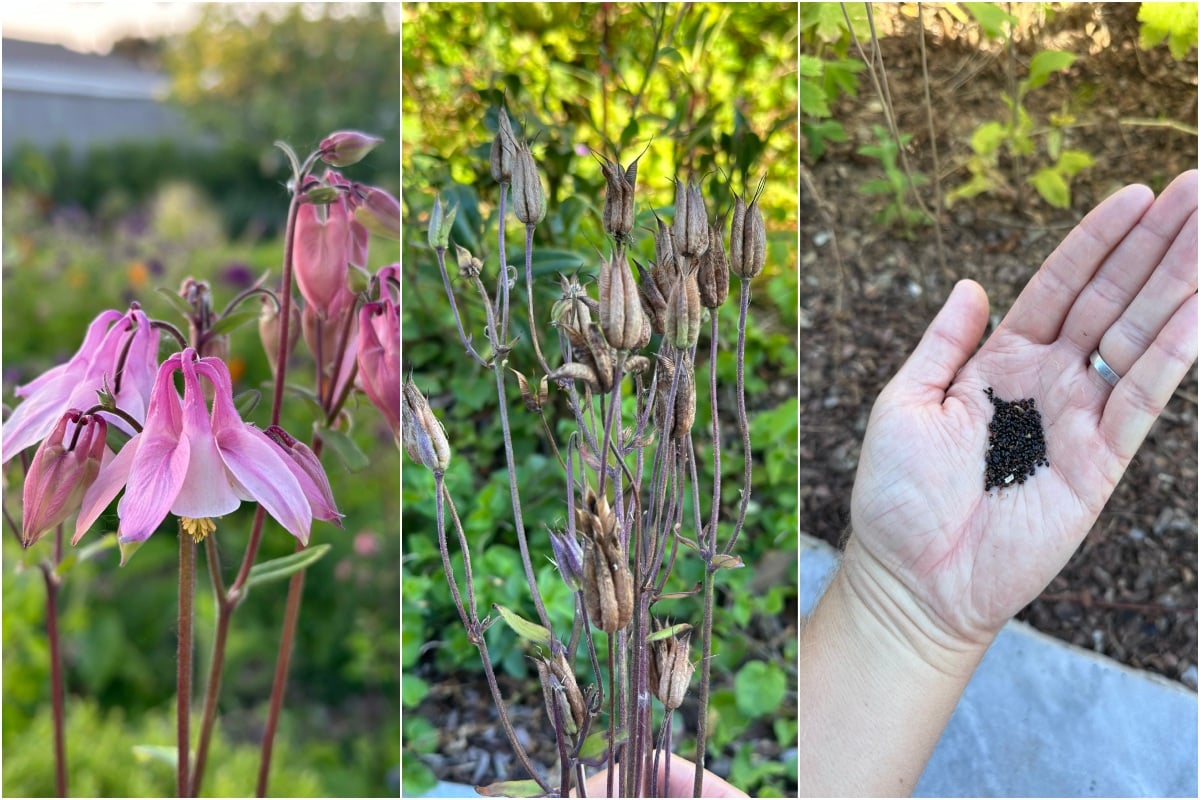
Columbine is a prolific self-seeder if left to its own devices. Those charming blooms turn into dry pods filled with teeny black seeds that are quite happy to scatter themselves into every crevice and corner of your flower bed.

So, if you want more columbine (I mean, who wouldn’t?), you can let some pods dry right on the plant and then shake them gently where you’d like to see new growth. Alternatively, shake on to a piece of paper and collect into your hands for more direct and targeted sowing.

Columbine is generally a short-lived perennial, so letting some go to seed each year is a great way to ensure you always have it growing in your flower beds.
It’s important to keep in mind, though, that if you’re growing hybrids, their offspring may not breed true.
You can end up with a flower that doesn’t look anything like the parent plant. You might get surprises in color, shape, or size, which, in my book, is half the fun of letting them go to seed.
Regardless, if you choose to let it go to seed, you’ll still want to chop the plant once you’ve scattered the dried seeds.
However, if you want your flower beds to look a certain way or they’re already jam-packed with perennial flower goodness, you may want to skip this step and deadhead all the blooms before the seeds mature, then cut the plant back when it’s finished blooming.

Columbine is naturally one of those perennials that return year after year with very little effort on your part, which is part of its popularity. It’s kind of like the fairy godmother of perennials, twirling into your garden each spring with a flourish and then disappearing the second the ball is over.
Get the famous Rural Sprout newsletter delivered to your inbox.
Join the 50,000+ gardeners who get timely gardening tutorials, tips and tasks delivered direct to their inbox.