

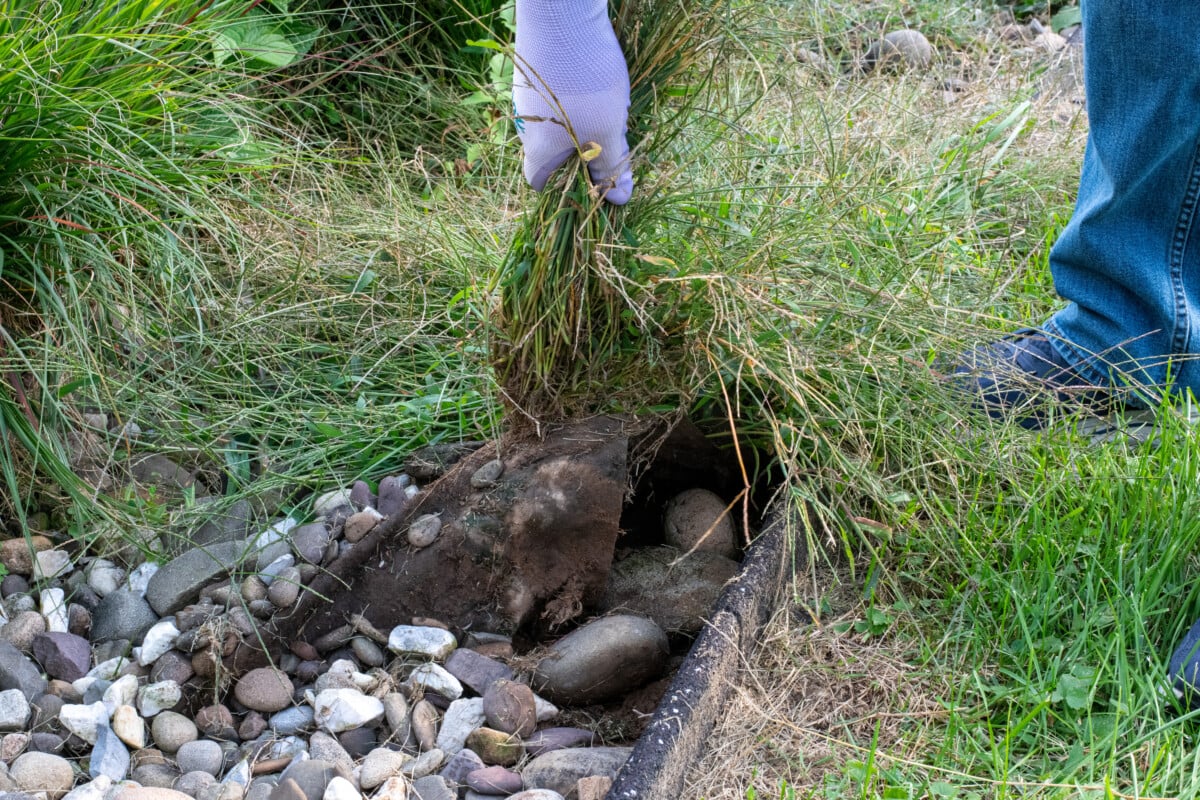
Walk into any garden center, and you’ll invariably find rolls of brown and black landscape fabric. It’s cheap, it’s easy to get your hands on, and it definitely does a good job of blocking weeds. It’s no wonder it’s so popular. But it’s a mess and a headache just waiting to happen.
Before you bring it home with you, I would encourage you to keep reading. You’ll prevent a lot of swearing and sweating for years to come if you leave that stuff right there and opt for a different weed barrier instead.
Before we go any further, dear reader, we need to talk.
Yes, one of those talks.
The kind where your stomach sinks when you hear the words “we need to talk” because you know it’s going to be uncomfortable.
It’s Time for an Uncomfortable Conversation
I’m going to hold your hand while I say this.
No matter what you do, no matter what method you choose, the weeds will always come back.
Always.
I receive emails from readers all the time asking about how to stop weeds from growing in their flower beds and decorative landscaping.
You can’t.
You may be persistent and stubborn in your efforts to get rid of them, but nature will always be more persistent and stubborn.
What you can do is slow their inevitable return. But of all the options out there, landscape fabric is the worst one for that.
Landscape Fabric – Great Idea, Lousy Execution
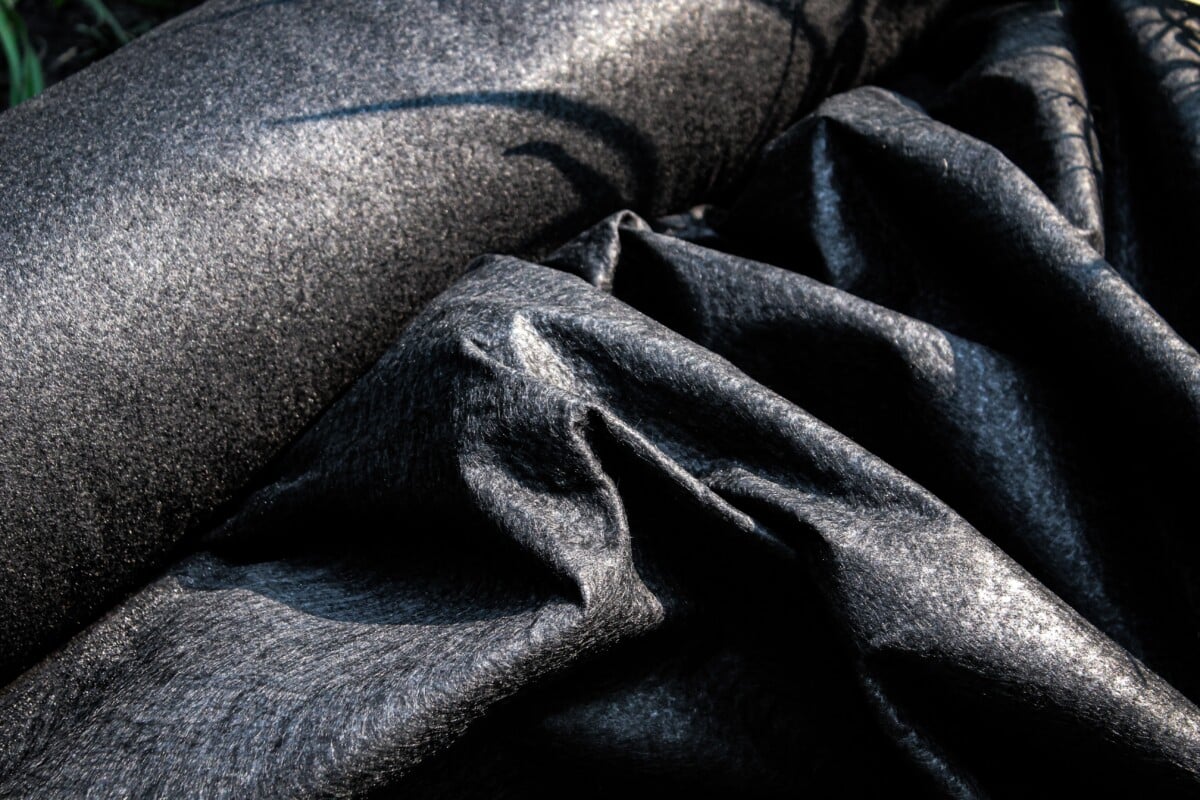
In its simplest form, landscape fabric is a great idea. It’s a dark colored “fabric” that creates a water-permeable barrier between the soil and your lovely landscaping. It smothers emerging weeds before they can get a foothold, making your goal of a weed-free garden easier to attain.
But in reality, this cheap, flimsy fabric is just a headache waiting to happen.
Yep, it will do a good job that first year, but after that, things start going south.
The problem is that any kind of ground barrier only prevents seeds that are already in the soil from sprouting.
Granted, this is an important part in lessening your weed population for sure. But it will not end your weed troubles for good. You’ll find that many perennial weeds with long taproots, such as dandelions, scoff at landscape fabric and grow right on up through it.
And as I said in our tête-à-tête, weeds will always come back. When you put down some sort of barrier, then cover it with mulch, be it wood chips, dyed mulch or decorative stone, you still get new weeds from above. Wind, nearby weeds, birds and other animals all distribute new weed seeds on top of your mulch.
This is where landscape fabric makes the continual weed problem worse.
As those new weed seeds sprout and grow, the roots reach down past the mulch in search of water. Roots are incredibly strong, so the landscape fabric doesn’t make for much of a barrier to weeds growing above it. The weed roots end up growing into and through the landscape fabric.
Now, you have a big problem.
When you go to pull that weed out of your beds, it will yank the landscape fabric up along with it, making a mess out of your mulch and quite often disturbing a large area of your flower bed.
I’ve been dealing with this exact scenario at my new home.
One of the attractions when I was looking to buy this house was all of the lovely ornamental gardens it has. What I didn’t know was that every square inch of them hid a nasty secret.
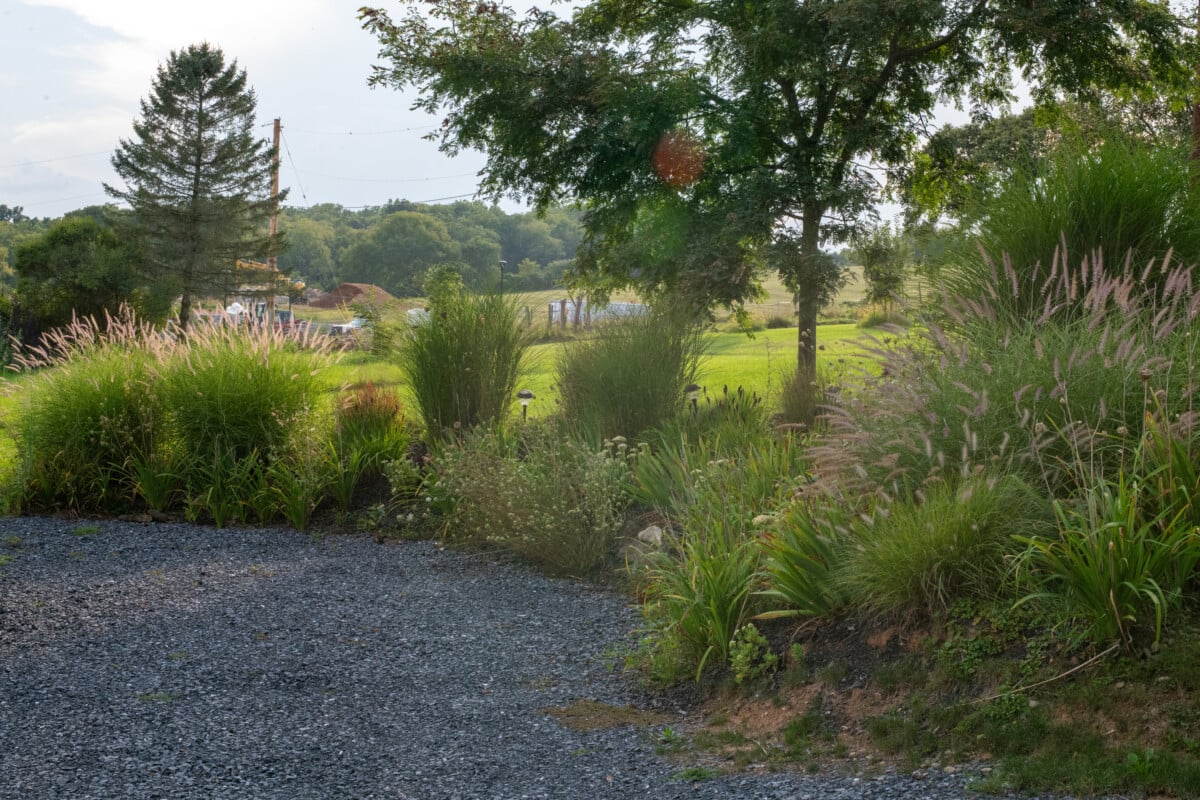
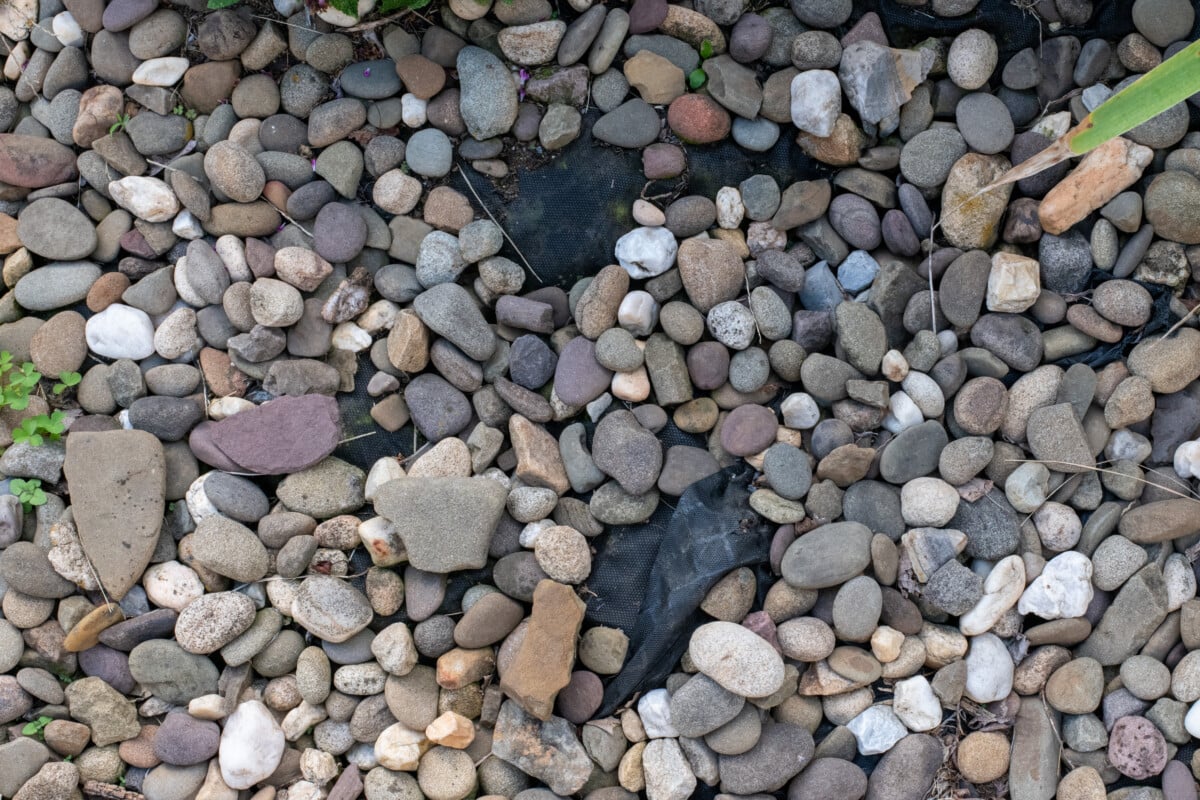
The previous owners went to great lengths to put landscape fabric down in all of the ornamental beds (groan), even around the base of the trees. Now I’ve got crabgrass, thistle and all sorts of other weeds growing up out of the decorative gravel.
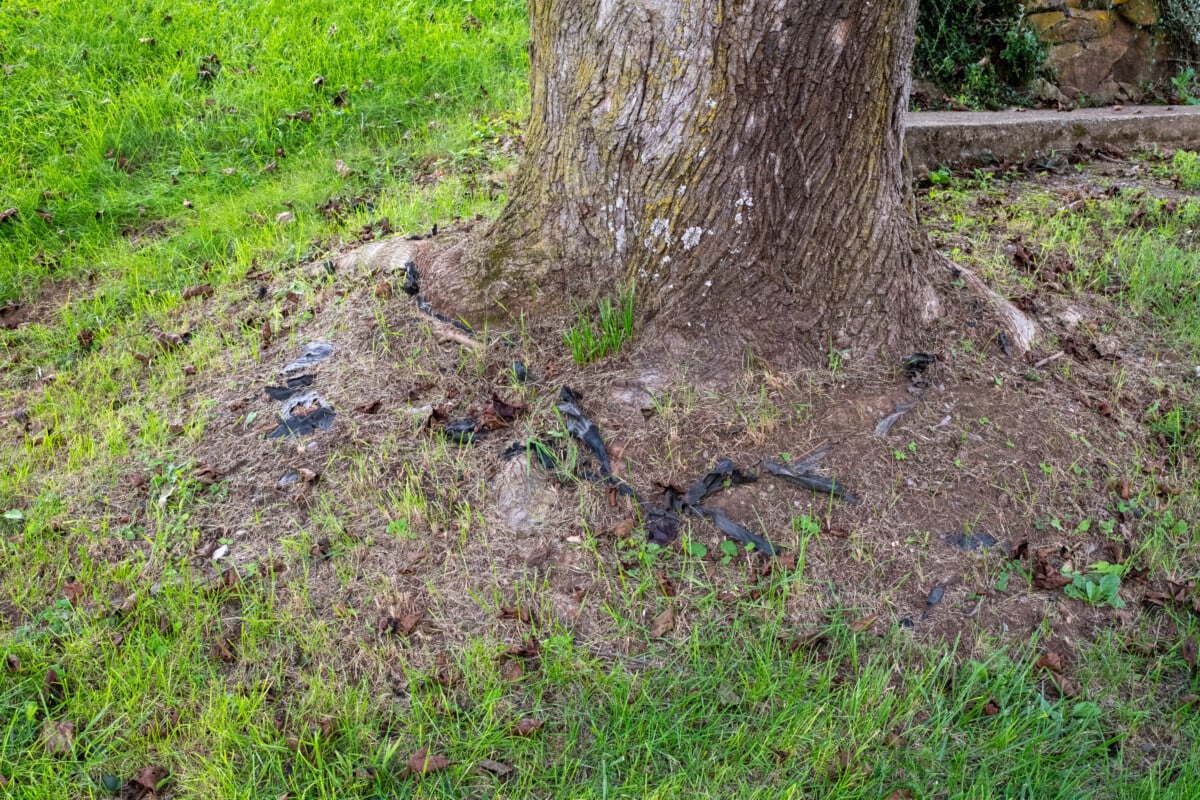
With every weed I pull up, I’m also dislodging the landscape fabric, the decorative gravel, and any nearby plants. It’s a real headache. The crabgrass is especially difficult, as its fine root structure really grabs a hold of the fabric.
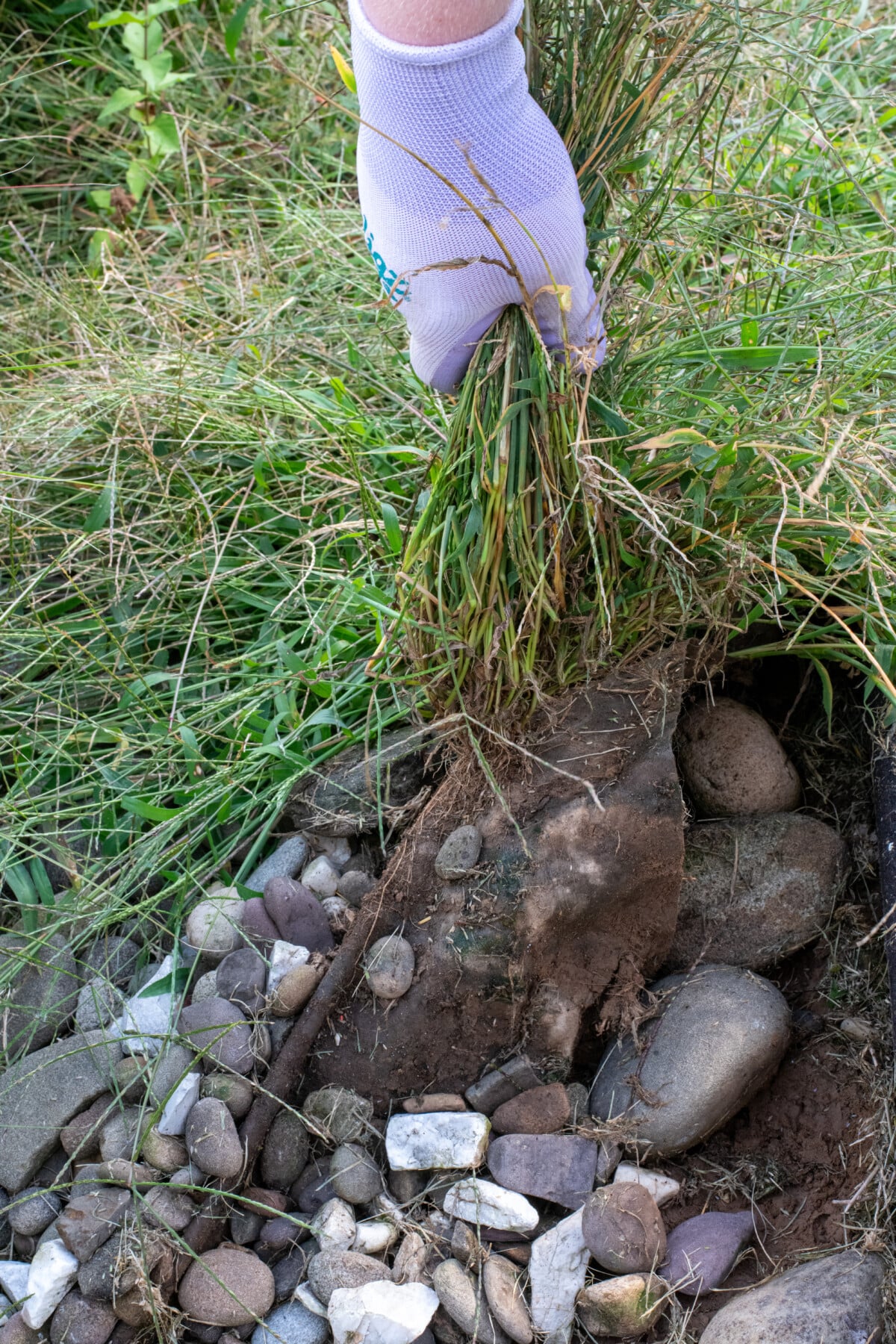
What’s worse is that they chose decorative gravel as their mulch.
So, it’s not like I can pull up the landscape fabric and then put down a new layer of mulch over top. I’m stuck with hundreds of yards of landscape fabric covered by a 2” layer of 2B river rock.
A headache to be sure.
The biggest problem with landscape fabric is that it does not break down in the soil.
Once you use it, there’s no going back, short of tearing up your entire garden to remove it all.
It will tear more and more each year, allowing more weed seeds that are already in your soil to germinate and grow. It will continue to shred and rip into smaller and smaller pieces, but it does not break down. That’s because landscape fabric isn’t fabric at all; it’s plastic, usually made from either polyester or polypropylene.
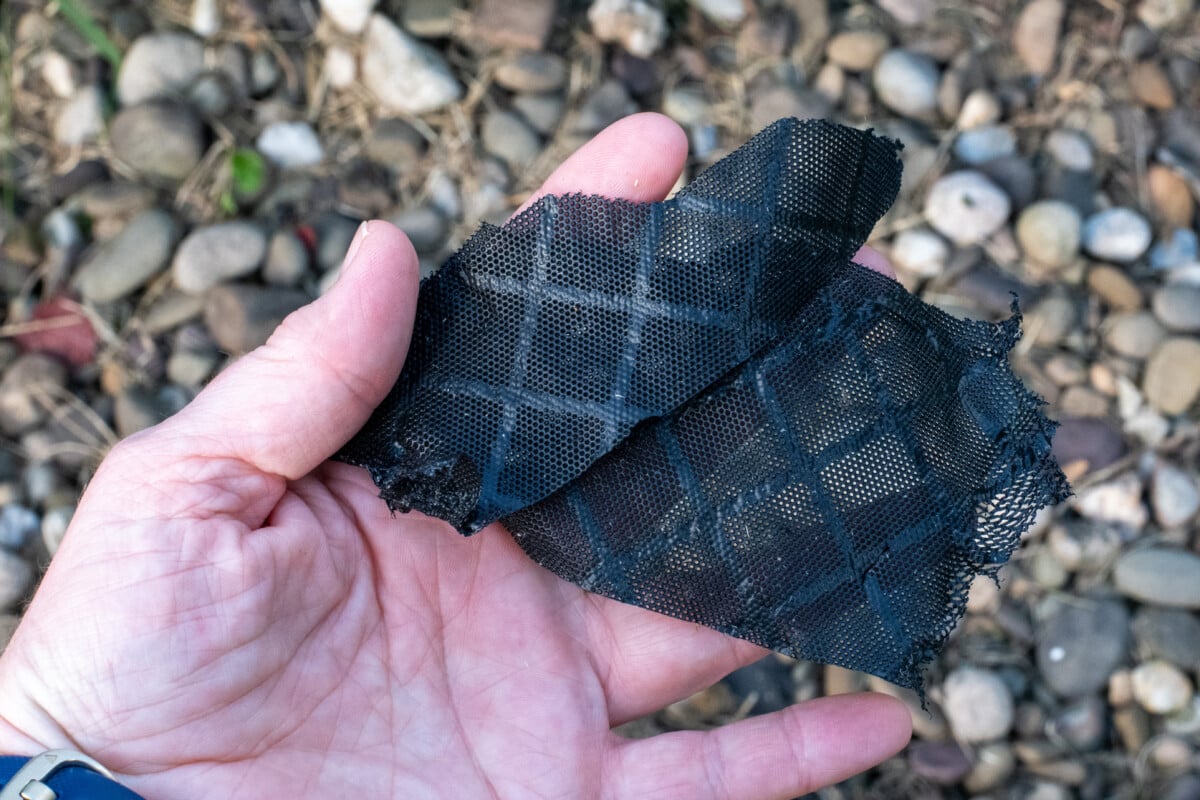
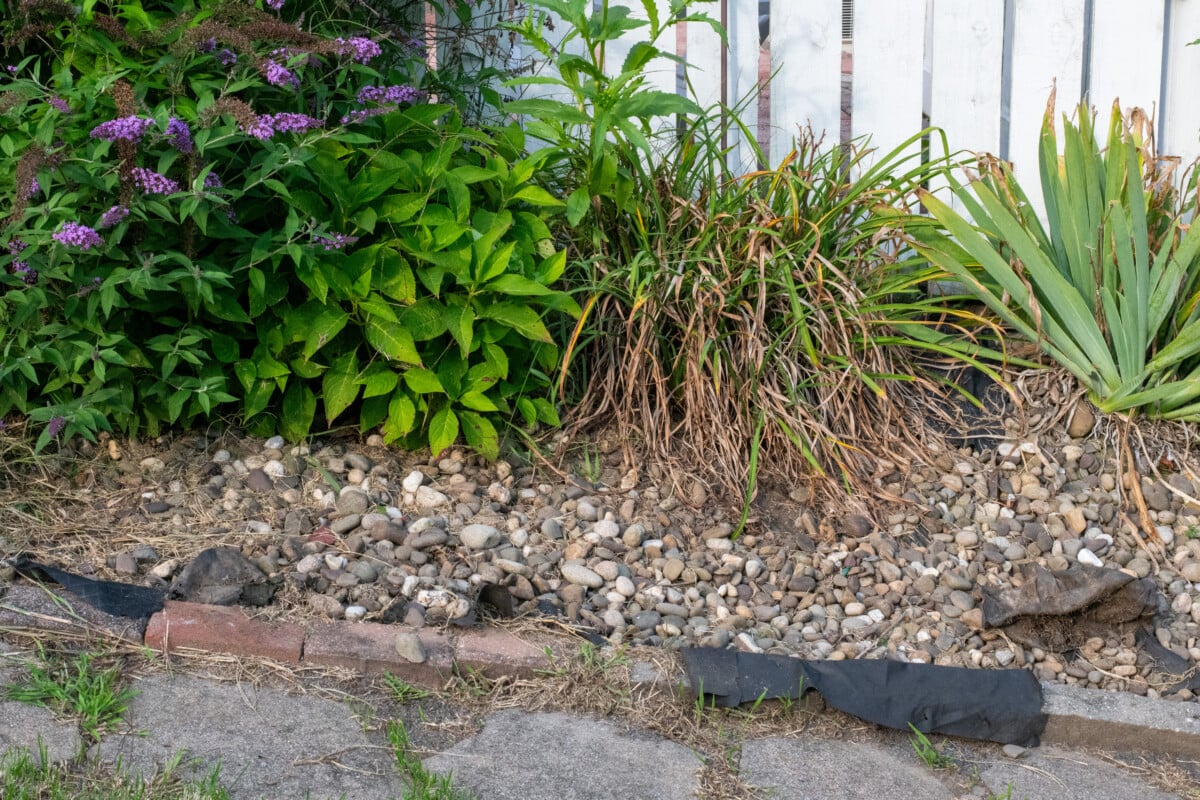
Getting rid of this stuff is a real pain, which is why it’s best not to use it in the first place.
There are other weed barriers available that are much easier to work with. Some of them are even free.
If you’re in the same boat that I am, looking at getting rid of tons of this stuff, you have my sympathies. We’re in for a long, frustrating mess. And I’m looking at moving quite a bit of stone before I even get to the landscape cloth.
For those of you who have hit pause on using landscape cloth, let’s check out what your alternatives are. The thing to remember here is what we are trying to achieve: a weed barrier that stops seeds already in the ground from emerging. Just a friendly reminder that is all we are able to do with any weed barrier because new weeds will always be introduced from above ground.
Cardboard
Cardboard boxes are an excellent option for combatting emergent weeds. It also happens to be my go-to choice.
Unlike landscape fabric, which, despite being black or brown, does let light through, cardboard does not. Cardboard creates a dark layer over the soil that lets water in, but no light.
It’s free. I’ll bet you’ve got a few Amazon boxes hanging around your place, don’t you? I know I do. When I decided to redo the flower beds at my old place, I saved all of the cardboard boxes from my packages during the winter. By spring, I had more than enough to use in my flower beds, and I could do a double layer for extra protection.
As long as you peel the packing tape off of it (the shiny plastic kind, you can leave the paper and string-based packing tape), cardboard breaks down and is reabsorbed into the soil over time. This means no little pieces of plastic fabric sitting in your soil.
While this might seem like a disadvantage, it’s really not.
Because it breaks down, it’s that much easier to add a new layer every couple of years. You can put it over your existing mulch (provided it’s not decorative gravel) and add another layer of mulch on top. The mulch and cardboard are both broken down over time, adding much-needed organic matter to the soil. You’ll enjoy improved drainage, better moisture retention, and much healthier soil.
Wood Chip Mulch
Let me clarify right away: I’m not talking about dyed mulch. That stuff is not good for your flower beds and lawn, mainly because you have no idea what’s in it. It’s often made from reclaimed wood from the construction industry, which often contains wood from demolition sites. While the use of chromated copper arsenic stopped in 2004, old structures containing lumber treated with CCA are demolished and make their way into the mulch that is dyed and offered for sale to gardeners.
I wouldn’t touch that stuff with a ten-foot pole.
Instead, I’m talking about the rough, chipped wood that comes as a byproduct from tree work or storm cleanup. When trees are cut down, trimmed or fall in a storm, tree care companies are called in to clean them up. Much of it ends up going in a high-powered chipper. The resulting wood chips are excellent mulch to use as a weed barrier around your yard and garden. (Or for making paths, new flowers beds or starting your own mushroom bed.)
You can also get these wood chips for free by signing up with Chip Drop, an online program that pairs you up with arborists in your area who will drop off a load of wood chips for you.
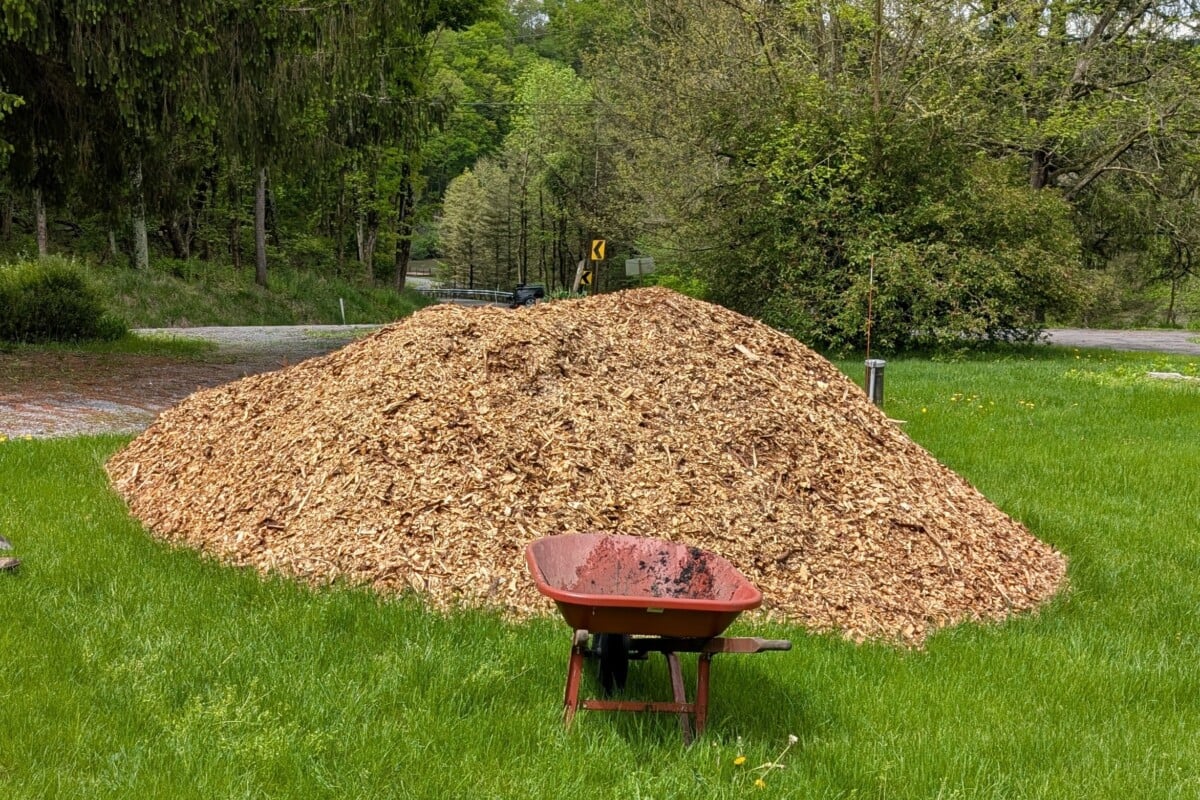
Put down a nice thick layer of wood chips, between 3 to 4″, and it will effectively stop emerging weeds.
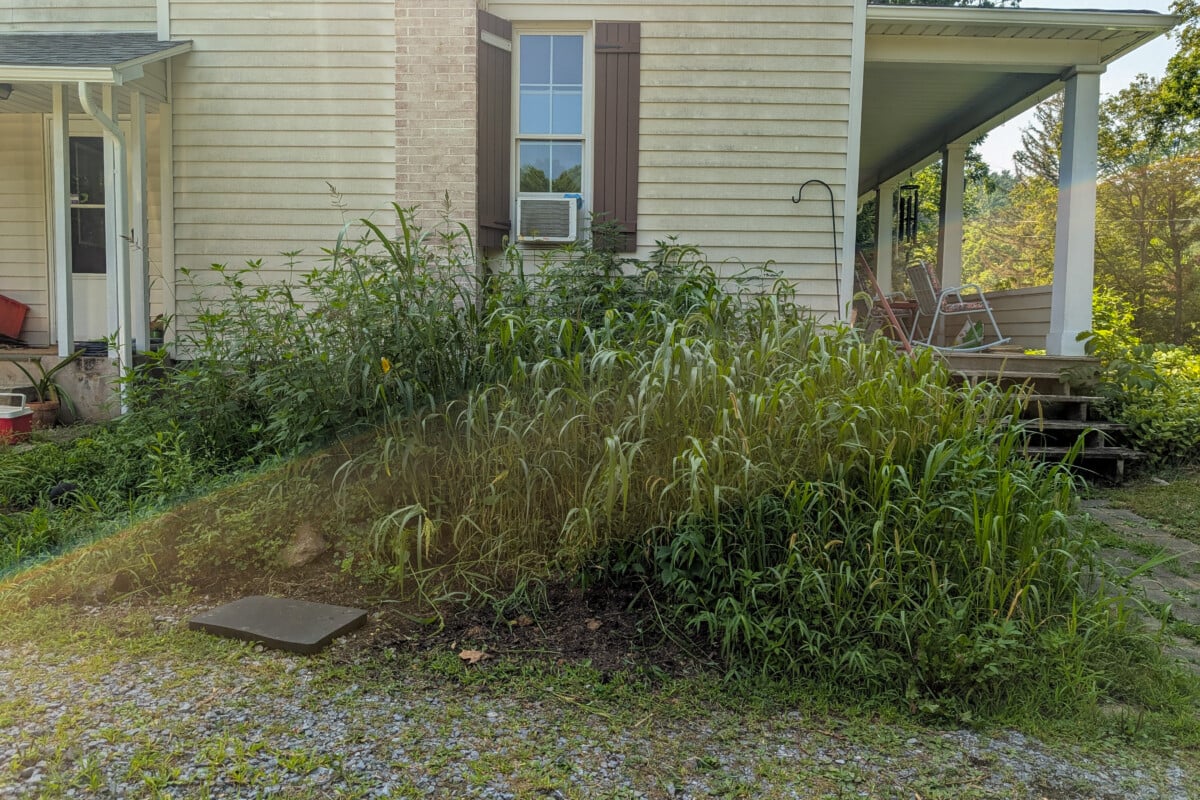
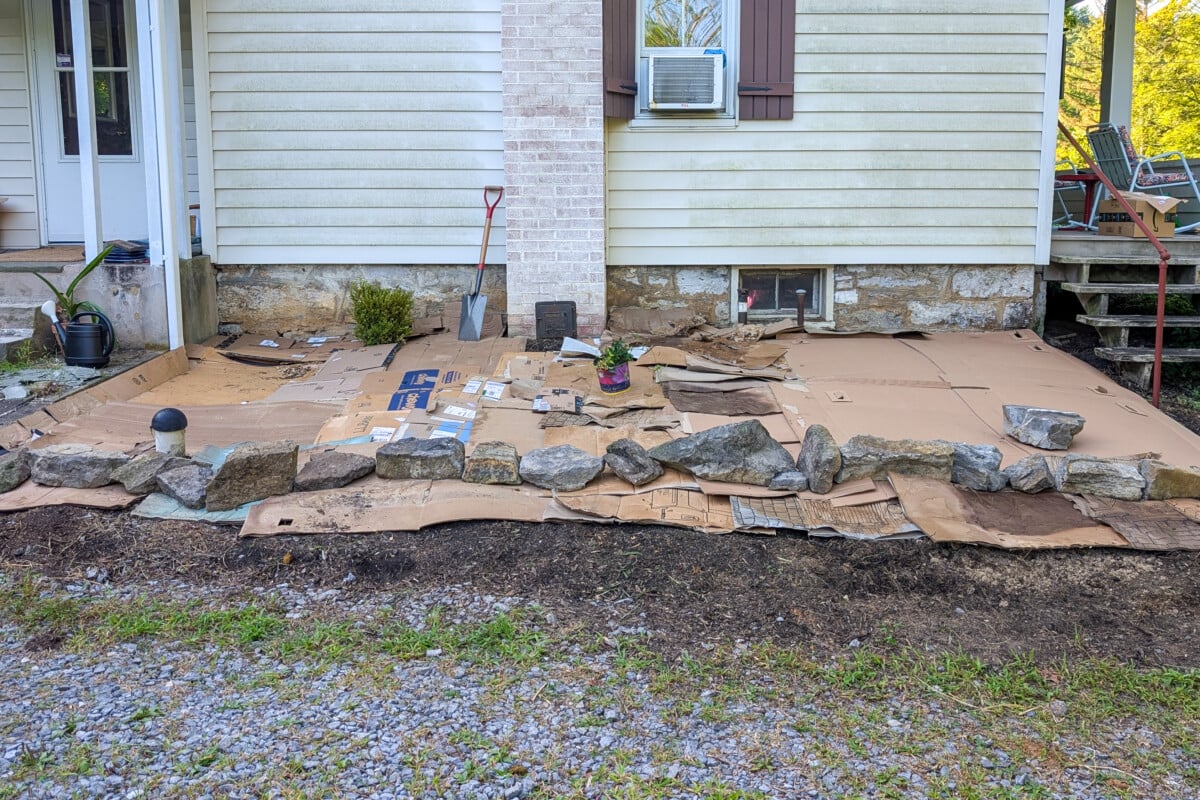
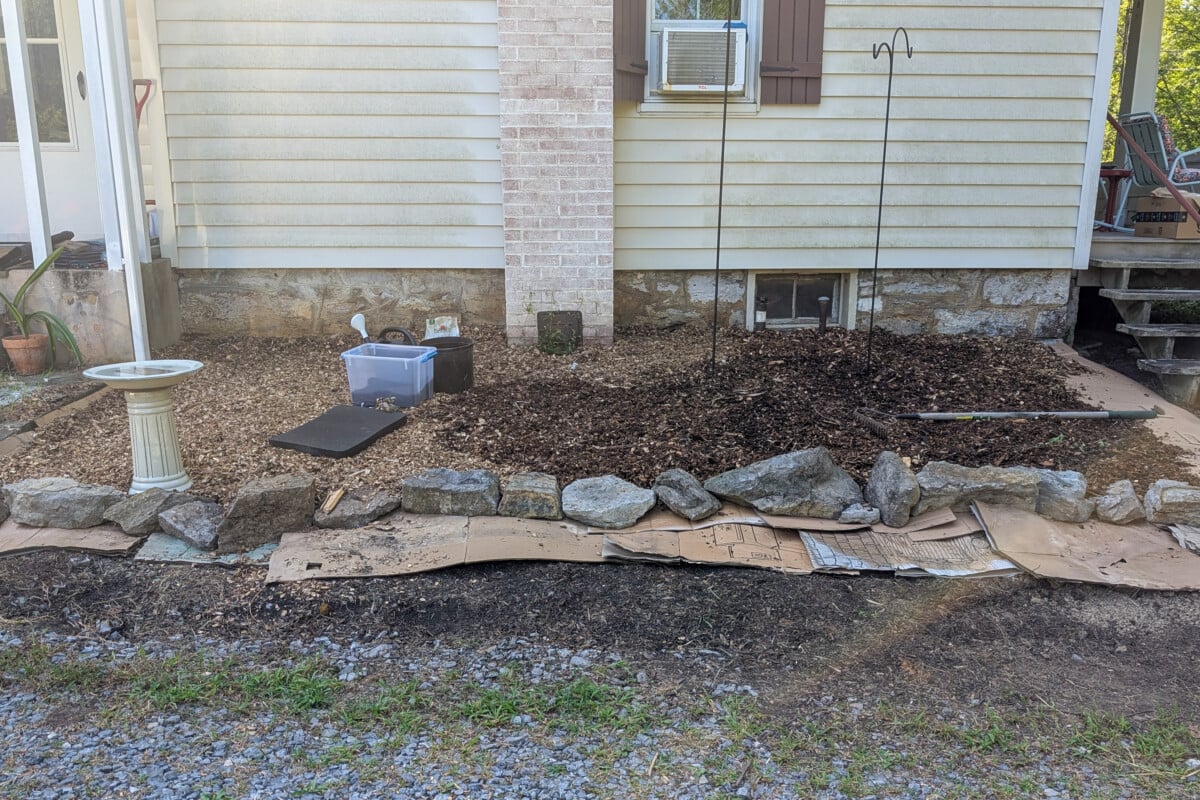
Of course, the best thing to do is to combine the two. Put down a layer or two of cardboard and follow it up with a 3 to 4” layer of wood chips. It stops weeds from below, holds moisture in the soil and prevents erosion. This combo is my go-to whenever I want to start a new flower or garden bed.
In fact, it’s how I rescued a completely overgrown flower bed at my old house.
Low-growing Ground Covers
Low-growing ground covers are an amazing weed barrier. Once they get established and begin to fill in and spread, they easily outcompete any weeds that try to grow. Plus, they are absolutely beautiful.
Low-growing ground covers are a great choice if you have already established perennials, as your ground cover will fill in around them. Here are ten plants that make excellent ground covers and a few more if you need more options.
As I’m sure you’ve figured out by now, there is no easy solution that will render your landscaping weed-free. However, some solutions are better than others, and unfortunately, when it comes to landscape fabric, you get what you pay for. The cheap, quick solution ends up costing you more in the long run.
Get Garden Notes From Tracey, Right to Your Inbox
Pull up a chair on the front porch. Join 54,000+ gardeners who get Tracey\'s friendly notes, seasonal to-dos, and hands-on tutorials three times a week.