

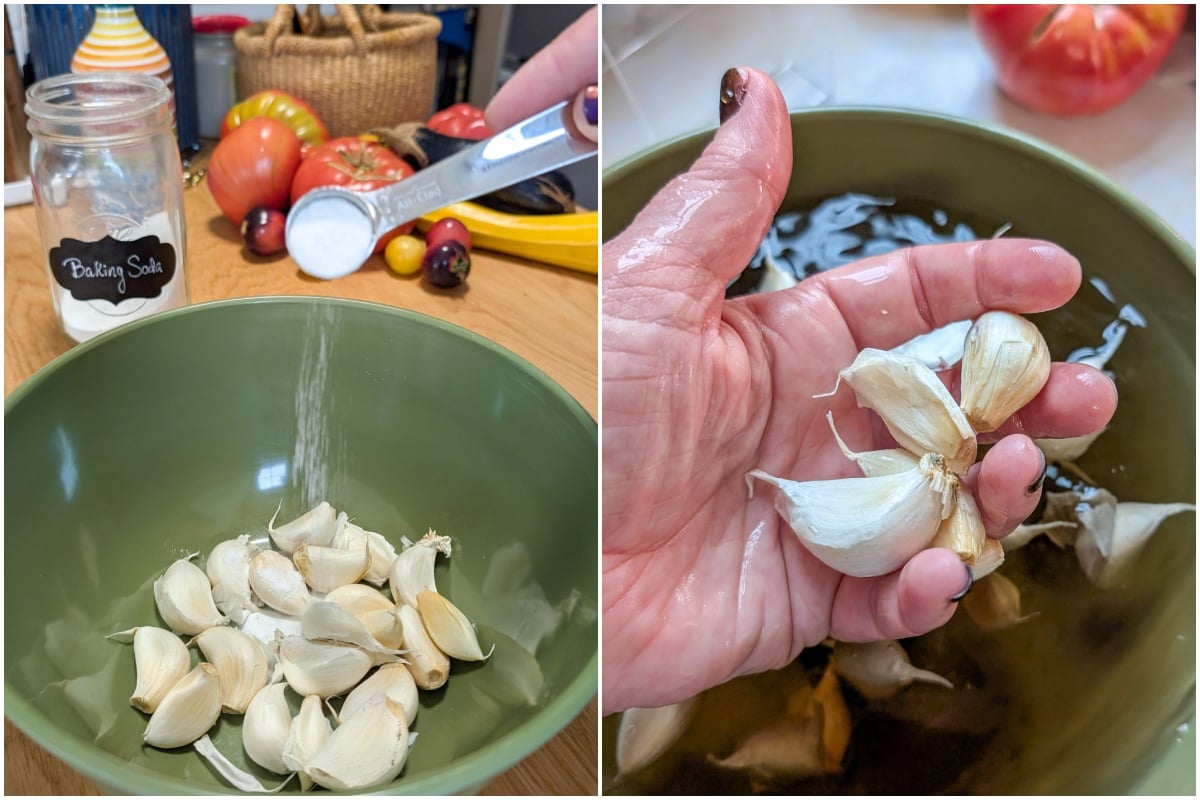
Soaking garlic cloves before you plant them is a practice that many gardeners swear by, including organic garlic producers.
These same gardeners swear that it improves growth, creates robust roots, boosts disease resistance and even – every gardener’s favorite – increases yields. However, despite the growing popularity of this practice, many people remain unaware of it.
There are several ways to do it, each utilizing different solutions. Each is intended to give you a different outcome. We’ll take a look at the pros and cons, how to do it and, most importantly, whether or not it actually works.
Do You Soak Your Garlic Cloves?
I remember the first time I heard about this practice; someone asked if I soaked my garlic cloves before planting them, and I said, “Do I what?” That was a resounding no. They explained that it improved germination, which led to the cloves developing roots a lot faster. I thought this was an odd thing to say, since we’re planting cloves, not seeds, and technically, we aren’t germinating anything. But I was intrigued to say the least.
So, I did what any self-respecting gardener would do and fell down a rabbit hole of Google searches and Reddit threads for half the day. I garden doom scroll, so you don’t have to. You’re welcome.
What Is Garlic Soaking?
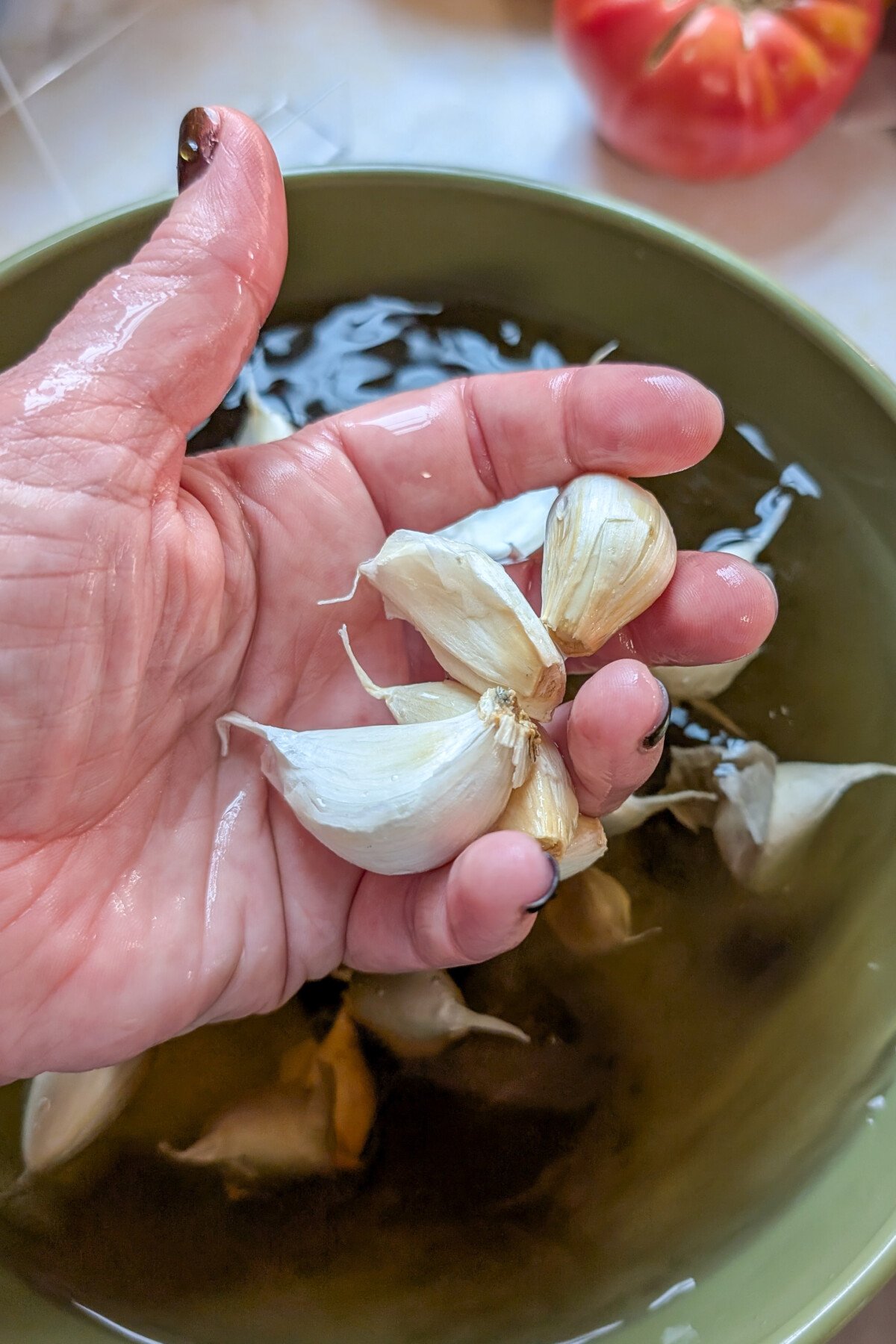
Not to put too fine a point on it, but it’s exactly like what it sounds. Soaking garlic cloves before planting typically involves submerging them in a homemade solution. This is a mix of water and either fertilizers, natural antifungals, or both, and then letting the cloves soak in the solution.
Depending on what you soak them in, the goal is to either prime the cloves for fast root development or to reduce the risk of fungal or bacterial infections from the soil.
Hey! I can get behind that. Many of us, including me, soak our seeds to give them a jump start when we plant them. Why not do the same with garlic cloves? It makes sense when you think of it that way.
A few of the more popular soaking potions I came across include:
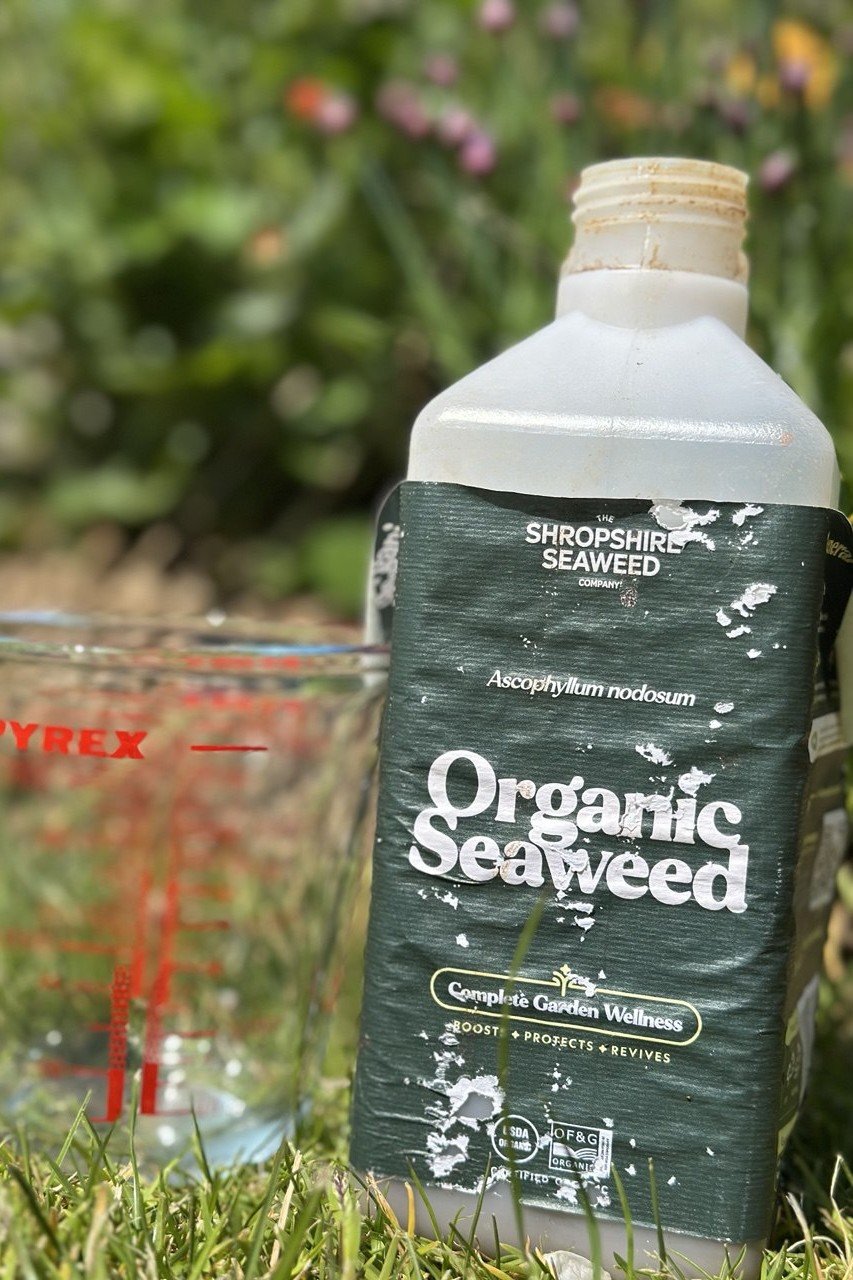
- Water with baking soda and seaweed extract (I’ve written at length on the hype around seaweed extract in the garden here.)
- Hydrogen peroxide diluted in water
- A mild solution of rubbing alcohol or vodka (for disinfection…sure)
- Compost tea or liquid kelp
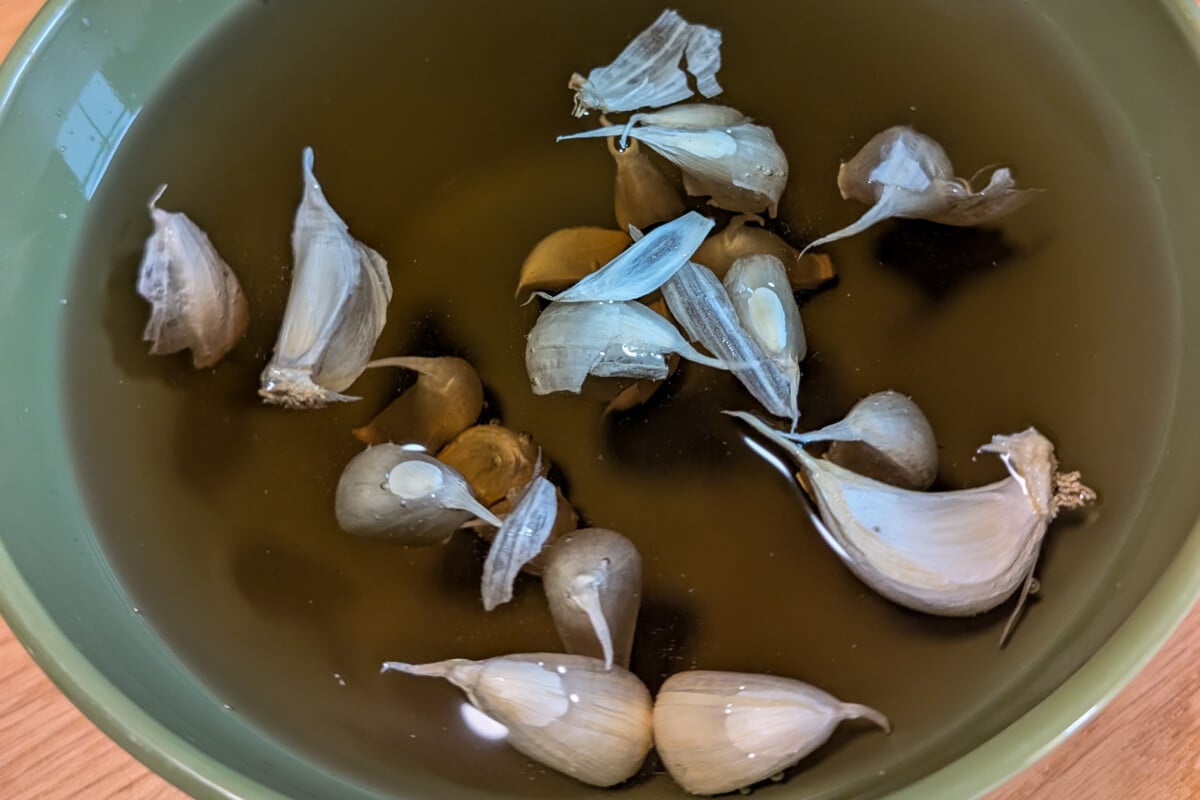
From my reading, the cloves are then soaked in the solution. Sometimes they are rinsed, and other times they are not. The soaking times range from minutes to days. Sometimes the cloves are peeled, sometimes not.
On to the benefits!
The Potential Benefits of Soaking Garlic
Disease Suppression
If you’ve grown garlic for a long time, you know that it’s susceptible to a number of soil-borne pathogens (both fungal and bacterial). White rot (Sclerotium cepivorum) and fusarium basal rot (Fusarium oxysporum) can be particularly troublesome. In theory, soaking cloves in an antifungal solution could help kill pathogens on the clove’s surface before planting.
This is a good thing, as we don’t want to introduce these pathogens into our soil by way of seed garlic.
Jumpstarting Root Development
Some gardeners claim that soaking helps give cloves a moisture boost, which leads to quicker root development once they are planted. Again, this makes sense to a degree and could be a game-changer for those of us growing garlic in cold climates, where we have to get garlic in the ground and roots growing and established before the ground freezes.
Kelp extract is often used for this purpose due to its high concentration of plant growth hormones, such as cytokinins and auxins. Though seaweed products are touted as promoting general plant vigor, there’s limited and inconclusive data confirming their benefit when used as a garlic pre-soak.
Keene Garlic, a producer of organic heirloom seed garlic, is a proponent of using the fertilization soaking method to stimulate root development. They offer a fairly convincing photograph of the results here, but even they note that it’s not a necessary step to growing great garlic. I appreciate that if you’re growing garlic to sell as seed stock, you want it to be as disease-free and robust as possible.
Compensating for Poor Soil Conditions
Look, some of us need a leg up to get going. If you’re growing garlic in soil where you’ve struggled with soil-borne pathogens in the past, soaking your garlic cloves might give your garlic a much stronger start. This isn’t a substitute for proper soil care, but it can be a bit of insurance for your garlic crop.
The Downsides
You will note that the last section was titled: The Potential Benefits of Soaking Garlic. That’s because there is little to no data showing that any of this actually works. Everything out there is anecdotal.
When it comes to tips like this, many longtime readers know I am a skeptical gardener, but a skeptic who’s willing to give it a try. Aside from being a skeptical gardener, I am also a self-professed lazy gardener, and I don’t want to waste my time on something that doesn’t work. Remember banana peel fertilizer and how, when they finally got around to studying its effectiveness, it turned out it wasn’t.
Of course, just because there isn’t empirical data to back this up doesn’t mean it doesn’t work.
It only means no one has funded the research to find out yet. When the anecdotal evidence starts to pile up, gardeners take notice before the scientists do.
With that in mind, there are still a few caveats to consider before you immerse your garlic cloves in a homemade antifungal bath.

It’s Unnecessary for Most Growers
In reality, the biggest con is that soaking garlic cloves is simply not necessary to grow healthy garlic. How many of you have grown amazing garlic in the past, and you’re just now hearing about this? (raises hand)
Garlic has been cultivated for thousands of years without this step, and most commercial producers don’t bother with it. As long as you are planting healthy cloves in well-drained soil with proper spacing, garlic grows just fine unaided.
In fact, I would say even more important than soaking your garlic is making sure you buy quality, disease-free planting stock. I tend to skip the garlic you find mixed among your bare-root stock at big-box chain stores. Instead, I order from a reputable seed company. (Territorial Seed, if you must know.)
Most of the time, plants have an uncanny ability to grow just fine without our constant attention. But as gardeners, we feel the need to do something, anything, to assist in the process, whether it’s necessary or not.
You Run the Risk of Rotten Cloves
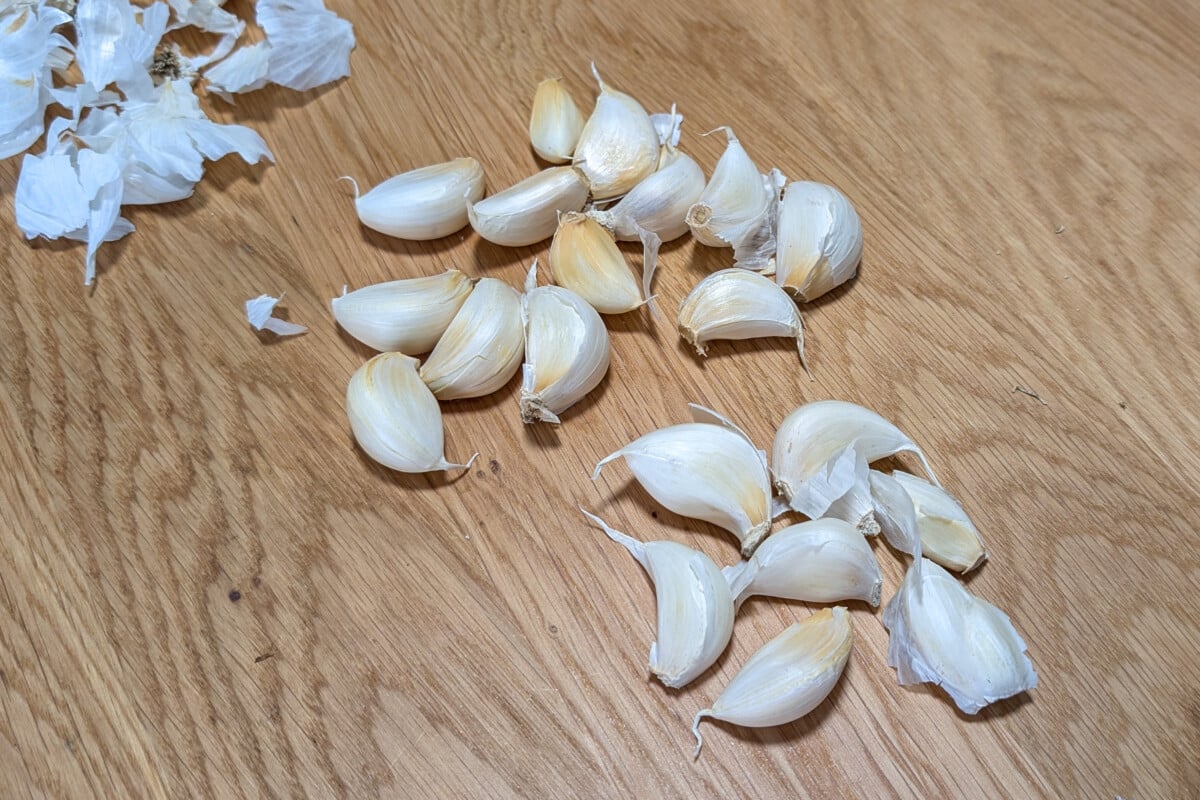
Soaking your garlic can backfire if you soak your cloves for too long. Over-soaking or soaking in highly concentrated solutions can damage the cloves. Saturated cloves that are not planted promptly can rot.
I am notorious for starting projects and forgetting about them, so I know I’m a prime candidate for soaking my garlic cloves and then forgetting about them until they are a mushy, rotten mess.
Nature has already provided garlic cloves with a pretty good barrier that protects them from disease – the papery skins. Leave it on when you plant them.
Lazy Gardeners Unite!
I know I’m not the only one out there reading this and thinking, “But it’s just one more thing to do…” I would feel differently about soaking garlic if I didn’t already know I could grow amazing garlic without it. There is a good chance my inner lazy gardener will win this battle.
When Soaking Might Be Worth Trying
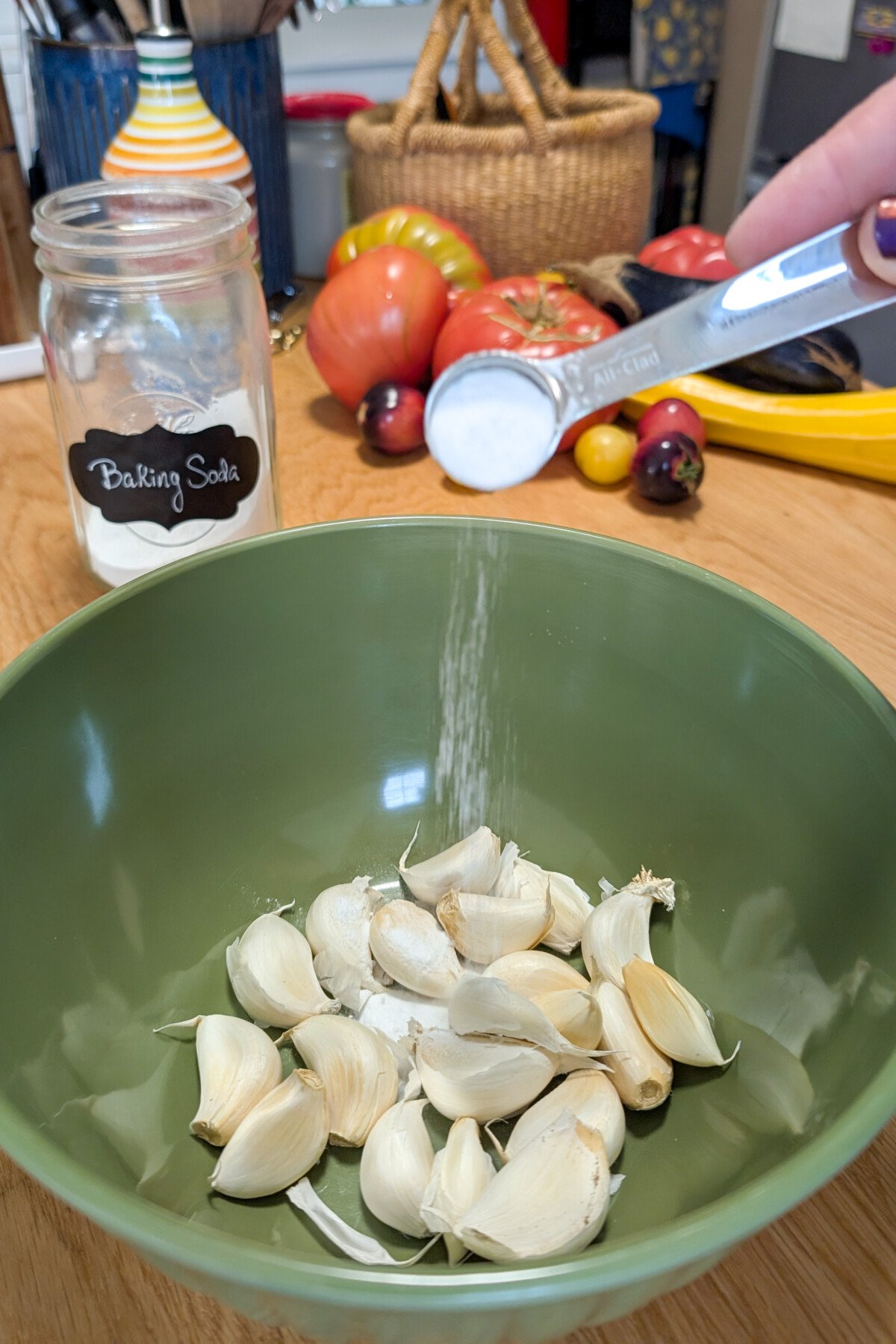
All things considered, soaking your garlic might be worth a try:
- If you’ve had repeated issues with fungal diseases and can’t plant your garlic easily in a different spot.
- If you let your lazy gardener get too lazy, and you’re planting late and want to jumpstart root development before winter sets in.
- If you’re using old/sketchy cloves and want to give them every chance to sprout.
- If you enjoy experimenting and trying new things in your garden.
Sterilizing Soak
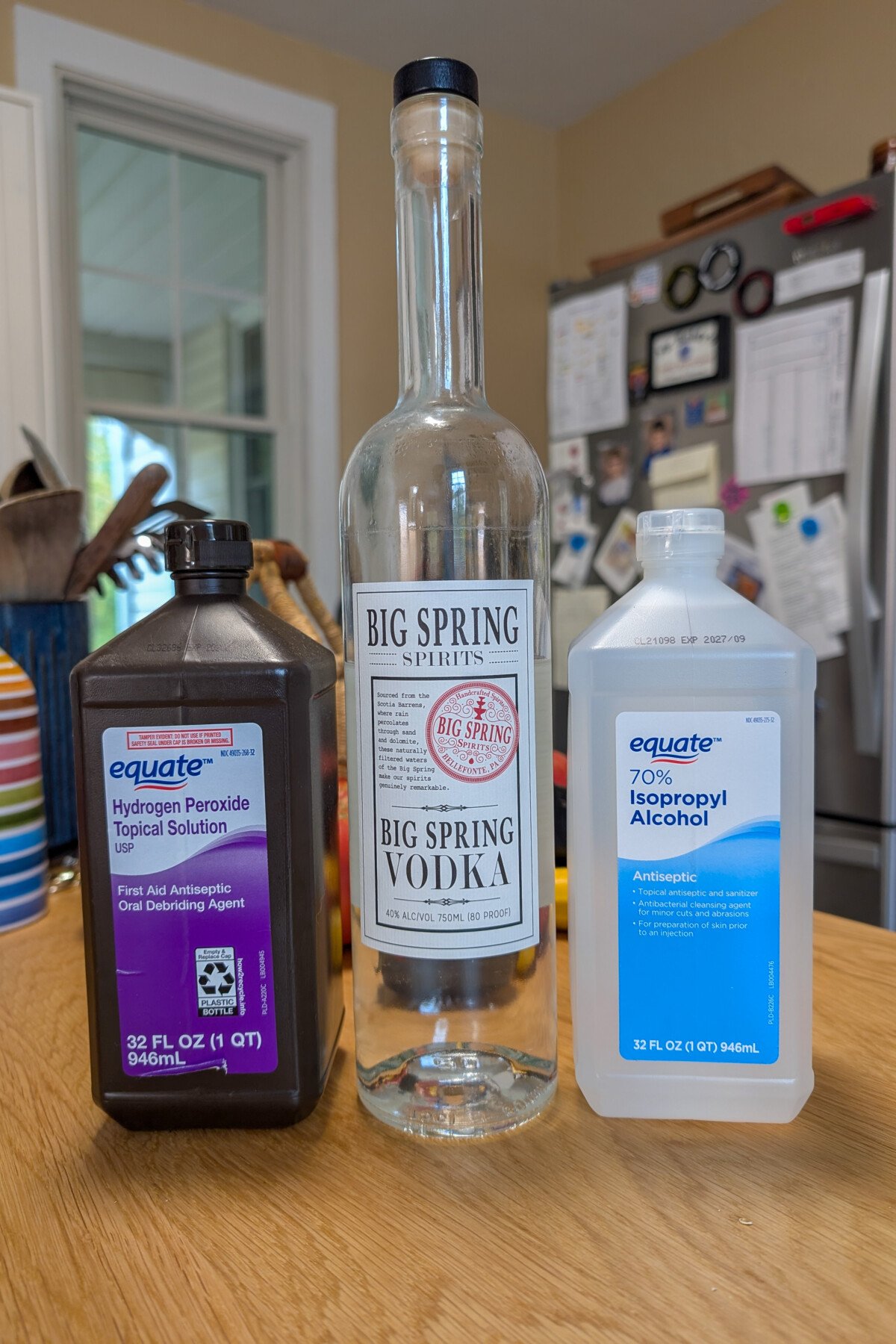
Use this solution to kill microbes on the outside of the garlic cloves.
Separate the garlic cloves and soak them in any one of the following at full strength:
- 70% Isopropyl Alcohol
- 3% Hydrogen Peroxide
- Cheap Vodka
Soak for 10 minutes, then plant immediately or move on to the fertilizing soak if you’re doing that as well.
Fertilizing Soak
Use this solution to give garlic a boost and improve root production.
Separate garlic cloves. Place them in a container with the following:
- 1 gallon of water
- 1 teaspoon of baking soda
- Seaweed fertilizer (add recommended amount per the label instructions)
Soak cloves for a minimum of 30 minutes to overnight. Plant immediately after soaking.
In the end, is soaking garlic cloves before you plant them worth it?
Maybe.
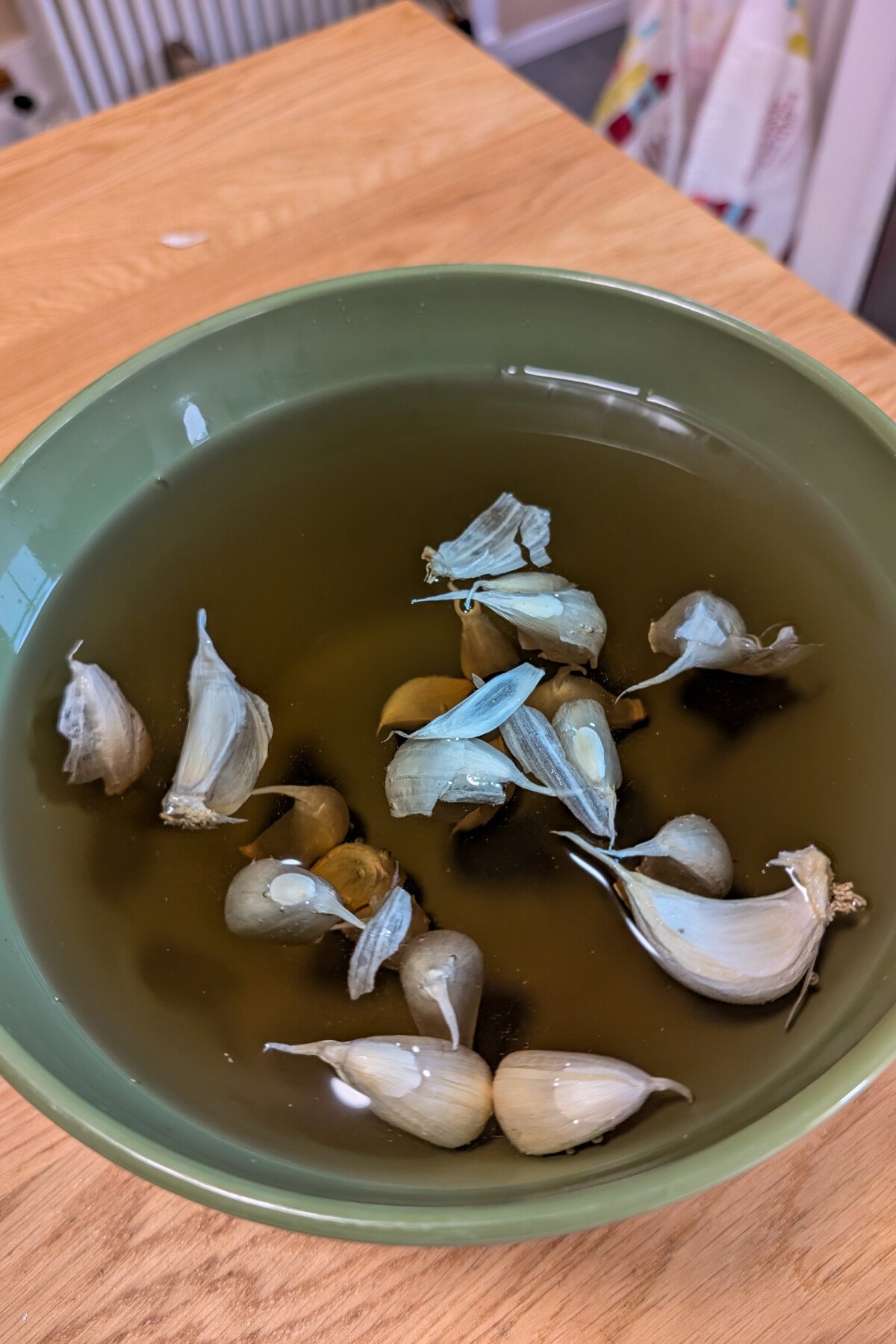
It seems that’s entirely up to you and the results you’re hoping to achieve. Who knows? If you’ve struggled to grow garlic in the past, soaking your garlic may be the thing that makes the difference. I’m willing to give it a try this year. I’m going to do half of my cloves soaked in both solutions and half not soaked at all. (That is, if my lazy gardener side doesn’t win out.)
I’ve not had issues with disease, so I’m more curious as to whether or not this will yield bigger bulbs. I have a feeling it won’t, but this skeptical gardener is more than happy to be proven wrong if it means more tasty garlic.
Get Garden Notes From Tracey, Right to Your Inbox
Pull up a chair on the front porch. Join 54,000+ gardeners who get Tracey\'s friendly notes, seasonal to-dos, and hands-on tutorials three times a week.