

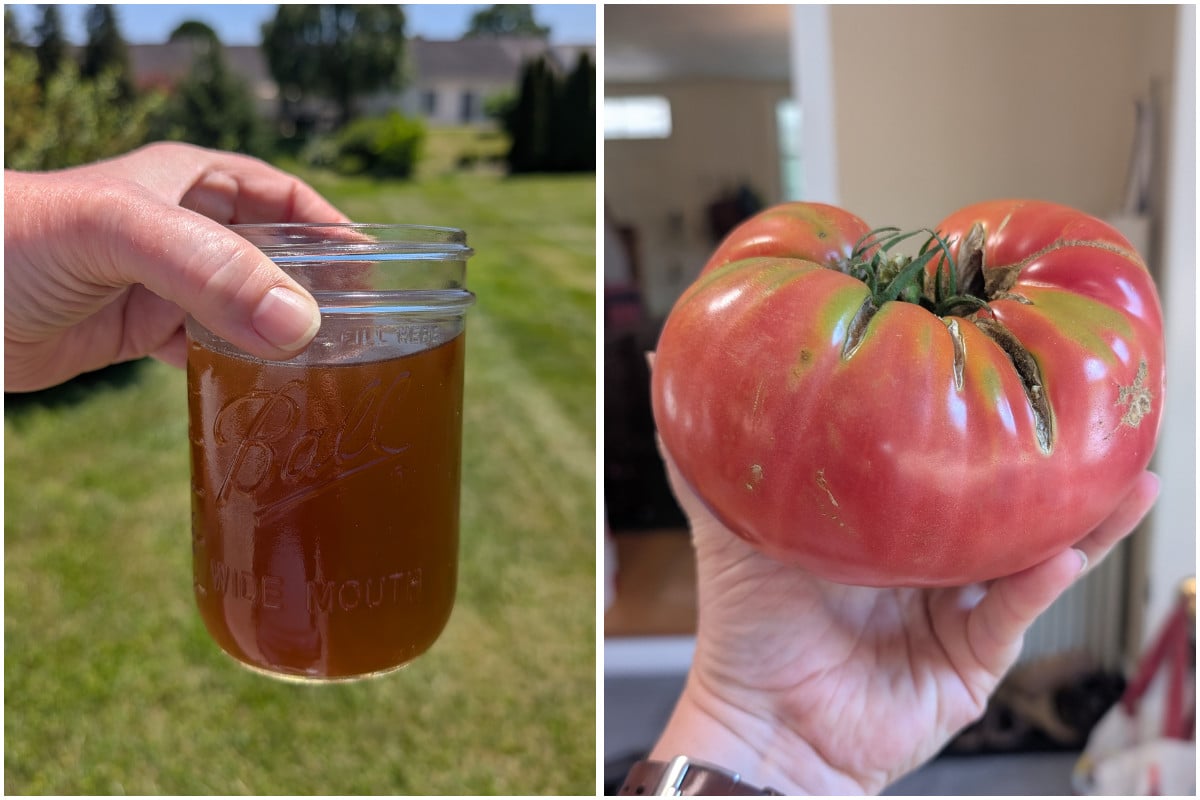
Over the years here at Rural Sprout, I’ve answered hundreds of questions emailed to me by our readers. Quite often, I get asked about feeding tomatoes. There are so many different fertilizers out there and just as many different ways to fertilize. But over the years, I’ve made it a point to keep my tomato feeding routine as simple as possible. Here’s what I do to grow pound after pound of glorious tomatoes every summer.
Kiss Tomatoes
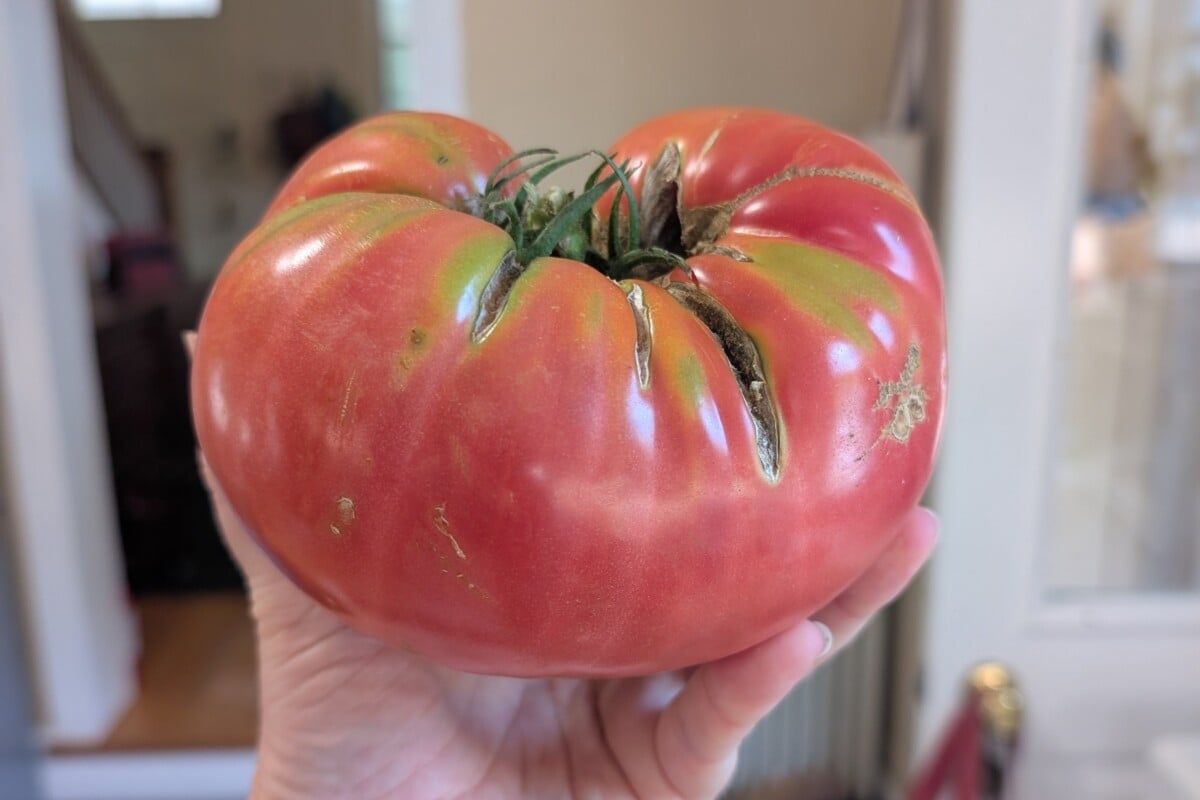
I love gardening, and I love tomatoes. One of the highlights of each summer is slicing that first ripe heirloom tomato in my kitchen, sprinkling it liberally with salt and pepper and eating it like a steak with a fork and knife.
But I also love a lot of other things this time of year, like sitting in my hammock chair in the shade with a good book and a gin and tonic.
So, while I thoroughly enjoy picking a basketful of ripe tomatoes to be sliced and served with dinner, I prefer to minimize the work it takes to get me to that point. To do that, I have dialed in how I grow and feed my tomatoes throughout the season.
I ascribe to the KISS method when it comes to my tomatoes (and gardening in general). You know, keep it simple, stupid.
Like all things gardening related, you can easily overcomplicate matters with a complex fertilizing strategy, switching from one formulation for the seedling stage, one for when you first plant them out in the garden, another for when they start fruiting, one for late season, etc. No, thank you!
For the actual growing of tomatoes, I prefer to string-train them. Since I’m only focusing on one lead stem, it makes pruning much easier. The plants stay tidier, which means I can fit more of them into my raised beds next to each other.
I keep fertilizing as simple as possible, too.
For my tomatoes, I only use two fertilizers throughout the entire growing season. I’ve tried so many different formulations over the years, and these two work and work well. I trust the brand, and I’ve had excellent results using it. And as far as fertilizers go, they’re decently priced, too.
Before I tell you what they are and when I use them, for transparency, I will add three caveats that play a role in how well my tomatoes grow.
- I feed my soil. You can’t spend from an empty bank account. If you aren’t adding back what you take out each year, then you end up with bankrupt soil and less than stellar plants. I mix in compost each spring.
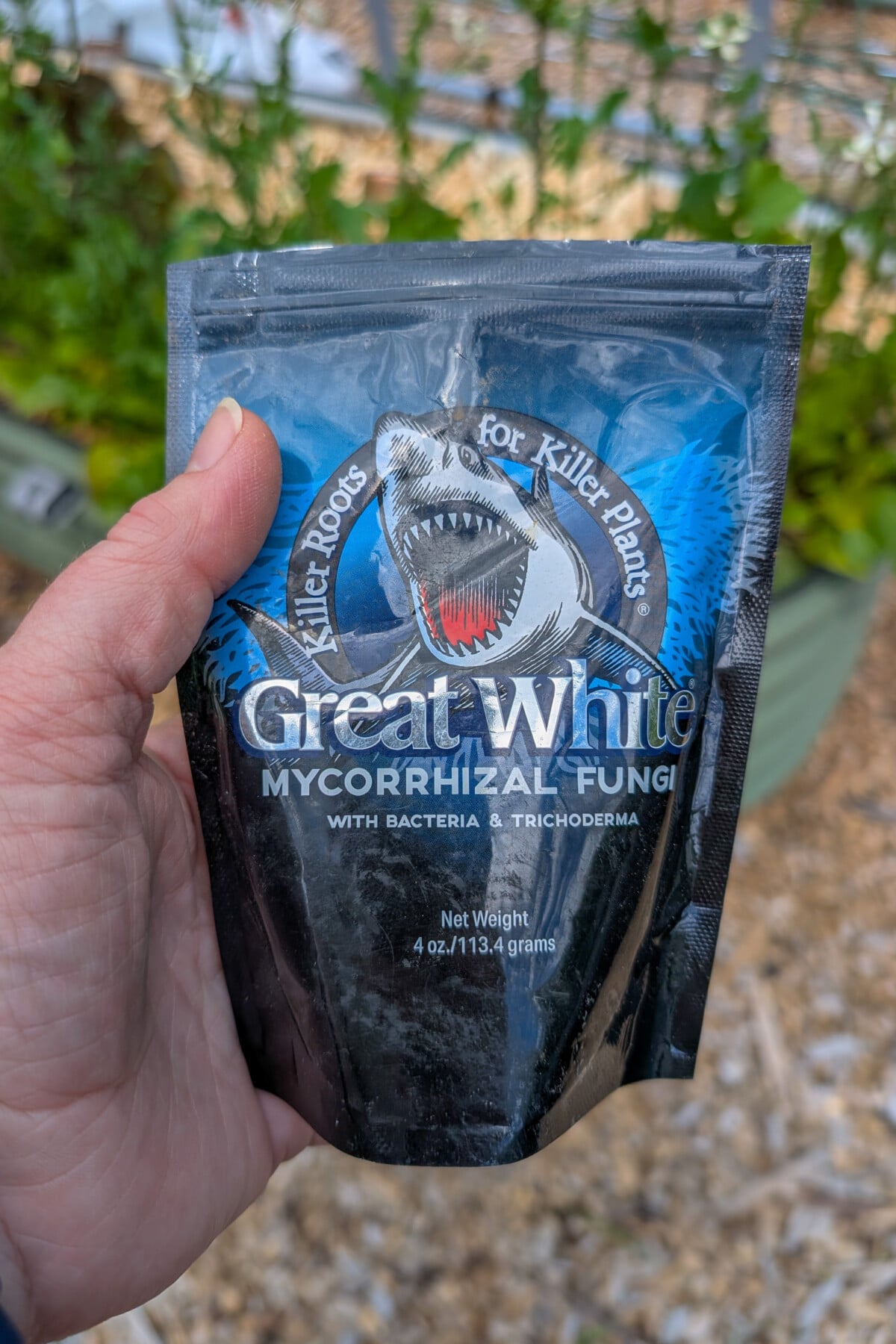
- I always plant my tomatoes deeply, so they can develop a massive root system, and I inoculate them with mycorrhizae at the time of planting. I switched to a better-quality mycorrhiza this summer. Regardless of anyone’s personal feelings about cannabis, the folks who grow it are incredibly serious about what they use in their setups. These folks know their stuff. So, whenever I see cannabis growers giving five-star reviews for a product on Amazon, I sit up and pay attention. These folks love Great White Mycorrhizae, so I made the switch. Oddly enough, they always joke about growing “tomatoes” in the reviews, but I’ve found from trying it that the stuff they use to grow “tomatoes” always seems to work really well for growing actual tomatoes.
- I mulch my garden well. If you still aren’t mulching your garden, please at least mulch your tomatoes this year. I think you’ll be surprised by the benefits and decide to mulch your entire garden in the future. If you need a recommendation for the best garden mulch going, I have that for you here. Tomatoes need plenty of consistent moisture to do well. Mulch makes that possible.
On to the fertilizer!
From Seed to Garden
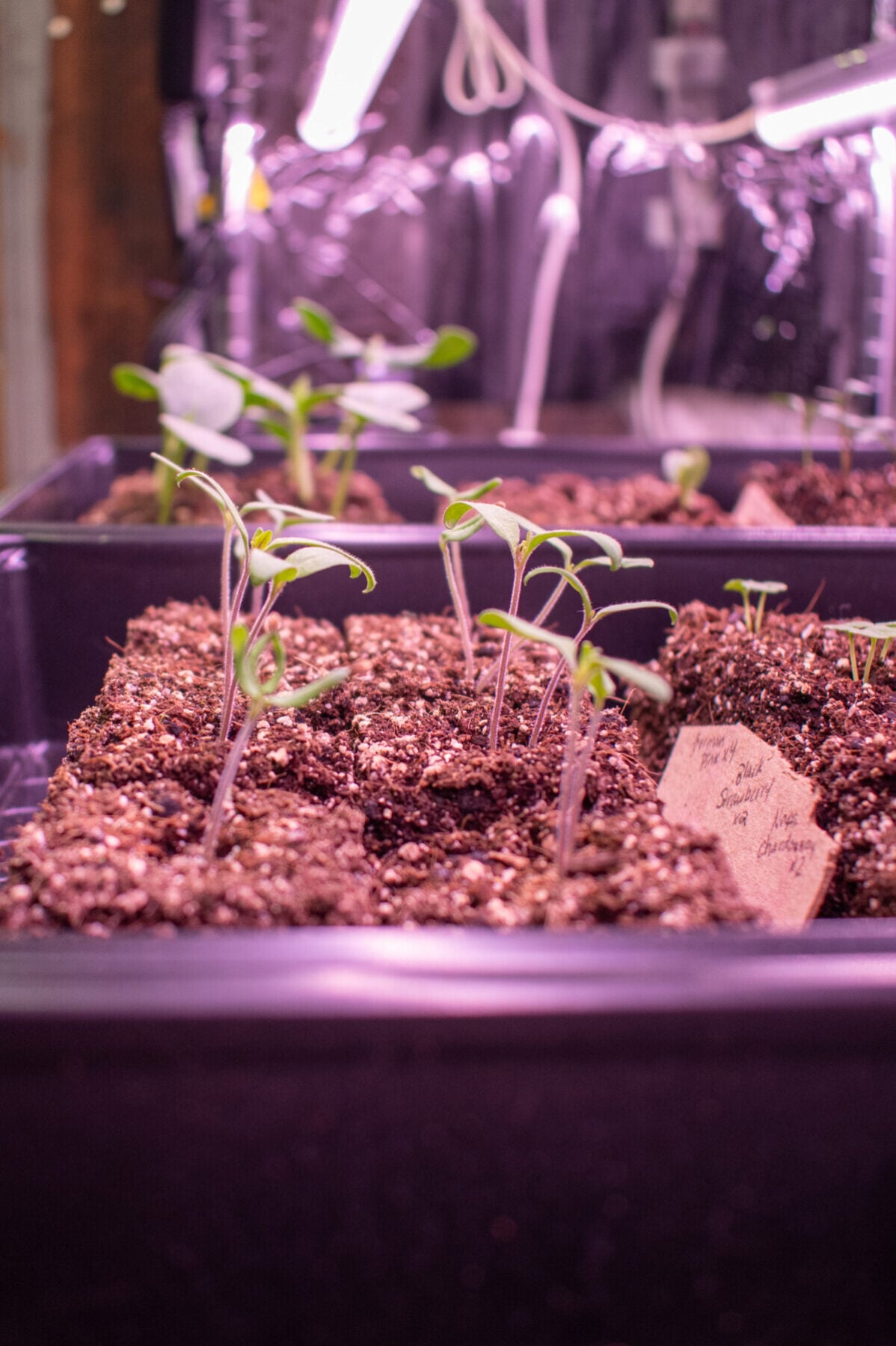
I start my tomatoes from seed each year. Nothing makes that long stretch of late winter-early spring more bearable than a secret trove of bright green seedlings in my basement.
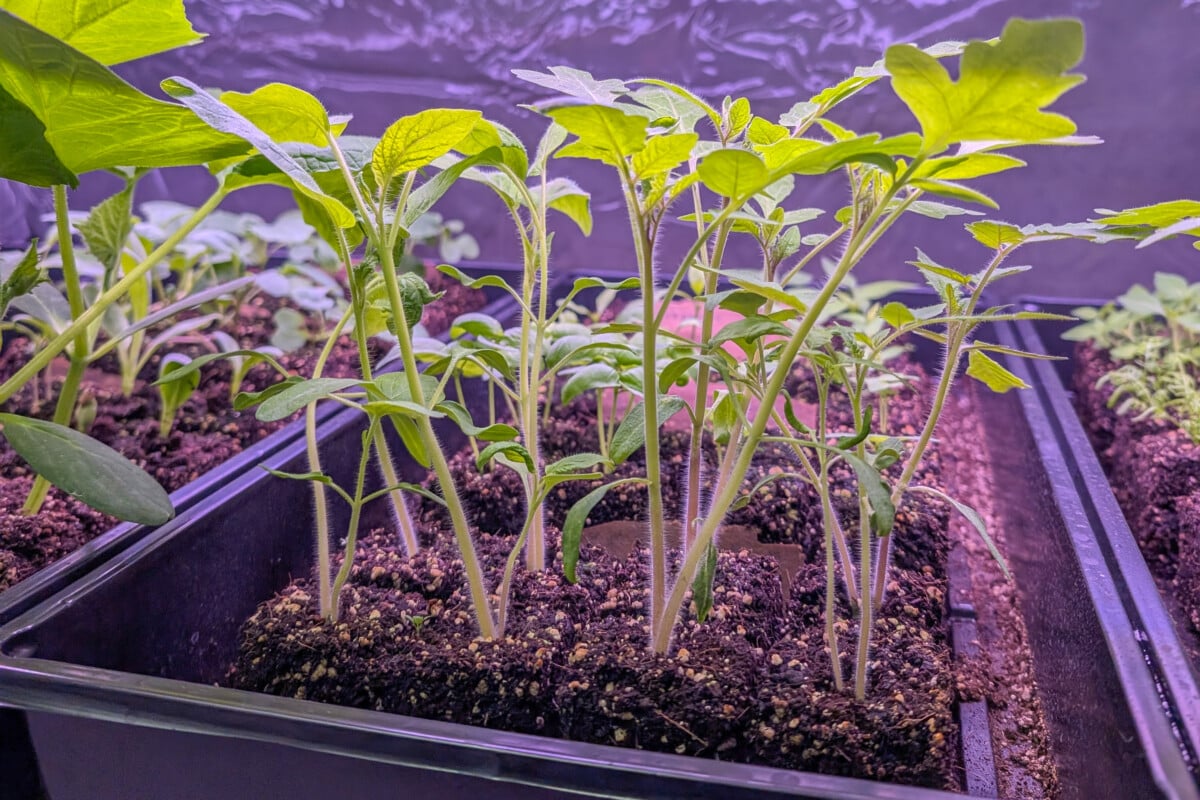
I don’t fertilize my tomato seedlings until they have at least two to three sets of true leaves. Remember, all the nutrients and energy the plant needs to get started are already contained in the seed from which it grows. Adding fertilizer before then does more harm than good, burning tender roots.
Once my tomato seedlings reach the point where they now need food (two to three sets of true leaves), I reach for Farmer’s Secret Rose Booster.
Wait, what? Did you say Rose Booster, Tracey?
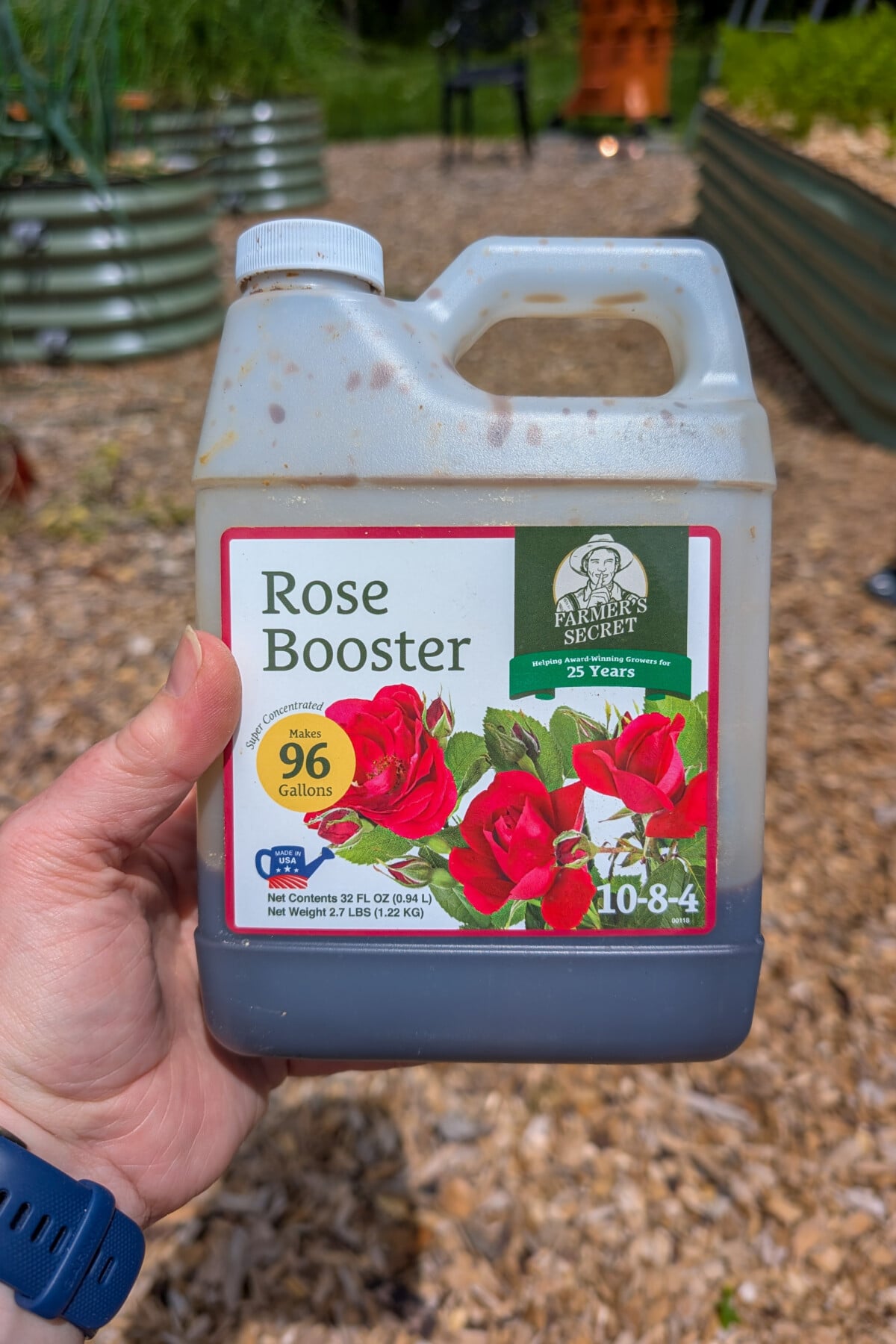
Yes, I did. This stuff is amazing for tomato seedlings, and here’s why. Take a look at that NPK formulation: 10-8-4. You’ve got plenty of nitrogen for lush, thick stem and leaf growth. Then you’ve got a decent amount of phosphorus. We’re not really thinking of flowers or fruit yet, but that phosphorus is hugely important in the development of a strong root system. And roots are the key to healthy tomato plants and huge harvests.
I mix the Farmer’s Secret Rose Booster up with water and feed the seedlings with it every two weeks.
Now, if you use this, you’re going to notice your seedlings grow quicker and sturdier. You’ll want to give my monster tomato seedling method a try, so you don’t end up with rootbound seedlings. (Plus, you’ll have seriously impressive tomato seedlings that hit the ground running, er, growing, when you plant them out.)
Garden to First Frost
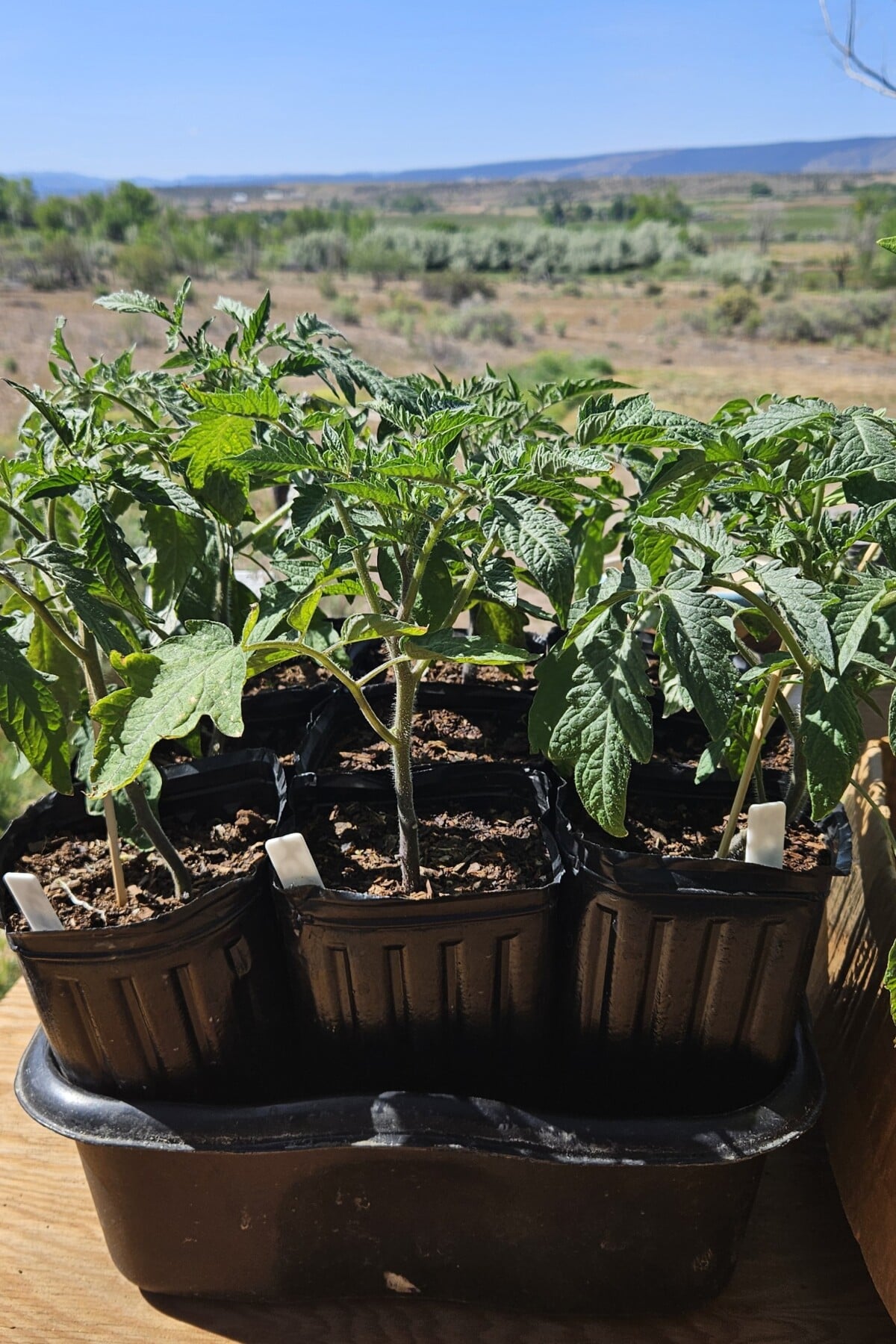
I continue with this fertilizer when I plant the seedlings out in the garden. After they are planted, they get watered in with the Farmer’s Secret Rose Booster.
Two weeks later, they get a final dose of the Rose Booster. After that, I switch over to the Farmer’s Secret formula for tomatoes, oddly enough, called Farmer’s Secret Tomato Booster. They may not win points for originality when it comes to naming their fertilizers, but that doesn’t matter when you make a good product.
I discovered this line of fertilizers several years ago and made the switch, starting with the Tomato Booster. I haven’t used anything else on my tomatoes since.
Let’s take a look at this formulation.
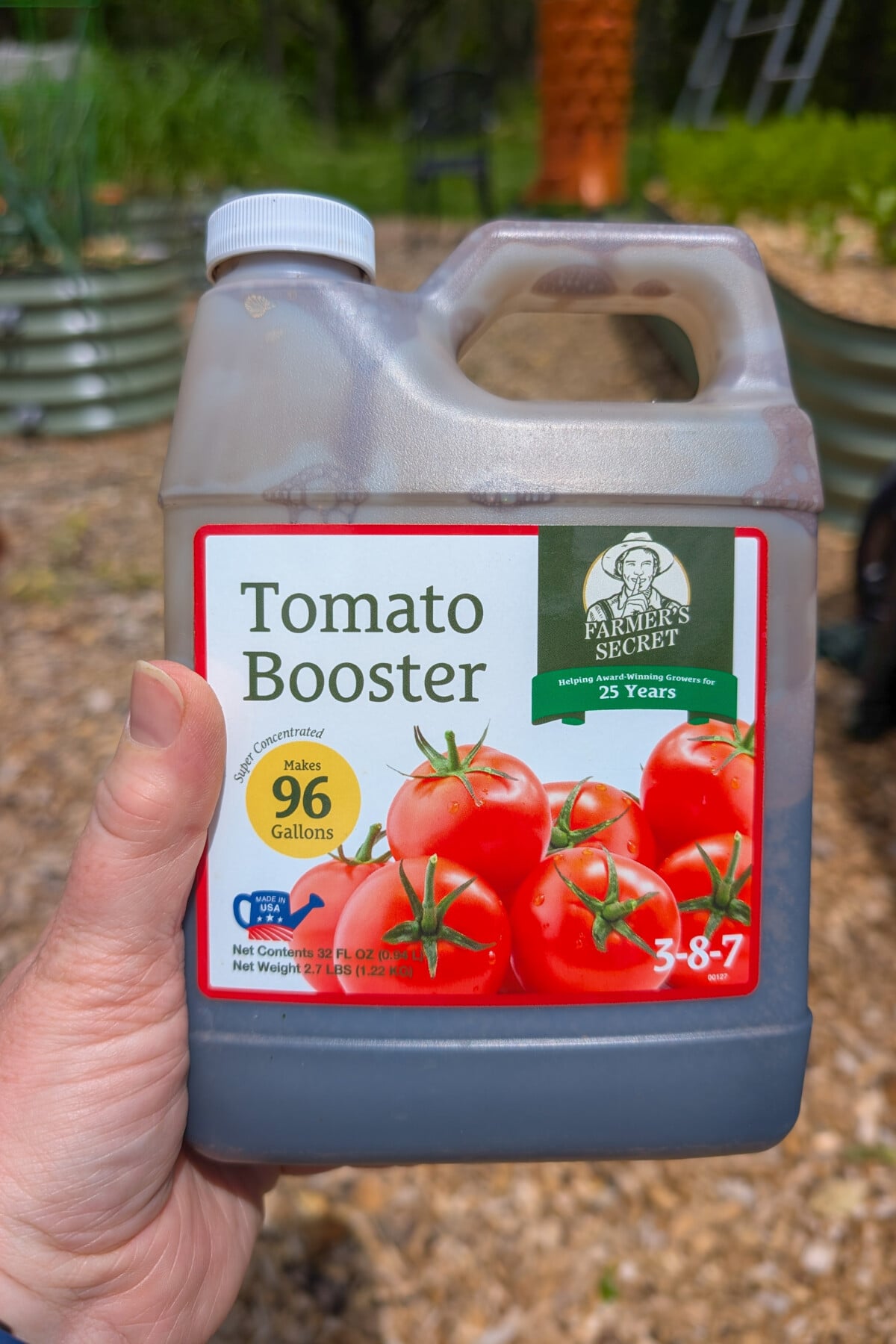
The Farmer’s Secret Tomato Booster has an NPK ratio of 3-8-7. We’re backing off on the nitrogen. There’s enough there to promote continued growth, without sacrificing flowers and fruit. The formula is also higher in phosphorus and potassium, both key elements in flower and fruit production. The fertilizer also has trace minerals in it that tomatoes need, such as iron and calcium.
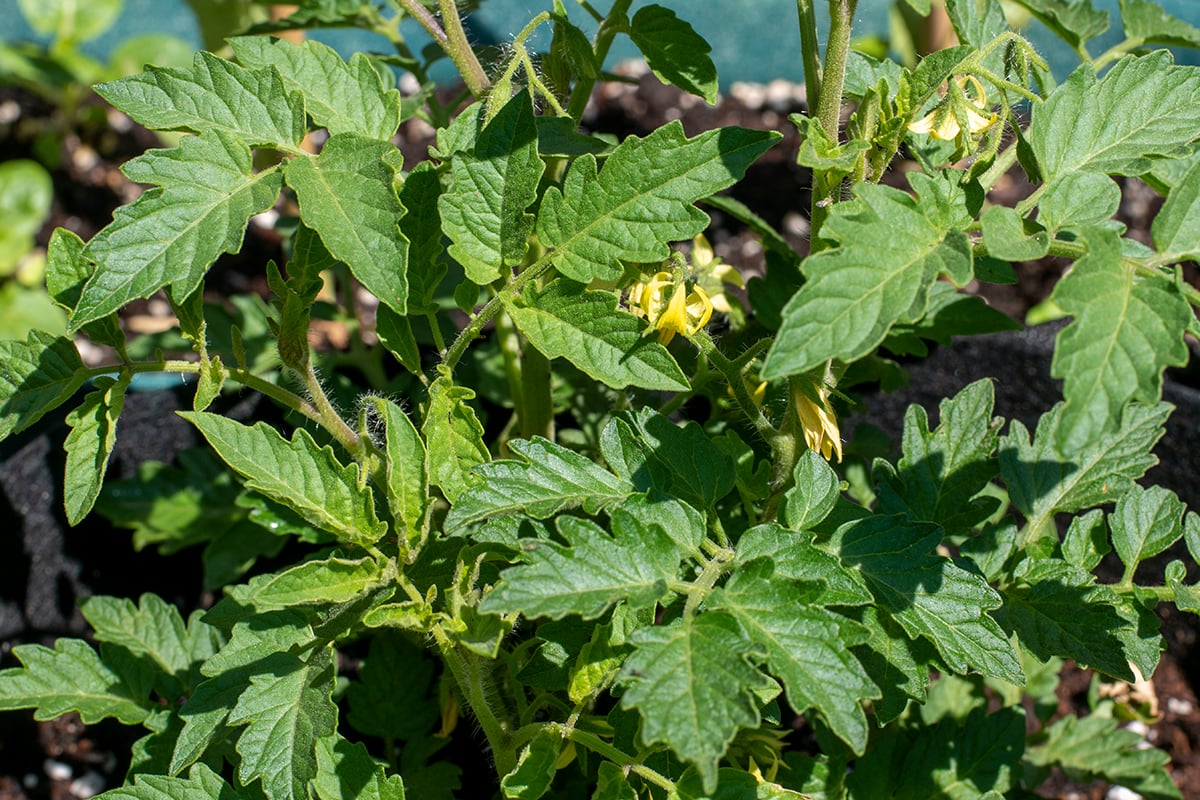
I mix this with water and feed my tomatoes every two weeks while telling them how amazing they are, and how they’re doing a great job of growing. Maybe I have such great tomatoes because I speak words of encouragement to them, but my money is on the fertilizer.
I continue using the Farmer’s Secret Tomato Booster right up until the end of the season, when I top my tomatoes in late September to encourage them to finish ripening everything on the vine before that first frost hits.

I purchase both of these fertilizers in the 32-ounce size, and both last me two years plus, growing anywhere from 10 to 14 tomato plants each season. Give it a try, I think the results speak for themselves. I know I’ve been impressed, and I like not having to juggle six different fertilizers to get gorgeous, juicy tomatoes each year. Now that we’ve got the fertilizer sorted for our tomatoes, who wants a G&T?
Get Garden Notes From Tracey, Right to Your Inbox
Pull up a chair on the front porch. Join 54,000+ gardeners who get Tracey\'s friendly notes, seasonal to-dos, and hands-on tutorials three times a week.