


I got a message from a friend this week saying, “My cucumbers are covered in flowers. I’m so excited! I’ve never grown cucumbers before. I have no idea what to do. What should I do?”
My first thought was that he needed to calm down. It’s cucumbers, not the winning Powerball numbers.
But I get it. Cucumbers are one of my favorite summertime veggies, and they’re always so much tastier from your own garden.
When your cucumbers reach the stage where they begin to flower, there are a few things you need to do to set yourself up for a big harvest. Let’s dig in.
1. Wrap the Stems

If you aren’t growing any winter or summer squash in your garden, get a thin strip of aluminum foil about an inch wide and twelve inches long. Wrap it around the very base of your cucumber stem where it’s growing out of the ground, working your way up the stem as you wrap.
This aluminum foil barrier will protect your cucumber vines from the squash vine borer moths laying their eggs on the stems. It’s a good idea to check the stems toward the bottom of the plant before you put the aluminum foil on. You’re looking for singular, small reddish-brown eggs. (Scrape any off if you do find them.)
The pupae emerge from the eggs and burrow their way into the stem of the plant, effectively killing your cucumber vine from within.
However, the squash vine borer much prefers the more tender stalks of winter and summer squash. So, if you are growing squash in your garden, your cucumbers are usually safe. (But you should wrap your squash stems with aluminum foil instead.) Read more about squash vine borer prevention here.
2. Start Training/Trellising
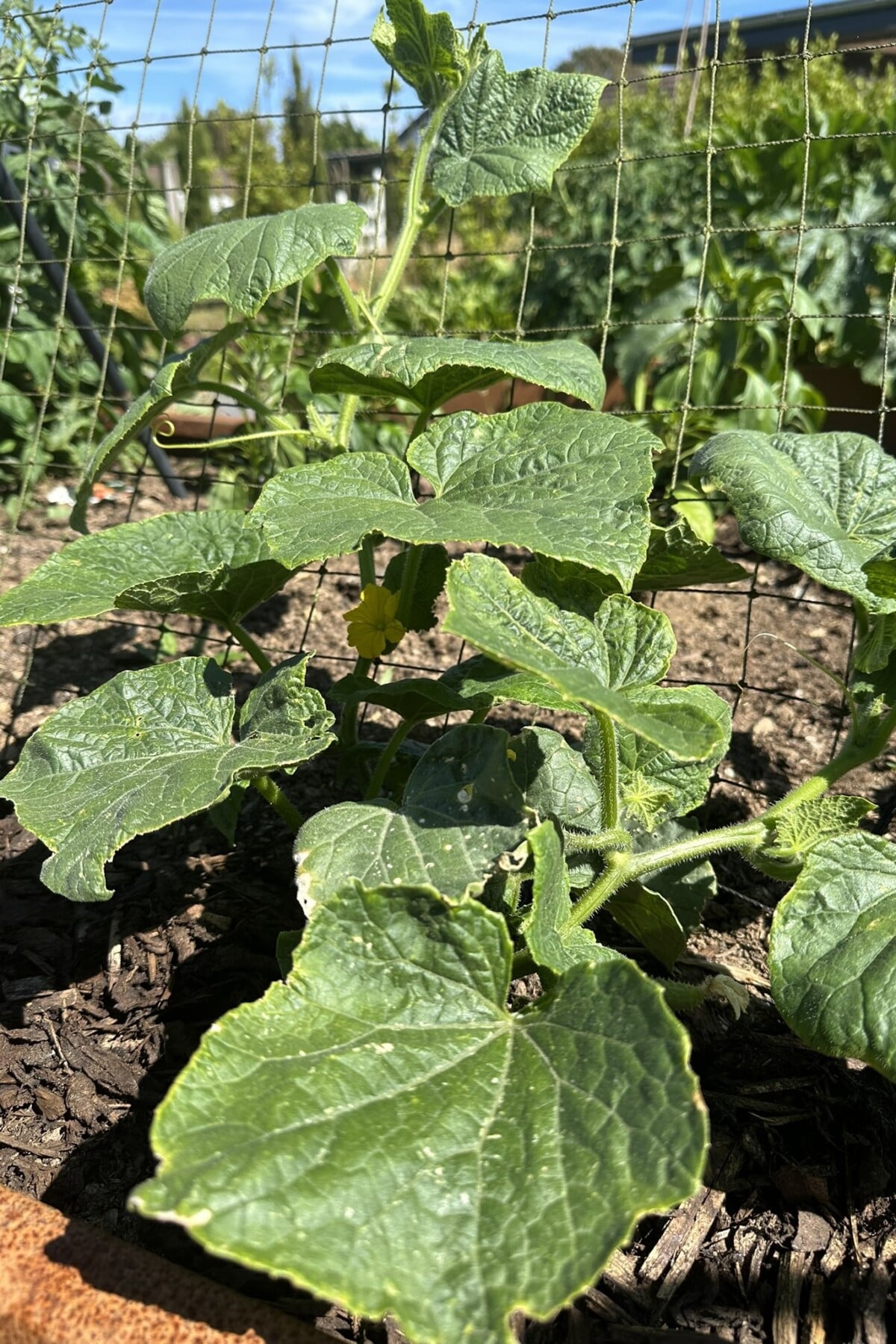
Unless you are growing a bush variety, now is the time to start training your cucumbers up a trellis or string. Cucumbers are highly susceptible to powdery mildew and several soil-borne diseases, such as verticillium wilt and fusarium wilt.
Growing cucumbers vertically allows for better airflow around the plants, preventing these issues before they start.
But by far the best part about growing cucumbers vertically is how much easier it is to harvest your cukes. They’re often easier to spot before they get too big, and you aren’t bending over looking under leaves. Vertical cucumbers are much easier on the back.
I’ve also noticed that growing a tall green wall dotted with yellow flowers tends to attract pollinators better. This benefits more than your cucumbers; all of your other plants will thrive with more pollinators present.
3. Skip the High-Nitrogen Fertilizer & Start Feeding Fruit
Now that your cucumbers are cranking out flowers, it’s time to lay off the high-nitrogen fertilizer. When plants are small and getting established, it makes sense to use a balanced fertilizer, or one that’s higher in nitrogen. You want that green growth as the plant begins to grow taller and starts to climb.
But once the flowers show up, you need to feed with a lower-nitrogen fertilizer that’s higher in phosphorus and potassium. These nutrients are important for flower and fruit development. Farmer’s Secret Fruit & Bloom Booster is a great option. (I found the Farmer’s Secret line of fertilizers several years ago, and they’re great. It’s nearly all I use anymore.)
If you continue to feed with too much nitrogen, you’ll end up with a lovely green vine, filled with beautiful leaves and very few cucumbers.
4. Water Consistently
Cucumbers are actually a fruit, hence that lovely, cool, melon-like flavor you get when you bite into one. I’ve found that Persian cucumbers have more of that fruit-leaning flavor, and they’re all I grow these days. You can learn how to grow these tender, flavorful cucumbers here.
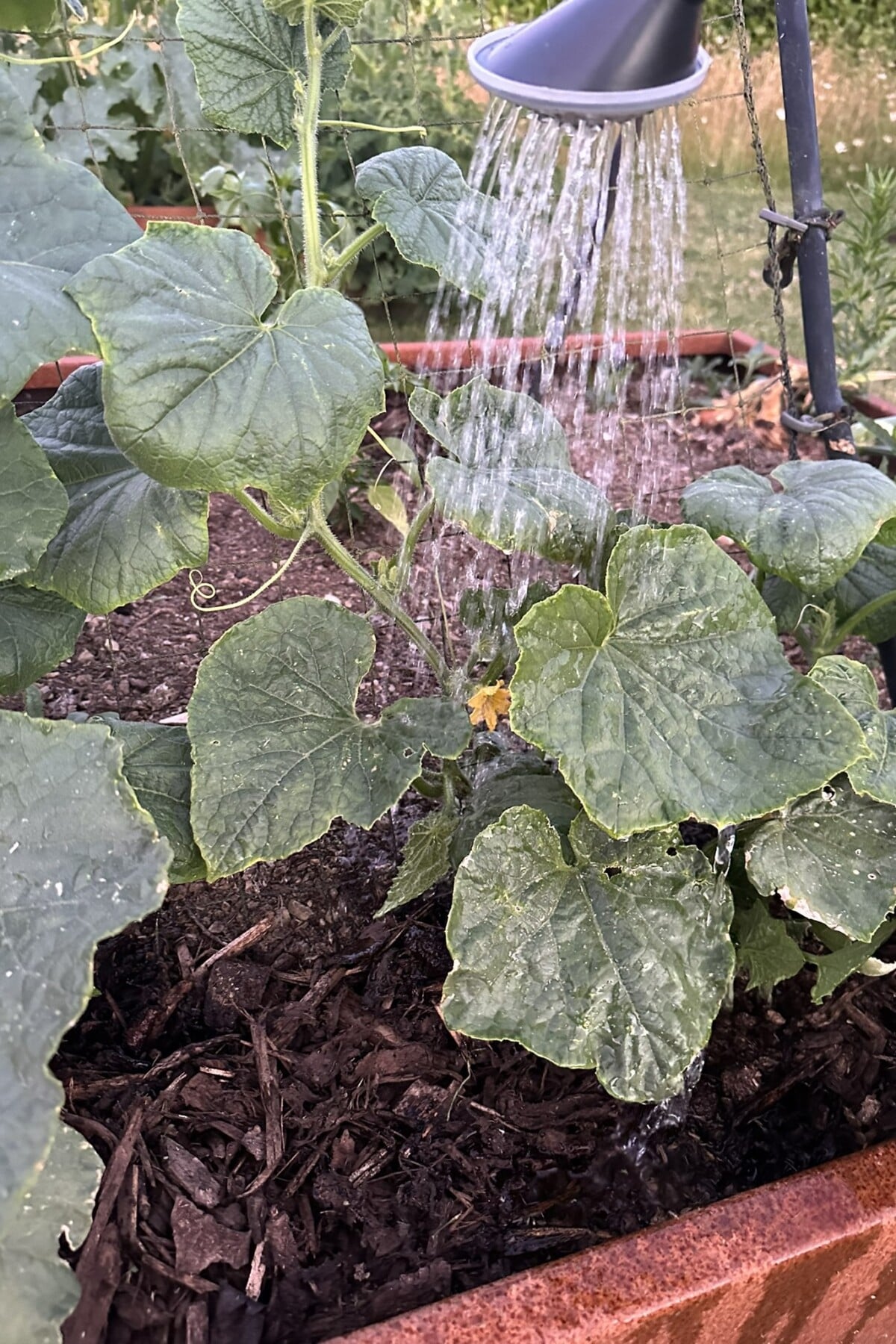
Of course, we’ve all grown our fair share of bitter cukes, too. As your cucumber plant begins to flower, you can ensure a summer filled with that classic cucumber flavor rather than bitter bites. You just need to stay on top of watering.
Cucurbitacin is what gives cucumbers that bitter flavor, and it concentrates in the ends and the skin of cucumbers when the plant experiences water stress: periods of dry followed by soaking rains.
Because cucumbers have relatively shallow root systems, it’s easier for them to dry out faster.
Mulching around the base of your cucumbers will slow evaporation, keeping more moisture in the soil for longer. But beyond that, watering them on a steady schedule when they begin flowering, so that the soil stays slightly moist at the top layer, will ensure better-flavored cucumbers.
I usually push the mulch aside every day or so and look at the soil. If it’s starting to look dry and pale, it’s time to water.
5. Watch for Pollinator Activity & Hand Pollinate If Needed
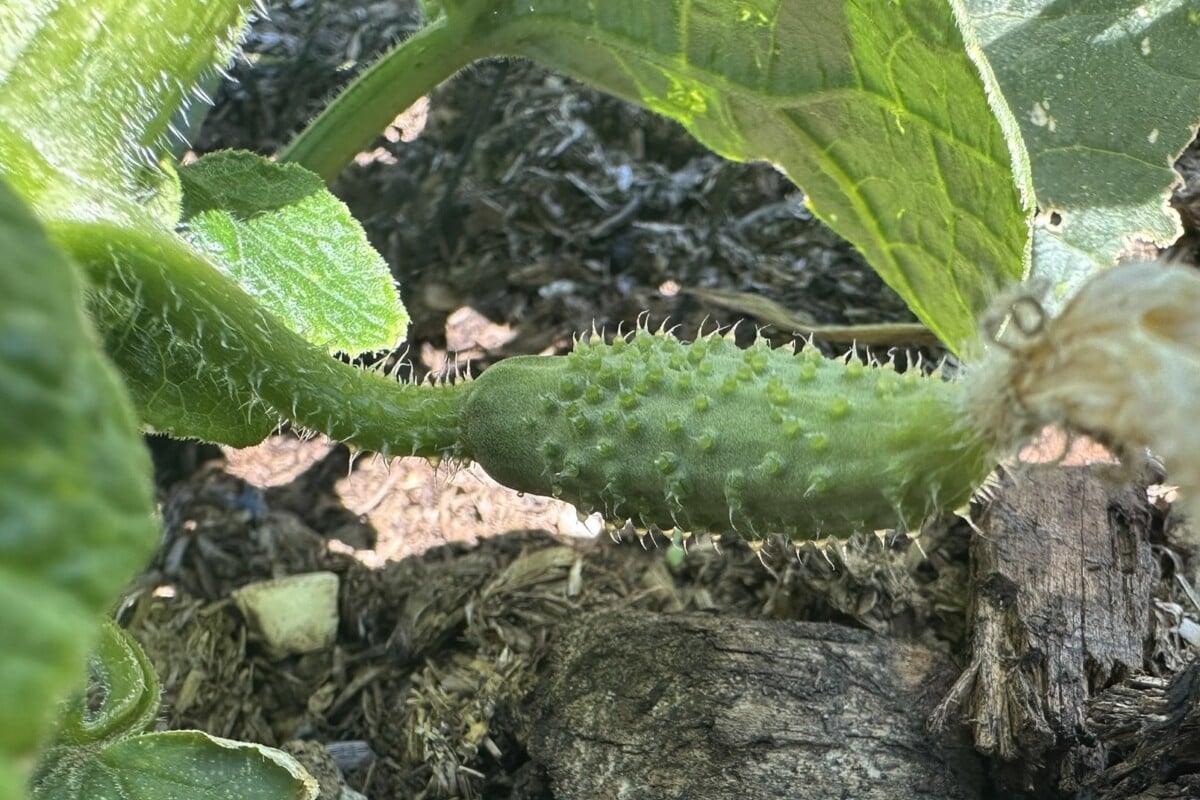
The thing my friend was most concerned about was that he had all these cucumber flowers, but not much was happening yet. It can be frustrating to watch flowers come and go with no tiny cucumbers growing in their wake. But that’s often the case with immature cucurbit plants. They will often, depending on the variety, throw either all male flowers at first or all female flowers at first. Eventually, the plant will mature, and you’ll be up to your eyes in cucumbers.
While you’re waiting for the right flowers to come along, keep an eye out for pollinators.
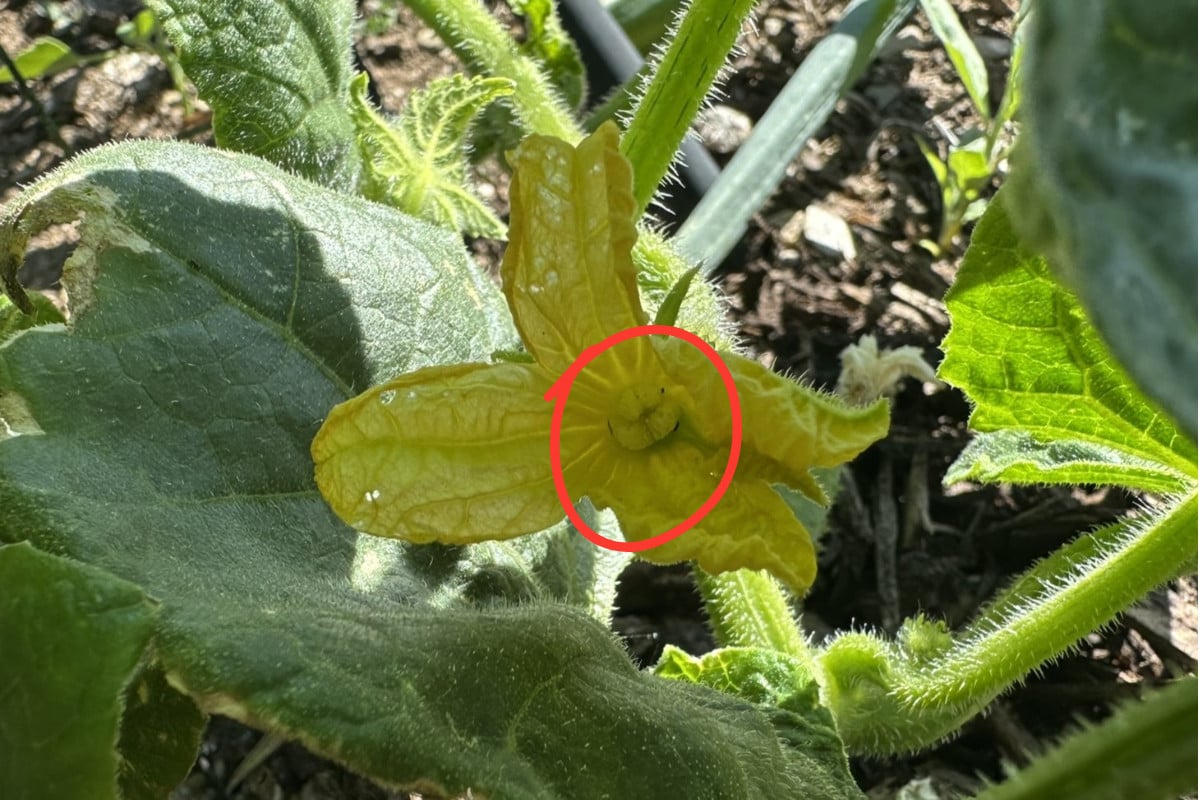
If you aren’t noticing many pollinators visiting your cucumbers, you can hand-pollinate the female flowers until the bees arrive. It’s easy enough to do. The female flowers have a tiny cucumber growing behind them, and the male flowers do not. To pollinate the female flowers, take a male flower and remove the petals to expose the pollen-covered stamen. Gently swab the inside of the female flower with the stamen.
It’s always a good idea to plant flowers among your vegetable garden. The riot of colorful blossoms attracts pollinators. To get the best results, plant early-blooming sweet alyssum. The tiny little blooms on sweet alyssum smell lovely not just to us, but to any pollinators in the area, too. Even though they are small, they contain quite a bit of nectar, which makes them a favorite among native bees.
Sweet alyssum does double duty in the garden by attracting beneficial insects that eat many common garden pests, such as aphids. You can read more about the benefits of growing sweet alyssum in your garden here.
And that’s that, my friend. If you take care of these five things, your blossoming cucumbers will be covered in, well, cucumbers before you know it.
Get Garden Notes From Tracey, Right to Your Inbox
Pull up a chair on the front porch. Join 54,000+ gardeners who get Tracey\'s friendly notes, seasonal to-dos, and hands-on tutorials three times a week.