

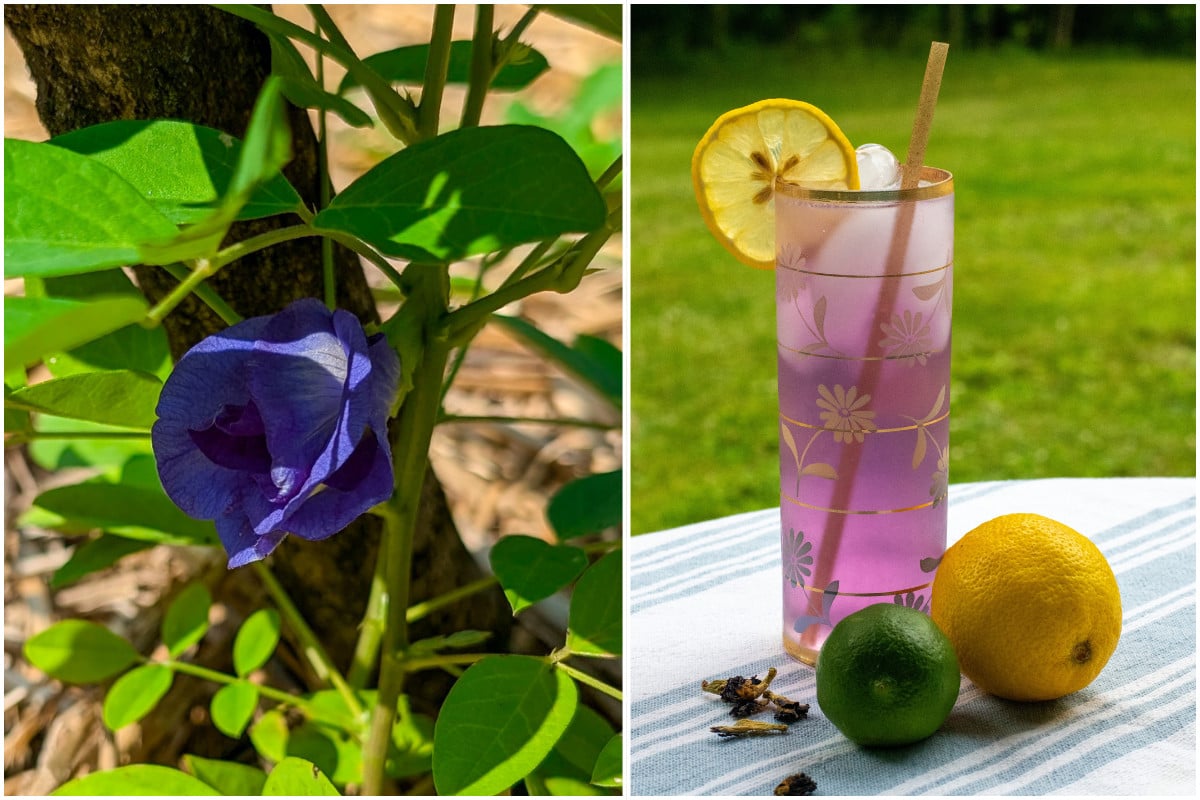
I’m a huge advocate for planting flowers among your vegetable garden. They add a lovely pop of color and attract pollinators, which means more vegetables. But when you tell me the blossoms are edible, and you can make beautiful blue or purple drinks with them, I’m all in. I’m talking, of course, about the butterfly pea. And you’re going to want to plant some in your garden this summer.
Butterfly pea, or Clitoria ternatea, is one of those plants that should be in everyone’s garden.
Or at least in a pot on their porch. Even if this plant weren’t edible, it’s worth growing simply for its decorative allure. It’s a creeping tender perennial in zones 10-12, and an annual for the rest of us.
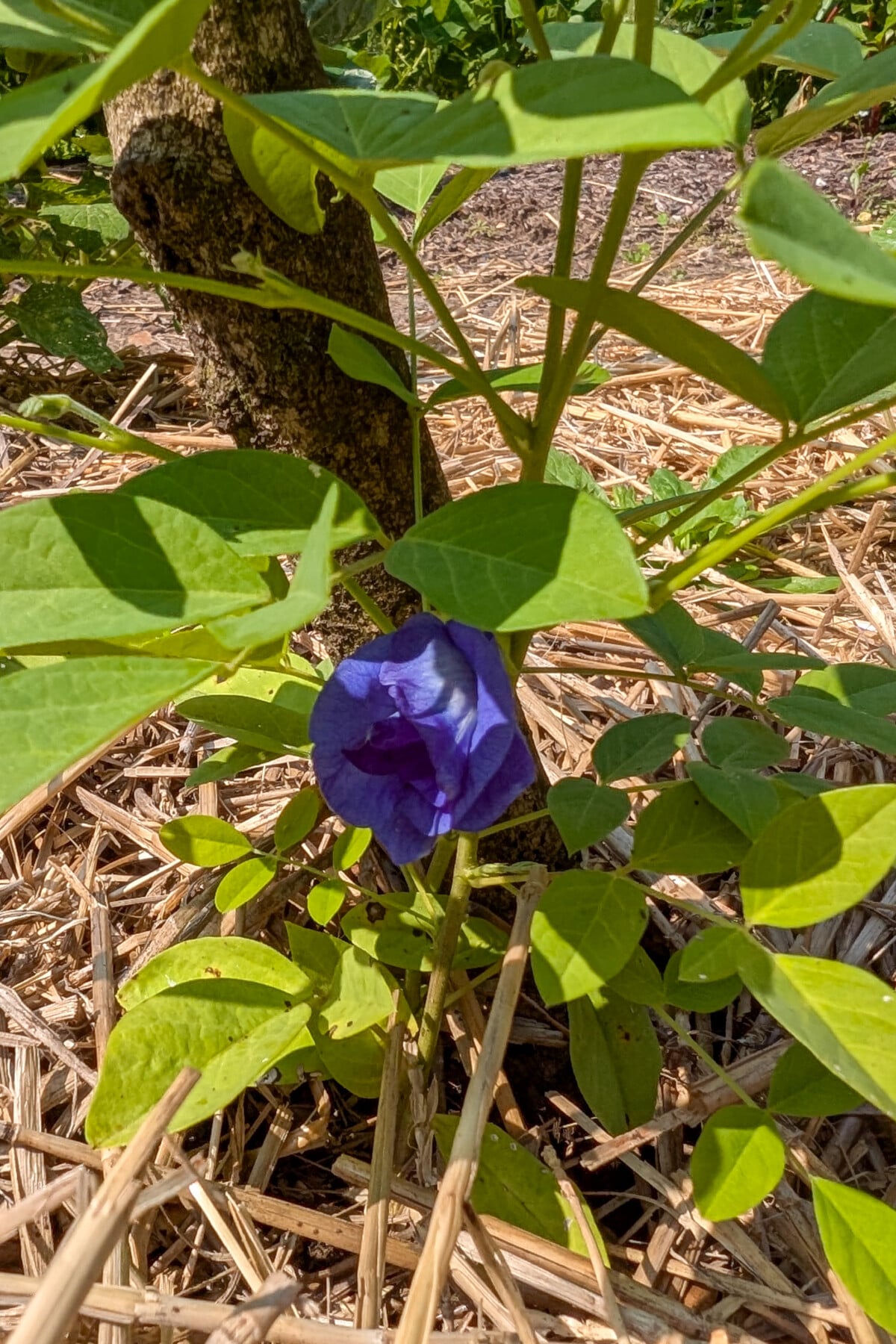
Emerald green leaves cling to delicate vines that climb wherever they can cling, and impossibly blue flowers dot the greenery all summer long. These sapphire-hued blooms carry a little secret.
You can pick the blossoms, dry them and use them to create the most gorgeous indigo-blue colored drinks.
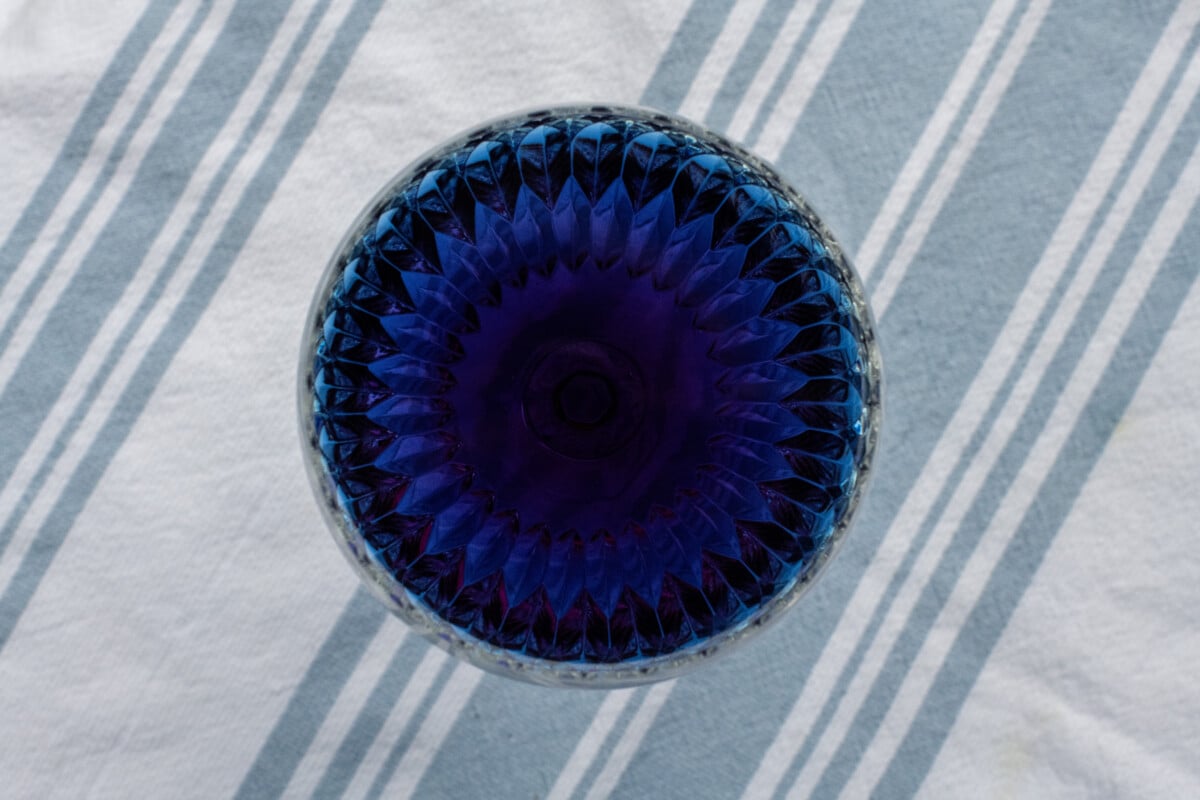
But if you add some acid, say lemon juice, that deep blue shifts to a stunning purple-pink.
You know that fancy (and pricey) indigo gin that changes to a pinky-purple when you mix it with citrus? Oh yes, its magical properties come from the butterfly pea flower. You can easily make your own version by steeping your choice of gin with the dried flowers. And wait until you see what it does to lemonade.
Even if you have no interest in fantastic, colorful treats, this tropical Asian native makes a stunning climbing ornamental both in and out of your garden.
An Excellent Climber
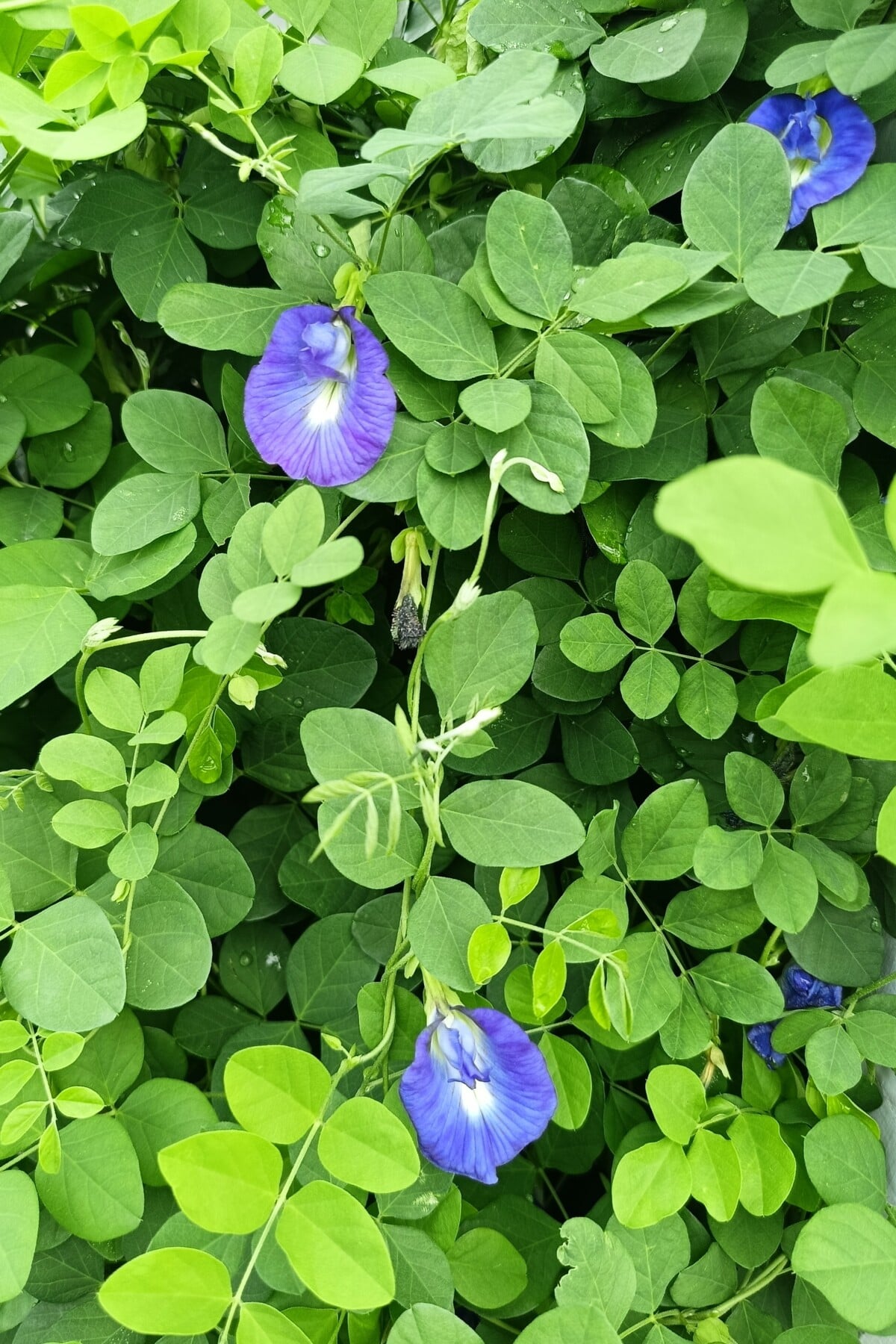
I love a good climbing annual in my garden each year. I love the shade the vines can provide when strategically planted along the side of a porch. The butterfly pea vine can grow anywhere from six to ten feet in a season, making it perfect for fences, trellises, or good old-fashioned twine.
How to Grow Butterfly Pea Flower
You can start this gorgeous flowering plant indoors or direct sow it outside once all danger of frost has passed, and the soil has warmed up. You can get seeds here.
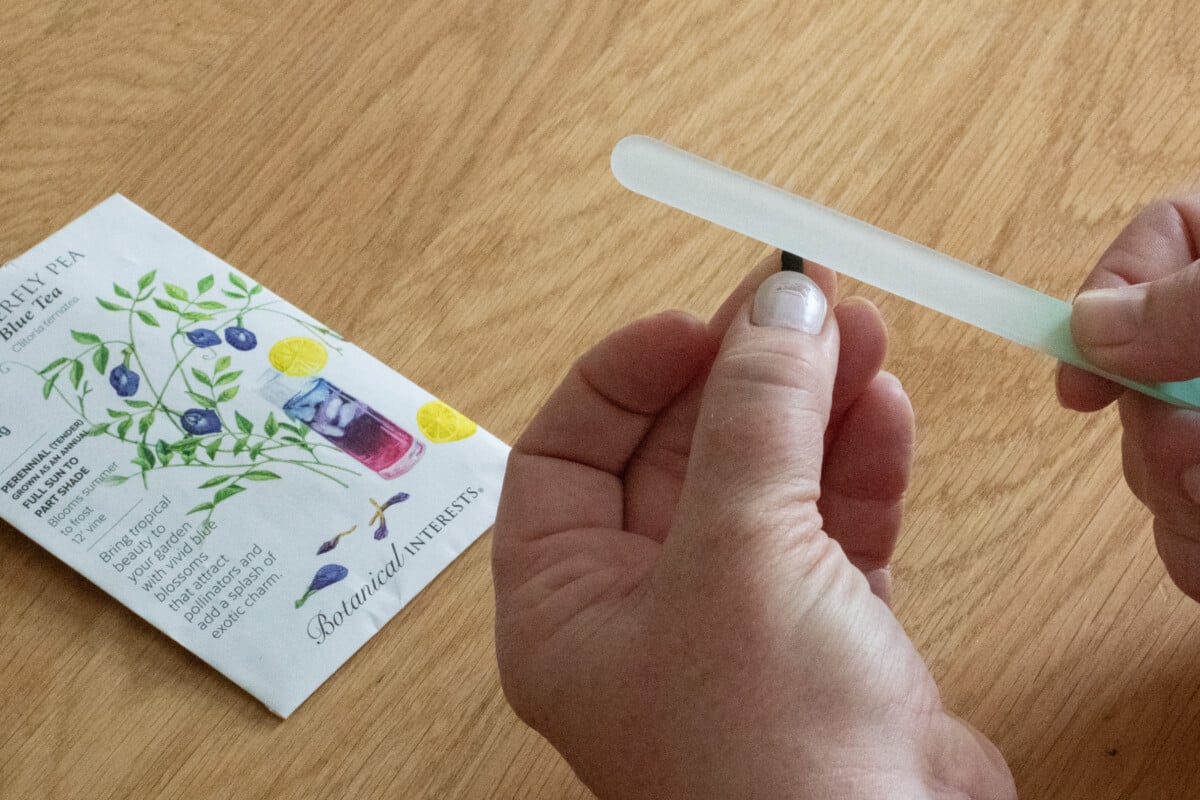
In either case, I’ve found that scarifying and soaking the seeds leads to better germination rates, as the seeds have a very thick, waxy outer coating. I use my nail file to scrape the outside of the seeds on both sides, then set them in a dish of water to soak overnight.
The seeds get planted at a depth of half an inch and can take anywhere from two to three weeks to germinate, so be patient.
When starting them indoors, you’ll want to start them around four to six weeks before your final frost date. I’ve also found that a heat mat can help speed up germination. They like good, warm soil.
If you choose to direct sow them, keep in mind that these are tropical natives. Wait until nighttime temperatures are consistently above 55°F. The same goes for when to transplant them outdoors.
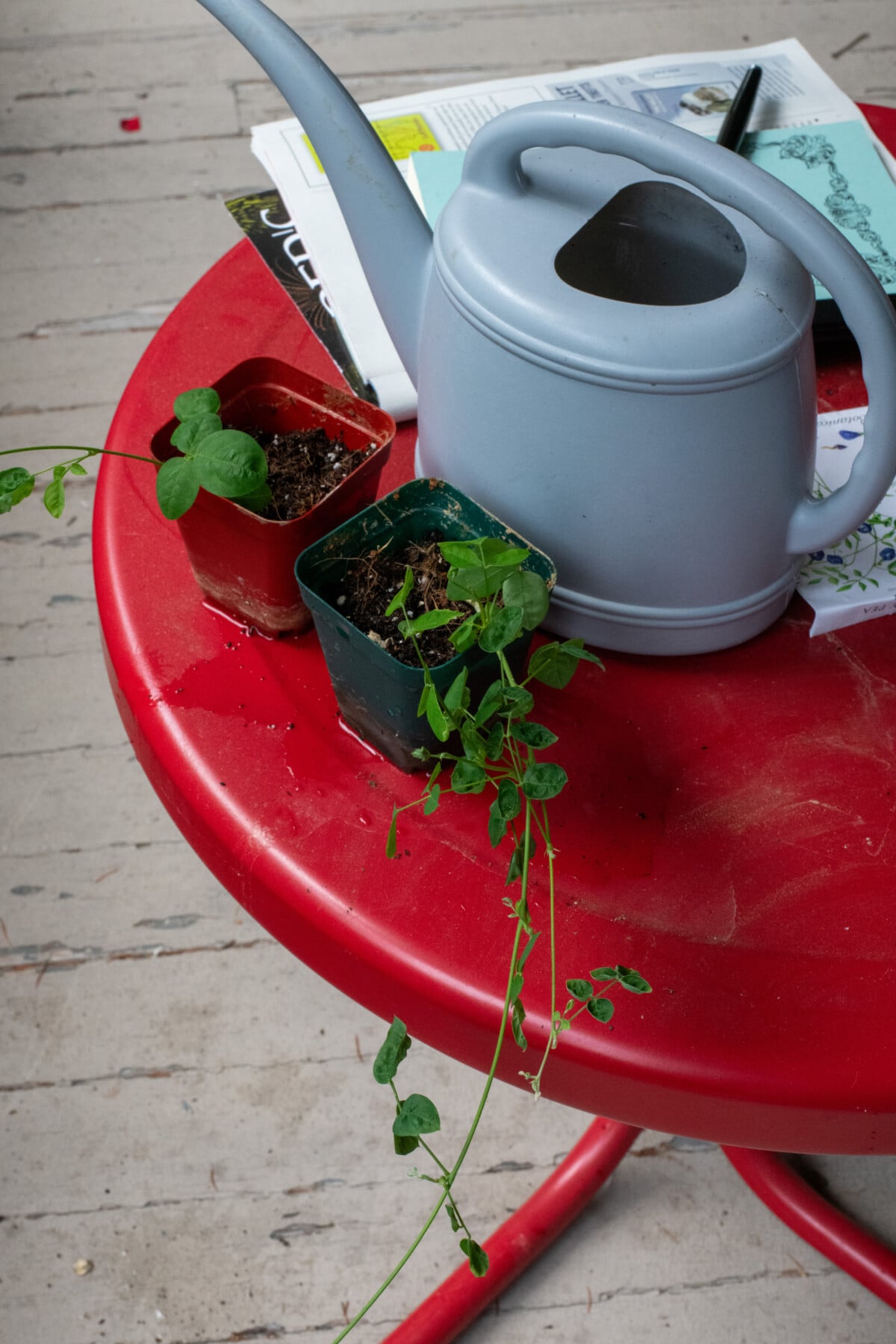
If you live where there is a shortened growing season, you’ll definitely want to start them indoors. I live in Pennsylvania, in zone 6b and have done both.
More Sunshine = More Blooms
Full sun will give you the most flowers and the best vine growth. They need a minimum of six hours of direct sunlight each day. If you live in very hot southern climates, planting them where they are out of the late afternoon sun will keep them looking their best. Otherwise, they tend to look a little deflated in the afternoons and may suffer during periods of extreme heat.
Choose a location that receives at least six hours of direct sunlight daily. Full sun encourages the most vigorous growth and the greatest number of flowers.
Soil Needs
Like most vining plants, the butterfly pea flower is a scrappy little thing that isn’t all that fussy about soil as long as it drains well. When growing them in containers, you want the soil to stay lightly damp, but never soggy.
Help Them Learn to Climb
You’ll notice that the vines are quite thin and delicate. You’ll need to give them something to climb up, and train them a bit until they find their way.
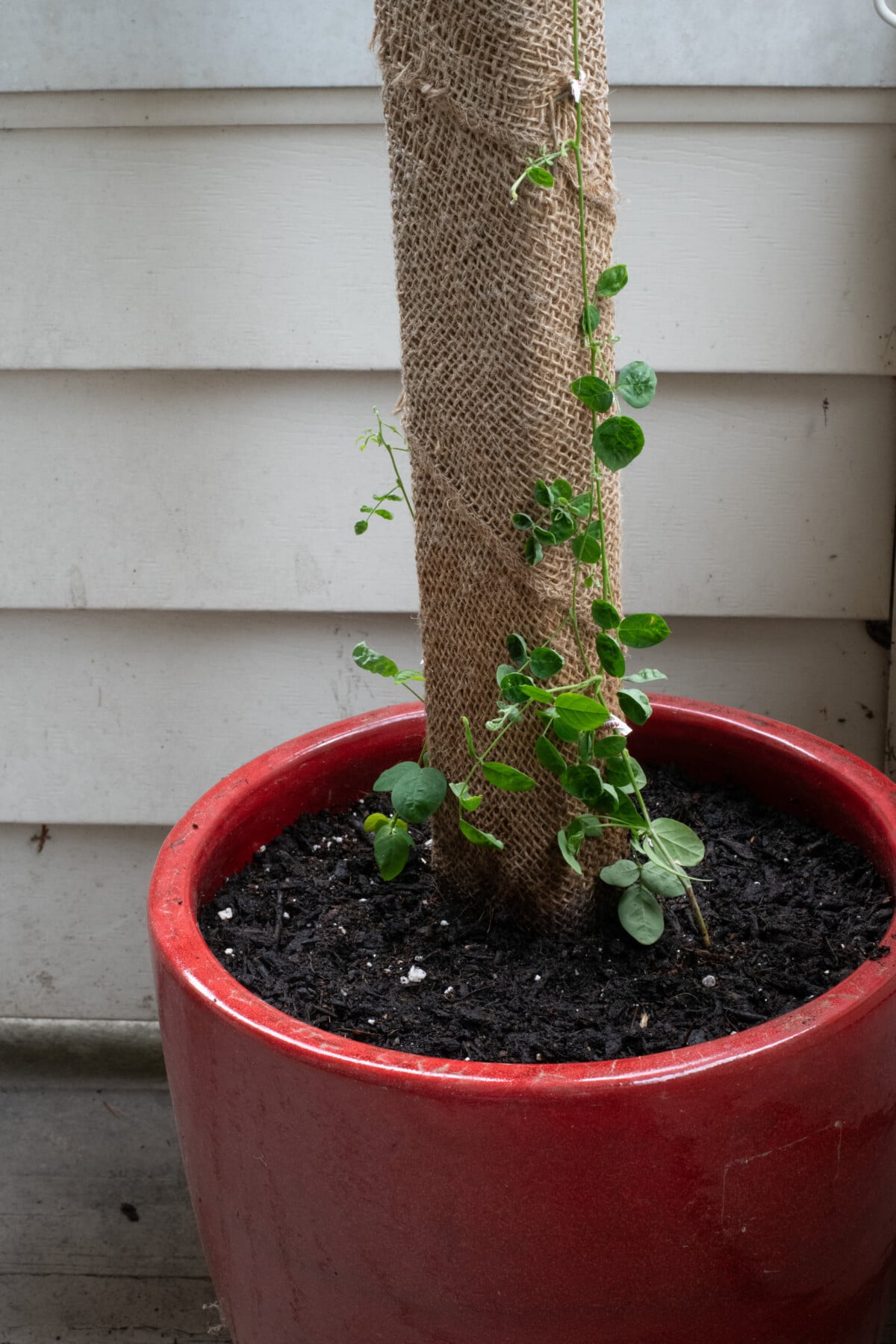
I made this great monstera pot with a built-in pole a few years back. My monstera loved it! And it was huge. Then I got adopted by a bunch of kittens that showed up in my backyard. They thought my monstera pole was absolutely the best thing in the world to climb, and unfortunately, they killed my poor monstera. It was probably for the best, as monstera are toxic to cats.
So now it sits out on my front porch, and I’m using it to grow butterfly pea flowers far away from little kitty claws.
Use whatever you have on hand to attach the vines to what you want them to grow up. I’m using bread ties until it starts climbing up the pole on its own. If you’re using twine, you can wrap the vines around it as they grow. Eventually, the plant will fill in and start clinging on its own.
Watering Butterfly Pea Flower
Mature plants are surprisingly drought-tolerant when grown directly in the ground. But if you get a dry spell or a heatwave, you’ll want to water them a little more often.
They don’t like sitting in soggy soil. Let the top inch dry out slightly before watering them again. A little mulch will help slow evaporation, so you have to water less often.
Feeding
Butterfly pea flowers are legumes and don’t need nitrogen-heavy fertilizers. They make their own. Usually, a bit of compost is all that’s needed to keep them healthy. But if you aren’t getting many blossoms, you can give your plants a fertilizer meant for flowering and fruiting plants that has low nitrogen and higher phosphorus and potassium.
Pick the Flowers Often
If you plan on drying the flowers to use for making food and drink, pick them shortly after opening. The more flowers you pick, the more the plant will produce. Even if you don’t wish to save and use the flowers, deadheading will keep them blooming regularly.
Drying Butterfly Pea Flowers
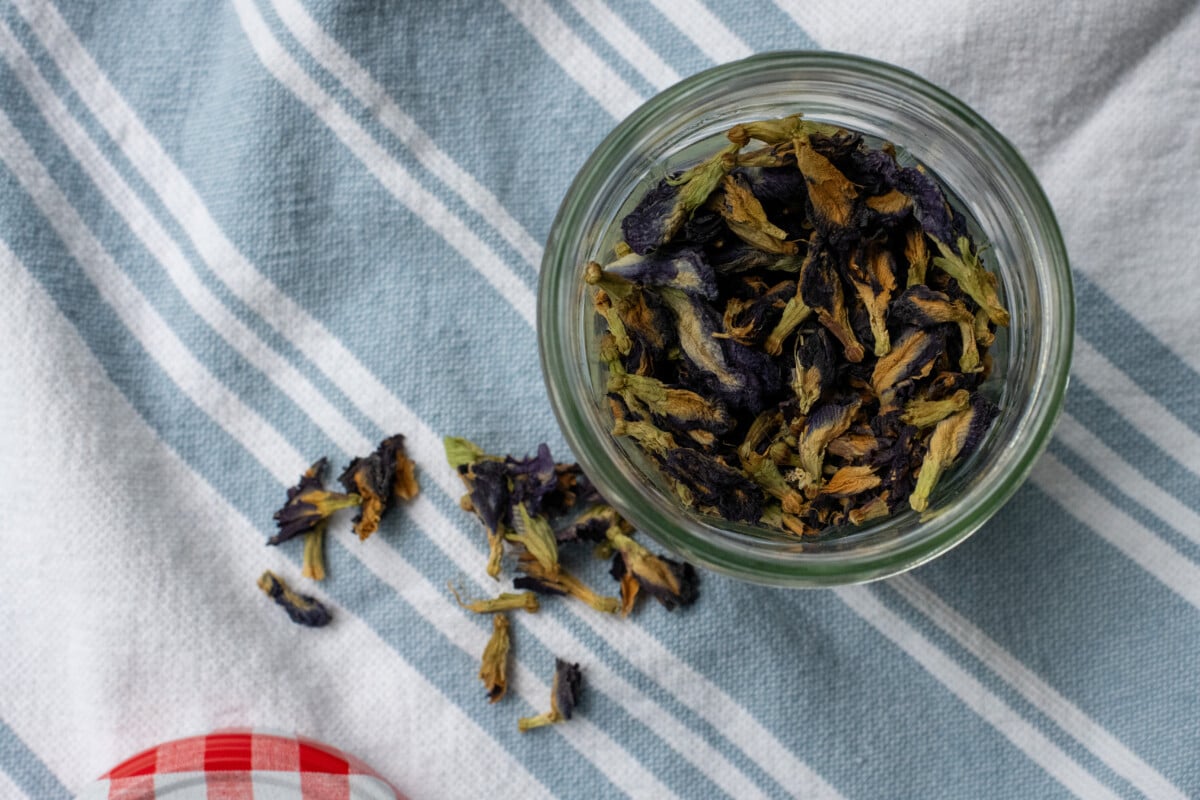
While you can use them fresh, the dried flowers last longer. You want to dry them at a low heat to preserve their natural pigments, so I don’t recommend drying them in the oven. If you have a food dehydrator, you can dry them for a few hours at 90°F. You can also let them air dry somewhere warm, out of direct sunlight. In either case, place them in a single layer when drying them.
Store the dried blossoms in an airtight container, away from light, and they will keep for a year. But they’re so much fun, you’ll probably use them all up before then.
On to the Fun Part – Using Your Butterfly Pea Flower
There are so many different things you can use butterfly pea flowers for; you’re really only limited to your imagination.
Can you make tea with butterfly pea flower?
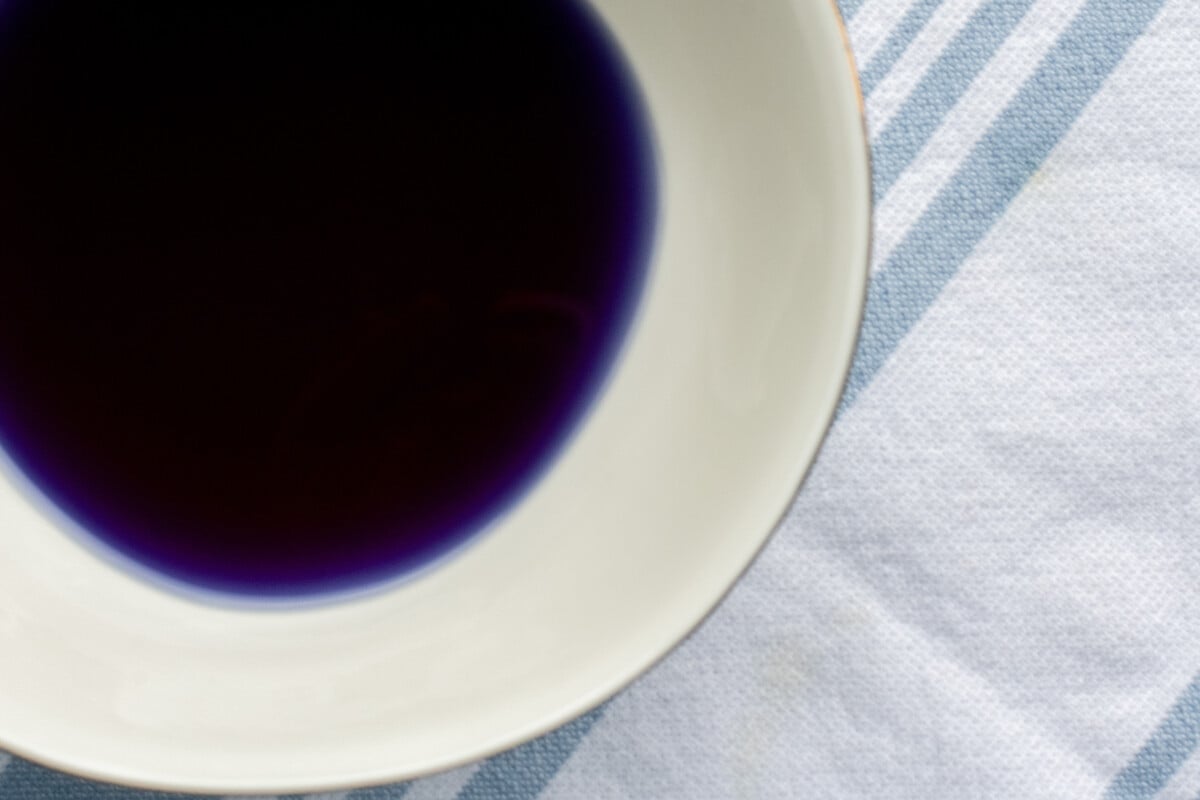
Yes, you can, but on its own, it’s quite a boring cup of tea. You’ll be sipping an indigo blue cup that tastes quite grassy. Instead, you can use the resulting tea to add color to other drinks. Or if you really want blue tea, consider adding the blossoms to an herbal tea or tisane so that it can impart its lovely color to something that already tastes good on its own. Chamomile is a great choice, or bee balm or any other herbal blend.
One of my favorite things to do is to add butterfly pea flower to lemonade. I steep a tablespoon of dried butterfly pea flowers in boiling water until it cools. Then strain out the flowers. Now use the resulting tea when mixing up your lemonade.
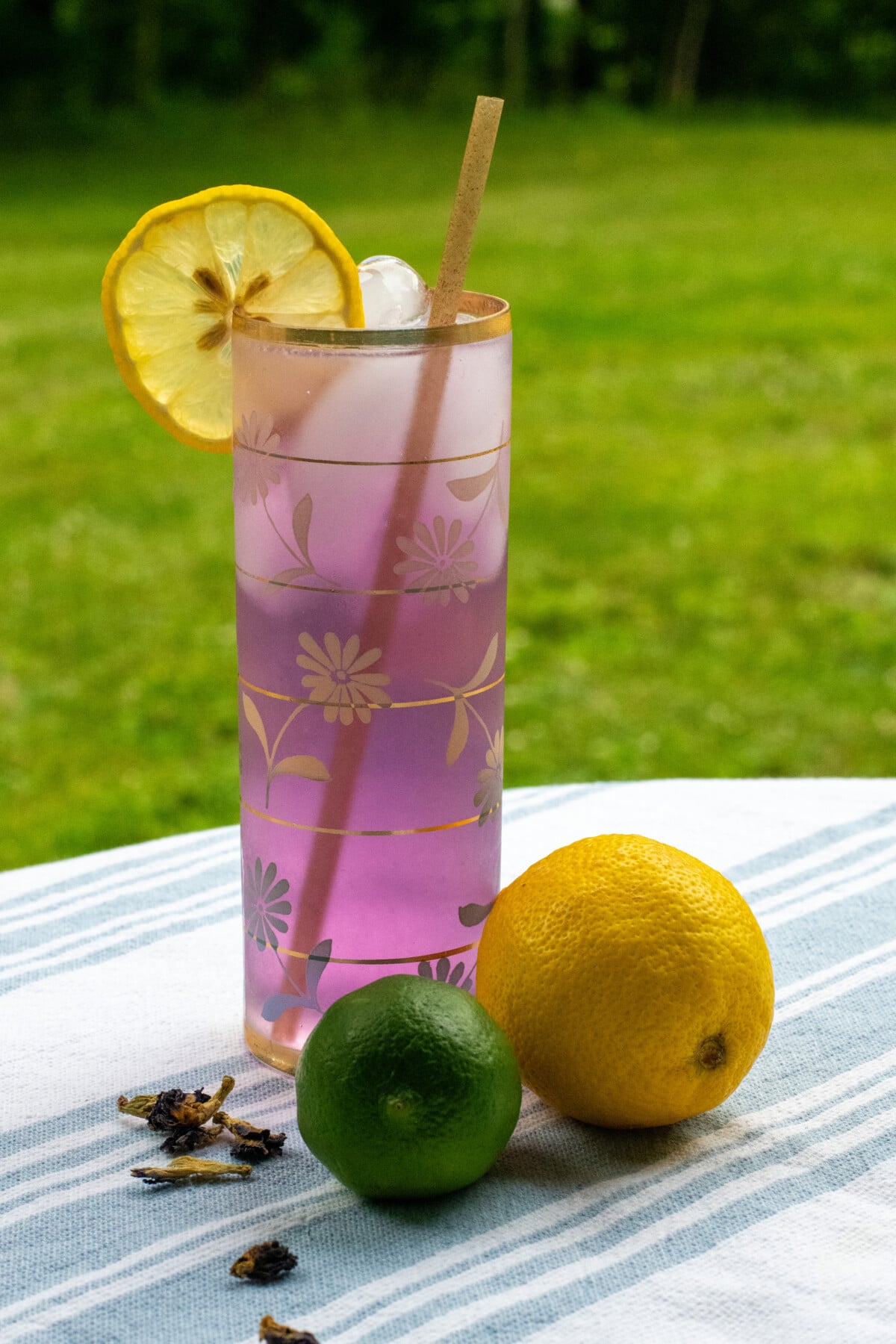
If you have company, wait and add the butterfly tea flower just before serving. The lemonade will change the indigo-blue liquid to a purple-pink, right before your eyes. It’s quite the party trick.
You can also use it to make some seriously impressive cocktails and mocktails.
As I mentioned above, you can make your own Empress gin dupe by steeping the dried flowers in a bottle of your gin of choice for a few days. The alcohol is great at extracting the color from the petals, leaving you with a sapphire-colored bottle of gin to enjoy. Gin not your spirit? Vodka or white rum works well, too.
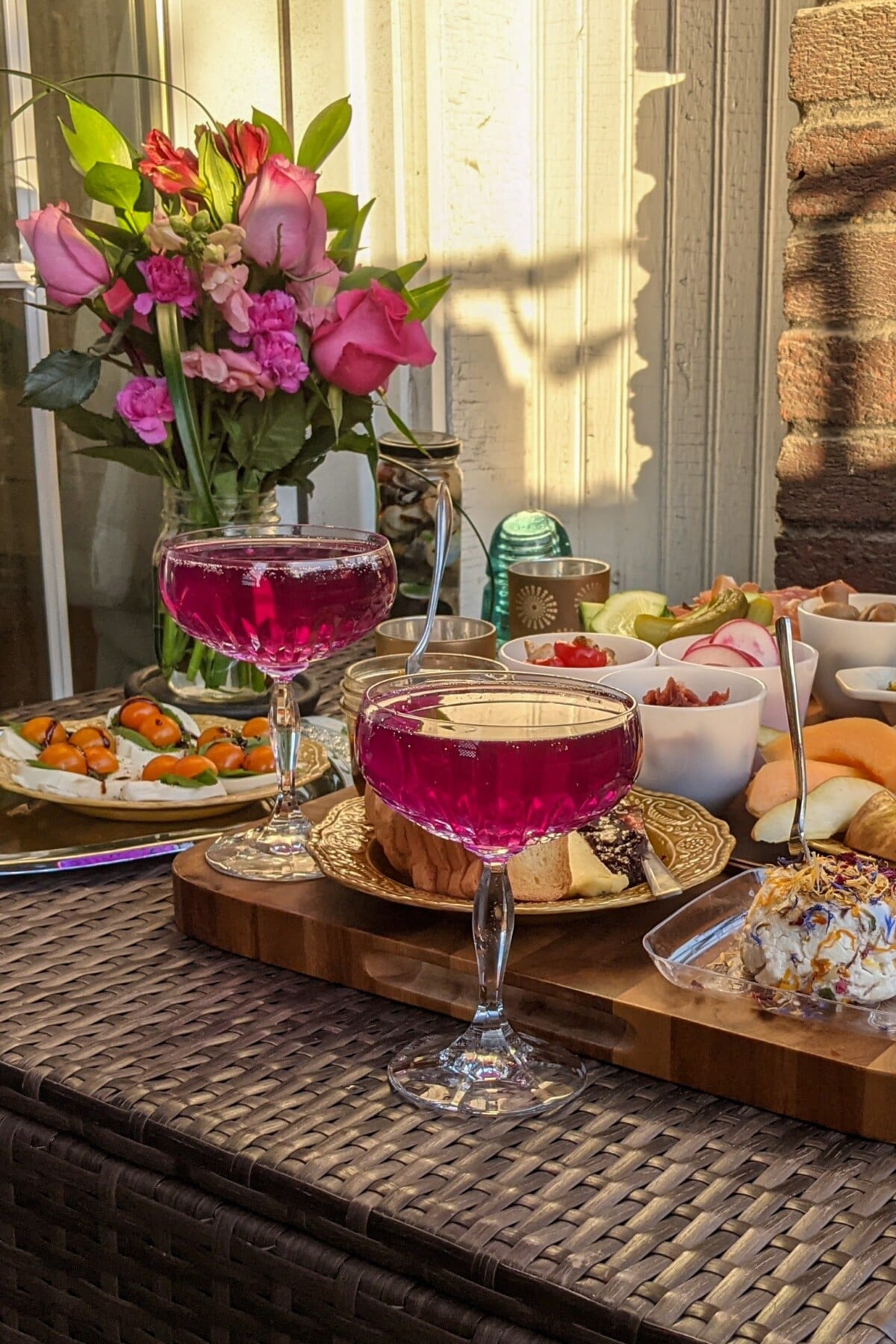
Another great way to incorporate it into cocktails is by adding flowers when making simple syrup. (A one-to-one ratio of sugar and water, simmered and then cooled.) You can experiment with the color by adding more or fewer blossoms. Strain the flowers from the syrup, and store it in a lidded jar in the fridge for a month. (Don’t forget to date and label it.)
Beautiful Ice Cubes
You can brew up an extra-strong tea of butterfly pea flowers and freeze it in ice cube trays for gorgeous purple ice cubes.
A Beautiful Blue Tint
Of course, there is so much more you can do with these gorgeous flowers. I’ve used them to create beautiful popsicles and fancy homemade infused vinegars. You can use the blue tea to tint all sorts of things:
- Frosting
- Rice
- Ice cream
- Smoothies
- Homemade yogurt
- Pancake batter
The list goes on and on. And don’t forget, you can eat the flowers fresh. They look lovely in a salad.
I hope you’ll try growing this gorgeous flower this year. I have a feeling if you do, it won’t be your last.
Get Garden Notes From Tracey, Right to Your Inbox
Pull up a chair on the front porch. Join 54,000+ gardeners who get Tracey\'s friendly notes, seasonal to-dos, and hands-on tutorials three times a week.