

If you’re tired of skimpy, leggy tomato seedlings that get knocked over by the tiniest breeze and take forever to harden off, or your tomato seedlings get stuck after you plant them and don’t start growing for ages, or you just want to grow tomato seedlings that have a significant headstart on the growing season. You’ll want to read this.
I have been gardening for decades and shelling out gardening advice for years here at Rural Sprout. If there was one single piece of gardening advice I could share with every single gardener, this is it – how to grow Monster Tomato Seedlings.
The process I want to share with you came about by chance a few years ago.
I had been working on our popular article on how to plant tomato seedlings sideways (more on that later), while simultaneously finishing up an article about propagating beautyberry cuttings.
Because these two articles coincided at the right moment, I happened to have one of those ideas where you think, “This is either crazy or brilliant.” Lucky for you, it turned out to be brilliant. Let’s take a look at what this trick is and why it works so well, but first, it’s important to understand why this works.
Growing Your Own Little Monsters
Okay, why do you even want to grow tomato seedlings with massive root systems?
Have you ever noticed that when you plant your tomato seedlings in the ground, they kind of hit a wall for a while? They were growing like crazy in your home, but when you put them outside in the ground, it’s like someone hits pause for a week or two?

Yes, some of it is transplant shock, but it should only take a day or two for your plants to bounce back.
What’s happening is your plant is no longer confined to the little seedling pot it was growing in. So now it gets busy producing more roots and spreading out in the soil.
The vascular root system is expanding so that the plant can access the water and nutrients needed for the growth that’s about to happen above the soil.
Plants with vascular root systems will only grow as big above ground as their existing root system below ground can support.
So, your newly transplanted tomato seedling has to play catch-up before it can begin growing again.
Gardeners in the know pay more attention to what’s going on below the soil than what’s happening above it. That whole system growing out of sight determines everything from how big your tomato plant can grow, to how fast, as well as how soon it will begin to set fruit and how much.
The larger the root system, the more insane your tomato plant will be all season long. See?
Tomato Seedlings with big roots = Headstart on the season = Great tomato season overall.
Skip That Settling-in Period
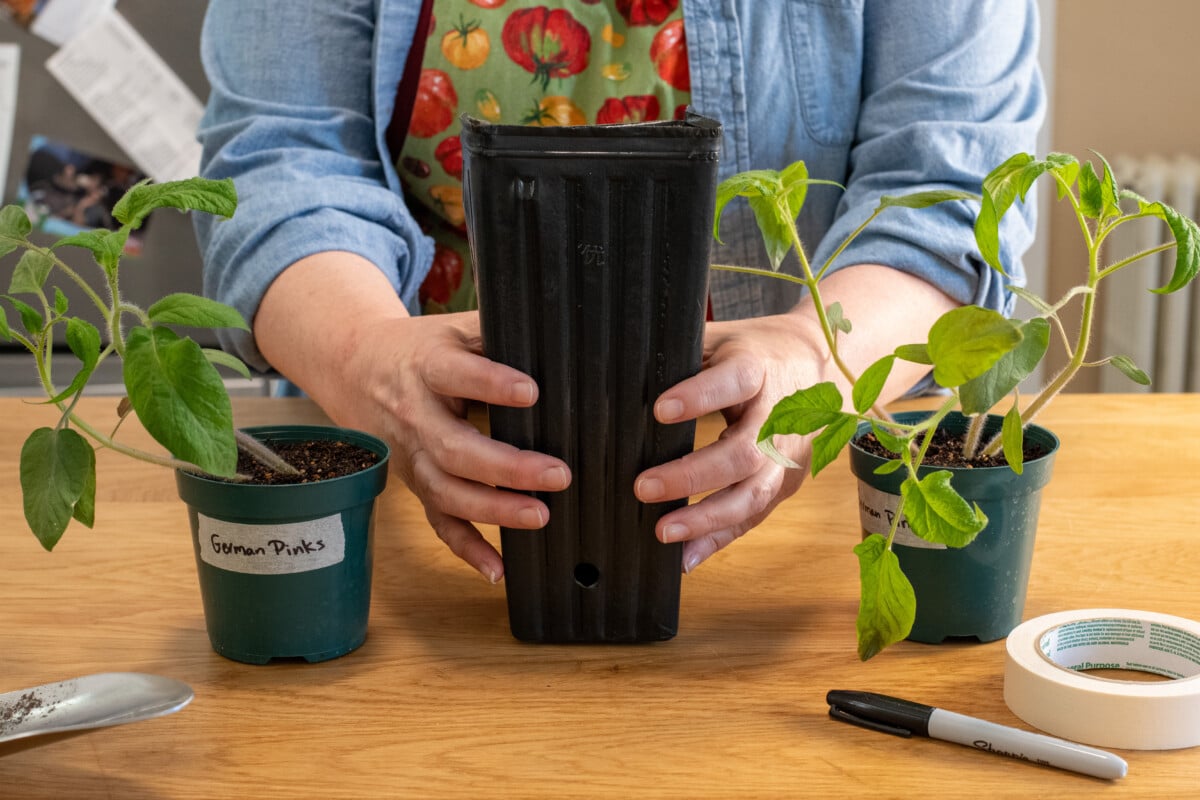
My trick skips that settling-in period. Actually, no, it cheats because I figured out how to allow my tomato seedlings to nearly triple their root system before they even go outdoors for the first time. And it all comes down to this goofy-looking thing.
Okay, remember how I said I was working on the piece about planting tomatoes sideways? This is not a new idea. It’s been around for ages. You plant tomatoes sideways, burying half of the stem when you do.
Tomatoes have this nifty trick where if any part of the stem touches the ground, it will produce more roots along the buried portion.
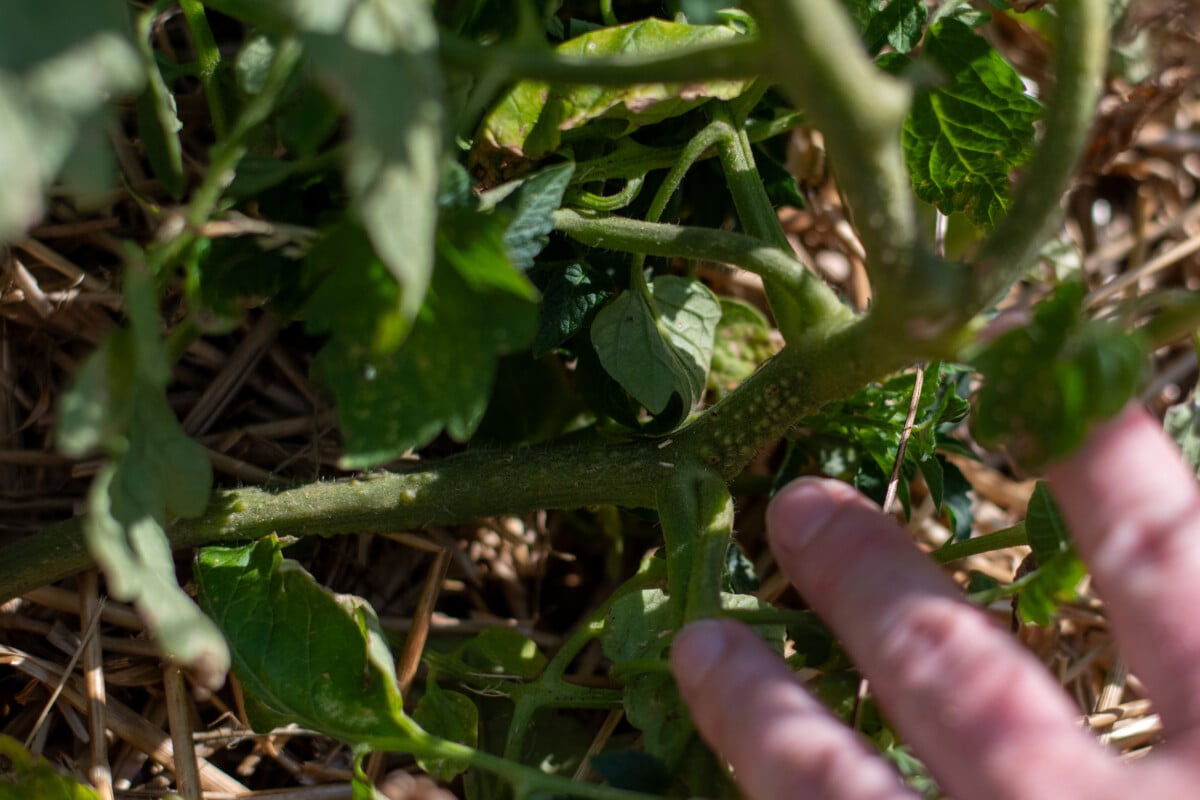
By burying much of the tomato seedling when we plant it, we’re setting it up to have a massive root system, and we’ve already discussed the benefits of a massive root system.
(You can read how to do it correctly here. There are some factors you need to take into consideration when planting tomatoes this way.)
The only thing you have to remember when planting tomatoes sideways is that, again, your tomato seedling will stop growing above ground for a bit while the stem fills in with more roots below ground.
Unless you bury your tomato “sideways” before it even goes outdoors.
Use Your Indoor Time Wisely
Why this method works so well is that we’re using our indoor time wisely.
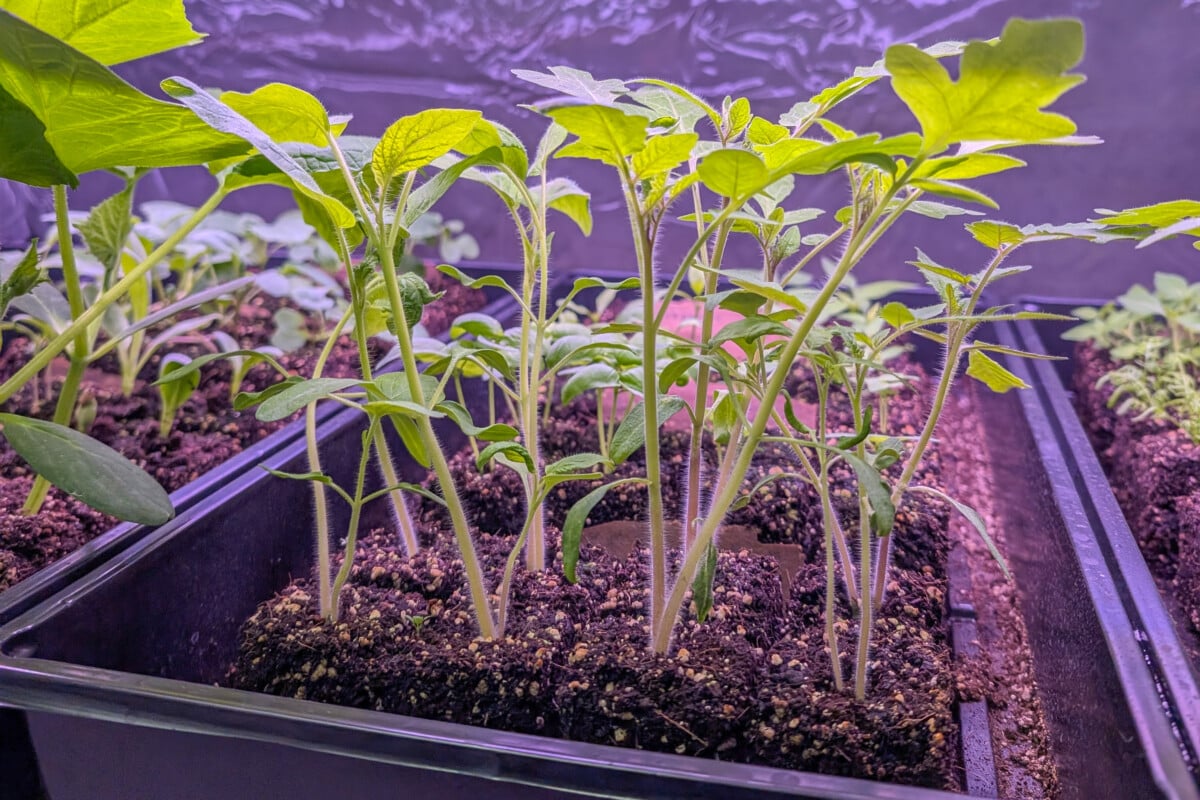
The reason nearly all of us start tomato seedlings indoors rather than direct sowing them is that we live where the growing season is shorter than the tomato’s naturally long season of growth. So we have to start our seeds indoors, early, so that when that magical “danger of all frost has passed” date arrives, we have plants that are mature enough to grow and fruit within our growing season.
Potting Up Pre-Gaming
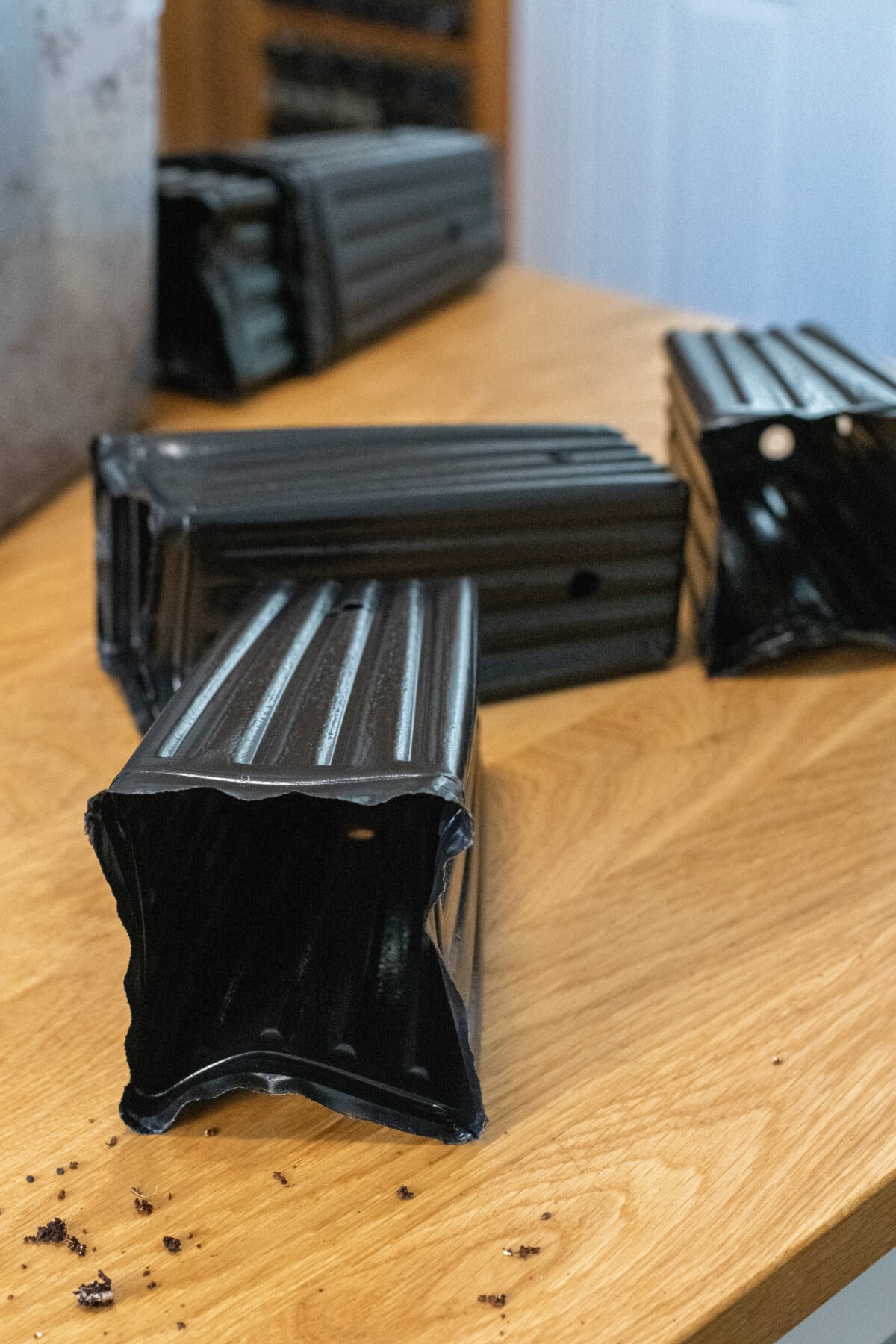
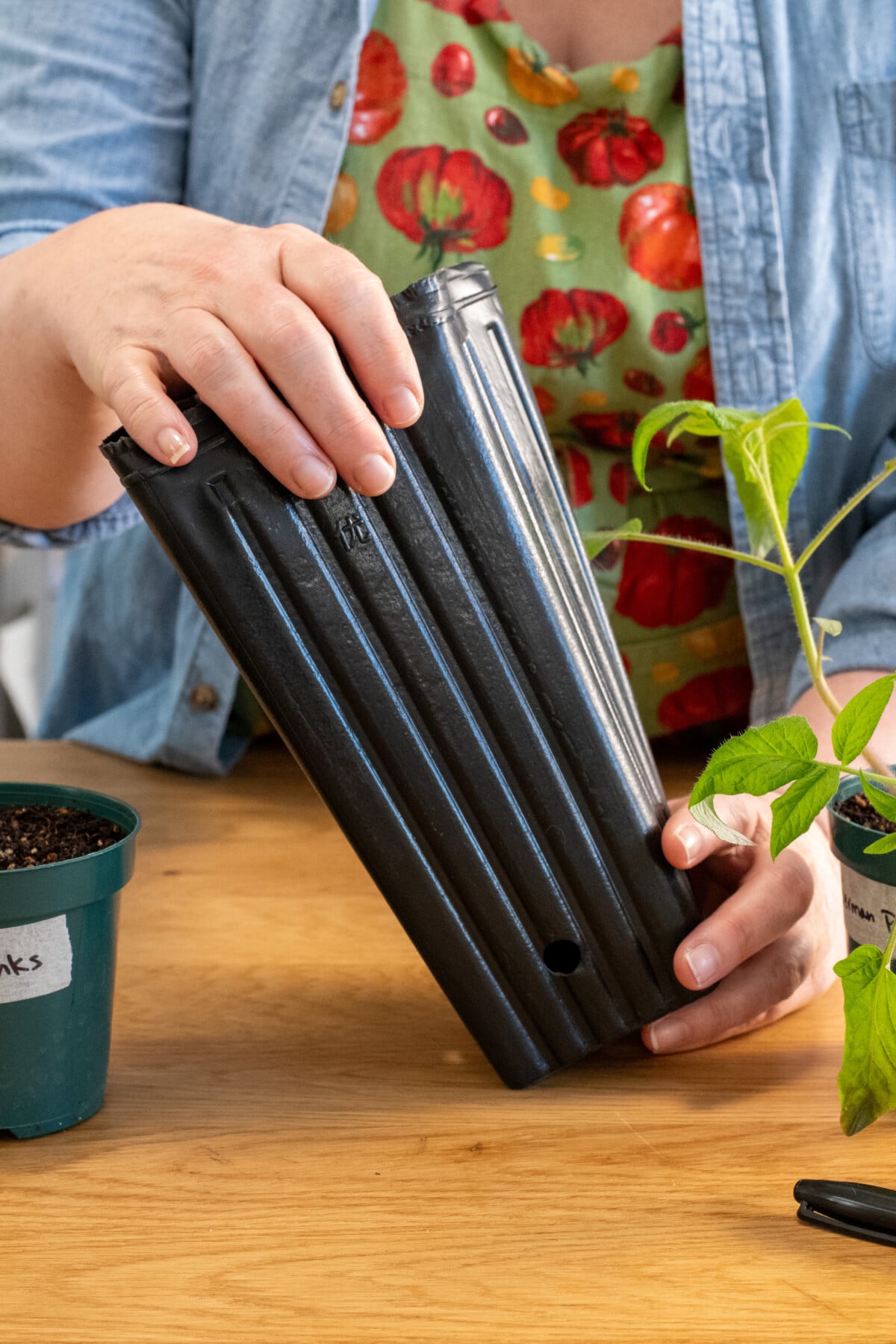
Let’s come back to this goofy-looking thing. This is a nursery pot used for tree seedlings. They’re equally great if you want to propagate trees or shrubs from cuttings. (Like the beautyberry bush I was propagating.)
I happened to be potting up my tomato seedlings at the time I was working on my propagation article when the lightbulb went on.
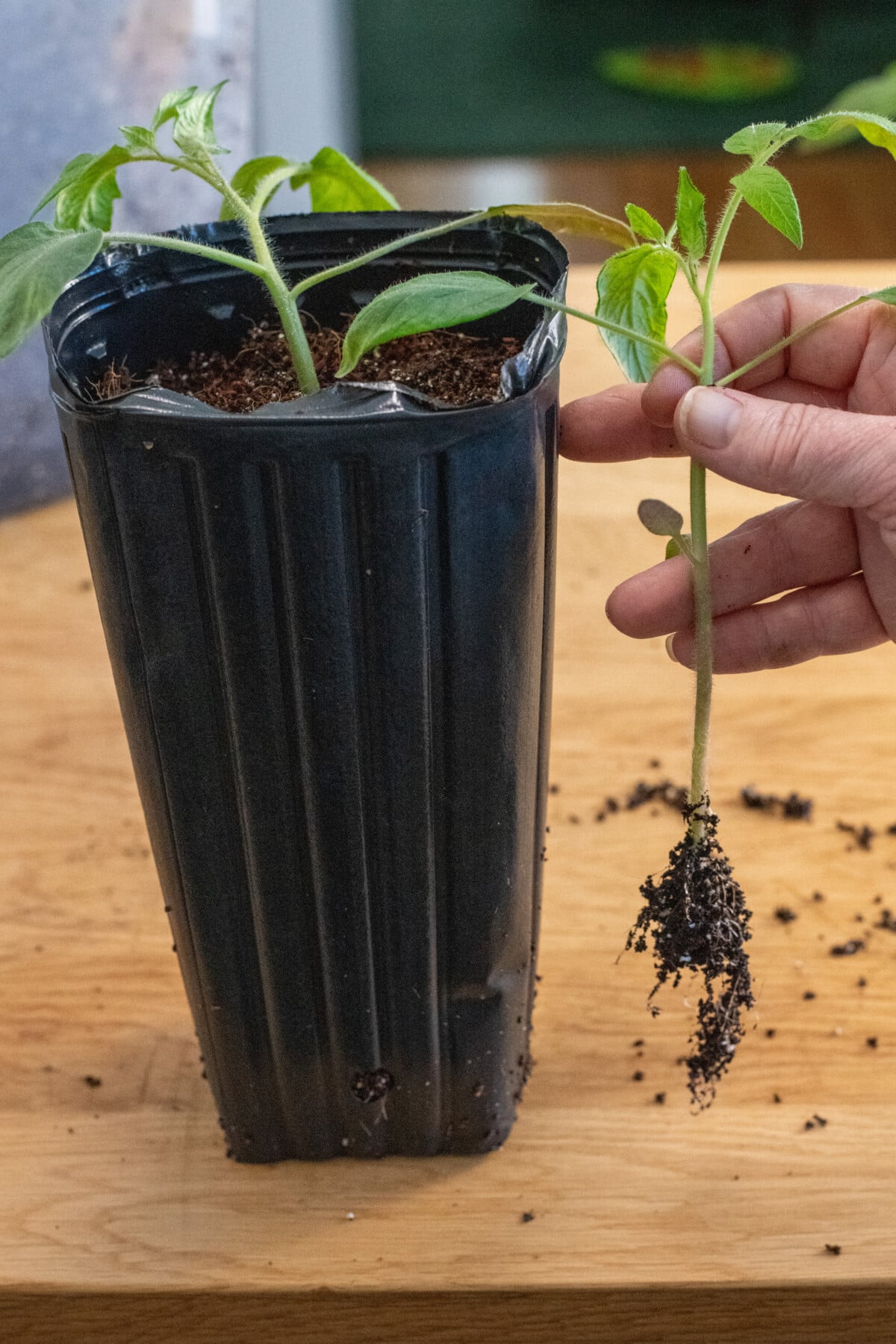
Oh my gosh! I’ll bet if I potted up my seedling in this tree nursery pot and buried it halfway, by the time it’s ready to go out into the garden, it will have a huge root mass! It will be the same as burying sideways, but in the pot rather than the ground. That way, there’s no “catch-up” period. It will just grow as soon as I put it in the ground.
And I was right. (It happens occasionally.) That year, I grew some of the stockiest tomato seedlings I have ever grown.
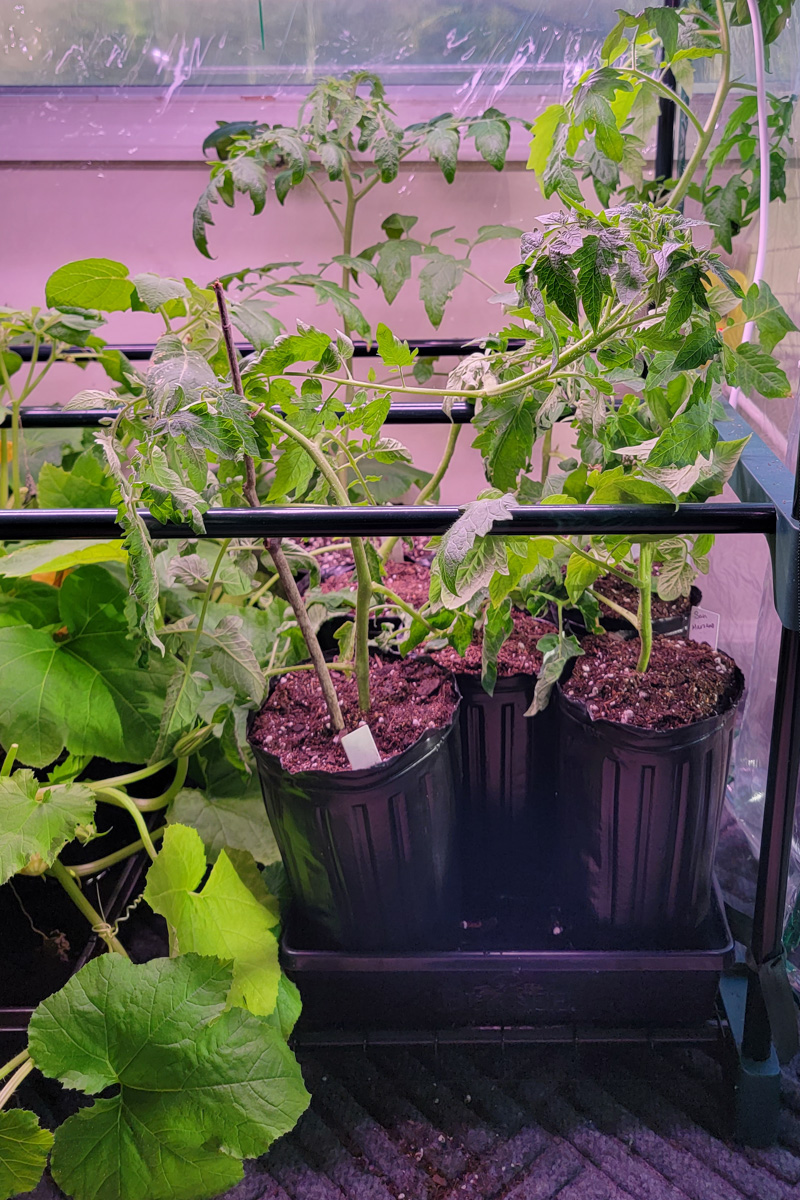
By burying the stem of your seedling when you pot it up, that pause that normally happens when you plant them outside instead happens inside, while you wait for spring to arrive. So we’re using that enforced time indoors to skip ahead of the line and grow massive roots, not just seedlings.
I always start my seeds in soil blocks or small nursery pots, but when it’s time to pot them up, these tree pots are my holy grail for growing monster tomato seedlings with massive roots.
When it’s time to plant them outdoors, here is my experience.
These monster tomato seedlings:
- Harden off faster.
- Recover from transplant shock faster.
- Rebound and begin above-ground growth right away.
- Grow sturdier stems.
- Start setting flowers and fruit earlier (which means more tomatoes in a season).
- The adult plants are hardier and more resilient to water and heat stress.
Where to Get Tree Nursery Pots
I have never seen these available in any of the big box home improvement stores, and my local nurseries, while they use them, do not offer them for sale. So, Amazon it is. This is the size I normally use; it’s just under 10” tall, which gives me plenty of depth to bury the stem but still means my tomato seedlings will fit on my seedling rack with the grow lights.
You’ll notice right away that these are not hard plastic like most nursery pots.
They are meant to be flexible, but that means you have to be a little careful when filling them, so they don’t tip over. I actually like the fact that they are flexible because it makes them easier to reuse. They don’t crack and fall apart. Buy one set and save, and reuse them every year.
When and How to Pot Up for Monster Tomato Seedlings
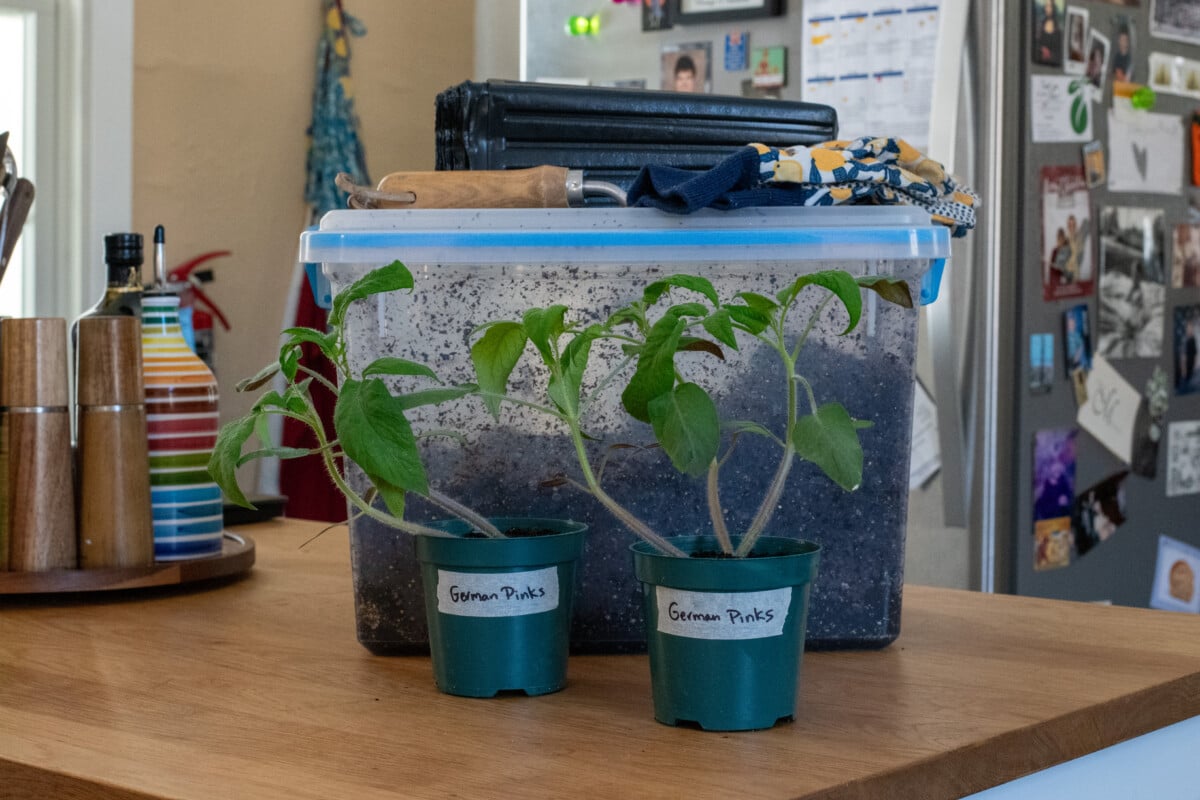
You want to wait until your tomato seedlings have a minimum of two to three sets of true leaves on them. (That very first set of leaves, lowest on the stem, are the cotyledons. Everything that grows above those are true leaves.)
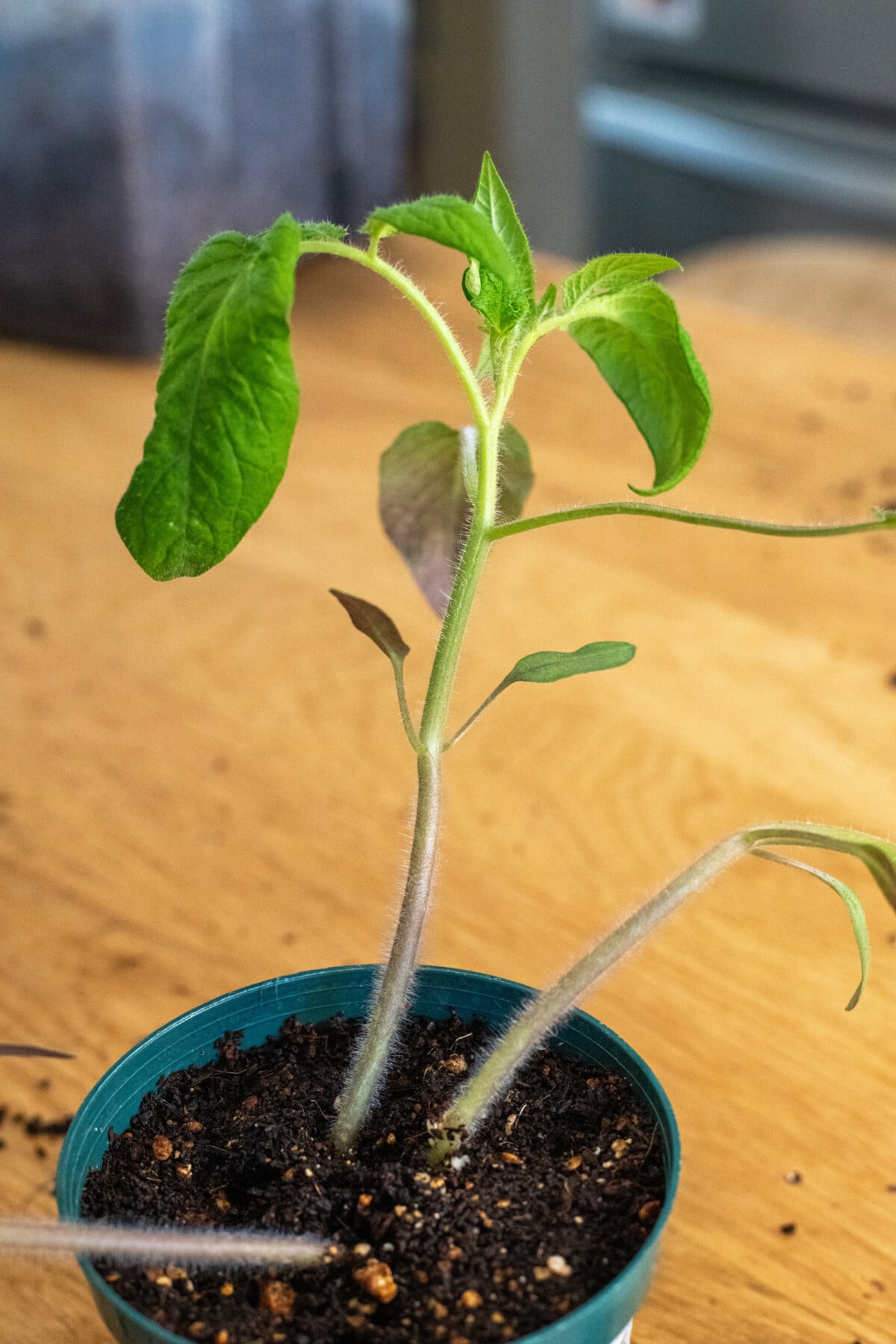
- Water your seedlings well before you get started and carefully trim off the cotyledons.
- Add enough moist potting mix to the bottom of the tree pot so that when you place the seedling inside, it will be buried about 2/3 up the plant, and the leaves and remaining stem will be above the rim of the pot.
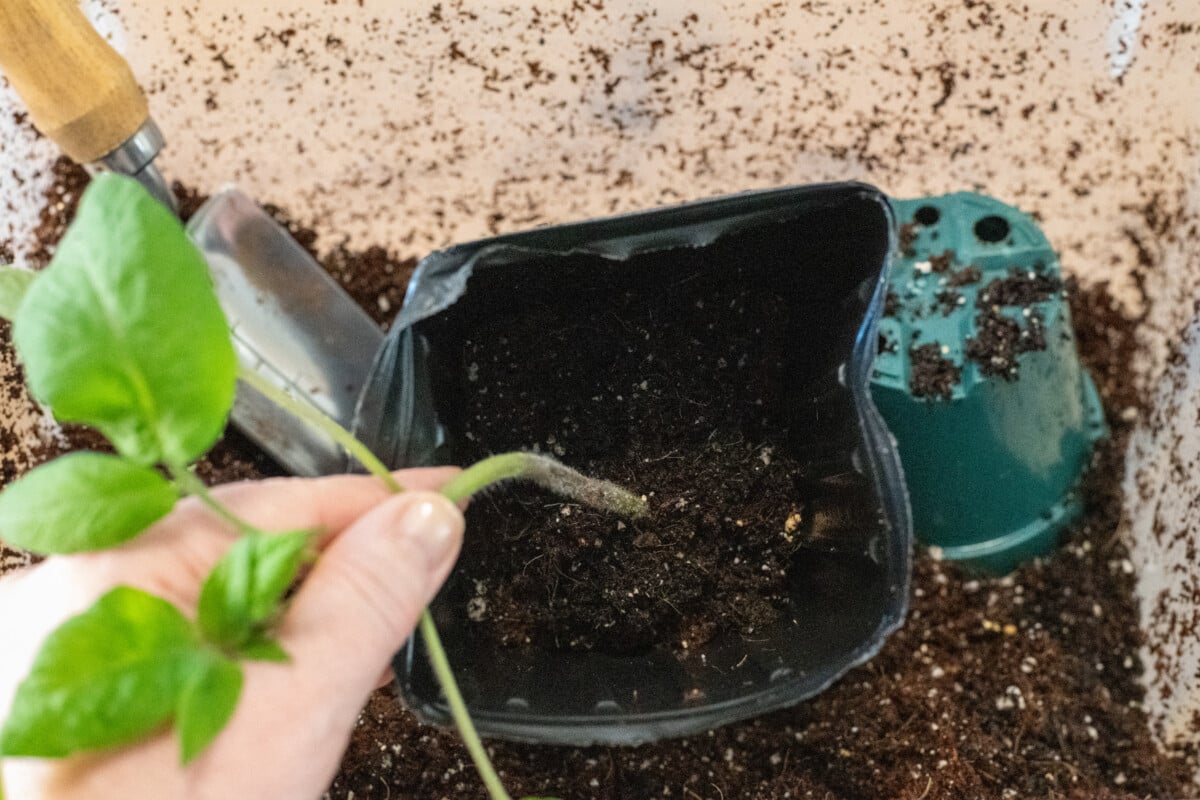
- Now, carefully fill in the rest of the pot to about half an inch from the rim. Rather than tamping the soil around the delicate stem, I tap the bottom of the pot on the counter a few times to help settle the damp potting mix. You want the stem to be snug and supported, but you don’t want to pack the soil tightly around it.
Important Aftercare
This part is extremely important. If your potting mix is moist and you watered your seedling before you started, you shouldn’t need to water it again. However, if the root ball felt dry when you were potting it up, go ahead and give it a little water.
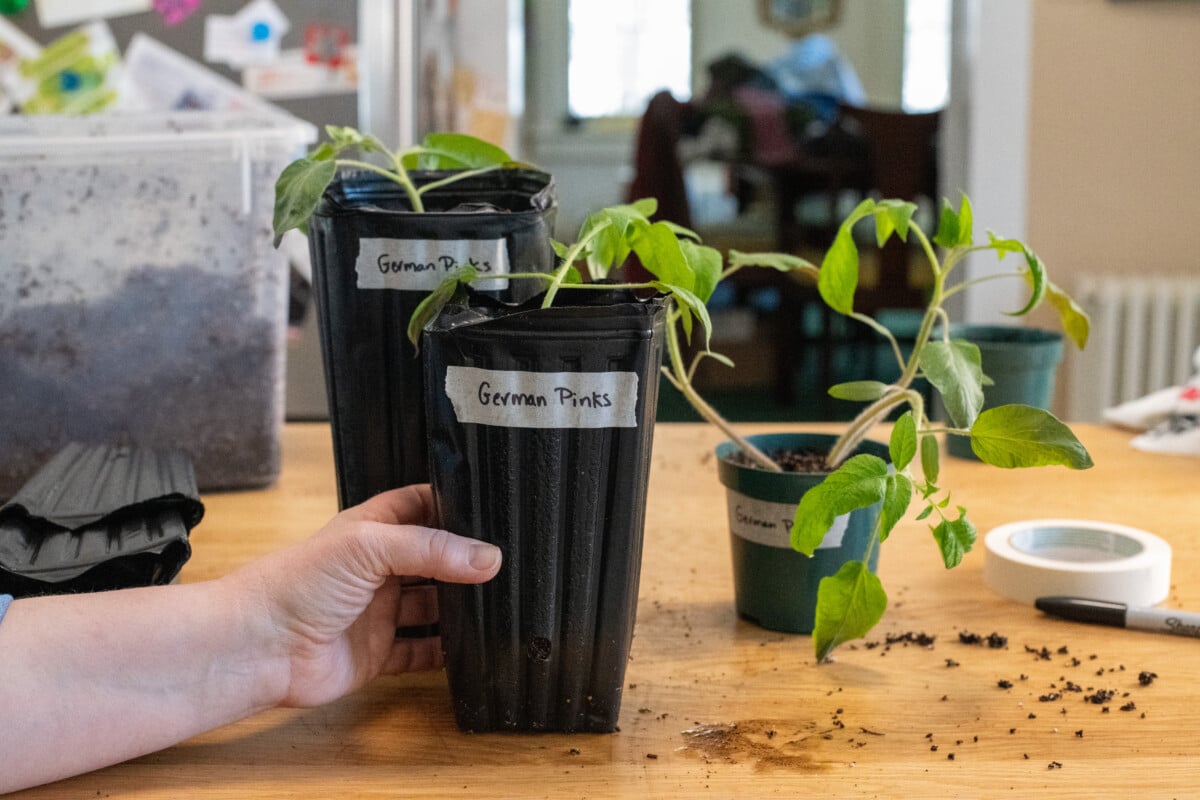
For the next few days, water sparingly and only if the plant doesn’t perk up after repotting. We want to let it dry out a little for a day or two.
It’s important that the stem isn’t sitting in soggy potting mix for days or else it will rot, and the seedling will die. You will still need to water the seedling, but in ‘sips’ while roots begin to develop along the stem.
You want to give your tomato plant enough water to keep it looking perky. If it starts to wilt, give it a little drink.
After about a week, pull the soil away from the portion of the stem that you buried. You should be able to see root primordia (little bumps) or even new roots forming all along the buried portion now. Once the buried portion is successfully rooted, you can water more deeply. Your seedling will begin growing again shortly after.
Feeding Your Little Monster
Because burying the seedling kicks root development into overdrive, and growth of the seedling outside the pot usually follows suit, you’ll need to make sure you fertilize your tomato seedlings regularly. Stick with a balanced fertilizer to prevent any nutrient deficiencies. Garden-Tone by Espoma is a great, balanced fertilizer.
Planting Your Monster Tomato Seedling
When the time comes to plant your tomato seedling, be sure you dig a hole deep enough for all those nice roots you grew. Or if you wanted to get really crazy and start growing super monster tomatoes, you could bury your tomato seedling sideways, which has already been buried once.
Don’t forget to be a good gardening friend and share this with someone who loves to grow tomatoes.
Get Garden Notes From Tracey, Right to Your Inbox
Pull up a chair on the front porch. Join 54,000+ gardeners who get Tracey\'s friendly notes, seasonal to-dos, and hands-on tutorials three times a week.