

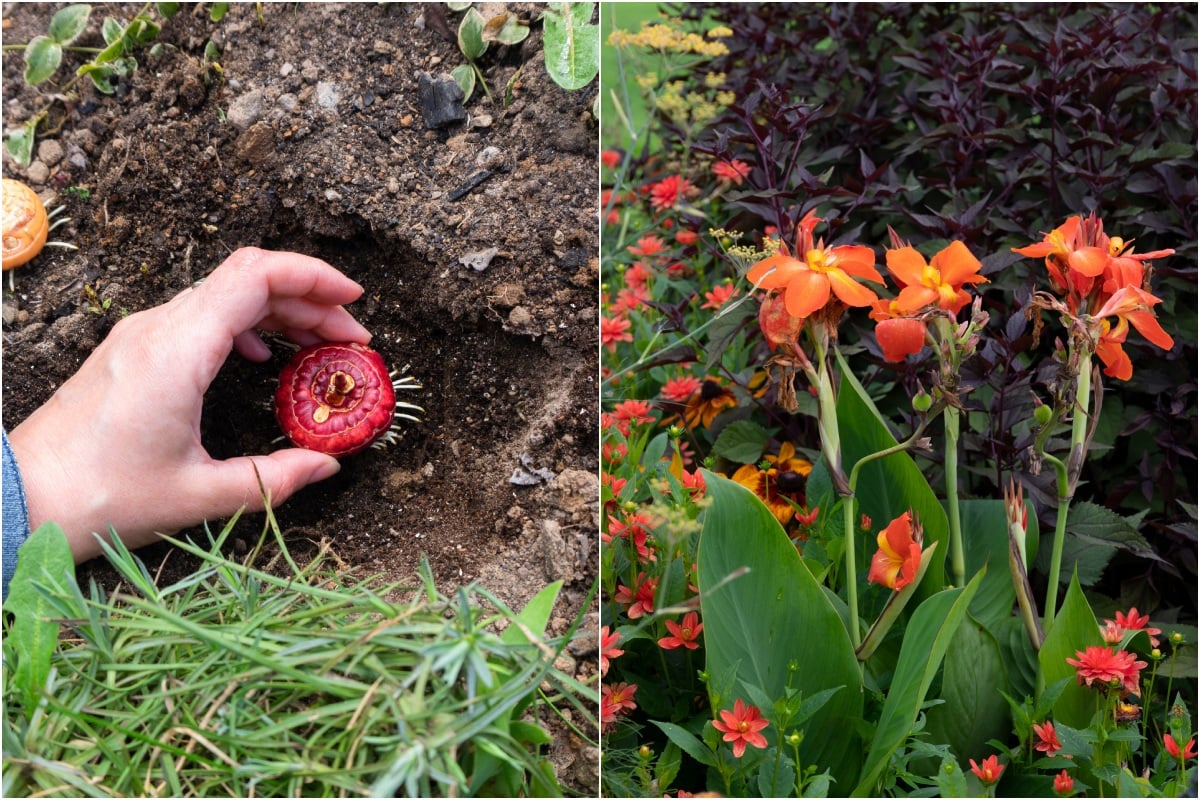
The days are getting longer, the light is softening, and there’s a warm breeze in the air. It must be April.
April is one of those months when I catch myself saying “what a difference a week makes” every week.
Some days feel like summer while others are still as blustery as February.
It’s also the month when I block a couple of weekends to buy and plant warm-weather bulbs. I know that if I order them now, they’ll come just in time for me to start planting once the soil warms up. And even if the soil isn’t ready yet, I can still give these bulbs a head start by jump-starting them in (temporary) pots.
In the hopes that I can inspire our readers to join me in this plant-along, I wrote a list of my favorite warm-weather bulbs that we can plant in April.
You’ll see that I did my best to include summer bulbs that are not just your usual dahlia or gladioli recommendations – though I talk about them first because I still love them.
There’s such richness of color and pattern in summer bulbs that it would be a pity to overlook less common bulbs just because we’re not familiar with them.
1. Gladioli
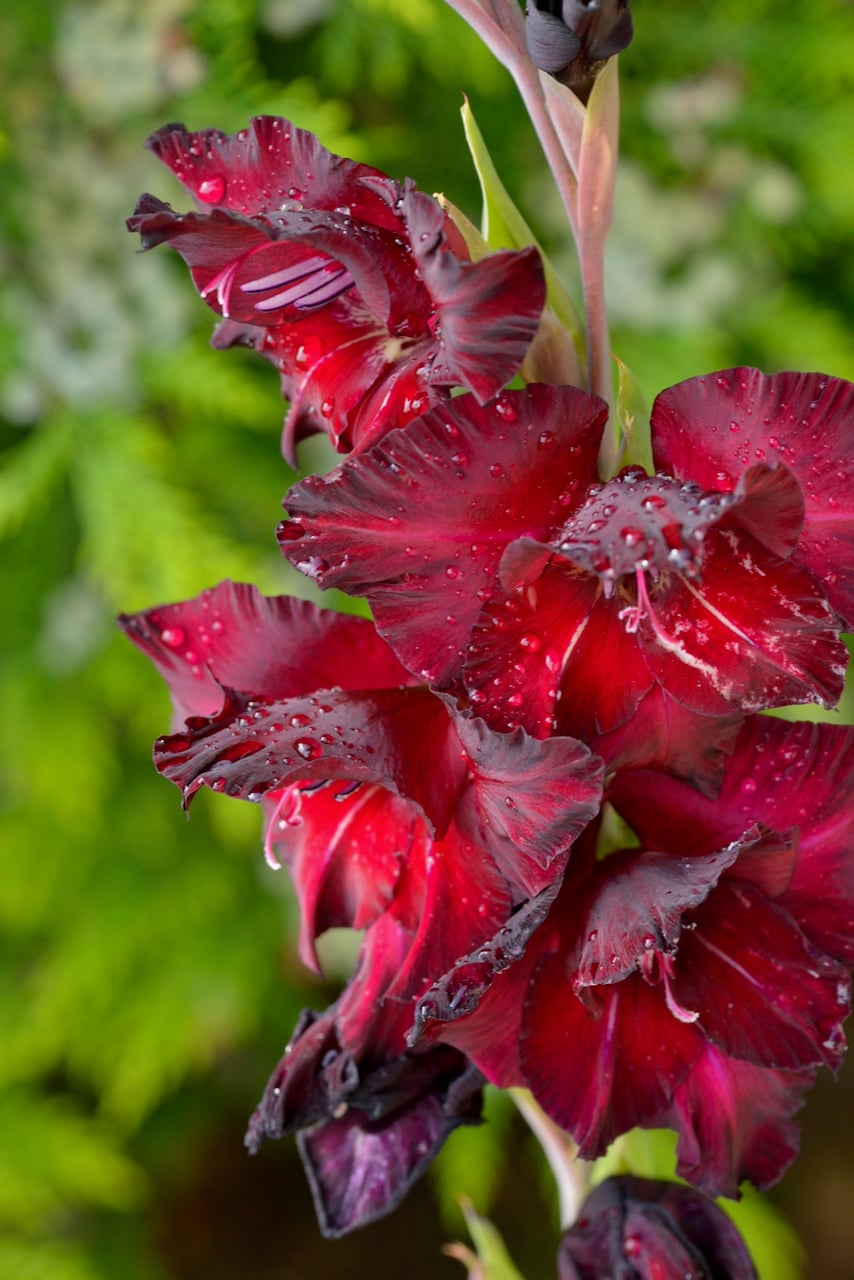
I have a weakness for gladioli that would be impossible to overstate. I love everything about them, from the sword-shaped leaves to their imposing height to how exuberant they always look.
But truly, they just remind me of the end of the school year when I was little. We didn’t have as many choices of cut flowers in the 90s as we do now, so half the kids who brought bouquets of flowers for our teachers on the last day would bring gladioli.
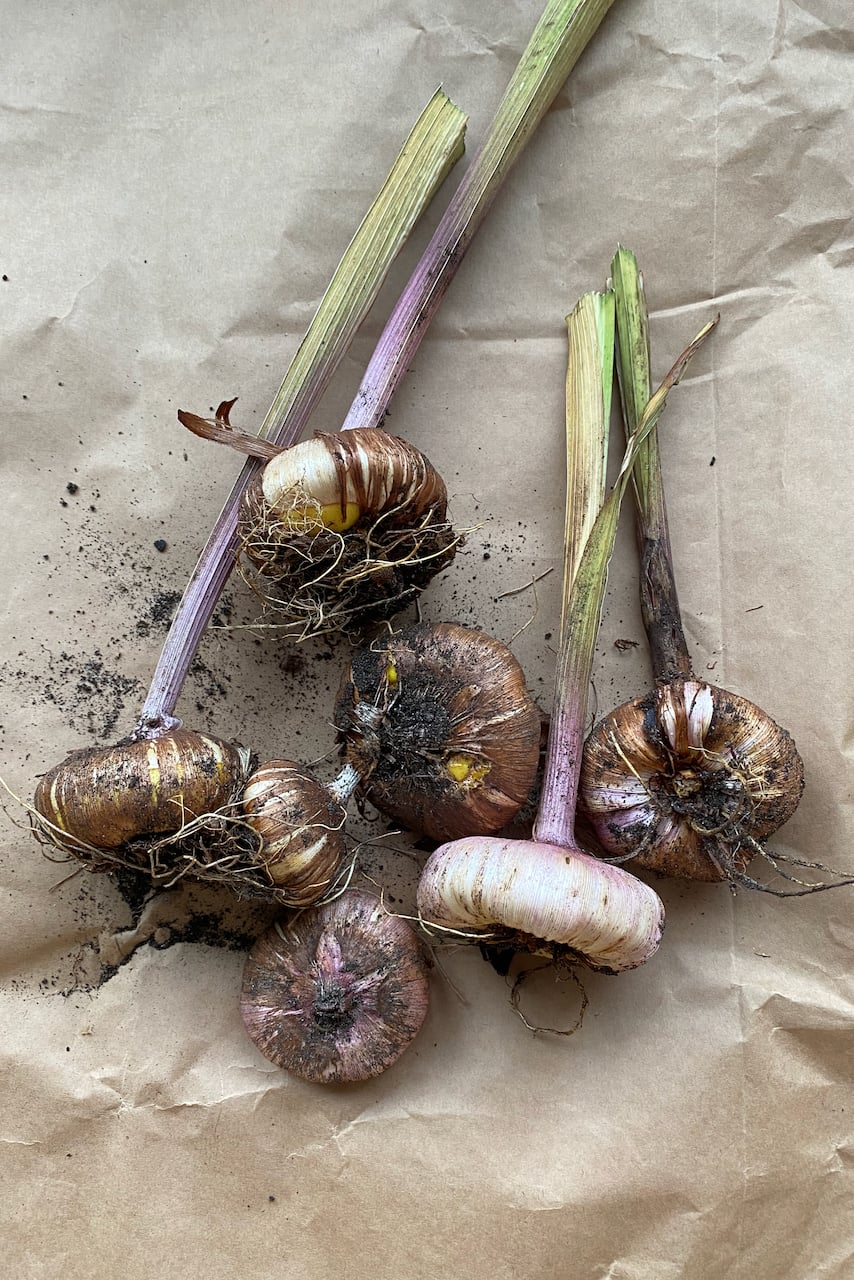
Gladioli aren’t technically bulbs, but they grow from tender corms. I’ve had good luck perennializing gladioli by overwintering them in the ground under a thick layer of mulch, but I live where the ground doesn’t freeze in the winter.
However, if you’re starting new corms straight in the ground this year, you’ll have to wait for the danger of frost to pass.
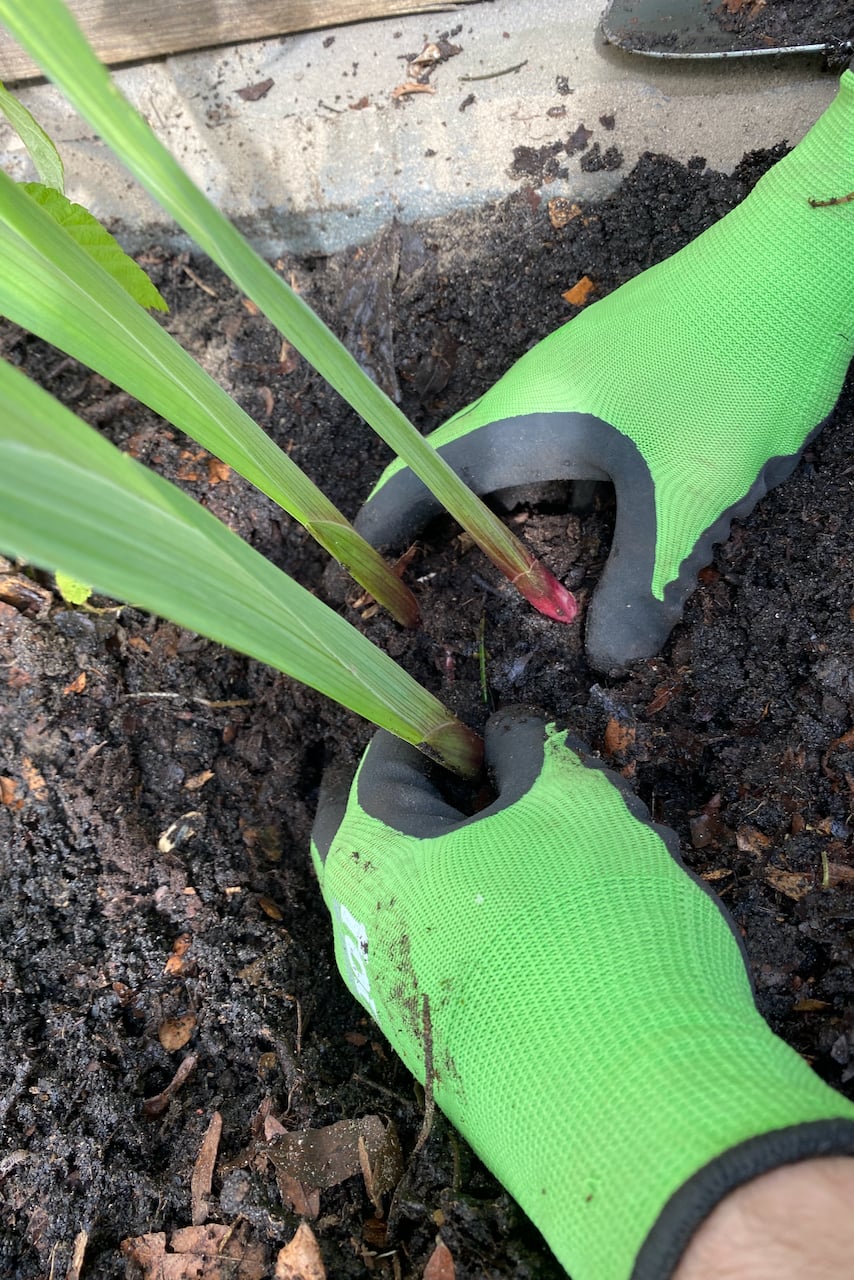
Since I never had a particularly long growing season, I’ve always started new gladioli in pots. I transfer the baby gladioli to the ground in the sunniest part of my garden once the weather warms up. Their large bulbs make them excellent at sprouting quickly. (In fact, I often find them sprouting in bags before I even get the chance to put them in the ground.)
Keep in mind that gladioli are tall and top-heavy, so you’ll need to add some supports to keep them upright.
Related reading: How to Plant Gladioli and Tips for Longer Lasting Blooms
2. Dahlias
I don’t think dahlias need any introduction, so let me give you just a couple of tips on how to jumpstart dahlia season.
We can start dahlias in pots, from tubers, as early as March. But we have to keep the tubers indoors, either in our home or in a sheltered location that stays well above freezing. It takes a couple of weeks for new dahlia shoots to start sprouting.

In my experience, the warmer the location, the quicker the shoot formation. So, for example, the dahlia pots that I kept in my kitchen leafed up much faster than the ones I kept in the garage.
Dahlia tubers started in pots need to be in contact with moist potting soil in order to start germinating. I found that the balancing act comes from keeping the tubers slightly wet, but not so soggy as to promote rotting.
We can transplant these dahlias into the ground once the danger of frost is gone. This is also when we can plant new dahlia tubers straight in the ground in our gardens.

Bury them about four to six inches deep, depending on the size of the tuber and the size of future flowers. Dinnerplate varieties can get large and top-heavy, so burying them deeper gives them more stability, especially in locations with strong wind gusts.
Check out my other tips on how to start dahlias in pots.
3. Crocosmia (Monbretia)
I stumbled into growing crocosmia in a fit of exasperation after trying and failing (multiple times) to grow freesias from bulbs. I think I just searched “plants that look like freesia,” and there it was, the vibrant red of crocosmia. While crocosmias don’t have the fragrance of freesias, they’re also not as high-maintenance.
Crocosmias are winter hardy up to USDA zone 6, which means many of us can leave them in the ground over the winter. It also means we can plant them straight in the ground, sometimes as early as April if the soil isn’t frozen or waterlogged. Crocosmias flower best in full sun, but can tolerate part shade as well.
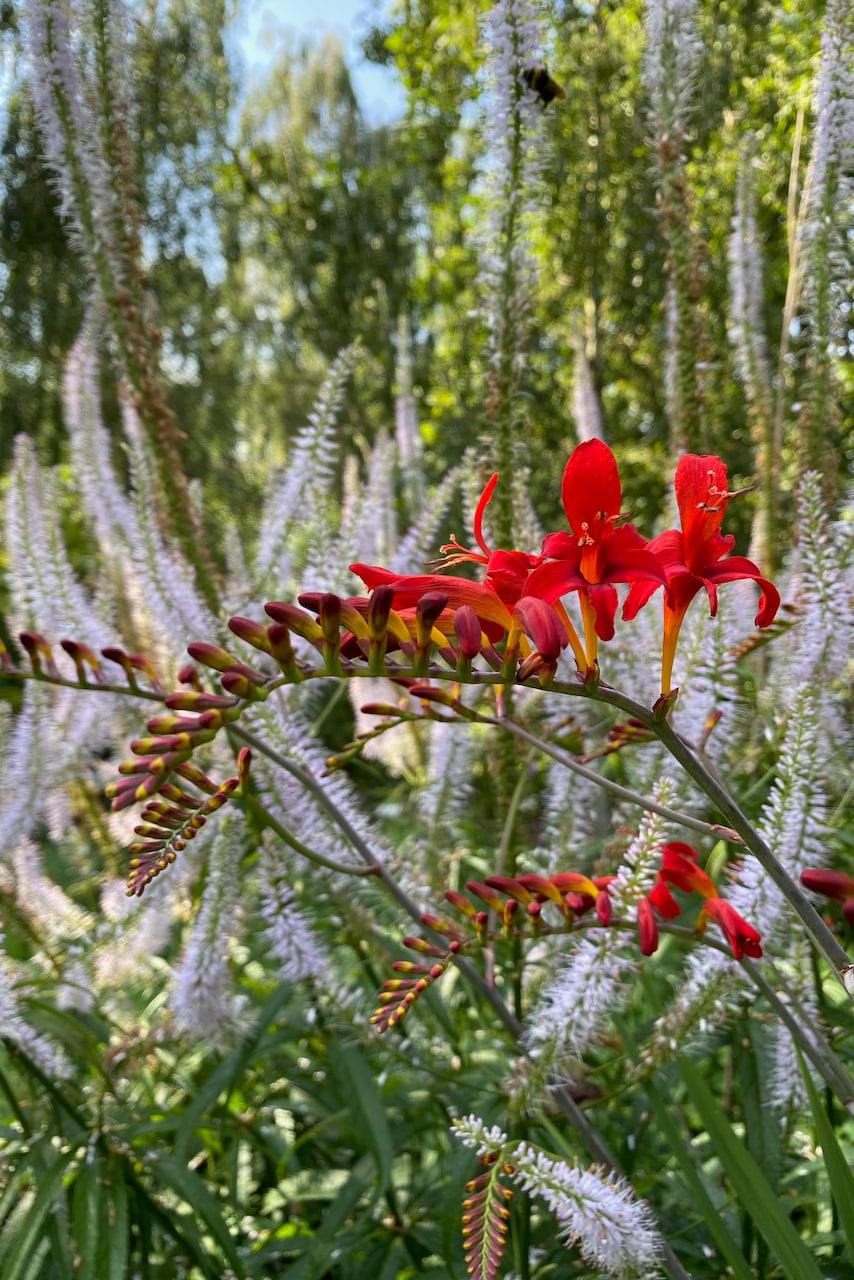
The clumps get bigger and bigger over time, so a bag of bulbs goes a long way. If you have a bit of patience and resist the tendency to overcrowd them, they’ll fill up in a couple of years.
They’ll bloom from mid-summer to mid-fall. And once their blooms are spent, the remaining seed heads also make for an elegant feature in the fall and winter garden.
4. Peruvian lilies (Alstroemeria)
Peruvian lilies are so exquisitely elegant. They’re very popular as cut flowers, so you may have seen their beautifully streaked flower heads poking out from wedding bouquets and flower arrangements.
There are so many cultivars to choose from when buying bulbs, and there’s a warm color combo for every garden – from fiery reds to terracotta orange, yellow, pink, purple and white. There are even some green-flowered Peruvian lilies that look amazing.
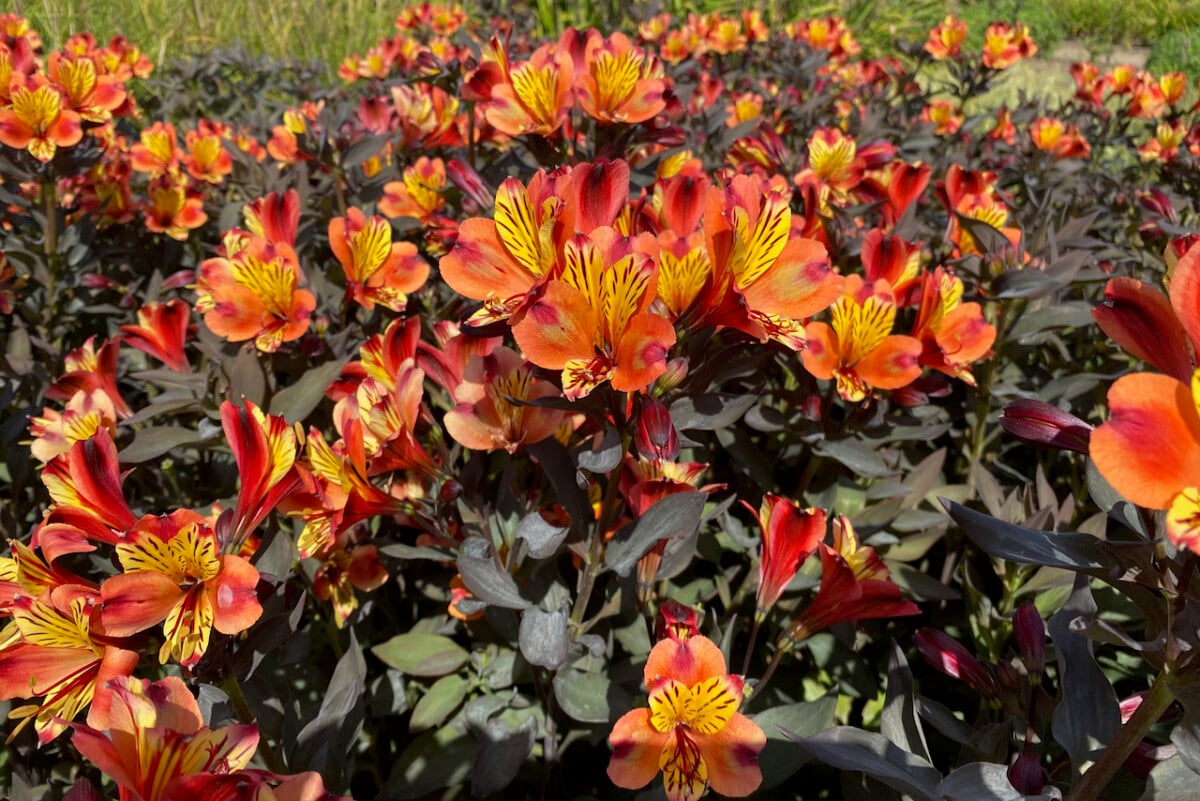
As their name indicates, Peruvian lilies are native to South America. But they are not true lilies, in the Liliaceae family. They love the sun, but they’re not big fans of excessive heat. We can tuck them in borders, where other plants will protect them from direct scorching. Or we can plant them in a location that gets morning sun and filtered afternoon shade.
We can start Alstroemeria in containers and transplant them in the garden once the risk of frost has passed.
5. Canna lilies
Canna lilies are the closest I can get to tropical plants in my decidedly non-tropical garden. They’re South American natives, but what you’ll find for sale in stores are most likely cultivars developed for temperate climates.
We can start the rhizomes in pots about six weeks before our last frost date, then transplant them in the garden once they get a couple of leaves. Provided the danger of frost has passed, of course.
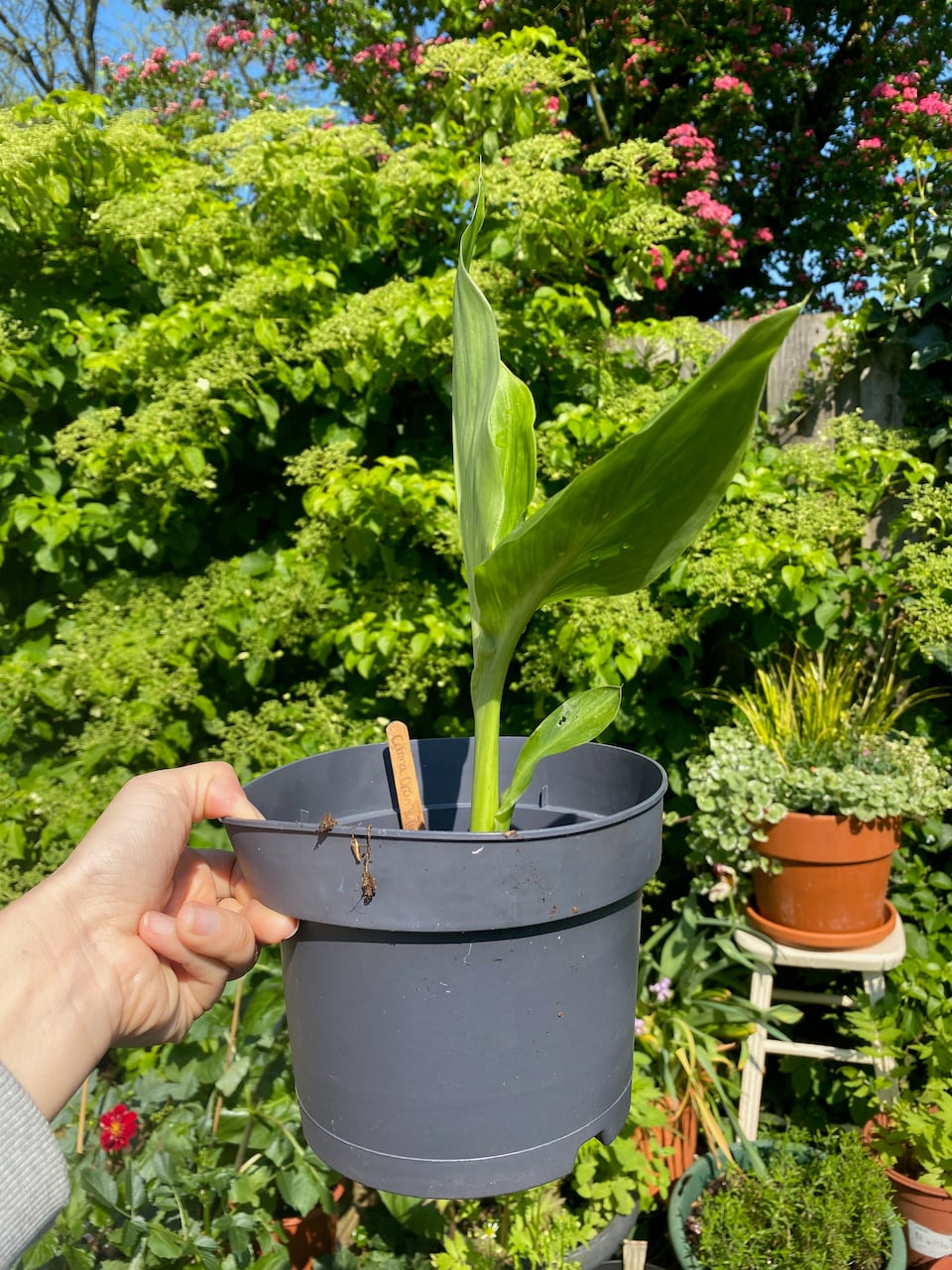
I found that canna lilies are very long-lasting perennials, but they take a couple of years to come into their own. They’ll do so more reliably if they get enough sun and moisture. Canna lilies are very thirsty plants, especially when getting established.
We can plant cannas in groups of three or five in well-draining soil and bright, indirect sun. If they’re happy, they’ll overcrowd on their own.
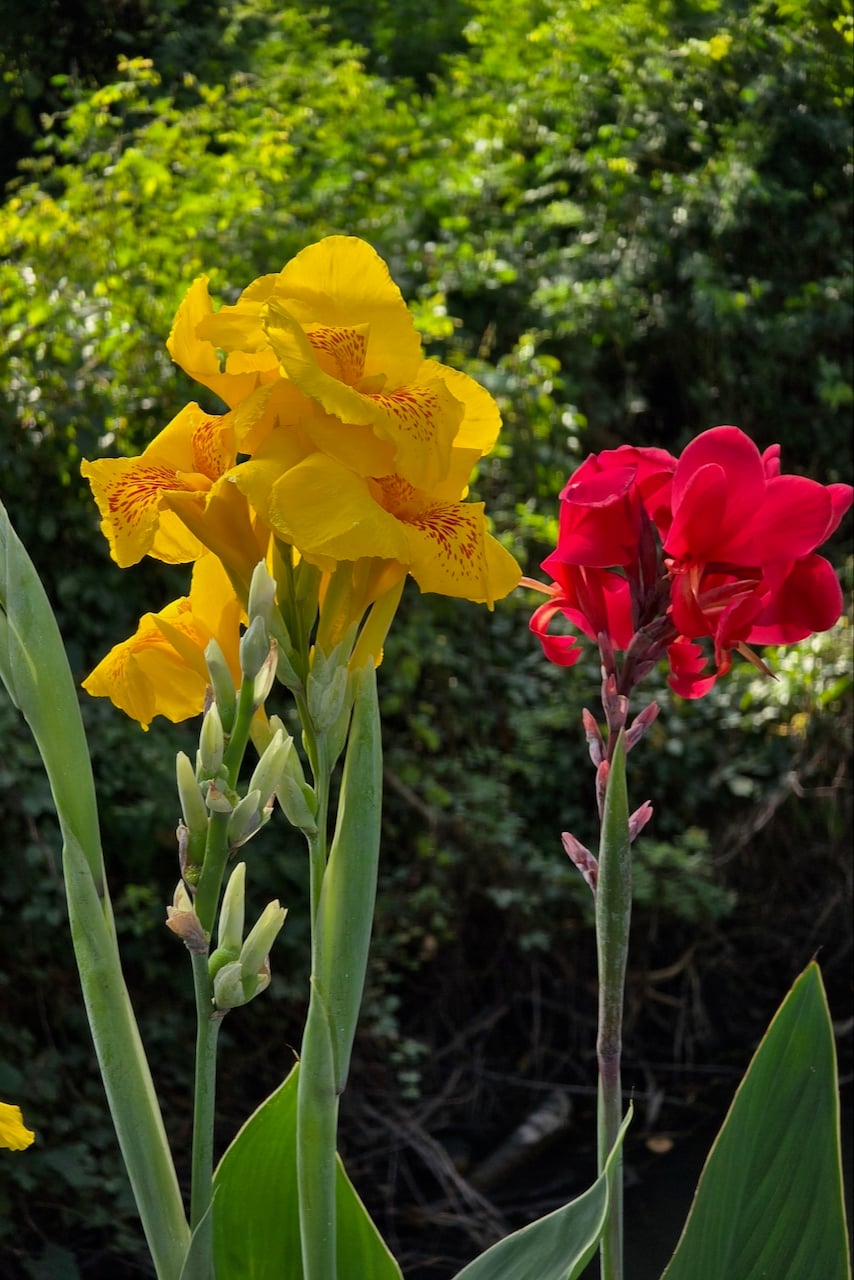
I keep my canna lilies in the ground over the cold months, but I do tuck them in under a layer of dead leaves and mulch in November.
Canna lilies grow lush, large foliage and statuesque summer blooms in warm shades, everything from burgundy to yellow, orange, lavender and bright red. There are some cultivars with variegated or splotchy leaves that add so much interest to the garden.
6. Calla lilies
Even though cannas (above) and callas (photo below) are easy to confuse, name-wise, you’ll be able to tell them apart easily once you see the flowers.
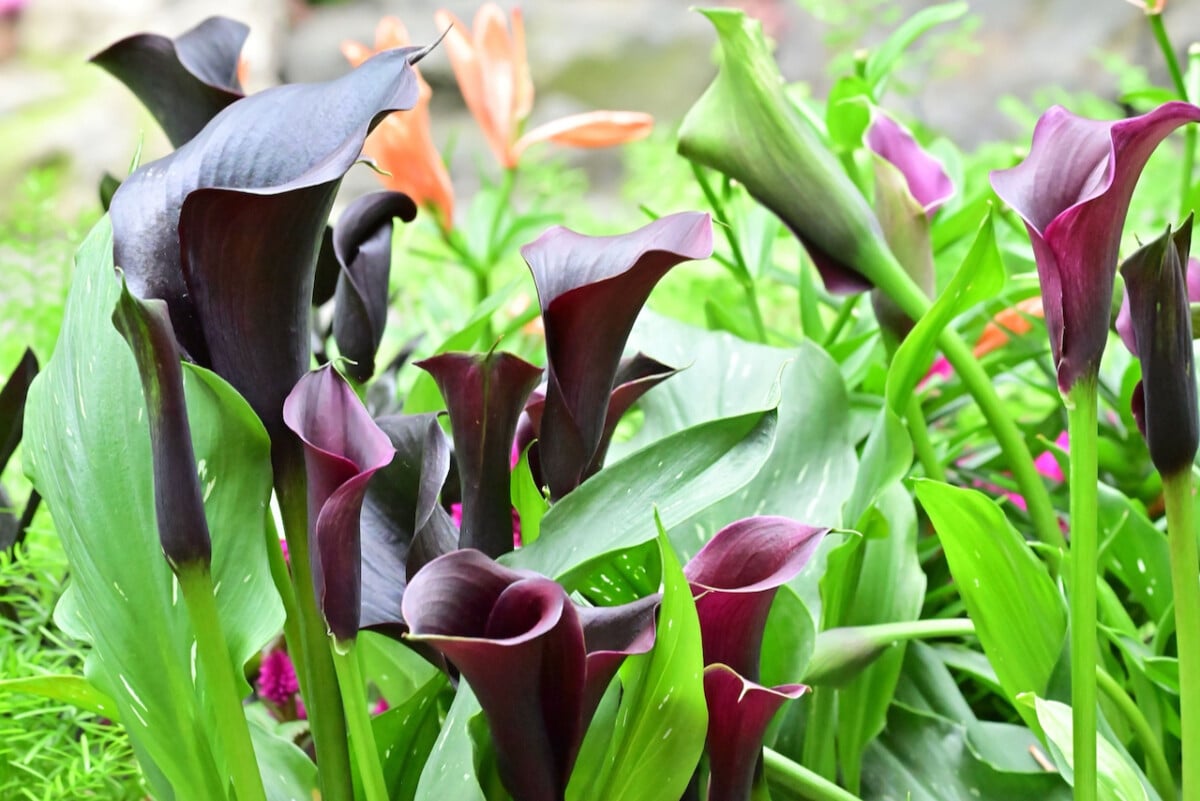
Callas grow from rhizomes that we can plant in full sun or part shade in rich, well-draining soil. The most common callas used to be the white ones, but I’ve been noticing so many more warm hues available lately, from yellows to oranges and reds and even purple.
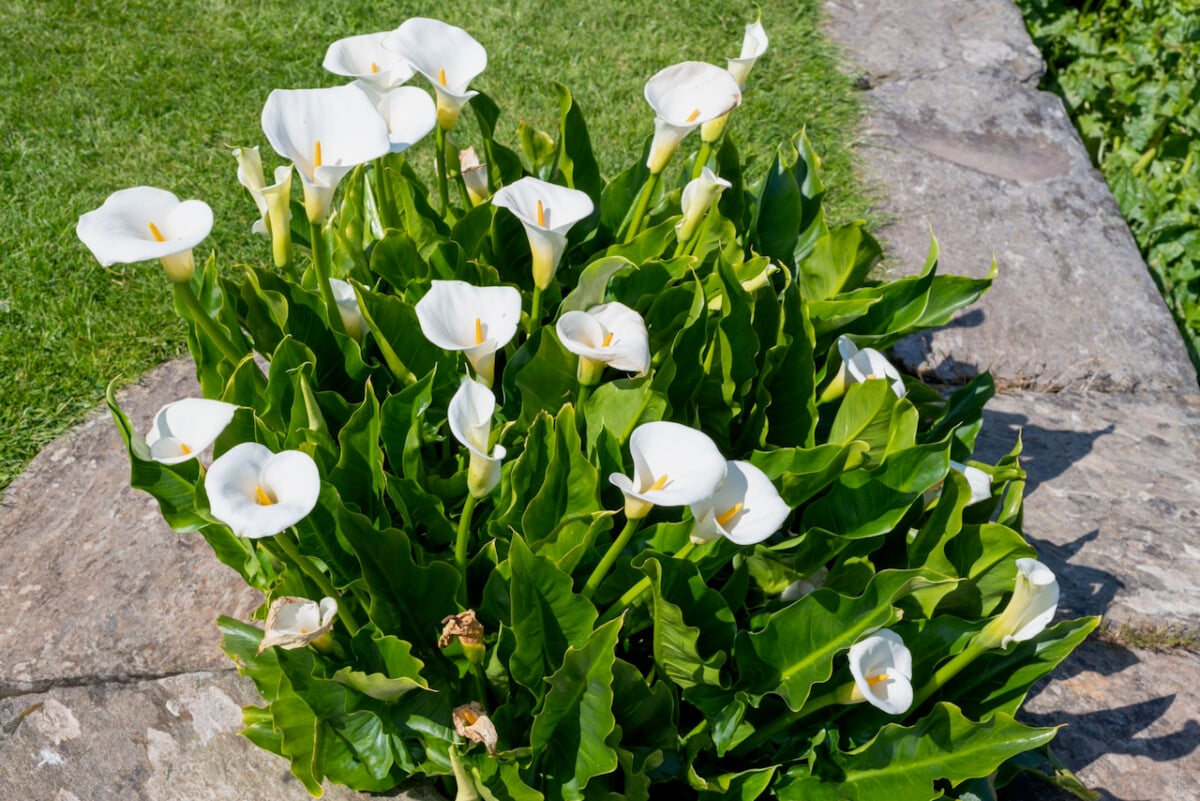
Some retailers sell callas in assorted bags or mixed hybrids, so you could end up with a mix of bright colors in the same garden bed.
Their large, broad foliage is most commonly green, but some cultivars can also have variegated leaves with streaks or polka dots of creamy yellow.
Callas are thirsty customers and can be susceptible to drying out too much. So we can either grow them in a container (easier to keep moist) or grow them in soil amended with plenty of compost that retains moisture. We can jumpstart callas indoors in pots and replant them in the ground once soil temperature warms up above 60 °F (16 °C).
7. Pineapple flower (Eucomis)
Eucomis is another tropical-looking plant with a unique bloom in striking shades of purple, yellow, orange, red or green. Every spire-like flower is made up of a cluster of smaller, star-shaped flowers. The foliage is also an added appeal: it can come with purple or burgundy variegation.
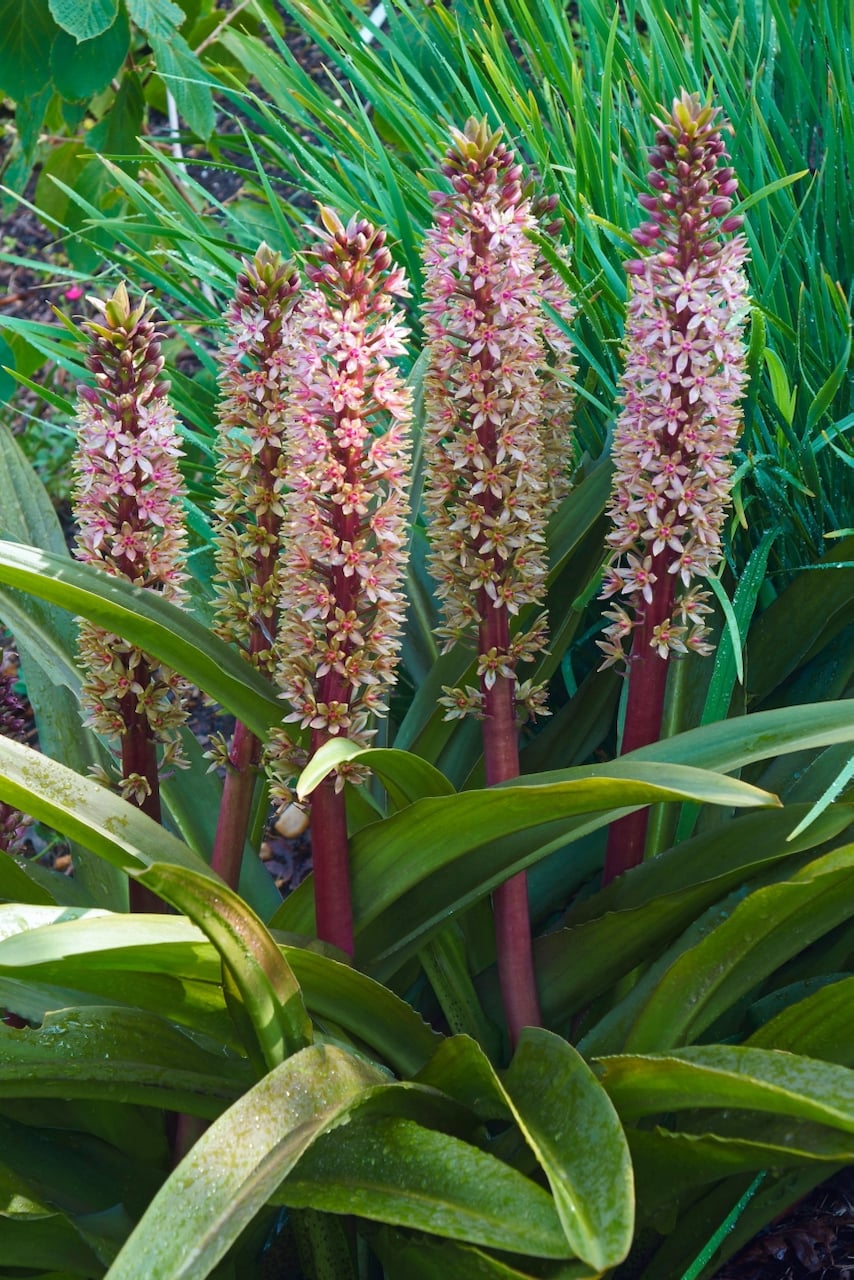
Even though Eucomis bears the nickname “pineapple flower” or “pineapple lily,” it has nothing to do with the pineapple fruit, and it’s definitely not edible. Needless to say, it’s also not a true lily.
We should aim for a spot that gets full sun and has rich, well-draining soil. Ideally, pineapple flowers need to stay relatively moist for most of the summer. We can plant them straight in the ground when the soil temperature has reached at least 65F (about 18C).
8. Begonias
You’d be forgiven for thinking that begonias are not warm-weather bulbs (tubers or rhizomes, technically). I think it’s because nowadays I see them more and more sold as potted annuals.
We can buy them already lush (pumped up on fertilizer and controlled greenhouse temperatures), enjoy them for the summer, then chuck them in the compost pile when they inevitably die back due to cold fall temperatures.
Then how come this was our grandmothers’ favorite flower that would come back year after year? And you’d have one begonia making its way – via offspring – through entire families and neighborhoods? Well, those were either tuberous or rhizomatous begonias.
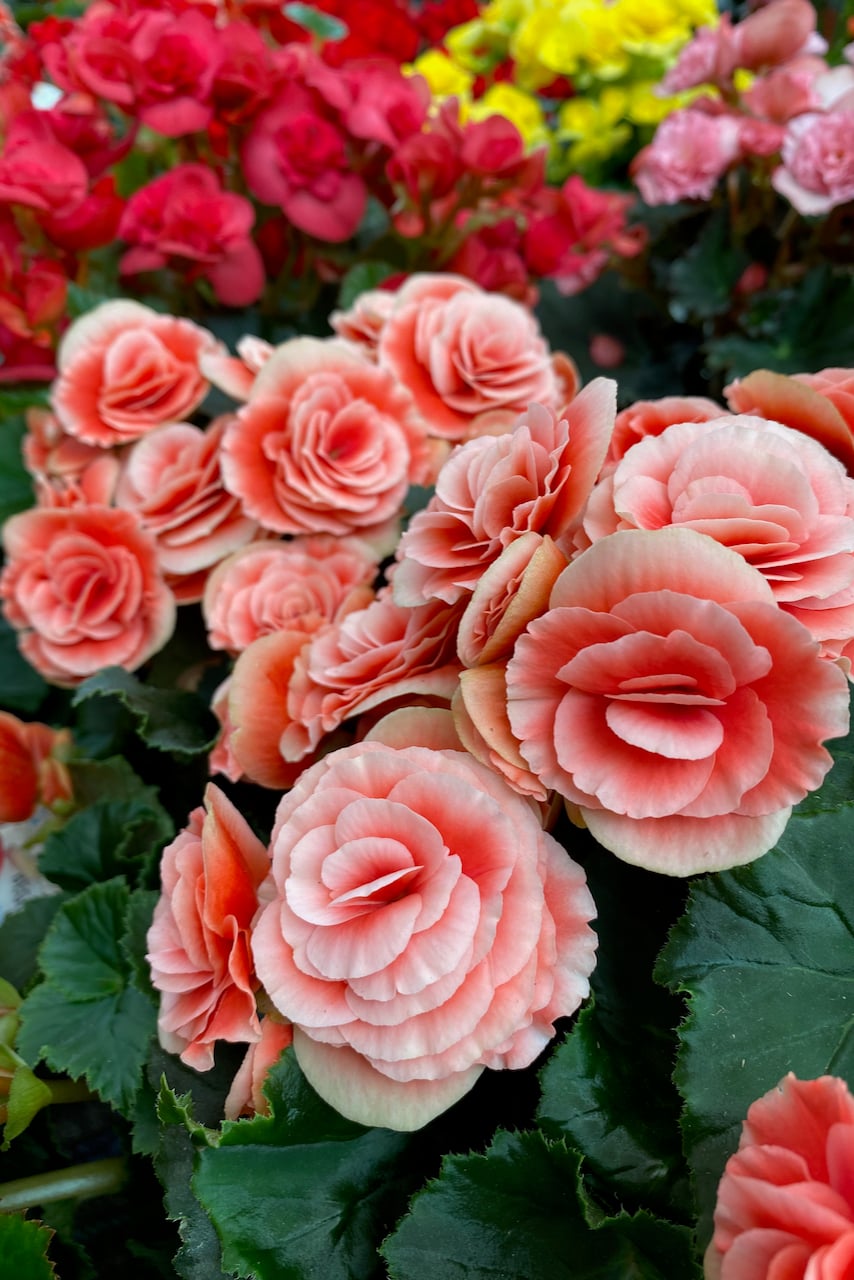
Last time I checked, there were over four thousand tuberous begonias registered, so there are plenty to choose from. The tubers germinate in low temperatures, and the foliage and flowers will do well in morning sun, but part shade in the afternoon.
If we plant them in containers, we can simply move the begonias to a sheltered location or indoors in the winter. Then bring the pots back outside when the weather warms up again in spring.
Begonia is one of the garden plants that I turn into houseplants every year.
9. Peruvian daffodils (Hymenocallis festalis, formerly Ismene festalis)
At first, I was worried that Ismene festalis might be a bit too obscure to introduce as a warm-weather bulb. But I figured that’s why our readers are perusing this here website – to get ideas and inspiration.
And then I found Peruvian daffodils for sale at Tulip World. They also have their own entry in one of my favorite trustworthy sources of plant information – the Missouri Botanical Garden’s Plant Finder.
Even though you might find them as Peruvian daffodils or spider lilies, they’re neither of these two things. They’re closer to amaryllis, since they’re part of the same Amaryllidaceae family.
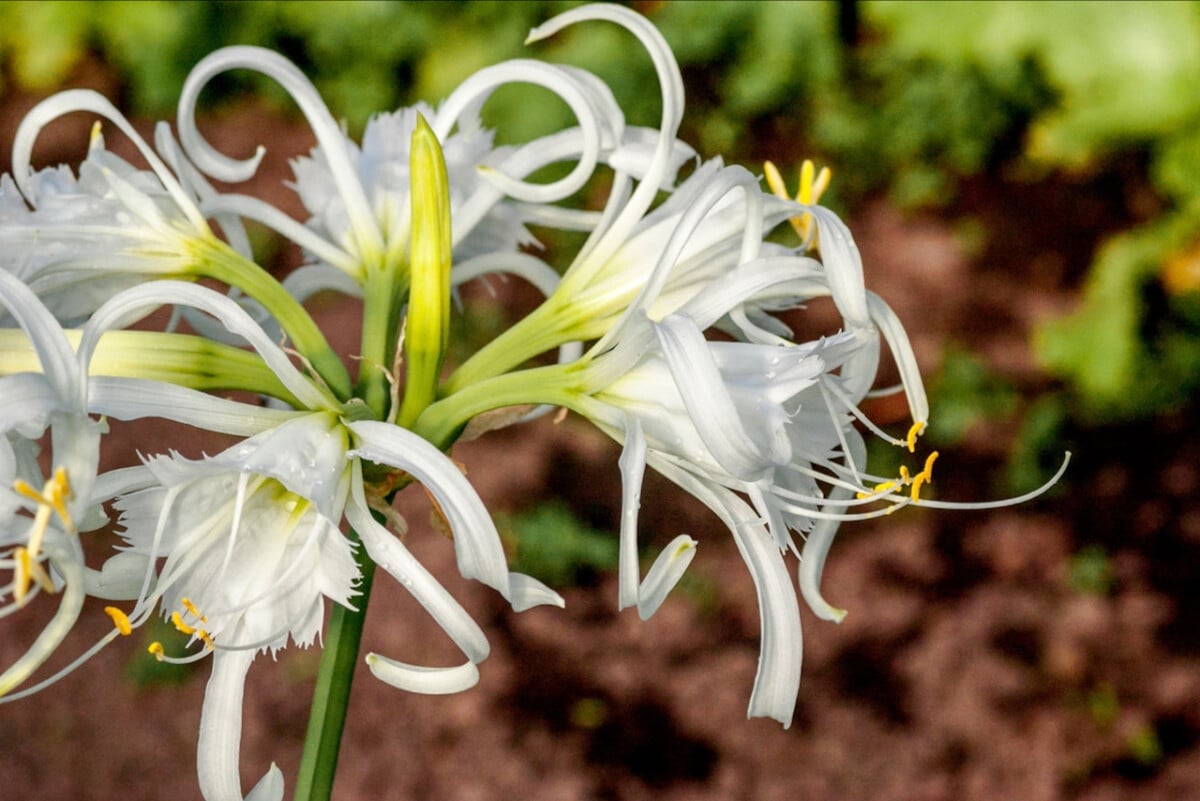
We can plant Peruvian daffodils in containers filled with well-draining soil. The trick is to plant them with the “neck” slightly sticking out above the soil line (just like you would plant amaryllis). Although if you’ve buried them, they’ll still grow and bloom.
They do well in full sun or part shade. As long as we don’t allow the soil to completely dry out, the Peruvian daffodils will thrive and bloom. Every stem gets about four to six wispy milky-white blooms.
If you’ve planted them in containers, simply move the containers indoors once the leaves have dried up in the fall. Stop watering and allow them to enter winter dormancy. However, if you’ve planted them straight in the ground, it’s better to lift the bulbs and store them in a cool, dry location until next spring.
10. True lilies (Lilium)
Finally, a true lily that actually belongs to the Lilium genus. There are thousands of lily cultivars on the market.
Honestly, just reading about the eight divisions (or classes) of lilies feels too overwhelming, even for my plant-geeky self. So I’ll just refer to them as Oriental, Asian and hybrids (although there are also lilies native to North America, but we’re less likely to find them sold commercially).
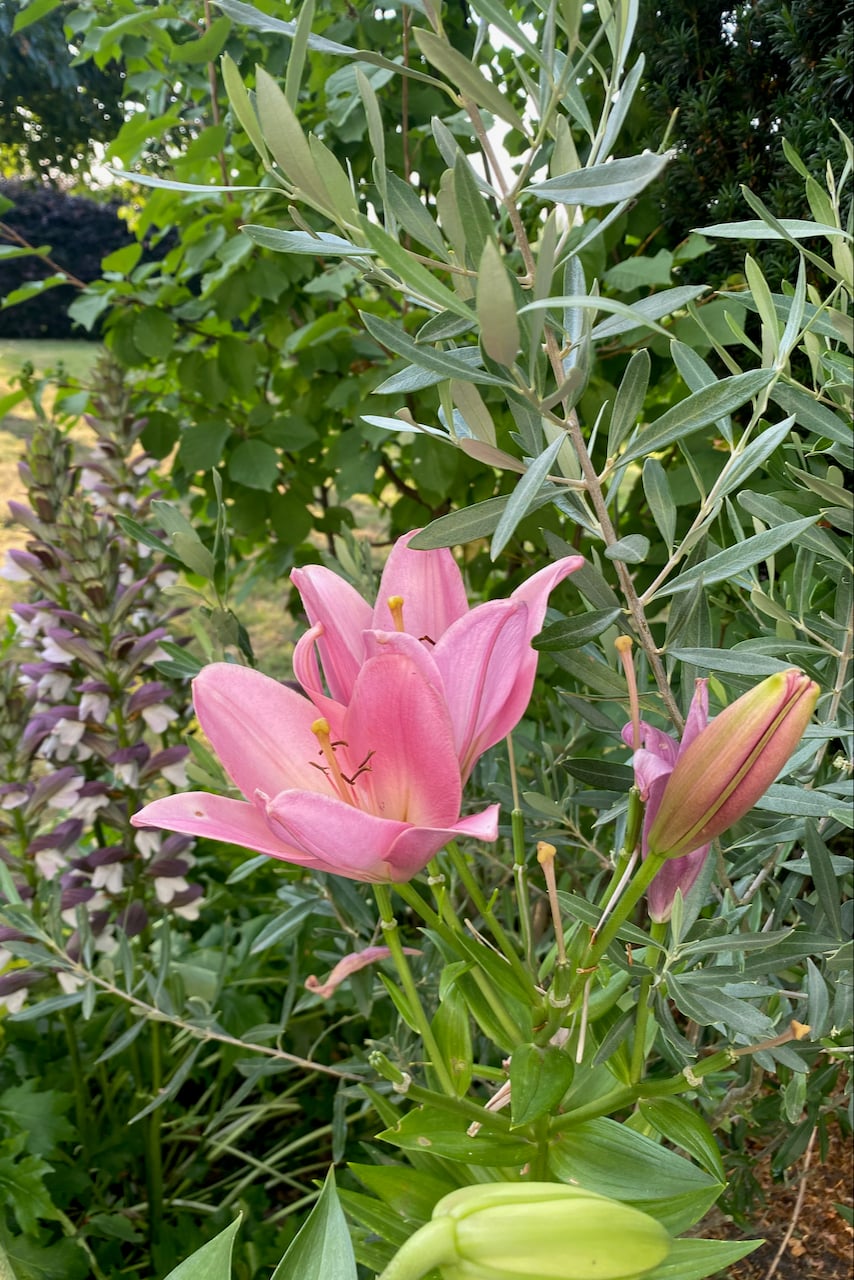
All of these cultivars will do well if planted as dormant bulbs in well-draining soil in sun or part shade. Most lilies will bloom in July and August, with a single stem carrying several blooms.
Keep in mind that true lilies are highly toxic to pets, especially cats. Even a few grains of pollen can provoke a toxic reaction. It happens when pollen collects on their fur and the cats clean themselves.
11. Ginger lilies (Hedychium)
Ginger lilies, butterfly lilies or garland flowers – all these nicknames refer to Hedychium. You’ve probably intuited by now that they’re not real lilies, right? They actually belong to the ginger family (Zingiberaceae), and they’re native to Asia.
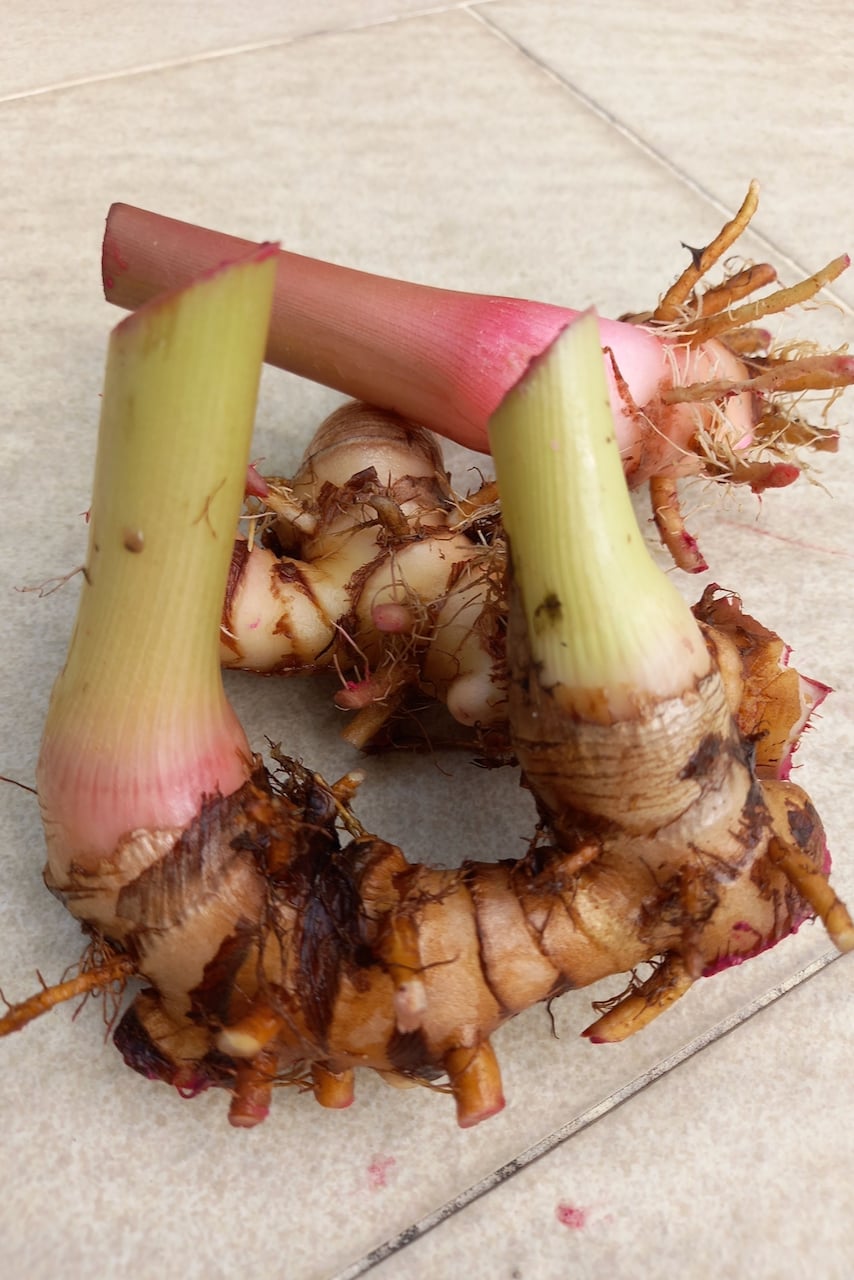
It’s hard to believe that this upright perennial, with cultivars that can reach up to 10 feet tall (3 meters) grows from a single rhizome. Although there are cultivars available in much more manageable heights.
Hedychium coccineum comes in warm shades: oranges, reds and yellows. The more common Hedychium coronarium is white with a creamy vanilla center. Of the two types, this white ginger lily is more fragrant with a rich honeysuckle-like perfume.
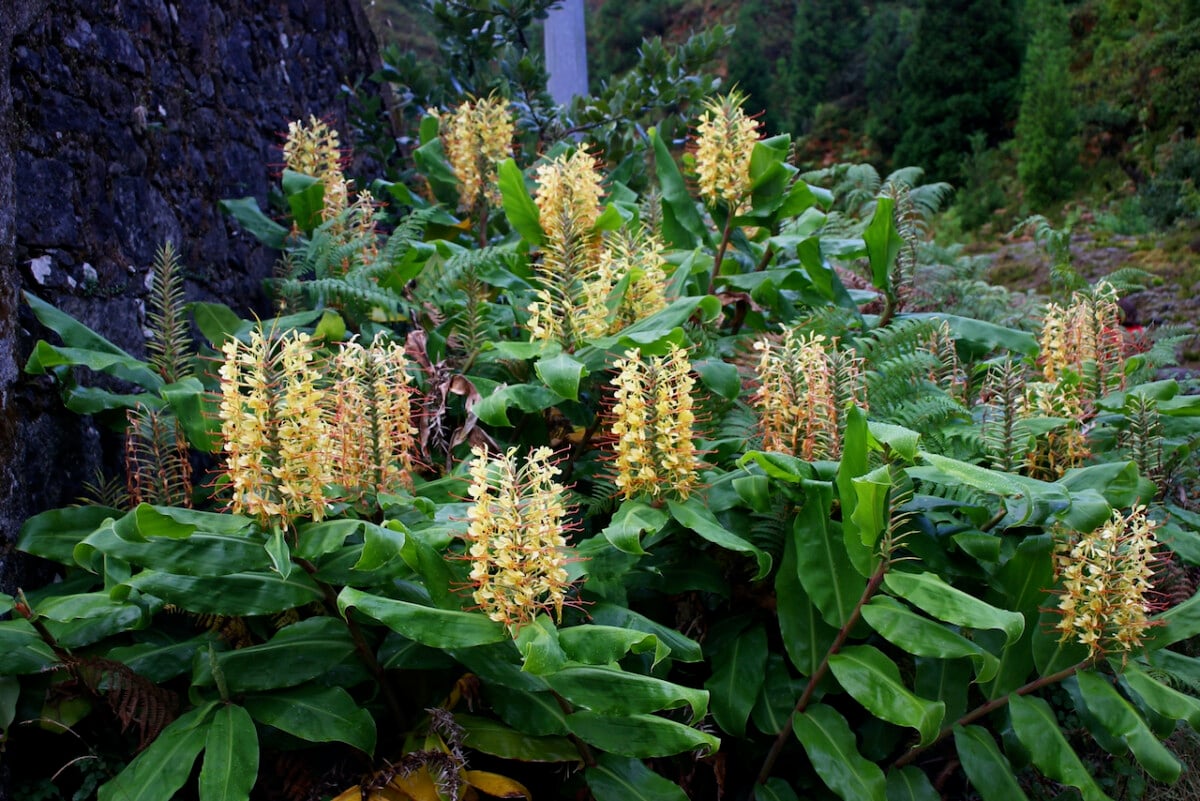
Ginger lilies bloom from mid to late summer and can stay in bloom until the first frost. They like moist but well-drained soil in sun or partial shade. Hedychium are pretty sturdy plants, and we can leave the rhizomes in the ground (under a layer of mulch) throughout the winter months.
12. Lily of the Nile (Agapanthus)
I have professed my love of agapanthus several times over the years (such as in this article), and it has rewarded me with beautiful, large pom-pom flowers in return.
We can start agapanthus in pots indoors about six weeks before the date of the last predicted frost. If you’re planting agapanthus rhizomes straight in the ground in the garden, wait until the danger of frost is over.
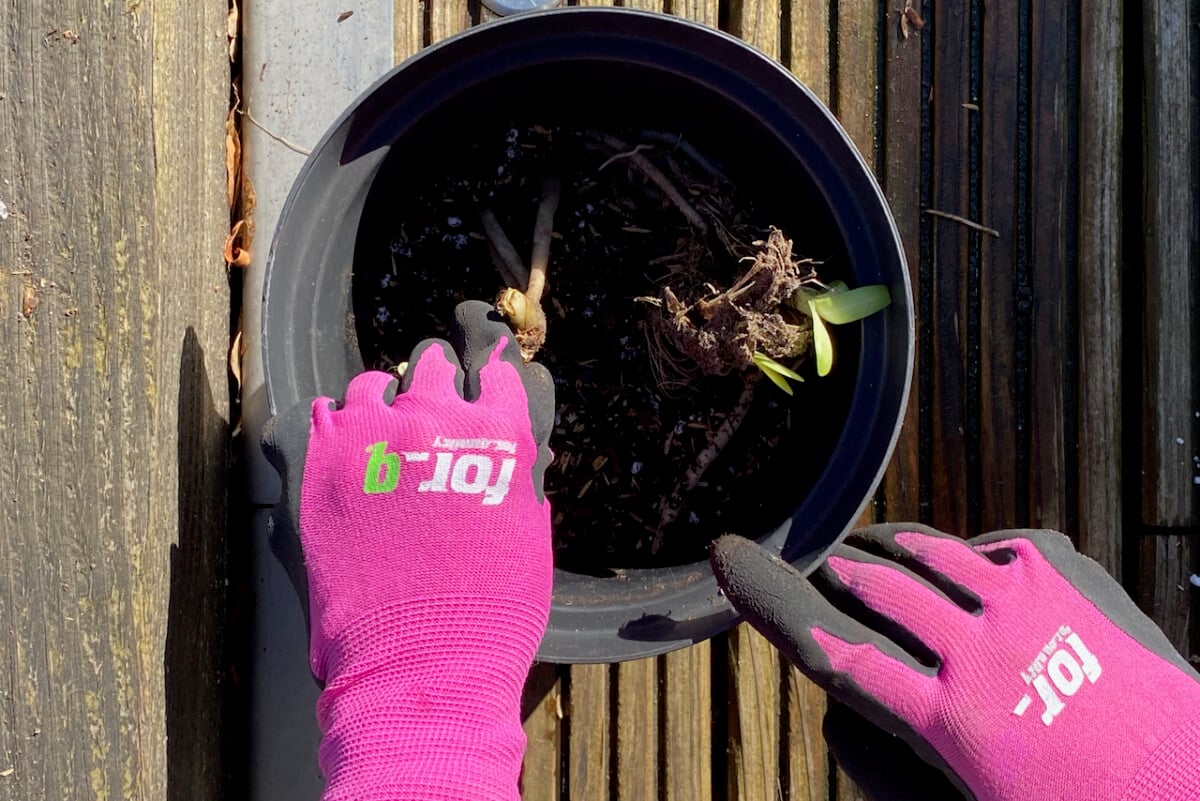
Agapanthus are tender herbaceous plants that grow from fleshy, elongated rhizomes. They’re quite slow to get started – at least compared to most of the other bulbs on this list – but once it gets established, it fills up pretty quickly.
The evergreen one has wider leaves that will keep throughout the winter. If you’re in a cold climate, plant it in a large container that you can move to a sheltered location when temperatures dip.
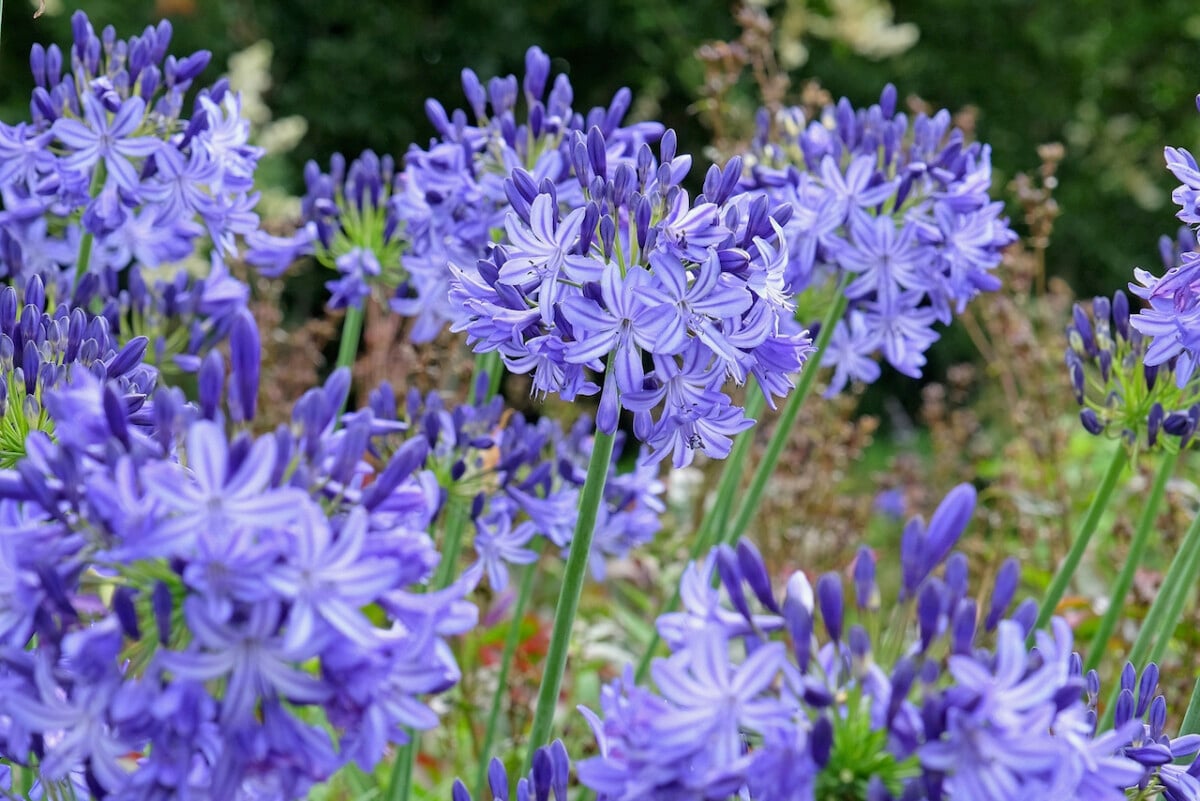
Deciduous agapanthus has thinner leaves that die back naturally in late fall. It tends to perennialize well, and we can leave it in the ground under a thick layer of mulch protection.
If you’re already growing agapanthus, but have yet to see a bloom, this troubleshooting guide I wrote might help explain why your agapanthus isn’t blooming. And more importantly, how to fix it.
13. Garden orchids or hyacinth orchid (Bletilla)
Here’s another niche bulb that I wish more gardeners knew about, simply because these orchids are so easy to grow and quite resilient. Yes, I know what you’re wondering, and they truly are orchids, part of the Orchidaceae family and native to East Asia. The hyacinth part is just a nickname, though. They’re not related to hyacinths.
Bletila bloom in early summer, usually in June, and can stay in bloom for months. Unlike aerial orchids, these terrestrial ones also have really pretty spear-shaped foliage that stays lush and green until the first frost.
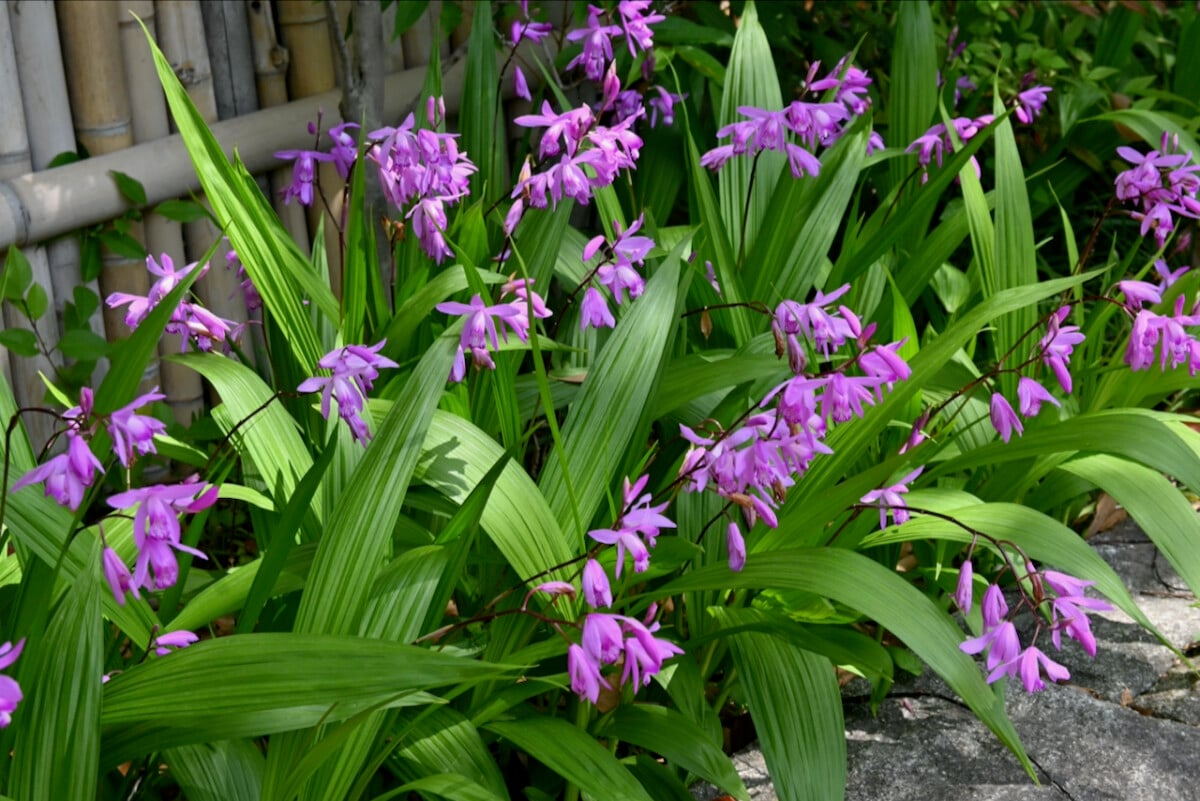
Garden orchids love well-drained soil and can do well in both full sun and light shade. We can leave them in the ground over the winter (but we have to cover them with a thick layer of mulch, dry leaves or straw). If you’re growing them in containers, it’s better to move them to a frost-free location over the winter.
The new shoots will start growing again in early spring. They establish really well and form dense clumps, though not very quickly.
The most common ones commercially are Bletilla striata with pinkish-mauve blooms, but white-flowered varieties are also available.
14. Red hot poker (Kniphofia)
At first sight, red hot poker is one of those plants that looks like it belongs on another planet. The brightly colored spires poking out of a wave of wispy foliage will add interest to any style of gardening.
Kniphofia are perennials that grow from rhizomes. They perennialize really well if we leave them in the ground, and once established, they’ll start growing in a clump pattern, sending out side-shoots that turn into their own rhizomes.
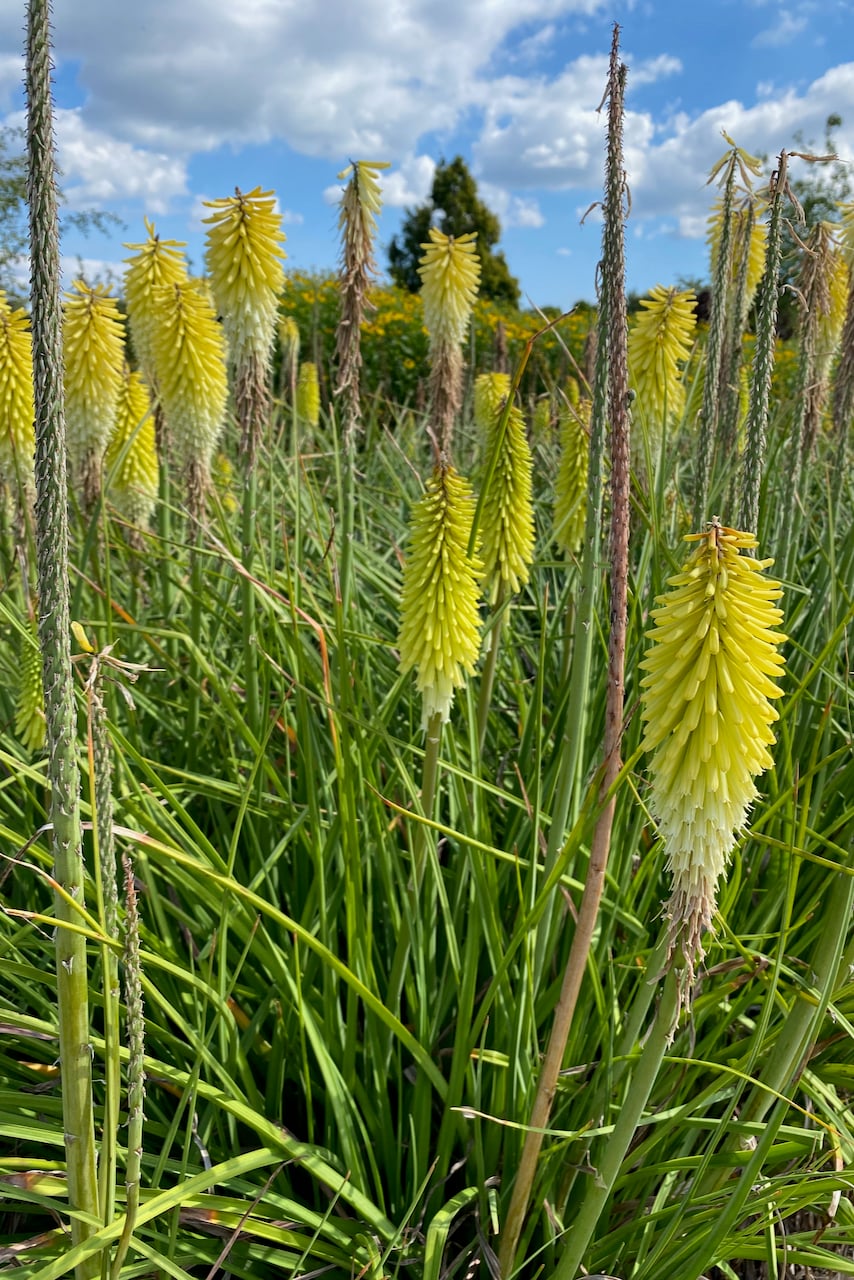
We can plant them now, in a sunny and well-drained location, for a mid-summer bloom. The nice thing is that once plants mature, they’ll start blooming earlier.
Some red hot poker cultivars bloom as early as April, while others will stay in bloom as late as early October. If we plan well, we can have red-hot poker bloom for months. The tubular flowers, in shades of yellow, red and orange (sometimes all three in an hombre pattern), are much beloved by bees.
While very hardy, Kniphofia should still be protected under a good layer of mulch during harsh winters.
15. Mexican shellflower (Tigrida pavonia)
Speaking of plants from another planet, have a look at this one. It has so many popular names: Mexican shellflower, peacock flower and tiger flower. This last nickname is closer to its Latin name, Tigrida pavonia.
Tigrida belongs to the iris family, but they’re more tender than irises. We’ll need to lift the bulbs in the fall and overwinter them indoors. Since they’re such small blooms anyway, I think planting them in containers (which we can move to a sheltered spot in winter) also works well.
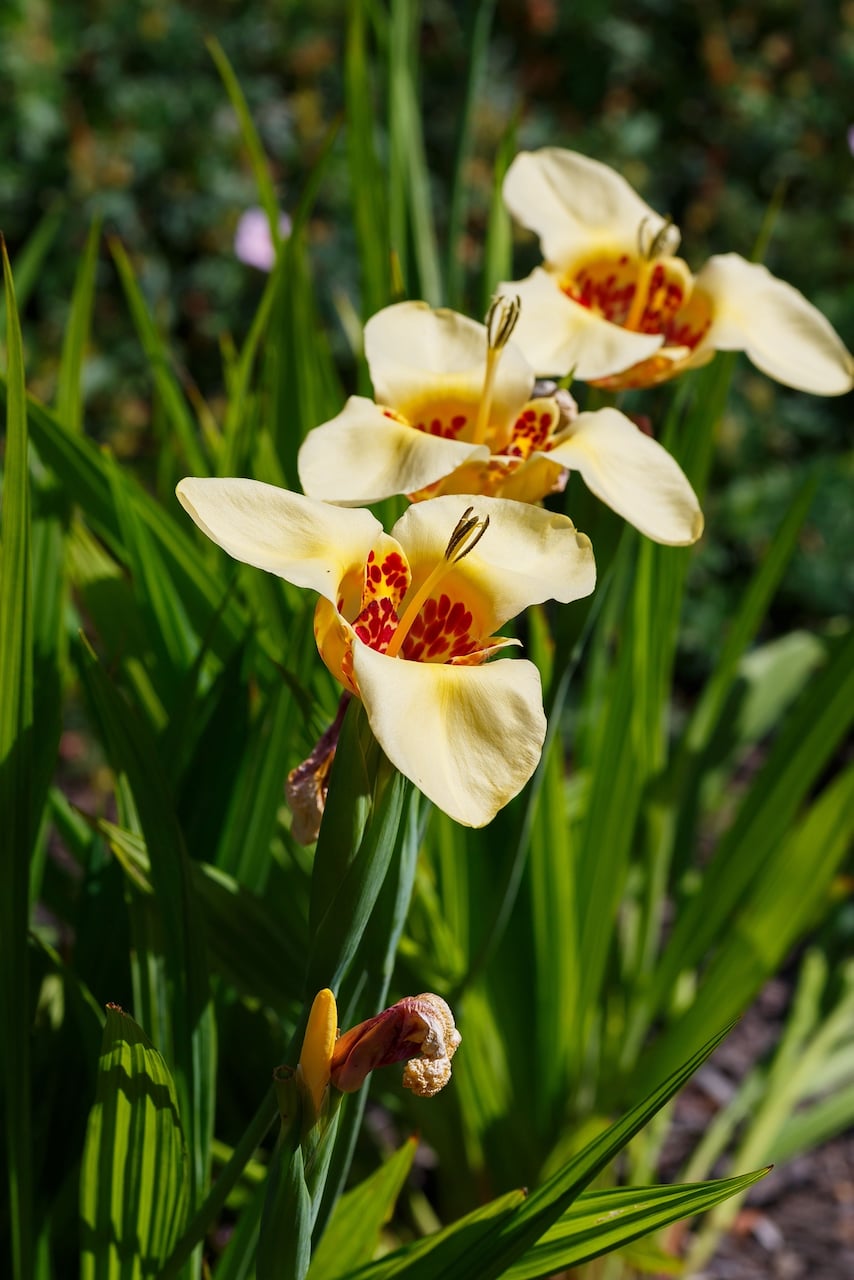
Mexican shellflowers will do well in full sun. They can tolerate part shade, but not full shade. However, they don’t like windy spots, so consider planting them in a more sheltered position.
The flared Mexican shellflowers come in vibrant two-toned combinations of pink, red, yellow, white, yellow and orange. Each stem carries several flowers that bloom for a short time, but each plant has multiple stems, so the whole plant will stay in bloom for several weeks.
16. Society garlic (Tulbaghia)
Tulbaghias look a bit like agapanthus, with their blooming umbels and their spear-shaped leaves. But the nice thing about Tulbaghia is that the leaves are edible. In fact, they’re called “society garlic” because they’re said to be less … umm … pungent than garlic cloves, therefore more appropriate to consume in polite society.
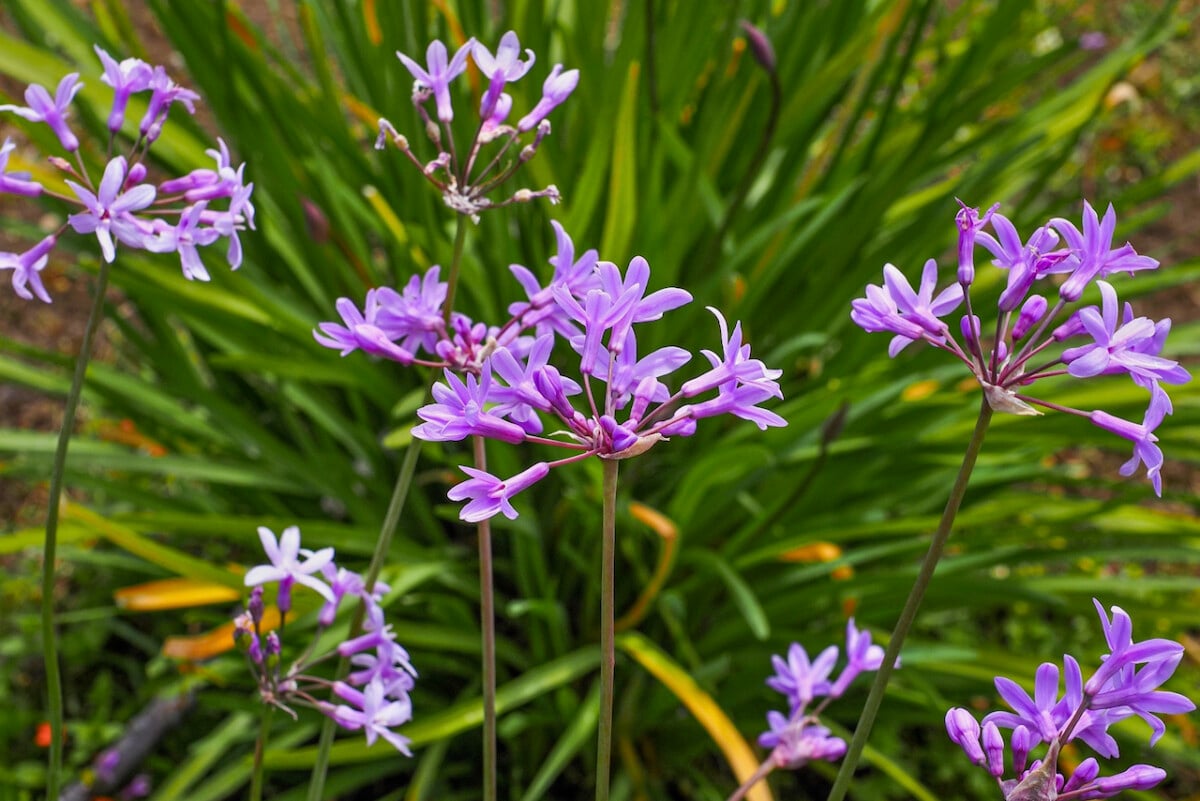
But if you want them for their beautiful purplish-pink flowers, there are multiple cultivars to choose from. This African native comes in bulb form, which spreads in clumps after a few years.
We can plant them in spring in light, well-draining soil in a sunny location. Once the leaves start to turn yellow in the fall, cut everything down to ground level and mulch the site well. Tulbaghia can overwinter in the ground.
17. Tuberoses (Polianthes tuberosa)
My guess is that people are more likely to be familiar with tuberoses as cut flowers adorning summer wedding bouquets. Their enchanting fragrance also makes them a popular addition to floral perfumes.
But tuberoses are fairly easy to grow from tubers. They flower from July to September in long clusters of pink, purple or white flowers.
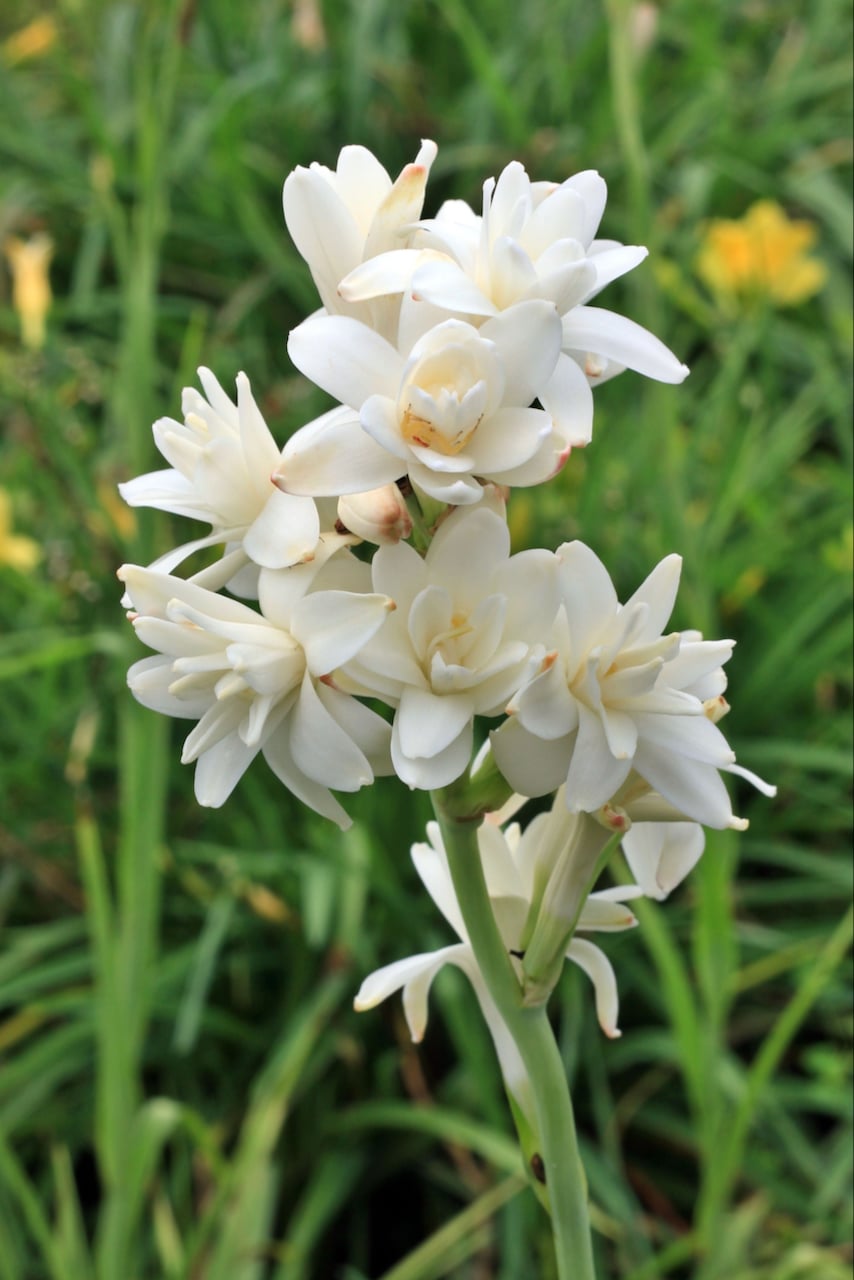
Native to Mexico, tuberoses thrive in full sun and in soil that stays slightly moist. They’re sensitive to frost, so either grow them in pots that you bring indoors in the winter or cover them really well in a thick layer of mulch if you grow them in the ground. If we leave them in the ground, the risk might be worth the reward, as tuberoses produce new tubers and expand in size every year.
Where can I buy specialty summer bulbs?
I know that I’ve added quite a few bulbs to my list that may not be as easy to find in regular garden stores. So I did some research to find some online sources for our readers
Keep in mind that bulbs come and go out of stock fast, and summer bulbs are generally only available to buy in late winter and spring. Some retailers may not ship tender bulbs in winter due to the risk of being damaged in transit.
You find specialty summer bulbs at these online retailers:
Happy planting!
Get Garden Notes From Tracey, Right to Your Inbox
Pull up a chair on the front porch. Join 54,000+ gardeners who get Tracey\'s friendly notes, seasonal to-dos, and hands-on tutorials three times a week.