

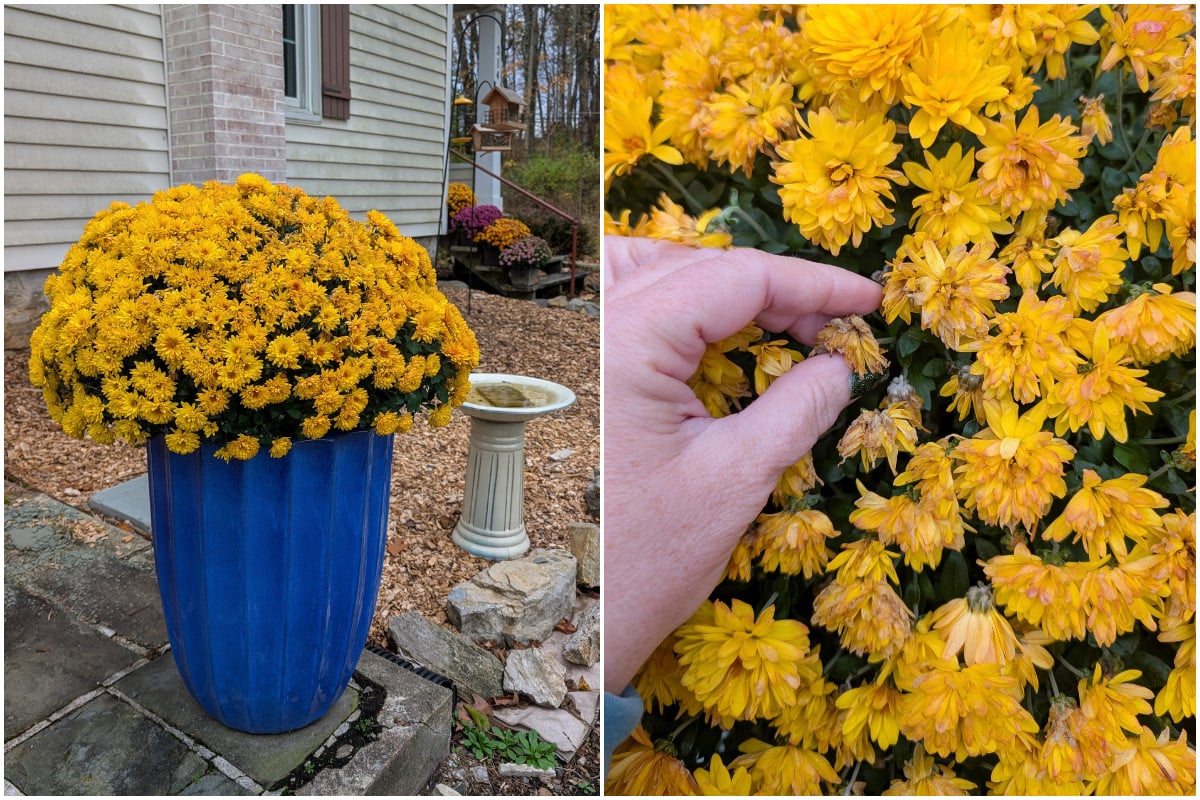
Each fall, you’ll see gardening articles spread across the internet telling people to deadhead their mums to encourage another round of blooms.
As someone who actually gardens, I’m here to tell you it’s a waste of time. There are better ways to make your mums look good this fall; keep reading.
The Gardening Internet’s Dirty Little Secret
I’m going to let you in on a little secret. The vast majority of gardening websites aren’t written by gardeners. Instead, these huge websites hire freelancers to write gardening content. Yeah, Martha didn’t write that.
What’s more, most of these freelancers don’t actually garden. They look up what’s already been written about the topic on the internet and write up a quick post using that information. I almost find it funny that there are a bunch of non-gardening freelancers out there copying each other’s info. Or more likely AI these days.
I sure hope their source info is accurate!
As an actual gardener who also happens to be a writer, I can assure you that Rural Sprout and the information you read here are a rare gem in the gardening world. (I might be biased, but our newsletter subscribers are not. You can join them and judge for yourself by clicking the button below.)
I can always spot these types of articles from a mile away because they seem legit on the surface, but important details pop out that any real gardener would know are false. For instance…
When fall rolls around, so does the chrysanthemum advice.
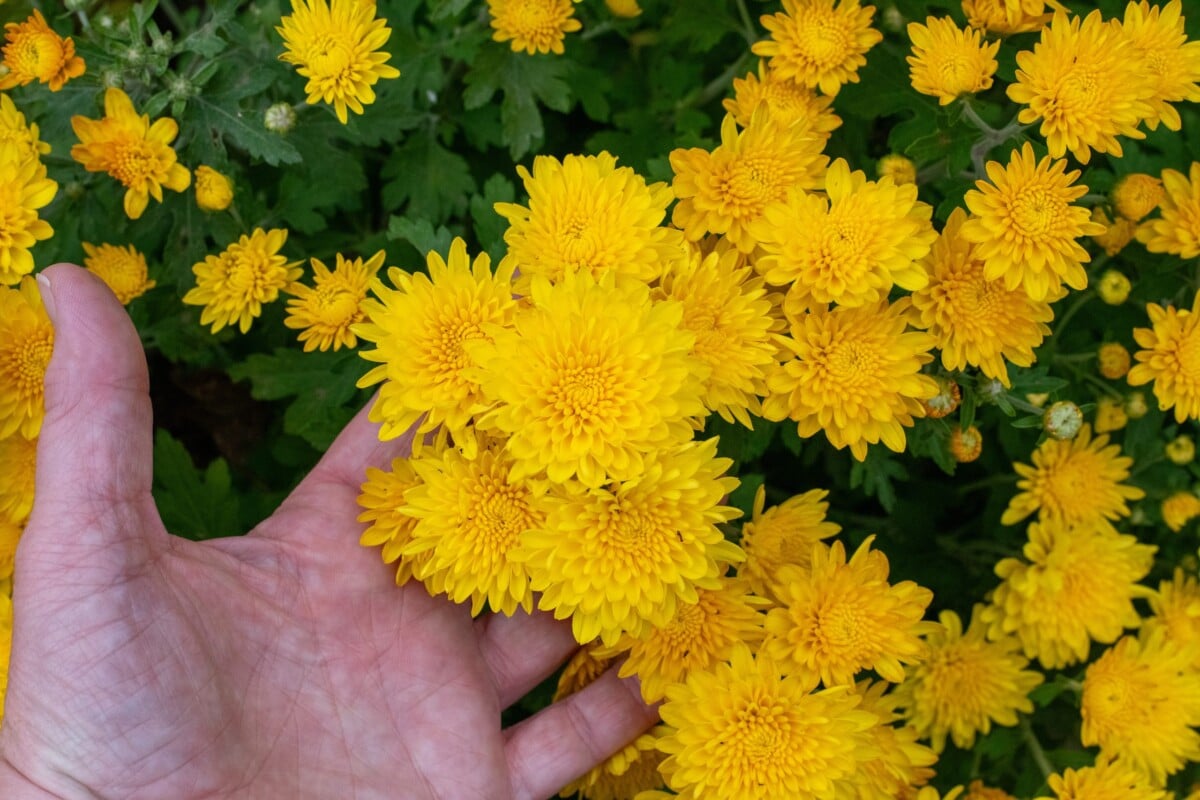
I should know; I’ve written up my fair share of articles letting our readers know how they can keep their mums looking great all autumn long.
But each time I see the advice that you should deadhead your mums, it gets what my kids refer to as “Mom’s Snort of Derision.”
“Deadhead Your Mums for a Second Flush of Flowers!”
“Deadhead Your Mums to Make Them Last Longer!”
“Deadheading Mums Keeps Them Looking Neat & Tidy!”
Snort, snort, double snort.
I don’t know about you, but I hate deadheading plants. I will go pull weeds before I finally force myself to deadhead. (One reason why I avoid hanging baskets with petunias at all costs.) If there’s even the slightest good reason not to deadhead, like saving seedheads for birds, I will opt not to.
But for a plant that 99.9% of us are going to throw away come December 1st, it makes even less sense. Here’s why:
“Deadhead Your Mums for a Second Flush of Flowers!”
Nope, sorry. I don’t think so. Do not collect $200. Do not pass go. Yes! Deadheading plants absolutely encourages new blooms to form. But that’s when we’re talking about perennials and annuals growing during the summer. You know, when they actually have the time to form and grow new buds and have them bloom.
What we are talking about is a decorative, disposable plant that was grown in a greenhouse and had all of its first growth pinched back to within an inch of its life back in July, specifically so that it would be covered in blossoms and bloom all in one go in the fall.
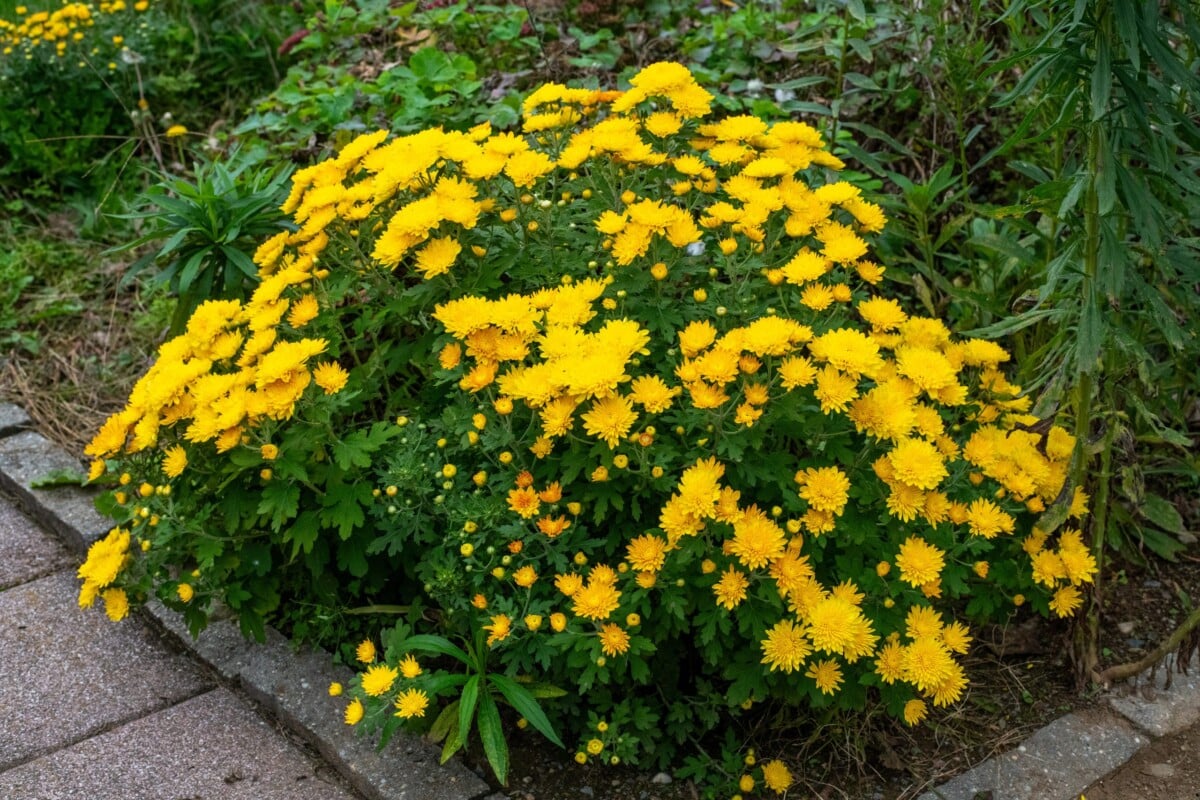
Technically, hardy garden mums are a perennial, but not when you buy them in a pot in the fall. Then they are an annual, and a very short-lived annual at that.
(If you want to winter them over and toughen them up a bit so they can become the hardy garden mums you know they can be, you can read here to learn how to do that.)
So yes, if you deadhead the blossoms once they are spent, they will grow new blooms…in about 4-6 weeks.
Here is a photo of my mums from last year on October 24th. You will notice that they still look decent. They are just starting to get to the point where I might think about pinching off some of the more bedraggled ones.
What that would have meant for new buds is that I would have needed consistent daylight (8-10 hours to encourage new growth) and weather in the upper 60s to 70s and nighttime temps not falling below the lower 50s. You know, seven days before November, as each day is growing shorter and colder.
So, no, this bunk about deadheading your mums to get more blooms only works IF you are already growing mums in June or July, and you want more blooms this fall. This practice does nothing for the potted mums we all buy to decorate our porches with in September.
“Deadhead Your Mums to Make Them Last Longer!”
Nope. Wrong. Sorry. Again, these are plants that were grown specifically to bloom all in one go for a few weeks of bold, fall color before finding their way to the compost pile or the trash bin. Pinching off a couple of dead flowers does nothing to make your mums last longer. If you want them to last longer, keep reading.
“Deadheading Mums Keeps Them Looking Neat & Tidy!”
Eh, maybe? Here’s the thing: because the plant blooms all at the same time, the blossoms typically die at the same time. At that point, if you deadhead, you’re looking at a plant with zero blossoms left on it. You’re more likely to pitch it at that point.
These mums are not like a perennial in your garden where blooms are going to be staggered across the summer. These are highly cultivated plants meant to burst on the scene with a quick flash of fall color.
Save your sanity and skip the deadheading; instead, here are four simple things you can do to keep your mums looking amazing:
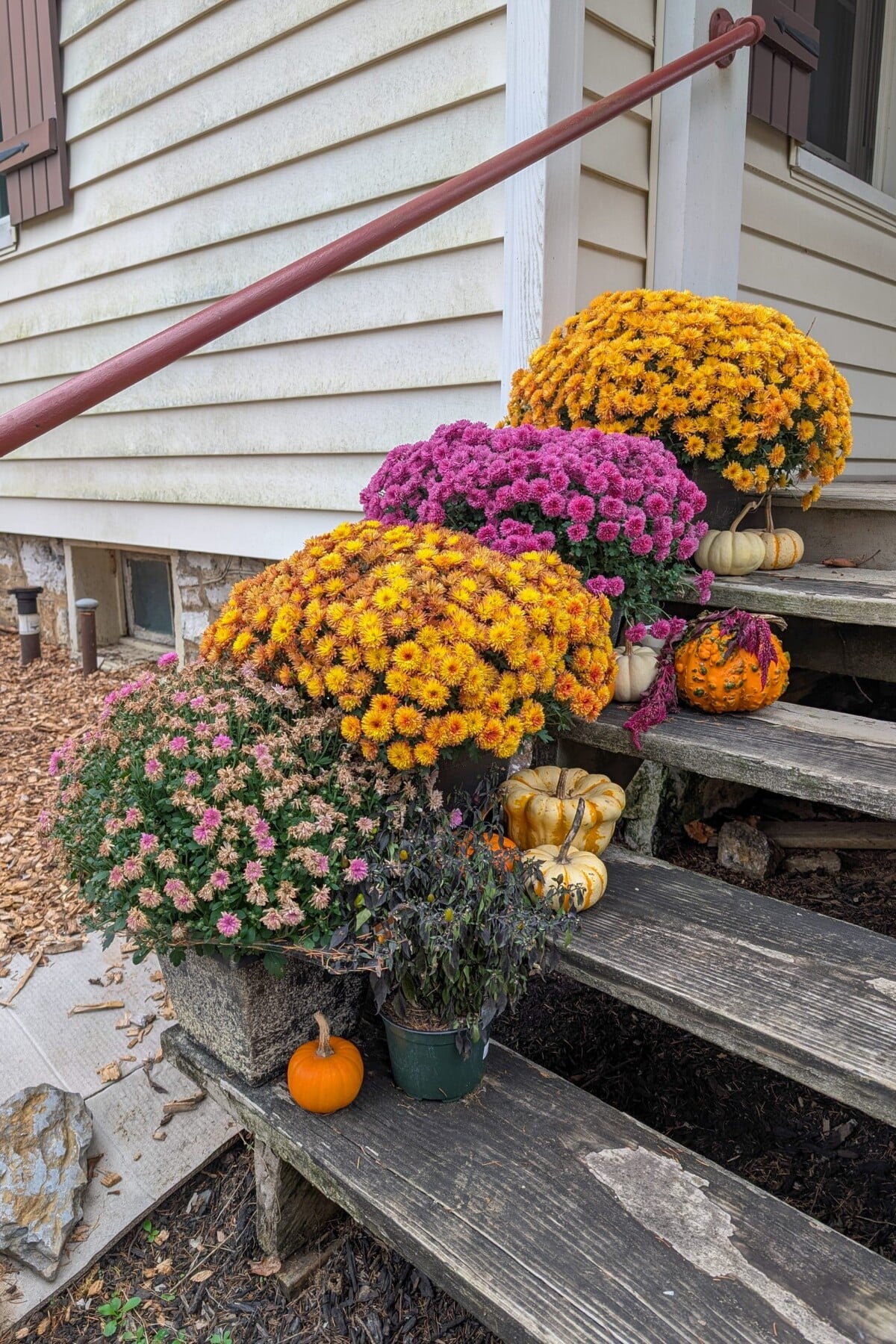
- Buy them at the right time – toward mid-September
- Be mindful of how much sun they get – too much sun will fade your blossoms, and they won’t be as vibrant
- Water them daily – a dry mum is a dead mum
- Pay attention to temperature fluctuations – too hot, and you’ll fry your plant; a hard freeze will kill it. Bring it out of the weather in either scenario
Take five minutes to read the detailed explanation of these four tips, and you’ll have gorgeous mums all autumn long. Save your time for more important things other than deadheading, like watching paint dry.

Get Garden Notes From Tracey, Right to Your Inbox
Pull up a chair on the front porch. Join 54,000+ gardeners who get Tracey\'s friendly notes, seasonal to-dos, and hands-on tutorials three times a week.