


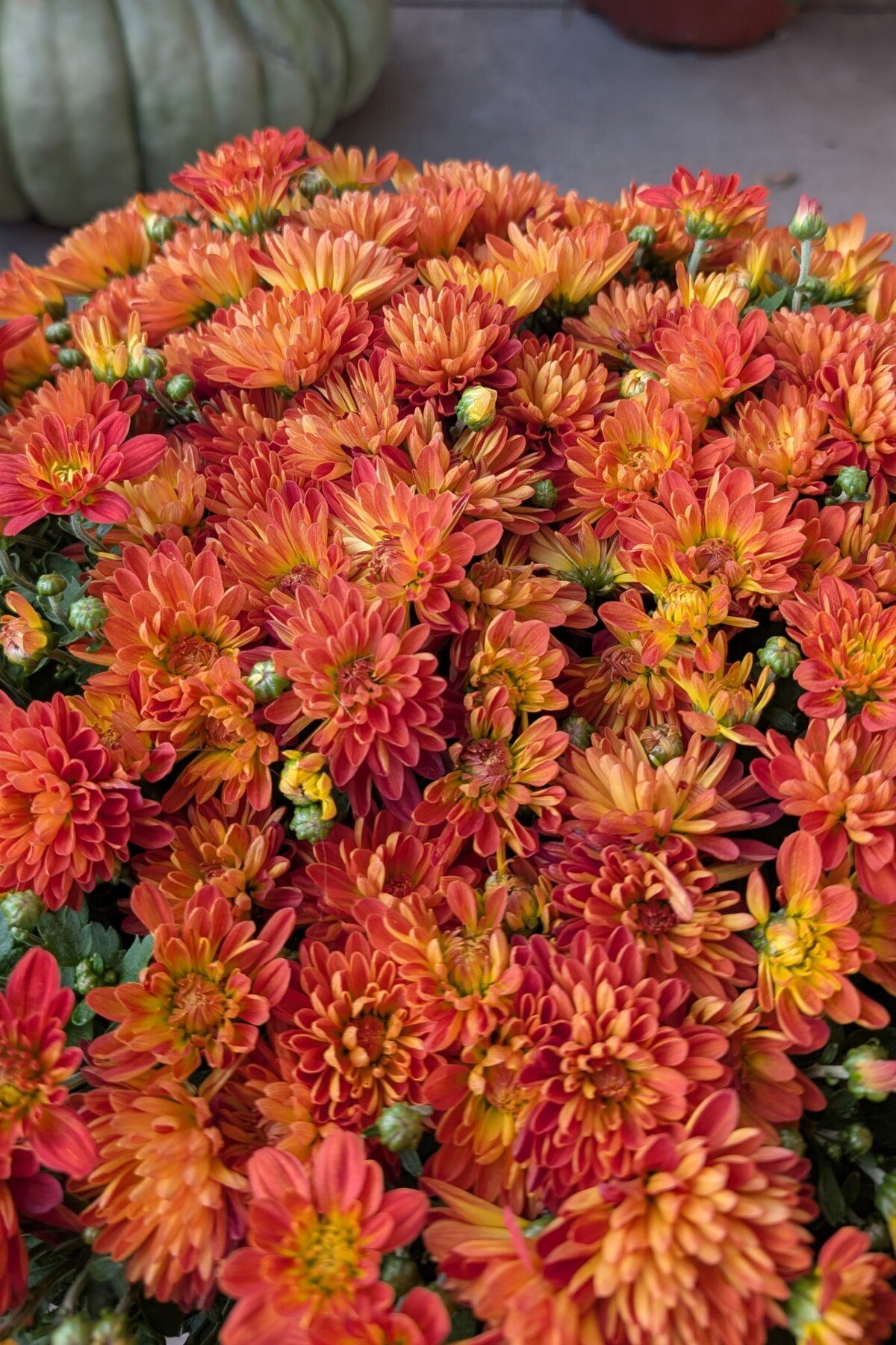
Fall is here, and you know what that means – it’s pumpkin spice chrysanthemum season!
Everywhere you look, there are potted mums for sale. If you plan on grabbing a few this fall, you’ll want to get the most bang for your buck. You can keep your mums blooming and looking great until it’s time to replace them with poinsettias. Just follow these four tips for no-fuss, long-lasting flowers.
Everywhere you look, there are chrysanthemums for sale: the grocery store, the big box home improvement stores, local greenhouses, and roadside farm stands. Seriously, folks, when I say everyone is selling mums this time of year, I mean everyone.
I went to my local seafood place to buy scallops this week, and they had about a hundred mums for sale outside the front of the store.
I don’t know about you, but when I think “seafood,” my next thought isn’t “chrysanthemums.” With that in mind, let’s jump right in, as that’s a nice segue into our first chrysanthemum care tip.
1. Know When to Buy Mums & What to Look for Before You Take Them Home
I didn’t buy mums at a seafood shop. (Shocker, I know). However, I did pick up some this week at a local greenhouse, where I know they are well-tended by people who are good at growing things. And that’s one of the first things you can do if you want to ensure your chrysanthemums last all fall – be mindful of where you buy them and when.
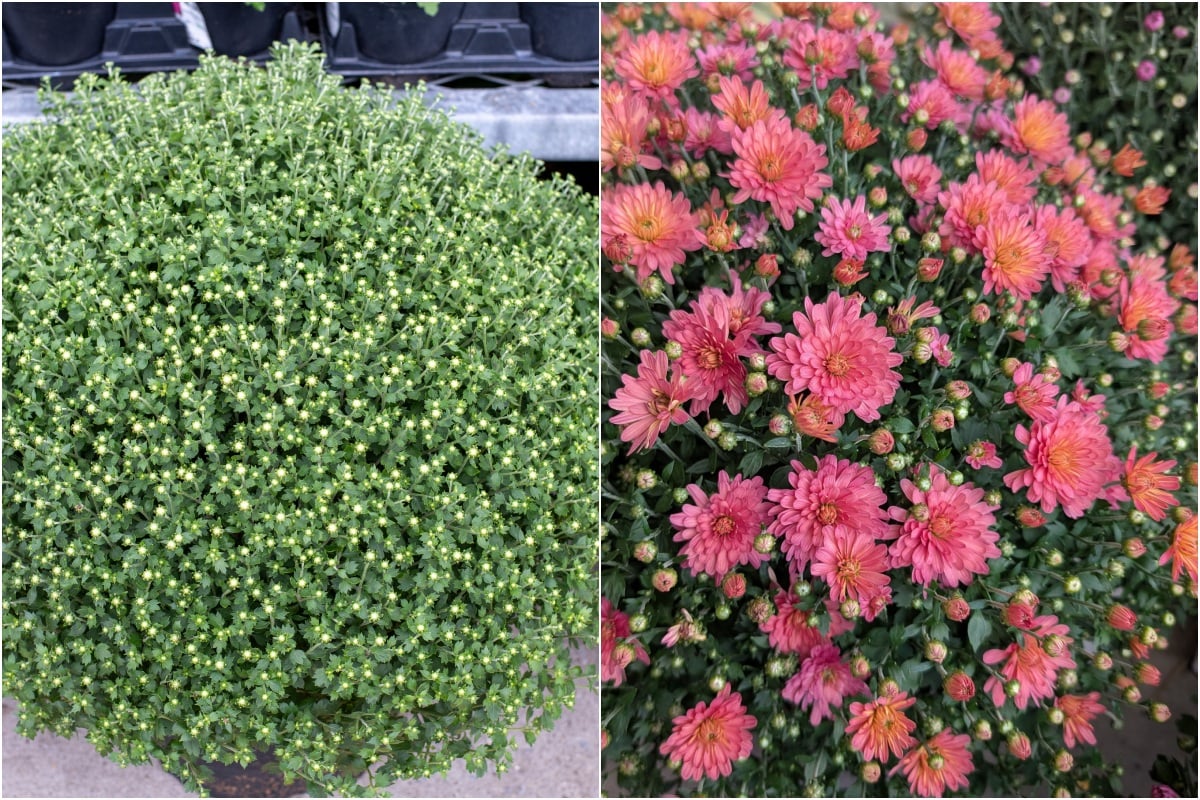
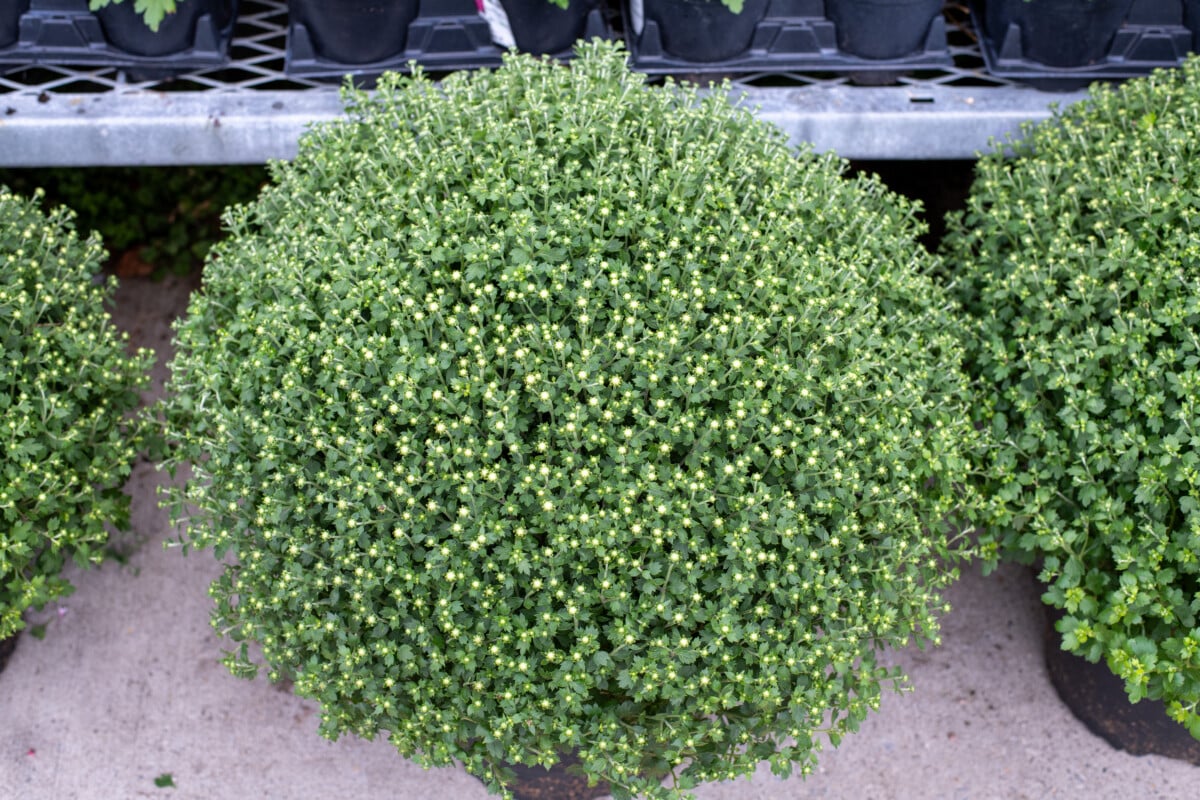
I’ve written up a detailed mum-buying guide here. Buy your mums with the buds closed, before they are in full bloom and wait a week or two if your weather is still leaning more toward summer temps. (Obviously, there’s more to it than that, otherwise there wouldn’t be a mum-buying guide, but those are the most important factors.)
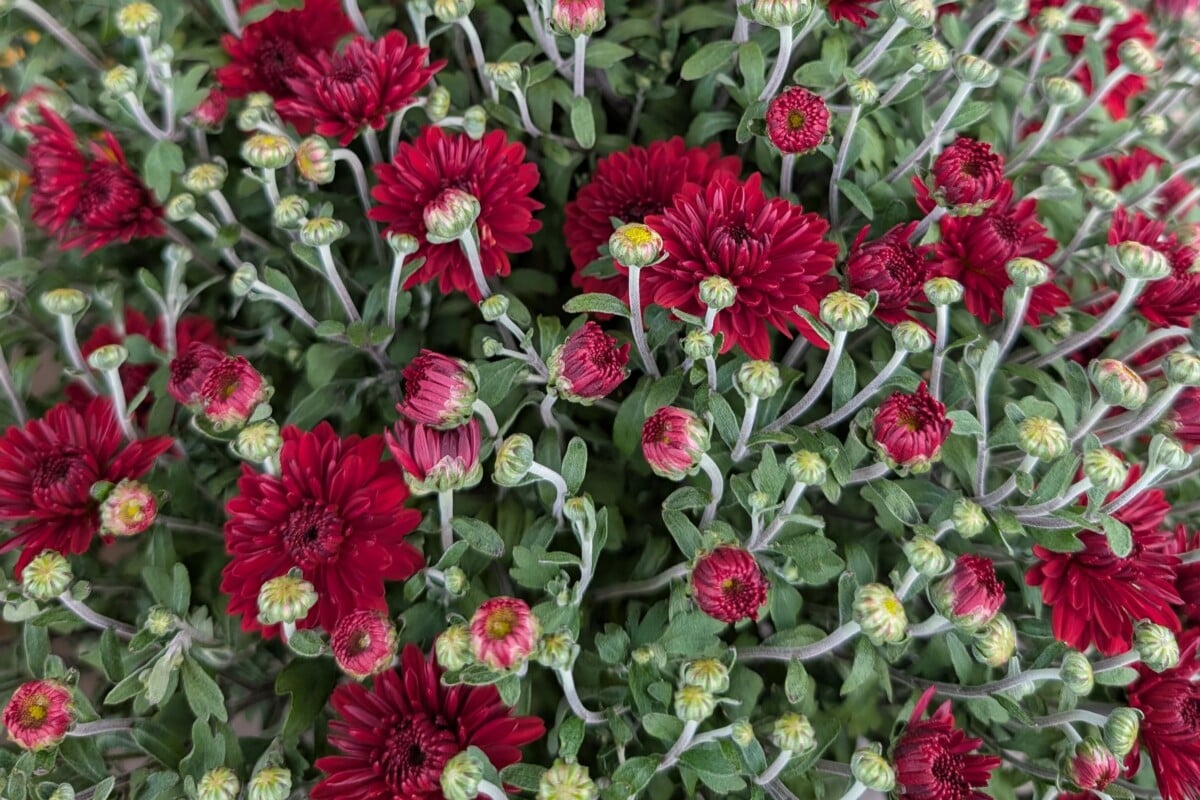
Pro-tip: Okay, I’m not a professional mum purchaser, ya got me. But I’ve still got a tip for you. It can be hard to get the colors you want if you buy mums when all the buds are tightly closed, so here’s what I do. Nearly all potted mums come with a care tag in the pot that shows what color they are. Gently move the foliage aside at the base of the pot until you find it. Now, you can Google the cultivar to get a better idea of what the color will look like when they are in full bloom.
2. Where You Display Your Mums Matters
Most of us have a specific spot in mind for where we want to display our mums. I have some on my front steps and two in my large planters by my kitchen door. But in some cases, where we display our mums can significantly shorten their life span.
The potted mums that show up each fall have been soaking up full sun for 8-12 hours a day in a commercial nursery. And that’s good. They needed all that sun to create the energy it took to make all the buds they are currently covered in. But if you want those blooms to last and look great, you don’t want to continue to bake your plants.
Too much direct sun can cause the vibrant colors of your chrysanthemums to fade prematurely.
Think of it like leaving a red shirt on the clothesline in the sun for a few days. The sun will fade it, gradually bleaching the color out a little each day. The same thing happens to mums in direct sunlight all day.

If possible, place them in an area that receives either early morning or evening sun. This will keep their colors crisp and beautiful.
(By the way, you can make this cute pumpkin mum planter in about five to ten minutes.)
Oddly enough, rain can have the same fading effect on the blossoms, diluting and washing away their color. It’s a bit like when you get tissue paper wet and the colors run. Too much rain will eventually cause faded blooms and flowers that brown prematurely.
Rotate them every couple of days, as this ensures the entire plant gets the sun it needs to keep growing, but also prevents fading.

The best spot for your mums is somewhere they will be protected from wind, rain and harsh direct sunlight.
Of course, that’s not always feasible, depending on where you want to display them. For instance, I have a nice little display of mums and a few other decorative fall plants around my mailbox. I already know they’re going to get baked by the sun, and there’s not a whole lot I can do about it other than enjoy them while they last.
3. Water Your Mums Every Day
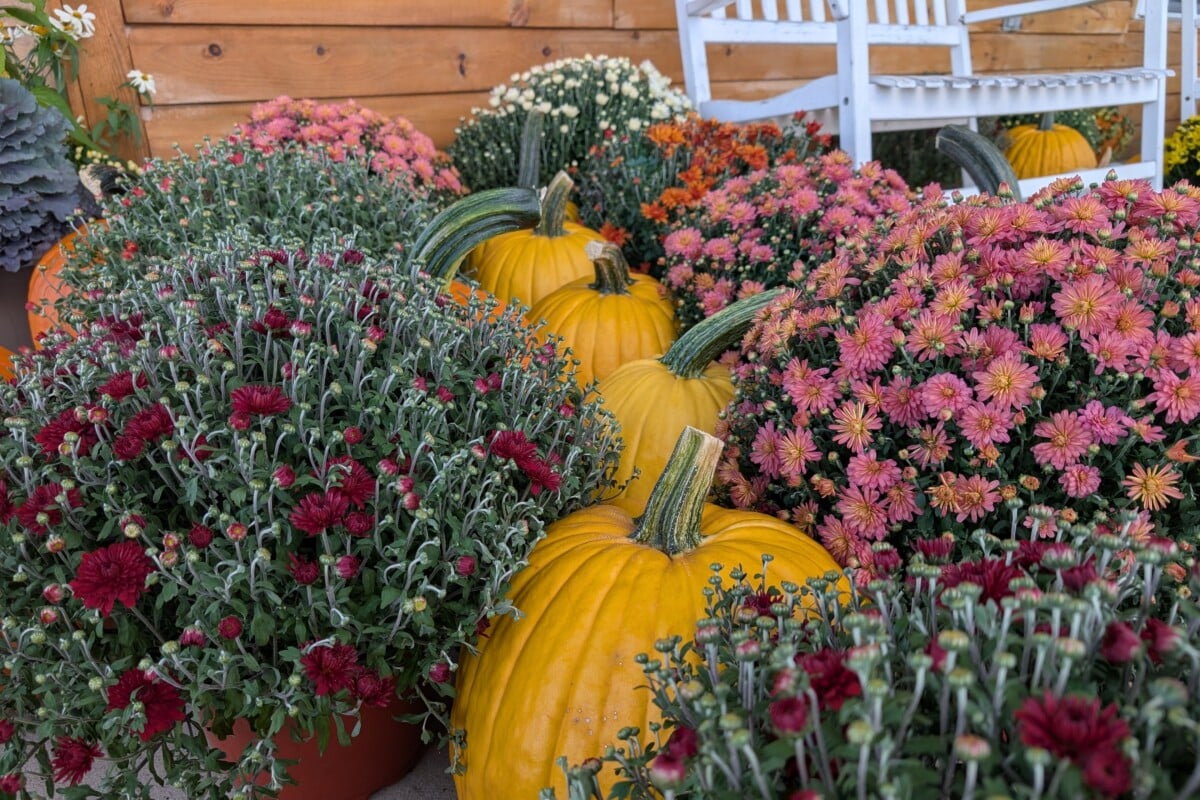
Every day? Yes. Every day. Remember that nice commercial nursery that your mums started in? Your chrysanthemum was one of thousands, and it had its own personal drip line that ensured it was watered every single day.
I used to live next door to a big greenhouse that would start mums in mid-summer to sell in the fall. It would take them an entire day just to lay out all the drip line irrigation before they would even set the plants out.
All of this is to say that potted chrysanthemums need consistently moist soil to stay happy and thriving.
That means they need to be watered every day. Those little pots dry out fast! This is why I generally advise people to skip those tiny potted mums. Bigger is better when it comes to chrysanthemums.
It doesn’t take much for your mums to dry out and turn into crunchy, sad balls of what might have bloomed.
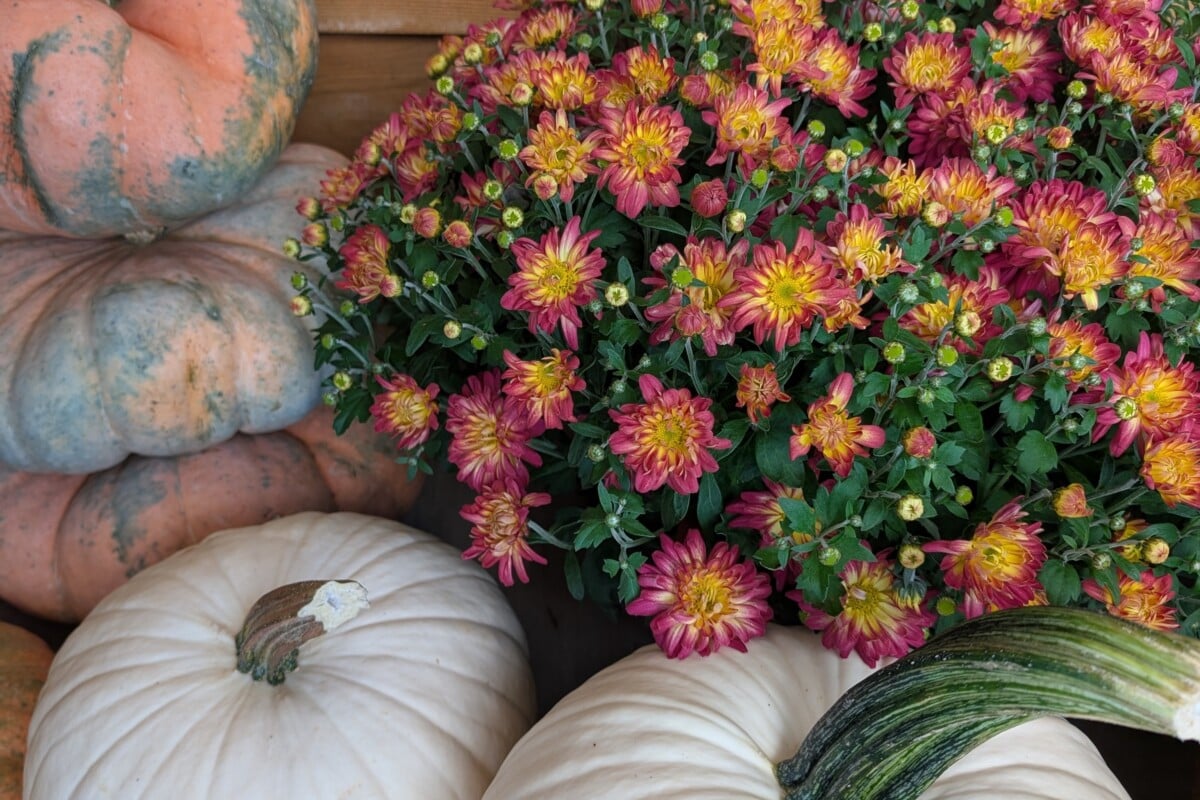
Likewise, you don’t want them to be completely waterlogged, but as most pots have drainage holes, this is rarely a problem.
And while we’re talking about water, let’s talk about fertilizer. These plants have already created most of the blooms they will grow, so fertilizer isn’t necessary. Yes, it can help keep your plant be extra happy, but if you have to choose between remembering to water consistently or fertilizing, go with the watering.
4. Give Mums the Goldilocks Treatment
Let’s talk temperature. Mums do best in cool fall weather. I know, I was shocked, too. Who knew?
But all jokes aside, the ideal temperature for thriving chrysanthemums is between 50–65°F. If you’re experiencing an especially warm fall, consider moving your mums into the shade until the temperatures start to cool. (This is another reason why it can be a good idea to hold off on buying mums right away.)
As fall progresses and the weather gets cooler, you’ll have to be mindful of the opposite – temperatures that are too cold.
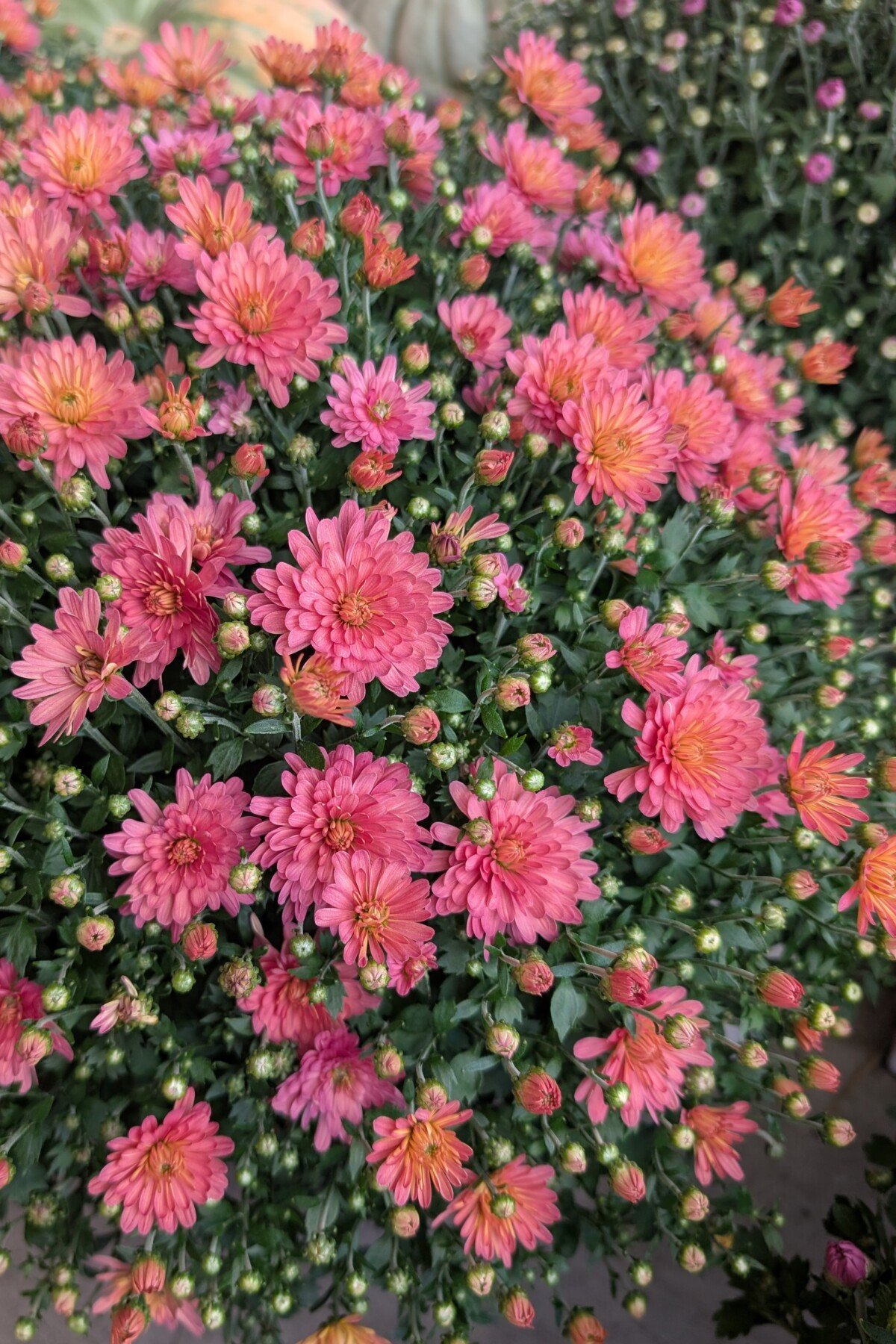
Garden mums (Chrysanthemum × morifolium) are genetically frost-hardy. Unfortunately, how that plays out depends largely on whether your mums are in the ground or in a pot.
Potted mums don’t benefit from the protection of the soil, so a single night of frost can quickly end your flowers.
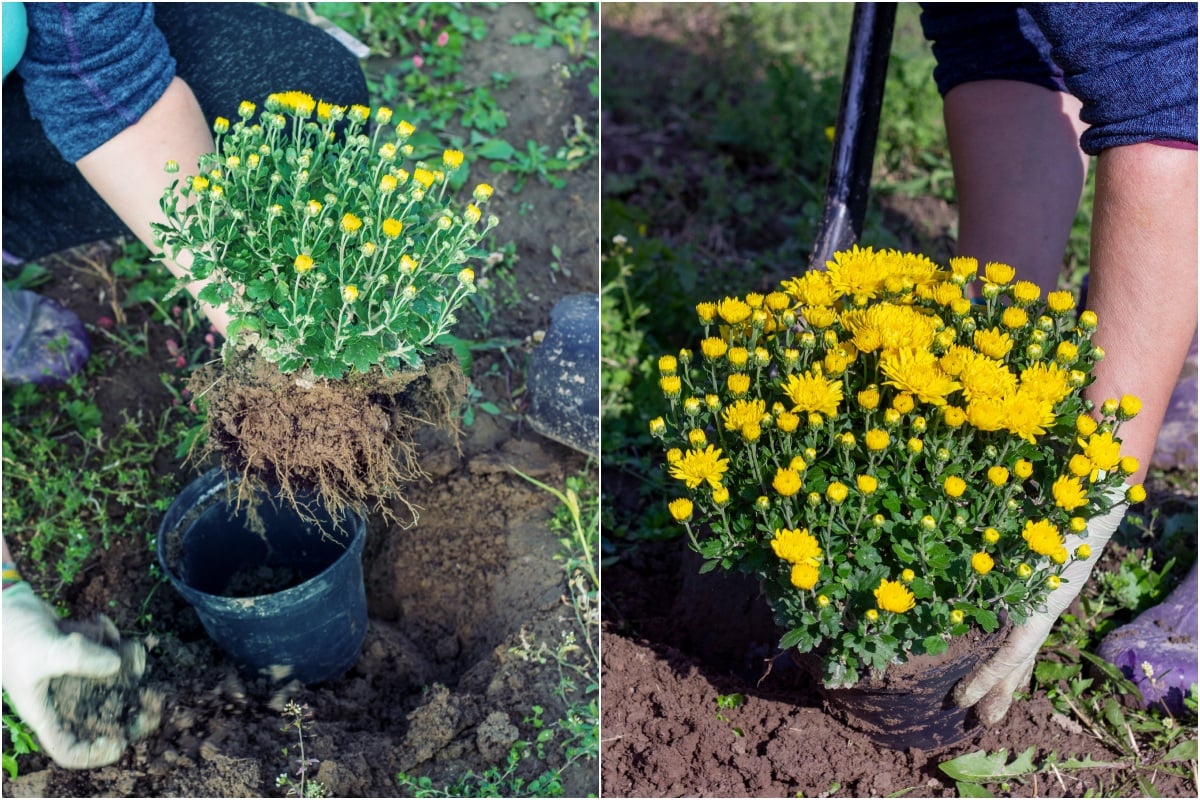
If you want your mums to really last, consider planting them directly in the ground, or at the very least burying them, pot and all, in the ground for the season.
Ground-planted mums benefit from the soil’s thermal mass, which absorbs heat during the day and releases it at night, buffering both the roots below and the plant above ground against rapid temperature drops.
Potted mums, on the other hand, have roots fully exposed to the air, which can chill quickly during frosts. Even a light frost can interrupt water and nutrient supply from the roots, which leads to wilted and browned petals. So, while your plant might survive a frost, the blossoms won’t.
The easiest way to protect potted mums from a frost is to bring them indoors.
Unless you’re like me, and you tend to go a little nuts with your fall decorating. In which case, the thought of lugging a dozen mums into your garage every night there’s a frost is a bit much.
You can protect potted mums without moving them indoors. Insulate the outside of their pots by wrapping them in burlap or mulching around their pots with a layer of straw or leaves. Finish by covering the entire decorative display with frost cloth or a bed sheet on nights when a frost is expected.
To Deadhead or Not to Deadhead
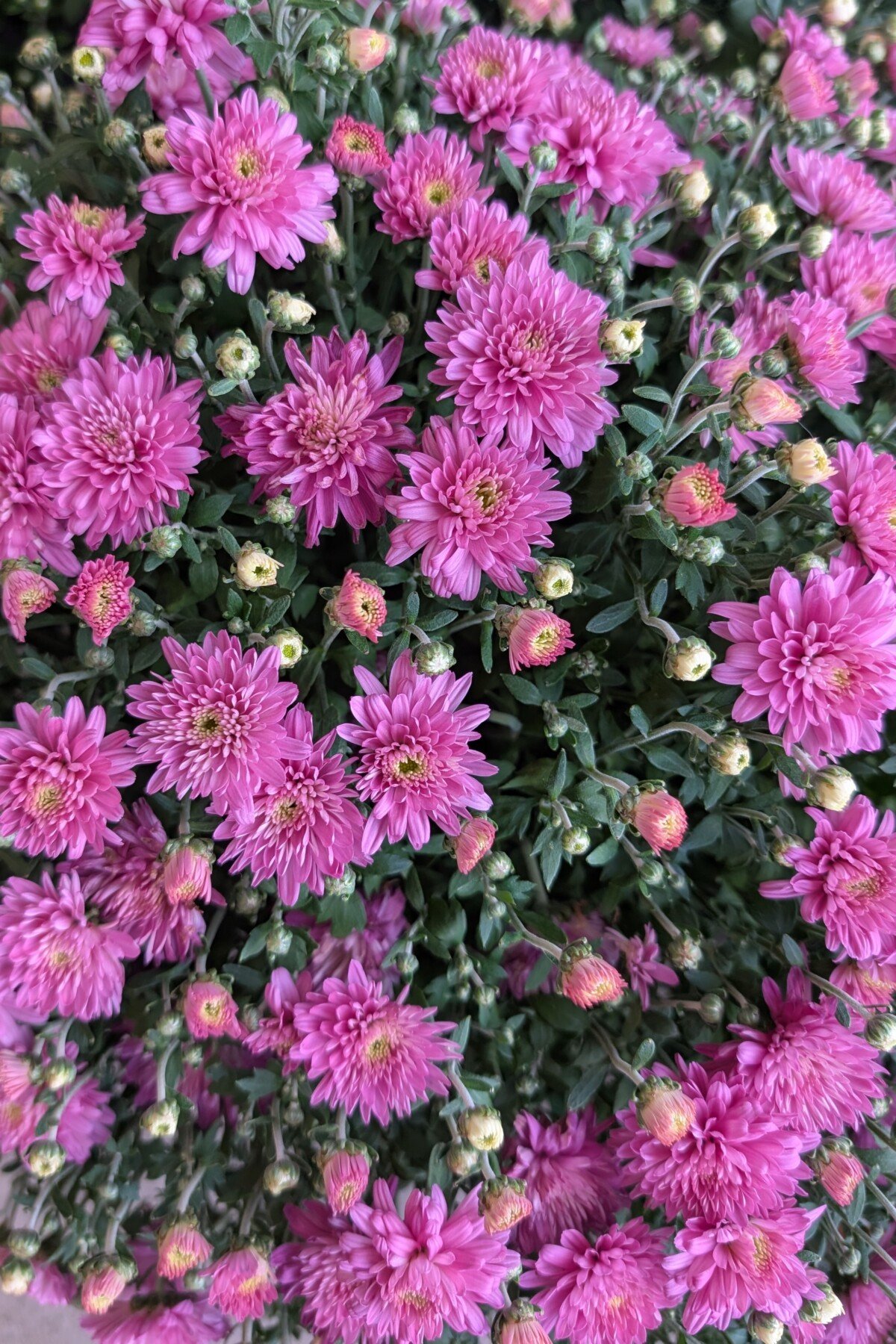
I thought I would throw in one final tip, as I often see advice suggesting you deadhead mums to encourage more blossoms. While you should deadhead your mums, it’s unlikely that you’ll end up with more blossoms.
These are short-season plants. They’ve been grown to produce a large number of blooms all at once, so the blooms you enjoy this fall were started months ago.
Deadheading won’t suddenly give you a ton of new blossoms.
However, deadheading will keep your plants looking tidy and allow sun and airflow to reach closed buds so they can bloom. So yes, you should deadhead your chrysanthemums, just don’t expect to be rewarded with a second flush of flowers.
Following these simple tips, you could easily have a beautiful fall display of chrysanthemums to enjoy from now until Thanksgiving. And with their vibrant fall colors, you might even want to consider wintering them over to enjoy again next year.
Read Next:
Get Garden Notes From Tracey, Right to Your Inbox
Pull up a chair on the front porch. Join 54,000+ gardeners who get Tracey\'s friendly notes, seasonal to-dos, and hands-on tutorials three times a week.