

A quick note to our readers: We made the decision to pull this recipe from the website because it had a few factors that made it unsuitable for canning. First, it has olive oil in it, and second, the finished ratatouille is too thick to be pressure canned safely. Since it didn’t meet USDA canning safety guidelines, we decided better safe than sorry and took the recipe down. However, so many of you emailed me saying you loved it and wanted to know where the recipe had gone that we decided to put it back up, but without the pressure canning information. The recipe itself is the same.
If you want to make enough ratatouille to preserve, I have had excellent luck freezing it.
The ratatouille freeze flat in zip-top freezer bags, so it doesn’t take up a lot of room in the freezer. If you prefer to skip the plastic, wide-mouth pint jars freeze beautifully. (That’s what I use to preserve all of my soups, broth, ratatouille, etc. in my freezer.)
The wide-mouth jars have been designed to freeze without cracking. (You can read more about that here.)
The Perfect Recipe to Use Up a Bumper Crop of Veggies
Towards the end of the growing season, as the bounty starts to pile up, I reach for one recipe time and time again.
When my kitchen counter is no longer visible beneath all the tomatoes, zucchini, eggplants, peppers and onions, I reach for my stockpot.
It’s time to make ratatouille.
Nothing helps you clear your counters and use up a ton of vegetables all at once like this classic French dish.
I will unashamedly admit to being ignorant of ratatouille until the Disney Pixar movie came out. (I know I’m not the only one.) Don’t worry, though; I’ve made up for lost time over the years, easily eating my own body weight in this hearty veggie stew.
The movie showcases a version of the dish known as confit byaldi, invented by chef Michel Guérard. It’s a lighter take on the recipe, using thinly sliced vegetables artfully arranged, instead of the hearty stew-like consistency of the traditional recipe.
Unlike many who saw the movie, I was drawn to the humbler, classic version.
There is a scene in which the food critic takes a bite of the main character’s confit byaldi, and he’s instantly transported back to his childhood, where his mother kisses his head and then sets a steaming bowl of hot ratatouille before him on the table.
The comfort food buzzer went off in my brain when I saw this tender scene, and I knew I had to try it. I am all about comfort food from every and all areas of the globe. If it’s your go-to meal after a crappy day, I want to learn how to make it.
Naturally, ratatouille sounds fancy because it’s French; however, this delicious bowl full of warm garden comfort food is simplicity at its best. It’s a dish that tastes better the day after you make it, and the day after that, and the day after that…
I will make a large stockpot of ratatouille and eat it all week, often freezing some to eat later.
Now I know what you’re saying, “But, Tracey, it’s just stewed vegetables? Don’t you get tired of eating the same thing all week?
Ratatouille is a Versatile Dish
Here’s the thing about ratatouille – you can do so much with it. Served piping hot, it becomes a warm comfort food equally good as the main course or a side dish. Eaten cold, straight from the fridge, the flavors are brighter and more pronounced, featuring that tomato-y tang we all know and love.
There are so many ways to enjoy ratatouille. Here are a few of my favorites.
- Reheated in the microwave with a drizzle of olive oil and a sprinkle of grated parmesan.
- Eaten cold with a drizzle of olive oil.
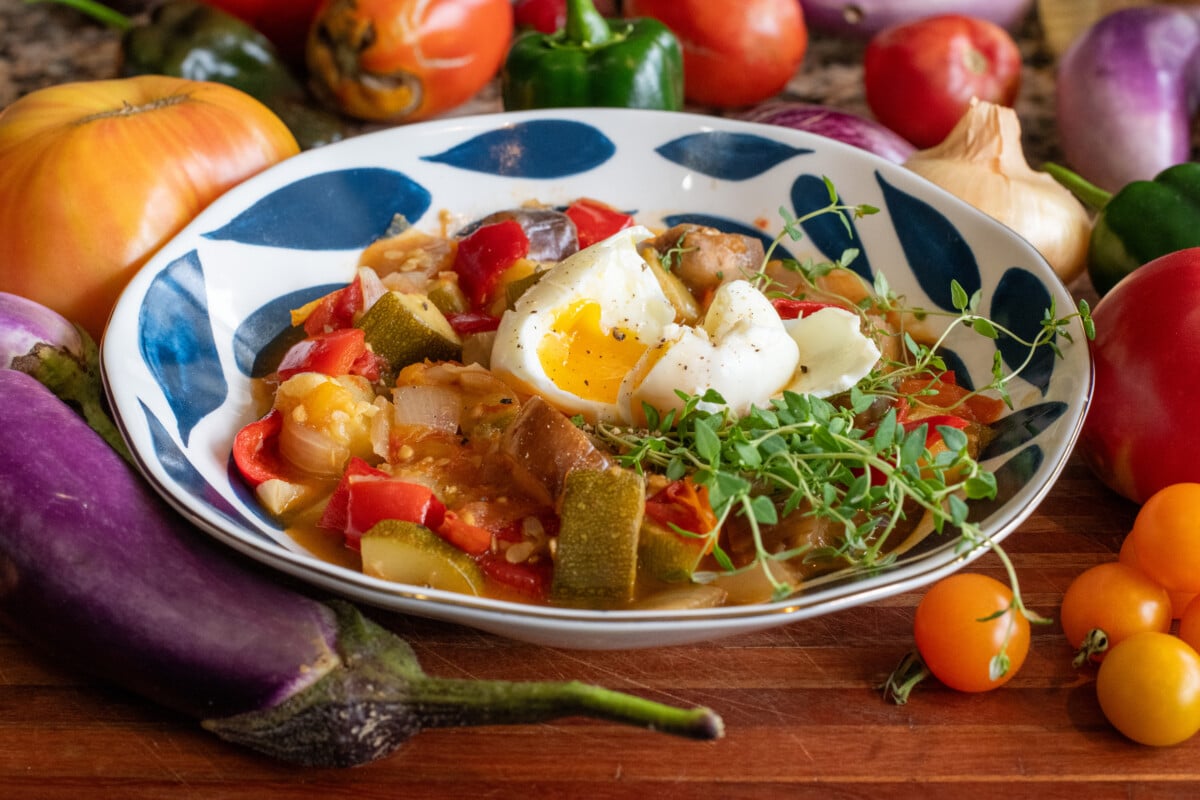
- For breakfast, I top it (hot or cold) with a soft-boiled egg and some buttered toast for dipping.
- I’ll add a good dollop of ratatouille to congee; the rice porridge and soft veggies make a perfect pairing.
- For an incredibly hearty stew that will keep you full, drop a few bratwurst or Italian sausages into the pot while you’re cooking your ratatouille. The sausage picks up the flavor of the ratatouille, and the stew takes on a more complex flavor.
- Add chicken broth and heat for a quick and tasty veggie soup. Don’t forget the crusty bread!
- Toss ratatouille with pasta and olive oil and top with grated pecorino romano.
- And possibly my favorite – ratatouille pizza. Swap out tomato sauce for ratatouille and top with obscene amounts of cheese. So good!
This stuff is the answer to “what’s for dinner” when you don’t have time to cook.
Why Freezing Ratatouille Makes Sense
It didn’t take long into my love affair with ratatouille for me to realize having a giant pot in my fridge all week wasn’t going to work.
Nowadays, I freeze it, so that when the mood strikes, I have a bowl of warm, comforting ratatouille in the time it takes me to run a defrost cycle in the microwave.
With that in mind, when I know I’m making a batch specifically to freeze, I always make a double batch. As I mentioned earlier, this is a great way to use a lot of fresh produce in one go. This is the recipe you reach for when you can no longer see your countertops under all the vegetables.
And depending on your garden, you may have all the ingredients on hand.
I can’t tell you how satisfying it is to make a recipe like this and have everything come out of your garden.
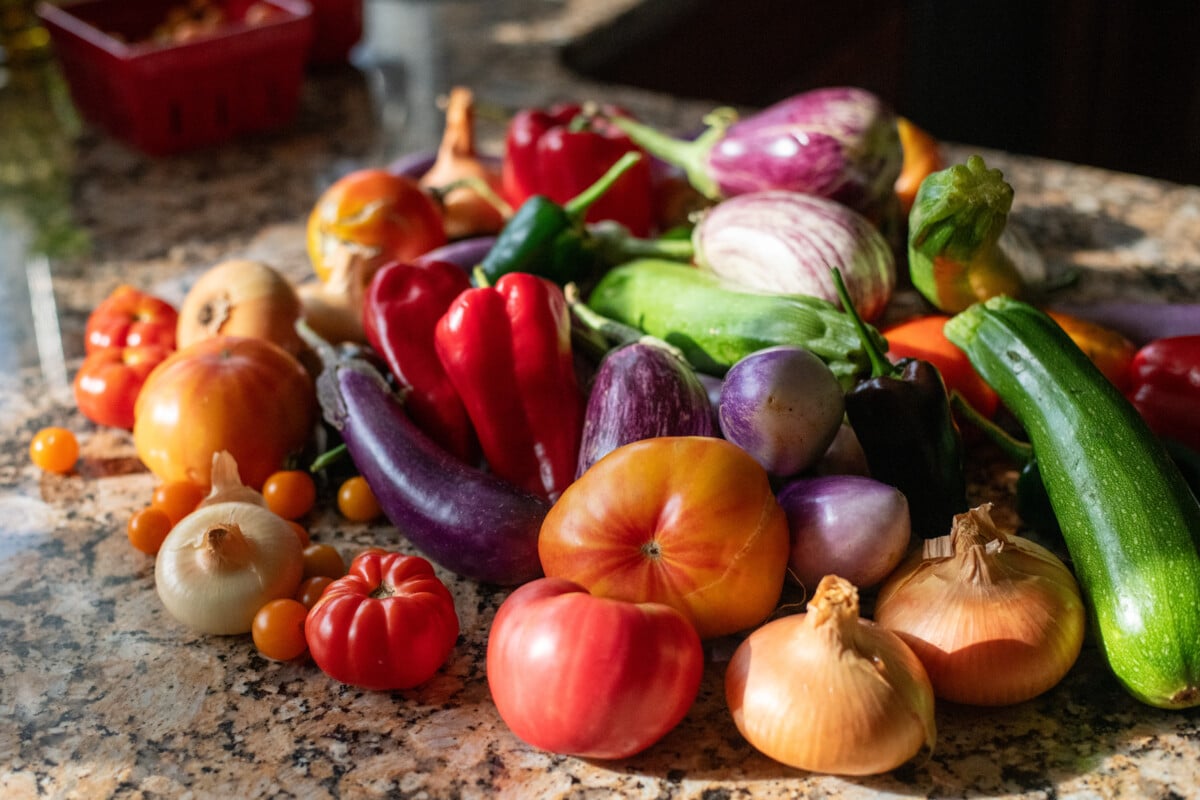
A few notes about my version of ratatouille. I’m a huge Alice Waters fan, and her book The Art of Simple Food holds a special place in my cookbook collection. Alice’s recipe for ratatouille is exactly what the book aims for – simple food. Yet, over the years, I’ve tweaked it to make it my own. There have been a lot of variations, mainly based around what’s popping up in the garden at the time. But the one thing I always want to get right is the eggplant. A tough, thick skin can ruin the whole thing.
Eggplant Can Make or Break Your Ratatouille
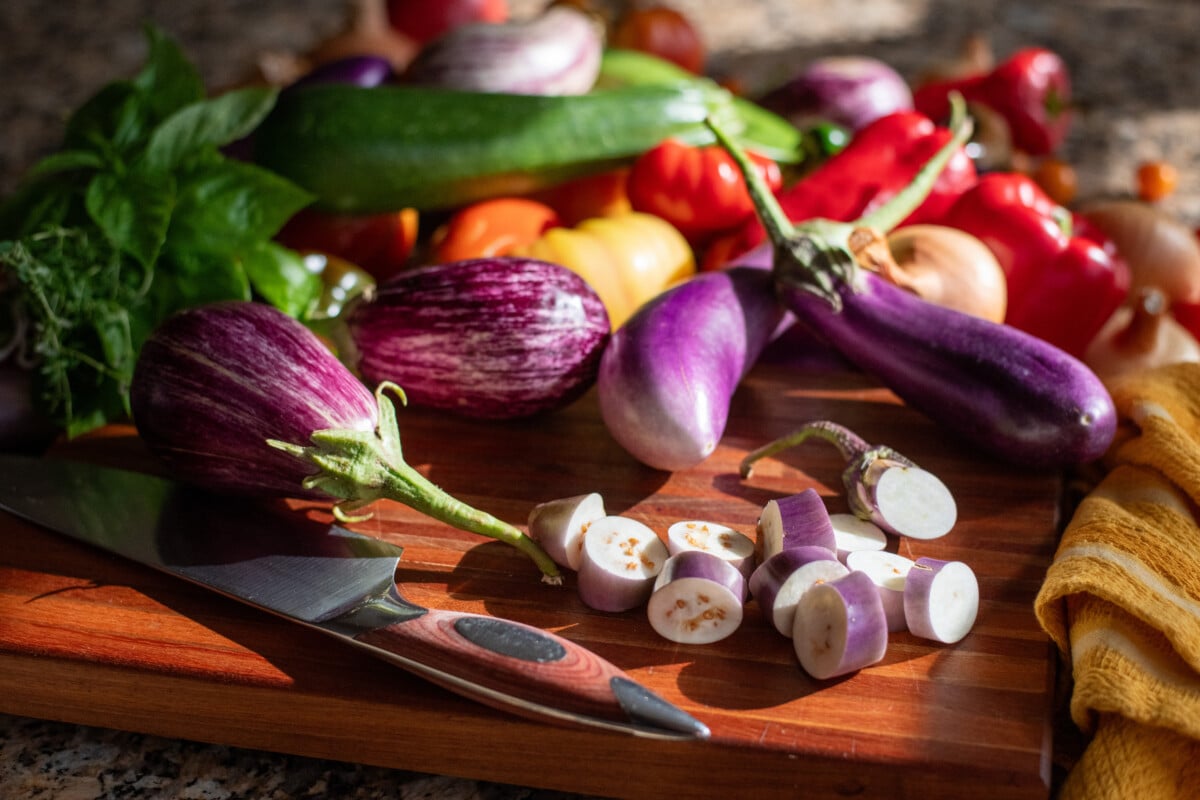
When cooked correctly, eggplant should have a creamy texture.
Often it ends up being mushy on the inside with tough, chewy skins on the outside. It’s no wonder so many people don’t like it. If only they knew how delicious it could be.
When growing eggplant, pick them when they’re on the smaller side. The bulbous bottom should be no bigger than a baseball.
Consider growing (or purchasing) an Asian variety, such as Ping Tung. Asian eggplants are long and thin, making them more tender and easier to slice into bite-sized pieces. They tend to have much thinner skin. I have found the yield is much larger, too.
If you’re dealing with a larger eggplant, peel it with a vegetable peeler, and you’ll avoid the tough skins altogether. Cube the eggplant into bite-sized pieces; 1″ cubes work well, and place them in a colander. Lightly salt the eggplant, toss it a bit, and let it sit in the colander for about fifteen minutes.
Salting overly large eggplants helps to remove some of the bitterness and tenderizes them before cooking. Asian and smaller eggplants don’t need this treatment.
The Zucchini
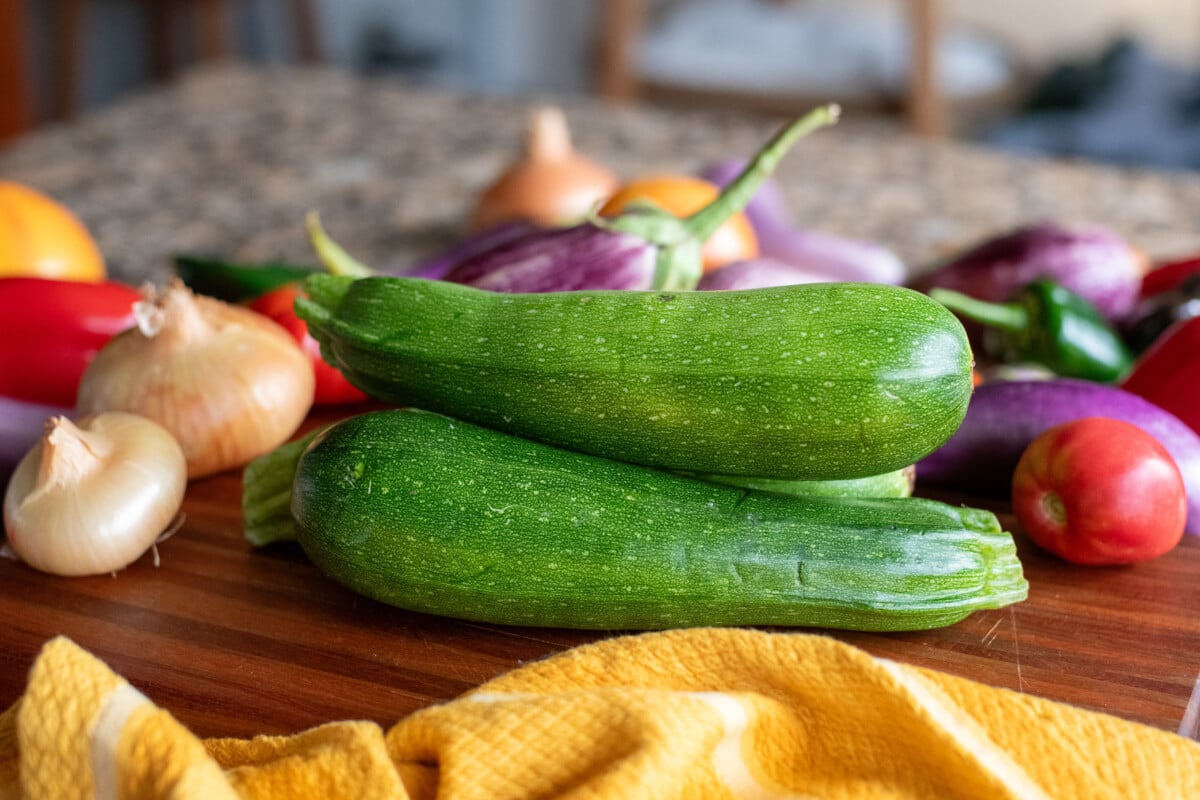
Making ratatouille is a great way to use green baseball bats (that zucchini you didn’t see hiding under the leaves). If you’re using a large zucchini, peel some or all of the skin off. It gets tougher as the squash gets larger. Slice the squash in half lengthwise and use a spoon to scoop out the seeds and fibrous center.
If you’re using smaller, slimmer zucchini, you don’t need to do any of that. They are much more tender, and the seeds haven’t developed enough to be inedible.
All the Rest
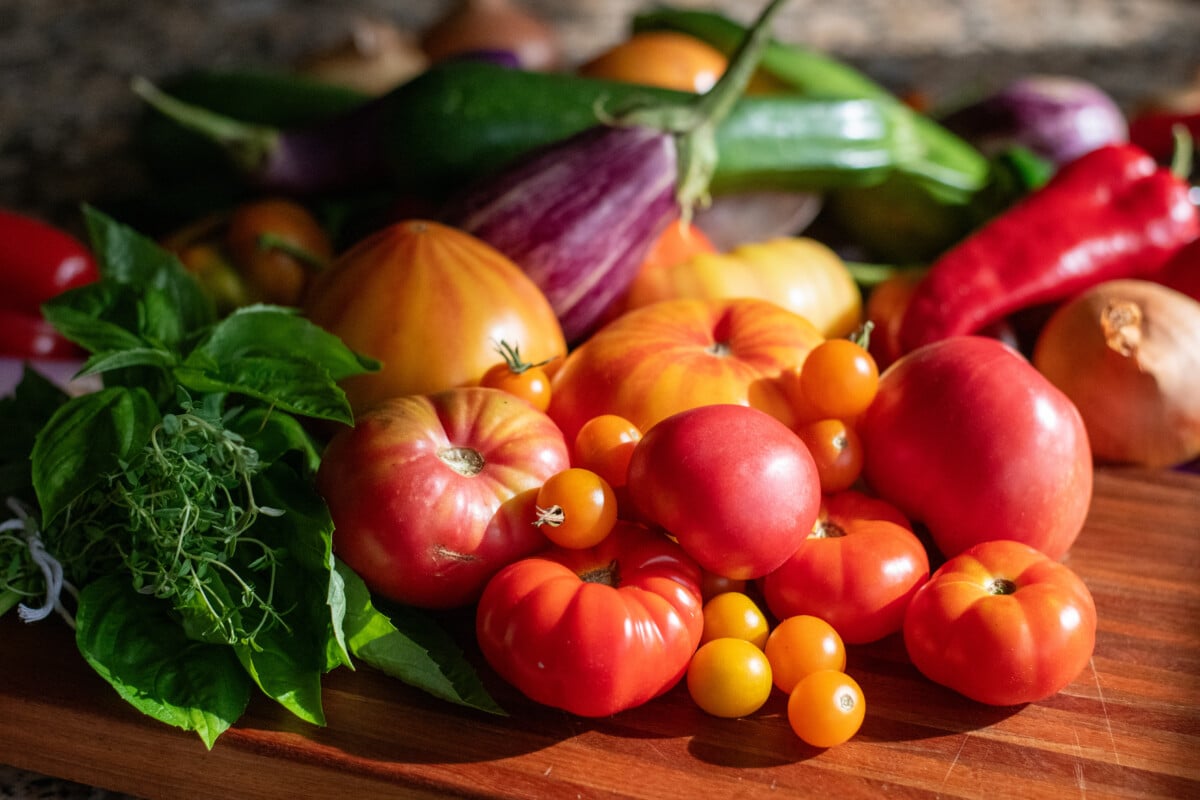
When choosing tomatoes, I say anything goes. If it’s growing in your garden, toss it in there; you’ll have a nicer flavor overall. When I use smaller tomatoes, like cherry or pear, I rarely slice them, preferring to let them pop on their own as they cook.
The same goes for sweet peppers and onions. If it’s growing in your garden, put them in the pot.
Now, the Herbs
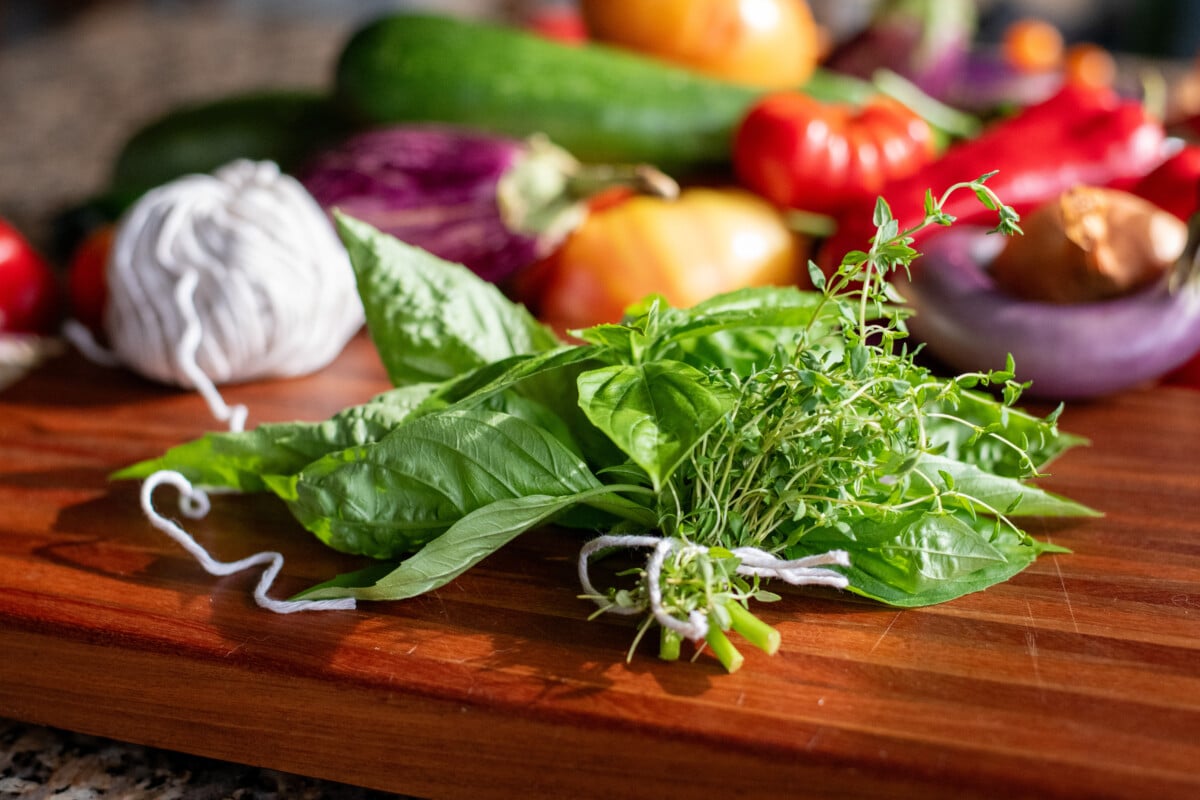
We’ll be making a bouquet garni for our ratatouille. While I’ve used dried spices in the past, I’ve found that the best flavor comes from using fresh sprigs of thyme and basil.
The overall texture should be tender bites of veggies with a sauce-like base. It’s important to cook the vegetables in the right order to achieve this balance, so we will pay special attention to the eggplant and peppers. Again, experience has taught me that sometimes you throw everything in the pot and cook it until it’s a delicious thick stew, and who cares about the texture of the veggies. Sometimes you want mushy veggies. Ratatouille is incredibly forgiving and tasty.
Seriously Comforting Ratatouille
Yield: Roughly 8 one-cup servings; double the recipe if you plan on freezing it
Tools:
- Heavy-bottomed pot (I love using my Staub cocotte for ratatouille. A French dish for a French dish.)
- Knife and cutting board
- Wooden spoon
- Cotton kitchen string
- Vegetable peeler, optional
Ingredients:
- 4-6 tbsp of extra virgin olive oil, divided
- 1 medium eggplant, or 2-3 Asian eggplants, cubed into bite-sized pieces, see notes above
- 2 sweet peppers, cored and diced
- 4 cups of tomatoes, diced
- 3 medium summer squash (zucchini or yellow, 8” to 10”), cubed
- 2 medium onions, chopped
- 6 garlic cloves, chopped
- 2-3 large sprigs of basil
- 2-3 sprigs of thyme
- 1/8 tsp hot pepper flakes
- Salt and pepper to taste
Directions:
Using cotton twine, tie your bouquet garni of the basil and thyme sprigs and set aside.
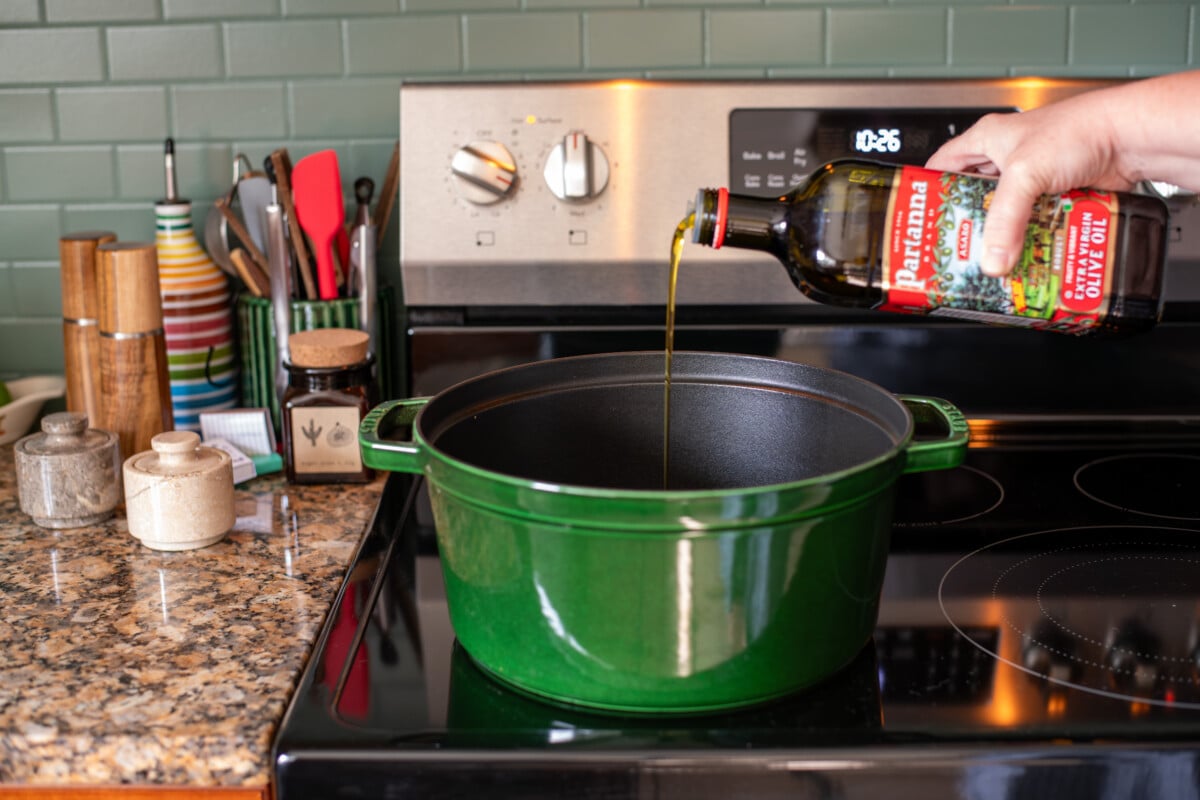
Heat 3 tablespoons of olive oil over medium heat in the pot. Once the oil is good and hot, add the eggplant and sweet peppers and give them a good stir around the pan. We’re cooking these two vegetables first to give the dish some smoky, browned goodness and because they need the most attention for the biggest flavor payoff.
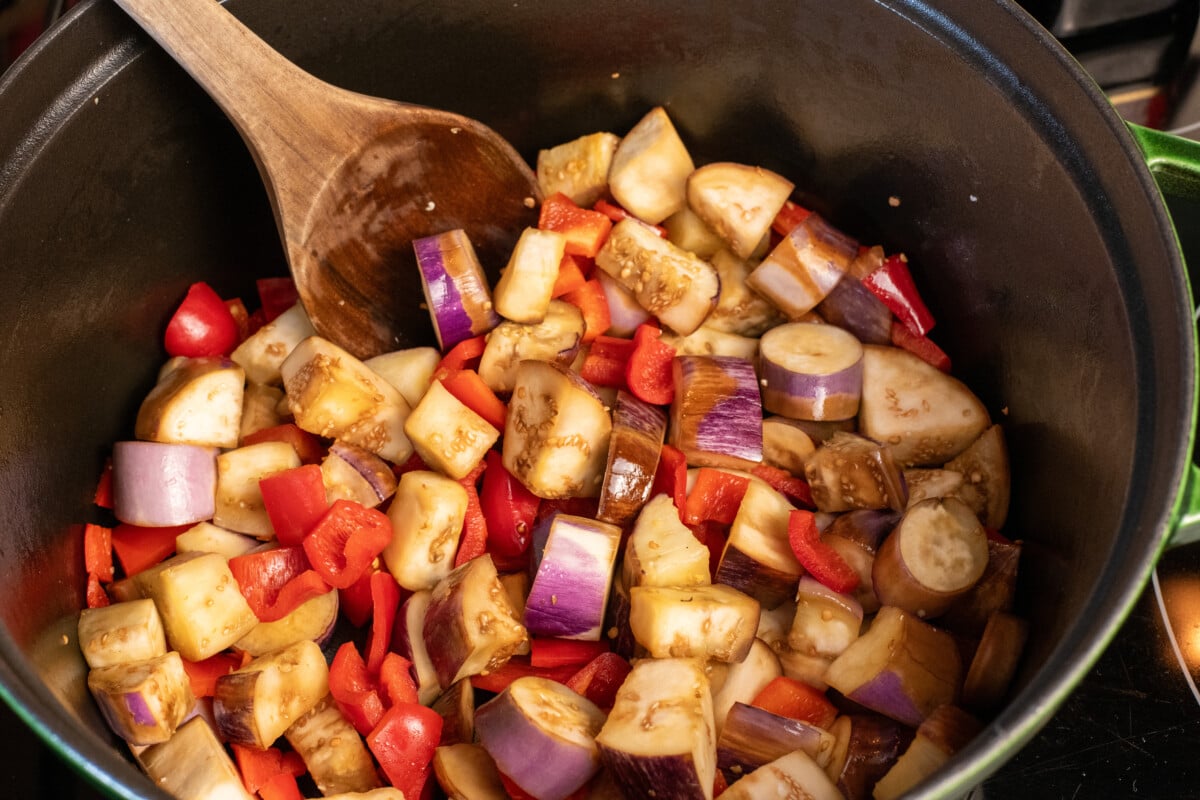
You want the veggies and the bottom of the pan to get good and browned, but you don’t want anything to burn. Eggplant has a habit of vacuuming up all the oil in the pan, and that’s okay; this makes for better browning. Only stir enough to keep things from burning.
Once the eggplant is tender and the peppers are lightly browned, remove them to a bowl and set aside.
In the same pot, add another two tablespoons of olive oil and your onions. Cook the onions until they’re translucent and just beginning to brown at the edges.
Next, you’ll add in the garlic, pepper flakes, and bouquet garni. Stir gently to bruise the herbs and coat everything in oil. Garlic gets tough and sticky if it browns, so keep stirring and adjust your heat if the garlic cooks too hot.
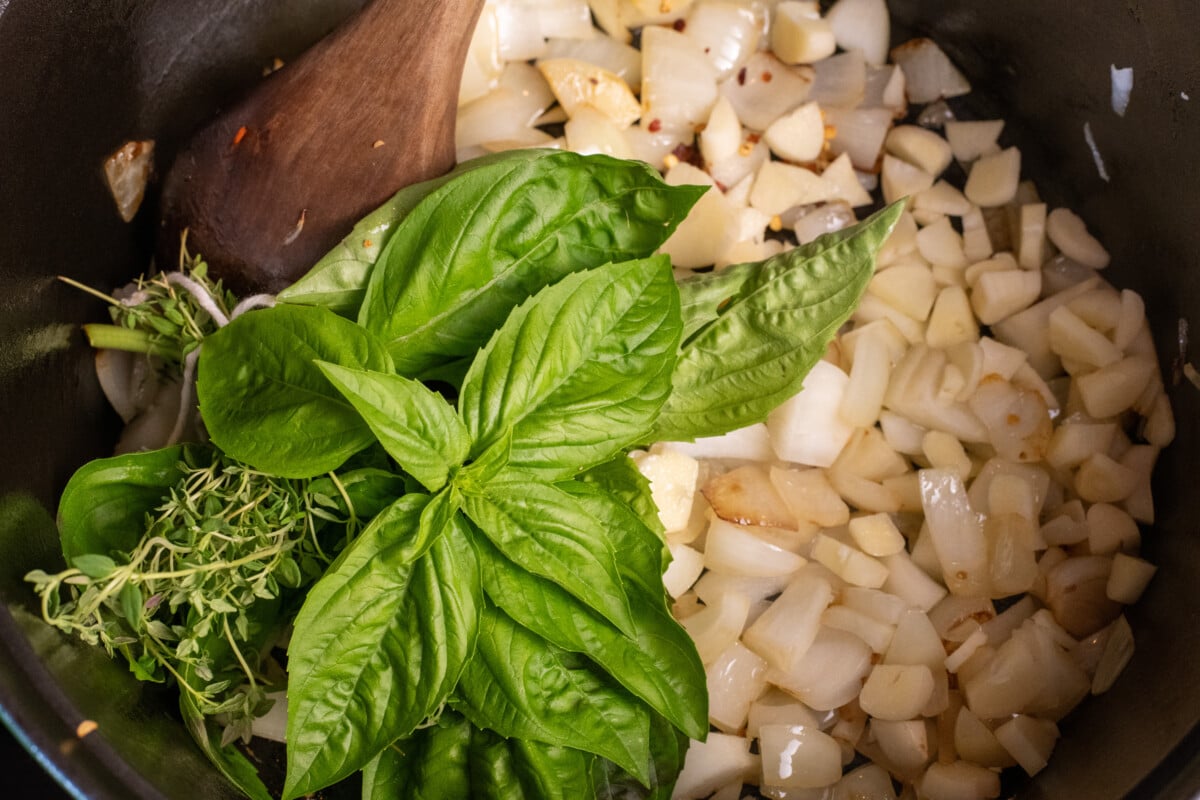
After 2-3 minutes, add in your summer squash, stirring to make sure everything is coated in the olive oil. Cook the mixture for another five minutes, and then stir in your tomatoes.
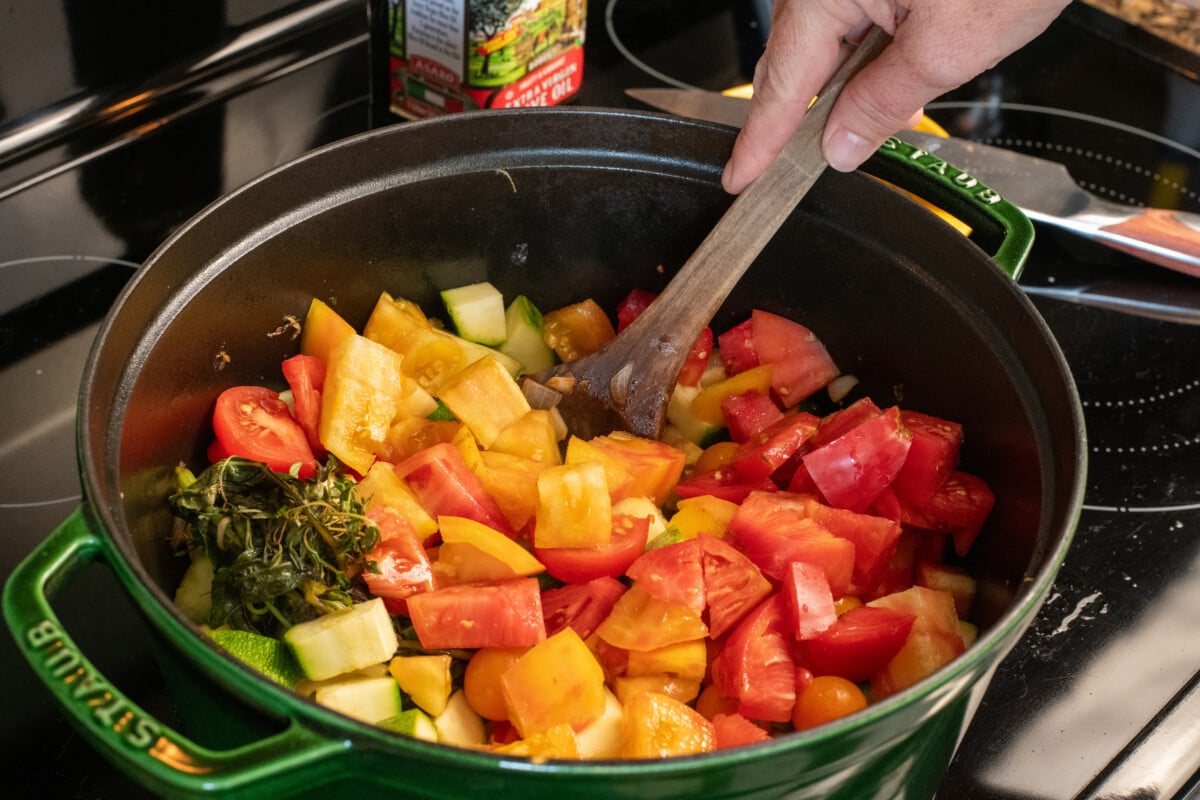
Let the whole pot cook for fifteen to twenty minutes, stirring occasionally to keep things from sticking.
Stir in the eggplant and peppers and let the ratatouille cook for another fifteen twenty minutes.
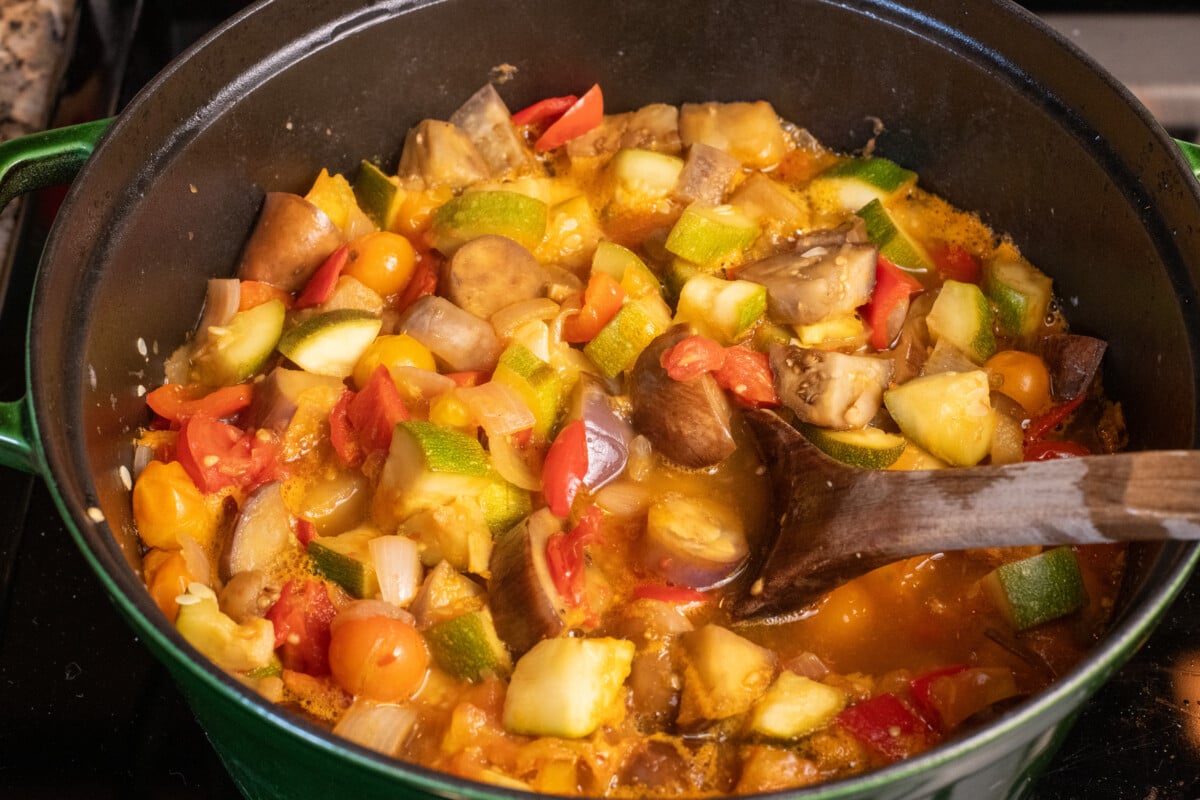
After that, remove the bouquet garni, using your wooden spoon to press out the juices against the side of the pot. Salt the mixture to taste and add more oil if it needs it. Now turn off the heat and cover the pot for fifteen minutes to let everything mix and mingle.
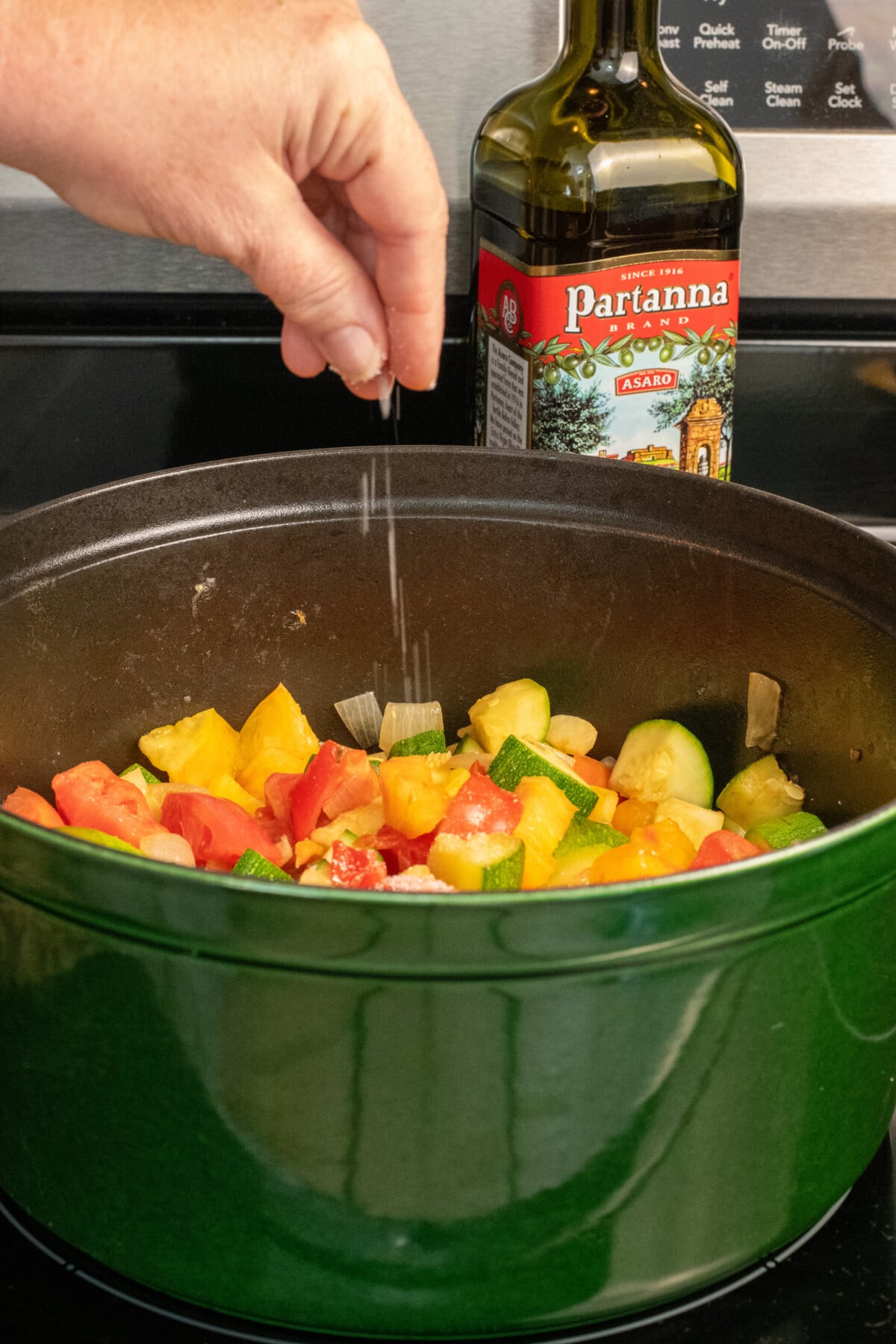
At this point, give it another gentle stir, and it’s ready to serve.
Good Things Come to Those Who Wait
However, for the most amazing ratatouille ever, let the pot cool completely, then put it in the fridge overnight. Reheat and serve it the next day. That 24 hours in the fridge does magical things to the flavor. This is one of my go-to simple, yet impressive fall dinner party menu options. I cook it with bratwurst or Italian sausage in the pot as well. Then, the day of my dinner party, I don’t have to rush around in the kitchen. Voila!
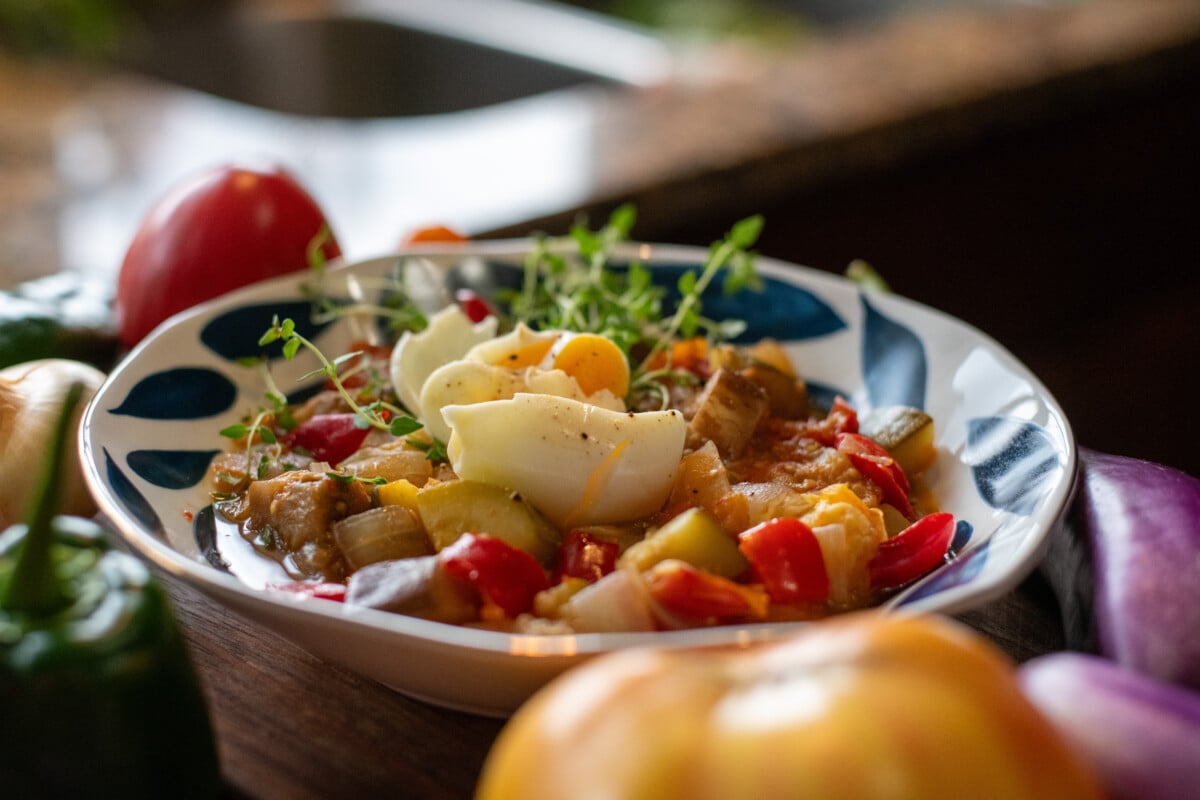
If you are making enough ratatouille to freeze, let it cool completely on the stove before packaging it up for the freezer. Don’t forget to label and date it. If you are using wide-mouth mason jars, fill them leaving an inch of headspace at the top. I like to put them in the freezer without a lid, then screw the lids on once the ratatouille is frozen. I’ve never had a jar crack.
Ratatouille is a gardener’s best friend. When it comes to getting the most bang for your food-preserving buck and just overall deliciousness, you can’t beat it.
And if you can avoid eating it all up right away, be sure to save some in the freezer to eat in January while you plan your garden. There’s nothing like enjoying spoonfuls of summertime garden flavor to inspire your next growing season.
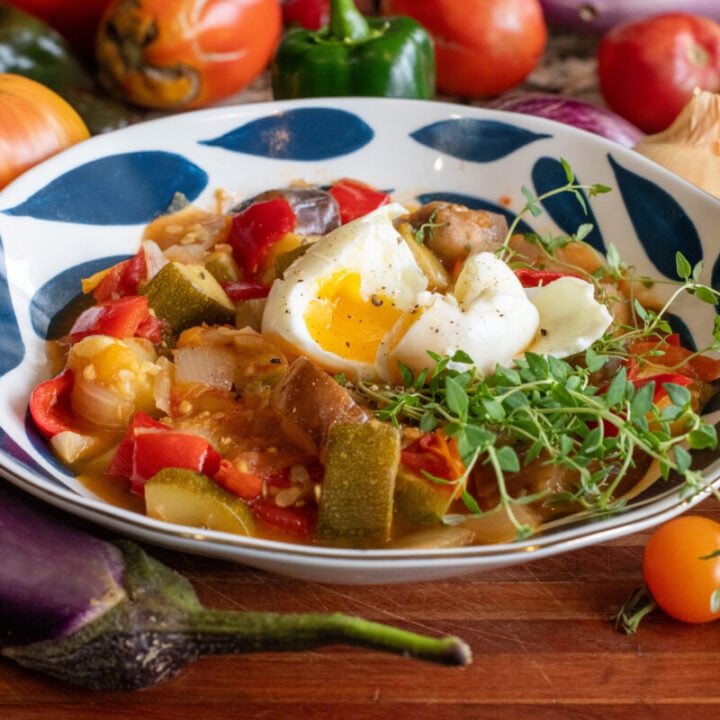
Ratatouille
A delicious classic French dish that comes in handy when your garden just won't quit.
Ingredients
- 4-6 tbsp of extra virgin olive oil, divided
- 1 medium eggplant, or 2-3 Asian eggplants, cubed into bite-sized pieces
- 2 sweet peppers, cored and diced
- 4 cups of tomatoes, diced
- 3 medium summer squash (zucchini or yellow, 8” to 10”), cubed
- 2 medium onions, chopped
- 6 garlic cloves, chopped
- 2-3 large sprigs of basil
- 2-3 sprigs of thyme
- 1/8 tsp hot pepper flakes
- Salt and pepper to taste
Instructions
- Using cotton twine, tie your bouquet garni of the basil and thyme sprigs and set aside.
- Heat 3 tablespoons of olive oil over medium heat in the pot. Once the oil is hot, add the eggplant and sweet peppers and stir around the pan.
- You want the veggies and the bottom of the pan to get good and browned, but you don’t want anything to burn. Only stir enough to keep things from burning.
- Once the eggplant is tender and the peppers are lightly browned, remove them to a bowl and set aside.
- In the same pot, add another two tablespoons of olive oil and your onions. Cook the onions until they’re translucent and just begin to brown at the edges.
- Next, you’ll add in the garlic, pepper flakes, and bouquet garni. Stir gently to bruise the herbs and coat everything in oil. Garlic gets tough and sticky if it browns, so keep stirring and adjust your heat if the garlic cooks too hot.
- After 2-3 minutes, add in your summer squash, stirring to make sure everything is coated in the olive oil. Cook the mixture for another five minutes, and then stir in your tomatoes.
- Let the whole pot cook for fifteen minutes, stirring occasionally to keep things from sticking.
- Stir in the eggplant and peppers and let the ratatouille cook for another fifteen minutes.
- Remove the bouquet garni, using your wooden spoon to press out the juices against the side of the pot. Salt the mixture to taste and add more oil if it needs it. Now turn off the heat and cover the pot for fifteen minutes to let everything mix and mingle.
- Give it another gentle stir, and it’s ready to serve.
Notes
Ratatouille is one of those dishes that does magical things when left in the fridge for a day or two. You can make it ahead of time and it tastes even better the following day and it freezes beautifully.
Get the famous Rural Sprout newsletter delivered to your inbox.
Join the 50,000+ gardeners who get timely gardening tutorials, tips and tasks delivered direct to their inbox.