

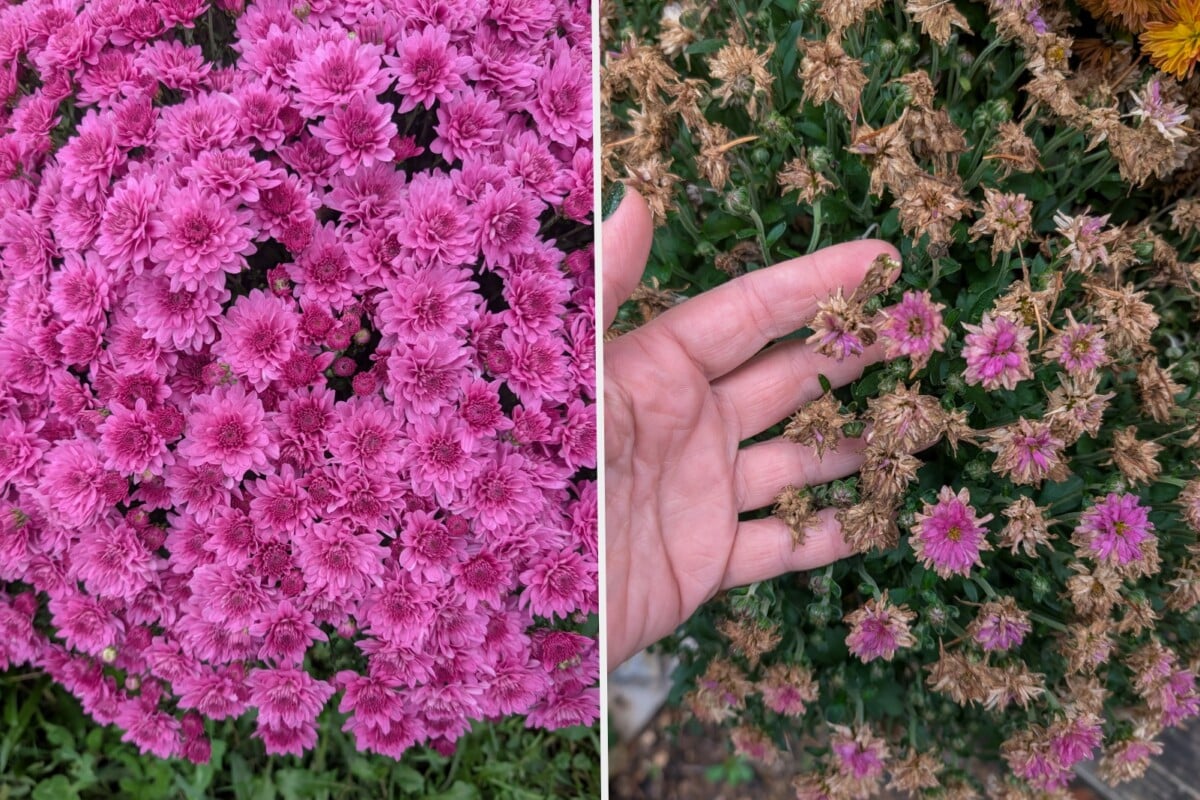
Every fall, we all run out and purchase chrysanthemums to decorate our homes. Their glorious fall-colored hues bring a splash of bold color to our homes as the natural world begins to fade into brown and gray.
But year after year, I see so many crunchy dead mums on people’s porches because they have succumbed to the number one Chrysanthemum-killer.
Are you unwittingly making the same mistake? Let’s get you squared away so your mums will last right into the beginning of the holiday season.
But it’s not even October yet?
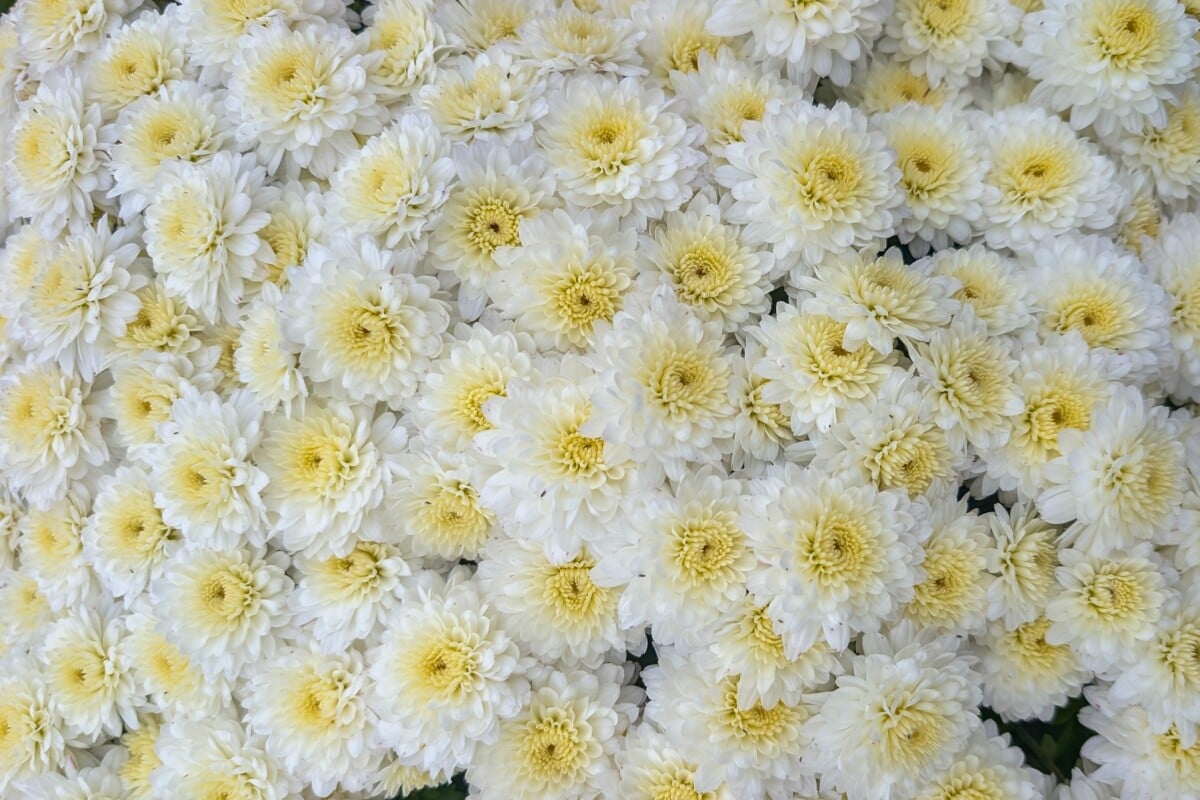
Yesterday was trash day where I live. I was driving to the supermarket, and I saw three dead, brown, crunchy chrysanthemums next to the trash bin by someone’s house. My immediate thought was, “Wow, those didn’t even make it to see October 1st!”
Now, I can almost guarantee they bought those back in August, when mums first start showing up in stores. (A big no-no for a few reasons). But even if you do buy mums too early, there’s no reason they should be dead before fall is just getting started.
Unfortunately, too many folks treat these plants as a set-it-and-forget-it decoration, completely ignoring the fact that they are a living thing.
Mums are by no means hard to take care of, but if you want them to last, they do need the basics: water and sun. You can even forego the third – fertilizer – that normally comes with plant care because they are a disposable decoration.
(Unless you want to plant them or winter them over. I have a few mums in my flower beds that come back each year. If that’s the case, you can read how to do that here.)
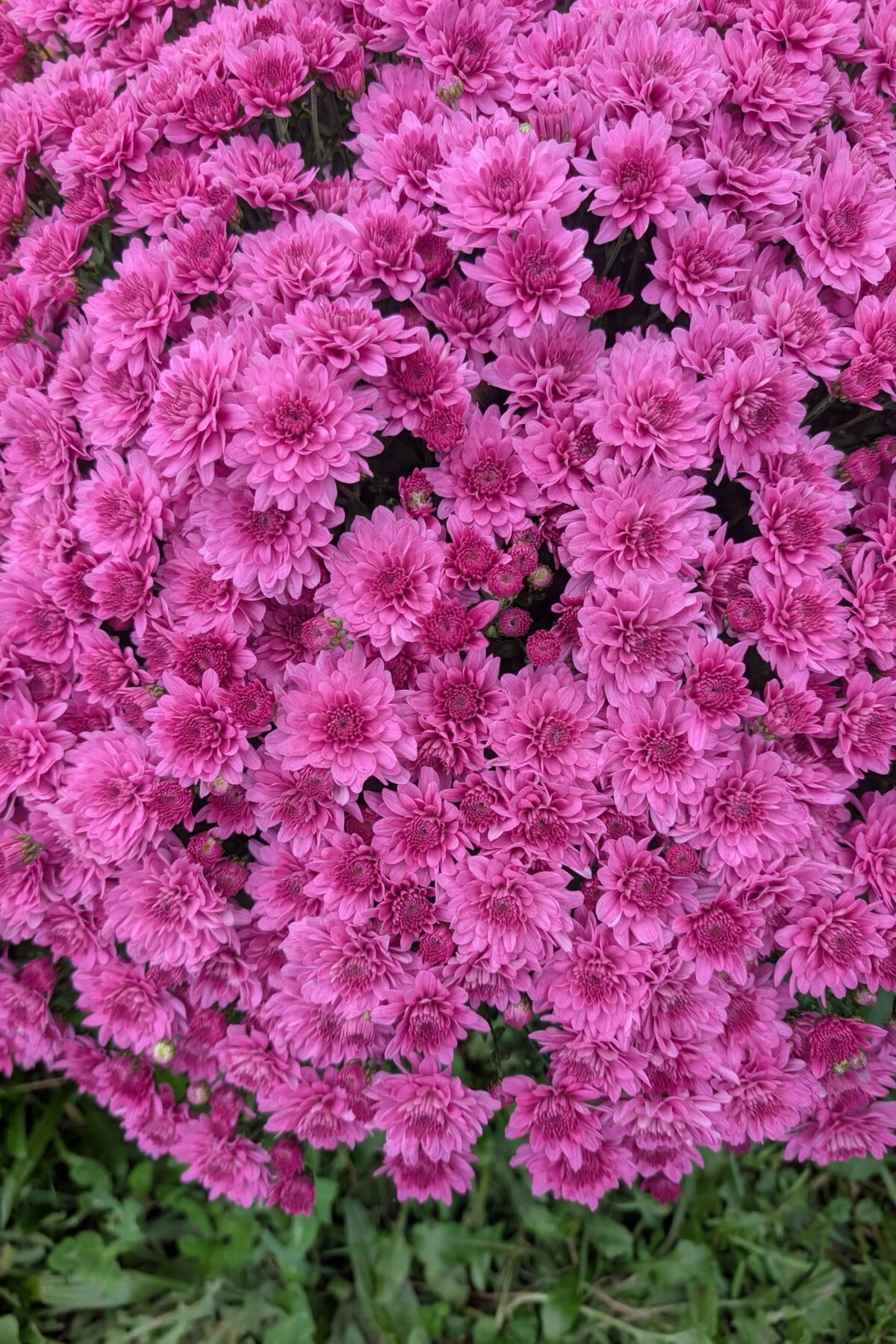
(By the way, one of my favorite ways to display mums only takes about five minutes to make. Check it out here.)
The number one reason mums die before the end of the season is that people forget to water them. It’s easy enough to understand why. Fall is typically a rainy season, so most of the time you don’t need to water your mums.
But if you have your mums displayed on a patio or porch where they don’t receive rain, or you’re currently experiencing a drought, then you have to stay on top of watering them. And I mean you can’t even let them dry out for a day.
The problem lies below all those beautiful blooms.
As any experienced gardener can tell you, ‘As above, so below’ meaning that to sustain a large plant above ground, you need an equally large root system below ground.
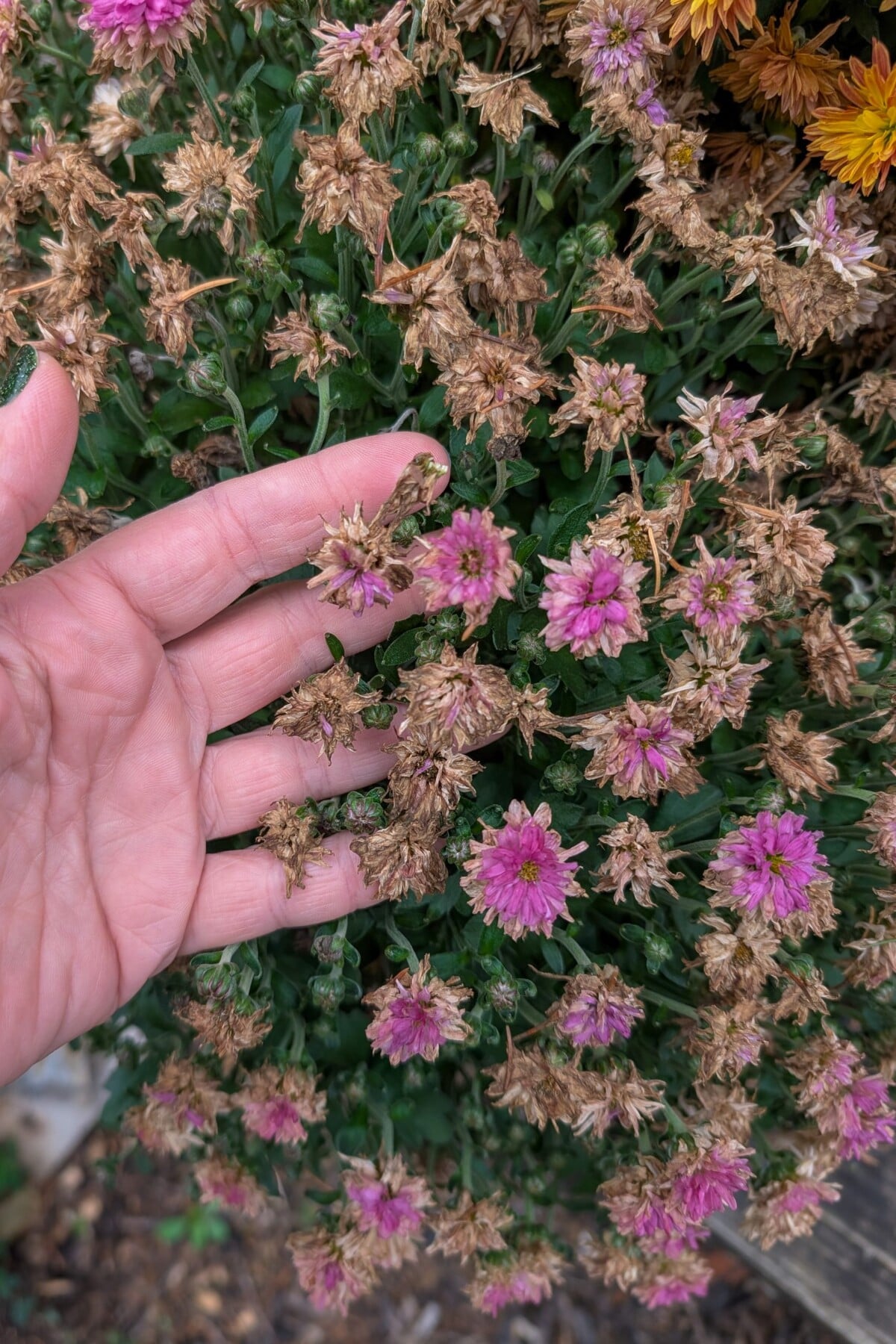
Now, check out your potted mum.
That massive lovely display of flowers is contained in a pot that is disproportionately smaller compared to the amount of plant matter growing from it. There is very little soil volume in that pot. Less soil means less moisture can be held in reserve. So, it takes only a day of no water for that soil to dry out. And as soon as those roots are dry, the plant will begin to die.
Quickly.
Remember, these plants are bred and sold to be disposable. They are all fed by a steady and constant dripline in the greenhouse. But once they leave, they aren’t potted in a way to make them last.
Do This & Keep Your Mums Alive
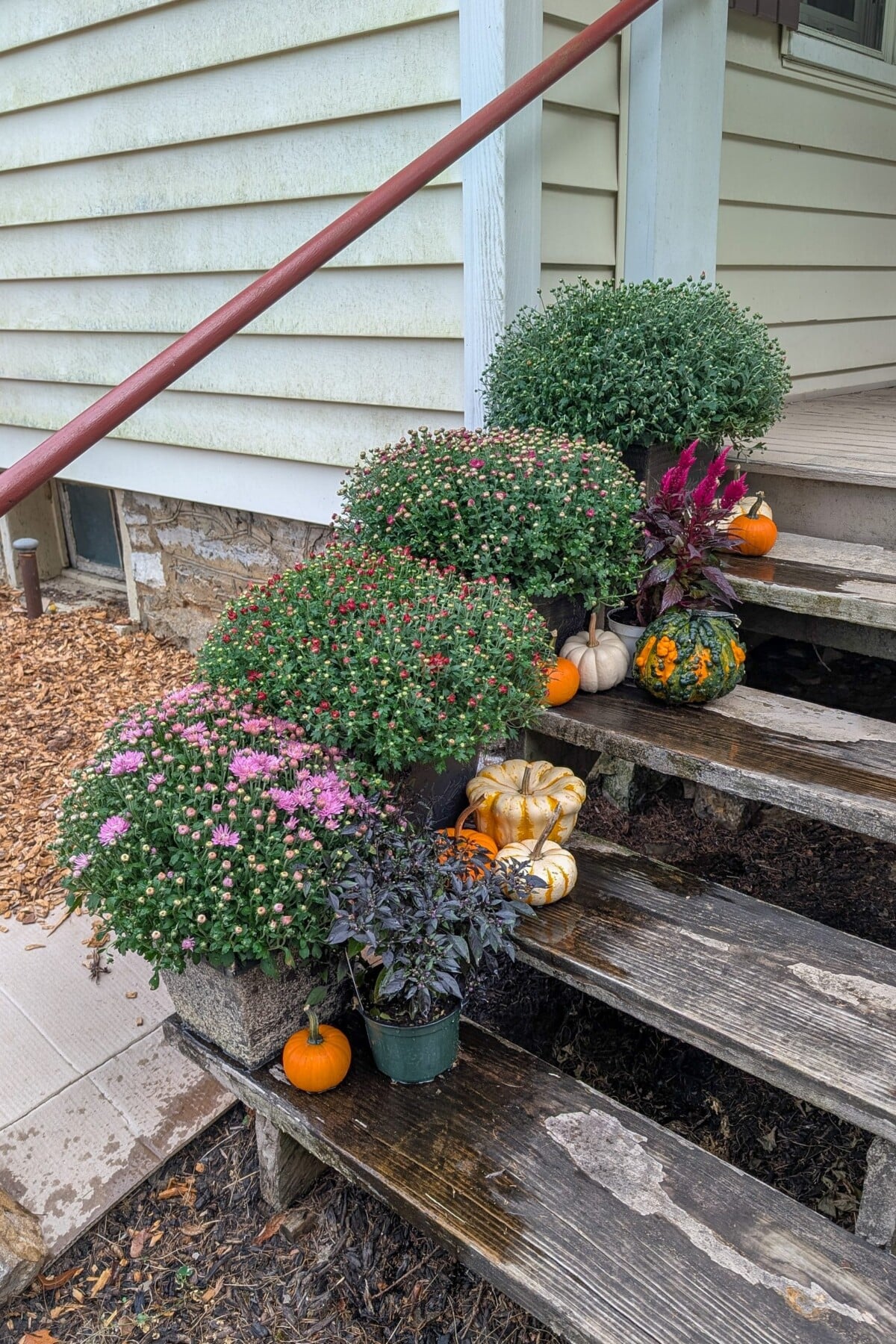
Over the years, I have written up some good advice on how to get the most bang for your buck out of these beautiful blooms; however, even if you choose to ignore all of my advice, this is the one thing you should pay attention to. Doing so will ensure your mums last the entire fall season.
Check on them daily, and water them if it’s needed. Again, this is especially important if your fall is dry or you have your mums set up where they can’t receive rain.
Let’s be honest here: for something that’s meant to be thrown away, mums can be quite spendy, especially the huge ones. I don’t know about you, but I want mine to last right up until Thanksgiving dinner if I can get them to! That means never letting the soil dry out.
I know not everyone has a mailbox at their home, but I’ve made it a habit to check my mums when I check the mailbox. I poke a finger in one of the pots on my way by. If the top inch of soil is dry, they all get a drink. I keep my watering can handy by the front door during mum season. By adhering to this habit, I have had mums last me up to Thanksgiving and beyond.
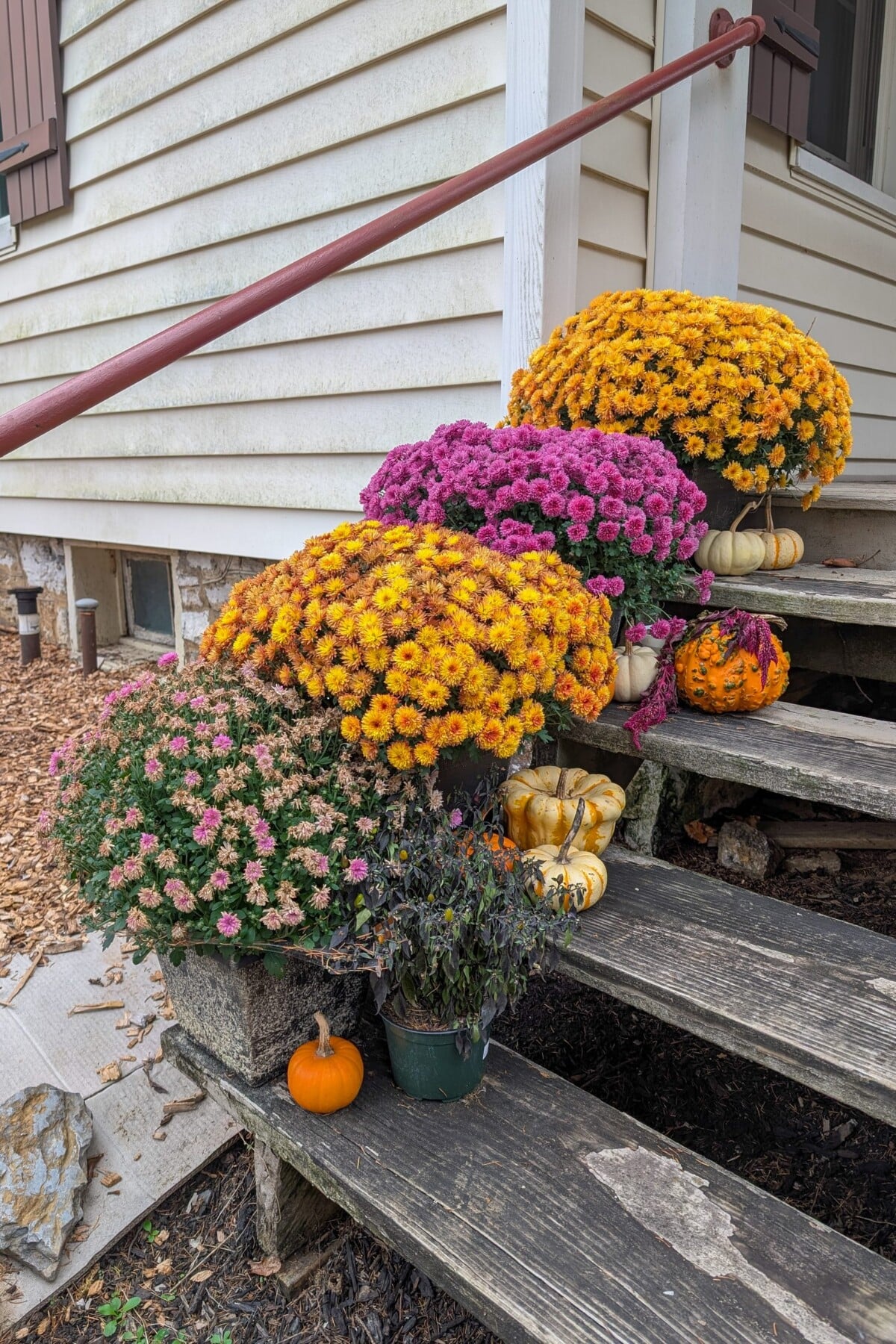
Just in time for me to buy a poinsettia or two and get my amaryllis started.
Read Next:
Get Garden Notes From Tracey, Right to Your Inbox
Pull up a chair on the front porch. Join 54,000+ gardeners who get Tracey\'s friendly notes, seasonal to-dos, and hands-on tutorials three times a week.