
I have a theory that there are two types of gardeners in this world.
Those who see a plant they don’t recognize, think ‘what’s this doing here?’ and then pull it out.
And those who see a plant they don’t recognize, think ‘hmm, what’s this doing here?’ and let it grow.
Partly out of curiosity (that’s why the hmm is crucial) and partly out of fear of missing out on a perfectly serviceable plant.
It’s probably no big mystery by now that I’m firmly ensconced in the second camp. Tent and all!
Joe Pye Weed was not on my radar for backyard perennials until it made a lucky escape from my neighbor’s garden into my own. An offshoot of his plant crawled under the common fence and sprang up on my side, in the shaded border.
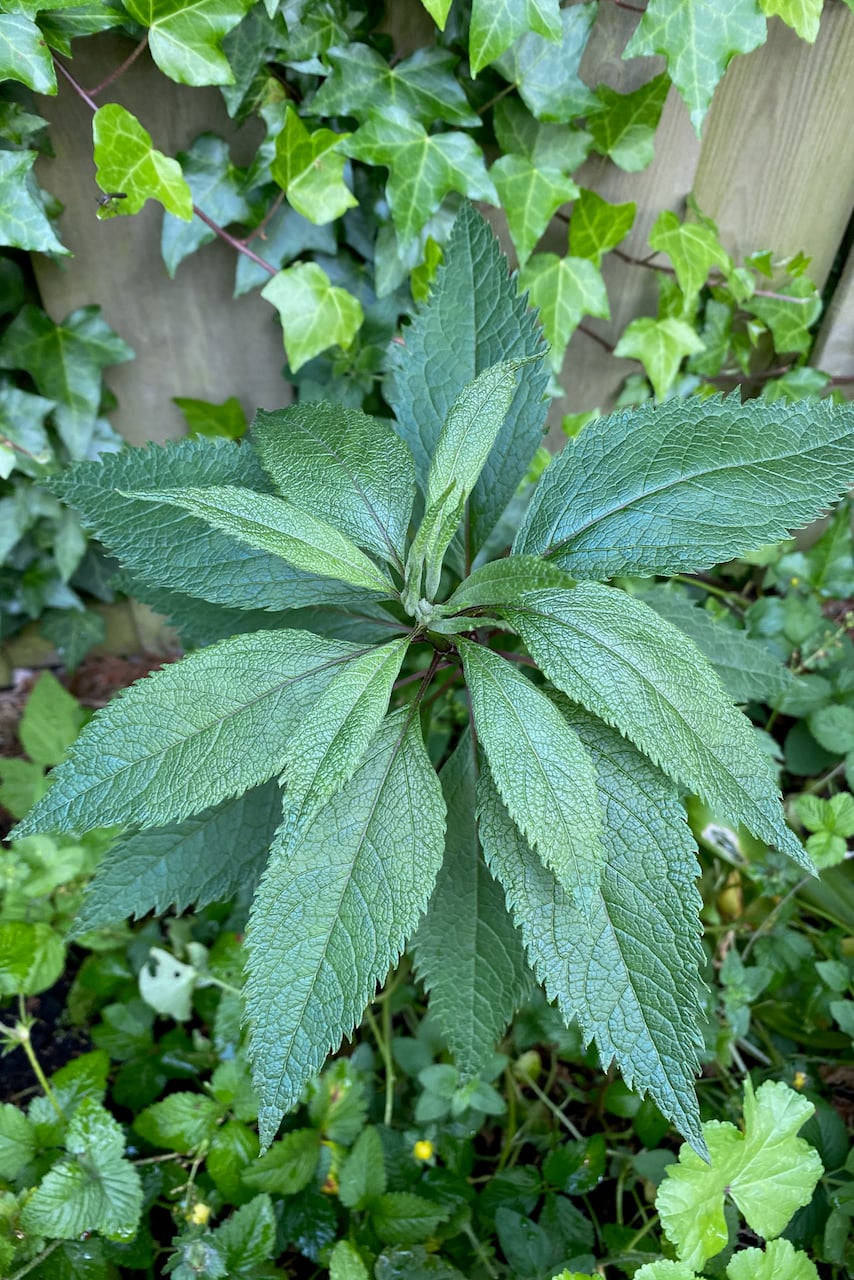
Hmm, what’s this doing here? And what is it anyway?
It started out as merely a stick with a handful of leaves shooting from the top. Then it spent that spring growing and growing, getting lusher and taller. Until a few months later, at the peak of summer, when it opened into a large cluster of pink blooms.
That was it! That was the moment I fell in love with Joe Pye Weed.
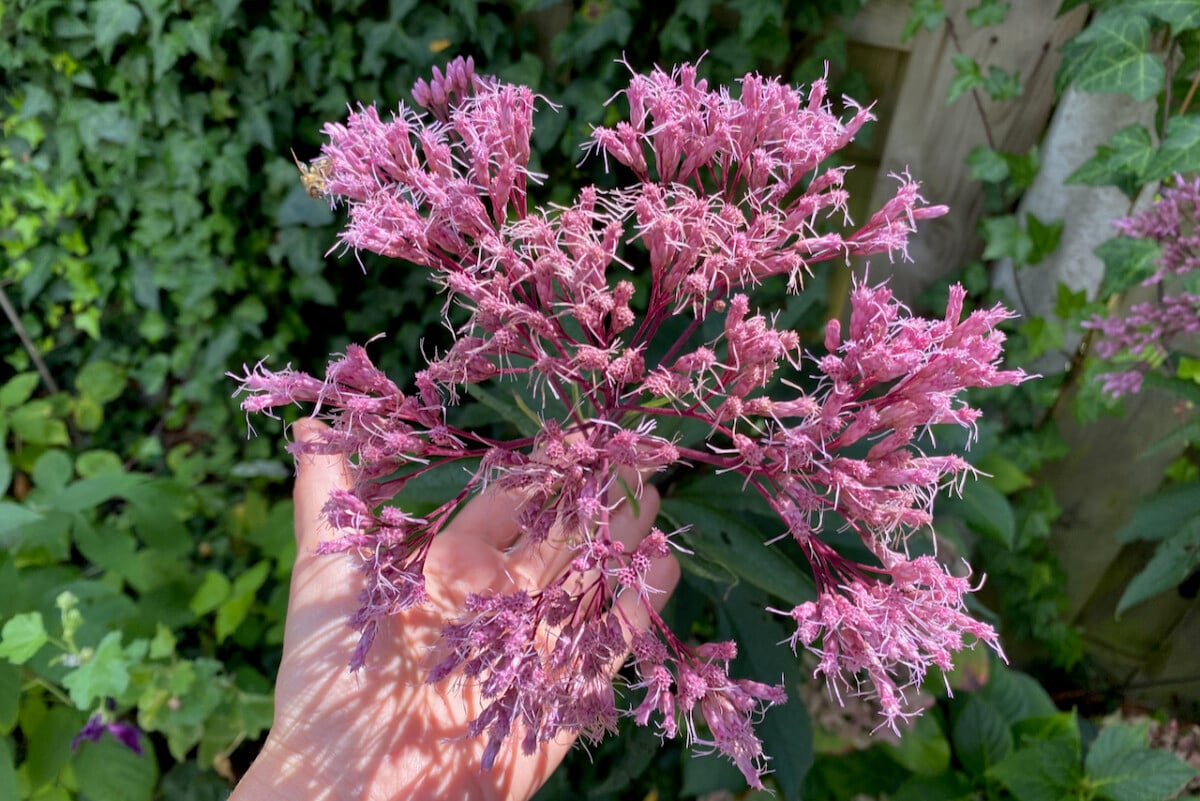
Of course, it was no longer a mystery plant by that point. I had already identified what it was, but no amount of online photos could have accurately described the richness of the flower clusters and the depth of their color.
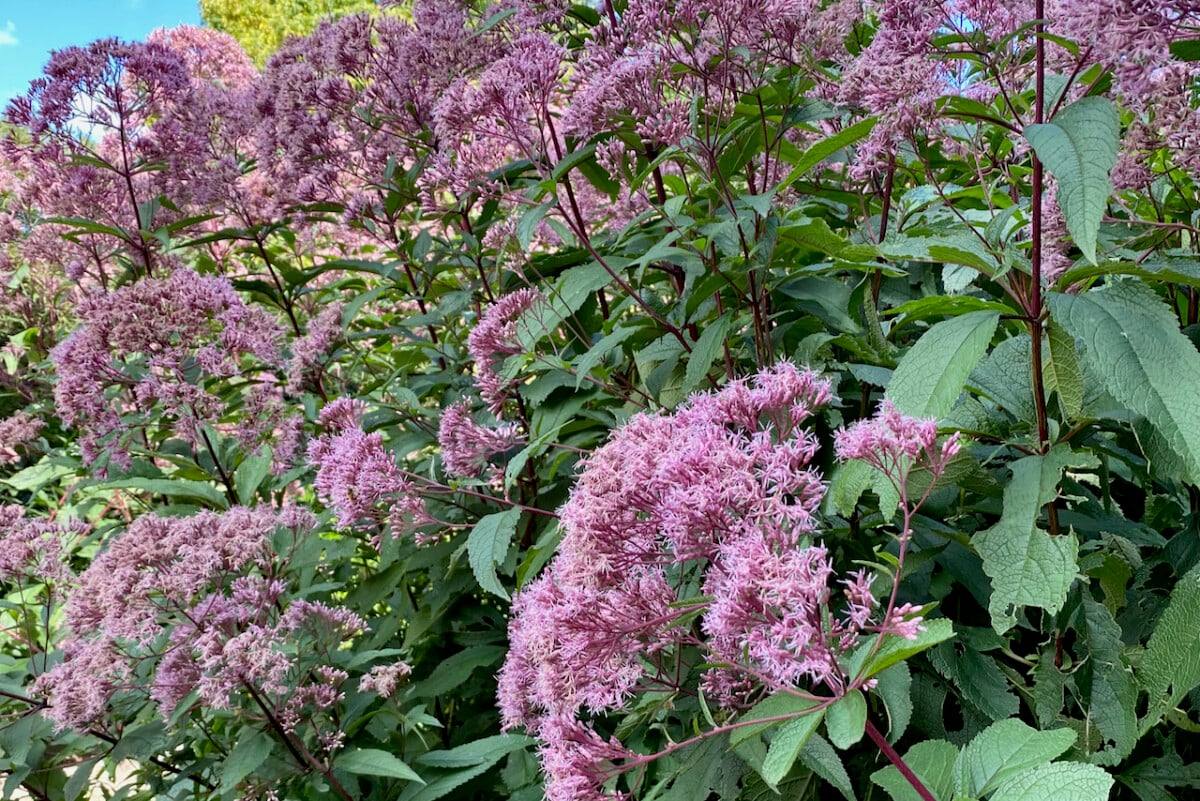
And certainly nothing could have described the symphony of pollinators that embraced this new-to-me herbaceous perennial. All manner of bees, butterflies, hoverflies, moths and skippers added my garden to their food maps.
Thanks, neighbor!
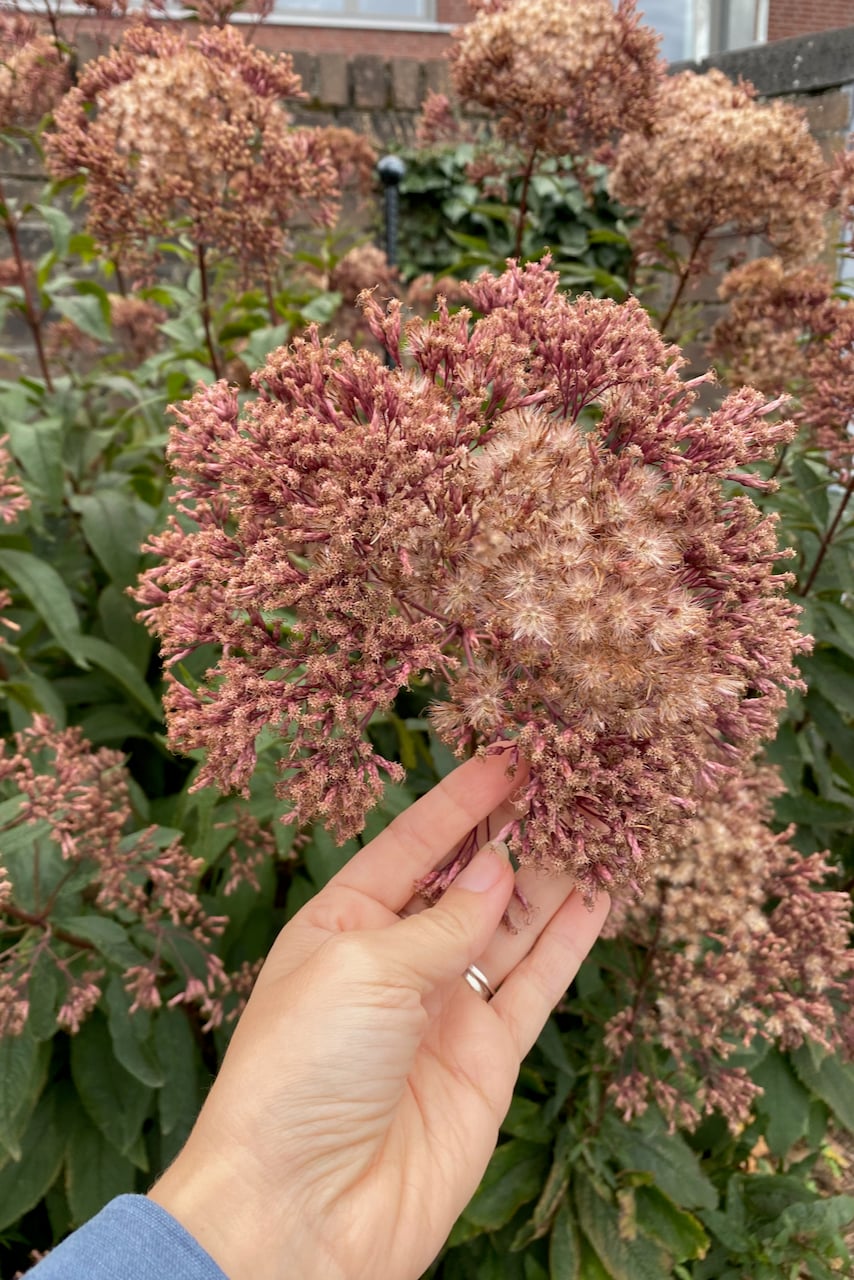
But if you don’t happen to live next to another gardener who prizes pollinator-friendly perennials, you could always become that person yourself.
Let me give you a few reasons why Joe Pye Weed belongs in such a garden. And why you might want to jump on the Joe bandwagon.
1. Joe Pye Weed is a tough, tough plant.
Yes, I know I wrote ‘tough’ twice. It wasn’t a typo. Joe Pye is a resilient plant.
First of all, it’s forgiving in terms of what light you can give it. My neighbor’s Joe Pye Weed was growing in the sun. Naturally, on the other side of the fence, mine was growing in the shade of said fence. After a couple of years, they were both doing quite well. The only difference was that mine grew even taller to peek over the fence. And to be fair, the one on the sunnier side did have more blooms, but mine was pretty full of flowers too.
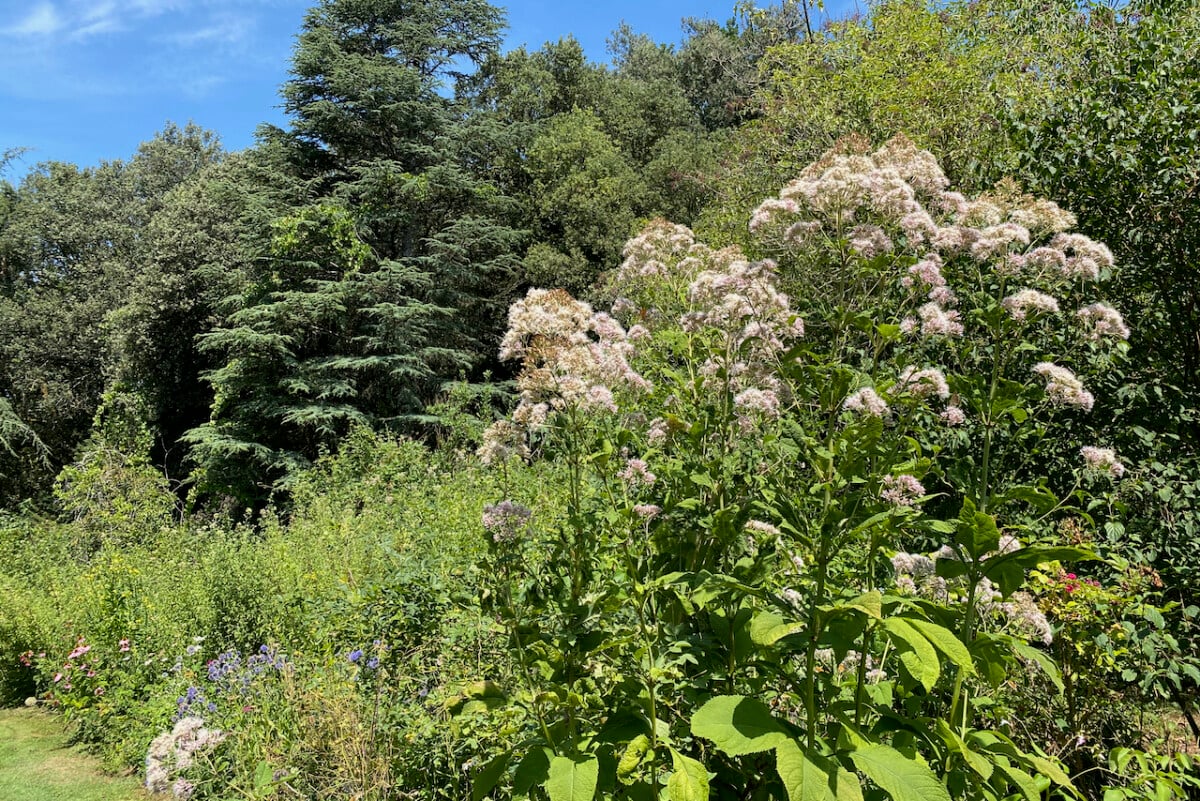
If your garden stays on the wet side, plant a Joe Pye Weed. It loves moist soil, which makes it an excellent choice for a rain garden.
If your garden gets dry in the summer, plant a Joe Pye Weed. It grows a long taproot that can access moisture deep down in the soil.
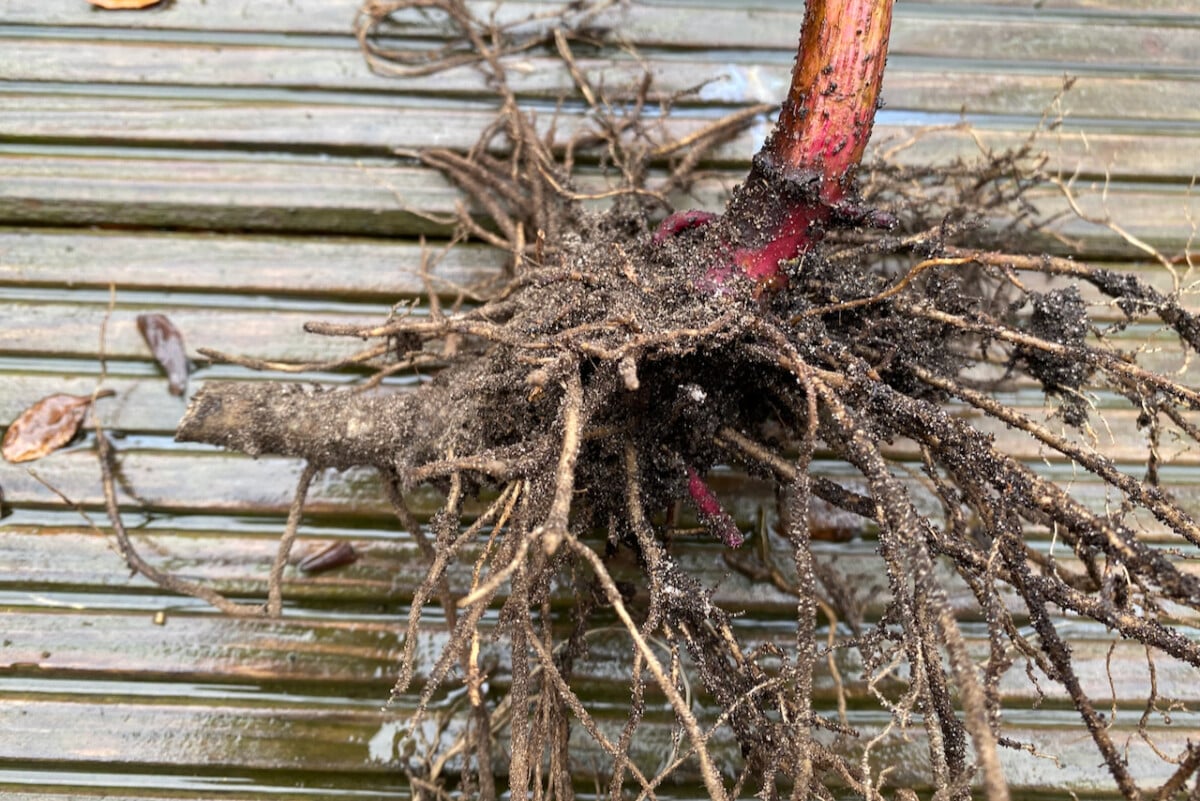
This chameleon-like feature makes Joe Pye excellent for spots that tend to pool water after it rains in the fall and spring, then turn bone dry for weeks on end in the summer. (My eternal sore spot since I started gardening in clay soil.)
Speaking of, Joe Pye Weed grows well in clay soil as well as in sandy soil … and anything in between. And we’re about to see why in the next point.
2. Joe Pye Weed is a North American native.
The group of perennials known as Joe Pye Weed is now categorized under the genus Eutrochium. It used to be called Eupatorium. (Long story, with botanists changing their mind a few times.) It’s the same plant, and you’re likely to encounter both the old and the new taxonomy.
I too was curious why it’s named after a person, so I fell down a rabbit hole of internet research. At the end of it, I came out none the wiser. Let’s just say there are multiple versions of events mired in the fog of history, and all the explanations have a slight whiff of colonialism.
The most common anecdote I came across was the one in which Joe Pye was a Native American healer who used this plant to treat the symptoms of typhoid fever that were ravaging colonial New England. No reliable sources for this anecdote, so I’ll take it with a grain of salt. But I’d be very interested to know what Native Americans called the plant before the Joe Pye story spread around.
We know that Joe Pye (excuse me if I drop the “weed” part, since it carries negative connotations) is a plant native to North America. In fact, we would be hard-pressed to find a North American native plant with such a wide range of distribution – from southeastern Canada to Florida, to the Great Lakes region and stretching as far as the Great Plains. This leads me to my next point.
3. Pollinators will flock to Joe Pye Weed.
A Joe Pye in bloom is guaranteed to be buzzing with pollinators. Its nectar-filled flowers act as a feeding station for bees and hoverflies from midsummer until mid-fall.
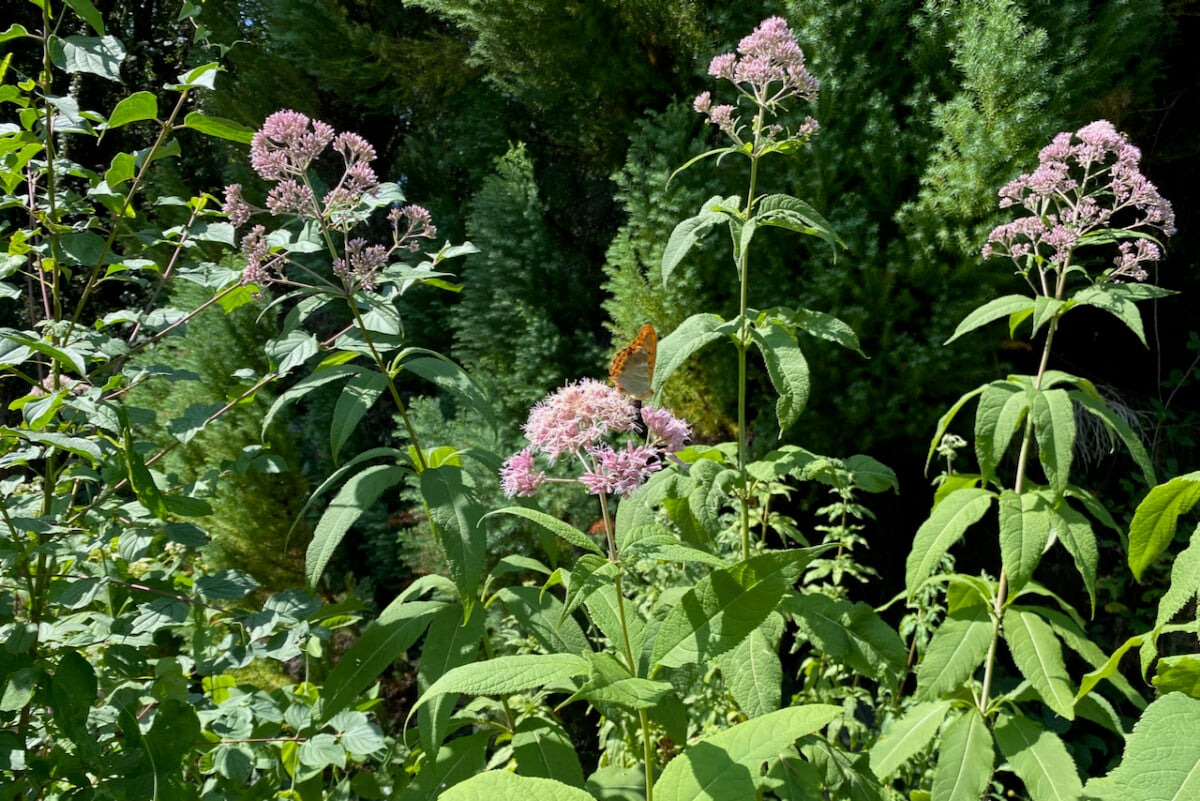
Joe Pye Weed is also a nectar source for many butterflies, including monarchs and swallowtails. And speaking of nectar, about thirty types of moths rely on Joe Pye for food and shelter. We love moths (right?) because they’re one of the most reliable pollinators in the garden. Plus, they’re delightfully fuzzy!
Once the flower heads of Eutrochium turn to seed heads, they become a valuable source of winter food for birds. Goldfinches, chickadees, wrens and swamp sparrows are among the diners who make pit stops at the Joe Pye buffet.
Do you believe me now when I say that Joe Pye Weed is a pollinator garden powerhouse?
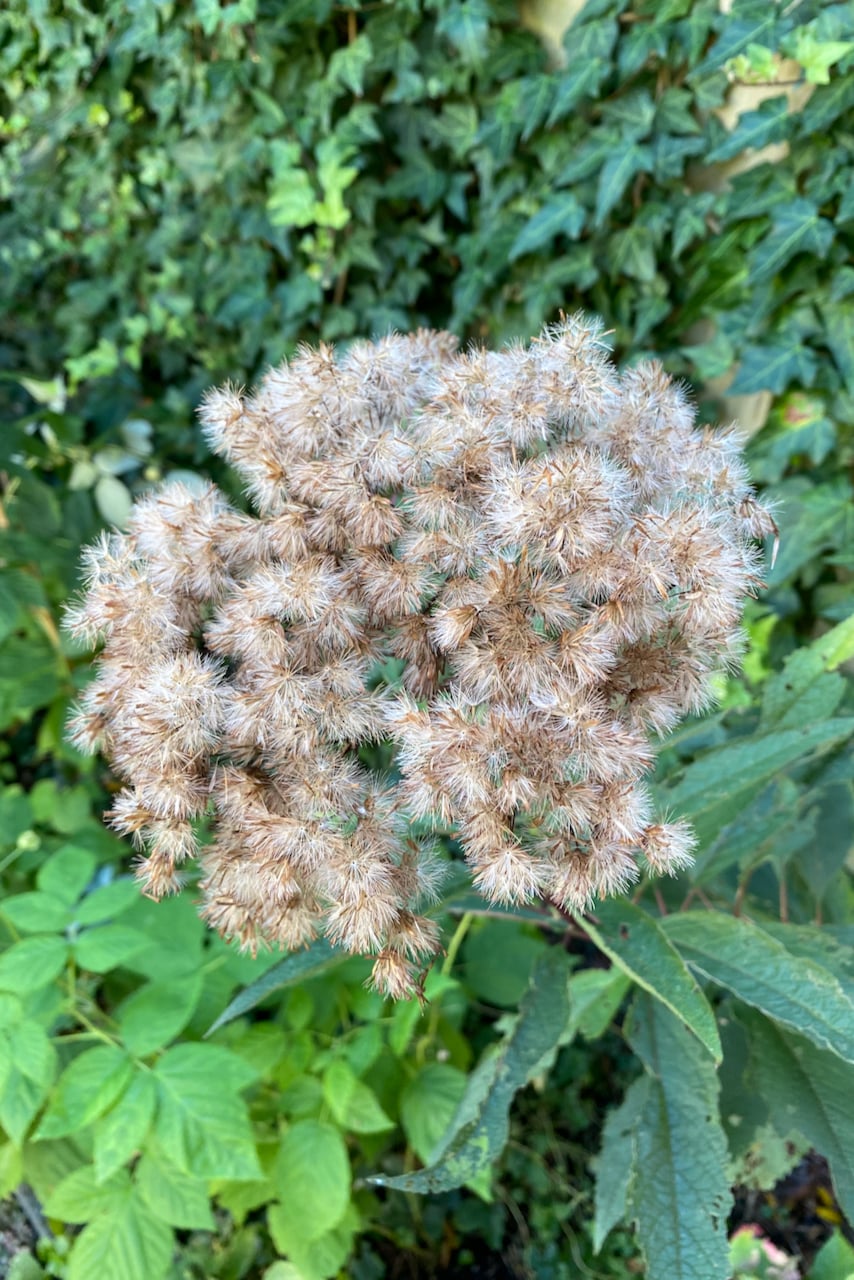
Oh, and if you get a bit uneasy at the sight of what looks to be a giant dandelion, please rest assured that Joe Pye is not an aggressive self-seeder. A few seeds might overwinter and sprout back next spring, but Joe here likes to propagate by sending growth from the base. And even so, it remains pretty compact, as its runners stay on the short side.
4. There’s a Joe Pye for every garden.
If this is your first time planting Joe Pye Weed, here’s what you might find for sale at the garden center.
Eutrochium maculatum
This one is a lanky Joe, getting up to about six feet tall. The good news is that the stems of this variety are very strong, so we won’t need to mess around with staking them.
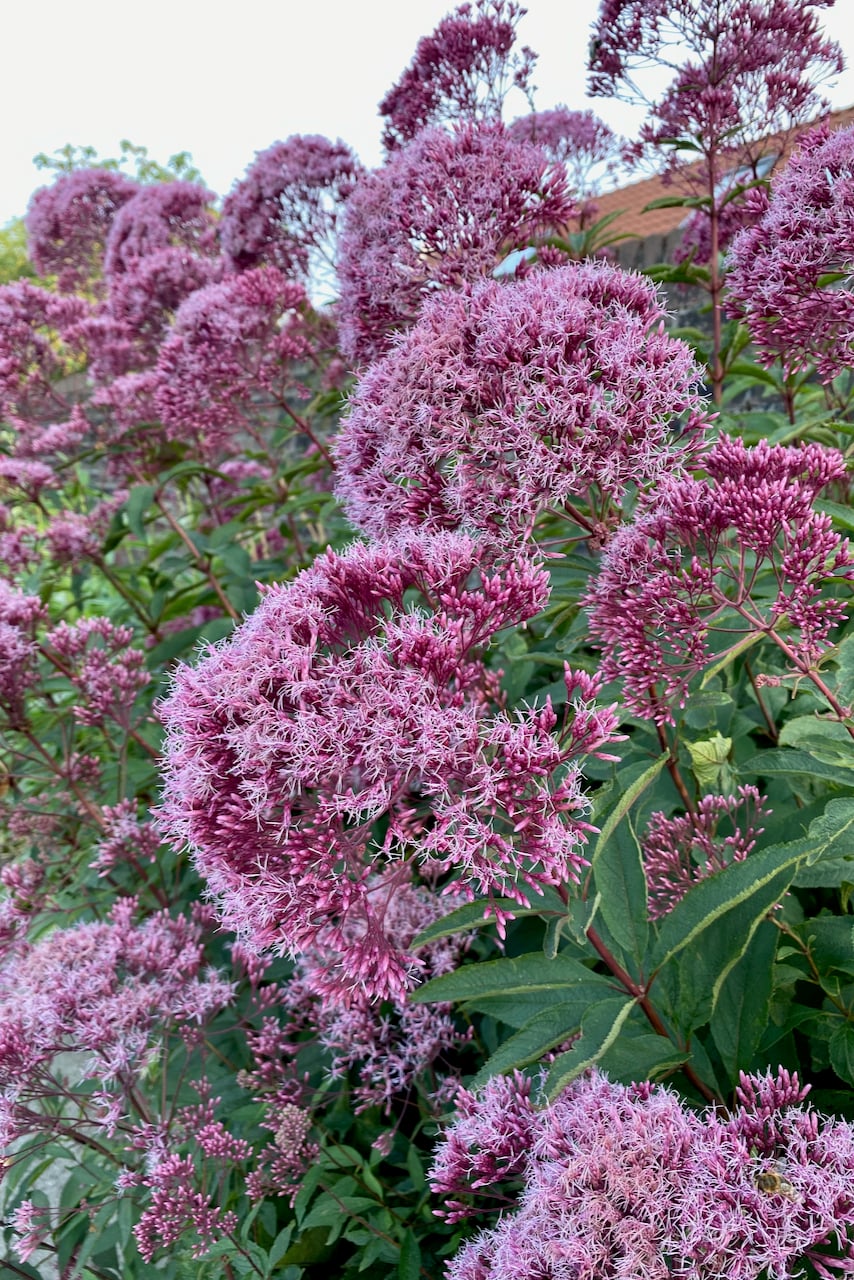
This Joe Pye loves the sun, and it will bloom profusely the more sunlight it gets, provided it does get some water. It has the brightest colored flowers – in shades of bright pink – and the largest, puffiest flower heads. They sway in the wind like giant balls of cotton candy. If you want color and impact, this is the one to choose.
Eutrochium purpureum
Also known as Sweet Joe Pye Weed due to the subtle fragrance carried by its flowers. If you love Joe Pye, but don’t think you have enough sun for it, pick this one. It can handle part shade since it’s more of a woodland plant.
Sweet Joe Pye Weed can reach anywhere between four and seven feet high, depending on the growing conditions. The flower heads of Sweet Joe are a bit smaller and come in more muted shades of pink and purple. The butterflies and the bees will love it nonetheless.
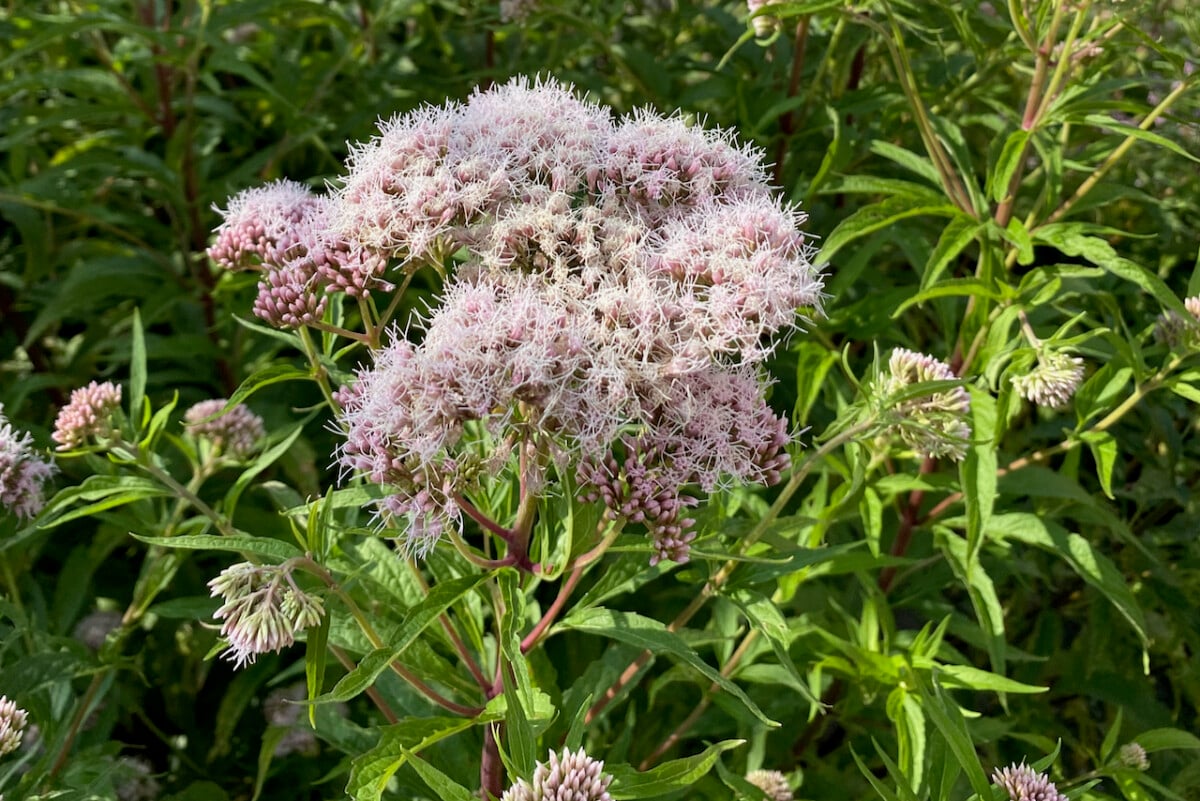
Eutrochium fistulosum
Also known as Hollow Joe Pye Weed, or Tall Joe Pye Weed (aren’t they all?) or Trumpetweed (due to the shape of the individual flowers), this one is perhaps the tallest you could choose. It is native to the Eastern half of North America, and typically grows well on shorelines and sand prairies. The flowers also come in shades of vanilla white and dusty pink.
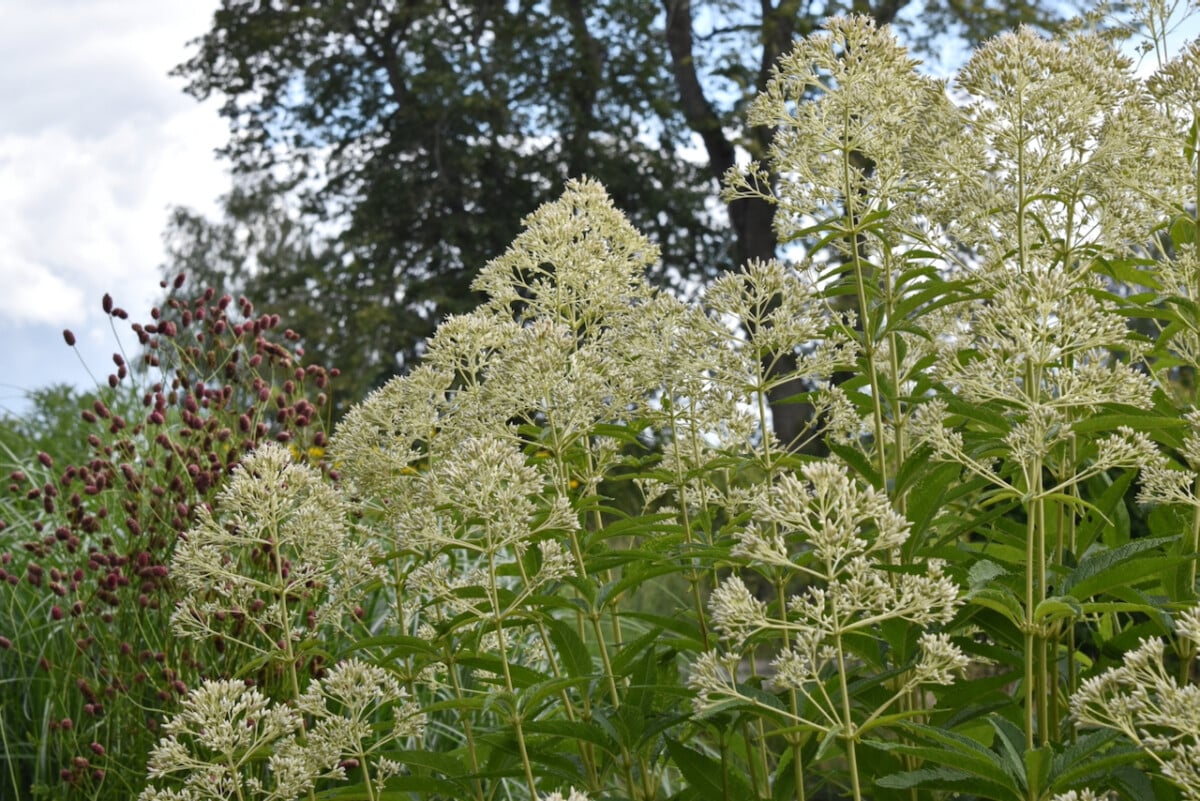
These are not the only varieties available, but they’re the most popular. My advice would be to get whichever one you can find first, then keep adding them to your garden as you find them for sale. They’re all pretty low-maintenance and happy-go-lucky plants.
5. You can buy Joe Pye bare roots.
I’ve already confessed to getting my first Joe Pye surreptitiously from the neighboring garden. But I’ve also bought some for my current garden and tried to start some for friends.
Here’s my honest advice, should you choose to plant Joes in your garden.
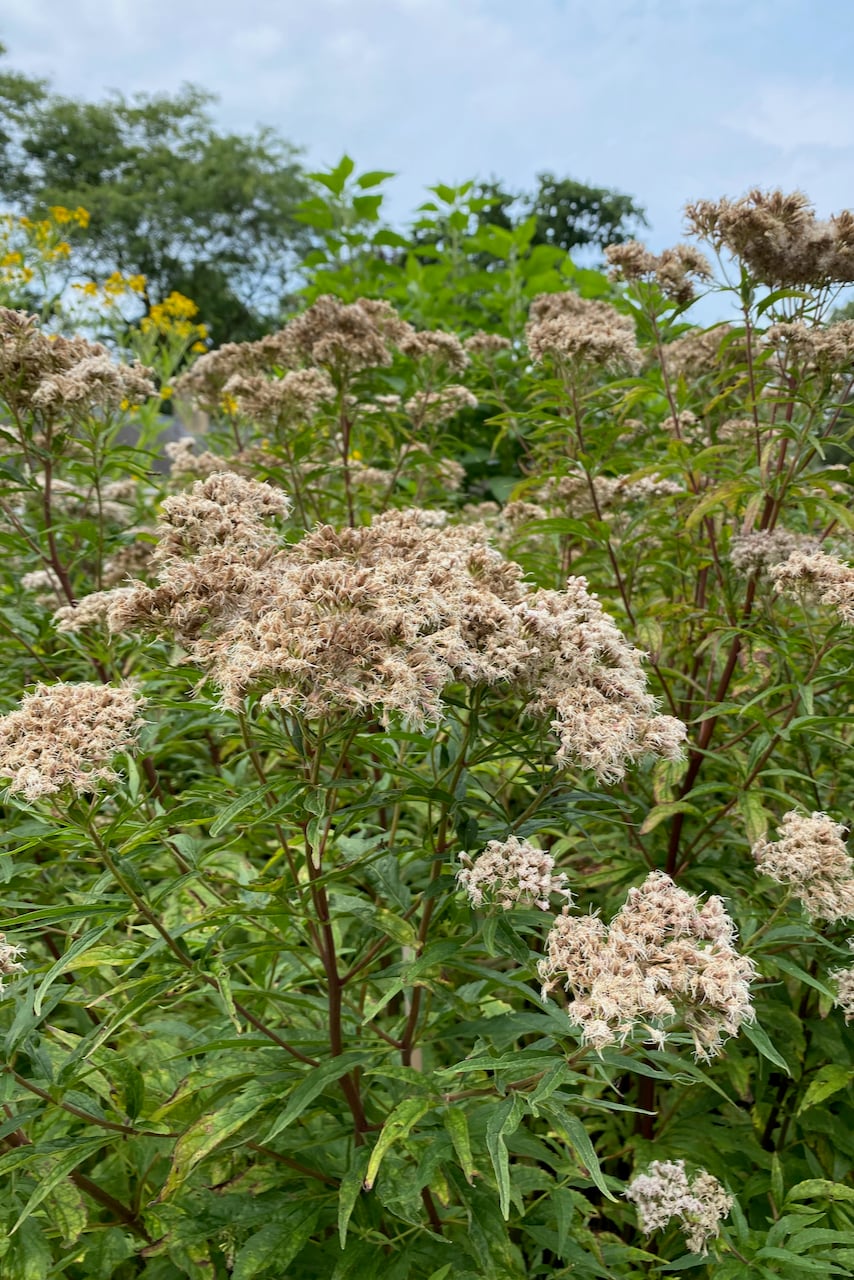
Don’t start Joe Pye from seed unless you’re absolutely sure you know what you’re doing. Joe Pye is a herbaceous perennial that overwinters in the garden.
Which translates to this: the seeds need cold stratification in order to germinate. And long-term cold stratification to boot. Joe Pye needs about 60 (sixty!) days of cold and moist conditions in order to germinate well. This makes them quite tricky to start from seed in pots, especially for newbie gardeners.
Here’s the good news
You can usually find Joe Pye Weed for sale as bare root plants. Plant nurseries dig out dormant plants and ship them straight to consumers generally between November and March, so now would be the best time to look for bare roots.
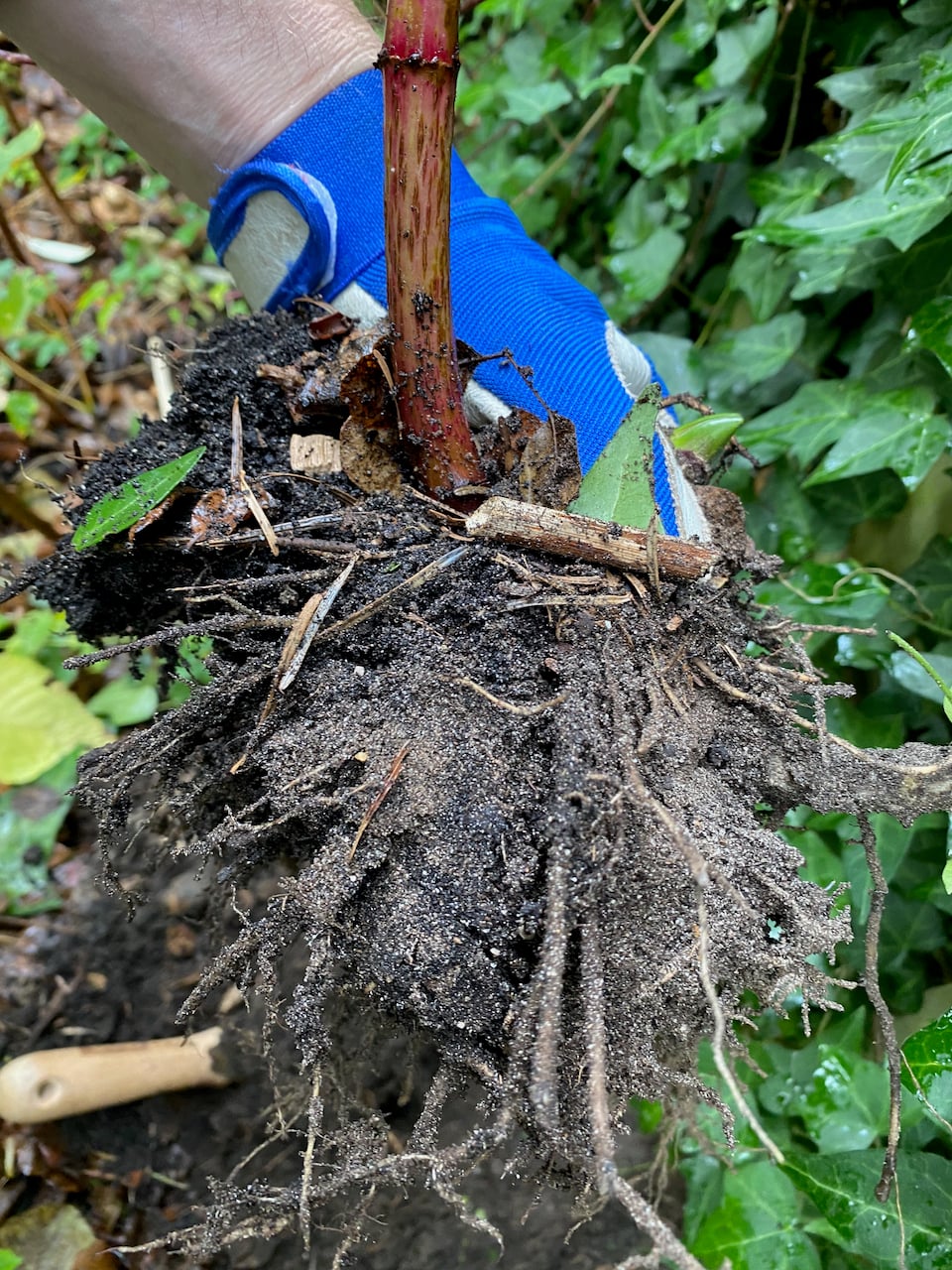
They may look like just a bundle of wispy roots with no top growth when they arrive on our doorstep, but I guarantee you this is the best, most affordable way to buy mature plants. With one caveat, though: you will have to put them in the ground now, as soon as you get them.
If you’d like to read more about the advantages of buying plants this way, and what to do now with your bare roots to get healthy plants in spring, have a look at my article here.
A happy compromise
Here’s my second-best suggestion: buy Joe Pye Weed as a small (starter) plant. You can find them for sale in this format in spring and fall. If you get the choice, buy a six-pack of smaller plantlets and put them in the ground in a cluster. You’ll get a wonderfully full effect once they start growing their foliage and flowers.
Whichever version of Joe Pye Weed you choose, I think you can’t go wrong. All the pros of this native plant – its resilience, its contribution to wildlife and its low maintenance – make it the ideal garden perennial.
Get Garden Notes From Tracey, Right to Your Inbox
Pull up a chair on the front porch. Join 54,000+ gardeners who get Tracey\'s friendly notes, seasonal to-dos, and hands-on tutorials three times a week.