

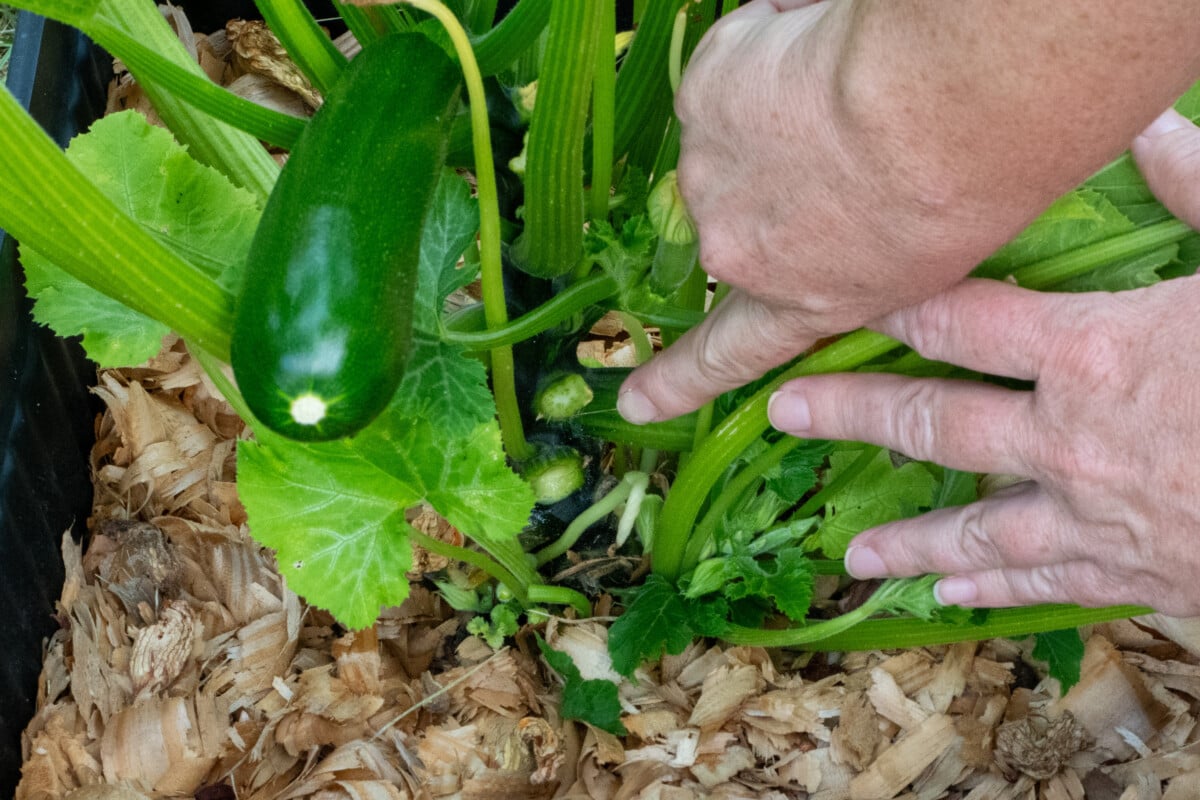
Aside from being prolific, zucchini should also get an award for Best Garden Colonizer. They always start as a tidy little seedling, politely existing in its spot in the garden. Yet, by midsummer, it’s swallowed up nearly a third of your garden, and didn’t you plant an eggplant over here somewhere? And where is the dog? When it comes to amassing territory, there’s no garden tenant like zucchini.
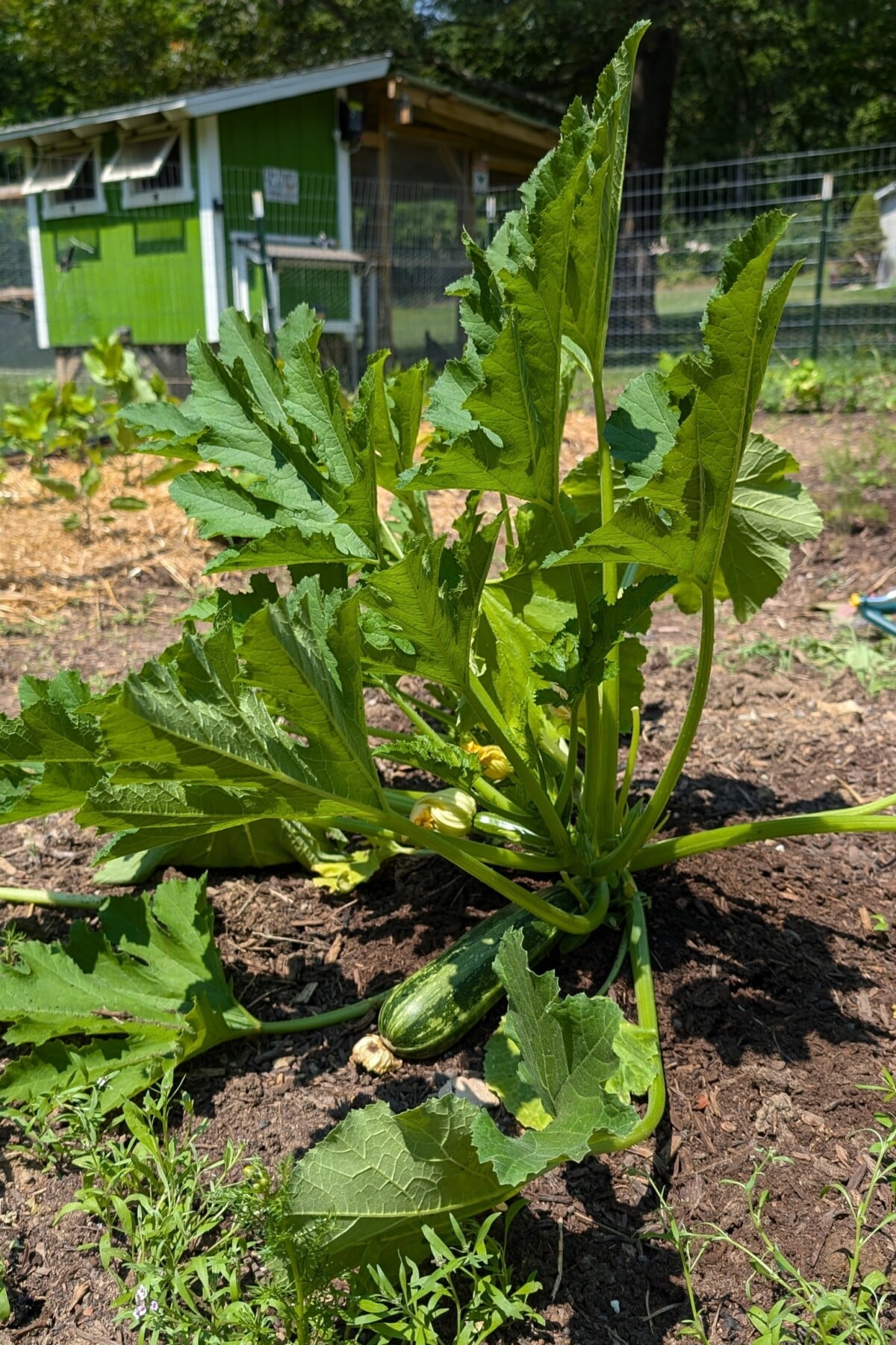
It’s this sprawling habit that often has us standing in our gardens in late July, wondering if maybe a good pruning would keep our zucchini under control.
The answer is, of course, yes, but not without a few important caveats.
(You knew I was going to say that. There’s always a caveat in gardening.)
When we prune tomatoes, cucumbers, peppers, etc., we’re not just keeping them tidy; we’re also encouraging the plants to put out more fruit. With zucchini, it’s a little different. Pruning doesn’t affect the amount of fruit the plant produces. They’re pretty happy to keep the whole neighborhood in zucchini with very little encouragement from us. So, if you’re thinking you will get even more zucchini by pruning, that’s not the case.
However, it’s still a good idea to routinely prune your mature zucchini plant. (In fact, not pruning is on my list of three zucchini no-nos.) But before you grab the garden snips and head out to find your missing eggplant and dog, a word of caution. Zucchini is easily over-pruned by the zealous gardener, and heavy pruning can stop an otherwise healthy plant in its tracks. No, of course, I’m not speaking from experience. What a silly thing to ask.
The Benefits of Pruning Zucchini
Improved Air Circulation
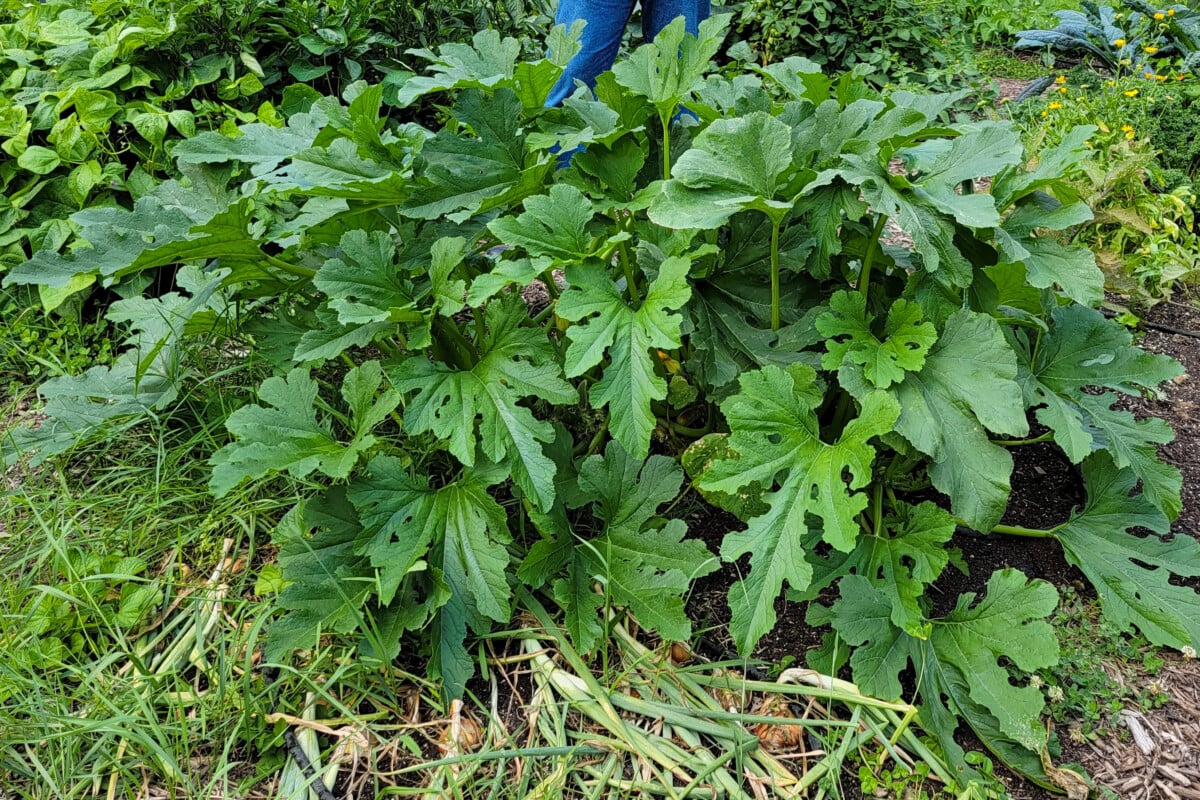
Probably the biggest advantage of pruning your zucchini is that you improve airflow around the entire plant. Zucchini leaves are huge, so they end up not only shading the interior of the plant, but creating this humid little microclimate in there where everyone’s favorite fungal disease, powdery mildew, can take hold.
When we remove a few of the older leaves, it opens up the canopy, allowing air to move throughout the plant. This means leaves dry faster after rain and in the morning when the dew dries, making it more difficult for fungal issues to gain ground.
This becomes more important as the summer wears on and zucchini is bent on total garden domination.
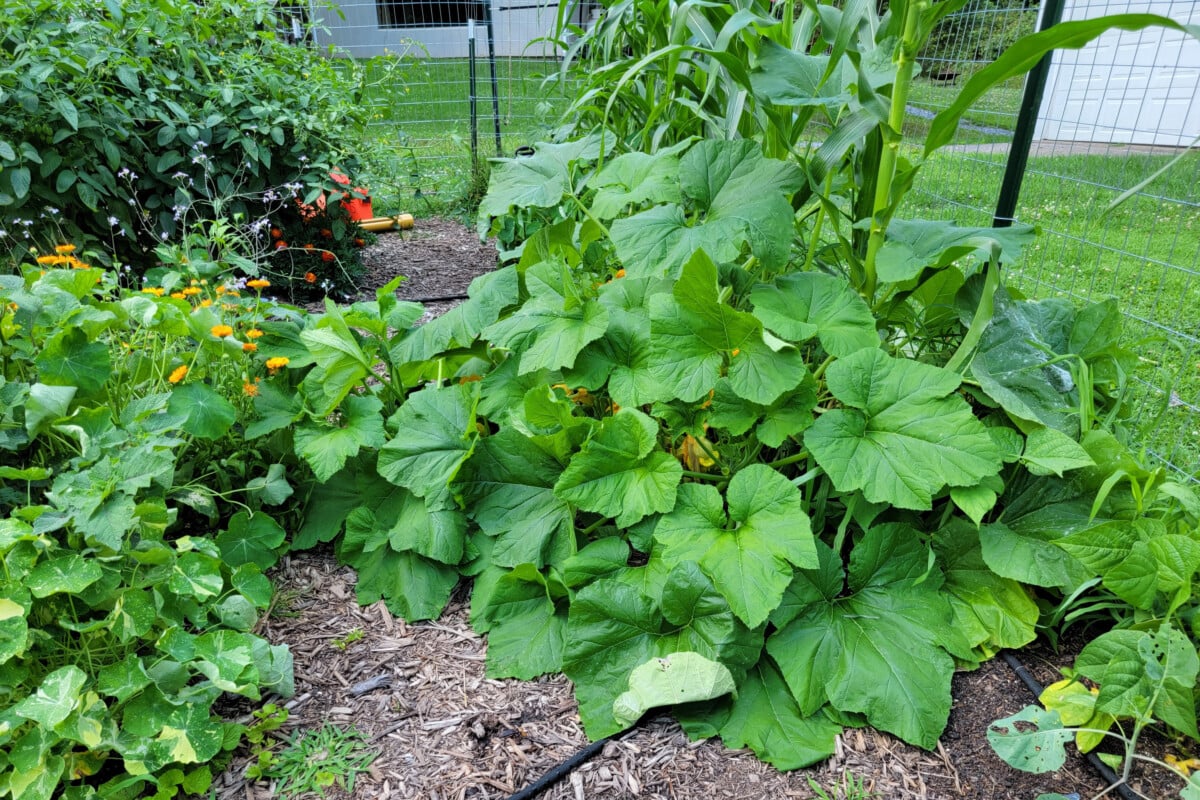
When the plants are at their largest, they’re much more susceptible to disease pressure, especially if you live somewhere with humid summers. (Pennsylvania, checking in!) Thinning them out when they’re massive will ensure they produce longer.
Easier Harvesting
Look, if you’ve ever grown zucchini, then you’ve found at least one forgotten fruit that resembled a caveman’s club.
It always happens later in the summer, after the plant has filled in. The large leaves make it harder to spot every new, developing zucchini.
And it’s important that we don’t allow baseball bat-sized zucchini to develop because that one fruit essentially tells the plant, “Your job is done here. You don’t need to put out any more fruit.” And the plant slowly begins to shut down.
Pruning strategically makes it much easier to see into the center of your plant and keep an eye on new and developing zucchini.
Pruning for Pollinators
If you can’t find a zucchini until it’s the size of a Louisville Slugger, imagine how much harder it is for pollinators to spot squash blossoms hiding in among the large, dark leaves. Thinning out your zucchini plant a little makes it easier for pollinators to spot the yellow flowers, and that means more zucchini fritters.
Pruning is Good Hygiene
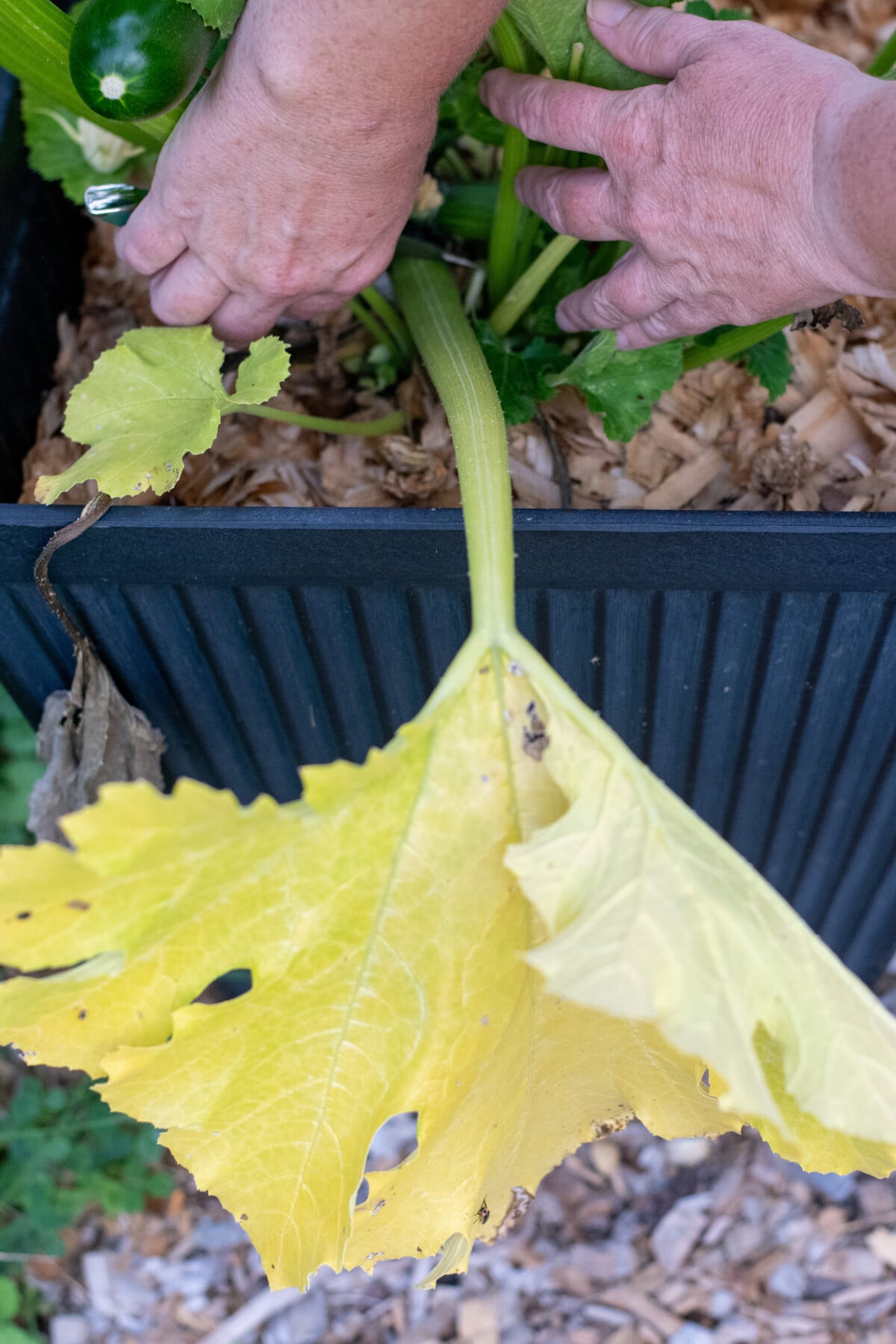
Removing yellowing, insect-damaged or powdery mildew-covered leaves not only makes the plant look better, but it can also prevent the further spread of disease. Hydrogen peroxide is the best way to get rid of powdery mildew (read how here), but removing some of the hardest hit leaves can also help clear things up faster.
Ditch the Pest Hostel
Remember how we said a large, leafy zucchini plant has a nice dark, humid and cool interior? There are quite a few pests ready to move into that environment and make themselves at home. What’s worse is that because the interior is hidden, pests can do a lot of damage before you even notice their presence.
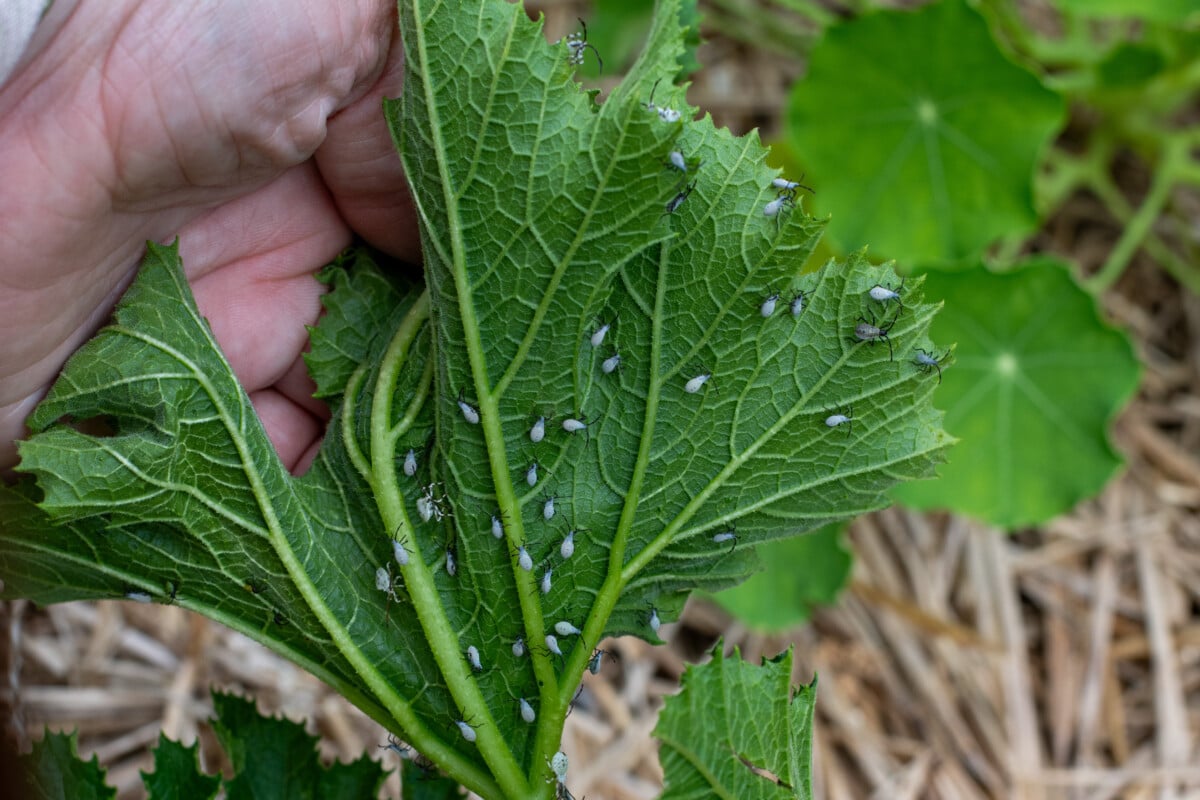
Okay, I think I’ve made a pretty good case for pruning your zucchini. But you need to prune in moderation. Pruning too hard can be worse than not pruning at all.
Pruning Too Hard
Slowed Growth and Fewer Zucchini
The biggest disadvantage of pruning your zucchini too hard is that you end up severely limiting the amount of energy the plant can make. The leaves are responsible for photosynthesis, converting sunlight into the sugars that do everything from create root growth to cranking out zucchini after zucchini. Take a look at these plants, and it’s not hard to guess that based on leaf size alone, these guys need a lot of energy to do what they do.
If you remove too many healthy leaves, you limit your zucchini plant’s ability to generate energy. Not only will the plant be less productive, but because it has fewer leaves, it will be much slower to bounce back, too.
You Can Introduce Sunscald
Not only do those giant green umbrellas soak up the sun to create energy to run the entire plant, but the leaves also shade the growing fruit inside the canopy. Allowing a little extra light into the interior of the plant is a good thing, but if you prune too hard, you can end up leaving the fruit exposed to the intense sunlight.
The result? Sunscald: discolored and damaged zucchini.
The best thing to do is to prune judiciously. Take a leaf or two and then examine your plant. You don’t want to get snipping and then find yourself looking at half the zucchini plant you started with. I never prune more than 25% of the plant at a time, and quite often it’s less than that because I know I can go back in next week and prune a little more.
Let’s Prune!
Always use clean, sharp pruners.
Always cut the leaf as close to the main stem as possible. If you leave a significant portion of the stalk, it can rot back to the stem, opening up the plant to infection. Making a clean cut near the main stem allows the little remaining stem to dry out and scab over quicker.
Start by removing yellowing, dead or damaged leaves first.
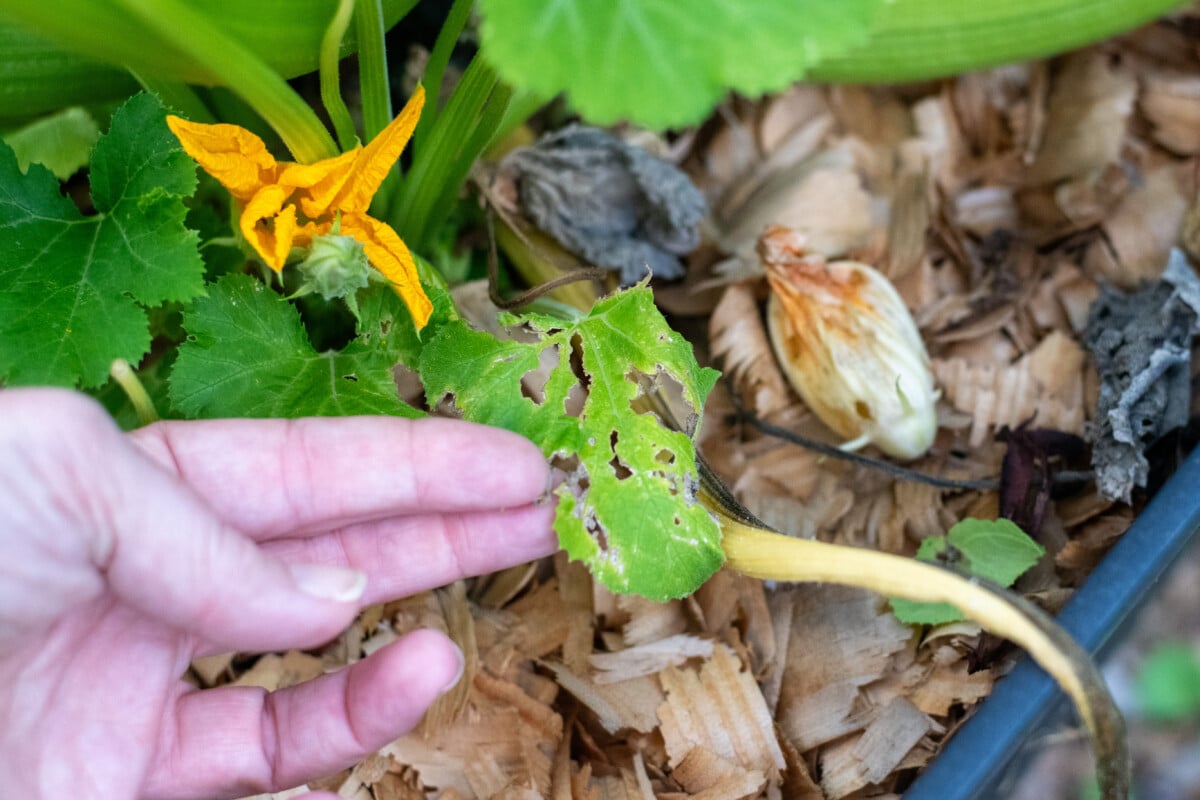
From there, I like to remove the bottom-most leaves that are lying on the soil. This removes potential hiding spots for pests like slugs.
After you’ve removed those leaves, take a look at the plant. This may be all you need to do. If it’s still pretty congested in the center of the plant, pick a few leaves and cut them off to open up the canopy.
When it comes to pruning zucchini, a little goes a long way. Give it a week and then check to see if the plant needs to be pruned again.
Is Pruning Your Zucchini Plant Worth It?
Yes, I believe it is. I’ve pruned my plants over the years, and I’ve also not pruned them. While it is zucchini and it’s very hard to get them not to produce tons of fruit, I’ve always had fewer issues when I take the time to prune. Now that you’ve got pruning figured out, let’s talk about when to fertilize your zucchini.
Get Garden Notes From Tracey, Right to Your Inbox
Pull up a chair on the front porch. Join 54,000+ gardeners who get Tracey\'s friendly notes, seasonal to-dos, and hands-on tutorials three times a week.